Article

Age- and Gender-Based Tongue Volume Variations on Asymptomatic Patients: A Simplified Approach to Form Baseline Data for Obstructive Sleep Apnea


by
Betül Tiryaki Baştuğ
Radiology Department, Bilecik Şeyh Edebali University Medical Faculty, 11000 Bilecik, Türkiye
Diagnostics 2025, 15(3), 322; https://doi.org/10.3390/diagnostics15030322

Submission received: 16 December 2024 / Revised: 22 January 2025 / Accepted: 27 January 2025 / Published: 30 January 2025

Abstract

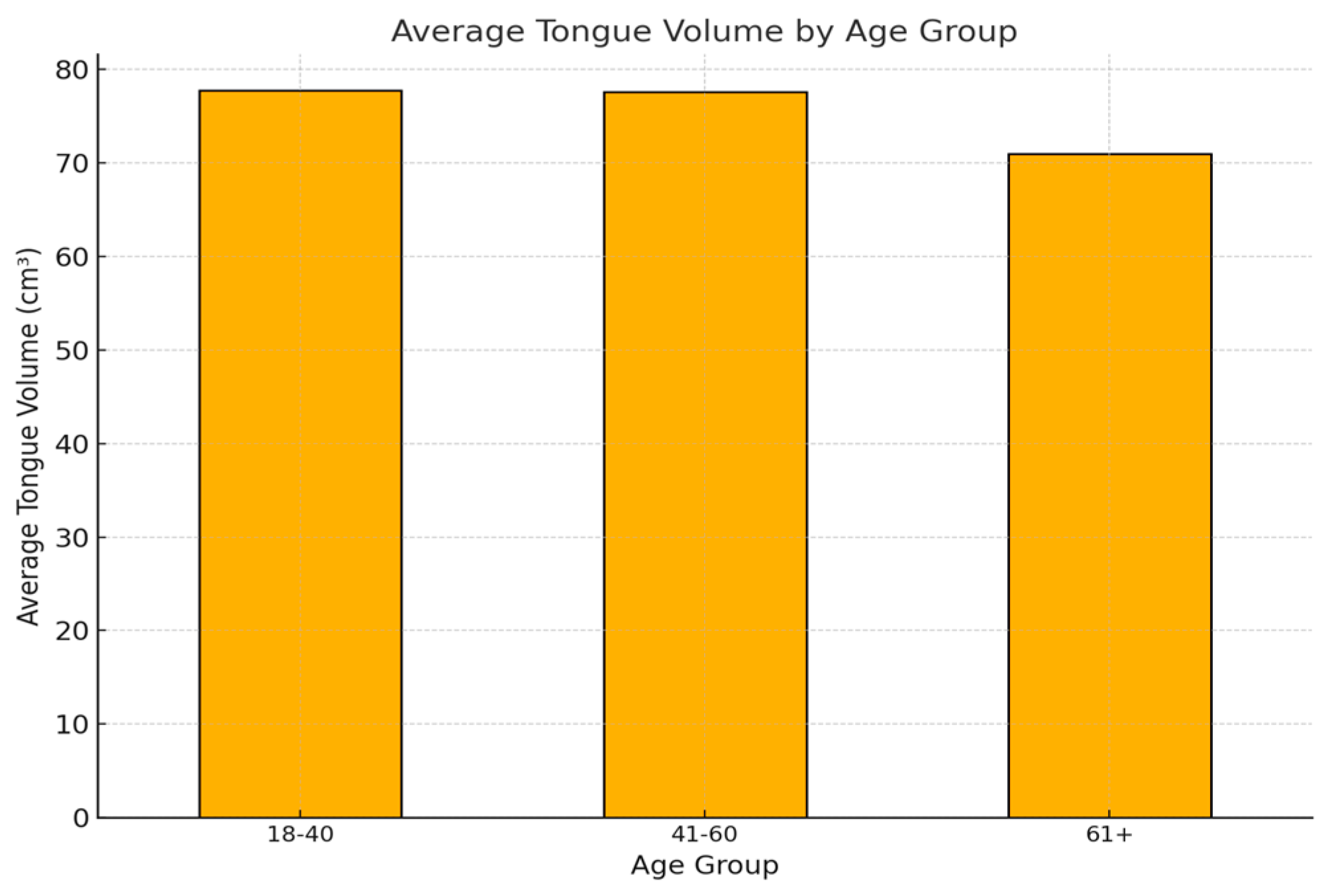
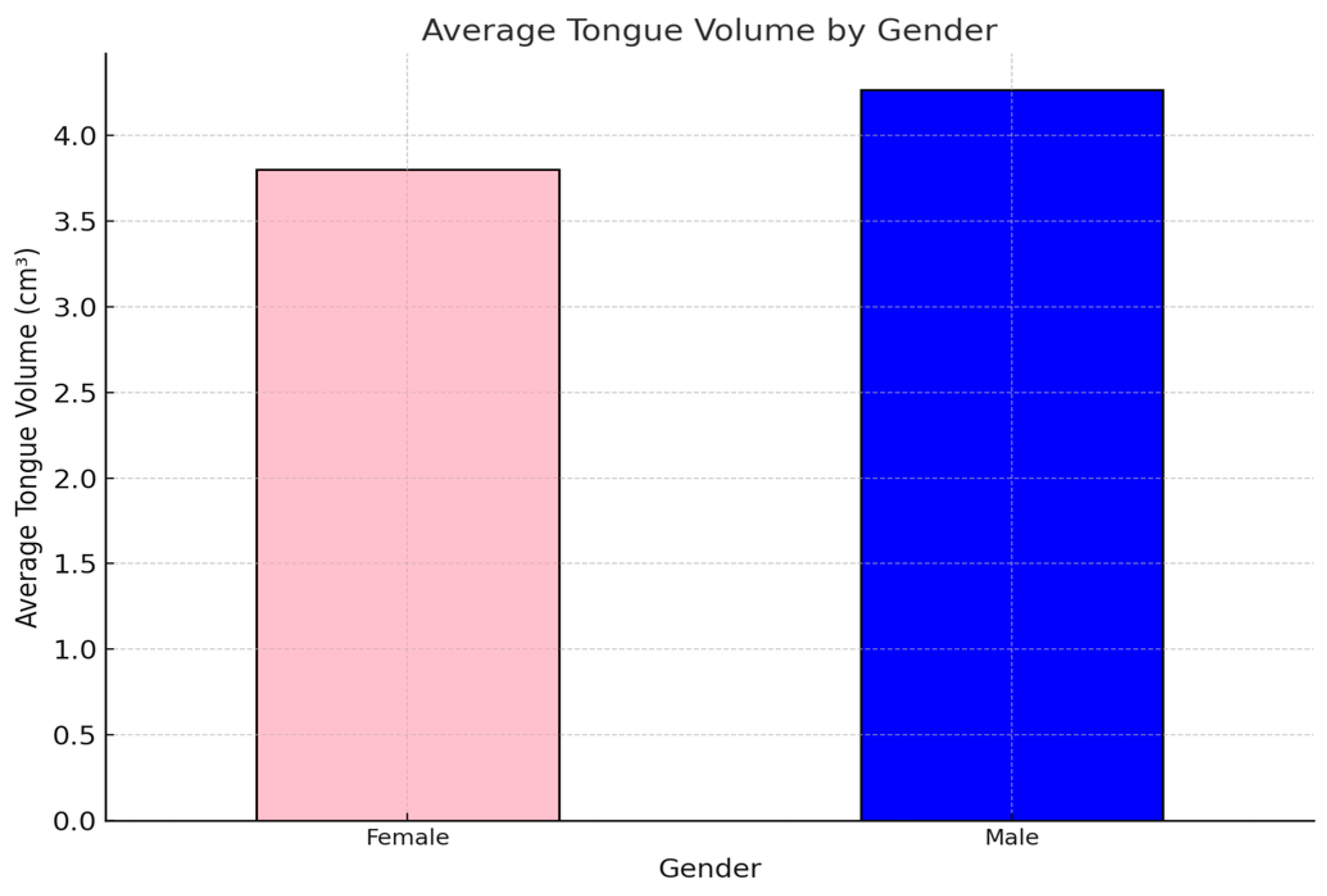
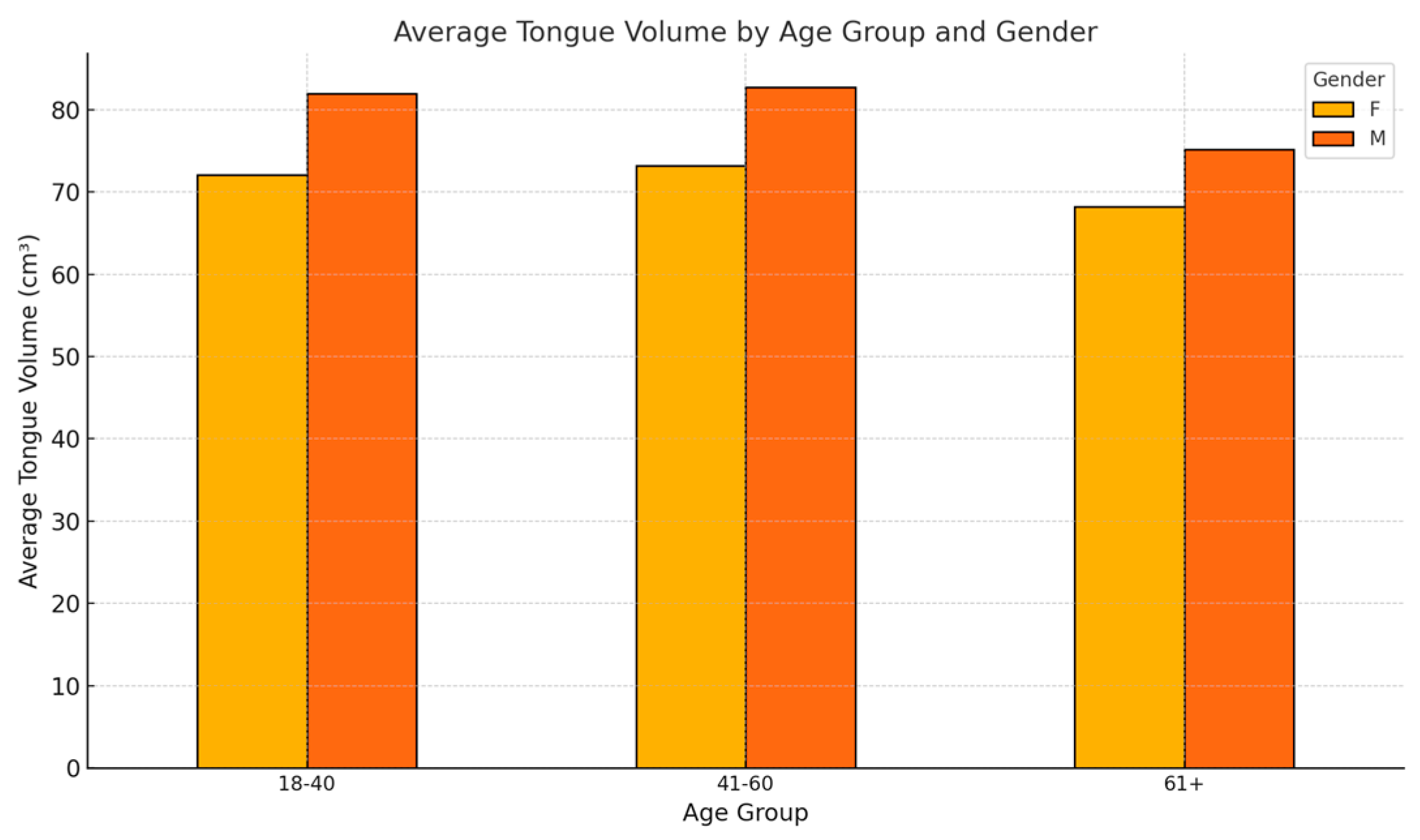
Background: Tongue anatomy plays a critical role in airway-related disorders such as obstructive sleep apnea (OSA). Understanding variations in tongue volume across age and gender is essential for refining diagnostic and therapeutic strategies. This study aims to establish baseline data for tongue volume using a simplified geometric approach, addressing the gap in large-scale anatomical assessments, specifically in asymptomatic patients without clinical indications of OSA. Materials and Methods: This retrospective cross-sectional study included 120 asymptomatic patients aged 18–75 years, stratified into three age groups (18–40, 41–60, 61+). Tongue volume was estimated using anterior–posterior length, width, and height measurements from neck CT scans, applying a geometric approximation formula. Statistical analysis, including ANOVA and post hoc tests, was used to evaluate differences across age groups and between genders. Regression analysis examined the influence of age and gender on tongue volume. Results: Tongue volume showed a significant decline with advancing age (p < 0.05), with the 61+ age group exhibiting the smallest volumes. Gender differences were pronounced, with males consistently having larger volumes than females (p < 0.05). Post hoc analyses confirmed significant differences between age groups, and regression analysis indicated that gender was a stronger predictor of tongue volume than age. Conclusions: This study highlights the impact of age and gender on tongue volume, emphasizing the need for demographic-specific approaches in the evaluation and management of airway-related conditions. The simplified measurement method offers a practical solution for large-scale studies, providing baseline data for future research and clinical applications. These findings pave the way for personalized diagnostic thresholds and therapeutic strategies in conditions like OSA.
Keywords: tongue volume; simplified geometric approach; age-based variations; gender differences; obstructive sleep apnea; baseline data tongue volume; simplified geometric approach; age-based variations; gender differences; obstructive sleep apnea; baseline data