Review

Uterine Tumor Resembling Ovarian Sex-Cord Tumor (UTROSCT): A Rare Polyphenotypic Neoplasm

Department of Medicine and Surgery, Pathology Unit, University of Parma, Viale A. Gramsci, 14, 43126 Parma, Italy
*
Author to whom correspondence should be addressed.
Diagnostics 2024, 14(12), 1271; https://doi.org/10.3390/diagnostics14121271

Submission received: 12 April 2024 / Revised: 24 May 2024 / Accepted: 31 May 2024 / Published: 17 June 2024
(This article belongs to the Special Issue Diagnosis and Management of Uterine Lesions)

Abstract

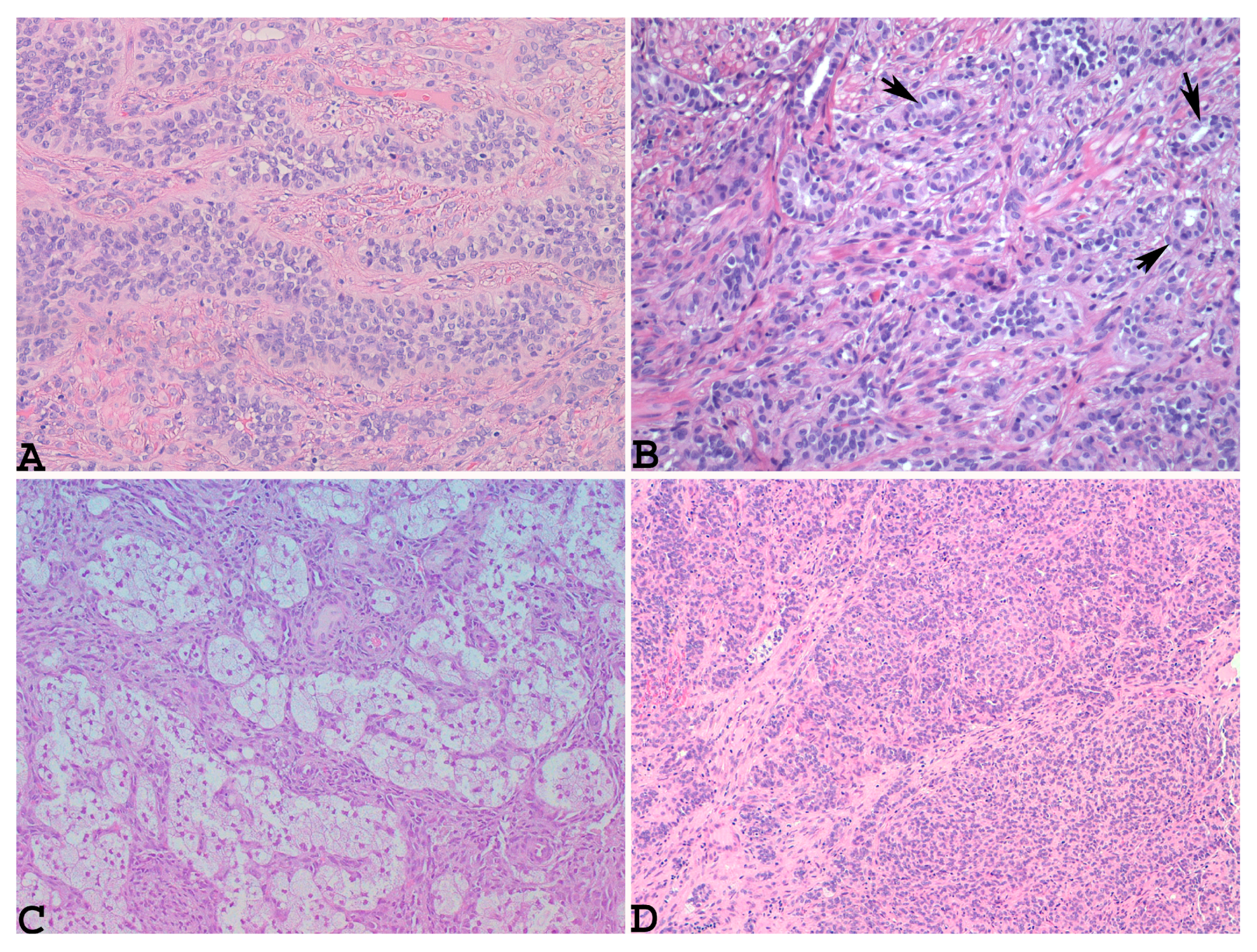
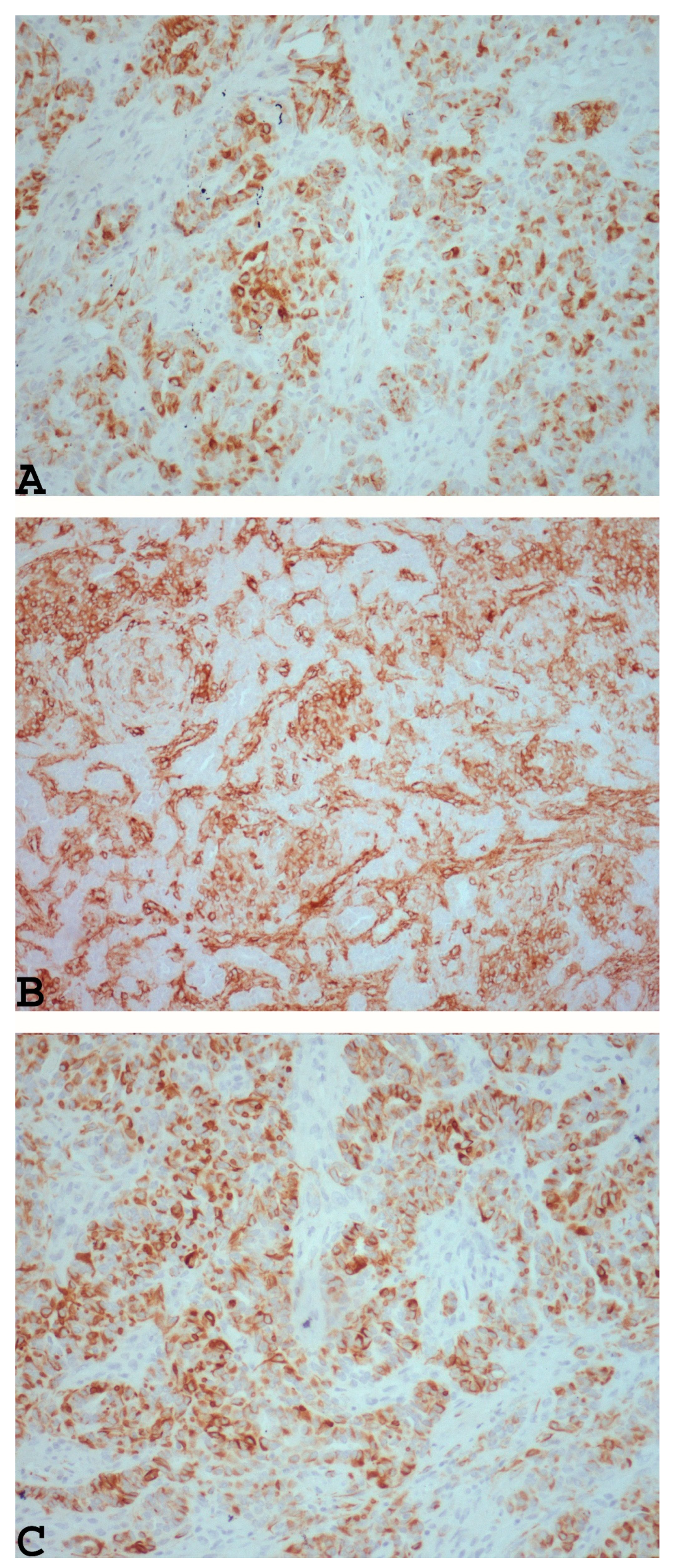
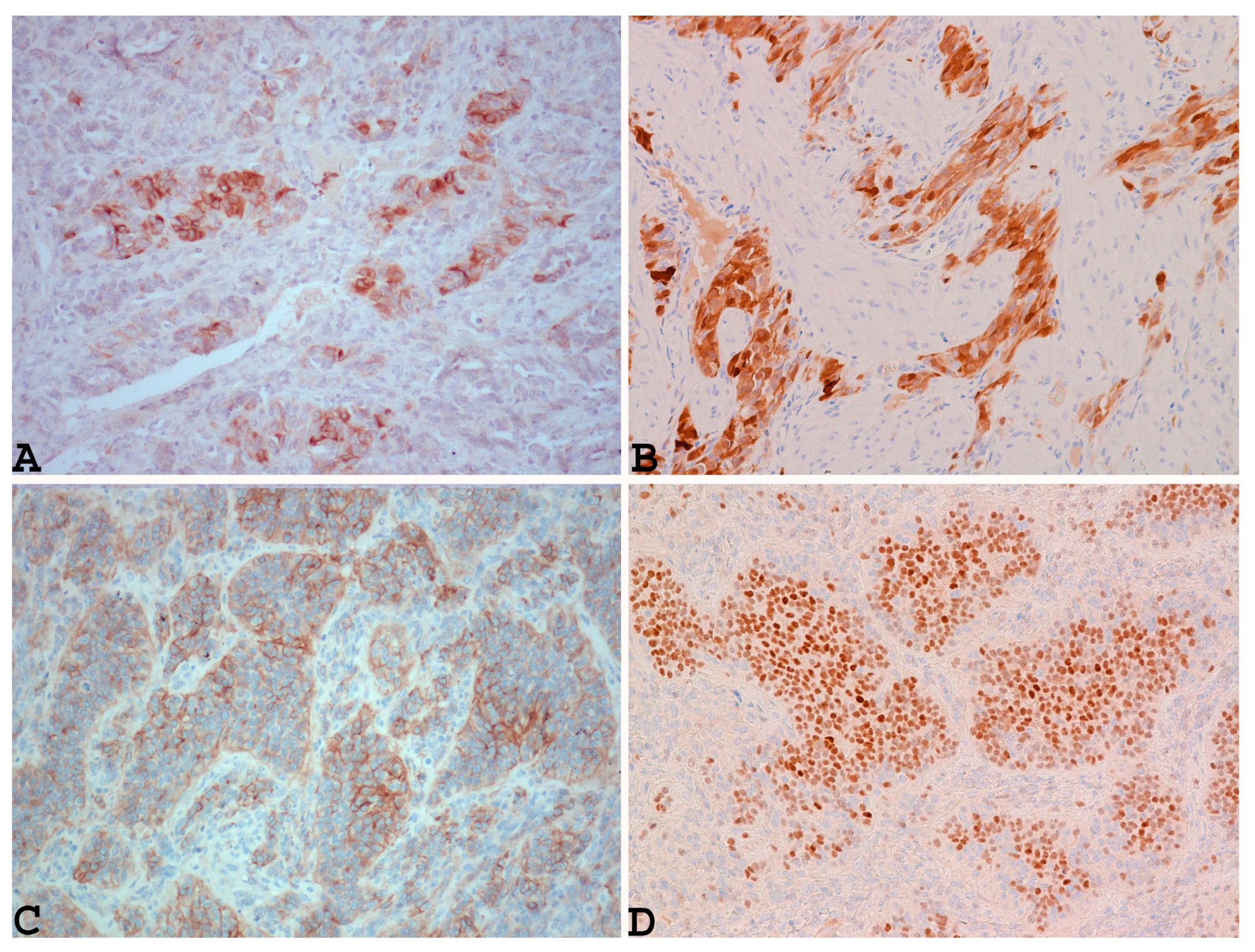
Uterine tumor resembling ovarian sex-cord tumor (UTROSCT) is a rare form of uterine mesenchymal neoplasm. Although UTROSCT generally exhibits benign behavior with a favorable prognosis, this neoplasm is nevertheless classified as being of uncertain malignant potential, given its low rate of recurrence and the fact that it rarely produces metastases (e.g., in the lymph nodes, epiploic appendix, omentum, small bowel, subcutaneous tissue, lungs). Its histogenesis is also uncertain. Typically, UTROSCT occurs in peri-menopausal or menopausal women, but it can sometimes be observed in young women. Usually, this neoplasm can be found in the uterine corpus as a nodular intramural lesion, while it is less frequently submucosal, subserosal, or polypoid/intracavitary. UTROSCT can cause abnormal bleeding, pelvic pain, enlarged uterus, and mass sensation, but sometimes it is found purely by chance. This neoplasm can be considered polyphenotypic on morphological, immunohistochemical, and genetic analyses. Generally, upon microscopic examination, UTROSCT shows a predominant pattern of the cords, nests, and trabeculae typical of sex-cord tumors of the ovary, while immunohistochemically it is characterized by a coexpression of epithelial, smooth muscle, and sex-cord markers. The aim of this review is to report clinical and pathological data and genetic alterations to establish their impact on the prognosis and management of patients affected by this rare entity.
Keywords: uterine tumor resembling ovarian sex-cord tumor; uterine mesenchymal neoplasm; polyphenotypic neoplasm; prognosis uterine tumor resembling ovarian sex-cord tumor; uterine mesenchymal neoplasm; polyphenotypic neoplasm; prognosis