Article

Wearable Devices and Explainable Unsupervised Learning for COVID-19 Detection and Monitoring

1
Department of Natural, Engineering, and Technology Sciences, Faculty of Graduate Studies, Arab American University, Ramallah P-600-699, Palestine
2
Department of Informatics Engineering, CISUC-Centre for Informatics and Systems of the University of Coimbra, University of Coimbra, 3030-790 Coimbra, Portugal
3
Intelligent Systems Department, Palestine Ahliya University, Bethlehem P-150-199, Palestine
4
College of Computing and Informatics, University of Sharjah, Sharjah 27272, United Arab Emirates
*
Author to whom correspondence should be addressed.
Diagnostics 2023, 13(19), 3071; https://doi.org/10.3390/diagnostics13193071

Submission received: 24 July 2023 / Revised: 20 September 2023 / Accepted: 22 September 2023 / Published: 28 September 2023
(This article belongs to the Section Machine Learning and Artificial Intelligence in Diagnostics)

Abstract

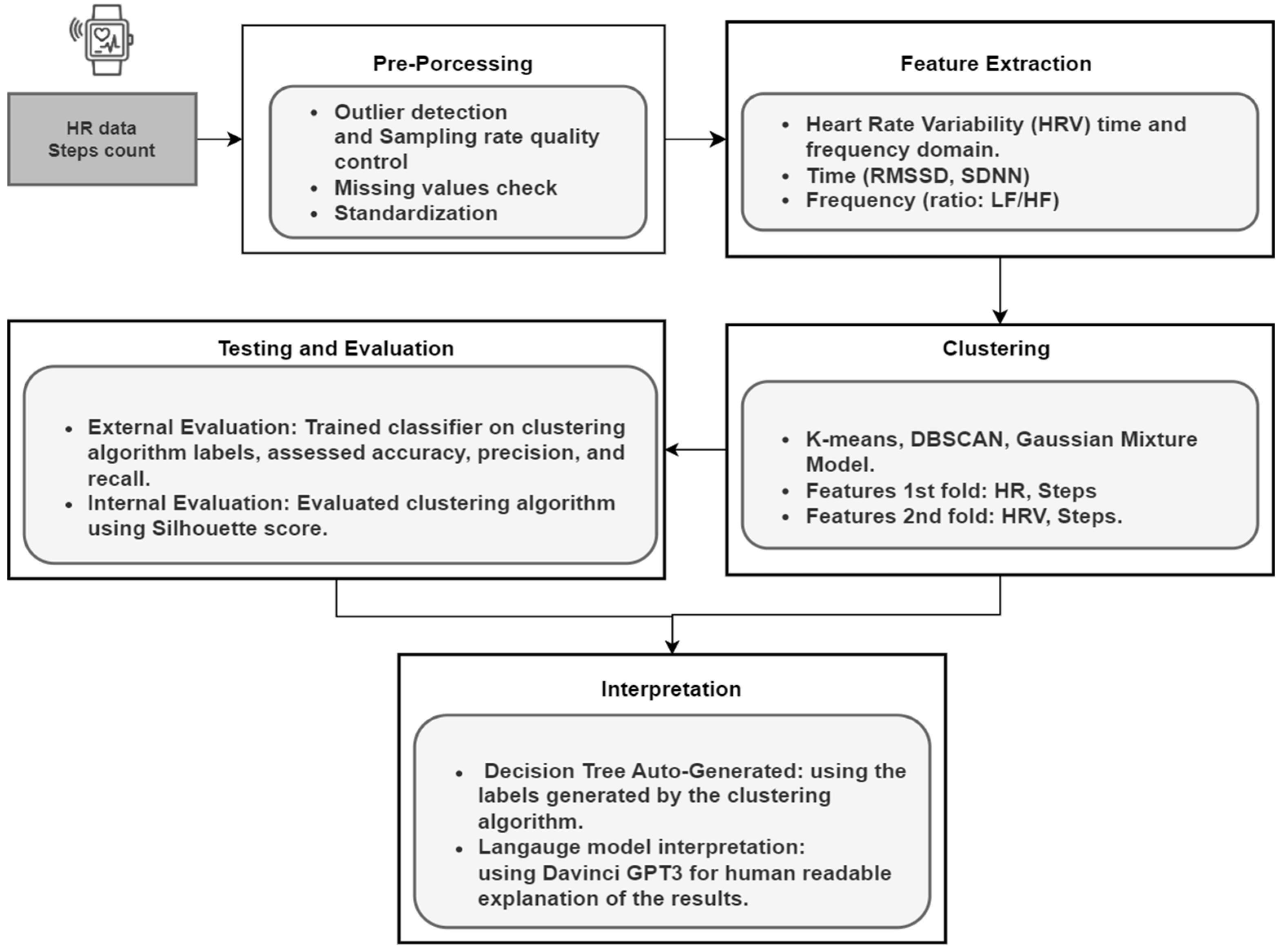
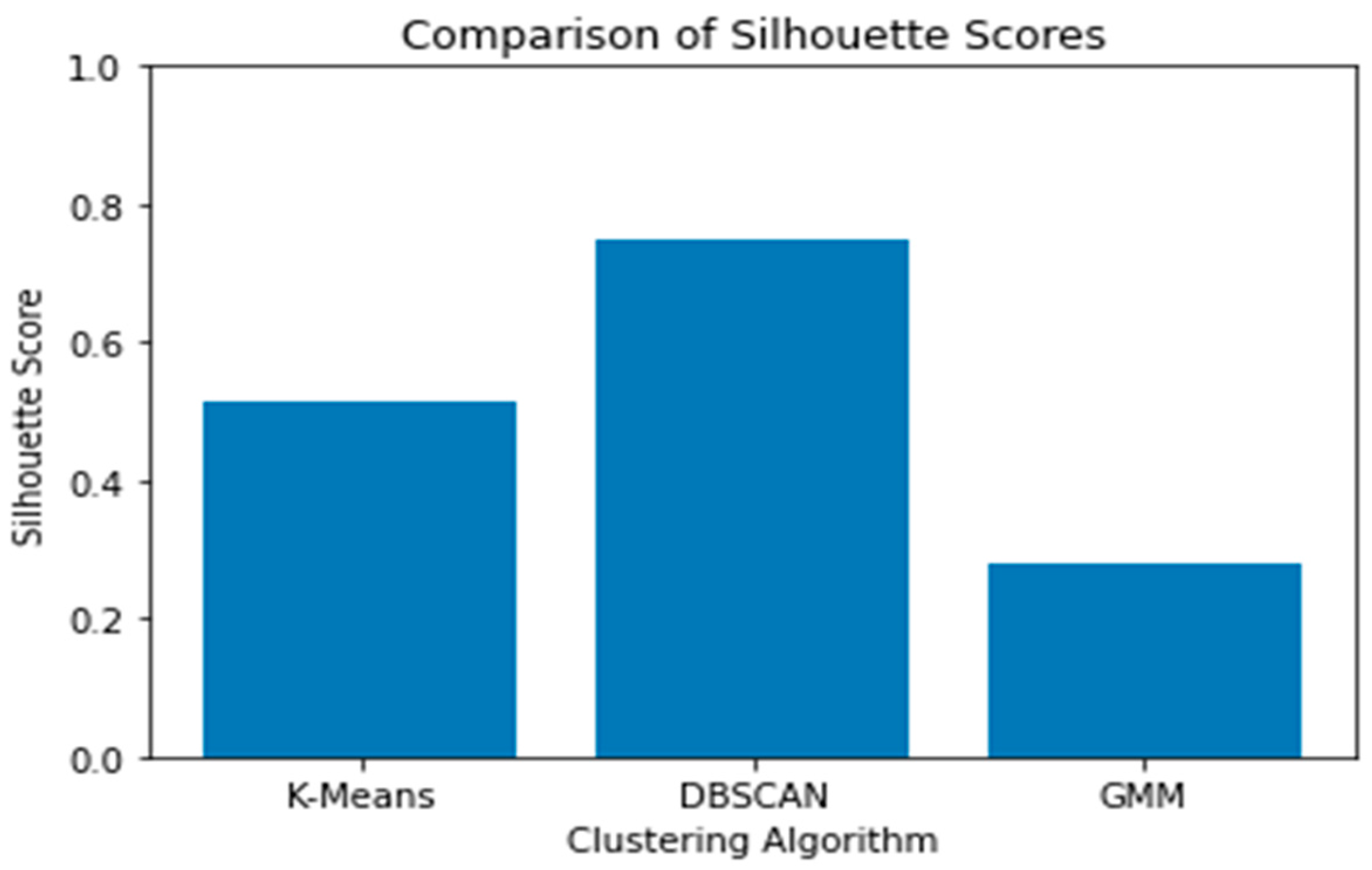
Despite the declining COVID-19 cases, global healthcare systems still face significant challenges due to ongoing infections, especially among fully vaccinated individuals, including adolescents and young adults (AYA). To tackle this issue, cost-effective alternatives utilizing technologies like Artificial Intelligence (AI) and wearable devices have emerged for disease screening, diagnosis, and monitoring. However, many AI solutions in this context heavily rely on supervised learning techniques, which pose challenges such as human labeling reliability and time-consuming data annotation. In this study, we propose an innovative unsupervised framework that leverages smartwatch data to detect and monitor COVID-19 infections. We utilize longitudinal data, including heart rate (HR), heart rate variability (HRV), and physical activity measured via step count, collected through the continuous monitoring of volunteers. Our goal is to offer effective and affordable solutions for COVID-19 detection and monitoring. Our unsupervised framework employs interpretable clusters of normal and abnormal measures, facilitating disease progression detection. Additionally, we enhance result interpretation by leveraging the language model Davinci GPT-3 to gain deeper insights into the underlying data patterns and relationships. Our results demonstrate the effectiveness of unsupervised learning, achieving a Silhouette score of 0.55. Furthermore, validation using supervised learning techniques yields high accuracy (0.884 ± 0.005), precision (0.80 ± 0.112), and recall (0.817 ± 0.037). These promising findings indicate the potential of unsupervised techniques for identifying inflammatory markers, contributing to the development of efficient and reliable COVID-19 detection and monitoring methods. Our study shows the capabilities of AI and wearables, reflecting the pursuit of low-cost, accessible solutions for addressing health challenges related to inflammatory diseases, thereby opening new avenues for scalable and widely applicable health monitoring solutions.
Keywords: AI; COVID-19 detection; clustering; unsupervised learning; wearables AI; COVID-19 detection; clustering; unsupervised learning; wearables