Article

Early Markers in Resistant Schizophrenia: Effect of the First Antipsychotic Drug

by
Georgi Panov Panov
Psychiatric Clinic, University Hospital for Active Treatment “Prof. D-r Stoian Kirkovic”, 6000 Stara Zagora, Bulgaria
Diagnostics 2022, 12(4), 803; https://doi.org/10.3390/diagnostics12040803

Submission received: 19 January 2022 / Revised: 23 February 2022 / Accepted: 23 March 2022 / Published: 25 March 2022
(This article belongs to the Special Issue Advances in the Diagnosis and Management of Psychosis)

Abstract

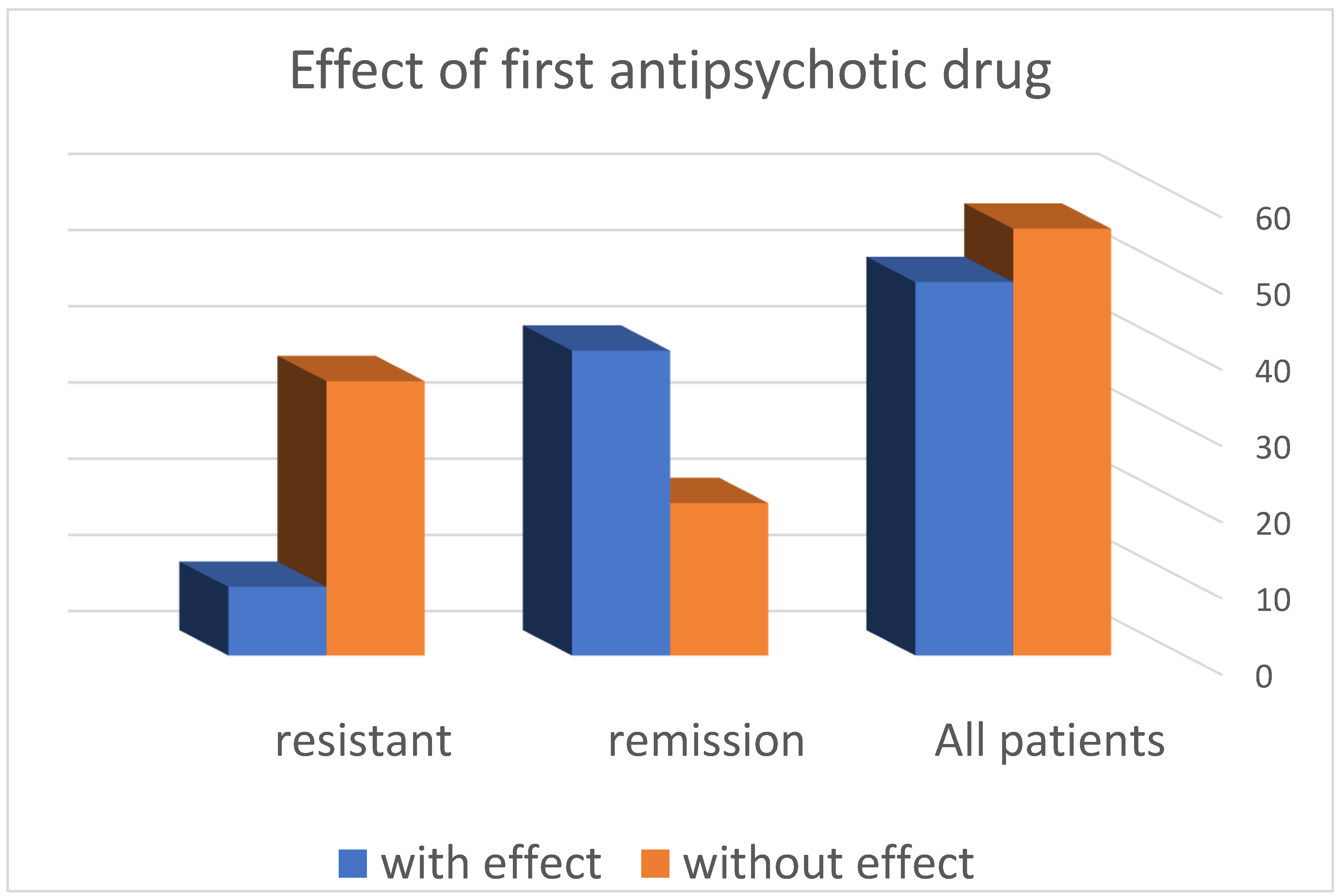
Background: Schizophrenia is a mental illness with a multifactorial etiology and clinical presentation. Treatment is mainly with antipsychotic drugs. Despite the increasing number of antipsychotic drugs, there has been no significant change in the percentage of resistant cases. These data gave us reason to look for a link between the effect of the first individually selected antipsychotic drug and the established resistance to therapy. Method: An assessment has been made of 105 patients with chronic schizophrenia with consecutive psychotic episodes. The choice of antipsychotic has been made on the basis of clinical features, history of efficacy of previously used neuroleptics, anthropometric features, as well as somatic comorbidities. Accidental use of benzodiazepines in anxiety conditions as well as correctors in indications for extrapyramidal problems have been reported. Assessment was made based on clinical observation as well as on changes in PANSS score. Results: Of the 105 observed patients, the effectiveness of the first antipsychotic effect was found in 46.7% of patients. Follow-up of patients for a period of 12 weeks revealed that 45 (42.8%) of them had resistant schizophrenia, while the remaining 60 (57.2%) achieved clinical remission and initial functional recovery. The effect of the first antipsychotic drug was established in 9 (20%) of the patients with resistant schizophrenia and in 40 (66.57%) of the patients in clinical remission. Conclusion: The evaluation of the first antipsychotic medication is significant for the prognosis of patients with schizophrenia. Its lack of effectiveness indicates a high probability of resistance and can be a good indicator of earlier change and a possible search for more “aggressive” measures to prevent future resistance and possible disability.
Keywords: resistant schizophrenia; antipsychotics; first antipsychotic drug; effect of therapy; treatment consideration; remission consensus schizophrenia resistant schizophrenia; antipsychotics; first antipsychotic drug; effect of therapy; treatment consideration; remission consensus schizophrenia