Phage Therapy for Sustainable Sea Cucumber Aquaculture


Abstract
1. Introduction
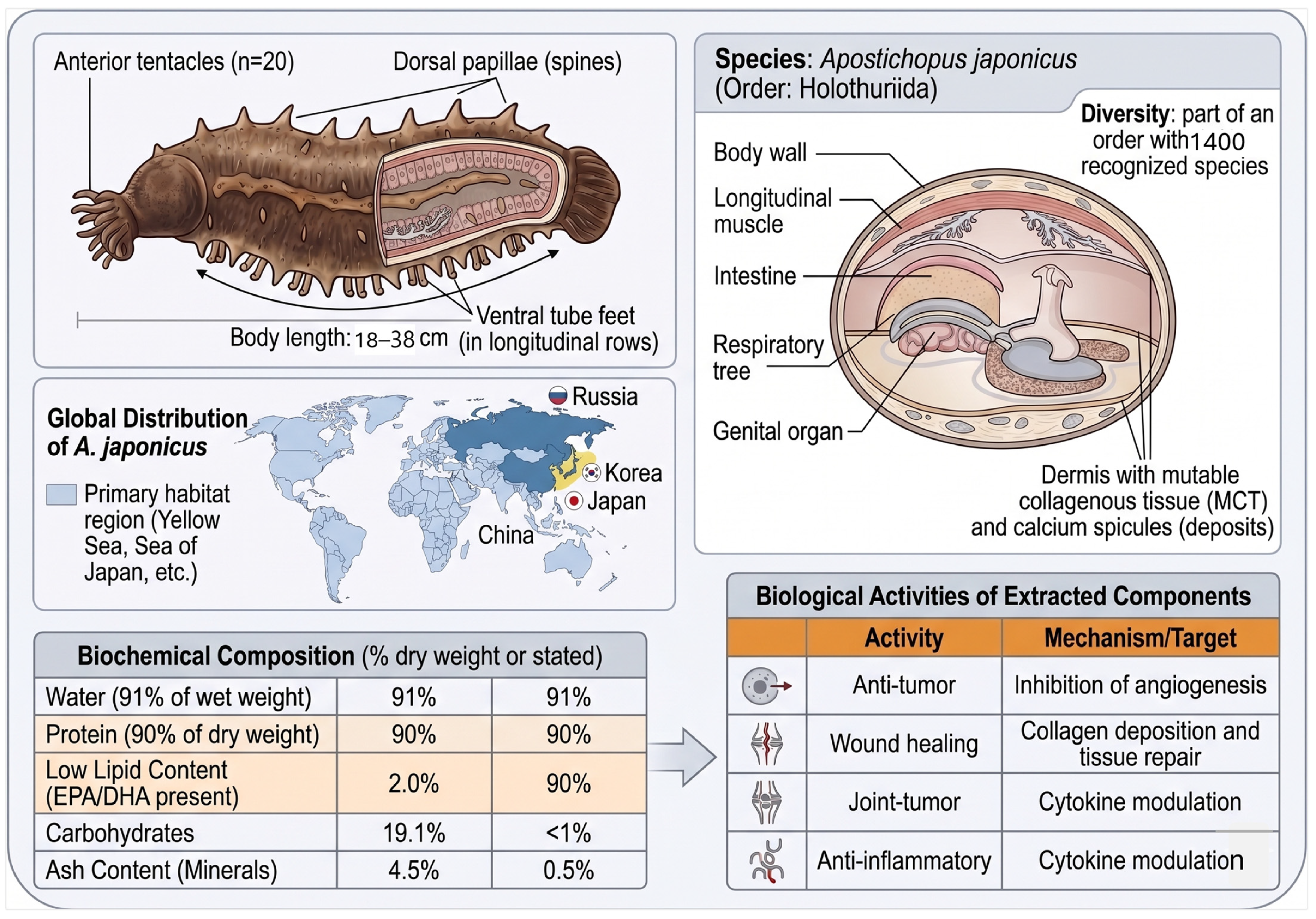
2. Status of Sea Cucumber and Sea Cucumber Farming

| Species of Sea Cucumber | Reproductive Type | Spawning Period | Oocyte Diameter (µm) | References |
|---|---|---|---|---|
| Apostichopus japonicus | Gonochoric | June to August | 120 | [17] |
| Holothuria scabra | Gonochoric | April to July | 150–200 | [18] |
| Stichopus hermanii | Gonochoric | April to September | 200 | [19] |
| Actinopyga lecanora | Fission | March to July | 324 | [20] |
| Thelenota ananas | Gonochoric | June to August | 200 | [21] |
3. Vibrio Disease and Sea Cucumber Skin Rot Syndrome
| Pathogenic Bacteria | Infected Animals | Popular Areas | References |
|---|---|---|---|
| Vibrio anguillarum | Prawns, fish, Sea cucumber | Europe, Asia | [44] |
| Vibrio vulnificus | Eel, prawns, fish | Spain, Asia | [45] |
| Vibrio fluvialis | Barramundi, carp, flounder | China | [46] |
| Vibrio harveyi | Sea bass, yellow croaker | Asia | [47] |
| Vibrio alginolyticus | Prawns, marine fish, and clams | Europe, Asia | [48] |
| Vibrio parahaemolyticus | Prawns, marine fish, and clams | Europe, Asia | [49] |
| Vibrio mimicus | Sea bream | Japan, China | [50] |
| Vibrio carchariae | Sea fish | Europe, Asia | [51] |
| Vibrio damsela | Marine fish, shrimp | Europe, Asia | [52] |
| Vibrio ordalii | Sea fish | Europe, Asia | [53] |
| Vibrio salmonicida | Salmon | UK, Norway | [54] |
| Vibrio ichthyoenteri | Flounder | Japan | [55] |
| Vibrio cholerae | Ayu | Japan | [56,57,58] |
| Vibrio splendidus | Sea cucumber, oyster | China, France | [59,60,61] |
| Pathogens | Main Incidence Areas | References |
|---|---|---|
| Vibrio splendidus | Shandong Province, Liaoning Province, Fujian Province | [62,63,64] |
| Vibrio cyclitrophicus | Liaoning Province | [65,66,67,68] |
| Vibrio alginolyticus | Shandong Province | [69] |
| Vibrio harveyi | Liaoning Province | [70,71] |
| Vibrio parahaemolyticus | Liaoning Province | [72] |
| Aeromonas salmonicida | Shandong Province | [73] |
| Pseudoalteromonas | Shandong Province, Fujian Province | [74] |
| Pseudomonas | Liaoning Province, Shandong Province | [75] |
| Shewanella smarisflavi | Liaoning Province | [76] |
4. Nonspecific Immunity of Sea Cucumbers
5. Milestones in Phage Research
6. Phage Classification and Biological Characteristics
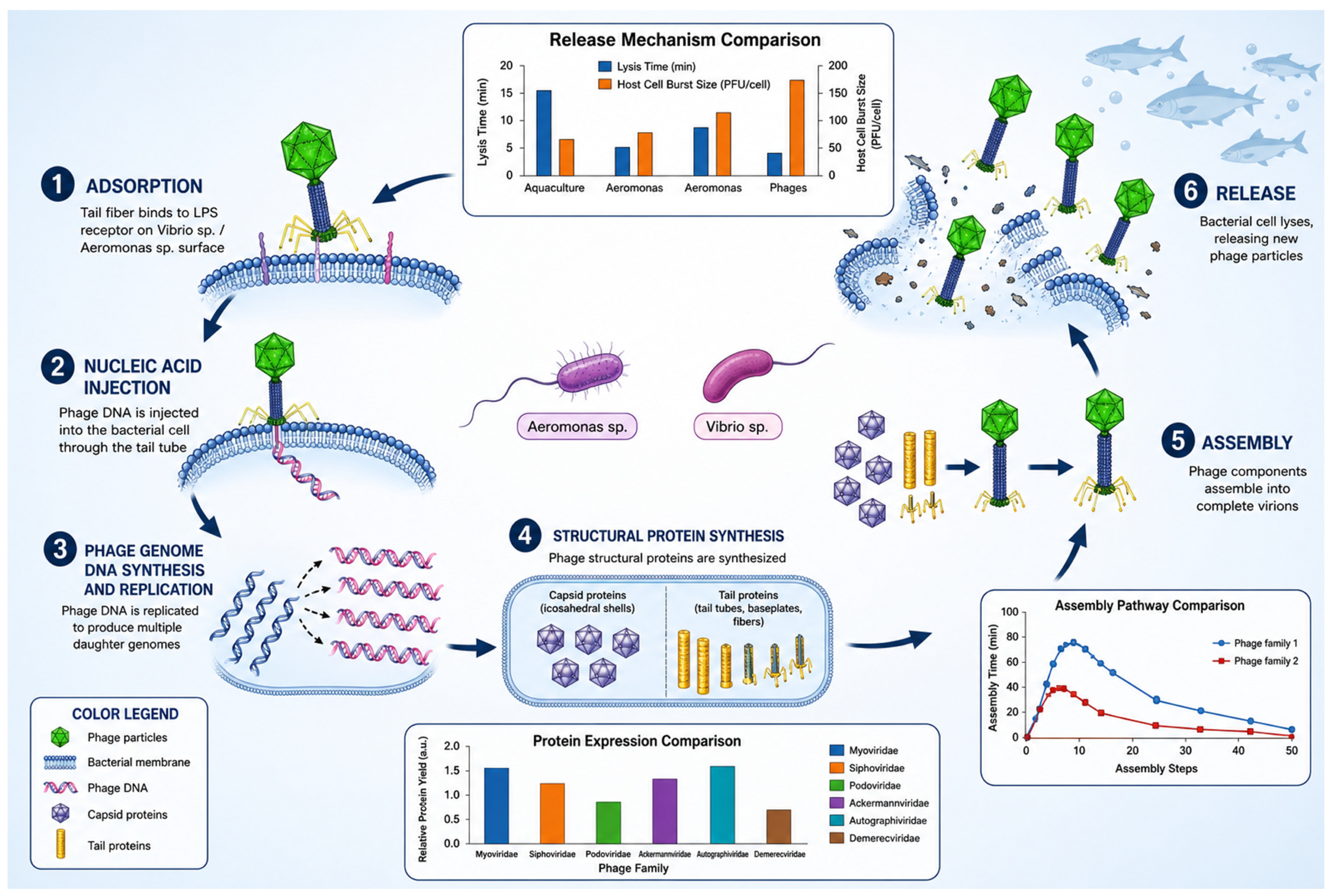
6.1. Adsorption and Penetration
6.2. DNA Synthesis and Morphogenesis
7. Phage Application Methods in Sea Cucumber Aquaculture
8. Phage Therapy in Sea Cucumber Disease Management
9. Phage Control of Major Aquaculture Pathogens
9.1. Analysis of the Necessity of Antibiotic Substitution in Aquaculture
9.2. Phages for the Prevention and Control of Aquaculture Pathogens
9.3. Phage Control of Lactococcus garvieae
9.4. Phage Control of Pseudomonas proteus
9.5. Phage Control of Vibrio harveyi
9.6. Phage Control of Vibrio parahaemolyticus
10. Prospects of Phage Application in Aquaculture
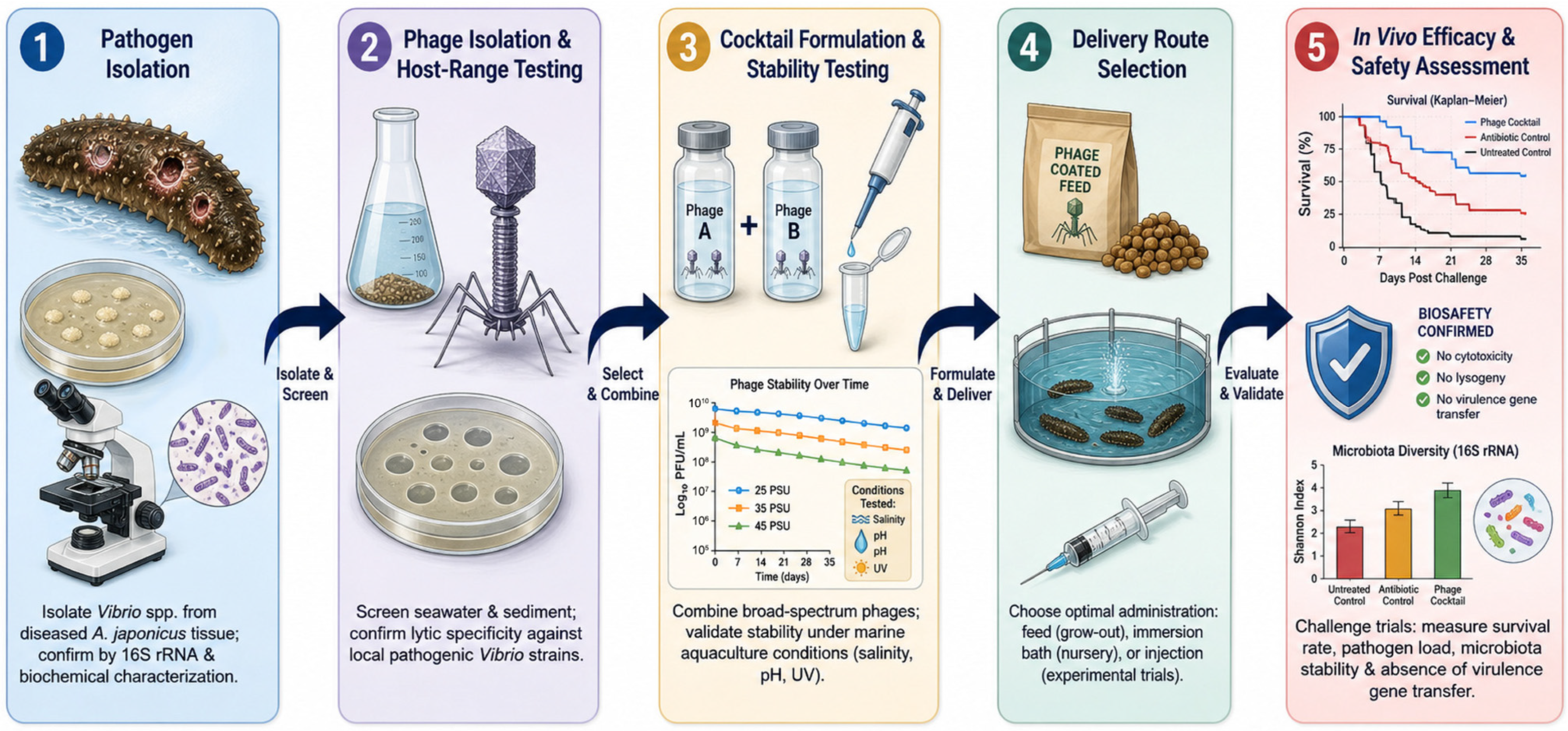
- For A. japonicus aquaculture, the host specificity of phages allows targeted control of pathogenic Vibrio species without disrupting the benthic microbial communities that support the sea cucumber’s filter-feeding and nutrient cycling. Field studies should monitor shifts in sediment microbiota following phage application to ensure ecological stability.
- Feed-based phage delivery is the most practical route for grow-out systems, but phage stability in pelleted or dried feeds must be validated. Encapsulation technologies, such as alginate beads or microparticle formulations, have shown promise in preserving phage viability through feed processing and gastrointestinal transit in other aquaculture species and warrant testing in A. japonicus.
- Phage self-replication within the water column may maintain therapeutic titers in immersion treatments, but the high organic load and microbial diversity of sea cucumber pond environments can reduce effective phage concentrations rapidly. Dosing strategies should account for phage adsorption to particulate matter and temperature-dependent inactivation.
- Nursery systems, where juvenile A. japonicus are most vulnerable to Vibrio-associated skin ulceration, represent the highest-priority application site for phage therapy. Controlled nursery trials with validated phage cocktails targeting dominant local strains should be prioritized over grow-out trials, given the greater ease of dose control and the higher economic value per animal at this stage.
- Phage performance in aquaculture is strongly influenced by environmental conditions, including temperature, pH, salinity, and organic load, which can alter phage stability and host adsorption efficiency. Results obtained under controlled laboratory conditions may not translate directly to field settings, where high biomass, variable water quality, and fluctuating pathogen loads can reduce phage performance.
- Phages are environmentally safe, biodegradable, and leave no toxic residues. Unlike antibiotics, phages do not pose risks of accumulating harmful substances in the aquatic environment, making them a sustainable choice for managing bacterial diseases in aquaculture. Phage therapy offers targeted control of bacterial pathogens in aquaculture. Beyond pathogen removal, phage application may influence microbial community composition, ecological balance, and functional stability in aquaculture systems, with potential consequences for both disease control and ecosystem resilience. Although many studies report favorable outcomes, the evidence base remains heterogeneous, and comparisons across studies should account for differences in host species, pathogen strain, delivery route, phage dose, and environmental conditions. Beyond direct antibacterial therapy, phage platforms may be explored for antigen display and vaccine development in aquatic disease control.
11. Limitations of Phage Therapy
12. Conclusions
Supplementary Materials
Author Contributions
Funding
Institutional Review Board Statement
Informed Consent Statement
Data Availability Statement
Acknowledgments
Conflicts of Interest
References
- Guenard, R. The State of World Fisheries and Aquaculture 2020; FAO: Rome, Italy, 2020. [Google Scholar]
- Fagbohun, O.F.; Joseph, J.S.; Oriyomi, O.V.; Rupasinghe, H.P.V. Saponins of North Atlantic Sea Cucumber: Chemistry, Health Benefits, and Future Prospectives. Mar. Drugs 2023, 21, 262. [Google Scholar] [CrossRef] [PubMed]
- Xue, Z.; Peng, T.; Wang, W. Classification and Immune Function of Coelomocytes in Echinoderms. Curr. Chinese Sci. 2024, 4, 25–43. [Google Scholar] [CrossRef]
- Fishery Administration Bureau of the Ministry of Agriculture and Rural Affairs; National Fisheries Technology Extension Center; China Society of Fisheries. 2024 China Fishery Statistical Yearbook; China Agricultural Publishing House: Beijing, China, 2024. [Google Scholar]
- Omont, A.; Spanopoulos-Zarco, M.; Pacheco-Vega, J.M.; Peña-Rodríguez, A. Evolving Challenges and Innovations in Sea Cucumber Aquaculture; Springer International Publishing: Cham, Switzerland, 2025. [Google Scholar]
- Cui, H.; Cong, C.; Wang, L.; Li, X.; Li, J.; Yang, H.; Li, S.; Xu, Y. Control of Edwardsiella tarda infection in turbot Scophthalmus maximus (L.) using phage vB_EtaM_ET-ABTNL-9. Aquac. Res. 2022, 53, 3010–3024. [Google Scholar] [CrossRef]
- Yang, L.; Yang, Q.; Hu, R.G.; Cong, W.; Li, S.; Kang, Y.H. The evaluation of bacteriophage therapy in aquaculture: A systematic review and meta-analysis. Aquaculture 2024, 588, 740925. [Google Scholar] [CrossRef]
- Siyanbola, K.F.; Ejiohuo, O.; Ade-adekunle, O.A.; Adekunle, F.O.; Onyeaka, H.; Furr, C.-L.L.; Hodges, F.E.; Carvalho, P.; Oladipo, E.K. Bacteriophages: Sustainable and effective solution for climate-resilient agriculture. Sustain. Microbiol. 2024, 1, qvae025. [Google Scholar] [CrossRef]
- Hasan, M.; Ahn, J. Evolutionary Dynamics between Phages and Bacteria as a Possible Approach for Designing Effective Phage Therapies against Antibiotic-Resistant Bacteria. Antibiotics 2022, 11, 915. [Google Scholar] [CrossRef] [PubMed]
- Kalatzis, P.G.; Castillo, D.; Katharios, P.; Middelboe, M. Bacteriophage interactions with marine pathogenic vibrios: Implications for phage therapy. Antibiotics 2018, 7, 15. [Google Scholar] [CrossRef]
- Mishra, A.; Kim, H.S.; Kumar, R.; Srivastava, V. Advances in Vibrio-related infection management: An integrated technology approach for aquaculture and human health. Crit. Rev. Biotechnol. 2024, 44, 1610–1637. [Google Scholar] [CrossRef]
- Yu, J.; Sawabe, T.; Yamano, R.; Koike, S.; Sakai, Y.; Mino, S. Inferring potential causative microbial factors of intestinal atrophic disease in the sea cucumber Apostichopus japonicus. Front. Mar. Sci. 2023, 10, 1225318. [Google Scholar] [CrossRef]
- Zhao, Y.; Liu, H.; Wang, Q.; Li, B. The influence of three antibiotics on the growth, intestinal enzyme activities, and immune response of the juvenile sea cucumber Apostichopus japonicus selenka. Fish. Shellfish. Immunol. 2019, 84, 434–440. [Google Scholar] [CrossRef]
- Market Growth Reports. Sea Cucumber Harvest Summary. 2024. Available online: https://www.marketgrowthreports.com/market-reports/sea-cucumber-market-118894 (accessed on 31 May 2026).
- Alaska Department of Fish and Game. Sea Cucumber Harvest Summary, 2024–2025. 2025. Available online: https://www.adfg.alaska.gov/static/fishing/PDFs/commercial/southeast/2024-2025_seacucumber_summary.pdf (accessed on 31 May 2026).
- Zhang, Z.; Zhang, W.; Hu, Z.; Li, C.; Shao, Y.; Zhao, X.; Guo, M. Environmental factors promote pathogen-induced skin ulceration syndrome outbreak by readjusting the hindgut microbiome of Apostichopus japonicus. Aquaculture 2019, 507, 155–163. [Google Scholar] [CrossRef]
- Adams, M.J.; Lefkowitz, E.J.; King, A.M.Q.; Harrach, B.; Harrison, R.L.; Knowles, N.J.; Kropinski, A.M.; Krupovic, M.; Kuhn, J.H.; Mushegian, A.R.; et al. 50 years of the International Committee on Taxonomy of Viruses: Progress and prospects. Arch. Virol. 2017, 162, 1441–1446. [Google Scholar] [CrossRef]
- Nei, M.; Rooney, A.P. Concerted and Birth-and-Death Evolution of Multigene Families. Annu. Rev. Genet. 2005, 39, 121–152. [Google Scholar] [CrossRef] [PubMed]
- Hatfull, G.F. Dark Matter of the Biosphere: The Amazing World of Bacteriophage Diversity. J. Virol. 2015, 89, 8107–8110. [Google Scholar] [CrossRef]
- Yang, H.; Ma, Y.; Wang, Y.; Yang, H.; Shen, W.; Chen, X. Transcription regulation mechanisms of bacteriophages: Recent advances and future prospects. Bioeng. Bugs 2014, 5, 300–304. [Google Scholar] [CrossRef]
- Wu, L.; McGrane, R.S.; Beattie, G.A. Light regulation of swarming motility in Pseudomonas syringae integrates signaling pathways mediated by a bacteriophytochrome and a LOV protein. MBio 2013, 4, 10–1128. [Google Scholar] [CrossRef] [PubMed]
- Xue, C. Advances in Sea Cucumber Processing Technology and Product Development; Springer International Publishing: Cham, Switzerland, 2023. [Google Scholar]
- Asha, P.S. Taxonomy of sea cucumbers. In MARBIE 2 2024; MBEMD, ICAR-CMFRI: Kochi, India, 2024; pp. 146–154. [Google Scholar]
- Kalashnikov, V.Z. History of the fishery and aquaculture of the sea cucumber Apostichopus japonicus in Russia. In The World of Sea Cucumbers; Elsevier: Amsterdam, The Netherlands, 2024; pp. 775–782. [Google Scholar]
- Sanjeewa, K.K.A.; Herath, K.H.I.N.M. Bioactive secondary metabolites in sea cucumbers and their potential use in the functional food industry. Fish. Aquat. Sci. 2023, 26, 69–86. [Google Scholar] [CrossRef]
- Li, J.; Jia, J.; Teng, Y.; Wang, X.; Xia, X.; Song, S.; Zhu, B.; Xia, X. Polysaccharides from sea cucumber (Stichopus japonicus) synergize with anti-PD1 immunotherapy to reduce MC-38 tumor burden in mice through shaping the gut microbiome. Foods 2025, 14, 387. [Google Scholar] [CrossRef]
- Janakiram, N.B.; Mohammed, A.; Bryant, T.; Lightfoot, S.; Collin, P.D.; Steele, V.E.; Rao, C.V. Improved innate immune responses by Frondanol A5, a sea cucumber extract, prevent intestinal tumorigenesis. Cancer Prev. Res. 2015, 8, 327–337. [Google Scholar] [CrossRef]
- Che Ghazali, F. Medicinal bioactive compounds to functional foods from geochemical signatures marine biomasses: Sea cucumbers, macroalgae and crown of thorns biomasses. Life Sci. Med. Biomed. 2019, 3, 42. [Google Scholar] [CrossRef]
- Maskur, M.; Sayuti, M.; Widyasari, F.; Haryo Bimo Setiarto, R. Bioactive Compound and Functional Properties of Sea Cucumbers as Nutraceutical Products. Rev. Agric. Sci. 2024, 12, 45–64. [Google Scholar] [CrossRef]
- Prisa, D. Improving plant nutrition and growth through the use of minerals extracted from the sea on Aubergine and cucumber plants. GSC Adv. Res. Rev. 2024, 20, 197–206. [Google Scholar] [CrossRef]
- Öztürk, F.; Gündüz, H. The effect of different drying methods on chemical composition, fatty acid, and amino acid profiles of sea cucumber (Holothuria tubulosa Gmelin, 1791). J. Food Process. Preserv. 2018, 42, e13723. [Google Scholar] [CrossRef]
- Senadheera, T.R.L.; Dave, D.; Shahidi, F. Sea cucumber derived type i collagen: A comprehensive review. Mar. Drugs 2020, 18, 11–13. [Google Scholar] [CrossRef] [PubMed]
- Khotimchenko, Y. Pharmacological potential of sea cucumbers. Int. J. Mol. Sci. 2018, 19, 1342. [Google Scholar] [CrossRef]
- Salindeho, N.; Nurkolis, F.; Gunawan WBen Handoko, M.N.; Samtiya, M.; Muliadi, R.D. Anticancer and anticholesterol attributes of sea cucumbers: An opinion in terms of functional food applications. Front. Nutr. 2022, 9, 986986. [Google Scholar] [CrossRef] [PubMed]
- Siddiqui, R.; Boghossian, A.; Khan, N.A. Sea cucumber as a therapeutic aquatic resource for human health. Fish. Aquat. Sci. 2022, 25, 251–263. [Google Scholar] [CrossRef]
- Hossain, A.; Dave, D.; Shahidi, F. Antioxidant Potential of Sea Cucumbers and Their Beneficial Effects on Human Health. Mar. Drugs 2022, 20, 521. [Google Scholar] [CrossRef]
- Bordbar, S.; Anwar, F.; Saari, N. High-value components and bioactives from sea cucumbers for functional foods—A review. Mar. Drugs 2011, 9, 1761–1805. [Google Scholar] [CrossRef]
- Onohuean, H.; Agwu, E.; Nwodo, U.U. A Global Perspective of Vibrio Species and Associated Diseases: Three-Decade Meta-Synthesis of Research Advancement. Environ. Health Insights 2022, 16, 11786302221099406. [Google Scholar] [CrossRef]
- Sampaio, A.; Silva, V.; Poeta, P.; Aonofriesei, F. Vibrio spp.: Life Strategies, Ecology, and Risks in a Changing Environment. Diversity 2022, 14, 97. [Google Scholar] [CrossRef]
- Ina-Salwany, M.Y.; Al-saari, N.; Mohamad, A.; Mursidi, F.; Mohd-Aris, A.; Amal, M.N.A.; Kasai, H.; Mino, S.; Sawabe, T.; Zamri-Saad, M. Vibriosis in Fish: A Review on Disease Development and Prevention. J. Aquat. Anim. Health 2019, 31, 3–22. [Google Scholar] [CrossRef]
- Balasubramanian, B.; Liu, W.C.; Sattanathan, G. Aquaculture Science and Engineering; Springer: Singapore, 2022. [Google Scholar]
- Yao, L.; He, P.; Xia, Z.; Li, J.; Liu, J. Typical Marine Ecological Disasters in China Attributed to Marine Organisms and Their Significant Insights. Biology 2024, 13, 678. [Google Scholar] [CrossRef]
- Liu, H.; Zheng, F.; Sun, X.; Hong, X.; Dong, S.; Wang, B.; Tang, X.; Wang, Y. Identification of the pathogens associated with skin ulceration and peristome tumescence in cultured sea cucumbers Apostichopus japonicus (Selenka). J. Invertebr. Pathol. 2010, 105, 236–242. [Google Scholar] [CrossRef]
- Hickey, M.E.; Lee, J.L. A comprehensive review of Vibrio (Listonella) anguillarum: Ecology, pathology and prevention. Rev. Aquac. 2018, 10, 585–610. [Google Scholar] [CrossRef]
- Amaro, C.; Sanjuán, E.; Fouz, B.; Pajuelo, D.; Lee, C.-T.; Hor, L.-I.; Barrera, R. The Fish Pathogen Vibrio vulnificus Biotype 2: Epidemiology, Phylogeny, and Virulence Factors Involved in Warm-Water Vibriosis. Microbiol. Spectr. 2015, 3, 10–1128. [Google Scholar] [CrossRef] [PubMed]
- Xu, K.; Wang, Y.; Yang, W.; Cai, H.; Zhang, Y.; Huang, L. Strategies for Prevention and Control of Vibriosis in Asian Fish Culture. Vaccines 2023, 11, 98. [Google Scholar] [CrossRef]
- Raharjo, H.M.; Budiyansah, H.; Mursalim, M.F.; Chokmangmeepisarn, P.; Sakulworakan, R.; Madyod, S.; Sewaka, M.; Sonthi, M.; Debnath, P.P.; Elayaraja, S.; et al. Distribution of Vibrionaceae in farmed Asian sea bass, Lates calcarifer in Thailand and their high prevalence of antimicrobial resistance. J. Fish. Dis. 2022, 45, 1355–1371. [Google Scholar] [CrossRef]
- Haque, Z.F.; Islam, M.S.; Sabuj, A.A.M.; Pondit, A.; Sarkar, A.K.; Hossain, M.G.; Saha, S. Molecular Detection and Antibiotic Resistance of Vibrio cholerae, Vibrio parahaemolyticus, and Vibrio alginolyticus from Shrimp (Penaeus monodon) and Shrimp Environments in Bangladesh. Aquac. Res. 2023, 2023, 5436552. [Google Scholar] [CrossRef]
- Reantaso, M.G.B.; Arthur, J.R. FAO Technical Assistance Efforts to Deal with Acute Hepatopancreatic Necrosis Disease (AHPND) of Cultured Shrimp. Asian Fish. Sci. 2018, 31S, 1–14. [Google Scholar] [CrossRef]
- Elgendy, M.Y.; Abdelsalam, M.; Kenawy, A.M.; Ali, S.E. Vibriosis outbreaks in farmed Nile tilapia (Oreochromis niloticus) caused by Vibrio mimicus and V. cholerae. Aquac. Int. 2022, 30, 2661–2677. [Google Scholar] [CrossRef]
- Lee, K.K.; Liu, P.C.; Chuang, W.H. Pathogenesis of gastroenteritis caused by Vibrio carchariae in cultured marine fish. Mar. Biotechnol. 2002, 4, 267–277. [Google Scholar] [CrossRef] [PubMed]
- Gouife, M.; Chen, S.; Huang, K.; Nawaz, M.; Jin, S.; Ma, R.; Wang, Y.; Xue, L.; Xie, J. Photobacterium damselae subsp. damselae in mariculture. Aquac. Int. 2022, 30, 1453–1480. [Google Scholar] [CrossRef]
- Steinum, T.M.; Karataş, S.; Martinussen, N.T.; Meirelles, P.M.; Thompson, F.L.; Colquhoun, D.J. Multilocus sequence analysis of close relatives Vibrio anguillarum and Vibrio ordalii. Appl. Environ. Microbiol. 2016, 82, 5496–5504. [Google Scholar] [CrossRef] [PubMed]
- Nørstebø, S.F.; Lotherington, L.; Landsverk, M.; Bjelland, A.M.; Sørum, H. Aliivibrio salmonicida requires O-antigen for virulence in Atlantic salmon (Salmo salar L.). Microb. Pathog. 2018, 124, 322–331. [Google Scholar] [CrossRef]
- Li, H.; Kim, S.M.; Park, S.I. Phenotypic and genetic characteristics of Vibrio ichthyoenteri isolated from the olive flounder, Paralichthys olivaceus of culturing size. J. Fish. Pathol. 2006, 19, 127–139. [Google Scholar]
- Kawai, M.; Ota, A.; Takemura, T.; Nakai, T.; Maruyama, F. Continuation and replacement of Vibrio cholerae non-O1 clonal genomic groups isolated from Plecoglossus altivelis fish in freshwaters. Environ. Microbiol. 2020, 22, 4473–4484. [Google Scholar] [CrossRef]
- Guo, L.; Zheng, H.; Lu, J.; Li, S.; Anchen, W.; Huang, M.; Fu, Y.; Zhuang, L. Extraction, identification, mechanism of action, and application of Hu Zhang (Polygonum cuspidatum) extracts against non-O1/O139 Vibrio cholerae in prawn storage. Lwt 2023, 185, 115135. [Google Scholar] [CrossRef]
- Janecko, N.; Bloomfield, S.J.; Palau, R.; Mather, A.E. Whole genome sequencing reveals great diversity of Vibrio spp in prawns at retail. Microb. Genom. 2021, 7, 000647. [Google Scholar] [CrossRef]
- Dong, X.; Wang, H.; Zou, P.; Chen, J.; Liu, Z.; Wang, X.; Huang, J. Complete genome sequence of Vibrio campbellii strain 20130629003S01 isolated from shrimp with acute hepatopancreatic necrosis disease. Gut Pathog. 2017, 9, 31. [Google Scholar] [CrossRef]
- Cao, X.; Ye, P.; Li, C.; Ding, D.; Kerdsin, A.; Jiang, L. Vibrio phage vB_VneM_NB-1 inhibiting Vibrio nereis mediated coelomocyte apoptosis in Apostichopus japonicus. Aquaculture 2025, 597, 741916. [Google Scholar] [CrossRef]
- Shi, Y.; Liao, C.; Dai, F.; Zhang, Y.; Li, C.; Liang, W. Vibrio splendidus Fur regulates virulence gene expression, swarming motility, and biofilm formation, affecting its pathogenicity in Apostichopus japonicus. Front. Vet. Sci. 2023, 10, 1207831. [Google Scholar] [CrossRef]
- Su, J.; Zhang, Y.; Hu, T.; Ming, H.; Xie, Y.; Jin, Y.; Shi, T.; Fan, J. Prevalence, antibiotic and heavy metal resistance of Vibrio spp. isolated from the clam Meretrix meretrix at different ages in Geligang, Liaohe estuary in China. Front. Mar. Sci. 2022, 9, 1071371. [Google Scholar] [CrossRef]
- Huang, X.; Huang, K.; Chen, S.; Yin, X.; Pérez-Lorenzo, M.; Teira, E.; Fernández, E.; Wang, X. A Diverse Vibrio Community in Ría de Vigo (Northwestern Spain). Biology 2024, 13, 986. [Google Scholar] [CrossRef]
- Oyster, L.; Richards, G.P.; Watson, M.A.; Madison, D.; Soffer, N.; Needleman, D.S.; Soroka, D.S.; Uknalis, J.; Baranzoni, G.M.; Church, K.M.; et al. Bacteriophages against Vibrio coralliilyticus and Vibrio tubiashii: Isolation, characterization, and remediation of larval oyster mortalities. Appl. Environ. Microbiol. 2021, 87, e00008-21. [Google Scholar] [CrossRef]
- Li, C.M.; Wang, N.N.; Zhou, L.Y.; Wang, X.P.; Chen, G.J.; Du, Z.J. Vibrio albus sp. nov., isolated from marine sediment. Int. J. Syst. Evol. Microbiol. 2019, 69, 1919–1925. [Google Scholar] [CrossRef]
- Zhang, X.; Huang, B.W.; Zheng, Y.D.; Xin, L.S.; Chen, W.B.; Yu, T.; Li, C.; Wang, C.-M.; Bai, C.-M. Identification and Characterization of Infectious Pathogens Associated with Mass Mortalities of Pacific Oyster (Crassostrea gigas) Cultured in Northern China. Biology 2023, 12, 759. [Google Scholar] [CrossRef]
- Song, M.; Zhang, S.; Xiao, K.; Zhang, X.; Li, C. Intestinal microbiota protects Vibrio splendidus induced intestinal epithelium damage by inhibiting apoptosis and promoting proliferation in Apostichopus japonicus. Aquaculture 2024, 588, 740924. [Google Scholar] [CrossRef]
- Wei, Z.; Zhao, L.; Wang, S.; Chang, L.; Shi, J.; Kong, X.; Li, M.; Lin, J.; Zhang, W.; Bao, Z.; et al. Paralytic shellfish toxins producing dinoflagellates cause dysbacteriosis in scallop gut microbial biofilms. Ecotoxicol. Environ. Saf. 2024, 273, 116146. [Google Scholar] [CrossRef]
- Zhang, J.; Cao, Z.; Li, Z.; Wang, L.; Li, H.; Wu, F.; Jin, L.; Li, X.; Li, S.; Xu, Y. Effect of bacteriophages on Vibrio alginolyticus infection in the sea cucumber, Apostichopus japonicus (Selenka). J. World Aquac. Soc. 2015, 46, 149–158. [Google Scholar] [CrossRef]
- Wang, W.; Meng, X.; Wu, Z.; Fu, Y.; Li, X.; Chen, S. Isolation of a virulent Vibrio alginolyticus Bacteriophage and Its Application in Shrimp culture. Res. Sq. 2024. [Google Scholar] [CrossRef]
- Yang, A.; Li, W.; Tao, Z.; Ye, H.; Xu, Z.; Li, Y.; Gao, Y.; Yan, X. Vibrio harveyi isolated from marine aquaculture species in eastern China and virulence to the large yellow croaker (Larimichthys crocea). J. Appl. Microbiol. 2021, 131, 1710–1721. [Google Scholar] [CrossRef]
- Bai, Y.; Yang, Q.; Sun, Y.; Li, F.; Sun, J.; Yang, S.; Yang, D.; Peng, Z.; Yang, B.; Xu, J.; et al. Antimicrobial susceptibility and genomic characterization of Vibrio parahaemolyticus isolated from aquatic foods in 15 provinces, China, 2020. Int. J. Food Microbiol. 2024, 418, 110737. [Google Scholar] [CrossRef]
- Xu, Z.; Jin, P.; Zhou, X.; Zhang, Y.; Wang, Q.; Liu, X.; Shao, S.; Liu, Q. Isolation of a Virulent Aeromonas salmonicida subsp. masoucida masoucida bacteriophage and its application in phage therapy in turbot (Scophthalmus maximus). Appl. Environ. Microbiol. 2021, 87, e01468-21. [Google Scholar] [CrossRef]
- Li, M.; Wu, W.; You, W.; Huang, S.; Huang, M.; Luo, X.; Lu, Y.; Ke, C.; Xie, Q. A novel screening method for the detection of Pseudoalteromonas shioyasakiensis, an emerging opportunistic pathogen that caused the mass mortality of juvenile Pacific abalone (Haliotis discus hannai) during a record-breaking heat wave. Aquaculture 2021, 545, 737191. [Google Scholar] [CrossRef]
- Chai, A.L.; Ben, H.Y.; Guo, W.T.; Shi, Y.X.; Xie, X.W.; Li, L.; Li, B.-J. Quantification of Viable Cells of Pseudomonas syringae pv. tomato in Tomato Seed Using Propidium Monoazide and a Real-Time PCR Assay. Plant Dis. 2020, 104, 2225–2232. [Google Scholar] [CrossRef]
- Fang, Y.; Wang, Y.; Li, Z.; Liu, Z.; Li, X.; Diao, B.; Kan, B.; Wang, D. Distribution and genetic characteristics of SXT/R391 integrative conjugative elements in Shewanella spp. From China. Front. Microbiol. 2018, 9, 920. [Google Scholar] [CrossRef]
- Purcell, S.W.; Conand, C.; Uthicke, S.; Byrne, M. Ecological Roles of Exploited Sea Cucumbers. In Oceanography and Marine Biology; CRC Press: Boca Raton, FL, USA, 2016; Volume 54, pp. 367–386. [Google Scholar] [CrossRef]
- Martins, Y.C.; Ribeiro-Gomes, F.L.; Daniel-Ribeiro, C.T. A short history of innate immunity. Mem. Inst. Oswaldo Cruz 2023, 118, e230023. [Google Scholar] [CrossRef]
- Chiaramonte, M.; Russo, R. The echinoderm innate humoral immune response. Ital. J. Zool. 2015, 82, 300–308. [Google Scholar] [CrossRef]
- Cooper, E.L. Advances in Comparative Immunology; Springer: Berlin/Heidelberg, Germany, 2018. [Google Scholar]
- Tamilmani, T.; Biswas, A.; Mandal, A. Performance, immune response and blood biochemical traits of broiler chickens fed graded levels of dietary aflatoxin and ochratoxin combination. Indian. J. Anim. Res. 2021, 55, 704–709. [Google Scholar] [CrossRef]
- Rathinam, R.B.; Iburahim, S.A.; Tripathi, G. The Immune system of Sea cucumbers: An evidential approach. Food Sci. Rep. 2020, 1, 49–54. [Google Scholar]
- Moguel-Salazar, F.; Ortiz-Vázquez, E.; Rodríguez-Canul, R.; Olivera-Castillo, L. Antimicrobial activity of aqueous extracts of sea cucumber (Isostichopus badionotus) from the coast of Yucatan, Mexico. Afr. J. Microbiol. Res. 2013, 7, 3621–3626. [Google Scholar] [CrossRef]
- Haug, T.; Kjuul, A.K.; Styrvold, O.B.; Sandsdalen, E.; Olsen, Ø.M.; Stensvåg, K. Antibacterial activity in Strongylocentrotus droebachiensis (Echinoidea), Cucumaria frondosa (Holothuroidea), and Asterias rubens (Asteroidea). J. Invertebr. Pathol. 2002, 81, 94–102. [Google Scholar] [CrossRef]
- Caulier, G.; Jobson, S.; Wambreuse, N.; Borrello, L.; Delroisse, J.; Eeckhaut, I.; Mercier, A.; Hamel, J.-F. Vibratile cells and hemocytes in sea cucumbers—Clarifications and new paradigms. In The World of Sea Cucumbers; Elsevier: Amsterdam, The Netherlands, 2024; pp. 403–412. [Google Scholar]
- Li, Q.; Ren, Y.; Luan, L.; Zhang, J.; Qiao, G.; Wang, Y.; Ye, S.; Li, R. Localization and characterization of hematopoietic tissues in adult sea cucumber, Apostichopus japonicus. Fish. Shellfish. Immunol. 2019, 84, 1–7. [Google Scholar] [CrossRef]
- Fan, X.; Wu, K.; Tian, X.; Benjakul, S.; Li, Y.; Sang, X.; Zhao, Q.; Zhang, J. Endogenous Proteases in Sea Cucumber (Apostichopus japonicas): Deterioration and Prevention during Handling, Processing, and Preservation. Foods 2024, 13, 2153. [Google Scholar] [CrossRef]
- Xue, H.; Liang, B.; Wang, Y.; Gao, H.; Fang, S.; Xie, K.; Tan, J. The regulatory effect of polysaccharides on the gut microbiota and their effect on human health: A review. Int. J. Biol. Macromol. 2024, 270, 132170. [Google Scholar] [CrossRef]
- Rathinam, R.B.; Acharya, A.; Robina, A.J.; Banu, H.; Tripathi, G. The immune system of marine invertebrates: Earliest adaptation of animals. Comp. Immunol. Rep. 2024, 7, 200163. [Google Scholar] [CrossRef]
- Canicatti, C. The lytic system of holothuria polii (Echinodermata): A review. Bolletino Zool. 1988, 55, 139–144. [Google Scholar] [CrossRef]
- Inguglia, L.; Chiaramonte, M.; Arizza, V.; Turiák, L.; Vékey, K.; Drahos, L.; Pitonzo, R.; Avellone, G.; Di Stefano, V. Changes in the proteome of sea urchin Paracentrotus lividus coelomocytes in response to LPS injection into the body cavity. PLoS ONE 2020, 15, e0228893. [Google Scholar] [CrossRef] [PubMed]
- Ahmmed, M.K.; Bhowmik, S.; Giteru, S.G.; Zilani, M.N.H.; Adadi, P.; Islam, S.S.; Kanwugu, O.N.; Haq, M.; Ahmmed, F.; Ng, C.C.W.; et al. An Update of Lectins from Marine Organisms: Characterization, Extraction Methodology, and Potential Biofunctional Applications. Mar. Drugs 2022, 20, 430. [Google Scholar] [CrossRef]
- Muehlenbachs, A. Viruses and Man: A History of Interactions; Springer International Publishing: New York, NY, USA, 2015. [Google Scholar]
- Farhan, R.; Kalim, F.; Hadi, F. Bacteriophage Therapy: Effective Antibiotic Replacer Against Emerging Ghost of Antimicrobial Resistant Bacteria. Int. J. Agric. Biosci. 2023, 1, 158–167. [Google Scholar] [CrossRef]
- Nicolas, M.; Trotereau, A.; Culot, A.; Moodley, A.; Atterbury, R.; Wagemans, J.; Lavigne, R.; Velge, P.; Schouler, C. Isolation and Characterization of a Novel Phage Collection against Avian-Pathogenic Escherichia coli. Microbiol. Spectr. 2023, 11, e04296-22. [Google Scholar] [CrossRef] [PubMed]
- Myelnikov, D. An Alternative Cure: The Adoption and Survival of Bacteriophage Therapy in the USSR, 1922-1955. J. Hist. Med. Allied Sci. 2018, 73, 385–411. [Google Scholar] [CrossRef] [PubMed]
- Salmond, G.P.C.; Fineran, P.C. A century of the phage: Past, present and future. Nat. Rev. Microbiol. 2015, 13, 777–786. [Google Scholar] [CrossRef] [PubMed]
- Ackermann, H.-W.; Ackermann, H.-W. The first phage electron micrographs. Bacteriophage 2011, 1, 225–227. [Google Scholar] [CrossRef]
- Summers, W.C. The Cold War and Phage Therapy: How Geopolitics Stalled Development of Viruses as Antibacterials. Annu. Rev. Virol. 2024, 11, 381–393. [Google Scholar] [CrossRef]
- Harper, D.R.; Abedon, S.T.; Burrowes, B.H.; McConville, M.L. Bacteriophages: Biology, Technology, Therapy; Springer International Publishing: New York, NY, USA, 2021; Volume 2. [Google Scholar]
- Kortright, K.E.; Chan, B.K.; Koff, J.L.; Turner, P.E. Phage Therapy: A Renewed Approach to Combat Antibiotic-Resistant Bacteria. Cell Host Microbe 2019, 25, 219–232. [Google Scholar] [CrossRef]
- Sarhan, W.A.; Azzazy, H.M.E. Phage approved in food, why not as a therapeutic? Expert. Rev. Anti Infect. Ther. 2015, 13, 91–101. [Google Scholar] [CrossRef]
- Strużyńska, L.; Dąbrowska-Bouta, B.; Sulkowski, G.; Rafałowska, U. A glycogen synthase kinase-3 inhibitor (TDZD-8) attenuates liver and neuromuscular injury caused by burns in rats. J. Neurochem. 2003, 85, 27. [Google Scholar] [CrossRef]
- Jankowiak, M.; Rój, J. Is Structural Equation Modeling Applicable in a Population Health Determinants Assessment? An Experience from the European Union. PLoS ONE 2025, 20, e0337042. [Google Scholar] [CrossRef]
- Onallah, H.; Hazan, R.; Nir-Paz, R.; Brownstein, M.J.; Fackler, J.R.; Horne, B.A.; Hopkins, R.; Basu, S.; Yerushalmy, O.; Alkalay-Oren, S.; et al. Refractory Pseudomonas aeruginosa infections treated with phage PASA16: A compassionate use case series. Med 2023, 4, 600–611.e4. [Google Scholar] [CrossRef]
- Lammens, E.; Volke, D.C.; Schroven, K.; Voet, M.; Kerremans, A.; Lavigne, R.; Hendrix, H. A SEVA-based, CRISPR-Cas3-assisted genome engineering approach for Pseudomonas with efficient vector curing. Microbiol. Spectr. 2023, 11, e02707-23. [Google Scholar] [CrossRef]
- Jaglan, A.B.; Anand, T.; Verma, R.; Vashisth, M.; Virmani, N.; Bera, B.C.; Vaid, R.K.; Tripathi, B.N. Tracking the phage trends: A comprehensive review of applications in therapy and food production. Front. Microbiol. 2022, 13, 993990. [Google Scholar] [CrossRef]
- Ginn, S.L.; Mandwie, M.; Alexander, I.E.; Edelstein, M.; Abedi, M.R. Gene therapy clinical trials worldwide to 2023—An update. J. Gene Med. 2024, 26, e3721. [Google Scholar] [CrossRef]
- Verbeken, G.; Pirnay, J.P. European regulatory aspects of phage therapy: Magistral phage preparations. Curr. Opin. Virol. 2022, 52, 24–29. [Google Scholar] [CrossRef]
- Fenner, F. The classification of viruses; why, when, and how. Aust. J. Exp. Biol. Med. Sci. 1974, 52, 223–240. [Google Scholar] [CrossRef]
- Ackermann, H.W. Tailed bacteriophages: The order caudovirales. Adv. Virus Res. 1998, 51, 135–201. [Google Scholar] [CrossRef]
- Ohshima, K.; Mitoma, S.; Gibbs, A.J. The genetic diversity of narcissus viruses related to turnip mosaic virus blur arbitrary boundaries used to discriminate potyvirus species. PLoS ONE 2018, 13, e0190511. [Google Scholar] [CrossRef]
- Turner, D.; Kropinski, A.M.; Adriaenssens, E.M. A roadmap for genome-based phage taxonomy. Viruses 2021, 13, 506. [Google Scholar] [CrossRef]
- Ackermann, H.W. 5500 Phages examined in the electron microscope. Arch. Virol. 2007, 152, 227–243. [Google Scholar] [CrossRef]
- Rohwer, F.; Edwards, R. The phage proteomic tree: A genome-based taxonomy for phage. J. Bacteriol. 2002, 184, 4529–4535. [Google Scholar] [CrossRef]
- Bao, Y.; Zhang, T.; Guo, X.; Zhang, X.; Zheng, X.; Zhang, M. Fast and Accurate Taxonomic Classification for Viral Genomes with VISTA. Res. Sq. 2023. [Google Scholar] [CrossRef]
- Dion, M.B.; Oechslin, F.; Moineau, S. Phage diversity, genomics and phylogeny. Geography 2004, 24, 151–154. [Google Scholar] [CrossRef]
- Huddleston, J.E. Rulers and sensors in Chlamydomonas. Nat. Rev. Microbiol. 2011, 9, 397. [Google Scholar] [CrossRef]
- Arisaka, F.; Yap, M.L.; Kanamaru, S.; Rossmann, M.G. Molecular assembly and structure of the bacteriophage T4 tail. Biophys. Rev. 2016, 8, 385–396. [Google Scholar] [CrossRef]
- Fokine, A.; Rossmann, M.G. Molecular architecture of tailed double-stranded DNA phages. Bacteriophage 2014, 4, e28281. [Google Scholar] [CrossRef]
- Atanasova, N.S.; Senčilo, A.; Pietilä, M.K.; Roine, E.; Oksanen, H.M.; Bamford, D.H. Chapter One—Comparison of Lipid-Containing Bacterial and Archaeal Viruses. In Advances in Virus Research; Maramorosch, K., Mettenleiter, T.C., Eds.; Academic Press: Cambridge, MA, USA, 2015; pp. 1–61. [Google Scholar]
- Podgorski, J.M.; Freeman, K.; Gosselin, S.; Huet, A.; Conway, J.F.; Bird, M.; Grecco, J.; Patel, S.; Jacobs-Sera, D.; Hatfull, G.; et al. A structural dendrogram of the actinobacteriophage major capsid proteins provides important structural insights into the evolution of capsid stability. Structure 2023, 31, 282–294.e5. [Google Scholar] [CrossRef]
- De Smet, J.; Hendrix, H.; Blasdel, B.G.; Danis-Wlodarczyk, K.; Lavigne, R. Pseudomonas predators: Understanding and exploiting phage–host interactions. Nat. Rev. Microbiol. 2017, 15, 517–530. [Google Scholar] [CrossRef]
- Clokie, M.R.J.; Millard, A.D.; Letarov, A.V.; Heaphy, S. Phages in nature. Bacteriophage 2011, 1, 31–45. [Google Scholar] [CrossRef]
- Brüssow, H.; Canchaya, C.; Hardt, W.-D. Phages and the Evolution of Bacterial Pathogens: From Genomic Rearrangements to Lysogenic Conversion. Microbiol. Mol. Biol. Rev. 2004, 68, 560–602. [Google Scholar] [CrossRef]
- Noman, N.; Inniss, M.; Iba, H.; Way, J.C. Pulse detecting genetic circuit—A new design approach. PLoS ONE 2016, 11, e0167162. [Google Scholar] [CrossRef]
- Zupancic, M.L.; Tran, H.; Hofmeister, A.E.M. Chromosomal organization governs the timing of cell type-specific gene expression required for spore formation in Bacillus subtilis. Mol. Microbiol. 2001, 39, 1471–1481. [Google Scholar] [CrossRef]
- Weinbauer, M.G. Ecology of prokaryotic viruses. FEMS Microbiol. Rev. 2004, 28, 127–181. [Google Scholar] [CrossRef]
- Campbell, A. Prophage insertion sites. Res. Microbiol. 2003, 154, 277–282. [Google Scholar] [CrossRef]
- Hyman, P.; Abedon, S.T. Chapter 7—Bacteriophage Host Range and Bacterial Resistance. In Advances in Applied Microbiology; Academic Press: Cambridge, MA, USA, 2010; pp. 217–248. [Google Scholar]
- Chaturongakul, S.; Ounjai, P. Phage-host interplay: Examples from tailed phages and Gram-negative bacterial pathogens. Front. Microbiol. 2014, 5, 442. [Google Scholar] [CrossRef]
- Surendran Nair, M.; Amalaradjou, M.A.; Venkitanarayanan, K. Chapter One—Antivirulence Properties of Probiotics in Combating Microbial Pathogenesis. In Advances in Applied Microbiology; Sariaslani, S., Gadd, G.M., Eds.; Academic Press: Cambridge, MA, USA, 2017; pp. 1–29. [Google Scholar]
- Balamurugan, V.; Varghese, B.; Sowjanya Kumari, S.; Vinod Kumar, K.; Muthuchelvan, D.; Nagalingam, M.; Roy, P. Avidin-Biotin recombinant antigen capture ELISA for the detection of peste des petits ruminants virus in the clinical specimens of sheep and goats. J. Virol. Methods 2021, 291, 114103. [Google Scholar] [CrossRef]
- Szczuka, E.; Szumała-Ka̧kol, A.; Siuda, A.; Kaznowski, A. Clonal analysis of Staphylococcus aureus strains isolated in obstetric-gynaecological hospital. Pol. J. Microbiol. 2010, 59, 161–165. [Google Scholar] [CrossRef]
- Chen, Z.; Sun, L.; Zhang, Z.; Fokine, A.; Padilla-Sanchez, V.; Hanein, D.; Jiang, W.; Rossmann, M.G.; Rao, V.B. Cryo-EM structure of the bacteriophage T4 isometric head at 3.3-Å resolution and its relevance to the assembly of icosahedral viruses. Proc. Natl. Acad. Sci. USA 2017, 114, E8184–E8193. [Google Scholar] [CrossRef]
- Nunes-Alves, C. Host response: New LPS receptors discovered. Nat. Rev. Microbiol. 2014, 12, 658. [Google Scholar] [CrossRef]
- Logue, S.E.; Martin, S.J. Caspase activation cascades in apoptosis. Biochem. Soc. Trans. 2008, 36, 1–9. [Google Scholar] [CrossRef]
- Łobocka, M.; Dąbrowska, K.; Górski, A. Engineered Bacteriophage Therapeutics: Rationale, Challenges and Future. BioDrugs 2021, 35, 255–280. [Google Scholar] [CrossRef]
- Wang, W.; Li, Y.; Wang, Y.; Shi, C.; Li, C.; Li, Q.; Linhardt, R.J. Bacteriophage T7 transcription system: An enabling tool in synthetic biology. Biotechnol. Adv. 2018, 36, 2129–2137. [Google Scholar] [CrossRef]
- Motwani, T.; Lokareddy, R.K.; Dunbar, C.A.; Cortines, J.R.; Jarrold, M.F.; Cingolani, G.; Teschke, C.M. A viral scaffolding protein triggers portal ring oligomerization and incorporation during procapsid assembly. Sci. Adv. 2017, 3, e1700423. [Google Scholar] [CrossRef]
- Kizziah, J.L.; Manning, K.A.; Dearborn, A.D.; Wall, E.A.; Klenow, L.; Hill, R.L.L.; Spilman, M.S.; Stagg, S.M.; Christie, G.E.; Dokland, T. Cleavage and structural transitions during maturation of Staphylococcus aureus bacteriophage 80α and SaPI1 capsids. Viruses 2017, 9, 384. [Google Scholar] [CrossRef]
- Oliveira, L.; Tavares, P.; Alonso, J.C. Headful DNA packaging: Bacteriophage SPP1 as a model system. Virus Res. 2013, 173, 247–259. [Google Scholar] [CrossRef]
- Rao, V.B.; Fokine, A.; Fang, Q.; Shao, Q. Bacteriophage T4 Head: Structure, Assembly, and Genome Packaging. Viruses 2023, 15, 527. [Google Scholar] [CrossRef]
- Rao, V.B.; Feiss, M. Mechanisms of DNA Packaging by Large Double-Stranded DNA Viruses. Annu. Rev. Virol. 2015, 2, 351–378. [Google Scholar] [CrossRef]
- Leiman, P.G.; Shneider, M.M. Contractile Tail Machines of Bacteriophages. In Viral Molecular Machines; Rossmann, M.G., Rao, V.B., Eds.; Advances in Experimental Medicine and Biology; Springer: New York, NY, USA, 2012; Volume 726, pp. 93–114. [Google Scholar] [CrossRef]
- Wang, Y.; Gao, Y.; Wang, X.; Lin, Y.; Xu, G.; Yang, F.; Ni, K. Insights into the phage community structure and potential function in silage fermentation. J. Environ. Manag. 2024, 358, 120837. [Google Scholar] [CrossRef]
- Cahill, J.; Young, R. Chapter Two—Phage Lysis: Multiple Genes for Multiple Barriers. In Advances in Virus Research; Kielian, M., Mettenleiter, T.C., Roossinck, M.J., Eds.; Academic Press: Cambridge, MA, USA, 2019; pp. 33–70. [Google Scholar]
- Naturwissenschaften, D.D. TcdE: The Silent Member in the Pathogenicity Locus of Clostridium difficile? Ph.D. Thesis, Leibniz University Hannover, Hanover, Germany, 2009. [Google Scholar]
- Okegbe, C.; Price-Whelan, A.; Dietrich, L.E.P. Redox-driven regulation of microbial community morphogenesis. Curr. Opin. Microbiol. 2014, 18, 39–45. [Google Scholar] [CrossRef]
- Dąbrowska, K. Phage therapy: What factors shape phage pharmacokinetics and bioavailability? Systematic and critical review. Med. Res. Rev. 2019, 39, 2000–2025. [Google Scholar] [CrossRef]
- Sanger, F.; Nicklen, S.; Coulson, A.R. DNA sequencing with chain-terminating inhibitors. Proc. Natl. Acad. Sci. USA 1977, 74, 5463–5467. [Google Scholar] [CrossRef]
- Ofir, G.; Sorek, R. Contemporary Phage Biology: From Classic Models to New Insights. Cell 2018, 172, 1260–1270. [Google Scholar] [CrossRef]
- Warwick-Dugdale, J.; Solonenko, N.; Moore, K.; Chittick, L.; Gregory, A.C.; Allen, M.J.; Sullivan, M.B.; Temperton, B. Long-read viral metagenomics captures abundant and microdiverse viral populations and their niche-defining genomic islands. PeerJ 2019, 2019, e6800. [Google Scholar] [CrossRef] [PubMed]
- Buchholz, H.H.; Bolaños, L.M.; Bell, A.G.; Michelsen, M.L.; Allen, M.J.; Temperton, B. Novel pelagiphage isolate Polarivirus skadi is a polar specialist that dominates SAR11-associated bacteriophage communities at high latitudes. ISME J. 2023, 17, 1660–1670. [Google Scholar] [CrossRef]
- Klinnert, S.; Chemnitzer, A.; Rusert, P.; Metzner, K.J. Systematic HIV-1 promoter targeting with CRISPR/dCas9-VPR reveals optimal region for activation of the latent provirus. J. Gen. Virol. 2022, 103, 001754. [Google Scholar] [CrossRef]
- Wang, W.; Xue, Z.; Miao, J.; Cai, M.; Zhang, C.; Li, T.; Zhang, B.; Tyler, B.M.; Liu, X. Pcmuorp1, an oxathiapiprolin-resistance gene, functions as a novel selection marker for phytophthora transformation and crispr/cas9 mediated genome editing. Front. Microbiol. 2019, 10, 2402. [Google Scholar] [CrossRef]
- Li, Z.; Li, X.; Zhang, J.; Wang, X.; Wang, L.; Cao, Z.; Xu, Y. Use of phages to control Vibrio splendidus infection in the juvenile sea cucumber Apostichopus japonicus. Fish Shellfish. Immunol. 2016, 54, 302–311. [Google Scholar] [CrossRef]
- Kauffman, K.M.; Hussain, F.A.; Yang, J.; Arevalo, P.; Brown, J.M.; Chang, W.K.; VanInsberghe, D.; Elsherbini, J.; Sharma, R.S.; Cutler, M.B.; et al. A major lineage of non-tailed dsDNA viruses as unrecognized killers of marine bacteria. Nature 2018, 554, 118–122. [Google Scholar] [CrossRef]
- Kiran, K.J.; Saravanan, P. Mariculture: A Sustainable Solution to India’s Growing Seafood Demand. World Aquac. 2024, 55, 60–64. Available online: https://was.org/Magazine/2024/04/60/ (accessed on 31 May 2026).
- Yang, W. Dynamic Trends in Aquatic Product Supply and Consumption in China: Implications for Sustainable Diets and Environmental Impact Reduction. Foods 2025, 14, 191. [Google Scholar] [CrossRef] [PubMed]
- Fishery Administration Bureau of the Ministry of Agriculture and Rural Affairs. China Fisheries Yearbook, 2017; China Agriculture Press: Beijing, China, 2017. [Google Scholar]
- Mo, W.Y.; Chen, Z.; Leung, H.M.; Leung, A.O.W. Application of veterinary antibiotics in China’s aquaculture industry and their potential human health risks. Environ. Sci. Pollut. Res. 2017, 24, 8978–8989. [Google Scholar] [CrossRef]
- Wu, J.; Ye, F.A.N.; Qu, J.; Dai, Z. Insight into the Antibiotic Resistance of Bacteria Isolated from Popular Aquatic Products Collected in Zhejiang, China. Pol. J. Microbiol. 2023, 72, 61–67. [Google Scholar] [CrossRef]
- Li, M.; Zhang, Y.; Xu, M.; He, L.; Liu, L.; Tang, Q. China eco-wisdom: A review of sustainability of agricultural heritage systems on aquatic-ecological conservation. Sustainability 2020, 12, 60. [Google Scholar] [CrossRef]
- Lin, D.M.; Koskella, B.; Lin, H.C. Phage therapy: An alternative to antibiotics in the age of multi-drug resistance. World J. Gastrointest. Pharmacol. Ther. 2017, 8, 162. [Google Scholar] [CrossRef] [PubMed]
- Pena, R.T.; Blasco, L.; Ambroa, A.; González-Pedrajo, B.; Fernández-García, L.; López, M.; Bleriot, I.; Bou, G.; García-Contreras, R.; Wood, T.K.; et al. Relationship between quorum sensing and secretion systems. Front. Microbiol. 2019, 10, 1100. [Google Scholar] [CrossRef] [PubMed]
- Ansari, F.; Nagar, V. Aeromonas Biocontrol Using Bacteriophages: A Promising Strategy. In Aeromonas—A Ubiquitous Bacterium That Infects Humans and Animals; Figueras, M.J., Fernández-Bravo, A., Eds.; IntechOpen: Rijeka, Croatia, 2024. [Google Scholar]
- Dubey, S.; Singh, A.; Kumar, B.T.N.; Singh, N.K.; Tyagi, A. Isolation and Characterization of Bacteriophages from Inland Saline Aquaculture Environments to Control Vibrio parahaemolyticus Contamination in Shrimp. Indian. J. Microbiol. 2021, 61, 212–217. [Google Scholar] [CrossRef]
- Fathizadeh, H.; Taghizadeh, S.; Safari, R.; Khiabani, S.S.; Babak, B.; Hamzavi, F.; Ganbarov, K.; Esposito, S.; Zeinalzadeh, E.; Dao, S.; et al. Study presence of COVID-19 (SARS-CoV-2) in the sweat of patients infected with COVID-19. Microb. Pathog. 2020, 149, 104556. [Google Scholar] [CrossRef]
- Atsuoka, S.M.; Arai, N.S.; Uratomi, S.K.; No, K.O.; Oma, A.N. Individual types of ion channels play a unique role in. Jpn. J. Physiol. 2003, 53, 105–123. [Google Scholar]
- Kawanishi, M.; Yoshida, T.; Kijima, M.; Yagyu, K.; Nakai, T.; Okada, S.; Endo, A.; Murakami, M.; Suzuki, S.; Morita, H. Characterization of Lactococcus garvieae isolated from radish and broccoli sprouts that exhibited a KG+ phenotype, lack of virulence and absence of a capsule. Lett. Appl. Microbiol. 2007, 44, 481–487. [Google Scholar] [CrossRef]
- Oakey, H.J.; Owens, L. A new bacteriophage, VHML, isolated from a toxin-producing strain of Vibrio harveyi in tropical Australia. J. Appl. Microbiol. 2000, 89, 702–709. [Google Scholar] [CrossRef]
- Park, S.C.; Shimamura, I.; Fukunaga, M.; Mori, K.I.; Nakai, T. Isolation of bacteriophages specific to a fish pathogen, Pseudomonas plecoglossicida, as a candidate for disease control. Appl. Environ. Microbiol. 2000, 66, 1416–1422. [Google Scholar] [CrossRef] [PubMed]
- Imbeault, S.; Parent, S.; Lagacé, M.; Uhland, C.F.; Blais, J. Using Bacteriophages to Prevent Furunculosis Caused by Aeromonas salmonicida in Farmed Brook Trout. J. Aquat. Anim. Health 2006, 18, 203–214. [Google Scholar] [CrossRef]
- Le, T.D. Bacteriophage and Ozone-Nanobubble Based Approaches for Combating Multidrug-Resistant Aeromonas hydrophila in Nile Tilapia (Oreochromis niloticus) Culture System. Ph.D. Thesis, Chulalongkorn University, Bangkok, Thailand, 2020. Available online: https://digital.car.chula.ac.th/chulaetd/424/ (accessed on 31 May 2026).
- Tyagi, A.; Khushiramani, R.; Karunasagar, I.; Karunasagar, I. Antivibrio activity of recombinant lysozyme expressed from black tiger shrimp, Penaeus monodon. Aquaculture 2007, 272, 246–253. [Google Scholar] [CrossRef]
- Verner-Jeffreys, D.W.; Algoet, M.; Pond, M.J.; Virdee, H.K.; Bagwell, N.J.; Roberts, E.G. Furunculosis in Atlantic salmon (Salmo salar L.) is not readily controllable by bacteriophage therapy. Aquaculture 2007, 270, 475–484. [Google Scholar] [CrossRef]
- Matsuoka, S.; Hashizume, T.; Kanzaki, H.; Iwamoto, E.; Park, S.C.; Yoshida, T.; Nakai, T. Phage therapy against β-hemolytic streptococcicosis of Japanese flounder Paralichthys olivaceus. Fish. Pathol. 2007, 42, 181–189. [Google Scholar] [CrossRef]
- Citarasu, T.; Babu, M.M.; Yilmaz, E. Alternative medications in shrimp health management for improved production. Aquaculture 2022, 561, 738695. [Google Scholar] [CrossRef]
- Çağatay, I. Bacteriophage applications in aquaculture. Isr. J. Aquac.—Bamidgeh 2023, 75, 1–26. [Google Scholar] [CrossRef]
- Mahmoud, M.M.; Nakai, T. Isolation and Characterization of Edwardsiella Ictauri-Specific Bacteriophages. Assiut Vet. Med. J. 2019, 65, 60–71. [Google Scholar] [CrossRef]
- Kim, J.H.; Gomez, D.K.; Nakai, T.; Park, S.C. Isolation and identification of bacteriophages infecting ayu Plecoglossus altivelis altivelis specific Flavobacterium psychrophilum. Vet. Microbiol. 2010, 140, 109–115. [Google Scholar] [CrossRef]
- Campbell, V.M.; Chouljenko, A.; Hall, S.G. Depuration of live oysters to reduce Vibrio parahaemolyticus and Vibrio vulnificus: A review of ecology and processing parameters. Compr. Rev. Food Sci. Food Saf. 2022, 21, 3480–3506. [Google Scholar] [CrossRef]
- Li, Z.; Ren, H.; Li, Q.; Murtaza, B.; Li, X.; Zhang, J.; Xu, Y. Exploring the effects of phage cocktails in preventing Vibrio infections in juvenile sea cucumber (Apostichopus japonicus) farming. Aquaculture 2020, 515, 734599. [Google Scholar] [CrossRef]
- Ghasemi, S.M.; Bouzari, M.; Emtiazi, G. Preliminary characterization of Lactococcus garvieae bacteriophage isolated from wastewater as a potential agent for biological control of lactococcosis in aquaculture. Aquac. Int. 2014, 22, 1469–1480. [Google Scholar] [CrossRef]
- Esposito, G.; Bignami, G.; Colussi, S.; Pastorino, P.; Bondavalli, F.; Fioravanti, M.; Bozzetta, E.; Acutis, P.; Valentino, A.; Rizzi, R.; et al. Expanding Horizons: The First Reported Outbreak of Piscine Lactococcosis in Farmed Gilthead Seabream Sparus aurata in the Northern Tyrrhenian Sea. J. Fish. Dis. 2025, 48, e14121. [Google Scholar] [CrossRef] [PubMed]
- Pastorino, P.; Alonso, A.I.V.; Colussi, S.; Cavazza, G.; Menconi, V.; Mugetti, D.; Righetti, M.; Barbero, R.; Zuccaro, G.; Fernández-Garayzábal, J.F.; et al. A summer mortality outbreak of lactococcosis by Lactococcus garvieae in a raceway system affecting farmed rainbow trout (Oncorhynchus mykiss) and brook trout (Salvelinus fontinalis). Animals 2019, 9, 1043. [Google Scholar] [CrossRef]
- Meyburgh, C.M.; Bragg, R.R.; Boucher, C.E. Lactococcus garvieae: An emerging bacterial pathogen of fish. Dis. Aquat. Organ 2017, 123, 67–79. [Google Scholar] [CrossRef] [PubMed]
- Hoai, T.D.; Nishiki, I.; Fujiwara, A.; Yoshida, T.; Nakai, T. Comparative genomic analysis of three lytic Lactococcus garvieae phages, novel phages with genome architecture linking the 936 phage species of Lactococcus lactis. Mar. Genom. 2019, 48, 100696. [Google Scholar] [CrossRef]
- Vendrell, D.; Balcázar, J.L.; Ruiz-Zarzuela, I.; de Blas, I.; Gironés, O.; Múzquiz, J.L. Lactococcus garvieae in fish: A review. Comp. Immunol. Microbiol. Infect. Dis. 2006, 29, 177–198. [Google Scholar] [CrossRef]
- Gunyakti, A.; Asan-Ozusaglam, M. Investigation of the potential use of Lactobacillus gasseri originated from human breast milk as food additive. Lwt 2018, 93, 613–619. [Google Scholar] [CrossRef]
- Malik, S.; Ahsan, O.; Muhammad, K. Phagetherapy updates: New frontiers against antibiotic resistance. Eur. J. Microbiol. Immunol. 2025, 15, 1–12. [Google Scholar] [CrossRef]
- Samanidou, V.F.; Evaggelopoulou, E.N. Analytical strategies to determine antibiotic residues in fish. J. Sep. Sci. 2007, 30, 2549–2569. [Google Scholar] [CrossRef]
- Tamburini, E.; Doni, L.; Lussu, R.; Meloni, F.; Cappai, G.; Carucci, A.; Casalone, E.; Mastromei, G.; Vitali, F. Impacts of Anthropogenic Pollutants on Benthic Prokaryotic Communities in Mediterranean Touristic Ports. Front. Microbiol. 2020, 11, 1234. [Google Scholar] [CrossRef]
- Vinod, M.G.; Shivu, M.M.; Umesha, K.R.; Rajeeva, B.C.; Krohne, G.; Karunasagar, I.; Karunasagar, I. Isolation of Vibrio harveyi bacteriophage with a potential for biocontrol of luminous vibriosis in hatchery environments. Aquaculture 2006, 255, 117–124. [Google Scholar] [CrossRef]
- Karunasagar, I.; Shivu, M.M.; Girisha, S.K.; Krohne, G.; Karunasagar, I. Biocontrol of pathogens in shrimp hatcheries using bacteriophages. Aquaculture 2007, 268, 288–292. [Google Scholar] [CrossRef]
- Crothers-Stomps, C.; Høj, L.; Bourne, D.G.; Hall, M.R.; Owens, L. Isolation of lytic bacteriophage against Vibrio harveyi. J. Appl. Microbiol. 2010, 108, 1744–1750. [Google Scholar] [CrossRef]
- Stalin, N.; Srinivasan, P. Characterization of Vibrio parahaemolyticus and its specific phage from shrimp pond in Palk Strait, South East coast of India. Biologicals 2016, 44, 526–533. [Google Scholar] [CrossRef]
- Li, X.; Liang, Y.; Wang, Z.; Yao, Y.; Chen, X.; Shao, A.; Lu, L.; Dang, H. Isolation and Characterization of a Novel Vibrio natriegens—Infecting Phage and Its Potential Therapeutic Application in Abalone Aquaculture. Biology 2022, 11, 1670. [Google Scholar] [CrossRef]
- Thammatinna, K.; Sinprasertporn, A.; Naknaen, A.; Samernate, T.; Nuanpirom, J.; Chanwong, P.; Somboonwiwat, K.; Pogliano, J.; Sathapondecha, P.; Thawonsuwan, J.; et al. Nucleus-forming vibriophage cocktail reduces shrimp mortality in the presence of pathogenic bacteria. Sci. Rep. 2023, 13, 17844. [Google Scholar] [CrossRef]
- Cai, L.; Tian, Y.; Li, Z.; Yang, Y.; Ai, C.; Zhang, R. A broad-host-range lytic phage vB_VhaS-R18L as a candidate against vibriosis. Front. Microbiol. 2023, 14, 1191157. [Google Scholar] [CrossRef] [PubMed]
- Lomelí-Ortega, C.O.; Barajas-Sandoval, D.R.; Martínez-Villalobos, J.M.; Jaramillo, C.R.; Chávez, E.M.; Gómez-Gil, B.; Balcázar, J.L.; Quiroz-Guzmán, E. A Broad-Host-Range Phage Cocktail Selectively and Effectively Eliminates Vibrio Species from Shrimp Aquaculture Environment. Microb. Ecol. 2023, 86, 1443–1446. [Google Scholar] [CrossRef] [PubMed]
- FAO. The State of World Fisheries and Aquaculture 2022; FAO: Rome, Italy, 2022. [Google Scholar]
- Peng, Y.; Jin, Y.; Lin, H.; Wang, J.; Khan, M.N. Application of the VPp1 bacteriophage combined with a coupled enzyme system in the rapid detection of Vibrio parahaemolyticus. J. Microbiol. Methods 2014, 98, 99–104. [Google Scholar] [CrossRef]
- Scallan, E.; Hoekstra, R.M.; Angulo, F.J.; Tauxe, R.V.; Widdowson, M.A.; Roy, S.L.; Jones, J.L.; Griffin, P.M. Foodborne illness acquired in the United States-Major pathogens. Emerg. Infect. Dis. 2011, 17, 7–15. [Google Scholar] [CrossRef]
- Mengzhe, L.I.; Yanqiu, J.I.N.; Hong, L.I.N.; Wang, J.; Jiang, X. Complete genome of a novel lytic Vibrio parahaemolyticus phage VPp1 and characterization of its endolysin for antibacterial activities. J. Food Prot. 2018, 81, 1117–1125. [Google Scholar] [CrossRef]
- Rong, R.; Lin, H.; Wang, J.; Khan, M.N.; Li, M. Reductions of Vibrio parahaemolyticus in oysters after bacteriophage application during depuration. Aquaculture 2014, 418–419, 171–176. [Google Scholar] [CrossRef]
- Mateus, L.; Costa, L.; Silva, Y.J.; Pereira, C.; Cunha, A.; Almeida, A. Efficiency of phage cocktails in the inactivation of Vibrio in aquaculture. Aquaculture 2014, 424–425, 167–173. [Google Scholar] [CrossRef]
- Holtappels, D.; Alfenas-Zerbini, P.; Koskella, B. Drivers and consequences of bacteriophage host range. FEMS Microbiol. Rev. 2023, 47, fuad038. [Google Scholar] [CrossRef]


| Aquaculture Species | Disease Name | Pathogen | Phage (s) | Phage Source | References |
|---|---|---|---|---|---|
| Japanese Eel (Anguilla Japonica) | Edwardsiellosis | Edwardsiella tarda | ET-1 | Aquaculture pond water | [170] |
| Yellowtail Amberjack (Seriola quinqueradiata) | Lactococcosis | Lactococcus garvieae | Long-tail phages PLgY-16, PLgY-30, PLgW-1 | Natural seawater and diseased fish wastewater | [171] |
| Giant Tiger Prawn (Penaeus monodon) | Vibriosis | Vibrio harveyi | Myovirus VHLM | Aquaculture wastewater | [172] |
| Sweetfish (Plecoglossus altivelis) | Hemorrhagic ascites disease | Pseudomonas plecoglossicida | Phage cocktail PPpW-4, PPpW-3 | Diseased fish and aquaculture wastewater | [173] |
| Brook Trout (Salvelinus fontinalis) | Furunculosis | Aeromonas salmonicida HER1107 | Phage HER110 | Aquaculture wastewater | [174] |
| Giant Tiger Prawn (Penaeus monodon) | Vibriosis | Vibrio harveyi | Long-tail phage | Shrimp farms, west coast of India | [175] |
| Giant Tiger Prawn (Penaeus monodon) | Vibriosis | Vibrio harveyi | Multiple long-tail phages | Oyster tissues and shrimp farm water | [176] |
| Atlantic Salmon (Salmo salar) | Furunculosis | Aeromonas salmonicida 78027 | Phage cocktail O, R, B | [177] | |
| Olive Flounder (Paralichthys olivaceus) | Streptococcosis | Streptococcus iniae | Multiple phages | Fishpond water | [178] |
| Pacific White Shrimp (Penaeus Vanmamei) | Vibriosis | Vibrio harveyi | 6 long-tail and 1 myovirus phage cocktail | Shrimp farms and hatchery waters, India | [179] |
| Catfish (Clarias batrachus) | Columnaris disease | Flavobacterium columnare | 9 phages FCP1 to FCP9 | Aquaculture water and sediment | [180] |
| Channel Catfish (Ictalurus punctatus) | Enteric septicemia | Edwardsiella ictaluri | Phages eiDWF, eiAU, eiMSLS | Aquaculture water | [181] |
| Plecoglossus altivelis | BCWD | Flavobacterium psychrophilum | PFpW-3, PFpC-Y, PFpW-6, PFpW-7, PFpW-8 | Ayu breeding pond water | [182] |
| Oyster (Crassostrea gigas) | Bacterial disease | Vibrio parahaemolyticus | Phage VPp1 | Aquatic market water | [183] |
| Japanese Sea Cucumber (Apostichopus japonicus) | Skin ulcer disease | Vibrio alginolyticus | Phage PVA1 | Aquaculture wastewater and sediment | [184] |
Disclaimer/Publisher’s Note: The statements, opinions and data contained in all publications are solely those of the individual author(s) and contributor(s) and not of MDPI and/or the editor(s). MDPI and/or the editor(s) disclaim responsibility for any injury to people or property resulting from any ideas, methods, instructions or products referred to in the content. |
© 2026 by the authors. Licensee MDPI, Basel, Switzerland. This article is an open access article distributed under the terms and conditions of the Creative Commons Attribution (CC BY) license.
Share and Cite
Zhang, W.; Sun, X.; Murtaza, B.; Li, X.; Wang, L.; Xu, Y. Phage Therapy for Sustainable Sea Cucumber Aquaculture. Life 2026, 16, 989. https://doi.org/10.3390/life16060989
Zhang W, Sun X, Murtaza B, Li X, Wang L, Xu Y. Phage Therapy for Sustainable Sea Cucumber Aquaculture. Life. 2026; 16(6):989. https://doi.org/10.3390/life16060989
Chicago/Turabian StyleZhang, Wan, Xiaowen Sun, Bilal Murtaza, Xiaoyu Li, Lili Wang, and Yongping Xu. 2026. "Phage Therapy for Sustainable Sea Cucumber Aquaculture" Life 16, no. 6: 989. https://doi.org/10.3390/life16060989
APA StyleZhang, W., Sun, X., Murtaza, B., Li, X., Wang, L., & Xu, Y. (2026). Phage Therapy for Sustainable Sea Cucumber Aquaculture. Life, 16(6), 989. https://doi.org/10.3390/life16060989