1. Introduction
Breast cancer is the leading cancer affecting women across the globe and continues to be a major cause of cancer-related deaths. According to GLOBOCAN 2022 estimates, about 2.3 million new cases and more than 665,000 deaths were reported globally, underscoring its significant impact on public health [
1]. In India, breast cancer has overtaken cervical cancer to become the most prevalent malignancy among women, contributing to nearly one-quarter of all female cancer cases. Its incidence is steadily increasing, especially in urban populations and among younger women. Although improvements in early detection and targeted treatments have been achieved, the mortality rate remains high, largely due to delayed diagnosis, tumor diversity, and the development of resistance to therapy [
2]. Breast cancer is a biologically diverse disease and is commonly categorized into hormone receptor-positive (ER/PR+), HER2-enriched, and triple-negative breast cancer (TNBC) subtypes. TNBC is characterized by the absence of estrogen receptor (ER), progesterone receptor (PR), and human epidermal growth factor receptor-2 (HER2) expression, and it accounts for roughly 15–20% of all breast cancer cases [
3]. TNBC is an aggressive subtype characterized by a high likelihood of recurrence and metastasis, and it is more frequently observed in younger women. In contrast to hormone receptor and HER2-positive breast cancers, TNBC lacks clearly defined molecular targets, leaving surgery and systemic chemotherapy as the primary treatment approaches. Although therapies such as immune checkpoint inhibitors and PARP inhibitors have demonstrated benefits in certain patient groups, overall survival remains limited due to rapid disease progression, resistance to chemotherapy, and treatment-related toxicity [
4].
Recent evidence indicates that dysregulation of growth factor receptors, particularly epidermal growth factor receptor (EGFR) and fibroblast growth factor receptors (FGFRs), as well as stress-related chaperone proteins such as cell surface GRP78, contributes significantly to the progression of TNBC [
5,
6]. These molecules are involved in promoting tumor growth, enhancing cell survival, and facilitating metastasis, making them attractive targets for therapeutic intervention; therefore, these membrane receptors were selected in the current study. Many of the currently available targeted therapies are expensive and often associated with adverse effects, underscoring the need for safer and more cost-effective treatment options. Natural products have long been recognized as a valuable source of anticancer agents, with a substantial proportion of current drugs originating from natural compounds. Phytochemicals, including flavonoids, phenolic acids, and alkaloids, have shown promising anticancer activity through multiple mechanisms. These include induction of apoptosis via disruption of MMP, ROS generation, arrest of the cell cycle, and regulation of critical signaling pathways such as PI3K/Akt, MAPK, and EGFR [
7]. Notably, many of these compounds exhibit selective toxicity toward cancer cells while minimizing damage to normal tissues, highlighting their potential as effective and safer therapeutic candidates.
Salvadora persica (
S. persica), commonly referred to as miswak or the “bitter stick,” has a long history of use in traditional medicine systems across the Middle East, Africa, and the Indian subcontinent. Its roots and twigs have been extensively utilized as natural chewing sticks for maintaining oral hygiene, supported by evidence of antimicrobial, anti-inflammatory, and plaque-inhibiting properties [
8,
9]. Within Ayurvedic and Unani medicinal practices,
S. persica is traditionally recommended for the treatment of dental caries, gingivitis, halitosis, and other periodontal conditions [
10]. In addition to its role in oral health, preparations made from its bark and roots have been used as mild laxatives, digestive aids, and remedies for various gastrointestinal complaints. Traditional applications further include the management of skin infections, enhancement of wound healing, and relief from rheumatic and respiratory disorders. Phytochemical studies have revealed that these therapeutic effects are associated with the presence of diverse bioactive compounds, including flavonoids, alkaloids, sterols, and phenolic acids. These constituents are known to exhibit significant antimicrobial, antioxidant, and cytotoxic activities [
11].
The extensive traditional use of
S. persica, together with growing experimental evidence, highlights its promise as a valuable source of bioactive agents for future biomedical and pharmacological research.
S. persica root extracts have shown anticancer activity against hepatocellular carcinoma (HepG2) cells and tongue squamous cell (HNO 97) carcinoma [
12,
13], while fruit extracts have been evaluated against MCF-7 breast cancer cells [
14]. However, research on the underlying mechanisms of
S. persica bark extract is limited, especially in the context of triple-negative breast cancer cells. Moreover, comprehensive studies that integrate phytochemical characterization with in silico molecular docking against key therapeutic targets in TNBC are still limited. To our knowledge, no study has integrated UHPLC-based phytochemical profiling with in vitro mechanistic apoptosis analysis and multi-target in silico docking of
S. persica bark extract phytoconstituents against TNBC cells. In this study, the hydroethanolic extract of
S. persica was used for phytochemical characterization, in vitro anticancer analysis against TNBC cells, and in silico binding interaction analysis with multiple therapeutic receptors of TNBC.
S. persica bark extract potentially exerts a combined effect, as its identified phenolic and flavonoid components can interact with therapeutic targets and induce apoptosis through ROS-mediated mechanisms.
2. Materials and Methods
2.1. Reagents and Chemicals
DMEM/F-12 medium, fetal bovine serum (FBS), penicillin–streptomycin antibiotics, DCFH-DA, and Rhodamine-123 dyes were obtained from Sigma-Aldrich (St. Louis, MO, USA). DAPI dye and MTT reagent were sourced from HiMedia (Mumbai, India). The Annexin V-FITC apoptosis detection kit was purchased from BioVision (Milpitas, CA, USA). All chemicals and reagents used in the study were of analytical grade.
2.2. Collection of Plant Materials and Identification
Fresh plant S. persica was collected from Maharaj Ganj, Raebareli, Uttar Pradesh, India, in August 2025. Plant material (Accession No. IU/PHAR/HRB/25/08) was identified, and the specimen was deposited at the Department of Pharmacognosy and Phytochemistry, Integral University, Lucknow, India.
2.3. S. persica Bark Extract Preparation
The bark material was separated from roots and washed with tap water, followed by double-distilled water, and then shade-dried for 2 weeks. The bark was mechanically chopped into coarse particles and then coarsely ground in a mixer grinder (Bajaj Rex, Mumbai, India). Hydro-ethanol (75%) was used to extract the phytochemicals through the percolation method, and incubated for about 2 days at room temperature. The solvent extract was filtered through Whatman No. 1 filter paper (125 mm). The obtained S. persica bark extract was evaporated to dryness under reduced pressure at 45 °C using a Rotavapor evaporator (Buchi Rotavapor R-205, Allschwil, Switzerland). The resulting extract was further concentrated in a water bath to produce a semi-solid paste, which was then kept in an airtight container at 4 °C for use in experiments.
2.4. Estimation of Total Phenolic Contents (TPC)
The TPC was determined by the Folin–Ciocalteu (FC) reagent with slight modification as per standard protocol [
15]. The methanolic extract of
S. persica (1 mg/mL) was reacted with 1.5 mL (10%) FC reagent and 3.0 mL of (7.5%) sodium carbonate (Na
2CO
3). The reacted solution was incubated at 37 °C for one hour. Absorbance of the solution was measured on a microplate reader (Thermo Fisher Scientific, Mumbai, India) at 760 nm. The gallic acid standard curve was used for the calculation of total phenol content, and the unit is μg GAE/mg extract (
Figure S1).
2.5. Estimation of Total Flavonoid Contents (TFC)
The TFC was determined by the aluminum chloride (AlCl3) colorimetric method with slight modification as previously reported by Chandra et al. [
15]. The hydro-ethanolic extract of
S. persica (1 mg/mL) was mixed with 200 μL-10% AlCl3, 200 μL-1 M potassium acetate (CH
3COOK), 3.8 mL of ultrapure water, and incubated at 37 °C for one h. The absorbance was taken on a Thermo Fisher microplate reader at 510 nm. Estimation of total flavonoid contents was calculated with the help of a quercetin standard curve, and the measuring unit was μgQE/mg extract (
Figure S2).
2.6. Ultra-High Performance Liquid Chromatography (UHPLC) Analysis
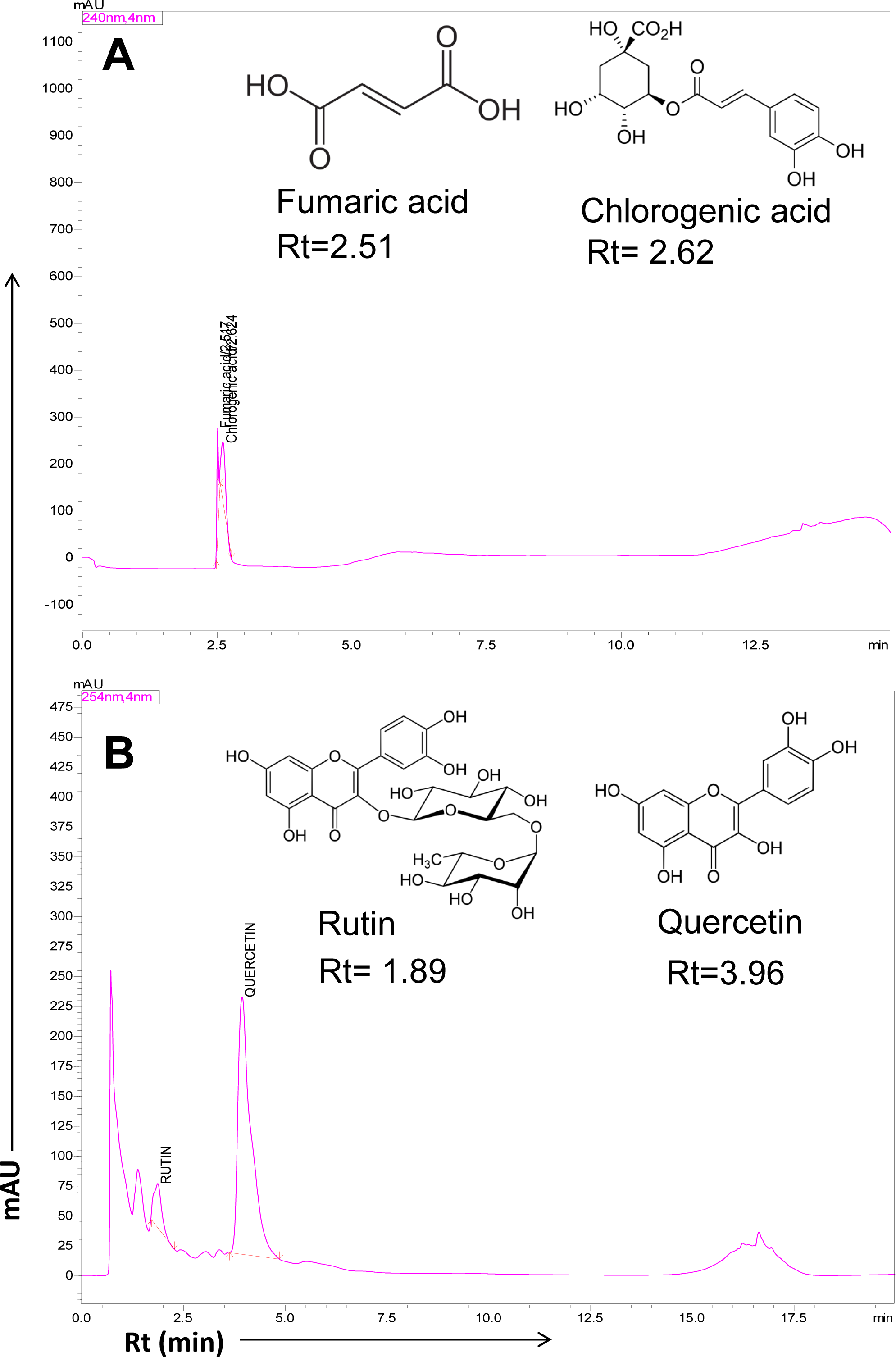
Phytochemical analysis was performed using UHPLC Nexera series (Shimadzu, Kyoto, Japan) equipped with the quaternary solvent delivery pump, autosampler, fluorescence detector, and photodiode array detector (Shimadzu). All the solvents were HPLC-grade, purchased from E. Merck (Mumbai, India). The optimum chromatographic separation for flavonoids and phenolic acids was optimized on a reverse-phase column (Thermoscientific, Waltham, MA, USA, 2.6 μm, 2.1 × 150 mm). The chromatographic separation of flavonoids was optimized using water with 0.1% formic acid and methanol with a gradient program. The column temperature was set at 40 °C, and the injection volume was 5.0 μL. For phenols, water with 0.1% formic acid and acetonitrile with 0.1% formic acid were taken as the mobile phase. The column temperature was set at 40 °C, and the injection volume was 4.0 μL.
2.7. Cell Line and Culture
Normal kidney epithelial Vero cell lines and TNBC cells MDA-MB-231 and MDA-MB-468 were bought from the NCCS, Pune, India. In 25 cc tissue culture flasks, cells were grown in DMEM: F12 (1:1) media supplemented with 10% heat-inactivated FBS, 2 mM L-glutamine, 1% antibiotic solution in an incubator (Model-371, Thermo Scientific, Waltham, MA, USA) at 37 °C and 5% CO2.
2.8. MTT Assay
S. persica extract’s potential to stop cell growth against Human TNBC MDA-MB-231, MDA-MB-468, and normal kidney epithelial Vero cell line was measured using the MTT test as a standard procedure [
16]. All cell lines were seeded at a density of 1 × 10
4 cells/mL in 96-well microtiter culture plates overnight. Initially,
S. persica bark extract stock was prepared in a culture medium and was further diluted in the same media to the concentrations of 50, 100, 200, 300, and 400 µg/mL to treat cultured cells for 24 h. MTT dye was added to each well, and the developed formazan crystal was dissolved in DMSO, followed by absorbance reading at 550 nm using an ELISA plate reader (Bio-Rad PW41, Hercules, CA, USA). The IC50 values were determined using regression curve analysis through MS Excel. Inverted phase contrast microscopy (Nikon Eclipse TS100, Tokyo, Japan) was used to detect structural alterations at the cellular level.
2.9. Nuclear Condensation Assay
Three effective concentrations of 100 µg/mL (low dose; LD, dose below IC
50), 144 µg/mL (IC
50 value), and 200 µg/mL (high dose; HD, dose above IC
50) of
S. persica bark extract were used to investigate the apoptosis-inducing potential of
S. persica bark extract in a dose-dependent manner. As previously mentioned, nuclear condensation was evaluated by DAPI staining [
16]. In short, cells were fixed for ten minutes with 4% paraformaldehyde after being washed with PBS. After fixation, cells were permeabilized using a permeabilization buffer and stained with DAPI dye. An inverted fluorescent phase contrast microscope (Zeiss AxioVert 135, New York, NY, USA) was used to capture images of stained cells.
2.10. Annexin V-FITC Double Staining for Apoptosis Investigation
The proportions of viable, dead, and apoptotic MDA-MB-231 cells at LD, IC50, and HD were analyzed using flow cytometry (FACS Lyric, BD Biosciences, Franklin Lakes, NJ, USA) with an Annexin V-FITC apoptosis detection kit. Briefly, cells were seeded at a density of 1 × 10⁶ cells/well of a 6-well plate and treated with S. persica bark extract at the specified concentrations for 24 h. Cells were pelleted after treatment and then resuspended in binding buffer. After staining the cell suspension with 5 µL of Annexin V-FITC and 5 µL of propidium iodide (PI), it was incubated for 15 min at 25 °C in the dark. Subsequently, samples were analyzed by flow cytometry to quantify apoptotic cell populations.
2.11. Analysis of the Intracellular ROS Level
ROS generation was measured using DCFH-DA staining followed by flow cytometric analysis, as previously described [
16]. After harvesting the treated and control cells, they were washed with PBS and incubated for 20 min at 37 °C with 10 μM DCFH-DA in PBS. Cells were then washed twice with PBS to remove excess dye and subjected to flow cytometry for ROS measurement.
2.12. Evaluation of Mitochondrial Membrane Potential (MMP, ΔΨm)
As described previously [
16], changes in MMP were assessed using the fluorescent probe Rhodamine-123 (Rh-123) by flow cytometry. Briefly, cells were incubated with 10 μM Rh-123 for 30 min in the dark, followed by two washes with PBS. The cells were then resuspended in 500 μL of PBS and subjected to flow cytometric analysis.
2.13. Analysis of Cellular DNA Content
Cells were seeded at a density of 1 × 10
6 cells/well of a 6-well plate and treated with
S. persica bark extract at LD, IC
50, and HD for 24 h. Following a cold PBS wash, the cultured cells were fixed for two h at −20 °C in 70% ethanol. RNase A (10 mg/mL) was applied to lyse RNA from cells, and they were then stained with PI for 30 min at RT in the dark. Subsequently, cell cycle distribution and DNA content were analyzed using flow cytometry, following the procedure described earlier [
16]. Data were analyzed with the help of Cell Quest Pro V 3.2.1 software (Becton Dickinson, Franklin Lakes, NJ, USA).
2.14. In Silico Analysis
2.14.1. Ligand Retrieval and Preparation
Ligands corresponding to the identified bioactive compounds (Rutin-PubChem CIDs: 5280805; quercetin-5280343; chlorogenic acid-1794427; fumaric acid-444972) were retrieved in 3D SDF format from the PubChem database. Structures underwent energy minimization in Avogadro 1.2.0 employing the MMFF94 force field (1000 steps steepest descent, convergence criterion: 0.01 kcal/mol·Å RMS gradient) to optimize geometries. For AutoDock Vina docking, ligands were processed in AutoDockTools 1.5.7 (MGLTools): polar hydrogens were added, Gasteiger-Marsili partial charges were computed, non-polar hydrogens merged to polar atoms, and rotatable bonds were identified via the torsion tree algorithm. Files were exported as PDBQT with explicit torsional degrees of freedom. For PyRx docking, ligand preparation followed an identical workflow within AutoDockTools 1.5.7 to ensure compatibility, generating PDBQT files directly importable into PyRx 0.8. Structural integrity and charge neutrality were verified in both instances using Open Babel feature for interconversion and validation.
2.14.2. Protein Retrieval and Preparation
Crystal structures of target proteins were obtained from the Protein Data Bank (RCSB PDB): EGFR/ErbB1 (PDB ID: 1IVO), FGFR1 (PDB ID: 1EVT), FGFR4 (PDB ID: 4TYE), and csGRP78 (PDB ID: 3IUC). Structures were refined in BIOVIA Discovery Studio 2022: removal of crystallographic waters, co-crystallized ligands, and heteroatoms.
2.14.3. Molecular Docking: AutoDock Vina
While using AutoDock Vina for molecular docking, receptor and ligand files in PDBQT format were specified in a configuration file with the following parameters: exhaustiveness, num_modes, and energy range kcal/mol. Grid boxes were centered on the active sites of target proteins with dimensions in Å spacing (coordinates detailed in
Table 1). Output poses were ranked by predicted binding free energy (kcal/mol); the lowest-energy conformation for each ligand–protein pair was selected for interaction analysis. Intermolecular interactions, including hydrogen bonds, hydrophobic contacts, π-π stacking, and π–cation interactions, were visualized and quantified, and the Protein–Ligand Interaction through BIOVIA Discovery Studio 2022.
2.14.4. Molecular Docking: PyRx
Virtual high-throughput screening was conducted using PyRx 0.8, which integrates AutoDock Vina as its docking engine. Prepared PDBQT files for proteins and ligands were imported into PyRx; docking grids were defined identically to AutoDock Vina parameters (exhaustiveness = 8, grid dimensions in Å spacing. The Vina wizard facilitated batch docking of all four ligands against each target protein. Binding poses were ranked by binding affinity scores; consensus top-ranking poses were prioritized. Two-dimensional ligand interaction diagrams were generated natively in PyRx OpenGL, highlighting key residue interactions for validation against crystallographic inhibitors. Sites were defined by grid boxes centered on catalytic/binding residues, with coordinates as shown in
Table S1.
2.14.5. SwissADME Analysis
Physicochemical, pharmacokinetic, and drug-likeness properties were predicted using the SwissADME webserver (
http://www.swissadme.ch). Input structures (SMILES from PubChem) yielded: lipophilicity (LogP WLOGP/iLOGP), water solubility (LogS), molecular descriptors (MW, rotatable bonds, TPSA), drug-likeness rules (Lipinski, Muegge, Veber, Ghose, Egan), blood–brain barrier permeation, gastrointestinal absorption (BOLED-Egg plot), P-glycoprotein substrate status, and CYP450 inhibition profiles (2C9, 2D6, 3A4).
2.14.6. Toxicity Prediction
Toxicity risks (mutagenicity, tumorigenic potential, irritancy, reproductive toxicity) and drug score were forecasted using Osiris Property Explorer/DataWarrior. QSAR models computed parameters including cLogP, LogS, molecular weight, and toxicity flags. Drug-likeness score integrated physicochemical properties and toxicity predictions, with scores >0.5 denoting favorable candidates.
2.14.7. Statistical Analysis
The mean ± SD of three separate experiments was used to express the experimental findings. One-way ANOVA and Dunnett’s multiple comparison test using GraphPad Prism (v5.01) were used to establish statistical significance; p < 0.05 was deemed statistically significant.
4. Discussion
Breast cancer is the largest cause of cancer-related mortality among females, affecting around 2.3 million women globally and causing over 670,000 deaths in 2022 [
1].
S. persica is widely known for its diverse pharmacological properties and has shown cytotoxic effects against several cancer cell lines. The present study was designed to conduct preliminary phytochemical profiling and to evaluate the in vitro anticancer activity of
S. persica bark extract against TNBC MDA-MB-231 cells, with particular emphasis on its apoptotic mechanisms and safety assessment in Vero cells. In addition, in silico molecular docking was performed to investigate interactions between the identified phytoconstituents and relevant therapeutic membrane receptors. MDA-MB-231 cells are known for their aggressive, mesenchymal-like characteristics and marked drug resistance, which is partly attributed to elevated expression of P-glycoprotein (P-gp) leading to drug efflux, along with increased levels of Nrf2 and associated antioxidant enzymes such as catalase and MnSOD that help counter oxidative stress [
17]. The results indicate that
S. persica bark extract is rich in phenolic and flavonoid compounds and exerts significant cytotoxic effects on TNBC MDA-MB-231 and MDA-MB-468 cell lines. This activity appears to be mediated through ROS-induced mitochondrial apoptosis and cell cycle arrest. Furthermore, molecular docking findings support the potential interaction of these phytochemicals with key therapeutic targets.
Phytochemical evaluation indicated that the
S. persica bark extract contains substantial amounts of total phenolics and flavonoids, measured at 26.90 ± 0.46 μg GAE/mg and 54.51 ± 0.42 μg QE/mg, respectively. These classes of compounds are well known for their antioxidant and anticancer potential, particularly through their ability to influence key cellular processes such as proliferation, apoptosis, and oxidative stress regulation in cancer cells. Earlier reports have shown that plant-derived polyphenols, including quercetin and rutin, can suppress tumor progression by modulating critical signaling pathways such as PI3K/Akt, MAPK, and NF-κB [
18,
19]. Accordingly, the elevated levels of phenolics and flavonoids in the
S. persica bark extract may play a significant role in the anticancer effects observed in this study. UHPLC profiling verified the presence of several biologically active phenolic and flavonoid constituents in the extract, including rutin, quercetin, chlorogenic acid, and fumaric acid. These compounds are well documented for their anticancer potential. For instance, quercetin has been reported to suppress proliferation and trigger apoptosis in breast cancer cells by disrupting mitochondrial function and activating ROS-dependent signaling pathways [
20]. In a similar manner, chlorogenic acid demonstrates anti-proliferative activity by modulating oxidative stress and apoptotic processes in breast cancer models [
21]. The detection of these phytochemicals in the
S. persica bark extract strengthens the proposition that its anticancer activity may arise from the coordinated action of multiple molecular mechanisms.
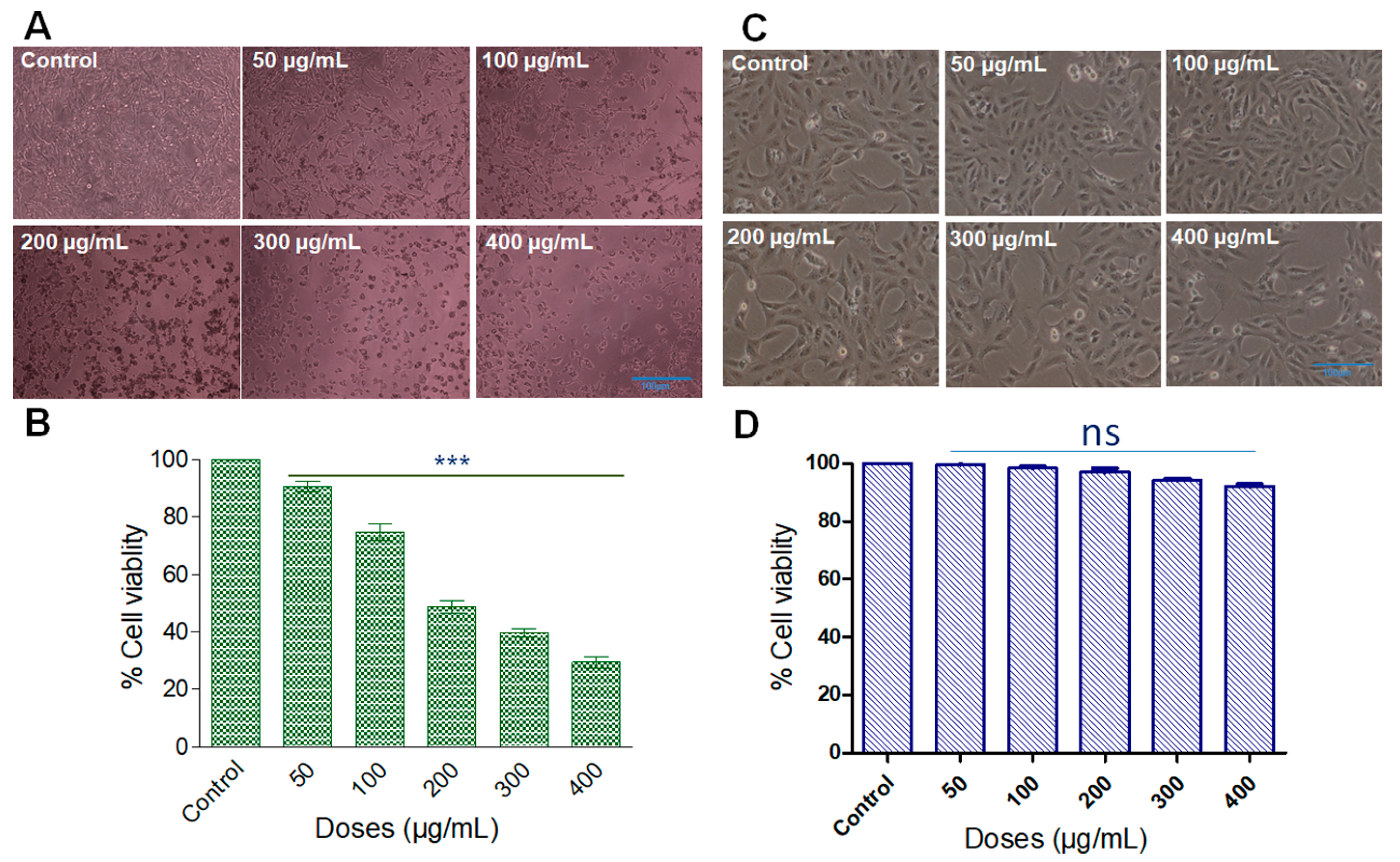
The cytotoxicity assay revealed that
S. persica bark extract reduced the cell viability of TNBC cells depending upon dose, with an IC
50 of 144 and 128 µg/mL in MDA-MB-231 and MDA-MB-468 cells, respectively, following 24 h of exposure. Since MDA-MB-231 is widely used in anticancer studies due to its high invasiveness and aggressive tumor behavior, further study was conducted on MDA-MB-231 cells to understand the cell death mechanism. Microscopic examination supported these findings, as treated cells displayed typical apoptotic changes such as shrinkage, rounding, and loss of adherence to the culture surface. In comparison, the extract showed minimal toxicity toward normal Vero cells, suggesting a degree of selectivity for cancer cells. Such selective cytotoxicity is a desirable feature in anticancer agents, as conventional chemotherapeutics frequently damage healthy cells and lead to systemic side effects [
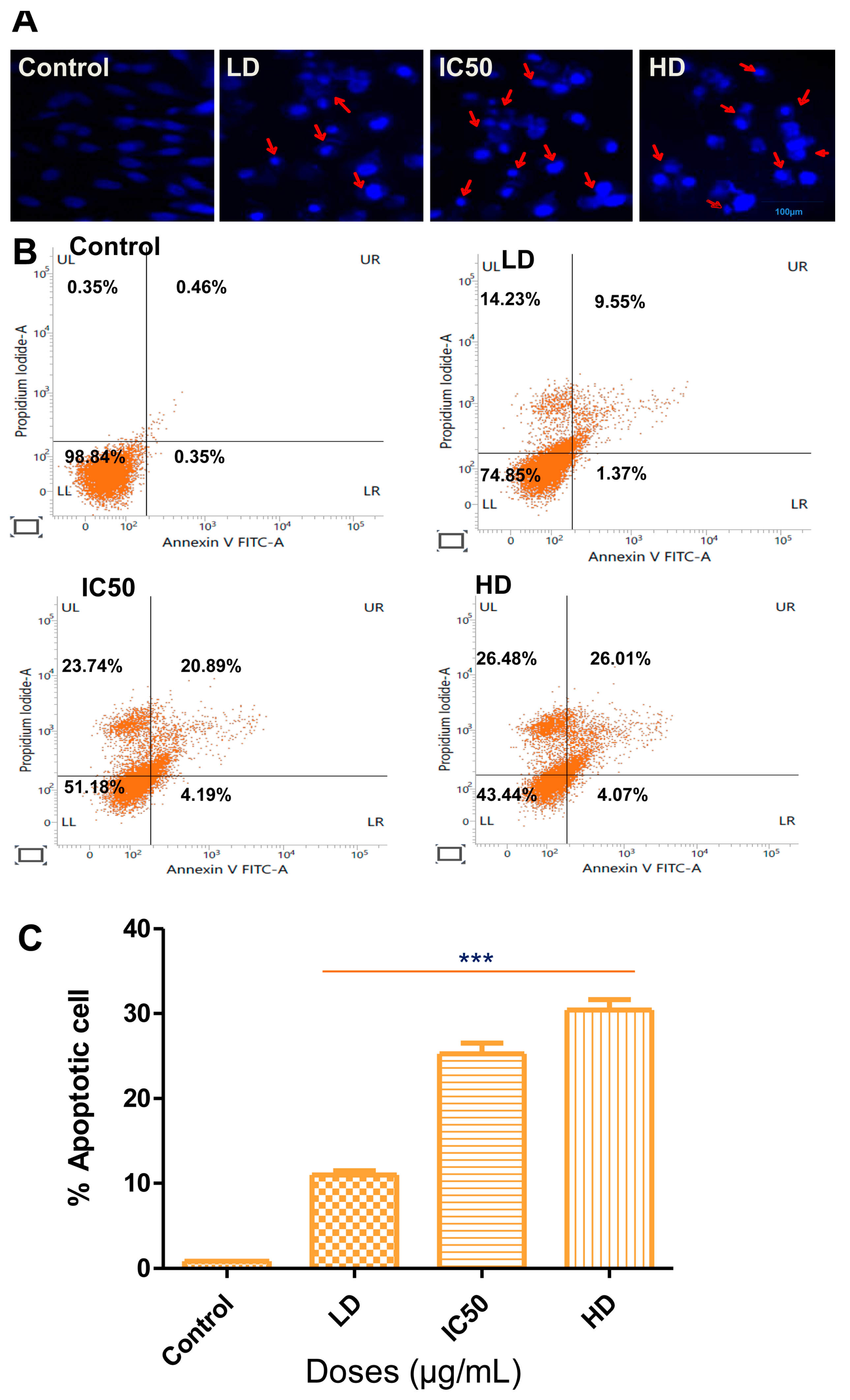
22]. Apoptosis represents a key pathway through which anticancer agents eradicate tumor cells. In the present study, DAPI-based nuclear staining demonstrated marked chromatin condensation and nuclear fragmentation in bark extract-treated cells, confirming the occurrence of apoptotic cell death. These observations were supported by Annexin V-FITC/PI flow cytometry analysis, which showed a concentration-dependent increase in apoptotic and late apoptotic/secondary necrotic cell populations following treatment with
S. persica bark extract. Lower treatment concentrations predominantly induced apoptotic features, whereas higher concentrations near or above the IC
50 likely involved mixed cell death responses associated with severe oxidative and mitochondrial damage. Induction of apoptosis is particularly advantageous in cancer therapy, as it enables the selective removal of malignant cells while minimizing inflammation and necrotic damage [
23].
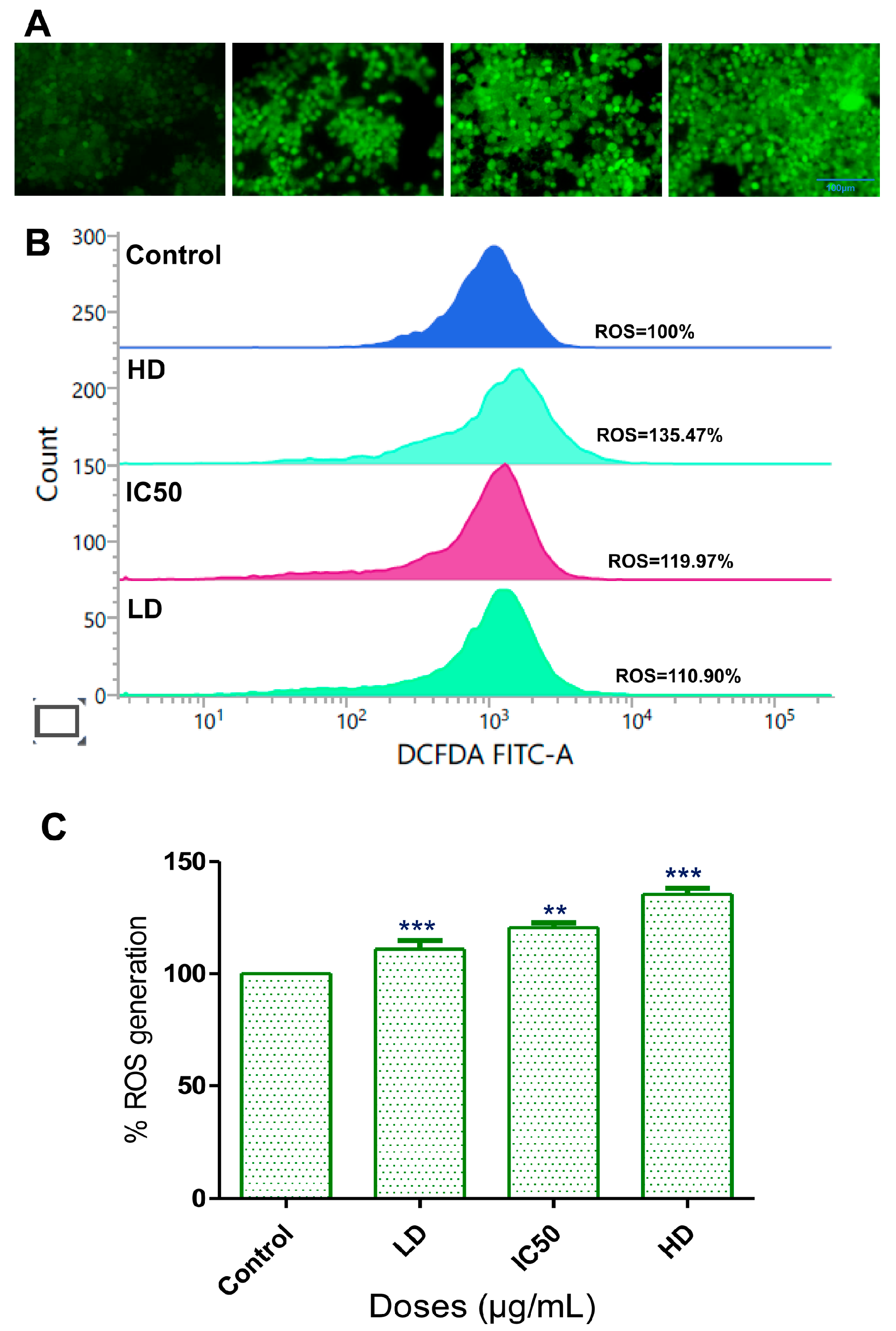
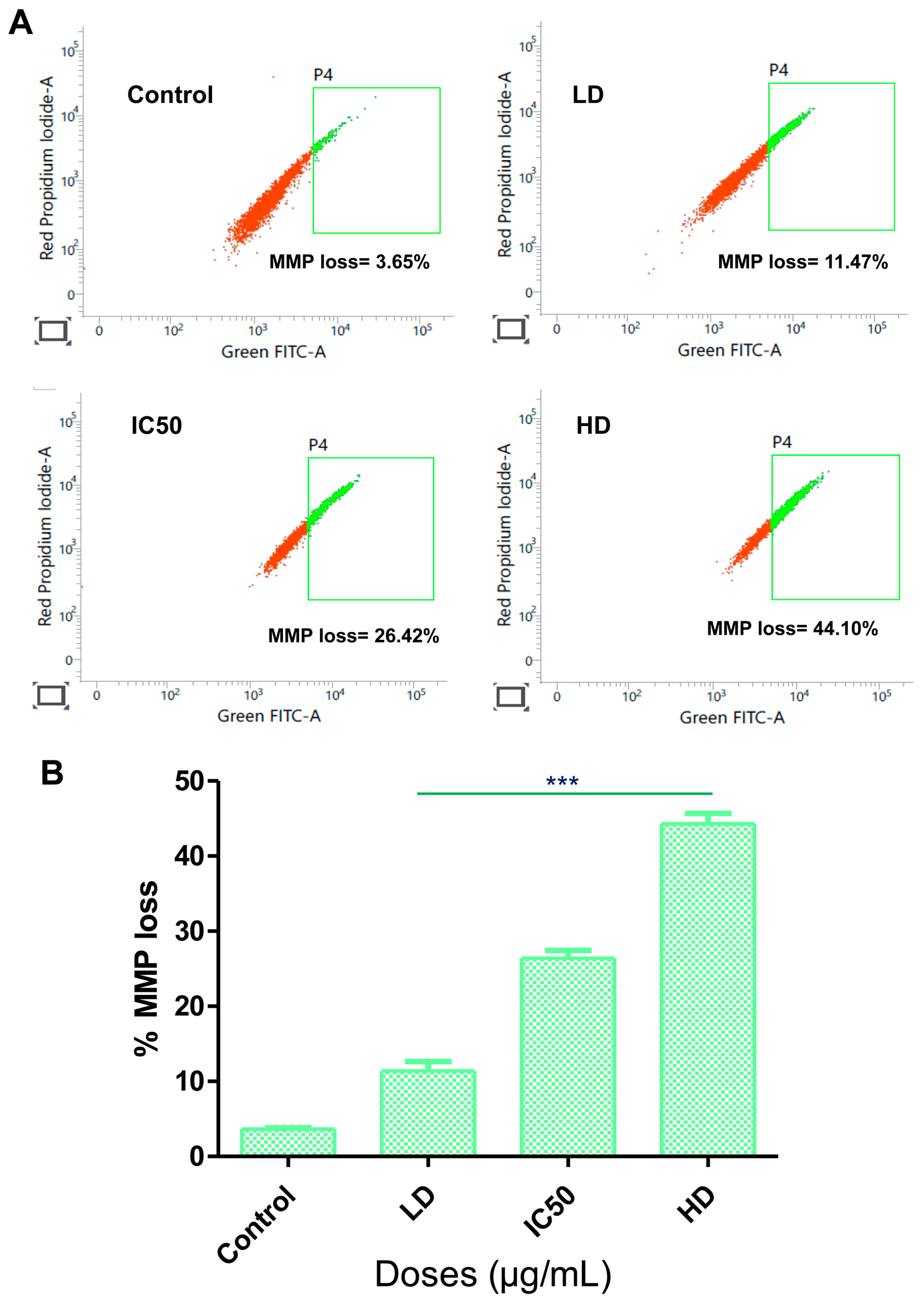
A major observation of the present study is the involvement of oxidative stress in bark extract-induced cytotoxicity. Flow cytometric analysis revealed a significant, dose-dependent rise in intracellular reactive oxygen species (ROS) following treatment with the extract. ROS are known to exert a dual influence in cancer: while controlled levels support tumor growth and survival, excessive accumulation leads to oxidative damage and initiates apoptotic cell death [
24]. Several phytochemicals are reported to exert anticancer effects by elevating ROS beyond the tolerable limit of cancer cells, thereby promoting mitochondrial dysfunction and activating apoptotic pathways [
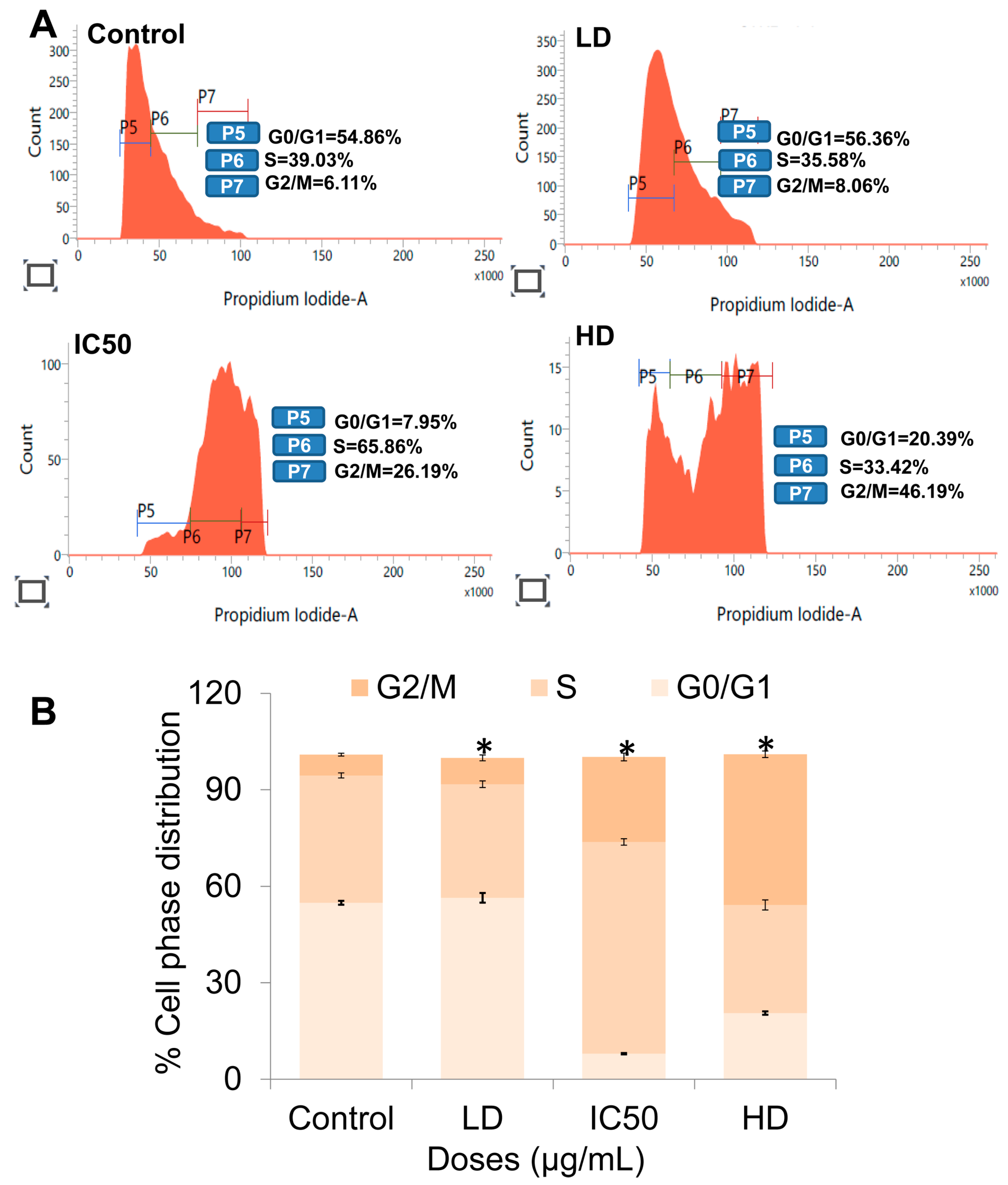
25]. In line with this mechanism, bark extract caused a marked reduction in MMP in MDA-MB-231 cells. Mitochondria are central to the intrinsic apoptotic pathway, and disruption of MMP facilitates the release of pro-apoptotic factors such as cytochrome c, which in turn activates the caspase cascade leading to programmed cell death. The observed dose-dependent loss of MMP therefore indicates that bark extract induces apoptosis via a mitochondrial-mediated pathway. Furthermore, bark extract significantly arrested the cell cycle at the G
2/M phase. Cell cycle progression is governed by cyclins, cyclin-dependent kinases, and checkpoint regulators that ensure proper DNA replication and division. Interference with these regulatory systems can suppress cell proliferation and promote apoptosis [
26]. The accumulation of cells in the G
2/M phase suggests that bark extract disrupts normal cell cycle progression, thereby inhibiting the growth of TNBC cells.
The combined molecular docking and ADME analyses indicate that
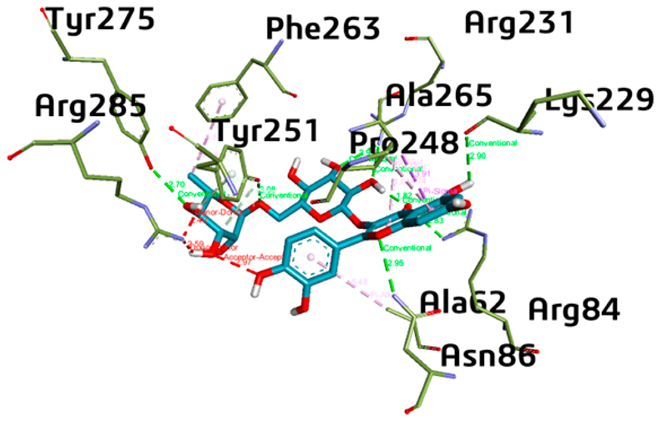
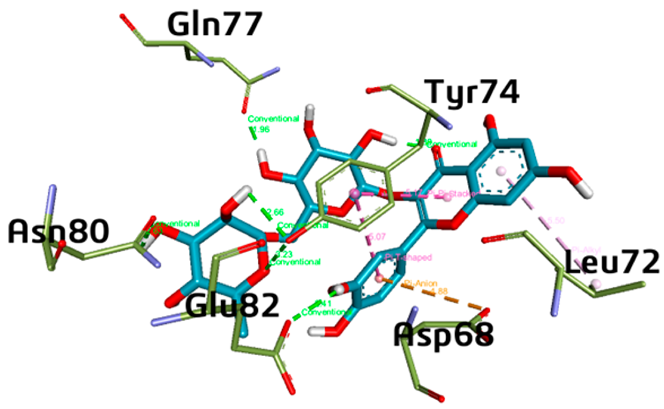
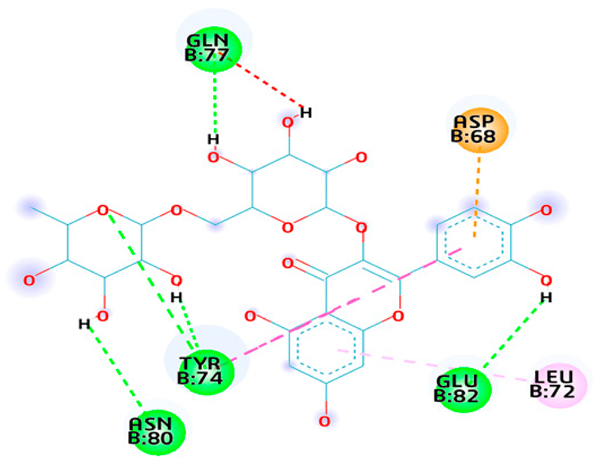
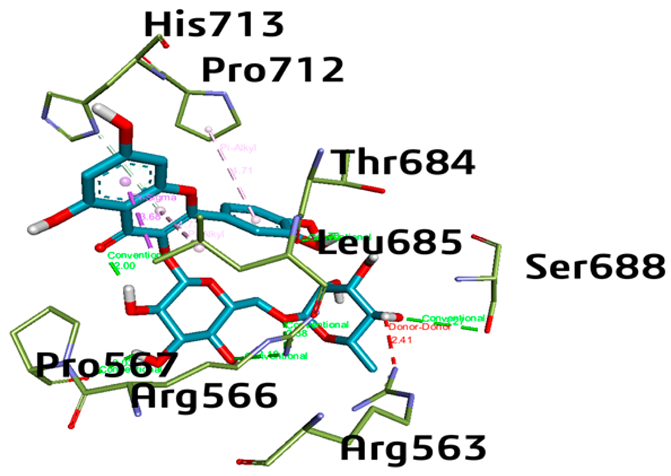
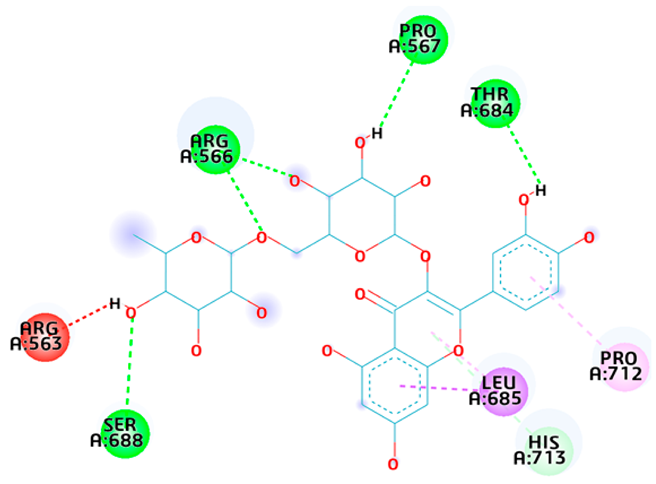
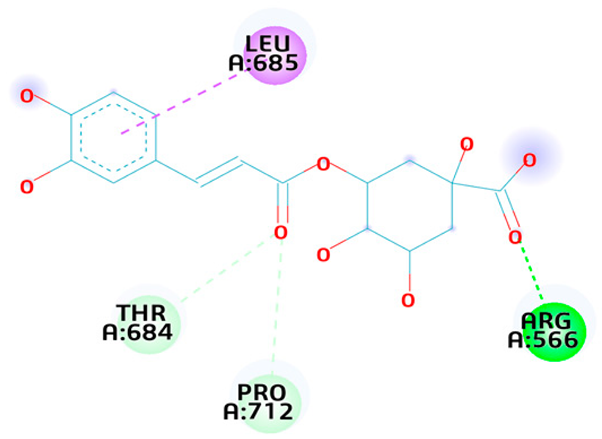
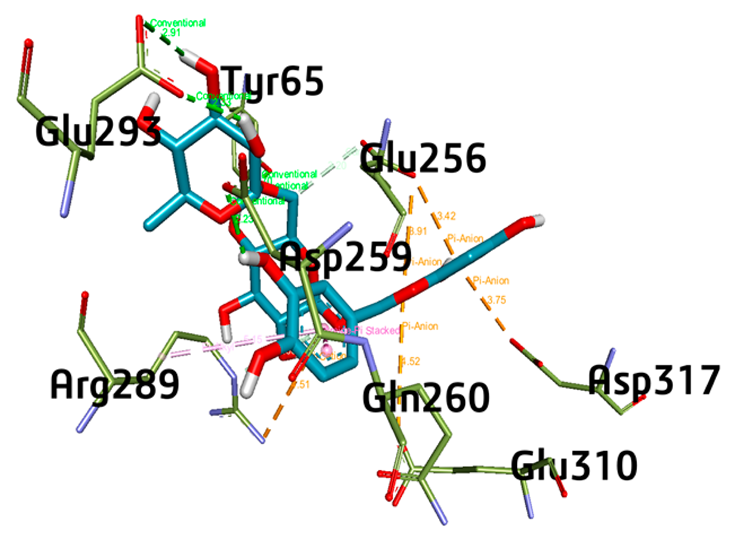
S. persica bark-derived phytoconstituents possess notable multi-target anticancer potential, particularly rutin, quercetin, and chlorogenic acid. Among these, rutin exhibited the strongest binding affinities across key oncogenic targets, including EGFR, FGFR1/4, and csGRP78, suggesting its ability to act as a broad-spectrum inhibitor of cancer-related signaling pathways. Its interaction with EGFR, characterized by multiple hydrogen bonds and π interactions, supports a possible ATP-competitive inhibitory mechanism similar to established tyrosine kinase inhibitors. Rutin and quercetin also showed stable binding with FGFR1 and FGFR4, targeting critical residues involved in kinase activation, which may contribute to the suppression of tumor growth and resistance mechanisms. Chlorogenic acid demonstrated comparatively moderate but stable interactions, indicating a supportive modulatory role. GRP78 is known to function as a protective chaperone that supports TNBC cell survival under cellular stress conditions and contributes to chemoresistance by suppressing apoptosis, enhancing drug efflux, and promoting immune evasion, thereby facilitating tumor progression and recurrence [
27,
28]. Therefore, csGRP78 has emerged as an attractive therapeutic target for overcoming resistance in TNBC. In the present docking analysis, rutin exhibited the strongest binding affinity toward csGRP78 with 13 molecular interactions, and this strong interaction profile suggests its potential role in modulating GRP78-associated survival signaling, supporting its possible contribution to the anticancer activity of
S. persica bark extract. ADME analysis identified quercetin as the most promising candidate due to its favorable drug-likeness and absorption profile. In contrast, rutin showed limited bioavailability, suggesting the need for formulation strategies to enhance its therapeutic utility. Chlorogenic and fumaric acids demonstrated good safety and solubility, supporting their possible synergistic roles.
Although flavonoids such as quercetin and rutin are recognized as redox-active compounds with potential PAINS-associated behavior under certain assay conditions, the anticancer activity observed in this study was supported by multiple independent cellular assays, including apoptosis analysis, ROS generation, mitochondrial membrane depolarization, and cell cycle arrest. The selective cytotoxicity of
S. persica bark extract toward breast cancer cells, with comparatively lower toxicity in Vero cells, further suggests that the observed effects are not solely due to nonspecific assay interference. Previous studies have also demonstrated that quercetin and rutin regulate defined molecular pathways associated with ROS-mediated apoptosis and cell cycle disruption in different cancers, such as oral cancer KON and cervical cancer Caski cell lines [
29,
30].
Vero cells were used in the present study as a preliminary non-cancerous epithelial model to assess general cytotoxic safety; however, future studies using normal human mammary epithelial cells such as MCF-10A would provide a more physiologically relevant evaluation of breast cancer selectivity. In addition, inclusion of standard chemotherapeutic agents such as doxorubicin or cisplatin as positive controls would allow direct comparison of therapeutic efficacy. The relatively moderate IC50 values obtained for the crude extract indicate the need for bioactivity-guided fractionation and isolation of active phytoconstituents to improve potency. Moreover, the study did not include caspase activation assays or in vivo validation, which will be important in future investigations to confirm apoptotic pathways, pharmacokinetics, systemic toxicity, and therapeutic efficacy under physiological conditions.





 ,
,