Comparative Bioactivities and Fatty Acid Composition of Pinus koraiensis Leaf Oils Obtained Using Different Extraction Methods


Abstract
1. Introduction
2. Materials and Methods
2.1. Preparation of EPO and SPO
2.2. Disk Diffusion Assay
2.3. Cell Cultures
2.4. Cell Viability Assay
2.5. Measurement of ROS
2.6. Western Blot Analysis
2.7. GC Analysis
2.8. GC-MS Analysis
2.9. Integrative Target Prediction and Pathway Analysis
2.10. RNA Isolation and qRT-PCR
2.11. Statistical Analysis
3. Results
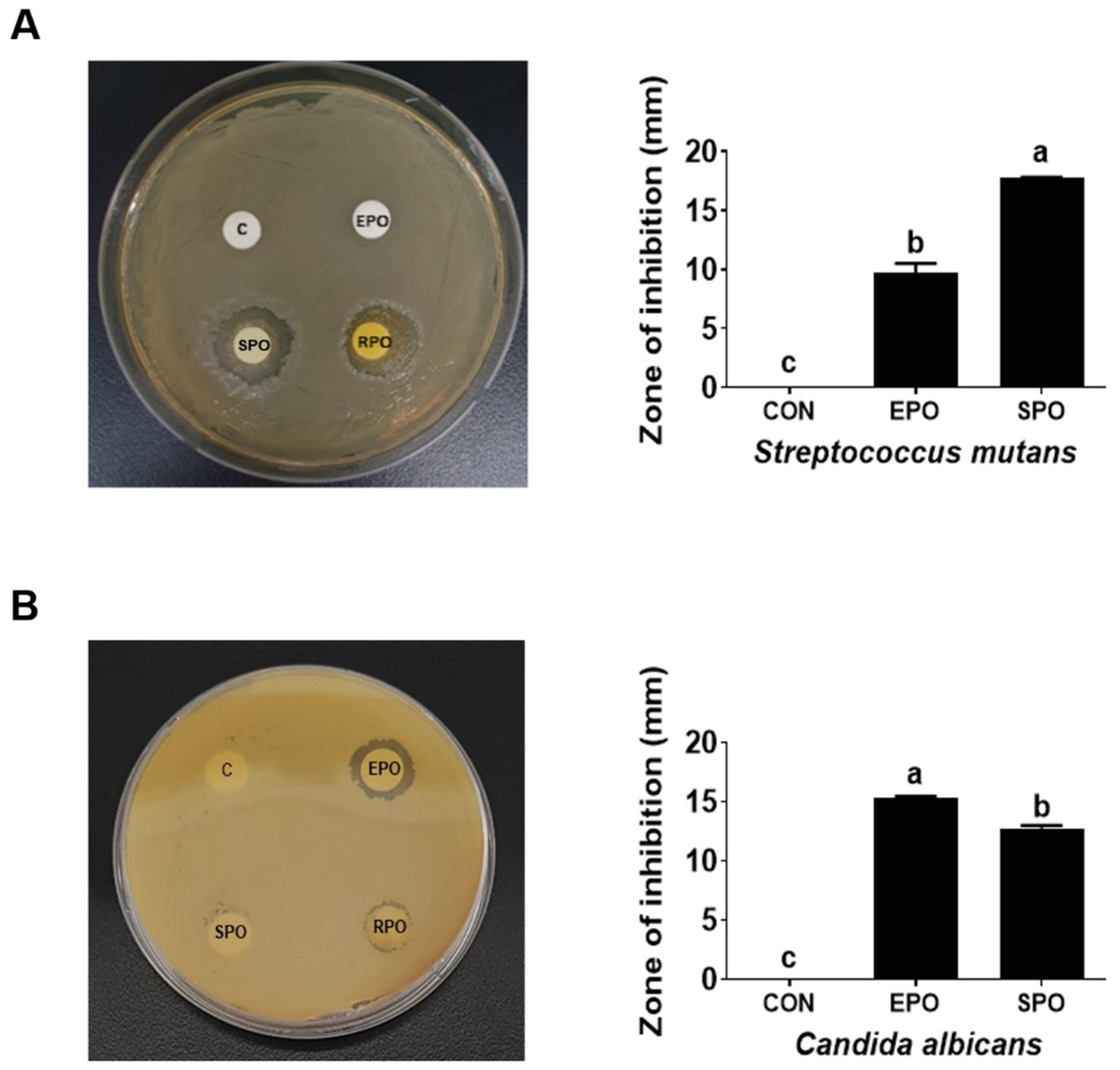
3.1. Comparison of the Antimicrobial Activities of Pinus koraiensis Essential Oil (EPO) and Supercritical CO2 Extract Oil (SPO) Against Streptococcus mutans and Candida albicans
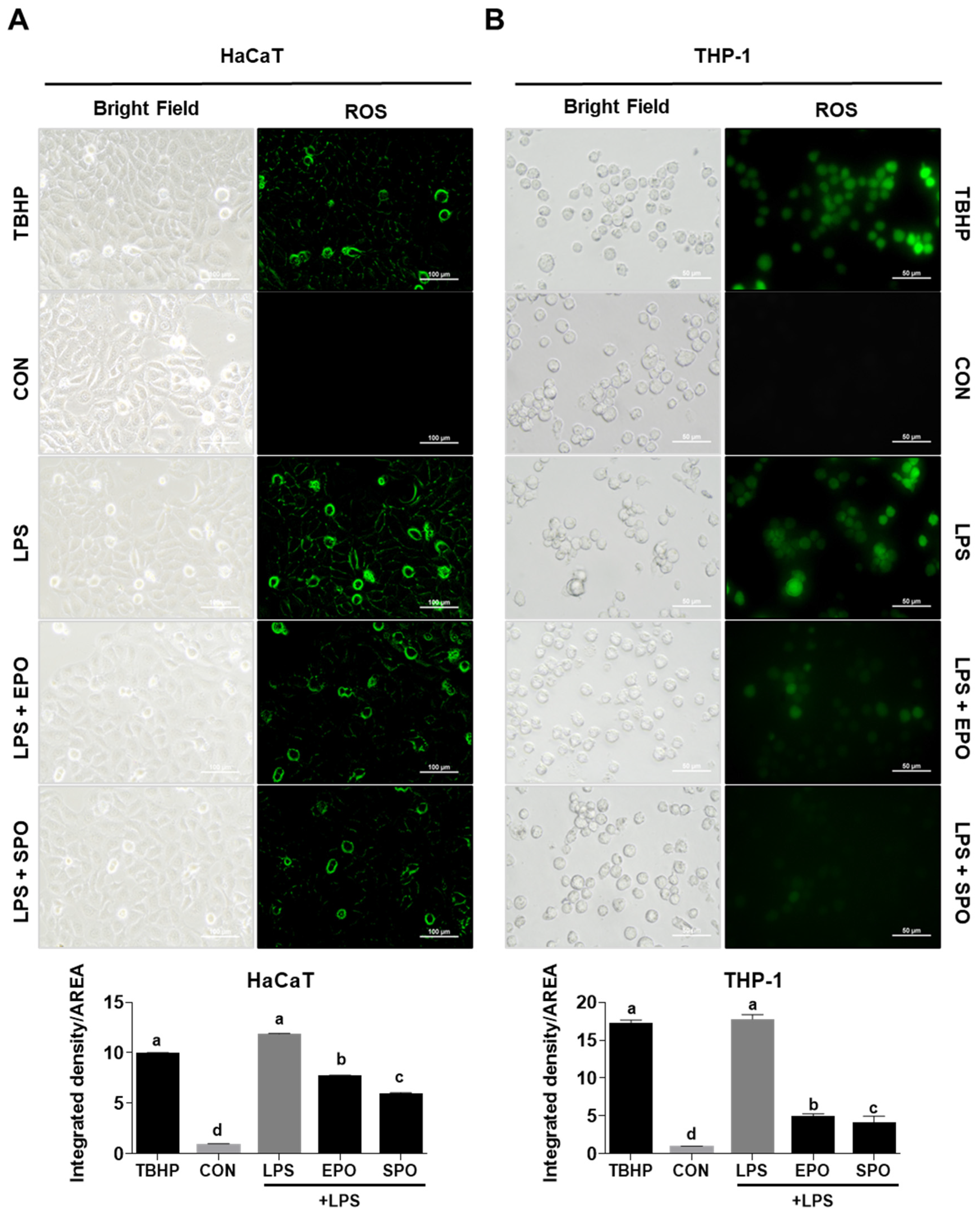
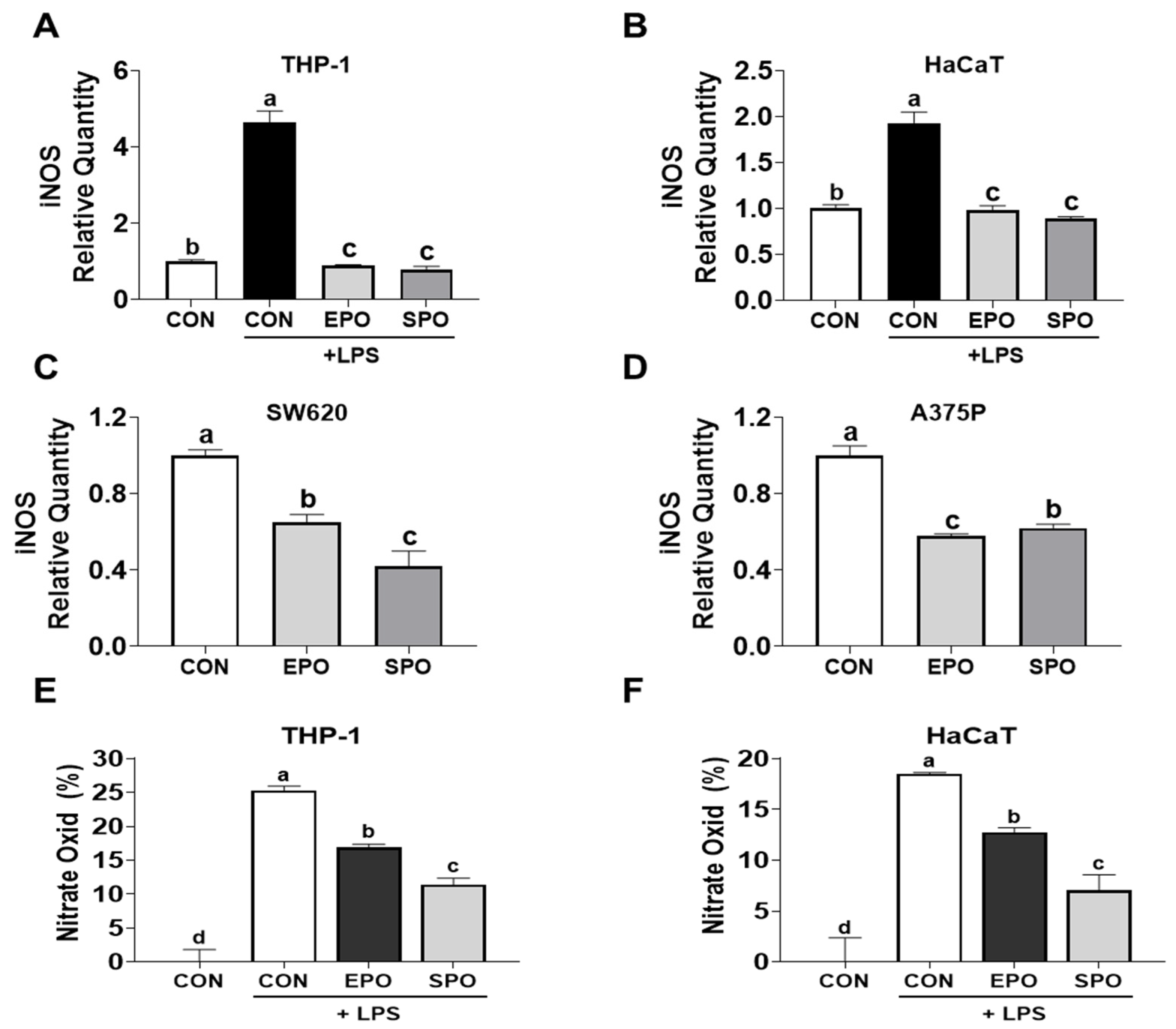
3.2. Comparison of the Antioxidant Activities of EPO and SPO on LPS-Stimulated HaCaT and THP-1 Cells
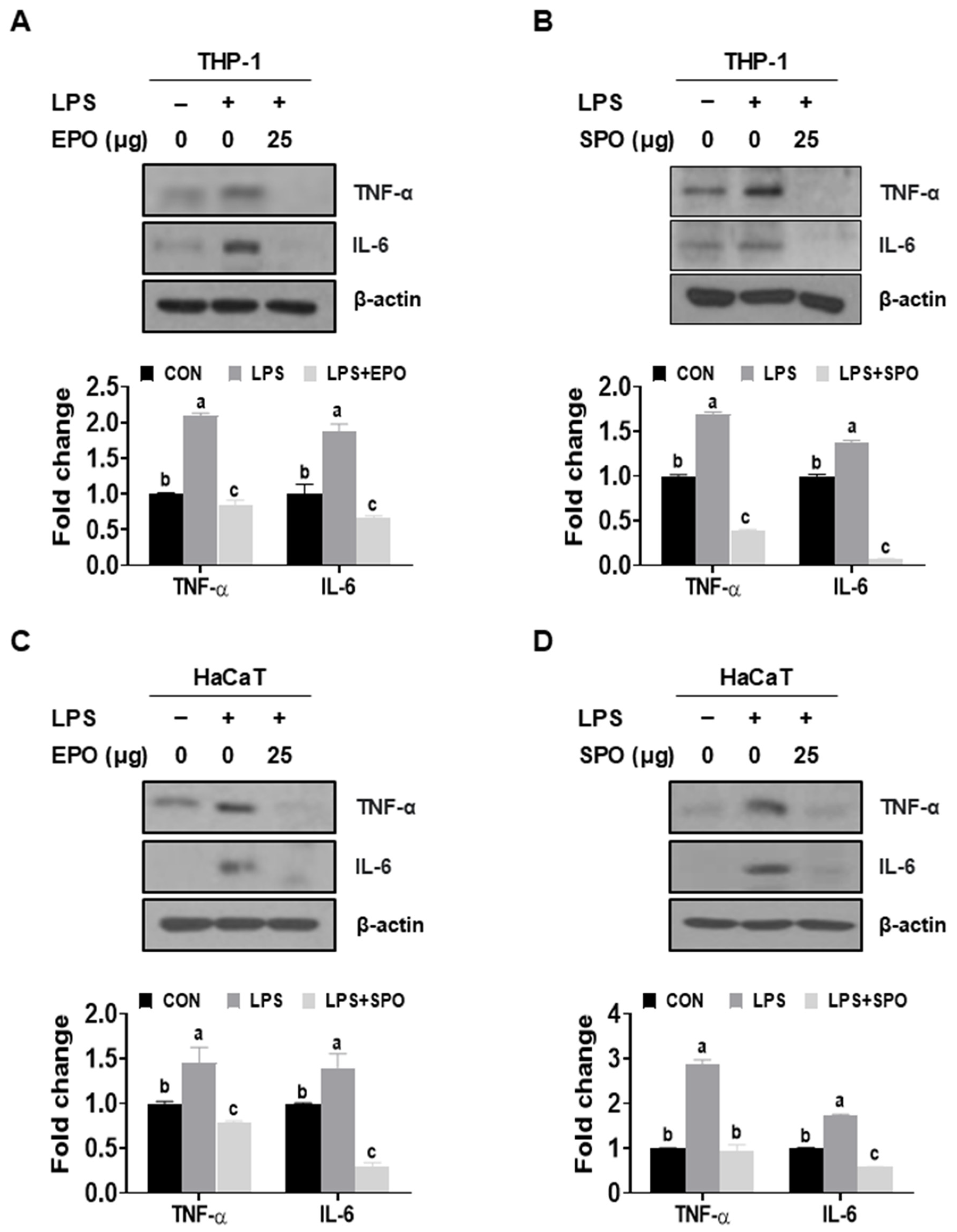
3.3. Comparison of the Anti-Inflammatory Effect of EPO and SPO on LPS-Stimulated HaCaT and THP-1 Cells
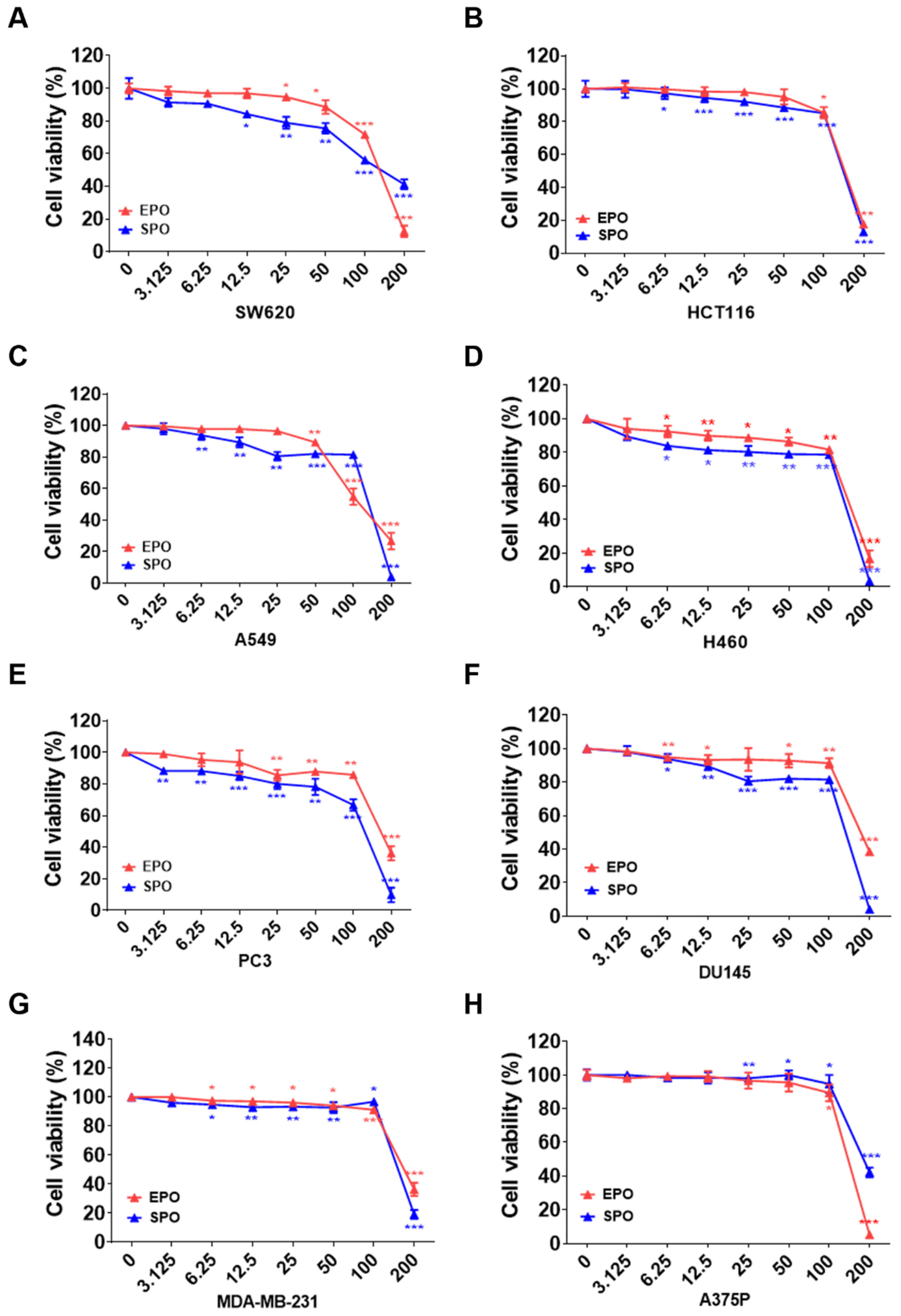
3.4. Comparison of Cancer Cell Growth Inhibitory Properties of EPO and SPO on Various Human Cancer Cell Lines
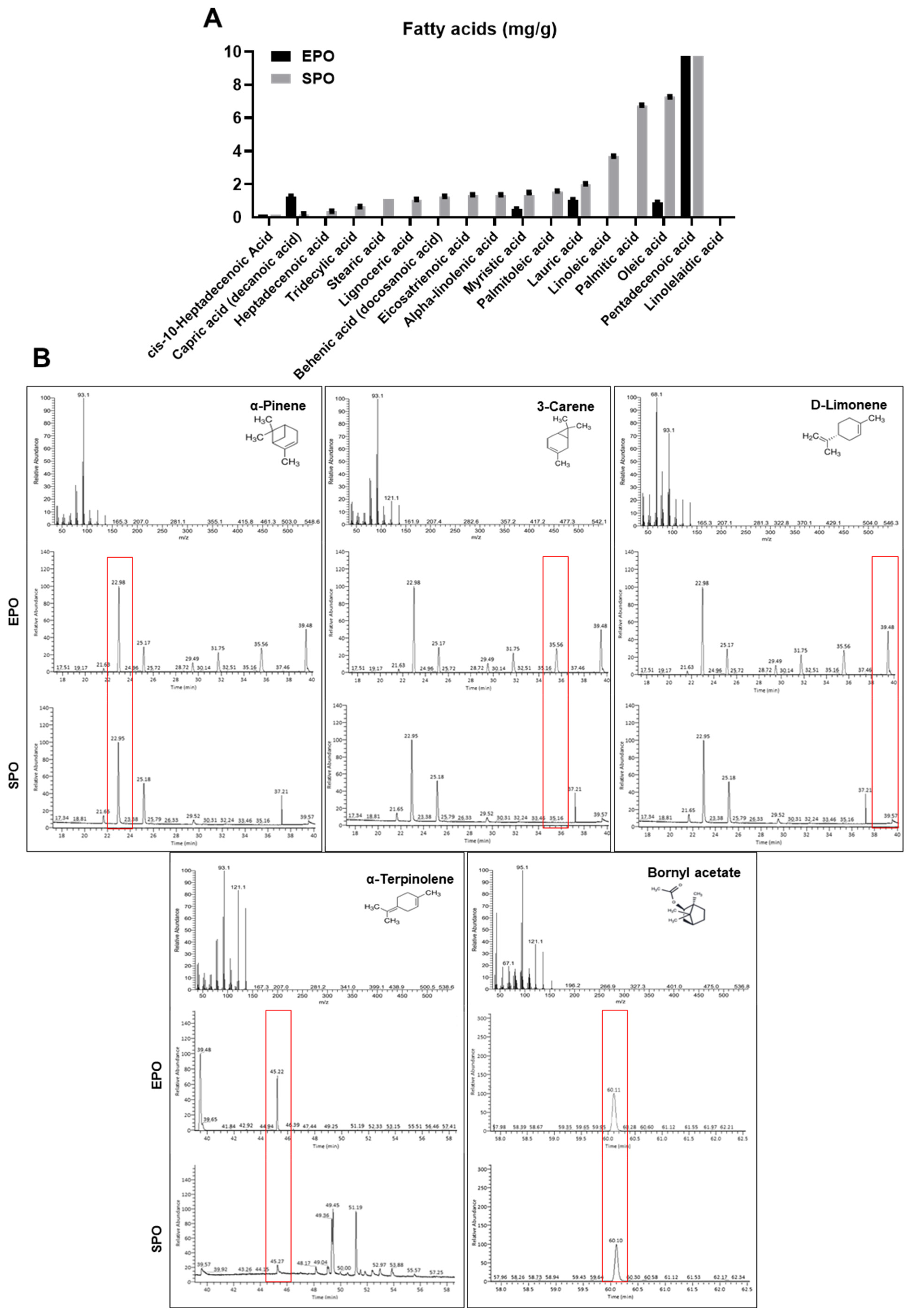
3.5. Comparison of the Fatty Acid Content and Volatile Terpenoids in the EPO and SPO
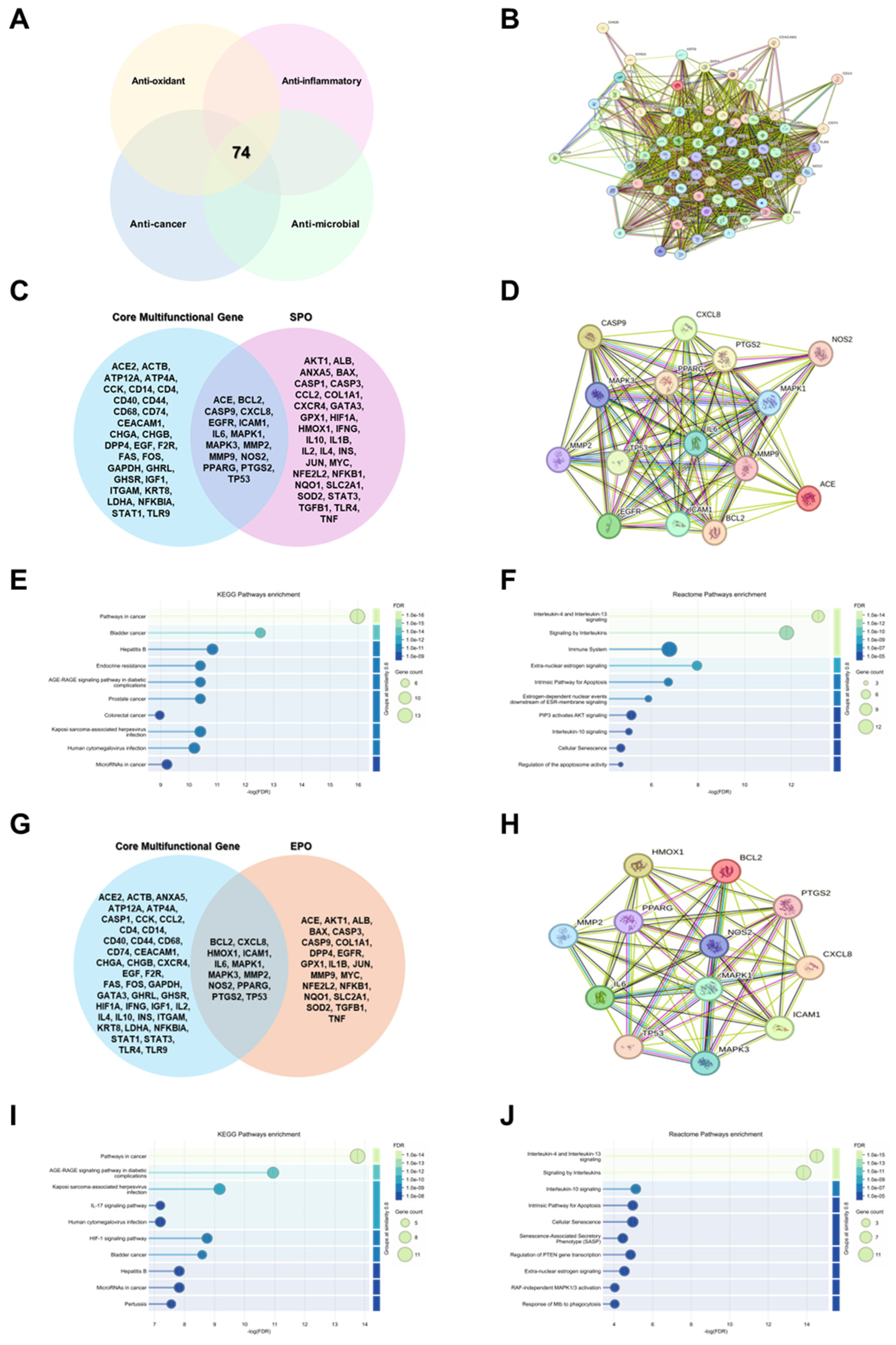
3.6. Network Pharmacology Analysis Predicts the Target Pathways of EPO and SPO
3.7. Regulation of iNOS Expression and NO Production by EPO and SPO in Immune and Cancer Cells
4. Discussion
Author Contributions
Funding
Institutional Review Board Statement
Informed Consent Statement
Data Availability Statement
Conflicts of Interest
References
- Shahbazi, R.; Sharifzad, F.; Bagheri, R.; Alsadi, N.; Yasavoli-Sharahi, H.; Matar, C. Anti-inflammatory and immunomodulatory properties of fermented plant foods. Nutrients 2021, 13, 1516. [Google Scholar] [CrossRef] [Scilit]
- Gangwar, V.; Garg, A.; Lomore, K.; Korla, K.; Bhat, S.S.; Rao, R.P.; Rafiq, M.; Kumawath, R.; Uddagiri, B.V.; Kareenhalli, V.V. Immunomodulatory effects of a concoction of natural bioactive compounds—Mechanistic insights. Biomedicines 2021, 9, 1522. [Google Scholar] [CrossRef] [Scilit] [PubMed]
- Merecz-Sadowska, A.; Sadowski, A.; Zielińska-Bliźniewska, H.; Zajdel, K.; Zajdel, R. Network Pharmacology as a Tool to Investigate the Antioxidant and Anti-Inflammatory Potential of Plant Secondary Metabolites—A Review and Perspectives. Int. J. Mol. Sci. 2025, 26, 6678. [Google Scholar] [CrossRef] [Scilit]
- Noriega, P. Terpenes in essential oils: Bioactivity and applications. In Terpenes and Terpenoids—Recent Advances; IntechOpen: London, UK, 2020. [Google Scholar] [CrossRef] [Scilit]
- Valdivieso-Ugarte, M.; Gomez-Llorente, C.; Plaza-Díaz, J.; Gil, Á. Antimicrobial, antioxidant, and immunomodulatory properties of essential oils: A systematic review. Nutrients 2019, 11, 2786. [Google Scholar] [CrossRef] [Scilit] [PubMed]
- Kim, J.-E.; Kim, W.-Y.; Kim, J.-W.; Park, H.-S.; Lee, S.-H.; Lee, S.-Y.; Kim, M.-J.; Kim, A.; Park, S.-N. Antibacterial, antioxidative activity and component analysis of Pinus koraiensis leaf extracts. J. Soc. Cosmet. Sci. Korea 2010, 36, 303–314. [Google Scholar]
- Cho, S.-M.; Lee, E.-O.; Kim, S.-H.; Lee, H.-J. Essential oil of Pinus koraiensis inhibits cell proliferation and migration via inhibition of p21-activated kinase 1 pathway in HCT116 colorectal cancer cells. BMC Complement. Altern. Med. 2014, 14, 275. [Google Scholar] [CrossRef] [Scilit] [PubMed]
- Lee, T.K.; Roh, H.S.; Yu, J.S.; Baek, J.; Lee, S.; Ra, M.; Kim, S.Y.; Baek, K.H.; Kim, K.H. Pinecone of Pinus koraiensis inducing apoptosis in human lung cancer cells by activating caspase-3 and its chemical constituents. Chem. Biodivers. 2017, 14, e1600412. [Google Scholar] [CrossRef] [Scilit]
- Kim, E.A.; Yang, J.-H.; Byeon, E.-H.; Kim, W.; Kang, D.; Han, J.; Hong, S.-G.; Kim, D.-R.; Park, S.-J.; Huh, J.-W. Anti-obesity effect of pine needle extract on high-fat diet-induced obese mice. Plants 2021, 10, 837. [Google Scholar] [CrossRef] [Scilit]
- Lee, M.-H.; Park, S.; Xu, Y.; Kim, J.-E.; Han, H.; Lee, J.-H.; Paik, J.K.; Lee, H.-J. Ethanol extract of Pinus koraiensis leaves mitigates high fructose-induced hepatic triglyceride accumulation and hypertriglyceridemia. Appl. Sci. 2022, 12, 6745. [Google Scholar] [CrossRef] [Scilit]
- Park, S.-y.; Park, T.g.; Choi, K.; Kim, K.J.; Kim, J.Y. The Impact of Pinus koraiensis Leaf Extract Consumption on Postprandial ApoB100 and Lipid Metabolism: A Randomized, Double-Blind, Placebo-Controlled Trial in Healthy Participants Subjected to an Oral High-Fat Challenge. Nutrients 2024, 16, 2864. [Google Scholar] [CrossRef] [Scilit]
- Joo, H.-E.; Lee, H.-J.; Sohn, E.J.; Lee, M.-H.; Ko, H.-S.; Jeong, S.-J.; Lee, H.-J.; Kim, S.-H. Anti-diabetic potential of the essential oil of Pinus koraiensis leaves toward streptozotocin-treated mice and HIT-T15 pancreatic β cells. Biosci. Biotechnol. Biochem. 2013, 77, 1997–2001. [Google Scholar] [CrossRef] [Scilit] [PubMed]
- Kim, S.; Lee, H.; Jeong, S.; Lee, E.; Lee, M. Antihyperlipidermic and antidiabetic effects of Pinus koraiensis leaf oil. Planta Medica 2011, 77, PF93. [Google Scholar] [CrossRef] [Scilit]
- Kim, J.H.; Lee, H.J.; Jeong, S.J.; Lee, M.H.; Kim, S.H. Essential oil of Pinus koraiensis leaves exerts antihyperlipidemic effects via up-regulation of low-density lipoprotein receptor and inhibition of acyl-coenzyme A: Cholesterol acyltransferase. Phytother. Res. 2012, 26, 1314–1319. [Google Scholar] [CrossRef] [Scilit] [PubMed]
- Lee, S.M.; Kim, Y.H.; Kim, Y.R.; Lee, B.-R.; Shin, S.; Kim, J.Y.; Jung, I.C.; Lee, M.Y. Anti-fatigue potential of Pinus koraiensis leaf extract in an acute exercise-treated mouse model. Biomed. Pharmacother. 2022, 153, 113501. [Google Scholar] [CrossRef] [Scilit]
- Choi, Y.; Yang, C.; Yoon, J.S.; Kim, S.; Kim, S.-Y.; Lee, M.Y. Effect of Pinus koraiensis leaf extract on fatigue reduction and exercise performance: Study protocol for a randomized, double-blind, placebocontrolled clinical trial. Front. Med. 2025, 12, 1653559. [Google Scholar] [CrossRef] [Scilit]
- Kwon, K.; Oh, Y.; Kim, C.; Yu, C.; Lee, J. Biological activities and anti-wrinkle effects of Pinus koraiensis Siebold et Zucc. leaf extract. Korean J. Med. Crop Sci. 2021, 29, 117–123. [Google Scholar] [CrossRef] [Scilit]
- Jo, J.-B.; Park, H.-J.; Lee, E.-H.; Lee, J.-E.; Lim, S.-B.; Hong, S.-H.; Cho, Y.-J. Whitening and anti-wrinkle effect of Pinus koraiensis leaves extracts according to the drying technique. J. Appl. Biol. Chem. 2017, 60, 73–78. [Google Scholar] [CrossRef] [Scilit]
- Hwang, H.J.; Yu, J.-S.; Lee, H.Y.; Kwon, D.-J.; Han, W.; Heo, S.-I.; Kim, S.Y. Evaluations on deodorization effect and anti-oral microbial activity of essential oil from Pinus koraiensis. Korean J. Plant Resour. 2014, 27, 1–10. [Google Scholar] [CrossRef] [Scilit]
- Kim, J.-E.; Han, H.; Xu, Y.; Lee, M.-H.; Lee, H.-J. Efficacy of FRO on acne vulgaris pathogenesis. Pharmaceutics 2023, 15, 1885. [Google Scholar] [CrossRef] [Scilit]
- Han, H.; Lee, S.-O.; Xu, Y.; Kim, J.-E.; Lee, H.-J. SPHK/HIF-1α signaling pathway has a critical role in chrysin-induced anticancer activity in hypoxia-induced PC-3 cells. Cells 2022, 11, 2787. [Google Scholar] [CrossRef] [Scilit] [PubMed]
- Han, H.; Kim, J.-E.; Lee, H.-J. Effect of apigetrin in pseudo-SARS-CoV-2-induced inflammatory and pulmonary fibrosis in vitro model. Sci. Rep. 2024, 14, 14545. [Google Scholar] [CrossRef] [Scilit]
- Zhao, X.; Drlica, K. Reactive oxygen species and the bacterial response to lethal stress. Curr. Opin. Microbiol. 2014, 21, 1–6. [Google Scholar] [CrossRef] [Scilit]
- Hsu, H.-Y.; Wen, M.-H. Lipopolysaccharide-mediated reactive oxygen species and signal transduction in the regulation of interleukin-1 gene expression. J. Biol. Chem. 2002, 277, 22131–22139. [Google Scholar] [CrossRef] [Scilit]
- Simon, F.; Fernández, R. Early lipopolysaccharide-induced reactive oxygen species production evokes necrotic cell death in human umbilical vein endothelial cells. J. Hypertens. 2009, 27, 1202–1216. [Google Scholar] [CrossRef] [Scilit]
- Li, Y.; Ghasemi Naghdi, F.; Garg, S.; Adarme-Vega, T.C.; Thurecht, K.J.; Ghafor, W.A.; Tannock, S.; Schenk, P.M. A comparative study: The impact of different lipid extraction methods on current microalgal lipid research. Microb. Cell Factories 2014, 13, 14. [Google Scholar] [CrossRef] [Scilit] [PubMed]
- Saini, R.; Guleria, S.; Kaul, V.K.; Lal, B.; Babu, G.D.K.; Singh, B. Comparison of the volatile constituents of Elsholtzia fruiticosa extracted by hydrodistillation, supercritical fluid extraction and head space analysis. Nat. Prod. Commun. 2010, 5, 1934578X1000500430. [Google Scholar] [CrossRef] [Scilit]
- Costa, P.; Grosso, C.; Gonçalves, S.; Andrade, P.B.; Valentão, P.; Bernardo-Gil, M.G.; Romano, A. Supercritical fluid extraction and hydrodistillation for the recovery of bioactive compounds from Lavandula viridis L’Hér. Food Chem. 2012, 135, 112–121. [Google Scholar] [CrossRef] [Scilit]
- Masuda, M.; Era, M.; Kawahara, T.; Kanyama, T.; Morita, H. Antibacterial effect of fatty acid salts on oral bacteria. Biocontrol Sci. 2015, 20, 209–213. [Google Scholar] [CrossRef] [Scilit]
- Abdel-Aziz, M.M.; Emam, T.M.; Raafat, M.M. Hindering of cariogenic Streptococcus mutans biofilm by fatty acid array derived from an endophytic Arthrographis kalrae strain. Biomolecules 2020, 10, 811. [Google Scholar] [CrossRef] [Scilit] [PubMed]
- Sengupta, A.; Ghosh, M. Comparison of native and capric acid-enriched mustard oil effects on oxidative stress and antioxidant protection in rats. Br. J. Nutr. 2012, 107, 845–849. [Google Scholar] [CrossRef] [Scilit]
- Lee, S.I.; Kang, K.S. Function of capric acid in cyclophosphamide-induced intestinal inflammation, oxidative stress, and barrier function in pigs. Sci. Rep. 2017, 7, 16530. [Google Scholar] [CrossRef] [Scilit] [PubMed]
- Ameena, M.; Arumugham, M.; Ramalingam, K.; Shanmugam, R. Biomedical applications of lauric acid: A narrative review. Cureus 2024, 16, e62770. [Google Scholar] [CrossRef] [Scilit]
- Assiri, M.A.; Ali, A.; Ibrahim, M.; Khan, M.U.; Ahmed, K.; Akash, M.S.H.; Abbas, M.A.; Javed, A.; Suleman, M.; Khalid, M. Potential anticancer and antioxidant lauric acid-based hydrazone synthesis and computational study toward the electronic properties. RSC Adv. 2023, 13, 21793–21807. [Google Scholar] [CrossRef] [Scilit] [PubMed]
- Ramya, V.; Shyam, K.P.; Kowsalya, E.; Balavigneswaran, C.K.; Kadalmani, B. Dual roles of coconut oil and its major component lauric acid on redox nexus: Focus on cytoprotection and cancer cell death. Front. Neurosci. 2022, 16, 833630. [Google Scholar] [CrossRef] [Scilit]
- Wei, C.-C.; Yen, P.-L.; Chang, S.-T.; Cheng, P.-L.; Lo, Y.-C.; Liao, V.H.-C. Antioxidative activities of both oleic acid and Camellia tenuifolia seed oil are regulated by the transcription factor DAF-16/FOXO in Caenorhabditis elegans. PLoS ONE 2016, 11, e0157195. [Google Scholar] [CrossRef] [Scilit] [PubMed]
- Bhattacharjee, B.; Pal, P.K.; Chattopadhyay, A.; Bandyopadhyay, D. Oleic acid protects against cadmium induced cardiac and hepatic tissue injury in male Wistar rats: A mechanistic study. Life Sci. 2020, 244, 117324. [Google Scholar] [CrossRef] [Scilit]
- Fratianni, F.; d’Acierno, A.; Ombra, M.N.; Amato, G.; De Feo, V.; Ayala-Zavala, J.F.; Coppola, R.; Nazzaro, F. Fatty acid composition, antioxidant, and in vitro anti-inflammatory activity of five cold-pressed prunus seed oils, and their anti-biofilm effect against pathogenic bacteria. Front. Nutr. 2021, 8, 775751. [Google Scholar] [CrossRef] [Scilit]
- Santamarina, A.B.; Pisani, L.P.; Baker, E.J.; Marat, A.D.; Valenzuela, C.A.; Miles, E.A.; Calder, P.C. Anti-inflammatory effects of oleic acid and the anthocyanin keracyanin alone and in combination: Effects on monocyte and macrophage responses and the NF-κB pathway. Food Funct. 2021, 12, 7909–7922. [Google Scholar] [CrossRef] [Scilit]
- Mustafa, A.; Indiran, M.A.; Shanmugham, R.; Ramalingam, K. Anti-inflammatory activity of lauric acid, thiocolchicoside and thiocolchicoside-lauric acid formulation. Bioinformation 2023, 19, 1075. [Google Scholar] [CrossRef] [Scilit]
- Khan, H.U.; Aamir, K.; Jusuf, P.R.; Sethi, G.; Sisinthy, S.P.; Ghildyal, R.; Arya, A. Lauric acid ameliorates lipopolysaccharide (LPS)-induced liver inflammation by mediating TLR4/MyD88 pathway in Sprague Dawley (SD) rats. Life Sci. 2021, 265, 118750. [Google Scholar] [CrossRef] [Scilit]
- Tang, Y.; Shen, Y.; Lai, W.; Yao, C.; Sui, C.; Hao, T.; Du, J.; Li, Y.; Mai, K.; Ai, Q. Lauric acid ameliorates excessive linoleic acid induced macrophage inflammatory response and oxidative stress in large yellow croaker (Larimichthys crocea). Biochim. Et Biophys. Acta (BBA)-Mol. Cell Biol. Lipids 2025, 1870, 159635. [Google Scholar] [CrossRef] [Scilit]
- Pauls, S.D.; Rodway, L.A.; Winter, T.; Taylor, C.G.; Zahradka, P.; Aukema, H.M. Anti-inflammatory effects of α-linolenic acid in M1-like macrophages are associated with enhanced production of oxylipins from α-linolenic and linoleic acid. J. Nutr. Biochem. 2018, 57, 121–129. [Google Scholar] [CrossRef] [Scilit]
- Su, H.; Liu, R.; Chang, M.; Huang, J.; Wang, X. Dietary linoleic acid intake and blood inflammatory markers: A systematic review and meta-analysis of randomized controlled trials. Food Funct. 2017, 8, 3091–3103. [Google Scholar] [CrossRef] [Scilit] [PubMed]
- Miyamoto, J.; Mizukure, T.; Park, S.-B.; Kishino, S.; Kimura, I.; Hirano, K.; Bergamo, P.; Rossi, M.; Suzuki, T.; Arita, M. A gut microbial metabolite of linoleic acid, 10-hydroxy-cis-12-octadecenoic acid, ameliorates intestinal epithelial barrier impairment partially via GPR40-MEK-ERK pathway. J. Biol. Chem. 2015, 290, 2902–2918. [Google Scholar] [CrossRef] [Scilit] [PubMed]
- Kim, N.-H.; Park, J.H.; Koo, D.-H.; Lee, T.; Yang, J.-Y.; Lee, H.-Y. Potential anticancer effect of sodium caprate on human gastric cancer cells. Hum. Exp. Toxicol. 2022, 41, 09603271221119182. [Google Scholar] [CrossRef] [Scilit]
- Narayanan, A.; Ananda Baskaran, S.; Amalaradjou, M.A.R.; Venkitanarayanan, K. Anticarcinogenic properties of medium chain fatty acids on human colorectal, skin and breast cancer cells in vitro. Int. J. Mol. Sci. 2015, 16, 5014–5027. [Google Scholar] [CrossRef] [Scilit]
- Mori, S.; Fujiwara-Tani, R.; Ogata, R.; Ohmori, H.; Fujii, K.; Luo, Y.; Sasaki, T.; Nishiguchi, Y.; Bhawal, U.K.; Kishi, S. Anti-Cancer and Pro-Immune Effects of Lauric Acid on Colorectal Cancer Cells. Int. J. Mol. Sci. 2025, 26, 1953. [Google Scholar] [CrossRef] [Scilit]
- Lappano, R.; Sebastiani, A.; Cirillo, F.; Rigiracciolo, D.C.; Galli, G.R.; Curcio, R.; Malaguarnera, R.; Belfiore, A.; Cappello, A.R.; Maggiolini, M. The lauric acid-activated signaling prompts apoptosis in cancer cells. Cell Death Discov. 2017, 3, 17063. [Google Scholar] [CrossRef] [Scilit]
- Verma, P.; Ghosh, A.; Ray, M.; Sarkar, S. Lauric acid modulates cancer-associated microRNA expression and inhibits the growth of the cancer cell. Anti-Cancer Agents Med. Chem. 2020, 20, 834–844. [Google Scholar] [CrossRef] [Scilit] [PubMed]
- Carrillo Pérez, C.; Cavia Camarero, M.D.M.; Alonso de la Torre, S. Antitumor effect of oleic acid; mechanisms of action. A review. Nutr. Hosp. 2012, 27, 1860–1865. [Google Scholar] [CrossRef] [Scilit]
- Giulitti, F.; Petrungaro, S.; Mandatori, S.; Tomaipitinca, L.; De Franchis, V.; D’Amore, A.; Filippini, A.; Gaudio, E.; Ziparo, E.; Giampietri, C. Anti-tumor effect of oleic acid in hepatocellular carcinoma cell lines via autophagy reduction. Front. Cell Dev. Biol. 2021, 9, 629182. [Google Scholar] [CrossRef] [Scilit]
- Kim, J.S.; Kim, D.K.; Moon, J.Y.; Lee, M.-Y.; Cho, S.K. Oleic acid inhibits the migration and invasion of breast cancer cells with stemness characteristics through oxidative stress-mediated attenuation of the FAK/AKT/NF-κB pathway. J. Funct. Foods 2024, 116, 106224. [Google Scholar] [CrossRef] [Scilit]
- Qiu, J.; Zhao, Z.; Suo, H.; Paraghamian, S.E.; Hawkins, G.M.; Sun, W.; Zhang, X.; Hao, T.; Deng, B.; Shen, X. Linoleic acid exhibits anti-proliferative and anti-invasive activities in endometrial cancer cells and a transgenic model of endometrial cancer. Cancer Biol. Ther. 2024, 25, 2325130. [Google Scholar] [CrossRef] [Scilit] [PubMed]
- Domagała, D.; Leszczyńska, T.; Koronowicz, A.; Domagała, B.; Drozdowska, M.; Piasna-Słupecka, E. Mechanisms of Anticancer Activity of a fatty acid mixture extracted from Hen Egg Yolks Enriched in Conjugated Linoleic Acid Diene (CLA) against WM793 melanoma cells. Nutrients 2021, 13, 2348. [Google Scholar] [CrossRef] [Scilit] [PubMed]
- González, A.; Fullaondo, A.; Rodríguez, J.; Tirnauca, C.; Odriozola, I.; Odriozola, A. Conjugated linoleic acid metabolite impact in colorectal cancer: A potential microbiome-based precision nutrition approach. Nutr. Rev. 2025, 83, e602–e614. [Google Scholar] [CrossRef] [Scilit]
- Bergsson, G.; Arnfinnsson, J.; Steingrímsson, O.; Thormar, H. In vitro killing of Candida albicans by fatty acids and monoglycerides. Antimicrob. Agents Chemother. 2001, 45, 3209–3212. [Google Scholar] [CrossRef] [Scilit]
- Jadhav, A.; Mortale, S.; Halbandge, S.; Jangid, P.; Patil, R.; Gade, W.; Kharat, K.; Karuppayil, S.M. The dietary food components capric acid and caprylic acid inhibit virulence factors in Candida albicans through multitargeting. J. Med. Food 2017, 20, 1083–1090. [Google Scholar] [CrossRef] [Scilit]
- Kim, J.-H.; Kim, Y.-H.; Park, B.-I.; Choi, N.-Y.; Kim, K.-J. Pinus koraiensis essential oil attenuates the pathogenicity of superbacteria by suppressing virulence gene expression. Molecules 2023, 29, 37. [Google Scholar] [CrossRef] [Scilit] [PubMed]
- Bakkali, F.; Averbeck, S.; Averbeck, D.; Idaomar, M. Biological effects of essential oils—A review. Food Chem. Toxicol. 2008, 46, 446–475. [Google Scholar] [CrossRef] [Scilit]
- Zahraoui, E.M. Essential Oils: Antifungal activity and study methods. Moroc. J. Agric. Sci. 2025, 6, 99–108. [Google Scholar] [CrossRef]
- Contreras-Martínez, O.I.; Angulo-Ortíz, A.; Santafé Patiño, G.; Sierra Martinez, J.; Berrio Soto, R.; de Almeida Rodolpho, J.M.; de Godoy, K.F.; de Freitas Aníbal, F.; de Lima Fragelli, B.D. Synergistic antifungal effect and In vivo toxicity of a monoterpene Isoespintanol obtained from Oxandra xylopioides Diels. Molecules 2024, 29, 4417. [Google Scholar] [CrossRef] [Scilit] [PubMed]
- Kalemba, D.; Kunicka, A. Antibacterial and antifungal properties of essential oils. Curr. Med. Chem. 2003, 10, 813–829. [Google Scholar] [CrossRef] [Scilit] [PubMed]
- Ashour, M.; Wink, M.; Gershenzon, J. Biochemistry of terpenoids: Monoterpenes, sesquiterpenes and diterpenes. In Annual Plant Reviews Volume 40: Biochemistry of Plant Secondary Metabolism; Wiley: Hoboken, NJ, USA, 2010; pp. 258–303. [Google Scholar] [CrossRef] [Scilit]
- Carvalho, L.A.; Queijo, R.G.; Baccaro, A.L.; Siena, A.D.; Silva, W.A., Jr.; Rodrigues, T.; Maria-Engler, S.S. Redox-related proteins in melanoma progression. Antioxidants 2022, 11, 438. [Google Scholar] [CrossRef] [Scilit] [PubMed]
- Neittaanmäki, N.; Zaar, O.; Cehajic, K.S.; Nilsson, K.D.; Katsarelias, D.; Bagge, R.O.; Paoli, J.; Fletcher, J.S. ToF-SIMS imaging reveals changes in tumor cell lipids during metastatic progression of melanoma. Pigment Cell Melanoma Res. 2024, 37, 793–800. [Google Scholar] [CrossRef] [Scilit]
- Lumaquin-Yin, D.; Montal, E.; Johns, E.; Baggiolini, A.; Huang, T.-H.; Ma, Y.; LaPlante, C.; Suresh, S.; Studer, L.; White, R.M. Lipid droplets are a metabolic vulnerability in melanoma. Nat. Commun. 2023, 14, 3192. [Google Scholar] [CrossRef] [Scilit]
- Łuczaj, W.; Dobrzyńska, I.; Skrzydlewska, E. Differences in the phospholipid profile of melanocytes and melanoma cells irradiated with UVA and treated with cannabigerol and cannabidiol. Sci. Rep. 2023, 13, 16121. [Google Scholar] [CrossRef] [Scilit]
- Venn-Watson, S.; Schork, N.J. Pentadecanoic acid (C15: 0), an essential fatty acid, shares clinically relevant cell-based activities with leading longevity-enhancing compounds. Nutrients 2023, 15, 4607. [Google Scholar] [CrossRef] [Scilit]
- To, N.B.; Nguyen, Y.T.-K.; Moon, J.Y.; Ediriweera, M.K.; Cho, S.K. Pentadecanoic acid, an odd-chain fatty acid, suppresses the stemness of MCF-7/SC human breast cancer stem-like cells through JAK2/STAT3 signaling. Nutrients 2020, 12, 1663. [Google Scholar] [CrossRef] [Scilit]





| Antibody | Company | Dilution | Product No. |
|---|---|---|---|
| TNF-α | Cell Signaling | 1:1000 | 3707 |
| IL-6 | Cell Signaling | 1:1000 | 12912 |
| β-actin | Sigma-Aldrich | 1:20,000 | A5316 |
| goat anti-rabbit IgG (HRP) | Abcam | 1:5000 | ab97051 |
| goat anti-mouse IgG (HRP) | Jackson | 1:5000 | 115-035 |
| Sample | Zone Diameter (mm) | Mean (±SD) mm | ||
|---|---|---|---|---|
| Streptococcus mutans | DMSO | 0 | 0 | 0 |
| EPO | 8.97 | 10.51 | 9.74 (±1.01) | |
| SPO | 17.78 | 17.75 | 17.76 (±0.02) | |
| Candida albicans | DMSO | 0 | 0 | 0 |
| EPO | 15.42 | 15.23 | 15.33 (±0.13) | |
| SPO | 12.52 | 12.97 | 12.75 (±0.32) | |
| Cell Line | SPO IC50 (µg/mL) | SPO IC50 (µg/mL) | SPO SI | EPO SI | ||
|---|---|---|---|---|---|---|
| HaCaT | THP-1 | HaCaT | THP-1 | |||
| SW620 | 141.31 | 136.73 | 1.19 | 1.12 | 1.38 | 2.00 |
| HCT116 | 148.73 | 152.27 | 1.13 | 1.06 | 1.24 | 1.79 |
| A549 | 140.69 | 117.36 | 1.19 | 1.12 | 1.60 | 2.33 |
| H460 | 138.09 | 148.74 | 1.22 | 1.14 | 1.26 | 1.84 |
| PC-3 | 129.41 | 172.12 | 1.30 | 1.22 | 1.09 | 1.59 |
| DU145 | 140.69 | 178.25 | 1.19 | 1.12 | 1.06 | 1.53 |
| MDA-MB-231 | 160.21 | 175.02 | 1.05 | 0.99 | 1.07 | 1.56 |
| A375P | 184.99 | 146.74 | 0.91 | 0.85 | 1.28 | 1.86 |
| THP-1 | 157.93 | 273.21 | ||||
| HaCaT | 168.07 | 188.11 | ||||
| Fatty Acid | EPO (mg/g) | SPO (mg/g) | |
|---|---|---|---|
| C10:0 | Capric acid (decanoic acid) | 1.24 ± 0.022 | 0.20 ± 0.007 |
| C12:0 | Lauric acid | 1.06 ± 0.001 | 2.00 ± 0.022 |
| C13:0 | Tridecylic acid | ND | 0.65 ± 0.005 |
| C14:0 | Myristic acid | 0.49 ± 0.012 | 1.37 ± 0.132 |
| C15:0 | Pentadecenoic acid | 9.80 ± 0.001 | 9.75 ± 0.001 |
| C16:0 | Palmitic acid | ND | 6.74 ± 0.028 |
| C16:1 | Palmitoleic acid | ND | 1.53 ± 0.059 |
| C17:0 | Heptadecenoic acid | ND | 0.35 ± 0.013 |
| C17:1 | cis-10-Heptadecenoic acid | ND | 0.16 ± 0.017 |
| C18:0 | Stearic acid | ND | 1.10 ± 0.006 |
| C18:1n-9, Cis | Oleic acid | 0.90 ± 0.011 | 7.27 ± 0.017 |
| C18:2n-6, Cis | Linoleic acid | ND | 3.69 ± 0.006 |
| C18:2n-6, trans | Linolelaidic acid | 0.027± 0.001 | ND |
| C18:3n-3 | Alpha-linolenic acid (ALA) | ND | 1.35 ± 0.011 |
| C22:0 | Behenic acid (docosanoic acid) | ND | 1.26 ± 0.004 |
| C20:3n-3 | Eicosatrienoic acid (ETA) | ND | 1.35 ± 0.010 |
| C24:0 | Lignoceric acid | ND | 1.08 ± 0.004 |
| EPO | SPO | |||
|---|---|---|---|---|
| RT (min) | Area % (Mean ± SD) | RT (min) | Area % (Mean ± SD) | |
| α-Pinene | 22.98 | 23.27 ± 0.53 | 22.95 | 3.32 ± 0.66 |
| 3-Carene | 35.56 | 10.87 ± 0.23 | ND | ND |
| D-Limonene | 39.48 | 12.63 ± 0.24 | ND | ND |
| α-Terpinolene | 45.22 | 5.31 ± 0.08 | ND | ND |
| Bornyl acetate | 60.11 | 2.57 ± 0.13 | 60.11 | 5.45 ± 0.46 |
Disclaimer/Publisher’s Note: The statements, opinions and data contained in all publications are solely those of the individual author(s) and contributor(s) and not of MDPI and/or the editor(s). MDPI and/or the editor(s) disclaim responsibility for any injury to people or property resulting from any ideas, methods, instructions or products referred to in the content. |
© 2025 by the authors. Licensee MDPI, Basel, Switzerland. This article is an open access article distributed under the terms and conditions of the Creative Commons Attribution (CC BY) license.
Share and Cite
Kim, J.-E.; Jang, K.T.; An, L.; Lee, M.-H.; Lee, H.-J. Comparative Bioactivities and Fatty Acid Composition of Pinus koraiensis Leaf Oils Obtained Using Different Extraction Methods. Life 2026, 16, 49. https://doi.org/10.3390/life16010049
Kim J-E, Jang KT, An L, Lee M-H, Lee H-J. Comparative Bioactivities and Fatty Acid Composition of Pinus koraiensis Leaf Oils Obtained Using Different Extraction Methods. Life. 2026; 16(1):49. https://doi.org/10.3390/life16010049
Chicago/Turabian StyleKim, Jung-Eun, Kyung Tae Jang, Leeseon An, Min-Ho Lee, and Hyo-Jeong Lee. 2026. "Comparative Bioactivities and Fatty Acid Composition of Pinus koraiensis Leaf Oils Obtained Using Different Extraction Methods" Life 16, no. 1: 49. https://doi.org/10.3390/life16010049
APA StyleKim, J.-E., Jang, K. T., An, L., Lee, M.-H., & Lee, H.-J. (2026). Comparative Bioactivities and Fatty Acid Composition of Pinus koraiensis Leaf Oils Obtained Using Different Extraction Methods. Life, 16(1), 49. https://doi.org/10.3390/life16010049