Extracorporeal Membrane Oxygenation in Refractory Cardiac Arrest: Current Evidence, Clinical Pathways and Future Directions




Abstract
1. Introduction
2. Materials and Methods
3. Current Evidence and Mechanistic Insights
3.1. Pathophysiological Rationale for Extracorporeal Cardiopulmonary Resuscitation
3.1.1. The Low-Flow State: Systemic Ischemia and Metabolic Collapse
3.1.2. Extracorporeal Restoration of Systemic Perfusion
3.1.3. Myocardial Dysfunction and Reversible Stunning
3.1.4. Hemodynamic Interactions and Ventricular Loading
3.1.5. Cerebral Perfusion and Neurological Viability
3.1.6. Differential Oxygenation: The Interaction Between Cardiac and Pulmonary Recovery
3.1.7. From Resuscitation to Controlled Extracorporeal Physiology
3.2. Evidence from Observational Studies and Registries
3.3. Randomized Controlled Trials
- ARREST Trial
- Prague OHCA Trial
- INCEPTION Trial
3.4. Patient Selection and Timing
3.4.1. Patient Selection
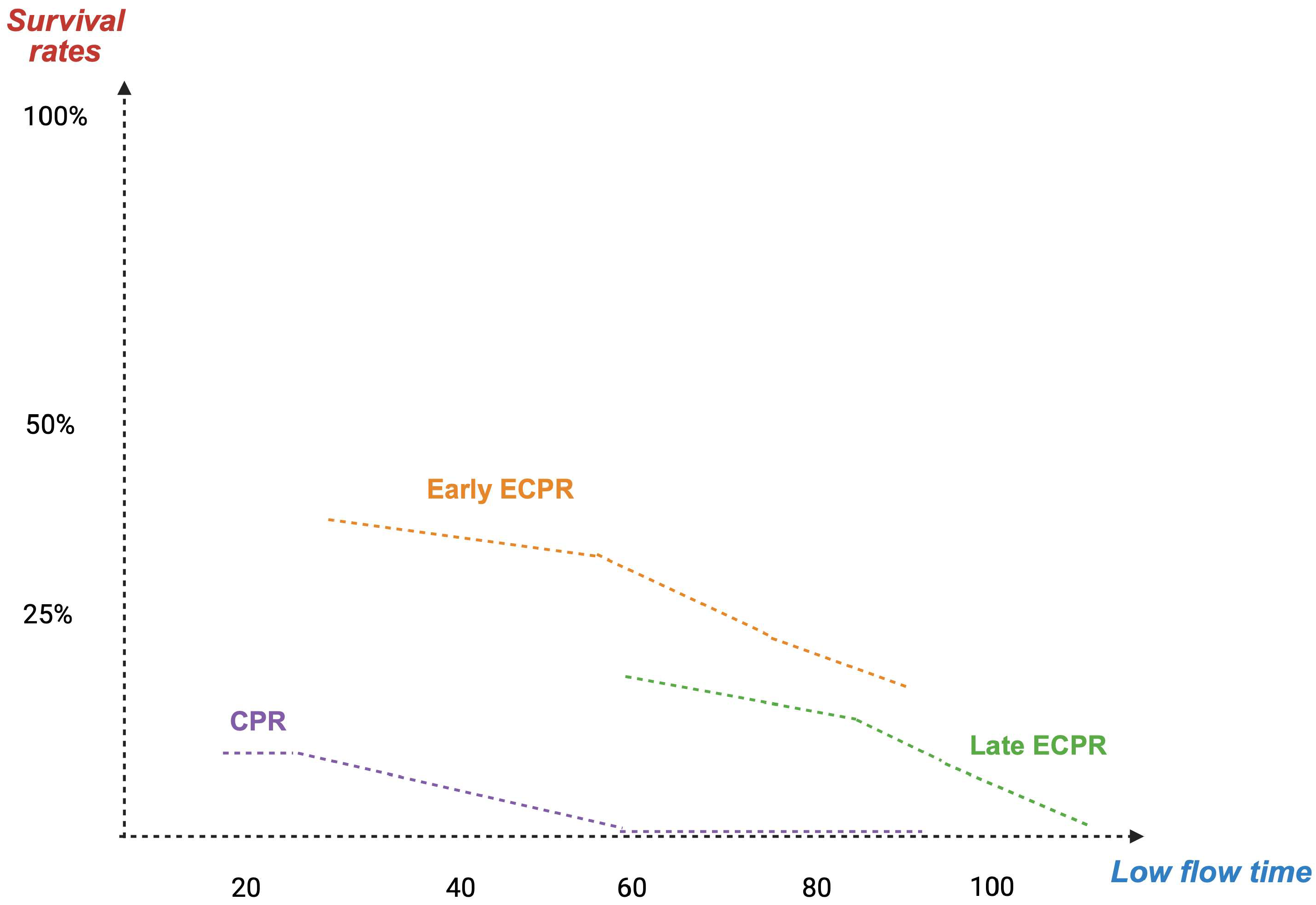
3.4.2. Timing: The Low-Flow Imperative
3.5. Cannulation Strategy and Technical Considerations
3.5.1. Procedural Environment and Workflow
3.5.2. Vascular Access and Flow Adequacy
3.5.3. Operational Constraints
3.6. Etiological Diagnosis and Definitive Treatment Pathways During ECPR
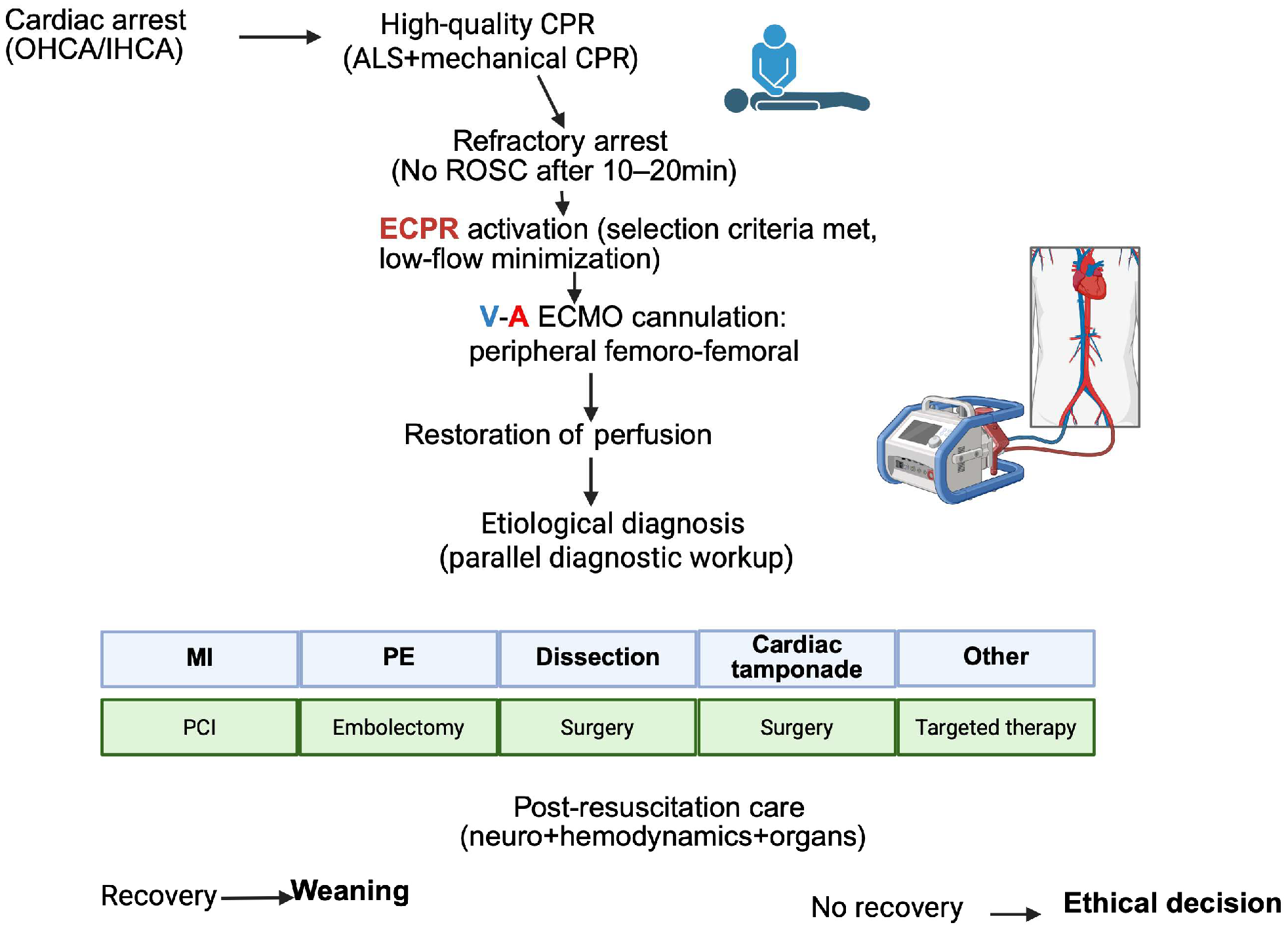
3.6.1. Parallel Stabilization and Diagnostic Workflow
- (1)
- Time sensitivity: Potentially reversible causes require immediate identification;
- (2)
- Probability-based prioritization: Diagnostic pathways should reflect the epidemiology of arrest (e.g., ischemic causes in shockable rhythms);
- (3)
- Integration with definitive therapy: Diagnostic steps should be embedded within actionable treatment pathways.
3.6.2. Coronary Occlusion and Acute Myocardial Infarction
3.6.3. Pulmonary Embolism
3.6.4. Structural and Mechanical Causes
3.6.5. Primary Electrical Disorders and Channelopathies
3.6.6. Metabolic and Toxicological Causes
3.6.7. Diagnostic Uncertainty and Decision-Making
3.6.8. Bridge to Decision, Bridge to Transplant and Bridge to Durable Mechanical Support
3.7. Complications and Post-Resuscitation Management
3.7.1. Left Ventricular Distension
3.7.2. Differential Oxygenation
3.7.3. Vascular and Limb Complications
3.7.4. Hemorrhage and Coagulation Disorders
3.7.5. Neurological Management and Prognostication
3.7.6. Multiorgan Support
- Acute kidney injury and CRRT integration
- Systemic inflammation and vasoplegia
- Hepatic and metabolic dysfunction
3.7.7. Circuit-Related Complications and Extracorporeal System Durability
3.8. System of Care and Organizational Models
3.8.1. Structured Activation and Early Identification
3.8.2. Regionalization and Volume–Outcome Relationship
3.8.3. Integration with Definitive Treatment Pathways
3.8.4. Multidisciplinary Coordination and Simulation
3.8.5. Prehospital and Mobile ECPR Models
3.8.6. Resource Allocation and Sustainability
3.9. Ethical and Resource Allocation Considerations
3.9.1. Patient Selection and the Risk of Futility
3.9.2. Uncertainty and Time-Dependent Decision-Making
3.9.3. Withdrawal of Extracorporeal Support
3.9.4. Resource Allocation and Opportunity Cost
3.9.5. Informed Consent and Family Communication
4. Discussion
5. Conclusions
6. Future Directions
Author Contributions
Funding
Institutional Review Board Statement
Informed Consent Statement
Data Availability Statement
Conflicts of Interest
Abbreviations
| ECPR | Extracorporeal cardiopulmonary resuscitation |
| V-A ECMO | Veno-arterial extracorporeal membrane oxygenation |
| CPR | Cardiopulmonary resuscitation |
| OHCA | Out-of-hospital cardiac arrest |
| IHCA | Intrahospital cardiac arrest |
References
- Simmons, K.M.; McIsaac, S.M.; Ohle, R. Impact of community-based interventions on out-of-hospital cardiac arrest outcomes: A systematic review and meta-analysis. Sci. Rep. 2023, 13, 10231. [Google Scholar] [CrossRef] [PubMed] [PubMed Central]
- Smekal, D.; Johansson, J.; Huzevka, T.; Rubertsson, S. A pilot study of mechanical chest compressions with the LUCASTM device in cardiopulmonary resuscitation. Resuscitation 2011, 82, 702–706. [Google Scholar] [CrossRef] [PubMed]
- Supady, A.; Bělohlávek, J.; Combes, A.; Hutin, A.; Lorusso, R.; MacLaren, G.; Magnet, I.; van de Poll, M.; Price, S.; Staudacher, D.L.; et al. Extracorporeal cardiopulmonary resuscitation for refractory cardiac arrest. Lancet Respir. Med. 2025, 13, 843–856. [Google Scholar] [CrossRef] [PubMed]
- Ubben, J.F.H.; Heuts, S.; Delnoij, T.S.R.; Suverein, M.M.; van de Koolwijk, A.F.; van der Horst, I.C.C.; Maessen, J.G.; Bartos, J.; Kavalkova, P.; Rob, D.; et al. Extracorporeal cardiopulmonary resuscitation for refractory OHCA: Lessons from three randomized controlled trials-the trialists’ view. Eur. Heart J. Acute Cardiovasc. Care 2023, 12, 540–547. [Google Scholar] [CrossRef] [PubMed] [PubMed Central]
- Bourcier, S.; Desnos, C.; Clément, M.; Hékimian, G.; Bréchot, N.; Taccone, F.S.; Belliato, M.; Pappalardo, F.; Broman, L.M.; Malfertheiner, M.V.; et al. Extracorporeal cardiopulmonary resuscitation for refractory in-hospital cardiac arrest: A retrospective cohort study. Int. J. Cardiol. 2022, 350, 48–54. [Google Scholar] [CrossRef] [PubMed]
- Nolan, J.P.; Neumar, R.W.; Adrie, C.; Aibiki, M.; Berg, R.A.; Böttiger, B.W.; Callaway, C.; Clark, R.S.; Geocadin, R.G.; Jauch, E.C.; et al. Post-cardiac arrest syndrome: Epidemiology, pathophysiology, treatment, and prognostication. A Scientific Statement from the International Liaison Committee on Resuscitation; the American Heart Association Emergency Cardiovascular Care Committee; the Council on Cardiovascular Surgery and Anesthesia; the Council on Cardiopulmonary, Perioperative, and Critical Care; the Council on Clinical Cardiology; the Council on Stroke. Resuscitation 2008, 79, 350–379. [Google Scholar] [CrossRef] [PubMed]
- Richardson, A.S.; Schmidt, M.; Bailey, M.; Pellegrino, V.A.; Rycus, P.T.; Pilcher, D.V. ECMO Cardio-Pulmonary Resuscitation (ECPR), trends in survival from an international multicentre cohort study over 12-years. Resuscitation 2017, 112, 34–40. [Google Scholar] [CrossRef]
- Extracorporeal Life Support Organization (ELSO). ELSO Registry [Internet]. Ann Arbor, MI: ELSO; Available online: https://www.elso.org/registry/elsoliveregistrydashboard.aspx (accessed on 13 April 2026).
- Kim, S.J.; Kim, H.J.; Lee, H.Y.; Ahn, H.S.; Lee, S.W. Comparing extracorporeal cardiopulmonary resuscitation with conventional cardiopulmonary resuscitation: A meta-analysis. Resuscitation 2016, 103, 106–116. [Google Scholar] [CrossRef] [PubMed]
- Yasmin, F.; Rab, A.U.; Salman, A.; Fahim, M.A.A.; Rahman, H.A.U.; Moeed, A.; Ali, E.; Asghar, M.S.; Ratnani, I.; Surani, S. Extra-corporeal-cardiopulmonary-resuscitation vs. conventional-cardiopulmonary-resuscitation: An in-depth look into short- and long-term neurological outcomes. J. Cardiothorac. Surg. 2025, 20, 465. [Google Scholar] [CrossRef] [PubMed] [PubMed Central]
- Yannopoulos, D.; Bartos, J.; Raveendran, G.; Walser, E.; Connett, J.; Murray, T.A.; Collins, G.; Zhang, L.; Kalra, R.; Kosmopoulos, M.; et al. Advanced reperfusion strategies for patients with out-of-hospital cardiac arrest and refractory ventricular fibrillation (ARREST): A phase 2, single centre, open-label, randomised controlled trial. Lancet 2020, 396, 1807–1816. [Google Scholar] [CrossRef] [PubMed] [PubMed Central]
- Belohlavek, J.; Smalcova, J.; Rob, D.; Franek, O.; Smid, O.; Pokorna, M.; Horák, J.; Mrazek, V.; Kovarnik, T.; Zemanek, D.; et al. Effect of Intra-arrest Transport, Extracorporeal Cardiopulmonary Resuscitation, and Immediate Invasive Assessment and Treatment on Functional Neurologic Outcome in Refractory Out-of-Hospital Cardiac Arrest: A Randomized Clinical Trial. JAMA 2022, 327, 737–747. [Google Scholar] [CrossRef] [PubMed] [PubMed Central]
- Suverein, M.M.; Delnoij, T.S.R.; Lorusso, R.; Brandon Bravo Bruinsma, G.J.; Otterspoor, L.; Elzo Kraemer, C.V.; Vlaar, A.P.J.; van der Heijden, J.J.; Scholten, E.; den Uil, C.; et al. Early Extracorporeal CPR for Refractory Out-of-Hospital Cardiac Arrest. N. Engl. J. Med. 2023, 388, 299–309. [Google Scholar] [CrossRef] [PubMed]
- Barbaro, R.P.; Odetola, F.O.; Kidwell, K.M.; Paden, M.L.; Bartlett, R.H.; Davis, M.M.; Annich, G.M. Association of hospital-level volume of extracorporeal membrane oxygenation cases and mortality. Analysis of the extracorporeal life support organization registry. Am. J. Respir. Crit. Care Med. 2015, 191, 894–901. [Google Scholar] [CrossRef]
- Verma, A.; Hadaya, J.; Williamson, C.; Kronen, E.; Sakowitz, S.; Bakhtiyar, S.S.; Chervu, N.; Benharash, P. A contemporary analysis of the volume-outcome relationship for extracorporeal membrane oxygenation in the United States. Surgery 2023, 173, 1405–1410. [Google Scholar] [CrossRef] [PubMed]
- Misumi, K.; Hagiwara, Y.; Kimura, T.; Hifumi, T.; Inoue, A.; Sakamoto, T.; Kuroda, Y.; Ogura, T.; SAVE-J II Study Group. Impact of center volume on in-hospital mortality in adult patients with out-of-hospital cardiac arrest resuscitated using extracorporeal cardiopulmonary resuscitation: A secondary analysis of the SAVE-J II study. Sci. Rep. 2024, 14, 8309. [Google Scholar] [CrossRef] [PubMed] [PubMed Central]
- Sandroni, C.; Cronberg, T.; Sekhon, M. Brain injury after cardiac arrest: Pathophysiology, treatment, and prognosis. Intensive Care Med. 2021, 47, 1393–1414. [Google Scholar] [CrossRef] [PubMed] [PubMed Central]
- Mandigers, L.; Boersma, E.; den Uil, C.A.; Gommers, D.; Bělohlávek, J.; Belliato, M.; Lorusso, R.; Dos Reis Miranda, D. Systematic review and meta-analysis comparing low-flow duration of extracorporeal and conventional cardiopulmonary resuscitation. Interact. Cardiovasc. Thorac. Surg. 2022, 35, ivac219. [Google Scholar] [CrossRef] [PubMed] [PubMed Central]
- Reynolds, J.C.; Salcido, D.D.; Menegazzi, J.J. Coronary perfusion pressure and return of spontaneous circulation after prolonged cardiac arrest. Prehosp. Emerg. Care 2010, 14, 78–84. [Google Scholar] [CrossRef] [PubMed] [PubMed Central]
- Debaty, G.; Moore, J.; Duhem, H.; Rojas-Salvador, C.; Salverda, B.; Lick, M.; Labarère, J.; Lurie, K.G. Relationship between hemodynamic parameters and cerebral blood flow during cardiopulmonary resuscitation. Resuscitation 2020, 153, 20–27. [Google Scholar] [CrossRef] [PubMed]
- Georgiou, M.; Papathanassoglou, E.; Xanthos, T. Systematic review of the mechanisms driving effective blood flow during adult CPR. Resuscitation 2014, 85, 1586–1593. [Google Scholar] [CrossRef] [PubMed]
- Kalogeris, T.; Baines, C.P.; Krenz, M.; Korthuis, R.J. Cell biology of ischemia/reperfusion injury. Int. Rev. Cell Mol. Biol. 2012, 298, 229–317. [Google Scholar] [CrossRef] [PubMed] [PubMed Central]
- Lesnefsky, E.J.; Chen, Q.; Tandler, B.; Hoppel, C.L. Mitochondrial Dysfunction and Myocardial Ischemia-Reperfusion: Implications for Novel Therapies. Annu. Rev. Pharmacol. Toxicol. 2017, 57, 535–565. [Google Scholar] [CrossRef] [PubMed] [PubMed Central]
- Orchard, C.H.; Kentish, J.C. Effects of changes of pH on the contractile function of cardiac muscle. Am. J. Physiol. 1990, 258, C967–C981. [Google Scholar] [CrossRef] [PubMed]
- Tonna, J.E.; Cho, S.M. Extracorporeal Cardiopulmonary Resuscitation. Crit. Care Med. 2024, 52, 963–973. [Google Scholar] [CrossRef] [PubMed] [PubMed Central]
- Pappalardo, F.; Montisci, A. What is extracorporeal cardiopulmonary resuscitation? J. Thorac. Dis. 2017, 9, 1415–1419. [Google Scholar] [CrossRef] [PubMed] [PubMed Central]
- Al-Fares, A.; Pettenuzzo, T.; Del Sorbo, L. Extracorporeal life support and systemic inflammation. Intensive Care Med. Exp. 2019, 7, 46. [Google Scholar] [CrossRef] [PubMed] [PubMed Central]
- Cassara, C.M.; Long, M.T.; Dollerschell, J.T.; Chae, F.; Hall, D.J.; Demiralp, G.; Stampfl, M.J.; Bernardoni, B.; McCarthy, D.P.; Glazer, J.M. Extracorporeal Cardiopulmonary Resuscitation: A Narrative Review and Establishment of a Sustainable Program. Medicina 2022, 58, 1815. [Google Scholar] [CrossRef]
- Rao, P.; Khalpey, Z.; Smith, R.; Burkhoff, D.; Kociol, R.D. Venoarterial Extracorporeal Membrane Oxygenation for Cardiogenic Shock and Cardiac Arrest. Circ. Heart Fail. 2018, 11, e004905. [Google Scholar] [CrossRef] [PubMed]
- Neumar, R.W.; Nolan, J.P.; Adrie, C.; Aibiki, M.; Berg, R.A.; Böttiger, B.W.; Callaway, C.; Clark, R.S.; Geocadin, R.G.; Jauch, E.C.; et al. Post-cardiac arrest syndrome: Epidemiology, pathophysiology, treatment, and prognostication. A consensus statement from the International Liaison Committee on Resuscitation (American Heart Association, Australian and New Zealand Council on Resuscitation, European Resuscitation Council, Heart and Stroke Foundation of Canada, InterAmerican Heart Foundation, Resuscitation Council of Asia, and the Resuscitation Council of Southern Africa); the American Heart Association Emergency Cardiovascular Care Committee; the Council on Cardiovascular Surgery and Anesthesia; the Council on Cardiopulmonary, Perioperative, and Critical Care; the Council on Clinical Cardiology; and the Stroke Council. Circulation 2008, 118, 2452–2483. [Google Scholar] [CrossRef] [PubMed]
- Reynolds, J.C.; Frisch, A.; Rittenberger, J.C.; Callaway, C.W. Duration of resuscitation efforts and functional outcome after out-of-hospital cardiac arrest: When should we change to novel therapies? Circulation 2013, 128, 2488–2494. [Google Scholar] [CrossRef]
- Seehase, M.; Quentin, T.; Wiludda, E.; Hellige, G.; Paul, T.; Schiffmann, H. Gene expression of the Na-Ca2+ exchanger, SERCA2a and calsequestrin after myocardial ischemia in the neonatal rabbit heart. Biol. Neonate 2006, 90, 174–184. [Google Scholar] [CrossRef] [PubMed]
- Kim, S.J.; Kudej, R.K.; Yatani, A.; Kim, Y.K.; Takagi, G.; Honda, R.; Colantonio, D.A.; Van Eyk, J.E.; Vatner, D.E.; Rasmusson, R.L.; et al. A novel mechanism for myocardial stunning involving impaired Ca2+ handling. Circ. Res. 2001, 89, 831–837. [Google Scholar] [CrossRef] [PubMed]
- Meani, P.; Gelsomino, S.; Natour, E.; Johnson, D.M.; Rocca, H.B.; Pappalardo, F.; Bidar, E.; Makhoul, M.; Raffa, G.; Heuts, S.; et al. Modalities and Effects of Left Ventricle Unloading on Extracorporeal Life support: A Review of the Current Literature. Eur. J. Heart Fail. 2017, 19, 84–91. [Google Scholar] [CrossRef] [PubMed]
- Torre, D.E.; Pirri, C. Harlequin Syndrome in Venoarterial ECMO and ECPELLA: When ECMO and Native or Impella Circulations Collide—A Comprehensive Review. Rev. Cardiovasc. Med. 2025, 26, 39992. [Google Scholar] [CrossRef] [PubMed] [PubMed Central]
- Shin, T.G.; Choi, J.H.; Jo, I.J.; Sim, M.S.; Song, H.G.; Jeong, Y.K.; Song, Y.B.; Hahn, J.Y.; Choi, S.H.; Gwon, H.C.; et al. Extracorporeal cardiopulmonary resuscitation in patients with inhospital cardiac arrest: A comparison with conventional cardiopulmonary resuscitation. Crit. Care Med. 2011, 39, 1–7. [Google Scholar] [CrossRef] [PubMed]
- Ouweneel, D.M.; Schotborgh, J.V.; Limpens, J.; Sjauw, K.D.; Engström, A.E.; Lagrand, W.K.; Cherpanath, T.G.V.; Driessen, A.H.G.; de Mol, B.A.J.M.; Henriques, J.P.S. Extracorporeal life support during cardiac arrest and cardiogenic shock: A systematic review and meta-analysis. Intensive Care Med. 2016, 42, 1922–1934. [Google Scholar] [CrossRef] [PubMed] [PubMed Central]
- Voß, F.; Thevathasan, T.; Scholz, K.H.; Böttiger, B.W.; Scheiber, D.; Kabiri, P.; Bernhard, M.; Kienbaum, P.; Jung, C.; Westenfeld, R.; et al. Accredited cardiac arrest centers facilitate eCPR and improve neurological outcome. Resuscitation 2024, 194, 110069. [Google Scholar] [CrossRef] [PubMed]
- Olson, T.; Anders, M.; Burgman, C.; Stephens, A.; Bastero, P. Extracorporeal cardiopulmonary resuscitation in adults and children: A review of literature, published guidelines and pediatric single-center program building experience. Front. Med. 2022, 9, 935424. [Google Scholar] [CrossRef] [PubMed] [PubMed Central]
- Yukawa, T.; Kashiura, M.; Sugiyama, K.; Tanabe, T.; Hamabe, Y. Neurological outcomes and duration from cardiac arrest to the initiation of extracorporeal membrane oxygenation in patients with out-of-hospital cardiac arrest: A retrospective study. Scand. J. Trauma. Resusc. Emerg. Med. 2017, 25, 95. [Google Scholar] [CrossRef] [PubMed] [PubMed Central]
- Nakashima, T.; Noguchi, T.; Tahara, Y.; Nishimura, K.; Ogata, S.; Yasuda, S.; Onozuka, D.; Morimura, N.; Nagao, K.; Gaieski, D.F.; et al. Patients with Refractory Out-of-Cardiac Arrest and Sustained Ventricular Fibrillation as Candidates for Extracorporeal Cardiopulmonary Resuscitation—Prospective Multi-Center Observational Study. Circ. J. 2019, 83, 1011–1018. [Google Scholar] [CrossRef] [PubMed]
- Debaty, G.; Babaz, V.; Durand, M.; Gaide-Chevronnay, L.; Fournel, E.; Blancher, M.; Bouvaist, H.; Chavanon, O.; Maignan, M.; Bouzat, P.; et al. Prognostic factors for extracorporeal cardiopulmonary resuscitation recipients following out-of-hospital refractory cardiac arrest. A systematic review and meta-analysis. Resuscitation 2017, 112, 1–10. [Google Scholar] [CrossRef] [PubMed]
- Shin, T.G.; Jo, I.J.; Sim, M.S.; Song, Y.B.; Yang, J.H.; Hahn, J.Y.; Choi, S.H.; Gwon, H.C.; Jeon, E.S.; Sung, K.; et al. Two-year survival and neurological outcome of in-hospital cardiac arrest patients rescued by extracorporeal cardiopulmonary resuscitation. Int. J. Cardiol. 2013, 168, 3424–3430. [Google Scholar] [CrossRef] [PubMed]
- Wengenmayer, T.; Rombach, S.; Ramshorn, F.; Biever, P.; Bode, C.; Duerschmied, D.; Staudacher, D.L. Influence of low-flow time on survival after extracorporeal cardiopulmonary resuscitation (eCPR). Crit. Care 2017, 21, 157. [Google Scholar] [CrossRef] [PubMed] [PubMed Central]
- Otani, T.; Sawano, H.; Natsukawa, T.; Nakashima, T.; Oku, H.; Gon, C.; Takahagi, M.; Hayashi, Y. Low-flow time is associated with a favorable neurological outcome in out-of-hospital cardiac arrest patients resuscitated with extracorporeal cardiopulmonary resuscitation. J. Crit. Care 2018, 48, 15–20. [Google Scholar] [CrossRef] [PubMed]
- Shoji, K.; Ohbe, H.; Kudo, D.; Tanikawa, A.; Kobayashi, M.; Aoki, M.; Hamaguchi, T.; Nagashima, F.; Inoue, A.; Hifumi, T.; et al. Low-flow time and outcomes in out-of-hospital cardiac arrest patients treated with extracorporeal cardiopulmonary resuscitation. Am. J. Emerg. Med. 2024, 75, 37–41. [Google Scholar] [CrossRef] [PubMed]
- Chen, Y.S.; Lin, J.W.; Yu, H.Y.; Ko, W.J.; Jerng, J.S.; Chang, W.T.; Chen, W.J.; Huang, S.C.; Chi, N.H.; Wang, C.H.; et al. Cardiopulmonary resuscitation with assisted extracorporeal life-support versus conventional cardiopulmonary resuscitation in adults with in-hospital cardiac arrest: An observational study and propensity analysis. Lancet 2008, 372, 554–561. [Google Scholar] [CrossRef] [PubMed]
- Tonna, J.E.; Selzman, C.H.; Mallin, M.P.; Smith, B.R.; Youngquist, S.T.; Koliopoulou, A.; Welt, F.; Stoddard, K.D.; Nirula, R.; Barton, R.; et al. Development and Implementation of a Comprehensive, Multidisciplinary Emergency Department Extracorporeal Membrane Oxygenation Program. Ann. Emerg. Med. 2017, 70, 32–40. [Google Scholar] [CrossRef] [PubMed]
- Nagashima, F.; Inoue, S.; Oda, T.; Hamagami, T.; Matsuda, T.; Kobayashi, M.; Inoue, A.; Hifumi, T.; Sakamoto, T.; Kuroda, Y.; et al. Optimal chest compression for cardiac arrest until the establishment of ECPR: Secondary analysis of the SAVE-J II study. Am. J. Emerg. Med. 2024, 78, 102–111. [Google Scholar] [CrossRef] [PubMed]
- Wang, L.; Li, C.; Hao, X.; Rycus, P.; Tonna, J.E.; Alexander, P.; Fan, E.; Wang, H.; Yang, F.; Hou, X. Percutaneous cannulation is associated with lower rate of severe neurological complication in femoro-femoral ECPR: Results from the Extracorporeal Life Support Organization Registry. Ann. Intensive Care 2023, 13, 77. [Google Scholar] [CrossRef] [PubMed] [PubMed Central]
- Burns, B.; Kruit, N.; Dennis, M.; Shinar, Z.; Rees, P.; Wong, S.; Plunkett, B.; Reid, C.; Carley, S.; Yannopoulos, D. Common femoral artery access in emergency medicine. Emerg. Med. J. 2025, 0, 1–5. [Google Scholar] [CrossRef] [PubMed]
- Juo, Y.Y.; Skancke, M.; Sanaiha, Y.; Mantha, A.; Jimenez, J.C.; Benharash, P. Efficacy of Distal Perfusion Cannulae in Preventing Limb Ischemia During Extracorporeal Membrane Oxygenation: A Systematic Review and Meta-Analysis. Artif. Organs 2017, 41, E263–E273. [Google Scholar] [CrossRef] [PubMed]
- King, C.S.; Roy, A.; Ryan, L.; Singh, R. Cardiac Support: Emphasis on Venoarterial ECMO. Crit. Care Clin. 2017, 33, 777–794. [Google Scholar] [CrossRef] [PubMed]
- Thevathasan, T.; Gregers, E.; Rasalingam Mørk, S.; Degbeon, S.; Linde, L.; Bønding Andreasen, J.; Smerup, M.; Eifer Møller, J.; Hassager, C.; Laugesen, H.; et al. Lactate and lactate clearance as predictors of one-year survival in extracorporeal cardiopulmonary resuscitation—An international, multicentre cohort study. Resuscitation 2024, 198, 110149. [Google Scholar] [CrossRef] [PubMed]
- Nakatsutsumi, K.; Endo, A.; Costantini, T.W.; Takayama, W.; Morishita, K.; Otomo, Y.; Inoue, A.; Hifumi, T.; Sakamoto, T.; Kuroda, Y.; et al. Time-saving effect of real-time ultrasound-guided cannulation for extracorporeal cardiopulmonary resuscitation: A multicenter retrospective cohort study. Resuscitation 2023, 191, 109927. [Google Scholar] [CrossRef] [PubMed]
- Strunina, S.; Hozman, J.; Ostadal, P. The peripheral cannulas in extracorporeal life support. Biomed. Eng. 2019, 64, 127–133. [Google Scholar] [CrossRef] [PubMed]
- Kim, J.; Cho, Y.H.; Sung, K.; Park, T.K.; Lee, G.Y.; Lee, J.M.; Song, Y.B.; Hahn, J.Y.; Choi, J.H.; Choi, S.H.; et al. Impact of Cannula Size on Clinical Outcomes in Peripheral Venoarterial Extracorporeal Membrane Oxygenation. ASAIO J. 2019, 65, 573–579. [Google Scholar] [CrossRef] [PubMed]
- Arai, M.; Nakashima, T.; Noguchi, T.; Hifumi, T.; Inoue, A.; Sakamoto, T.; Kuroda, Y.; Tahara, Y. Association Between Cannula Size of Extracorporeal Membrane Oxygenation and Prognosis in Patients with Out-of-Hospital Cardiac Arrest—A Secondary Analysis of the SAVE-J II Study. Circ. J. 2025, 89, 1752–1760. [Google Scholar] [CrossRef] [PubMed]
- Lamhaut, L.; Hutin, A.; Puymirat, E.; Jouan, J.; Raphalen, J.H.; Jouffroy, R.; Jaffry, M.; Dagron, C.; An, K.; Dumas, F.; et al. A Pre-Hospital Extracorporeal Cardio Pulmonary Resuscitation (ECPR) strategy for treatment of refractory out hospital cardiac arrest: An observational study and propensity analysis. Resuscitation 2017, 117, 109–117. [Google Scholar] [CrossRef] [PubMed]
- Bertini, P.; Sangalli, F.; Meani, P.; Marabotti, A.; Rubino, A.; Scolletta, S.; Ajello, V.; Aloisio, T.; Baiocchi, M.; Monaco, F.; et al. Establishing an Extracorporeal Cardiopulmonary Resuscitation Program. Medicina 2024, 60, 1979. [Google Scholar] [CrossRef] [PubMed] [PubMed Central]
- Richardson, A.S.C.; Tonna, J.E.; Nanjayya, V.; Nixon, P.; Abrams, D.C.; Raman, L.; Bernard, S.; Finney, S.J.; Grunau, B.; Youngquist, S.T.; et al. Extracorporeal Cardiopulmonary Resuscitation in Adults. Interim Guideline Consensus Statement From the Extracorporeal Life Support Organization. ASAIO J. 2021, 67, 221–228. [Google Scholar] [CrossRef] [PubMed] [PubMed Central]
- Lott, C.; Truhlář, A.; Alfonzo, A.; Barelli, A.; González-Salvado, V.; Hinkelbein, J.; Nolan, J.P.; Paal, P.; Perkins, G.D.; Thies, K.C.; et al. European Resuscitation Council Guidelines 2021, Cardiac arrest in special circumstances. Resuscitation 2021, 161, 152–219, Erratum in Resuscitation 2021, 167, 91–92. https://doi.org/10.1016/j.resuscitation.2021.08.012.. [Google Scholar] [CrossRef] [PubMed]
- Torre, D.E.; Pirri, C. Point-of-Care Transesophageal Echocardiography in Emergency and Intensive Care: An Evolving Imaging Modality. Biomedicines 2025, 13, 2680. [Google Scholar] [CrossRef] [PubMed] [PubMed Central]
- Torre, D.E.; Pirri, C. Beyond Standard Parameters: Precision Hemodynamic Monitoring in Patients on Veno-Arterial ECMO. J. Pers. Med. 2025, 15, 541. [Google Scholar] [CrossRef] [PubMed] [PubMed Central]
- Kim, Y.J.; Lee, Y.J.; Ryoo, S.M.; Sohn, C.H.; Ahn, S.; Seo, D.W.; Lim, K.S.; Kim, W.Y. Role of blood gas analysis during cardiopulmonary resuscitation in out-of-hospital cardiac arrest patients. Medicine 2016, 95, e3960, Erratum in Medicine 2016, 95, e450a. https://doi.org/10.1097/01.md.0000494760.10745.0a.. [Google Scholar] [CrossRef] [PubMed] [PubMed Central]
- Kim, Y.; Park, J.H.; Lee, S.Y.; Ro, Y.S.; Hong, K.J.; Song, K.J.; Shin, S.D. Extracorporeal cardiopulmonary resuscitation location, coronary angiography and survival in out-of-hospital cardiac arrest. Am. J. Emerg. Med. 2023, 64, 142–149. [Google Scholar] [CrossRef] [PubMed]
- Righetti, S.; Pozzi, M.; Leidi, F.; Giani, M.; Aliverti Piuri, D.; Maggioni, E.; Calchera, I.; Tresoldi, S.; Ballabio, M.; Tassistro, E.; et al. Coronary angiography findings in patients with refractory out-of-hospital cardiac arrest treated with extracorporeal cardiopulmonary resuscitation: Prediction of lesion culprit of acute myocardial infarction. Resuscitation 2025, 215, 110717. [Google Scholar] [CrossRef] [PubMed]
- Kaplovitch, E.; Shaw, J.R.; Douketis, J. Thrombolysis in Pulmonary Embolism: An Evidence-Based Approach to Treating Life-Threatening Pulmonary Emboli. Crit. Care Clin. 2020, 36, 465–480. [Google Scholar] [CrossRef] [PubMed]
- Pudil, J.; Rob, D.; Smalcova, J.; Smid, O.; Huptych, M.; Vesela, M.; Kovarnik, T.; Belohlavek, J. Pulmonary embolism-related refractory out-of-hospital cardiac arrest and extracorporeal cardiopulmonary resuscitation: Prague OHCA study post hoc analysis. Eur. Heart J. Acute Cardiovasc. Care 2023, 12, 507–512. [Google Scholar] [CrossRef] [PubMed] [PubMed Central]
- Harbaum, L.; Mihali, K.; Ausbüttel, F.; Schieffer, B.; Kreutz, J. Case Report of Successful Extracorporeal CPR (eCPR) in Refractory Cardiac Arrest Caused by Fulminant Pulmonary Embolism with Remarkable Recovery. Reports 2025, 8, 100. [Google Scholar] [CrossRef] [PubMed] [PubMed Central]
- Vetrugno, L.; Deana, C.; Boero, E.; Biasucci, D.G.; Scott, S.; Bassi, F.; Fiore, C.; Morita, Y.; Caciolli, S.; Zanierato, M.; et al. Transesophageal echocardiography in cardiac arrest: Why, how, when, and where in clinical practice. J. Anesth. Analg. Crit. Care 2026, 6, 18. [Google Scholar] [CrossRef] [PubMed] [PubMed Central]
- Tong, H.; Zhang, X.; Chen, K.; Hu, W.; Gu, Q. Early computed tomography after extracorporeal cardiopulmonary resuscitation on in-hospital survival: A retrospective cohort study. J. Thorac. Dis. 2023, 15, 1258–1266. [Google Scholar] [CrossRef] [PubMed] [PubMed Central]
- Zotzmann, V.; Rilinger, J.; Lang, C.N.; Duerschmied, D.; Benk, C.; Bode, C.; Wengenmayer, T.; Staudacher, D.L. Early full-body computed tomography in patients after extracorporeal cardiopulmonary resuscitation (eCPR). Resuscitation 2020, 146, 149–154. [Google Scholar] [CrossRef] [PubMed]
- Ohbe, H.; Ogura, T.; Matsui, H.; Yasunaga, H. Extracorporeal cardiopulmonary resuscitation for acute aortic dissection during cardiac arrest: A nationwide retrospective observational study. Resuscitation 2020, 156, 237–243. [Google Scholar] [CrossRef] [PubMed]
- Torre, D.E.; Pirri, C. Alternative Arterial Access in Veno-Arterial ECMO: The Role of the Axillary Artery. J. Clin. Med. 2025, 14, 5413. [Google Scholar] [CrossRef] [PubMed] [PubMed Central]
- Cavozza, C.; Campanella, A.; Pellegrino, P.; Regesta, T.; Gherli, R.; Audo, A. Right subclavian artery cannulation for aortic dissection surgery, without infraclavicular incision. Multimed. Man. Cardiothorac. Surg. 2020. [Google Scholar] [CrossRef]
- DeFilippis, E.M.; Clerkin, K.; Truby, L.K.; Francke, M.; Fried, J.; Masoumi, A.; Garan, A.R.; Farr, M.A.; Takayama, H.; Takeda, K.; et al. ECMO as a Bridge to Left Ventricular Assist Device or Heart Transplantation. JACC Heart Fail. 2021, 9, 281–289. [Google Scholar] [CrossRef] [PubMed]
- Beshish, A.G.; Weinberg, A.; Ostwani, W.; Owens, G.E. Extracorporeal Life Support as a Rescue Measure for Managing Life-Threatening Arrythmia and Brugada Syndrome. J. Extra Corpor. Technol. 2017, 49, 312–316. [Google Scholar] [CrossRef] [PubMed] [PubMed Central]
- Lee, J.W.; Yoo, S.W.; Jeong, W.J.; Ryu, S.; Yoo, Y.H.; Yoo, I.S.; Park, S.I.; Kim, J.H. Extracorporeal CPR and therapeutic hypothermia for out-of-hospital cardiac arrest in a patient with congenital long QT syndrome. Am. J. Emerg. Med. 2016, 34, 1321.e1-3. [Google Scholar] [CrossRef] [PubMed]
- Torre, D.E.; Mangino, D.; Pirri, C. Veno-Arterial Extracorporeal Membrane Oxygenation in Cardiotoxic Drug-Induced Cardiogenic Shock: A Systematic Narrative Review. Life 2025, 15, 925. [Google Scholar] [CrossRef] [PubMed] [PubMed Central]
- Weiner, L.; Mazzeffi, M.A.; Hines, E.Q.; Gordon, D.; Herr, D.L.; Kim, H.K. Clinical utility of venoarterial-extracorporeal membrane oxygenation (VA-ECMO) in patients with drug-induced cardiogenic shock: A retrospective study of the Extracorporeal Life Support Organizations’ ECMO case registry. Clin. Toxicol. 2020, 58, 705–710. [Google Scholar] [CrossRef] [PubMed]
- Torre, D.E.; Stecco, C.; Porzionato, A.; Mangino, D.; Macchi, V.; De Caro, R.; Pirri, C. Ibrutinib-Induced Ventricular Electrical Storm Successfully Managed with Veno-Arterial ECMO and Intralipid Administration: A Rare Case Report. Ann. Card. Anaesth. 2024, 27, 344–348. [Google Scholar] [CrossRef] [PubMed] [PubMed Central]
- Acharya, D.; Manandhar-Shrestha, N.; Leacche, M.; Rajapreyar, I.; William, P.; Kazui, T.; Hooker, R.; Tonna, J.; Jovinge, S.; Loyaga-Rendon, R. Extracorporeal membrane oxygenation as a bridge to advanced heart failure therapies. J. Heart Lung Transplant. 2023, 42, 1059–1071. [Google Scholar] [CrossRef] [PubMed]
- Dhamija, A.; Thibault, D.; Fugett, J.; Hayanga, H.K.; McCarthy, P.; Badhwar, V.; Awori Hayanga, J.W. Incremental effect of complications on mortality and hospital costs in adult ECMO patients. Perfusion 2022, 37, 461–469. [Google Scholar] [CrossRef] [PubMed]
- Dickstein, M.L. The Starling Relationship and Veno-Arterial ECMO: Ventricular Distension Explained. ASAIO J. 2018, 64, 497–501. [Google Scholar] [CrossRef] [PubMed]
- Ezad, S.M.; Ryan, M.; Donker, D.W.; Pappalardo, F.; Barrett, N.; Camporota, L.; Price, S.; Kapur, N.K.; Perera, D. Unloading the Left Ventricle in Venoarterial ECMO: In Whom, When, and How? Circulation 2023, 147, 1237–1250. [Google Scholar] [CrossRef] [PubMed] [PubMed Central]
- Bernhardt, A.M.; Schrage, B.; Westermann, D.; Reichenspurner, H. Extracorporeal membrane oxygenation evolution: Left ventricular unloading strategies. JTCVS Open 2021, 8, 85–89. [Google Scholar] [CrossRef] [PubMed] [PubMed Central]
- Gandhi, K.D.; Moras, E.C.; Niroula, S.; Lopez, P.D.; Aggarwal, D.; Bhatia, K.; Balboul, Y.; Daibes, J.; Correa, A.; Dominguez, A.C.; et al. Left Ventricular Unloading with Impella Versus IABP in Patients with VA-ECMO: A Systematic Review and Meta-Analysis. Am. J. Cardiol. 2023, 208, 53–59. [Google Scholar] [CrossRef] [PubMed]
- Badulak, J.; Abrams, D.; Luks, A.M.; Zakhary, B.; Conrad, S.A.; Bartlett, R.; MacLaren, G.; Vercaemst, L.; Lorusso, R.; Broman, L.M.; et al. Position paper on the physiology and nomenclature of dual circulation during venoarterial ECMO in adults. Intensive Care Med. 2024, 50, 1994–2004, Erratum in Intensive Care Med. 2025, 51, 661–662. https://doi.org/10.1007/s00134-025-07809-0.. [Google Scholar] [CrossRef] [PubMed] [PubMed Central]
- Hou, X. How to mange differential hypoxemia during veno-arterial extracorporeal membrane oxygenation. Perfusion 2024, 39, 443–444. [Google Scholar] [CrossRef] [PubMed]
- Choi, J.H.; Kim, S.W.; Kim, Y.U.; Kim, S.Y.; Kim, K.S.; Joo, S.J.; Lee, J.S. Application of veno-arterial-venous extracorporeal membrane oxygenation in differential hypoxia. Multidiscip. Respir. Med. 2014, 9, 55. [Google Scholar] [CrossRef] [PubMed] [PubMed Central]
- Falk, L.; Sallisalmi, M.; Lindholm, J.A.; Lindfors, M.; Frenckner, B.; Broomé, M.; Broman, L.M. Differential hypoxemia during venoarterial extracorporeal membrane oxygenation. Perfusion 2019, 34, 22–29. [Google Scholar] [CrossRef] [PubMed]
- Hu, S.; Lu, A.; Pan, C.; Zhang, B.; Wa, Y.L.; Qu, W.; Bai, M. Limb Ischemia Complications of Veno-Arterial Extracorporeal Membrane Oxygenation. Front. Med. 2022, 9, 938634. [Google Scholar] [CrossRef] [PubMed] [PubMed Central]
- Nejim, B.; Snow, R.; Chau, M.; Sakya, S.; Castello-Ramirez, M.; Flohr, T.R.; Brehm, C.; Aziz, F. Acute Limb Ischemia in Patients on Veno-Arterial Extracorporeal Membrane Oxygenation (VA-ECMO) Support: A Ten-Year Single-Center Experience. Ann. Vasc. Surg. 2025, 111, 63–69. [Google Scholar] [CrossRef] [PubMed]
- Frere, C.; Mazzeffi, M.; Maier, C.L.; Helms, J.; Steiner, M.E.; Sullenger, B.A.; Tanaka, K.A.; Connors, J.M.; Levy, J.H. Acquired von Willebrand syndrome during extracorporeal membrane oxygenation support: A comprehensive review of current evidence: Communication from the ISTH SSC on perioperative and critical care thrombosis and hemostasis. J. Thromb. Haemost. 2024, 22, 2608–2628. [Google Scholar] [CrossRef] [PubMed]
- Coelho, R.; Tavares, J.; Marinheiro, C.; Costa, C.; Ferreira, S.; Gregório, T. The effectiveness of NIRS technology to the early diagnosis of lower limb ischemia in patients on peripheral VA ECMO: A systematic review and meta-analysis. Intensive Crit. Care Nurs. 2025, 89, 104039. [Google Scholar] [CrossRef] [PubMed]
- Avalli, L.; Sangalli, F.; Migliari, M.; Maggioni, E.; Gallieri, S.; Segramora, V.; Camesasca, V.; Formica, F.; Paolini, G.; Pesenti, A. Early vascular complications after percutaneous cannulation for extracorporeal membrane oxygenation for cardiac assist. Minerva Anestesiol. 2016, 82, 36–43. [Google Scholar] [PubMed]
- Hamera, J.; Menne, A. Extracorporeal Life Support for Trauma. Emerg. Med. Clin. North Am. 2023, 41, 89–100. [Google Scholar] [CrossRef] [PubMed]
- Wheeler, C.R.; Bullock, K.J. Extracorporeal Membrane Oxygenation. Respir. Care 2023, 68, 1158–1170. [Google Scholar] [CrossRef] [PubMed] [PubMed Central]
- Olson, S.R.; Murphree, C.R.; Zonies, D.; Meyer, A.D.; Mccarty, O.J.T.; Deloughery, T.G.; Shatzel, J.J. Thrombosis and Bleeding in Extracorporeal Membrane Oxygenation (ECMO) Without Anticoagulation: A Systematic Review. ASAIO J. 2021, 67, 290–296. [Google Scholar] [CrossRef] [PubMed] [PubMed Central]
- Cavayas, Y.A.; Del Sorbo, L.; Munshi, L.; Sampson, C.; Fan, E. Intracranial hemorrhage on extracorporeal membrane oxygenation: An international survey. Perfusion 2021, 36, 161–170. [Google Scholar] [CrossRef] [PubMed]
- Priest, J.R.; Hebert, D.; Jutras, C. Anticoagulation during extracorporeal membrane oxygenation: A narrative review. Perfusion 2025, 40, 547–556. [Google Scholar] [CrossRef] [PubMed]
- Navaei, A.; Kostousov, V.; Teruya, J. Is it time to switch to bivalirudin for ECMO anticoagulation? Front. Med. 2023, 10, 1237601. [Google Scholar] [CrossRef] [PubMed] [PubMed Central]
- Rajajee, V.; Muehlschlegel, S.; Wartenberg, K.E.; Alexander, S.A.; Busl, K.M.; Chou, S.H.Y.; Creutzfeldt, C.J.; Fontaine, G.V.; Fried, H.; Hocker, S.E.; et al. Guidelines for Neuroprognostication in Comatose Adult Survivors of Cardiac Arrest. Neurocrit. Care 2023, 38, 533–563. [Google Scholar] [CrossRef] [PubMed] [PubMed Central]
- Sekhon, M.S.; Ainslie, P.N.; Griesdale, D.E. Clinical pathophysiology of hypoxic ischemic brain injury after cardiac arrest: A “two-hit” model. Crit. Care 2017, 21, 90. [Google Scholar] [CrossRef] [PubMed] [PubMed Central]
- Hirsch, K.G.; Amorim, E.; Coppler, P.J.; Drennan, I.R.; Elliott, A.; Gordon, A.J.; Jentzer, J.C.; Johnson, N.J.; Moskowitz, A.; Mumma, B.E.; et al. Part 11: Post-Cardiac Arrest Care: 2025 American Heart Association Guidelines for Cardiopulmonary Resuscitation and Emergency Cardiovascular Care. Circulation 2025, 152, S673–S718. [Google Scholar] [CrossRef] [PubMed]
- Schmidt, H.; Kjaergaard, J.; Hassager, C.; Mølstrøm, S.; Grand, J.; Borregaard, B.; Roelsgaard Obling, L.E.; Venø, S.; Sarkisian, L.; Mamaev, D.; et al. Oxygen Targets in Comatose Survivors of Cardiac Arrest. N. Engl. J. Med. 2022, 387, 1467–1476. [Google Scholar] [CrossRef] [PubMed]
- Hope Kilgannon, J.; Hunter, B.R.; Puskarich, M.A.; Shea, L.; Fuller, B.M.; Jones, C.; Donnino, M.; Kline, J.A.; Jones, A.E.; Shapiro, N.I.; et al. Partial pressure of arterial carbon dioxide after resuscitation from cardiac arrest and neurological outcome: A prospective multi-center protocol-directed cohort study. Resuscitation 2019, 135, 212–220. [Google Scholar] [CrossRef] [PubMed] [PubMed Central]
- Nolan, J.P.; Sandroni, C.; Böttiger, B.W.; Cariou, A.; Cronberg, T.; Friberg, H.; Genbrugge, C.; Haywood, K.; Lilja, G.; Moulaert, V.R.M.; et al. European Resuscitation Council and European Society of Intensive Care Medicine Guidelines 2021: Post-resuscitation care. Resuscitation 2021, 161, 220–269, Erratum in Resuscitation 2021, 167, 109–110. https://doi.org/10.1016/j.resuscitation.2021.08.013.. [Google Scholar] [CrossRef] [PubMed]
- Dankiewicz, J.; Cronberg, T.; Lilja, G.; Jakobsen, J.C.; Levin, H.; Ullén, S.; Rylander, C.; Wise, M.P.; Oddo, M.; Cariou, A.; et al. Hypothermia versus Normothermia after Out-of-Hospital Cardiac Arrest. N. Engl. J. Med. 2021, 384, 2283–2294. [Google Scholar] [CrossRef] [PubMed]
- Sakurai, T.; Kaneko, T.; Yamada, S.; Takahashi, T. Extracorporeal cardiopulmonary resuscitation with temperature management could improve the neurological outcomes of out-of-hospital cardiac arrest: A retrospective analysis of a nationwide multicenter observational study in Japan. J. Intensive Care 2022, 10, 30. [Google Scholar] [CrossRef] [PubMed] [PubMed Central]
- Skrifvars, M.B.; Ameloot, K.; Åneman, A. Blood pressure targets and management during post-cardiac arrest care. Resuscitation 2023, 189, 109886. [Google Scholar] [CrossRef] [PubMed]
- Sandroni, C.; Cariou, A.; Cavallaro, F.; Cronberg, T.; Friberg, H.; Hoedemaekers, C.; Horn, J.; Nolan, J.P.; Rossetti, A.O.; Soar, J. Prognostication in comatose survivors of cardiac arrest: An advisory statement from the European Resuscitation Council and the European Society of Intensive Care Medicine. Intensive Care Med. 2014, 40, 1816–1831. [Google Scholar] [CrossRef] [PubMed] [PubMed Central]
- Khazanova, D.; Douglas, V.C.; Amorim, E. A matter of timing: EEG monitoring for neurological prognostication after cardiac arrest in the era of targeted temperature management. Minerva Anestesiol. 2021, 87, 704–713. [Google Scholar] [CrossRef] [PubMed]
- Samaniego, E.A.; Mlynash, M.; Caulfield, A.F.; Eyngorn, I.; Wijman, C.A. Sedation confounds outcome prediction in cardiac arrest survivors treated with hypothermia. Neurocrit. Care 2011, 15, 113–119. [Google Scholar] [CrossRef] [PubMed] [PubMed Central]
- Agarwal, S.; Morris, N.; Der-Nigoghossian, C.; May, T.; Brodie, D. The Influence of Therapeutics on Prognostication After Cardiac Arrest. Curr. Treat. Options Neurol. 2019, 21, 60. [Google Scholar] [CrossRef] [PubMed]
- McCurry, I.J.; Han, J.; Courtwright, A. How Should Physicians Manage Neuroprognosis with ECPR? Narrat. Inq. Bioeth. 2020, 10, 173–182. [Google Scholar] [CrossRef] [PubMed]
- Haertel, F.; Babst, J.; Bruening, C.; Bogoviku, J.; Otto, S.; Fritzenwanger, M.; Gecks, T.; Ebelt, H.; Moebius-Winkler, S.; Schulze, P.C.; et al. Effect of Hemolysis Regarding the Characterization and Prognostic Relevance of Neuron Specific Enolase (NSE) after Cardiopulmonary Resuscitation with Extracorporeal Circulation (eCPR). J. Clin. Med. 2023, 12, 3015. [Google Scholar] [CrossRef] [PubMed] [PubMed Central]
- Kim, H.B.; Yang, J.H.; Lee, Y.H. Are serial neuron-specific enolase levels associated with neurologic outcome of ECPR patients: A retrospective multicenter observational study. Am. J. Emerg. Med. 2023, 69, 58–64. [Google Scholar] [CrossRef] [PubMed]
- Szpinda, Ł.; Lis, M.; Pruc, M.; Goraj, W.; Niewiadomska, I.; Maslyk, M.; Kotfis, K.; Tan, H.L.; Baldi, E.; Szarpak, L. Prognostic Value of Serum S100B Protein for Neurological Outcomes After Cardiac Arrest: A Systematic Review and Meta-Analysis. J. Clin. Med. 2025, 15, 238. [Google Scholar] [CrossRef] [PubMed] [PubMed Central]
- Dennis, M.; Supady, A.; Abrams, D.; Bartos, J.; Jung, J.S.; Kruit, N.; Ling, S.; Rosenberg, A.; Sackley, M.; Scquizzato, T.; et al. Recommendations in Extracorporeal Cardiopulmonary Resuscitation Post Resuscitation Care Via An International, Modified Delphi Approach. J. Am. Heart Assoc. 2026, 15, e047548. [Google Scholar] [CrossRef] [PubMed] [PubMed Central]
- Ryu, J.A.; Chung, C.R.; Cho, Y.H.; Sung, K.; Suh, G.Y.; Park, T.K.; Song, Y.B.; Hahn, J.Y.; Choi, J.H.; Gwon, H.C.; et al. The association of findings on brain computed tomography with neurologic outcomes following extracorporeal cardiopulmonary resuscitation. Crit. Care 2017, 21, 15. [Google Scholar] [CrossRef] [PubMed] [PubMed Central]
- Sandroni, C.; D’Arrigo, S.; Cacciola, S.; Hoedemaekers, C.W.E.; Kamps, M.J.A.; Oddo, M.; Taccone, F.S.; Di Rocco, A.; Meijer, F.J.A.; Westhall, E.; et al. Prediction of poor neurological outcome in comatose survivors of cardiac arrest: A systematic review. Intensive Care Med. 2020, 46, 1803–1851. [Google Scholar] [CrossRef] [PubMed] [PubMed Central]
- Cho, S.M.; Hwang, J.; Chiarini, G.; Amer, M.; Antonini, M.V.; Barrett, N.; Belohlavek, J.; Brodie, D.; Dalton, H.J.; Diaz, R.; et al. Neurological monitoring and management for adult extracorporeal membrane oxygenation patients: Extracorporeal Life Support Organization consensus guidelines. Crit. Care 2024, 28, 296, Erratum in Crit. Care 2024, 28, 327. https://doi.org/10.1186/s13054-024-05107-7.. [Google Scholar] [CrossRef] [PubMed] [PubMed Central]
- Podell, J.E.; Krause, E.M.; Rector, R.; Hassan, M.; Reddi, A.; Jaffa, M.N.; Morris, N.A.; Herr, D.L.; Parikh, G.Y. Neurologic Outcomes After Extracorporeal Cardiopulmonary Resuscitation: Recent Experience at a Single High-Volume Center. ASAIO J. 2022, 68, 247–254. [Google Scholar] [CrossRef] [PubMed]
- Sakamoto, T.; Morimura, N.; Nagao, K.; Asai, Y.; Yokota, H.; Nara, S.; Hase, M.; Tahara, Y.; Atsumi, T.; SAVE-J Study Group. Extracorporeal cardiopulmonary resuscitation versus conventional cardiopulmonary resuscitation in adults with out-of-hospital cardiac arrest: A prospective observational study. Resuscitation 2014, 85, 762–768. [Google Scholar] [CrossRef] [PubMed]
- Adrie, C.; Adib-Conquy, M.; Laurent, I.; Monchi, M.; Vinsonneau, C.; Fitting, C.; Fraisse, F.; Dinh-Xuan, A.T.; Carli, P.; Spaulding, C.; et al. Successful cardiopulmonary resuscitation after cardiac arrest as a “sepsis-like” syndrome. Circulation 2002, 106, 562–568. [Google Scholar] [CrossRef] [PubMed]
- Gaisendrees, C.; Ivanov, B.; Gerfer, S.; Sabashnikov, A.; Eghbalzadeh, K.; Schlachtenberger, G.; Avgeridou, S.; Rustenbach, C.; Merkle, J.; Adler, C.; et al. Predictors of acute kidney injury in patients after extracorporeal cardiopulmonary resuscitation. Perfusion 2023, 38, 292–298. [Google Scholar] [CrossRef] [PubMed]
- Lee, Y.I.; Kang, M.G.; Ko, R.E.; Park, T.K.; Chung, C.R.; Cho, Y.H.; Jeon, K.; Suh, G.Y.; Yang, J.H. The Impact of Hypoxic Hepatitis on Clinical Outcomes after Extracorporeal Cardiopulmonary Resuscitation. J. Clin. Med. 2020, 9, 2994. [Google Scholar] [CrossRef] [PubMed] [PubMed Central]
- Pequignot, B.; Lescroart, M.; Orlowski, S.; Reynette, N.; Martini, B.; Albuisson, E.; Pina, H.; Tran, N.; Grandmougin, D.; Levy, B. Methylene Blue Reduces Fluid Loading and Norepinephrine Requirements for Post-Resuscitation Syndrome in a Pig Model of Refractory Cardiac Arrest Resuscitated with Veno-Arterial ECMO. J. Clin. Med. 2022, 11, 2515. [Google Scholar] [CrossRef] [PubMed] [PubMed Central]
- Taira, T.; Inoue, A.; Ijuin, S.; Nishimura, T.; Moriyama, T.; Omoda, M.; Hifumi, T.; Sakamoto, T.; Kuroda, Y.; Ishihara, S.; et al. Acute Kidney Injury After Extracorporeal Cardiopulmonary Resuscitation for Out-of-Hospital Cardiac Arrest. Crit. Care Med. 2026, 54, 87–98. [Google Scholar] [CrossRef] [PubMed]
- Ostermann, M.; Lumlertgul, N. Acute kidney injury in ECMO patients. Crit. Care 2021, 25, 313, Erratum in Crit. Care 2024, 28, 110. https://doi.org/10.1186/s13054-024-04857-8.. [Google Scholar] [CrossRef] [PubMed] [PubMed Central]
- Chen, S.W.; Lu, Y.A.; Lee, C.C.; Chou, A.H.; Wu, V.C.; Chang, S.W.; Fan, P.C.; Tian, Y.C.; Tsai, F.C.; Chang, C.H. Long-term outcomes after extracorporeal membrane oxygenation in patients with dialysis-requiring acute kidney injury: A cohort study. PLoS ONE 2019, 14, e0212352. [Google Scholar] [CrossRef] [PubMed] [PubMed Central]
- Subbarayan, B.; Vivek, V.; Kuppuswamy, M.K. Renal replacement therapy during extracorporeal membrane oxygenation. Indian J. Thorac. Cardiovasc. Surg. 2021, 37, 261–266. [Google Scholar] [CrossRef] [PubMed] [PubMed Central]
- Hofer, D.M.; Ruzzante, L.; Waskowski, J.; Messmer, A.S.; Pfortmueller, C.A. Influence of fluid accumulation on major adverse kidney events in critically ill patients—An observational cohort study. Ann. Intensive Care 2024, 14, 52. [Google Scholar] [CrossRef] [PubMed] [PubMed Central]
- Jozwiak, M.; Bougouin, W.; Geri, G.; Grimaldi, D.; Cariou, A. Post-resuscitation shock: Recent advances in pathophysiology and treatment. Ann. Intensive Care 2020, 10, 170. [Google Scholar] [CrossRef] [PubMed] [PubMed Central]
- Napp, L.C.; Ziegeler, S.; Kindgen-Milles, D. Rationale of Hemoadsorption during Extracorporeal Membrane Oxygenation Support. Blood Purif. 2019, 48, 203–214. [Google Scholar] [CrossRef] [PubMed] [PubMed Central]
- Ortoleva, J.; Dalia, A.A.; Pisano, D.V.; Shapeton, A. Diagnosis and Management of Vasoplegia in Temporary Mechanical Circulatory Support: A Narrative Review. J. Cardiothorac. Vasc. Anesth. 2024, 38, 1378–1389. [Google Scholar] [CrossRef] [PubMed]
- Champigneulle, B.; Geri, G.; Bougouin, W.; Dumas, F.; Arnaout, M.; Zafrani, L.; Pène, F.; Charpentier, J.; Mira, J.P.; Cariou, A. Hypoxic hepatitis after out-of-hospital cardiac arrest: Incidence, determinants and prognosis. Resuscitation 2016, 103, 60–65. [Google Scholar] [CrossRef] [PubMed]
- Appelt, H.; Philipp, A.; Mueller, T.; Foltan, M.; Lubnow, M.; Lunz, D.; Zeman, F.; Lehle, K. Factors associated with hemolysis during extracorporeal membrane oxygenation (ECMO)-Comparison of VA- versus VV ECMO. PLoS ONE 2020, 15, e0227793. [Google Scholar] [CrossRef] [PubMed] [PubMed Central]
- Strong, A.E.; Zee, J.; Fulchiero, R.; Kilbaugh, T.J.; Connelly, J.; Makeneni, S.; Campos, D.; Laskin, B.L.; Denburg, M.R. Intravascular Hemolysis and AKI in Children Undergoing Extracorporeal Membrane Oxygenation. Kidney360 2023, 4, 1536–1544. [Google Scholar] [CrossRef] [PubMed] [PubMed Central]
- Leerson, J.; Tulloh, A.; Lopez, F.T.; Gregory, S.; Buscher, H.; Rosengarten, G. Detecting Oxygenator Thrombosis in ECMO: A Review of Current Techniques and an Exploration of Future Directions. Semin. Thromb. Hemost. 2024, 50, 253–270. [Google Scholar] [CrossRef] [PubMed]
- Ait Hssain, A.; Vahedian-Azimi, A.; Ibrahim, A.S.; Hassan, I.F.; Azoulay, E.; Darmon, M. Incidence, risk factors and outcomes of nosocomial infection in adult patients supported by extracorporeal membrane oxygenation: A systematic review and meta-analysis. Crit. Care 2024, 28, 158. [Google Scholar] [CrossRef] [PubMed] [PubMed Central]
- Chan, K.M.; Wan, W.T.P.; Ling, L.; So, J.M.C.; Wong, C.H.L.; Tam, S.B.S. Management of Circuit Air in Extracorporeal Membrane Oxygenation: A Single Center Experience. ASAIO J. 2022, 68, e39–e43. [Google Scholar] [CrossRef] [PubMed]
- Sidebotham, D.; McGeorge, A.; McGuinness, S.; Edwards, M.; Willcox, T.; Beca, J. Extracorporeal membrane oxygenation for treating severe cardiac and respiratory failure in adults: Part 2-technical considerations. J. Cardiothorac. Vasc. Anesth. 2010, 24, 164–172. [Google Scholar] [CrossRef] [PubMed]
- Johnson, K.N.; Carr, B.; Mychaliska, G.B.; Hirschl, R.B.; Gadepalli, S.K. Switching to centrifugal pumps may decrease hemolysis rates among pediatric ECMO patients. Perfusion 2022, 37, 123–127. [Google Scholar] [CrossRef] [PubMed]
- Peek, G.J.; Killer, H.M.; Reeves, R.; Sosnowski, A.W.; Firmin, R.K. Early experience with a polymethyl pentene oxygenator for adult extracorporeal life support. ASAIO J. 2002, 48, 480–482. [Google Scholar] [CrossRef] [PubMed]
- Raspé, C.; Rückert, F.; Metz, D.; Hofmann, B.; Neitzel, T.; Stiller, M.; Gielen, S.; Nestler, F.; Ebbighausen, N.; Steinke, T.; et al. Inter-hospital transfer of ECMO-assisted patients with a portable miniaturized ECMO device: 4 years of experience. Perfusion 2015, 30, 52–59. [Google Scholar] [CrossRef] [PubMed]
- Alenazi, A.; Aljanoubi, M.; Yeung, J.; Madan, J.; Johnson, S.; Couper, K. Variability in patient selection criteria across extracorporeal cardiopulmonary resuscitation (ECPR) systems: A systematic review. Resuscitation 2024, 204, 110403. [Google Scholar] [CrossRef] [PubMed]
- Dennis, M.; Lal, S.; Forrest, P.; Nichol, A.; Lamhaut, L.; Totaro, R.J.; Burns, B.; Sandroni, C. In-Depth Extracorporeal Cardiopulmonary Resuscitation in Adult Out-of-Hospital Cardiac Arrest. J. Am. Heart Assoc. 2020, 9, e016521. [Google Scholar] [CrossRef] [PubMed] [PubMed Central]
- Soar, J.; Böttiger, B.W.; Carli, P.; Jiménez, F.C.; Cimpoesu, D.; Cole, G.; Couper, K.; D’Arrigo, S.; Deakin, C.D.; Ek, J.E.; et al. European Resuscitation Council Guidelines 2025 Adult Advanced Life Support. Resuscitation 2025, 215, 110769. [Google Scholar] [CrossRef] [PubMed]
- Read, A.C.; Morgan, S.; Reynolds, C.; Breeding, J.; Scott, S.; Lowe, D.A.; Newman, S.; Kennedy, R.; Buscher, H. The effect of a structured ECPR protocol aided by specific simulation training in a quaternary ECMO centre: A retrospective pre-post study. Resusc. Plus 2022, 10, 100234. [Google Scholar] [CrossRef] [PubMed] [PubMed Central]
- Purington, E.; Shaw, C.R.; Berglund, E.; Finney, B.; Dellavolpe, J.; Dennis, M.; Miranda, D.R.; Hutin, A.; Elliott, A.M.; Bartos, J.A.; et al. Immediate post-ECPR management strategies in the prehospital and critical care transport medicine environments. Scand. J. Trauma. Resusc. Emerg. Med. 2025, 33, 135. [Google Scholar] [CrossRef] [PubMed] [PubMed Central]
- Su, L.; Spaeder, M.C.; Jones, M.B.; Sinha, P.; Nath, D.S.; Jain, P.N.; Berger, J.T.; Williams, L.; Shankar, V. Implementation of an extracorporeal cardiopulmonary resuscitation simulation program reduces extracorporeal cardiopulmonary resuscitation times in real patients. Pediatr. Crit. Care Med. 2014, 15, 856–860. [Google Scholar] [CrossRef] [PubMed]
- Sawyer, T.; Burke, C.; McMullan, D.M.; Chan, T.; Valdivia, H.; Yalon, L.; Roberts, J. Impacts of a Pediatric Extracorporeal Cardiopulmonary Resuscitation (ECPR) Simulation Training Program. Acad. Pediatr. 2019, 19, 566–571. [Google Scholar] [CrossRef] [PubMed]
- Delnoij, T.S.R.; Suverein, M.M.; Essers, B.A.B.; Hermanides, R.C.; Otterspoor, L.; Elzo Kraemer, C.V.; Vlaar, A.P.J.; van der Heijden, J.J.; Scholten, E.; den Uil, C.; et al. Cost-effectiveness of extracorporeal cardiopulmonary resuscitation vs. conventional cardiopulmonary resuscitation in out-of-hospital cardiac arrest: A pre-planned, trial-based economic evaluation. Eur. Heart J. Acute Cardiovasc. Care 2024, 13, 484–492. [Google Scholar] [CrossRef] [PubMed]
- Dennis, M.; Zmudzki, F.; Burns, B.; Scott, S.; Gattas, D.; Reynolds, C.; Buscher, H.; Forrest, P.; Sydney ECMO Research Interest Group. Cost effectiveness and quality of life analysis of extracorporeal cardiopulmonary resuscitation (ECPR) for refractory cardiac arrest. Resuscitation 2019, 139, 49–56. [Google Scholar] [CrossRef] [PubMed]
- Oude Lansink-Hartgring, A.; van Minnen, O.; Vermeulen, K.M.; van den Bergh, W.M.; Dutch Extracorporeal Life Support Study Group. Hospital Costs of Extracorporeal Membrane Oxygenation in Adults: A Systematic Review. Pharmacoecon. Open 2021, 5, 613–623. [Google Scholar] [CrossRef] [PubMed] [PubMed Central]
- Naito, H.; Sakuraya, M.; Hongo, T.; Takada, H.; Yumoto, T.; Yorifuji, T.; Hifumi, T.; Inoue, A.; Sakamoto, T.; Kuroda, Y.; et al. Prevalence, reasons, and timing of decisions to withhold/withdraw life-sustaining therapy for out-of-hospital cardiac arrest patients with extracorporeal cardiopulmonary resuscitation. Crit. Care 2023, 27, 252. [Google Scholar] [CrossRef] [PubMed] [PubMed Central]
- Kratzert, W.B.; Gudzenko, V. ECPR or Do Not ECPR-Who and How to Choose. J. Cardiothorac. Vasc. Anesth. 2020, 34, 1195–1197. [Google Scholar] [CrossRef] [PubMed]
- Elmer, J.; Torres, C.; Aufderheide, T.P.; Austin, M.A.; Callaway, C.W.; Golan, E.; Herren, H.; Jasti, J.; Kudenchuk, P.J.; Scales, D.C.; et al. Association of early withdrawal of life-sustaining therapy for perceived neurological prognosis with mortality after cardiac arrest. Resuscitation 2016, 102, 127–135. [Google Scholar] [CrossRef] [PubMed] [PubMed Central]
- DeMartino, E.S.; Braus, N.A.; Sulmasy, D.P.; Bohman, J.K.; Stulak, J.M.; Guru, P.K.; Fuechtmann, K.R.; Singh, N.; Schears, G.J.; Mueller, P.S. Decisions to Withdraw Extracorporeal Membrane Oxygenation Support: Patient Characteristics and Ethical Considerations. Mayo Clin. Proc. 2019, 94, 620–627. [Google Scholar] [CrossRef] [PubMed] [PubMed Central]
- Ramanathan, K. Ethical challenges of adult ECMO. Indian J. Thorac. Cardiovasc. Surg. 2021, 37, 303–308. [Google Scholar] [CrossRef] [PubMed] [PubMed Central]
- Piscitello, G.M.; Siegler, M.; Parker, W.F. Ethics of Extracorporeal Membrane Oxygenation under Conventional and Crisis Standards of Care. J. Clin. Ethics 2022, 33, 13–22. [Google Scholar] [CrossRef] [PubMed] [PubMed Central]
- Riggs, K.R.; Becker, L.B.; Sugarman, J. Ethics in the use of extracorporeal cardiopulmonary resuscitation in adults. Resuscitation 2015, 91, 73–75. [Google Scholar] [CrossRef] [PubMed] [PubMed Central]
- Hwang, D.Y.; Oczkowski, S.J.W.; Lewis, K.; Birriel, B.; Downar, J.; Farrier, C.E.; Fiest, K.M.; Gerritsen, R.T.; Hart, J.; Hartog, C.S.; et al. Society of Critical Care Medicine Guidelines on Family-Centered Care for Adult ICUs: 2024. Crit. Care Med. 2025, 53, e465–e482. [Google Scholar] [CrossRef] [PubMed]
- Pilarczyk, K.; Michels, G.; Wolfrum, S.; Trummer, G.; Haake, N. Extrakorporale kardiopulmonale Reanimation (eCPR) [Extracorporeal cardiopulmonary resuscitation (eCPR)]. Med. Klin. Intensivmed. Notfmed. 2022, 117, 500–509. (In German) [Google Scholar] [CrossRef] [PubMed]
- Schrage, B.; Becher, P.M.; Bernhardt, A.; Bezerra, H.; Blankenberg, S.; Brunner, S.; Colson, P.; Cudemus Deseda, G.; Dabboura, S.; Eckner, D.; et al. Left Ventricular Unloading Is Associated with Lower Mortality in Patients with Cardiogenic Shock Treated with Venoarterial Extracorporeal Membrane Oxygenation: Results From an International, Multicenter Cohort Study. Circulation 2020, 142, 2095–2106. [Google Scholar] [CrossRef] [PubMed] [PubMed Central]
- Nunez, J.I.; Gosling, A.F.; O’Gara, B.; Kennedy, K.F.; Rycus, P.; Abrams, D.; Brodie, D.; Shaefi, S.; Garan, A.R.; Grandin, E.W. Bleeding and thrombotic events in adults supported with venovenous extracorporeal membrane oxygenation: An ELSO registry analysis. Intensive Care Med. 2022, 48, 213–224, Erratum in Intensive Care Med. 2022, 48, 644–645. https://doi.org/10.1007/s00134-021-06605-w.. [Google Scholar] [CrossRef] [PubMed] [PubMed Central]


| Trial | Population | Inclusion Criteria | Intervention | Primary Outcome | Key Results | System Characteristics/Low-Flow Duration | Limitations |
|---|---|---|---|---|---|---|---|
| ARREST 2020 [11] | OHCA, shockable rhythm | Refractory VF/VT, witnessed arrest, no ROSC | ECPR vs. standard ACLS | Survival to hospital discharge with favorable neurological outcome | Significantly higher survival in ECPR group; trial stopped early for benefit | Highly integrated system, rapid cath-lab cannulation, median low-flow duration ~59 min | Single-center, small sample size, early termination |
| Prague OHCA 2022 [12] | OHCA, shockable and non-shockable rhythm | Refractory cardiac arrest | Invasive strategy (ECPR +early transport +PCI) vs. standard care | 180-day survival with good neurological outcome | No significant difference in primary outcome; signal of benefit in selected subgroups | Variable system performance, transport-related delays, median low-flow duration ~61 min | System heterogeneity, delayed cannulation in some patients |
| INCEPTION 2023 [13] | OHCA, shockable rhythm | Refractory cardiac arrest | ECPR vs. conventional CPR | 30-day survival with favorable neurological outcome | No significant difference between groups | Multicenter implementation, median low-flow duration ~74 min, variable expertise | Multicenter variability, delayed cannulation, system inefficiency |
| Clinical Variable | Favorable Profile | Unfavorable Factors | Relative Prognostic Relevance |
|---|---|---|---|
| Witnessed arrest | Yes | No | High |
| Immediate bystander CPR | Immediate CPR/no-flow < 5 min | Prolonged no-flow interval | Very high |
| Initial rhythm | Shockable rhythm | Non shockable rhythm | High |
| Low-flow duration | <60 min | Prolonged low-flow duration | Very high |
| Age | Younger age (<65–70 years, relative criterion) | Advanced age with frailty/comorbidity | Moderate |
| Etiology | Presumed reversible etiology | Non-reversible or unknown etiology | High |
| Comorbidities | Limited comorbidity burden | Severe pre-existing disease | Moderate |
| Etiology | Diagnostic Tool | Definitive Treatment | Role of ECMO |
|---|---|---|---|
| Acute myocardial infarction | Coronary angiography | Percutaneous coronary intervention (PCI) | Bridge to revascularization |
| Pulmonary embolism | Echocardiography/CT | Surgical embolectomy or catheter-directed therapy | Bridge to reperfusion |
| Aortic dissection | CT/Echocardiography | Surgical repair | Bridge to surgery (or futility in non-candidates) |
| Primary arrhythmia | ECG | Antiarrhythmic therapy/ICD | Bridge to stabilization |
| Toxicological/metabolic causes | Laboratory test | Antidotes/targeted correction | Bridge to clearance and recovery |
| Complication | Mechanism | Clinical Impact | Management Strategy |
|---|---|---|---|
| Left ventricular distension | Increased afterload due to retrograde ECMO flow | Pulmonary edema; impaired myocardial recovery | Ventricular unloading (inotropes, IABP, Impella, and venting) |
| Differential hypoxia | Competition between native and ECMO flow (mixing point shift) | Cerebral and coronary hypoxia | Ventilatory optimization, ECMO flow adjustment, configuration change |
| Bleeding | CPR-related trauma, anticoagulation coagulopathy | Hemorrhage; increased mortality | Individualized anticoagulation, correction of coagulopathy |
| Limb ischemia | Femoral arterial cannulation | Tissue ischemia; potential limb loss | Distal perfusion cannula, vascular monitoring, early intervention |
| Strategy | Mechanism | Advantages | Limitations |
|---|---|---|---|
| Inotropes and ECMO flow adjustment | Promote aortic valve opening and native LV ejection | Rapid and immediately available | May increase myocardial oxygen consumption and are often insufficient alone |
| Intra-aortic balloon pump (IABP) | Afterload reduction and coronary perfusion support | Widely available and relatively less invasive | Limited unloading capacity |
| Impella | Active LV drainage and forward flow support | Effective LV decompression and reduction in pulmonary congestion | Hemolysis, vascular complications, cost |
| Atrial septostomy | Left atrial decompression | Useful when direct LV access is difficult | Requires specific expertise and may provide indirect unloading |
| Surgical LV/LA venting | Direct ventricular or atrial decompression | Powerful unloading strategy | Invasive and generally requires surgical access |
| System Feature | Contemporary Approach | Potential Clinical Relevance |
|---|---|---|
| Pump technology | Centrifugal pumps | Lower hemolysis, compact design, improved flow stability |
| Oxygenator membrane | Polymethylpentene hollow fiber membrane | Improved gas exchange durability and lower plasma leakage |
| Circuit coating | Heparin-coated or biocompatible surfaces | Reduced thrombogenicity and inflammatory activation |
| Monitoring systems | Integrated flow, pressure and saturation sensors | Earlier detection of circuit dysfunction |
| Portability | Miniaturized transport-compatible systems | Facilitates mobile ECMO and ECPR networks |
Disclaimer/Publisher’s Note: The statements, opinions and data contained in all publications are solely those of the individual author(s) and contributor(s) and not of MDPI and/or the editor(s). MDPI and/or the editor(s) disclaim responsibility for any injury to people or property resulting from any ideas, methods, instructions or products referred to in the content. |
© 2026 by the authors. Licensee MDPI, Basel, Switzerland. This article is an open access article distributed under the terms and conditions of the Creative Commons Attribution (CC BY) license.
Share and Cite
Torre, D.E.; Mangino, D.; Pirri, C. Extracorporeal Membrane Oxygenation in Refractory Cardiac Arrest: Current Evidence, Clinical Pathways and Future Directions. Life 2026, 16, 857. https://doi.org/10.3390/life16050857
Torre DE, Mangino D, Pirri C. Extracorporeal Membrane Oxygenation in Refractory Cardiac Arrest: Current Evidence, Clinical Pathways and Future Directions. Life. 2026; 16(5):857. https://doi.org/10.3390/life16050857
Chicago/Turabian StyleTorre, Debora Emanuela, Domenico Mangino, and Carmelo Pirri. 2026. "Extracorporeal Membrane Oxygenation in Refractory Cardiac Arrest: Current Evidence, Clinical Pathways and Future Directions" Life 16, no. 5: 857. https://doi.org/10.3390/life16050857
APA StyleTorre, D. E., Mangino, D., & Pirri, C. (2026). Extracorporeal Membrane Oxygenation in Refractory Cardiac Arrest: Current Evidence, Clinical Pathways and Future Directions. Life, 16(5), 857. https://doi.org/10.3390/life16050857