Target-Controlled Infusion for Caesarean Delivery Under General Anesthesia: From Conventional Pharmacokinetic Models to Physiologically Based Pharmacokinetic Modeling


Abstract
1. Introduction
2. Methodology
3. TIVA-TCI Use in Caesarean Delivery
3.1. Clinical Guidelines for TIVA
3.2. Clinical Evidence and Real-World Use
3.3. Time-Critical Considerations in Emergency Caesarean Delivery
3.4. Practical Limitations of TIVA-TCI in Emergency Settings
4. Maternal Gestational Adaptation: Impacts on the Pharmacokinetics of Lipophilic Anesthetic Agents
4.1. Alterations in Distribution Dynamics
4.2. Hemodilution and Protein Binding Kinetics
4.3. Metabolic and Clearance Shifts
5. Placental Transfer and Fetal Drug Exposure of Lipophilic Anesthetic Agents
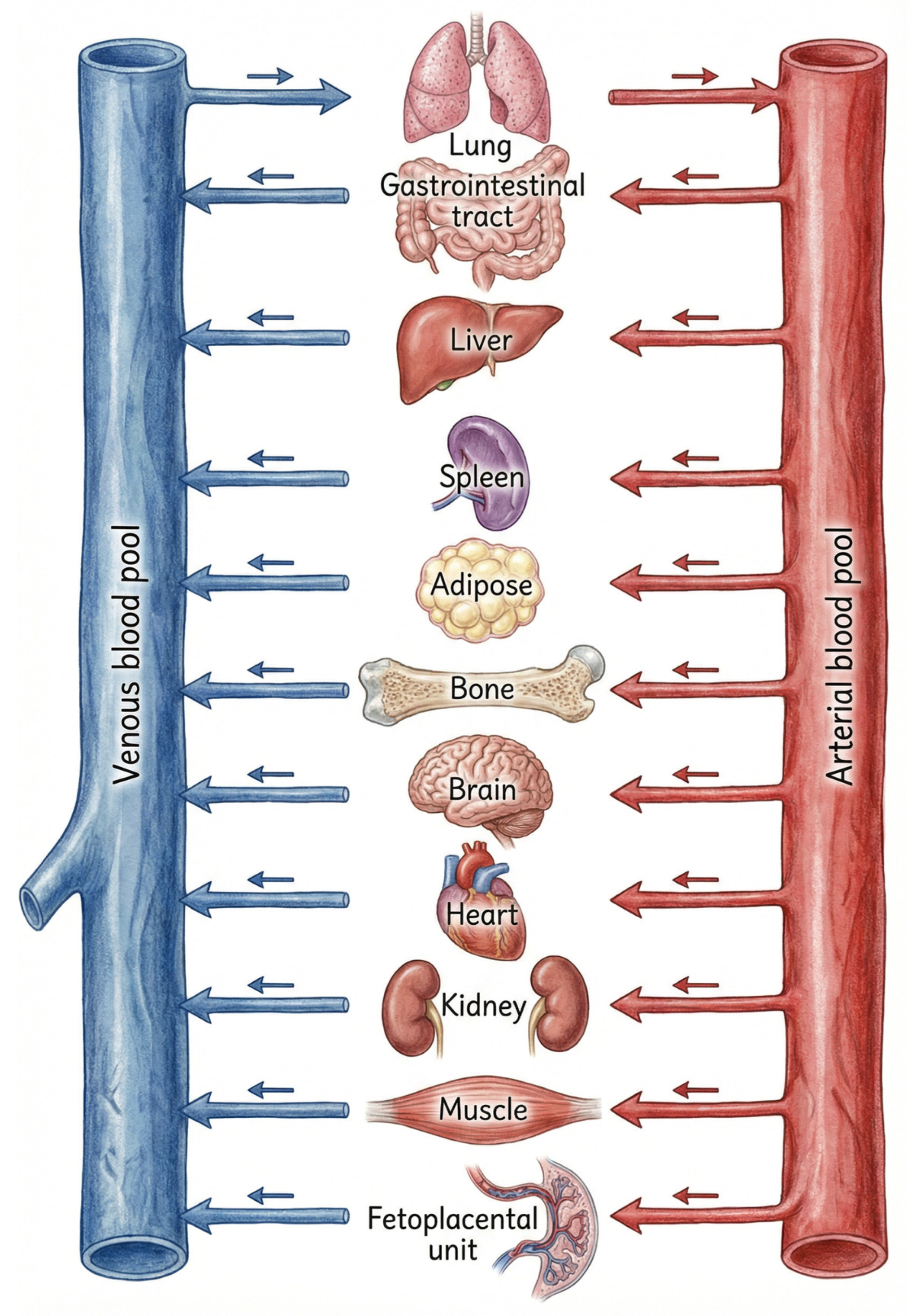
6. In Silico Simulations and Physiologically Based Pharmacokinetics Model (PBPK)
7. Future Perspectives: Precision TIVA in Obstetric Anesthesia
8. Conclusions
Author Contributions
Funding
Institutional Review Board Statement
Informed Consent Statement
Data Availability Statement
Conflicts of Interest
Abbreviations
| TIVA | Total Intravenous Anesthesia |
| TCI | Target-Controlled Infusion |
| PK | Pharmacokinetic |
| PBPK | Physiology-Based Pharmacokinetic |
References
- Bidkar, P.U.; Dey, A.; Chatterjee, P.; Ramadurai, R.; Joy, J.J. Target-controlled infusion—Past, present, and future. J. Anaesthesiol. Clin. Pharmacol. 2024, 40, 371. [Google Scholar] [CrossRef] [Scilit]
- Struys, M.M.R.F.; De Smet, T.; Glen, J.B.; Vereecke, H.E.M.; Absalom, A.R.; Schnider, T.W. The History of Target-Controlled Infusion. Anesth. Analg. 2016, 122, 56. [Google Scholar] [CrossRef] [Scilit] [PubMed]
- Eleveld, D.J.; Colin, P.; Absalom, A.R.; Struys, M.M.R.F. Pharmacokinetic–pharmacodynamic model for propofol for broad application in anaesthesia and sedation. Br. J. Anaesth. 2018, 120, 942–959. [Google Scholar] [CrossRef] [Scilit] [PubMed]
- Schnider, T.; Minto, C. Pharmacokinetic models of propofol for TCI. Anaesthesia 2008, 63, 206. [Google Scholar] [CrossRef] [Scilit]
- Hughes, L.M.; Irwin, M.G.; Nestor, C.C. Alternatives to remifentanil for the analgesic component of total intravenous anaesthesia: A narrative review. Anaesthesia 2023, 78, 620–625. [Google Scholar] [CrossRef] [Scilit]
- Bajwa, S.J.S.; Vinayagam, S.; Shinde, S.; Dalal, S.; Vennel, J.; Nanda, S. Recent advancements in total intravenous anaesthesia and anaesthetic pharmacology. Indian J. Anaesth. 2023, 67, 56–62. [Google Scholar] [CrossRef] [Scilit] [PubMed]
- Sahinovic, M.M.; Struys, M.M.R.F.; Absalom, A.R. Clinical Pharmacokinetics and Pharmacodynamics of Propofol. Clin. Pharmacokinet. 2018, 57, 1539–1558. [Google Scholar] [CrossRef] [Scilit]
- Hawthorne, C.; Shaw, M.; Campbell, R.; Sutcliffe, N.; McKelvie, S.; Schraag, S. Clinical Validation of the Covariates Pharmacokinetic Model for Propofol in an Adult Population. Drugs R&D 2022, 22, 289–300. [Google Scholar] [CrossRef] [Scilit]
- Hüppe, T.; Maurer, F.; Sessler, D.I.; Volk, T.; Kreuer, S. Retrospective comparison of Eleveld, Marsh, and Schnider propofol pharmacokinetic models in 50 patients. Br. J. Anaesth. 2020, 124, e22–e24. [Google Scholar] [CrossRef] [Scilit] [PubMed]
- Šafránková, P.; Bruthans, J. Target-Controlled Infusion of Propofol: A Systematic Review of Recent Results. J. Med. Syst. 2025, 49, 54. [Google Scholar] [CrossRef] [Scilit]
- Essa, A.; Flett, G.G. Obstetric emergencies. Anaesth. Intensive Care Med. 2022, 23, 460–466. [Google Scholar] [CrossRef] [Scilit]
- Knapp, C.; Bhatia, K. Maternal collapse in pregnancy. Br. J. Hosp. Med. 2022, 83, 1–12. [Google Scholar] [CrossRef] [Scilit] [PubMed]
- Wong, L.; Kwan, A.H.W.; Lau, S.L.; Sin, W.T.A.; Leung, T.Y. Umbilical cord prolapse revisiting its definition and management. Am. J. Obs. Gynecol. 2021, 225, 357–366. [Google Scholar] [CrossRef] [Scilit] [PubMed]
- Dongare, P.A.; Nataraj, M.S. Anaesthetic management of obstetric emergencies. Indian J. Anaesth. 2018, 62, 704–709. [Google Scholar] [CrossRef] [Scilit] [PubMed] [PubMed Central]
- Prior, C.H.; Burlinson, C.E.G.; Chau, A. Emergencies in obstetric anaesthesia: A narrative review. Anaesthesia 2022, 77, 1416–1429. [Google Scholar] [CrossRef] [Scilit]
- Huang, L.; Hu, N.; Jiang, L.; Xiong, X.; Shi, J.; Chen, D. Appraisal of clinical practice guidelines and consensus statements on obstetric anaesthesia: A systematic review using the AGREE II instrument. BMJ Open 2024, 14, e084759. [Google Scholar] [CrossRef] [Scilit]
- Metodiev, Y.; Iliff, H.A.; Sharif, B.; Bell, S.F.; Oliver, C.; de Lloyd, L. ObsTIVA-UK: A service evaluation of obstetric total intravenous anaesthesia in the United Kingdom. Anaesth. Rep. 2024, 12, e12293. [Google Scholar] [CrossRef] [Scilit] [PubMed] [PubMed Central]
- Metodiev, Y.; Lucas, D.N. The role of total intravenous anaesthesia for caesarean delivery. Int. J. Obs. Anesth. 2022, 51, 103548. [Google Scholar] [CrossRef] [Scilit] [PubMed]
- Szederjesi, J.; Almasy, E.; Branea, O.E.; Keresztes, M. Total Intravenous Anesthesia Using Target-Controlled Infusion with Propofol for Category 1 Emergency Cesarean Section in Patients with Preeclampsia with Severe Features. Life 2025, 15, 1237. [Google Scholar] [CrossRef] [Scilit]
- Nimmo, A.F.; Absalom, A.R.; Bagshaw, O.; Biswas, A.; Cook, T.M.; Costello, A.; Grimes, S.; Mulvey, D.; Shinde, S.; Whitehouse, T.; et al. Guidelines for the safe practice of total intravenous anaesthesia (TIVA). Anaesthesia 2019, 74, 211–224. [Google Scholar] [CrossRef] [Scilit] [PubMed]
- Feng, Y.; Xu, J.; Ma, H.; Wang, E.; Bian, J.; Fang, X.; Shen, L.; Zhu, T.; Liu, K.; Jiang, L.; et al. Chinese clinical practice guidelines for total intravenous anaesthesia: A systematic review and expert consensus-based recommendations. Br. J. Anaesth. 2025, 136, 876–896. [Google Scholar] [CrossRef] [Scilit] [PubMed]
- Wong, S.S.C.; Wang, F.; Chan, T.C.W.; Cheung, C.W. The analgesic effect of total intravenous anaesthesia with propofol versus inhalational anaesthesia for acute postoperative pain after hepatectomy: A randomized controlled trial. BMC Anesthesiol. 2023, 23, 112. [Google Scholar] [CrossRef] [Scilit] [PubMed] [PubMed Central]
- Daccache, N.; Wu, Y.; Jeffries, S.D.; Zako, J.; Harutyunyan, R.; Pelletier, E.D.; Laferrière-Langlois, P.; Hemmerling, T.M. Safety and recovery profile of patients after inhalational anaesthesia versus target-controlled or manual total intravenous anaesthesia: A systematic review and meta-analysis of randomised controlled trials. Br. J. Anaesth. 2025, 134, 1474–1485. [Google Scholar] [CrossRef] [Scilit] [PubMed]
- Javed, U.; Bhatia, K. Total intravenous anaesthesia for caesarean delivery: Incidence, maternal and neonatal outcomes from a tertiary unit. Int. J. Obstet. Anesth. 2024, 57, 103933. [Google Scholar] [CrossRef] [Scilit] [PubMed]
- Aryasa, T.; Apsari, R.K.F.; Rahardjo, S. Total Intra Venous Anesthesia (TIVA) Target Controlled Infusion (TCI) Propofol Remifentanil untuk Seksio Sesarea Emergensi pada Pasien Meningioma dengan Peningkatan Tekanan Intrakranial. J. Neuroanestesi Indones. 2020, 9, 26–32. [Google Scholar] [CrossRef] [Scilit]
- Macfarlane, A.J.R.; Moise, S.; Smith, D. Caesarean section using total intravenous anaesthesia in a patient with Ebstein’s anomaly complicated by supraventricular tachycardia. Int. J. Obs. Anesth. 2007, 16, 155–159. [Google Scholar] [CrossRef] [Scilit] [PubMed]
- Nascimento, M.J.; Silva, M.; Bernardino, A.; Carvalhas, J. A Heart Under Stress: Anaesthetic Strategy for a Pregnant Patient with Long QT Syndrome. Cureus 2026, 18, e100633. [Google Scholar] [CrossRef] [Scilit]
- Ndoni, R.; Srinivasan, A.; Dougherty, R.; Nahrstedt, C.; Liu, J.; Ayad, S. Anesthetic Management of a Pregnant Patient with a Large Anterior Mediastinal Mass Undergoing Diagnostic Bronchoscopy: A Case Report. Case Rep. Anesthesiol. 2025, 2025, 2053701. [Google Scholar] [CrossRef] [Scilit] [PubMed] [PubMed Central]
- Pande, D.; Gandotra, S.; Gupta, A. Total Intravenous Anesthesia for Anesthetic Management of Emergency Caesarean Section in a Patient with Moyamoya Disease. J. Obstet. Anaesth. Crit. Care 2021, 11, 50. [Google Scholar] [CrossRef] [Scilit]
- Sirianni, J.; Abro, J.; Gutman, D. Delivery of an Infant with Airway Compression Due to Cystic Hygroma at 37 Weeks’ Gestation Requiring a Multidisciplinary Decision to Use a Combination of Ex Utero Intrapartum Treatment (EXIT) and Airway Palliation at Cesarean Section. Am. J. Case Rep. 2021, 22, e927803. [Google Scholar] [CrossRef] [Scilit] [PubMed] [PubMed Central]
- Teixeira CEFde, A.; Braga Ade Fde, A.; Braga FSda, S.; Carvalho, V.H.; Costa, R.M.; da Brighenti, G.I.T. Anesthesia for cesarean delivery in a patient with Klippel-Trenaunay syndrome. Braz. J. Anesthesiol. 2018, 68, 641–644. [Google Scholar] [CrossRef] [Scilit] [PubMed] [PubMed Central]
- Zuccolotto, E.B.; Pagnussatt Neto, E.; Nogueira, G.C.; Nociti, J.R. Anesthesia in pregnant women with HELLP syndrome: Case report. Braz. J. Anesthesiol. 2016, 66, 657–660. [Google Scholar] [CrossRef] [Scilit] [PubMed]
- Kane, A.D.; Soar, J.; Armstrong, R.A.; Kursumovic, E.; Davies, M.T.; Oglesby, F.C.; Cortes, L.; Taylor, C.; Moppett, I.K.; Agarwal, S.; et al. Patient characteristics, anaesthetic workload and techniques in the UK: An analysis from the 7th National Audit Project (NAP7) activity survey. Anaesthesia 2023, 78, 701–711. [Google Scholar] [CrossRef] [Scilit]
- Dunn, C.N.; Zhang, Q.; Sia, J.T.; Assam, P.N.; Tagore, S.; Sng, B.L. Evaluation of timings and outcomes in category-one caesarean sections: A retrospective cohort study. Indian J. Anaesth. 2016, 60, 546–551. [Google Scholar] [CrossRef] [Scilit]
- McCahon, R.A.; Catling, S. Time required for surgical readiness in emergency caesarean section: Spinal compared with general anaesthesia. Int. J. Obstet. Anesth. 2003, 12, 178–182. [Google Scholar] [CrossRef] [Scilit] [PubMed]
- Osthoff, I.; Soare, M.; Barana, G.; Sell, W.; Welter, J.; Dullenkopf, A. Simulation of Propofol Target-Controlled Infusion up to Time of Delivery in Cesarean Section: A Bench Study. J. Clin. Med. 2025, 14, 7234. [Google Scholar] [CrossRef] [Scilit] [PubMed]
- Kazma, J.M.; van den Anker, J.; Allegaert, K.; Dallmann, A.; Ahmadzia, H.K. Anatomical and physiological alterations of pregnancy. J. Pharmacokinet. Pharmacodyn. 2020, 47, 271–285. [Google Scholar] [CrossRef] [Scilit] [PubMed] [PubMed Central]
- Bastian, J.R.; Chen, H.; Zhang, H.; Rothenberger, S.; Tarter, R.; English, D.; Venkataramanan, R.; Caritis, S.N. Dose-adjusted plasma concentrations of sublingual buprenorphine are lower during than after pregnancy. Am. J. Obstet. Gynecol. 2017, 216, 64.e1–64.e7. [Google Scholar] [CrossRef] [Scilit] [PubMed]
- Onetto, A.J.; Sharif, S. Drug Distribution. In StatPearls [Internet]; StatPearls Publishing: Treasure Island, FL, USA, 2025. Available online: http://www.ncbi.nlm.nih.gov/books/NBK567736/ (accessed on 22 January 2026). [PubMed]
- Costantine, M. Physiologic and pharmacokinetic changes in pregnancy. Front. Pharmacol. 2014, 5, 65. [Google Scholar] [CrossRef] [Scilit]
- Feghali, M.; Venkataramanan, R.; Caritis, S. Pharmacokinetics of drugs in pregnancy. Semin. Perinatol. 2015, 39, 512–519. [Google Scholar] [CrossRef] [Scilit]
- Pinheiro, E.A.; Stika, C.S. Drugs in pregnancy: Pharmacologic and physiologic changes that affect clinical care. Semin. Perinatol. 2020, 44, 151221. [Google Scholar] [CrossRef] [Scilit] [PubMed] [PubMed Central]
- Hudson, R.E.; Metz, T.D.; Ward, R.M.; McKnite, A.M.; Enioutina, E.Y.; Sherwin, C.M.; Watt, K.M.; Job, K.M. Drug exposure during pregnancy: Current understanding and approaches to measure maternal-fetal drug exposure. Front. Pharmacol. 2023, 14, 1111601. [Google Scholar] [CrossRef] [Scilit] [PubMed]
- Mao, Q.; Chen, X. An update on placental drug transport and its relevance to fetal drug exposure. Med. Rev. 2022, 2, 501–511. [Google Scholar] [CrossRef] [Scilit] [PubMed] [PubMed Central]
- Folino, T.B.; Muco, E.; Safadi, A.O.; Parks, L.J. Propofol. In StatPearls [Internet]; StatPearls Publishing: Treasure Island, FL, USA, 2025. Available online: http://www.ncbi.nlm.nih.gov/books/NBK430884/ (accessed on 22 January 2026). [PubMed]
- Qiu, F.; Dziegielewska, K.M.; Huang, Y.; Habgood, M.D.; Fitzpatrick, G.; Saunders, N.R. Developmental changes in the extent of drug binding to rat plasma proteins. Sci. Rep. 2023, 13, 1266. [Google Scholar] [CrossRef] [Scilit]
- Eke, A.C. An update on the physiologic changes during pregnancy and their impact on drug pharmacokinetics and pharmacogenomics. J. Basic Clin. Physiol. Pharmacol. 2021, 33, 581–598. [Google Scholar] [CrossRef] [Scilit] [PubMed] [PubMed Central]
- Haas, D.M.; D’Alton, M. Pharmacogenetics and Other Reasons Why Drugs Can Fail in Pregnancy: Higher Dose or Different Drug? Obstet. Gynecol. 2012, 120, 1176–1179. [Google Scholar] [CrossRef] [Scilit] [PubMed] [PubMed Central]
- Stika, C.S. Principles of Obstetric Pharmacology: Maternal Physiologic and Hepatic Metabolism Changes. Obstet. Gynecol. Clin. N. Am. 2023, 50, 1–15. [Google Scholar] [CrossRef] [Scilit]
- Salama, E.; Eke, A.C.; Best, B.M.; Mirochnick, M.; Momper, J.D. Pharmacokinetic Enhancement of HIV Antiretroviral Therapy During Pregnancy. J. Clin. Pharmacol. 2020, 60, 1537–1550. [Google Scholar] [CrossRef] [Scilit]
- Liao, M.Z.; Flood Nichols, S.K.; Ahmed, M.; Clark, S.; Hankins, G.D.; Caritis, S.; Venkataramanan, R.; Haas, D.; Quinney, S.K.; Haneline, L.S.; et al. Effects of Pregnancy on the Pharmacokinetics of Metformin. Drug Metab. Dispos. 2020, 48, 264–271. [Google Scholar] [CrossRef] [Scilit] [PubMed] [PubMed Central]
- Dailland, P.; Cockshott, I.D.; Lirzin, J.D.; Jacquinot, P.; Jorrot, J.C.; Devery, J.; Harmey, J.L.; Conseiller, C. Intravenous propofol during cesarean section: Placental transfer, concentrations in breast milk, and neonatal effects. A preliminary study. Anesthesiology 1989, 71, 827–834. [Google Scholar] [CrossRef] [Scilit] [PubMed]
- Gin, T.; Gregory, M.A.; Chan, K.; Oh, T.E. Maternal and fetal levels of propofol at caesarean section. Anaesth. Intensive Care 1990, 18, 180–184. [Google Scholar] [CrossRef] [Scilit]
- Sánchez-Alcaraz, A.; Quintana, M.B.; Laguarda, M. Placental transfer and neonatal effects of propofol in caesarean section. J. Clin. Pharm. Ther. 1998, 23, 19–23. [Google Scholar] [CrossRef] [Scilit] [PubMed]
- He, Y.L.; Tsujimoto, S.; Tanimoto, M.; Okutani, R.; Murakawa, K.; Tashiro, C. Effects of protein binding on the placental transfer of propofol in the human dually perfused cotyledon in vitro. Br. J. Anaesthesia. 2000, 85, 281–286. [Google Scholar] [CrossRef] [Scilit] [PubMed]
- Hu, L.; Pan, J.; Zhang, S.; Yu, J.; He, K.; Shu, S.; Wang, R. Propofol in combination with remifentanil for cesarean section: Placental transfer and effect on mothers and newborns at different induction to delivery intervals. Taiwan. J. Obstet. Gynecol. 2017, 56, 521–526. [Google Scholar] [CrossRef] [Scilit] [PubMed]
- Liu, H.; Miao, J.K.; Cai, M.; Gan, L.; Zhao, H.Q.; Lei, X.F.; Yu, J. Anesthetic drug concentrations and placental transfer rate in fetus between term and preterm infants, twins, and singletons. Front. Pharmacol. 2023, 14, 1213734. [Google Scholar] [CrossRef] [Scilit] [PubMed]
- Hartmanshenn, C.; Scherholz, M.; Androulakis, I.P. Physiologically-based pharmacokinetic models: Approaches for enabling personalized medicine. J. Pharmacokinet. Pharmacodyn. 2016, 43, 481–504. [Google Scholar] [CrossRef] [Scilit]
- Ke, A.B.; Greupink, R.; Abduljalil, K. Drug Dosing in Pregnant Women: Challenges and Opportunities in Using Physiologically Based Pharmacokinetic Modeling and Simulations. CPT Pharmacomet. Syst. Pharmacol. 2018, 7, 103–110. [Google Scholar] [CrossRef] [Scilit]
- Chaphekar, N.; Dodeja, P.; Shaik, I.H.; Caritis, S.; Venkataramanan, R. Maternal-Fetal Pharmacology of Drugs: A Review of Current Status of the Application of Physiologically Based Pharmacokinetic Models. Front. Pediatr. 2021, 9, 733823. [Google Scholar] [CrossRef] [Scilit]
- Chaphekar, N.; Caritis, S.; Venkataramanan, R. Model-Informed Dose Optimization in Pregnancy. J. Clin. Pharmacol. 2020, 60, S63–S76. [Google Scholar] [CrossRef] [Scilit]
- Zheng, L.; Yang, H.; Dallmann, A.; Jiang, X.; Wang, L.; Hu, W. Physiologically Based Pharmacokinetic Modeling in Pregnant Women Suggests Minor Decrease in Maternal Exposure to Olanzapine. Front. Pharmacol. 2022, 12, 793346. [Google Scholar] [CrossRef] [Scilit]
- Coppola, P.; Kerwash, E.; Cole, S. Physiologically Based Pharmacokinetics Model in Pregnancy: A Regulatory Perspective on Model Evaluation. Front. Pediatr. 2021, 9, 687978. [Google Scholar] [CrossRef] [Scilit] [PubMed] [PubMed Central]
- Liu, X.I.; Green, D.J.; van den Anker, J.; Calderon, J.; Ahmadzia, H.; Burckart, G.J.; Dallmann, A. Labetalol Dosing in Pregnancy: PBPK/PD and CYP2C19 Polymorphisms. J. Clin. Pharmacol. 2024, 64, 1443–1455. [Google Scholar] [CrossRef] [Scilit] [PubMed]
- Collins-Smith, A.; Kammala, A.K.; Phelps, M.A.; Wang, X.M.; Menon, R.; Costantine, M.M. Development of a Pregnancy-Specific Physiologically Based Pharmacokinetics (PBPK) Model for Aspirin. CPT Pharmacomet. Syst. Pharmacol. 2026, 15, e70130. [Google Scholar] [CrossRef] [Scilit]
- Jogiraju, V.K.; Avvari, S.; Gollen, R.; Taft, D.R. Application of physiologically based pharmacokinetic modeling to predict drug disposition in pregnant populations. Biopharm. Drug Dispos. 2017, 38, 426–438. [Google Scholar] [CrossRef] [Scilit] [PubMed]
- Le Merdy, M.; Szeto, K.X.; Perrier, J.; Bolger, M.B.; Lukacova, V. PBPK Modeling Approach to Predict the Behavior of Drugs Cleared by Metabolism in Pregnant Subjects and Fetuses. Pharmaceutics 2024, 16, 96. [Google Scholar] [CrossRef] [Scilit] [PubMed]
- Macente, J.; Nauwelaerts, N.; Badée, J.M.; Bonan, R.H.; Huang, M.C.; Van Neste, M.; Smits, A.; Allegaert, K.; Nordeng, H.; Hovd, M.; et al. Predicting Drug Transfer Into Human Milk with the Simcyp Simulator: A Contribution From the ConcePTION Project. CPT Pharmacomet. Syst. Pharmacol. 2025, 14, 1470–1484. [Google Scholar] [CrossRef] [Scilit] [PubMed]
- Silva, L.L.; Silvola, R.M.; Haas, D.M.; Quinney, S.K. Physiologically based pharmacokinetic modelling in pregnancy: Model reproducibility and external validation. Br. J. Clin. Pharmacol. 2022, 88, 1441–1451. [Google Scholar] [CrossRef] [Scilit] [PubMed] [PubMed Central]
- Curry, L.; Alrubia, S.; Bois, F.Y.; Clayton, R.; El-Khateeb, E.; Johnson, T.N.; Faisal, M.; Neuhoff, S.; Wragg, K.; Rostami-Hodjegan, A. A guide to developing population files for physiologically-based pharmacokinetic modeling in the Simcyp Simulator. CPT Pharmacomet. Syst. Pharmacol. 2024, 13, 1429–1447. [Google Scholar] [CrossRef] [Scilit]
- Ezuruike, U.; Zhang, M.; Pansari, A.; De Sousa Mendes, M.; Pan, X.; Neuhoff, S.; Gardner, I. Guide to development of compound files for PBPK modeling in the Simcyp population-based simulator. CPT Pharmacomet. Syst. Pharmacol. 2022, 11, 805–821. [Google Scholar] [CrossRef] [Scilit]
- Dallmann, A.; Solodenko, J.; Ince, I.; Eissing, T. Applied Concepts in PBPK Modeling: How to Extend an Open Systems Pharmacology Model to the Special Population of Pregnant Women. CPT Pharmacomet. Syst. Pharmacol. 2018, 7, 419–431. [Google Scholar] [CrossRef] [Scilit]
- Chan Kwong, A.H.X.P.; Calvier, E.A.M.; Fabre, D.; Gattacceca, F.; Khier, S. Prior information for population pharmacokinetic and pharmacokinetic/pharmacodynamic analysis: Overview and guidance with a focus on the NONMEM PRIOR subroutine. J. Pharmacokinet. Pharmacodyn. 2020, 47, 431–446. [Google Scholar] [CrossRef] [Scilit] [PubMed]
- Allegaert, K.; Quinney, S.K.; Dallmann, A. Physiologically Based Pharmacokinetic Modeling in Pregnancy, during Lactation and in Neonates: Achievements, Challenges and Future Directions. Pharmaceutics 2024, 16, 500. [Google Scholar] [CrossRef] [Scilit]
- Berezowska, M.; Sharma, P.; Pilla Reddy, V.; Coppola, P. Physiologically Based Pharmacokinetic modelling of drugs in pregnancy: A mini-review on availability and limitations. Fundam. Clin. Pharmacol. 2024, 38, 402–409. [Google Scholar] [CrossRef] [Scilit]
- van Hoogdalem, M.W.; Wexelblatt, S.L.; Akinbi, H.T.; Vinks, A.A.; Mizuno, T. A review of pregnancy-induced changes in opioid pharmacokinetics, placental transfer, and fetal exposure: Towards fetomaternal physiologically-based pharmacokinetic modeling to improve the treatment of neonatal opioid withdrawal syndrome. Pharmacol. Ther. 2022, 234, 108045. [Google Scholar] [CrossRef] [Scilit]
- Frassanito, L.; Filetici, N.; Raimondo, P.; Malvasi, A.; Gaudiano, A.; Peragine, A.; Lombardi, F.; Vassalli, F.; Pasta, G.; Bignami, E.G. Anesthesia for cesarean delivery in the era of artificial intelligence: A narrative review. J. Anesth. Analg. Crit. Care 2026, 6, 19. [Google Scholar] [CrossRef] [Scilit] [PubMed]
- Kong, A.Y.H.; Liu, N.; Tan, H.S.; Sia, A.T.H.; Sng, B.L. Artificial intelligence in obstetric anaesthesiology—The future of patient care? Int. J. Obstet. Anesth. 2025, 61, 104288. [Google Scholar] [CrossRef] [Scilit] [PubMed]
- Tsai, F.F.; Chang, Y.C.; Chiu, Y.W.; Sheu, B.C.; Hsu, M.H.; Yeh, H.M. Machine Learning Model for Anesthetic Risk Stratification for Gynecologic and Obstetric Patients: Cross-Sectional Study Outlining a Novel Approach for Early Detection. JMIR Form. Res. 2024, 8, e54097. [Google Scholar] [CrossRef] [Scilit] [PubMed] [PubMed Central]
- Dallmann, A.; Bonate, P.L.; Burnham, J.; George, B.; Yao, L.; Knöchel, J. Enhancing inclusivity in clinical trials: Model-informed drug development for pregnant individuals in the era of personalized medicine. CPT Pharmacomet. Syst. Pharmacol. 2024, 13, 1824–1829. [Google Scholar] [CrossRef] [Scilit]




| Study/Guideline | ObsTIVA-UK Research Report | NAP7 Activity Survey | Chinese Clinical Practice Guidelines for TIVA |
|---|---|---|---|
| Author (Year) | Metodiev et al. (2024) [17] | Andrew D. Kane et al. (2023) [33] | Yi Feng et al. (2025) [21] |
| Type of Study | Multicenter observational project/registry | National audit, snapshot activity survey (UK) | National clinical practice guideline |
| Data collection interval | November 2022 and June 2023 | 8–24 November 2021. Recorded details of all surgical cases undertaken over 4 days | 2024 |
| No. of Cases | 30 maternity units 90,782 births → 37,281 (41%) CD 1877 GA for obstetric surgical procedures (not limited to CDs) 123 (6.6%) utilized TIVA: 104 + 19 104 patients who underwent CD under TIVA 19 patients had TIVA, reasons other than CD | 352 hospitals completed the survey → 24,172 cases included → 1681 (7%) CD | Not applicable (guideline synthesis). 21 experts → total of 22 recommendations were made on 12 clinical issues |
| Indications for TIVA | Neurological disorder (13%), malignant hyperthermia (1%), cardiac disorder (4%), anesthetist preference (84%), severe PONV (1%), risk of PPH (34%) | Across all surgical specialties, TIVA use has seen a dramatic increase, rising from 8% in 2013 (NAP5) to 26% in 2021. Reason: environmental impact, focus on better recovery profiles, proposed benefits for cancer recurrence, increasing equipment availability, technique embedded within the new UK postgraduate curriculum | Recommendation 1: malignant hyperthermia, intracranial hypertension, long QT syndrome Recommendation 11.2: Propofol-based TIVA can be applicable in CD. In hypertensive disorders, remifentanil as induction agent can be used, accompanied by preparations for neonatal resuscitation |
| TIVA delivery method | 99% TCI 1% Manual Infusion | No data collected | Recommendation 6: Drugs with shorter context-sensitive half-times are indicated for TCI. Propofol- or remifentanil-based TCI is recommended |
| Maternal Outcomes | Reduced PONV Median recorded blood loss during CD 600 mL (438–1000 mL) | No data collected | Recommendation 2.1: TIVA can reduce the incidence of PONV |
| Neonatal Outcomes | 57% required some form of respiratory support. Apgar scores < 7 at 1 min 73%. Apgar scores improved at 5 and 10 min. | No data collection | Neonatal depression can occur if continuous i.v. propofol infusion dose exceeds 9.0 mg/kg/h |
| Model | Marsh (1991) | Schnider (1998) | Eleveld (2018) | Minto (1997) |
|---|---|---|---|---|
| Drug | Propofol | Propofol | Propofol | Remifentanil |
| Targeting Mode | Plasma concentration (Cp) | Plasma (Cp) and effect-site (Ce) | Plasma (Cp) and effect-site (Ce) | Plasma (Cp) and effect-site (Ce) |
| Covariates | Total body weight | Age, gender, weight, height, lean body mass (LBM)–James equation | Age, weight, gender, height, comedication (opioid), fat-free mass | Age, weight, lean body mass |
| Central compartment | V1 | V1 | V1 | V1 |
| Peripheral compartments | V2, V3 | V2, V3 | V2, V3 | V2, V3 |
| Elimination/transfer constants | k10, k12, k21, k13, k31 | k10, k12, k21, k13, k31 | k10, k12, k21, k13, k31 | k10, k12, k21, k13, k31 |
| Effect-site parameter | Not included in original model; Added in modified Marsh as ke0 0.26 min−1 → 1.2 min−1 | ke0 = 0.456 min−1 | ke0 | ke0 |
| Main parameters adjusted by covariates | V1 (0.227 L/kg) V2 V3 | V2 alters with age k12 k21 k10 alters with LBM | Allometric scaling for volumes of distribution and clearance for weight and age | V1, V2 alter with LBM. Clearance from plasma is esterase-dependent and scales with age & LBW |
| Fixed parameters | All rate constants | V1 = 4.7 L V3 k13, k31 | - | V3 = 5.42 L |
| Limitations | No age or LBM adjustments | LBM equation can overestimate doses in obese patients (James equation issue) | Not available in all TCI pumps; less familiar to some | Elderly: smaller central compartments |
| Patient type | Best for average, healthy adults | Good for elderly, leaner patients | Adapts for obese, elderly, pediatric | Average, healthy adults |
| Practical remarks | Simple and widely used; easy to implement, but based mainly on non-pregnant adults | Commonly used for effect-site targeting and smoother hypnosis control. However, it was developed in non-obstetric adult | More flexible and potentially more physiologically representative across heterogeneous populations. Nevertheless, pregnancy-specific validation remains limited | Standard remifentanil TCI model in clinical practice. Useful for rapid-onset, short-context opioid delivery, but derived from non-pregnant adults |
Disclaimer/Publisher’s Note: The statements, opinions and data contained in all publications are solely those of the individual author(s) and contributor(s) and not of MDPI and/or the editor(s). MDPI and/or the editor(s) disclaim responsibility for any injury to people or property resulting from any ideas, methods, instructions or products referred to in the content. |
© 2026 by the authors. Licensee MDPI, Basel, Switzerland. This article is an open access article distributed under the terms and conditions of the Creative Commons Attribution (CC BY) license.
Share and Cite
Keresztes, M.; Azamfirei, L.; Almasy, E.; Szederjesi, J. Target-Controlled Infusion for Caesarean Delivery Under General Anesthesia: From Conventional Pharmacokinetic Models to Physiologically Based Pharmacokinetic Modeling. Life 2026, 16, 739. https://doi.org/10.3390/life16050739
Keresztes M, Azamfirei L, Almasy E, Szederjesi J. Target-Controlled Infusion for Caesarean Delivery Under General Anesthesia: From Conventional Pharmacokinetic Models to Physiologically Based Pharmacokinetic Modeling. Life. 2026; 16(5):739. https://doi.org/10.3390/life16050739
Chicago/Turabian StyleKeresztes, Matild, Leonard Azamfirei, Emoke Almasy, and Janos Szederjesi. 2026. "Target-Controlled Infusion for Caesarean Delivery Under General Anesthesia: From Conventional Pharmacokinetic Models to Physiologically Based Pharmacokinetic Modeling" Life 16, no. 5: 739. https://doi.org/10.3390/life16050739
APA StyleKeresztes, M., Azamfirei, L., Almasy, E., & Szederjesi, J. (2026). Target-Controlled Infusion for Caesarean Delivery Under General Anesthesia: From Conventional Pharmacokinetic Models to Physiologically Based Pharmacokinetic Modeling. Life, 16(5), 739. https://doi.org/10.3390/life16050739