Review

Boron as a Molecular Architect of Host–Microbiome Symbiosis: Implications for Dysbiosis and Aging-Related Pathologies


by
George Dan Mogoşanu
1,2,
Andrei Biţă
1,2,
Ion Romulus Scorei
3,*,
Mihai Ioan Pop
4,
Ilie Robert Dinu
5 and
Dan Ionuţ Gheonea
6
1
Drug Research Center, Faculty of Pharmacy, University of Medicine and Pharmacy of Craiova, 2 Petru Rareş Street, 200349 Craiova, Romania
2
Department of Pharmacognosy & Phytotherapy, Faculty of Pharmacy, University of Medicine and Pharmacy of Craiova, 2 Petru Rareş Street, 200349 Craiova, Romania
3
Department of Biochemistry, BioBoron/Natural Research Institute, 31B Dunării Street, 207465 Podari, Romania
4
Department of Biotechnologies in Pharmaceutical Industry, Faculty of Biotechnologies, University of Agronomic Sciences and Veterinary Medicine of Bucharest, 59 Mărăşti Avenue, Sector 1, 011464 Bucharest, Romania
5
Department of Nephrology, Faculty of Medicine, University of Medicine and Pharmacy of Craiova, 2 Petru Rareş Street, 200349 Craiova, Romania
6
Department of Gastroenterology, Research Center of Gastroenterology and Hepatology, University of Medicine and Pharmacy of Craiova, 2 Petru Rareş Street, 200349 Craiova, Romania
*
Author to whom correspondence should be addressed.
Life 2026, 16(5), 750; https://doi.org/10.3390/life16050750
Submission received: 14 March 2026 / Revised: 18 April 2026 / Accepted: 27 April 2026 / Published: 1 May 2026
(This article belongs to the Special Issue The Microbiome and Dysbiosis in Various Pathologies)

Abstract

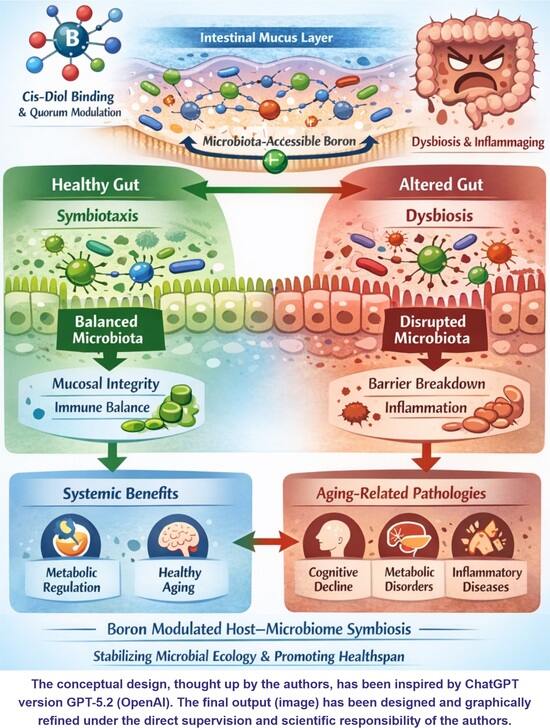
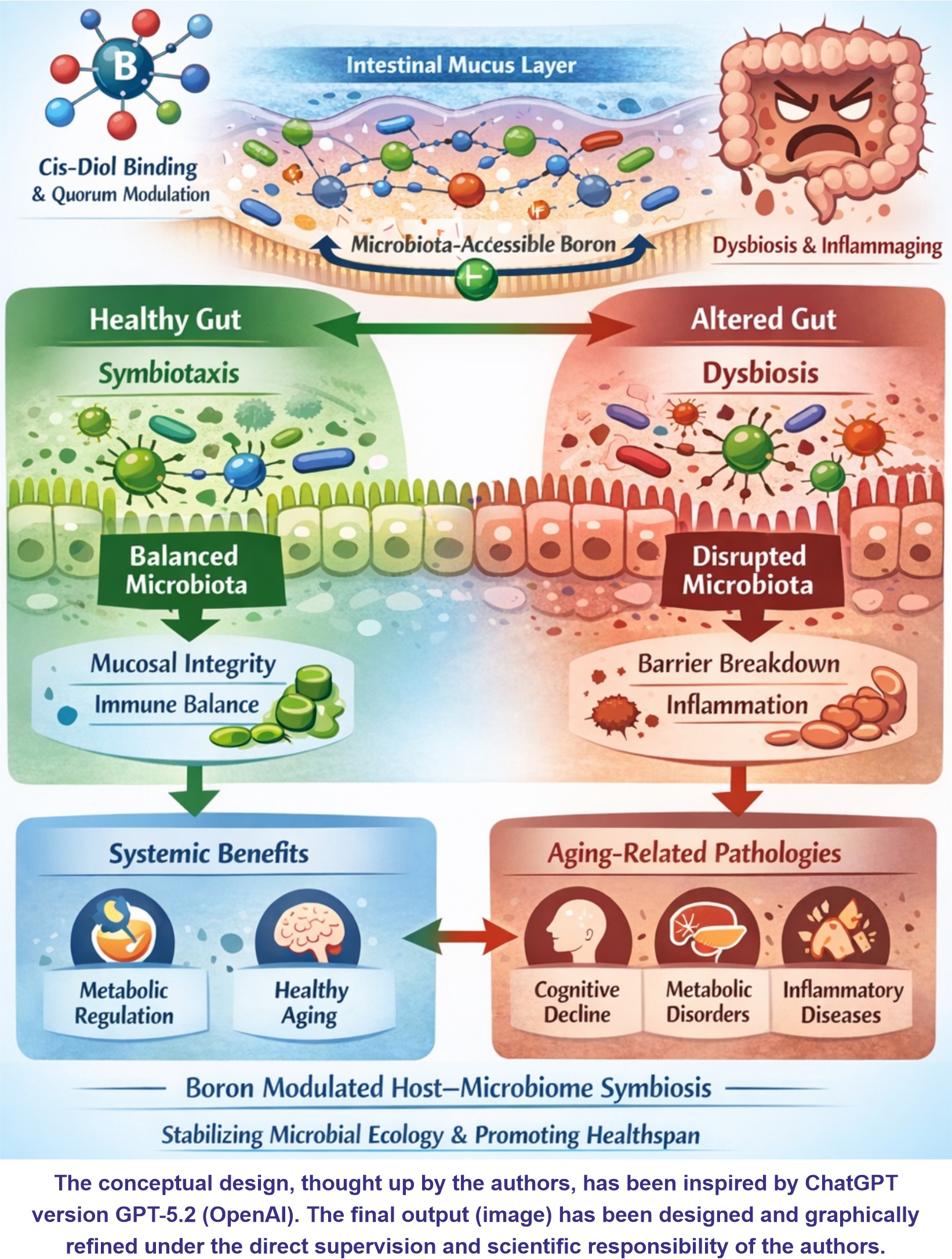
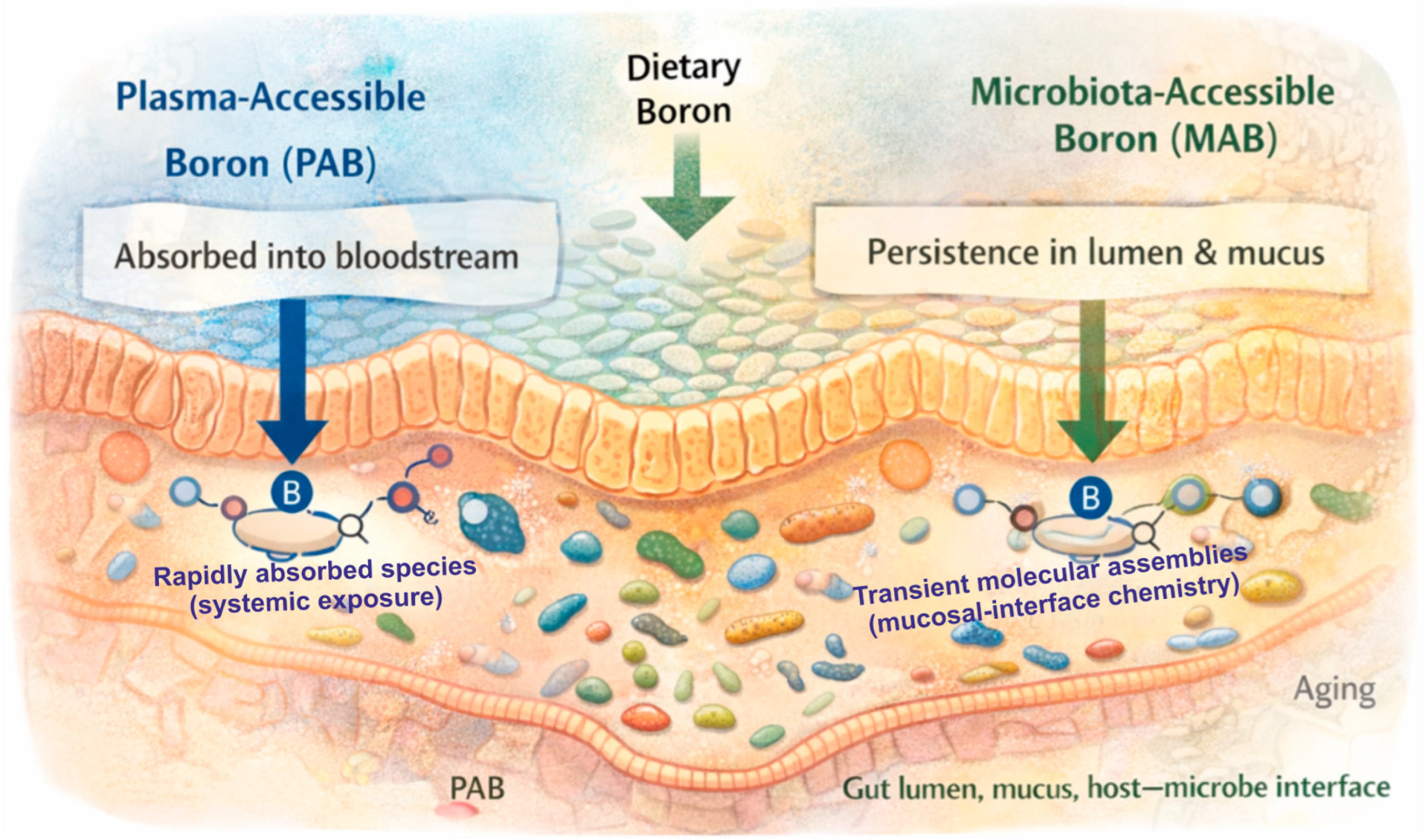
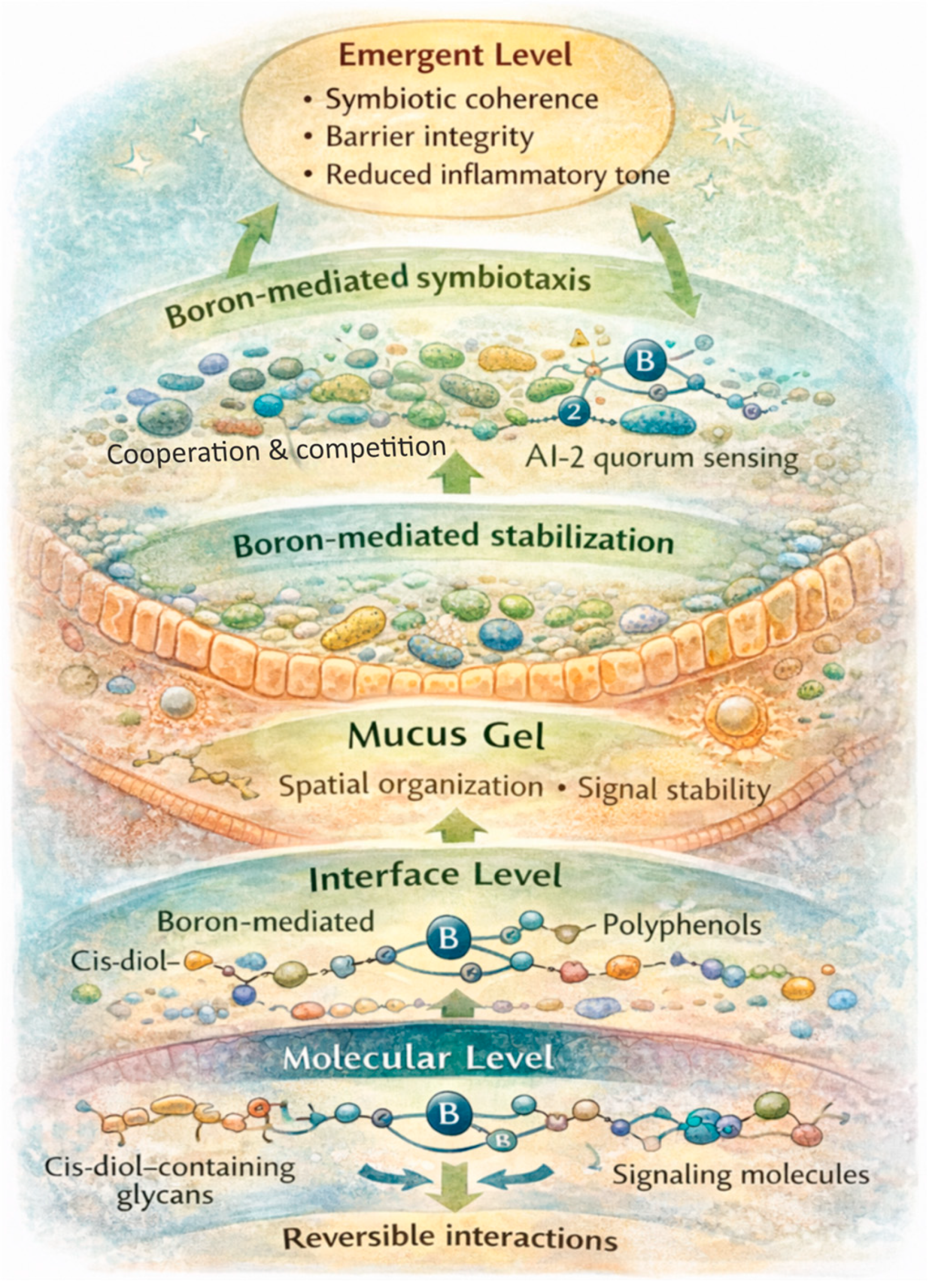
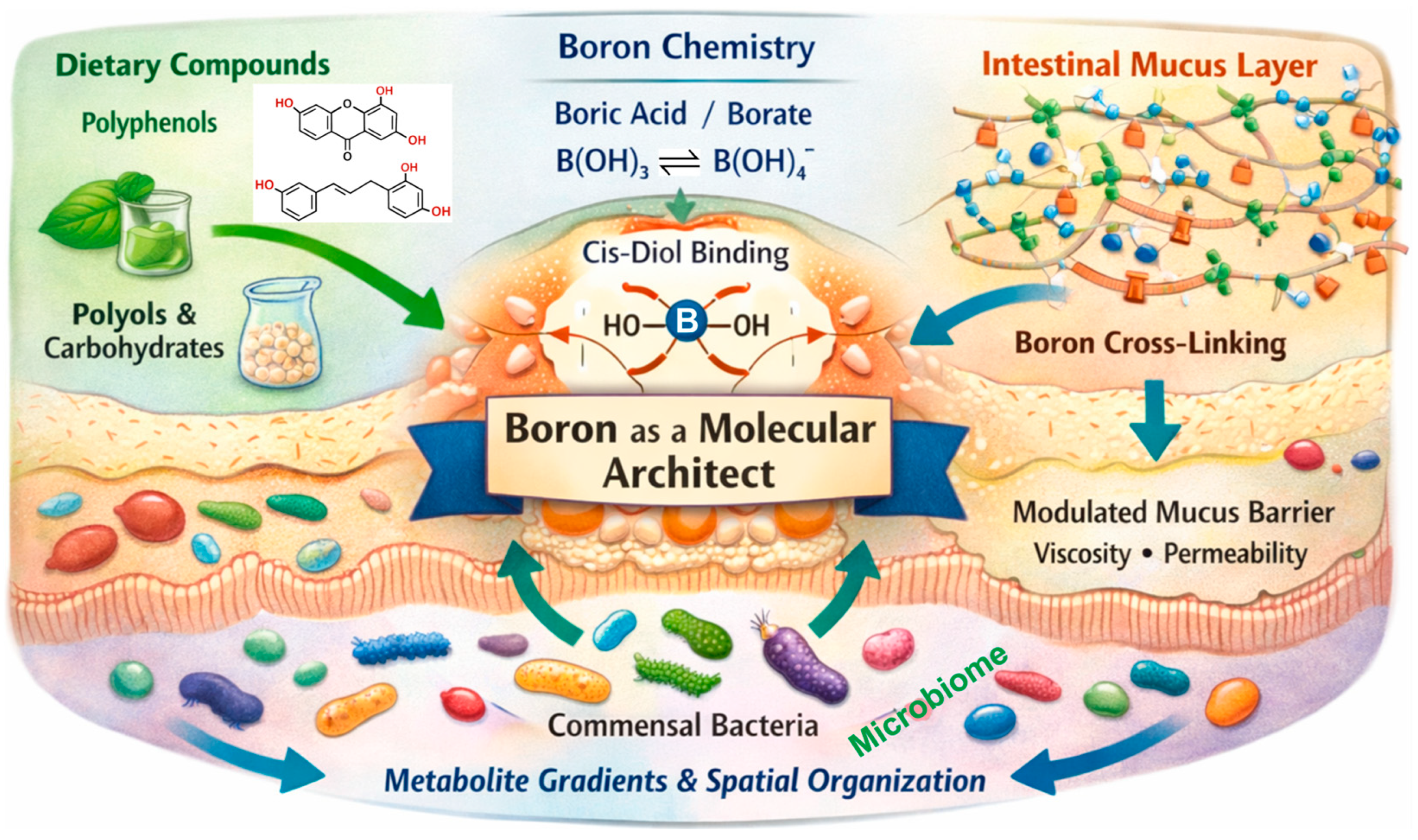
Boron (B) is increasingly recognized as more than a trace dietary element, emerging as a context-dependent organizer of molecular interactions at the host–microbiome interface. B exhibits reversible covalent chemistry driven by Lewis’ acidity and selective affinity for cis-diol-rich biomolecules, enabling dynamic complexation with polyols, glycans, and phenolic ligands that dominate the intestinal mucus environment and shape microbial ecology. We synthesize evidence supporting an architecture-based framework in which B modulates biological function by conditioning the physicochemical context of microbial communication rather than acting as a single-pathway effector. Central to this model is spatial bioavailability, distinguishing plasma-accessible boron from microbiota-accessible boron (MAB), species that persist in the lumen and mucus layer long enough to influence interface-level processes. We propose that insufficient or altered MAB availability may contribute to dysbiosis (DYS) by destabilizing quorum-associated coordination, signal persistence, and mucosal microstructure, thereby promoting barrier dysfunction and inflammaging. Particular attention is given to B-mediated symbiotaxis, a hypothesis-driven concept describing how B-containing molecular assemblies may bias microbial communities toward cooperative, barrier-supportive configurations and reduce ecological volatility. We identify key knowledge gaps and experimental priorities (speciation-aware measurements, signal-centric readouts) necessary to determine when, where, and how B-mediated molecular architecture may counteract DYS and support healthspan.
Keywords: boron; microbiota-accessible boron; dysbiosis; host–microbiome interface; mucosal barrier; quorum sensing; autoinducer-2; inflammaging; aging-related pathologies; lipidomics boron; microbiota-accessible boron; dysbiosis; host–microbiome interface; mucosal barrier; quorum sensing; autoinducer-2; inflammaging; aging-related pathologies; lipidomics
Graphical Abstract