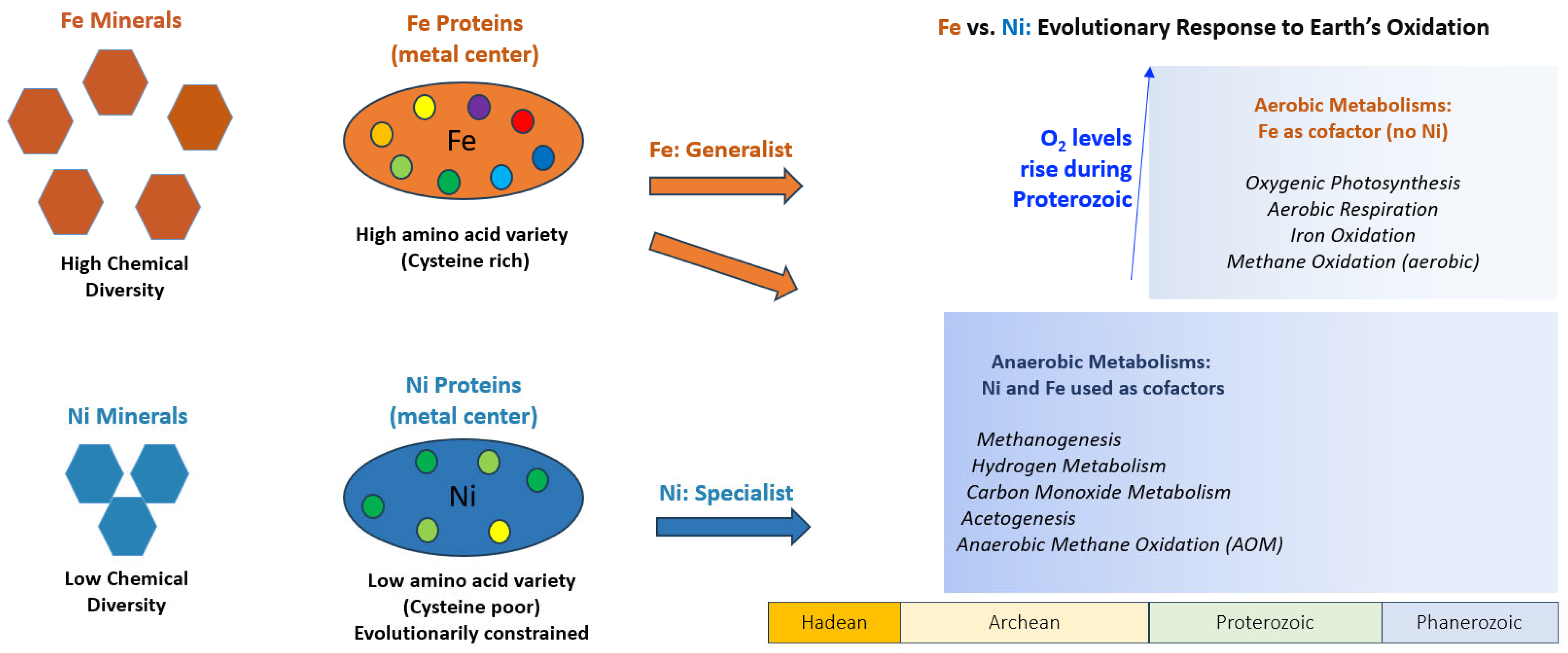
Diverging Mineral Chemistry of Iron and Nickel Throughout Earth’s Changing Redox Conditions Reveals Foundation for Their Evolution as Protein Cofactors

 ,
,  , and
, and
Abstract
1. Introduction
2. Materials and Methods
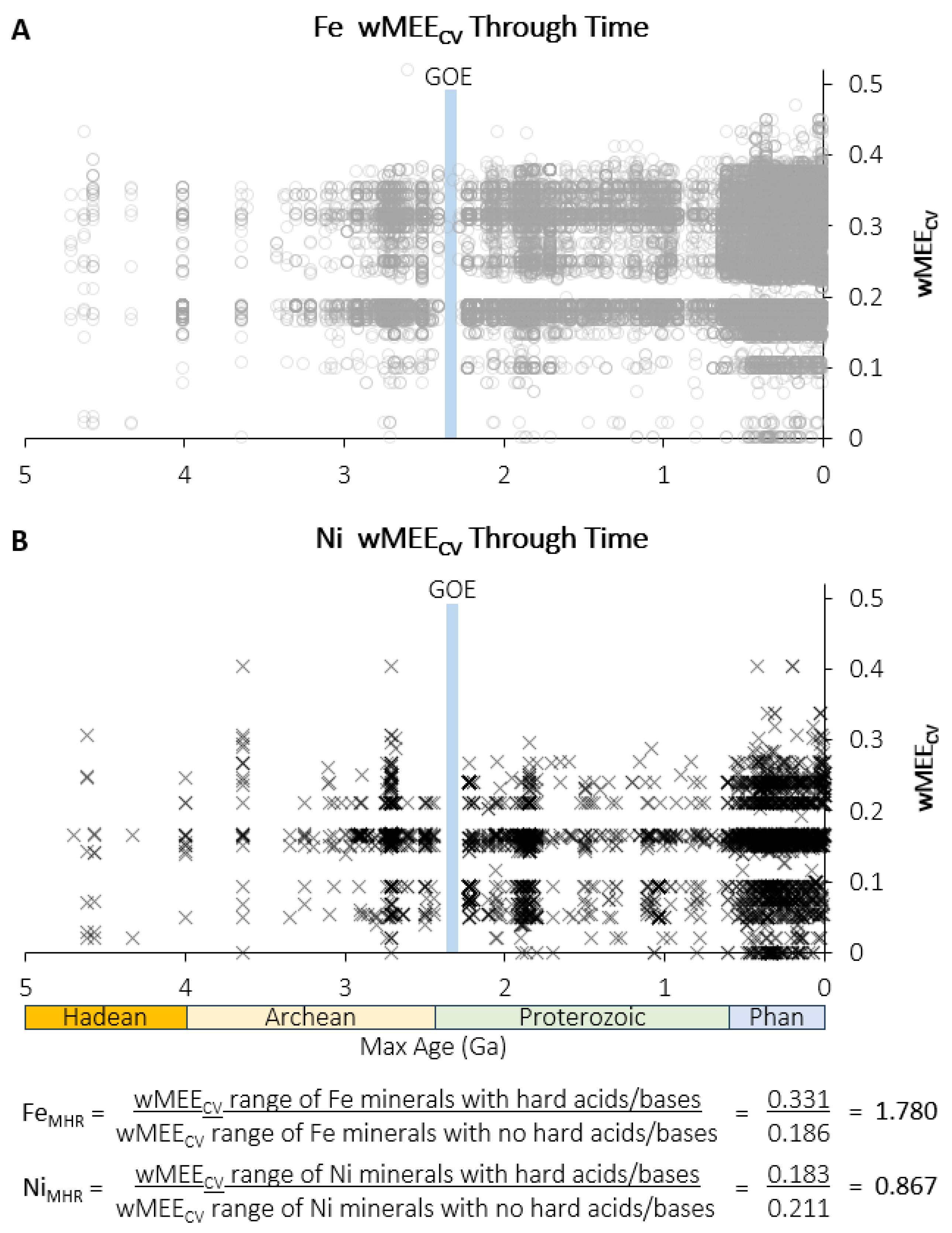
2.1. Mineral Chemistry Network Analysis and Electronegativity Variation
- (1)
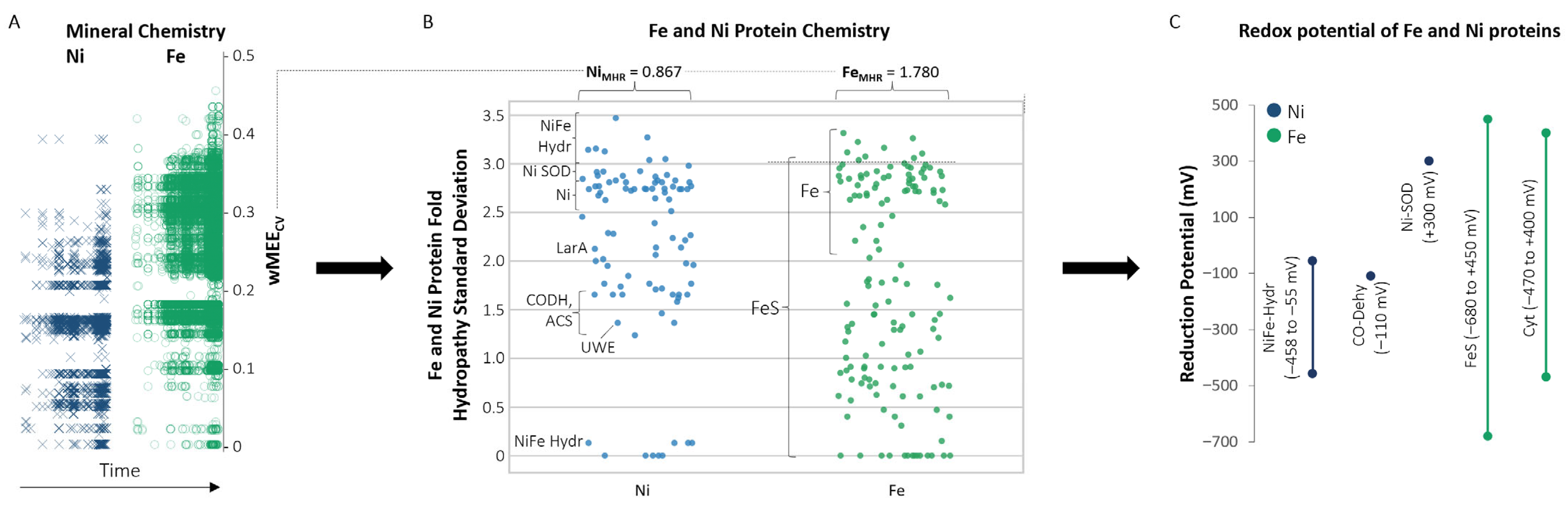
- wMEECV range of Fe minerals with hard acids and/or bases = 0.519 − 0.188 = 0.331
- (2)
- wMEECV range of Fe minerals with no hard acids and/or bases = 0.186 − 0 = 0.186
- (3)
- FeMHR = 0.331/0.186 = 1.780
- (4)
- wMEECV range of Ni minerals with hard acids and/or bases = 0.404 − 0.221 = 0.183
- (5)
- wMEECV range of Ni minerals with no hard acids and/or bases = 0.211 − 0 = 0.211
- (6)
- NiMHR = 0.183/0.211 = 0.867
2.2. Protein Fold Coordination Sphere Analysis and Comparison
3. Results and Discussion
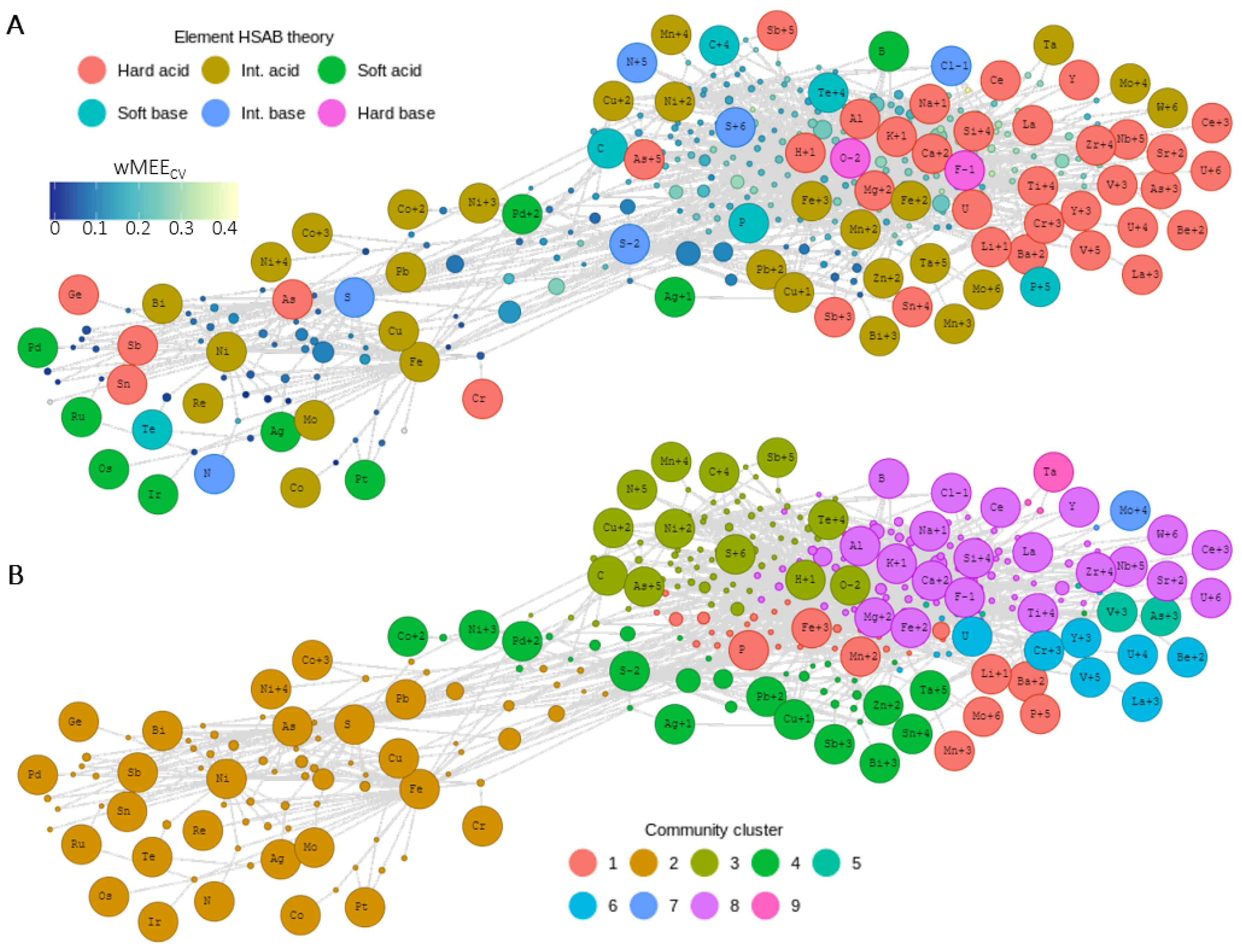
3.1. Distinct Mineral Chemistry of Fe and Ni
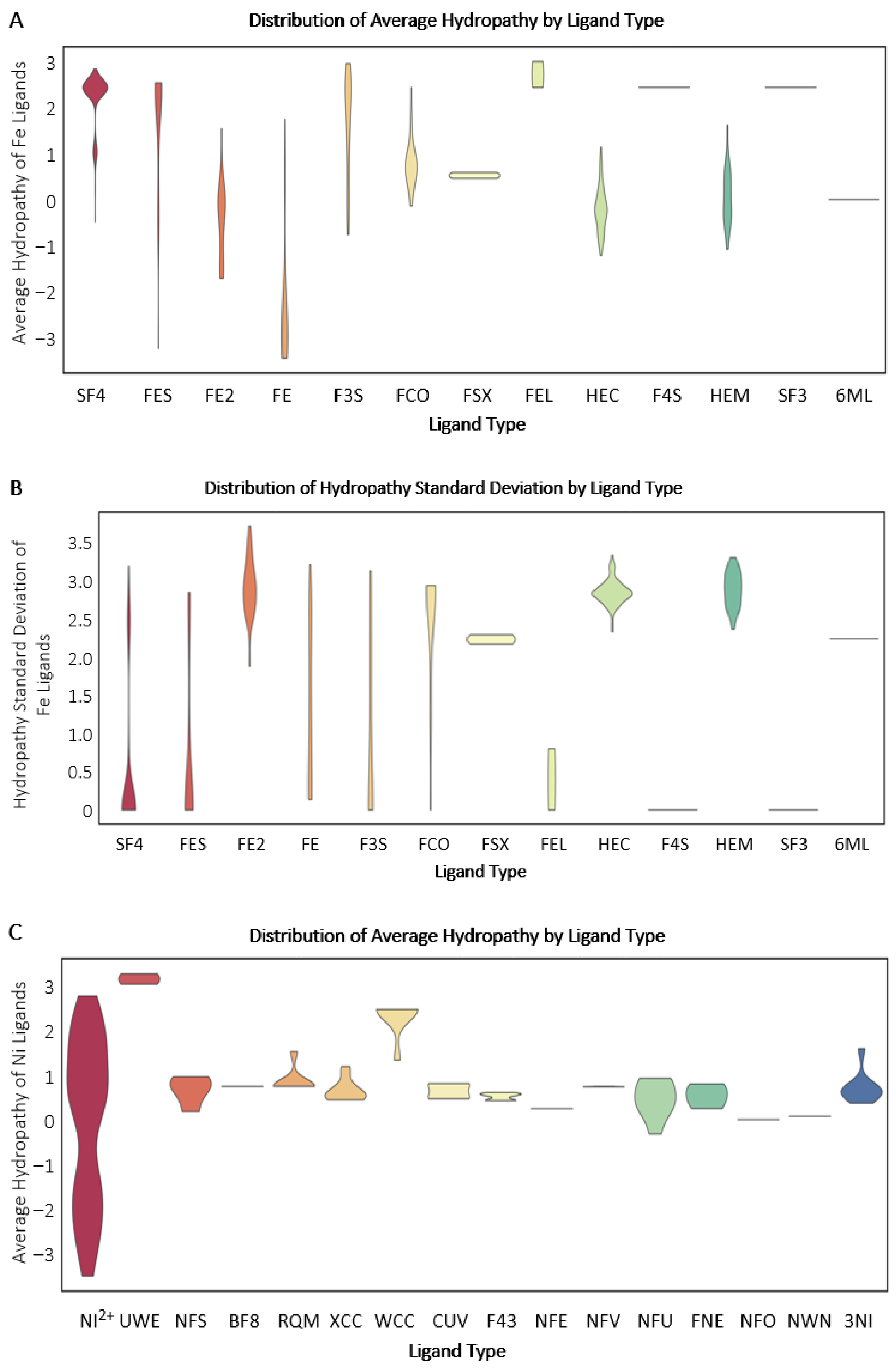
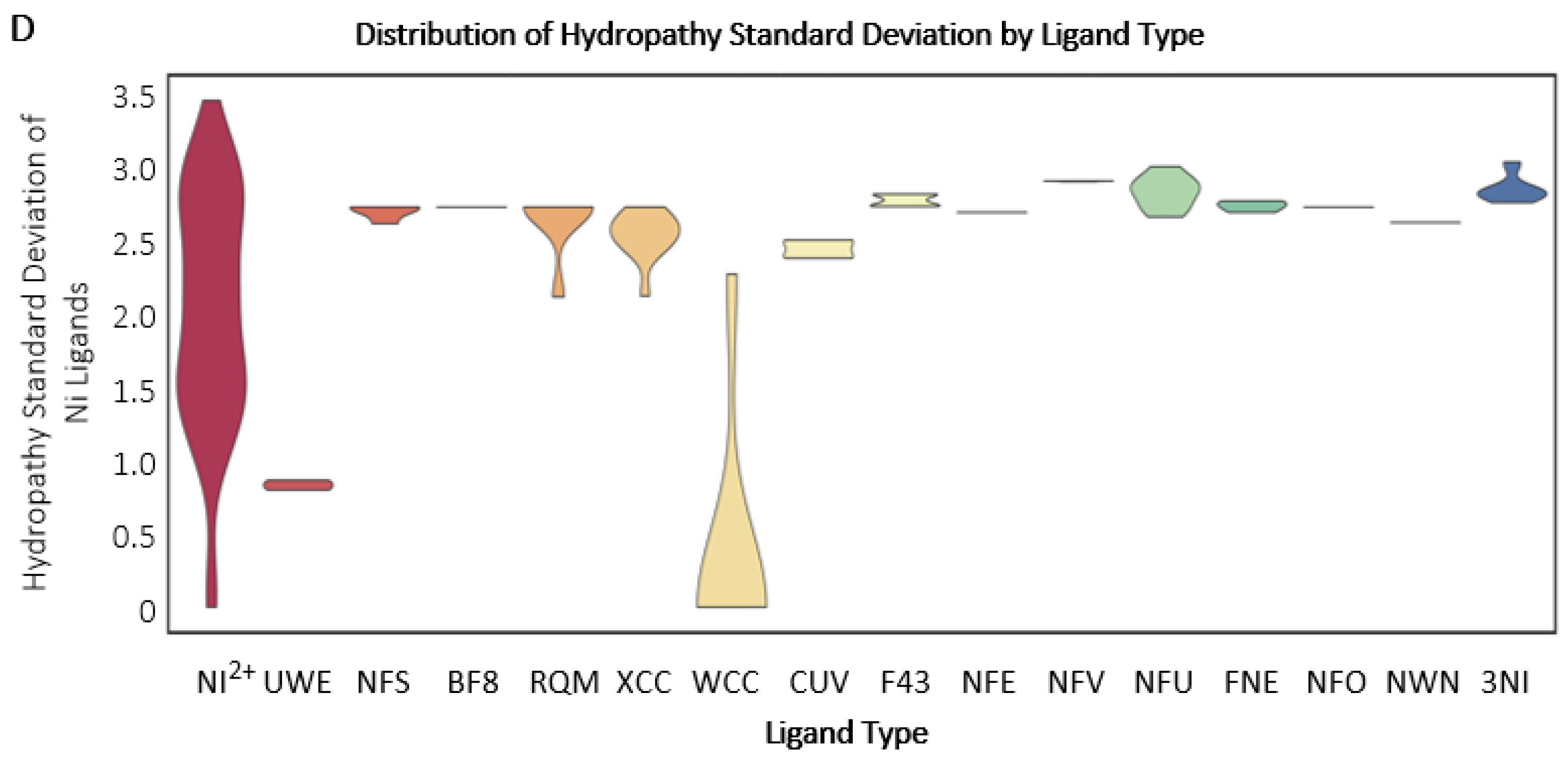
3.2. Protein Binding Site Chemical Environments and Amino Acid Distribution
3.3. Iron and Nickel Chemical Associations and Redox Potentials Within Minerals and Proteins Through Time
4. Conclusions
Supplementary Materials
Author Contributions
Funding
Institutional Review Board Statement
Informed Consent Statement
Data Availability Statement
Acknowledgments
Conflicts of Interest
Code Availability Statement
Abbreviations
| MED | Mineral Evolution Database |
| wMEECV | Weighted Mineral Element Electronegativity Coefficient of Variation |
| IMA | International Mineralogical Association |
| CSAC | Coordination Sphere Analysis and Comparison |
References
- Nisbet, E.G.; Sleep, N.H. The Habitat and Nature of Early Life. Nature 2001, 409, 1083–1091. [Google Scholar] [CrossRef] [PubMed]
- Huber, C.; Wächtershäuser, G. α-Hydroxy and α-Amino Acids Under Possible Hadean, Volcanic Origin-of-Life Conditions. Science 2006, 314, 630–632. [Google Scholar] [CrossRef]
- Neubeck, A.; Kirschning, A. Nickel: Geochemistry, Biochemistry and Its Role in Chemical and Biological Evolutions. Earth-Sci. Rev. 2026, 272, 105324. [Google Scholar] [CrossRef]
- Tice, M.M.; Lowe, D.R. Photosynthetic Microbial Mats in the 3,416-Myr-Old Ocean. Nature 2004, 431, 549–552. [Google Scholar] [CrossRef] [PubMed]
- Ueno, Y.; Ono, S.; Rumble, D.; Maruyama, S. Quadruple Sulfur Isotope Analysis of ca. 3.5Ga Dresser Formation: New Evidence for Microbial Sulfate Reduction in the Early Archean. Geochim. Cosmochim. Acta 2008, 72, 5675–5691. [Google Scholar] [CrossRef]
- Bontognali, T.R.R.; Sessions, A.L.; Allwood, A.C.; Fischer, W.W.; Grotzinger, J.P.; Summons, R.E.; Eiler, J.M. Sulfur Isotopes of Organic Matter Preserved in 3.45-Billion-Year-Old Stromatolites Reveal Microbial Metabolism. Proc. Natl. Acad. Sci. USA 2012, 109, 15146–15151. [Google Scholar] [CrossRef]
- Dodd, M.S.; Papineau, D.; Grenne, T.; Slack, J.F.; Rittner, M.; Pirajno, F.; O’Neil, J.; Little, C.T.S. Evidence for Early Life in Earth’s Oldest Hydrothermal Vent Precipitates. Nature 2017, 543, 60–64. [Google Scholar] [CrossRef]
- Lyons, T.W.; Tino, C.J.; Fournier, G.P.; Anderson, R.E.; Leavitt, W.D.; Konhauser, K.O.; Stüeken, E.E. Co-evolution of Early Earth Environments and Microbial Life. Nat. Rev. Microbiol. 2024, 22, 572–586. [Google Scholar] [CrossRef]
- Zerkle, A.L.; House, C.H.; Brantley, S.L. Biogeochemical Signatures through Time as Inferred from Whole Microbial Genomes. Am. J. Sci. 2005, 305, 467–502. [Google Scholar] [CrossRef]
- Dupont, C.L.; Butcher, A.; Valas, R.E.; Bourne, P.E.; Caetano-Anollés, G. History of Biological Metal Utilization Inferred through Phylogenomic Analysis of Protein Structures. Proc. Natl. Acad. Sci. USA 2010, 107, 10567–10572. [Google Scholar] [CrossRef]
- Liu, J.; Chakraborty, S.; Hosseinzadeh, P.; Yu, Y.; Tian, S.; Petrik, I.; Bhagi, A.; Lu, Y. Metalloproteins Containing Cytochrome, Iron–Sulfur, or Copper Redox Centers. Chem. Rev. 2014, 114, 4366–4469. [Google Scholar] [CrossRef]
- Moore, E.K.; Jelen, B.I.; Giovannelli, D.; Raanan, H.; Falkowski, P.G. Metal Availability and the Expanding Network of Microbial Metabolisms in the Archaean Eon. Nat. Geosci. 2017, 10, 629–636. [Google Scholar] [CrossRef]
- Frey, P.A.; Reed, G.H. The Ubiquity of Iron. ACS Chem. Biol. 2012, 7, 1477–1481. [Google Scholar] [CrossRef]
- Wei, L.; Wu, Z.; Ho, K.-M.; Wentzcovitch, R.M.; Sun, Y. The Fe-Ni Phase Diagram and the Earth’s Inner Core Structure. Sci. Adv. 2025, 11, eadu1998. [Google Scholar] [CrossRef]
- Jelen, B.I.; Giovannelli, D.; Falkowski, P.G. The Role of Microbial Electron Transfer in the Coevolution of the Biosphere and Geosphere. Annu. Rev. Microbiol. 2016, 70, 45–62. [Google Scholar] [CrossRef]
- Hazen, R.M.; Papineau, D.; Bleeker, W.; Downs, R.T.; Ferry, J.M.; McCoy, T.J.; Sverjensky, D.A.; Yang, H. Mineral Evolution. Am. Mineral. 2008, 93, 1693–1720. [Google Scholar] [CrossRef]
- Bradley, D.C. Mineral Evolution and Earth History. Am. Mineral. 2015, 100, 4–5. [Google Scholar] [CrossRef]
- Coremans, J.M.C.C.; van Garderen, C.J.; Albracht, S.P.J. On the Redox Equilibrium between H2 and Hydrogenase. Biochim. Biophys. Acta Protein Struct. Mol. Enzymol. 1992, 1119, 148–156. [Google Scholar] [CrossRef]
- Spangler, N.J.; Lindahl, P.A.; Bandarian, V.; Ludden, P.W. Spectroelectrochemical Characterization of the Metal Centers in Carbon Monoxide Dehydrogenase (CODH) and Nickel-Deficient CODH from Rhodospirillum Rubrum. J. Biol. Chem. 1996, 271, 7973–7977. [Google Scholar] [CrossRef] [PubMed]
- Millo, D.; Pandelia, M.-E.; Utesch, T.; Wisitruangsakul, N.; Mroginski, M.A.; Lubitz, W.; Hildebrandt, P.; Zebger, I. Spectroelectrochemical Study of the [NiFe] Hydrogenase from Desulfovibrio Vulgaris Miyazaki F in Solution and Immobilized on Biocompatible Gold Surfaces. J. Phys. Chem. B 2009, 113, 15344–15351. [Google Scholar] [CrossRef]
- Hausinger, R.P. Nickel Utilization by Microorganisms. Microbiol. Rev. 1987, 51, 22–42. [Google Scholar] [CrossRef]
- Ragsdale, S.W.; Kumar, M. Nickel-Containing Carbon Monoxide Dehydrogenase/Acetyl-CoA Synthase. Chem. Rev. 1996, 96, 2515–2540. [Google Scholar] [CrossRef]
- Mei, R.; Kaneko, M.; Imachi, H.; Nobu, M.K. The Origin and Evolution of Methanogenesis and Archaea Are Intertwined. PNAS Nexus 2023, 2, pgad023. [Google Scholar] [CrossRef]
- Tian, F.; Toon, O.B.; Pavlov, A.A.; Sterck, H.D. A Hydrogen-Rich Early Earth Atmosphere. Science 2005, 308, 1014–1017. [Google Scholar] [CrossRef] [PubMed]
- Young, E.D.; Shahar, A.; Schlichting, H.E. Earth Shaped by Primordial H2 Atmospheres. Nature 2023, 616, 306–311. [Google Scholar] [CrossRef] [PubMed]
- Adams, M.W.W.; Stiefel, E.I. Biological Hydrogen Production: Not So Elementary. Science 1998, 5395, 1842–1843. [Google Scholar]
- Cammack, R. Hydrogenase Sophistication. Nature 1999, 397, 214–215. [Google Scholar] [CrossRef] [PubMed]
- Saito, M.A.; Sigman, D.M.; Morel, F.M.M. The Bioinorganic Chemistry of the Ancient Ocean: The Co-Evolution of Cyanobacterial Metal Requirements and Biogeochemical Cycles at the Archean–Proterozoic Boundary? Inorganica Chim. Acta 2003, 356, 308–318. [Google Scholar] [CrossRef]
- Anbar, A.D. Elements and Evolution. Science 2008, 322, 1481–1483. [Google Scholar] [CrossRef]
- Wächtershäuser, G. Groundworks for an Evolutionary Biochemistry: The Iron-Sulphur World. Prog. Biophys. Mol. Biol. 1992, 58, 85–201. [Google Scholar] [CrossRef]
- Sunagawa, I. Characteristics of Crystal Growth in Nature as Seen from the Morphology of Mineral Crystals. Bull. Minéralogie 1981, 104, 81–87. [Google Scholar] [CrossRef]
- Muchowska, K.B.; Varma, S.J.; Moran, J. Nonenzymatic Metabolic Reactions and Life’s Origins. Chem. Rev. 2020, 120, 7708–7744. [Google Scholar] [CrossRef] [PubMed]
- Ding, N.; Ren, T.; Liang, D.; Dong, H. Pyrite as a Catalyst for the Emergence of Multiphase Primitive Cells. Front. Microbiol. 2026, 16, 1747422. [Google Scholar] [CrossRef]
- Zanello, P. The Competition between Chemistry and Biology in Assembling Iron–Sulfur Derivatives. Molecular Structures and Electrochemistry. Part II. {[Fe2S2](SγCys)4} Proteins. Coord. Chem. Rev. 2014, 280, 54–83. [Google Scholar] [CrossRef]
- Ginovska-Pangovska, B.; Dutta, A.; Reback, M.L.; Linehan, J.C.; Shaw, W.J. Beyond the Active Site: The Impact of the Outer Coordination Sphere on Electrocatalysts for Hydrogen Production and Oxidation. Acc. Chem. Res. 2014, 47, 2621–2630. [Google Scholar] [CrossRef]
- Spielman, S.J.; Moore, E.K. Dragon: A New Tool for Exploring Redox Evolution Preserved in the Mineral Record. Front. Earth Sci. 2020, 8, 585087. [Google Scholar] [CrossRef]
- R Core Team. R: A Language and Environment for Statistical Computing. R Foundation for Statistical Computing, Vienna, Austria. Available online: https://www.R-project.org/ (accessed on 28 February 2026).
- Fruchterman, T.M.J.; Reingold, E.M. Graph Drawing by Force-Directed Placement. Softw. Pract. Exp. 1991, 21, 1129–1164. [Google Scholar] [CrossRef]
- Blondel, V.D.; Guillaume, J.-L.; Lambiotte, R.; Lefebvre, E. Fast Unfolding of Communities in Large Networks. J. Stat. Mech. 2008, 2008, P10008. [Google Scholar] [CrossRef]
- Moore, E.K.; Golden, J.J.; Morrison, S.M.; Hao, J.; Spielman, S.J. The Expanding Network of Mineral Chemistry throughout Earth History Reveals Global Shifts in Crustal Chemistry during the Proterozoic. Sci. Rep. 2022, 12, 4956. [Google Scholar] [CrossRef]
- Pauling, L. The Nature of the Chemical Bond. IV. The Energy of Single Bonds and the Relative Electronegativity of Atoms. J. Am. Chem. Soc. 1932, 54, 3570–3582. [Google Scholar] [CrossRef]
- Hazen, R.M. An Evolutionary System of Mineralogy: Proposal for a Classification of Planetary Materials Based on Natural Kind Clustering. Am. Mineral. 2019, 104, 810–816. [Google Scholar] [CrossRef]
- Harris, C.R.; Millman, K.J.; van der Walt, S.J.; Gommers, R.; Virtanen, P.; Cournapeau, D.; Wieser, E.; Taylor, J.; Berg, S.; Smith, N.J.; et al. Array Programming with NumPy. Nature 2020, 585, 357–362. [Google Scholar] [CrossRef]
- McKinney, W. Data Structures for Statistical Computing in Python. In Proceedings of the 9th Python in Science Conference (SciPy 2010), Austin, TX, USA, 28 June–3 July 2010; pp. 56–61. [Google Scholar]
- Kyte, J.; Doolittle, R.F. A Simple Method for Displaying the Hydropathic Character of a Protein. J. Mol. Biol. 1982, 157, 105–132. [Google Scholar] [CrossRef]
- Berman, H.; Henrick, K.; Nakamura, H.; Markley, J.L. The Worldwide Protein Data Bank (wwPDB): Ensuring a Single, Uniform Archive of PDB Data. Nucleic Acids Res. 2007, 35, D301–D303. [Google Scholar] [CrossRef] [PubMed]
- Pearson, R.G. Absolute Electronegativity and Absolute Hardness of Lewis Acids and Bases. J. Am. Chem. Soc. 1985, 107, 6801–6806. [Google Scholar] [CrossRef]
- Hazen, R.M.; Morrison, S.M.; Prabhu, A. The Evolution of Mineral Evolution. In Celebrating the International Year of Mineralogy: Progress and Landmark Discoveries of the Last Decades; Bindi, L., Cruciani, G., Eds.; Springer Nature: Cham, Switzerland, 2023; pp. 15–37. [Google Scholar]
- Moore, E.K.; Diedolf, J.E.; Morrison, S.M.; Hummer, D.R. Characterizing Sulfur Redox State and Geochemical Implications in Deep-Time Using Mineral Chemistry Network Analysis. Geochim. Cosmochim. Acta 2024, 376, 25–36. [Google Scholar] [CrossRef]
- Moore, E.K.; Li, J.; Zhang, A.; Hao, J.; Morrison, S.M.; Hummer, D.R.; Yee, N. Uranium Redox and Deposition Transitions Embedded in Deep-Time Geochemical Models and Mineral Chemistry Networks. Geochem. Geophys. Geosyst. 2024, 25, e2023GC011267. [Google Scholar] [CrossRef]
- Farquhar, J.; Bao, H.; Thiemens, M. Atmospheric Influence of Earth’s Earliest Sulfur Cycle. Science 2000, 289, 756–758. [Google Scholar] [CrossRef] [PubMed]
- McGuinness, K.N.; Klau, G.W.; Morrison, S.M.; Moore, E.K.; Seipp, J.; Falkowski, P.G.; Nanda, V. Evaluating Mineral Lattices as Evolutionary Proxies for Metalloprotein Evolution. Orig. Life Evol. Biosph. 2022, 52, 263–275. [Google Scholar] [CrossRef]
- Nanda, V.; Siess, J.; Jagilinki, B.P.; Hazen, R.M.; Kamerlin, S.C.L.; Koder, R.; Noy, D.; Silberg, J.; Tezcan, F.A.; Ulijn, R.; et al. On the Emergence of Metabolism: The Evolution of Proteins That Powered Life. Philos. Trans. R. Soc. B Biol. Sci. 2025, 380, 20240090. [Google Scholar] [CrossRef]
- Poole, L.B. The Basics of Thiols and Cysteines in Redox Biology and Chemistry. Free Radic. Biol. Med. 2015, 80, 148–157. [Google Scholar] [CrossRef]
- Belmonte, L.; Rossetto, D.; Forlin, M.; Scintilla, S.; Bonfio, C.; Mansy, S.S. Cysteine Containing Dipeptides Show a Metal Specificity That Matches the Composition of Seawater. Phys. Chem. Chem. Phys. 2016, 18, 20104–20108. [Google Scholar] [CrossRef]
- Lukács, M.; Csilla Pálinkás, D.; Szunyog, G.; Várnagy, K. Metal Binding Ability of Small Peptides Containing Cysteine Residues. ChemistryOpen 2021, 10, 451–463. [Google Scholar] [CrossRef]
- Holland, H.D. Volcanic Gases, Black Smokers, and the Great Oxidation Event. Geochim. Cosmochim. Acta 2002, 66, 3811–3826. [Google Scholar] [CrossRef]
- Chen, X.; Ostrander, C.M.; Holdaway, B.J.; Kendall, B.; Anbar, A.D.; Nielsen, S.G.; Owens, J.D. Transient Marine Bottom Water Oxygenation on Continental Shelves by 2.65 Billion Years Ago. Nat. Geosci. 2025, 18, 423–429. [Google Scholar] [CrossRef]
- Liang, X.; Stüeken, E.E.; Alessi, D.S.; Konhauser, K.O.; Li, L. A Seawater Oxygen Oscillation Recorded by Iron Formations Prior to the Great Oxidation Event. Nat. Geosci. 2025, 18, 417–422. [Google Scholar] [CrossRef]
- Posth, N.R.; Canfield, D.E.; Kappler, A. Biogenic Fe(III) Minerals: From Formation to Diagenesis and Preservation in the Rock Record. Earth-Sci. Rev. 2014, 135, 103–121. [Google Scholar] [CrossRef]
- Konhauser, K.O.; Robbins, L.J.; Alessi, D.S.; Flynn, S.L.; Gingras, M.K.; Martinez, R.E.; Kappler, A.; Swanner, E.D.; Li, Y.-L.; Crowe, S.A.; et al. Phytoplankton Contributions to the Trace-Element Composition of Precambrian Banded Iron Formations. GSA Bull. 2017, 130, 941–951. [Google Scholar] [CrossRef]
- Konhauser, K.O.; Pecoits, E.; Lalonde, S.V.; Papineau, D.; Nisbet, E.G.; Barley, M.E.; Arndt, N.T.; Zahnle, K.; Kamber, B.S. Oceanic Nickel Depletion and a Methanogen Famine before the Great Oxidation Event. Nature 2009, 458, 750–753. [Google Scholar] [CrossRef] [PubMed]
- Konhauser, K.O.; Robbins, L.J.; Pecoits, E.; Peacock, C.; Kappler, A.; LaLonde, S.V. The Archean Nickel Famine Revisited. Astrobiology 2015, 15, 804–815. [Google Scholar] [CrossRef]
- Kramer, J.; Özkaya, Ö.; Kümmerli, R. Bacterial Siderophores in Community and Host Interactions. Nat. Rev. Microbiol. 2020, 18, 152–163. [Google Scholar] [CrossRef] [PubMed]
- Coremans, J.M.C.C.; van der Zwaan, J.W.; Albracht, S.P.J. Distinct Redox Behaviour of Prosthetic Groups in Ready and Unready Hydrogenase from Chromatium vinosum. Biochim. Biophys. Acta Protein Struct. Mol. Enzymol. 1992, 1119, 157–168. [Google Scholar] [CrossRef]
- Des Marais, D.J. Isotopic Evolution of the Biogeochemical Carbon Cycle during the Proterozoic Eon. Org. Geochem. 1997, 27, 185–193. [Google Scholar] [CrossRef]
- Canfield, D.E. A New Model for Proterozoic Ocean Chemistry. Nature 1998, 396, 450–453. [Google Scholar] [CrossRef]
- Mänd, K.; Robbins, L.J.; Planavsky, N.J.; Bekker, A.; Konhauser, K.O. Iron Formations as Palaeoenvironmental Archives; Cambridge University Press: Cambridge, UK, 2022. [Google Scholar]
- Lu, Z.; Imlay, J.A. When Anaerobes Encounter Oxygen: Mechanisms of Oxygen Toxicity, Tolerance and Defence. Nat. Rev. Microbiol. 2021, 19, 774–785. [Google Scholar] [CrossRef]
- Ryan, K.C.; Johnson, O.E.; Cabelli, D.E.; Brunold, T.C.; Maroney, M.J. Nickel Superoxide Dismutase: Structural and Functional Roles of Cys2 and Cys6. J. Biol. Inorg. Chem. 2010, 15, 795–807. [Google Scholar] [CrossRef] [PubMed]
- Boden, J.S.; Konhauser, K.O.; Robbins, L.J.; Sánchez-Baracaldo, P. Timing the Evolution of Antioxidant Enzymes in Cyanobacteria. Nat. Commun. 2021, 12, 4742. [Google Scholar] [CrossRef]
- Jordan, S.F.; Ioannou, I.; Rammu, H.; Halpern, A.; Bogart, L.K.; Ahn, M.; Vasiliadou, R.; Christodoulou, J.; Maréchal, A.; Lane, N. Spontaneous Assembly of Redox-Active Iron-Sulfur Clusters at Low Concentrations of Cysteine. Nat. Commun. 2021, 12, 5925. [Google Scholar] [CrossRef]
- Peters, J.W.; Schut, G.J.; Boyd, E.S.; Mulder, D.W.; Shepard, E.M.; Broderick, J.B.; King, P.W.; Adams, M.W.W. [FeFe]- and [NiFe]-Hydrogenase Diversity, Mechanism, and Maturation. Biochim. Biophys. Acta Mol. Cell Res. 2015, 1853, 1350–1369. [Google Scholar] [CrossRef] [PubMed]
- Sarewicz, M.; Pintscher, S.; Pietras, R.; Borek, A.; Bujnowicz, Ł.; Hanke, G.; Cramer, W.A.; Finazzi, G.; Osyczka, A. Catalytic Reactions and Energy Conservation in the Cytochrome Bc1 and B6f Complexes of Energy-Transducing Membranes. Chem. Rev. 2021, 121, 2020–2108. [Google Scholar] [CrossRef]
- Hüttemann, M.; Pecina, P.; Rainbolt, M.; Sanderson, T.H.; Kagan, V.E.; Samavati, L.; Doan, J.W.; Lee, I. The Multiple Functions of Cytochrome c and Their Regulation in Life and Death Decisions of the Mammalian Cell: From Respiration to Apoptosis. Mitochondrion 2011, 11, 369–381. [Google Scholar] [CrossRef]
- Rudnick, R.L.; Gao, S. 3.01-Composition of the Continental Crust. In Treatise on Geochemistry, 1st ed.; Holland, H.D., Turekian, K.K., Eds.; Pergamon: Oxford, UK, 2003; Volume 3, pp. 1–64. [Google Scholar]
- Sahai, N.; LaRowe, D.; Senko, J.M. Bioenergetics of Iron Snow Fueling Life on Europa. Proc. Natl. Acad. Sci. USA 2024, 121, e2316452121. [Google Scholar] [CrossRef] [PubMed]
- Tan, S.; Sekine, Y.; Shibuya, T. Metal Limiting Habitability in Enceladus? Availability of Trace Metals for Methanogenic Life in Hydrothermal Fluids. J. Geophys. Res. Planets 2025, 130, e2024JE008591. [Google Scholar] [CrossRef]
- Adibekyan, V. Heavy Metal Rules. I. Exoplanet Incidence and Metallicity. Geosciences 2019, 9, 105. [Google Scholar] [CrossRef]
- Wade, J.; Byrne, D.J.; Ballentine, C.J.; Drakesmith, H. Temporal Variation of Planetary Iron as a Driver of Evolution. Proc. Natl. Acad. Sci. USA 2021, 118, e2109865118. [Google Scholar] [CrossRef]
- Kacar, B.; Garcia, A.K.; Anbar, A.D. Evolutionary History of Bioessential Elements Can Guide the Search for Life in the Universe. ChemBioChem 2021, 22, 114–119. [Google Scholar] [CrossRef]
- Stüeken, E.E.; Olson, S.L.; Moore, E.; Foley, B.J. The Early Earth as an Analogue for Exoplanetary Biogeochemistry. Rev. Mineral. Geochem. 2024, 90, 515–558. [Google Scholar] [CrossRef]
- Giovannelli, D.; Cascone, M.; Gallo, G.; Migliaccio, F.; Barosa, B.; Bastoni, D.; Brusca, J.; Longo, A.; Tonietti, L.; Cordone, A. Trace Metals as Redox Cofactors and Their Role in Controlling Microbial Diversity and Evolution. In Metal Ions and the Route to Life; CRC Press: Boca Raton, FL, USA, 2025. [Google Scholar]


Disclaimer/Publisher’s Note: The statements, opinions and data contained in all publications are solely those of the individual author(s) and contributor(s) and not of MDPI and/or the editor(s). MDPI and/or the editor(s) disclaim responsibility for any injury to people or property resulting from any ideas, methods, instructions or products referred to in the content. |
© 2026 by the authors. Licensee MDPI, Basel, Switzerland. This article is an open access article distributed under the terms and conditions of the Creative Commons Attribution (CC BY) license.
Share and Cite
Jelen, B.I.; Peralta, Y.; Morrison, S.M.; Christensen, B.; Moore, E.K. Diverging Mineral Chemistry of Iron and Nickel Throughout Earth’s Changing Redox Conditions Reveals Foundation for Their Evolution as Protein Cofactors. Life 2026, 16, 747. https://doi.org/10.3390/life16050747
Jelen BI, Peralta Y, Morrison SM, Christensen B, Moore EK. Diverging Mineral Chemistry of Iron and Nickel Throughout Earth’s Changing Redox Conditions Reveals Foundation for Their Evolution as Protein Cofactors. Life. 2026; 16(5):747. https://doi.org/10.3390/life16050747
Chicago/Turabian StyleJelen, Benjamin I., Yarissa Peralta, Shaunna M. Morrison, Beth Christensen, and Eli K. Moore. 2026. "Diverging Mineral Chemistry of Iron and Nickel Throughout Earth’s Changing Redox Conditions Reveals Foundation for Their Evolution as Protein Cofactors" Life 16, no. 5: 747. https://doi.org/10.3390/life16050747
APA StyleJelen, B. I., Peralta, Y., Morrison, S. M., Christensen, B., & Moore, E. K. (2026). Diverging Mineral Chemistry of Iron and Nickel Throughout Earth’s Changing Redox Conditions Reveals Foundation for Their Evolution as Protein Cofactors. Life, 16(5), 747. https://doi.org/10.3390/life16050747