Glycation of Salivary Aldehyde Dehydrogenase: Emerging Molecular Mechanisms and Clinical Implications in Oral Disease


Abstract
1. Introduction
2. Molecular Mechanisms of ALDH Glycation
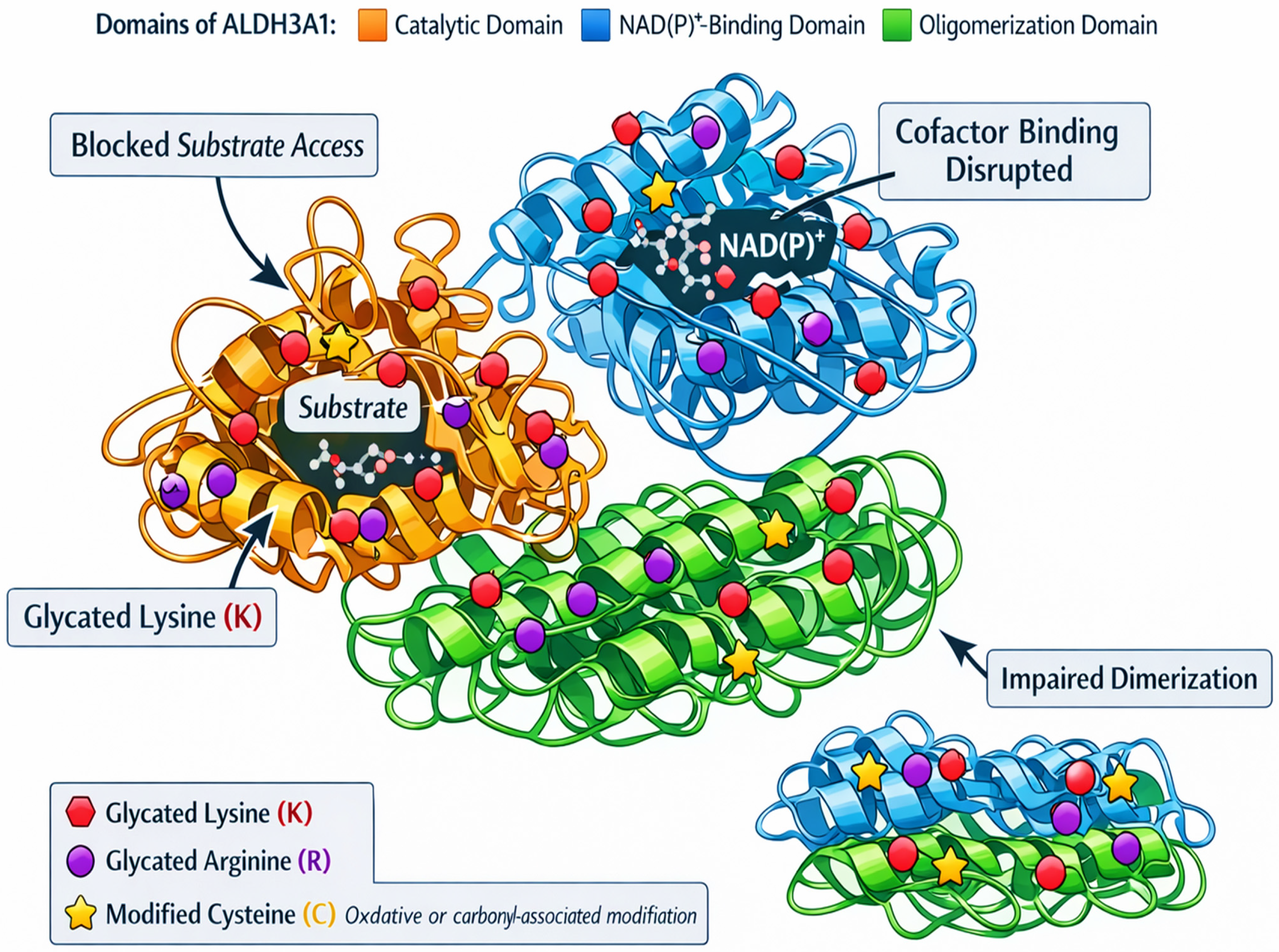
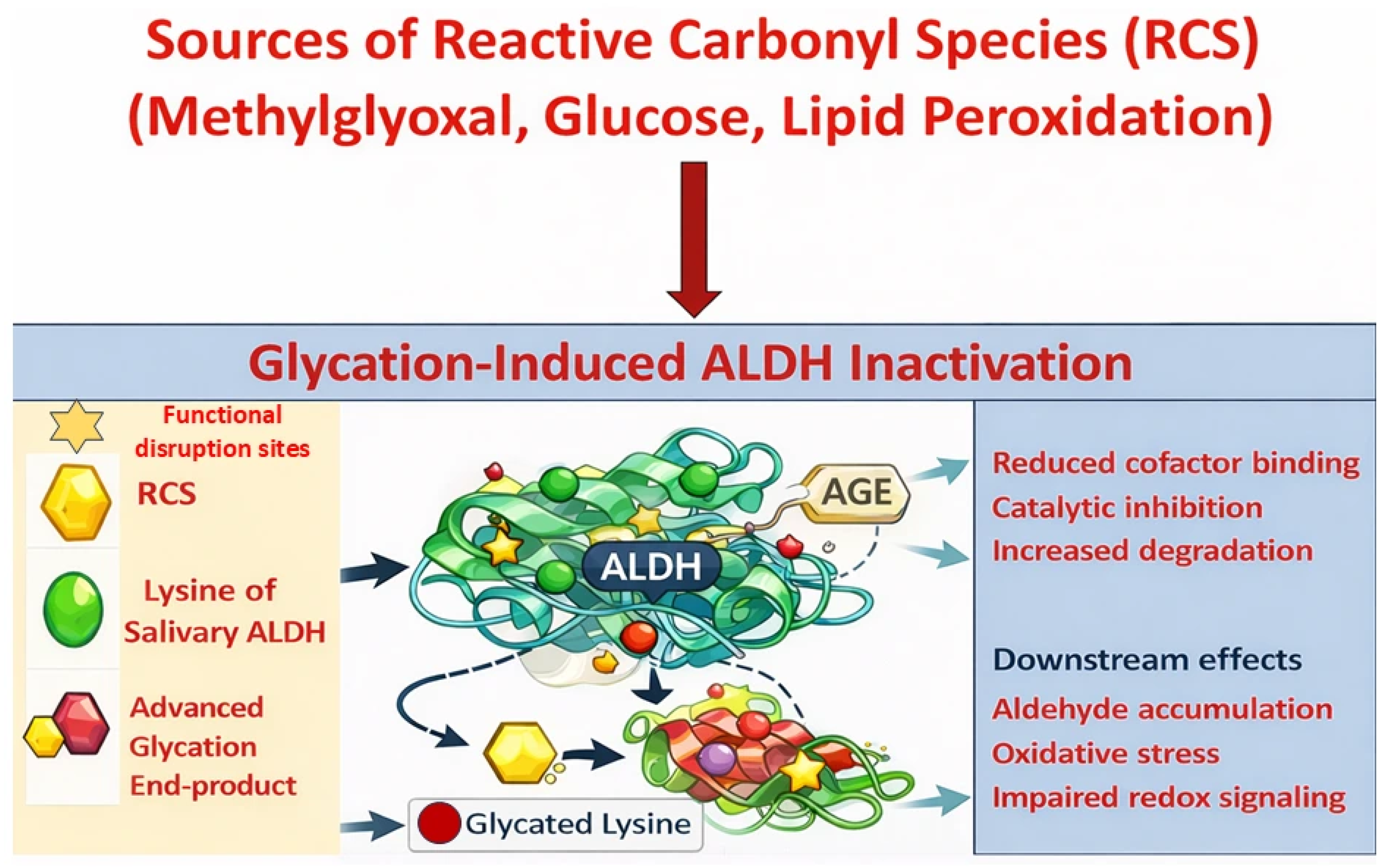
2.1. Structural and Chemical Basis of ALDH Glycation
2.2. Glycation-Induced Functional Consequences
2.3. Experimental and Clinical Evidence for ALDH Glycation
2.4. Microenvironmental Influences in the Oral Cavity
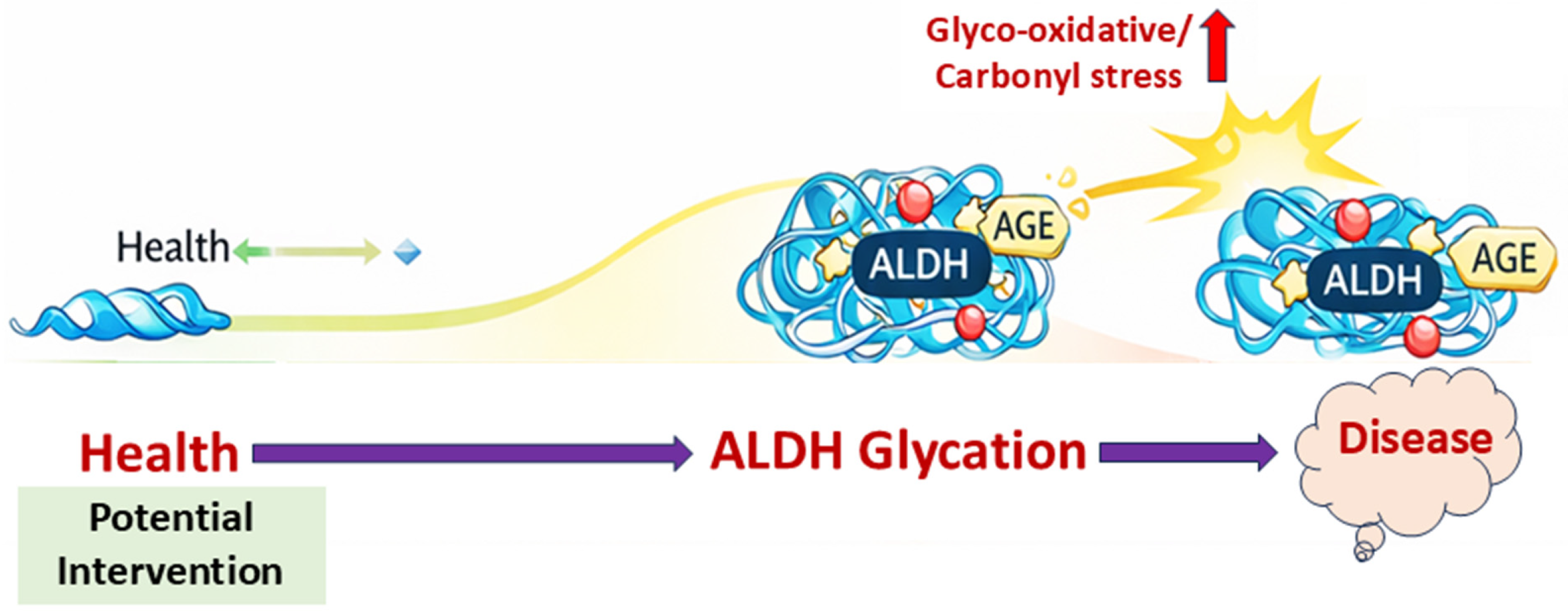
3. Disease Associations of Glycated Salivary ALDH
3.1. Diabetes and Oral Complications
3.2. Periodontal Inflammation and Precancerous Lesions
3.3. Cancer and Treatment-Induced Damage
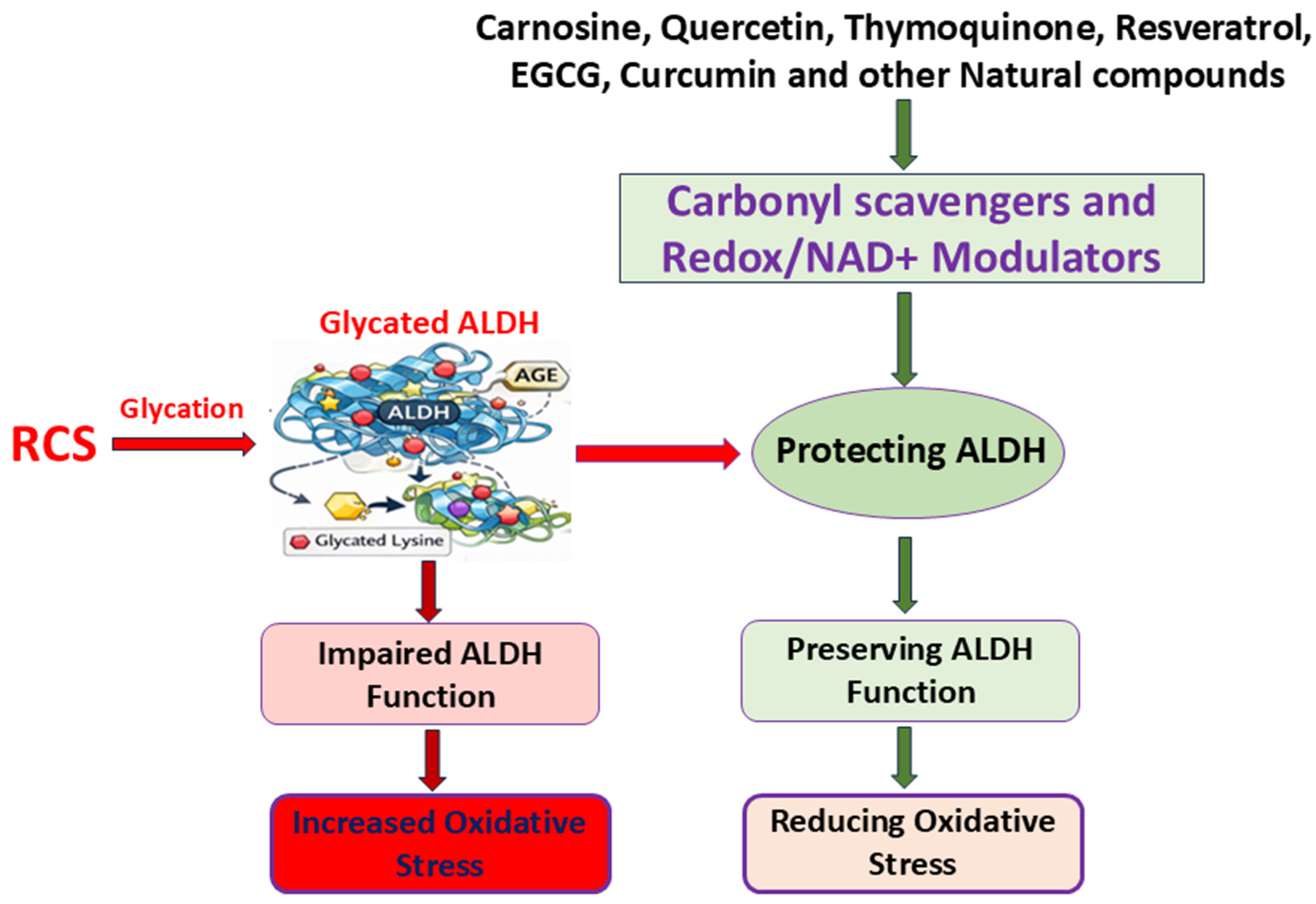
4. Protective Role of Natural Compounds in Preserving ALDH Function Under Glycation Stress
4.1. Mechanistic Rationale for Natural Compound Use
4.1.1. Early Glycation Interception via Carbonyl Trapping
4.1.2. Enzyme Stabilization and NAD(P)+ Preservation
4.1.3. Mitochondrial and Redox Network Support
4.2. Therapeutic Integration and Novel Delivery Strategies
4.3. Outlook and Unmet Needs
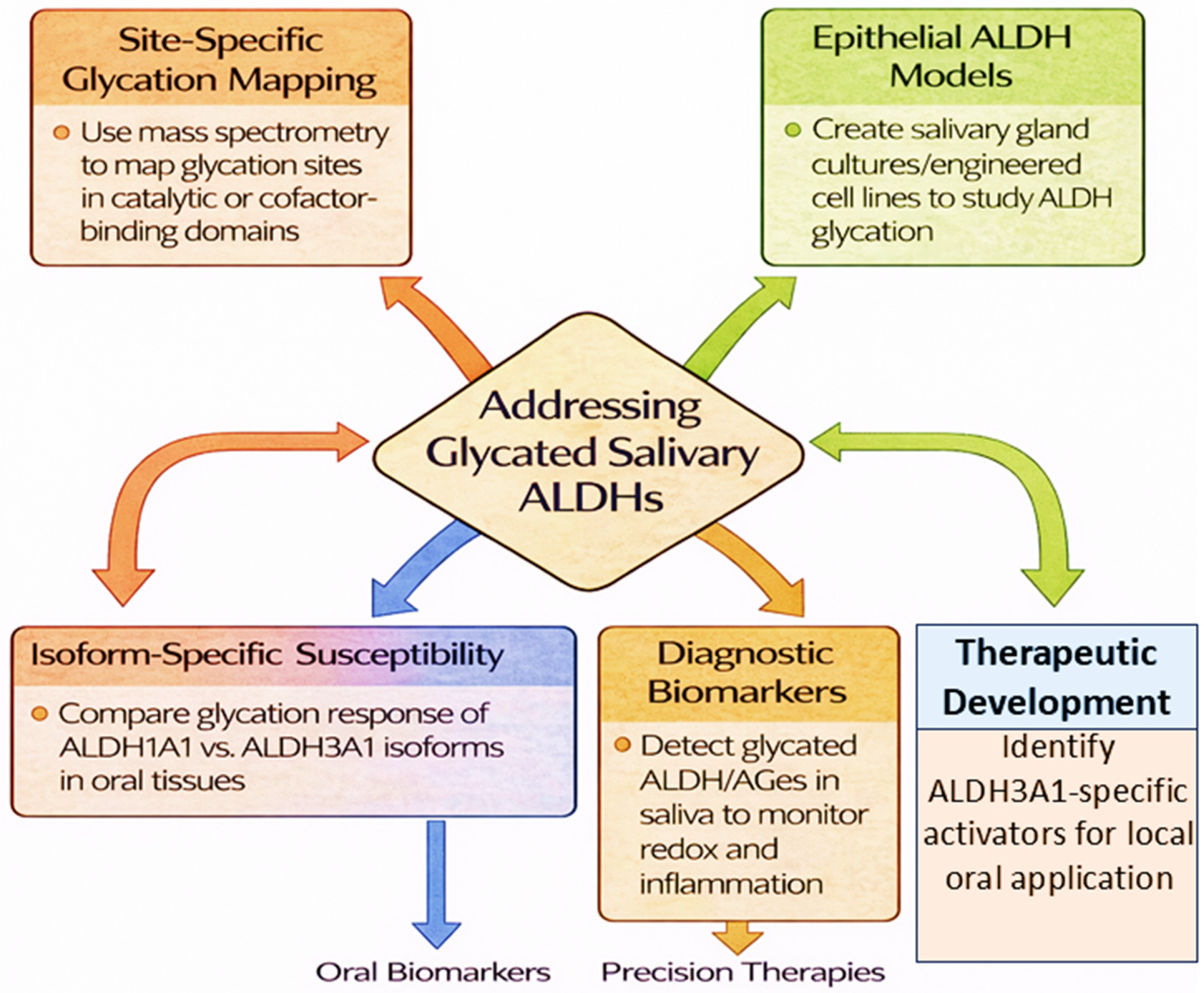
5. Novel Research Gaps and Future Directions
6. Conclusions
Author Contributions
Funding
Institutional Review Board Statement
Informed Consent Statement
Data Availability Statement
Conflicts of Interest
References
- Surdu, A.; Foia, L.G.; Luchian, I.; Trifan, D.; Tatarciuc, M.S.; Scutariu, M.M.; Ciupilan, C.; Budala, D.G. Saliva as a Diagnostic Tool for Systemic Diseases—A Narrative Review. Medicina 2025, 61, 243. [Google Scholar] [CrossRef] [Scilit] [PubMed]
- Wu, J.; Liu, G.; Jia, R.; Guo, J. Salivary Extracellular Vesicles: Biomarkers and Beyond in Human Diseases. Int. J. Mol. Sci. 2023, 24, 17328. [Google Scholar] [CrossRef] [Scilit] [PubMed]
- Giebułtowicz, J.; Wolinowska, R.; Sztybor, A.; Pietrzak, M.; Wroczyński, P.; Wierzchowski, J. Salivary Aldehyde Dehydrogenase: Activity towards Aromatic Aldehydes and Comparison with Recombinant ALDH3A1. Molecules 2009, 14, 2363–2372. [Google Scholar] [CrossRef] [Scilit]
- Laskar, A.A.; Younus, H. Aldehyde Toxicity and Metabolism: The Role of Aldehyde Dehydrogenases in Detoxification, Drug Resistance and Carcinogenesis. Drug Metab. Rev. 2019, 51, 42–64. [Google Scholar] [CrossRef] [Scilit]
- Xanthis, V.; Mantso, T.; Dimtsi, A.; Pappa, A.; Fadouloglou, V.E. Human Aldehyde Dehydrogenases: A Superfamily of Similar Yet Different Proteins Highly Related to Cancer. Cancers 2023, 15, 4419. [Google Scholar] [CrossRef] [Scilit]
- Heider, J.; Hege, D. The Aldehyde Dehydrogenase Superfamilies: Correlations and Deviations in Structure and Function. Appl. Microbiol. Biotechnol. 2025, 109, 106. [Google Scholar] [CrossRef] [Scilit]
- Saiki, J.P.; Cao, H.; Van Wassenhove, L.D.; Viswanathan, V.; Bloomstein, J.; Nambiar, D.K.; Mattingly, A.J.; Jiang, D.; Chen, C.-H.; Stevens, M.C.; et al. Aldehyde Dehydrogenase 3A1 Activation Prevents Radiation-Induced Xerostomia by Protecting Salivary Stem Cells from Toxic Aldehydes. Proc. Natl. Acad. Sci. USA 2018, 115, 6279–6284. [Google Scholar] [CrossRef] [Scilit]
- Jang, J.H.; Bruse, S.; Liu, Y.; Duffy, V.; Zhang, C.; Oyamada, N.; Randell, S.; Matsumoto, A.; Thompson, D.C.; Lin, Y.; et al. Aldehyde dehydrogenase 3A1 protects airway epithelial cells from cigarette smoke-induced DNA damage and cytotoxicity. Free Radic. Biol. Med. 2014, 68, 80–86. [Google Scholar] [CrossRef] [Scilit]
- Black, W.; Chen, Y.; Matsumoto, A.; Thompson, D.C.; Lassen, N.; Pappa, A.; Vasiliou, V. Molecular mechanisms of ALDH3A1-mediated cellular protection against 4-hydroxy-2-nonenal. Free Radic. Biol. Med. 2012, 52, 1937–1944. [Google Scholar] [CrossRef] [Scilit] [PubMed]
- Pappa, A.; Chen, C.; Koutalos, Y.; Townsend, A.J.; Vasiliou, V. Aldh3a1 protects human corneal epithelial cells from ultraviolet- and 4-hydroxy-2-nonenal-induced oxidative damage. Free Radic. Biol. Med. 2003, 34, 1178–1189. [Google Scholar] [CrossRef] [Scilit]
- Voulgaridou, G.P.; Theologidis, V.; Venetikidou, M.; Tsochantaridis, I.; Tsolou, A.; Koffa, M.; Panayiotidis, M.I.; Pappa, A. Investigating the Functional Roles of Aldehyde Dehydrogenase 3A1 in Human Corneal Epithelial Cells. Int. J. Mol. Sci. 2023, 24, 5845. [Google Scholar] [CrossRef] [Scilit]
- Fatima Khan, R.; Akbar Ansari, S.; Bukhari, U.; Taqi, M.; Farooqi, S.; Ali Muhammad, A. Association of ALDH3A1 expression with tumor differentiation, pathological stage, and nodal status in oral squamous cell carcinoma. J. Taibah. Univ. Med. Sci. 2025, 20, 396–404. [Google Scholar] [CrossRef] [Scilit]
- Qu, Y.; He, Y.; Yang, Y.; Li, S.; An, W.; Li, Z.; Wang, X.; Han, Z.; Qin, L. ALDH3A1 acts as a prognostic biomarker and inhibits the epithelial mesenchymal transition of oral squamous cell carcinoma through IL-6/STAT3 signaling pathway. J. Cancer 2020, 11, 2621–2631. [Google Scholar] [CrossRef] [Scilit]
- Shortall, K.; Djeghader, A.; Magner, E.; Soulimane, T. Insights into Aldehyde Dehydrogenase Enzymes: A Structural Perspective. Front. Mol. Biosci. 2021, 8, 659550. [Google Scholar] [CrossRef] [Scilit] [PubMed]
- Younus, H.; Ahmad, S.; Alam, M.F. Correlation between the Activity of Aldehyde Dehydrogenase and Oxidative Stress Markers in the Saliva of Diabetic Patients. Protein Pept. Lett. 2020, 27, 67–73. [Google Scholar] [CrossRef] [Scilit]
- Khan, M.A.; Younus, H. Superoxide Dismutase Glycation: A Contributor to Disease and Target for Prevention. Catalysts 2025, 15, 247. [Google Scholar] [CrossRef] [Scilit]
- Jain, A.; Kishore, N. Glycation and Drug Binding by Serum Albumin. Vitam. Horm. 2024, 125, 89–115. [Google Scholar] [CrossRef] [Scilit]
- Siddiqui, Z.; Faisal, M.; Alatar, A.A.; Ahmad, S. Glycation of Hemoglobin Leads to Immunogenicity as a Result of Neo-Epitope Generation. Int. J. Biol. Macromol. 2019, 123, 427–435. [Google Scholar] [CrossRef] [Scilit]
- Laskar, A.A.; Khan, M.A.; Askari, F.; Younus, H. Thymoquinone Binds and Activates Human Salivary Aldehyde Dehydrogenase: Potential Therapy for the Mitigation of Aldehyde Toxicity and Maintenance of Oral Health. Int. J. Biol. Macromol. 2017, 103, 99–110. [Google Scholar] [CrossRef] [Scilit]
- Alam, M.F.; Laskar, A.A.; Maryam, L.; Younus, H. Activation of Human Salivary Aldehyde Dehydrogenase by Sulforaphane: Mechanism and Significance. PLoS ONE 2016, 11, e0168463. [Google Scholar] [CrossRef] [Scilit] [PubMed]
- Sadowska-Bartosz, I.; Bartosz, G. Prevention of Protein Glycation by Natural Compounds. Molecules 2015, 20, 3309–3334. [Google Scholar] [CrossRef] [Scilit] [PubMed]
- Song, Q.; Liu, J.; Dong, L.; Wang, X.; Zhang, X. Novel Advances in Inhibiting Advanced Glycation End Product Formation Using Natural Compounds. Biomed. Pharmacother. 2021, 140, 111750. [Google Scholar] [CrossRef] [Scilit]
- Larson, H.N.; Weiner, H.; Hurley, T.D. Disruption of the Coenzyme Binding Site and Dimer Interface Revealed in the Crystal Structure of Mitochondrial Aldehyde Dehydrogenase “Asian” Variant. J. Biol. Chem. 2005, 280, 30550–30556. [Google Scholar] [CrossRef] [Scilit]
- Tsybovsky, Y.; Krupenko, S.A. Conserved Catalytic Residues of the ALDH1L1 Aldehyde Dehydrogenase Domain Control Binding and Discharging of the Coenzyme. J. Biol. Chem. 2011, 286, 23357–23367. [Google Scholar] [CrossRef] [Scilit]
- Grimsrud, P.A.; Xie, H.; Griffin, T.J.; Bernlohr, D.A. Oxidative Stress and Covalent Modification of Protein with Bioactive Aldehydes. J. Biol. Chem. 2008, 283, 21837–21841. [Google Scholar] [CrossRef] [Scilit]
- Karan, B.M.; Little, K.; Augustine, J.; Stitt, A.W.; Curtis, T.M. Aldehyde Dehydrogenase and Aldo-Keto Reductase Enzymes: Basic Concepts and Emerging Roles in Diabetic Retinopathy. Antioxidants 2023, 12, 1466. [Google Scholar] [CrossRef] [Scilit] [PubMed]
- Viswanathan, V.; Cao, H.; Saiki, J.; Jiang, D.; Mattingly, A.; Nambiar, D.; Bloomstein, J.; Li, Y.; Jiang, S.; Chamoli, M.; et al. Aldehyde Dehydrogenase 3A1 Deficiency Leads to Mitochondrial Dysfunction and Impacts Salivary Gland Stem Cell Phenotype. PNAS Nexus 2022, 1, pgac056. [Google Scholar] [CrossRef] [Scilit] [PubMed]
- Pan, G.; Deshpande, M.; Thandavarayan, R.A.; Palaniyandi, S.S. ALDH2 Inhibition Potentiates High-Glucose Stress-Induced Injury in Cultured Cardiomyocytes. J. Diabetes Res. 2016, 2016, 1390861. [Google Scholar] [CrossRef] [Scilit]
- Hsieh, Y.-W.; Lee, A.-S.; Sung, K.-T.; Chen, X.-R.; Lai, H.-H.; Chen, Y.-F.; Chien, C.-Y.; Yeh, H.-I.; Chen, C.-H.; Hung, C.-L. ALDH2 Enzyme Deficiency in Diabetic Cardiomyopathy. Int. J. Mol. Sci. 2025, 26, 5516. [Google Scholar] [CrossRef] [Scilit]
- Li, S.; Li, H.; Bennewitz, K.; Poschet, G.; Buettner, M.; Hausser, I.; Szendroedi, J.; Nawroth, P.P.; Kroll, J. Combined Loss of Glyoxalase 1 and Aldehyde Dehydrogenase 3A1 Amplifies Dicarbonyl Stress, Impairs Proteasome Activity, Resulting in Hyperglycemia and Activated Retinal Angiogenesis. Metabolism 2025, 165, 156149. [Google Scholar] [CrossRef] [Scilit]
- Akinrimisi, O.I.; Maasen, K.; Scheijen, J.L.J.M.; Nemet, I.; Nieuwdorp, M.; Schalkwijk, C.G.; Hanssen, N.M.J. Does Gut Microbial Methylglyoxal Metabolism Impact Human Physiology? Antioxidants 2025, 14, 763. [Google Scholar] [CrossRef] [Scilit] [PubMed]
- Kashyap, B.; Kullaa, A. Salivary Metabolites Produced by Oral Microbes in Oral Diseases and Oral Squamous Cell Carcinoma: A Review. Metabolites 2024, 14, 277. [Google Scholar] [CrossRef] [Scilit] [PubMed]
- Hosseini, M.S.; Sanaie, S.; Mahmoodpoor, A.; Jabbari Beyrami, S.; Jabbari Beyrami, H.; Fattahi, S.; Jahanshahlou, F.; Zarei, M.; Rahimi Mamaghani, A.; Kuchaki Rafsanjani, M. Cancer Treatment-Related Xerostomia: Basics, Therapeutics, and Future Perspectives. Eur. J. Med. Res. 2024, 29, 571. [Google Scholar] [CrossRef] [Scilit]
- He, Q.; Pan, J.; Wang, L.; Fang, Y.; Hu, R. Prospective Study: Aldehyde Dehydrogenase 2 Gene Is Associated with Cardio-Cerebrovascular Complications in Type 2 Diabetes Patients. J. Diabetes Investig. 2021, 12, 1845–1854. [Google Scholar] [CrossRef] [Scilit]
- Gu, X.Y.; Fang, T.T.; Gao, Q.; Kang, P.F.; Li, Z.H.; Cheng, X.Y. Effect of High-Concentration Glucose on the Expression of ALDH2 in Cardiac Fibroblasts of Rats. Chin. J. Appl. Physiol. 2017, 33, 267–270. (In Chinese) [Google Scholar]
- Ionescu, C.; Kamal, F.Z.; Ciobica, A.; Halitchi, G.; Burlui, V.; Petroaie, A.D. Oxidative Stress in the Pathogenesis of Oral Cancer. Biomedicines 2024, 12, 1150. [Google Scholar] [CrossRef] [Scilit]
- Sroga, G.E.; Vashishth, D. In Vivo Glycation—Interplay between Oxidant and Carbonyl Stress in Bone. JBMR Plus 2024, 8, ziae110. [Google Scholar] [CrossRef] [Scilit] [PubMed]
- Luan, Y.; Zhang, J.; Wang, M.; Fu, G.; Zhang, W. Advanced Glycation End Products Facilitate Proliferation and Reduce Early Apoptosis of Cardiac Microvascular Endothelial Cells via the PKCβ Signaling Pathway: Insight from Diabetic Cardiomyopathy. Anatol. J. Cardiol. 2020, 23, 141–150. [Google Scholar] [CrossRef] [Scilit]
- Baillie, R.; Tan, S.T.; Itinteang, T. Cancer Stem Cells in Oral Cavity Squamous Cell Carcinoma: A Review. Front. Oncol. 2017, 7, 112. [Google Scholar] [CrossRef] [Scilit] [PubMed]
- Shahoumi, L.A. Oral Cancer Stem Cells: Therapeutic Implications and Challenges. Front. Oral Health 2021, 2, 685236. [Google Scholar] [CrossRef] [Scilit] [PubMed]
- Wang, Z.; Liu, S.; Zhang, M.; Liu, M. Dual Roles of Methylglyoxal in Cancer. Front. Oncol. 2025, 15, 1557162. [Google Scholar] [CrossRef] [Scilit]
- Muralikrishnan, V.; Hurley, T.D.; Nephew, K.P. Targeting Aldehyde Dehydrogenases to Eliminate Cancer Stem Cells in Gynecologic Malignancies. Cancers 2020, 12, 961. [Google Scholar] [CrossRef] [Scilit]
- Shirosaki, T.; Kawai, N.; Ebihara, Y.; Murai, A.; Kubo, T.; Morita, R.; Murata, K.; Kanaseki, T.; Tsukahara, T.; Shichinohe, T.; et al. Aldehyde Dehydrogenase-1 High Cancer Stem-like Cells/Cancer-Initiating Cells Escape from Cytotoxic T Lymphocytes Due to Lower Expression of Human Leukocyte Antigen Class I. Anticancer Res. 2024, 44, 1877–1883. [Google Scholar] [CrossRef] [Scilit] [PubMed]
- Khan, M.R.; Khan, M.S.; Manoharan, R.; Karthikeyan, S.; Alhosaini, K.; Odeibat, H.A.M.; Ahmad, M.D.I.; Al-Okail, M.; Al-Twaijry, N. Inhibitory Potential of Carnosine and Aminoguanidine towards Glycation and Fibrillation of Albumin: In Vitro and Simulation Studies. J. Fluoresc. 2025, 35, 29–42. [Google Scholar] [CrossRef] [Scilit]
- Aydin, F.; Kalaz, E.B.; Kucukgergin, C.; Coban, J.; Dogru-Abbasoglu, S.; Uysal, M. Carnosine Treatment Diminished Oxidative Stress and Glycation Products in Serum and Tissues of D-Galactose-Treated Rats. Curr. Aging Sci. 2018, 11, 10–15. [Google Scholar] [CrossRef] [Scilit]
- Sun, Y.-P.; Gu, J.-F.; Tan, X.-B.; Wang, C.-F.; Jia, X.-B.; Feng, L.; Liu, J.-P. Curcumin Inhibits Advanced Glycation End Product-Induced Oxidative Stress and Inflammatory Responses in Endothelial Cell Damage via Trapping Methylglyoxal. Mol. Med. Rep. 2016, 13, 1475–1486. [Google Scholar] [CrossRef] [Scilit]
- Khan, M.A.; Anwar, S.; Aljarbou, A.N.; Al-Orainy, M.; Aldebasi, Y.H.; Islam, S.; Younus, H. Protective Effect of Thymoquinone on Glucose- or Methylglyoxal-Induced Glycation of Superoxide Dismutase. Int. J. Biol. Macromol. 2014, 65, 16–20. [Google Scholar] [CrossRef] [Scilit] [PubMed]
- Anwar, S.; Khan, M.A.; Sadaf, A.; Younus, H. A Structural Study on the Protection of Glycation of Superoxide Dismutase by Thymoquinone. Int. J. Biol. Macromol. 2014, 69, 476–481. [Google Scholar] [CrossRef] [Scilit]
- Tovar-Palacio, C.; Noriega, L.G.; Mercado, A. Potential of Polyphenols to Restore SIRT1 and NAD+ Metabolism in Renal Disease. Nutrients 2022, 14, 653. [Google Scholar] [CrossRef] [Scilit] [PubMed]
- Luo, G.; Huang, B.; Qiu, X.; Xiao, L.; Wang, N.; Gao, Q.; Yang, W.; Hao, L. Resveratrol Attenuates Excessive Ethanol Exposure-Induced Insulin Resistance in Rats via Improving the NAD+/NADH Ratio. Mol. Nutr. Food Res. 2017, 61, e1600866. [Google Scholar] [CrossRef] [Scilit] [PubMed]
- Yılmaz, Z.; Kalaz, E.B.; Aydın, A.F.; Olgaç, V.; Doğru-Abbasoğlu, S.; Uysal, M.; Koçak-Toker, N. The Effect of Resveratrol on Glycation and Oxidation Products in Plasma and Liver of Chronic Methylglyoxal-Treated Rats. Pharmacol. Rep. 2018, 70, 584–590. [Google Scholar] [CrossRef] [Scilit]
- Capasso, L.; De Masi, L.; Sirignano, C.; Maresca, V.; Basile, A.; Nebbioso, A.; Rigano, D.; Bontempo, P. Epigallocatechin Gallate (EGCG): Pharmacological Properties, Biological Activities and Therapeutic Potential. Molecules 2025, 30, 654. [Google Scholar] [CrossRef] [Scilit] [PubMed]
- Li, M.; Hagerman, A.E. Effect of (−)-Epigallocatechin-3-Gallate on Glucose-Induced Human Serum Albumin Glycation. Free Radic. Res. 2015, 49, 946–953. [Google Scholar] [CrossRef] [Scilit] [PubMed]
- He, Y.; Yang, Z.; Pi, J.; Cai, T.; Xia, Y.; Cao, X.; Liu, J. EGCG Attenuates the Neurotoxicity of Methylglyoxal via Regulating MAPK and Downstream Signaling Pathways and Inhibiting Advanced Glycation End Product Formation. Food Chem. 2022, 384, 132358. [Google Scholar] [CrossRef] [Scilit]
- Sampath, C.; Rashid, M.R.; Sang, S.; Ahmedna, M. Green Tea Epigallocatechin-3-Gallate Alleviates Hyperglycemia and Reduces Advanced Glycation End Products via the Nrf2 Pathway in Mice with High-Fat Diet-Induced Obesity. Biomed. Pharmacother. 2017, 87, 73–81. [Google Scholar] [CrossRef] [Scilit] [PubMed]
- Bhuiyan, M.N.I.; Mitsuhashi, S.; Sigetomi, K.; Ubukata, M. Quercetin Inhibits Advanced Glycation End Product Formation via Chelating Metal Ions, Trapping Methylglyoxal, and Scavenging Reactive Oxygen Species. Biosci. Biotechnol. Biochem. 2017, 81, 882–890. [Google Scholar] [CrossRef] [Scilit]
- Deng, S.; Li, J.; Li, L.; Lin, S.; Yang, Y.; Liu, T.; Zhang, T.; Xie, G.; Wu, D.; Xu, Y. Quercetin Alleviates Lipopolysaccharide-Induced Acute Lung Injury by Inhibiting Ferroptosis via the Sirt1/Nrf2/GPX4 Pathway. Int. J. Mol. Med. 2023, 52, 118. [Google Scholar] [CrossRef] [Scilit]
- Alam, M.M.; Ahmad, I.; Naseem, I. Inhibitory Effect of Quercetin on the Formation of Advanced Glycation End Products of Human Serum Albumin: An In Vitro and Molecular Interaction Study. Int. J. Biol. Macromol. 2015, 79, 336–343. [Google Scholar] [CrossRef] [Scilit]
- Alghzawi, F.; Jones, R.; Haas, C.J. Turmeric-induced Liver Injury. J. Community Hosp. Intern. Med. Perspect. 2024, 14, 55–59. [Google Scholar] [CrossRef] [Scilit] [PubMed]
- Grajecki, D.; Ogica, A.; Boenisch, O.; Hübener, P.; Kluge, S. Green tea extract-associated acute liver injury: Case report and review. Clin. Liver Dis. 2022, 20, 181–187. [Google Scholar] [CrossRef] [Scilit] [PubMed]
- Ibrahim, K.G.; Hudu, S.A.; Jega, A.Y.; Taha, A.; Yusuf, A.P.; Usman, D.; Adeshina, K.A.; Umar, Z.U.; Nyakudya, T.T.; Erlwanger, K.H. Thymoquinone: A comprehensive review of its potential role as a monotherapy for metabolic syndrome. Iran J. Basic. Med. Sci. 2024, 27, 1214–1227. [Google Scholar] [PubMed]


Disclaimer/Publisher’s Note: The statements, opinions and data contained in all publications are solely those of the individual author(s) and contributor(s) and not of MDPI and/or the editor(s). MDPI and/or the editor(s) disclaim responsibility for any injury to people or property resulting from any ideas, methods, instructions or products referred to in the content. |
© 2026 by the authors. Licensee MDPI, Basel, Switzerland. This article is an open access article distributed under the terms and conditions of the Creative Commons Attribution (CC BY) license.
Share and Cite
Khan, M.A.; Younus, H. Glycation of Salivary Aldehyde Dehydrogenase: Emerging Molecular Mechanisms and Clinical Implications in Oral Disease. Life 2026, 16, 463. https://doi.org/10.3390/life16030463
Khan MA, Younus H. Glycation of Salivary Aldehyde Dehydrogenase: Emerging Molecular Mechanisms and Clinical Implications in Oral Disease. Life. 2026; 16(3):463. https://doi.org/10.3390/life16030463
Chicago/Turabian StyleKhan, Masood Alam, and Hina Younus. 2026. "Glycation of Salivary Aldehyde Dehydrogenase: Emerging Molecular Mechanisms and Clinical Implications in Oral Disease" Life 16, no. 3: 463. https://doi.org/10.3390/life16030463
APA StyleKhan, M. A., & Younus, H. (2026). Glycation of Salivary Aldehyde Dehydrogenase: Emerging Molecular Mechanisms and Clinical Implications in Oral Disease. Life, 16(3), 463. https://doi.org/10.3390/life16030463