Review

Visual Dysfunctions in Mild Traumatic Brain Injury: A Focus on Accommodative System Impairments

by
Nawaf M. Almutairi
Department of Optometry, College of Applied Medical Sciences, Qassim University, Buraydah 51452, Saudi Arabia
Life 2025, 15(5), 744; https://doi.org/10.3390/life15050744
Submission received: 13 January 2025 / Revised: 27 March 2025 / Accepted: 28 April 2025 / Published: 6 May 2025
(This article belongs to the Special Issue Traumatic Brain Injury (TBI))

Abstract

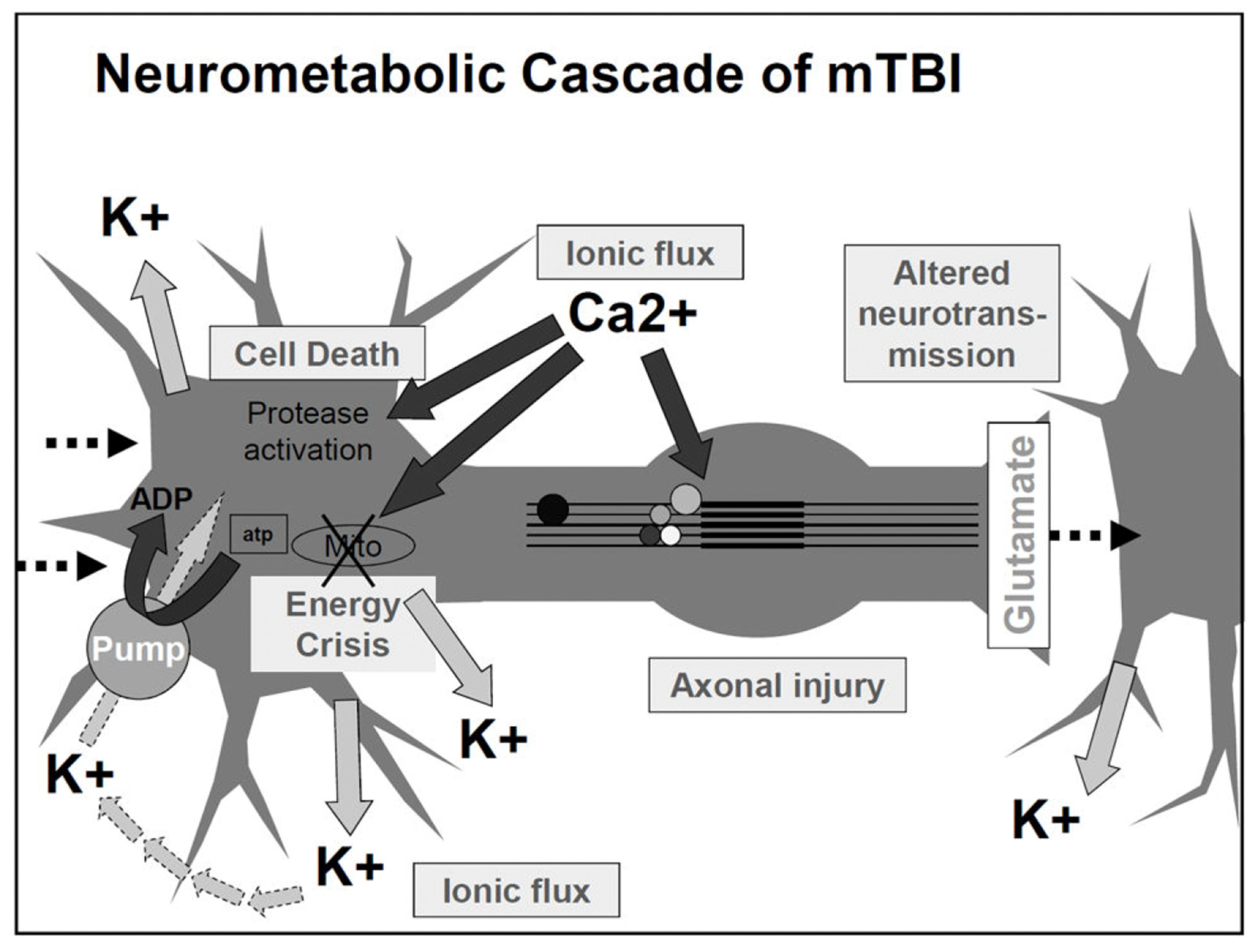
Background: Mild traumatic brain injury (mTBI) is a prevalent neurological condition that results in various physical, emotional, and cognitive impairments. The most common are visual impairments, which affect vision’s perceptual, motor, and sensory aspects. Objective: This paper analyzes the pathophysiology of mild traumatic brain injury (mTBI) and its effects on visual and oculomotor functions, focusing on the deficits of the accommodative system and their underlying mechanism. Findings: mTBI frequently causes diffuse axonal injury, resulting in abnormalities of the neurometabolic cascade that impact the brain’s visual regions. Accommodative anomalies, including insufficiency, infacility, and spasm, are markedly more common in mTBI patients than in the general population. These deficiencies present as a notable delay in accommodation response, diminished peak velocity, and compromised dynamic responses, possibly due to sensory and motor disturbances. Conclusions: Accommodation disorder is a significant but under-examined component of visual sequelae related to mTBI. Future research should concentrate on the sensory and motor factors contributing to these deficiencies to enhance diagnostic precision and customize rehabilitative strategies.
Keywords: mild traumatic brain injury; diffuse axonal injury; neurometabolic cascade; visual impairments; oculomotor abnormalities; accommodative dysfunction mild traumatic brain injury; diffuse axonal injury; neurometabolic cascade; visual impairments; oculomotor abnormalities; accommodative dysfunction