Review

T-Follicular Helper Cells and Their Role in Autoimmune Diseases

1
School of Medicine, Aristotle University of Thessaloniki, Department of Nephrology, Hippokration Hospital, Konstantinoupoleos 49, 54642 Thessaloniki, Greece
2
Department of Immunology, National Histocompatibility Center, Hippokration General Hospital, 54642 Thessaloniki, Greece
*
Author to whom correspondence should be addressed.
Life 2025, 15(4), 666; https://doi.org/10.3390/life15040666
Submission received: 11 March 2025 / Revised: 15 April 2025 / Accepted: 16 April 2025 / Published: 17 April 2025

Abstract

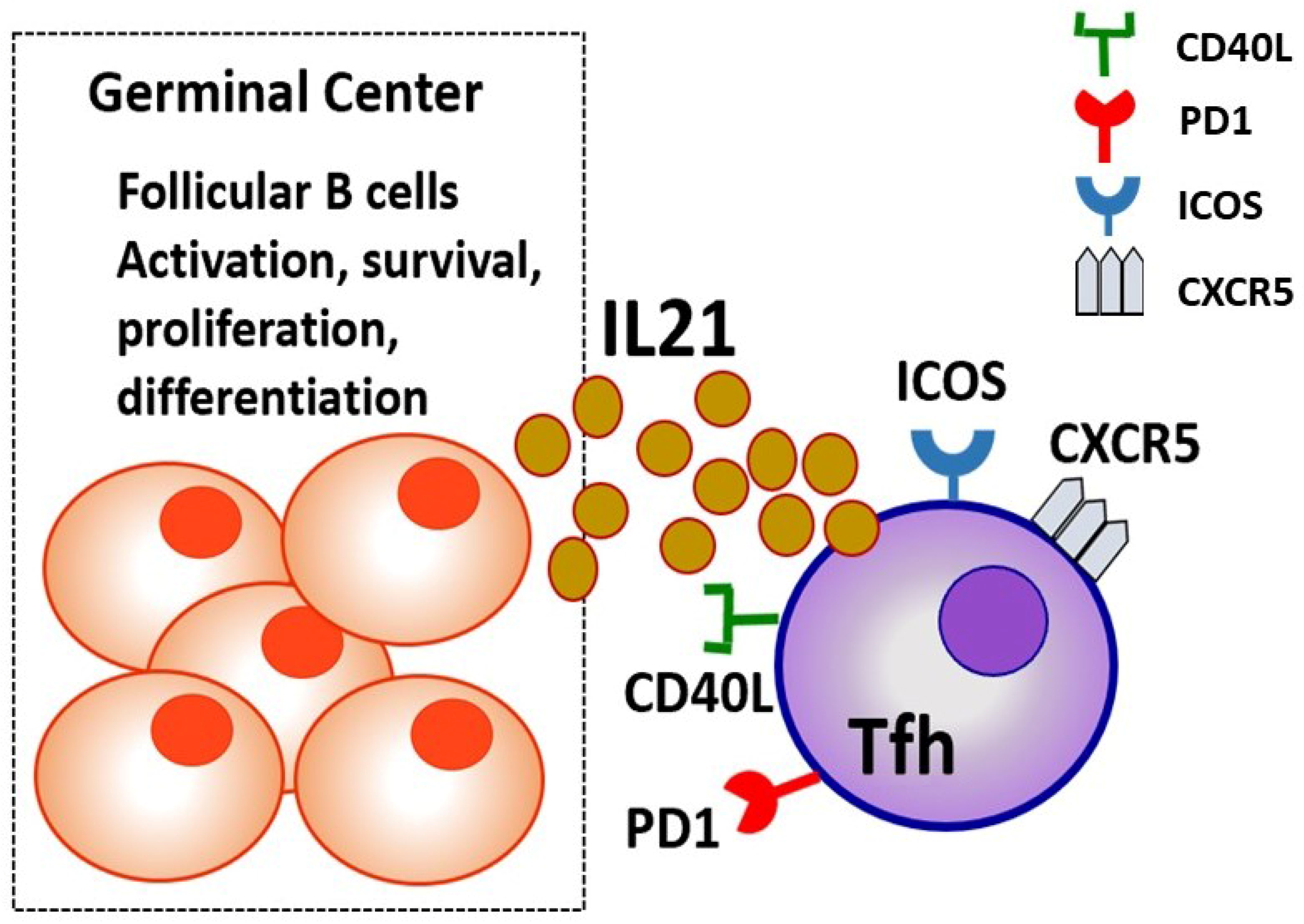
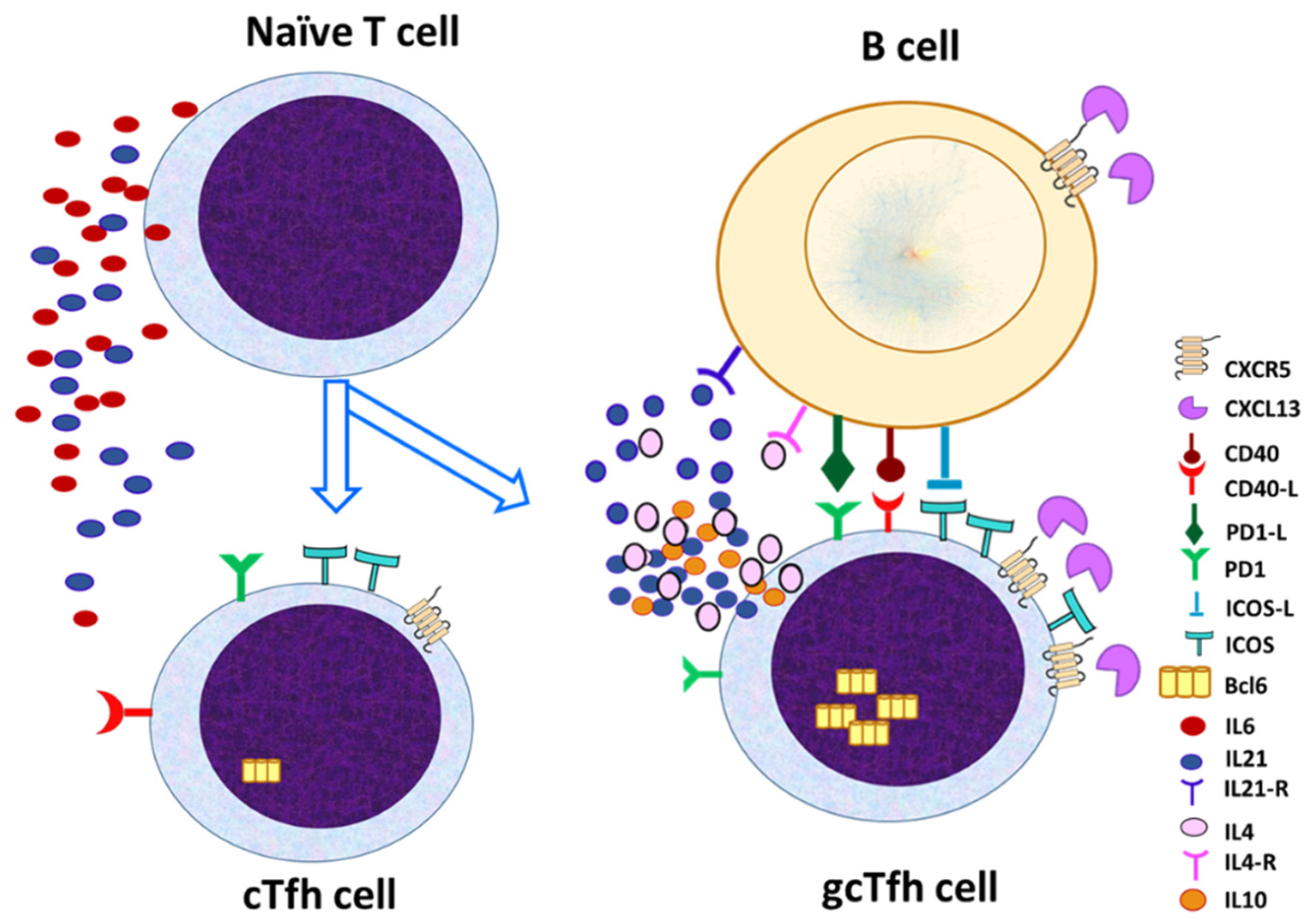
T-follicular helper (Tfh) cells, a specialized subset of CD4+ cells, are the immune mediators connecting cellular and humoral immunity, as they lead B-cell proliferation within germinal centers, and orchestrate their response, including activation, class switching, and production of a diverse array of high-affinity antibodies. Their interactions with B cells is regulated by a wide complex of transcriptional and cytokine-driven pathways. A major contribution of Tfh cells to autoimmune diseases is through their production of cytokines, particularly IL-21, which supports the proliferation and differentiation of autoreactive B cells. Elevated levels of circulating Tfh-like cells and IL-21 have been observed in patients with systemic lupus erythematosus (SLE) and rheumatoid arthritis (RA) correlating strongly with disease severity and autoantibody levels. The feedback loop between Tfh cells and IL-21 or other signal pathways, such as Bcl-6, ICOS, and PD-1, not only sustains Tfh cell function but also drives the continuous expansion of autoreactive B cells, leading to chronic inflammation through the production of high-affinity pathogenic autoantibodies. By understanding these interactions, Tfh pathways may serve as potential therapeutic targets, with IL-21, ICOS, and PD1 blockades emerging as promising innovative therapeutic strategies to manage autoimmune diseases. Although a variety of studies have been conducted investigating the role of Tfh cells in SLE and RA, this review aims to reveal the gap in the literature regarding the role of such subpopulations in the pathogenesis of other autoimmune diseases, such as Anca-associated vasculitis (AAV), and express the need to conduct similar studies. Tfh cell-related biomarkers can be used to assess disease activity and transform autoimmune disease treatment, leading to more personalized and effective care for patients with chronic autoimmune conditions.
Keywords: autoimmune diseases; T-follicular helper cells; cytokines; vasculitis; systemic lupus erythematosus; rheumatoid arthritis autoimmune diseases; T-follicular helper cells; cytokines; vasculitis; systemic lupus erythematosus; rheumatoid arthritis