Neural Correlates of Personality Traits in Adolescents Exhibiting Excessive Smartphone Use: A Resting-State FMRI Study
 , , ,
, , ,
Abstract
1. Introduction
2. Methods
2.1. Study Participants
2.2. Clinical Assessments
2.2.1. Smartphone Addiction Proneness Scale for Adolescents
2.2.2. Adolescent Version of Temperament and Character Inventory (JTCI)
2.3. Acquisition of Imaging Data
2.4. Image Analysis
2.5. Statistical Analysis
3. Results
3.1. Demographic and Clinical Data
3.2. Alterations in Functional Connectivity
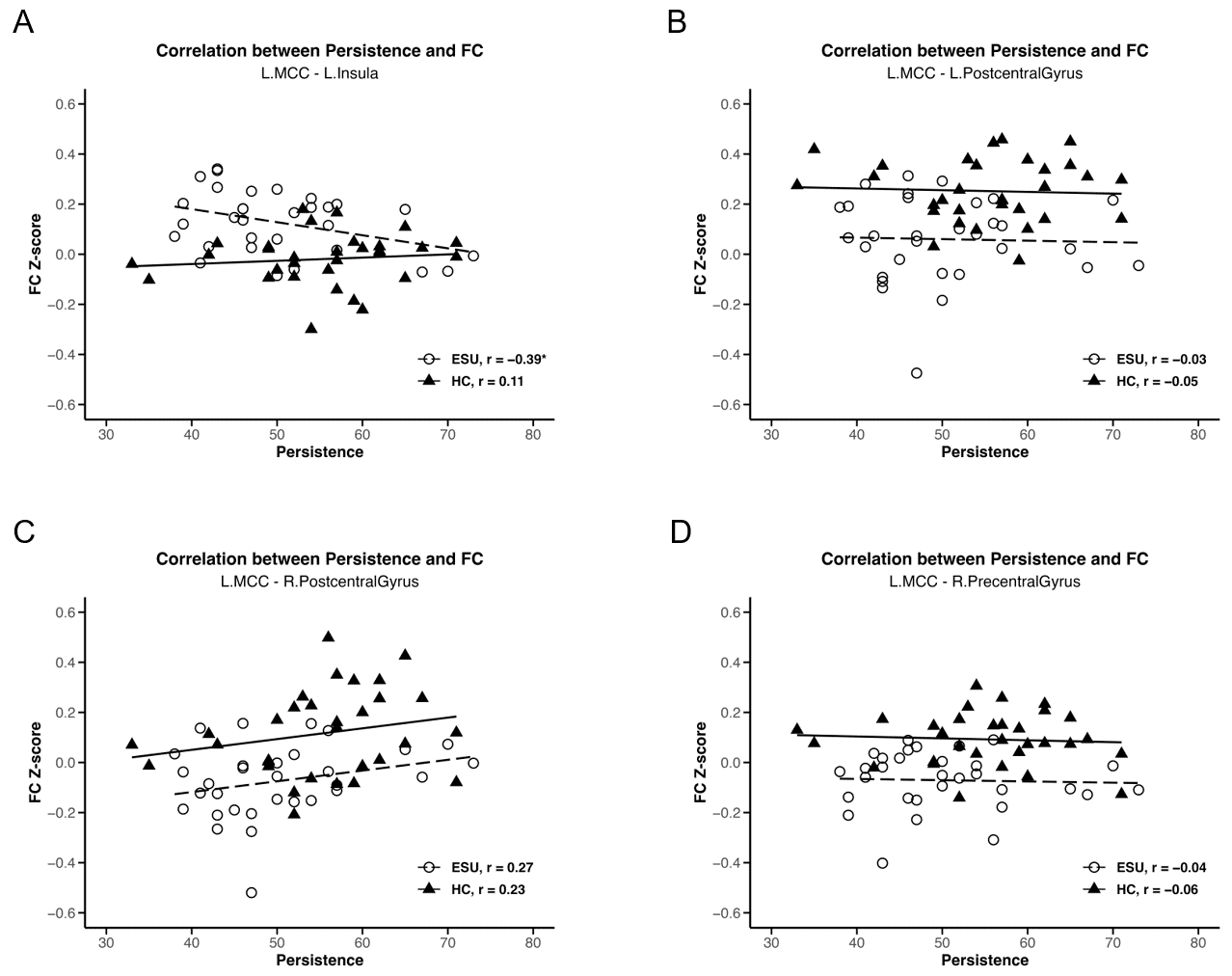
3.3. Correlation Between Functional Connectivity and JTCI: Persistence
4. Discussion
4.1. Principal Findings and Comparison with Previous Works
4.2. Future Directions
5. Limitations
6. Conclusions
Supplementary Materials
Author Contributions
Funding
Institutional Review Board Statement
Informed Consent Statement
Data Availability Statement
Conflicts of Interest
References
- Pew Research Center. 8 Charts on Technology Use Around the World. 2024. Available online: https://www.pewresearch.org/short-reads/2024/02/05/8-charts-on-technology-use-around-the-world/ (accessed on 25 February 2025).
- De Masi, A.; Wac, K. The importance of smartphone connectivity in quality of life. In Quantifying Quality of Life: Incorporating Daily Life into Medicine, Health Informatics; Springer: Cham, Switzerland, 2022; pp. 523–551. [Google Scholar]
- Statista. Smartphone Ownership in South Korea in 2024, by Age Group. 2024. Available online: https://www.statista.com/statistics/897195/south-korea-smartphone-ownership-by-age-group/ (accessed on 2 December 2025).
- Kim, S.Y.; Han, S.; Park, E.-J.; Yoo, H.-J.; Park, D.; Suh, S.; Shin, Y.M. The relationship between smartphone overuse and sleep in younger children: A prospective cohort study. J. Clin. Sleep Med. 2020, 16, 1133–1139. [Google Scholar] [CrossRef] [PubMed]
- Sinha, S.; Dhooria, S.; Sasi, A.; Tomer, A.; Thejeswar, N.; Kumar, S.; Gupta, G.; Pandey, R.; Behera, D.; Mohan, A. A study on the effect of mobile phone use on sleep. Indian J. Med. Res. 2022, 155, 380–386. [Google Scholar] [CrossRef] [PubMed]
- Kim, S.-E.; Kim, J.-W.; Jee, Y.-S. Relationship between smartphone addiction and physical activity in Chinese international students in Korea. J. Behav. Addict. 2015, 4, 200–205. [Google Scholar] [CrossRef]
- Daniyal, M.; Javaid, S.F.; Hassan, A.; Khan, M.A. The relationship between cellphone usage on the physical and mental wellbeing of university students: A cross-sectional study. Int. J. Environ. Res. Public Health 2022, 19, 9352. [Google Scholar] [CrossRef]
- Zhuang, L.; Wang, L.; Xu, D.; Wang, Z.; Liang, R. Association between excessive smartphone use and cervical disc degeneration in young patients suffering from chronic neck pain. J. Orthop. Sci. 2021, 26, 110–115. [Google Scholar] [CrossRef]
- Kim, J.; Hwang, Y.; Kang, S.; Kim, M.; Kim, T.-S.; Kim, J.; Seo, J.; Ahn, H.; Yoon, S.; Yun, J.P. Association between exposure to smartphones and ocular health in adolescents. Ophthalmic Epidemiol. 2016, 23, 269–276. [Google Scholar] [CrossRef]
- Demirci, S.; Demirci, K.; Akgonul, M. Headache in smartphone users: A cross-sectional study. J. Neurol. Psychol. 2016, 4, 5. [Google Scholar] [CrossRef]
- Langdon, R.L.; DiSabella, M.T.; Strelzik, J.A. Screen time and pediatric headache: A scoping review of the literature. Headache J. Head Face Pain 2024, 64, 211–225. [Google Scholar] [CrossRef]
- Kim, S.-G.; Park, J.; Kim, H.-T.; Pan, Z.; Lee, Y.; McIntyre, R.S. The relationship between smartphone addiction and symptoms of depression, anxiety, and attention-deficit/hyperactivity in South Korean adolescents. Ann. Gen. Psychiatry 2019, 18, 1. [Google Scholar] [CrossRef]
- Twenge, J.M.; Joiner, T.E.; Rogers, M.L.; Martin, G.N. Increases in depressive symptoms, suicide-related outcomes, and suicide rates among US adolescents after 2010 and links to increased new media screen time. Clin. Psychol. Sci. 2018, 6, 3–17. [Google Scholar] [CrossRef]
- Wacks, Y.; Weinstein, A.M. Excessive smartphone use is associated with health problems in adolescents and young adults. Front. Psychiatry 2021, 12, 669042. [Google Scholar] [CrossRef] [PubMed]
- American Psychiatric Association. Diagnostic and Statistical Manual of Mental Disorders: DSM-5; American Psychiatric Association: Washington, DC, USA, 2013. [Google Scholar]
- Kuss, D.J.; Griffiths, M.D. Internet Gaming Addiction: A Systematic Review of Empirical Research. Int. J. Ment. Health Addict. 2011, 10, 278–296. [Google Scholar] [CrossRef]
- Dumontheil, I. Adolescent brain development. Curr. Opin. Behav. Sci. 2016, 10, 39–44. [Google Scholar] [CrossRef]
- Chun, J.-W.; Choi, J.; Cho, H.; Choi, M.-R.; Ahn, K.-J.; Choi, J.-S.; Kim, D.-J. Role of frontostriatal connectivity in adolescents with excessive smartphone use. Front. Psychiatry 2018, 9, 437. [Google Scholar] [CrossRef]
- Lee, D.; Namkoong, K.; Lee, J.; Lee, B.O.; Jung, Y.-C. Lateral orbitofrontal gray matter abnormalities in subjects with problematic smartphone use. J. Behav. Addict. 2019, 8, 404–411. [Google Scholar] [CrossRef]
- Paik, S.-H.; Park, C.-h.; Kim, J.-Y.; Chun, J.-W.; Choi, J.-S.; Kim, D.-J. Prolonged bedtime smartphone use is associated with altered resting-state functional connectivity of the insula in adult smartphone users. Front. Psychiatry 2019, 10, 516. [Google Scholar] [CrossRef]
- Pyeon, A.; Choi, J.; Cho, H.; Kim, J.-Y.; Choi, I.Y.; Ahn, K.-J.; Choi, J.-S.; Chun, J.-W.; Kim, D.-J. Altered connectivity in the right inferior frontal gyrus associated with self-control in adolescents exhibiting problematic smartphone use: A fMRI study. J. Behav. Addict. 2021, 10, 1048–1060. [Google Scholar] [CrossRef] [PubMed]
- Yoo, J.H.; Chun, J.-W.; Choi, M.R.; Cho, H.; Kim, J.-Y.; Choi, J.; Kim, D.-J. Caudate nucleus volume mediates the link between glutamatergic neurotransmission and problematic smartphone use in youth. J. Behav. Addict. 2021, 10, 338–346. [Google Scholar] [CrossRef]
- Zhou, X.; Wu, R.; Zeng, Y.; Qi, Z.; Ferraro, S.; Xu, L.; Zheng, X.; Li, J.; Fu, M.; Yao, S. Choice of Voxel-based Morphometry processing pipeline drives variability in the location of neuroanatomical brain markers. Commun. Biol. 2022, 5, 913. [Google Scholar] [CrossRef] [PubMed]
- Montag, C.; Becker, B. Neuroimaging the effects of smartphone (over-) use on brain function and structure—A review on the current state of MRI-based findings and a roadmap for future research. Psychoradiology 2023, 3, kkad001. [Google Scholar] [CrossRef]
- Kheradmand, A.; Amirlatifi, E.S.; Rahbar, Z. Personality traits of university students with smartphone addiction. Front. Psychiatry 2023, 14, 1083214. [Google Scholar] [CrossRef]
- Lane, H.-Y.; Chang, C.-J.; Huang, C.-L.; Chang, Y.-H. An investigation into smartphone addiction with personality and sleep quality among university students. Int. J. Environ. Res. Public Health 2021, 18, 7588. [Google Scholar] [CrossRef]
- Cloninger, C.R.; Svrakic, D.M.; Przybeck, T.R. A psychobiological model of temperament and character. Arch. Gen. Psychiatry 1993, 50, 975–990. [Google Scholar] [CrossRef]
- Mousavi, F.; Rozsa, S.; Nilsson, T.; Archer, T.; Anckarsäter, H.; Garcia, D. Personality and intelligence: Persistence, not self-directedness, cooperativeness or self-transcendence, is related to twins’ cognitive abilities. PeerJ 2015, 3, e1195. [Google Scholar] [CrossRef]
- Yoo, S.Y.; Park, S.M.; Choi, C.-H.; Chung, S.J.; Bhang, S.-Y.; Kim, J.-W.; Kweon, Y.-S.; Choi, J.-S. Harm avoidance, daily stress, and problematic smartphone use in children and adolescents. Front. Psychiatry 2022, 13, 962189. [Google Scholar] [CrossRef]
- Nikolic, A.; Bukurov, B.; Kocic, I.; Vukovic, M.; Ladjevic, N.; Vrhovac, M.; Pavlović, Z.; Grujicic, J.; Kisic, D.; Sipetic, S. Smartphone addiction, sleep quality, depression, anxiety, and stress among medical students. Front. Public Health 2023, 11, 1252371. [Google Scholar] [CrossRef]
- Kocyigit, S.; Guzel, H.S.; Acikel, B.; Cetinkaya, M. Comparison of smartphone addiction level, temperament and character and parental attitudes of adolescents with and without attention deficit hyperactivity disorder. Int. J. Ment. Health Addict. 2021, 19, 1372–1384. [Google Scholar] [CrossRef]
- Cloninger, C.R. A systematic method for clinical description and classification of personality variants: A proposal. Arch. Gen. Psychiatry 1987, 44, 573–588. [Google Scholar] [CrossRef] [PubMed]
- Uddin, L.Q. Salience Network of the Human Brain; Academic Press: Cambridge, MA, USA, 2016. [Google Scholar]
- Chong, J.S.X.; Ng, G.J.P.; Lee, S.C.; Zhou, J. Salience network connectivity in the insula is associated with individual differences in interoceptive accuracy. Brain Struct. Funct. 2017, 222, 1635–1644. [Google Scholar] [CrossRef] [PubMed]
- Schimmelpfennig, J.; Topczewski, J.; Zajkowski, W.; Jankowiak-Siuda, K. The role of the salience network in cognitive and affective deficits. Front. Hum. Neurosci. 2023, 17, 1133367. [Google Scholar] [CrossRef] [PubMed]
- Ahn, J.; Lee, D.; Namkoong, K.; Jung, Y.-C. Altered functional connectivity of the salience network in problematic smartphone users. Front. Psychiatry 2021, 12, 636730. [Google Scholar] [CrossRef]
- Siste, K.; Pandelaki, J.; Miyata, J.; Oishi, N.; Tsurumi, K.; Fujiwara, H.; Murai, T.; Nasrun, M.W.; Wiguna, T.; Bardosono, S. Altered Resting-State Network in Adolescents with Problematic Internet Use. J. Clin. Med. 2022, 11, 5838. [Google Scholar] [CrossRef]
- Weinstein, A.M. An update overview on brain imaging studies of internet gaming disorder. Front. Psychiatry 2017, 8, 185. [Google Scholar] [CrossRef]
- Zhang, J.; Ma, S.-S.; Yan, C.-G.; Zhang, S.; Liu, L.; Wang, L.-J.; Liu, B.; Yao, Y.-W.; Yang, Y.-H.; Fang, X.-Y. Altered coupling of default-mode, executive-control and salience networks in Internet gaming disorder. Eur. Psychiatry 2017, 45, 114–120. [Google Scholar] [CrossRef] [PubMed]
- Raichle, M.E.; Snyder, A.Z. A default mode of brain function: A brief history of an evolving idea. Neuroimage 2007, 37, 1083–1090. [Google Scholar] [CrossRef] [PubMed]
- Buckner, R.L.; Andrews-Hanna, J.R.; Schacter, D.L. The brain’s default network: Anatomy, function, and relevance to disease. Ann. N. Y. Acad. Sci. 2008, 1124, 1–38. [Google Scholar] [CrossRef] [PubMed]
- Prillwitz, C.C.; Rüber, T.; Reuter, M.; Montag, C.; Weber, B.; Elger, C.E.; Markett, S. The salience network and human personality: Integrity of white matter tracts within anterior and posterior salience network relates to the self-directedness character trait. Brain Res. 2018, 1692, 66–73. [Google Scholar] [CrossRef]
- Rolls, E.T. The cingulate cortex and limbic systems for emotion, action, and memory. Brain Struct. Funct. 2019, 224, 3001–3018. [Google Scholar] [CrossRef]
- Portugal, L.C.L.; Alves, R.d.C.S.; Junior, O.F.; Sanchez, T.A.; Mocaiber, I.; Volchan, E.; Erthal, F.S.; David, I.A.; Kim, J.; Oliveira, L. Interactions between emotion and action in the brain. Neuroimage 2020, 214, 116728. [Google Scholar] [CrossRef]
- Touroutoglou, A.; Andreano, J.; Dickerson, B.C.; Barrett, L.F. The tenacious brain: How the anterior mid-cingulate contributes to achieving goals. Cortex 2020, 123, 12–29. [Google Scholar] [CrossRef]
- Marciano, L.; Camerini, A.-L.; Morese, R. The developing brain in the digital era: A scoping review of structural and functional correlates of screen time in adolescence. Front. Psychol. 2021, 12, 671817. [Google Scholar] [CrossRef]
- Ding, K.; Shen, Y.; Liu, Q.; Li, H. The effects of digital addiction on brain function and structure of children and adolescents: A scoping review. Healthcare 2023, 12, 15. [Google Scholar] [CrossRef]
- Huggins, A.A.; Belleau, E.L.; Miskovich, T.A.; Pedersen, W.S.; Larson, C.L. Moderating effects of harm avoidance on resting-state functional connectivity of the anterior insula. Front. Hum. Neurosci. 2018, 12, 447. [Google Scholar] [CrossRef] [PubMed]
- Oldfield, R.C. The assessment and analysis of handedness: The Edinburgh inventory. Neuropsychologia 1971, 9, 97–113. [Google Scholar]
- Kim, D.; Lee, Y.; Lee, J.; Nam, J.K.; Chung, Y. Development of Korean smartphone addiction proneness scale for youth. PLoS ONE 2014, 9, e97920. [Google Scholar] [CrossRef]
- Lyoo, I.K.; Han, C.H.; Lee, S.J.; Yune, S.K.; Ha, J.H.; Chung, S.J.; Choi, H.; Seo, C.S.; Hong, K.-E. The reliability and validity of the junior temperament and character inventory. Compr. Psychiatry 2004, 45, 121–128. [Google Scholar] [CrossRef]
- Garcia, D.; Lester, N.; Cloninger, K.M.; Cloninger, C.R.; Zeigler-Hill, V.; Shackelford, T. Temperament and character inventory (TCI). In Encyclopedia of Personality and Individual Differences; Springer: Berlin/Heidelberg, Germany, 2017; pp. 1–3. [Google Scholar] [CrossRef]
- Luby, J.L.; Svrakic, D.M.; McCallum, K.; Przybeck, T.R.; Cloninger, C.R. The Junior Temperament and Character Inventory: Preliminary validation of a child self-report measure. Psychol. Rep. 1999, 84, 1127–1138. [Google Scholar] [CrossRef]
- Murphy, K.; Birn, R.M.; Handwerker, D.A.; Jones, T.B.; Bandettini, P.A. The impact of global signal regression on resting state correlations: Are anti-correlated networks introduced? Neuroimage 2009, 44, 893–905. [Google Scholar] [CrossRef]
- Chai, X.J.; Castañón, A.N.; Öngür, D.; Whitfield-Gabrieli, S. Anticorrelations in resting state networks without global signal regression. Neuroimage 2012, 59, 1420–1428. [Google Scholar] [CrossRef] [PubMed]
- Chun, J.-W.; Park, C.-H.; Kim, J.-Y.; Choi, J.; Cho, H.; Jung, D.J.; Ahn, K.-J.; Choi, J.-S.; Kim, D.-J.; Choi, I.Y. Altered core networks of brain connectivity and personality traits in internet gaming disorder. J. Behav. Addict. 2020, 9, 298–311. [Google Scholar] [CrossRef]
- Uddin, L.Q. Salience processing and insular cortical function and dysfunction. Nat. Rev. Neurosci. 2015, 16, 55–61. [Google Scholar] [CrossRef] [PubMed]
- Sridharan, D.; Levitin, D.J.; Menon, V. A critical role for the right fronto-insular cortex in switching between central-executive and default-mode networks. Proc. Natl. Acad. Sci. USA 2008, 105, 12569–12574. [Google Scholar] [CrossRef]
- Hanafi, E.; Siste, K.; Wiguna, T.; Kusumadewi, I.; Nasrun, M.W. Temperament profile and its association with the vulnerability to smartphone addiction of medical students in Indonesia. PLoS ONE 2019, 14, e0212244. [Google Scholar] [CrossRef] [PubMed]
- Mestre-Bach, G.; Granero, R.; Fernandez-Aranda, F.; Potenza, M.N.; Jiménez-Murcia, S. Obsessive-compulsive, harm-avoidance and persistence tendencies in patients with gambling, gaming, compulsive sexual behavior and compulsive buying-shopping disorders/concerns. Addict. Behav. 2023, 139, 107591. [Google Scholar] [CrossRef] [PubMed]
- Zhang, J.T.; Yao, Y.W.; Li, C.S.R.; Zang, Y.F.; Shen, Z.J.; Liu, L.; Wang, L.J.; Liu, B.; Fang, X.Y. Altered resting-state functional connectivity of the insula in young adults with Internet gaming disorder. Addict. Biol. 2016, 21, 743–751. [Google Scholar] [CrossRef] [PubMed]
- Gogolla, N. The insular cortex. Curr. Biol. 2017, 27, R580–R586. [Google Scholar] [CrossRef]
- Jang, J.H.; Kim, J.-H.; Yun, J.-Y.; Choi, S.-H.; An, S.C.; Kang, D.-H. Differences in functional connectivity of the insula between brain wave vibration in meditators and non-meditators. Mindfulness 2018, 9, 1857–1866. [Google Scholar] [CrossRef]
- Craig, A.D. How do you feel—Now? The anterior insula and human awareness. Nat. Rev. Neurosci. 2009, 10, 59–70. [Google Scholar] [CrossRef]
- Zhang, Y.; Mei, W.; Zhang, J.X.; Wu, Q.; Zhang, W. Decreased functional connectivity of insula-based network in young adults with internet gaming disorder. Exp. Brain Res. 2016, 234, 2553–2560. [Google Scholar] [CrossRef]
- Naqvi, N.H.; Bechara, A. The hidden island of addiction: The insula. Trends Neurosci. 2009, 32, 56–67. [Google Scholar] [CrossRef]
- Apps, M.A.; Lockwood, P.L.; Balsters, J.H. The role of the midcingulate cortex in monitoring others’ decisions. Front. Neurosci. 2013, 7, 251. [Google Scholar] [CrossRef]
- Horvath, J.; Mundinger, C.; Schmitgen, M.M.; Wolf, N.D.; Sambataro, F.; Hirjak, D.; Kubera, K.M.; Koenig, J.; Wolf, R.C. Structural and functional correlates of smartphone addiction. Addict. Behav. 2020, 105, 106334. [Google Scholar] [CrossRef]
- Kwon, M.; Jung, Y.-C.; Lee, D.; Lee, J. Altered resting-state functional connectivity of the dorsal anterior cingulate cortex with intrinsic brain networks in male problematic smartphone users. Front. Psychiatry 2022, 13, 1008557. [Google Scholar] [CrossRef]
- Lee, S.; Cheong, Y.; Ro, J.; Bae, J.; Jung, M. Alterations in functional connectivity in the salience network shared by depressive symptoms and smartphone overuse. Sci. Rep. 2024, 14, 28679. [Google Scholar] [CrossRef]
- Laketić, D.; Stojanović, N.M.; Laketić, I.; Pavlović, M.; Milosević, B.; Starčević, A.; Kapor, S. Insular Cortex—Biology and Its Role in Psychiatric Disorders: A Narrative Review. Brain Sci. 2025, 15, 793. [Google Scholar] [CrossRef]
- Raji, H.; Dinesh, S.; Sharma, S. Inside the impulsive brain: A narrative review on the role of neurobiological, hormonal and genetic factors influencing impulsivity in psychiatric disorders. Egypt. J. Neurol. Psychiatry Neurosurg. 2025, 61, 4. [Google Scholar] [CrossRef]
- Fransson, P.; Marrelec, G. The precuneus/posterior cingulate cortex plays a pivotal role in the default mode network: Evidence from a partial correlation network analysis. Neuroimage 2008, 42, 1178–1184. [Google Scholar] [CrossRef] [PubMed]
- Zhang, S.; Chiang-shan, R.L. Functional connectivity mapping of the human precuneus by resting state fMRI. Neuroimage 2012, 59, 3548–3562. [Google Scholar] [CrossRef]
- Noël, X.; Brevers, D.; Bechara, A. A neurocognitive approach to understanding the neurobiology of addiction. Curr. Opin. Neurobiol. 2013, 23, 632–638. [Google Scholar] [CrossRef]
- Banker, L.; Tadi, P. Neuroanatomy, precentral gyrus. In StatPearls [Internet]; StatPearls Publishing: Treasure Island, FL, USA, 2019. [Google Scholar]
- Suk, J.-W.; Hwang, S.; Cheong, C. Functional and structural alteration of default mode, executive control, and salience networks in alcohol use disorder. Front. Psychiatry 2021, 12, 742228. [Google Scholar] [CrossRef] [PubMed]
- Lee, D.; Lee, J.; Namkoong, K.; Jung, Y.-C. Altered functional connectivity of the dorsal attention network among problematic social network users. Addict. Behav. 2021, 116, 106823. [Google Scholar] [CrossRef]
- Chan, M.M.; Han, Y.M. The effect of transcranial direct current stimulation in changing resting-state functional connectivity in patients with neurological disorders: A systematic review. J. Cent. Nerv. Syst. Dis. 2020, 12, 1179573520976832. [Google Scholar] [CrossRef]
- Agbaria, Q. Cognitive behavioral intervention in dealing with Internet addiction among Arab teenagers in Israel. Int. J. Ment. Health Addict. 2023, 21, 2493–2507. [Google Scholar] [CrossRef]
- Chen, L.; Oei, T.P.; Zhou, R. The cognitive control mechanism of improving emotion regulation: A high-definition tDCS and ERP study. J. Affect. Disord. 2023, 332, 19–28. [Google Scholar] [CrossRef] [PubMed]
- Hofmann, S.G.; Asnaani, A.; Vonk, I.J.; Sawyer, A.T.; Fang, A. The efficacy of cognitive behavioral therapy: A review of meta-analyses. Cogn. Ther. Res. 2012, 36, 427–440. [Google Scholar] [CrossRef] [PubMed]
- Malinauskas, R.; Malinauskiene, V. A meta-analysis of psychological interventions for Internet/smartphone addiction among adolescents. J. Behav. Addict. 2019, 8, 613–624. [Google Scholar] [CrossRef] [PubMed]
- Qi, S.; Cao, L.; Wang, Q.; Sheng, Y.; Yu, J.; Liang, Z. The Physiological Mechanisms of Transcranial Direct Current Stimulation to Enhance Motor Performance: A Narrative Review. Biology 2024, 13, 790. [Google Scholar] [CrossRef]
- Bai, X.; Liu, H.; Li, T.; Xu, L.; Liu, X. Enhancing response inhibition behavior through tDCS intervention in college students with smartphone addiction. Sci. Rep. 2024, 14, 19469. [Google Scholar] [CrossRef] [PubMed]
- Bouchard, A.E.; Renauld, E.; Fecteau, S. Changes in resting-state functional MRI connectivity during and after transcranial direct current stimulation in healthy adults. Front. Hum. Neurosci. 2023, 17, 1229618. [Google Scholar] [CrossRef]
- Clarke, P.J.; Van Bockstaele, B.; Marinovic, W.; Howell, J.A.; Boyes, M.E.; Notebaert, L. The effects of left DLPFC tDCS on emotion regulation, biased attention, and emotional reactivity to negative content. Cogn. Affect. Behav. Neurosci. 2020, 20, 1323–1335. [Google Scholar] [CrossRef]



| ESU (n = 31) | HC (n = 31) | t-Score | Uncorrected p | FDR Corrected p | Cohen’s d | |||
|---|---|---|---|---|---|---|---|---|
| Mean | SD | Mean | SD | |||||
| Age | 15.23 | 1.668 | 15.1 | 1.513 | 0.32 | 0.75 | 0.75 | 0.081 |
| Gender | ||||||||
| Male | 58.1% (n = 18) | 64.5% (n = 20) | χ2 = 0.27 | |||||
| Female | 41.9% (n = 13) | 35.5% (n = 11) | ||||||
| SAPS | 44.06 | 6.48 | 24.32 | 5.13 | 13.30 ** | <0.001 | <0.001 | 3.38 |
| Disturbance of adaptive function | 15.52 | 1.46 | 8.26 | 2.21 | 15.29 ** | <0.001 | <0.001 | 3.88 |
| Withdrawal | 10.65 | 2.88 | 6.03 | 1.58 | 7.81 ** | <0.001 | <0.001 | 1.98 |
| Tolerance | 13.35 | 2.12 | 7.58 | 2.29 | 10.29 ** | <0.001 | <0.001 | 2.62 |
| JTCI | ||||||||
| Novelty seeking (NS) | 46.77 | 9.52 | 43.06 | 7.29 | 1.72 | 0.09 | 0.12 | 0.44 |
| Harm avoidance (HA) | 50.19 | 10.21 | 44.81 | 10.11 | 2.09 * | 0.04 | 0.08 | 0.53 |
| Reward Dependence (RD) | 51.71 | 8.84 | 48.71 | 9.62 | 1.28 | 0.21 | 0.21 | 0.32 |
| Persistence (P) | 50.19 | 9.15 | 55.29 | 9.06 | −2.20 * | 0.03 | 0.08 | −0.56 |
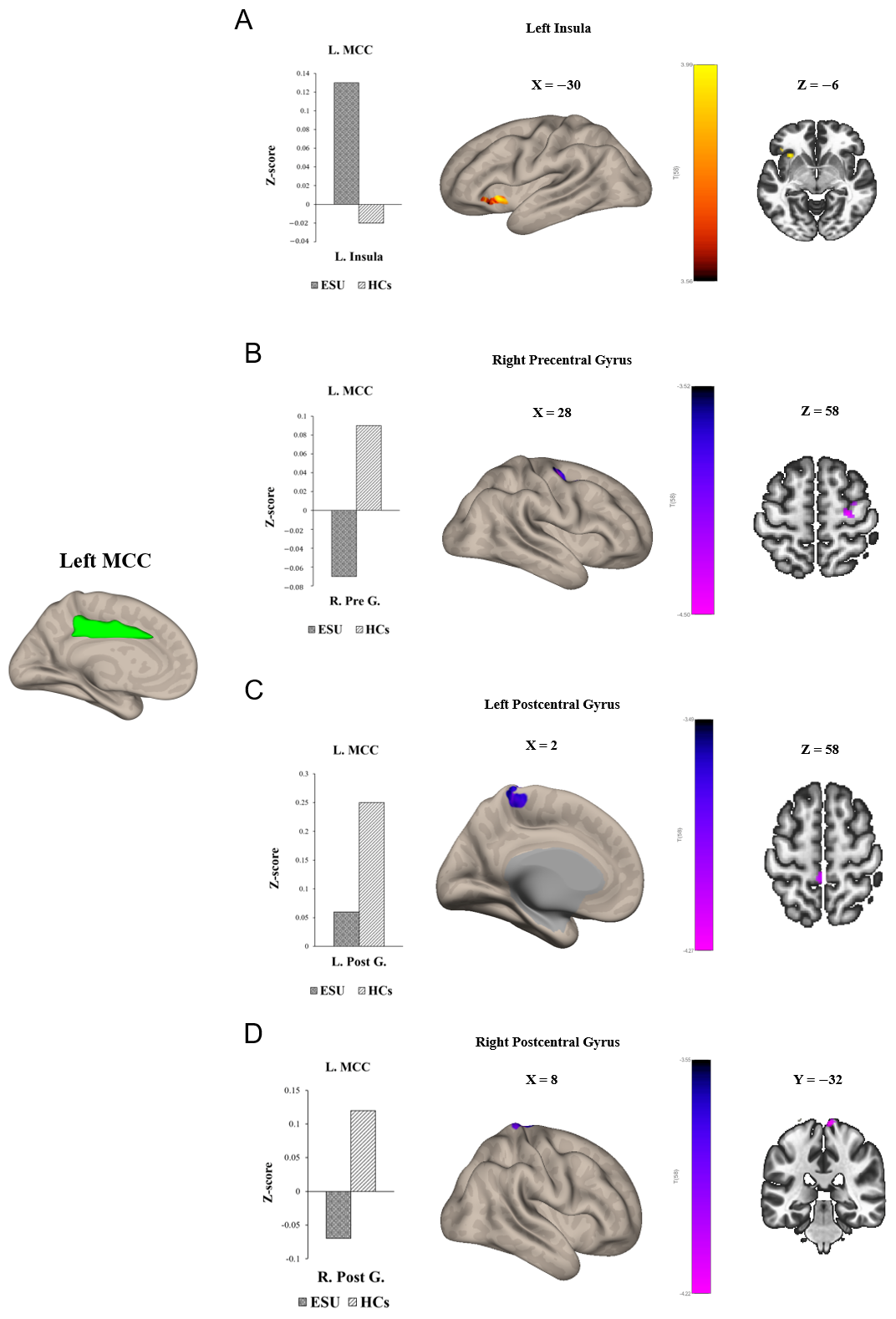
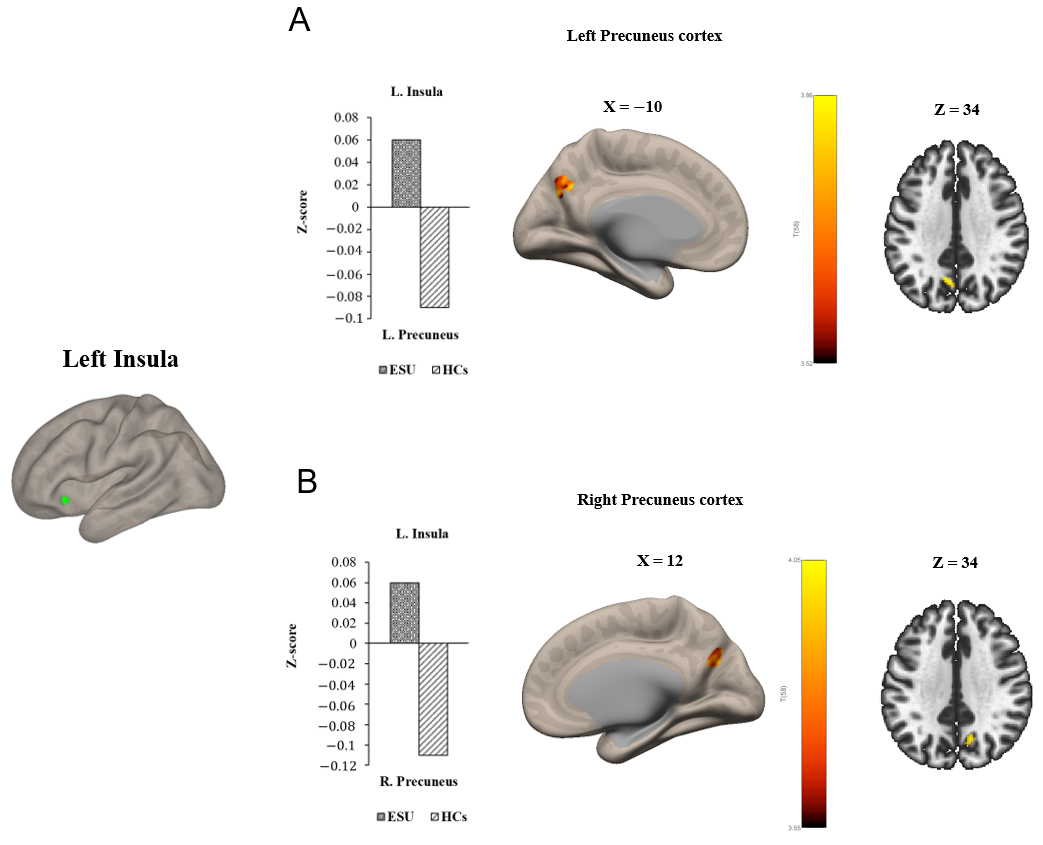
| Seed | Regions | Peak MNI (mm) | T-Value | Voxels | Group Difference | p-FDR | |||
|---|---|---|---|---|---|---|---|---|---|
| X | Y | Z | |||||||
| L. MCC | |||||||||
| L. Insula | −30 | 18 | −04 | 5.83 | 66 | ESU>HC | <0.001 | 0.33 | |
| R. Precentral Gyrus | 28 | −14 | 58 | 5.42 | 195 | ESU<HC | <0.001 | 0.37 | |
| L. Postcentral Gyrus | 02 | −36 | 60 | 5.36 | 208 | ESU<HC | <0.001 | 0.33 | |
| R. Postcentral Gyrus | 08 | −32 | 76 | 4.87 | 95 | ESU<HC | <0.001 | 0.29 | |
| R. MCC | None | ||||||||
| L. Insula | |||||||||
| R. Precuneus | 12 | −66 | 32 | 4.22 | 80 | ESU>HC | <0.001 | 0.23 | |
| L. Precuneus | −10 | −62 | 32 | 4.26 | 73 | ESU>HC | <0.001 | 0.24 | |
| R. Insula | None | ||||||||
Disclaimer/Publisher’s Note: The statements, opinions and data contained in all publications are solely those of the individual author(s) and contributor(s) and not of MDPI and/or the editor(s). MDPI and/or the editor(s) disclaim responsibility for any injury to people or property resulting from any ideas, methods, instructions or products referred to in the content. |
© 2025 by the authors. Licensee MDPI, Basel, Switzerland. This article is an open access article distributed under the terms and conditions of the Creative Commons Attribution (CC BY) license (https://creativecommons.org/licenses/by/4.0/).
Share and Cite
Hu, M.K.; Song, K.S.; Choi, J.; Pyeon, A.; Cho, H.; Choi, J.-S.; Choi, I.; Chun, J.-w.; Kim, D.-J. Neural Correlates of Personality Traits in Adolescents Exhibiting Excessive Smartphone Use: A Resting-State FMRI Study. Life 2025, 15, 1899. https://doi.org/10.3390/life15121899
Hu MK, Song KS, Choi J, Pyeon A, Cho H, Choi J-S, Choi I, Chun J-w, Kim D-J. Neural Correlates of Personality Traits in Adolescents Exhibiting Excessive Smartphone Use: A Resting-State FMRI Study. Life. 2025; 15(12):1899. https://doi.org/10.3390/life15121899
Chicago/Turabian StyleHu, Min Kyung, Kyeong Seob Song, Jihye Choi, Arom Pyeon, Hyun Cho, Jung-Seok Choi, Inyoung Choi, Ji-won Chun, and Dai-Jin Kim. 2025. "Neural Correlates of Personality Traits in Adolescents Exhibiting Excessive Smartphone Use: A Resting-State FMRI Study" Life 15, no. 12: 1899. https://doi.org/10.3390/life15121899
APA StyleHu, M. K., Song, K. S., Choi, J., Pyeon, A., Cho, H., Choi, J.-S., Choi, I., Chun, J.-w., & Kim, D.-J. (2025). Neural Correlates of Personality Traits in Adolescents Exhibiting Excessive Smartphone Use: A Resting-State FMRI Study. Life, 15(12), 1899. https://doi.org/10.3390/life15121899