Concept Paper

Brain Structure and Function: Insights from Chemical Neuroanatomy

1
Department of Biochemical, Metabolic Sciences and Neuroscience, University of Modena and Reggio Emilia, 41125 Modena, Italy
2
Department of Neuroscience, University of Padova, 35121 Padova, Italy
3
Department of Pharmacy, University of Genova, 16148 Genova, Italy
4
Center for Promotion of 3Rs in Teaching and Research (Centro 3R), 56122 Pisa, Italy
5
Center of Excellence for Biomedical Research, University of Genova, 16132 Genova, Italy
*
Authors to whom correspondence should be addressed.
Life 2023, 13(4), 940; https://doi.org/10.3390/life13040940
Submission received: 13 January 2023 / Revised: 24 February 2023 / Accepted: 31 March 2023 / Published: 3 April 2023

Abstract

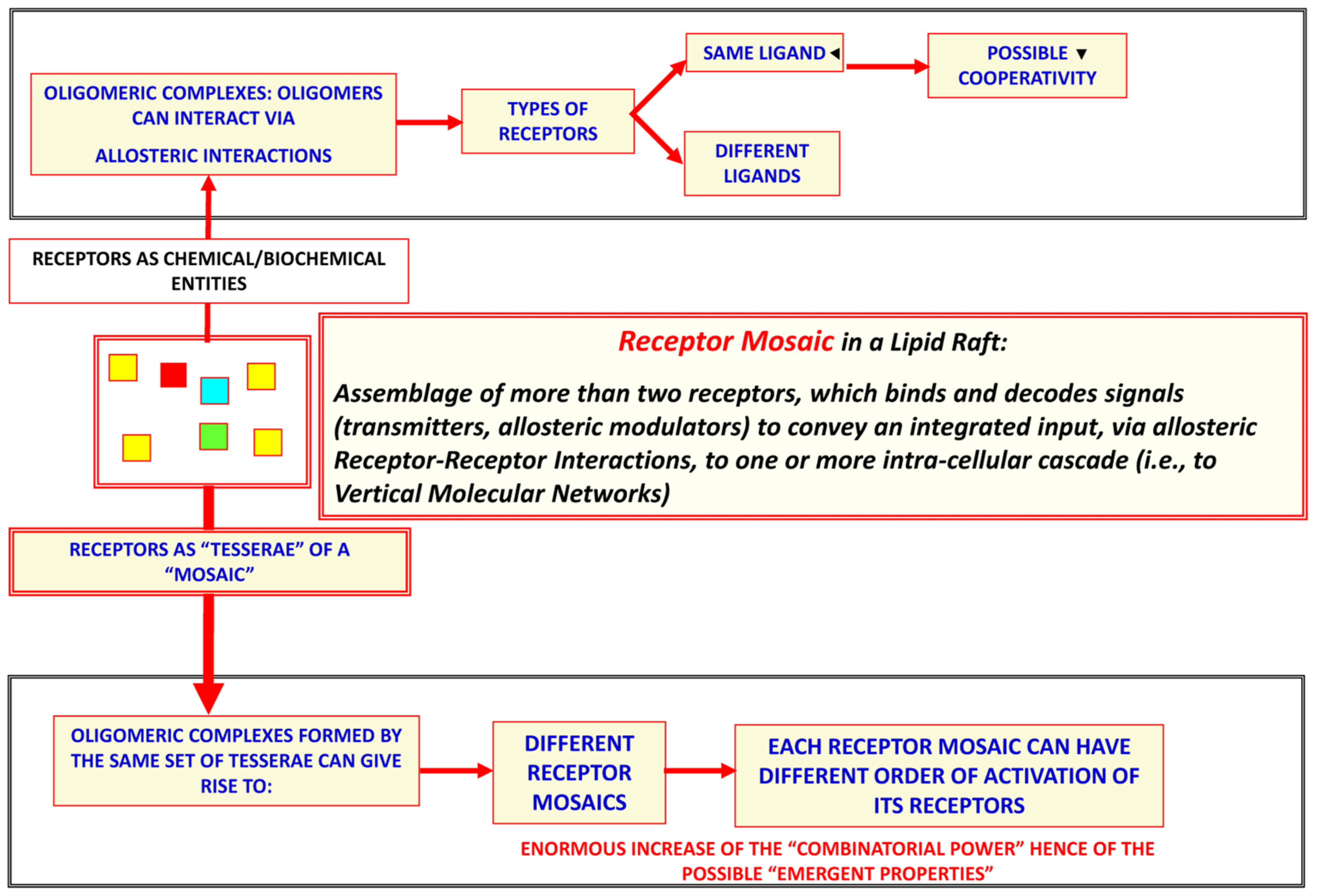
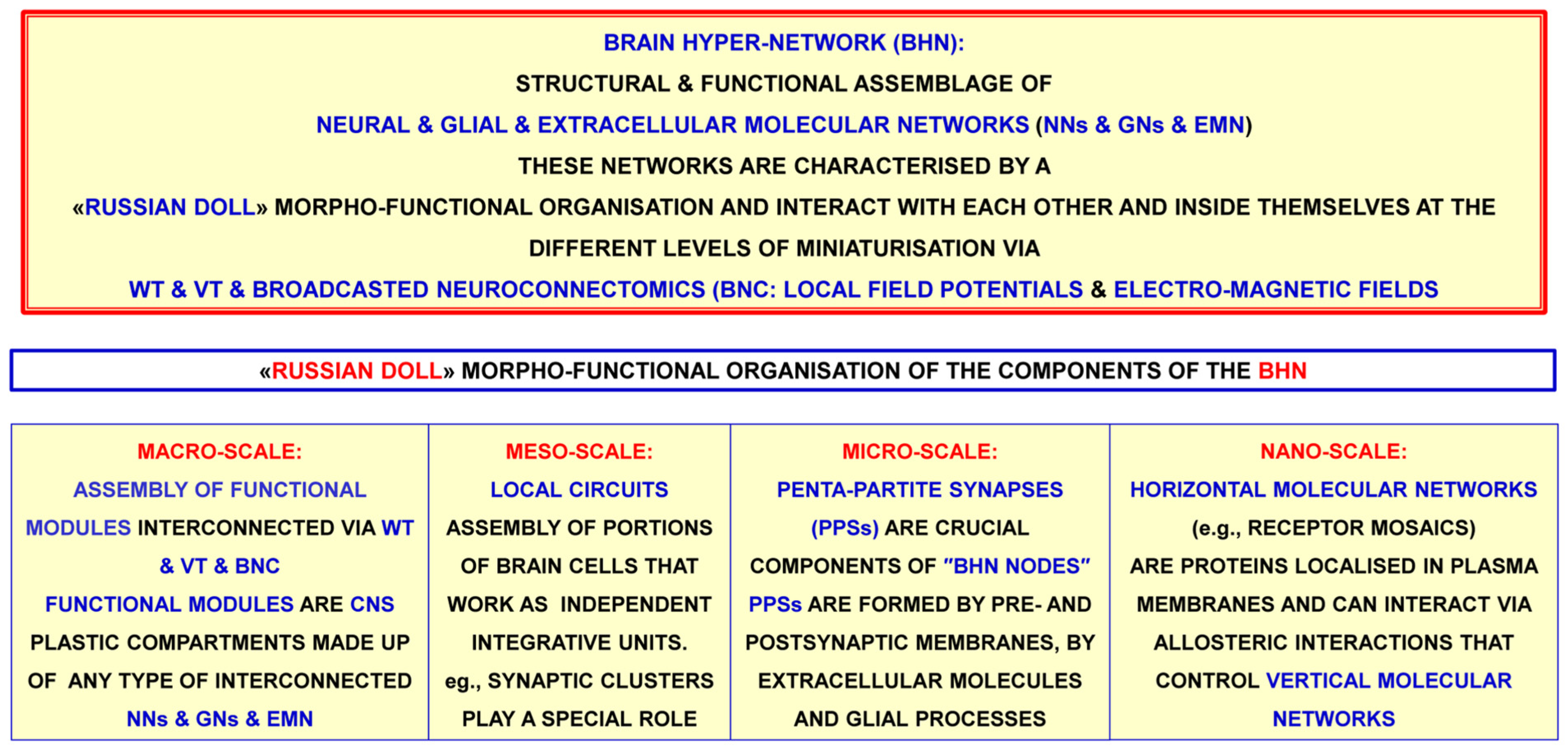
We present a brief historical and epistemological outline of investigations on the brain’s structure and functions. These investigations have mainly been based on the intermingling of chemical anatomy, new techniques in the field of microscopy and computer-assisted morphometric methods. This intermingling has enabled extraordinary investigations to be carried out on brain circuits, leading to the development of a new discipline: “brain connectomics”. This new approach has led to the characterization of the brain’s structure and function in physiological and pathological conditions, and to the development of new therapeutic strategies. In this context, the conceptual model of the brain as a hyper-network with a hierarchical, nested architecture, arranged in a “Russian doll” pattern, has been proposed. Our investigations focused on the main characteristics of the modes of communication between nodes at the various miniaturization levels, in order to describe the brain’s integrative actions. Special attention was paid to the nano-level, i.e., to the allosteric interactions among G protein-coupled receptors organized in receptor mosaics, as a promising field in which to obtain a new view of synaptic plasticity and to develop new, more selective drugs. The brain’s multi-level organization and the multi-faceted aspects of communication modes point to an emerging picture of the brain as a very peculiar system, in which continuous self-organization and remodeling take place under the action of external stimuli from the environment, from peripheral organs and from ongoing integrative actions.
Keywords: brain hyper-network; multi-level hierarchical; nested architecture; wiring transmission; volume transmission; allosteric interactions; receptor mosaics; penta-partite synapses brain hyper-network; multi-level hierarchical; nested architecture; wiring transmission; volume transmission; allosteric interactions; receptor mosaics; penta-partite synapses