How to Confuse Motor Control: Passive Muscle Shortening after Contraction in Lengthened Position Reduces the Muscular Holding Stability in the Sense of Adaptive Force



1
Regulative Physiology and Prevention, Department Sports and Health Sciences, University of Potsdam, 14476 Potsdam, Germany
2
Sports Education, Department Sports and Health Sciences, University of Potsdam, 14476 Potsdam, Germany
*
Author to whom correspondence should be addressed.
Life 2023, 13(4), 911; https://doi.org/10.3390/life13040911
Submission received: 28 February 2023
/
Revised: 22 March 2023
/
Accepted: 28 March 2023
/
Published: 30 March 2023
(This article belongs to the Special Issue Feature Studies in Skeletal Muscle Physiology)
Simple Summary
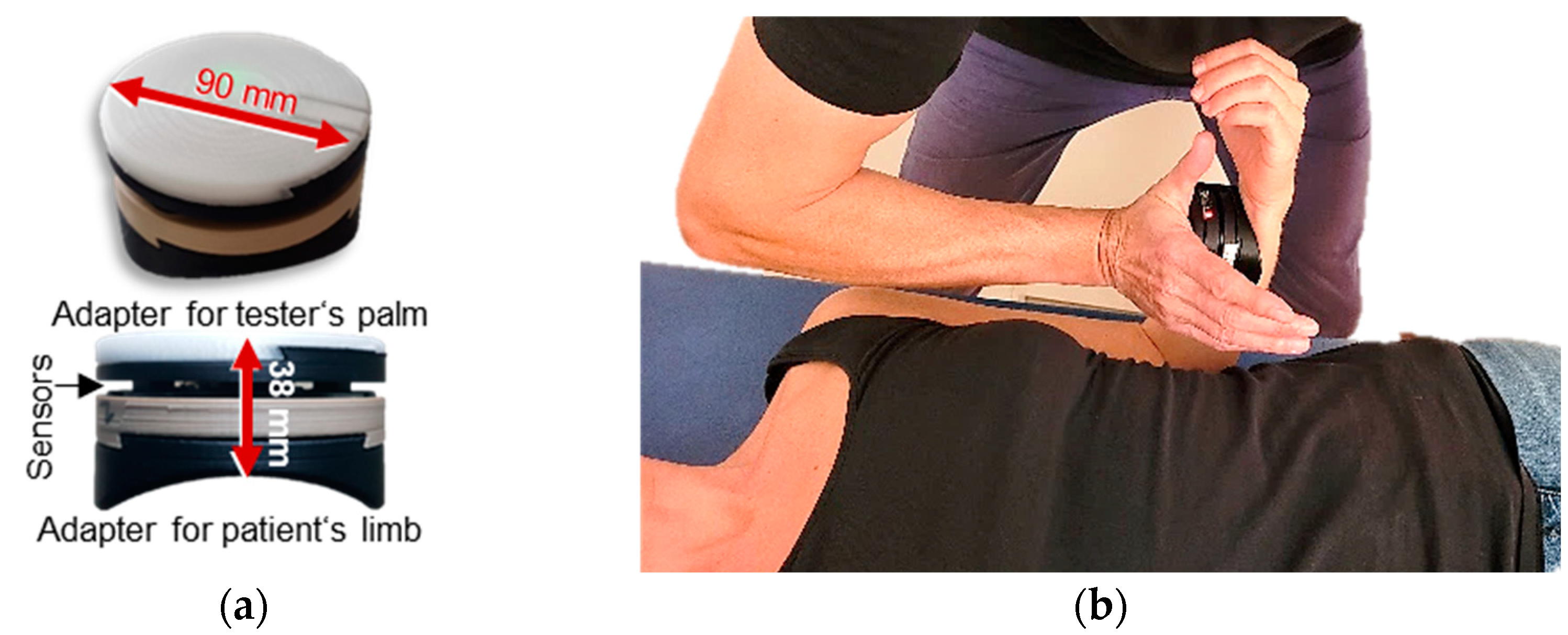
During everyday activities and sports, muscles must continuously stabilize the body. In particular, to change direction or to decelerate in motion requires well-dosed muscular resistance. Accordingly, muscle length and tension need to be adjusted. Complex control processes of the nerve–muscle system are demanded. To hold a limb stable under the load of varying forces, the muscle-controlling system has to organize matching resistance. It was previously shown that the holding capacity is sensitive to interfering inputs such as unpleasant odors or imagery. We investigated if different preconditioning regarding contraction and length changes of elbow flexors (n = 19 limbs) influence the maximal holding capacity and maximal Adaptive Force. Muscles were manually tested using a handheld device (recording force and limb position). A passive shortening of the muscle after it was contracted in the lengthened position caused a breakdown of the holding capacity by ~47%. The maximal Adaptive Force was not affected. A second precontraction in the test position erased the reducing effect. This passive shortening is assumed to lead to a slack of muscle spindles (receptor for muscle length). This presumably causes inappropriate length information and irritates muscle length and tension control in the short term. The results reflect the functional characteristics of the muscular holding capacity in contrast to other strengths.
Abstract
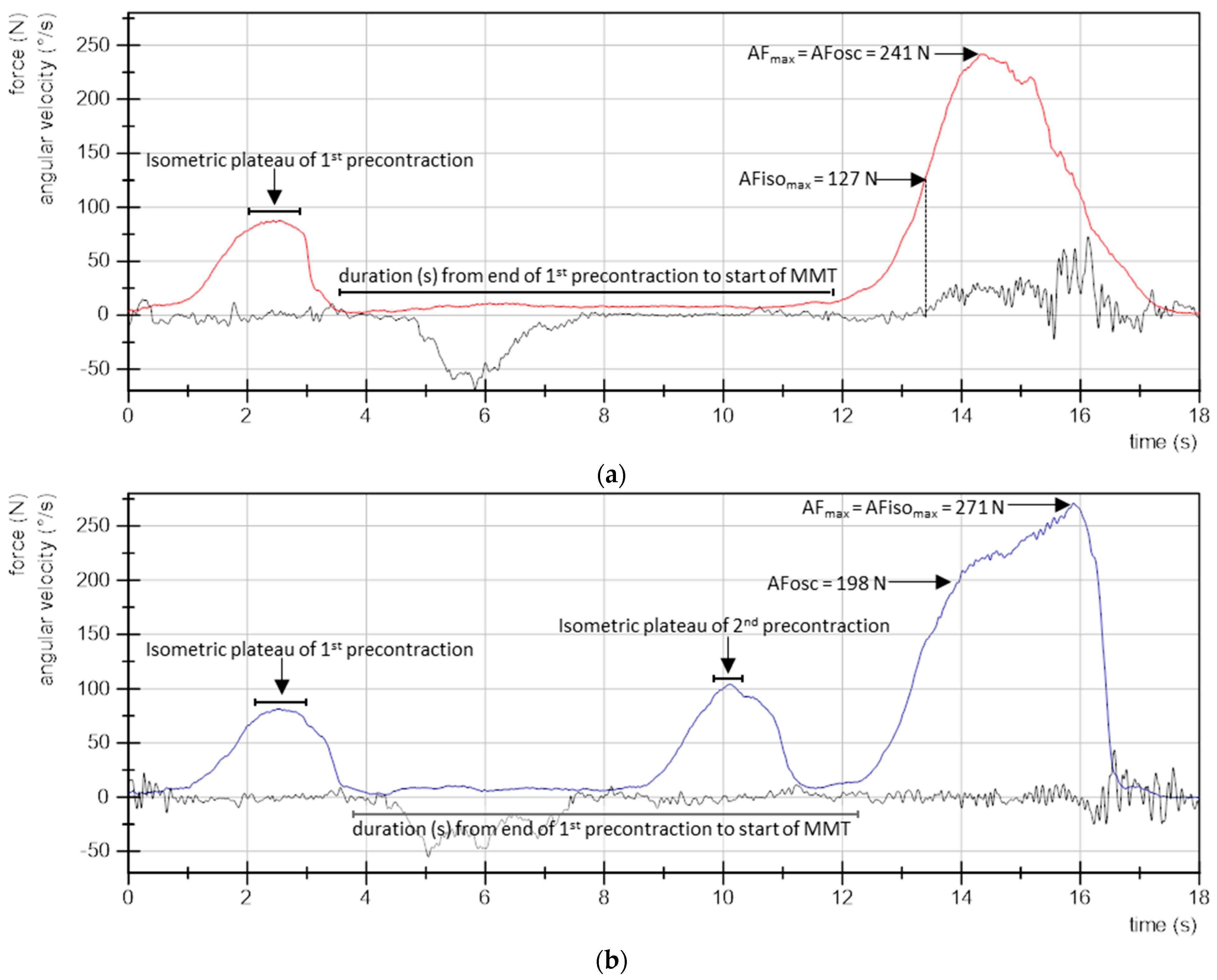
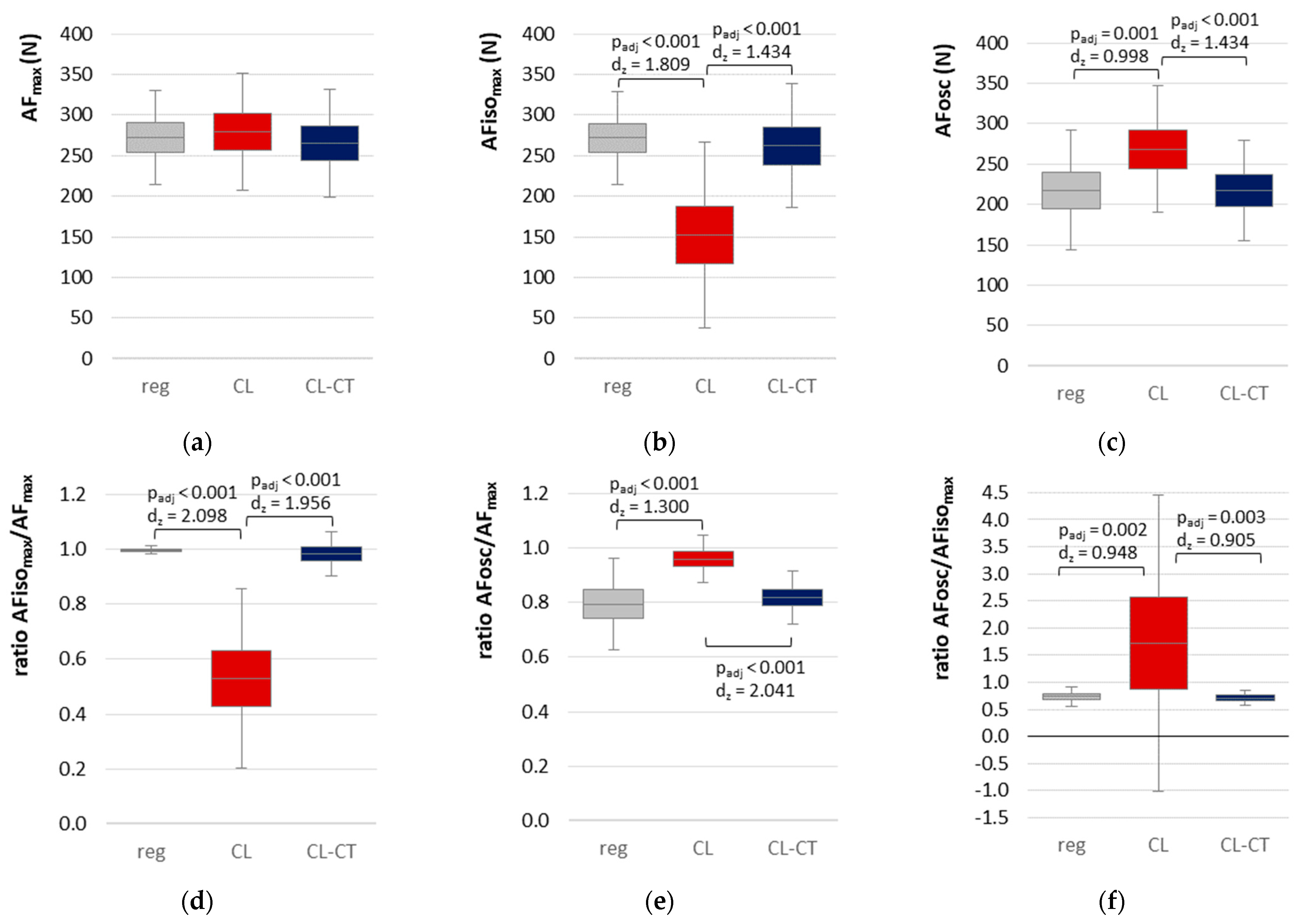
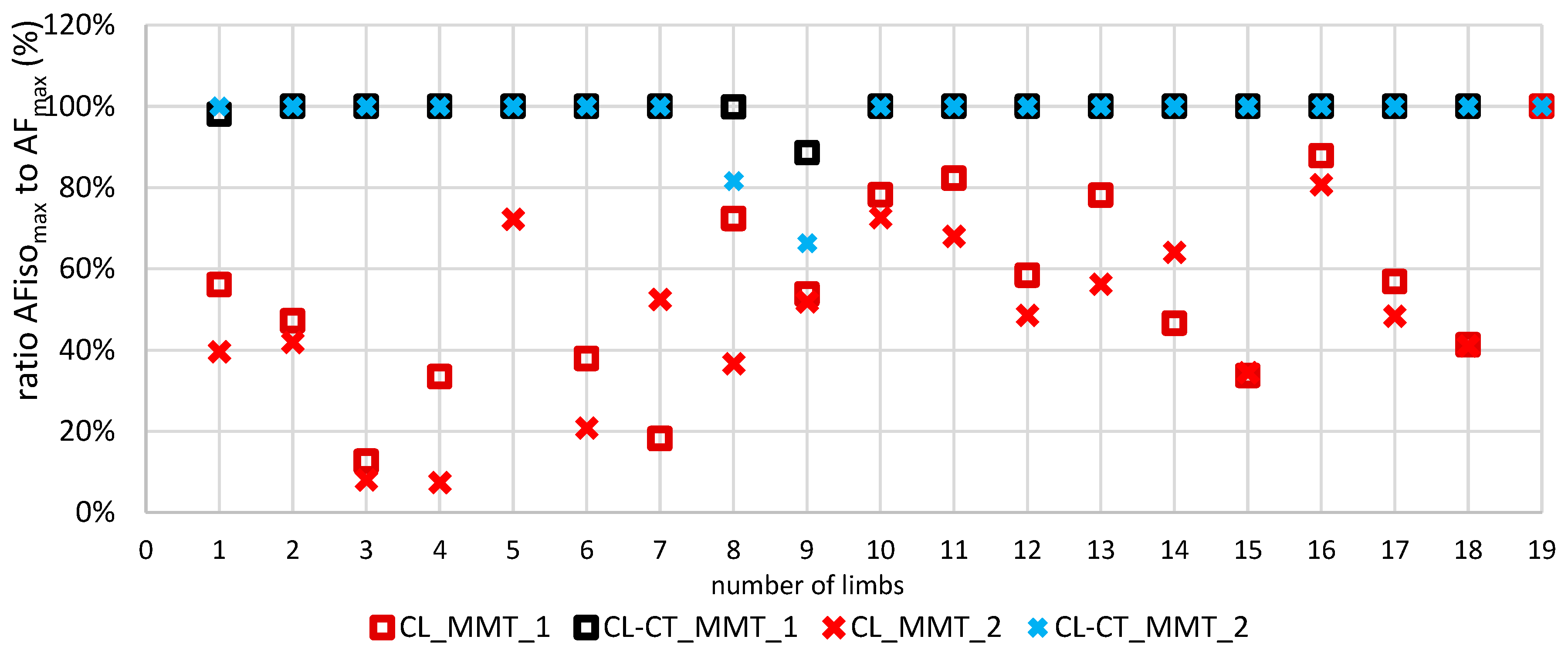
Adaptation to external forces relies on a well-functioning proprioceptive system including muscle spindle afferents. Muscle length and tension control in reaction to external forces is most important regarding the Adaptive Force (AF). This study investigated the effect of different procedures, which are assumed to influence the function of muscle spindles, on the AF. Elbow flexors of 12 healthy participants (n = 19 limbs) were assessed by an objectified manual muscle test (MMT) with different procedures: regular MMT, MMT after precontraction (self-estimated 20% MVIC) in lengthened position with passive return to test position (CL), and MMT after CL with a second precontraction in test position (CL-CT). During regular MMTs, muscles maintained their length up to 99.7% ± 1.0% of the maximal AF (AFmax). After CL, muscles started to lengthen at 53.0% ± 22.5% of AFmax. For CL-CT, muscles were again able to maintain the static position up to 98.3% ± 5.5% of AFmax. AFisomax differed highly significantly between CL vs. CL-CT and regular MMT. CL was assumed to generate a slack of muscle spindles, which led to a substantial reduction of the holding capacity. This was immediately erased by a precontraction in the test position. The results substantiate that muscle spindle sensitivity seems to play an important role for neuromuscular functioning and musculoskeletal stability.