Article

Recombinant Mitochondrial Genomes Reveal Recent Interspecific Hybridization between Invasive Salangid Fishes
by
Evgeniy S. Balakirev
A.V. Zhirmunsky National Scientific Center of Marine Biology, Far Eastern Branch, Russian Academy of Sciences, Vladivostok 690041, Russia
Life 2022, 12(5), 661; https://doi.org/10.3390/life12050661
Submission received: 12 April 2022 / Revised: 26 April 2022 / Accepted: 26 April 2022 / Published: 29 April 2022
(This article belongs to the Collection Feature Papers in Animal Science)

Abstract

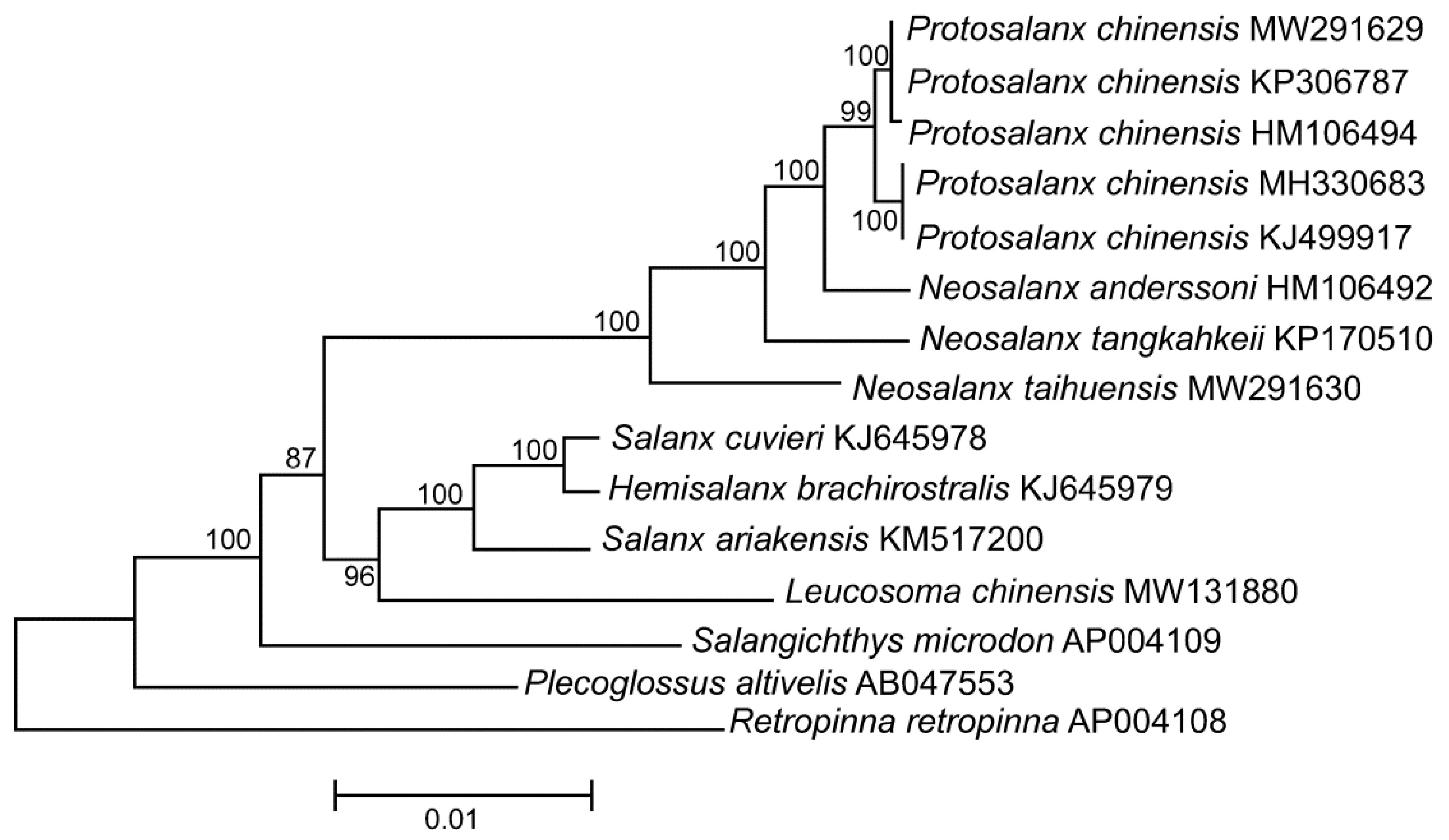
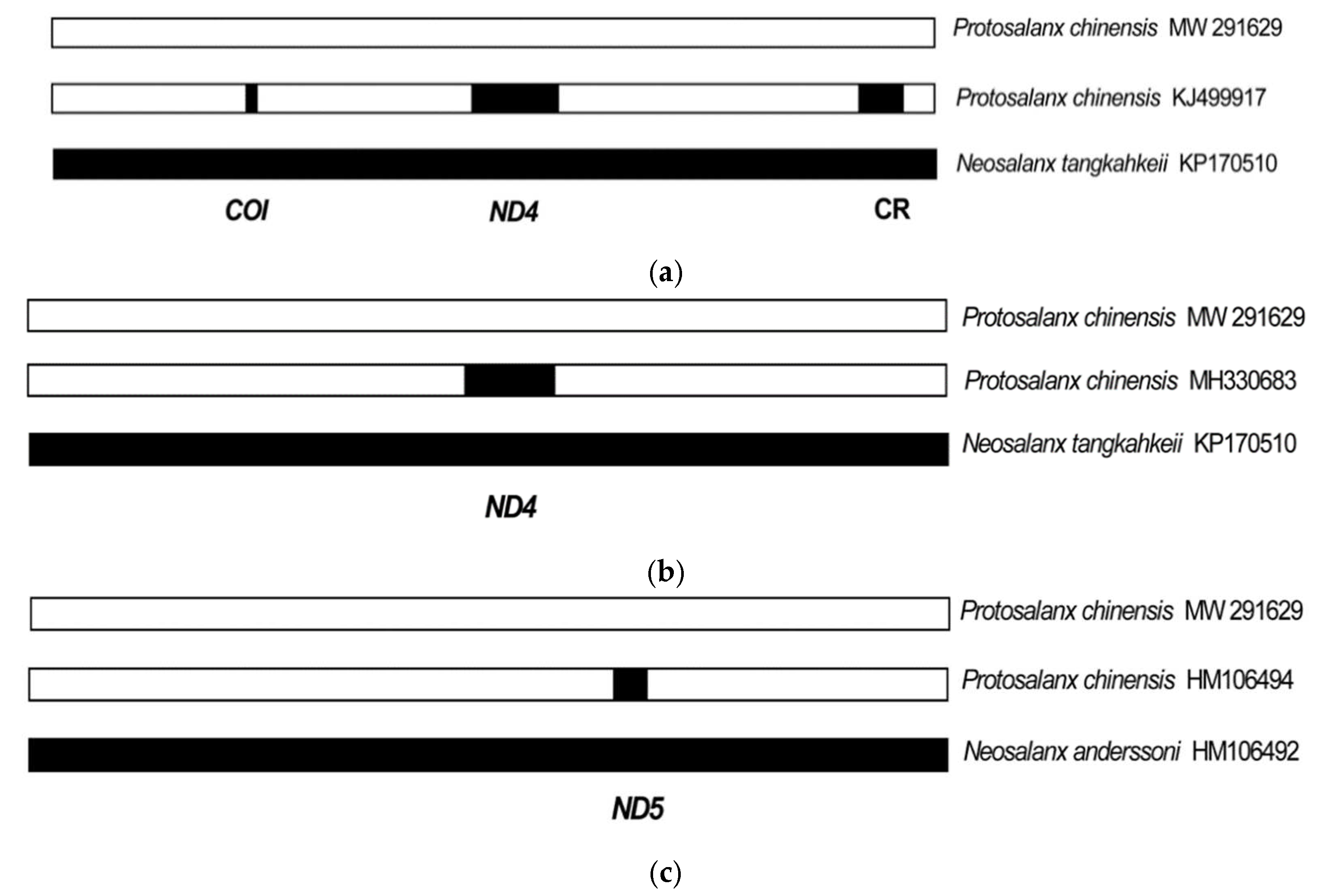
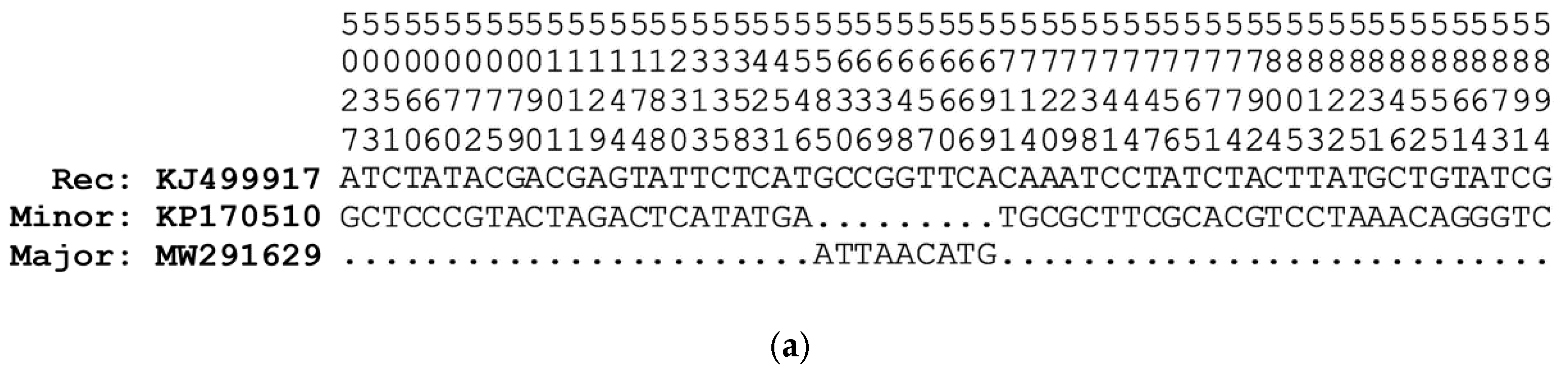
The interspecific recombination of the mitochondrial (mt) genome, if not an experimental artifact, may result from interbreeding of species with broken reproductive barriers, which, in turn, is a frequent consequence of human activities including species translocations, habitat modifications, and climate change. This issue, however, has not been addressed for Protosalanx chinensis and other commercially important and, simultaneously, invasive salangid fishes that were the product of successful aquaculture in China. To assess the probability of interspecific hybridization, we analyzed the patterns of diversity and recombination in the complete mitochondrial (mt) genomes of these fishes using the GenBank resources. A sliding window analysis revealed a non-uniform distribution of the intraspecific differences in P. chinensis with four highly pronounced peaks of divergence centered at the COI, ND4L-ND4, and ND5 genes, and also at the control region. The corresponding divergent regions in P. chinensis show a high sequence similarity (99–100%) to the related salangid fishes, Neosalanx tangkahkeii and N. anderssoni. This observation suggests that the divergent regions of P. chinensis may represent a recombinant mitochondrial DNA (mtDNA) containing mt genome fragments belonging to different salangid species. Indeed, four, highly significant (pairwise homoplasy index test, P < 0.00001) signals of recombination have been revealed at coordinates closely corresponding to the divergent regions. The recombinant fragments are, however, not fixed, and different mt genomes of P. chinensis are mosaic, containing different numbers of recombinant events. These facts, along with the high similarity or full identity of the recombinant fragments between the donor and the recipient sequences, indicate a recent interspecific hybridization between P. chinensis and two Neosalanx species. Alternative hypotheses, including taxonomical misidentifications, sequence misalignments, DNA contamination, and/or artificial PCR recombinants, are not supported by the data. The recombinant fragments revealed in our study represent diagnostic genetic markers for the identification and distinguishing of hybrids, which can be used to control the invasive dynamics of hybrid salangid fishes.
Keywords: clearhead icefish Protosalanx chinensis; short-snout icefish Neosalanx tangkahkeii; Salangidae; mitochondrial genome; recombination; invasive species hybridization clearhead icefish Protosalanx chinensis; short-snout icefish Neosalanx tangkahkeii; Salangidae; mitochondrial genome; recombination; invasive species hybridization