Review

Structure, Activity and Function of the SETDB1 Protein Methyltransferase
by
Mariam Markouli
,
Dimitrios Strepkos
and
Christina Piperi
*
Department of Biological Chemistry, Medical School, National and Kapodistrian University of Athens, 11527 Athens, Greece
*
Author to whom correspondence should be addressed.
Equal contribution.
Life 2021, 11(8), 817; https://doi.org/10.3390/life11080817
Submission received: 27 July 2021 / Revised: 8 August 2021 / Accepted: 9 August 2021 / Published: 11 August 2021
(This article belongs to the Special Issue Structure, Activity, and Function of Protein Methyltransferases)

Abstract

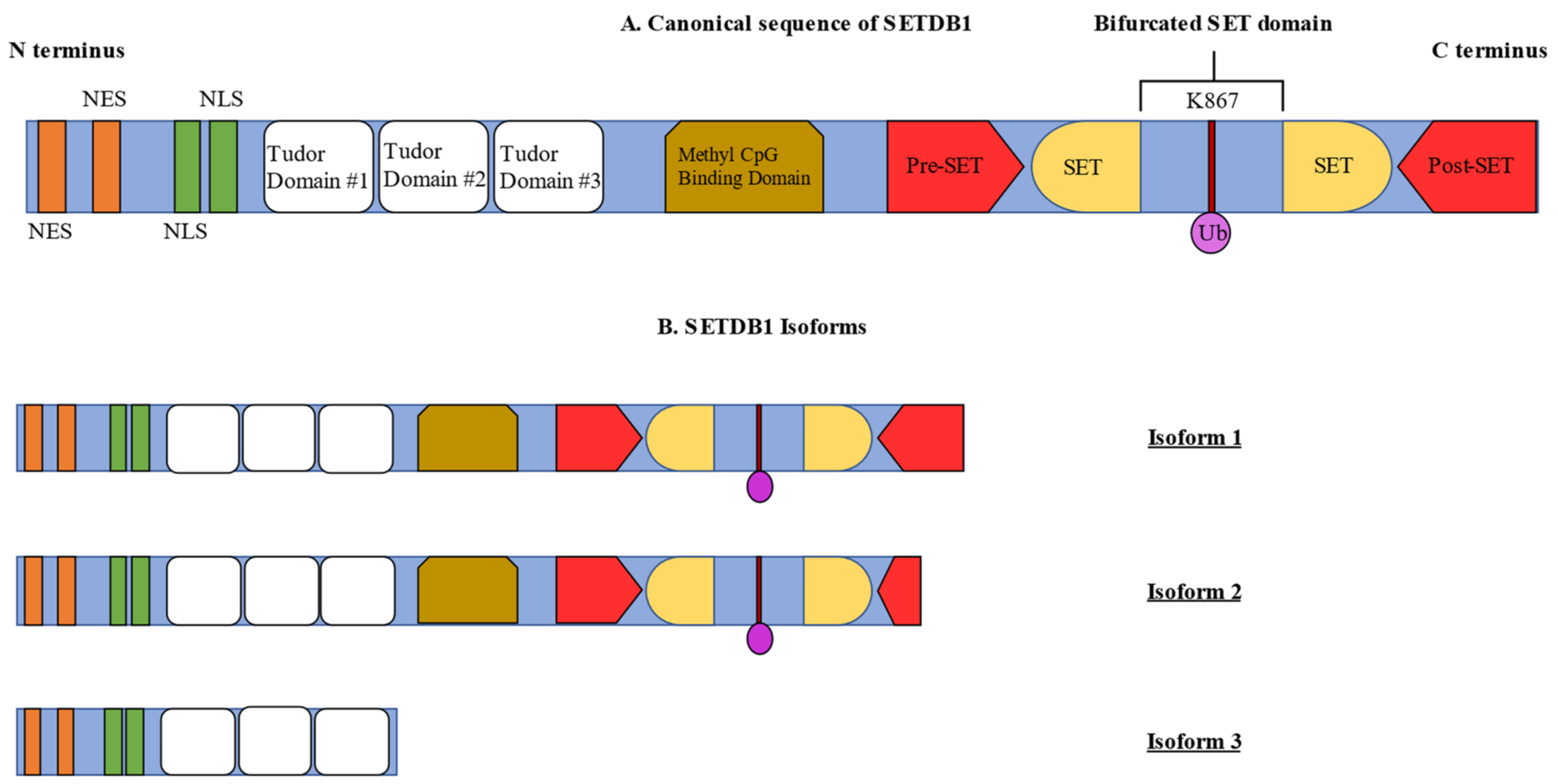
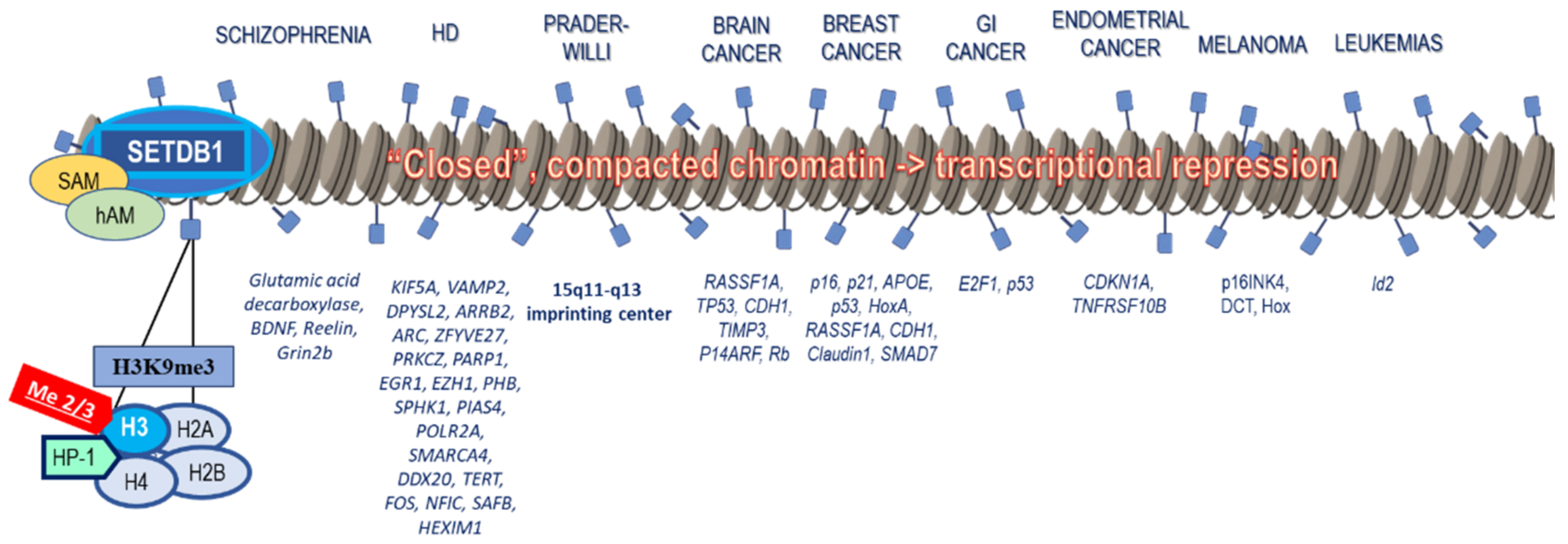
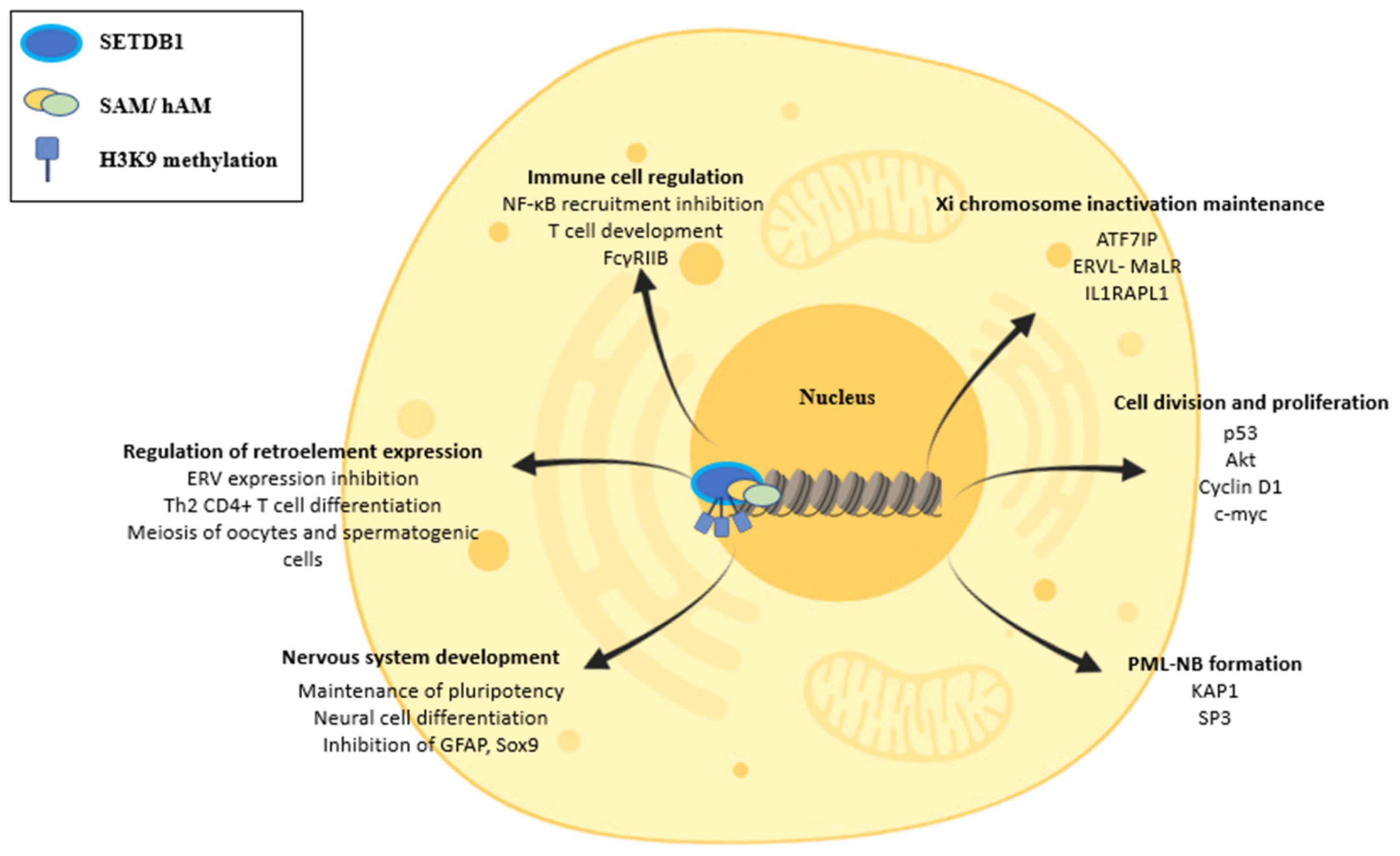
The SET Domain Bifurcated Histone Lysine Methyltransferase 1 (SETDB1) is a prominent member of the Suppressor of Variegation 3–9 (SUV39)-related protein lysine methyltransferases (PKMTs), comprising three isoforms that differ in length and domain composition. SETDB1 is widely expressed in human tissues, methylating Histone 3 lysine 9 (H3K9) residues, promoting chromatin compaction and exerting negative regulation on gene expression. SETDB1 has a central role in normal physiology and nervous system development, having been implicated in the regulation of cell cycle progression, inactivation of the X chromosome, immune cells function, expression of retroelements and formation of promyelocytic leukemia (PML) nuclear bodies (NB). SETDB1 has been frequently deregulated in carcinogenesis, being implicated in the pathogenesis of gliomas, melanomas, as well as in lung, breast, gastrointestinal and ovarian tumors, where it mainly exerts an oncogenic role. Aberrant activity of SETDB1 has also been implicated in several neuropsychiatric, cardiovascular and gastrointestinal diseases, including schizophrenia, Huntington’s disease, congenital heart defects and inflammatory bowel disease. Herein, we provide an update on the unique structural and biochemical features of SETDB1 that contribute to its regulation, as well as its molecular and cellular impact in normal physiology and disease with potential therapeutic options.
Keywords: SETDB1; methyltransferase; epigenetics; cancer; schizophrenia; Huntington’s disease; Rett syndrome; Prader–Willi syndrome; congenital heart diseases; inflammatory bowel disease SETDB1; methyltransferase; epigenetics; cancer; schizophrenia; Huntington’s disease; Rett syndrome; Prader–Willi syndrome; congenital heart diseases; inflammatory bowel disease