Genome-Wide Characterization, Evolution, and Expression Analysis of the Leucine-Rich Repeat Receptor-Like Protein Kinase (LRR-RLK) Gene Family in Medicago truncatula

Abstract
1. Background
2. Materials and Methods
2.1. Arabidopsis, Soybean LRR-RLK Family and M. truncatula Genomic Resources
2.2. Identification of LRR-RLK Genes in the M. truncatula Genome
2.3. Multiple Sequence Alignments and Phylogenetic Tree Analysis
2.4. Gene Structure and Protein Conserved Motif Analysis
2.5. Chromosomal Location Analysis
2.6. Duplication and Synteny Analysis
2.7. Analysis of Cis-Acting Elements within MtLRR-RLK Gene Promoter
2.8. Expression Analysis
2.8.1. Expression Analysis of MtLRR-RLK Genes in Different Tissues
2.8.2. Expression Analysis of MtLRR-RLK Genes under Rhizobial Infection
2.9. Plant Material, Treatment and qRT-PCR Analysis
3. Results
3.1. Genome-Wide Identification and Conformation of LRR-RLK Genes in M. truncatula
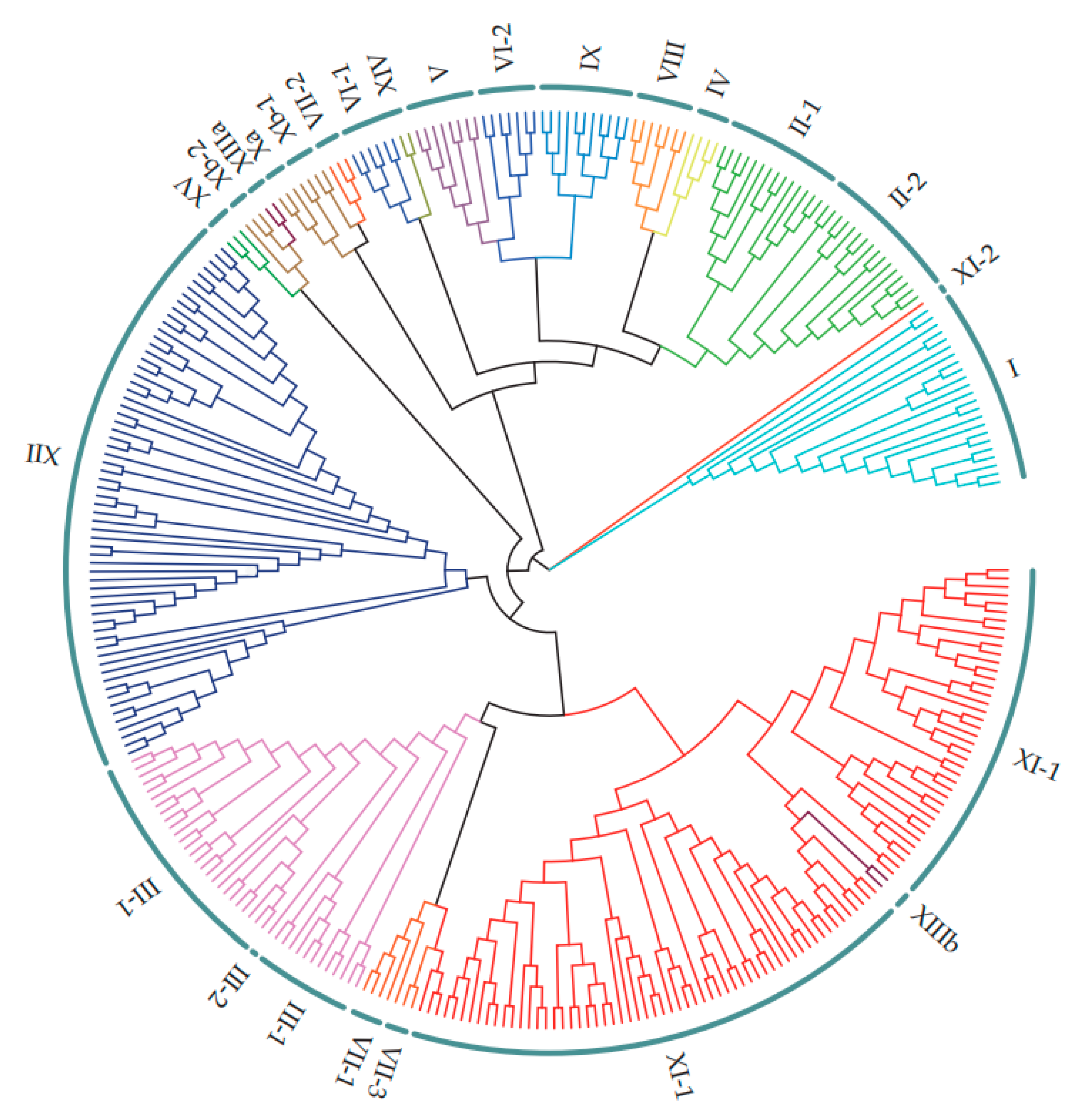
3.2. Phylogenetic Analysis and Classification of LRR-RLKs in Arabidopsis, M. truncatula and Soybean
3.3. LRR-RLK Gene Structure and Conserved Motif Analysis
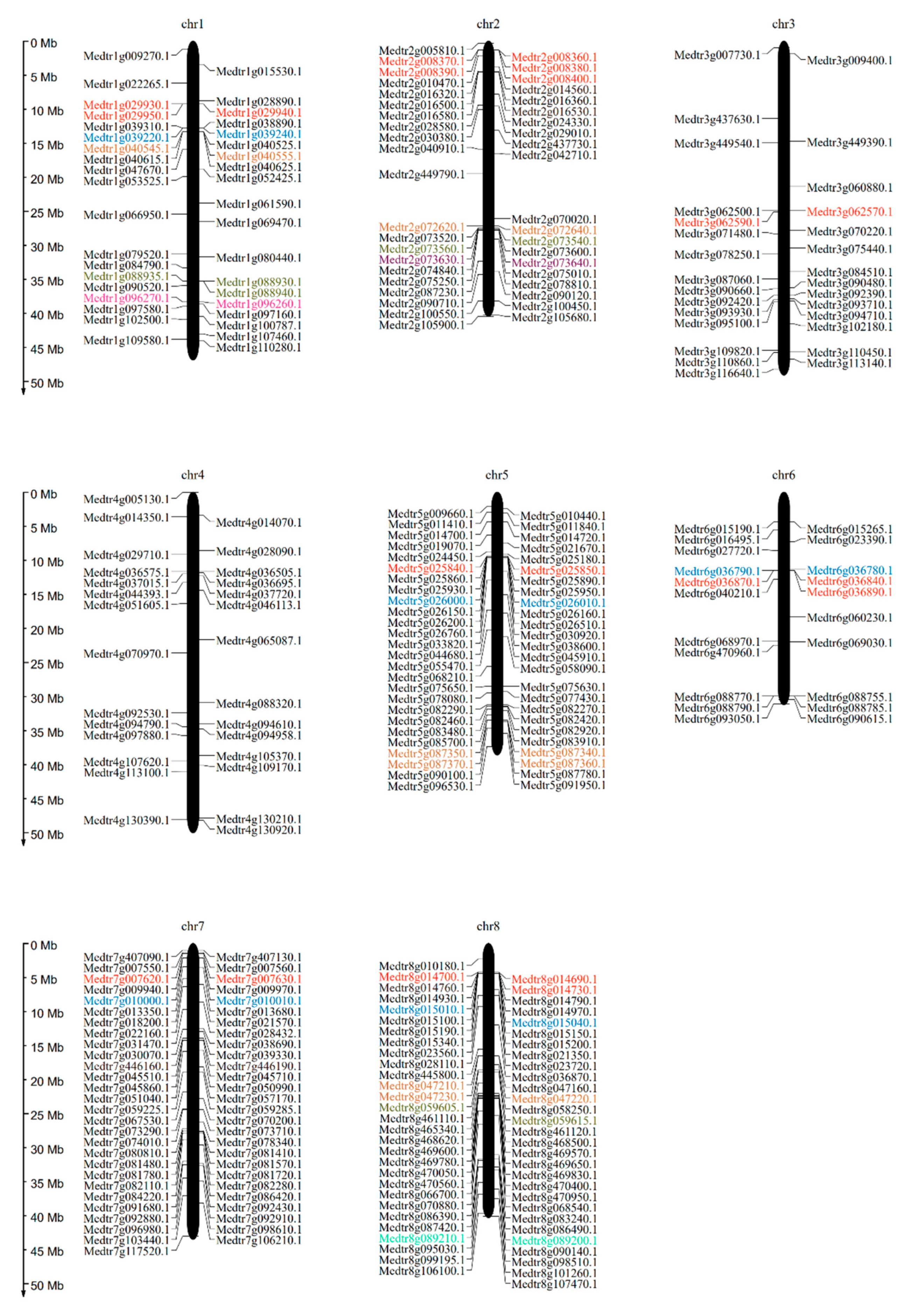
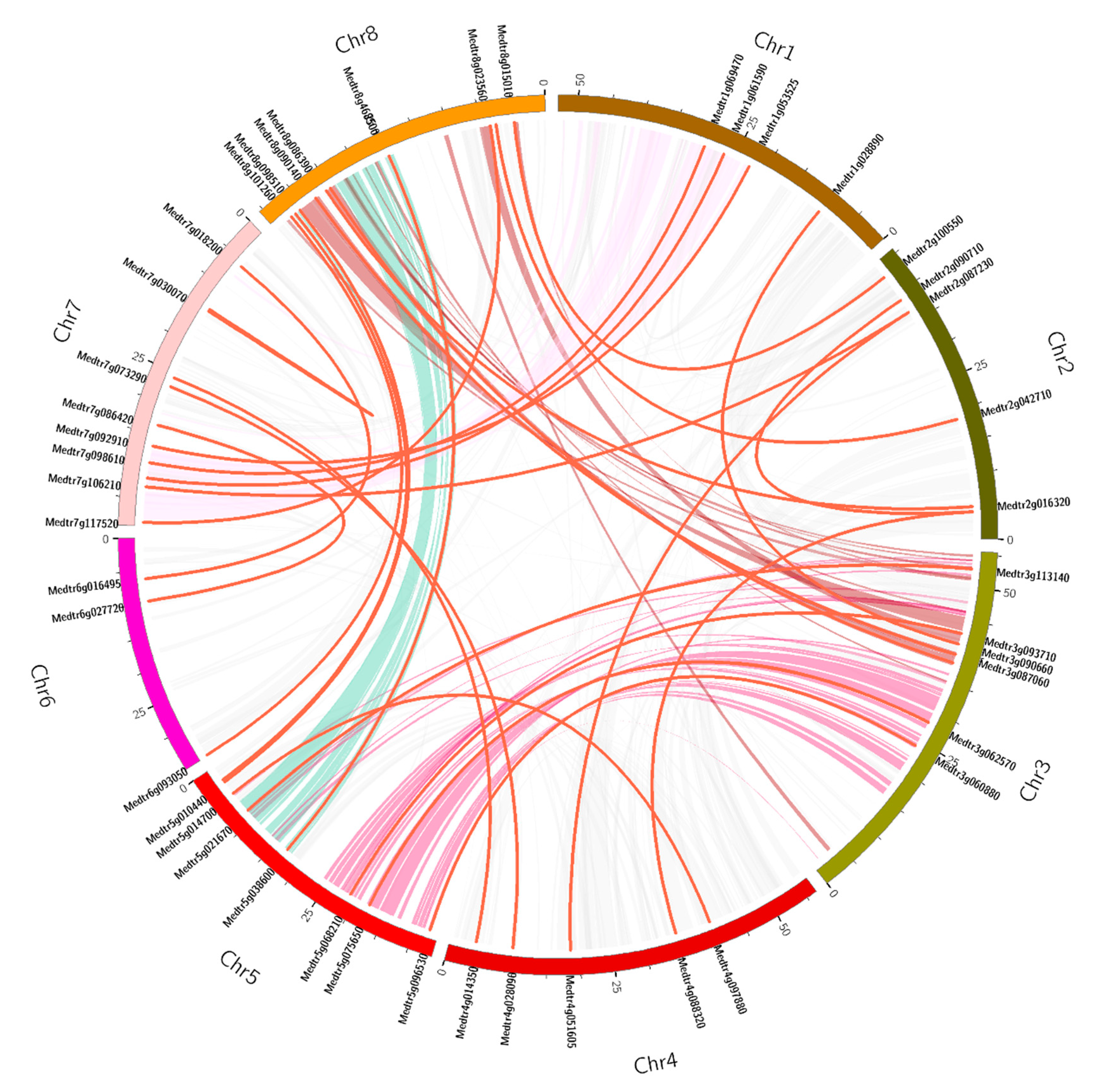
3.4. Genome Distribution Across Chromosomes and Tandem Duplication (TD) of Members of the MtLRR-RLK Gene Family
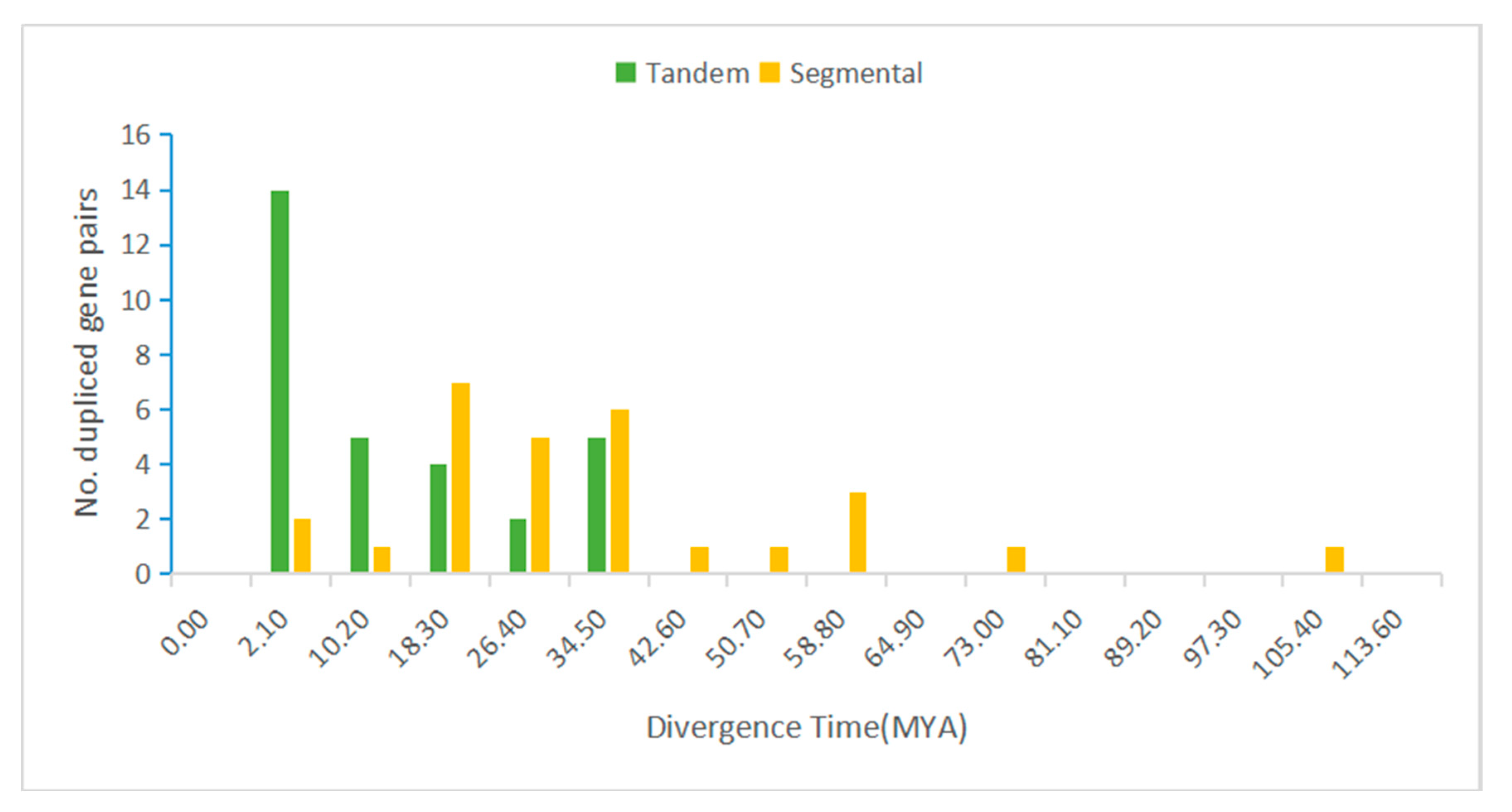
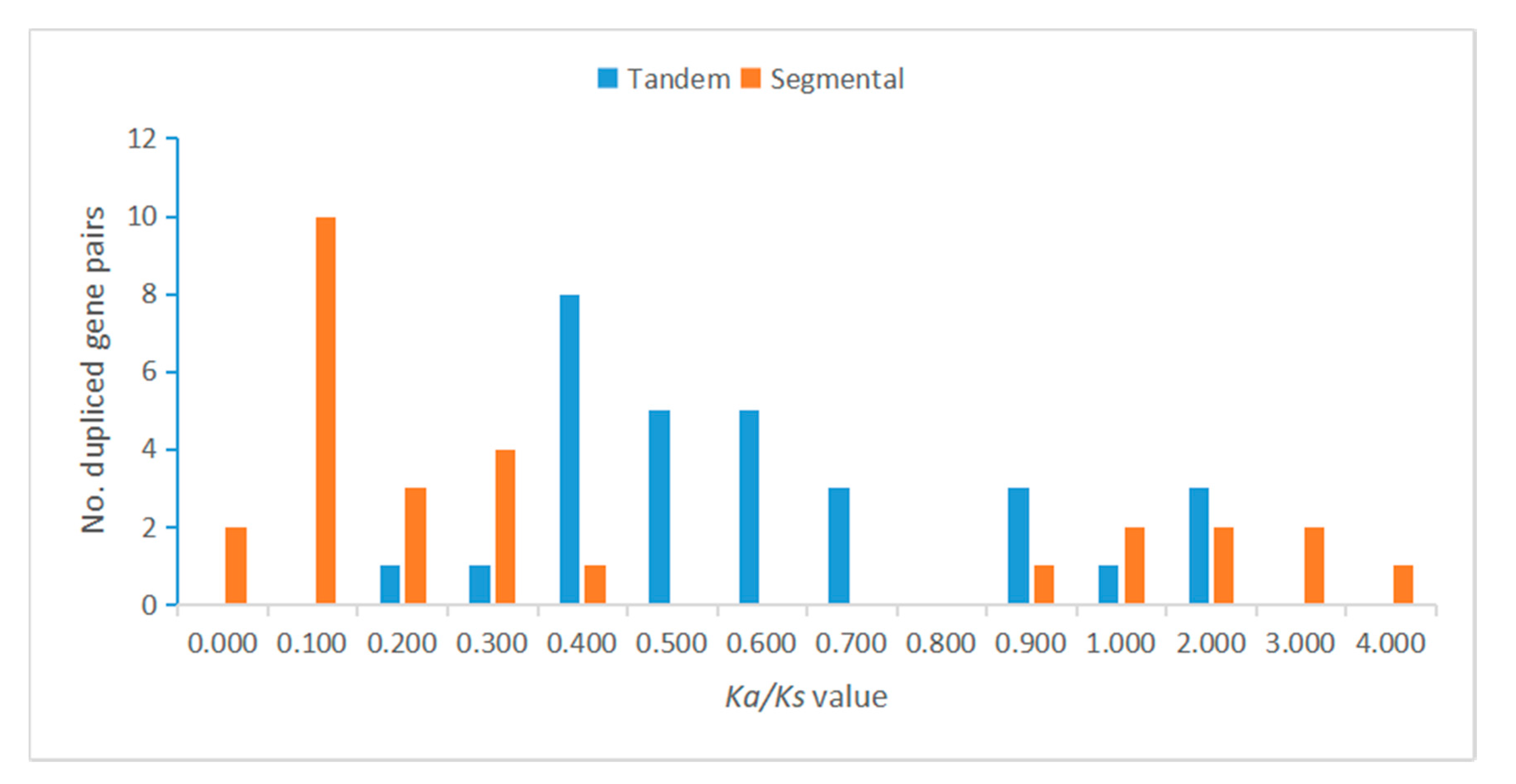
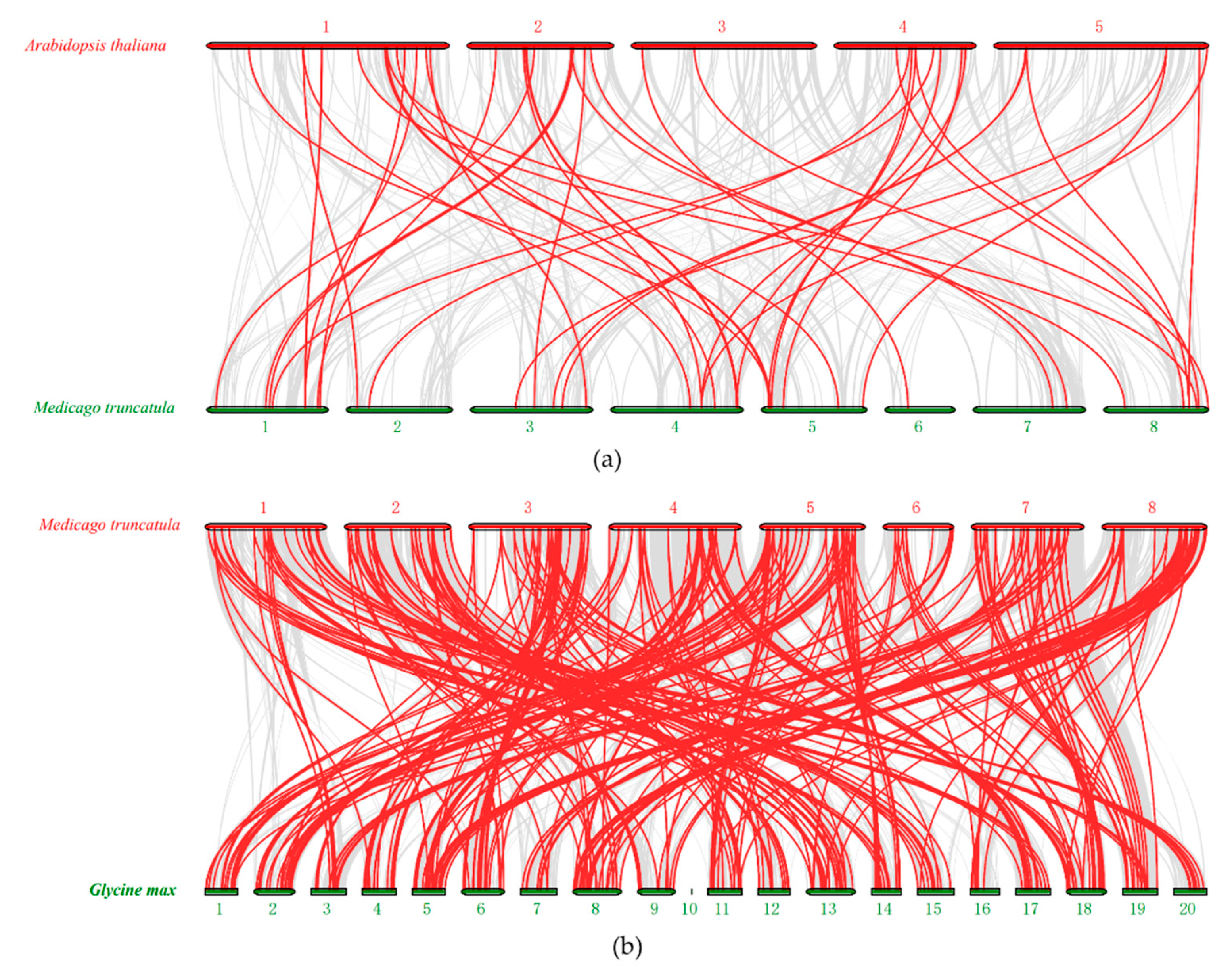
3.5. Segmental Duplication and Synteny of the MtLRR-RLK Gene Family
3.6. Prediction Analysis of Cis-Acting Elements within MtLRR-RLK Genes
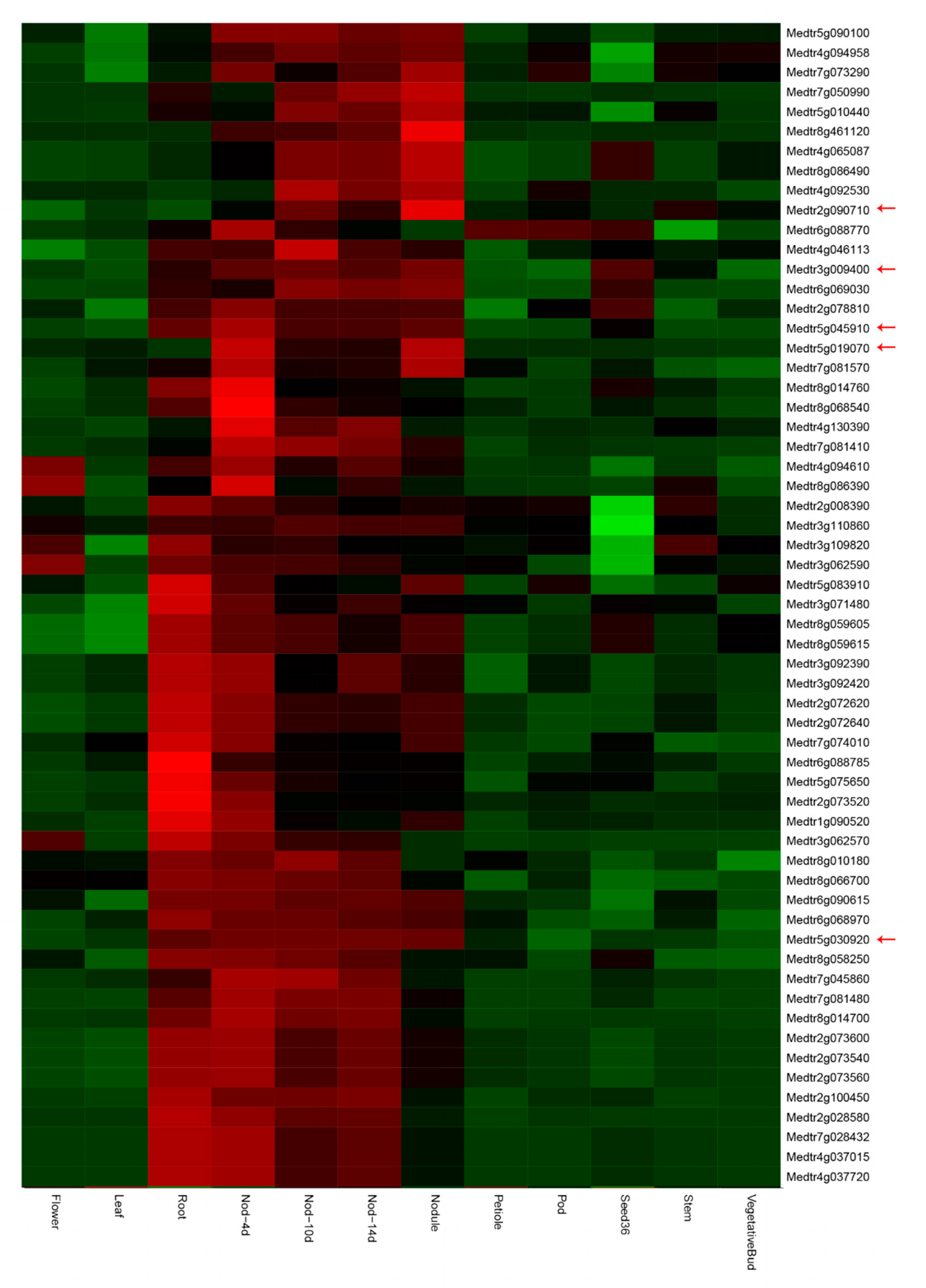
3.7. Expression Patterns of MtLRR-RLK Genes in Different Tissues
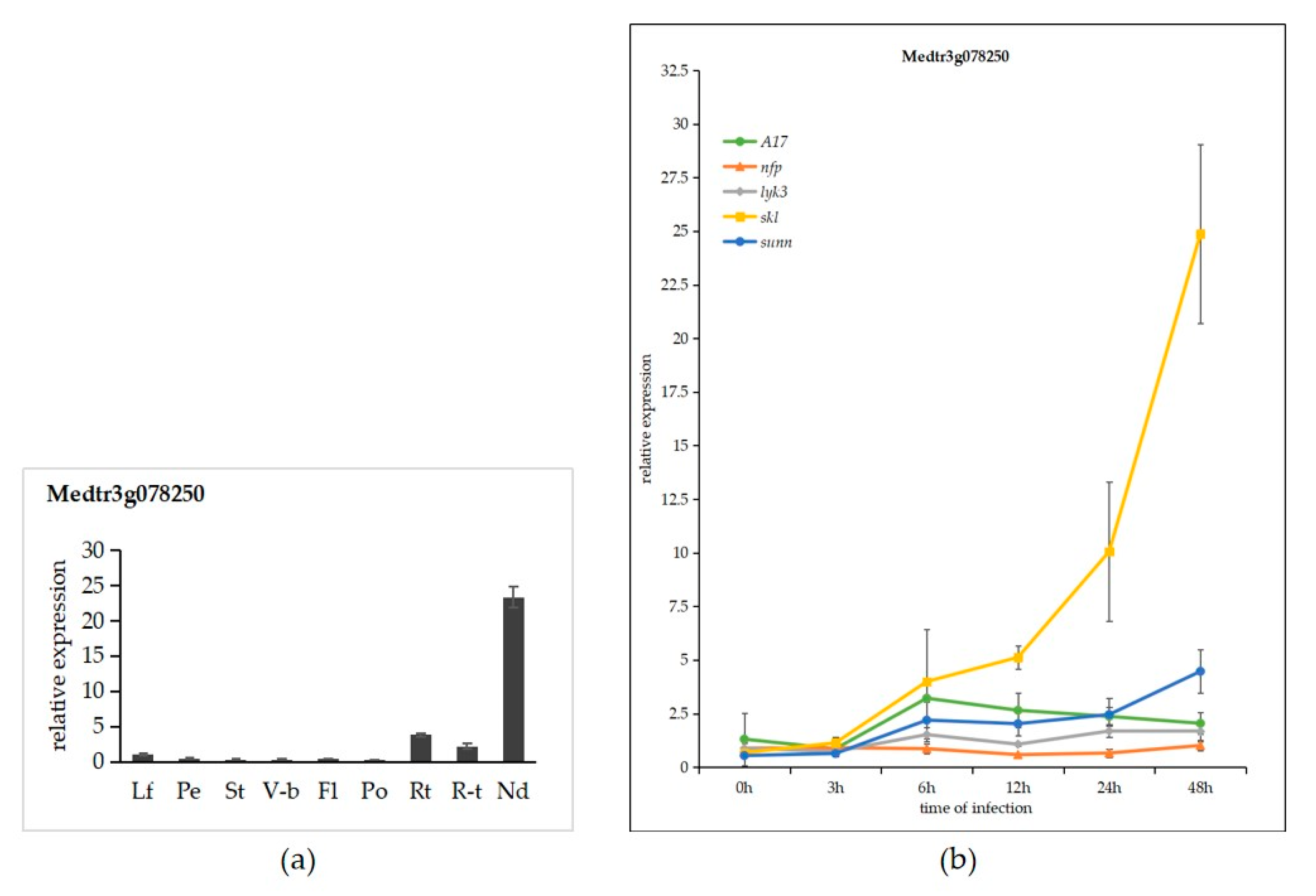
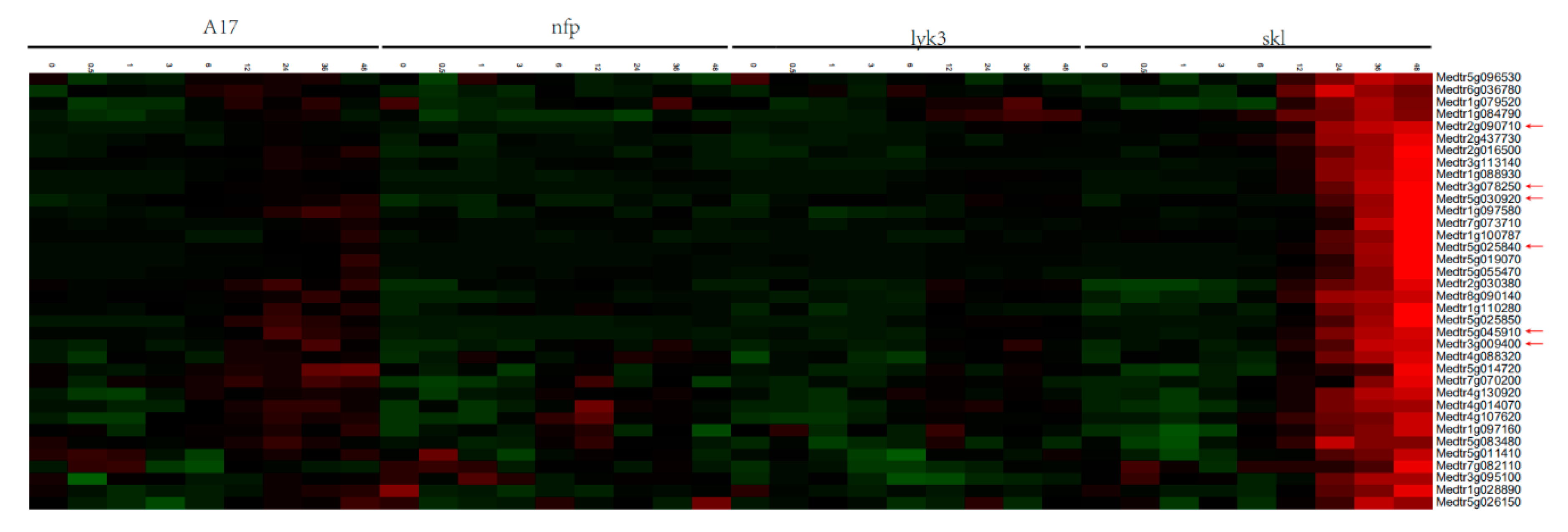
3.8. Expression Patterns of MtLRR-RLK Genes under Sinorhizobium Medicae Infection
4. Discussion
5. Conclusions
Supplementary Materials
Author Contributions
Funding
Conflicts of Interest
References
- Gou, X.; He, K.; Yang, H.; Yuan, T.; Lin, H.; Clouse, S.D.; Li, J. Genome-wide cloning and sequence analysis of leucine-rich repeat receptor-like protein kinase genes in Arabidopsis thaliana. BMC Genom. 2010, 11, 1–15. [Google Scholar] [CrossRef] [PubMed]
- Gish, L.A.; Clark, S.E. The RLK/Pelle family of kinases. Plant J. 2011, 66, 117–127. [Google Scholar] [CrossRef]
- Ye, Y.; Ding, Y.; Jiang, Q.; Wang, F.; Sun, J.; Zhu, C. The role of receptor-like protein kinases (RLKs) in abiotic stress response in plants. Plant Cell Rep. 2017, 36, 235–242. [Google Scholar] [CrossRef]
- Enric, C.; Josep, M.C. Signalling through kinase-defective domains: The prevalence of atypical receptor-like kinases in plants. J. Exp. Bot. 2007, 58, 3503–3511. [Google Scholar] [CrossRef]
- Yarden, Y. Growth factor receptor tyrosine kinases. Ann. Rev. Biochem. 1998, 57, 443–478. [Google Scholar] [CrossRef]
- Shiu, S.H.; Bleecker, A.B. Plant receptor-like kinase gene family: Diversity, function, and signaling. Sci. STKE Signal Transduct. Knowl. Environ. 2001, 113, re22. [Google Scholar] [CrossRef]
- Shiu, S.H.; Bleecker, A.B. Receptor-like Kinases from Arabidopsis Form a Monophyletic Gene Family Related to Animal Receptor Kinases. Proc. Natl. Acad. Sci. USA 2001, 98, 10763–10768. [Google Scholar] [CrossRef] [PubMed]
- Lehti-Shiu, M.D.; Shiu, S.H. Diversity, classification and function of the plant protein kinase superfamily. Philos. Trans. R. Soc. B Biol. Sci. 2012, 367, 2619–2639. [Google Scholar] [CrossRef]
- Ullrich, A.; Schlessinger, J. Signal transduction by receptors with tyrosine kinase activity. Cell 1990, 61, 203–212. [Google Scholar] [CrossRef]
- Walker, J.C.; Zhang, R. Relationship of a putative receptor protein kinase from maize to the S-locus glycoproteins of Brassica. Nature 1990, 345, 743–746. [Google Scholar] [CrossRef]
- Shiu, S.H.; Karlowski, W.M.; Pan, R.; Tzeng, Y.; Mayer, K.F.X.; Li, W. Comparative Analysis of the Receptor-Like Kinase Family in Arabidopsis and Rice. Plant Cell 2004, 16, 1220–1234. [Google Scholar] [CrossRef] [PubMed]
- Sun, X.; Wang, G.L. Genome-wide identification, characterization and phylogenetic analysis of the rice LRR-kinases. PLoS ONE 2011, 6. [Google Scholar] [CrossRef] [PubMed]
- Gay, N.I.; Packman, L.C.; Weldon, M.A.; Barna, J.C.J. Leucine-rich repeat peptide derived from forms extended fiilaments with a e Drosophila Toll receptor sheet structure. FEBS Lett. 1991, 291, 87–91. [Google Scholar] [CrossRef]
- Kobe, B.; Deisenhofer, J. The leucine-rich repeat: A versatile binding motif. Trends Biochem. Sci. 1994, 19, 415–421. [Google Scholar] [CrossRef]
- Enkhbayar, P.; Kamiya, M.; Osaki, M.; Matsumoto, T.; Matsushima, N. Structural principles of leucine-rich repeat (LRR) proteins. Proteins Struct. Funct. Bioinform. 2004, 54, 394–403. [Google Scholar] [CrossRef]
- Kobe, B.; Kajava, A.V. The leucine-rich repeat as a protein recognition motif. Curr. Opin. Struct. Biol. 2001, 11, 725–732. [Google Scholar] [CrossRef]
- Lehti-Shiu, M.D.; Zou, C.; Hanada, K.; Shiu, S.H. Evolutionary History and Stress Regulation of Plant Receptor-Like Kinase/Pelle Genes. Plant Physiol. 2009, 150, 12–26. [Google Scholar] [CrossRef]
- Shiu, S.H.; Bleecker, A.B. Expansion of the Receptor-Like Kinase/Pelle Gene Family and Receptor-Like Proteins in Arabidopsis. Plant Physiol. 2003, 132, 530–543. [Google Scholar] [CrossRef]
- Zhang, X.S.; Choi, J.H.; Heinz, J.; Chetty, C.S. Domain-Specific Positive Selection Contributes to the Evolution of Arabidopsis Leucine-Rich Repeat Receptor-Like Kinase (LRR RLK) Genes. J. Mol. Evol. 2006, 63, 612–621. [Google Scholar] [CrossRef]
- Afzal, A.J.; Wood, A.J.; Lightfoot, D.A. Plant receptor-like serine threonine kinases: Roles in signaling and plant defense. Mol. Plant Microbe Interact. MPMI 2008, 21, 507–517. [Google Scholar] [CrossRef]
- Torii, K.U. Transmembrane Receptors in Plants: Receptor Kinase and Their Ligands. Annu. Plant Rev. 2008, 33, 1–29. [Google Scholar] [CrossRef]
- Clouse, S.D.; Sasse, J.M. BRASSINOSTEROIDS: Essential Regulators of Plant Growth and Development. Annu. Rev. Plant Physiol. Plant Mol. Biol. 1998, 49, 427–451. [Google Scholar] [CrossRef] [PubMed]
- Li, J.; Chory, J. A Putative Leucine-Rich Repeat Receptor Kinase Involved in Brassinosteroid Signal Transduction. Cell 1997, 90, s0092–s8674. [Google Scholar] [CrossRef]
- Kinoshita, T.; Ana Canodelgado, A.I.; Seto, H.; Hiranuma, S.; Fujioka, S.; Yoshida, S.; Chory, J. Binding of brassinosteroids to the extracellular domain of plant receptor kinase BRI1. Nature 2004, 433, 167–171. [Google Scholar] [CrossRef] [PubMed]
- Nam, K.H.; Li, J. BRI1/BAK1, a Receptor Kinase Pair Mediating Brassinosteroid Signaling. Cell 2002, 110, 203–212. [Google Scholar] [CrossRef]
- Wang, Z.; Meng, P.; Zhang, X.; Ren, D.; Yang, S. BON1 interacts with the protein kinases BIR1 and BAK1 in modulation of temperature-dependent plant growth and cell death in Arabidopsis. Plant J. 2011, 67, 1081–1093. [Google Scholar] [CrossRef]
- Chen, M.; Shpak, E.D. ERECTA family genes regulate development of cotyledons during embryogenesis. FEBS Lett. 2014, 588, 3912–3917. [Google Scholar] [CrossRef]
- Godiard, L.; Sauviac, L.; Torii, K.U.; Grenon, O.; Mangin, B.; Grimsley, N.H.; Marco, Y. ERECTA, an LRR receptor-like kinase protein controlling development pleiotropically affects resistance to bacterial wilt. Plant J. 2003, 36, 353–365. [Google Scholar] [CrossRef]
- Shpak, E.D.; Berthiaume, C.T.; Hill, E.J.; Torii, K.U. Synergistic interaction of three ERECTA-family receptor-like kinases controls Arabidopsis organ growth and flower development by promoting cell proliferation. Development 2004, 131, 1491–1501. [Google Scholar] [CrossRef]
- Wang, D.; Yang, C.; Wang, H.; Wu, Z.; Jiang, J.; Liu, J.; He, Z.; Chang, F.; Ma, H.; Wang, X. BKI1 Regulates Plant Architecture through Coordinated Inhibition of the Brassinosteroid and ERECTA Signaling Pathways in Arabidopsis. Mol. Plant 2017, 10, 297–308. [Google Scholar] [CrossRef] [PubMed]
- Williams, R.W.; Wilson, J.M.; Meyerowitz, E.M. A possible role for kinase-associated protein phosphatase in the Arabidopsis CLAVATA1 signaling pathway. Proc. Natl. Acad. Sci. USA 1997, 94. [Google Scholar] [CrossRef] [PubMed]
- Brand, U.; Fletcher, J.C.; Hobe, M.; Meyerowitz, E.M.; Simon, R. Dependence of Stem Cell Fate in Arabidopsis on a Feedback Loop Regulated by CLV3 Activity. Science 2000, 289, 617–619. [Google Scholar] [CrossRef] [PubMed]
- Mizuno, S.; Osakabe, Y.; Maruyama, K.; Ito, T.; Osakabe, K.; Sato, T.; Shinozaki, K.; Yamaguchi-Shinozaki, K. Receptor-like protein kinase 2 (RPK 2) is a novel factor controlling anther development in Arabidopsis thaliana. Plant J. 2007, 50, 751–766. [Google Scholar] [CrossRef] [PubMed]
- Kinoshita, A.; Betsuyaku, S.; Osakabe, Y.; Mizuno, S.; Nagawa, S.; Stahl, Y.; Simon, R.; Yamaguchi-Shinozaki, K.; Fukuda, H.; Sawa, S. RPK2 is an essential receptor-like kinase that transmits the CLV3 signal in Arabidopsis. Development 2010, 137, 4327. [Google Scholar] [CrossRef][Green Version]
- DeYoung, B.J.; Clark, S.E. Signaling through the CLAVATA1 receptor complex. Plant Mol. Biol. 2001, 46, 505–513. [Google Scholar] [CrossRef] [PubMed]
- De Young, B.J.; Bickle, K.L.; Schrage, K.J.; Muskett, P.; Patel, K.; Clark, S.E. The CLAVATA1-related BAM1, BAM2 and BAM3 receptor kinase-like proteins are required for meristem function in Arabidopsis. Plant J. 2006, 45, 1–16. [Google Scholar] [CrossRef]
- Ou, Y.; Lu, X.; Zi, Q.; Xun, Q.; Zhang, J.; Wu, Y.; Shi, H.; Wei, Z.; Zhao, B.; Zhang, X.; et al. RGF1 INSENSITIVE 1 to 5, a group of LRR receptor-like kinases, are essential for the perception of root meristem growth factor 1 in Arabidopsis thaliana. Cell Res. 2016, 26, 686–698. [Google Scholar] [CrossRef]
- Zhao, D.Z.; Wang, G.F.; Speal, B.; Ma, H. The EXCESS MICROSPOROCYTES1gene encodes a putative leucine-rich repeat receptor protein kinase that controls somatic and reproductive cell fates in the Arabidopsis anther. Genes Dev. 2002, 16, 2021–2031. [Google Scholar] [CrossRef]
- Shi, Y.; Guo, S.; Zhang, R.; Meng, Z.; Ren, M. The role of Somatic embryogenesis receptor-like kinase 1 in controlling pollen production of the Gossypium anther. Mol. Biol. Rep. 2014, 41, 411–422. [Google Scholar] [CrossRef]
- Dievart, A. LRR-containing receptors regulating plant development and defense. Development 2003, 131, 251–261. [Google Scholar] [CrossRef]
- Gómez-Gómez, L.; Boller, T. FLS2: An LRR Receptor–like Kinase Involved in the Perception of the Bacterial Elicitor Flagellin in Arabidopsis. Mol. Cell. 2000, 5, 1003–1011. [Google Scholar] [CrossRef]
- Li, L.; Li, M.; Yu, L.; Zhou, Z.; Liang, X.; Liu, Z.; Cai, G.; Gao, L.; Zhang, X.; Wang, Y.; et al. The FLS2-Associated Kinase BIK1 Directly Phosphorylates the NADPH Oxidase RbohD to Control Plant Immunity. Cell Host Microbe 2014, 15, 329–338. [Google Scholar] [CrossRef] [PubMed]
- Zipfel, C.; Kunze, G.; Chinchilla, D.; Caniard, A.; Jones, J.D.G.; Boller, T.; Felix, G. Perception of the Bacterial PAMP EF-Tu by the Receptor EFR Restricts Agrobacterium-Mediated Transformation. Cell 2006, 125, 749–760. [Google Scholar] [CrossRef] [PubMed]
- Zan, Y.; Ji, Y.; Zhang, Y.; Yang, S.; Song, Y.; Wang, J. Genome-wide identification, characterization and expression analysis of populus leucine-rich repeat receptor-like protein kinase genes. BMC Genom. 2013, 14, 318. [Google Scholar] [CrossRef] [PubMed]
- Zhou, F.; Guo, Y.; Qiu, L. Genome-wide identification and evolutionary analysis of leucine-rich repeat receptor-like protein kinase genes in soybean. BMC Plant Biol. 2016, 16, 58. [Google Scholar] [CrossRef]
- Sun, J.; Li, L.; Wang, P.; Zhang, S.; Wu, J. Genome-wide characterization, evolution, and expression analysis of the leucine-rich repeat receptor-like protein kinase (LRR-RLK) gene family in Rosaceae genomes. BMC Genom. 2017, 18, 763. [Google Scholar] [CrossRef]
- Magalhães, D.M.; Scholte, L.L.S.; Silva, N.V.; Oliveira, G.C.; Zipfel, C.; Takita, M.A.; De Souza, A.A. LRR-RLK family from two Citrus species: Genome-wide identification and evolutionary aspects. BMC Genom. 2016, 17, 1–13. [Google Scholar] [CrossRef]
- Liu, P.; Xie, L.; Li, P.; Mao, J.; Liu, H.; Gao, S.; Shi, P.; Gong, J. Duplication and Divergence of Leucine-Rich Repeat Receptor-Like Protein Kinase (LRR-RLK) Genes in Basal Angiosperm Amborella trichopoda. Front. Plant Sci. 2016, 7, 1–15. [Google Scholar] [CrossRef]
- Boisson-Dernier, A.; Chabaud, M.; Garcia, F.; Bécard, G.; Rosenberg, C.; Barker, D.G. Agrobacterium rhizogenes-transformed roots of Medicago truncatula for the study of nitrogen-fixing and endomycorrhizal symbiotic associations. Mol. Plant Microbe Interact. MPMI 2001, 14, 695. [Google Scholar] [CrossRef]
- Morandi, D.; Prado, E.; Sagan, M.; Duc, G. Characterisation of new symbiotic Medicago truncatula (Gaertn.) mutants, and phenotypic or genotypic complementary information on previously described mutants. Mycorrhiza 2005, 15, 283–289. [Google Scholar] [CrossRef]
- Endre, G.; Kereszt, A.; Kevei, Z.; Mihacea, S.; Kaló, P.; Kiss, G.B. A receptor kinase gene regulating symbiotic nodule development. Nature 2002, 417, 962–966. [Google Scholar] [CrossRef] [PubMed]
- Catoira, R.; Galera, C.; de Billy, F.; Penmetsa, R.V.; Journet, E.P.; Maillet, F.; Rosenberg, C.; Cook, D.; Gough, C.; Denarie, J. Four genes of Medicago truncatula controlling components of a nod factor transduction pathway. Plant Cell 2000, 12, 1647–1666. [Google Scholar] [CrossRef] [PubMed]
- De Mita, S.; Santoni, S.; Hochu, I.; Ronfort, J.; Bataillon, T. Molecular Evolution and Positive Selection of the Symbiotic Gene NORK in Medicago truncatula. J. Mol. Evol. 2006, 62, 234–244. [Google Scholar] [CrossRef] [PubMed]
- Ane, J.; Kiss, G.B.; Riely, B.K.; Penmetsa, R.V.; Oldroyd, G.E.D.; Ayax, C.; Levy, J.; Debelle, F.; Baek, J.; Kalo, P.; et al. Medicago truncatula DMI1 Required for Bacterial and Fungal Symbioses in Legumes. Science 2004, 303, 1364–1367. [Google Scholar] [CrossRef]
- Goodstein, D.M.; Shu, S.; Howson, R.; Neupane, R.; Hayes, R.D.; Fazo, J.; Mitros, T.; Dirks, W.; Hellsten, U.; Putnam, N.; et al. Phytozome: A comparative platform for green plant genomics. Nucleic Acids Res. 2012, 40, 1178–1186. [Google Scholar] [CrossRef]
- Finn, R.D.; Clements, J.; Eddy, S.R. HMMER web server: Interactive sequence similarity searching. Nucleic Acids Res. 2011, 39, 29–37. [Google Scholar] [CrossRef]
- Finn, R.D.; Mistry, J.; Tate, J.; Coggill, P.; Heger, A.; Pollington, J.E.; Gavin, O.L.; Gunasekaran, P.; Ceric, G.; Forslund, K.; et al. The Pfam protein families database. Nucleic Acids Res. 2010, 38, 211–222. [Google Scholar] [CrossRef]
- Ponting, C.P.; Schultz, J.; Milpetz, F.; Bork, P. SMART: Identification and annotation of domains from signaling and extracellular protein sequences. Nucleic Acids Res. 1999, 27, 229–232. [Google Scholar] [CrossRef]
- Kumar, S.; Stecher, G.; Tamura, K. MEGA7: Molecular Evolutionary Genetics Analysis Version 7.0 for Bigger Datasets. Mol. Biol. Evol. 2016, 33, 1870–1874. [Google Scholar] [CrossRef]
- Zhang, W.; Sun, Z. Random local neighbor joining: A new method for reconstructing phylogenetic trees. Mol. Phylogenet Evol. 2008, 47, 117–128. [Google Scholar] [CrossRef]
- Letunic, I.; Bork, P. Interactive Tree Of Life (iTOL) v4: Recent updates and new developments. Nucleic Acids Res. 2019, 47, 256–259. [Google Scholar] [CrossRef] [PubMed]
- Bailey, T.L.; Williams, N.; Misleh, C.; Li, W.W. MEME: Discovering and analyzing DNA and protein sequence motifs. Nucleic Acids Res. 2006, 34, 369–373. [Google Scholar] [CrossRef] [PubMed]
- Wang, Y.; Tang, H.; DeBarry, J.D.; Tan, X.; Li, J.; Wang, X.; Lee, T.H.; Jin, H.; Marler, B.; Guo, H.; et al. MCScanX: A toolkit for detection and evolutionary analysis of gene synteny and collinearity. Nucleic Acids Res. 2012, 40, 1–14. [Google Scholar] [CrossRef] [PubMed]
- Krzywinski, M.; Schein, J.; Birol, I.; Connors, J.; Gascoyne, R.; Horsman, D.; Jones, S.J.; Marra, M.A. Circos: An information aesthetic for comparative genomics. Genome Res. 2009, 19, 1639–1645. [Google Scholar] [CrossRef]
- Zhang, Z.; Li, J.; Zhao, X.Q.; Wang, J.; Wong, G.K.; Yu, J. KaKs_Calculator: Calculating Ka and Ks through model selection and model averaging. Genom. Proteom. Bioinform. 2006, 4, 259–263. [Google Scholar] [CrossRef]
- Huang, Z.; Duan, W.; Song, X.; Tang, J.; Wu, P.; Zhang, B.; Hou, X. Retention Molecular Evolution, and Expression Divergence of the Auxin/Indole Acetic Acid and Auxin Response Factor Gene Families in Brassica Rapa Shed Light on Their Evolution Patterns in Plants. Genome Biol. Evol. 2016, 8, 302–316. [Google Scholar] [CrossRef]
- Lescot, M.; Déhais, P.; Thijs, G.; Marchal, K.; Moreau, Y.; Van de Peer, Y.; Rouzé, P.; Rombauts, S. PlantCARE, a database of plant cis-acting regulatory elements and a portal to tools for in silico analysis of promoter sequences. Nucleic Acids Res. 2002, 30, 325–327. [Google Scholar] [CrossRef]
- Benedito, V.A.; Torres-Jerez, I.; Murray, J.D.; Andriankaja, A.; Allen, S.; Kakar, K.; Wandrey, M.; Verdier, J.; Zuber, H.; Ott, T.; et al. A gene expression atlas of the model legume Medicago truncatula. Plant J. 2008, 55, 504–513. [Google Scholar] [CrossRef]
- Larrainzar, E.; Riely, B.K.; Kim, S.C.; Carrasquilla-Garcia, N.; Yu, H.; Hwang, H.; Oh, M.; Kim, G.B.; Surendrarao, A.K.; Chasman, D.; et al. Deep Sequencing of the Medicago truncatula Root Transcriptome Reveals a Massive and Early Interaction between Nodulation Factor and Ethylene Signals. Plant Physiol. 2015, 169, 233–265. [Google Scholar] [CrossRef]
- Amor, B.B.; Shaw, S.L.; Oldroyd, G.E.; Maillet, F.; Penmetsa, R.V.; Cook, D.; Long, S.R.; Denarie, J.; Gough, C. The NFP locus of Medicago truncatula controls an early step of Nod factor signal transduction upstream of a rapid calcium flux and root hair deformation. Plant J. 2003, 34, 495–506. [Google Scholar] [CrossRef]
- Catoira, R.; Timmers, A.C.; Maillet, F.; Galera, C.; Penmetsa, R.V.T.; Cook, D.R.; Denarie, J.; Gough, C. The HCL gene of Medicago truncatula controls Rhizobium-induced root hair curling. Development 2001, 128, 1507–1518. [Google Scholar] [PubMed]
- Cook, D.R.; Penmetsa, R.V. A Legume Ethylene-Insensitive Mu tan t Hyperinfected by Its Rhizobial Symbiont. Science 1997, 275, 527–530. [Google Scholar] [CrossRef]
- Penmetsa, R.V.; Frugoli, J.A.; Smith, L.S.; Long, S.R.; Cook, D.R. Dual Genetic Pathways Controlling Nodule Number in Medicago truncatula. Plant Physiol. 2003, 131, 998–1008. [Google Scholar] [CrossRef] [PubMed]
- Li, X.; Zheng, Z.; Kong, X.; Xu, J.; Qiu, L.; Sun, J.; Reid, D.; Jin, H.; Andersen, S.U.; Oldroyd, G.E.D.; et al. A typical Receptor Kinase RINRK1 Required for Rhizobial Infection But Not Nodule Development in Lotus japonicus. Plant Physiol. 2019, 181, 804–816. [Google Scholar] [CrossRef] [PubMed]
- Rogozin, I.B.; Sverdlov, A.V.; Babenko, V.N.; Koonin, E.V. Analysis of evolution of exon-intron structure of eukaryotic genes. Brief. Bioinform. 2005, 6, 118–134. [Google Scholar] [CrossRef]
- He, Y.; Liu, X.; Ye, L.; Pan, C.; Chen, L.; Zou, T.; Lu, G. Genome-Wide Identification and Expression Analysis of Two-Component System Genes in Tomato. Int. J. Mol. Sci. 2016, 17, 1204. [Google Scholar] [CrossRef]
- Yu, J.; Wang, J.; Lin, W.; Li, S.; Li, H.; Zhou, J.; Ni, P.; Dong, W.; Hu, S.; Zeng, C.; et al. The Genomes of Oryza sativa: A history of duplications. PLoS Biol. 2005, 3, 0266–0281. [Google Scholar] [CrossRef] [PubMed]
- Wei, Z.; Wang, J.; Yang, S.; Song, Y. Identification and expression analysis of the LRR-RLK gene family in tomato (Solanum lycopersicum) Heinz 1706. Genome 2015, 58, 121–134. [Google Scholar] [CrossRef] [PubMed]
- Vatansever, R.; Koc, I.; Ozyigit, I.I.; Sen, U.; Uras, M.E.; Anjum, N.A.; Pereira, E.; Filiz, E. Genome-wide identification and expression analysis of sulfate transporter (SULTR) genes in potato (Solanum tuberosum L.). Planta 2016, 244, 1167–1183. [Google Scholar] [CrossRef]
- Faktor, O.; Loake, G.; Dixon, R.A.; Lamb, C.J. The G-box and H-box in a 39 bp region of a French bean chalcone synthase promoter constitute a tissue-specific regulatory element. Plant J. 1997, 11, 1105–1113. [Google Scholar] [CrossRef]
- Ellis, J.G.; Tokuhisa, J.G.; Llewellyn, D.J.; Bouchez, D.; Singh, K.B.; Dennis, E.S.; Peacock, W.J. Does the ocs_element occur as a functional component of the romoters of plant genes. Plant J. 1993, 4, 433–443. [Google Scholar] [CrossRef] [PubMed]
- Nekrasov, V.; Li, J.; Batoux, M.; Roux, M.; Chu, Z.H.; Lacombe, S.; Rougon, A.; Bittel, P.; Kiss-Papp, M.; Chinchilla, D.; et al. Control of the pattern-recognition receptor EFR by an ER protein complex in plant immunity. EMBO J. 2009, 28, 3428–3438. [Google Scholar] [CrossRef]
- Zhang, X. Leucine-rich Repeat Receptor-like Kinases in Plants. Plant Mol. Biol. Rep. 1998, 16, 301–311. [Google Scholar] [CrossRef]
- Liu, P.L.; Liang, D.L.; Huang, Y.; Gao, S.M.; Meng, Y. Origin and diversification of leucine-rich repeat receptor-like protein kinase (LRR-RLK) genes in plants. BMC Evol. Biol. 2017, 17, 47. [Google Scholar] [CrossRef] [PubMed]
- HOK, S.; DANCHIN, E.G.J.; ALLASIA, V.; PANABIÈRES, F.; ATTARD, A.; KELLER, H. An Arabidopsis (malectin-like) leucine-rich repeat receptor-like kinase contributes to downy mildew disease. Plant Cell Environ. 2011, 34, 1944–1957. [Google Scholar] [CrossRef]
- Moore, R.C.; Purugganan, M.D. The early stages of duplicate gene evolution. Proc. Natl. Acad. Sci. USA 2003, 100, 15682–15687. [Google Scholar] [CrossRef]
- Cannon, S.B.; Mitra, A.; Baumgarten, A.; Young, N.D.; May, G. The roles of segmental and tandem gene duplication in the evolution of large gene families in Arabidopsis thaliana. BMC Plant Biol. 2004, 4, 10. [Google Scholar] [CrossRef]
- Leister, D. Tandem and segmental gene duplication and recombination in the evolution of plant disease resistance genes. Trends Genet. 2004, 20, 116–122. [Google Scholar] [CrossRef]
- Pan, H.; Stonoha-Arther, C.; Wang, D. Medicago Plants Control Nodulation by Regulating Proteolysis of the Receptor-Like Kinase DMI2. Plant Physiol. 2018, 177, 792–802. [Google Scholar] [CrossRef]
- Christiane Valon, J.S.H.M. Characterization of an Arabidopsis thaliana gene (TMKL1) encoding a putative transmembrane protein with an unusual kinase-like domain. Plant Mol. Biol. 1993, 23, 415–421. [Google Scholar] [CrossRef]
- Tarutani, Y.; Morimoto, T.; Sasaki, A.; Yasuda, M.; Nakashita, H.; Yoshida, S.; Yamaguchi, I.; Suzuki, Y. Molecular Characterization of Two Highly Homologous Receptor-like Kinase Genes, RLK902 and RKL1, in Arabidopsis thaliana. Biosci. Biotechnol. Biochem. 2004, 68, 1935–1941. [Google Scholar] [CrossRef] [PubMed]
- Wang, J.; Kucukoglu, M.; Zhang, L.; Chen, P.; Decker, D.; Nilsson, O.; Jones, B.; Sandberg, G.; Zheng, B. The Arabidopsis LRR-RLK, PXC1, is a regulator of secondary wall formation correlated with the TDIF-PXY/TDR-WOX4 signaling pathway. BMC Plant Biol. 2013, 13, 94. [Google Scholar] [CrossRef] [PubMed]
- Eyüboglu, B.; Pfister, K.; Haberer, G.; Chevalier, D.; Fuchs, A.; Mayer, K.F.X.; Schneitz, K. Molecular characterisation of the STRUBBELIG-RECEPTOR FAMILY of genes encoding putative leucine-rich repeat receptor-like kinases in Arabidopsis thaliana. BMC Plant Biol. 2007, 7, 16. [Google Scholar] [CrossRef] [PubMed]
- Schaller, G.E.; Bleecker, A.B. Receptor-like kinase activity in membranes of Arabidopsis thaliana. FEBS Lett. 1993, 333, 306–310. [Google Scholar] [CrossRef]
- Chang, C.; Schaller, G.E.; Patterson, E.S.; Kwok, S.F.; Meyerowitz, E.M.; Bleecke, B.A. The TMKl Gene from Arabidopsis Codes for a Protein with Structural and Biochemical Characteristics of a Receptor Protein Kinase. Plant Cell 1992, 4, 1263–1271. [Google Scholar] [CrossRef]
- Jinn, T.L.; Stone, J.M.; Walker, J.C. HAESA, an Arabidopsis leucine-rich repeat receptor kinase, controls floral organ abscission. Genes Dev. 2000, 14, 108–117. [Google Scholar] [CrossRef]
- Schnabel, E.; Journet, E.P.; de Niebel, F.C.; Duc, G.; Frugoli, J. The Medicago truncatula SUNN Gene Encodes a CLV1-likeLeucine-rich Repeat Receptor Kinase that Regulates Nodule Number and Root Length. Plant Mol. Biol. 2005, 58, 809–822. [Google Scholar] [CrossRef]
- Torii, K.U.; Mitsukawa, N.; Oosumi, T.; Matsuura, Y.; Yokoyama, R.; Whittier, R.F.; Komeda, K. The Arabidopsis ERECTA Gene Encodes a Putative Receptor Protein Kinase with Extracellular Leucine-Rich Repeats. Plant Cell 196, 8, 735–746. [Google Scholar] [CrossRef]
- Sánchez-Rodríguez, C.; Estévez, J.M.; Llorente, F.; Hernández-Blanco, C.; Jordá, L.; Pagán, I.; Berrocal, M.; Marco, Y.; Somerville, S.; Molina, A. The ERECTA Receptor-Like Kinase Regulates Cell Wall-Mediated Resistance to Pathogens in Arabidopsis thaliana. Mol. Plant Microbe Interact. MPMI 2009, 22, 953–965. [Google Scholar] [CrossRef]
- Diévart, A.; Dalal, M.; Tax, F.E.; Lacey, A.D.; Huttly, A.; Li, J.; Clark, S.E. CLAVATA1 Dominant-Negative Alleles Reveal Functional Overlap between Multiple Receptor Kinases That Regulate Meristem and Organ Development. Plant Cell 2003, 15, 1198–1211. [Google Scholar] [CrossRef]
- Laffont, C.; De Cuyper, C.; Fromentin, J.; Mortier, V.; De Keyser, A.; Verplancke, C.; Holsters, M.; Goormachtig, S.; Frugier, F. MtNRLK1, a CLAVATA1-like leucine-rich repeat receptor-like kinase upregulated during nodulation in Medicago truncatula. Sci. Rep. 2018, 8, 1–9. [Google Scholar] [CrossRef] [PubMed]
- Kim, S.; Kim, S.-J.; Shin, Y.-J.; Kang, J.-H.; Kim, M.-R.; Nam, K.H.; Lee, M.-S.; Lee, S.-H.; Kim, Y.-H.; Hong, S.-K.; et al. An atypical soybean leucine-rich repeat receptor-like kinase, GmLRK1, may be involved in the regulation of cell elongation. Planta 2009, 229, 811–821. [Google Scholar] [CrossRef] [PubMed]
- Li, X.; Gan, R.; Li, P.; Ma, Y.; Zhang, L.; Zhang, R.; Wang, Y.; Wang, N.N. Identification and functional characterization of a leucine-rich repeat receptor-like kinase gene that is involved in regulation of soybean leaf senescence. Plant Mol. Biol. 2006, 61, 829–844. [Google Scholar] [CrossRef] [PubMed]
- Yamamoto, E.; Karakaya, H.C.; Knap, H.T. Molecular characterization of two soybean homologs of Arabidopsis thaliana CLAVATA1 from the wild type and fasciation mutant. Biochim. Biophys. Acta (BBA) Gene Struct. Expr. 2000, 1491, 333–340. [Google Scholar] [CrossRef]



| LRR-RLK Subfamily | Arabidopsis | M. truncatula | Soybean |
|---|---|---|---|
| RLK-Pelle_LRR-I | 50 | 23 | 23 |
| RLK-Pelle_LRR-II-1 | 14 | 14 | 26 |
| RLK-Pelle_LRR-II-2 | 0 | 16 | 18 |
| RLK-Pelle_LRR-III-1 | 46 | 38 | 87 |
| RLK-Pelle_LRR-III-2 | 0 | 1 | 3 |
| RLK-Pelle_LRR-IV | 3 | 4 | 8 |
| RLK-Pelle_LRR-V | 9 | 8 | 18 |
| RLK-Pelle_LRR-VI-1 | 5 | 6 | 13 |
| RLK-Pelle_LRR-VI-2 | 8 | 7 | 16 |
| RLK-Pelle_LRR-VII-1 | 5 | 5 | 10 |
| RLK-Pelle_LRR-VII-2 | 3 | 3 | 7 |
| RLK-Pelle_LRR-VII-3 | 2 | 2 | 6 |
| RLK-Pelle_LRR-VIII | 8 | 7 | 17 |
| RLK-Pelle_LRR-IX | 4 | 11 | 15 |
| RLK-Pelle_LRR-Xa | 4 | 3 | 5 |
| RLK-Pelle_LRR-Xb-1 | 9 | 5 | 15 |
| RLK-Pelle_LRR-Xb-2 | 1 | 2 | 4 |
| RLK-Pelle_LRR-XI-1 | 33 | 99 | 123 |
| RLK-Pelle_LRR-XI-2 | 2 | 1 | 2 |
| RLK-Pelle_LRR-XII | 8 | 65 | 28 |
| RLK-Pelle_LRR-XIIIa | 4 | 2 | 6 |
| RLK-Pelle_LRR-XIIIb | 3 | 2 | 8 |
| RLK-Pelle_LRR-XIV | 2 | 2 | 4 |
| RLK-Pelle_LRR-XV | 2 | 3 | 5 |
| Total numbers | 225 | 329 | 467 |
| LRR-RLK Subfamily | Number of Genes | Maximum Number of Exons | Minimum Number of Exons | Average Number of Exons | Standard Deviation |
|---|---|---|---|---|---|
| RLK-Pelle_LRR-I | 23 | 15 | 9 | 12.87 | 1.14 |
| RLK-Pelle_LRR-II-1 | 14 | 12 | 10 | 11.00 | 0.39 |
| RLK-Pelle_LRR-II-2 | 16 | 15 | 14 | 14.06 | 0.25 |
| RLK-Pelle_LRR-III-1 | 38 | 3 | 2 | 2.29 | 0.46 |
| RLK-Pelle_LRR-III-2 | 1 | 2 | 2 | 2.00 | 0 |
| RLK-Pelle_LRR-IV | 4 | 5 | 4 | 4.25 | 0.5 |
| RLK-Pelle_LRR-V | 8 | 14 | 14 | 14.00 | 0 |
| RLK-Pelle_LRR-VI-1 | 6 | 7 | 6 | 6.83 | 0.41 |
| RLK-Pelle_LRR-VI-2 | 7 | 13 | 9 | 11.57 | 1.09 |
| RLK-Pelle_LRR-VII-1 | 5 | 2 | 2 | 2.00 | 0 |
| RLK-Pelle_LRR-VII-2 | 3 | 2 | 1 | 1.67 | 0.58 |
| RLK-Pelle_LRR-VII-3 | 2 | 1 | 1 | 1.00 | 0 |
| RLK-Pelle_LRR-VIII | 7 | 14 | 14 | 14.00 | 0 |
| RLK-Pelle_LRR-IX | 11 | 6 | 2 | 2.40 | 1.26 |
| RLK-Pelle_LRR-Xa | 3 | 2 | 2 | 2.00 | 0 |
| RLK-Pelle_LRR-Xb-1 | 5 | 1 | 1 | 1.00 | 0 |
| RLK-Pelle_LRR-Xb-2 | 2 | 4 | 2 | 3.00 | 1 |
| RLK-Pelle_LRR-XI-1 | 99 | 7 | 1 | 2.49 | 1.18 |
| RLK-Pelle_LRR-XI-2 | 1 | 1 | 1 | 1.00 | 0 |
| RLK-Pelle_LRR-XII | 65 | 7 | 2 | 3.19 | 1.28 |
| RLK-Pelle_LRR-XIIIa | 2 | 13 | 13 | 13.00 | 0 |
| RLK-Pelle_LRR-XIIIb | 2 | 14 | 14 | 14.00 | 0 |
| RLK-Pelle_LRR-XIV | 2 | 4 | 4 | 4.00 | 0 |
| RLK-Pelle_LRR-XV | 3 | 1 | 1 | 1.00 | 0 |
| Total | 329 | 165 | 131 | 144.62 |
© 2020 by the authors. Licensee MDPI, Basel, Switzerland. This article is an open access article distributed under the terms and conditions of the Creative Commons Attribution (CC BY) license (http://creativecommons.org/licenses/by/4.0/).
Share and Cite
Meng, J.; Yang, J.; Peng, M.; Liu, X.; He, H. Genome-Wide Characterization, Evolution, and Expression Analysis of the Leucine-Rich Repeat Receptor-Like Protein Kinase (LRR-RLK) Gene Family in Medicago truncatula. Life 2020, 10, 176. https://doi.org/10.3390/life10090176
Meng J, Yang J, Peng M, Liu X, He H. Genome-Wide Characterization, Evolution, and Expression Analysis of the Leucine-Rich Repeat Receptor-Like Protein Kinase (LRR-RLK) Gene Family in Medicago truncatula. Life. 2020; 10(9):176. https://doi.org/10.3390/life10090176
Chicago/Turabian StyleMeng, Juan, Jie Yang, Mengdi Peng, Xiaolin Liu, and Hengbin He. 2020. "Genome-Wide Characterization, Evolution, and Expression Analysis of the Leucine-Rich Repeat Receptor-Like Protein Kinase (LRR-RLK) Gene Family in Medicago truncatula" Life 10, no. 9: 176. https://doi.org/10.3390/life10090176
APA StyleMeng, J., Yang, J., Peng, M., Liu, X., & He, H. (2020). Genome-Wide Characterization, Evolution, and Expression Analysis of the Leucine-Rich Repeat Receptor-Like Protein Kinase (LRR-RLK) Gene Family in Medicago truncatula. Life, 10(9), 176. https://doi.org/10.3390/life10090176