1. Introduction
Self-righting, or rollability, is a critical robustness requirement for mobile robots operating in unstructured and disturbance-prone environments. Loss of upright configuration can cause mobility loss or mission failure. Prior work has shown that self-righting is not only a static stability problem but also a dynamic process governed by robot geometry, inertia, and contact interactions with the environment [
1]. Dynamic recovery maneuvers that exploit body shape and environmental contact have been shown to enable effective self-righting under challenging conditions [
2].
Recent studies emphasize morphology-driven self-righting, where the physical geometry of the robot increases the probability of recovery without relying exclusively on complex recovery mechanisms [
2,
3,
4]. Robophysical studies interpret self-righting as overcoming a potential energy barrier shaped by geometry and available contact paths during recovery [
2,
3]. Experimental evidence further shows that relatively small geometric changes can substantially affect self-righting probability, particularly in contact-rich scenarios [
2,
4]. In parallel, origami-inspired and deployable robotic platforms demonstrate how carefully designed structures can promote self-righting and robust multi-modal locomotion following disturbance [
5,
6,
7].
Physics-based simulation is widely used to explore large geometric design spaces efficiently. However, morphology-performance optimization in robotics remains sensitive to simulation fidelity and sim-to-real mismatch, especially when contact interactions, friction, rebound, and compliance strongly affect the outcome. Evolutionary strategies provide a practical framework for optimizing geometry in such nonlinear and contact-dominated design problems. In particular, the Covariance Matrix Adaptation Evolution Strategy (CMA-ES) is well suited for optimizing continuous design parameters without gradient information [
8,
9].
Within the broader context of mobile robot mobility, rollability can also be interpreted as a component of reliable operation alongside stability and obstacle negotiation. Reviews of rolling robot platforms and wheeled robot stability analysis support interpreting recovery behavior as a geometry-dependent mobility metric rather than a purely control-driven one [
10,
11]. More broadly, prior work on morphology and behavior co-optimization further demonstrates the importance of considering physical structure as part of robot performance optimization [
12,
13,
14].
To clarify the contribution of this work,
Table 1 summarizes representative studies related to self-righting, morphology-driven recovery, and evolutionary optimization. The comparison shows that prior work established the importance of geometry, contact interaction, and optimization, while the present study focuses on experimental rollability validation of profile meshes on a wheeled chassis.
As shown in
Table 1, the novelty of this study is the integration of CMA-ES-guided profile mesh development with controlled experimental validation. Unlike previous studies, this work compares three profile mesh configurations with a no-profile baseline under controlled launch height, speed, and angle conditions.
In this study, the term profile mesh is used to refer to the 3D-printed external mesh structure attached to the wheeled chassis to improve rollability. For conciseness, the labels Mesh A, Mesh B, and Mesh C are used in figures and tables to represent the three tested profile mesh configurations.
Prior studies have commonly evaluated self-righting through recovery success, dynamic recovery behavior, or morphology-optimization performance, whereas the present study emphasizes experimentally measured rollability success across controlled height, speed, and angle conditions.
This study addresses this gap using a combined simulation and experimental framework for geometric rollability optimization. Three profile mesh configurations (A–C) were designed, simulated, and optimized, and then experimentally evaluated alongside a baseline (no-mesh) chassis across controlled variations in height, speed, and launch angle. The primary contributions of this work are: (1) a systematic experimental dataset quantifying rollability under controlled multi-parameter disturbances; (2) the design and development of a launching mechanism enabling controlled and repeatable launch velocities; (3) a direct comparison of multiple profile geometries against a baseline configuration; and (4) design insights linking profile height and surface geometry to dynamic self-righting performance.
2. Methodology
This study employed a combined computational and experimental approach to evaluate the influence of profile geometry on chassis rollability performance. Three profile configurations were designed and optimized using a physics-based simulation framework and subsequently validated through controlled physical experiments. A baseline configuration without a profile was also tested for comparative analysis.
2.1. Simulation Framework
2.1.1. Overview
A computational optimization framework was developed to automatically generate and evaluate profile mesh geometries that improve a wheeled robot’s ability to self-right after tipping. The objective of the simulation was to identify geometric configurations that maximize the probability of returning to an upright, on-the-wheels configuration under randomized disturbance conditions.
The simulation workflow consisted of three main stages: parametric mesh generation, physics-based rollability evaluation, and evolutionary optimization using a Covariance Matrix Adaptation Evolution Strategy (CMA-ES).
The profile geometry was parameterized using a 10 × 10 rectangular grid, resulting in 100 continuous vertex-height design variables before mirroring. The mirrored full geometry contained 200 vertices and represented the external profile attached to the wheeled chassis. The profile dimensions were 0.14 m in width and 0.18 m in length. CMA-ES was run with a population size of 12, an initial step size of 0.02, and 500 generations. The vertex-height values were bounded between 0 and 0.45 in simulation units. Each candidate’s geometry was evaluated using 60 simulation trials, and the fitness value was defined as the ratio of successful self-righting trials to total trials. Therefore, a fitness value of 0 represented no successful recovery, while a fitness value of 1 represented successful recovery in all simulated trials.
The physics simulation was performed in PyBullet version 3.2.7. using gravity of −9.81 m/s2 and a simulation time step of 1/240 s. The contact parameters included lateral friction of 0.35, rolling friction of 0.01, spinning friction of 0.02, and restitution of 0.3. Randomized external disturbances were applied during simulation to evaluate whether each candidate profile could assist the chassis in returning to an on-the-wheels configuration.
2.1.2. Parametric Mesh Representation
The profile mesh geometry was represented as a parametric mesh defined by a rectangular grid of evenly spaced vertices. Each vertex contained a height parameter that controlled the local surface elevation of the profile mesh. These height parameters were treated as continuous optimization variables.
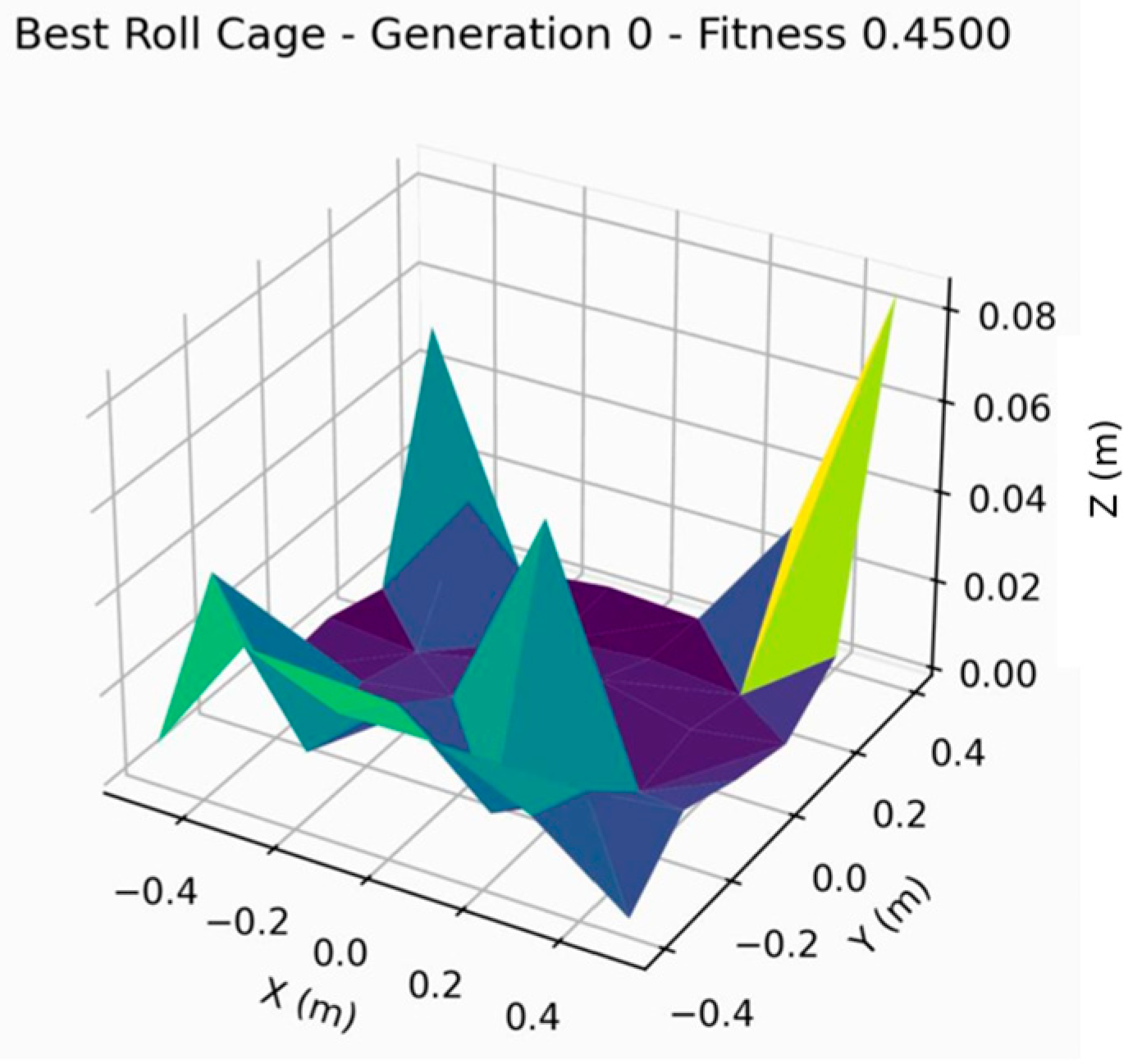
The vertex heights were initialized randomly within predefined bounds to generate diverse candidate geometries. A convex hull operation was applied to the generated surface points to ensure a closed and physically valid mesh suitable for simulation. This representation enabled systematic and continuous variation in the external profile mesh while maintaining a consistent structural topology across all candidates. The resulting parametric mesh structure and generated surface geometry are illustrated in
Figure 1.
2.1.3. Physics-Based Rollability Evaluation
Candidate geometries were evaluated using a physics simulation environment implemented in PyBullet version 3.2.7. For each candidate profile mesh, the mesh was attached to a wheeled robot model within the simulation.
To assess rollability performance, a series of stochastic disturbance trials was conducted. In each trial, randomized forces or torques were applied to induce tipping conditions. The simulation was advanced until the system reached a stable resting state. The final orientation of the robot was evaluated to determine whether it had successfully returned to an upright configuration.
Multiple trials were performed for each candidate to account for variability in disturbance direction and magnitude. The fitness value of each geometry was defined as the proportion of successful upright recoveries relative to the total number of disturbance trials, as follows:
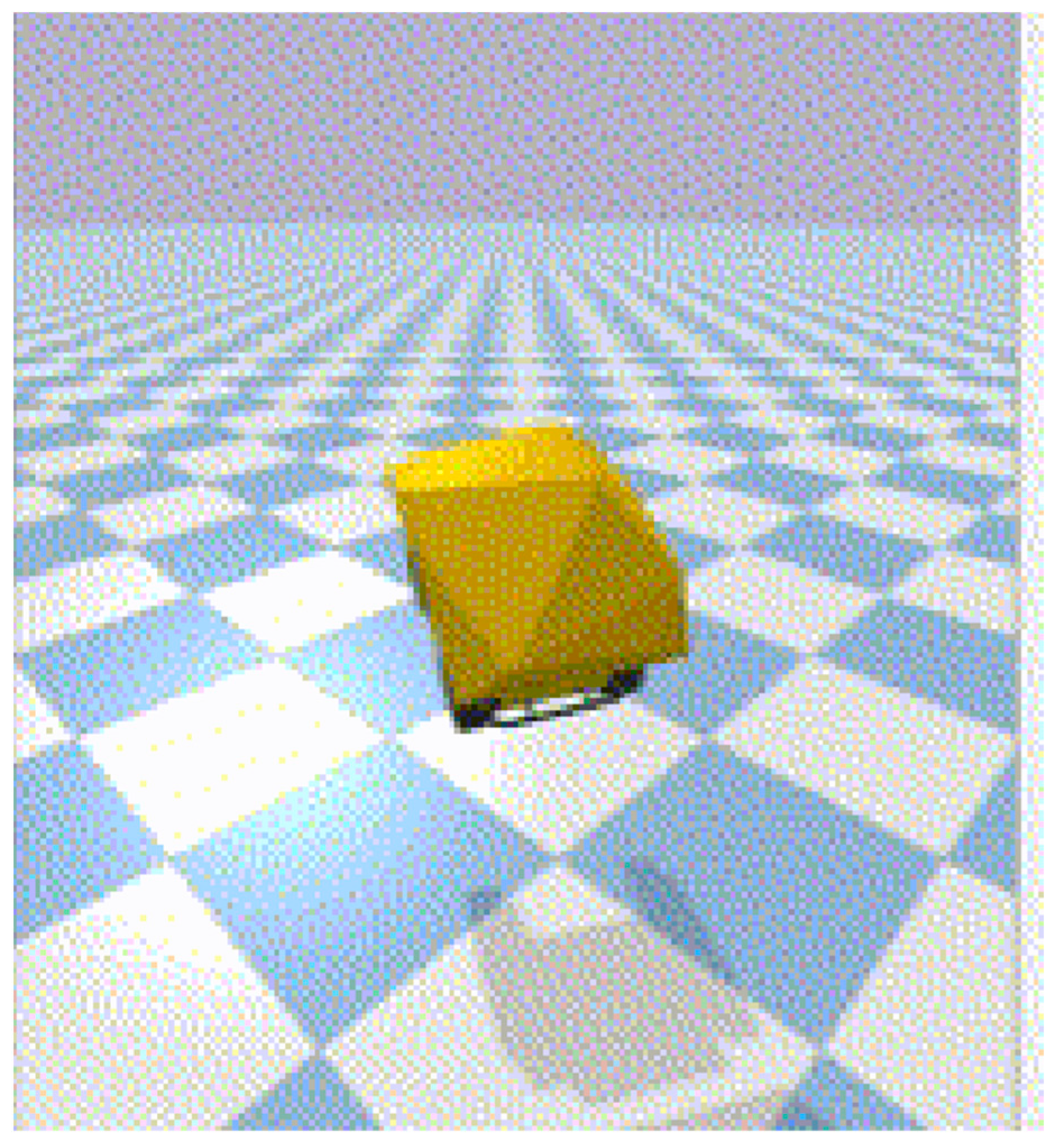
This formulation directly quantified the simulated probability of passive self-righting. The robot’s behavior during tipping and recovery within the physics-based simulation environment is illustrated in
Figure 2.
2.1.4. Evolutionary Optimization Using CMA-ES
Since rollability behavior is governed by nonlinear contact dynamics and discontinuous physical interactions, a gradient-free optimization approach was required. A Covariance Matrix Adaptation Evolution Strategy (CMA-ES) was employed to optimize the continuous vertex-height parameters of the profile mesh.
In each generation of the optimization process, the following tasks were performed:
CMA-ES sampled a population of candidate meshes by perturbing the current parameter distribution.
Each candidate was evaluated using the physics-based rollability procedure described above.
Fitness values were computed and recorded.
The covariance matrix and mean parameter vector were updated to bias future sampling toward higher-performing regions of the design space.
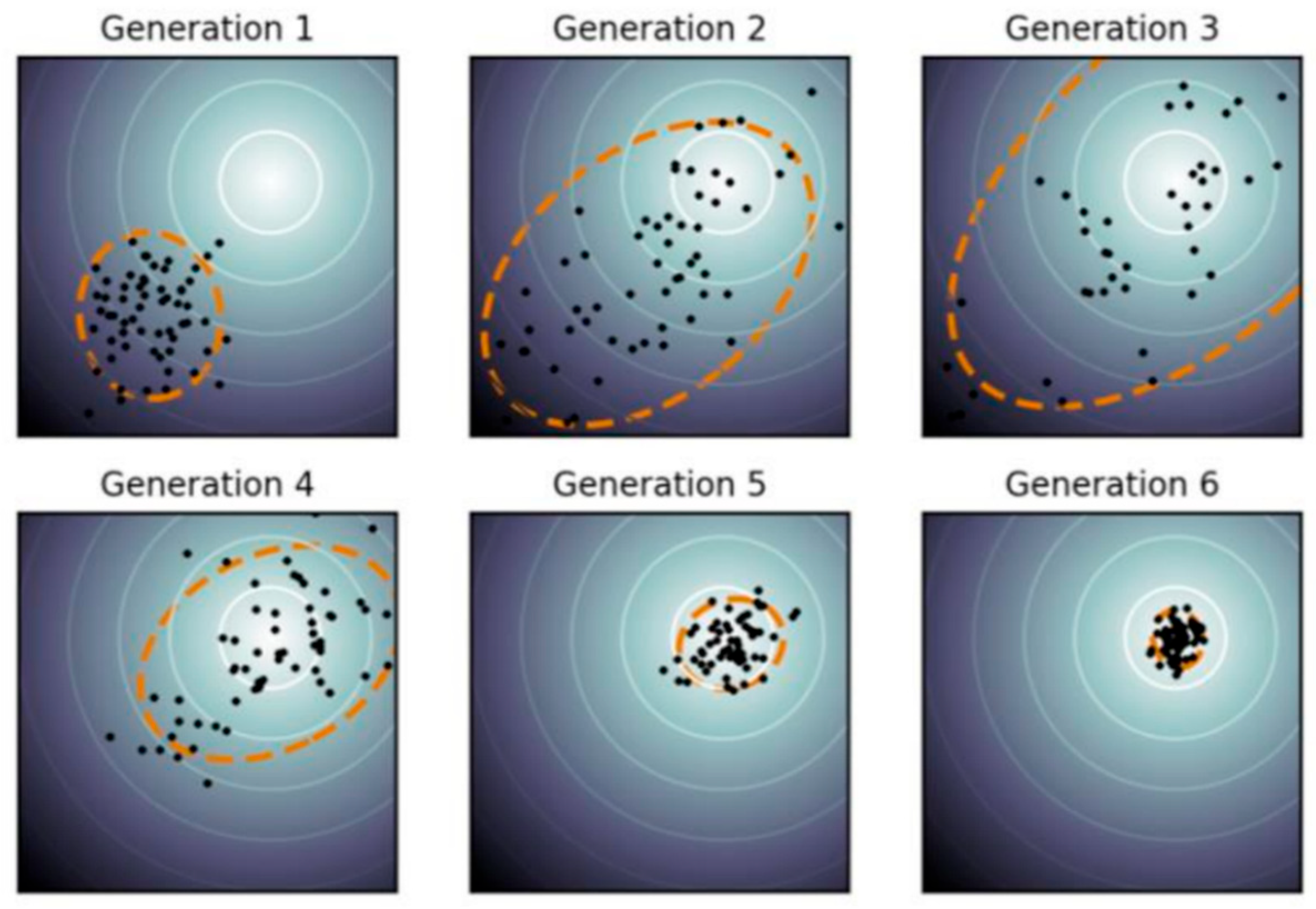
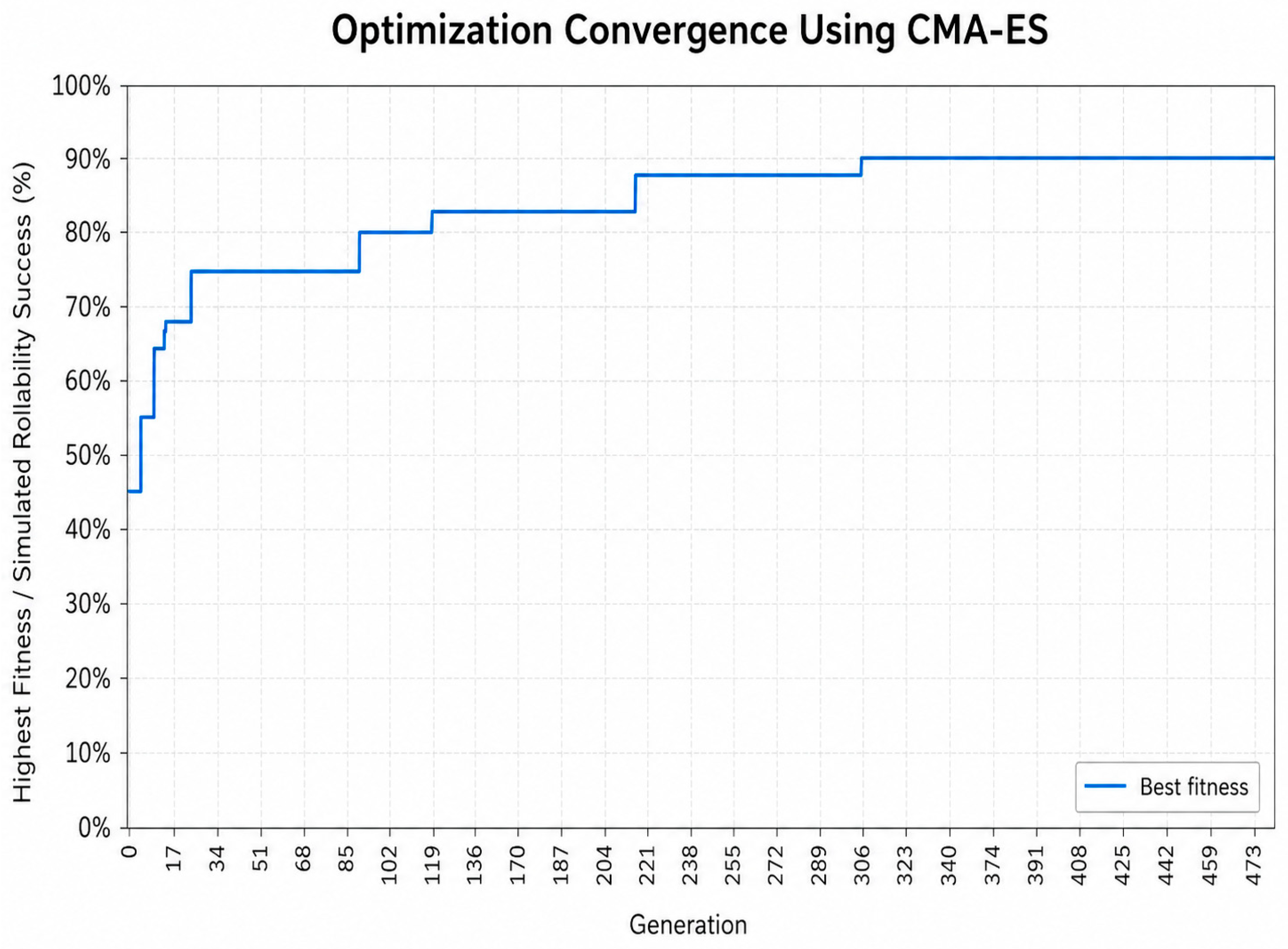
The optimization proceeded iteratively over multiple generations until convergence criteria were met, such as stabilization of fitness improvement or attainment of a target performance threshold. The CMA-ES process updates the sampling distribution across generations to search toward higher-performing regions of the design space, as conceptually illustrated in
Figure 3. The actual optimization convergence, represented by the best fitness value across generations, is shown in
Figure 4.
2.1.5. Selection of Experimental Mesh Designs
Throughout the optimization process, candidate geometries and corresponding fitness values were logged and stored for analysis. From the evolved population, three representative geometries were selected for fabrication and experimental validation.
The selection criteria included high simulated rollability performance, structural feasibility for 3D printing, and geometric diversity to enable meaningful experimental comparison.
Figure 4 presents the optimization convergence curve, where the best fitness value represents the highest simulated rollability performance achieved up to each generation. These selected profile meshes were designated as Mesh A, Mesh B, and Mesh C and were subsequently fabricated and evaluated using the physical experimental framework described in the next section.
2.2. Experimental Methodology
2.2.1. Experimental Overview
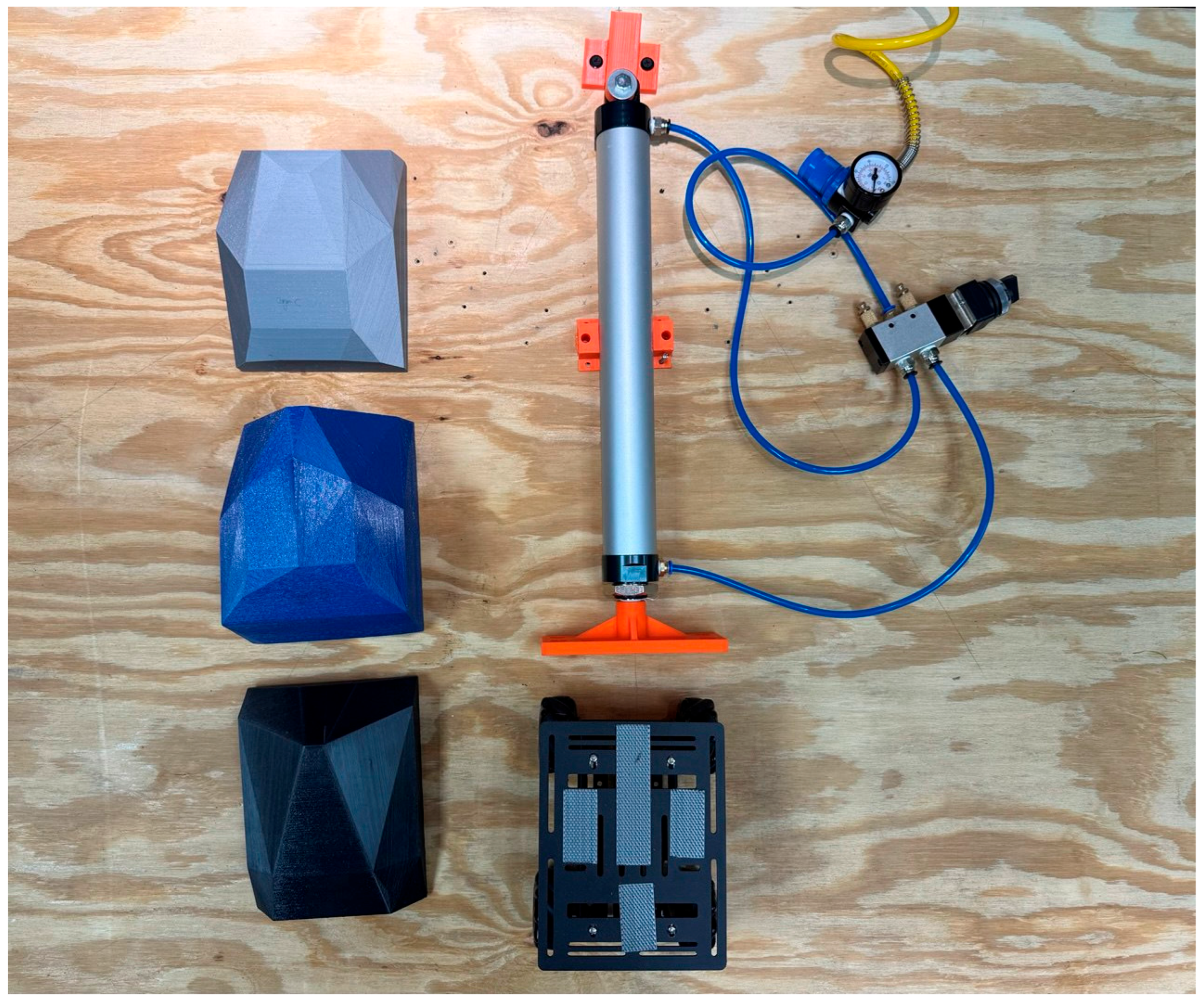
The experimental component of this study was designed to evaluate the rollability of wheeled robotic chassis equipped with different profile mesh designs under controlled launching conditions. A custom pneumatic launcher system was designed and developed to provide repeatable disturbances at specified heights, speeds, and angles, as shown in
Figure 5. The primary outcome measure was whether the chassis successfully returned to a stable “on-the-wheels” configuration after impact.
2.2.2. Launcher System Design
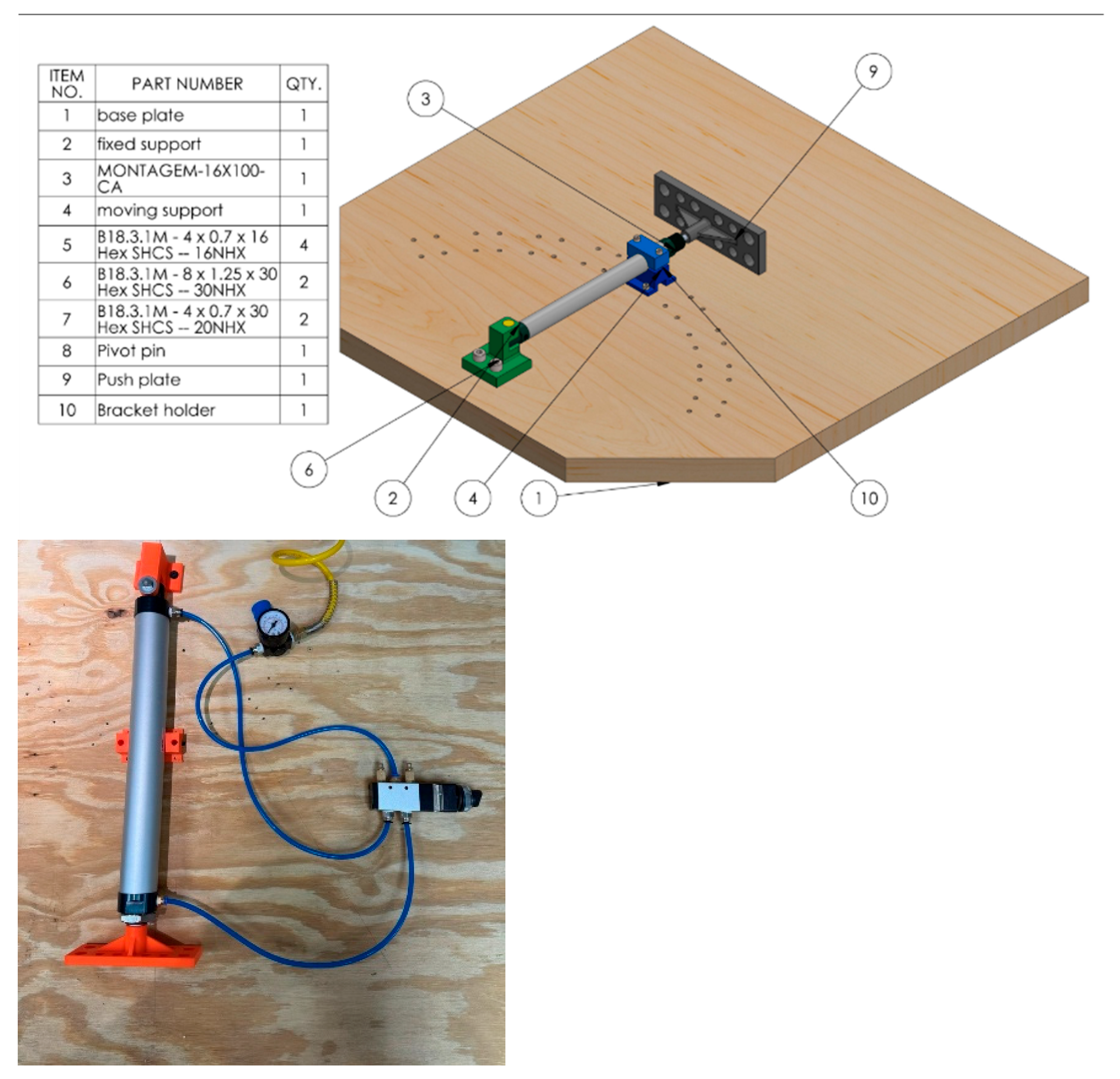
A custom launcher system was designed in SolidWorks 2024 and fabricated to enable controlled and repeatable launches. The system consisted of a wooden base plate with a series of pre-drilled angular mounting holes, a fixed support, a moving support, a push plate, and a bracket holder. The fixed and moving supports, push plate, and bracket holder were manufactured via fused deposition modeling (FDM) 3D printing, while the base plate was fabricated from wood.
Actuation was provided by an MAL 25 × 150 double-acting aluminum pneumatic cylinder with a 25 mm bore and 150 mm stroke, enabling controlled extension and retraction of the push plate. The cylinder was mounted between the fixed and moving supports and aligned to transmit force directly to the test chassis. A directional control valve regulated airflow to the cylinder, while an inline pressure regulator with a gauge was used to monitor and maintain the supply pressure. The system was connected to an air compressor through pneumatic hoses. Two regulated operating pressures were used during testing: 30 psi and 60 psi, corresponding to the target launch-speed conditions of approximately 0.8 m/s and 1.5 m/s, respectively. The pneumatic actuation arrangement, including the cylinder, pressure regulator with a gauge, directional control valve, tubing, and push plate, is shown in
Figure 6.
Angular launch conditions were set mechanically using predefined and drilled mounting positions on the base plate corresponding to −60°, −30°, 0°, +30°, and +60°, as illustrated in
Figure 6. This approach ensured consistent and repeatable angle alignment across all trials.
A memory foam layer was placed under the impact region and kept fixed in the same position for all trials. This layer was used to reduce potential damage to the chassis and wheels while maintaining a consistent laboratory impact condition. The same double-sided adhesive tape method was used to attach each profile geometry to the chassis. This method allowed the profiles to be attached and removed between configurations; however, once attached, each profile was firmly fixed to the chassis, and no visible loosening or detachment was observed during the tests. Although these choices improved repeatability and protected the prototype, the memory foam and adhesive attachment may influence rebound behavior, energy dissipation, friction, and local compliance. Therefore, the experimental results should be interpreted as controlled laboratory rollability performance rather than direct rigid-ground performance.
2.2.3. Robot Platform, Wheels, and Mesh Configurations
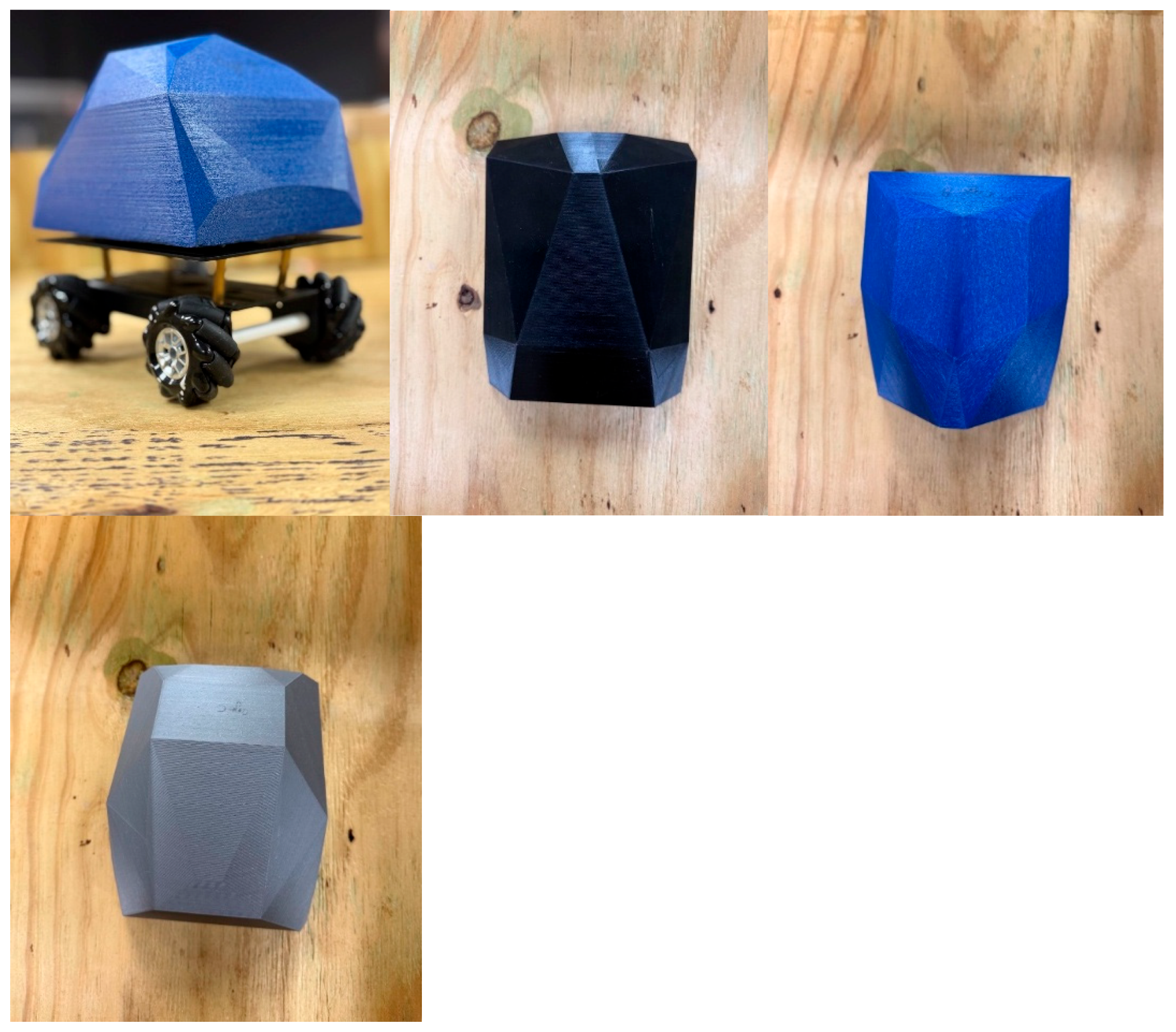
The test object consists of a rigid wheeled chassis equipped with interchangeable geometric meshes. Three mesh designs (A, B, and C), generated through computational optimization, were fabricated using 3D printing and attached to the chassis using double-sided adhesive tape. This attachment method ensured consistent placement while allowing rapid mesh replacement between trials.
The chassis was supported by Mecanum wheels, selected for their mechanical robustness and ability to withstand repeated impact loads. Two custom axles were designed and 3D printed to mount the wheels and tolerate the impact forces experienced during elevated launches. The combination of Mecanum wheels and reinforced axles ensured consistent rolling behavior without structural failure during testing, as illustrated in
Figure 7.
2.2.4. Experimental Procedure
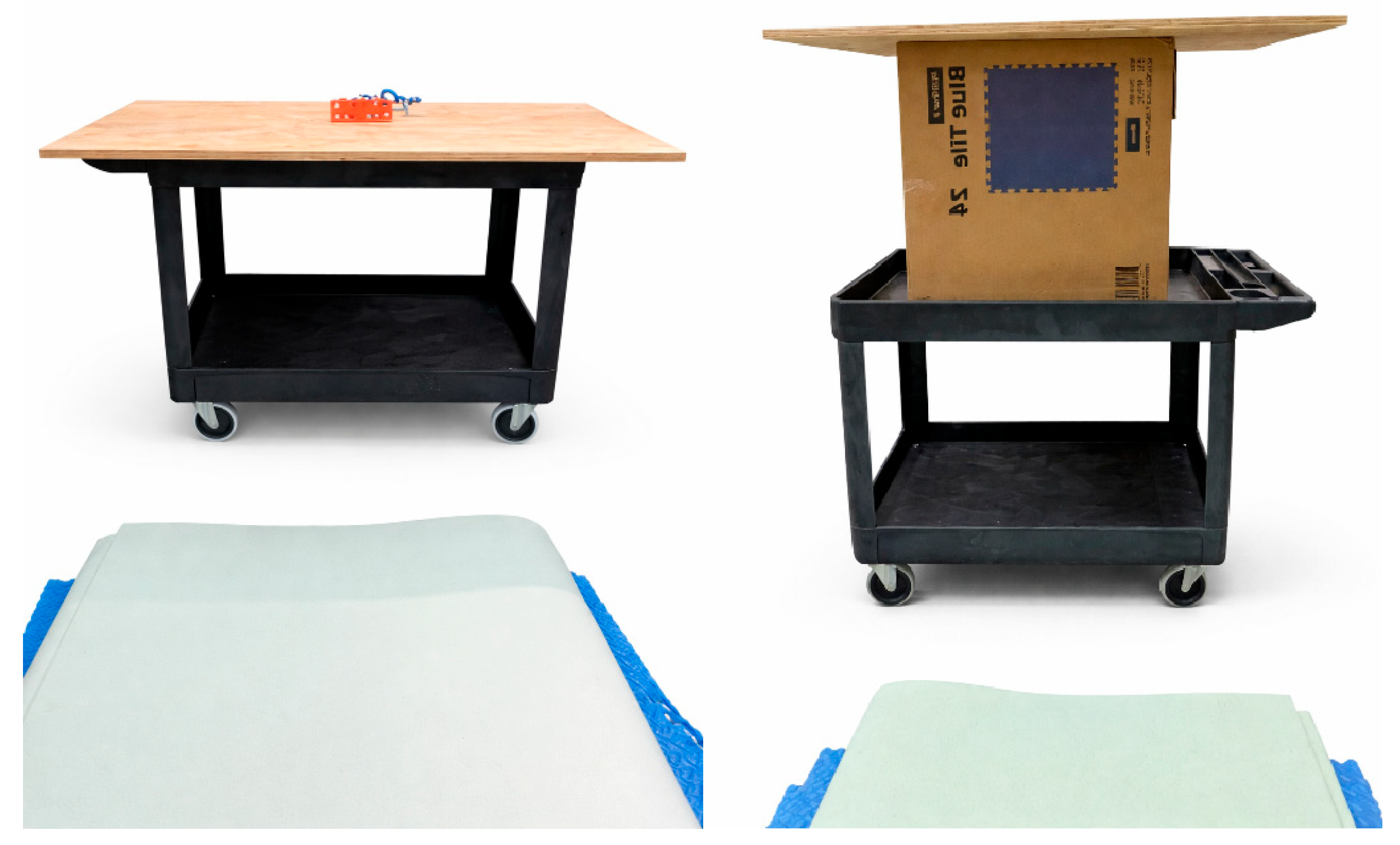
Experiments were conducted in an indoor laboratory environment on a rigid, level floor. Two launch heights were evaluated: 0.75 m and 1.30 m. The 0.75 m height was achieved using a laboratory table, while the 1.30 m height was obtained by placing an additional rigid support (carton) on the table, as shown in
Figure 8. To reduce the risk of wheel or axle damage, a layer of memory foam was placed on the floor beneath the impact zone.
For each trial, the chassis was positioned against the push plate at the selected angle. Launch speed was controlled through pneumatic pressure settings and verified prior to testing. Two nominal launching speeds were used: 0.8 m/s and 1.5 m/s. Each launch was performed by actuating the pneumatic valve, causing the cylinder to extend and impart a controlled push to the chassis.
Each configuration, including the baseline no-profile configuration, Mesh A, Mesh B, and Mesh C, was tested under all combinations of height, speed, and angle. The complete experimental matrix is described in
Section 2.2.6.
2.2.5. Measurement and Validation
Launch speed was validated using a distance–time measurement approach. The travel distance from the initial launch position to the edge of the wooden base was measured as approximately 0.34 m. The corresponding travel time was recorded, and the launch speed was calculated using the relationship between distance and time. For the target launch speeds of 0.8 m/s and 1.5 m/s, the expected travel times over the 0.34 m distance were approximately 0.42 s and 0.22 s, respectively. The recorded travel times were checked against these expected values to confirm the two launch-speed conditions.
Pneumatic pressure was monitored using the inline pressure gauge to maintain repeatable actuation conditions across trials. The lower operating pressure of 30 psi was used for the approximately 0.8 m/s launch condition, while 60 psi was used for the approximately 1.5 m/s launch condition. All outcomes were assessed by visual inspection, with each trial classified as successful if the chassis returned to an upright, on-the-wheels configuration.
2.2.6. Experimental Matrix and Outcome Definition
The experimental matrix consisted of four configurations: the baseline no-profile configuration, Mesh A, Mesh B, and Mesh C. Each configuration was tested at two launch heights (75 cm and 130 cm), two launch speeds (0.8 m/s and 1.5 m/s), and five launch angles (−60°, −30°, 0°, +30°, and +60°). This resulted in 20 grouped test conditions per configuration and 80 grouped experimental outcomes in total.
For each grouped condition, five repeated physical trials were conducted to improve repeatability. Therefore, the full experimental campaign included 400 individual physical trials. The outcome for each grouped condition was recorded as binary. A condition was classified as successful when the number of successful repetitions was greater than the number of failed repetitions. Success was defined as the chassis returning to an on-the-wheels configuration after disturbance; otherwise, the condition was classified as failure. A summary of the experimental conditions is provided in
Table 2.
3. Results
This section reports the experimental rollability outcomes for three mesh designs (A–C) and a baseline (no-mesh) configuration under controlled launch conditions. Rollability success was defined as the chassis returning to an on-the-wheels configuration following launch. Results are presented as percentage success rates and are organized to show the effects of launch height, speed, and angle, followed by cross-configuration comparisons.
3.1. Rollability by Height and Angle
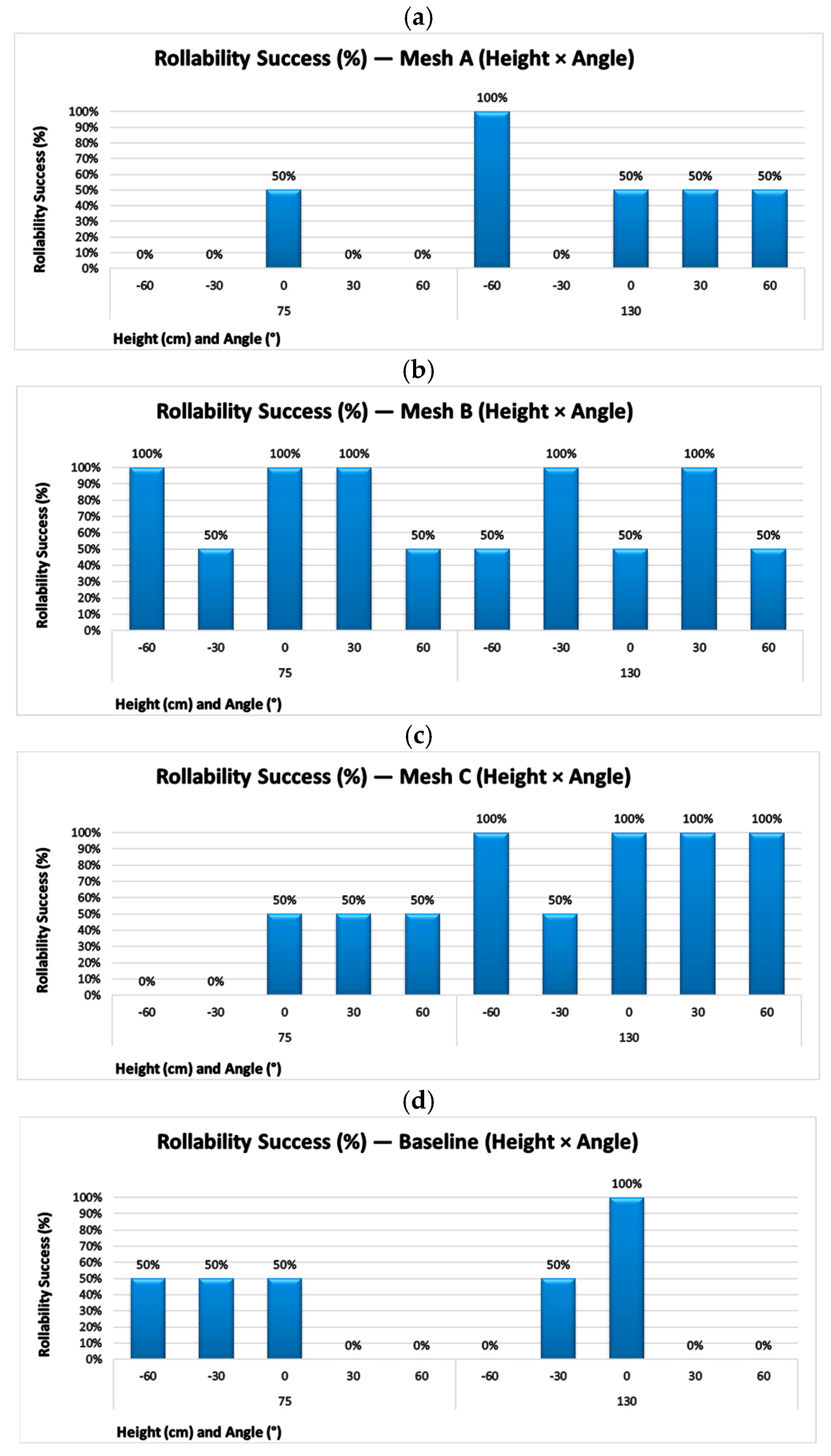
The effect of launch height and launch angle on rollability success is presented in
Figure 9. The height values are reported in centimeters, and the angle values are reported in degrees.
As shown in
Figure 9a, Mesh A showed limited success at 75 cm, with successful recovery mainly occurring at 0°. At 130 cm, the success rate increased, reaching 100% at −60° and approximately 50% at 0°, +30°, and +60°.
Figure 9b shows that Mesh B achieved the strongest performance across the tested height and angle conditions. Unlike Mesh A, Mesh B maintained high success rates at both 75 cm and 130 cm, indicating more consistent rollability behavior.
As illustrated in
Figure 9c, Mesh C showed moderate success at 75 cm and improved performance at 130 cm. At the higher height, Mesh C reached 100% success at −60°, 0°, +30°, and +60°.
The baseline configuration without a profile geometry is shown in
Figure 9d. Compared with Mesh B and Mesh C, the baseline showed lower overall rollability success, with successful recovery mainly concentrated near 0° and limited success at negative angles.
3.2. Rollability by Speed and Angle
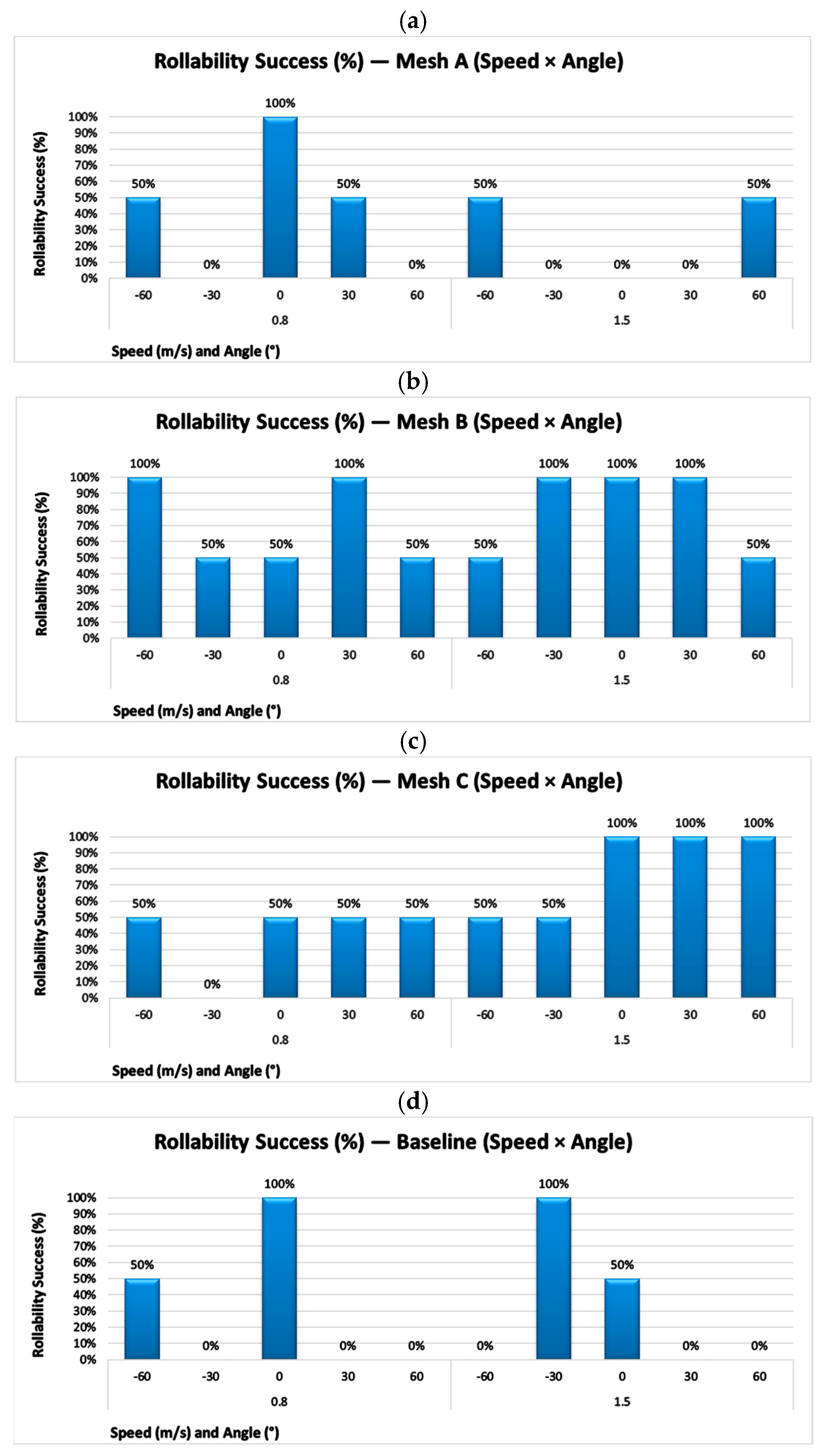
The effect of launch speed and launch angle on rollability success is presented in
Figure 10. Speed values are reported in meters per second, and angle values are reported in degrees.
As shown in
Figure 10a, Mesh A achieved successful recovery mainly near 0° at 0.8 m/s, while its performance decreased at 1.5 m/s. This indicates that Mesh A was less effective under higher-speed launch conditions.
Figure 10b shows that Mesh B maintained strong performance across both launch speeds and most launch angles. This suggests that Mesh B provided the most consistent rollability improvement among the tested profile geometries.
As illustrated in
Figure 10c, Mesh C showed improved performance at the higher speed of 1.5 m/s, particularly between 0° and +60°. This indicates that Mesh C benefited from increased launch energy under positive-angle conditions.
The baseline configuration without a profile geometry is shown in
Figure 10d. Compared with Mesh B and Mesh C, the baseline showed stronger speed sensitivity, with moderate success at 0.8 m/s and reduced success at 1.5 m/s.
3.3. Angle-Based Results Compared Across Speed
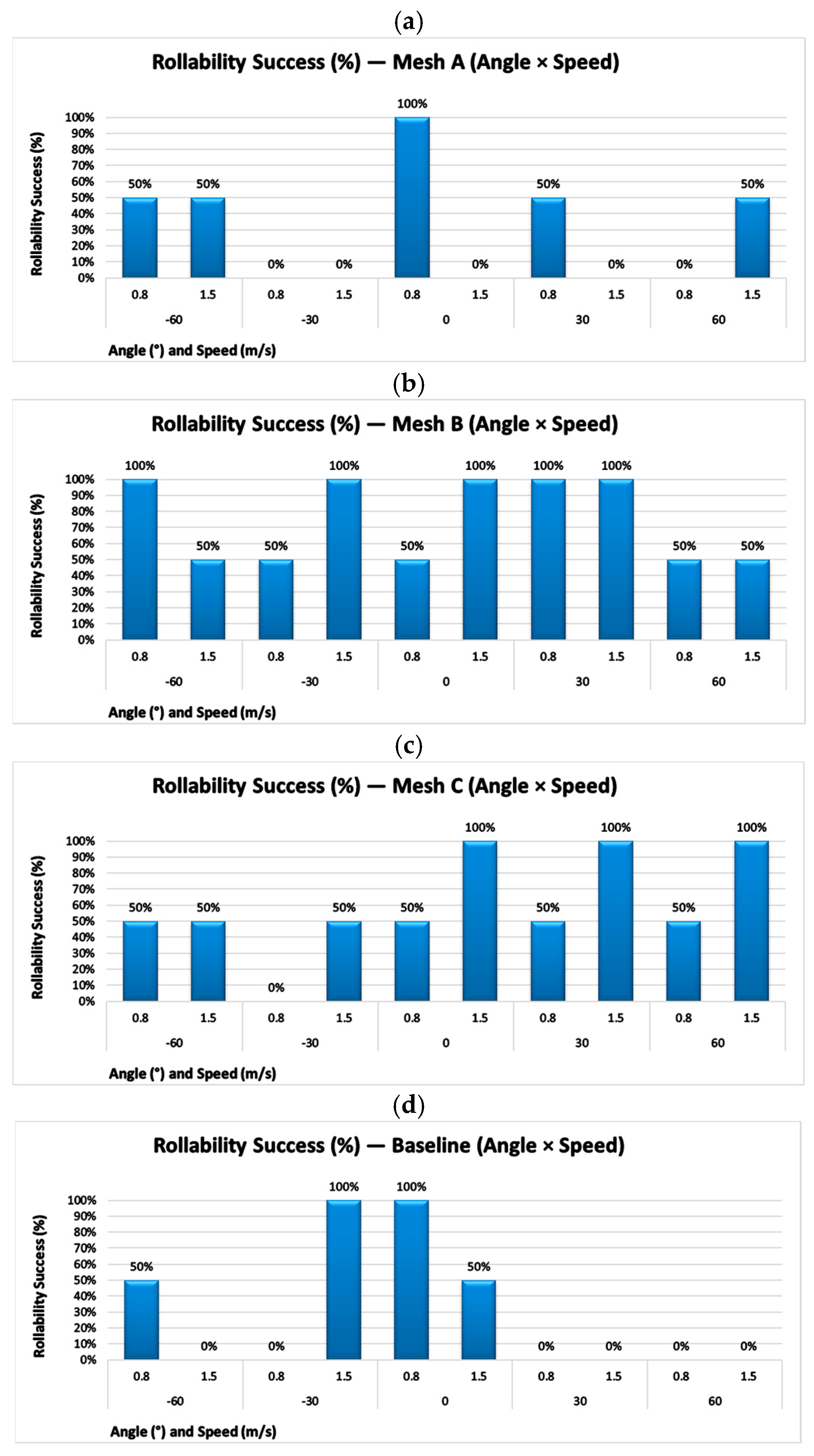
The effect of launch angle on rollability success at both launch speeds is presented in
Figure 11. Speed values are reported in meters per second, and angle values are reported in degrees.
As shown in
Figure 11a, Mesh A showed successful recovery mainly near 0°, with lower performance at the higher launch speed of 1.5 m/s. This indicates that Mesh A was sensitive to increased launch speed.
Figure 11b shows that Mesh B maintained high success across most launch angles at both 0.8 m/s and 1.5 m/s. This confirms that Mesh B provided the most stable rollability performance across the tested speed and angle conditions.
As illustrated in
Figure 11c, Mesh C showed improved success at 1.5 m/s compared with 0.8 m/s, especially at positive launch angles. This suggests that Mesh C benefited from higher launch energy in those conditions.
The baseline configuration without a profile geometry is shown in
Figure 11d. Its performance decreased substantially at 1.5 m/s, with successful recovery mainly limited to 0°.
3.4. Overall Comparison Across Configurations
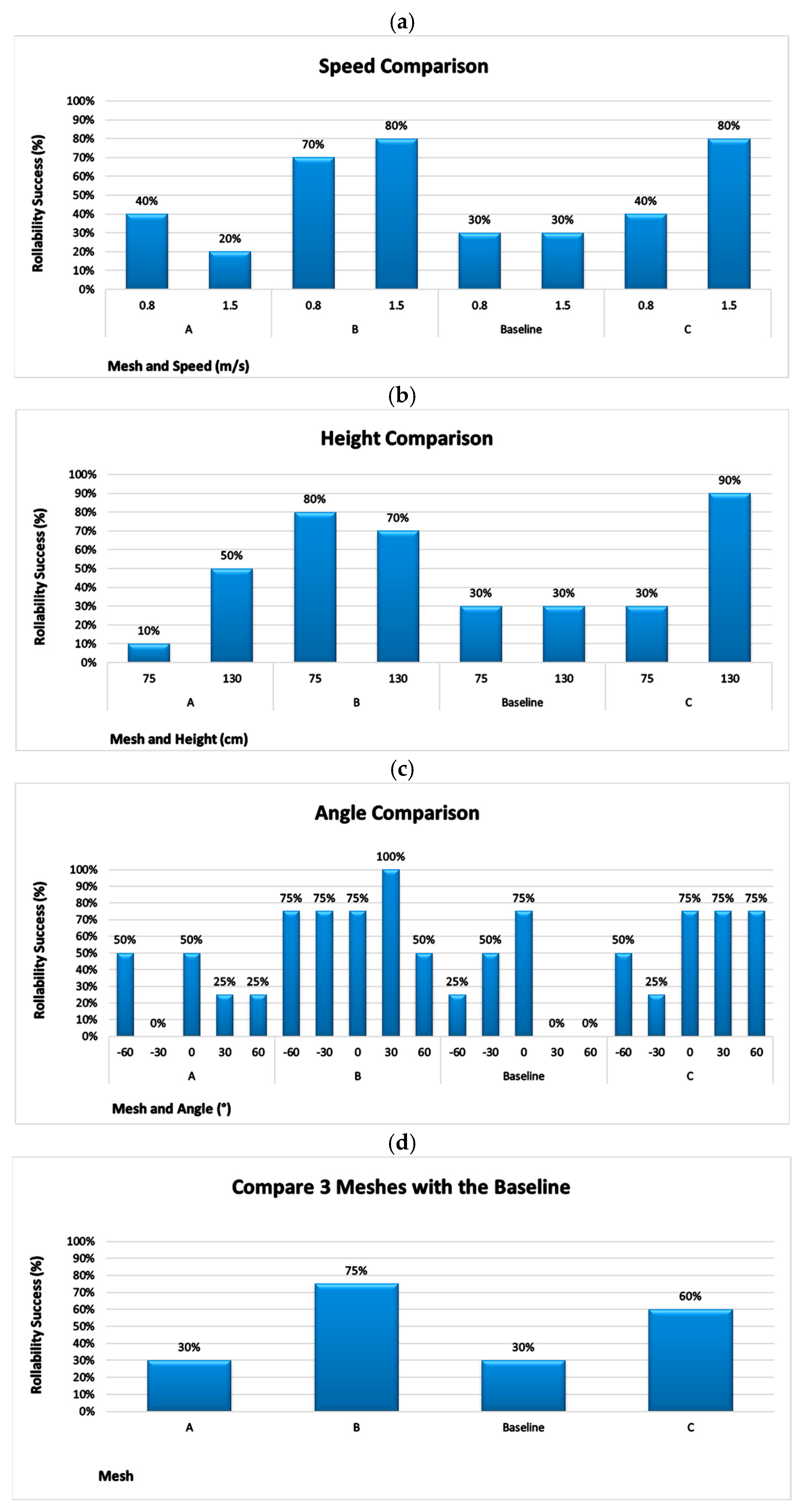
The aggregated rollability success across all tested configurations is presented in
Figure 12. The percentages in
Figure 12 were calculated by converting each trial outcome into a binary value, where success = 1 if the chassis returned to its wheels and failure = 0 otherwise. The reported success percentage represents the average success value for each grouped condition.
As shown in
Figure 12a, the speed-based comparison indicates that Mesh B and Mesh C maintained improved rollability performance at higher launch speed, while Mesh A and the baseline showed reduced success. The height-based comparison in
Figure 12b shows that Mesh A and Mesh C improved at 130 cm, while Mesh B remained consistently high, and the baseline remained comparatively low. The angle-based comparison in
Figure 12c further confirms that Mesh B provided the most robust performance across the tested launch angles. Finally,
Figure 12d shows that Mesh B achieved the highest overall success rate, followed by Mesh C, while Mesh A and the baseline showed similar overall performance.
4. Discussion
The experimental results demonstrate that rollability performance is strongly influenced by profile mesh geometry. Comparing the three profile mesh configurations, clear geometric trends can be identified that help explain the observed differences in success rates.
The simulated rollability values of the selected profile meshes were compared with the experimental outcomes to evaluate simulation-to-physical agreement. Profile Mesh A, Profile Mesh B, and Profile Mesh C showed simulated rollability values of approximately 66%, 35%, and 46%, respectively, while their corresponding experimental success rates were 30%, 75%, and 60%. Therefore, the simulation and experimental rankings were not identical. Profile Mesh A showed the highest simulated rollability but did not outperform the baseline experimentally, whereas Profile Mesh B achieved the highest experimental success despite a lower simulated value.
This mismatch highlights the sensitivity of contact-rich rollability behavior to simulation-to-real differences, including friction, rebound behavior, wheel–ground interaction, material compliance, memory foam deformation, and profile attachment stiffness. Accordingly, the simulation was used primarily as a design-space exploration tool, while the physical experiments provided the final validation of rollability performance.
To quantitatively describe the geometric differences among the selected profile meshes,
Table 3 summarizes their overall dimensions and maximum profile heights. All three profile meshes shared the same length and width, while their maximum heights differed substantially.
Among the tested designs, Profile Mesh B consistently exhibited the highest overall performance. One important geometric characteristic of Profile Mesh B is its greater vertical profile compared with Profile Meshes A and C. The increased height likely provides improved ground-contact leverage during impact, allowing the structure to generate a larger restoring moment that assists the chassis in returning to an upright position. In contrast, Profile Mesh A, which has the lowest vertical profile, demonstrated the weakest performance and did not improve over the baseline configuration. This suggests that insufficient profile height limits the ability of the structure to generate effective rotational recovery.
Profile Mesh C showed intermediate performance between Profile Mesh A and Profile Mesh B. Its maximum profile height is greater than that of Profile Mesh A but lower than that of Profile Mesh B, which corresponds to its moderate improvement in rollability success. This trend indicates that profile height is an important factor influencing the dynamic recovery behavior of the chassis.
In addition to height, surface geometry appears to contribute significantly to rollability performance. Profile Mesh B incorporates sharper surface transitions and steeper contact angles compared with the smoother geometry of Profile Mesh A. These sharper features likely improve energy redirection during impact and promote rotational motion that assists the chassis in returning to its wheels. The interaction between surface angle and ground-contact mechanics, therefore, appears to be a key factor in successful passive self-righting.
The use of memory foam under the impact region may also influence the collision response by increasing local compliance, dissipating a portion of the impact energy, and reducing rebound compared with a rigid surface. Although the same foam condition was maintained for all trials, different profile mesh geometries may interact with this compliant surface in different ways. A taller profile with sharper contact transitions, such as Profile Mesh B, may redirect the remaining impact energy more effectively into rotational recovery, while lower or smoother profiles may dissipate energy without generating a sufficient restoring moment. Therefore, the measured rollability performance reflects the combined effect of profile geometry, contact orientation, and the controlled compliant impact surface used in this study.
From a design perspective, the results suggest that an effective profile mesh should combine sufficient vertical height with inclined or sharper contact surfaces that can generate favorable recovery moments during impact. However, the profile mesh should not be designed only for maximum height. Excessive size or overly aggressive geometry may interfere with normal driving, obstacle clearance, or interaction with the environment. Therefore, a practical self-righting profile mesh should balance rollability improvement, manufacturability, compactness, and compatibility with normal mobile robot operation. The performance of Profile Mesh B suggests that a geometry combining higher contact leverage and sharper recovery surfaces is a promising direction for passive self-righting profile design.
Although the proposed profile meshes improved passive rollability, their effects on overall robot mobility should also be considered. Added external geometry may influence driving stability, terrain traversability, center of gravity, energy consumption, obstacle interaction, and normal maneuverability. These effects were outside the scope of the present study, which focused on passive self-righting after controlled disturbances. Future work should therefore evaluate the trade-off between improved rollability and normal driving performance, including stability during motion, energy demand, terrain clearance, and interaction with uneven surfaces.
Overall, the results suggest that both profile height and surface angle are critical parameters in optimizing rollability performance. Properly engineered profile mesh geometries can substantially improve self-righting capability under dynamic launch conditions, whereas insufficient structural height or overly smooth surface transitions may limit recovery effectiveness.
5. Conclusions
This study evaluated geometry-driven rollability improvement for a wheeled chassis using a combined simulation-informed design process and controlled experimental testing. Three profile mesh configurations (A–C) and a baseline (no-mesh) configuration were tested across varying launch height, speed, and angle, with success defined as returning to an on-the-wheels configuration after disturbance.
Overall, the results confirm that rollability performance is strongly dependent on geometry and contact interactions, consistent with prior work emphasizing dynamic, morphology-driven self-righting behavior.
Among the evaluated designs, Profile Mesh B achieved the highest and most consistent success, Profile Mesh C provided intermediate improvement, and Profile Mesh A did not improve over the baseline. The comparison against the baseline demonstrates that geometric modification can substantially increase recovery probability, but only when the design meaningfully shapes contact transitions and recovery moments.
These findings support the use of simulation-based geometric exploration combined with experimental validation for rollability design, aligning with the literature, which stresses both the promise of simulation for design-space search and the necessity of physical testing in contact-sensitive tasks.
Future Work
We will investigate the influence of wheel design on rollability performance. Flexible wheel geometries will be developed and tested using the same profile mesh configurations to quantify the effect of wheel compliance on rollability success. This study will provide insight into the combined impact of chassis geometry and wheel properties on dynamic self-righting behavior.