Article

Designing Human–Robot Collaborative Workstations: An ECS-Based Framework for Efficiency and Worker Empowerment

Grenoble-Sciences pour la Conception, L’optimisation et la Production, Grenoble INP, University Grenoble Alpes, 38000 Grenoble, France
*
Author to whom correspondence should be addressed.
Machines 2026, 14(6), 586; https://doi.org/10.3390/machines14060586
Submission received: 16 April 2026 / Revised: 20 May 2026 / Accepted: 22 May 2026 / Published: 25 May 2026

Abstract

Human–robot collaborative workstations are increasingly deployed in industry, yet their design mainly focuses on productivity and ergonomics, with limited consideration of worker empowerment. This paper proposes a framework integrating Enabling Collaborative Situations (ECSs) into the design and evaluation of collaborative assembly systems. Following an exploratory design-based case study approach, the framework is implemented through the development of a physical demonstrator workstation in a realistic assembly context. It structures task allocation and interaction design while introducing an operational ECS evaluation grid combining industrial performance, ergonomics, and worker experience. The results suggest that collaboration design can preserve expected industrial performance while expanding worker autonomy, supporting work activity, and providing a basis for more empowering human–robot collaborative workstations.

1. Introduction

Industry 5.0 is a major shift in industrial systems, emphasizing human-centric, resilient, and sustainable manufacturing. This new paradigm promotes systems where operators and technology collaborate safely and efficiently and empowers workers [1]. Unlike the previous Industry 4.0 paradigm, which primarily focused on digitalization, efficiency, and automation, Industry 5.0 aims to reintroduce the human being as an active and central stakeholder in production systems [2,3]. Collaborative robots (cobots) have emerged as a key technological enabler, combining flexibility, safety, and productivity in shared workspaces [4]. Wang et al. [5] explore the benefits of integrating human and robot capabilities for more efficient task execution. They propose a novel approach based on mutual assistance and coadaptation mechanisms, aiming to ensure more efficiency and flexibility.
We categorize the literature on human–robot interaction in three approaches: augmenting workers with technology to compensate for cobot shortcomings, resolving issues with interaction technology, or augmenting the cobot with technology to be aware of worker limitations and to respond accordingly. Wang [6] defines the augmented operator as a human enhanced by digital tools, artificial intelligence, and robotics, for improved decision making, cognitive, and physical performance. Two main paradigms guide this integration: human–technology collaboration, where humans supervise or correct automated systems, and technology–human collaboration, where systems support and enhance human action [2,7]. Technology helps workers complete tasks efficiently. The key question is how to enable genuine worker collaboration. Research on Human–Robot Interaction (HRI) has advanced collaboration mechanisms, particularly safety protocols, control interfaces, and shared task planning [8]. Most studies focus on technical and ergonomic optimization, neglecting the broader question of how collaboration promotes worker development [9]. Recent European projects focus on protecting the worker with a safe and efficient collaboration and the acceptance of human operators, thanks to artificial intelligence, wearables, and adaptive task allocation [7,10]. They enhance efficiency by providing robots with modules to adapt to active workers, re-plan tasks, and respond to worker requests. Villani et al. [8] and Lorenzini et al. [9] found that most current frameworks assess human factors or productivity but do not address the potential workers’ capabilities in human–robot collaboration.
Gladysz and Romero [3,11] discuss the role of operators in industrial systems. They argue that the technology-driven solutions are efficient, safe, and human-centric but do not adequately address organizational, social, and work-related aspects. Despite extensive research on human–robot collaboration, existing design approaches mainly address productivity and ergonomics, with limited operational methods to design and evaluate worker empowerment.
To address this gap, this paper proposes an Enabling Collaborative Situation (ECS)-based framework for designing and evaluating collaborative workstations, emphasizing collaboration conditions as a core structural element and introducing an operational evaluation grid combining industrial performance, ergonomics, and worker experience. In this study, ECS refers to collaborative work situations designed not only to maintain performance and human factor requirements but also to preserve workers’ ability to act, support their activity, expand their room to maneuver, and allow the work situation to be adjusted over time. The approach focuses on how workers perform their activities within the industrial organization and how technology can support actual work, rather than prescribing optimal behaviors. The novelty of the paper is that the proposed method explicitly structures collaborative workstation design around worker empowerment as an operational design objective, which goes further than existing HRC design methods, which mainly address technical integration, productivity, ergonomics, or task allocation.
The main contributions of this paper are as follows:
(1) an ECS-based framework for designing productive, human-centered, and empowering collaborative workstations;
(2) an operational evaluation grid that translates ECS criteria into assessable indicators combining industrial performance, ergonomics, and worker experience;
(3) a demonstrator-based application of the framework in a realistic collaborative assembly workstation; and
(4) a set of design principles and guidelines for empowerment-oriented human–robot collaboration. The remainder of the paper is structured as follows. Section 2 reviews the literature and defines the research hypotheses. Section 3 presents the research methodology. Section 4 introduces the proposed framework. Section 5 presents and discusses the results. Section 6 concludes the paper.

2. State of the Art and Research Questions

To understand the scientific situation, we investigated how professionals and academics integrate cobots into workers’ environments, different collaboration scenarios, task allocation strategies, and the empowerment of industrial workers (Section 2.1, Section 2.2, Section 2.3 and Section 2.4 respectively). We present the research hypotheses in this paper’s Section 2.5.

2.1. Design Methods to Integrate Cobots in Workers’ Environment

Early design methods prevented collaborative tasks. Villani et al. [8] emphasized safety as the top priority, requiring physical or sensor-based barriers to separate humans and robots. Subsequently, researchers focused on developing software with cognitive capabilities to mimic workers, to reduce the efforts for integration [12]. With cobots designed to physically interact with humans in a shared environment, integration in Human–Robot Collaboration (HRC) contexts is discussed in terms of combining safety-related solutions with interaction aspects at the workstation level [13], most of the time with intuitive user interfaces for programming interactions [8]. Then, design-oriented methods were operationalized through task analysis or decomposition, layout or planning, and task allocation mechanisms [14,15]. Proposed approaches focus on simplifying implementation and programming while maintaining flexibility through parametrized methodology [16], function blocks [6] or lean approaches [17].
Designers can use these methods to safely integrate cobots into industrial workstations, focusing on implementation and human factors. Our research aims to expand on these methods by providing further guidance for workers’ development.

2.2. Human–Robot Collaboration Scenarios

Collaboration scenarios describe how humans and cobots interact technically and organizationally. Task distribution, temporal coordination, and worker–robot interdependence shape work organization and performance.
Task distribution refers to whether the operator and robot work on the same workpiece independently or in collaboration, as well as the division of responsibilities between humans and robots, with the robot either acting autonomously or supporting human tasks [8,18]. Temporal coordination refers to whether human and robot actions occur at different times or simultaneously. Manjunath et al. [19] and El Zaatari et al. [18] distinguish between sequential and simultaneous interactions in a shared workspace. The degree of interdependence is measured by the physical and temporal coupling of human and robot actions. According to Manjunath et al. [19], cooperative interaction involves simultaneous action on related but separate tasks, requiring coordination to prevent interference. Collaborative interaction involves simultaneous work on the same component by humans and robots, requiring close coordination and advanced safety measures.
Among the most widely referenced taxonomies, El Zaatari et al. [18] propose four canonical collaboration modes: independent work on two different workpieces, sequential work on the same workpiece but in two different tasks performed at different times, simultaneous work where two different tasks are performed on the same workpiece at the same time, and supportive work where cobot and worker perform the same task together at the same time. The distribution of tasks between the operator and cobot, the timing of their actions, and the level of coupling between them determine whether the worker can influence, manage variability, and regulate task performance. The collaborative modes can either support or limit empowerment by shaping the actions, adjustments, and strategies available to the operator. In this sense, collaboration scenarios constitute a key design dimension. The scenario’s conditions can facilitate or hinder workers’ development in practical settings. The design of the collaboration scenarios must be formalized.

2.3. Task Allocation Strategies

Task allocation is crucial in HRC design, as it distributes functions and responsibilities between the operator and robot. The literature identifies various task allocation strategies. Static allocation assigns roles before task execution but lacks adaptability in dynamic situations [20]. Dynamic or automatic task allocation adjusts task distribution during execution through optimization mechanisms or autonomous decision processes, typically based on system-level criteria such as productivity or ergonomic indicators [20,21]. Mixed-initiative task allocation allows both human and robot to influence task distribution, adjusting responsibilities based on predefined rules, capabilities, or contextual information [22]. According to a recent review by Baratta et al. [21], most research on task allocation focuses on optimizing productivity or reducing physical workload. These objectives are often addressed separately, rather than jointly. In addition, operator involvement in task allocation decisions is frequently limited to predefined choices or supervisory roles, with the allocation logic primarily embedded in algorithms or system rules.
Tausch et al. [23] highlight that task allocation is not just a technical task distribution mechanism but also a process that can affect operators’ experiences working with automated systems. Allocation strategies can impact operators’ understanding of the system, their role, and their involvement in tasks. Current task allocation strategies do not adequately consider workers’ contributions to collaborative work. New strategies that support workers’ development are needed.

2.4. Empowerment

Empowerment in ergonomics and organization science is how individuals perceive their role and influence within a work system. Oliveira et al. [24] defines it as a dynamic process that changes over time and varies based on context and work conditions. Psychology defines empowerment as a motivational construct with four cognitive dimensions: meaning, competence, self-determination, and impact [25]. Meaning refers to a personal perception of a work’s value, relative to one’s own standards. Competence is the belief in one’s ability to perform work tasks effectively. Self-determination is the ability to initiate and regulate work-related actions, while impact refers to the degree of perceived influence on work outcomes. These four dimensions describe how individuals experience empowerment in their work, independent of technology. In industrial digitalization, Kaasinen et al. [26] describes empowering the worker as adapting the work system to workers’ skills, capabilities, and needs, while supporting workers in understanding their tasks and developing their competence. Sen’s capability approach [27] defines human development as the opportunity to act and choose, rather than just the achieved outcomes. Ergonomics aims to analyze work situations that allow workers to act, learn, and adapt, rather than just following instructions [28].
Empowerment assessment is empirical. Spreitzer [25] created the 12-item Psychological Empowerment Scale. Kaasinen et al. [26] use dynamic user models based on worker and manufacturing environment measurements. These measures allow the system to adapt its behavior (automation level, assistance type) and provide workers with feedback to enhance their skills. These authors highlight the importance of transparency, early demonstrations, and participatory design when implementing continuous worker evaluation.
ECS is a promising theoretical approach to supporting worker empowerment in industrial settings. The concept is based on Sen’s capability approach and applied to industrial settings [28,29]. An enabling situation allows workers to develop new skills, exercise autonomy, and engage in meaningful activities, moving beyond performance-driven design. The concept of an enabling work environment emphasizes the potential for work to foster human development. It is considered enabling when it provides resources, freedom, and learning opportunities that empower workers to act. According to Compan [29], a worker can transform available technological, organizational, or social resources into meaningful and autonomous actions. An enabling situation is characterized by three criteria: learning a new, more efficient way of working and maintaining this learning; increasing possibilities and ways of working; adjusting the human–technology couple’s attributes over time. These criteria are associated with six dimensions: usefulness, hedonic aspects of User Experience (UX), and meaning of work; acceptance; situated margin of maneuver; instrumental genesis and ongoing design; peer support; and operational transparency.
The literature discusses worker empowerment as a theoretical concept for industrial use. The ECS framework offers a theoretical basis and practical indicators for designing ideal workstations.

2.5. Research Hypotheses

The paper aims to create a framework for evaluating and designing collaborations that enhance human empowerment, efficiency, and safety while promoting collaboration between humans and cobots.
The literature review found that human–robot workstation design methods focus on technical and human efficiency but do not empower workers. There is limited guidance on how to design and configure collaborative work. We believe the ‘ECS’ framework can be used to structure and coordinate the HRC design framework.
To create a safe, efficient, and empowering collaborative HRC workstation, the following assumptions are needed:
H1. 
The ‘ECS’ frame helps design HRC workstations that meet productivity, human factor, and empowerment requirements.
H2. 
The human–robot collaboration structure shapes the design process.
H3. 
ECS-derived indicators allow for evaluating a workstation’s efficiency and empowerment during use and design.

3. Research Approach

3.1. Approach Principles

This study uses a design-based methodology to develop a human–robot collaborative workstation, where theoretical concepts and empirical design activities are iteratively integrated. The goal was to explore how the ECS concept can guide the design of human–robot workstations and to examine its relevance as a theoretical tool for analyzing collaborative work in industrial assembly. This study is an exploratory case study aiming at examining the relevance and operationalization of the ECS-based approach in a controlled but realistic assembly context. The proposed framework is therefore theory-informed and design-oriented: its purpose is to structure collaborative workstation design and assessment through ECS principles, not to derive or validate a predictive formal model.
The proposed approach aims to understand how design choices affect human–robot interaction and work activity. By designing and evaluating a collaborative workstation, we produce knowledge that leads to transferable methodological insights and design principles. The study uses a physical demonstrator as a research tool to apply ECS principles in a controlled yet realistic assembly context. It is not optimized for industrial use. By focusing on a single solution, we can analyze how task allocation, interaction mechanisms, and workstation configuration affect the emergence of desired work situations. The demonstrator acts as a bridge between engineering and ergonomics, facilitating interdisciplinary discussion.

3.2. The Research Process

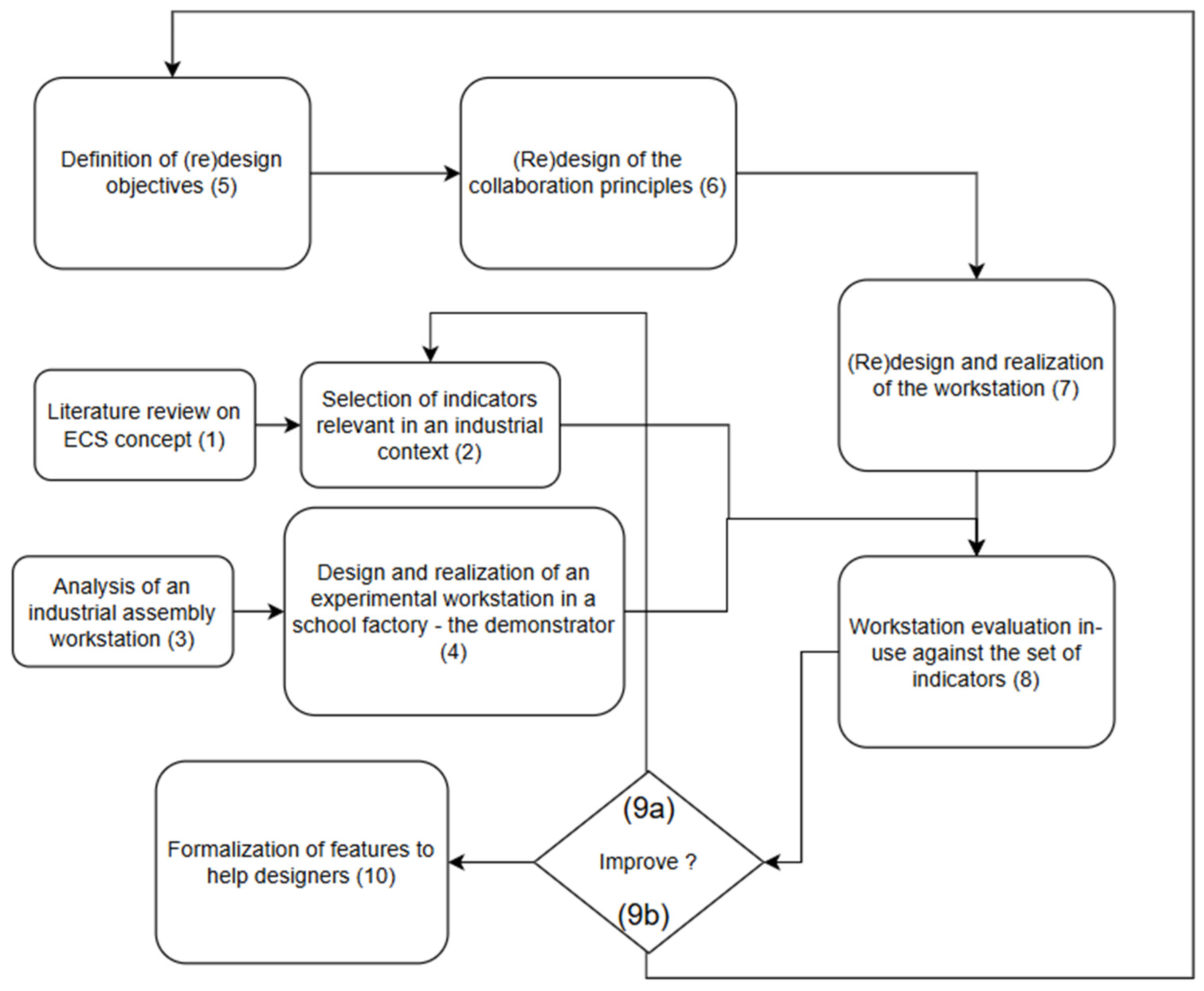
A literature review on enabling collaborative situations in industrial assembly contexts involving workers and cobots was conducted (1 in Figure 1). This review establishes a theoretical basis for choosing and adapting initial ECS indicators for human–robot collaboration in industrial assembly settings (2). In parallel, researchers analyze an existing industrial assembly workstation to anchor the research in realistic production conditions (3). Based on the analysis, a reference assembly workstation was designed and built in a controlled factory, mimicking the industrial environment for controlled observation and experimentation (4). This reference workstation serves as a baseline for the research setting, ensuring its ecological validity.
The workstation is evaluated using the set of ECS indicators (8), which include productivity, ergonomics, workload, and qualitative feedback. The evaluation helps determine the workstation’s potential for improvement. The indicators and measurements can be updated (9a, 2), and objectives for redesigning the workstation are defined (9b → 5). This allows for updating collaboration principles (6) and creating a new workstation version (7). The new workstation is evaluated against the updated set of indicators (8). Several loops (9a, 2, 9b, 5, 6, 7, 8) may be required to achieve acceptable indicators and the workstation (we did 3 loops in our case).
To close the research process, design processes are synthesized and translated into materials to assist designers (10). This iterative approach results in a demonstration collaborative workstation and transferable insights for designing efficient and empowering human–robot collaboration.

4. The Desired Framework

4.1. The ‘ECS Workstation’ Framework

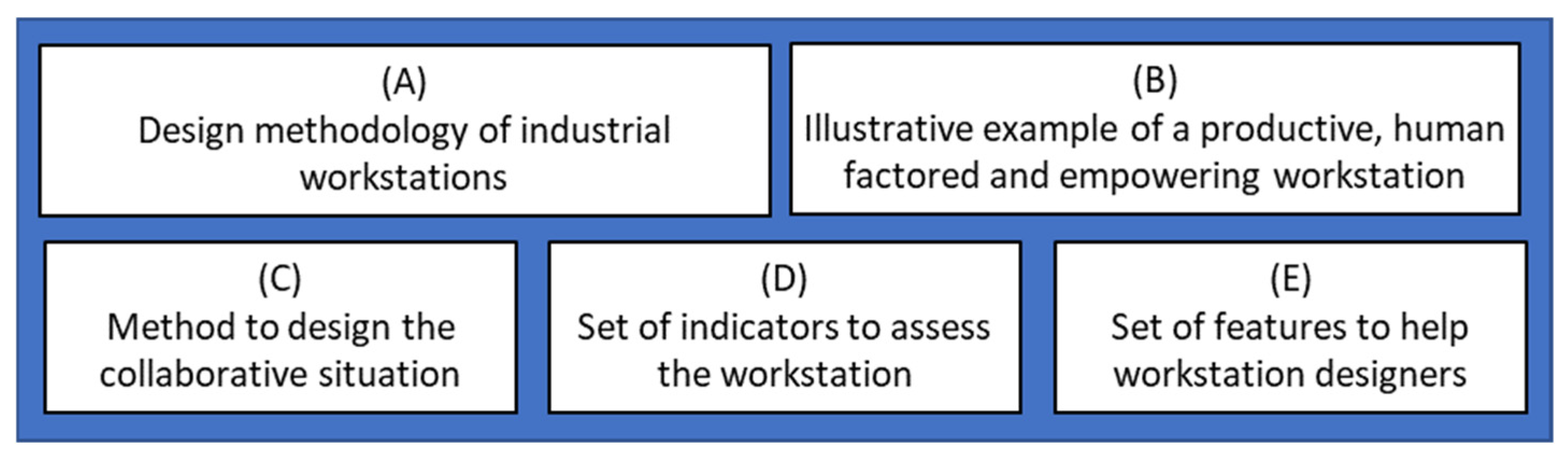
We proposed a framework for developing productive, human-centered, and empowering industrial workstations. The framework consists of 5 main components (Figure 2) that guide the design process of industrial workstations. Additional components may be added for specific function development. The 5 main elements are:
(A)
A methodology for designing industrial workstations. Let engineers use their own tools and methods in practice. The designer’s chosen method is the best one to use.
(B)
A practical example of a workstation that aligns with productivity, human factors, and empowerment standards. Displaying success motivates, proves it is possible, and engages the brain. This is demonstrated in Section 5.1.
(C)
A design method for worker–cobot collaboration. Collaborative activity is a key driver of the design process. Its design is not the optimal behavior resulting from the technical and production decisions. Our approach is detailed in Section 5.2.
(D)
A set of indicators to assess the workstation designed, prototyped or in service. It is the core of our proposal: what does ‘a productive, human-factored and empowering workstation’ mean in practice? The ‘ECS’ concept and indicators are explained in Section 4.2 and used in Section 5.3.
(E)
A set of features to help designers. It is practical knowledge, based on the experience of professionals using the proposed vision. As the set evolves, it will improve both in quality and quantity. The initial feature set is presented in Section 5.4.

4.2. Enabling Work Situation

According to Sen [27], Falzon [28], and Compan et al. [29], an enabling situation is one that allows workers to develop new skills, exercise autonomy, and engage in meaningful activity, transcending purely performance-driven design logics. Compan et al. [29] proposed three criteria to define an enabling situation (Section 2.4).
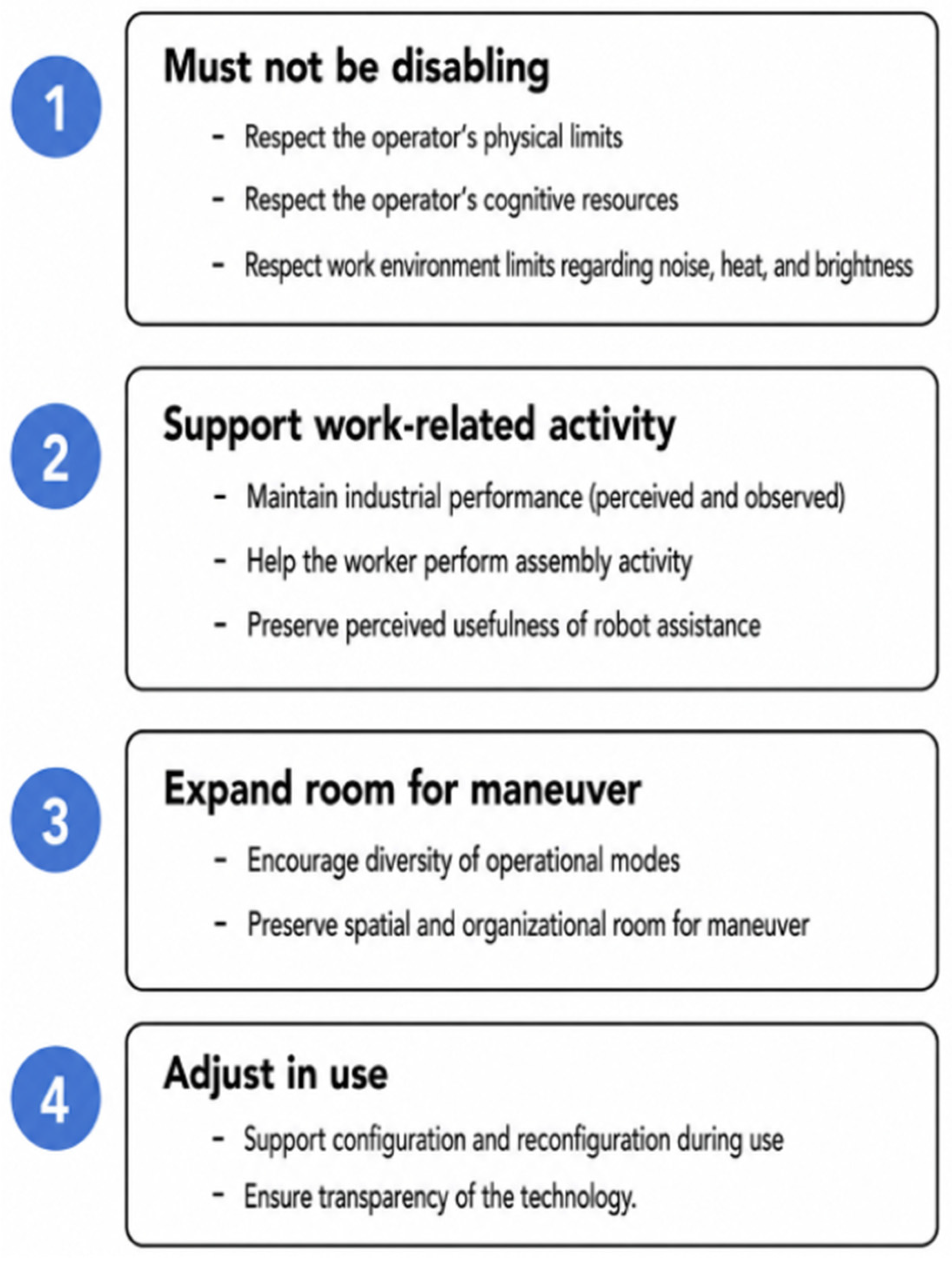
Recent research has developed operational criteria for evaluating and designing collaborative workstations with robots and workers. Lubrez et al. [30] propose a structured set of indicators for an Enabling Collaborative Situation (ECS) in industrial assembly workstations. This process resulted in 4 criteria and 11 indicators for the assessment session (Figure 3). The four criteria are:
(1)
Must not be disabling ①. The cobot must not hinder the operator’s ability to perform tasks. This dimension emphasizes that the robot should not limit the user’s operational intentions or introduce constraints that hinder goal-directed activity. Concretely, it complies with the set of usual requirements for productivity and human factors in classical workstation design methods.
(2)
Support work-related activities ②. The work environment must enhance work-related activities by boosting worker engagement, comfort, and perceived meaning. This should be achieved without compromising productivity. The cobot’s positive impact is measured through affective, hedonic, and meaning-related dimensions.
(3)
Expand the room to maneuver ③. A flexible work environment that allows workers to choose from multiple satisfactory ways to complete tasks, considering individual preferences and situational variability, and worker initiatives, must be provided.
(4)
Adjust in use ④. The human–robot system must be adjusted over time based on the worker’s experience. This includes operational transparency, instrumentation and instrumentalization, configurability, management of unexpected events, and peer support. These elements enable the operator to understand, anticipate, and adapt to the robot’s behavior, resolve malfunctions, and progressively adjust the interaction.

5. Main Results

This section presents the principles and lessons learned from developing a productive, human-centered, and empowering workstation. The workstation is described in Section 5.1 based on the use case. The collaboration design is in Section 5.2, assessment criteria in Section 5.3, and feedback on workstation design in Section 5.4.

5.1. The Demonstrative Workstation

The demonstrator workstation was designed as a case study to demonstrate a collaborative workstation that meets the ECS framework’s requirements for productivity, human factors, and empowerment. The demonstrator is a realistic and controlled industrial assembly environment for analyzing human–robot collaboration with ECS operational indicators.
This section explains the design process. Section 5.1.1 defines the design principles, Section 5.1.2 describes the use case, and Section 5.1.3 summarizes the empowerment criteria-related design decisions.

5.1.1. Design Principles for the Demonstrator

The demonstrator was designed to simulate an industrial assembly environment while maintaining control over human–robot interactions. The following were the key drivers:
The demonstrator replicates the key organizational principles of an industrial assembly line while allowing for controlled experiments. It addresses a repetitive task within a production system that is common in industry. It is designed for small-batch assembly and can be performed manually or with cobot assistance. The workstation allows instant switching between different use modes without physical modification. The cobot enables rapid reconfiguration of interaction scenarios and task allocation strategies when needed. Enabling collaborative situations are more likely in close and meaningful interactions between the operator and the cobot, allowing for situated adjustment and multiple ways to perform the task. During assembly, repetitive preparatory tasks can be parallelized, and fastening operations can be assisted by robots. This allows for simultaneous and supportive collaboration modes at the workstation.
The product, assembly process, production flow, and work organization were chosen based on their ability to promote interaction, autonomy, and flexibility. A stable and repeatable assembly process is necessary for analyzing collaboration design and task allocation independently of production optimization. The assembly operations were organized to be both technically coherent and realistic, while allowing for flexible worker strategies.
The case study was carefully selected based on theoretical foundations and with the different collaboration modes emerging organically from the intrinsic structure of the task. The product and assembly process needed to include both preparation and manipulation-intensive operations, allow for both simultaneous and supportive collaboration, and support various worker strategies. The production flow and work organization were structured to reflect these objectives, making the collaborative workstation a relevant example for analyzing ECS-oriented human–robot collaboration.

5.1.2. The Use-Case Description

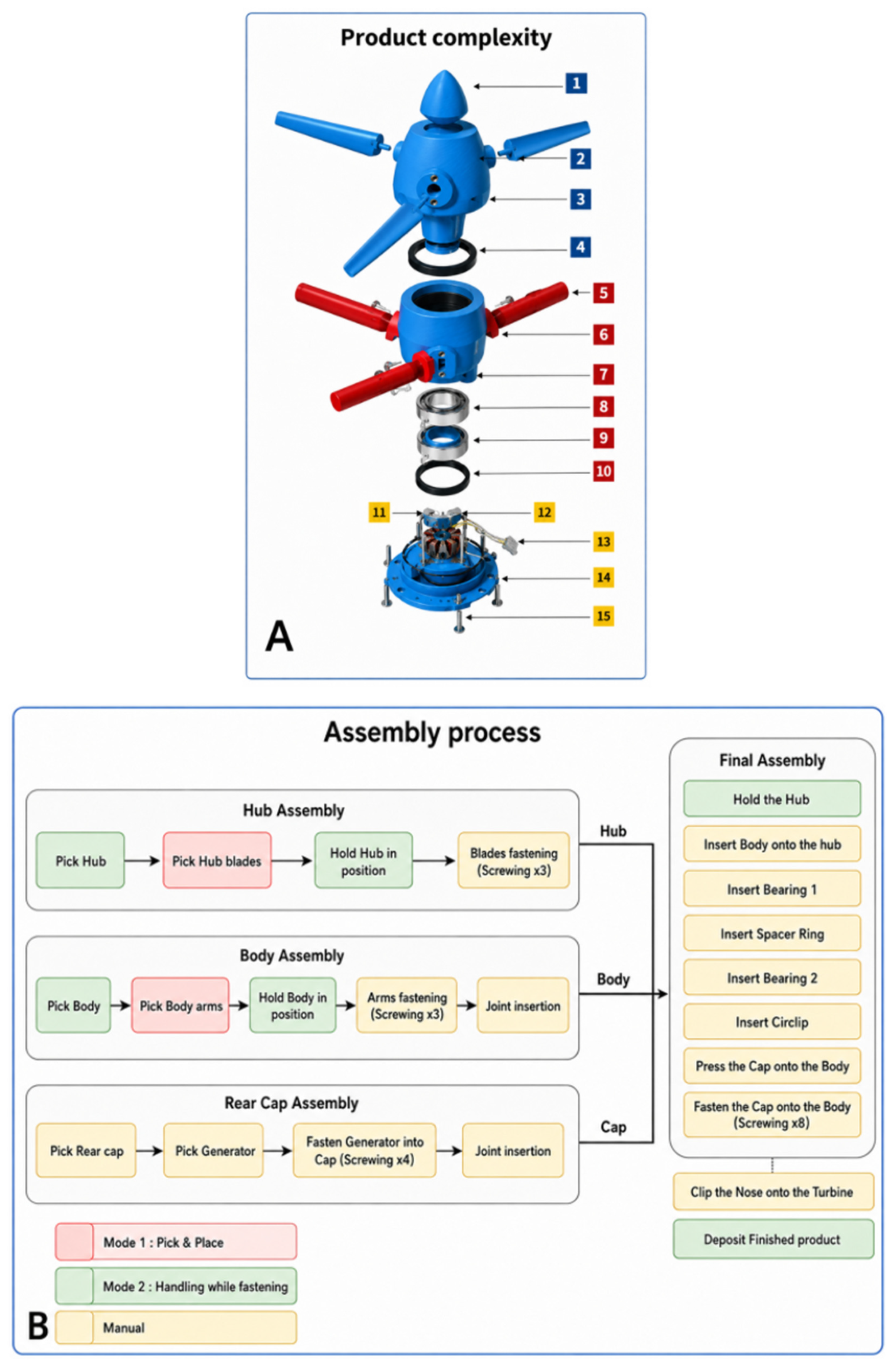
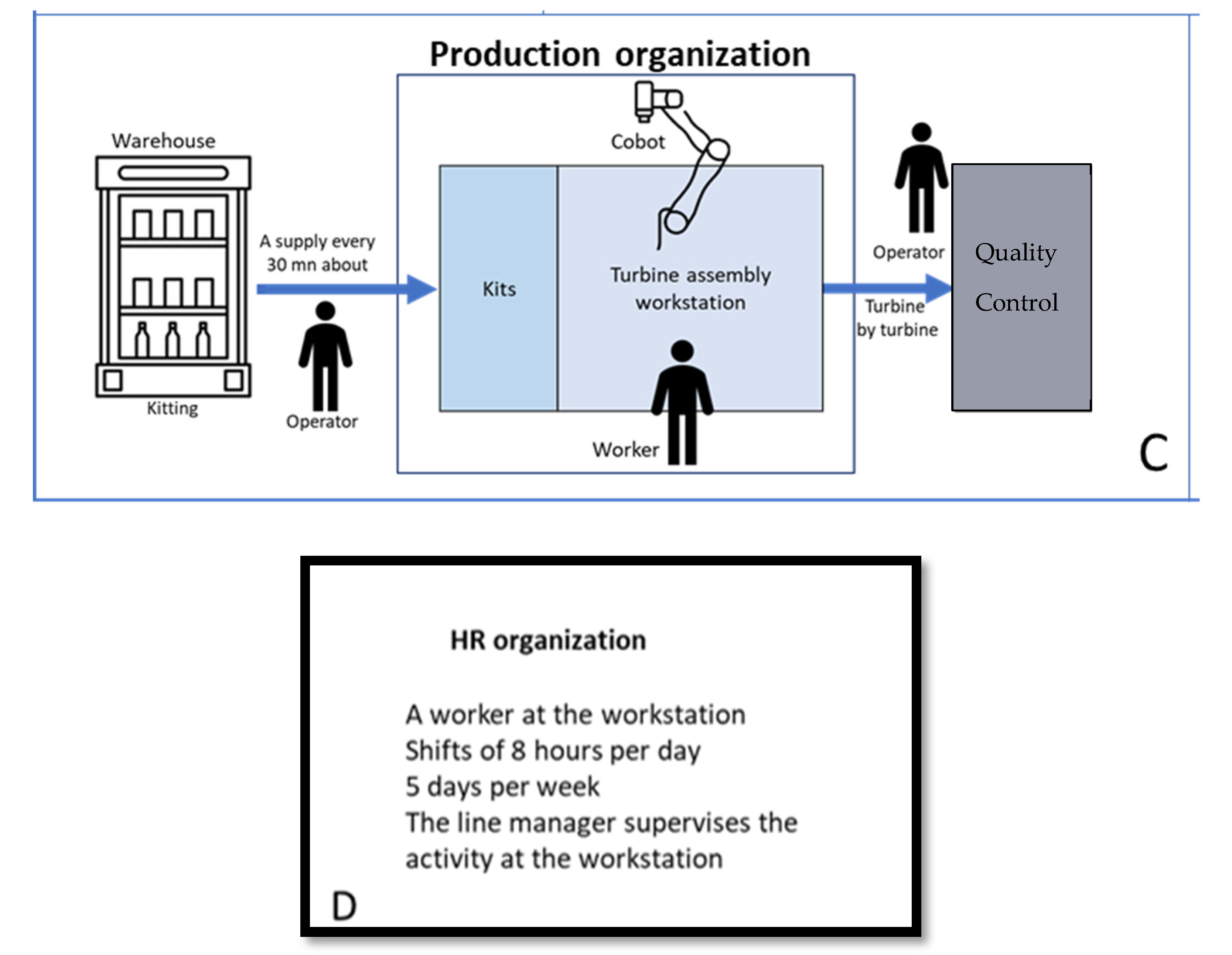
An assembly activity description includes the classical elements: the product and the assembly process with their complexity and flexibility, and meets the specific industrial context: the line production organization and work organization (Figure 4A–D).
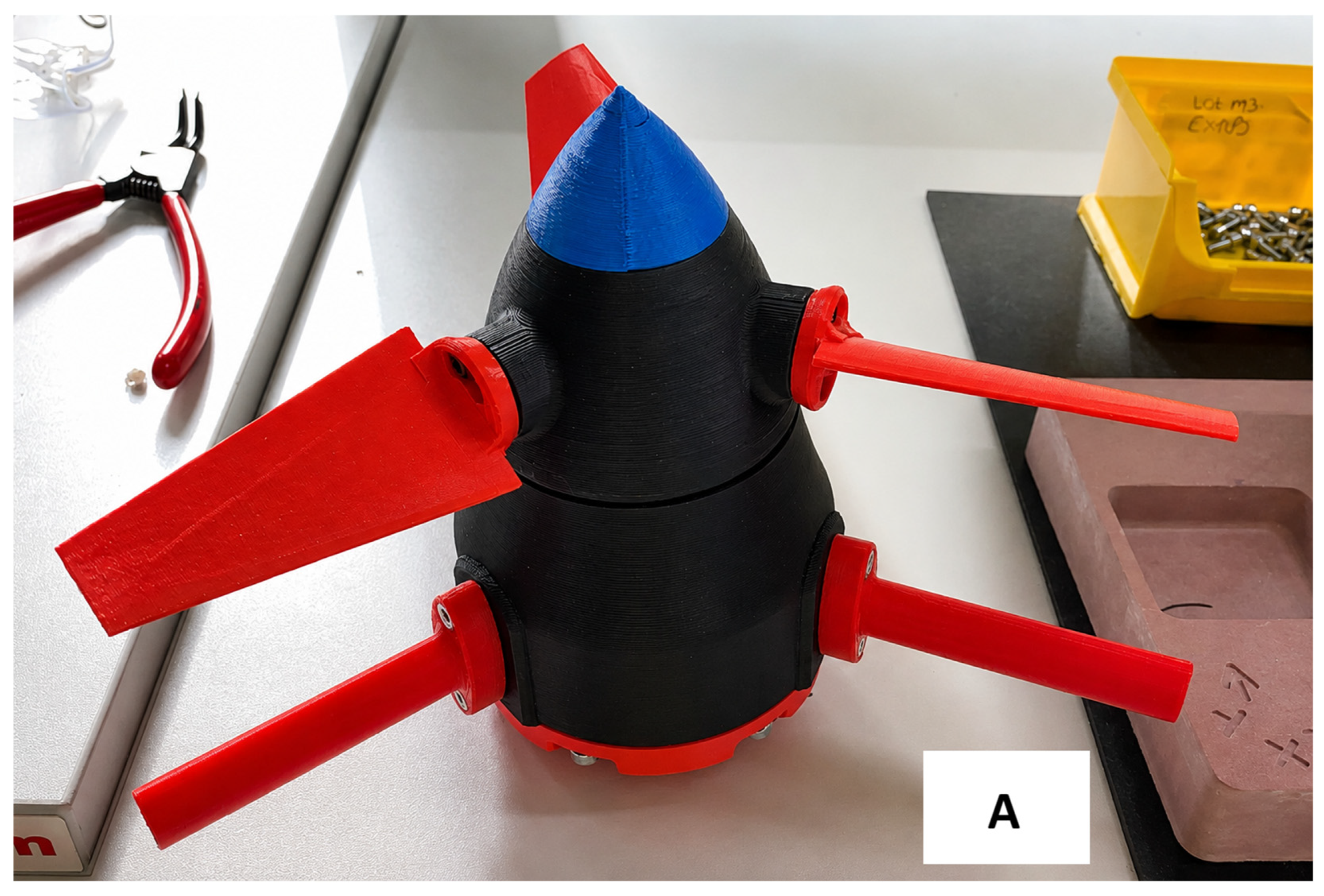
The tidal turbine (Figure 4A) has around 40 parts in 3 mechanical subassemblies, including the hub, body, rear cap, bearings, and fasteners. These components require precise alignment, multi-directional handling, and controlled tightening operations. The assembly process (Figure 4B) consists of 60 operations, including preparation, positioning, alignment, tightening, and final integration.
The assembly workstation is part of a global production organization (Figure 4C). Upstream, components are stored in a warehouse and an operator kits two bins per turbine (one for blades, one for arms). Every 30 min, the operator supplies the assembly workstation with bins for three turbines. Downstream, finished turbines are sent to the next workstation for a quality check. The worker has 10 min to assemble a turbine and can manage their time. The work can be done fully manually or with cobot assistance. The simulated company follows a typical work structure with eight hours per day, five days a week (Figure 4D). A line manager should be accessible at the workstation to offer technical support, management guidance, and decision-making help when required, whether for tasks or organizational matters.
The cobot is a Universal Robots UR16e (Universal Robots A/S, Odense, Denmark) with a Robotiq 2F-140 gripper Robotiq Inc., Lévis, QC, Canada controlled by URCaps software (PolyScope 5.11), commonly used in industrial assembly. It is designed to assist the operator, not replace them, and allows for shared workspace access without physical separation. The cobot is positioned near the assembly area to assist as needed, ensuring the worker’s autonomy and control over the task. It met safety requirements according to ISO 10218-1:2025 [31].

5.1.3. The Workstation Designed

The collaborative workstation is not just a technical installation but a tangible example of a human–robot work situation aligned with ECS principles. The goal was to create a collaborative workspace that met productivity, human factor, and empowerment criteria. This section outlines the design choices.
‘Must not be disabling’ means a workstation should not degrade physical, cognitive, or environmental resources, nor introduce functional dependencies on automation. This is a well-established principle in human factor design. The cobot can move bins (pick&place mode) and handle the turbine body when workers screw blades and arms (handling mode), eliminating the musculoskeletal disorders identified in the initial analysis. Cobot integration affects worker cognitive load. Solutions are based on current practices, integrating cobots correctly and designing appropriate interfaces. Workers can continue manual work without cobot movement.
‘Support work-related activity’ means that the workstation helps operators while keeping the work meaningful and useful. The goal is not to replace human work but to enhance task performance with robotic assistance while maintaining the meaning and continuity of the activity. The workstation combines manual assembly operations and robotic assistance. First, productivity should remain at least at the initial level, meaning no additional tasks or interruptions. Second, the quality of blade and arm fastening is improved in handling mode, making work more comfortable for workers.
‘Expand the room to maneuver’ means the operator can choose from several viable ways to perform the task and adapt strategies to situational demands. The collaborative design of the workstation provides flexibility in task execution by offering several viable assembly methods. This allows workers to adapt to changing circumstances, preferences, or constraints. This plurality of possible operating strategies constitutes a central design principle for enabling work situations.
‘Adjust in use’ means the workstation is designed to adapt and evolve with experience. Interaction methods, task sharing, and assistance modes can be modified to fit changing working practices and learning processes. An expert should review the workstation with the worker every six months or as requested and adjust it accordingly.

5.2. Design Method of the Collaboration Strategy

Defining a task allocation strategy is crucial for designing collaborative activities. However, current approaches in HRC mainly focus on optimizing productivity, ergonomics, or workflow efficiency separately. Such approaches implicitly assume that the ‘optimal’ distribution of tasks can be computed in advance or adjusted autonomously during execution, leaving little room for operator influence or situated decision making [20,21]. However, collaborative work activities are rarely linear or predictable. Operators continuously interpret the situation, anticipate constraints, and reconfigure their actions dynamically. Task allocation mechanisms that ignore interpretive activity can limit autonomy, enforce rigid sequences, or impose unsuitable interaction patterns. Misalignment can affect key experiential dimensions such as perceived control, engagement, and trust [23]. The allocation strategy aims to provide a range of allocation options for the operator to choose from. This approach aligns with ECS operational criteria by treating allocation as a resource, not a constraint. Section 5.2.1 presents collaborative scenarios, while Section 5.2.2 and Section 5.2.3 discuss their implementation and lessons learned, respectively.

5.2.1. Collaboration Scenarios

The human–robot collaboration was designed around explicit scenarios, aiming to create a highly collaborative workstation. This involves simultaneous work on the same workpiece and supportive work where the robot and human perform the same task. Collaboration scenarios can be defined by task distribution, temporal coordination, and interdependence between the operator and cobot during task execution. The demonstrative workstation was designed based on these three guiding principles (Table 1).
Four operational modes were implemented, preserving the worker’s central role: manual, pick&place, handling, and combined. The four modes were added to the workstation without changing the production flow or layout. The manual mode allows the worker to perform tasks without cobot assistance. It is a reference situation for analyzing work-related activities without robot intervention.
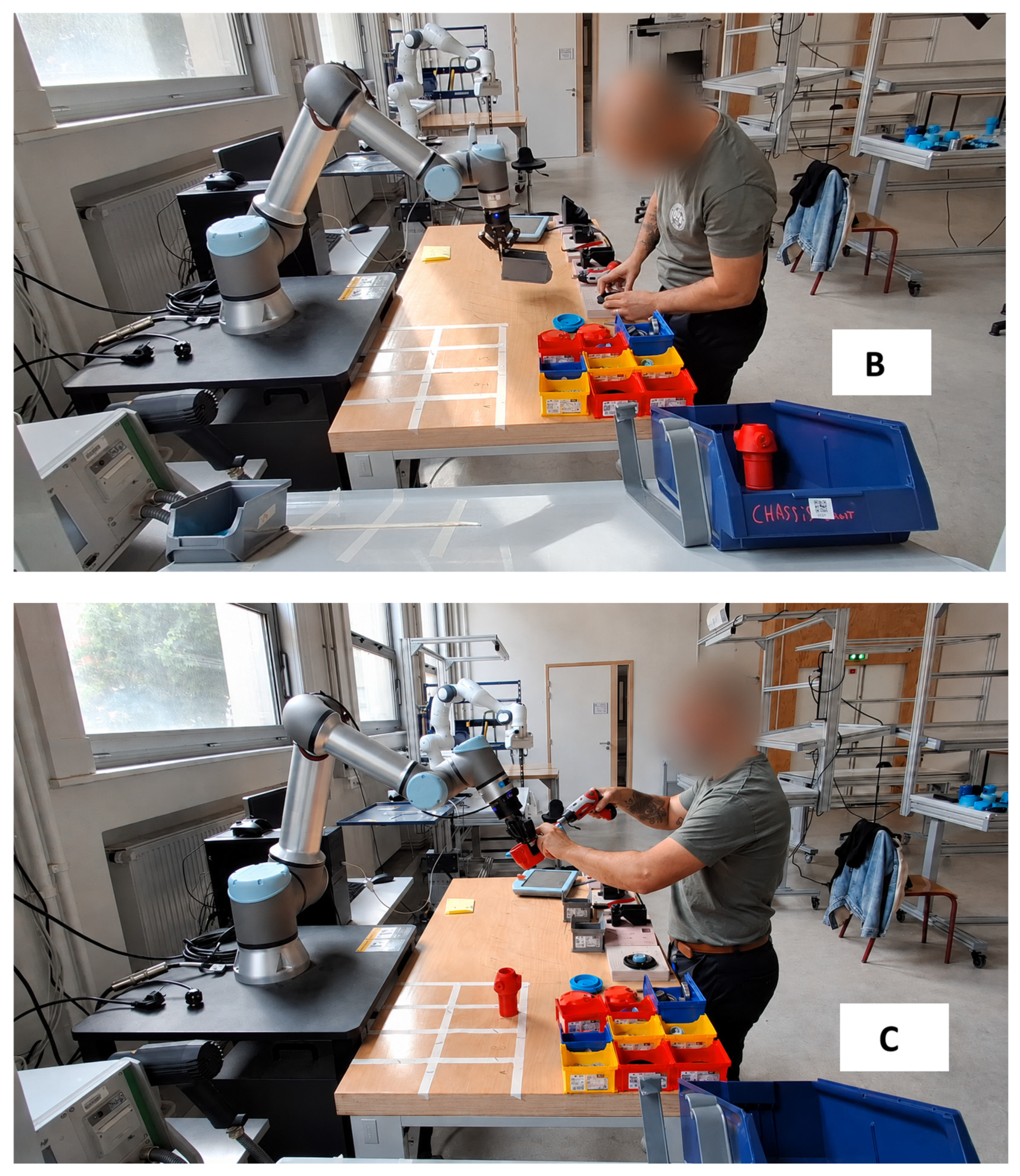
The pick&place mode enables simultaneous collaboration (Figure 5B). The cobot moves bins to assembly places, freeing the worker to perform other tasks. Simultaneously, the worker can prepare tools for future assembly tasks. Tasks are well defined, with no overlap. The worker and cobot mostly perform actions independently, with only one dependency: the worker can start component assembly only after the cobot finishes its task. The worker follows the usual routine, with some tasks marked in pink as being either pick&place or manual (Figure 4B).
The handling mode supports collaborative work (Figure 5C). The cobot helps the worker by holding and positioning components during manual assembly tasks such as alignment and screwing. The worker can initiate assistance as needed and maintain control over timing and execution. This aims to improve fastening quality and worker posture. The fastening tasks are performed by the cobot and the worker simultaneously. The cobot’s actions depend on each worker’s unique position and task method. Temporal coordination is essential throughout the assembly task. The worker’s activity is distinct from manual and pick&place modes. Figure 4B shows operations that can be performed in handling or manual modes (green).
The cobot can perform both pick&place and handling modes, so a fourth mode, called the combined mode, was added to assist with both tasks during a single assembly cycle. The scenarios were designed to represent contrasted collaboration configurations, while remaining compatible with the same workstation layout and production context. This approach allows the worker to choose the most convenient collaboration mode and assembly process at any time. From the demonstrator’s perspective, it facilitates the comparison of different collaboration configurations and the analysis of their impact on work execution. It examines how task distribution, temporal coordination, and interdependence affect productivity, human factors, and empowerment in collaborative work situations.

5.2.2. Four Rules to Make the Collaborative Workstation Meet the ECS Criteria

The task allocation strategy has to distribute functions between the worker and cobot while preserving the criteria and indicators that define an enabling workstation. It goes beyond optimization-oriented or static allocation schemes, focusing on the requirements for ECS-compatible human–robot interaction. The allocation design principles were based on four rules related to the four ECS criteria.
(1)
The cobot must not limit the worker’s ability to act. It must not monopolize critical operations, impose strict time constraints, or create situations where the worker cannot complete the task independently. This principle protects against the risks of dependence, competence decline, and loss of control identified in previous ECS analyses.
(2)
The cobot must assist human workers by performing tasks such as material handling or positioning, without replacing their strategies or imposing a rigid procedure. The support must enhance fluidity and reduce constraints, while allowing the human to maintain control over coordination and meaning making.
(3)
The allocation must maintain multiple ways of completing the task. Instead of imposing a single optimal sequence, the system allows the worker to switch between independent work, collaborative work, or supportive interactions based on the situation. Maintaining variability is crucial for making situated adjustments and accommodating workers’ preferences, pace, or strategies.
(4)
The workstation design must allow for dynamic changes in how robot assistance is used, the level of automation preferred by the worker, and the balance between manual and collaborative modes. This flexibility ensures that the workstation can adapt to the evolving needs of the work system and promote sustainable collaboration.

5.2.3. Lessons Learnt

The workstation setup and practical analysis revealed potential mechanisms for implementation. This study follows an exploratory design-based approach aimed at generating methodological insights rather than statistically generalizable results. This includes the real worker’s perception of cobot decision making. First, the real worker’s feeling of deciding what the cobot should do. The cobot’s four modes are controlled by simple mechanisms that allow the worker to remain the primary decision-maker. Unlike autonomous allocation strategies, mode selection is explicit and can be adjusted by the worker based on current needs, using the cobot’s native Human–Machine Interface (HMI). Moving fluidly between modes allows for flexible decision making and preserves autonomy by enabling workers to adapt collaboration in real time.
Second, the feeling of flexibility and security. The modes are designed to serve as allocative resources that the operator can activate, combine, or ignore according to the evolving requirements of the activity. Rather than prescribing a fixed work distribution, they create a flexible space of collaboration. The operator can stop the cobot activity at any time. The foot pedal allows the operator to stop the cobot’s action instantly, ensuring that it never hinders their pace, gestures, or strategies.
Third, the system allows workers to adapt to different modes based on their experience, preferences, or production constraints. It enables them to perform tasks without the robot and leaves room for future adjustments such as new coordination or alternative end-effectors as the workstation evolves.
Finally, the HMI-based mode selection and foot-controlled interruption system ensure that the cobot’s contribution remains optional, reversible, and aligned with the worker’s ongoing activity. These features are essential for an accepted collaborative activity.

5.3. Assessment Against the Proposed Operational Criteria

This section evaluates the collaborative workstation’s performance under different collaboration configurations. It examines work activity, task regulation, and performance outcomes based on the ECS operational criteria. The approach and indicators are discussed in Section 5.3.1 and Section 5.3.2, respectively.
The collaborative workstation was tested in a real-world scenario using the operational indicator grid (Figure 3). The goal was to create a tool that an expert could use in a real and ongoing production environment. The evaluation grid enables an expert to easily evaluate the task and, if necessary, modify and enhance it based on their feedback. A workshop was organized, where three volunteers built five tidal turbine prototypes each, choosing their preferred collaboration methods from the four options (and finally tested the four ones). The evaluators were: an engineer to measure industrial performance, an ergonomist to observe and analyze the work activity, and each participant to complete a questionnaire about their experience. The indicators were easy to understand, and the ergonomist applied the tools and methods effectively. The results revealed areas for improvement in the workstation design.

5.3.1. Assessment Results

Table 2 summarizes the assessment of the collaborative workstation according to the four ECS operational criteria. For each criterion, the table reports the associated indicators, the measurement tools used during the workshop, and the main results obtained.

5.3.2. Discussion

The evaluation, conducted by an engineering expert and an ergonomic expert applying their field methods, shows that the collaborative workstation meets all four operational criteria. It preserves resources, offers support, provides a wide margin of maneuver, and has strong adjustment potential. The discussion is structured around each criterion.
Non-disabling configuration. All assembly tasks remained fully feasible without the cobot, and operators could freely switch between manual and robot-assisted actions. In one case, an operator stopped a pick&place sequence using a foot pedal, demonstrating that robots do not limit operators’ actions. Operators felt reassured by the ability to stop the robot at any time. The workstation did not impose physical or cognitive limitations during tasks. Ergonomic studies revealed reduced postural constraints when using the handling mode, as evidenced by improved RULA scores. NASA-TLX results showed moderate workload levels and no increase in mental demand or frustration with robot assistance.
Support for work-related activities. Both collaboration modes directly contributed to assembly: pick&place facilitated material flow and minimized movements, while handling stabilized components during fastening operations, improving comfort and quality. Operators found these modes made the task ‘easier’ and ‘smoother’. Industrial performance indicators remained stable, with cycle times of 8.3–10.3 min and full product conformity. Perceived conformity remained high. Operators retained responsibility for sequencing, alignment, and quality control, indicating that robots complemented human work. This confirms that the workstation provided meaningful support while preserving the core of the activity, capturing the positive contribution of the cobot to the worker’s experience of the task thanks to the cobot’s positive contribution.
Regarding the expanded worker’s margin of maneuver, the results show effective use of all four collaboration modes. Operators adapted assistance strategies based on their preferences and familiarity with the system. The spontaneous emergence of combined modes demonstrates the presence of multiple viable ways to perform the task. Two operators immediately felt comfortable with the cobot, while one initially hesitated but eventually converged toward the same strategy. The cobot’s flexibility accommodates personal preferences, learning curves, and different interpretations of the task, providing significant room to maneuver. It occupies about 40% of the worktable, leaving a large area for the operator. Users varied in tool arrangement and subassembly sequencing, reflecting their unique strategies and activity regulation.
Despite the limited number of repetitions (five per operator), some signs of adjustability were observed. Operators became more proficient at collaborating with the cobot and switching between collaboration modes with increased experience. Confidence improved, especially among initially hesitant participants, suggesting progressive appropriation and strategy refinement. However, the results also highlight current limits of adjustability: operators can dynamically configure collaboration modes during task execution, but modifying cobot tasks still requires technical staff. The workstation therefore demonstrates strong short-term adaptability and partial in-use reconfigurability, while its modular collaboration modes and transparent robot behavior provide a solid basis for future evolution.
Qualitatively, the proposed ECS-oriented approach differs from existing HRC design perspectives [14,17] that primarily focus on technical integration, productivity improvement, ergonomic workload reduction, and task allocation optimization [20,23]. In these approaches, collaboration is often treated as a configuration to be selected or optimized according to predefined system objectives. In contrast, the present work considers collaboration as a design resource for creating an enabling work situation. The demonstrator was therefore not designed to identify a single optimal allocation of tasks but to preserve several viable collaboration modes and allow operators to choose, interrupt, or adapt cobot assistance during activity. Compared with existing optimization-oriented or automation-centered HRC approaches, the added value of the ECS framework lies in explicitly integrating worker empowerment as a key driver for the design and evaluation of collaborative workstations.

5.4. Design Principles for Productive, Human-Factored, and Empowering Workstations

We have extracted design principles from our experience for productive, human-centered, and empowering workstations. We updated the workstation design three times based on evaluation feedback. We use established design principles for workstations that have been successful in meeting production and human-factor requirements for years. The first criterion (non-disabling) contains these rules, which are not repeated in this paper. We emphasize the three principles and 10 guidelines that help achieve empowerment goals (activity support, flexibility, and adaptation).

5.4.1. Principle 1: Respect Worker Competence by Assisting Assembly While Maintaining Expected Industrial Performance

Guideline 1: Preserve human decision making and task regulation rather than automating assembly actions. The collaborative workstation must allow the operator to maintain control over task sequencing, execution, and validation. Robotic assistance should not dictate the order of operations or impose a predefined logic. Interaction mechanisms must require explicit worker input before any robot action.
Guideline 2: Do not replace a core manual task with a cobot and reserve cobots for equipment replacement. Robots should focus on assisting with non-essential, physically demanding tasks, rather than replacing essential manual skills. Human responsibility is essential for critical tasks like alignment, judgement, quality control, and strategic adjustment. The cobot can replace auxiliary equipment or stabilization devices to improve ergonomics or fluency. This distribution maintains the activity’s core structure while improving it.
Guideline 3: Ensure the worker can stop the cobot and resume work manually. The workstation should enable the worker to stop the robot’s movement at any time, without disrupting the assembly process, using simple, immediate, and physically accessible interruption mechanisms. The system must allow manual execution of all operations, maintaining the operator’s ability to act independently and ensuring robot assistance remains optional.
Guideline 4: Guarantee seamless and justified synchronization between the worker and the cobot. The robot’s movements and synchronization must align with the operator’s natural work rhythm and gestures. Assistance should only occur when it effectively supports the ongoing action. Synchronization parameters may need iterative adjustment to accommodate individual differences. Proper synchronization prevents interruptions and promotes a stable collaborative dynamic.

5.4.2. Principle 2: Empower Workers to Make Strategic Adjustments Based on the Situation

Guideline 5: Leave some workspace free so workers can organize their equipment as they wish. Avoid fixed robotic elements or rigid component placement. Operators should have enough space to arrange tools and parts as they see fit. Flexibility allows operators to adapt to changing situations and tasks, promoting their active role in shaping their work environment.
Guideline 6: Allow some flexibility in the sequence of subtasks. The workstation should not impose a strictly linear execution order, allowing for flexibility in task sequencing. Robotic assistance should be compatible with different sequencing options to preserve the operator’s ability to regulate pace and adapt to situational demands.
Guideline 7: Foster gradual learning. The robot’s interaction mechanisms should be easy enough to master progressively through repetition. The system should promote proficiency without advanced programming skills. Training should focus on understanding the robot’s behavior and collaboration modes, rather than rigid procedures.
Guideline 8: Take individual preferences into account. Workers may have different preferences for manual vs. robot-assisted tasks. The collaborative system should allow for flexibility in assistance intensity and type. Imposing a standard configuration is not appropriate. Considering individual strategies strengthens acceptance and increases situated margin of maneuver.

5.4.3. Principle 3: Ensure the Workstation Remains Adaptable over Time by Evolving It with Experience

Guideline 9: Design the workstation layout so that it can adapt to new situations. The physical and technical architecture of the workstation must be conceived as modular and scalable, not immutable. Robot positioning, material flow organization, and interaction interfaces must be adaptable without requiring a complete system overhaul. Mechanical supports, spatial zones, and robot operating areas must be defined flexibly to accommodate different task allocations. This flexibility enables adaptation to new products, assembly process variations, or organizational changes. Designing for evolution ensures that the collaborative configuration remains relevant and supports ongoing empowerment development.
Guideline 10: Enable the development or expansion of synchronization methods. The collaborative system should adapt to new coordination patterns as users gain experience. Interaction mechanisms should not be limited to a single predefined form of collaboration. The architecture should be flexible enough to add or modify robotic routines. This feature allows for gradual improvement in human–robot interaction.

6. Conclusions

This paper presents a design approach for creating safe, efficient, and empowering human–robot workstations. The demonstration assembly workstation was developed based on the ECS concept, which guided design choices, interaction mechanisms, and assessment criteria. Regarding H1, the results suggest that the ECS framework can support the design of a collaborative workstation that jointly addresses expected industrial performance, human factors, and empowerment-related objectives. In the case study, the workstation maintained the targeted production range while preserving manual feasibility, limiting additional workload, and providing several forms of worker control. Regarding H2, the study indicates that the structure of human–robot collaboration plays a central role in the design process. The definition of contrasted collaboration modes, the preservation of manual alternatives, and the possibility for operators to select or interrupt robot assistance directly shaped the workstation configuration and its enabling potential. Regarding H3, the assessment confirms the operational relevance of ECS-derived indicators for examining the workstation during use and design. The evaluation grid made it possible to jointly analyze industrial performance, ergonomic conditions, worker experience, room to maneuver, and in-use adjustability, while also identifying remaining limitations of the demonstrator. This experience produced design guidelines to help engineers integrate cobots while addressing empowerment objectives.
However, this approach was implemented in a context where supportive and simultaneous collaboration modes could coexist with manual execution. This raises questions about its generalizability. First, the balance between task assistance and substitution varies significantly across industrial sectors, production processes, and company strategies. For example, the transferability of the proposed methods to a welding station, where the worker prepares the elements and the robot executes the trajectory, remains to be investigated. A direct comparison with alternative HRC design scenarios would be valuable to further assess the relative contribution of the proposed ECS-oriented approach. However, technical and demonstrator-development constraints limited the implementation of such contrasted scenarios within the scope of this exploratory case study. Second, the relationship between ECS-oriented design principles and safety standards should be explored further. Safety regulations can limit spatial organization, interaction flexibility, and autonomy, reducing room to maneuver. Future research should explore how to maintain enabling objectives within these constraints. Additionally, no consolidated metrics for assessing the ‘enabling’ nature of workstations exist. Finally, the present study focuses on short-term interaction and workstation use; it does not assess the long-term psychological effects of ECS-oriented collaboration on workers, such as sustained acceptance, trust, perceived control, or empowerment over extended periods of use. These dimensions should be investigated in longitudinal studies. The relevance of the ECS-oriented framework should also be examined in more dynamic and time-constrained industrial environments, such as fast-moving logistics or intralogistics systems, where task variability, flow synchronization, and rapid reconfiguration may challenge the proposed design principles. This work requires developing more structured and validated measurement methods to capture enabling properties in various contexts. This work combines ergonomics and engineering to structure human–robot collaboration, not only for efficiency but also to improve working conditions and create more attractive industrial jobs.

Author Contributions

Conceptualization, M.C.; visualization, V.R. and D.B.; supervision, V.R. and D.B.; project administration, V.R.; methodology, M.C. and D.B.; validation, V.R. and D.B.; investigation, M.C.; resources, M.C.; writing—original draft preparation, M.C.; writing—review and editing, V.R. and D.B. All authors have read and agreed to the published version of the manuscript.

Funding

This research received no external funding and The APC was funded by [G-SCOP laboratory] the funding amount is 2400.00 CHF and no funding number is available.

Informed Consent Statement

Informed consent for participation was obtained from all subjects involved in the study.

Data Availability Statement

The data presented in this study are available on request from the corresponding author. The data are not publicly available due to privacy restrictions.

Conflicts of Interest

The authors declare no conflicts of interest. The funders had no role in the design of the study; in the collection, analyses, or interpretation of data; in the writing of the manuscript; or in the decision to publish the results.

Abbreviations

The following abbreviations are used in this manuscript:
ECSEnabling Collaborative Situation
HRCHuman–Robot Collaboration
HRIHuman–Robot Interaction
HMIHuman–Machine Interface
UXUser Experience
RULARapid Upper Limb Assessment
NASA-TLXTask Load Index

Appendix A

Appendix A.1. NASA-TLX Workload Scale

Participants were asked to indicate their perceived workload using a value between 1 and 100 for each dimension.
DimensionItemRate
Mental demandHow much mental and perceptual activity was required to perform the task, for example thinking, deciding, searching, etc.? Did the task seem simple and require little attention (low = 0), or complex and require a high level of attention (high = 100)?
Physical demandHow much physical activity was required to perform the task, for example pushing, moving, turning, handling, etc.? Did the task seem easy, not very tiring, and calm (low = 0), or strenuous, tiring, and active (high = 100)?
Temporal demandHow much time pressure did you feel during task execution? Did the task have to be performed slowly (low = 0) or quickly (high = 100)?
PerformanceHow do you assess your performance in completing the task? What is your level of satisfaction with your performance? For this criterion, the scale is reversed: high performance = 0; low performance = 100.
EffortHow much mental and physical effort did you have to exert to reach your level of performance? High = 100; Low = 0.
FrustrationDuring task execution, did you feel satisfied, pleased, and relaxed (low = 0), or rather annoyed, irritated, and stressed (high = 100)?

Appendix A.2. Perceived Work Quality Scale

Participants rated each statement using the following 5-point scale: 1. Not at all true; 2. Not true; 3. Neither true nor false; 4. True; 5. Very true.
ItemAnswer
The work carried out with the cobot is of good quality.
I have no problem with the quality of the work performed in collaboration with the cobot.
I was able to carry out all the tasks assigned to me with the cobot.
My performance in collaboration with the cobot was excellent.

Appendix A.3. Meaning of Work Scale

Participants rated each statement using the following 5-point scale: 1. Not at all true; 2. Not true; 3. Neither true nor false; 4. True; 5. Very true.
ItemAnswer
I find this task personally enriching.
In this task, the objectives to be achieved are stimulating and meaningful.
I clearly understood the usefulness of this task.
This task has a clear and precise direction.

References

  1. European Commission. Industry 5.0: Towards a Sustainable, Human-Centric and Resilient European Industry; Publications Office of the European Union: Luxembourg, 2021. [Google Scholar]
  2. Xu, X.; Lu, Y.; Vogel-Heuser, B.; Wang, L. Industry 4.0 and Industry 5.0: Inception, conception and perception. J. Manuf. Syst. 2021, 61, 530–535. [Google Scholar] [CrossRef] [Scilit]
  3. Romero, D.; Stahre, J. Towards the resilient Operator 5.0: The future of work in smart resilient manufacturing systems. Procedia CIRP 2021, 104, 1089–1094. [Google Scholar] [CrossRef] [Scilit]
  4. Calzavara, M.; Faccio, M.; Granata, I. Achieving productivity and operator well-being through dynamic task allocation strategies in collaborative assembly systems. Int. J. Adv. Manuf. Technol. 2024, 130, 4567–4584. [Google Scholar]
  5. Wang, L.; Váncza, J.; Krüger, J.; Wang, X.V.; Makris, S.; Chryssolouris, G. Human-centric assembly in smart factories. CIRP Ann. 2025, 74, 789–815. [Google Scholar] [CrossRef] [Scilit]
  6. Wang, L.; Liu, S.; Cooper, C.; Wang, X.V.; Gao, R.X. Function block-based human-robot collaborative assembly driven by brainwaves. CIRP Ann. 2021, 70, 5–8. [Google Scholar] [CrossRef] [Scilit]
  7. Dimitropoulos, N.; Togias, T.; Zacharaki, N.; Michalos, G.; Makris, S. Seamless human-robot collaborative assembly using artificial intelligence and wearable devices. Appl. Sci. 2021, 11, 5699. [Google Scholar] [CrossRef] [Scilit]
  8. Villani, V.; Pini, F.; Leali, F.; Secchi, C. Survey on human-robot collaboration in industrial settings: Safety, intuitive interfaces and applications. Mechatronics 2018, 55, 248–266. [Google Scholar] [CrossRef] [Scilit]
  9. Lorenzini, M.; Lagomarsino, M.; Fortini, L.; Gholami, S.; Ajoudani, A. Ergonomic human-robot collaboration in industry: A review. Front. Robot. AI 2023, 9, 813907. [Google Scholar] [CrossRef] [Scilit]
  10. Dimitropoulos, N.; Togias, T.; Michalos, G.; Makris, S. Operator support in human–robot collaborative environments using AI enhanced wearable devices. Procedia CIRP 2021, 97, 464–469. [Google Scholar] [CrossRef] [Scilit]
  11. Gladysz, B.; Romero, D. Current development on the Operator 4.0 and transition towards the Operator 5.0: A systematic literature review in light of Industry 5.0. J. Manuf. Syst. 2023, 70, 160–185. [Google Scholar] [CrossRef] [Scilit]
  12. Abicht, J.; Hellmich, A.; Ihlenfeldt, S. New automation solution for brownfield production: Cognitive robots for the emulation of operator capabilities. CIRP J. Manuf. Sci. Technol. 2024; in press. [CrossRef] [Scilit]
  13. Matheson, E.; Minto, R.; Zampieri, E.G.G.; Faccio, M.; Rosati, G. Human-robot collaboration in manufacturing applications: A review. Robotics 2019, 8, 100. [Google Scholar] [CrossRef] [Scilit]
  14. Chowdhury, H. Human-robot collaboration in manufacturing assembly tasks. Preprints 2023. [Google Scholar] [CrossRef] [Scilit]
  15. Ore, F.; Jiménez Sánchez, J.L.; Wiktorsson, M.; Hanson, L. Design method of human-industrial robot collaborative workstation with industrial application. Int. J. Comput. Integr. Manuf. 2020, 33, 911–924. [Google Scholar] [CrossRef] [Scilit]
  16. Giberti, H.; Abbattista, T.; Carnevale, M.; Giagu, L.; Cristini, F. A methodology for flexible implementation of collaborative robots in smart manufacturing systems. Robotics 2022, 11, 9. [Google Scholar] [CrossRef] [Scilit]
  17. Stadnicka, D.; Antonelli, D. Human-robot collaborative work cell implementation through lean thinking. Int. J. Comput. Integr. Manuf. 2019, 32, 580–595. [Google Scholar] [CrossRef] [Scilit]
  18. El Zaatari, S.; Marei, M.; Li, W.; Usman, Z. Cobot programming for collaborative industrial tasks: An overview. Robot. Auton. Syst. 2019, 116, 162–180. [Google Scholar] [CrossRef] [Scilit]
  19. Manjunath, M.; Kranz, P.; Tenbergen, B.; Daun, M. Taxonomy for early safety analysis of human-robot interaction. In Proceedings of the ER2025 Companion Industrial Track, Poitiers, France, 20–23 October 2025. [Google Scholar]
  20. Petzoldt, C.; Harms, M.; Freitag, M. Review of task allocation for human-robot collaboration in assembly. Int. J. Comput. Integr. Manuf. 2023, 36, 1675–1715. [Google Scholar] [CrossRef] [Scilit]
  21. Baratta, A.; Cimino, A.; Longo, F.; Mirabelli, G.; Nicoletti, L. Task allocation in human-robot collaboration: A simulation-based approach to optimize operator productivity and ergonomics. Procedia Comput. Sci. 2024, 232, 688–697. [Google Scholar] [CrossRef] [Scilit]
  22. Chanel, G.; Cegarra, J.; Buisine, S. Towards mixed-initiative human-robot interaction: Assessment of physiological and behavioural indicators for performance prediction. Sensors 2020, 20, 296. [Google Scholar] [CrossRef] [Scilit]
  23. Tausch, A.; Kluge, A.; Adolph, L. Psychological effects of the allocation process in human-robot interaction: A model for research on ad hoc task allocation. Front. Psychol. 2020, 11, 564672. [Google Scholar] [CrossRef] [Scilit]
  24. Oliveira, M.; Andrade, J.R.; Ratten, V.; Santos, E. Psychological empowerment for the future of work: Evidence from Portugal. Glob. Bus. Organ. Excell. 2023, 42, 65–78. [Google Scholar] [CrossRef] [Scilit]
  25. Spreitzer, G.M. Psychological empowerment in the workplace: Dimensions, measurement, and validation. Acad. Manag. J. 1995, 38, 1442–1465. [Google Scholar] [CrossRef] [Scilit]
  26. Kaasinen, E.; Schmalfuß, F.; Özturk, C.; Aromaa, S.; Boubekeur, M.; Heilala, J.; Heikkilä, P.; Kuula, T.; Liinasuo, M.; Mach, S.; et al. Empowering and engaging industrial workers with Operator 4.0 solutions. Comput. Ind. Eng. 2020, 139, 105678. [Google Scholar] [CrossRef] [Scilit]
  27. Sen, A. Development as Freedom; Oxford University Press: Oxford, UK, 1999. [Google Scholar]
  28. Falzon, P. Ergonomics, knowledge development and the design of enabling environments. In Proceedings of the Humanizing Work and Work Environment Conference, Guwahati, India, 10–12 December 2005. [Google Scholar]
  29. Compan, N.; Coutarel, F.; Brissaud, D.; Rix-Lièvre, G. Enabling collaborative situations (ECS): Interest for the taking into account of the work activity in the design and evaluation of human-technology collaborations in contemporary industry. Trav. Hum. 2022, 85, 211–240. [Google Scholar] [CrossRef] [Scilit]
  30. Lubrez, V.; Rix, G.; Coutarel, F. Human-Centred Design for Industry 5.0: Introducing the ESD Model and Comparing Generations of Production Machines to Characterize their Evolution. In 36th Annual Conference of the European Association of Cognitive Ergonomics (EACE) (ECCE 2025), Tallinn, Estonia, 7–10 October 2025; ACM: New York, NY, USA, 2025; pp. 1–6. [Google Scholar] [CrossRef] [Scilit]
  31. ISO 10218-1:2025; Robotics—Safety Requirements—Part 1: Industrial Robots. International Organization for Standardization: Geneva, Switzerland, 2025.
  32. Cippelletti, E.; Fournier, É.; Jeoffrion, C.; Landry, A. Assessing cobot acceptability of French workers: Proposition of a model integrating the TAM3, the ELSI and the meaning of work scales. Int. J. Hum.-Comput. Interact. 2024, 41, 2763–2775. [Google Scholar] [CrossRef] [Scilit]
Figure 1. The 10-step research process in a loop.
Machines 14 00586 g001
Figure 2. Main framework elements.
Machines 14 00586 g002
Figure 3. Criteria and indicators for assessing a collaborative workstation (adapted from Lubrez et al. [30]).
Machines 14 00586 g003
Figure 4. Use case: (A) Product complexity; (B) Assembly process complexity; (C) Production organization; (D) Work organization.
Machines 14 00586 g004aMachines 14 00586 g004b
Figure 5. The demonstrator in action: the turbine (A), the Pick&place mode (B), and the Handling mode (C).
Machines 14 00586 g005aMachines 14 00586 g005b
Table 1. The four modes implemented.
Use ModeType of CollaborationTask DistributionTemporal CoordinationTask Interdependency
ManualNoNoNoNo
Pick & placeSimultaneousSeparateParallelismWeak
HandlingSupportiveShareSimultaneityHigh
CombinedCombinedShareSimultaneityHigh
Table 2. Workstation assessment (November 2025).
CriterionIndicatorMeasurement ToolsResults
Must not be disablingRespect workers’ physical limitsRapid Upper Limb Assessment (RULA)Score 4, investigate further to improve more
Respect workers’ cognitive limitsNASA Task Load Index (NASA-TLX) (see Appendix A.1)Mental demand ≈ 33, Physical demand ≈ 45, Temporal demand ≈ 55, Frustration ≈ 35, Performance ≈ 80. Conclusion: moderate to low mental workload
Ensure acceptable work environment (noise, heat, lighting)Environmental conditions checklistAppropriate working environment
Support work-related activityMaintain industrial performance (perceived and observed)Assembly cycle time measure
Final product conformity by questionnaire (perceived) and product control (observed)
Maximum target cycle time: 10.3 min
The observed cycle time ranged from 8.3 to 10.3 min, depending on workers and mode chosen
Conformity perceived: 17/20; conformity observed: all the products tested were good except for one
Help the worker perform assembly activityErgonomic expert’s observation on the actual assembly processFour tasks of synchronization added
No interruption of the assembly activity due to the cobot
Workers were not involved in the initial workplace design process
Preserve perceived usefulness of robot assistanceWorkers’ feedback by questionnaire (see extracts of the questionnaire items in Appendix A.2 and Appendix A.3Score: 14 on the perceived usefulness scale [32], high perceived usefulness
Expand room to maneuverEncourage diversity of operational modesNumber of collaboration modes effectively usedFour modes actually used
Preserve spatial and organizational room to maneuverErgonomic expert’s observation of workspace use
Ergonomic expert’s observation of task sequencing
The cobot operating envelope covered approximately 40% of the worktable, while the remaining area was managed by the operators
Differences in tool arrangement and subassembly sequencing were observed across users
Adjust in useSupport configuration and reconfiguration during useErgonomic expert’s observation on workers’ behavior in practiceThe mode-switching interface was used by all workers, with some participants activating it repeatedly during task execution
However, workers could not modify or program new tasks for the cobot and had to contact a technician for any program changes
No participant attempted to alter the cobot control logic during the experiment
Ensure transparency of the technologyWorkers’ feedback by questionnaireInitial training done
Specific training modules available but not used yet
Robot motions understood and anticipated by workers
Disclaimer/Publisher’s Note: The statements, opinions and data contained in all publications are solely those of the individual author(s) and contributor(s) and not of MDPI and/or the editor(s). MDPI and/or the editor(s) disclaim responsibility for any injury to people or property resulting from any ideas, methods, instructions or products referred to in the content.