


Abstract
As key power components in aviation machinery, airborne hydraulic systems exhibit significant coupling, nonlinearity, and strong noise interference, which pose enormous challenges for their mechanical fault diagnosis—an essential link in ensuring aviation mechanical system reliability. To address this issue, a policy gradient-based optimization method is proposed to autonomously tune network parameters, aiming to enhance the accuracy and robustness of mechanical fault diagnosis. Initially, a KAN (Kolmogorov–Arnold Network) convolution submodel is adopted to strengthen the extraction of weak mechanical fault features from complex hydraulic signals. Subsequently, the policy gradient methodology is employed to iteratively refine the overall network configuration, enabling adaptive optimization of fault diagnosis-related parameters. Extensive experiments on standard hydraulic system datasets demonstrate that the proposed approach outperforms other mainstream intelligent mechanical fault diagnosis methods in terms of diagnostic accuracy, anti-interference ability, and generalization performance.
1. Introduction
The fault diagnosis technology of hydraulic systems is evolving towards a more diverse and intelligent direction, influenced by the system’s structure and design characteristics. Currently, Roger and Kenneth [1] propose that onboard sensors predominantly monitor the system’s status, leading to limitations in the measurement layout and the variety of fault data collected. Utilizing a physical model for fault diagnosis and analysis proves challenging due to the numerous coupled and time-varying parameters inherent in the system. Michael and Kevin [2] propose that aircraft systems with complex faults often exhibit ambiguous fault characteristics and concealed causes, making it arduous to identify these faults through visual inspection or single-source data analysis. Failures can involve damage to multiple components within a single mode, complicating the distinction of correlated faults. Consequently, Qi et al. [3]; Li and Shi [4] propose that the intricate nonlinear mapping relationship between collected signals and various fault modes intensifies, posing new hurdles to the fault diagnosis of hydraulic systems.
The fault diagnosis technology in hydraulic systems is advancing towards increased diversity and intelligence, influenced by system structure and design features. Presently, Ali et al. [5] propose that onboard sensors primarily monitor system status, which limits measurement layout and the range of collected fault data. Jiang and Xiang [6] propose that the utilization of a physical model for fault diagnosis and analysis is complex due to the numerous coupled and time-varying parameters within the system. Aircraft systems with intricate faults often display ambiguous fault characteristics and hidden causes, rendering the identification of these faults challenging through visual inspection or single-source data analysis. Feng et al. [7]; Souza et al. [8] propose that failures may entail damage to multiple components within a single mode, complicating the differentiation of correlated faults. As a result, Belagoune et al. [9] propose that the complex nonlinear mapping relationship between collected signals and various fault modes exacerbates, presenting new challenges to hydraulic system fault diagnosis.
The fault diagnosis technology in hydraulic systems is evolving towards greater diversity and intelligence, influenced by system structure and design features. Currently, Zhao et al. [10] propose that onboard sensors predominantly monitor system status, constraining measurement layout and the scope of collected fault data. The application of a physical model for fault diagnosis and analysis is intricate due to the numerous interconnected and time-varying parameters in the system. Yang et al. [11] propose that aircraft systems with complex faults often exhibit ambiguous fault characteristics and underlying causes, making the identification of these faults difficult through visual inspection or single-source data analysis. Yang et al. [11] propose that failures can result in damage to multiple components within a single mode, complicating the distinction of correlated faults. Consequently, Liu et al. [12] propose that the intricate nonlinear mapping relationship between collected signals and various fault modes intensifies, introducing new complexities to hydraulic system fault diagnosis.
The fault diagnosis technology in hydraulic systems is advancing towards increased diversity and intelligence, influenced by system structure and design features. Presently, Lange and Riedmiller [13] propose that onboard sensors primarily monitor system status, limiting measurement layout and the range of collected fault data. Mnih, V. et al. [14] propose that the utilization of a physical model for fault diagnosis and analysis is complex due to the numerous interconnected and time-varying parameters within the system. Lake, B.M. et al. [15] propose that aircraft systems experiencing complex faults often display ambiguous fault characteristics and root causes, rendering the identification of these faults challenging through visual inspection or single-source data analysis. Zheng, Z. et al. [16], Guo, L. et al. [17] propose that failures can lead to damage to multiple components within a single mode, complicating the differentiation of correlated faults. As a result, Chen, S.H. [18] proposes that the intricate nonlinear mapping relationship between collected signals and various fault modes exacerbates, introducing additional complexities to hydraulic system fault diagnosis.
2. Methods
2.1. Brief Introduction to the KAN Convolutional Network
The Kolmogorov–Arnold Networks are founded on the Kolmogorov–Arnold representation theorem, introduced by two Russian mathematicians in 1957. This theorem elucidates the method of representing any multivariable continuous function using a collection of elementary functions.
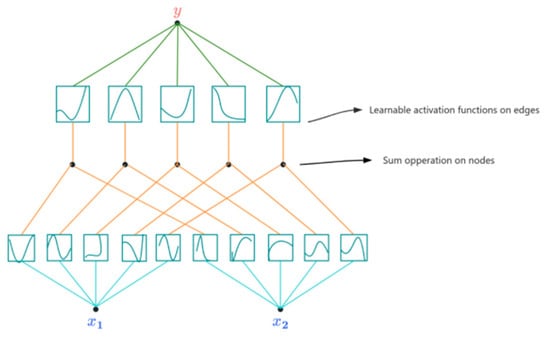
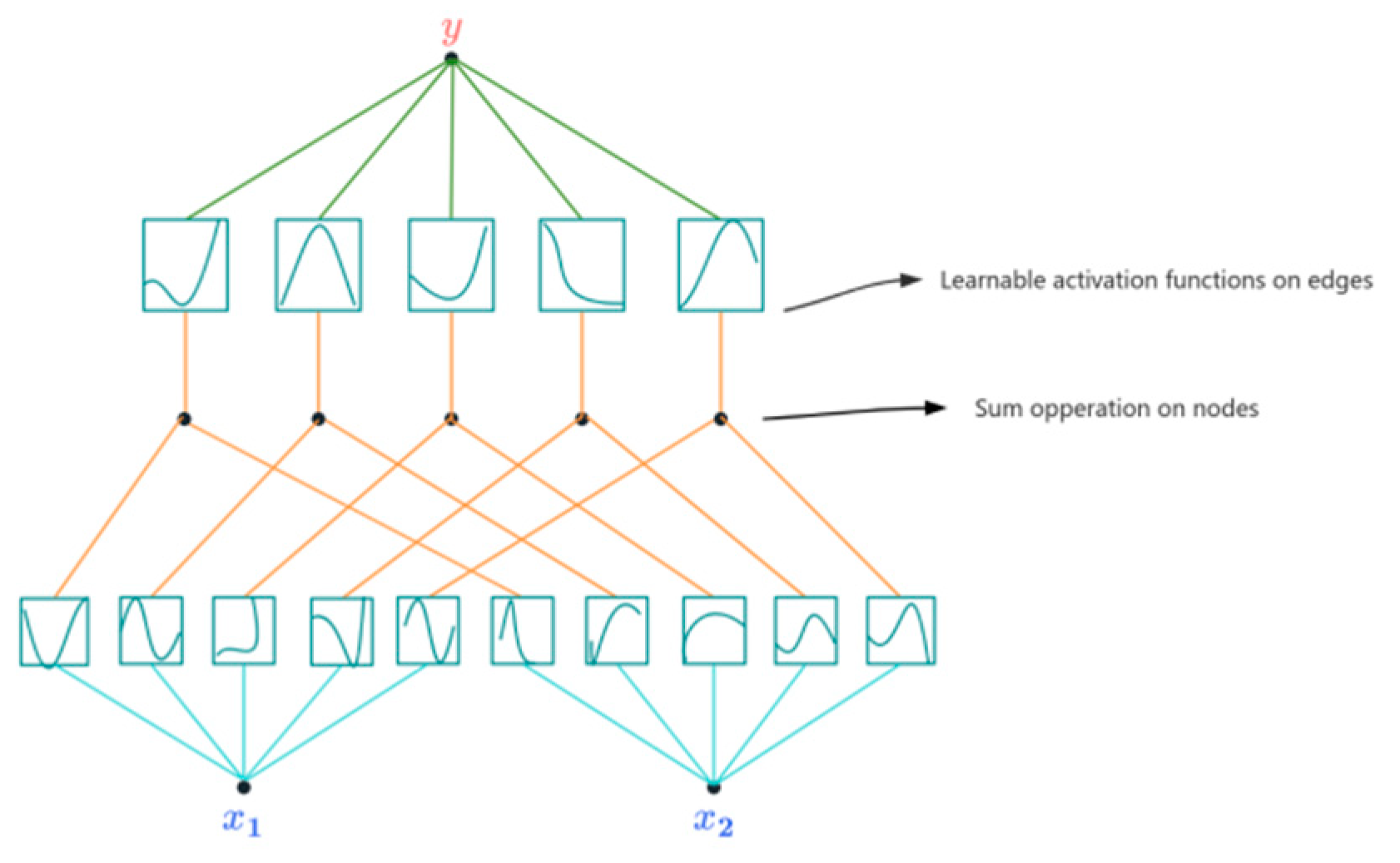
In Equation (1) input, serves as the basic univariate function, while acts as the outer function, with each receiving the output of the inner summation as input. The cumulative effect of the outer layers results in the entire function being the aggregate of its subfunctions . Illustrated in the accompanying Figure 1, this configuration is analogous to a two-layer neural network. Notably, it lacks the nested relationship between activation functions and parameter matrices typical in neural networks, as it directly activates the input, akin to nesting nonlinear functions directly. Furthermore, these activation functions are not predetermined but rather subject to learning. Consequently, this process corresponds to independently applying a nonlinear transformation to each coordinate axis before amalgamating them into a multidimensional space.
Figure 1.
A dual-layer KAN.
The Kolmogorov–Arnold theorem asserts that any multivariate function can be represented as a composite of univariate functions. In the context of convolutional neural networks, the fundamental concept of KAN convolutional layers is to leverage this principle. The output of a KAN convolutional layer is formulated as follows:
where b(x) is the basis function, Dong, Z. et al. [19] propose that usually chosen as the SiLU activation function (Sigmoid Linear Unit), i.e.,
is obtained by the weighted summation of a set of univariate nonlinear functions
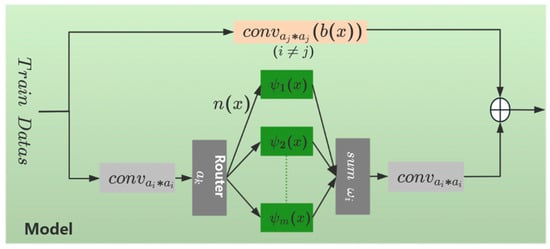
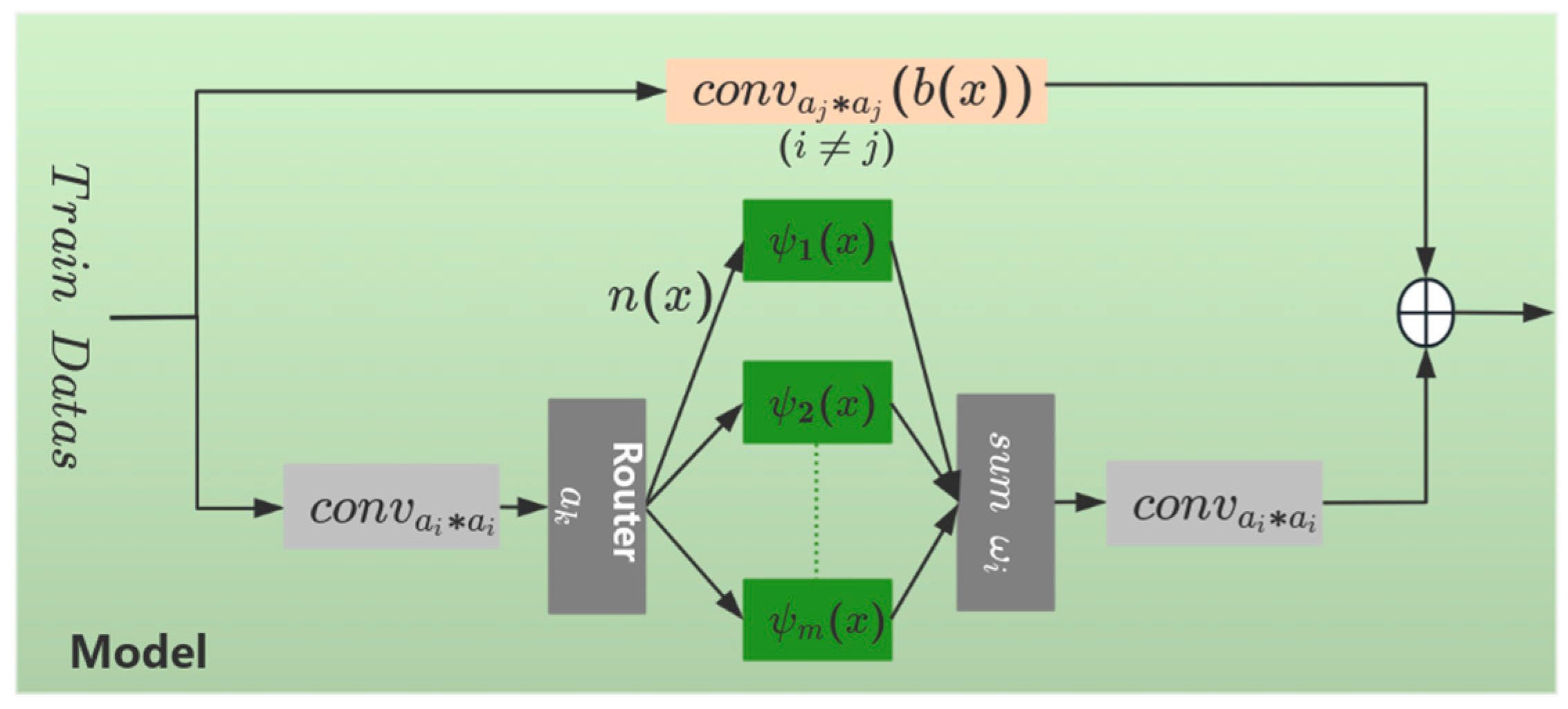
The structure comprises a series of univariate nonlinear functions, denoted as for the i-th function, which may include spline functions, polynomials, or similar forms. The output is the result of the router transformation applied to the input data x, as shown in Figure 2.
Figure 2.
Fundamental architecture of KAN convolutional networks.
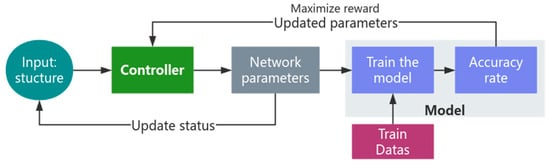
Training data is utilized to train the model, while test data is employed to assess test accuracy. The resulting test accuracy is communicated to the controller, which then updates the network weight parameters by maximizing the return. Due to the discrete nature of the obtained payoffs, differentiation is not feasible. To address this challenge, a reinforcement learning algorithm is essential, enabling parameter updates through strategy gradient optimization.
2.2. LSTM-Based Controller Construction
The method’s specific flow chart is depicted in the accompanying figure, illustrating the controller structure comprising an LSTM. In each iteration cycle, the controller’s input is the previous time’s output state. The controller generates a series of actions as the submodel’s structural parameters, constructs the submodel, trains it with training data, evaluates its performance with test data to determine test accuracy, and provides this accuracy as a reward function feedback to the controller. As shown in Figure 3.
Figure 3.
Controller structure with LSTM core.
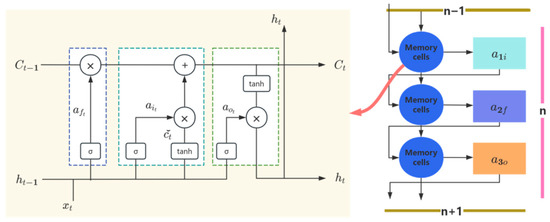
The controller is used to generate a series of actions, A, that are used to build the submodel. The controller consists of a single hidden-layer LSTM; the number of hidden-layer nodes is 32, and its internal structure is shown in the figure, which can be expanded as follows:
where x, ht, and Ct are the input state, output state, and cell state, respectively. Wf, Wi, Wc, and Wo are connectivity matrices. bf, bi, bc, and bo are bias vectors.
2.3. A Method for Searching Network Structure Parameters
The training data are utilized to train the model component, while the test data are employed to assess the test accuracy. This test accuracy serves as feedback to the controller in the form of a reward, guiding the updating of the controller network weight parameters through reward maximization. Given the discrete nature of the reward, traditional gradient descent methods are unsuitable for updating controller parameters. To address this challenge, a reinforcement learning algorithm is essential, enabling parameter updates through the strategy gradient method. As shown in Figure 4.
Figure 4.
The basic concept of the Proposed Method.
The strategy gradient algorithm enhances model structure and weights by utilizing reward and penalty mechanisms. The reward mechanism incentivizes optimizing the network structure, while the penalty mechanism discourages suboptimal structures or poor training performance, thereby facilitating improved model convergence.
The current structure parameters of the model are used as inputs of the controller, and a series of actions are output as network structure parameters at the next time step. The network model is constructed by using the structure parameters output by the controller, and the test accuracy obtained in the previous step is regarded as a reward, and the expectation of maximizing the cumulative reward is found to find the optimal network structure parameters. Approximating the strategy with parameters, the objective function of the controller can be expressed as the sum of the current reward and the subsequent reward accumulation, i.e., the expectation of cumulative harvest:
The controller parameters are updated using policy gradients. The gradient descent of the controller objective function is as follows:
The Monte Carlo strategy gradient is sampled by plot, updating parameters using the stochastic gradient ascent method, using the strategy gradient method, returning vt as an unbiased estimate of R (s, a):
The controller parameter θ update formula can be obtained:
Actions are the connections between controllers and submodels, representing structural parameters of submodels.
2.4. The Proposed Method and Its Application to Fault Diagnosis in Aircraft Hydraulic Systems
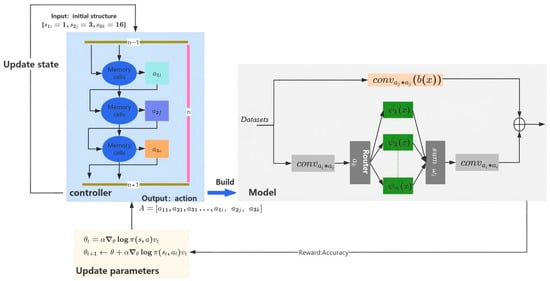
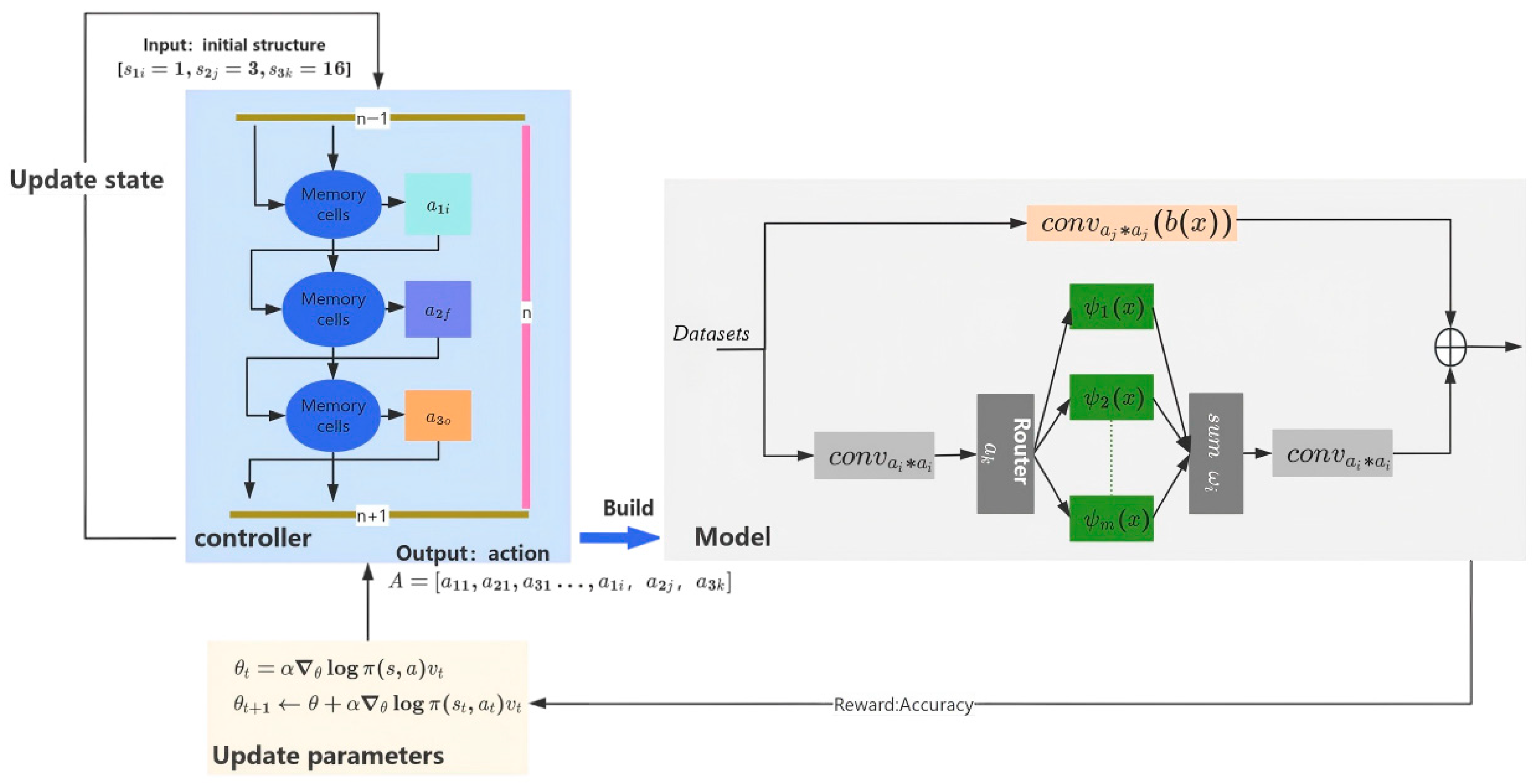
This study introduces a method for autonomously determining the optimal architecture of KAN convolutional networks through policy gradient optimization. The approach comprises a controller and a submodel. The controller initially receives the network’s parameter structure and generates actions, representing the structural parameters of the submodel. Subsequently, the submodel processes the test dataset, and the resulting accuracy serves as a reward signal for the controller. The controller’s parameters are iteratively updated using policy gradient optimization to maximize accuracy. This process is repeated until the network parameters yielding the highest accuracy are identified. The detailed procedural diagram of this methodology is depicted in Figure 5.
Figure 5.
Fundamental Architecture of the Proposed Method Based on Policy Gradient Optimization.
The policy gradient algorithm updates the policy by leveraging the initial structure of the model as the controller’s initial state input, the output action as the model parameter at the subsequent time step, and the accuracy as the reward. This approach involves learning the interaction dynamics between the controller and the reward to maximize the expected reward, aiming to identify the policy that yields the highest reward. By applying the strategy gradient algorithm, this chapter addresses the challenge of parameter selection in the KAN convolution network model, thereby enhancing its classification performance in diagnosing faults in airborne hydraulic systems.
Data sources involve collecting on-board hydraulic system condition monitoring data to create fault diagnosis training and test samples. The controller is initialized with a long short-term memory (LSTM) network to establish a KAN structure. The controller iteratively determines parameters of the convolutional layer (e.g., kernel size, stride, padding). The network architecture is sequentially generated by the controller, defining the convolutional network’s parameters. The policy gradient of the controller is computed based on the generative network’s performance. Evaluators train and assess the accuracy of network structures produced by the controller. Reward and punishment mechanisms are employed based on evaluation outcomes to adjust the controller’s generation strategy. The controller weights are updated using the policy gradient algorithm in response to rewards or penalties, iterating until optimal network architecture parameters are achieved.
3. Results
3.1. Experimental Section
In this study, the hydraulic system condition monitoring dataset released by the Center for Mechatronics and Automation Technology (ZeMA) [20] in Saarbrücken, Germany, was adopted as the research basis. This dataset was acquired through experiments on a hydraulic test bench, where the system consists of a main working circuit and a secondary cooling and filtration circuit, connected via an oil tank. The system repeats a constant load cycle every 60 s, and process variables such as pressure, volume flow rate, and temperature were measured during the quantitative condition changes of four hydraulic components (cooler, valve, pump, and accumulator).
The dataset comprises 2205 operating cycles, with each cycle containing 43,680 data points collected from 17 sensors at different sampling frequencies: six pressure sensors (PS1–PS6) and one electric motor power sensor (EPS1) operate at a sampling frequency of 100 Hz, generating 6000 data points per cycle; two volume flow sensors (FS1, FS2) work at 10 Hz, producing 600 data points per cycle; and four temperature sensors (TS1–TS4), one vibration sensor (VS1), and three virtual sensors (CE, CP, SE) are sampled at 1 Hz, resulting in 60 data points per cycle.
Target condition values are labeled on a per-cycle basis, encompassing five dimensions of state information:
Cooler condition: 3 (near complete failure), 20 (reduced efficiency), 100 (full efficiency);
Valve condition: 100 (optimal switching behavior), 90 (minor delay), 80 (severe delay), 73 (near complete failure);
Internal pump leakage: 0 (no leakage), 1 (weak leakage), 2 (severe leakage);
Hydraulic accumulator: 130 (optimal pressure), 115 (minor pressure drop), 100 (severe pressure drop), 90 (near complete failure);
Stable flag: 0 (stable condition), 1 (static condition may not be achieved).
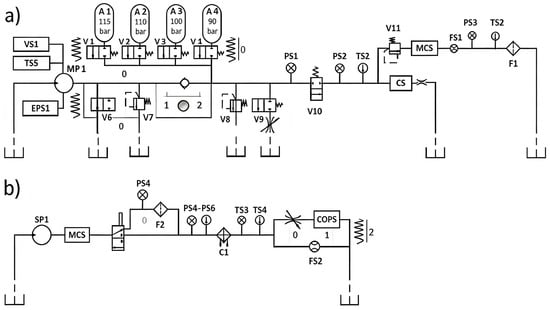
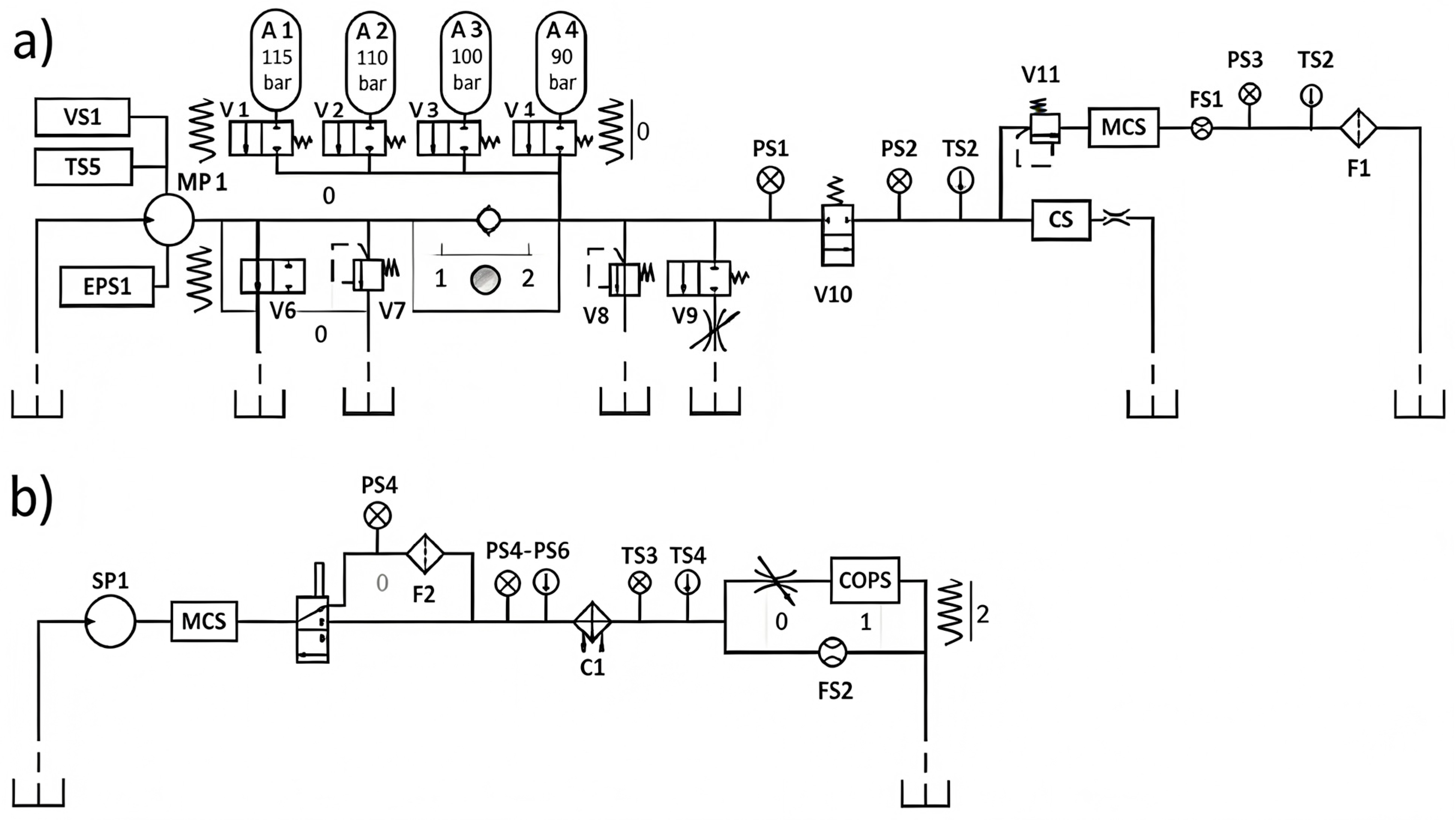
Figure 6a is the hydraulic system working circuit, and Figure 6b is the cooling filter circuit. Let us focus on the pressure and flow sensor data within the hydraulic system’s operating loop, specifically the PS1, EPS1, and FS1 sensors shown in Figure 6a. PS1 represents the pressure sensor data, sampled at 100 Hz. EPS1 corresponds to the motor power sensor data, also sampled at 100 Hz. FS1 refers to the flow sensor, with a sampling frequency of 10 Hz. Therefore, each sample consists of 600 data points. Detailed attributes of the plunger pump sample data are provided in the Table 1. The collected multi-sensor information, including the motor power signal, is used to identify three levels of internal leakage in the plunger pump: normal, slight internal leakage, and severe internal leakage.
Figure 6.
Schematic diagram of the experimental test rig for acquiring the source domain dataset. (a) The hydraulic system working circuit; (b) The cooling filter circuit.
Table 1.
Plunger pump sample data attributes.
Figure 6 presents a schematic diagram of the experimental test setup for acquiring the source domain dataset, where Figure 6a illustrates the working circuit of the hydraulic system and Figure 6b shows the cooling and filtration circuit.
To ensure data consistency and comparability amid varying sampling frequencies of different sensors, we performed data preprocessing including aligning and resampling all data to a unified 10 Hz (yielding 600 data points per cycle, with 100 Hz data downsampled by averaging every 10 points and 1 Hz data upsampled via linear interpolation), handling outliers using the 3σ principle (replacing out-of-range points with linear interpolation of adjacent points), normalizing data to the [0, 1] interval via min-max normalization to eliminate dimensional influences, and extracting time-domain (mean, variance, standard deviation, peak-to-peak value, RMS, skewness, kurtosis), frequency-domain (main frequency components, spectral energy, frequency band energy ratio) and time-frequency (wavelet coefficient energy, IMF energy from EMD) statistical features from each sensor’s time-series data.
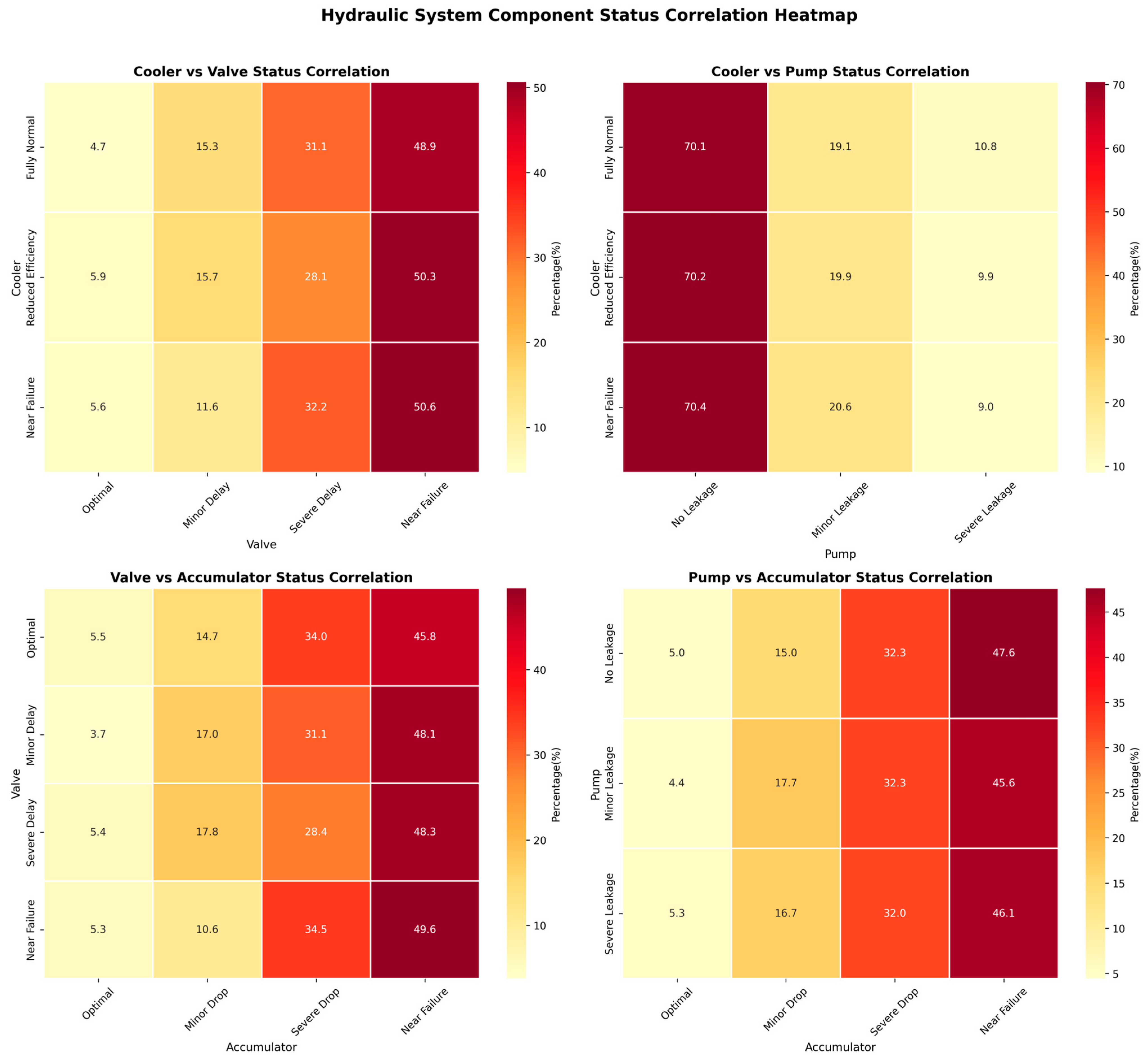
Figure 7 demonstrates the correlation between the states of various components in the form of a heatmap, revealing the mutual influence relationship under multi-fault concurrent scenarios.
Figure 7.
Heatmap of correlation between component states.
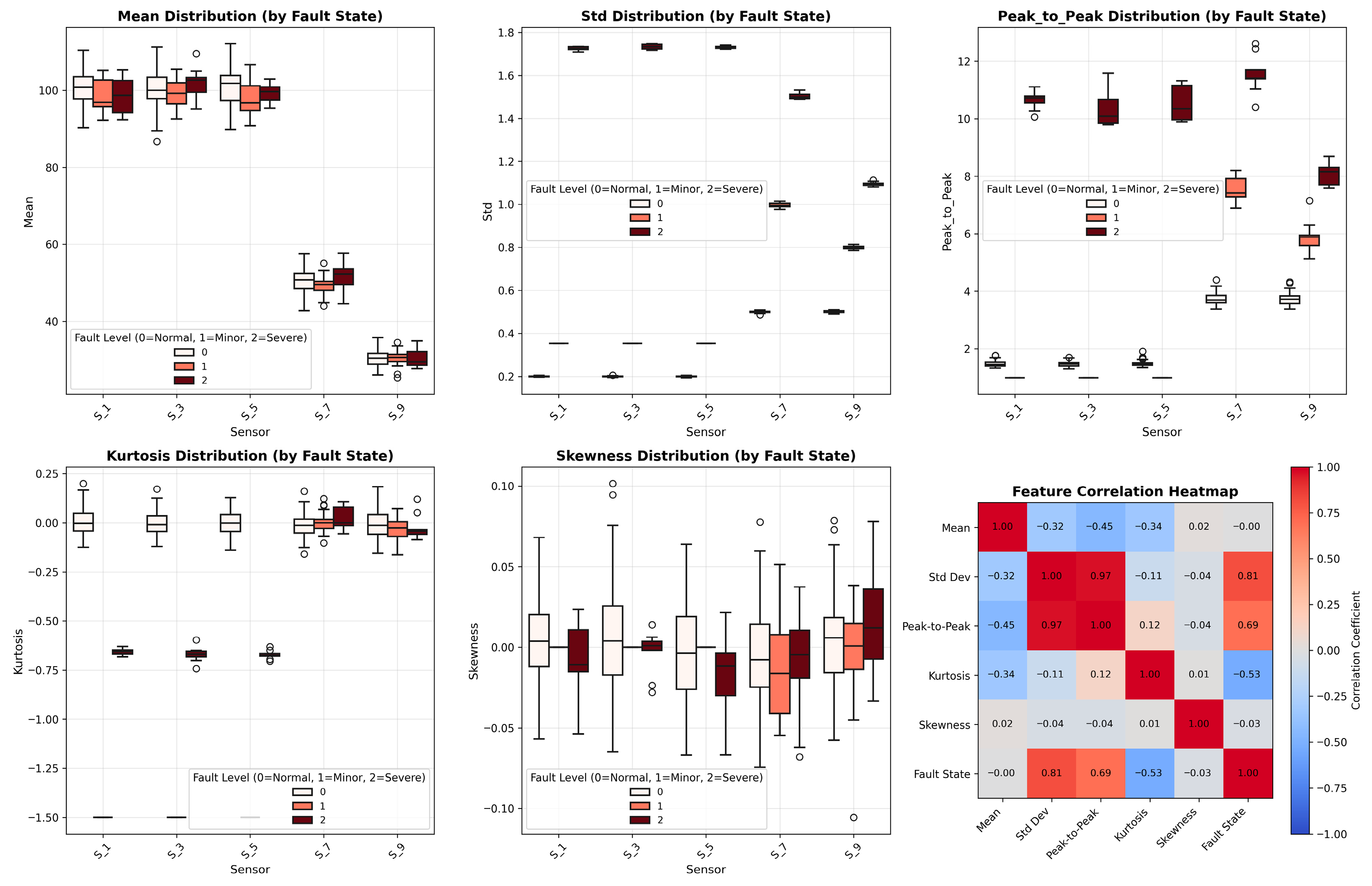
Analysis of component fault correlations shows that the cooler’s failure or reduced efficiency is associated with valve wear/aging and pump internal seal wear (due to increased system temperature and decreased hydraulic oil viscosity), the valve’s severe delay affects the accumulator’s charging/discharging efficiency, pump internal leakage impairs the accumulator’s normal operation (due to unstable system pressure), and system instability significantly increases the probability of concurrent faults in multiple components (e.g., cooler, valve, pump) by accelerating their synergistic degradation. As shown in Figure 8.
Figure 8.
Boxplot of statistical features of sensors.
Feature analysis of pressure, electric motor power, flow, and temperature sensors shows that pump leakage leads to decreased average pressure, increased pressure and flow rate fluctuations, elevated motor power demand and sharper power distribution, and reduced average flow rate, while the decline in cooler efficiency results in increased system temperature and weakened temperature control capability.
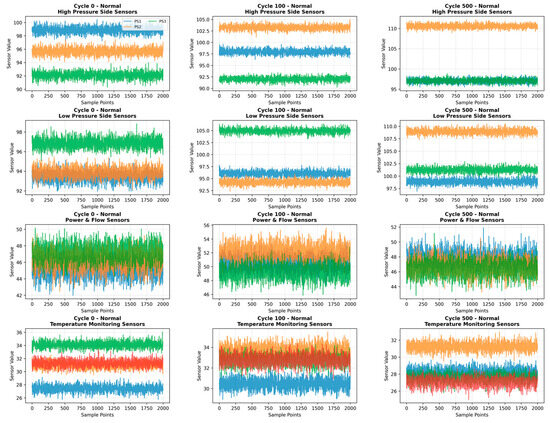
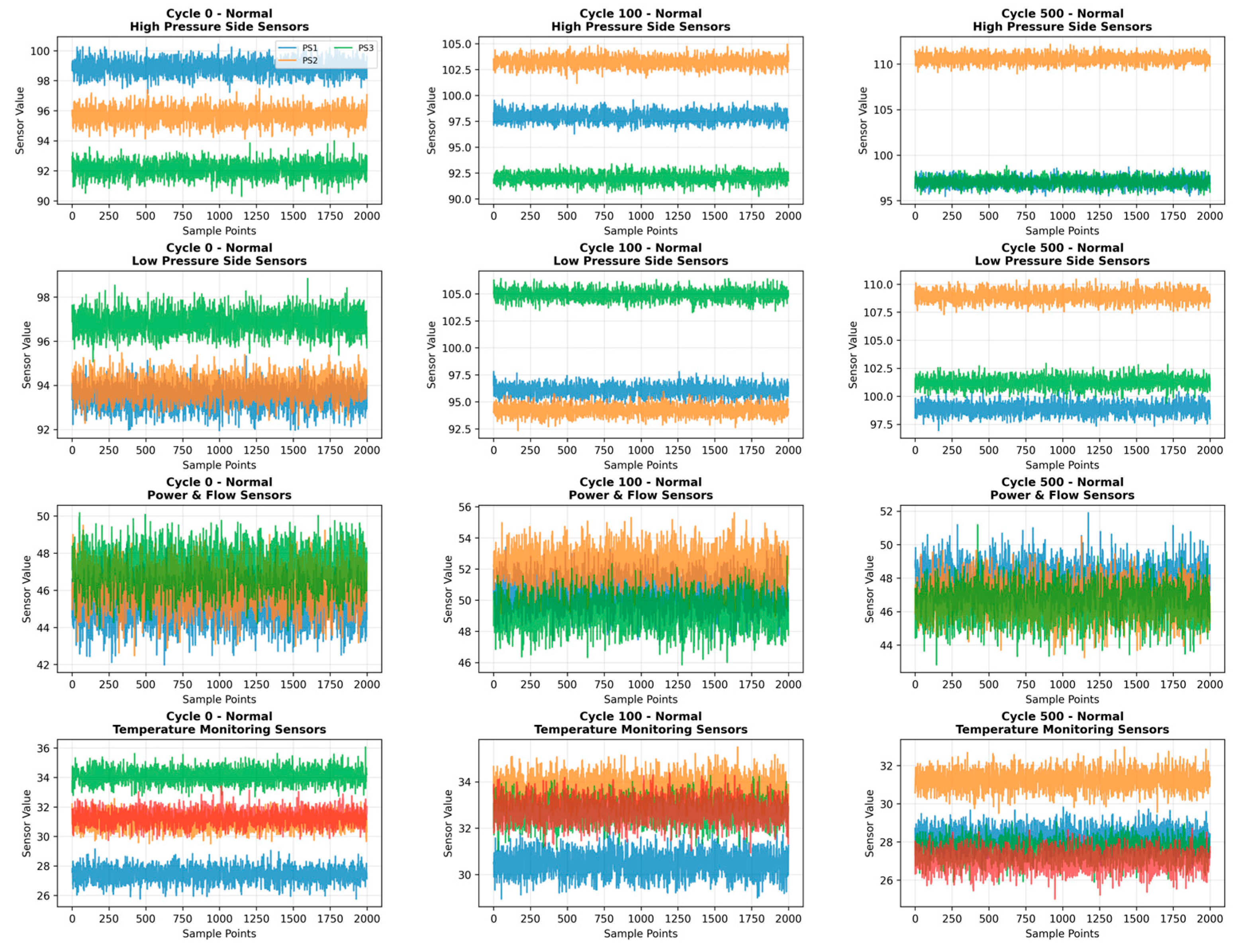
Figure 9 shows the comparison of time-series signals of key sensors under different fault states: blue represents the signal of PS1, orange represents the signal of PS2, green represents the signal of PS3, and red represents abnormality.
Figure 9.
Comparison diagram of sensor time-series signals.
Under normal conditions, pressure, motor power, flow, and temperature sensor signals remain stable and regular; under weak leakage, signal periodicity is disrupted with low-frequency modulation components, accompanied by slight flow reduction and slow temperature rise; under severe leakage, all signals fluctuate violently with multiple frequency components, power and flow fluctuations increase significantly, and temperature rises rapidly.
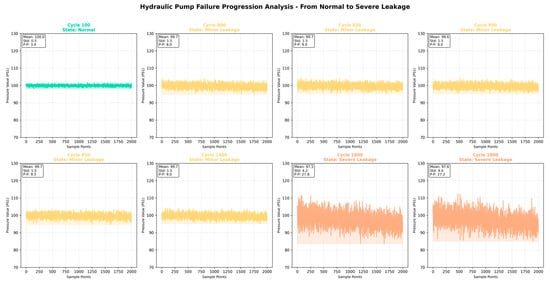
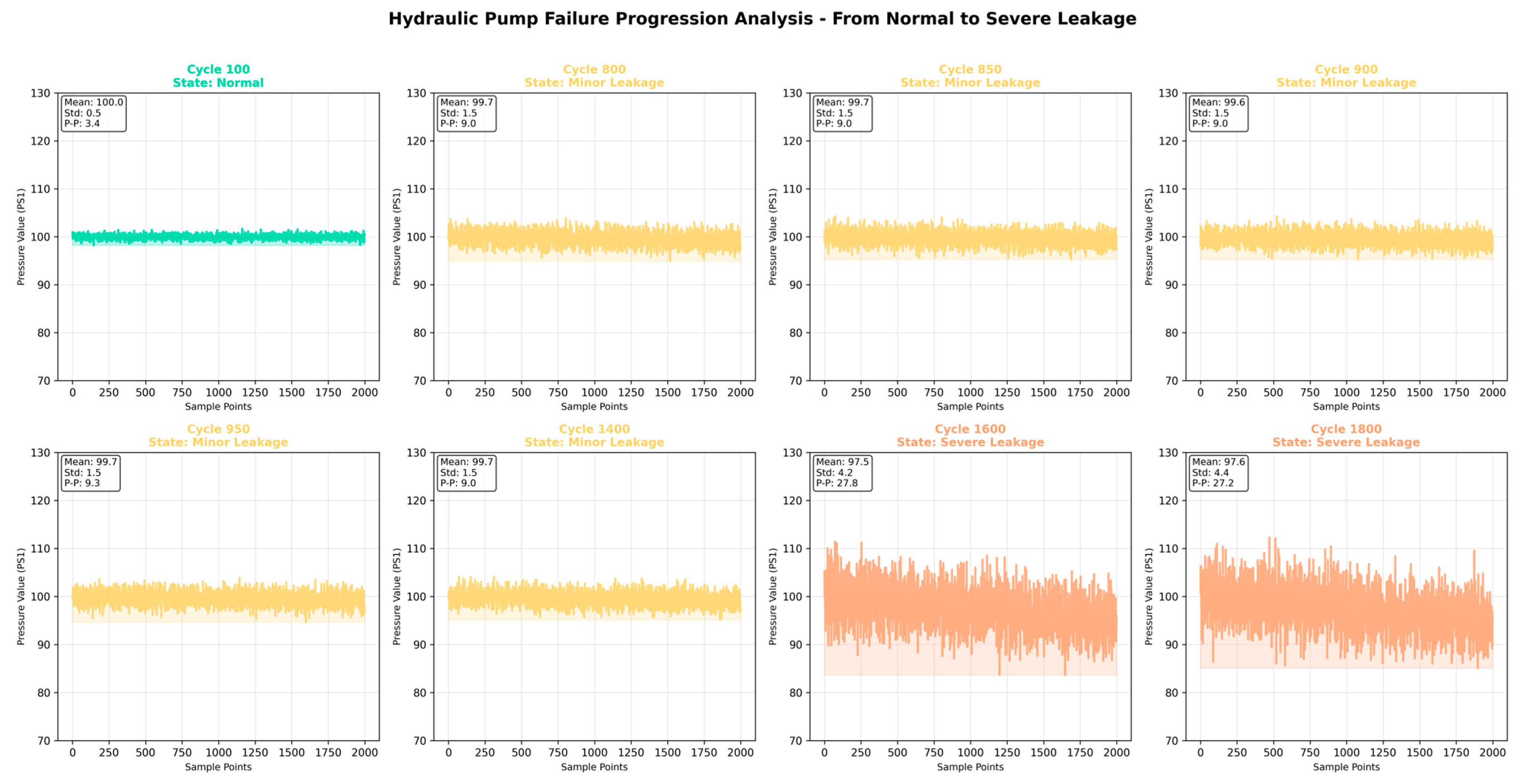
Figure 10 illustrates the complete evolution process of the pump from the normal state to severe leakage: green represents normal state, orange represents slight leakage, and red represents severe leakage.
Figure 10.
Pump fault evolution process.
The sensor signal characteristics evolve with fault progression: in the healthy state, pressure signals are stable, statistical features conform to normal distribution, and only the inherent system frequency component exists; in the early weak fault phase, pressure slightly decreases, signal fluctuation increases, weak new frequency components emerge, and signal distribution begins to deviate from symmetry; in the established weak leakage phase, pressure further decreases, signal fluctuation and new frequency component amplitude increase with additional harmonic components, and signal distribution becomes sharper; and in the severe leakage phase, pressure drops significantly, signal fluctuation intensifies, multiple harmonics appear, and signal distribution deviates greatly from normal distribution. The evolution law shows that average pressure decreases monotonically with an accelerating rate, signal fluctuation grows exponentially, frequency-domain components develop from a single frequency to multiple harmonics, and statistical distribution gradually changes from approximately normal to a sharp-peak and heavy-tail distribution.
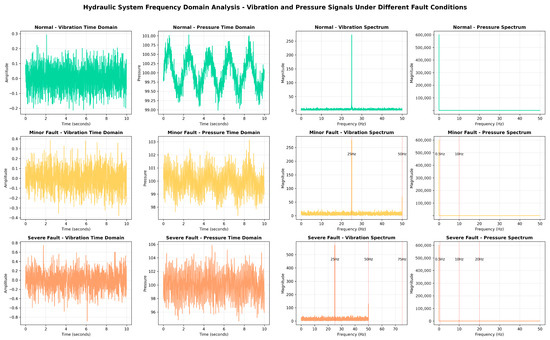
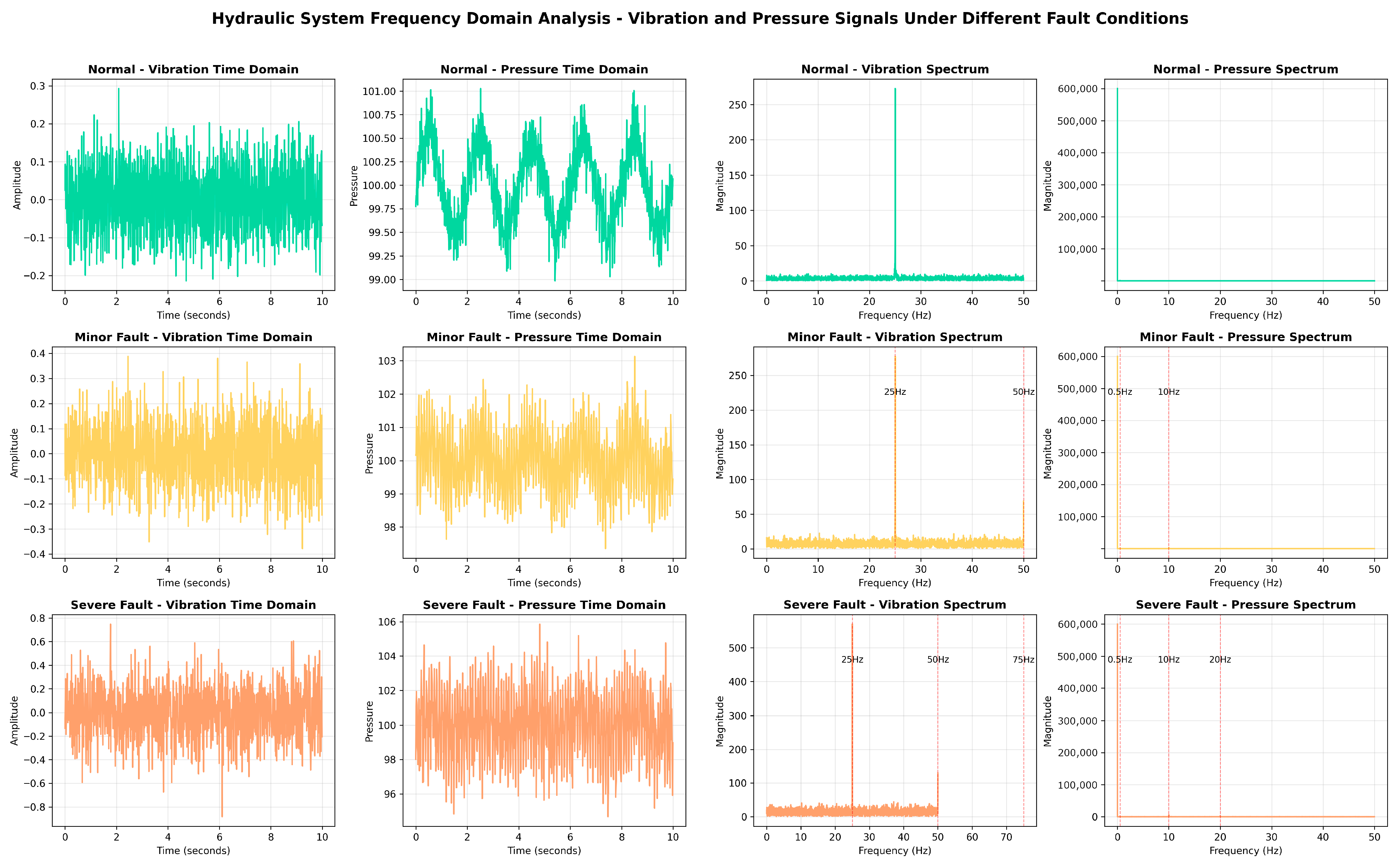
Figure 11 illustrates the frequency-domain characteristics of vibration and pressure signals under different fault states. Green represents normal state, orange represents slight leakage, and red represents severe leakage.
Figure 11.
Frequency-domain analysis diagram.
Under a normal state, the vibration and pressure signals have single spectral peaks corresponding to the system’s natural frequency and load cycle frequency respectively, with a low proportion of high-frequency components indicating stable operation; under weak pump leakage, both signals show additional spectral peaks, and the proportion of high-frequency components increases, suggesting a new vibration source; under severe pump leakage, more spectral peaks appear in both signals, with a further rise in high-frequency component proportion due to multiple harmonic vibrations caused by faults; and for cooler faults, the temperature signal spectrum broadens from narrowband to broadband, the spectral centroid shifts upward, and the proportion of high-frequency components increases, indicating slower temperature regulation and intensified fluctuations.
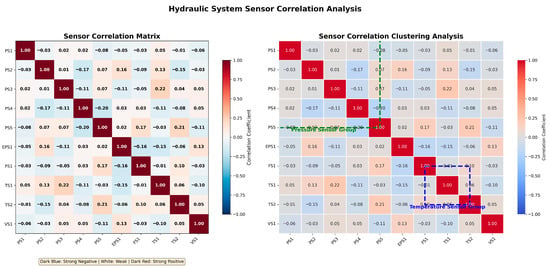
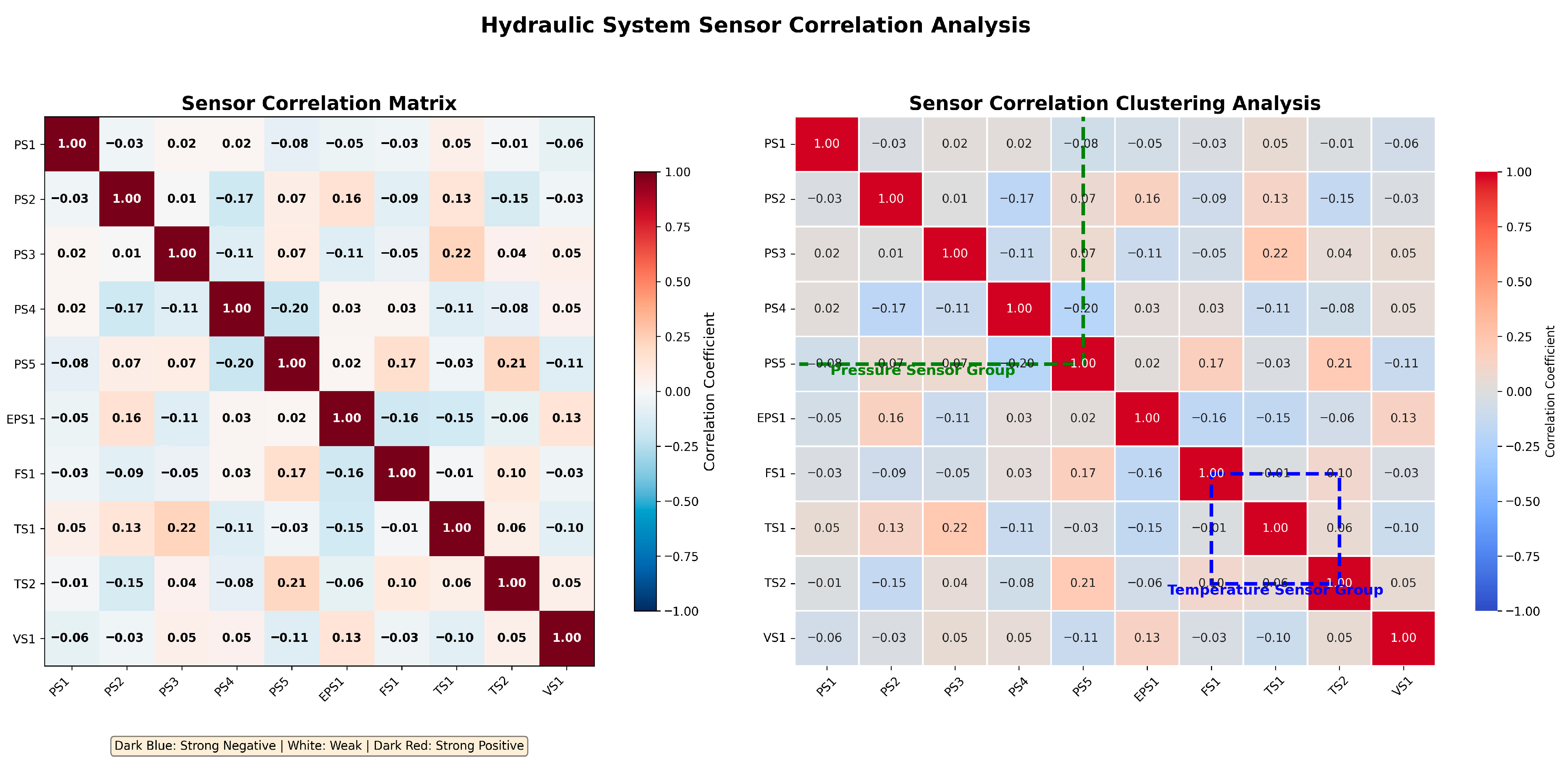
Figure 12 presents the correlation matrix among the 17 sensors. Sensors exhibit different correlation levels: the pressure sensor group and temperature sensor group show strong positive correlations, reflecting consistent monitoring data and system temperature distribution respectively; pressure sensors with motor power and flow sensors between themselves present moderate positive correlations, in line with energy conversion relationships and flow measurement consistency; and pressure sensors with temperature sensors and motor power with cooling efficiency have negative correlations, conforming to physical laws and performance relationships. Faults affect sensor correlations: pump leakage weakens the negative correlation between pressure and flow sensors, cooler faults enhance the correlation among temperature sensors, and system instability generally reduces the overall correlation level among sensors.
Figure 12.
Sensor correlation matrix.
Systematic analysis of the ZeMA [20] hydraulic system dataset yields key conclusions: the dataset features high quality and completeness, covering multiple fault states and severity levels of main components with reasonable sample distribution to support machine learning; obvious fault characteristics exist with significant differences in time-domain, frequency-domain and statistical features among different faults (e.g., pump leakage causes pressure drop, increased fluctuation and multiple harmonics), providing a reliable physical basis for fault diagnosis; component faults have significant statistical correlations with multi-fault coupling effects (e.g., cooler failure accelerates valve wear and pump leakage), and increasing diagnostic complexity while enabling graph-structure-based methods; sensor information has redundancy (high correlation among homogeneous sensors, requiring feature selection) and complementarity (heterogeneous sensors provide complementary information, requiring fusion for comprehensive system status assessment).
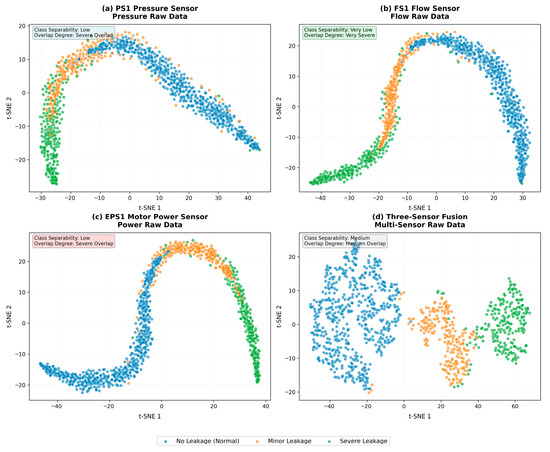
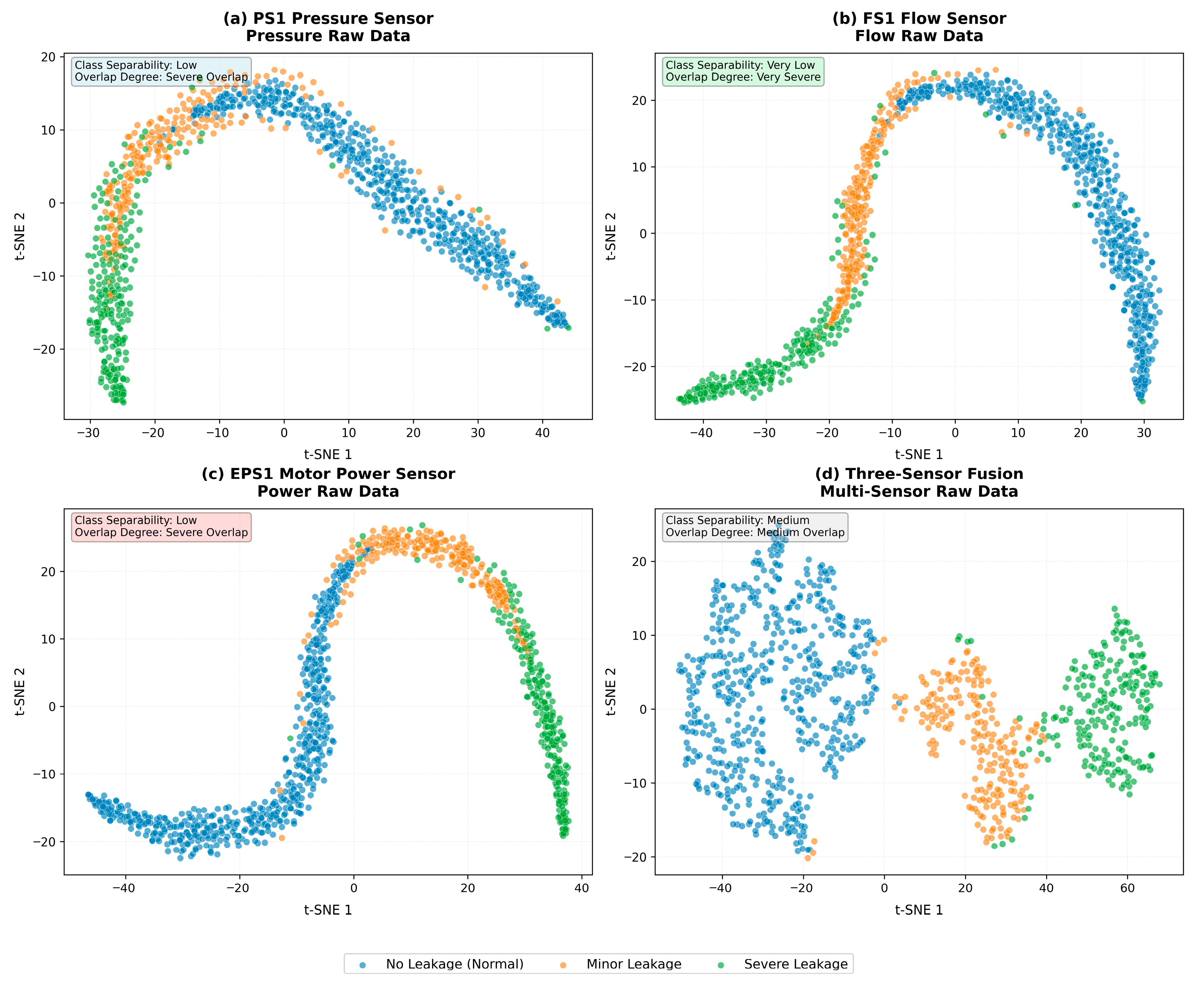
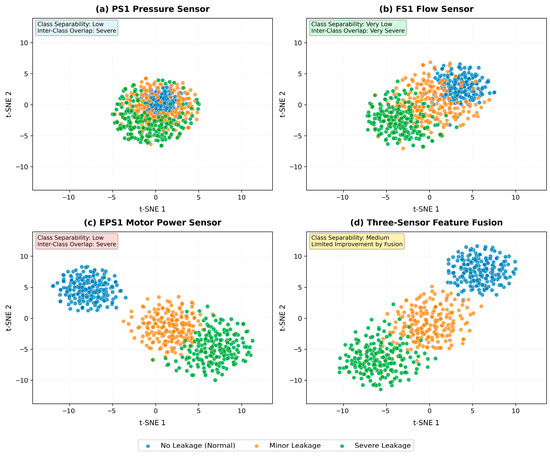
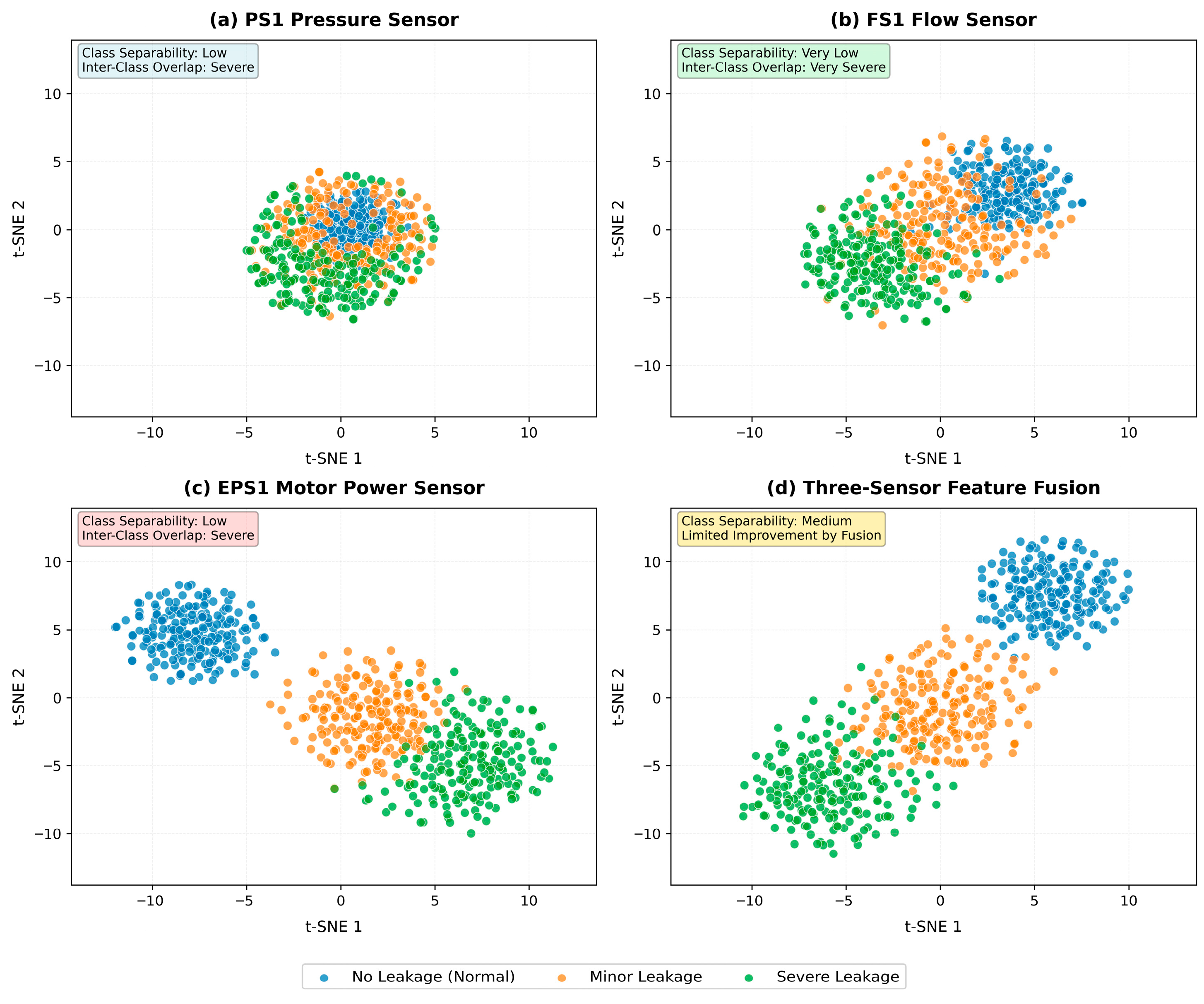
To intuitively analyze the class separability of the original feature space, the t-SNE (t-distributed Stochastic Neighbor Embedding) method is used to map high-dimensional raw features to a two-dimensional space, and the results are shown in Figure 13. It can be observed that different fault categories have obvious overlap in the low-dimensional space, indicating that the original features are difficult to directly achieve high-precision classification without effective modeling and correlation graph construction. This also indirectly verifies the necessity of introducing graph structure modeling and correlation reasoning mechanisms.
Figure 13.
Visualization results of t-SNE for the raw feature data.
The chapter introduces a method for exploring neural network architectures. Convolutional neural networks are built through actions generated by a controller. Test accuracy serves as rewards and penalties, guiding parameter updates by maximizing these rewards. The resulting network structure is fed back to the controller. It can be seen that after exploration, the model finally converges to the highest reward, and the optimal submodel network structure in the table is obtained. The network structure is detailed in Table 2.
Table 2.
Network architecture with optimal submodel configuration.
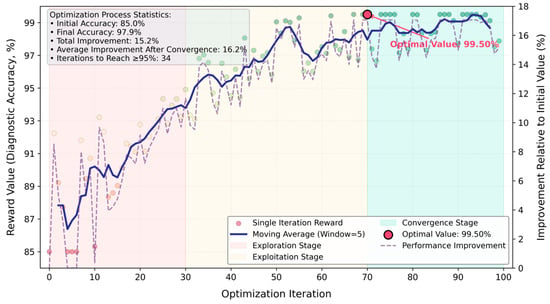
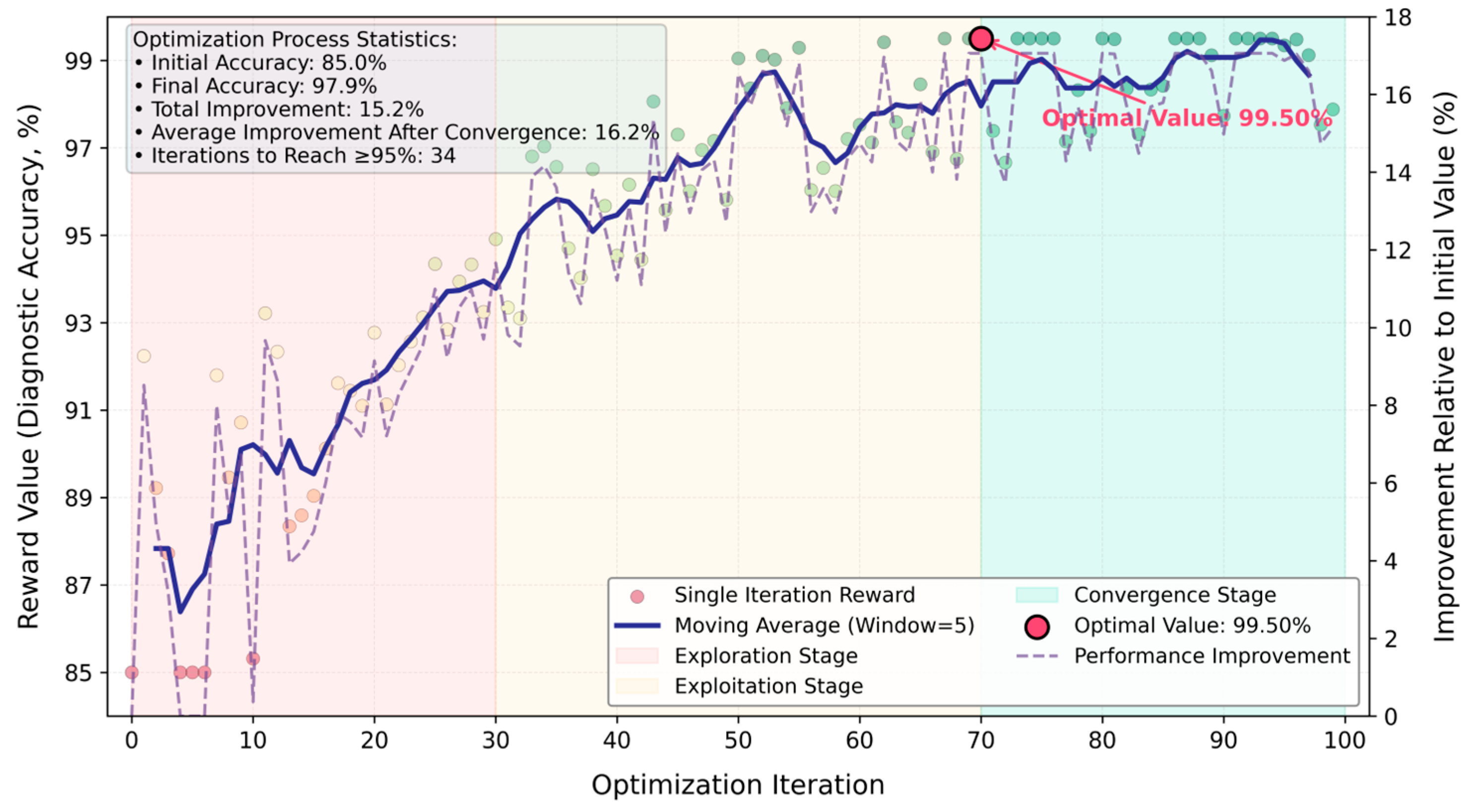
As shown in Figure 14, the policy gradient optimization process can be divided into three distinct stages. In the exploration stage (iterations 0–30), the reward value fluctuates significantly (pink scatter points) as the model explores different strategies. The 5-window moving average (dark blue solid line) smooths these fluctuations, revealing a steady upward trend. As the optimization enters the exploitation stage (iterations 30–70), the reward value stabilizes and increases gradually, reflecting the model’s convergence to more effective strategies. Finally, in the convergence stage (iterations 70–100), the reward value stabilizes at a high level, with the optimal value reaching 99.50% (red dot). The purple dashed line, corresponding to the right y-axis, shows the performance improvement relative to the initial value, which peaks at 16.2% during convergence. Key statistics, including the initial accuracy (85.0%), final accuracy (97.9%), and total improvement (15.2%), are provided to quantify the optimization effect, with the model reaching ≥95% accuracy after 34 iterations.
Figure 14.
Reward function change curve during policy gradient optimization.
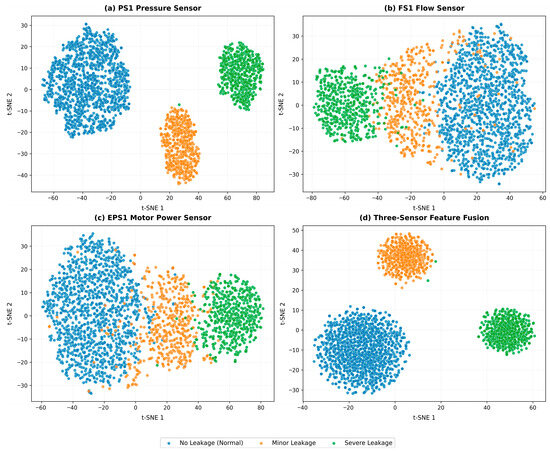
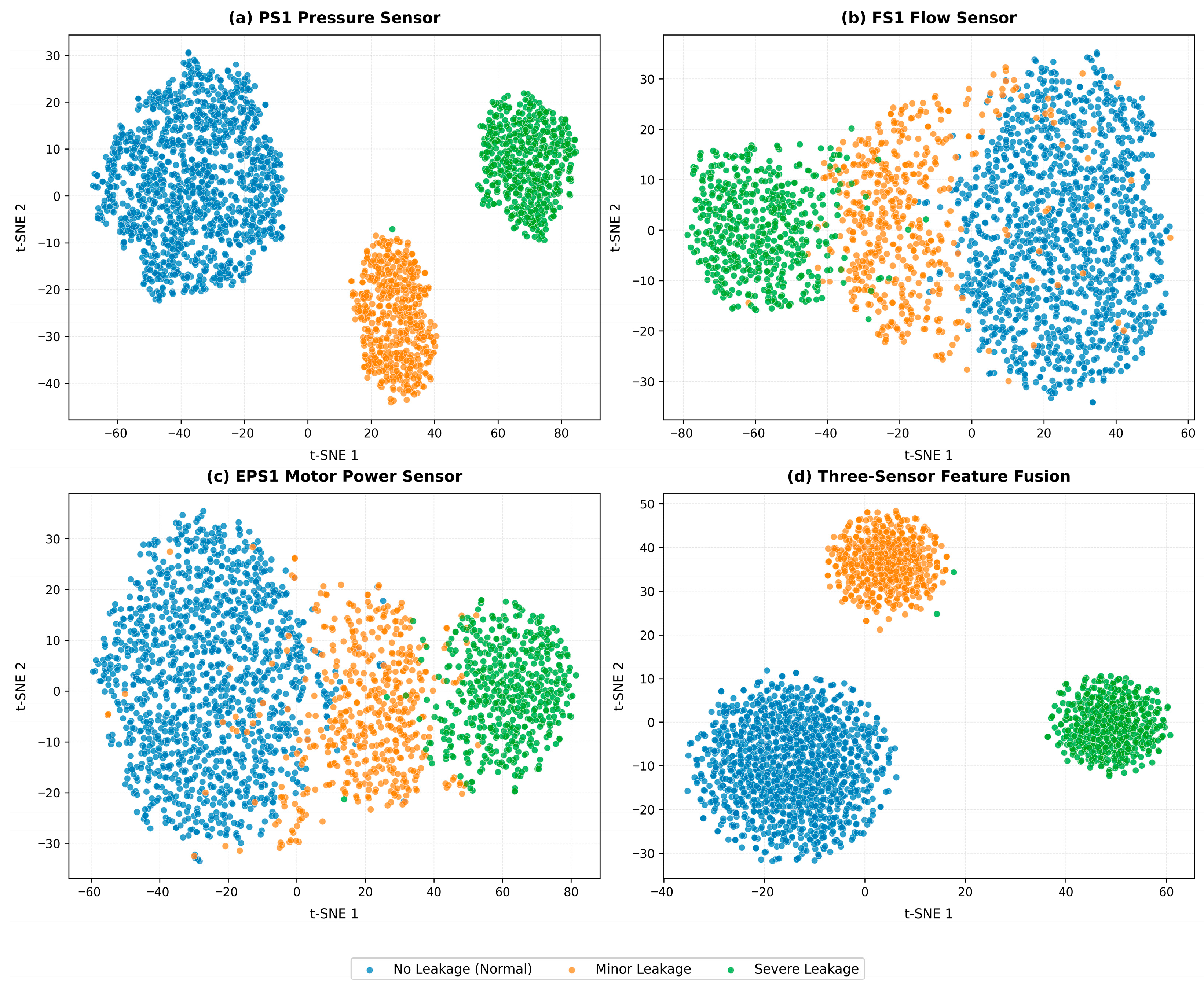
To more intuitively study the classification performance of the hydraulic pump states at each layer of the neural network, the t-SNE (t-distributed Stochastic Neighbor Embedding) algorithm is also applied to perform two-dimensional visualization of both the output signals of the KAN convolutional network model and those of the network architecture defined by the proposed method. As shown in Figure 15 and Figure 16, respectively.
Figure 15.
The output signal of the KAN convolutional network model.
Figure 16.
The output signal of the proposed method.
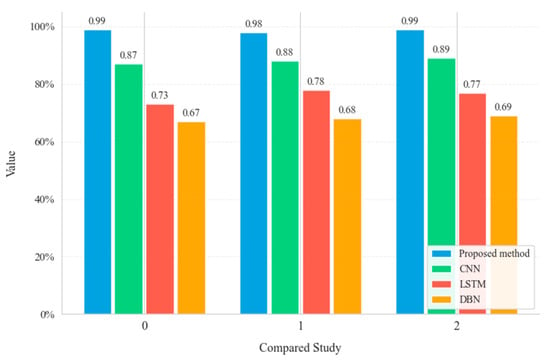
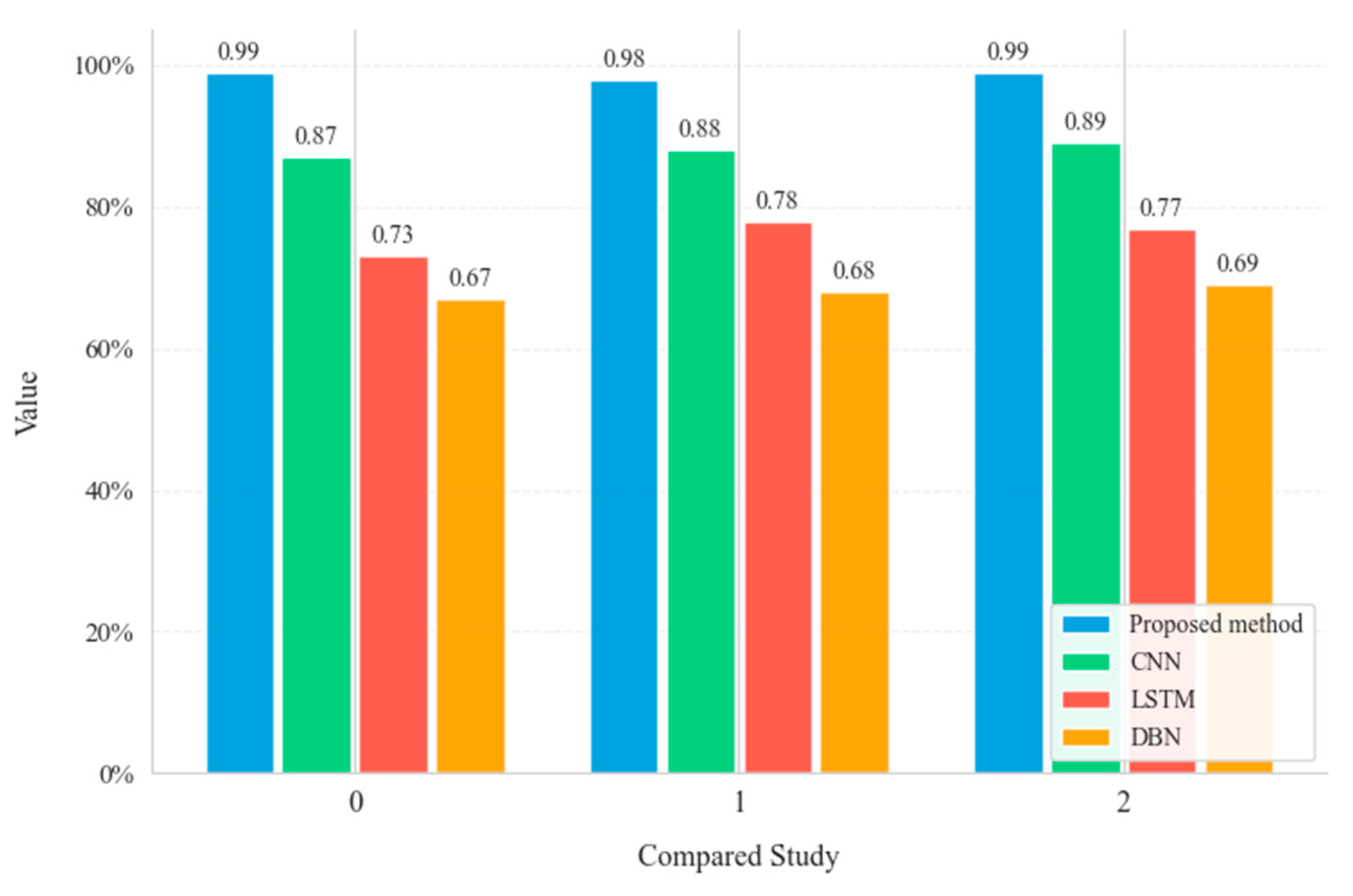
The test results of the optimal submodel are compared to other deep learning methods, including CNN, LSTM, and DBN. CNN consists of four convolutional layers; the hyperparameters of the filter and convolution kernel are [16,3]-[32,3]-[16,3]-[32,3] respectively, and then connected to the average pooling layer; the filling type is the same padding; and the relu function is used as the activation function. The LSTM is a single hidden layer consisting of 128 hidden units followed by a softmax classifier. DBN consists of two hidden layers with a network structure of 400-200-100-5. Each method iterates 200 times during training, and the test results are obtained. Each method was run ten times under the same conditions. The test results are summarized in Table 3, and the network weight parameters are saved for subsequent parameter migration. It can be seen that the accuracy of the optimal submodel is significantly better than the other three methods, followed by CNN with a recognition accuracy of 89.52%, and LSTM and DBN with poor recognition accuracy.
Table 3.
Comparative testing accuracy of diverse deep learning architectures.
Randomly select a group of test results, and summarize the test accuracy of different fault types in Figure 17. In fault types 3, 4, and 5, the optimal submodel can accurately identify faults that are difficult to identify by other methods. It is proven that the method proposed in this chapter can obtain the optimal intelligent diagnosis model, which can accurately identify the fault type, and save a lot of time for the optimization of neural network structure and parameters.
Figure 17.
Accuracy of different deep learning models.
3.2. Experimental Data Set Based on Airborne Hydraulic Simulation System
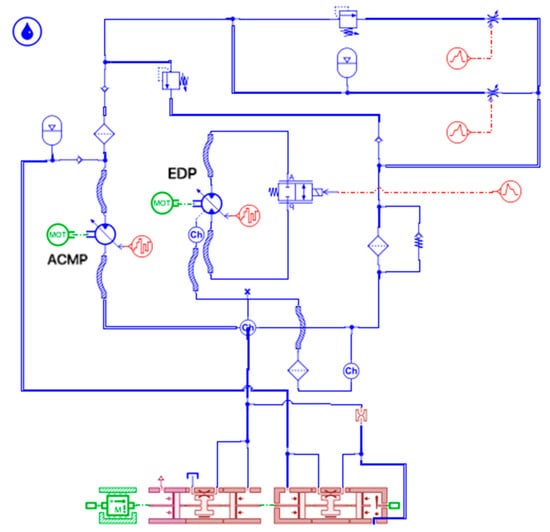
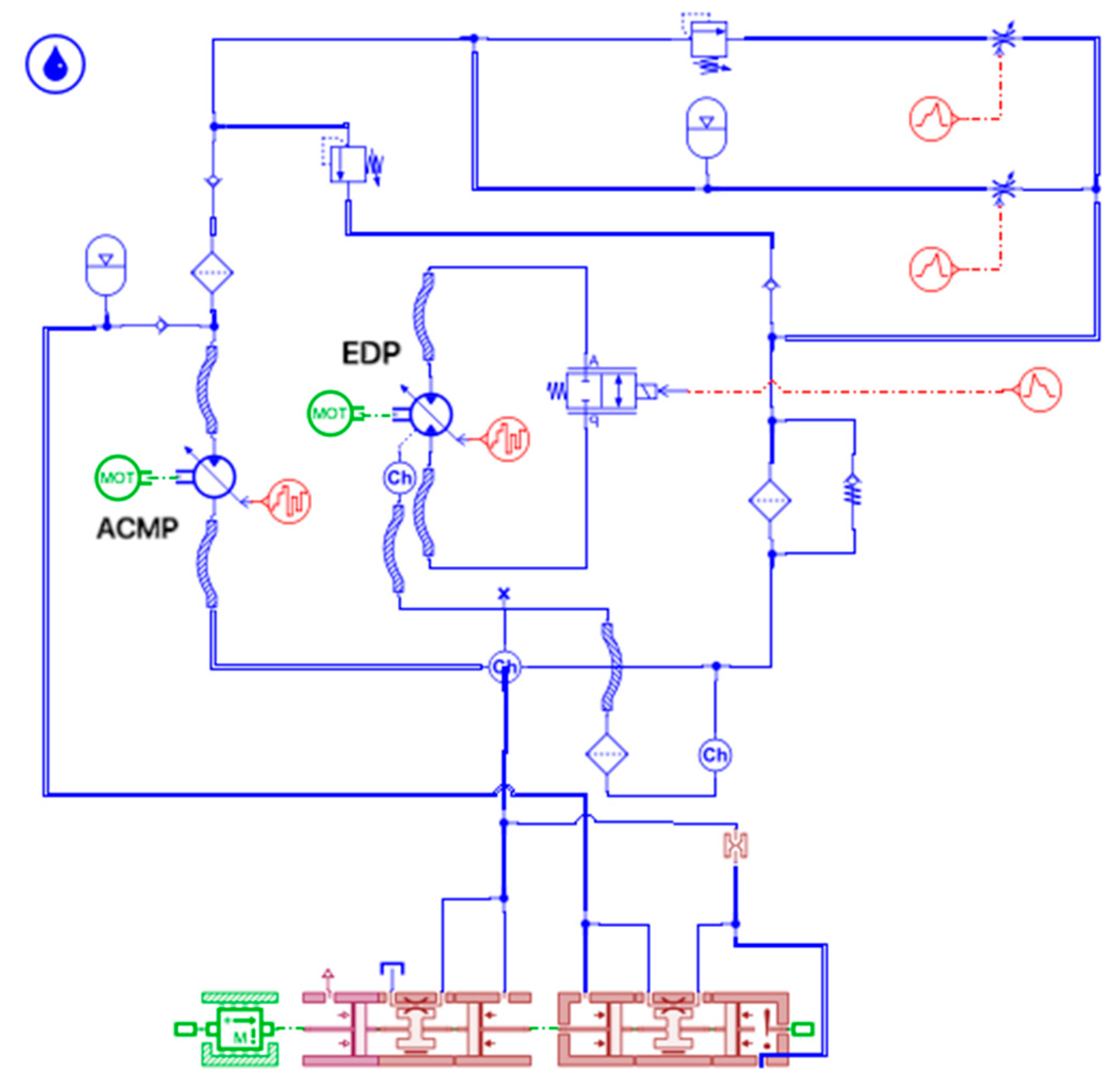
Studying fault diagnosis in airborne hydraulic systems driven by data necessitates acquiring information on parameters such as pressure and flow under normal and diverse fault conditions. Directly implanting faults in actual aircraft hydraulic systems is costly and challenging. Consequently, domestic research typically employs AMESim (https://www.plm.automation.siemens.com/global/en/products/simcenter/amesim/, accessed on 1 February 2026) software to simulate airborne hydraulic systems as shown in Figure 18, introducing common faults via simulation to generate datasets for algorithm training and effectiveness testing. By extracting curves representing normal and faulty states, a dataset is compiled to underpin subsequent algorithmic investigations.
Figure 18.
System Simulation Model.
Based on a comprehensive review of the relevant literature, five typical faults are selected as simulation objects in this paper, including internal leakage of the hydraulic pump, oil filter blockage, servo valve blockage, hydraulic oil contamination, and internal leakage of the actuator. The fault implantation conditions are set with reference to technical parameters in the literature. To efficiently simulate the internal leakage fault of the hydraulic pump in AMESim, an orifice is connected in parallel at both ends of the pump. The quantitative simulation of internal leakage degree is realized by adjusting the equivalent aperture parameter of the element—the larger the equivalent aperture, the more serious the internal leakage of the pump, which in turn changes the pressure and flow characteristics at the pump outlet, achieving the simulation implementation goal of system-level pump leakage fault.
For the oil filter blockage fault, simulation is achieved by adjusting its equivalent filter pore diameter parameter: the pore diameter is set to 3–4 mm to simulate the blockage state, and when the pore diameter is larger than 5 mm, it is regarded as a normal working condition. The AMESim actuator element has a built-in leakage coefficient parameter, which can be directly used for accurate simulation of internal leakage fault of the actuator; the servo valve blockage fault is realized by connecting an overflow valve in series at the direct junction of the valve outlet and the rodless chamber of the actuator, and the occurrence and degree of servo valve blockage can be flexibly controlled by adjusting the parameters of the overflow valve. In addition, the gas content parameter of hydraulic oil in AMESim can be used to effectively reproduce the oil contamination fault caused by the increase in gas content in hydraulic oil.
The simulation covers the above five fault conditions and one normal condition, totaling six state categories. The experimental sampling frequency is set to 100 Hz, and the time-series data collected under each working condition is divided into 400 samples, of which the first 350 samples are used to construct the training set, and the remaining 50 samples are used as the test set. The specific configuration of the data set is shown in the Table 4.
Table 4.
Explanation of failure modes of airborne hydraulic system.
From the perspective of data structure, each sample consists of equal-length time-series signals from multiple sensors, with a single sample containing 100 sampling points corresponding to 1 s of system operating status at a sampling frequency of 100 Hz. This sample construction method not only retains the dynamic evolution characteristics of the hydraulic system but also facilitates subsequent feature extraction and model training, which is consistent with the conventional data organization format in the field of hydraulic system fault diagnosis.
From the perspective of physical magnitude, the pump outlet pressure signals are generally distributed in the range of approximately 160–170 bar, which falls within the typical operating pressure range of airborne hydraulic systems. Actuator leakage-related variables remain relatively stable under normal operating conditions and show varying degrees of upward trends under leakage fault conditions, without abnormal mutations or non-physical data values. This indicates that the simulation data are consistent with the engineering practice of hydraulic systems in terms of dimensions and numerical ranges, with no obvious numerical distortion or modeling deviation introduced.
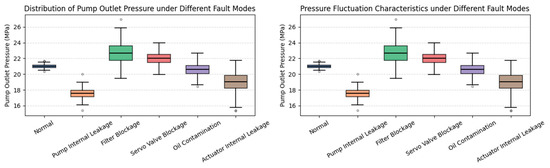
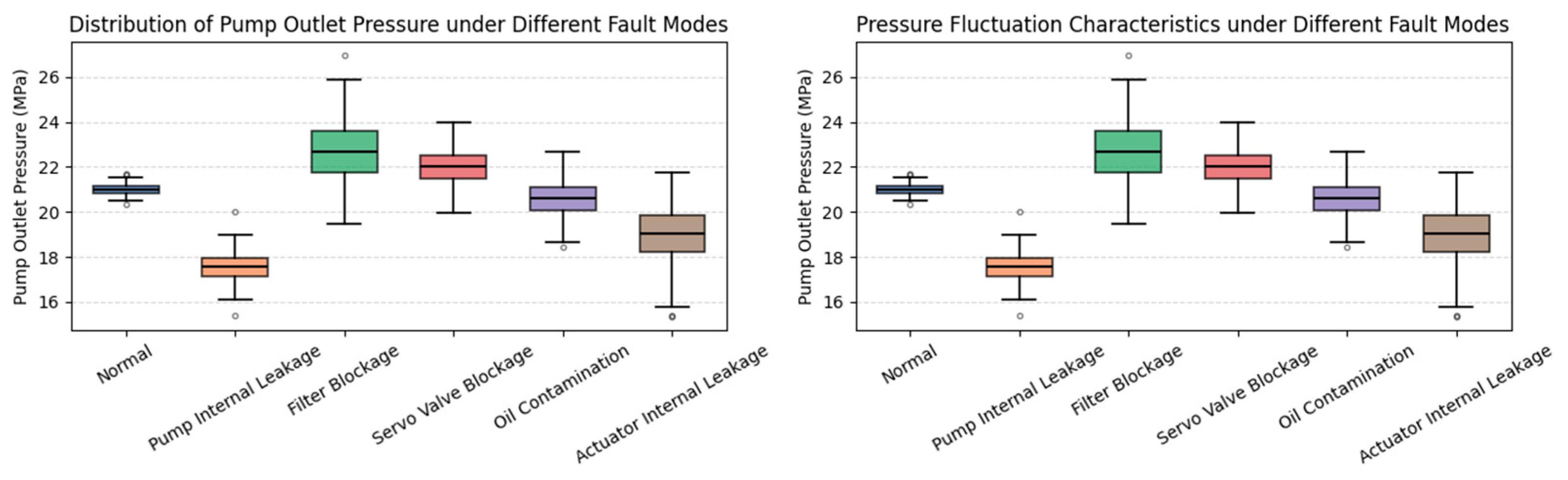
In hydraulic systems, there are significant differences in the influence mechanisms of different fault types on system state variables. For example, internal pump leakage usually leads to a decrease in the effective output flow rate of the system, thereby causing a reduction in the average outlet pressure; blockage faults are mainly characterized by increased flow resistance and intensified system pressure fluctuations; and internal actuator leakage often results in an increase in return oil volume, leading to a significant rise in leakage-related state variables. As shown in the Figure 19.
Figure 19.
Statistical graphs of pump outlet pressure data under various fault modes.
To verify whether the simulation data reflect the aforementioned physical laws, this study conducts statistical analysis on the mean value and fluctuation characteristics of pump outlet pressure under different fault modes. The results show that there are significant differences in the average pressure among different fault states: the average pressure of samples with internal pump leakage faults is generally lower than that under normal operating conditions, while the pressure standard deviation of samples with oil filter clogging and internal actuator leakage faults increases significantly. This phenomenon is highly consistent with the theoretical analysis and engineering experience of hydraulic systems. Meanwhile, leakage-related variables exhibit high mean levels in internal actuator leakage and internal pump leakage faults, while maintaining relatively low levels under normal operating conditions and non-leakage faults, further verifying the physical consistency of the simulation data in fault characterization. As shown in the Figure 20.
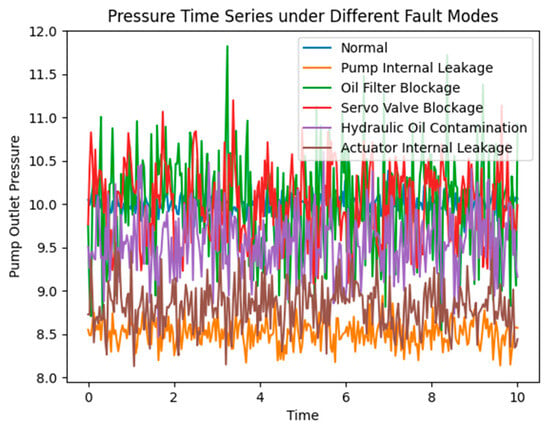
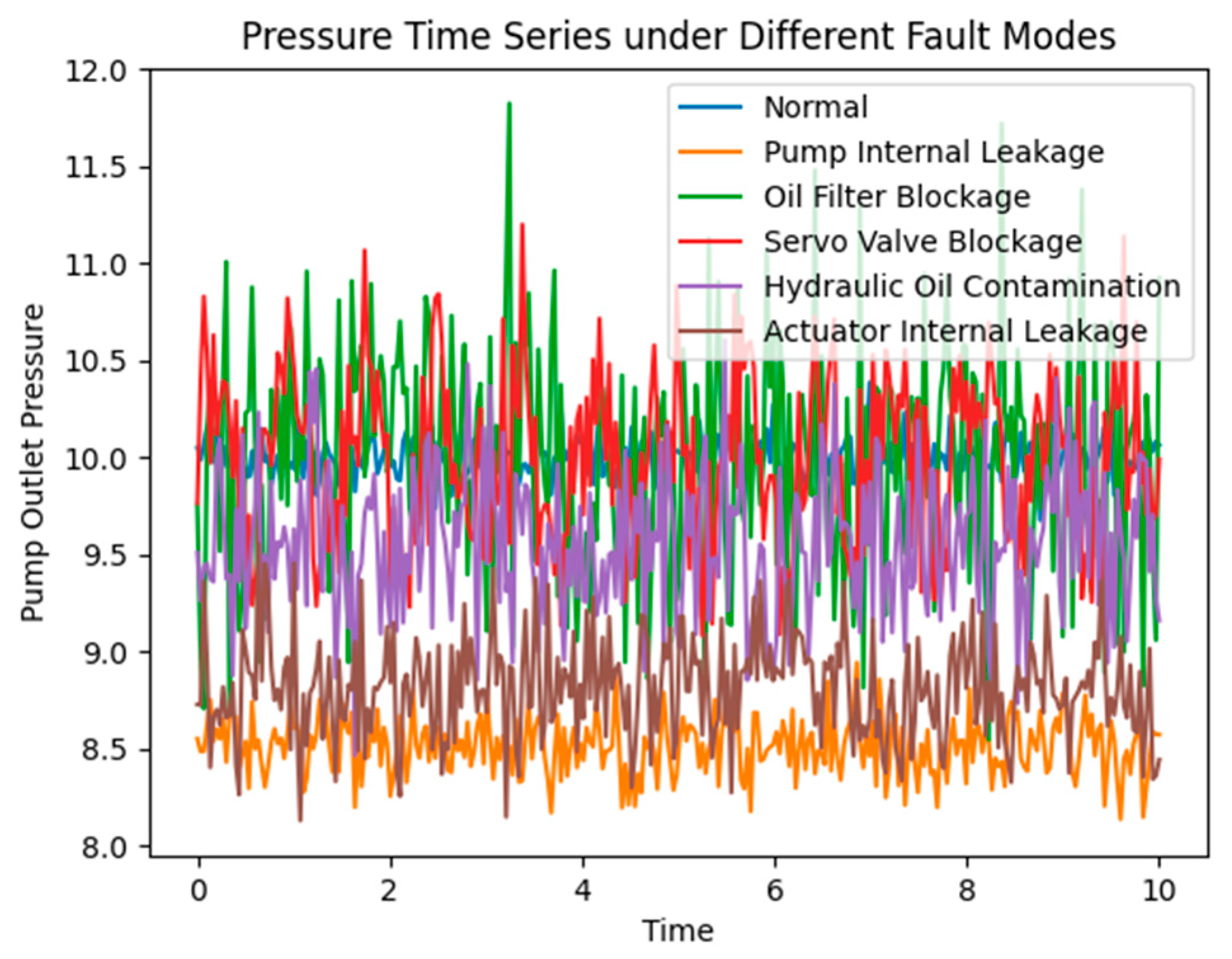
Figure 20.
Time-Series signal graphs under different fault modes.
In addition to static statistical features, hydraulic system faults are often accompanied by obvious dynamic evolution characteristics. Analysis of the time-series signals within samples reveals significant differences in the variation trends and fluctuation patterns of system pressure signals under different fault modes. Specifically, leakage faults are characterized by a slow decrease or stable offset of pressure levels, while blockage faults are more likely to induce high-frequency fluctuations and dynamic lag of pressure signals. Such differences exhibit good distinguishability in the time domain. As shown in the Figure 21.
Figure 21.
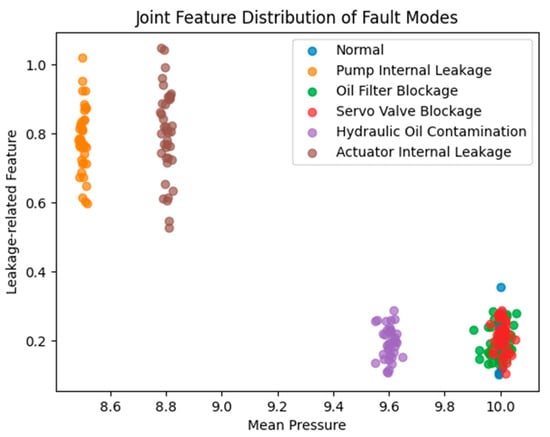
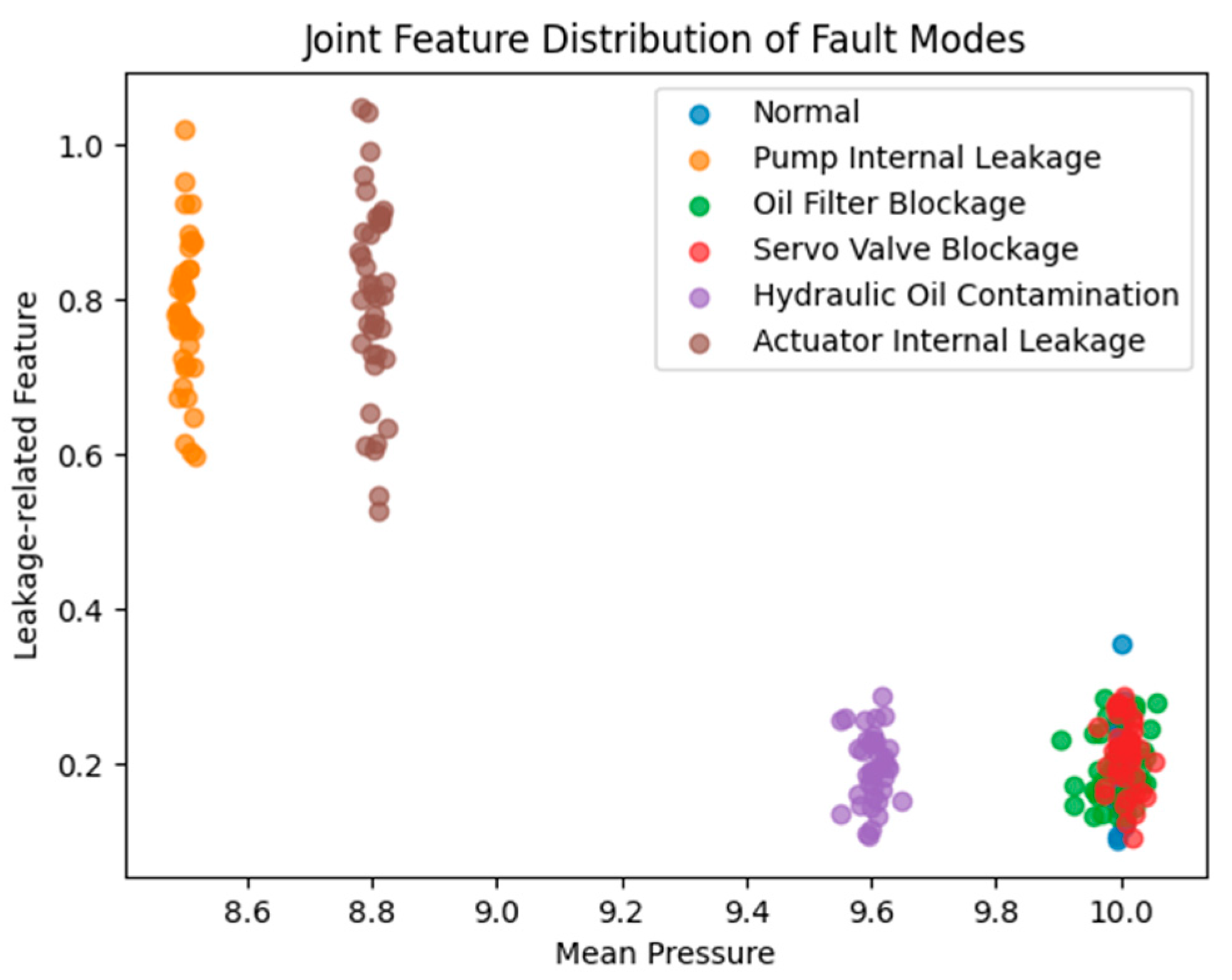
Clustering distribution graphs of different fault modes.
Furthermore, through low-dimensional joint analysis of pressure mean values and leakage-related features, it can be observed that different fault modes present a certain degree of clustering distribution in the feature space, indicating that the simulation data itself has good fault separability. This provides a necessary premise for the subsequent introduction of deep learning models and graph structure modeling methods for complex fault reasoning.
In summary, the fault simulation data of the airborne hydraulic system constructed based on AMESim exhibits good rationality and engineering credibility in the following aspects: the data structure and sampling settings are consistent with the actual working conditions of online monitoring of airborne hydraulic systems; the numerical ranges and variation trends of key physical quantities conform to the engineering experience of hydraulic systems; different fault modes show differences consistent with mechanism analysis in statistical features and dynamic evolution behaviors; the data has good fault separability, providing a reliable data foundation for the subsequent construction of fault diagnosis models. Therefore, it can be concluded that the simulation data can relatively truly reflect the operating characteristics of the airborne hydraulic system under different fault conditions, and is suitable for researching fault diagnosis and reasoning methods based on data-driven and mechanism fusion.
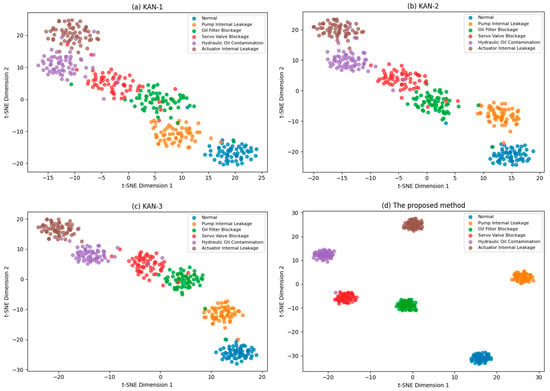
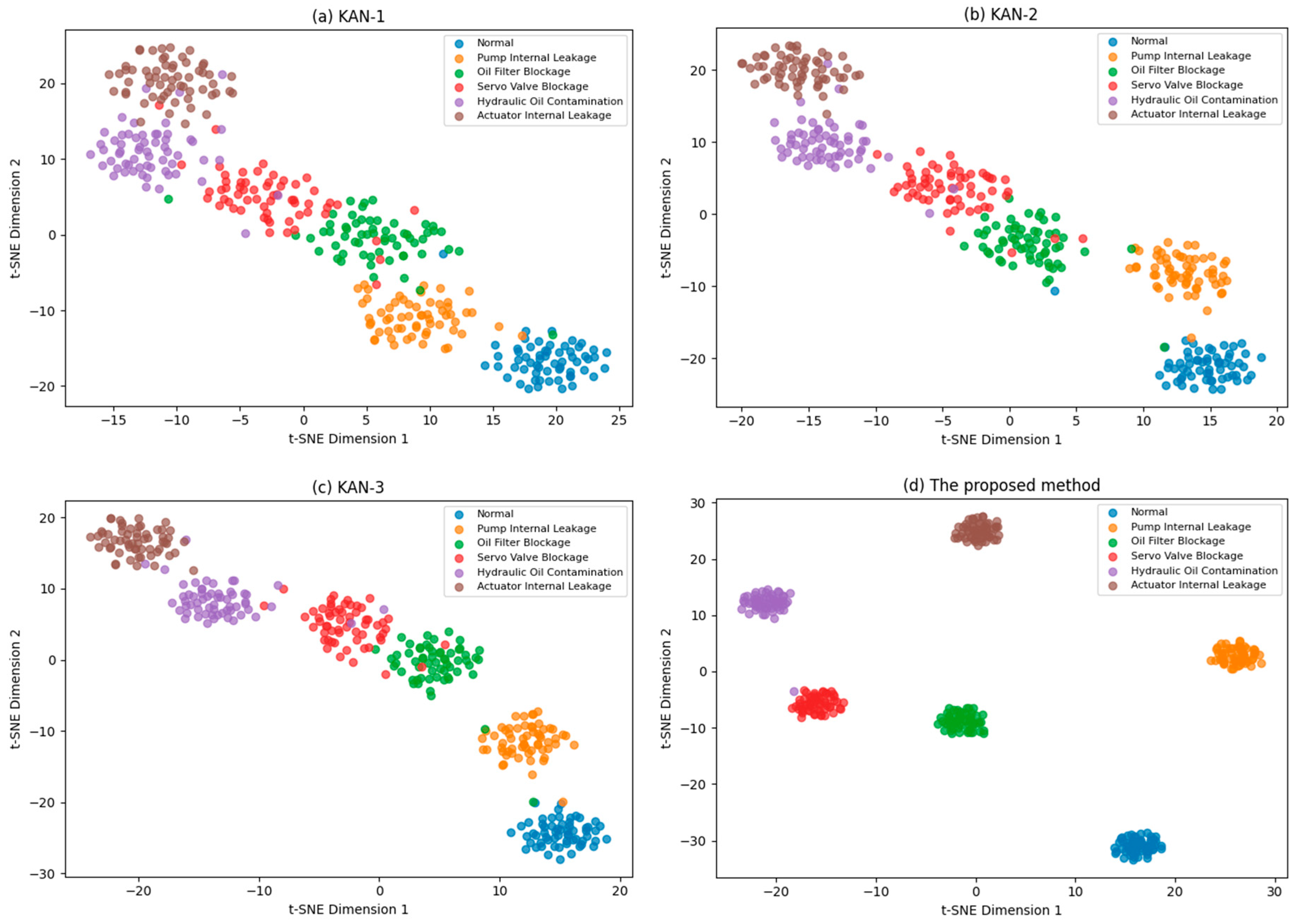
To intuitively analyze the classification effect of each layer of the neural network on the hydraulic pump state, the t-distributed Stochastic Neighbor Embedding (t-SNE) algorithm is used to visualize the output signals of each layer of the three models (KAN-1, KAN-2, KAN-3) and the model optimized by the method proposed in this paper, and the results are shown in Figure 22.
Figure 22.
Comparison visualizations of different network structures. (a) KAN-1; (b) KAN-2; (c) KAN-3; (d) The proposed method.
The method proposed in this paper is applied to the neural network architecture search process. The controller generates actions to construct the KAN convolutional neural network, takes the test accuracy as the reward and punishment signal, updates the model parameters using the maximum reward and punishment strategy, and feeds back the generated network structure to the controller as the input for the next stage of search. After iterative exploration, the model finally converges to the optimal reward and punishment value, and the optimal submodel network architecture shown in Table 5 is obtained.
Table 5.
Optimal submodel network architecture.
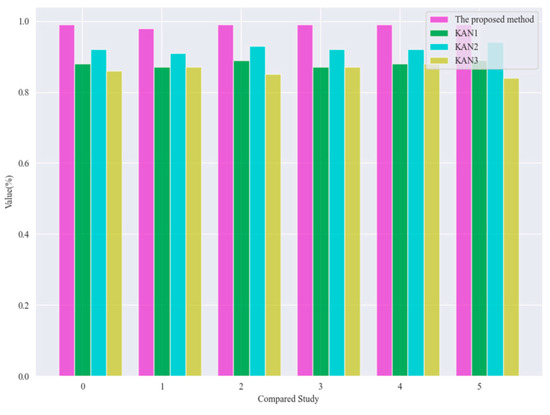
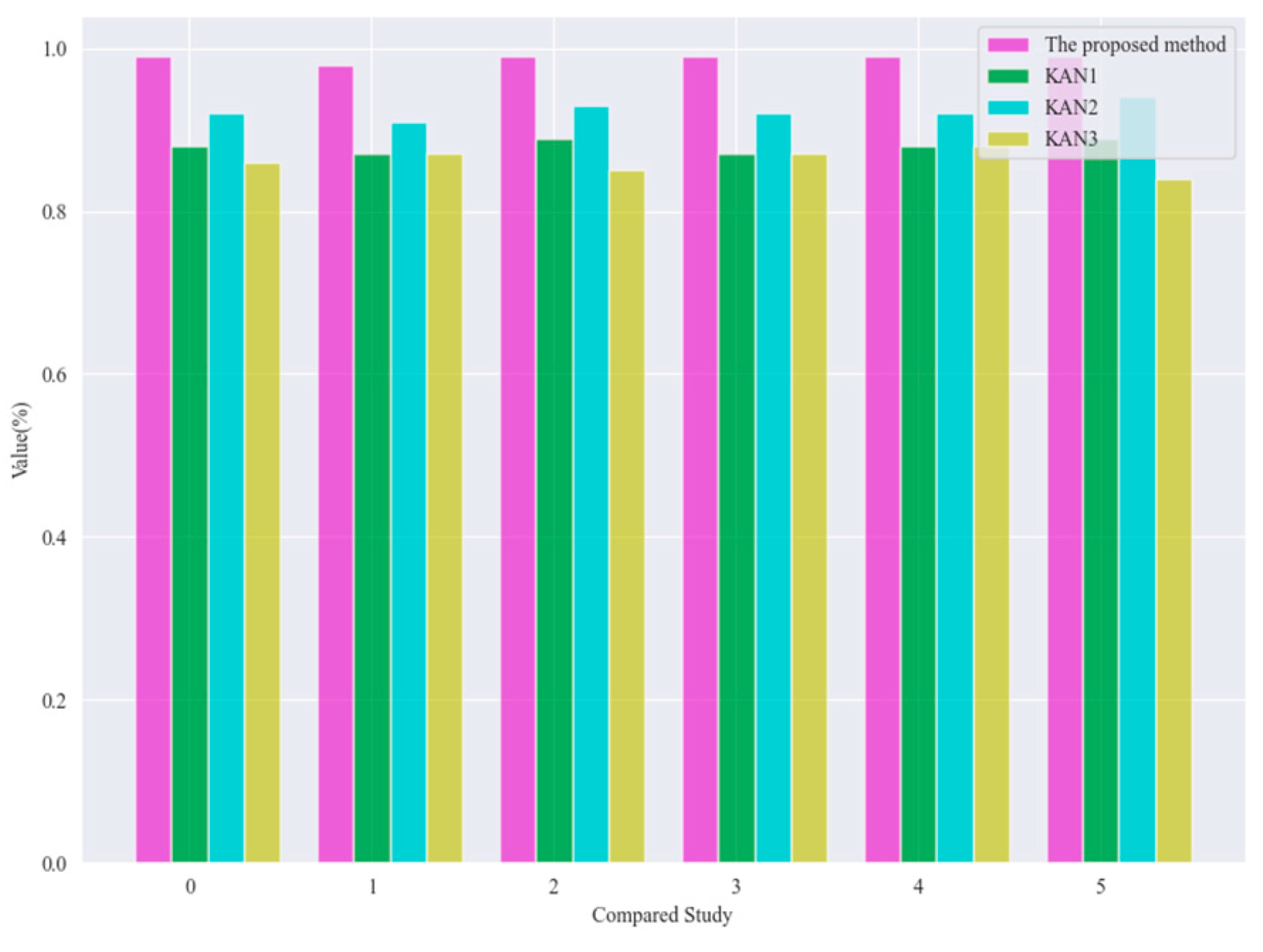
To verify the effectiveness of the proposed method, a comparative experiment is conducted between the test accuracy of the generated network structure and the network structures selected by manual experience (KAN-1, KAN-2, KAN-3). During the experiment, except for the network structure parameters, other experimental conditions are kept consistent, and six repeated tests are performed on the test set in the same environment. The statistical results of test accuracy are shown in Table 6, and the accuracy fluctuation of the six experiments is shown in Figure 23.
Table 6.
Classification accuracy of test samples.
Figure 23.
Accuracy comparison of 6 experiments.
The experimental results show that the average classification accuracy of the KAN-1 model is the lowest at 86.63%; the average accuracy of the KAN-2 model is 88.33%; the average accuracy of the KAN-3 model is 91.60%, which is slightly higher than that of KAN-3 and KAN-2. The average accuracy of the proposed method can reach 99.10%, and its classification performance is significantly better than the three KAN structures designed by manual experience. In terms of stability, the accuracy standard deviation of the proposed method in six experiments is only 0.31, which is much lower than that of the comparison models, showing better robustness. This result indicates that the method proposed in this paper can realize automatic searching for the optimal network structure, greatly reduce the time consumption of manual parameter tuning, and improve the engineering practicability of the diagnostic model.
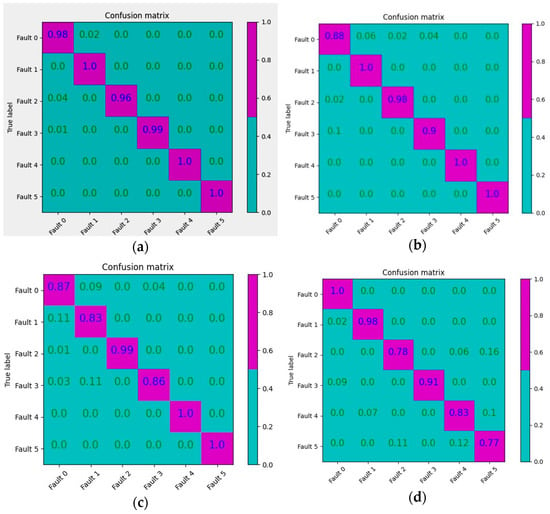
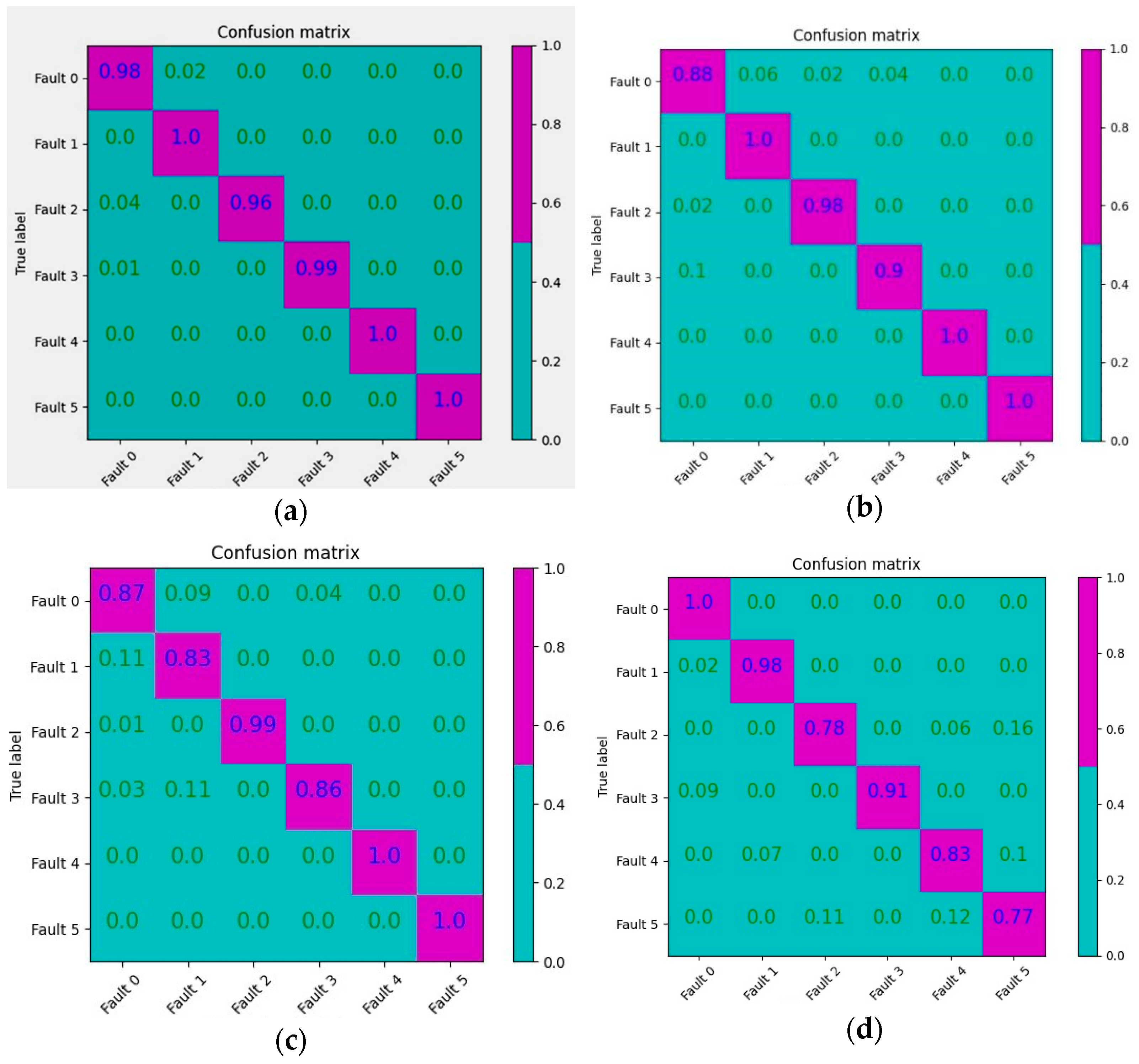
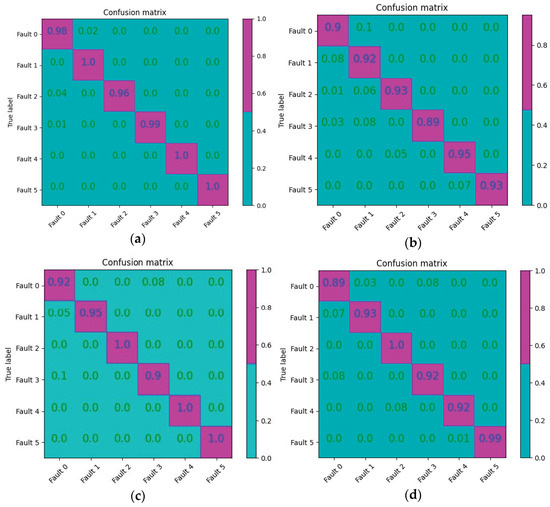
A set of experimental results is randomly selected to draw the confusion matrix of each method, as shown in Figure 24. It can be seen from the figure that the KAN-3 model (Figure 15d) has the lowest recognition accuracy for faults of type 0, 1 and 3, which is prone to misclassification; the KAN-2 model (Figure 24c) also has the problem of low recognition accuracy for faults of type 0, 1 and 3, and is easy to misclassify such faults into type 0 and 3; the overall recognition accuracy of the KAN-1 model (Figure 24b) is better than that of KAN-2 and KAN-3, but there are still misjudgments in some fault categories. The proposed method (Figure 24a) can accurately identify all types of faults, with the minimum recognition accuracy still reaching 96%. Especially for type 2, 3, and 4 faults that are difficult to distinguish by the other three models, it shows excellent classification ability, fully verifying its superiority.
Figure 24.
Confusion matrix of test results. (a) The proposed method; (b) KAN-1; (c) KAN-2; (d) KAN-3.
In order to further verify the effectiveness of the proposed method, several widely used deep learning models are selected to compare with the proposed method: BP neural network, long short-term memory network (LSTM), and deep belief network (DBN). Summarizing the test accuracy in Table 7, we can see that the average classification accuracy of the BP neural network is slightly lower, at 91.10%. LSTM and DBN followed, with average accuracies of 93.02% and 92.83%, respectively. The average accuracy of the proposed method is still better than that of other deep learning methods, and the standard deviation is the smallest. Therefore, the proposed method can accurately identify all kinds of faults.
Table 7.
Test accuracy of different learning methods.
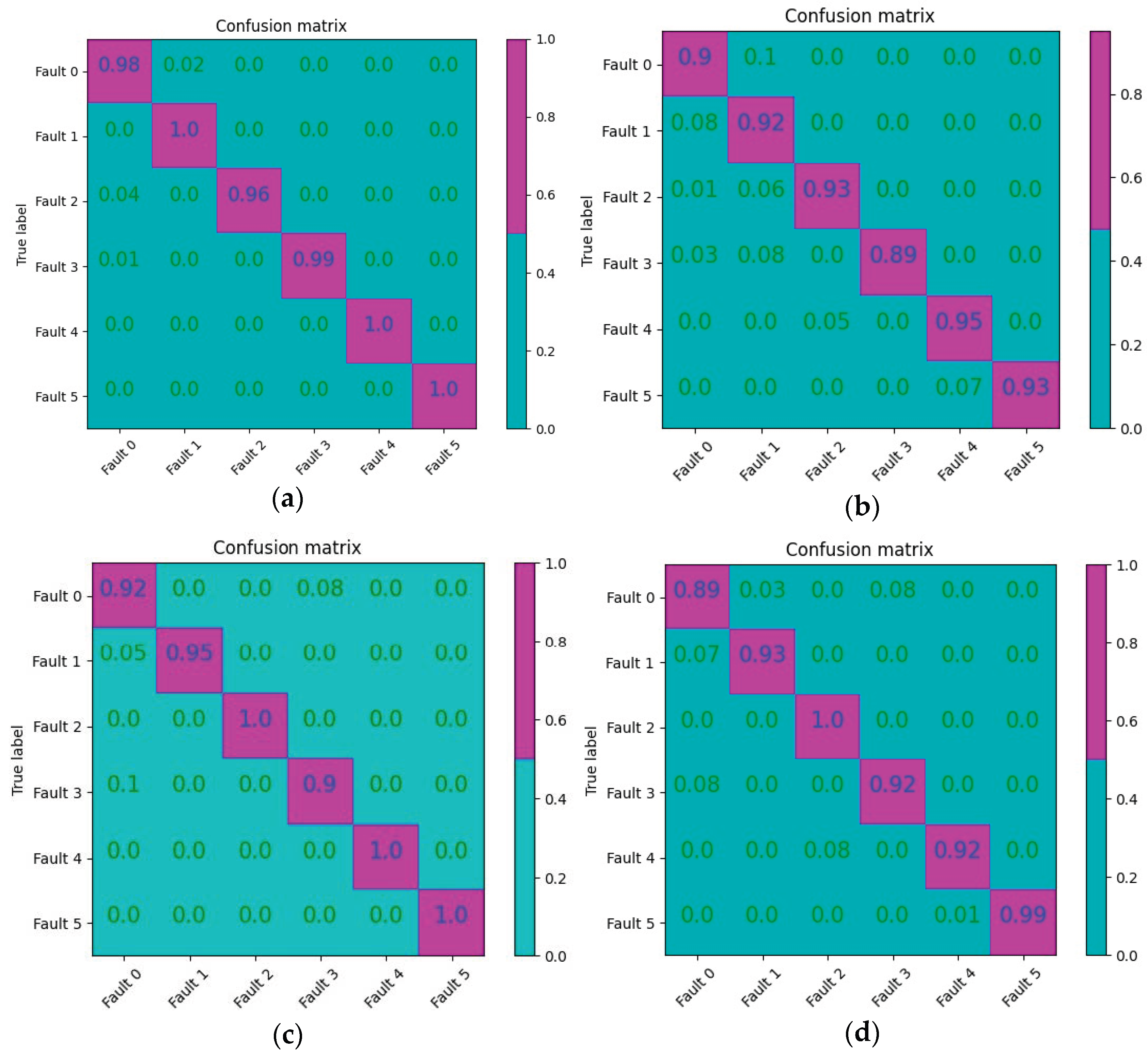
A set of experimental results is selected to draw the confusion matrix of each model, as shown in Figure 25. The BP neural network (Figure 25b) has the lowest recognition accuracy for type 3 faults, only 89%; the LSTM model (Figure 25c) also has the problem of low recognition accuracy for type 3 faults; the DBN model (Figure 25d) has a poor recognition effect on type 0 faults. The proposed method (Figure 25a) maintains the recognition accuracy of all fault categories above 96%, which can effectively avoid the misclassification problems existing in other models.
Figure 25.
Confusion matrix of test results. (a) The proposed method; (b) BP neural network; (c) LSTM; (d) DBN.
4. Discussion
This study proposes a policy gradient-based optimization approach for the architecture of Kolmogorov–Arnold Network (KAN) convolutional networks, aiming to address the limitations of manual network design and traditional deep learning models in fault diagnosis of airborne hydraulic systems. The experimental results validate the effectiveness and superiority of the proposed method, which can be elaborated and interpreted in the context of existing research and the core hypotheses of this work.
First, the proposed method achieves a minimum recognition accuracy of 96% for various fault modes of airborne hydraulic systems, demonstrating high diagnostic precision. Notably, it exhibits excellent discriminative capability for fault modes that are challenging to distinguish by other deep learning models. This advantage stems from the automated architecture exploration enabled by the policy gradient-based optimization, which avoids the subjectivity and limitations of manually designed networks and classic deep learning models. Compared with traditional manual network design relying on empirical knowledge, the network structure searched by the improved algorithm in this study has a more rational architecture, thereby enhancing the comprehensive diagnostic performance—this finding is consistent with the research hypothesis that automated architecture optimization can outperform empirical design in complex engineering fault diagnosis scenarios.
Furthermore, the proposed method realizes automated exploration of neural network architectures, significantly reducing the trial-and-error costs associated with parameter tuning. In the field of airborne hydraulic system fault diagnosis, where operational conditions are complex and fault modes are diverse, this automation feature not only improves the efficiency of model development but also ensures the reliability and generalization of the diagnostic model. From a broader perspective, this advancement provides a new technical paradigm for the automated development of deep learning models in engineering diagnostics, bridging the gap between theoretical model optimization and practical industrial application.
Despite the promising results, this study has certain limitations that can guide future research directions. Future work may focus on expanding the dataset to include more extreme operating conditions of airborne hydraulic systems, further verifying the generalization ability of the proposed method. Additionally, optimizing the computational efficiency of the policy gradient-based algorithm to adapt to real-time fault diagnosis requirements in airborne systems is a valuable research direction. Integrating the proposed method with edge computing technology to realize on-board real-time fault diagnosis also holds significant practical implications for aerospace engineering.
5. Conclusions
This study focuses on the fault diagnosis of airborne hydraulic systems and develops a policy gradient-based KAN convolutional network architecture optimization method. The main conclusions drawn from the research are as follows:
- (1)
- The proposed method can accurately identify various fault modes of airborne hydraulic systems, with a minimum recognition accuracy of 96%. It shows superior discriminative performance for hard-to-distinguish fault modes compared with other deep learning models, and its overall performance is significantly better than traditional manually designed networks and classic deep learning models, providing an efficient and reliable technical solution for airborne hydraulic system fault diagnosis.
- (2)
- Experimental comparisons confirm that the proposed method can effectively screen the optimal submodel with high recognition accuracy. The network structure searched by the improved algorithm outperforms that selected by artificial experience in diagnostic effect, verifying the feasibility and superiority of automated architecture optimization based on policy gradient.
- (3)
- The proposed method realizes the automated exploration of neural network architectures, reduces the trial-and-error costs in parameter tuning, and makes important contributions to the automated development of deep learning models. It lays a solid foundation for the practical application of intelligent fault diagnosis technology in airborne hydraulic systems and provides a new research direction for related engineering fields.
Author Contributions
Conceptualization, C.M.; Methodology, J.Q.; Investigation, Z.S.; Writing—original draft, J.Q.; Writing—review & editing, J.Q. All authors have read and agreed to the published version of the manuscript.
Funding
This research received no external funding.
Data Availability Statement
Data are contained within the article.
Conflicts of Interest
The authors declare no conflict of interest.
References
- Roger, K.N.; Kenneth, W.W. Flight Testing of the Boeing 747-400 Central Maintenance Computer System. In Proceedings of the Annual Symposium of the Society of Flight Test Engineers, Garden Grove, CA, USA, 6–10 August 1990; pp. 6.1.1–6.1.9. [Google Scholar]
- Michael, G.; Kevin, L. Joint Strike Fighter-Prognostics and Health Management (PHM); AER200307014; Lockheed Martin Aeronautics Company: Fort Worth, TX, USA, 2003. [Google Scholar]
- Qi, P.; Chai, J.; Jin, X. Research on Fault Diagnosis of Aircraft Hydraulic System Based on CVFOA Optimized GRNN Network. Meas. Control Technol. 2017, 36, 43–47. [Google Scholar]
- Li, S.; Shi, J. Research on Deep Learning Method for Induction Motor Fault Diagnosis. J. Comput. Eng. Appl. 2024, 60, 329–336. [Google Scholar] [CrossRef]
- Ali, U.; Ali, W.; Ramzan, U. An Improved Fault Diagnosis Strategy for Induction Motors Using Weighted Probability Ensemble Deep Learning. IEEE Access 2024, 13, 106958–106973. [Google Scholar] [CrossRef] [Scilit]
- Jiang, M.; Xiang, Y. An Ensemble Deep Learning Approach for Untrained Compound Fault Diagnosis in Bearings Under Unstable Conditions. Meas. Sci. Technol. 2024, 35, 025907.1–025907.13. [Google Scholar] [CrossRef] [Scilit]
- Feng, W.Q.; Mousavi, Z.; Farhadi, M.; Bayat, M.; Ettefagh, M.M.; Varahram, S.; Sadeghi, M.H. Correction: A Hybrid Wavelet-Deep Learning Approach for Vibration-Based Damage Detection in Monopile Offshore Structures Considering Soil Interaction. J. Civ. Struct. Health Monit. 2025, 15, 1581. [Google Scholar] [CrossRef] [Scilit]
- Souza, R.M.; Nascimento, E.G.S.; Miranda, U.A.; Silva, W.J.D.; Lepikson, H.A. Deep Learning for Diagnosis and Classification of Faults in Industrial Rotating Machinery. Comput. Ind. Eng. 2020, 153, 107060. [Google Scholar] [CrossRef] [Scilit]
- Belagoune, S.; Bali, N.; Bakdi, A. Deep Learning Through LSTM Classification and Regression for Transmission Line Fault Detection, Diagnosis and Location in Large-Scale Multi-Machine Power Systems. Measurement 2021, 177, 109330. [Google Scholar] [CrossRef] [Scilit]
- Zhao, M.; Zhong, S.; Fu, X.; Tang, B.; Pecht, M. Deep Residual Shrinkage Networks for Fault Diagnosis. IEEE Trans. Ind. Inform. 2020, 16, 4681–4690. [Google Scholar] [CrossRef] [Scilit]
- Yang, D.; Karimi, H.R.; Sun, K. Residual Wide-Kernel Deep Convolutional Auto-Encoder for Intelligent Rotating Machinery Fault Diagnosis with Limited Samples. Neural Netw. 2021, 141, 133–144. [Google Scholar] [CrossRef] [Scilit] [PubMed]
- Liu, S.; Jiang, H.; Wu, Z.; Li, X. Data Synthesis Using Deep Feature Enhanced Generative Adversarial Networks for Rolling Bearing Imbalanced Fault Diagnosis. Mech. Syst. Signal Process. 2022, 163, 108139. [Google Scholar] [CrossRef] [Scilit]
- Lange, R.; Riedmiller, M. Deep Auto-Encoder Neural Networks in Reinforcement Learning. In Proceedings of the International Joint Conference on Neural Networks; IEEE: New York, NY, USA, 2010. [Google Scholar]
- Mnih, V.; Kavukcuoglu, K.; Silver, D.; Graves, A.; Antonoglou, I.; Wierstra, D.; Riedmiller, M. Playing Atari with Deep Reinforcement Learning. arXiv 2013, arXiv:1312.5602. [Google Scholar] [CrossRef] [Scilit]
- Lake, B.M.; Salakhutdinov, R.; Tenenbaum, J.B. Human-Level Control Through Deep Reinforcement Learning. Nature 2015, 518, 529–533. [Google Scholar] [CrossRef] [Scilit] [PubMed]
- Zheng, Z.; Fu, J.; Lu, C.; Zhu, Y. Research on Rolling Bearing Fault Diagnosis of Small Dataset Based on a New Optimal Transfer Learning Network. Measurement 2021, 177, 109285. [Google Scholar] [CrossRef] [Scilit]
- Guo, L.; Lei, Y.; Xing, S.; Yan, T.; Li, N. Deep Convolutional Transfer Learning Network: A New Method for Intelligent Fault Diagnosis of Machines with Unlabeled Data. IEEE Trans. Ind. Electron. 2019, 66, 7316–7325. [Google Scholar] [CrossRef] [Scilit]
- Chen, S.H. Research on Hydraulic Pump Fault Diagnosis Based on Simulation Data and Deep Transfer Learning. Master’s Thesis, Huazhong University of Science and Technology, Wuhan, China, 2021. [Google Scholar]
- Dong, Z.; Lin, H.; Zhou, C.; Zhang, B.; Li, G. Persistence B-Spline Grids: Stable Vector Representation of Persistence Diagrams Based on Data Fitting. Mach. Learn. 2024, 113, 1373–1420. [Google Scholar] [CrossRef] [Scilit]
- Takahashi, T. Designing Gradient Coils with the Shape Derivative and the Closed B-Spline Curves. Magn. Reson. Imaging 2024, 110, 112–127. [Google Scholar] [CrossRef] [Scilit] [PubMed]

Disclaimer/Publisher’s Note: The statements, opinions and data contained in all publications are solely those of the individual author(s) and contributor(s) and not of MDPI and/or the editor(s). MDPI and/or the editor(s) disclaim responsibility for any injury to people or property resulting from any ideas, methods, instructions or products referred to in the content. |
© 2026 by the authors. Licensee MDPI, Basel, Switzerland. This article is an open access article distributed under the terms and conditions of the Creative Commons Attribution (CC BY) license.