


Abstract
Current autonomous vehicles require human drivers to take over control during emergencies or in environments the system cannot handle. During other periods, drivers are permitted to engage in non-driving-related tasks. It is essential to investigate how the immersion in non-driving-related tasks affects drivers’ takeover performance under different scenarios. To address this, a mixed-design simulated driving experiment was conducted with 40 participants, incorporating three non-driving-related tasks (no task, watch video, play game), three takeover request lead times (3 s, 5 s, 7 s), and two obstacle types (dynamic, static). The takeover process was divided into three phases: preparation, obstacle avoidance, and recovery. Analysis of the areas of interest showed that engaging in non-driving-related tasks substantially reduced drivers’ visual attention tothe road ahead during the preparation phase. The Generalized Estimating Equations method was employed to investigate the effects of various factors on takeover performance. Model results showed that scenarios with static obstacles and longer takeover request times led to a significant reduction in mean lane deviation but a significant increase in the standard deviation of lane deviation, suggesting improved lateral control performance. A significant interaction was observed between the watch video task and static obstacles, which corresponded to a notable decrease in the mean vehicle speed during obstacle avoidance. Performance in the recovery phase was strongly predicted by that in the obstacle avoidance phase, indicating that the stability of the avoidance maneuver is a critical determinant of the subsequent recovery. These findings offer valuable insights for managing non-driving-related tasks and setting appropriate takeover request timings in automated driving systems.
1. Introduction
Autonomous driving technology is considered an effective way to reduce traffic accidents. Many car companies have released autonomous driving systems with similar features and have conducted real-world scenario tests in various road areas. Fully autonomous vehicles have significant advantages in efficiency [1] and safety [2], but most of the vehicles on the market are currently at L2 and L3 levels and cannot achieve full autonomy in real-world road environments [3]. Therefore, when the complexity of the driving environment exceeds the system’s predefined capabilities or when the system malfunctions, human intervention is still needed. Autonomous vehicles liberate drivers from the demands of continuous driving and constant monitoring, thereby inducing an “out-of-the-loop” phenomenon [4]. When drivers are removed from active vehicle control and decision-making for extended periods, their situational awareness of the traffic environment deteriorates. As a result, they may struggle to promptly resume driving tasks and execute appropriate control actions upon receiving a takeover request [5]. Research indicates that inadequate takeover behavior can lead to traffic accidents [6]. Thus, investigating drivers’ takeover behavior during non-driving-related tasks is essential for improving the safety and stability of autonomous driving systems.
Prior to the full realization of fully autonomous driving, the safety of takeover control in human-machine co-driving vehicles has emerged as a prominent research focus among scholars. Previous studies have primarily focused on the impact of individual factors, such as specific scenarios or takeover mode, on takeover performance. In fact, however, driver takeover performance is influenced by the combined effects of multiple factors, including the lead time of the takeover request, the urgency of the takeover scenario, and whether the driver is immersed in non-driving tasks. Regarding the analysis of takeover behavior, existing studies have predominantly concentrated on isolated metrics like takeover reaction time and collision probability during the takeover process, lacking a comprehensive evaluation of the dynamic and continuous behaviors throughout the entire takeover sequence. There remains a scarcity of research on how drivers’ cognitive and operational behaviors evolve over time from the issuance of the vehicle’s takeover request until they fully regain control of the vehicle, and on the interrelationships between behaviors across different phases of the takeover process.
To address the above issues, this study conducted a 3 × 3 × 2 mixed-design driving experiment and employed statistical analysis methods alongside Generalized Estimating Equations to investigate the impact of different scenarios on the process of driver obstacle avoidance takeover. The contributions of this paper are as follows:
- By comprehensively considering multiple influencing factors on the takeover process, a mixed-design experimental method was adopted. A driving experiment with a 3 (non-driving task: None, play game, watch video) × 3 (takeover request lead time: 3 s, 5 s, 7 s) × 2 (Obstacle type: Dynamic, Static) design was developed, which includes three independent variables. Dependent variables encompassed drivers’ eye movement indicators, lateral and longitudinal control behaviors. This experimental design enabled data collection of takeover performance under the combined influence of these three factors.
- To explore the impact of various factors on the full process of driver’ obstacle avoidance takeover, the takeover process was divided into three phases: the preparation phase, the obstacle avoidance phase, and the recovery phase. Statistical analysis methods, including the Kruskal-Wallis H test and the Mann-Whitney U test, were used to identify the differential effects of the three controlled variables (non-driving task, takeover request lead time, obstacle type) on driving behavior across each stage of the takeover process.
- The lagged variable theory was introduced into the Generalized Estimating Equations model, and a chain of influence relationships among various stages of takeover was proposed, suggesting that behavior in each phase is influenced by the takeover behavior of the preceding phase. By analyzing the load factors of various elements in the GEE, a comprehensive analysis of the influencing factors throughout the entire takeover process was achieved. This helped to elucidate the interdependent pathways of behavior across the different stages of the takeover process.
This paper is organized as follows. Section 2 introduces the simulated driving experiment design conducted in this study, the division of the takeover process phases, and the construction of the Generalized Estimating Equations model. Section 3 elaborates on the results of the statistical analyses and the GEE model, including variance analysis results of eye-movement and driving behaviors across the takeover phases, and the detailed GEE model outcomes. Section 4 discusses the impact of non-driving tasks on the driver and the primary factors influencing takeover performance. Finally, Section 5 presents the conclusion of the paper.
2. Literature Review
2.1. Impact of NDRTs on Takeover Control
The transfer of control authority in autonomous driving can be categorized based on both the initiating entity and the direction of control transfer. Lu et al. [7] classified the takeover process into three types based on the initiator and the mandatory nature: driver-initiated voluntary takeover, driver-initiated mandatory takeover, and system-initiated mandatory takeover. Passive takeovers, which are initiated in unanticipated situations, are particularly challenging. Their sudden nature can trigger an abrupt shift in the driver’s workload, making the human-machine interaction more complex and consequently posing a greater risk to driving safety [8]. In the system-initiated mandatory takeover scenario, the most common situation is when an obstacle appears suddenly, and the system requests the driver to take over control for obstacle avoidance [9]. Both dynamic and static obstacle scenarios are among the most common triggers for takeover requests in automated systems. Dynamic obstacles typically involve sudden events such as pedestrians crossing the road or preceding vehicles abruptly changing lanes. Static obstacles generally refer to stationary incidents like road construction zones or obstructions. In these takeover scenarios, drivers must rapidly identify the emergency situation and subsequently choose a strategy, either decelerating or changing lanes, to avoid the obstacle [10].
The introduction of automation redefines the driver’s role, transitioning them from an active operator to a passive monitor. Autonomous driving vehicles relieve drivers of physical control and mental tasks, leading to the possibility of drivers engaging in non-driving-related tasks (NDRTs), which may distract their attention and reduce their timely takeover response [11]. Once the system fails to handle the situation or malfunctions, the driver, being in a non-driving state, loses situational awareness and is unable to monitor the surrounding environment in real-time, increasing the risk of traffic accidents. Research has been conducted based on the types of resources engaged by non-driving-related tasks. Manual NDRTs (e.g., handheld smartphone use), which occupy physical resources, significantly increase drivers’ reaction times to takeover requests and elevate collision risk [12]. During visual NDRTs such as video watching or reading, drivers exhibit longer takeover times compared to no-task conditions, along with negative impacts on minimum collision time margins and lane-keeping performance [13]. Studies have shown that non-driving tasks significantly impact the driver’s attention distribution and takeover performance, but the specific mechanisms of how different tasks affect the driver’s lateral, longitudinal control, and visual behavior during takeover remain unclear [14].
2.2. Takeover Performance Influencing Factors
Besides non-driving-related tasks, takeover behavior is influenced by various factors. Studies have shown that factors such as the takeover request time, road environment complexity, and obstacle types have a significant impact on takeover behavior [15]. For example, shorter takeover request time results in larger lane deviations. The Society of Automotive Engineers (SAE) emphasizes that the takeover request should be issued with sufficient lead time to enable a prepared user to execute an appropriate response [8]. Longer takeover request lead time provide drivers with more adequate preparation time, thereby enhancing the success rate and quality of the takeover. However, this relationship is not a simple linear progression, as excessively long takeover request lead time intervals may lead to driver distraction and consequently reduce takeover efficiency [16]. Therefore, determining the optimal timing for triggering the takeover request is of paramount importance for improving takeover safety. The modality of takeover requests (e.g., visual, auditory, or tactile) also significantly affects driver response. While visual alerts have demonstrated effectiveness, the location of the visual warning is crucial [17]. Furthermore, research by Geitner et al. [18] indicates that multimodal warnings (e.g., a combination of auditory and tactile cues) are more effective than unimodal ones.
To analyze driver takeover performance, researchers often segment the takeover process into distinct phases. Gold and Bengler [19] divided the entire takeover process into four stages. They defined the moment when the driver places their hands and feet back on the steering wheel and brake pedal as the beginning of the takeover, and the moment when the driver takes control by either pressing the brake pedal or turning the steering wheel as the end. Zeeb et al. [20] defined the successful takeover time as the moment when the steering wheel angle exceeds 2° or the brake pedal position exceeds 10% based on their extensive experiments on the driver’s first takeover action. Li et al. [21] divided the emergency obstacle avoidance takeover process into three stages: preparation, control, and recovery. The preparation phase is defined as the time from the takeover request to when the driver presses the brake or turns the steering wheel. The control phase is the process of completing the avoidance and returning to the original lane, while the recovery phase is when the vehicle returns to automatic driving mode. Past studies have mainly focused on quantifying the takeover reaction time, but the effects of driver distraction are not limited to the initial phase of takeover but persist throughout the entire process [22]. In high-risk takeover scenarios, especially in obstacle avoidance scenarios that require both lateral and longitudinal control, drivers may experience panic and impatience. Even if the driver stabilizes the vehicle quickly, the panic may continue to affect the driver’s ability to operate the vehicle.
3. Materials and Methods
3.1. Experimental Design
3.1.1. Experimental Equipment
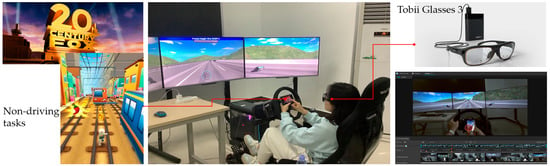
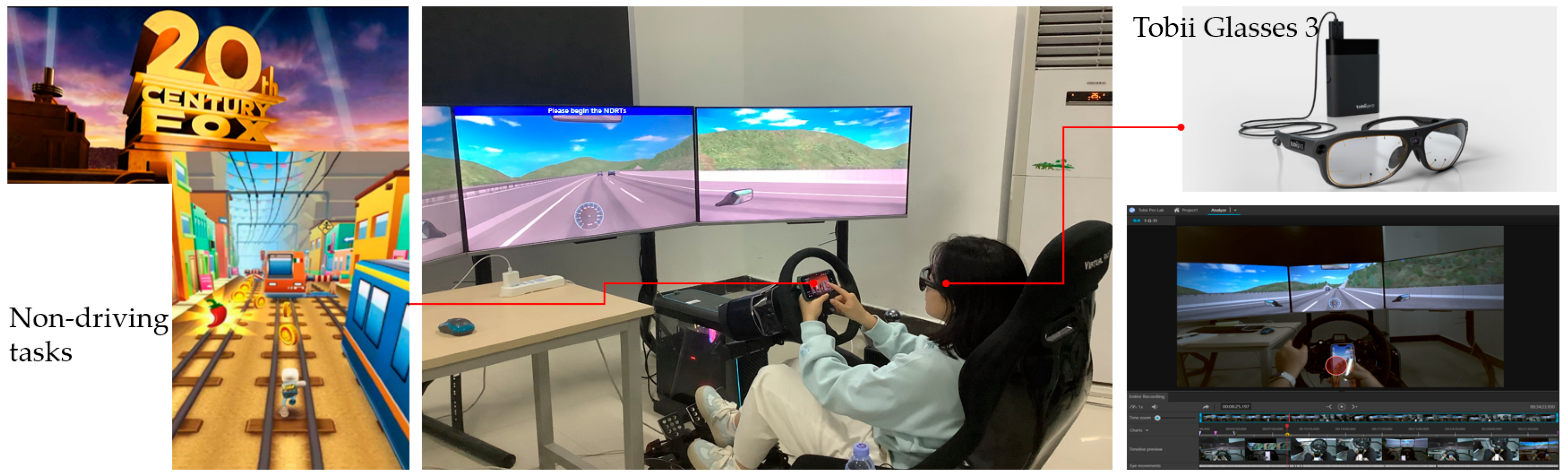
Experimental equipment is showed in Figure 1. The eye-tracking data were collected using Tobii Pro Glasses 3 (Tobii, Stockholm, Sweden), and processed with Tobii Pro Lab (I-VT model, 50 Hz). The device, equipped with corrective lenses (+5.0 to −5.0), records gaze coordinates, pupil area, and fixation/saccade events, storing data in MP4 format.
Figure 1.
Driving simulation platform.
The experiment was conducted on a driving simulator using UC-win/Road (Version 14.1.), with a Logitech wheel-pedal set, three 2K monitors, and an NVIDIA RTX 3090Ti server. The driving simulation platform was constructed by FORUM8 Software Technology Co., Ltd (Shanghai, China). Vehicle CAN bus data were recorded via SDK at 60 Hz.
Non-driving tasks were performed on an iPhone 13: a video task (“Not Lacking Money”) engaging visual and auditory attention, and a game task (“Subway Surfers”) engaging visual-motor attention. Task immersion was checked via post-task questions. A control condition involved no non-driving task, with participants monitoring the road throughout.
3.1.2. Experimental Scenarios
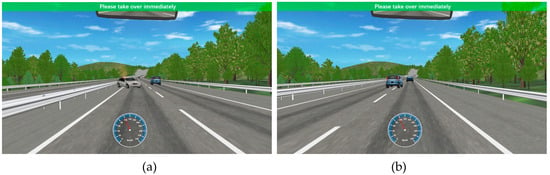
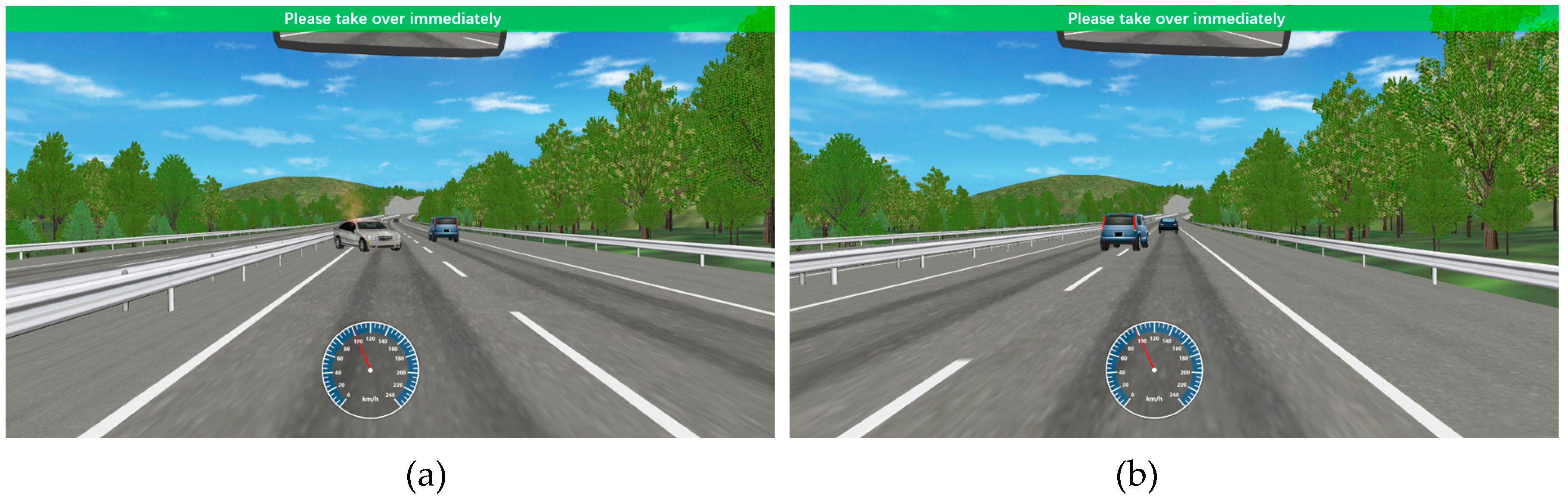
The experiment is based on a driving simulation platform designed for high-speed obstacle avoidance takeover scenarios, using a 3 (non-driving tasks: no task, playing games, watching videos) × 3 (takeover request lead time: 3 s, 5 s, 7 s) × 2 (obstacle types: dynamic, static) mixed factorial design. The takeover scenario is shown in Figure 2. Before the autonomous vehicle takes over, the test vehicle was traveling at a cruising speed of 100 km/h. In the static obstacle scenario, the first 1 km is dedicated to autonomous driving with no traffic flow, allowing the driver to readjust to the autonomous driving environment. When the test vehicle reaches the 1 km milestone, the system automatically presents an image and audio prompt: “Please start the non-driving task,” instructing the driver to begin the non-driving task. Upon reaching the 4 km milestone, the lead vehicle in the same lane suddenly changes lanes, and a broken-down vehicle obstructs the test vehicle’s path. The system automatically presents the image and audio prompt: “Please takeover vehicle”. After the takeover request, the participant can regain control of the vehicle by steering the wheel or pressing the brake pedal to change lanes and avoid the obstacle. Once the participant believes that their driving ability has been restored, they return to the original lane, confirm safety, and hand control back to the autonomous driving system.
Figure 2.
Static obstacle scenario (a) and dynamic obstacle scenario (b).
In the dynamic obstacle scenario, the first 4 km of the trial process are the same as in the static obstacle takeover scenario. When the test vehicle reaches the 4 km milestone, a vehicle from the adjacent lane suddenly cuts into the test vehicle’s lane ahead, moving at 60 km/h and blocking the test vehicle. The system automatically presents the “Take over vehicle” image and audio prompt.
The Takeover Request Lead Time (TOR) refers to the time interval between the moment the vehicle issues a takeover request and the collision time ahead, representing the urgency of the takeover scenario [23]. In this experiment, the TOR is set to 3 s, 5 s, and 7 s. Since the UC-win/Road simulation software (Version 14.1.) does not have a specific TOR design module, different TORs are primarily reflected in the relative positions between the test vehicle and the obstacle, i.e., different TORs correspond to different distances reserved in front of the test vehicle. Combining two obstacle types and three TORs, six scenarios are designed, with specific factor levels shown in Table 1.
Table 1.
Experimental Scenario Factor Levels.
3.1.3. Participants
Participants for the research study were sought from the university community and the general public through WeChat and web-based platforms. A total of 40 participants were recruited on a voluntary basis, with 2 participants withdrawing from the experiment due to dizziness and other reasons, leaving 38 participants who completed the experiment. Among the participants, 26 were male and 13 were female, aged between 18 and 27 years, with an average age of 23.6 years (SD = 2.33 years). The average driving experience was 3.7 years (SD = 1.87 years), and the average annual mileage was 1204.6 km (SD = 2111.01 km). All participants held a valid C1 or higher driving license, were in good physical condition, had normal vision (including corrected vision), and had no prior experience with L2 or L3 level autonomous driving.
3.1.4. Experimental Procedures
Before the experiment begins, the experimenter ensures the experimental environment is ready, and the experiment starts once the participant arrives. Prior to the trial, the experimenter provides a training session for the participant. Participants were informed about the types of secondary tasks (e.g., watching videos or playing games) they would engage in during the automated driving phase. When the system issued a takeover request—signaled by an auditory and visual alert—the driver shall take over control after recognizing the prompts. To avoid the learning effect, the scenarios were presented in a random manner. The experimenter then assists the participant in wearing the eye tracker and adjusting the lens prescription to ensure comfort and clarity. During the experiment, the participant observes the experimental scene; if any dizziness occurs, the experimenter will adjust the equipment or terminate the experiment; if no dizziness occurs, the experiment continues. Next, the participant signs an informed consent form and completes a basic information sheet. During the adaptation trial, the participant familiarizes themselves with the process and equipment to ensure smooth participation in the main trial. Once the main trial starts, the experimenter records the data. After the trial, the participant fills out the subjective risk perception scale and takes a short break. There is a break between each scene. The experimenter checks the data integrity at each stage, and if any data is missing, the participant is asked to provide additional data or re-collect it. Finally, the experimenter announces the end of the experiment and thanks the participant for their participation.
3.2. Methods
3.2.1. Takeover Process Phases
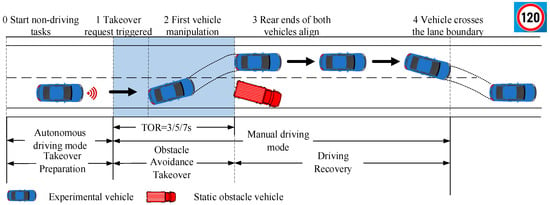
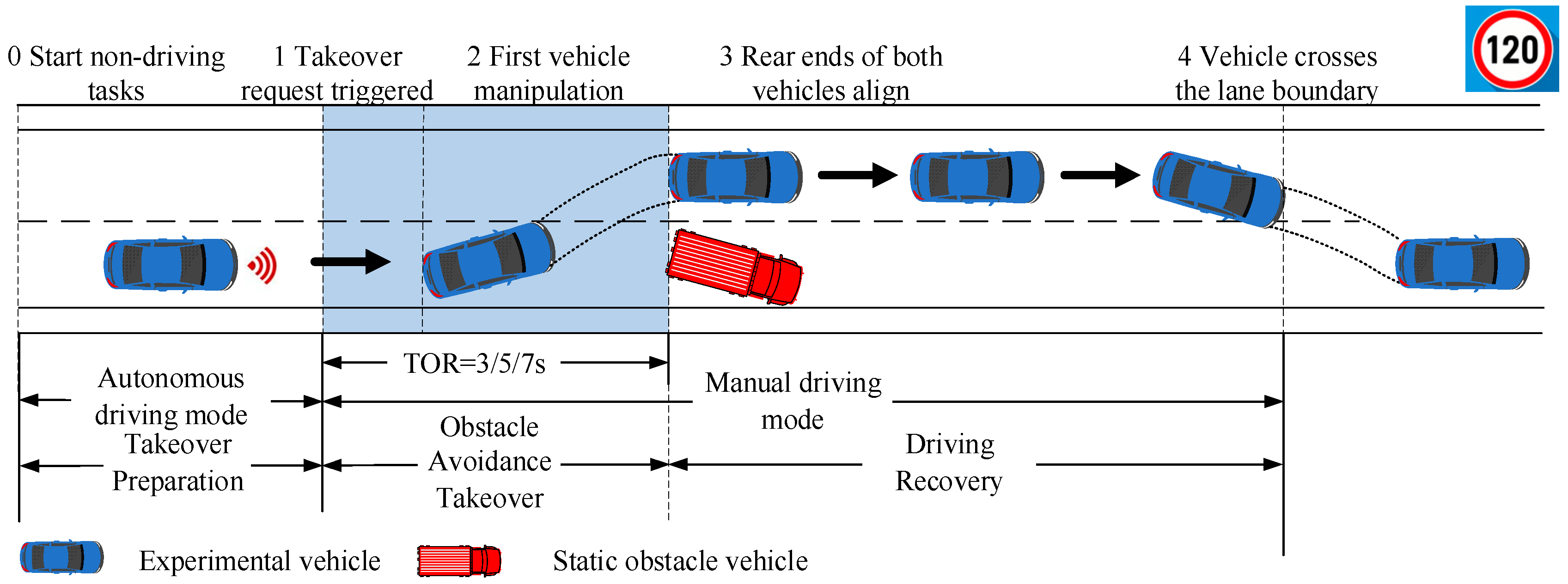
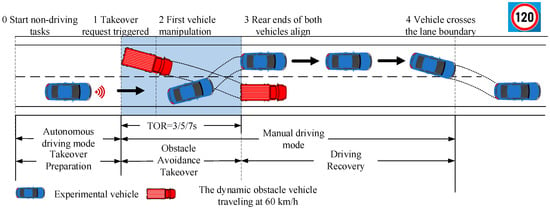
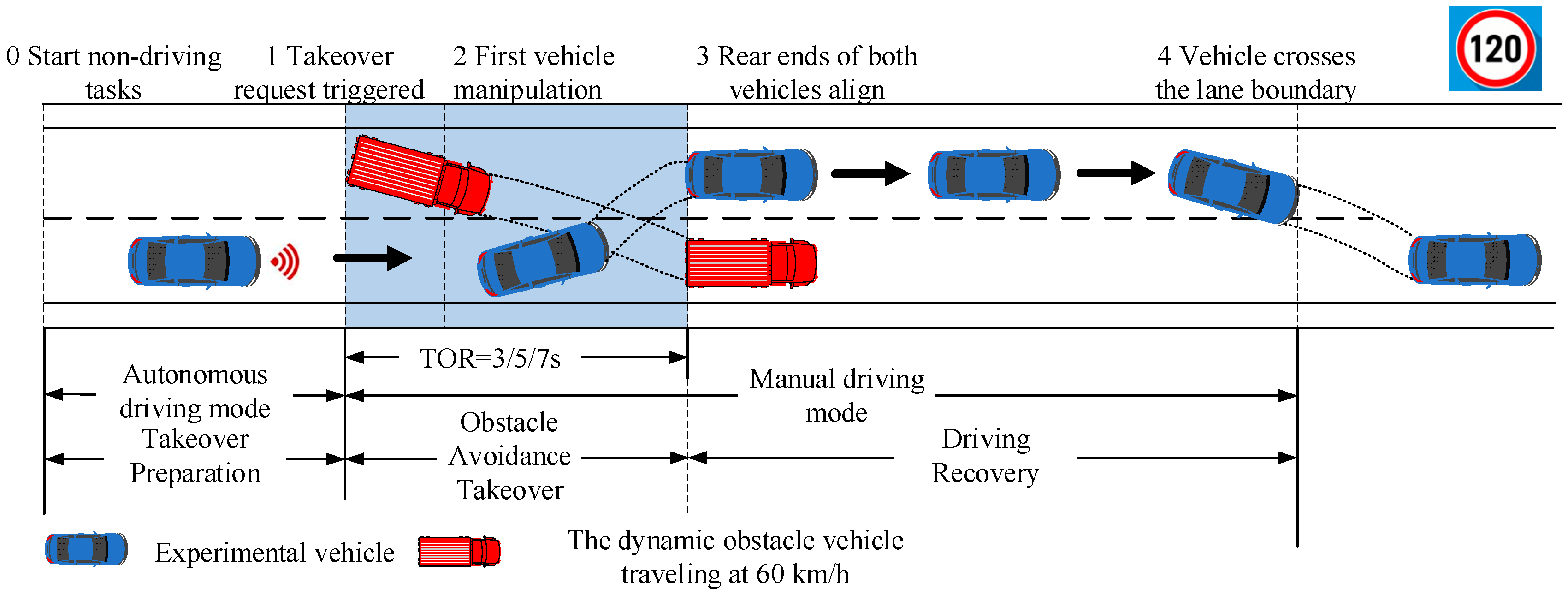
Based on the work by Yu et al. [24], the takeover process is divided into three phases: the preparation phase, the obstacle avoidance phase, and the recovery phase, as shown in Figure 3 and Figure 4. The data segments for each participant are extracted, starting from the initiation of the non-driving task and ending when the driver’s vehicle crosses the lane boundary after returning to the original lane. The driving behavior characteristics of the driver during each phase of the takeover process are analyzed.
Figure 3.
Driver takeover phases in static obstacle scenario.
Figure 4.
Driver takeover phases in dynamic obstacle scenario.
Takeover Preparation Phase: Begins with the “Please start the non-driving task” prompt and ends when the TOR triggers the “Takeover Vehicle” prompt. Drivers perform a non-driving task with no control; only visual behavior is recorded.
Obstacle Avoidance Takeover Phase: Starts with the TOR-triggered “Takeover Vehicle” prompt and ends when the experimental vehicle’s rear aligns with the obstacle vehicle’s rear. For static obstacles, the driver maneuvers around the obstacle. For dynamic obstacles (moving at 60 km/h), the driver avoids the obstacle and briefly enters the adjacent lane before alignment.
Driving Recovery Phase: Begins when the experimental vehicle’s rear aligns with the obstacle’s rear and ends when driving ability is restored, indicated by the vehicle returning to the original lane.
Takeover behaviors were extracted by phase and divided into lateral and longitudinal control indicators (Table 2).
Table 2.
List of Selected Metrics.
3.2.2. GEE Model Construction
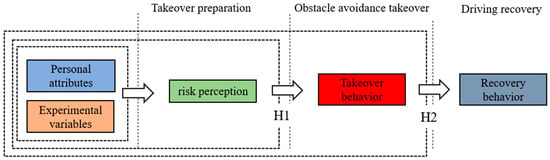
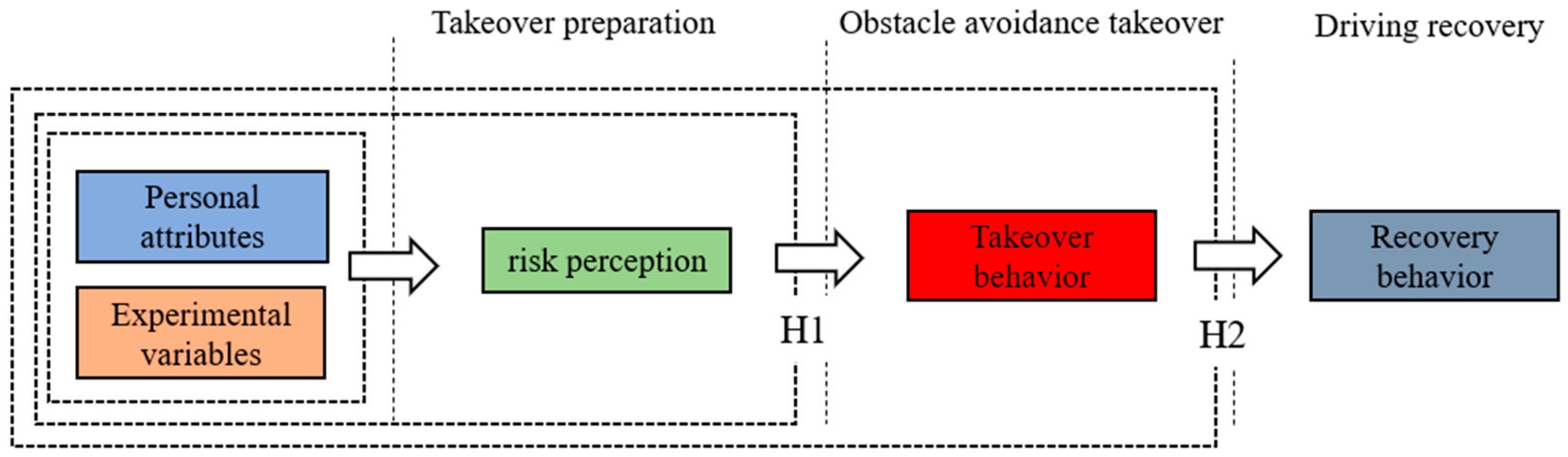
To comprehensively analyze the factors influencing the obstacle avoidance takeover process, and considering the significant impact of secondary tasks during the preparation phase on the driver’s visual attention, a GEE model was constructed. In the Generalized Estimating Equation (GEE) model, lagged variables are introduced, with key behavioral variables from prior stages of the obstacle avoidance takeover process serving as explanatory variables to explore their impact on subsequent stage behaviors. The lagged variables include personal attributes, experimental variables, visual behavior characteristics, obstacle avoidance behavior (lateral and longitudinal control, and visual behavior characteristics during the obstacle avoidance phase), and recovery behavior (lateral and longitudinal control, and visual behavior characteristics during the recovery phase). Based on this, the model construction is based on the following hypotheses:
H1.
Experimental variables, personal attributes, and risk perception levels during the preparation phase collectively affect takeover behavior during the obstacle avoidance phase. The GEE evaluation model constructed for hypothesis H1 is as follows, as shown in Equation (1):
where j represents the response variable type during the obstacle avoidance phase; BP represents all observed variables from the preparation phase. PZ denotes the set of individual attributes, and TZ represents the experimental variables.
H2.
Experimental variables, personal attributes, risk perception levels during the preparation phase, and takeover behavior during the obstacle avoidance phase collectively affect recovery behavior during the recovery phase. The GEE evaluation model constructed for hypothesis H2 is as follows, as shown in Equation (2):
where w represents the response variable type during the recovery phase; TB represents all observed variables from the obstacle avoidance phase. The logic of the two hypotheses is illustrated in Figure 5.
Figure 5.
Principle diagram of the GEE model.
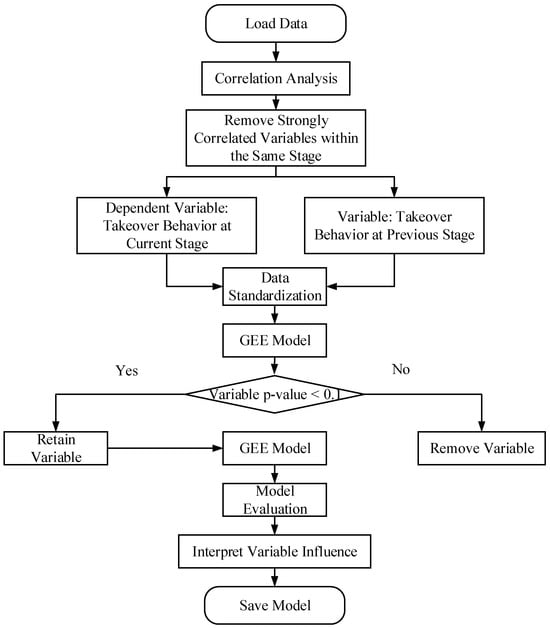
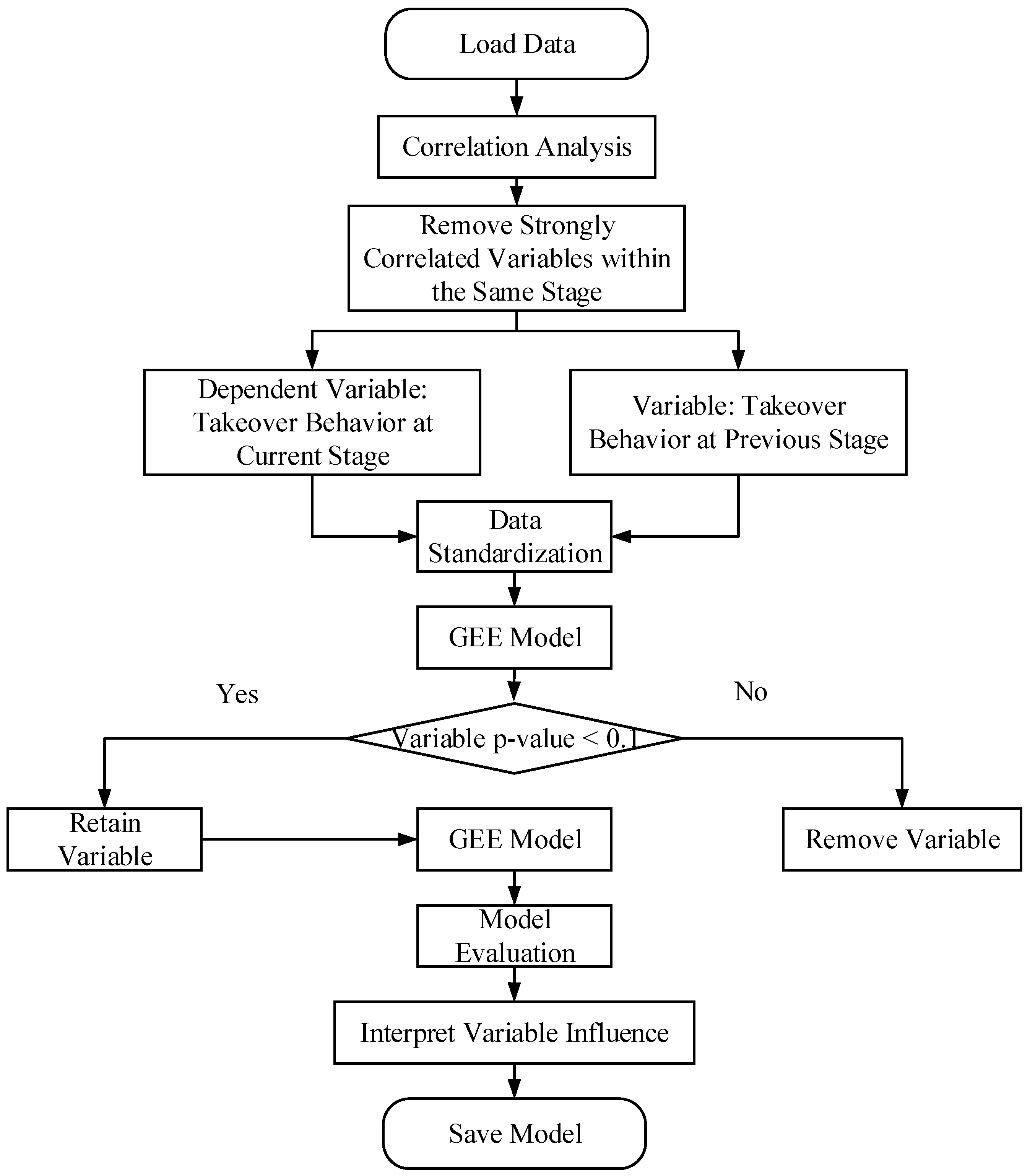
Due to the inclusion of multiple fixed-effect factors in the model, some factors and their interactions do not have statistical significance with respect to the response variable, leading to redundancy in the table data. Therefore, data with p < 0.1 (which is generally considered to have marginal significance [25]) were selected from the six generalized estimating equations and re-analyzed within the model. The modeling process is illustrated in Figure 6.
Figure 6.
Framework of the GEE model.
4. Results
4.1. Statistical Results of Behavioral in Different Takeover Phases
4.1.1. Driver Visual Attention Analysis During the Preparation Phase
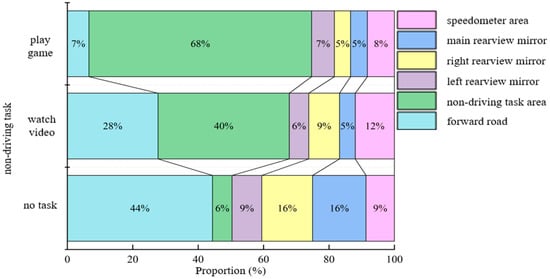
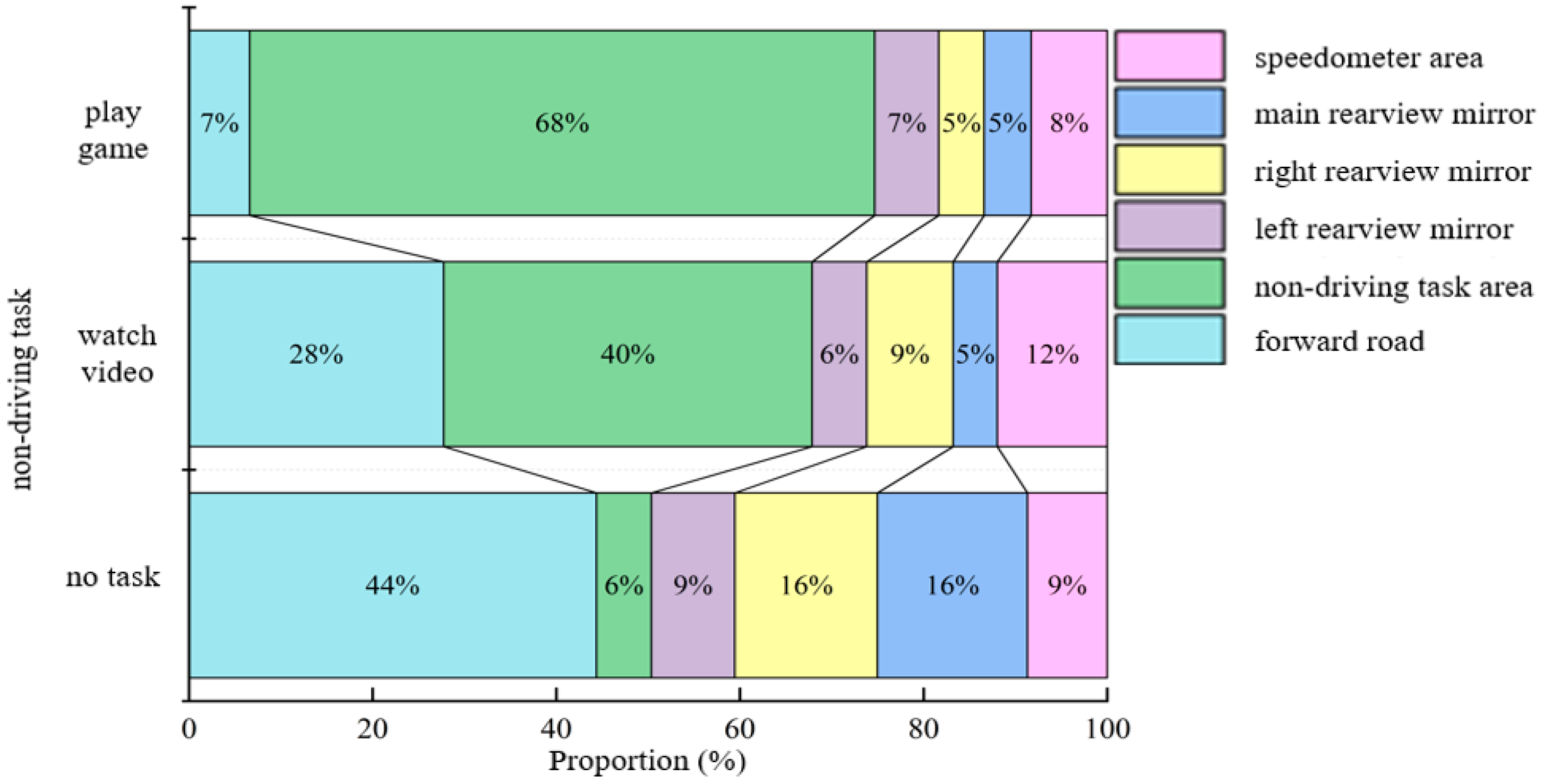
The total gaze duration within the areas of interest reflects the amount of time the driver’s gaze moves quickly across the region for information searching, indicating the level of attention paid to different areas. To further explore the differences in driver attention to various areas of interest under different secondary task conditions, a statistical analysis of the gaze duration percentage for each area of interest was conducted, as shown in the Figure 7.
Figure 7.
Stacked Percentage Plot of Total Gaze Duration for Different Areas of Interest.
Under the no-task condition, the driver paid the most attention to the forward road, with 44% of the total gaze duration, followed by the right rearview mirror and the main rearview mirror, each at 16%. Attention to the left rearview mirror and the speedometer area was relatively low, with both receiving 9%, while the secondary task area received the least attention at 6%.
Under the video-watching task condition, the attention to the secondary task area increased significantly to 40%, while attention to the forward road decreased noticeably to 28%. The speedometer area also garnered a relatively higher share at 12%. Lastly, attention to the rearview mirror areas decreased in the following order: right rearview mirror (9%), left rearview mirror (6%), and main rearview mirror (5%).
Under the gaming task condition, the gaze duration percentage for the secondary task area further increased to 68%, the highest proportion, while attention to the forward road decreased to just 7%. In contrast, the proportion of attention to the speedometer area was 8%, and other areas of interest, such as the main rearview mirror and the left and right rearview mirrors, received relatively low attention.
4.1.2. Driving Behavior During Obstacle Avoidance and Recovery Phases
Using SPSS software (version 20.0), the Kruskal-Wallis H test was conducted to examine the differences in secondary tasks and TOR (3-level factors) using multiple independent samples; for obstacle type (2-level factor), the Mann-Whitney U test was used for the difference analysis. The statistical results for the effects of secondary task, TOR, and obstacle type on the steering torque standard deviation, lane deviation Mean, lane deviation standard deviation, average speed, acceleration standard deviation, and brake opening standard deviation during the obstacle avoidance and recovery phases are shown in the Table 3.
Table 3.
Statistical results of driving behavior indicators during avoidance and recovery phases.
- Standard Deviation of Steering Wheel Torque:
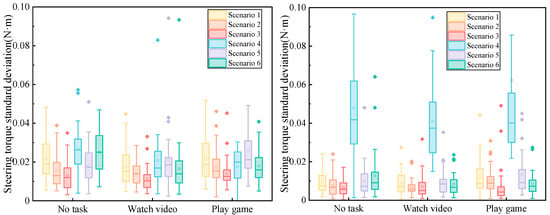
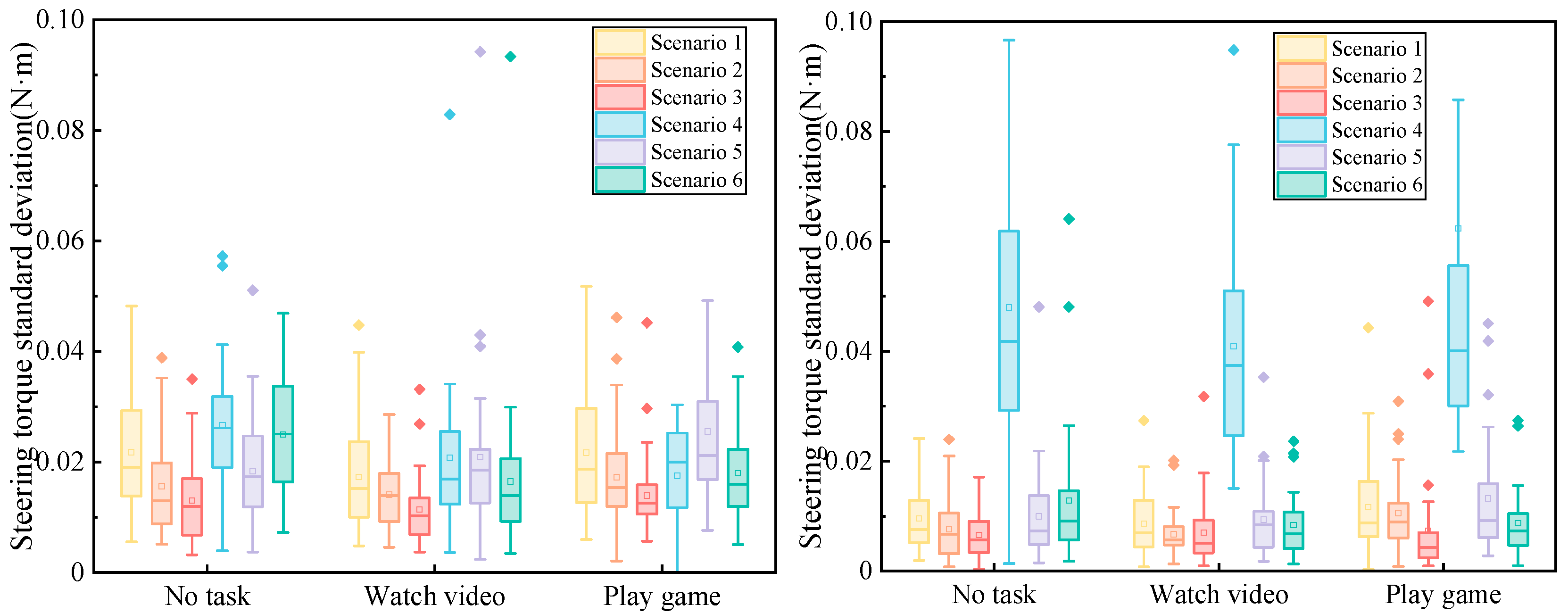
For the steering torque standard deviation feature, the boxplots for both phases are shown in Figure 8. During the obstacle avoidance phase, the main effects of secondary task, TOR, and obstacle type were significant (p < 0.05). The steering torque standard deviation in different secondary tasks ranked from highest to lowest as follows: no task, playing a game, and watching a video. The steering torque standard deviation gradually decreased with the 3 s, 5 s, and 7 s takeover request times, and was higher in the dynamic obstacle scenario compared to the static obstacle scenario.
Figure 8.
Boxplots of Steering Wheel Torque SD during obstacle avoidance and recovery phases.
During the recovery phase, the main effects of takeover request time (TOR) and obstacle type were significant (p < 0.05), and the relationship between them was consistent with that in the obstacle avoidance phase. The secondary task did not have a significant effect on the steering torque standard deviation during the obstacle avoidance phase (p > 0.05).
- 2.
- Mean Lane Deviation
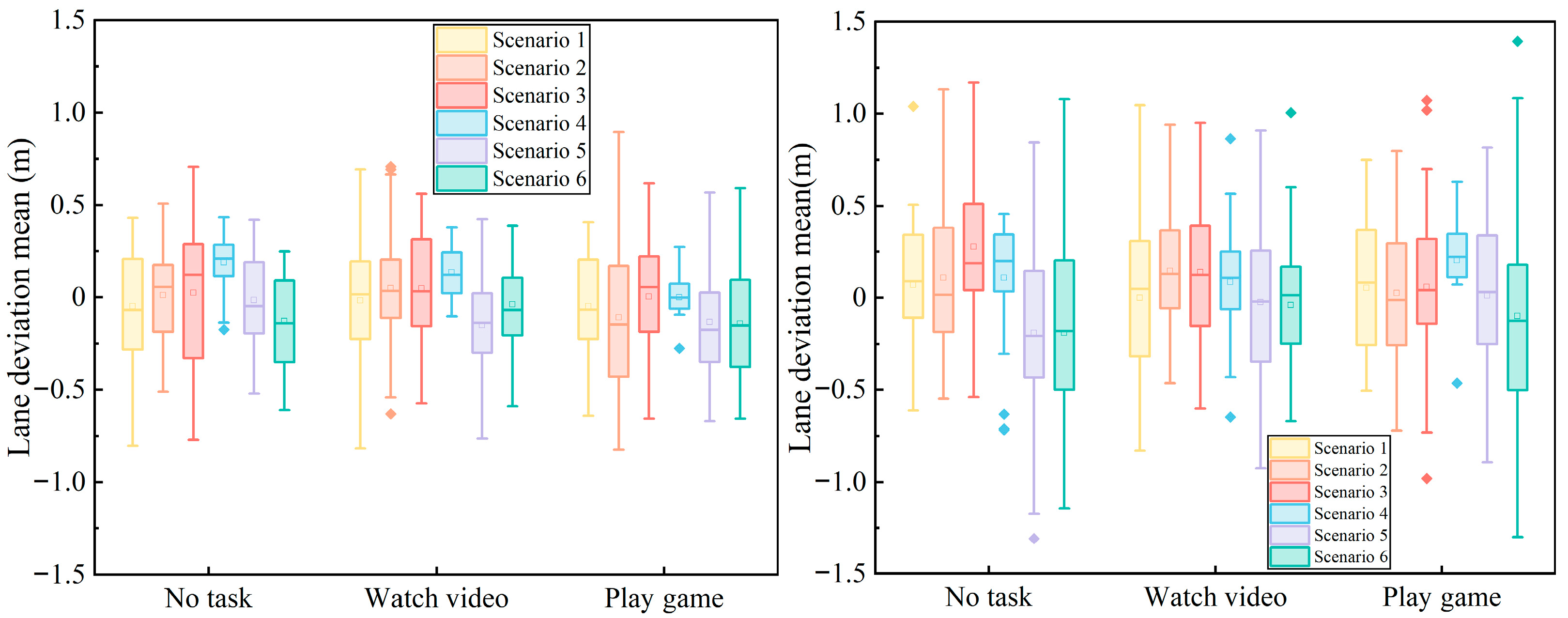
For the lane deviation mean feature, the boxplots for both phases are shown in Figure 9. During the obstacle avoidance phase, the main effects of secondary task and TOR were significant (p < 0.05). The lane deviation mean indicator ranked from highest to lowest under different secondary tasks as follows: no task, playing a game, and watching a video. The lane deviation mean gradually decreased with the 3 s, 5 s, and 7 s takeover request times, and the lane deviation mean was higher in the static obstacle scenario compared to the dynamic obstacle scenario.
Figure 9.
Boxplots of Mean Lane Deviation during obstacle avoidance and recovery phases.
During the recovery phase, the main effects of TOR and obstacle type were significant (p < 0.05). The lane deviation mean ranked from highest to lowest as follows: 3 s, 7 s, and 5 s, with the lane deviation mean being higher in the dynamic obstacle scenario compared to the static obstacle scenario. The secondary task did not have a significant effect on the lane deviation mean during the obstacle avoidance phase (p > 0.05).
- 3.
- Standard Deviation of Lane Deviation
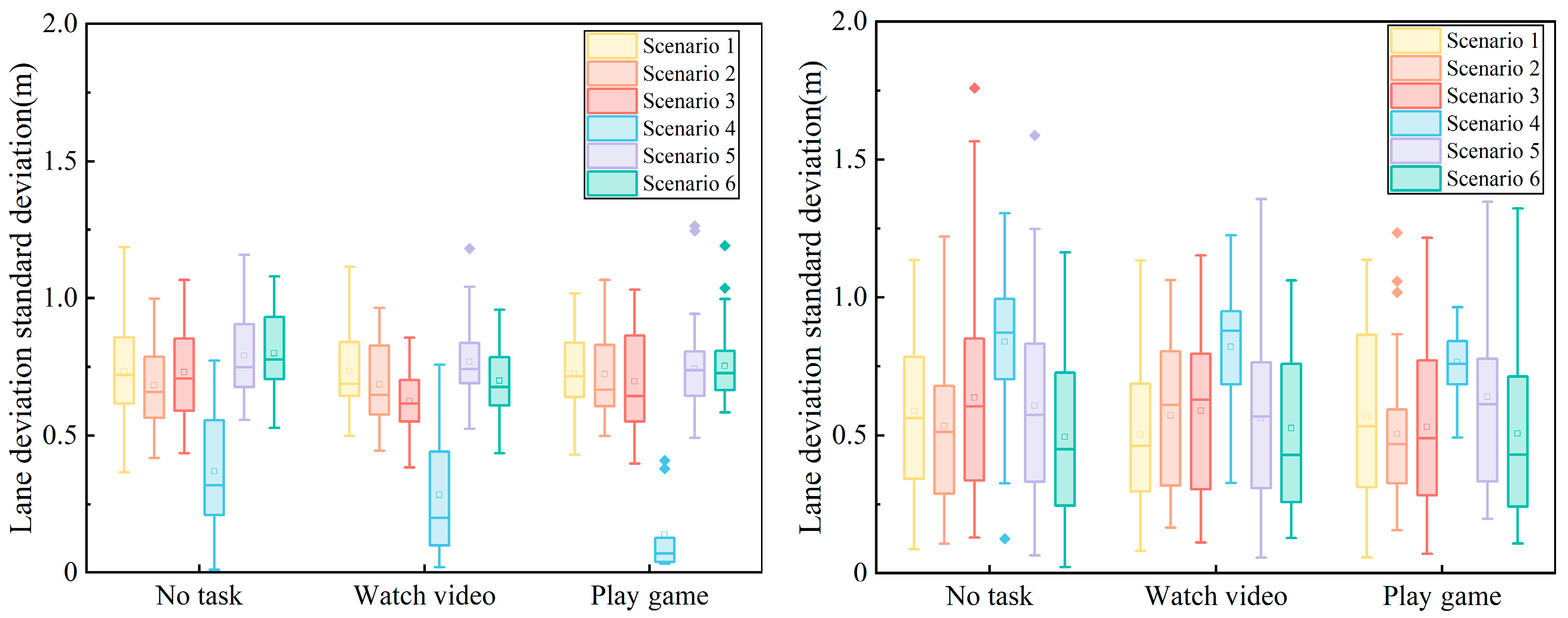
For the lane deviation standard deviation indicator, the boxplots for both phases are shown in Figure 10. During the obstacle avoidance phase, the main effect of TOR was significant (p < 0.05). The lane deviation standard deviation was ranked from highest to lowest under different TORs as follows: 5 s, 7 s, and 3 s. There were no significant differences in the lane deviation standard deviation indicator under different secondary tasks and obstacle types (p > 0.05), but from the mean values, it can be observed that the lane deviation standard deviation ranked from highest to lowest under different secondary tasks as follows: playing a game, no task, and watching a video. The lane deviation standard deviation was higher in the dynamic obstacle scenario compared to the static obstacle scenario.
Figure 10.
Boxplots of Lane Deviation SD during obstacle avoidance and recovery phases.
During the recovery phase, the main effects of TOR and obstacle type were significant (p < 0.05). The lane deviation standard deviation gradually decreased with the 3 s, 5 s, and 7 s takeover request times, and the lane deviation standard deviation was higher in the static obstacle scenario compared to the dynamic obstacle scenario. The secondary task did not have a significant effect on the lane deviation standard deviation during the recovery phase (p > 0.05).
- 4.
- Mean Speed
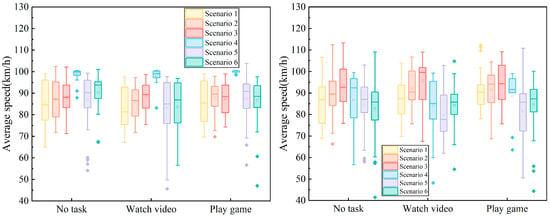
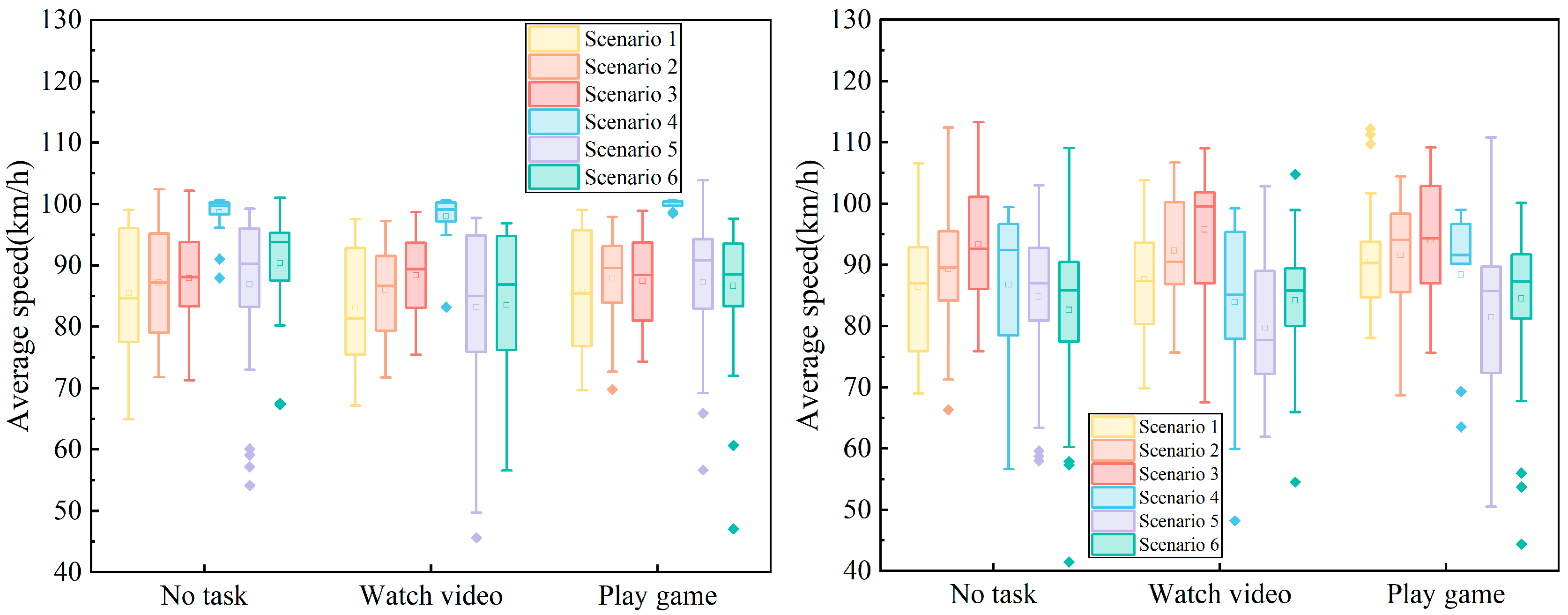
For the average speed indicator, the boxplots for both phases are shown in Figure 11. During the obstacle avoidance phase, the main effects of secondary task, TOR, and obstacle type were significant (p < 0.05). The average speed ranked from highest to lowest under different secondary tasks as follows: no task, playing a game, and watching a video. Under different TORs, the average speed ranked from highest to lowest as follows: 3 s, 7 s, and 5 s. The average speed was higher in the static obstacle scenario compared to the dynamic obstacle scenario.
Figure 11.
Boxplots of Mean Speed during obstacle avoidance and recovery phases.
During the recovery phase, the main effect of obstacle type was significant (p < 0.05). The average speed was higher in the dynamic obstacle scenario compared to the static obstacle scenario. The main effects of secondary task and TOR were not significant (p > 0.05). Based on the mean values, the average speed ranked from highest to lowest under different secondary tasks as follows: playing a game, watching a video, and no task. Under different TORs, the average speed ranked from highest to lowest as follows: 7 s, 3 s, and 5 s.
- 5.
- Standard Deviation of Acceleration
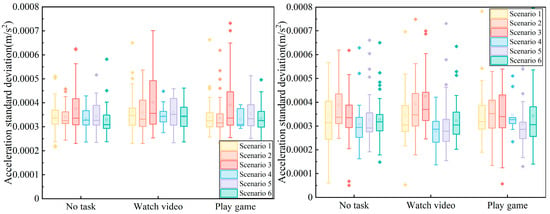
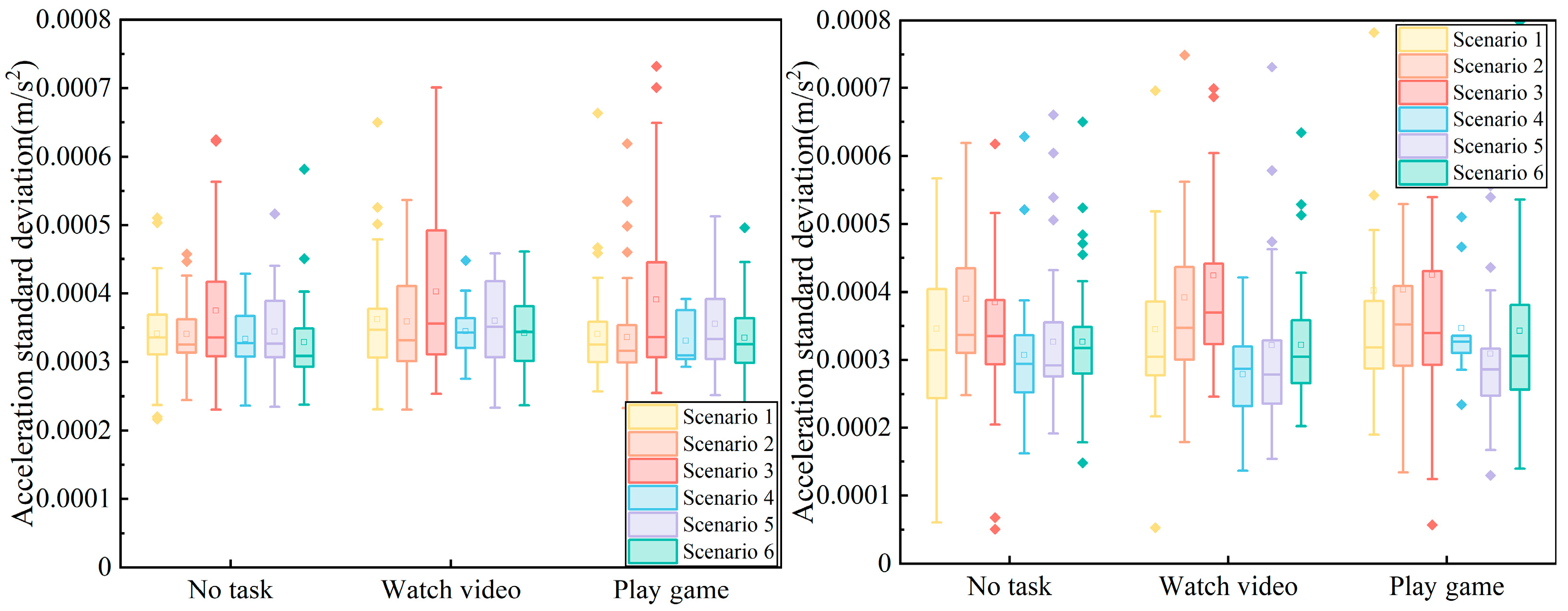
For the acceleration standard deviation indicator, the boxplots for both phases are shown in Figure 12. During the obstacle avoidance phase, the main effect of secondary task was significant (p < 0.05). The acceleration standard deviation ranked from highest to lowest under different secondary tasks as follows: playing a game, watching a video, and no task. The effects of TOR and obstacle type on the acceleration standard deviation during the obstacle avoidance phase were not significant (p > 0.05). Based on the mean values, the acceleration standard deviation gradually increased with the 3 s, 5 s, and 7 s takeover request times, and was higher in the dynamic obstacle scenario compared to the static obstacle scenario.
Figure 12.
Boxplots of Acceleration SD during obstacle avoidance and recovery phases.
During the recovery phase, the main effects of TOR and obstacle type were significant (p < 0.05). The acceleration standard deviation ranked from highest to lowest under different TORs as follows: 5 s, 7 s, and 3 s, and was higher in the dynamic obstacle scenario compared to the static obstacle scenario. The secondary task did not have a significant effect on the acceleration standard deviation during the recovery phase (p > 0.05).
- 6.
- Standard Deviation of Brake Pedal Application
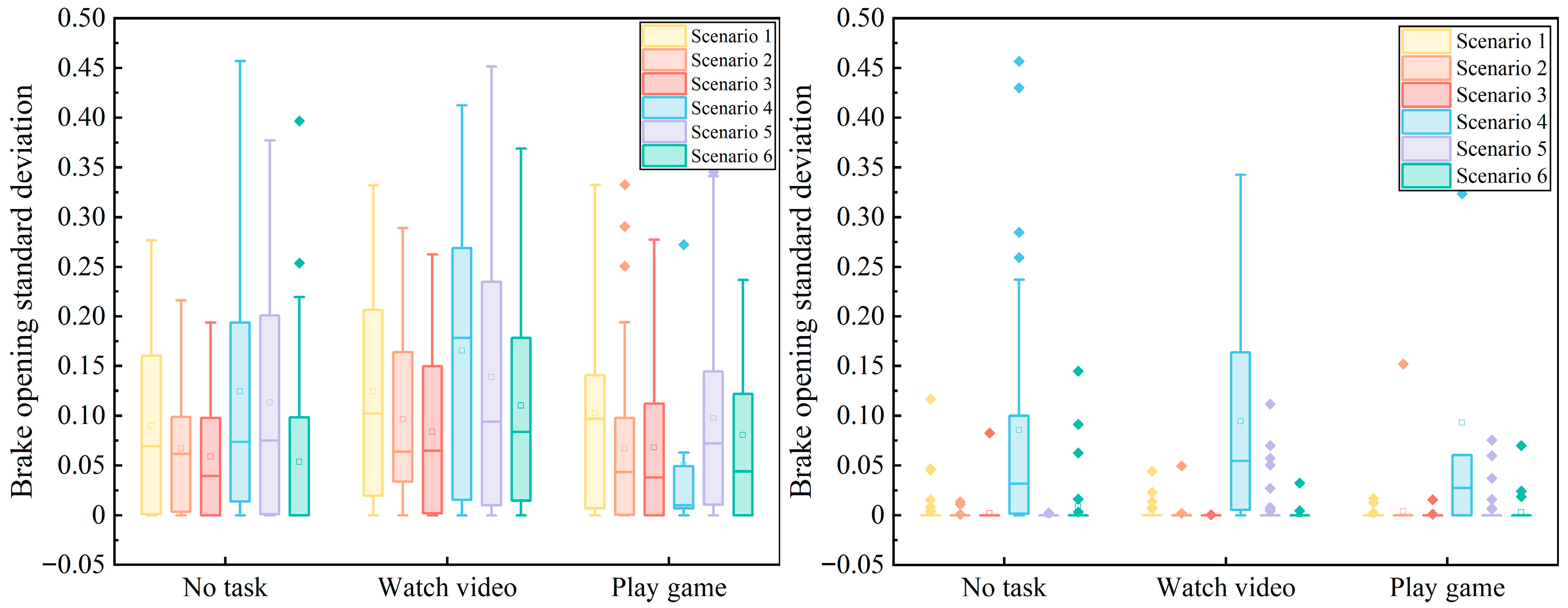
For the brake opening standard deviation indicator, the boxplots for both phases are shown in Figure 13. During the obstacle avoidance phase, the main effects of secondary task and TOR were significant (p < 0.05). The brake opening standard deviation ranked from highest to lowest under different secondary tasks as follows: watching a video, no task, and playing a game. The brake opening standard deviation gradually decreased with the 3 s, 5 s, and 7 s takeover request times.
Figure 13.
Boxplots of Brake Pedal Application SD during obstacle avoidance and recovery phases.
During the recovery phase, the main effects of TOR and obstacle type were significant (p < 0.05). The brake opening standard deviation gradually decreased as the takeover request time increased, and was higher in the static obstacle scenario compared to the dynamic obstacle scenario. The secondary task did not have a significant effect on the brake opening standard deviation during the recovery phase (p > 0.05).
4.2. Results of the Generalized Estimating Equations Model
4.2.1. GEE Model Results for the Obstacle Avoidance Phase
The influencing factors during the obstacle avoidance phase include: non-driving-related tasks, time-to-react (TOR), obstacle type, gender, age, driving experience, total fixation duration in the secondary task area, and total fixation duration on the forward roadway. Taking these factors as independent variables and six types of driving behaviors as dependent variables, the generalized estimating equation (GEE) model results for lateral takeover behavior in the obstacle avoidance phase are presented in Table 4.
Table 4.
Results of GEE model for lateral takeover behavior during the obstacle avoidance phase.
The table is restricted to variables demonstrating significant influence, encompassing both main effects and interaction effects. The results for the standard deviation of steering wheel force revealed two significant interaction effects: a positive interaction between the Play game and Male (β = 0.007, p = 0.016), and a negative interaction between takeover request time (TOR = 7 s) and Total fixation duration in the Non-driving task area (β = −0.001, p < 0.001). Neither the main effects nor the interaction effects of the remaining variables reached statistical significance. Regarding the mean lane deviation, the analysis revealed a significant negative interaction between takeover request time (TOR = 5 s and 7 s) and static obstacles. A significant negative interaction between the Play game and Total fixation duration on the forward roadway (β = −0.001, p = 0.019) was also observed. Scenarios featuring static obstacles and a longer takeover request time led to a significant decrease in mean lane deviation; however, they concurrently resulted in a significant increase in the standard deviation of lane deviation.
The observed variables for longitudinal behavior in the obstacle avoidance phase include mean speed, standard deviation of acceleration, and standard deviation of brake application. The generalized estimating equation (GEE) model results for longitudinal takeover behavior in the obstacle avoidance phase are presented in Table 5.
Table 5.
Results of GEE model for longitudinal takeover behavior during obstacle avoidance phase.
The model results indicated that several variables had a significant impact on the drivers’ mean speed. Specifically, a significant negative interaction was observed between Static obstacles and Takeover time. The mean speed decreased significantly in scenarios with a static obstacle combined with a TOR = 5 s (β = −11.567, p < 0.001) and with a TOR = 7 s (β = −13.654, p < 0.001). Furthermore, the Watch video task itself also exerted a significant negative effect on mean speed. A significant interaction was found between Watch video and Static obstacles (β = −3.753, p = 0.035), which corresponded to a significant reduction in mean speed. Furthermore, the interaction between Age and Driving experience (age × driving experience) had a significant positive effect on mean speed (β = 0.093, p = 0.004), suggesting that these two factors collectively influenced drivers’ mean speed during the obstacle avoidance phase.
Total gaze duration on the non-driving related task area had a significant negative effect on the standard deviation of acceleration (β = −0.001, p = 0.003). Conversely, its interactions with both the game-playing task (β = 0.001, p = 0.003) and the video-watching task (β = 0.001, p = 0.004) exhibited significant positive effects on the acceleration standard deviation. These results demonstrate a typical interference effect from NDRTs, indicating that engagement in these tasks leads to increased fluctuations in vehicle acceleration. A significant positive interaction between the Watch video and Male was found for the standard deviation of brake pedal application (β = 0.016, p = 0.025), pointing to more fluctuating braking behavior in this scenario.
4.2.2. GEE Model Results for the Recovery Phase
The influencing factors in the recovery phase include non-driving tasks, TOR, obstacle type, gender, age, driving experience, total fixation duration in the secondary task area, total fixation duration on the forward roadway, steering torque standard deviation during the obstacle avoidance phase, mean lane offset during the obstacle avoidance phase, lane offset standard deviation during the obstacle avoidance phase, mean speed during the obstacle avoidance phase, acceleration standard deviation during the obstacle avoidance phase, and brake application standard deviation during the obstacle avoidance phase. Using these factors as independent variables and six driving behavior indicators as dependent variables, the generalized estimating equation (GEE) model results for lateral takeover behavior in the recovery phase are presented in Table 6.
Table 6.
Results of GEE model for lateral takeover behavior during the recovery phase.
As shown in the table, lateral control behavior during the obstacle avoidance phase significantly influenced lateral control metrics in the subsequent recovery phase. The model results indicated that the standard deviation of steering wheel torque (β = 0.005, p < 0.001), the mean lane deviation (β = 0.091, p < 0.001), and the standard deviation of lane deviation (β = −0.072, p < 0.001) during the avoidance phase were all statistically significant predictors of recovery phase performance. This demonstrates that the stability of the avoidance maneuver exhibits a carry-over effect into the recovery phase, holding substantial predictive value.
Based on the analysis of the standard deviation of steering wheel torque, static obstacles showed a significant positive effect on steering fluctuations during the recovery phase (β = 0.033, p < 0.001). When the takeover request time was set to TOR = 5 s, both the game-playing task (β = −0.013, p < 0.001) and the video-watching task (β = −0.011, p < 0.001) had significant negative effects on the standard deviation of steering wheel torque. Regarding risk perception behavior, the interaction effect revealed that increasing gaze duration on the forward road while engaged in the video-watching task improved steering stability during the recovery phase, as reflected by a significant decrease in the standard deviation of steering wheel torque (β = −0.001, p = 0.016). Furthermore, the interaction between takeover request time (TOR = 5 s) and gaze duration on the forward road (β = −0.052, p = 0.021) indicated that increased attention to the road ahead led to a significant reduction in the mean lane deviation during the recovery phase. Finally, for the standard deviation of lane deviation, the main effect of the game-playing task was significant (β = −0.079, p = 0.019).
The observed variables for longitudinal behavior during the recovery phase include mean speed, acceleration standard deviation, and brake application standard deviation. The generalized estimating equation (GEE) model results for longitudinal takeover behavior in the recovery phase are presented in Table 7.
Table 7.
Results of GEE model for longitudinal takeover behavior during obstacle recovery phase.
As shown in the table, longitudinal control behavior during the obstacle avoidance phase significantly influenced longitudinal performance metrics in the recovery phase. Specifically, the mean speed (β = 7.883, p < 0.001), standard deviation of acceleration (β = 4.109, p < 0.001), and standard deviation of lane deviation (β = −2.529, p = 0.001) during obstacle avoidance all demonstrated significant effects on the mean speed in the recovery phase. Additionally, both the standard deviation of brake pedal application (β = 0.026, p = 0.001) and mean speed (β = 0.022, p = 0.003) during the avoidance phase showed significant positive effects on the standard deviation of brake pedal application during recovery.
The results for mean speed indicated that both the main effect of static obstacles (β = −12.938, p = 0.005) and the interaction between the game-playing task and static obstacles (β = −2.217, p = 0.032) had significant negative effects on the drivers’ mean speed during the recovery phase. Regarding vehicle control stability, static obstacles showed a significant negative effect on the standard deviation of acceleration (β = −0.001, p < 0.001) but a significant positive effect on the standard deviation of brake pedal application (β = 0.083, p = 0.004) in the recovery phase. Furthermore, a significant interaction was observed between non-driving related tasks and takeover request time on the standard deviation of brake pedal application (β = −0.006, p = 0.039). Specifically, under the scenario combining the video-watching task with a longer takeover lead time (TOR = 7 s), a significant reduction in the standard deviation of brake pedal application was found.
5. Discussion
5.1. Impact of Non-Driving Related Tasks on Takeover Preparedness
The study analyzed fixation durations within areas of interest (AOIs) and revealed a stepwise occupation effect of non-driving tasks on visual resource allocation. Under the no-task condition, drivers allocated 44% of their visual attention to the forward roadway. During the playing game task, attention to the secondary task area surged to 68%, while forward roadway fixation dropped sharply to 7%, indicating that under high cognitive load or challenging conditions, drivers tend to focus only on immediate, short-term stimuli, with limited capacity for medium- or long-term consideration [26]. This extreme distraction state forms a causal chain with key findings during the obstacle avoidance phase—male drivers exhibited significantly increased steering variability under the playing game task (β = 0.007, p = 0.016) and greater brake instability (β = 0.016, p = 0.025), which can be attributed to the severe impairment of road monitoring caused by the game task.
However, different secondary tasks induced differentiated attentional compensation strategies [27]. While watching a video reduced forward roadway attention (28%), it significantly increased monitoring of the speedometer area (12%). This explains why maintaining forward roadway fixation during video-watching tasks improved lane-keeping performance in longitudinal behavior (β = −0.001, p = 0.019) [28]. In contrast, the playing game task led to a reduction in overall driving information acquisition, resulting in more frequent control adjustments during the obstacle avoidance phase (e.g., increased lane offset variability, β = 0.471), indicating that the extent of attentional deprivation directly determines takeover quality [29].
Attentional imbalance during the preparation phase (e.g., a surge in fixations on the non-driving task area) not only immediately reduced obstacle avoidance performance but also indirectly constrained control stability during the recovery phase by affecting initial takeover behavior (e.g., steering variability, β = 0.005, p < 0.001). This supports the mediating role of visual attention resources in the continuity of behavior across phases [30]. This also provides key implications for autonomous vehicle system design: in high-intrusion gaming task scenarios, augmented reality warnings should be activated in advance to expand the driver’s field of view and compensate for their narrowed visual search range. Consequently, for these two types of NDRTs, mandatory task interruption mechanisms or longer buffered takeover periods should be implemented in automated driving systems to mitigate their impact on driving safety.
5.2. Determinants of Driver Takeover Performance
This study employs generalized estimating equations to investigate the key influencing factors across different phases of the takeover process, by analyzing behavioral metrics. During the obstacle avoidance phase, the interaction between takeover request time (TOR) and obstacle type significantly influenced lateral control: a longer TOR (7 s) improved lane-keeping accuracy (β = −0.164, p < 0.001) but increased lateral variability (β = 0.471, p < 0.001), indicating that drivers tend to achieve precise avoidance of static obstacles through frequent micro-adjustments, at the cost of control stability. Similarly, Chen et al. [31] found that as the TOR decreases, takeover quality significantly deteriorates, manifested as a decrease in the minimum TTC, along with increases in both longitudinal deceleration and lateral acceleration. The interaction between non-driving tasks and visual attention exhibited a dual effect: when attention lingered in non-driving areas, steering stability improved (β = −0.001, p < 0.001), possibly due to additional response time facilitating strategic adjustments; in contrast, the combination of task execution (e.g., playing a game) and male gender significantly increased operational variability (β = 0.007, p = 0.016), highlighting gender differences in risk sensitivity under distraction [32].
At the longitudinal behavior level, static obstacles triggered a pronounced “acceleration–deceleration conflict”: the obstacle itself prompted evasive acceleration (β = 32.765, p < 0.001), but with longer TOR, drivers adopted conservative deceleration (β = −13.654, p < 0.001), reflecting the time-dependent nature of risk response. Age and driving experience also played key roles: older drivers tended to decelerate more in static obstacle scenarios (β = −0.750, p < 0.001), whereas more experienced drivers exhibited smoother brake control (β = −0.010, p = 0.001), confirming the buffering effect of experience on stress-induced behavior [33].
The results during the recovery phase indicate the continuity of takeover behavior: steering variability (β = 0.005, p < 0.001), lane offset (β = 0.091, p < 0.001), and speed characteristics (β = 7.883, p < 0.001) from the obstacle avoidance phase all significantly predicted recovery-phase performance, confirming the cross-phase inertia of takeover behavior. Therefore, lateral and longitudinal monitoring systems should be established during the obstacle avoidance phase to reduce driving risks associated with significant opera-tional fluctuations. Static obstacles continued to induce control instability during recovery (steering variability β = 0.033, p < 0.001; brake variability β = 0.083, p = 0.004), whereas a long TOR (7 s) effectively suppressed lateral variability in male drivers (β = −0.056, p = 0.043), further validating the moderating effect of takeover time on group differences [34].
6. Conclusions
This study divides the driver takeover process under typical scenarios into three phases: preparation, obstacle avoidance, and recovery. Starting from the preparation phase, initial generalized estimating equations (GEE) models were constructed using observed variables from the preceding phase as independent variables and takeover performance metrics from subsequent phases as dependent variables. The GEE models were progressively optimized by retaining independent variables with marginal significance. Ultimately, the influential pathways of drivers’ lateral and longitudinal driving behaviors during the obstacle avoidance and recovery phases were derived. Through the GEE models, the effects of the driving environment, individual attributes, and risk perception on takeover performance were analyzed, along with the complex interactions among these factors. The study found that non-driving-related tasks not only affect risk perception during the preparation phase but also exert a continuous impact on visual resource allocation and vehicle control behavior, with their influence persisting into the recovery phase. By incorporating the lagged variable theory into the GEE model, a comprehensive analysis of driving performance throughout the entire takeover process was achieved.
However, the current research suffers from a homogeneous participant cohort, primarily consisting of young drivers, and the absence of systematic consideration of individual differences leads to certain constraints on the generalizability of the model results. Future studies could broaden the participant recruitment scope to examine variations among diverse driver groups. Moreover, real-vehicle driving experiments should be conducted to enhance relevance to real-world scenarios.
Author Contributions
Conceptualization, L.X. and M.D.; methodology, M.D. and L.X.; data curation, M.D. and L.X.; writing—original draft preparation, M.D. and L.X.; writing—review and editing, L.X. and J.C.; visualization, J.C., J.Y. and H.L.; supervision, L.X., J.C., J.Y. and H.L. All authors have read and agreed to the published version of the manuscript.
Funding
This research was funded by the National Nature Science Foundation of China (52262046, 52302389); Scientific Research Project of Hunan Provincial Department of Education (24C0905); Natural Science Foundation of Jiangsu Province (BK20231197, BK20220243); Science and Technology Program of Suzhou (SYG2024057, SYC2022078); Hubei Science and Technology Talent Service Enterprise Project (2023DJC084, 2023DJC195) and Hubei Science and Technology Project (2024BAB087). Additional, sponsored by Tsinghua-Toyota Joint Research Institute Interdisciplinary Program.
Institutional Review Board Statement
Not applicable.
Informed Consent Statement
Informed consent was obtained from all subjects involved in the study.
Data Availability Statement
The raw data supporting the conclusions of this article can be made available by the corresponding author.
Conflicts of Interest
The authors declare no conflicts of interest.
References
- Guler, S.I.; Menendez, M.; Meier, L. Using connected vehicle technology to improve the efficiency of intersections. Transp. Res. Part C Emerg. Technol. 2014, 46, 21–131. [Google Scholar] [CrossRef] [Scilit]
- Koopman, P.; Wagner, M. Autonomous Vehicle Safety: An Interdisciplinary Challenge. IEEE Intell. Transp. Syst. Mag. 2017, 9, 90–96. [Google Scholar] [CrossRef] [Scilit]
- Ansar, M.S.; Alsaleh, N.; Farooq, B. Behavioural modelling of automated to manual control transition in conditionally automated driving. Transp. Res. Part F Traffic Psychol. Behav. 2023, 94, 422–435. [Google Scholar] [CrossRef] [Scilit]
- Louw, T.; Merat, N. Are You in the loop? Using gaze dispersion to understand driver visual attention during vehicleautomation. Transp. Res. Part C Emerg. Technol. 2017, 76, 35–50. [Google Scholar] [CrossRef] [Scilit]
- Chen, F.; Lu, G.; Lin, Q.; Zhang, H.; Ma, S.; Liu, D.; Song, H. Review of drivers’ takeover behavior in conditional automated driving. J. Jilin Univ. Eng. Technol. Ed. 2025, 55, 419–433. [Google Scholar] [CrossRef]
- SAE International. Taxonomy and Definitions for Terms Related to Driving Automation Systems for on-Road Motor Vehicles; SAE International: Warrendale, PA, USA, 2021. [Google Scholar] [CrossRef] [Scilit]
- Lu, Z.; Happee, R.; Cabrall, C.D.; Kyriakidis, M.; de Winter, J.C. Human factors of transitions in automated driving: A general framework and literature survey. Transp. Res. Part F Traffic Psychol. Behav. 2016, 43, 183–198. [Google Scholar] [CrossRef] [Scilit]
- Gong, J.; Guo, X.; Qi, C.; Liang, X.; Wang, Q. Measuring takeover performance in different driving scenarios: Considering the influence of non-driving-related tasks and takeover request lead time. Transp. Res. Part F Traffic Psychol. Behav. 2023, 97, 411–421. [Google Scholar] [CrossRef] [Scilit]
- Du, N.; Kim, J.; Zhou, F.; Pulver, E.; Tilbury, D.M.; Robert, L.P.; Pradhan, A.K.; Yang, X.J. Evaluating effects of cognitive load, takeover request lead time, and traffic density on drivers’ takeover performance in conditionally automated driving. In Proceedings of the 12th International Conference on Automotive User Interfaces and Interactive Vehicular Applications, Virtual, 19–22 September 2020; pp. 66–73. [Google Scholar] [CrossRef] [Scilit]
- Zhang, D.; Jiao, X.; Zhang, T. Lane-changing and overtaking trajectory planning for autonomous vehicles with multi-performance optimization considering static and dynamic obstacles. Robot. Auton. Syst. 2024, 182, 104797. [Google Scholar] [CrossRef] [Scilit]
- Eriksson, A.; Stanton, N.A. Takeover time in highly automated vehicles: Noncritical transitions to and from manual control. Hum. Factors 2017, 59, 689–705. [Google Scholar] [CrossRef] [Scilit] [PubMed]
- Wu, C.; Wu, H.; Lyu, N.; Zheng, M. Take-over performance and safety analysis under different scenarios and secondary tasks in conditionally automated driving. IEEE Access 2019, 7, 136924–136933. [Google Scholar] [CrossRef] [Scilit]
- Weaver, B.; Delucia, P. A Systematic Review and Meta-Analysis of Takeover Performance During Conditionally Automated Driving. Hum. Factors 2022, 64, 12271260. [Google Scholar] [CrossRef] [Scilit]
- Jiang, T.; Wang, Y.; Tang, R. Playing games guiding attention improves situation awareness and takeover quality during automated driving. Int. J. Hum. Comput. Interact. 2024, 40, 1892–1905. [Google Scholar] [CrossRef] [Scilit]
- Groh, K.; Thomas Kühbeck, M.S. Towards a scenario-based assessment method for highly automated driving functions. In Proceedings of the 8th Conference on Driver Assistance, Munich, Germany, 22–23 November 2017. [Google Scholar]
- Pipkorn, L.; Tivesten, E.; Dozza, M. It’s about time! Earlier take-over requests in automated driving enable safer responses to conflicts. Transp. Res. Part F Traffic Psychol. Behav. 2022, 86, 196–209. [Google Scholar] [CrossRef] [Scilit]
- Yoon, S.H.; Kim, Y.W.; Ji, Y.G. The effects of takeover request modalities on highly automated car control transitions. Accid. Anal. Prev. 2019, 123, 150–158. [Google Scholar] [CrossRef] [Scilit] [PubMed]
- Geitner, C.; Biondi, F.; Skrypchuk, L.; Jennings, P.; Birrell, S. The comparison of auditory, tactile, and multimodal warnings for the effective communication of unexpected events during an automated driving scenario. Transp. Res. Part F Traffic Psychol. Behav. 2019, 65, 23–33. [Google Scholar] [CrossRef] [Scilit]
- Gold, C.; Bengler, K. Taking over control from highly automated vehicles. In Advances in Human Aspects of Transportation: Part II; AHFE Open Access: New York, NY, USA, 2021; Volume 16, p. 64. [Google Scholar] [CrossRef] [Scilit]
- Zeeb, K.; Buchner, A.; Schrauf, M. What determines the take-over time? An integrated model approach of driver take-over after automated driving. Accid. Anal. Prev. 2015, 78, 212–221. [Google Scholar] [CrossRef] [Scilit]
- Li, Y.; Xuan, Z.; Li, X. A study on the entire take-over process-based emergency obstacle avoidance behavior. Int. J. Environ. Res. Public Health 2023, 20, 3069–3085. [Google Scholar] [CrossRef] [Scilit]
- Wang, W.; Li, Q.; Zeng, C.; Li, G.; Zhang, J.; Li, S.; Cheng, B. Review of Take over Performance of Automated Driving Influencing Factors, Models, and Evaluation Methods. China J. Highw. Transp. 2023, 36, 202–224. [Google Scholar] [CrossRef]
- Zhao, X.; Chen, H.; Li, Z.; Li, H.; Gong, J.; Fu, Q. Influence characteristics of autonomous driving takeover behavior under different scenarios. China J. Highw. Transp. 2022, 35, 195–214. [Google Scholar] [CrossRef]
- Yu, Z.; Xu, G.; Jiang, K.; Feng, Z.; Xu, S. Constructing the behavioral sequence of the takeover process-TOR, behavior characteristics and phases division: A real vehicle experiment. Accid. Anal. Prev. 2023, 186, 107040. [Google Scholar] [CrossRef] [Scilit]
- Pritschet, L.; Powell, D.; Horne, Z. Marginally significant effects as evidence for hypotheses: Changing attitudes over four decades. Psychol. Sci. 2016, 27, 1036–1042. [Google Scholar] [CrossRef] [Scilit]
- Dhabhar, F.S. The short-term stress response–Mother nature’s mechanism for enhancing protection and performance under conditions of threat, challenge, and opportunity. Front. Neuroendocrinol. 2018, 49, 175–192. [Google Scholar] [CrossRef] [Scilit]
- Nijboer, M.; Borst, J.P.; van Rijn, H.; Taatgen, N.A. Driving and multitasking: The good, the bad, and the dangerous. Front. Psychol. 2016, 7, 1718. [Google Scholar] [CrossRef] [Scilit]
- Xie, L.; Li, G.; Wu, C.; Lyu, N. Compensatory behavior for mental workload induced by freeway destination signs. Traffic Inj. Prev. 2025, 26, 515–523. [Google Scholar] [CrossRef] [Scilit]
- Liang, K.; Kästle, J.L.; Anvari, B.; Calvert, S.C.; van Lint, J.W.C. Multidimensional Assessment of Takeover Performance in Conditionally Automated Driving. arXiv 2025, arXiv:2507.22252. [Google Scholar] [CrossRef] [Scilit]
- Yuan, P.; Hu, R.; Zhang, X.; Wang, Y.; Jiang, Y. Cortical entrainment to hierarchical contextual rhythms recomposes dynamic attending in visual perception. eLife 2021, 10, e65118. [Google Scholar] [CrossRef] [Scilit] [PubMed]
- Chen, F.; Lu, G.; Lin, Q.; Zhai, J.; Tan, H. Are novice drivers competent to take over control from level 3 automated vehicles? A comparative study with experienced drivers. Transp. Res. Part F Traffic Psychol. Behav. 2021, 81, 65–81. [Google Scholar] [CrossRef] [Scilit]
- Zhang, Q.; Qu, W.; Ge, Y.; Sun, X.; Zhang, K. The effect of the emotional state on driving performance in a simulated car-following task. Transp. Res. Part F Traffic Psychol. Behav. 2020, 69, 349–361. [Google Scholar] [CrossRef] [Scilit]
- Rauh, N.; Franke, T.; Krems, J.F. Understanding the impact of electric vehicle driving experience on range anxiety. Hum. Factors 2015, 57, 177–187. [Google Scholar] [CrossRef] [Scilit] [PubMed]
- Tan, X.; Zhang, Y. Driver Situation Awareness for Regaining Control from Conditionally Automated Vehicles: A Systematic Review of Empirical Studies. Hum. Factors 2025, 67, 367–403. [Google Scholar] [CrossRef] [Scilit]

Disclaimer/Publisher’s Note: The statements, opinions and data contained in all publications are solely those of the individual author(s) and contributor(s) and not of MDPI and/or the editor(s). MDPI and/or the editor(s) disclaim responsibility for any injury to people or property resulting from any ideas, methods, instructions or products referred to in the content. |
© 2025 by the authors. Licensee MDPI, Basel, Switzerland. This article is an open access article distributed under the terms and conditions of the Creative Commons Attribution (CC BY) license (https://creativecommons.org/licenses/by/4.0/).