
Article

ULO: An Underwater Light-Weight Object Detector for Edge Computing †
1
College of Intelligent Systems Science and Engineering, Harbin Engineering University, Harbin 150001, China
2
Management School, Harbin Commerce University, Harbin 150080, China
*
Author to whom correspondence should be addressed.
This paper is an extended version of our paper published in YOLO Nano Underwater: A fast and compact object detector for embedded device.
Machines 2022, 10(8), 629; https://doi.org/10.3390/machines10080629

Submission received: 5 July 2022 / Revised: 25 July 2022 / Accepted: 27 July 2022 / Published: 29 July 2022
(This article belongs to the Special Issue Advances in Underwater Robot Technology)

Abstract

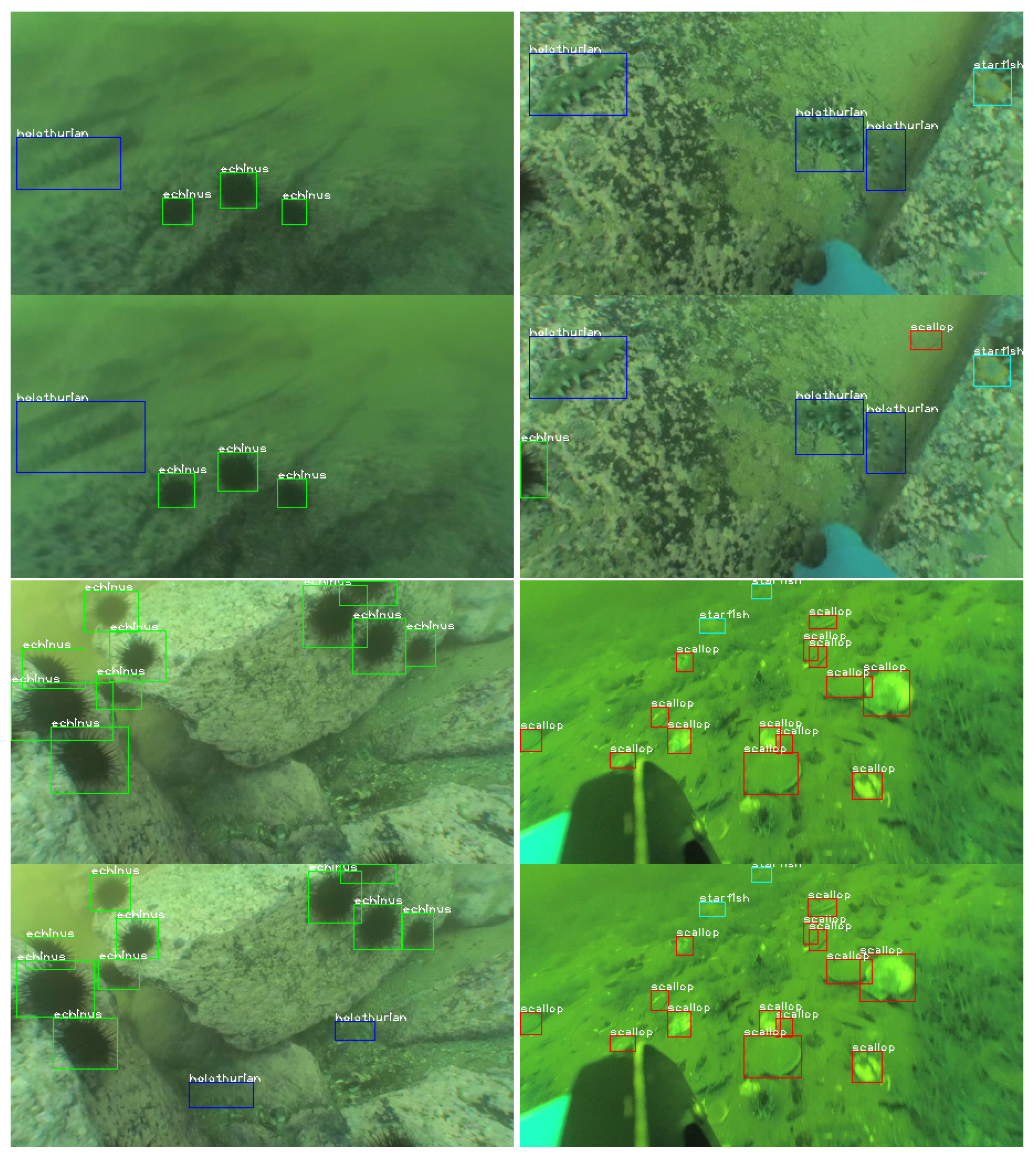
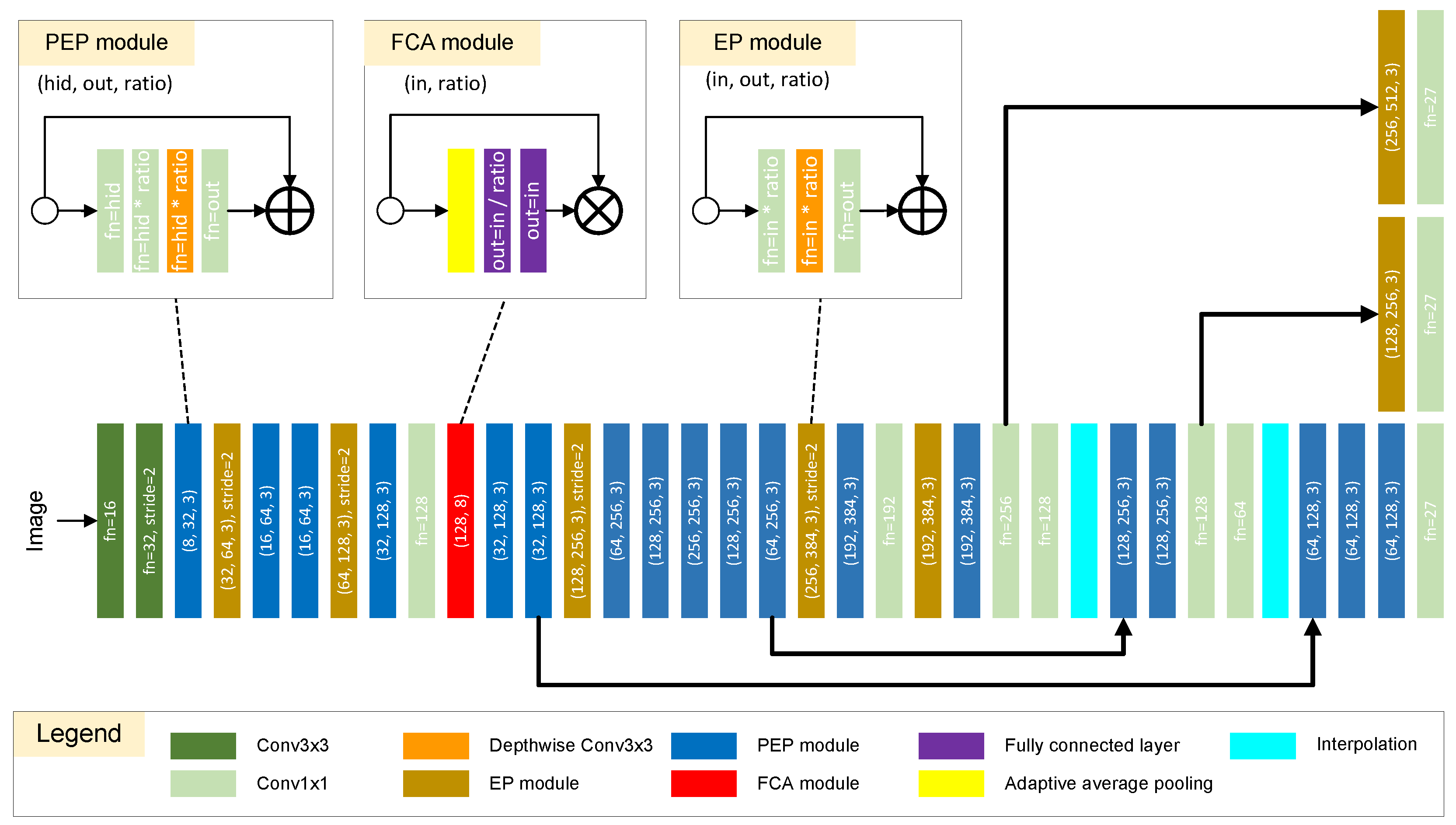
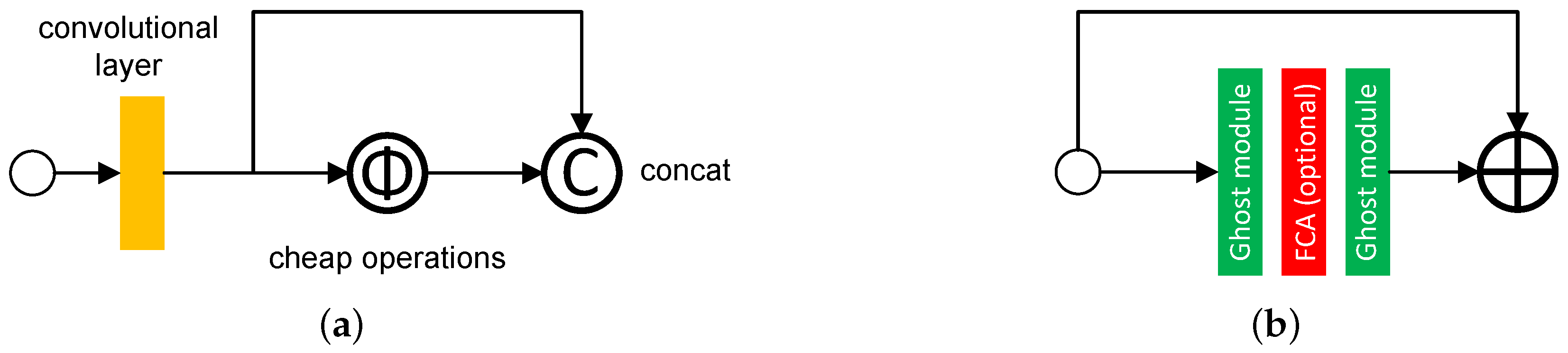
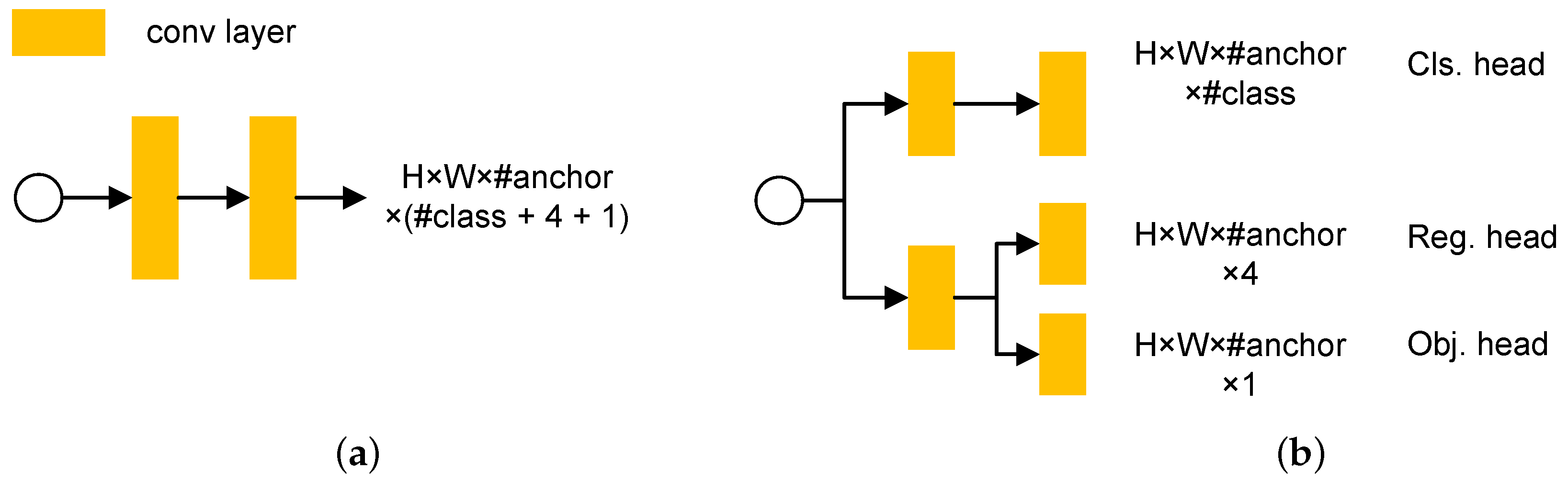
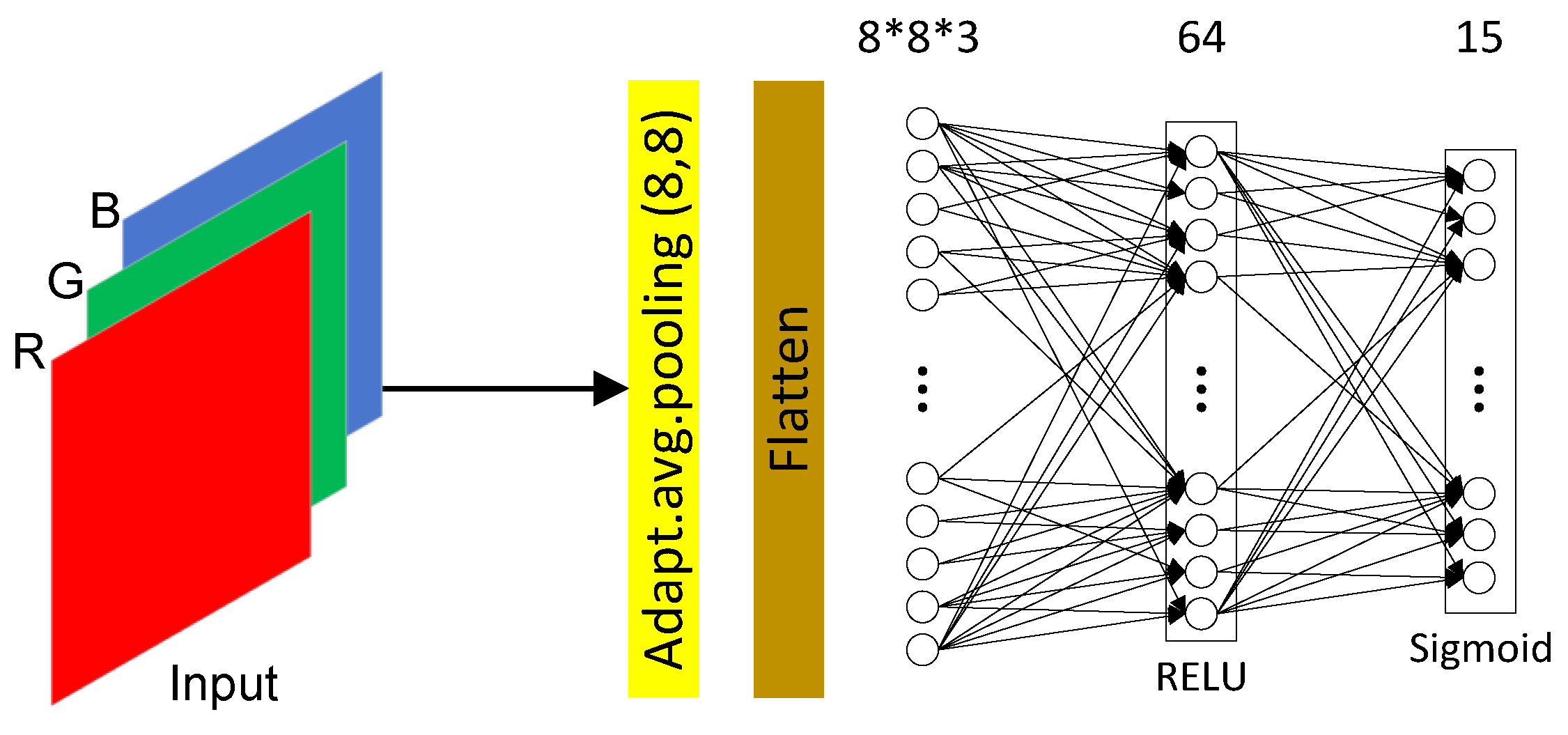
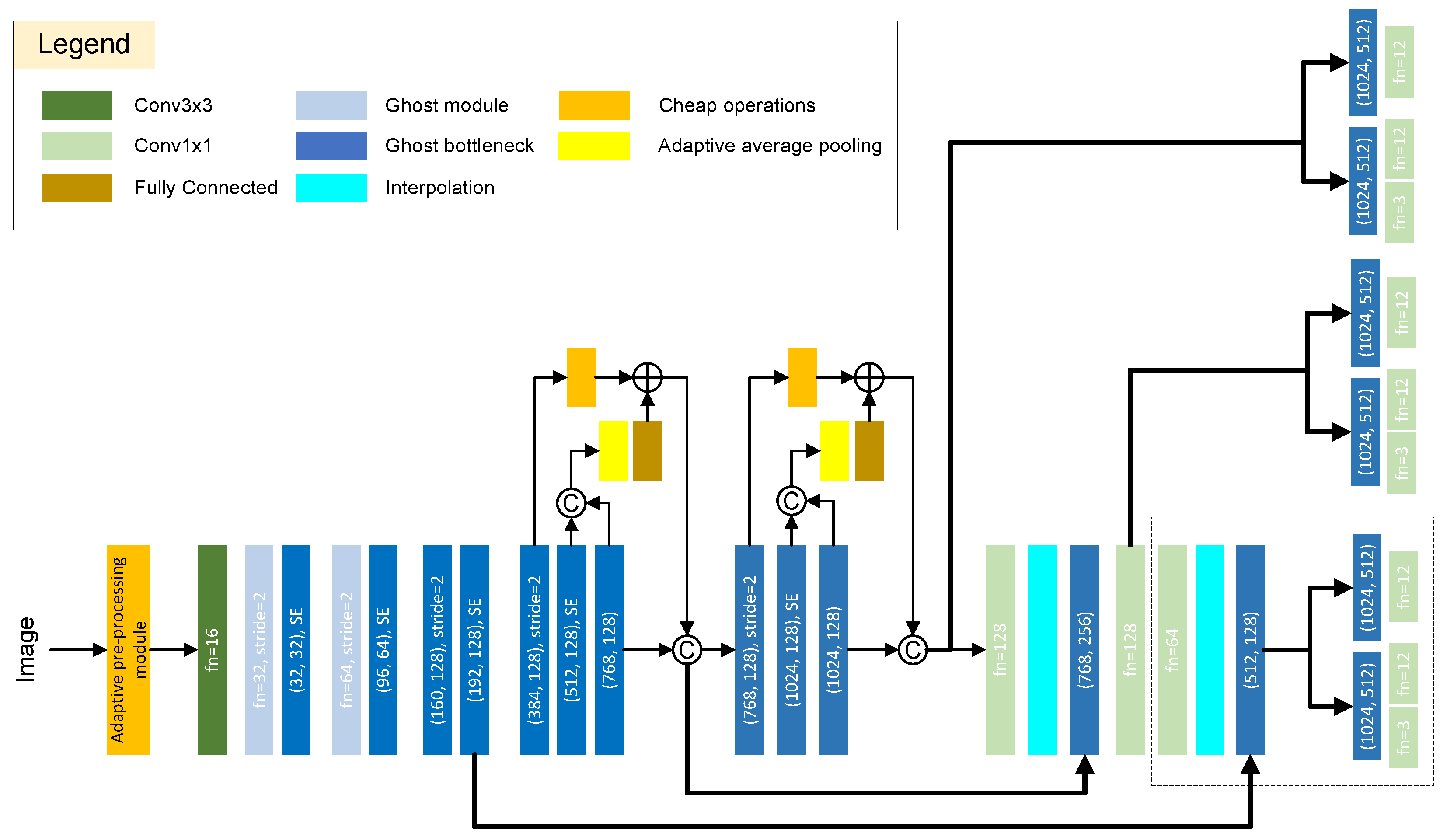
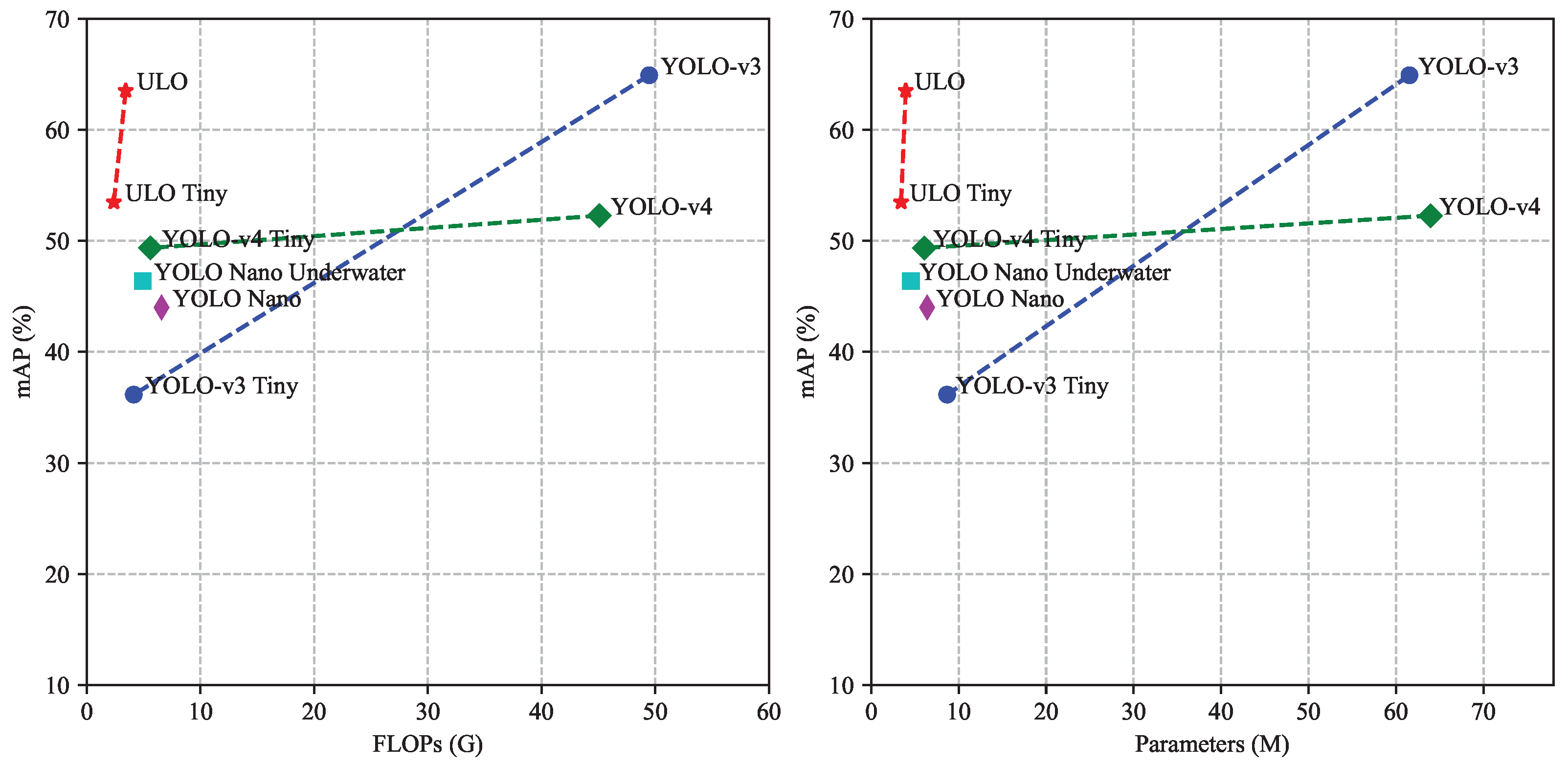
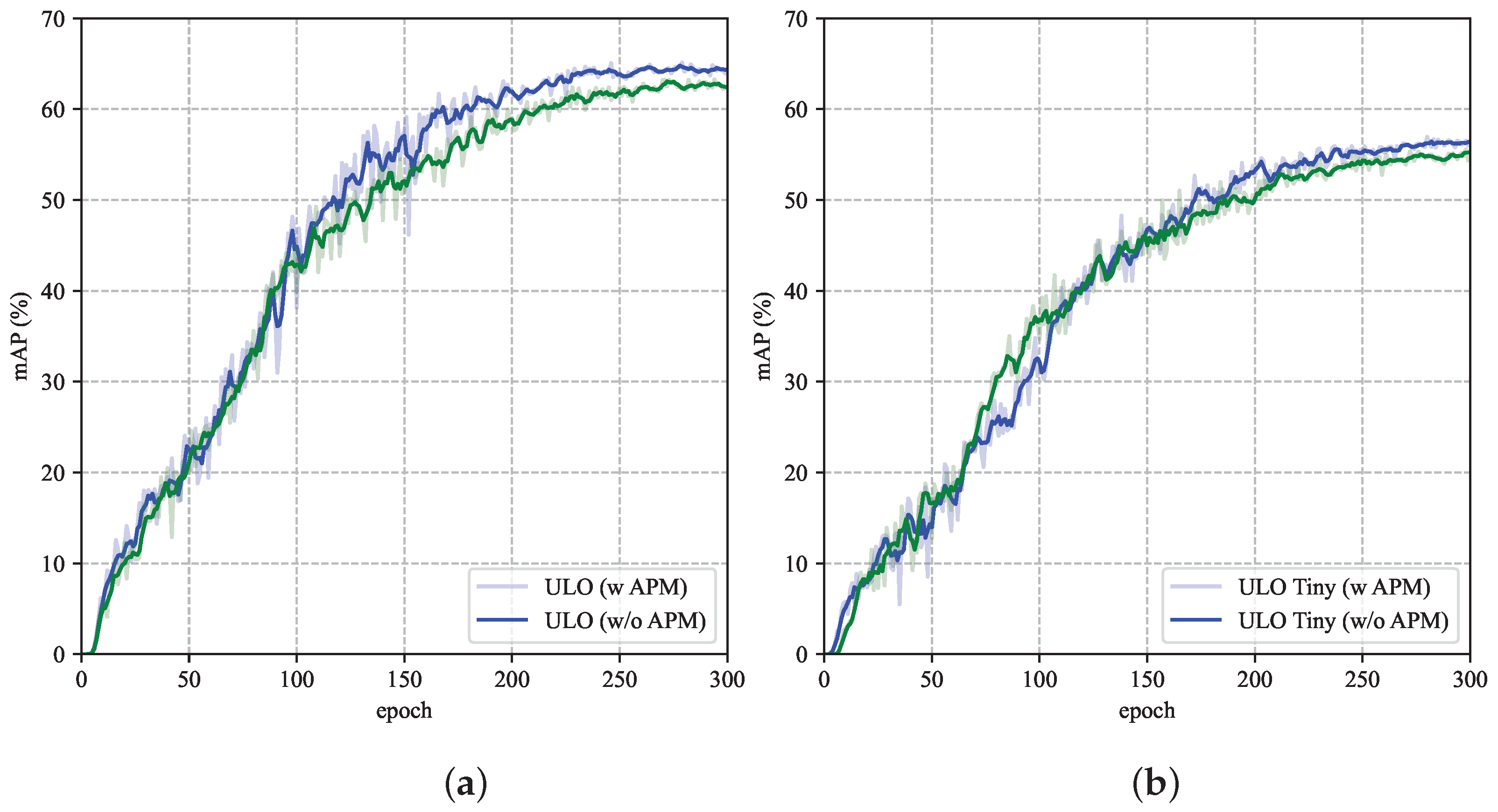
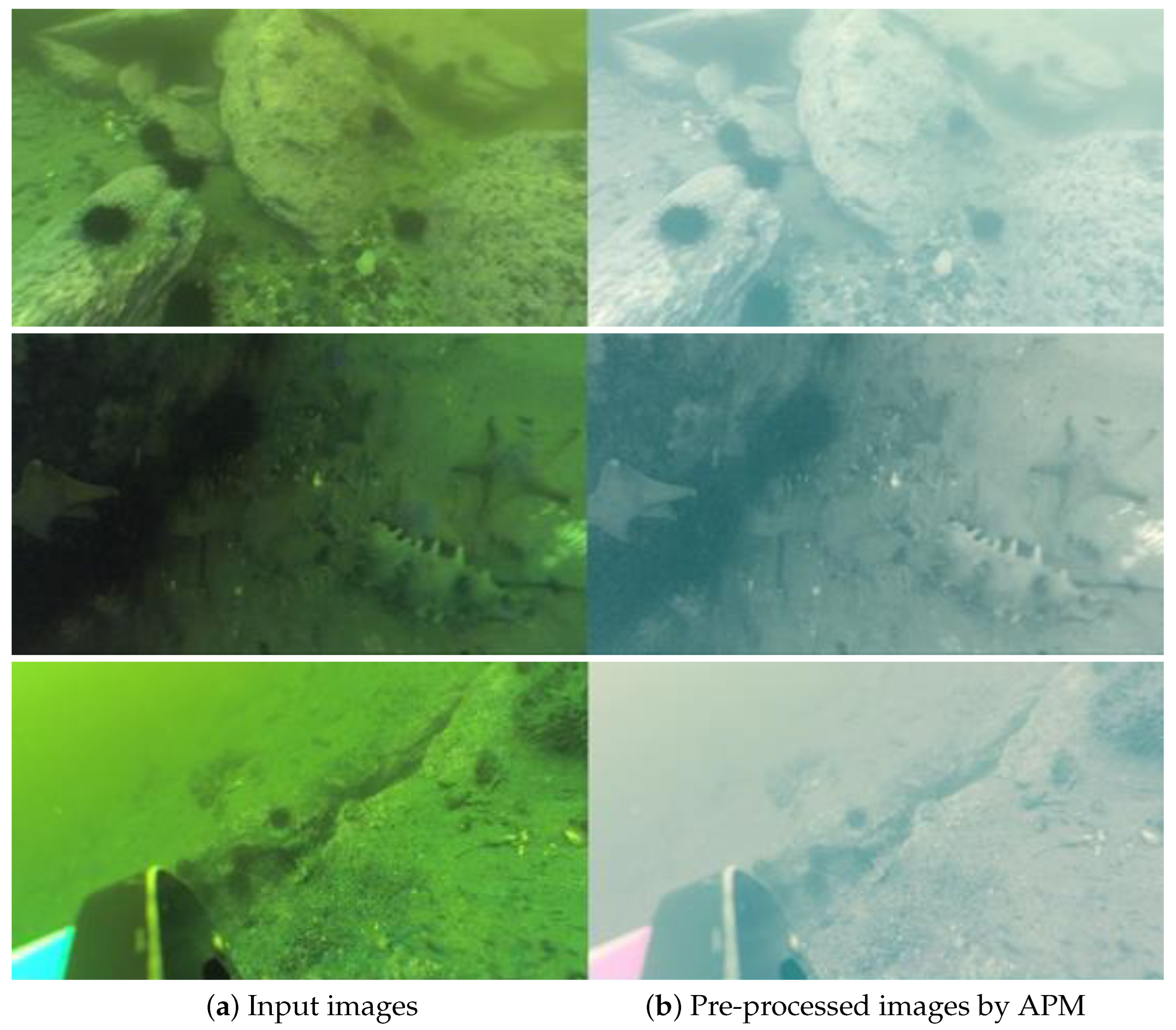
Recent studies on underwater object detection have progressed with the development of deep-learning methods. Generally, the model performance increase is accompanied by an increase in computation. However, a significant fraction of remotely operated underwater vehicles (ROVs) and autonomous underwater vehicles (AUVs) operate in environments with limited power and computation resources, making large models inapplicable. In this paper, we propose a fast and compact object detector—namely, the Underwater Light-weight Object detector (ULO)—for several marine products, such as scallops, starfish, echinus, and holothurians. ULO achieves comparable results to YOLO-v3 with less than 7% of its computation. ULO is modified based on the YOLO Nano architecture, and some modern architectures are used to optimize it, such as the Ghost module and decoupled head design in detection. We propose an adaptive pre-processing module for the image degradation problem that is common in underwater images. The module is lightweight and simple to use, and ablation experiments verify its effectiveness. Moreover, ULO Tiny, a lite version of ULO, is proposed to achieve further computation reduction. Furthermore, we optimize the annotations of the URPC2019 dataset, and the modified annotations are more accurate in localization and classification. The refined annotations are available to the public for research use.
Keywords: object detection; edge computing; adaptive pre-processing; underwater object detection; edge computing; adaptive pre-processing; underwater