Article

An Analytical Solution to the One-Dimensional Unsteady Temperature Field near the Newtonian Cooling Boundary


1
College of Civil Engineering, Hefei University of Technology, Hefei 230009, China
2
School of Resources and Environmental Engineering, Hefei University of Technology, Hefei 230009, China
3
School of Resources and Environmental Engineering, Anhui University, Hefei 230601, China
*
Author to whom correspondence should be addressed.
Axioms 2023, 12(1), 61; https://doi.org/10.3390/axioms12010061

Submission received: 8 December 2022 / Revised: 29 December 2022 / Accepted: 2 January 2023 / Published: 5 January 2023

Abstract

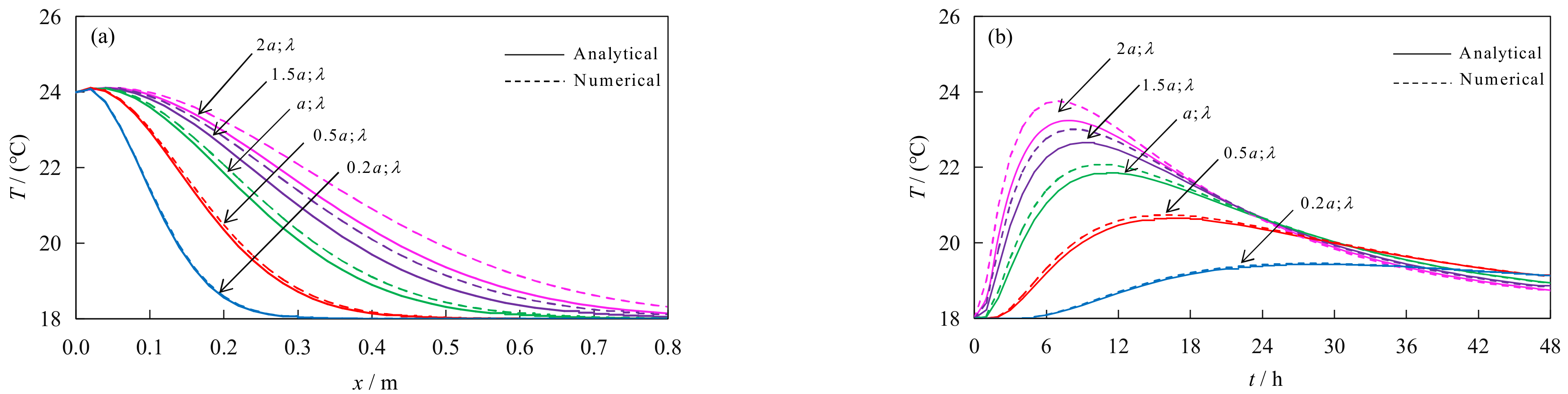
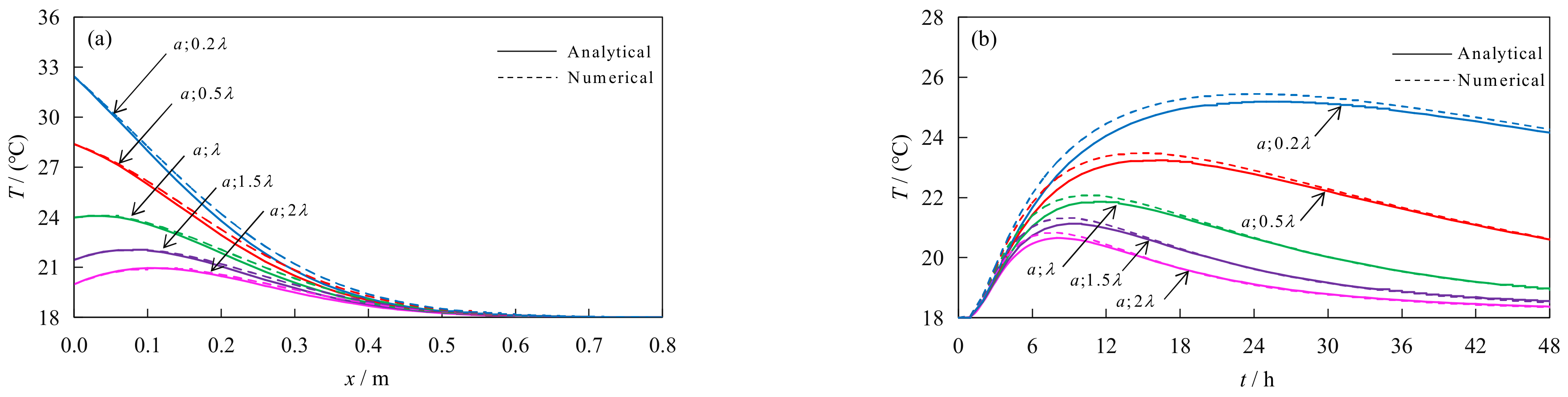
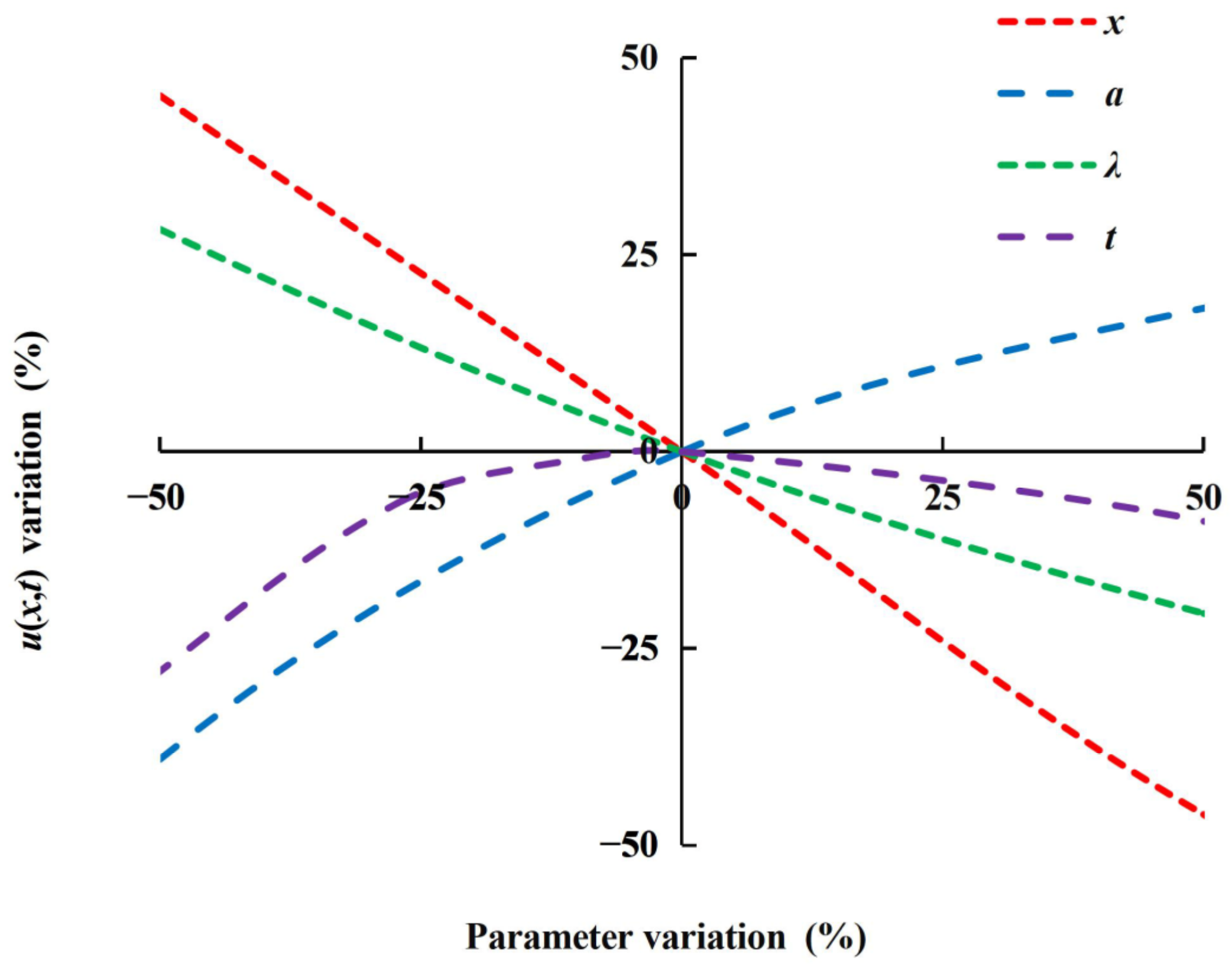
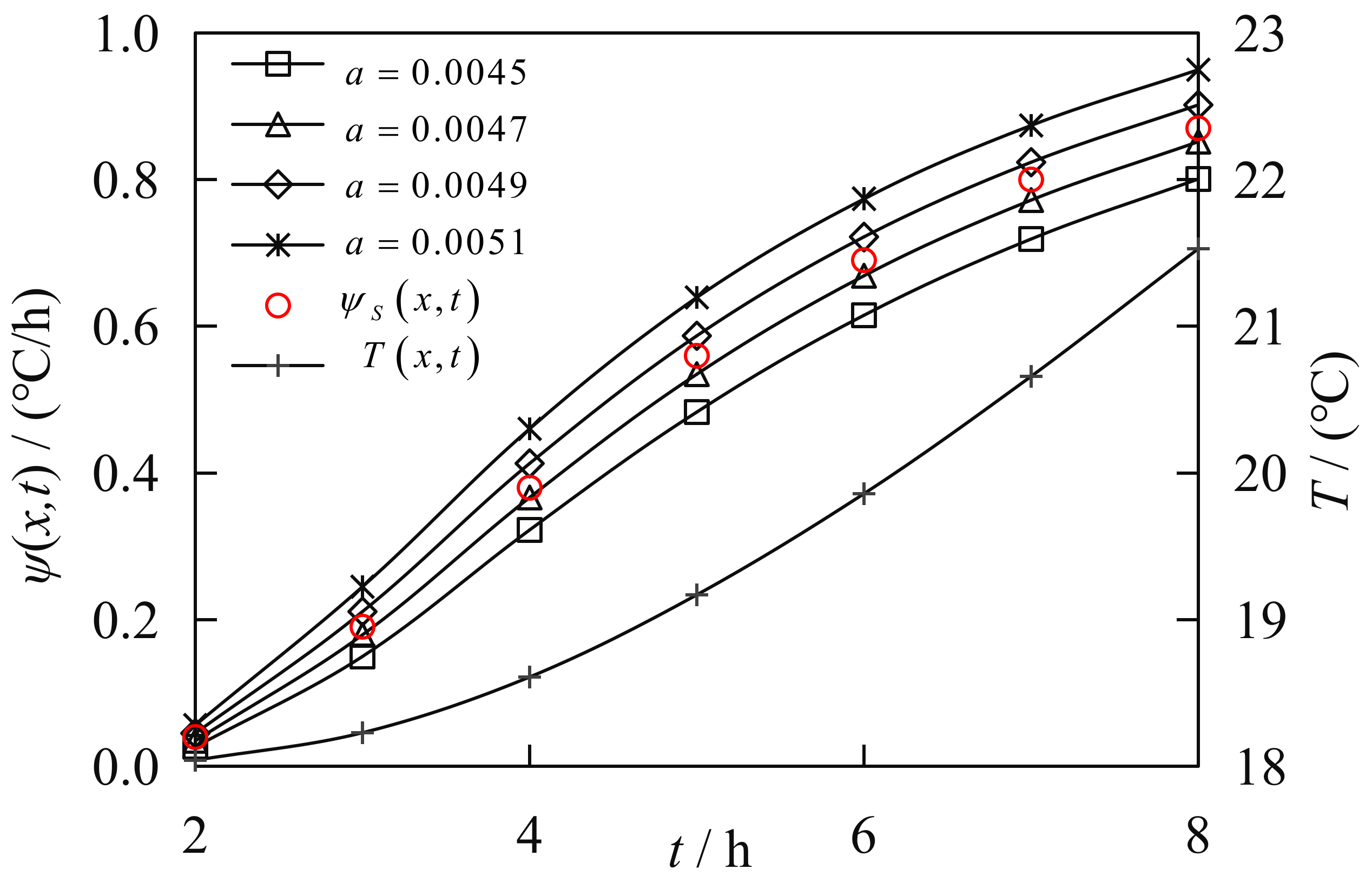
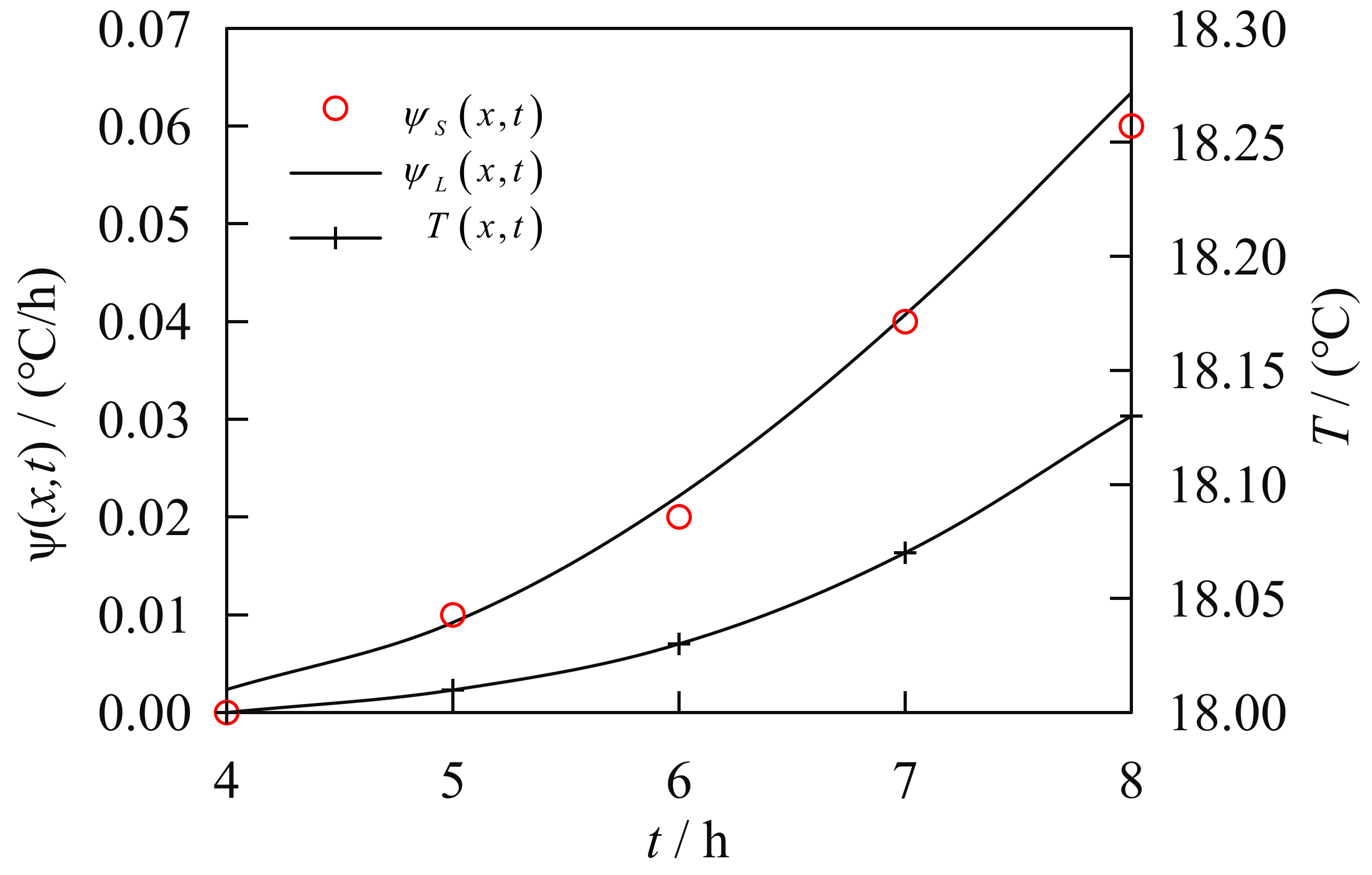
One-dimensional heat-conduction models in a semi-infinite domain, although forced convection obeys Newton’s law of cooling, are challenging to solve using standard integral transformation methods when the boundary condition φ(t) is an exponential decay function. In this study, a general theoretical solution was established using Fourier transform, but φ(t) was not directly present in the transformation processes, and φ(t) was substituted into the general theoretical solution to obtain the corresponding analytical solution. Additionally, the specific solutions and corresponding mathematical meanings were discussed. Moreover, numerical verification and sensitivity analysis were applied to the proposed model. The results showed that T(x,t) was directly proportional to the thermal diffusivity (a) and was inversely proportional to calculation distance (x) and the coefficient of cooling ratio (λ). The analytical solution was more sensitive to the thermal diffusivity than other factors, and the highest relative error between numerical and analytical solutions was roughly 4% under the condition of 2a and λ. Furthermore, T(x,t) grew nonlinearly as the material’s thermal diffusivity or cooling ratio coefficient changed. Finally, the analytical solution was applied for parameter calculation and verification in a case study, providing the reference basis for numerical calculation under specific complex boundaries, especially for the study of related problems in the fields of fluid dynamics and peridynamics with the heat-conduction equation.
Keywords: Newton’s law of cooling; heat conduction; Fourier transform; general theoretical solution; numerical verification; sensitivity analysis Newton’s law of cooling; heat conduction; Fourier transform; general theoretical solution; numerical verification; sensitivity analysis