
Article

TT-M Finite Element Algorithm for the Coupled Schrödinger–Boussinesq Equations
School of Mathematical Sciences, Inner Mongolia University, Hohhot 010021, China
*
Authors to whom correspondence should be addressed.
These authors contributed equally to this work.
Axioms 2022, 11(7), 314; https://doi.org/10.3390/axioms11070314

Submission received: 5 June 2022 / Revised: 23 June 2022 / Accepted: 24 June 2022 / Published: 28 June 2022
(This article belongs to the Special Issue Numerical Methods for Fractional and Integer PDEs)

Abstract

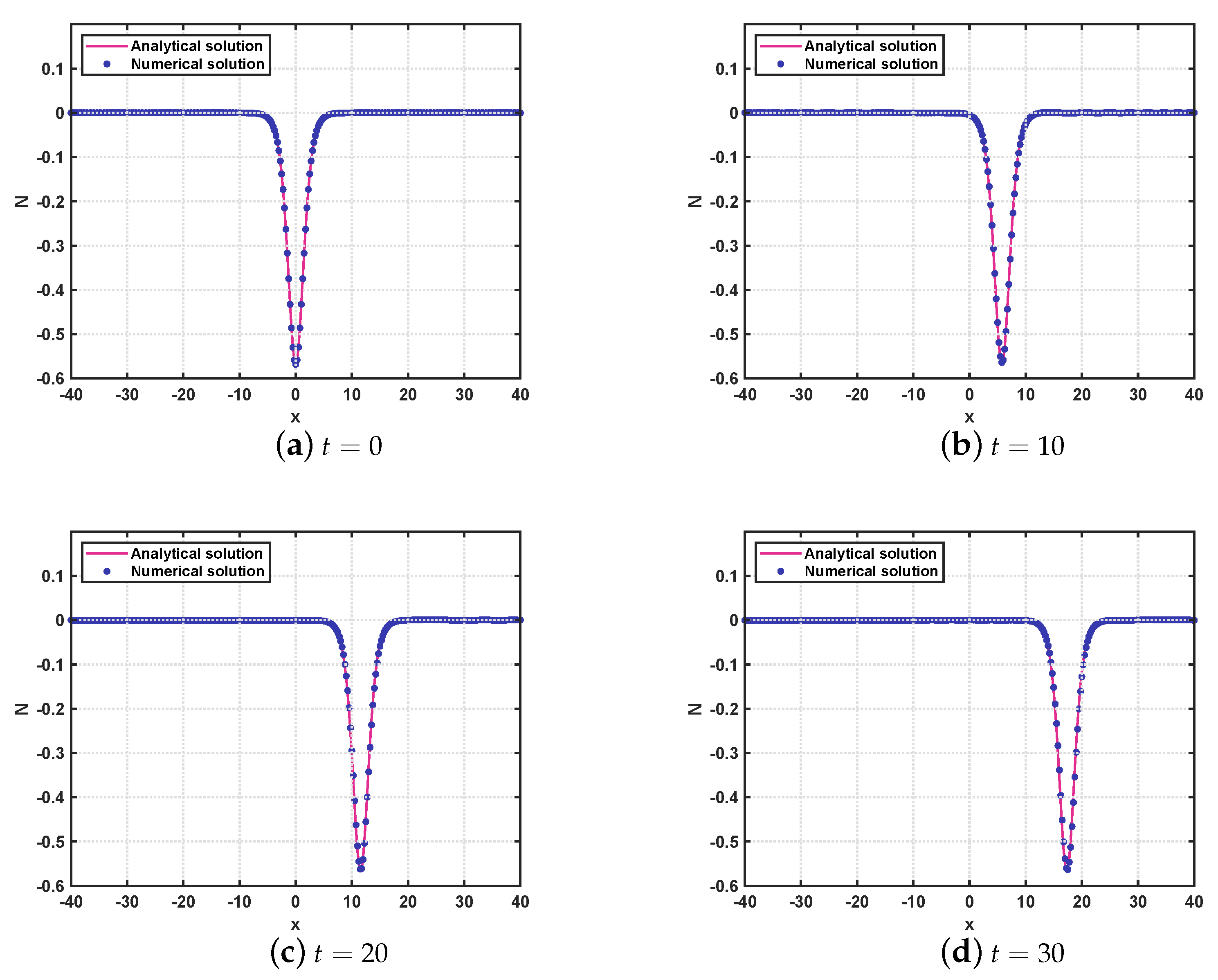
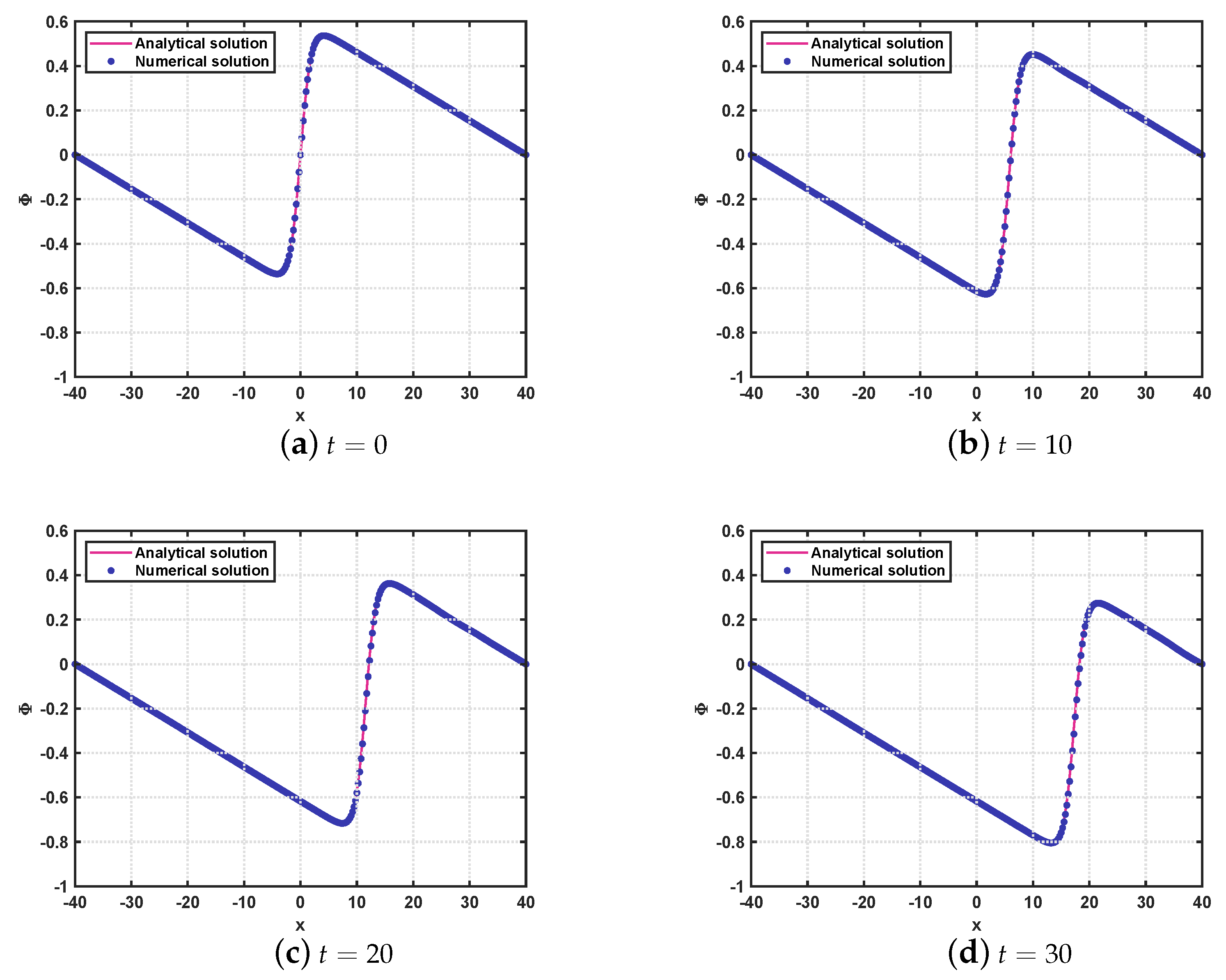
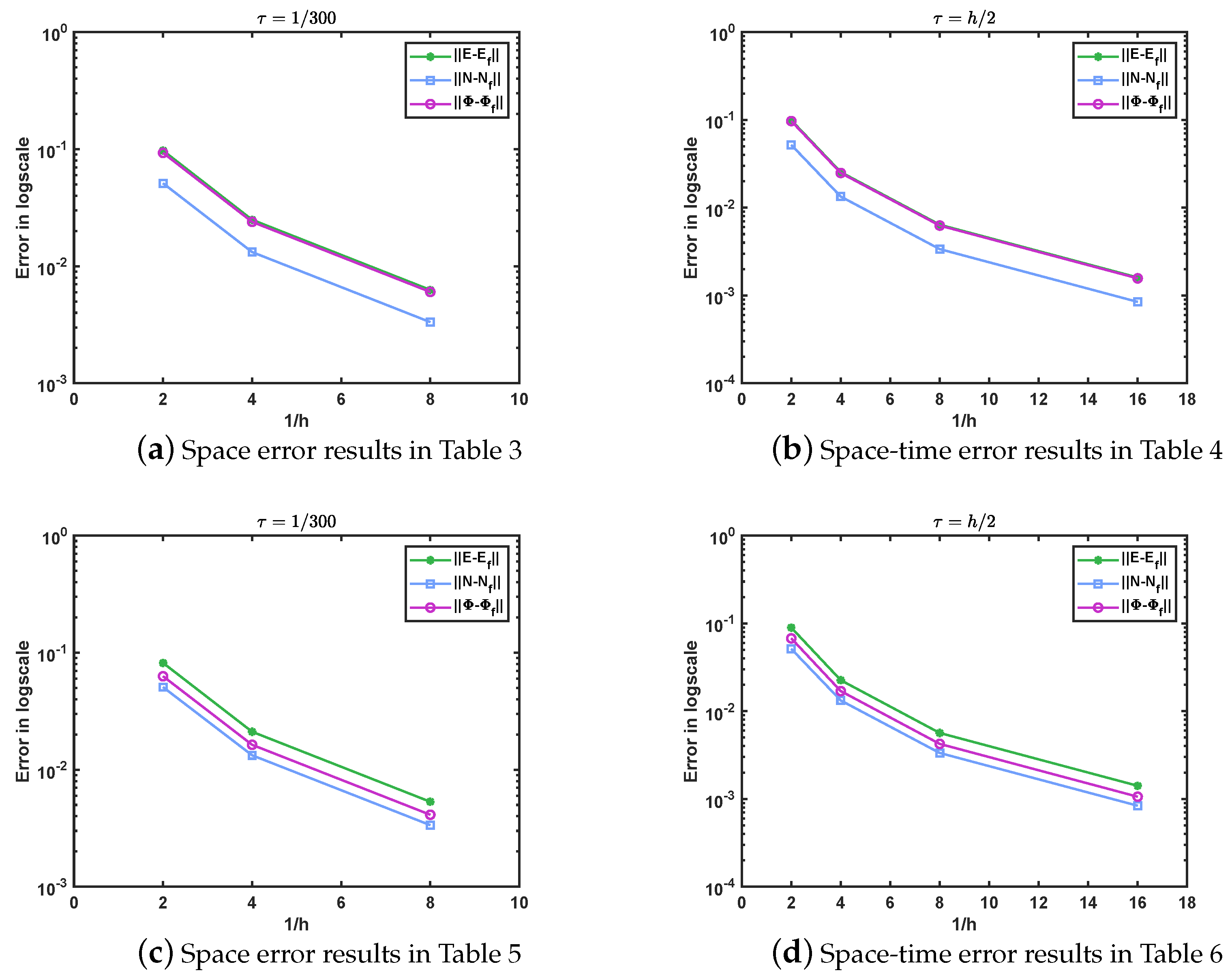
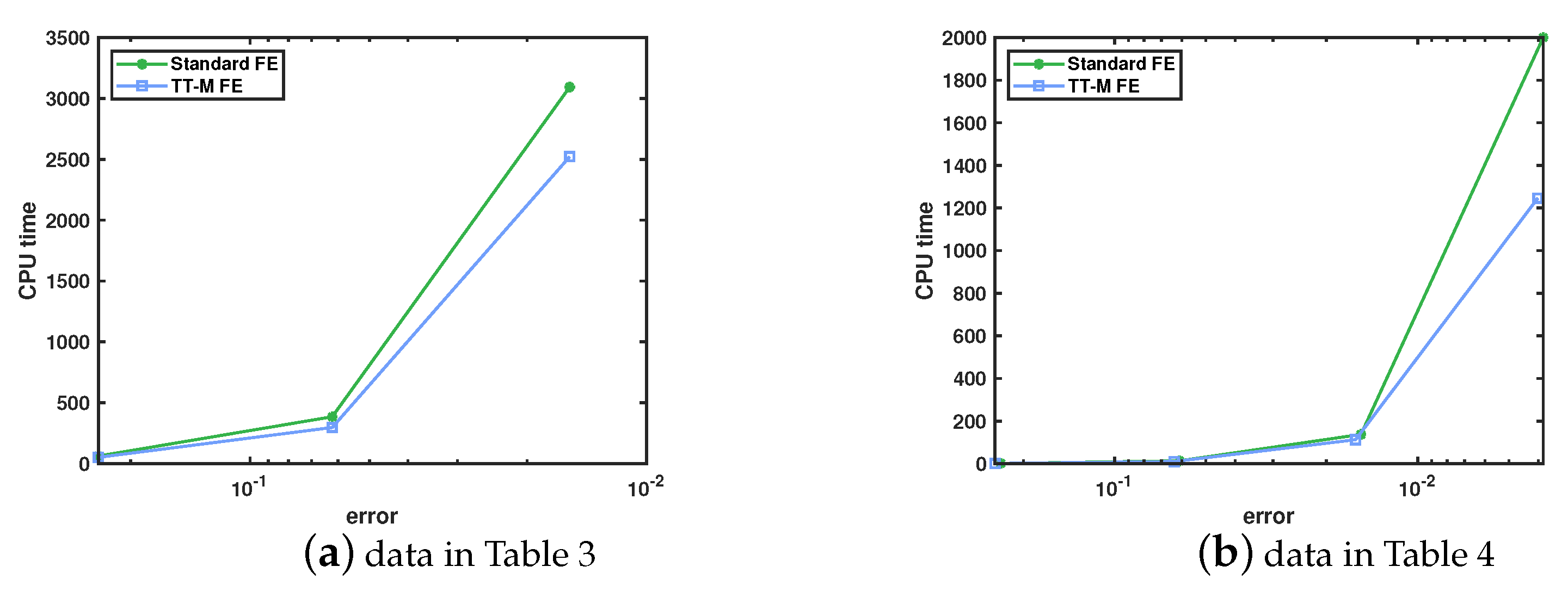
In this article, the coupled Schrödinger–Boussinesq equations are solved numerically using the finite element method combined with the time two-mesh (TT-M) fast algorithm. The spatial direction is discretized by the standard Galerkin finite element method, the temporal direction is approximated by the TT-M Crank–Nicolson scheme, and then the numerical scheme of TT-M finite element (FE) system is formulated. The method includes three main steps: for the first step, the nonlinear system is solved on the coarse time mesh; for the second step, by an interpolation formula, the numerical solutions at the fine time mesh point are computed based on the numerical solutions on the coarse mesh system; for the last step, the linearized temporal fine mesh system is constructed based on Taylor’s formula for two variables, and then the TT-M FE solutions can be obtained. Furthermore, theory analyses on the TT-M system including the stability and error estimations are conducted. Finally, a large number of numerical examples are provided to verify the accuracy of the algorithm, the correctness of theoretical results, and the computational efficiency with a comparison to the numerical results calculated by using the standard FE method.
Keywords: coupled Schrödinger–Boussinesq equations; finite element method; time two-mesh (TT-M) method coupled Schrödinger–Boussinesq equations; finite element method; time two-mesh (TT-M) method