Article

Survival Analysis of Type-II Lehmann Fréchet Parameters via Progressive Type-II Censoring with Applications


by
Ahmed Elshahhat
1,*,
Ritwik Bhattacharya
2 and
Heba S. Mohammed
3
1
Faculty of Technology and Development, Zagazig University, Zagazig 44519, Egypt
2
School of Engineering and Sciences, Tecnológico de Monterrey, Querétaro 76130, Mexico
3
Department of Mathematical Sciences, College of Science, Princess Nourah bint Abdulrahman University, P.O. Box 84428, Riyadh 11671, Saudi Arabia
*
Author to whom correspondence should be addressed.
Axioms 2022, 11(12), 700; https://doi.org/10.3390/axioms11120700

Submission received: 9 October 2022 / Revised: 17 November 2022 / Accepted: 3 December 2022 / Published: 7 December 2022
(This article belongs to the Special Issue Probability, Statistics and Estimation)

Abstract

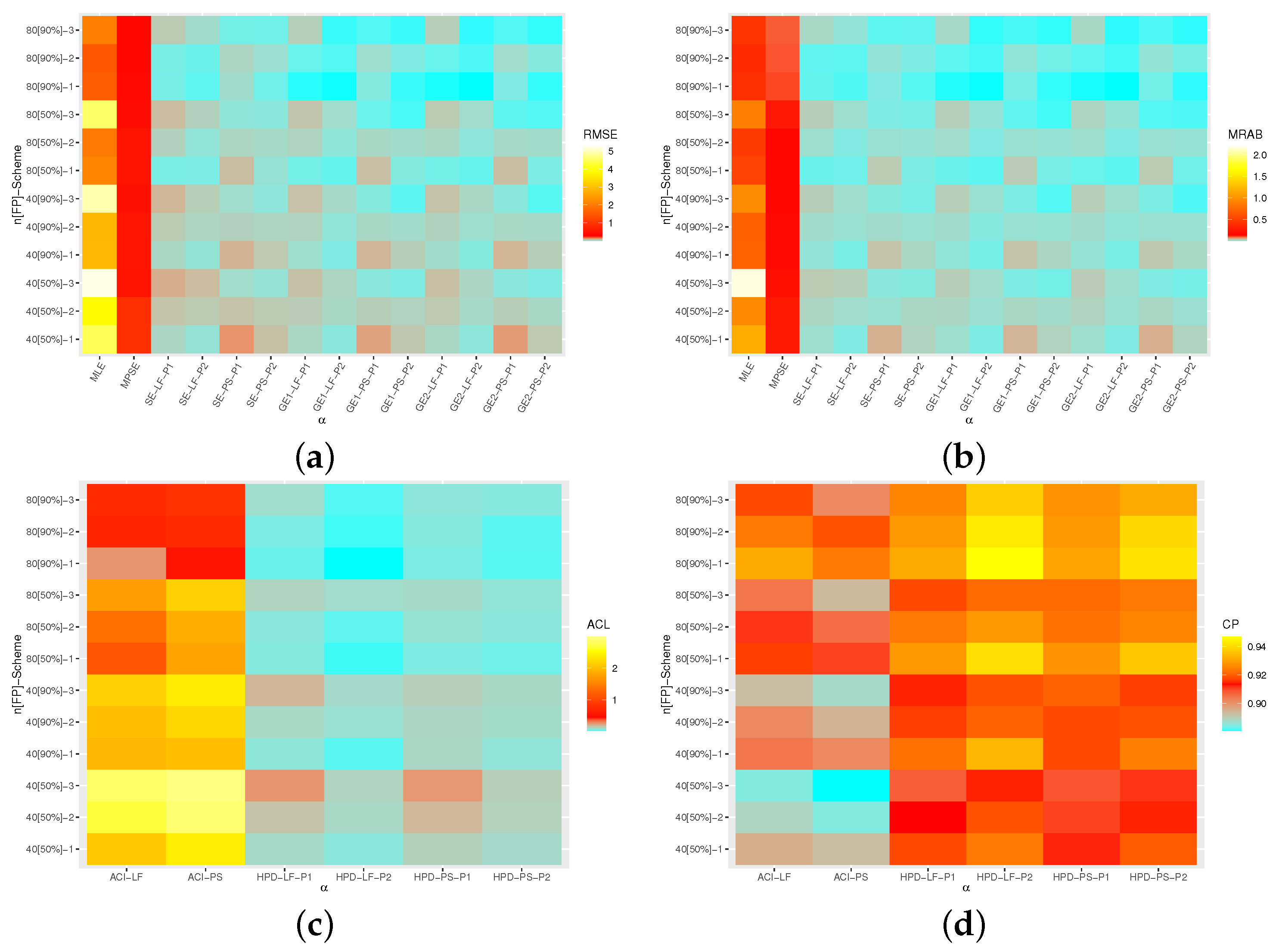
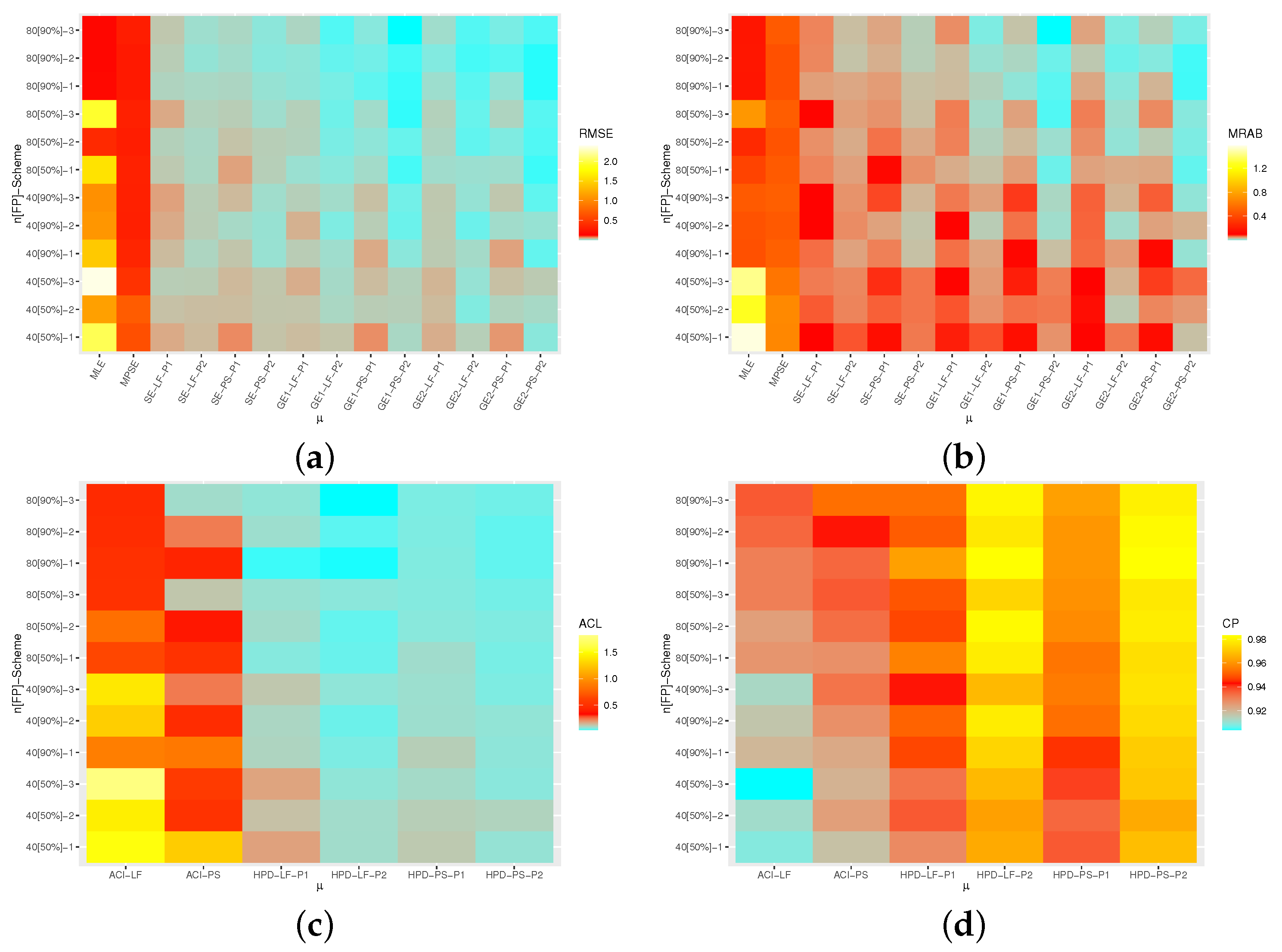
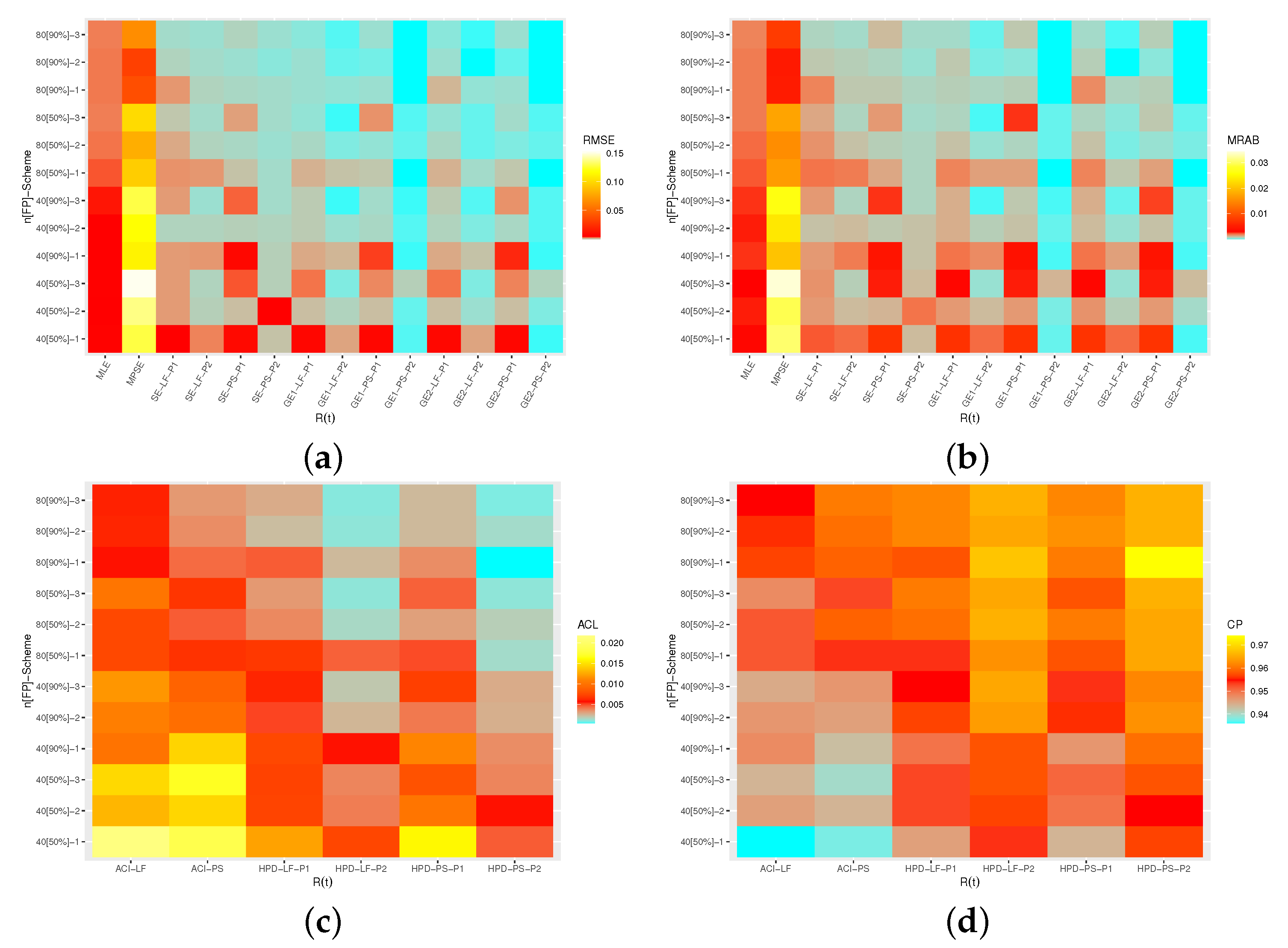
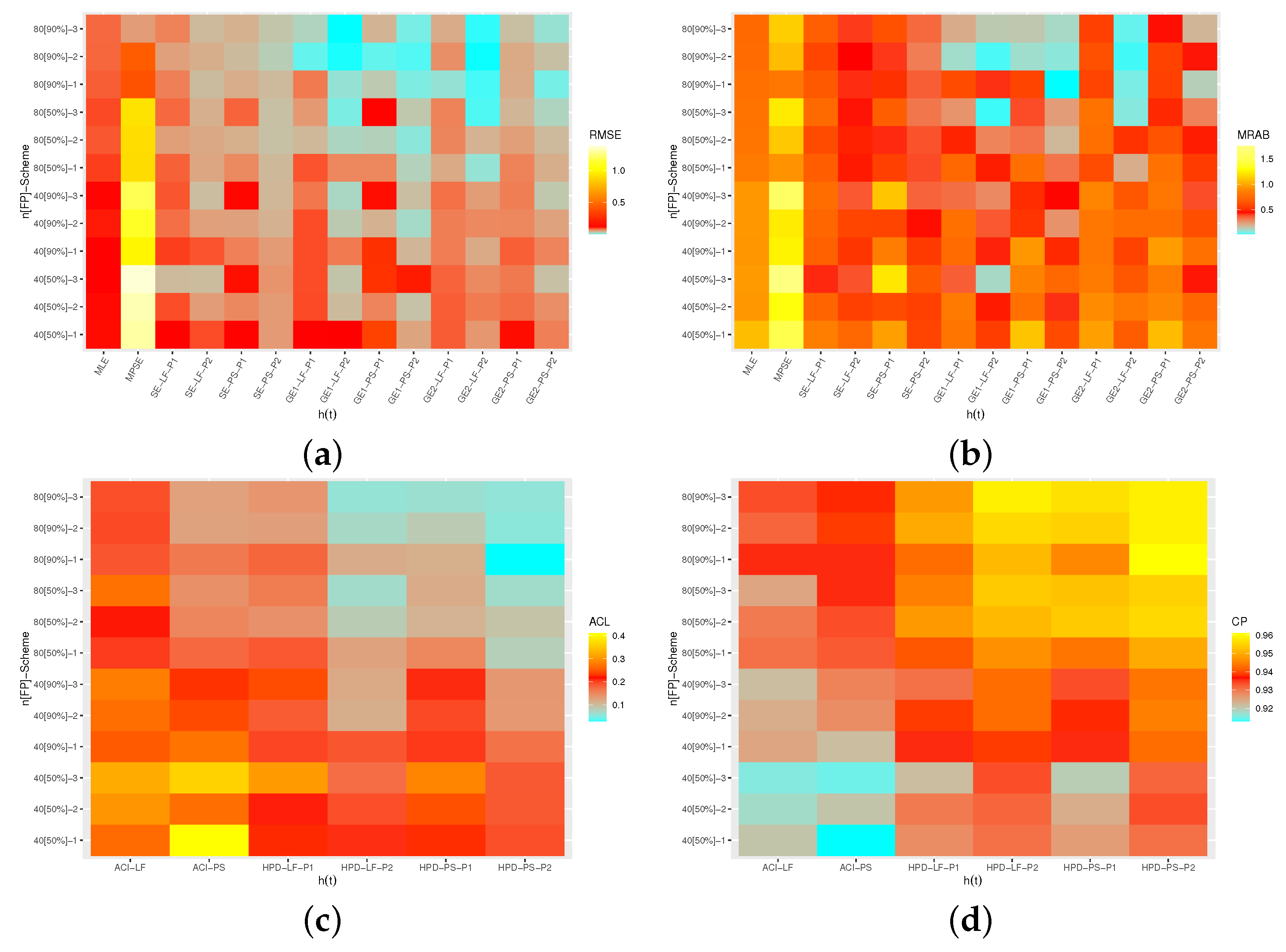
A new three-parameter Type-II Lehmann Fréchet distribution (LFD-TII), as a reparameterized version of the Kumaraswamy–Fréchet distribution, is considered. In this study, using progressive Type-II censoring, different estimation methods of the LFD-TII parameters and its lifetime functions, namely, reliability and hazard functions, are considered. In a frequentist setup, both the likelihood and product of the spacing estimators of the considered parameters are obtained utilizing the Newton–Raphson method. From the normality property of the proposed classical estimators, based on Fisher’s information and the delta method, the asymptotic confidence interval for any unknown parametric function is obtained. In the Bayesian paradigm via likelihood and spacings functions, using independent gamma conjugate priors, the Bayes estimators of the unknown parameters are obtained against the squared-error and general-entropy loss functions. Since the proposed posterior distributions cannot be explicitly expressed, by combining two Markov-chain Monte-Carlo techniques, namely, the Gibbs and Metropolis–Hastings algorithms, the Bayes point/interval estimates are approximated. To examine the performance of the proposed estimation methodologies, extensive simulation experiments are conducted. In addition, based on several criteria, the optimum censoring plan is proposed. In real-life practice, to show the usefulness of the proposed estimators, two applications based on two different data sets taken from the engineering and physics fields are analyzed.
Keywords: Lehmann–Fréchet distribution; progressive censoring; Gibbs sampler; Bayes and frequentist estimators; optimum censoring; Monte-Carlo simulation Lehmann–Fréchet distribution; progressive censoring; Gibbs sampler; Bayes and frequentist estimators; optimum censoring; Monte-Carlo simulation