
Geotechnical Behaviour of Bauxite Residue (Red Mud): A Review of Global Parameter Variability and Chemical–Mechanical Interactions
Abstract
1. Introduction
2. Methodology and Database Framework
2.1. Review Methodology
2.2. Database Summary
3. Bauxite Residue Composition, Alkalinity and Morphology
3.1. Mineralogy and Alkalinity
3.2. Morphology
4. A Global Database—Bauxite Residue Geotechnical Properties and Mechanical Behaviour
4.1. Characterisation
4.2. Mechanical Behaviour
4.2.1. Compressibility and Compaction
4.2.2. Shear Strength
5. Parameter Variability—Potential Causes and Chemical–Mechanical Relationship
5.1. Thermal Treatments
5.2. Salinity and pH
6. Gaps and Research Directions
Implications and Priorities
7. Conclusions
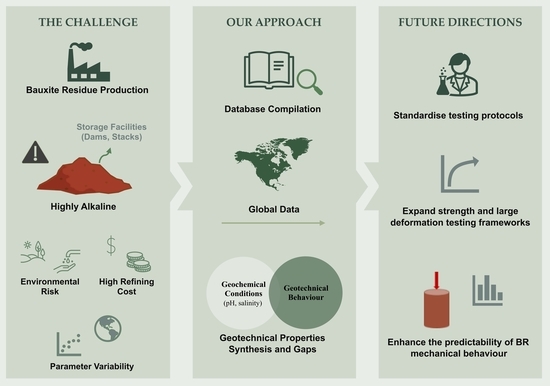
- Information regarding the source of the residue and the conditions under which it was processed prior to deposition is important. Variations in ore composition and processing generally result in different initial matrices, which in turn affect the residue’s composition and physical and geotechnical properties.
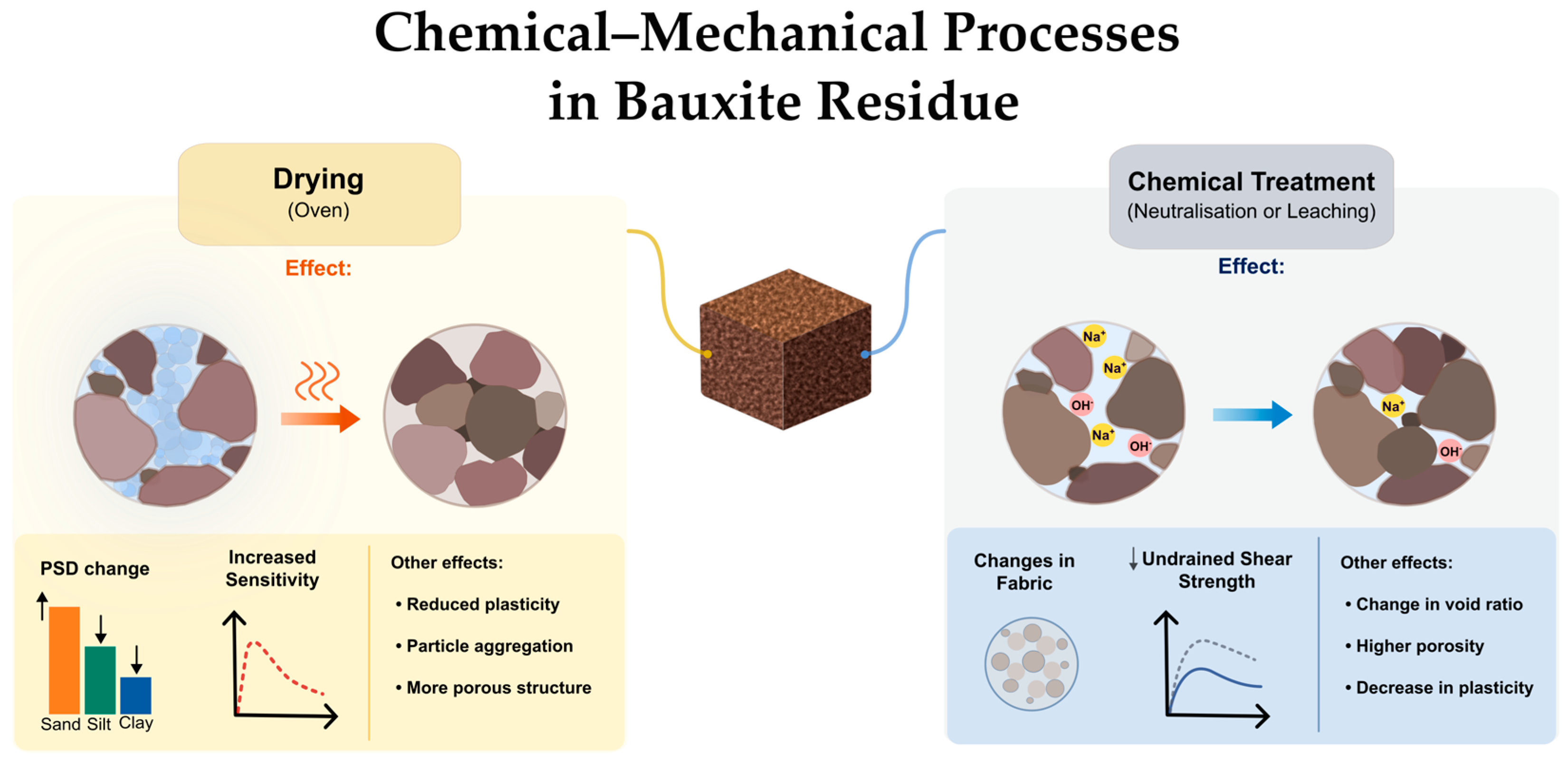
- The general challenge in determining reliable geotechnical parameters is replicating field conditions. Standard soil mechanics practices, such as oven drying and the use of non-process water, are critical taboos. These pre-test treatments can modify the residue’s chemistry and structure, leading to severe mischaracterisation that can culminate in structural collapse or catastrophic environmental accidents. Additionally, reliable test protocols must account for the presence and concentration of salts within the pore fluid to correct geotechnical parameters.
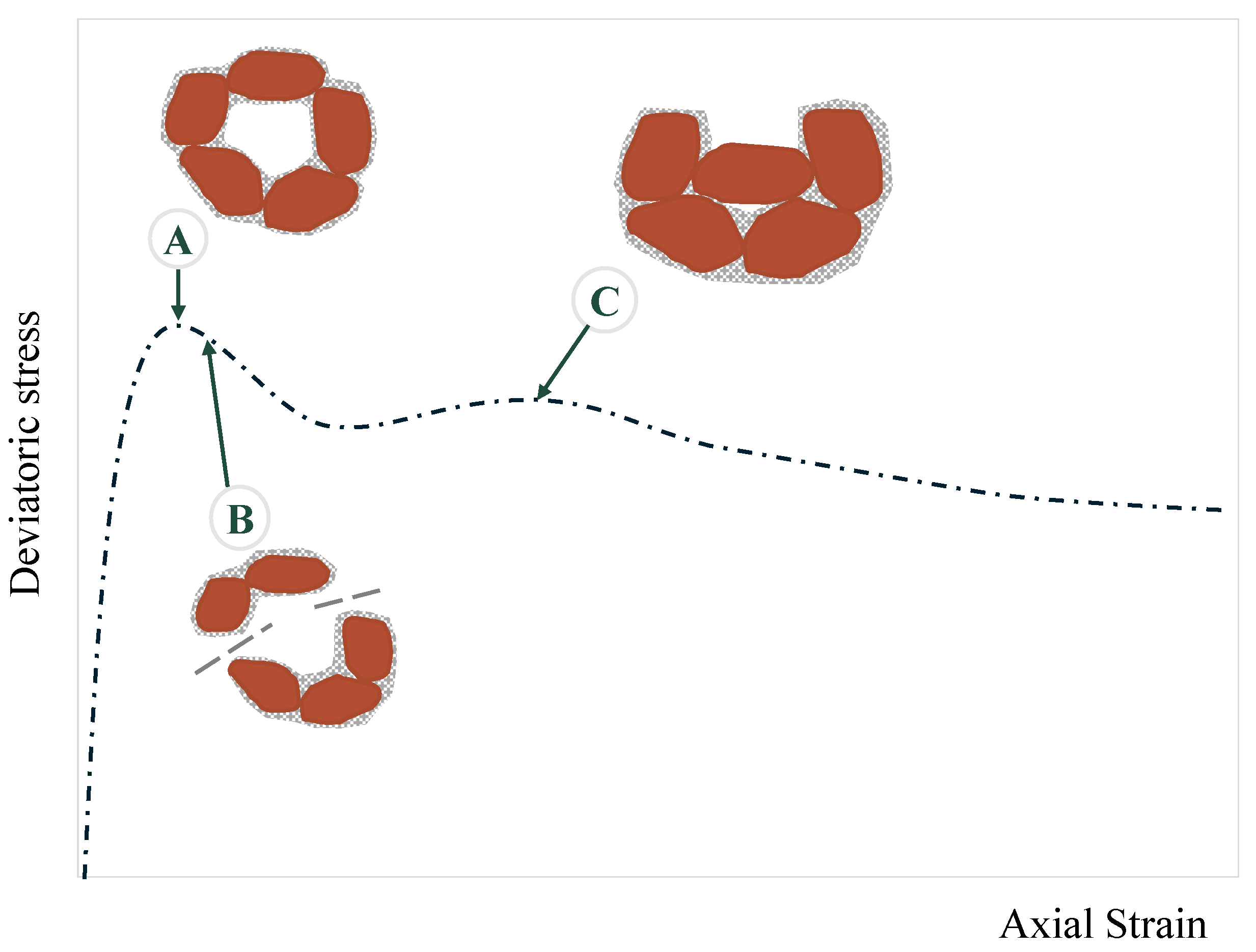
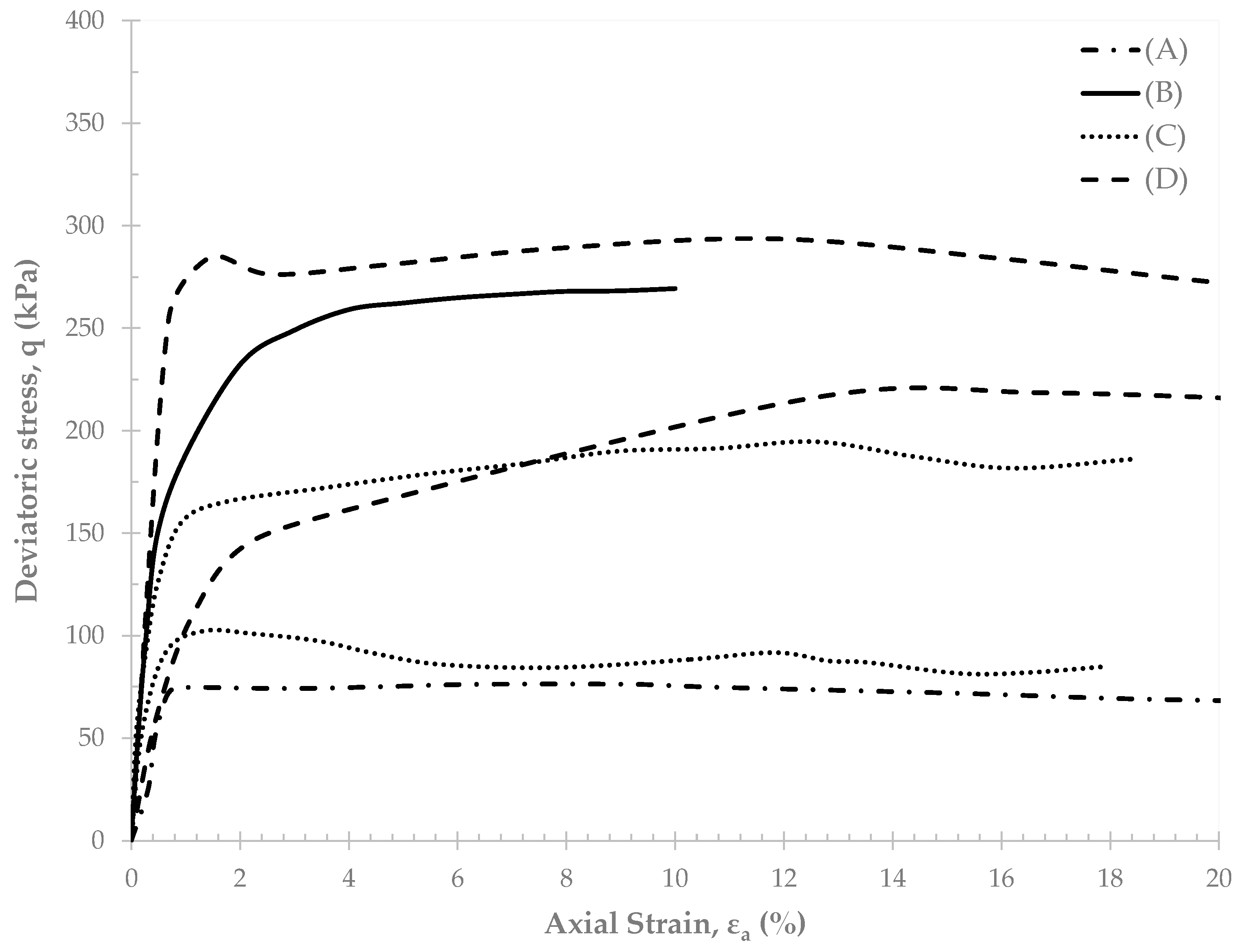
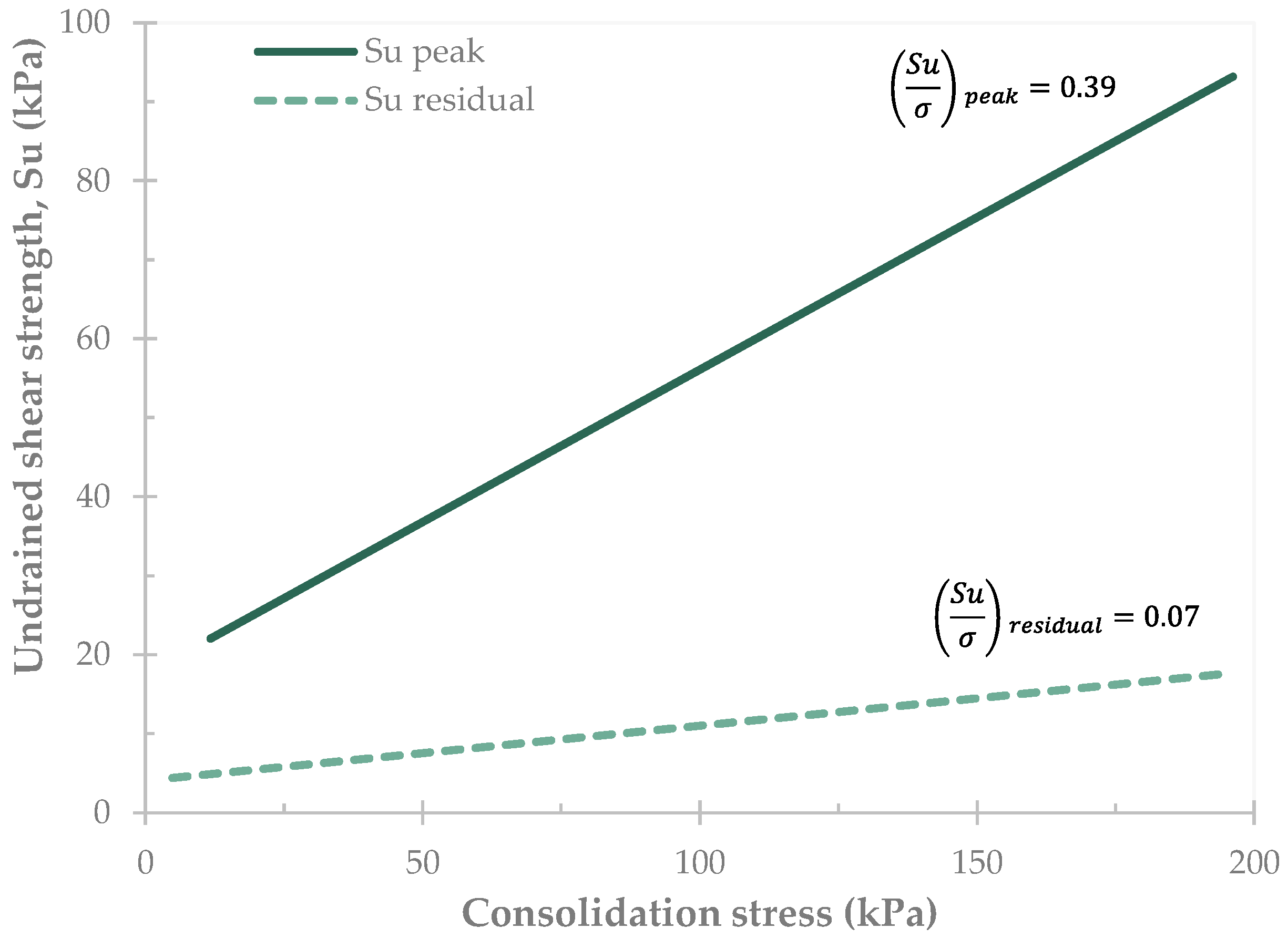
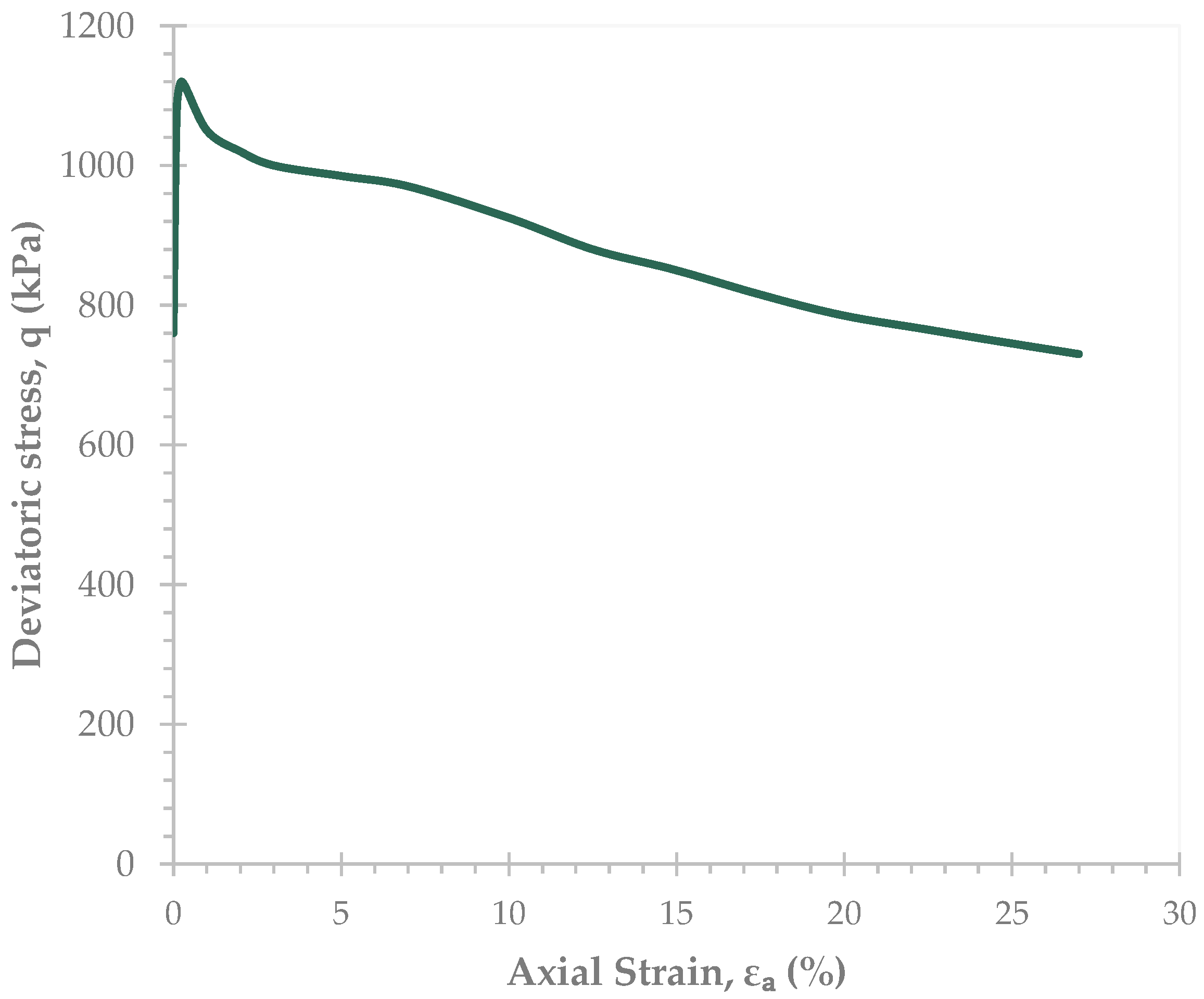
- Predicting long-term and operational stability requires looking beyond peak strength and evaluating undrained shear strength at very large strains, as the material exhibits gradual post-peak strength loss that can reach critically low residual values.
- Tracking the chemical evolution of the residue under weathering scenarios is important for closure and post-closure design. Practitioners must account for the effects of weathering and leaching in older deposits, as these processes may progressively lower pH and salinity, affecting structural bonds and altering long-term aggregate stability compared to freshly deposited slurry.
Supplementary Materials
Funding
Data Availability Statement
Acknowledgments
Conflicts of Interest
References
- International Aluminium Institute. Bauxite Residue Management: Best Practice; International Aluminium Institute: London, UK, 2015. [Google Scholar]
- Borra, C.R.; Blanpain, B.; Pontikes, Y.; Binnemans, K.; Van Gerven, T. Recovery of Rare Earths and Other Valuable Metals From Bauxite Residue (Red Mud): A Review. J. Sustain. Metall. 2016, 2, 365–386. [Google Scholar] [CrossRef] [Scilit]
- International Aluminium Institute. Sustainable Bauxite Residue Management Guidance; International Aluminium Institute: London, UK, 2022. [Google Scholar]
- Patel, S.; Pal, B.K. Current Status of an Industrial Waste: Red Mud an Overview. Int. J. Latest Technol. Eng. Manag. Appl. Sci. 2015, 4, 1–16. [Google Scholar]
- Ram Kumar, B.A.V.; Ramakrishna, G. Performance Evaluation of Red Mud as a Construction Material—A Review. Mater. Today Proc. 2023; in press. [CrossRef] [Scilit]
- Alam, S.; Das, S.K.; Rao, B.H. Characterization of Coarse Fraction of Red Mud as a Civil Engineering Construction Material. J. Clean. Prod. 2017, 168, 679–691. [Google Scholar] [CrossRef] [Scilit]
- Archambo, M.; Kawatra, S.K. Red Mud: Fundamentals and New Avenues for Utilization. Miner. Process. Extr. Metall. Rev. 2021, 42, 427–450. [Google Scholar] [CrossRef] [Scilit]
- Evans, K. The History, Challenges, and New Developments in the Management and Use of Bauxite Residue. J. Sustain. Metall. 2016, 2, 316–331. [Google Scholar] [CrossRef] [Scilit]
- Ghalehnovi, M.; Roshan, N.; Hakak, E.; Shamsabadi, E.A.; De Brito, J. Effect of Red Mud (Bauxite Residue) as Cement Replacement on the Properties of Self-Compacting Concrete Incorporating Various Fillers. J. Clean. Prod. 2019, 240, 118213. [Google Scholar] [CrossRef] [Scilit]
- Kusumanjali, G.; Tejas, S.; Chatterjee, A.; Pasla, D. Utilization of Bauxite Residue as Fine Aggregate for the Development of Structural Concrete: An Approach towards Sustainable Construction Materials. Case Stud. Constr. Mater. 2025, 22, e04348. [Google Scholar] [CrossRef] [Scilit]
- Liu, W.; Yang, J.; Xiao, B. Review on Treatment and Utilization of Bauxite Residues in China. Int. J. Miner. Process. 2009, 93, 220–231. [Google Scholar] [CrossRef] [Scilit]
- Mi, H.; Yi, L.; Wu, Q.; Xia, J.; Zhang, B. A Review of Comprehensive Utilization of Red Mud. Waste Manag. Res. 2022, 40, 1594–1607. [Google Scholar] [CrossRef] [Scilit] [PubMed]
- Pontikes, Y.; Angelopoulos, G.N. Bauxite Residue in Cement and Cementitious Applications: Current Status and a Possible Way Forward. Resour. Conserv. Recycl. 2013, 73, 53–63. [Google Scholar] [CrossRef] [Scilit]
- Samal, S.; Ray, A.K.; Bandopadhyay, A. Proposal for Resources, Utilization and Processes of Red Mud in India—A Review. Int. J. Miner. Process. 2013, 118, 43–55. [Google Scholar] [CrossRef] [Scilit]
- Wang, S.; Jin, H.; Deng, Y.; Xiao, Y. Comprehensive Utilization Status of Red Mud in China: A Critical Review. J. Clean. Prod. 2021, 289, 125136. [Google Scholar] [CrossRef] [Scilit]
- Kumar Nigam, S.; Sinha, A.K.; Madan, S.K. Characterisation of Stabilised Red Mud Waste Material for Road Infrastructure. Mater. Today Proc. 2023, 93, 41–46. [Google Scholar] [CrossRef] [Scilit]
- Zhang, J.; Yao, Z.; Wang, K.; Wang, F.; Jiang, H.; Liang, M.; Wei, J.; Airey, G. Sustainable Utilization of Bauxite Residue (Red Mud) as a Road Material in Pavements: A Critical Review. Constr. Build. Mater. 2021, 270, 121419. [Google Scholar] [CrossRef] [Scilit]
- Chen, Y.; Zhang, T.; Lv, G.; Chao, X.; Yang, X. Extraction and Utilization of Valuable Elements from Bauxite and Bauxite Residue: A Review. Bull. Environ. Contam. Toxicol. 2022, 109, 228–237. [Google Scholar] [CrossRef] [Scilit] [PubMed]
- Liu, X.; Han, Y.; He, F.; Gao, P.; Yuan, S. Characteristic, Hazard and Iron Recovery Technology of Red Mud—A Critical Review. J. Hazard. Mater. 2021, 420, 126542. [Google Scholar] [CrossRef] [Scilit] [PubMed]
- Tanvar, H.; Mishra, B. Comprehensive Utilization of Bauxite Residue for Simultaneous Recovery of Base Metals and Critical Elements. Sustain. Mater. Technol. 2022, 33, e00466. [Google Scholar] [CrossRef] [Scilit]
- Çimen, Ö.; Günaydın, H.İ. Impact of Distilled Water Dealkalization on the Geotechnical Behavior of Red Mud. PLoS ONE 2025, 20, e0334002. [Google Scholar] [CrossRef] [Scilit] [PubMed]
- Han, Y.-S.; Ji, S.; Lee, P.-K.; Oh, C. Bauxite Residue Neutralization with Simultaneous Mineral Carbonation Using Atmospheric CO2. J. Hazard. Mater. 2017, 326, 87–93. [Google Scholar] [CrossRef] [Scilit] [PubMed]
- Johnston, M.; Clark, M.W.; McMahon, P.; Ward, N. Alkalinity Conversion of Bauxite Refinery Residues by Neutralization. J. Hazard. Mater. 2010, 182, 710–715. [Google Scholar] [CrossRef] [Scilit] [PubMed]
- Khaitan, S.; Dzombak, D.A.; Lowry, G.V. Mechanisms of Neutralization of Bauxite Residue by Carbon Dioxide. J. Environ. Eng. 2009, 135, 433–438. [Google Scholar] [CrossRef] [Scilit]
- Lyu, F.; Hu, Y.; Wang, L.; Sun, W. Dealkalization Processes of Bauxite Residue: A Comprehensive Review. J. Hazard. Mater. 2021, 403, 123671. [Google Scholar] [CrossRef] [Scilit] [PubMed]
- Menzies, N.W.; Fulton, I.M.; Morrell, W.J. Seawater Neutralization of Alkaline Bauxite Residue and Implications for Revegetation. J. Environ. Qual. 2004, 33, 1877–1884. [Google Scholar] [CrossRef] [Scilit] [PubMed]
- Panda, I.; Jain, S.; Das, S.K.; Jayabalan, R. Characterization of Red Mud as a Structural Fill and Embankment Material Using Bioremediation. Int. Biodeterior. Biodegrad. 2017, 119, 368–376. [Google Scholar] [CrossRef] [Scilit]
- Rai, S.; Wasewar, K.L.; Mukhopadhyay, J.; Yoo, C.K.; Uslu, H. Neutralization and Utilization of Red Mud for Its Better Waste Management. World 2012, 6, 5410. [Google Scholar]
- Silva, P.M.P.; Do Carmo, A.L.V.; Holanda, R.B.; Gomes, F.G.; Nogueira, E.; Da Costa, R.V.; De Melo, C.C.A.; Lucheta, A.R.; Montini, M. Brazilian Bauxite Residue Physical–Chemical Characterization and Acidic Neutralization Potential. In Light Metals 2020; Tomsett, A., Ed.; The Minerals, Metals & Materials Series; Springer International Publishing: Cham, Switzerland, 2020; pp. 115–123. [Google Scholar]
- Zeng, H.; Lyu, F.; Hu, G.; Tang, H.; Wang, L.; Sun, W.; Hu, Y.; Liu, R. Dealkalization of Bauxite Residue Through Acid Neutralization and Its Revegetation Potential. JOM 2020, 72, 319–325. [Google Scholar] [CrossRef] [Scilit]
- Power, G.; Gräfe, M.; Klauber, C. Bauxite Residue Issues: I. Current Management, Disposal and Storage Practices. Hydrometallurgy 2011, 108, 33–45. [Google Scholar] [CrossRef] [Scilit]
- Ruyters, S.; Mertens, J.; Vassilieva, E.; Dehandschutter, B.; Poffijn, A.; Smolders, E. The Red Mud Accident in Ajka (Hungary): Plant Toxicity and Trace Metal Bioavailability in Red Mud Contaminated Soil. Environ. Sci. Technol. 2011, 45, 1616–1622. [Google Scholar] [CrossRef] [Scilit] [PubMed]
- Turi, D.; Pusztai, J.; Nyari, I. Causes and Circumstances of Red Mud Reservoir Dam Failure In 2010 at MAL Zrt Factory Site in Ajka, Hungary. In Proceedings of the International Conference on Case Histories in Geotechnical Engineering; Missouri University of Science and Technology: Rolla, MO, USA, 2013; Volume 10. [Google Scholar]
- Reddy, P.S.; Reddy, N.G.; Serjun, V.Z.; Mohanty, B.; Das, S.K.; Reddy, K.R.; Rao, B.H. Properties and Assessment of Applications of Red Mud (Bauxite Residue): Current Status and Research Needs. Waste Biomass Valor 2021, 12, 1185–1217. [Google Scholar] [CrossRef] [Scilit]
- Reid, D.; Fourie, A. Back Analyses of the August 2016 Luoyang Red Mud Tailings Facility Failure. In Proceedings of the Tailings and Mine Waste (TMW 2017) Conference, Banff, AB, Canada, 5–8 November 2017. [Google Scholar]
- Petley, D. A Mine Waste Storage Facility at Lanjigarh in Odisha, India, After the Failure. Posted in the Landslide Blog A Planet Labs Satellite Image of the Failure of the Mine Waste Storage Facility at Lanjigarh in India. EOS—The Landslide Blog 2024. Available online: https://eos.org/thelandslideblog/lanjigarh-1 (accessed on 17 February 2025).
- Jiang, J.; Su, J.; Ou, X.; Weng, M.; Lü, X. Study on the Physical and Mechanical Properties of Bauxite Residue by Laboratory and Field In-Situ Tests. Environ. Earth Sci. 2021, 80, 377. [Google Scholar] [CrossRef] [Scilit]
- Mmbando, E.; Fourie, A.; Reid, D.; Gao, J.; Nasharuddin, R.; Fridjonsson, E. Effects of Structure and Pore-Water Chemistry on Critical State Behavior of Bauxite Residue. Can. Geotech. J. 2024, 62, 1–17. [Google Scholar] [CrossRef] [Scilit]
- Mmbando, E.; Fourie, A.; Reid, D.; Gao, J. Effect of Compressibility on the Stress State of Wet and Dry Bauxite Residue. Can. Geotech. J. 2024, 62, 1–13. [Google Scholar] [CrossRef] [Scilit]
- Newson, T.; Dyer, T.; Adam, C.; Sharp, S. Effect of Structure on the Geotechnical Properties of Bauxite Residue. J. Geotech. Geoenviron. Eng. 2006, 132, 143–151. [Google Scholar] [CrossRef] [Scilit]
- Somogyi, F.; Gray, D.H. Engineering Properties Affecting Disposal of Red Muds. In Geotechnical Practice for Disposal of Solid Waste Materials; ASCE: New York, NY, USA, 1977; pp. 1–22. [Google Scholar]
- Adamson, A.N.; Bloore, E.J.; Carr, A.R. Basic Principles of Bayer Process Design. In Essential Readings in Light Metals: Alumina and Bauxite; Springer: Cham, Switzerland, 2016; Volume 1, pp. 100–117. [Google Scholar]
- Hose, H.R. Bauxite Mineralogy. In Essential Readings in Light Metals: Alumina and Bauxite; Springer International Publishing: Cham, Switzerland, 2016; Volume 1, pp. 21–29. [Google Scholar]
- Solymár, K.; Mádai, F.; Papanastassiou, D. Effect of Bauxite Microstructure on Beneficiation and Processing. In Essential Readings in Light Metals: Alumina and Bauxite; Springer: Cham, Switzerland, 2016; Volume 1, pp. 37–42. [Google Scholar]
- Gräfe, M.; Power, G.; Klauber, C. Bauxite Residue Issues: III. Alkalinity and Associated Chemistry. Hydrometallurgy 2011, 108, 60–79. [Google Scholar] [CrossRef] [Scilit]
- Li, L.Y.; Rutherford, G.K. Effect of Bauxite Properties on the Settling of Red Mud. Int. J. Miner. Process. 1996, 48, 169–182. [Google Scholar] [CrossRef] [Scilit]
- Snars, K.; Gilkes, R.J. Evaluation of Bauxite Residues (Red Muds) of Different Origins for Environmental Applications. Appl. Clay Sci. 2009, 46, 13–20. [Google Scholar] [CrossRef] [Scilit]
- Altundoğan, H.S.; Altundoğan, S.; Tümen, F.; Bildik, M. Arsenic Adsorption from Aqueous Solutions by Activated Red Mud. Waste Manag. 2002, 22, 357–363. [Google Scholar] [CrossRef] [Scilit] [PubMed]
- Bedin, J. Estudo do Comportamento Geomecânico de Resíduos de Mineração. Ph.D. Thesis, Universidade Federal do Rio Grande do Sul, Porto Alegre, Brazil, 2010. [Google Scholar]
- Chandra, K.S.; Krishnaiah, S. Strength and Leaching Characteristics of Red Mud (Bauxite Residue) as a Geomaterial in Synergy with Fly Ash and Gypsum. Transp. Res. Interdiscip. Perspect. 2022, 13, 100566. [Google Scholar] [CrossRef] [Scilit]
- Ciccu, R.; Ghiani, M.; Serci, A.; Fadda, S.; Peretti, R.; Zucca, A. Heavy Metal Immobilization in the Mining-Contaminated Soils Using Various Industrial Wastes. Miner. Eng. 2003, 16, 187–192. [Google Scholar] [CrossRef] [Scilit]
- Dixit, A.; Jain, S.; Das, S.K. A Systematic Characterization of the Mixture of Red Mud and Bottom Ash as a Geomaterial: An Efficient Utilization in Subgrade Pavement. J. Mater. Cycles Waste Manag. 2024, 26, 2159–2174. [Google Scholar] [CrossRef] [Scilit]
- Gupta, P.; Couperthwaite, S.J.; Santini, T.C.; Pepper, R.A.; Millar, G.J. Experimental and Geochemical Modelling Investigations on the Weathering Behaviour of Bauxite Residue: Effect of pH. J. Environ. Chem. Eng. 2021, 9, 103509. [Google Scholar] [CrossRef] [Scilit]
- Halász, J.; Hodos, M.; Hannus, I.; Tasi, G.; Kiricsi, I. Catalytic Detoxification of C2-Chlorohydrocarbons over Iron-Containing Oxide and Zeolite Catalysts. Colloids Surf. A Physicochem. Eng. Asp. 2005, 265, 171–177. [Google Scholar] [CrossRef] [Scilit]
- Kishan, D.; Kushwaha, S.S.; Dindorkar, N. Geotechanical Properties and Strength Characterisation of Bauxite Residue. Int. J. Civ. Eng. Technol. 2017, 8, 346–357. [Google Scholar]
- Komnitsas, K.; Bartzas, G.; Paspaliaris, I. Efficiency of Limestone and Red Mud Barriers: Laboratory Column Studies. Miner. Eng. 2004, 17, 183–194. [Google Scholar] [CrossRef] [Scilit]
- Li, L.Y. Properties of Red Mud Tailings Produced under Varying Process Conditions. J. Environ. Eng. 1998, 124, 254–264. [Google Scholar] [CrossRef] [Scilit]
- Moise, G.; Capota, P.; Enache, L.; Neagu, E.; Dragut, V.; Mihaescu, D.; Mara, L.; Chirea, A.; Zavoianu, R.; Sarbu, A. Material Composition and Properties of Red Mud Coming from Domestic Alumina Processing Plant. In Proceedings of the SIMI 2017; National Research and Development Institute for Industrial Ecology: Bucharest, Romania, 2017; pp. 279–289. [Google Scholar]
- Park, S.-J.; Jun, B.-R. Improvement of Red Mud Polymer-Matrix Nanocomposites by Red Mud Surface Treatment. J. Colloid Interface Sci. 2005, 284, 204–209. [Google Scholar] [CrossRef] [Scilit] [PubMed]
- Piga, L.; Pochetti, F.; Stoppa, L. Application of Thermal Analysis Techniques to a Sample of Red Mud—A by-Product of the Bayer Process—For Magnetic Separation. Thermochim. Acta 1995, 254, 337–345. [Google Scholar] [CrossRef] [Scilit]
- Wang, S.; Boyjoo, Y.; Choueib, A.; Zhu, Z.H. Removal of Dyes from Aqueous Solution Using Fly Ash and Red Mud. Water Res. 2005, 39, 129–138. [Google Scholar] [CrossRef] [Scilit] [PubMed]
- Scullett-Dean, G. Geochemical Evolution of Bauxite Residue During in Situ Remediation. Doctoral Thesis, University of Western Australia, Crawley, Australia, 2023. [Google Scholar]
- Thomas, D.; Pei, B. Chemical Reaction Engineering in the Bayer Process. In Essential Readings in Light Metals: Alumina and Bauxite; Springer: Cham, Switzerland, 2016; Volume 1, pp. 118–123. [Google Scholar]
- Breck, D.W. Crystalline Molecular Sieves. J. Chem. Educ. 1964, 41, 678. [Google Scholar] [CrossRef] [Scilit]
- Breck, D.W.; Smith, J.V. Molecular Sieves. Sci. Am. 1959, 200, 85–96. [Google Scholar] [CrossRef] [Scilit]
- Lee, Y.; Vogt, T.; Hriljac, J.A.; Parise, J.B.; Hanson, J.C.; Kim, S.J. Non-Framework Cation Migration and Irreversible Pressure-Induced Hydration in a Zeolite. Nature 2002, 420, 485–489. [Google Scholar] [CrossRef] [Scilit] [PubMed]
- De Silva, H. Recovery of Desilication Product in Alumina Industry. Doctoral Thesis, The University of Queensland, Brisbane, Australia, 2014. [Google Scholar]
- Santini, T.C.; Fey, M.V. Spontaneous Vegetation Encroachment upon Bauxite Residue (Red Mud) As an Indicator and Facilitator of In Situ Remediation Processes. Environ. Sci. Technol. 2013, 47, 12089–12096. [Google Scholar] [CrossRef] [Scilit] [PubMed]
- Nie, Q.; Li, Y.; Wang, G.; Bai, B. Physicochemical and Microstructural Properties of Red Muds under Acidic and Alkaline Conditions. Appl. Sci. 2020, 10, 2993. [Google Scholar] [CrossRef] [Scilit]
- Liu, Y.; Lin, C.; Wu, Y. Characterization of Red Mud Derived from a Combined Bayer Process and Bauxite Calcination Method. J. Hazard. Mater. 2007, 146, 255–261. [Google Scholar] [CrossRef] [Scilit] [PubMed]
- Zhu, F.; Zhou, J.; Xue, S.; Hartley, W.; Wu, C.; Guo, Y. Aging of Bauxite Residue in Association of Regeneration: A Comparison of Methods to Determine Aggregate Stability & Erosion Resistance. Ecol. Eng. 2016, 92, 47–54. [Google Scholar] [CrossRef] [Scilit]
- Zhu, F.; Liao, J.; Xue, S.; Hartley, W.; Zou, Q.; Wu, H. Evaluation of Aggregate Microstructures Following Natural Regeneration in Bauxite Residue as Characterized by Synchrotron-Based X-Ray Micro-Computed Tomography. Sci. Total Environ. 2016, 573, 155–163. [Google Scholar] [CrossRef] [Scilit] [PubMed]
- Jenny, F.C. Ferrosilt (Red Mud) Geotechnical and Soil Mechanics Considerations. In Essential Readings in Light Metals: Alumina and Bauxite; Springer International Publishing: Cham, Switzerland, 2016; Volume 1, pp. 909–914. [Google Scholar]
- Villar, L.F.d.S. Estudo do Adensamento e Ressecamento de Resíduos de Mineração e Processamento de Bauxita. Ph.D. Thesis, PUC-Rio, Rio de Janeiro, Brazil, 2002. [Google Scholar]
- Yashmin, S.S.; Sinha, A.K.; Kumar, A. Static and Dynamic Characterisation of Red Mud Waste Material for Geotechnical Applications. Iran. J. Sci. Technol. Trans. Civ. Eng. 2026, 50, 917–937. [Google Scholar] [CrossRef] [Scilit]
- Fourie, A.; Verdugo, R.; Bjelkevik, A.; Torres-Cruz, L.A.; Znidarcic, D. Geotechnics of Mine Tailings: A 2022 State of the Art. In Proceedings of the 20th International Conference on Soil Mechanics and Geotechnical Engineering, Sydney, Australia, 1–5 May 2022. [Google Scholar]
- Kapri, Y.; Jain, A. Red Mud—Its Properties and Application in Geotechnical Engineering. In Recent Advances in Sustainable Waste Management Practices; Invitation to National Level Conference on Sustainable Waste Management Practices; Springer Nature: Singapore, 2023; pp. 311–323. [Google Scholar]
- Alves, C.M. Comportamento de Sedimentação e Adensamento de Uma Lama Vermelha. Doctoral Dissertation, PUC-Rio, Rio de Janeiro, Brazil, 1992. [Google Scholar]
- Carneiro, J.J.V.; Faria, A.D.O.; Júnior, M.P.D.S. Calibration of Modified Cam-Clay Parameters for Red Mud Tailings: A Case Study. In Proceedings of the Tailings and Mine Waste, Vancouver, BC, Canada, 5–8 November 2023. [Google Scholar]
- Cifuentes, H.; Williams, D.J. Effects of Microbial-Induced Calcium Carbonate Precipitation on Settling and Consolidation of Tailings. In Proceedings of the Tailings and Mine Waste 2019, Vancouver, BC, Canada, 17–20 November 2019. [Google Scholar]
- de Oliveira Filho, W.L.; Menezes, L.P. Consolidation Relationships for Different Ore Tailings in Brazilian Mines. In Proceedings of the Tailings and Mine Waste, Keystone, CO, USA, 14–17 October 2012. [Google Scholar]
- Deelwal, K.; Dharavath, K.; Kulshreshtha, M. Evaluation of Characteristic Properties of Red Mud for Possible Use as a Geotechnical Material in Civil Construction. Int. J. Adv. Eng. Technol. 2014, 7, 1053. [Google Scholar]
- Gore, M.S. Geotechnical Characterization of Bauxite Residue (Red Mud). Ph.D. Thesis, The University of Texas, Austin, TX, USA, 2015. [Google Scholar]
- Gore, M.S.; Gilbert, R.B.; McMillan, I.; Isovitsch Parks, S.L. Geotechnical Characterization of Compacted Bauxite Residue for Use in Levees. In Proceedings of the Geo-Chicago 2016; American Society of Civil Engineers: Chicago, IL, USA, 2016; pp. 299–310. [Google Scholar]
- Islam, S. A Study on the Mechanical Behaviour of Three Different Fine-Grained Mine Tailings. J. King Saud Univ. Eng. Sci. 2023, 35, 335–341. [Google Scholar] [CrossRef] [Scilit]
- Kehagia, F. Construction of an Unpaved Road Using Industrial By-Products (Bauxite Residue). WSEAS Trans. Environ. Dev. 2014, 10, 160–168. [Google Scholar]
- Kushwaha, S.S.; Kishan, D. Stabilization of Red Mud by Lime and Gypsum and Investigating Its Possible Use in Geoenvironmental Engineering. In Proceedings of the Geo-Chicago 2016; American Society of Civil Engineers: Chicago, IL, USA, 2016; pp. 978–988. [Google Scholar]
- Li, J.; Feng, S.-J.; Chen, H.-X.; Wang, H. Chemical and Geotechnical Properties of Red Mud at Liulin, China. In Proceedings of GeoShanghai 2018 International Conference: Geoenvironment and Geohazard; Springer: Singapore, 2018; pp. 405–414. [Google Scholar] [CrossRef] [Scilit]
- Nery, K.D. Caracterização Geotécnica e Avaliação da Compactação de um Resíduo da Produção de Alumina (Lama Vermelha) Desaguado por Filtro Prensa. Master’s Thesis, Universidade Federal de Minas Gerais, Belo Horizonte, Brazil, 2013. [Google Scholar]
- Pavani, K.; Jain, S.; Das, S.K. Reuse of Red Mud in Construction of Tailing Dam. IOP Conf. Ser. Earth Environ. Sci. 2022, 982, 012043. [Google Scholar] [CrossRef] [Scilit]
- Pocha, P.R.; Bag, R. An Experimental Investigation on the Hydraulic and Mechanical Properties of Red Mud Amended with Monovalent and Divalent Bentonites. Int. J. Geosynth. Ground Eng. 2024, 10, 91. [Google Scholar] [CrossRef] [Scilit]
- Reddy, N.G.; Hanumantha Rao, B. Compaction and Consolidation Behaviour of Untreated and Treated Waste of Indian Red Mud. Geotech. Res. 2018, 5, 106–121. [Google Scholar] [CrossRef] [Scilit]
- Reid, D.; Fanni, R.; Kulessa, M. Cyclic and Post-Cyclic Behaviour of Four Australian Tailings. In Proceedings of the Tailings and Mine Waste Management for the 21st Century, Sydney, Australia, 27–28 July 2015. [Google Scholar]
- Rout, S.; Sahoo, T.; Das, S. Design of Tailing Dam Using Red Mud. Open Eng. 2013, 3, 316–328. [Google Scholar] [CrossRef] [Scilit]
- Rubinos, D.; Spagnoli, G.; Barral, M.T. Assessment of Bauxite Refining Residue (Red Mud) as a Liner for Waste Disposal Facilities. Int. J. Min. Reclam. Environ. 2015, 29, 433–452. [Google Scholar] [CrossRef] [Scilit]
- Satyanarayana, P.V.V.; Hanumantha Rao, C.H.V.; Jahara, S.K. An Engineering Properties of Compacted Red Mud. Int. J. Civ. Struct. Environ. Infrastruct. Eng. Res. Dev. 2018, 8, 1–6. [Google Scholar] [CrossRef] [Scilit]
- Silva, P. Simulação Numérica das Poropressões em Aterros Construídos com Resíduo da Produção de Alumina Desaguado Por Filtros Prensa. Master’s Thesis, Universidade Federal de Minas Gerais, Belo Horizonte, Brazil, 2020. [Google Scholar]
- Soğancı, A.S.; Özkan, I.; Yenginar, Y.; Güzel, Y.; Özdemir, A. The Use of Waste Materials Red Mud and Bottom Ash as Road Embankment Fill. Sustainability 2024, 16, 9077. [Google Scholar] [CrossRef] [Scilit]
- Stinson, J.M. Correlation of Red Mud Consolidation with Its Soil Properties. In Essential Readings in Light Metals: Alumina and Bauxite; Springer International Publishing: Cham, Switzerland, 2016; Volume 1, pp. 915–921. [Google Scholar]
- Tian, H.; Williams, D.J.; Mandisodza, K.; Zhang, C.; Olaya, S.Q.; Zhang, W.; Tang, C. Engineering Properties of Fine-Grained Red Mud. Int. J. Min. Reclam. Environ. 2023, 37, 399–418. [Google Scholar] [CrossRef] [Scilit]
- Zevgolis, I.E.; Tsiavos, C.; Papangelis, K.; Gaidajis, G.; Xenidis, A. Utilization of Bauxite Residue as a Liner: Permeability Improvement Using Additives. Int. J. Geosynth. Ground Eng. 2021, 7, 6. [Google Scholar] [CrossRef] [Scilit]
- Somogyi, F. Dewatering and Drainage of Red Mud Tailings. Ph.D. Thesis, The University of Michigan, Ann Arbor, MI, USA, 1976. [Google Scholar]
- Nikraz, H.R.; Bodley, A.J.; Cooling, D.J.; Kong, P.Y.L.; Soomro, M. Comparison of Physical Properties between Treated and Untreated Bauxite Residue Mud. J. Mater. Civ. Eng. 2007, 19, 2–9. [Google Scholar] [CrossRef] [Scilit]
- Lade, P.V.; Trads, N. The Role of Cementation in the Behaviour of Cemented Soils. Geotech. Res. 2014, 1, 111–132. [Google Scholar] [CrossRef] [Scilit]
- Li, H.; Pedrosa, S.; Canfell, A. Case Study—Bauxite Residue Management at Rio Tinto Alcan Gove, Northern Territory, Australia ©. In Paste 2011: Proceedings of the 14th International Seminar on Paste and Thickened Tailings; Australian Centre for Geomechanics: Perth, Australia, 2011; pp. 203–211. [Google Scholar]
- Willan, M.; Ghataora, G. Management of Bauxite Residue in a Temperate Climate Using Mud-farming Techniques. In Paste 2015: Proceedings of the 18th International Seminar on Paste and Thickened Tailings; Australian Centre for Geomechanics: Perth, Australia, 2015; pp. 209–222. [Google Scholar]
- Santini, T.C. Chemical and Mineralogical Aspects of Soil Formation in Bauxite Residue. Doctoral Dissertation, University of Western Australia, Crawley, Australia, 2012. [Google Scholar]
- Fanni, R.; Reid, D.; Smith, K. On Some Considerations Related to Pore Fluid Chemistry in Tailings Critical State Testing. In Proceedings of the Tailings and Mine Waste, Vancouver, BC, Canada, 17–20 November 2019; pp. 965–977. [Google Scholar]
- Mundle, C.; Chapman, P.; Williams, D.A.; Fredlund, D. The Impact of High Density Liquors on Standard Soil Mechanics Calculations. In Proceedings of the Tailings and Mine Waste, Keystone, CO, USA, 14–17 October 2012; pp. 281–290. [Google Scholar]
- Fredlund, M.D.; Wilson, G.W.; Fredlund, D.G. Use of the Grain-Size Distribution for Estimation of the Soil-Water Characteristic Curve. Can. Geotech. J. 2002, 39, 1103–1117. [Google Scholar] [CrossRef] [Scilit]
- Mohammadi, M.H.; Meskini-Vishkaee, F. Predicting Soil Moisture Characteristic Curves from Continuous Particle-Size Distribution Data. Pedosphere 2013, 23, 70–80. [Google Scholar] [CrossRef] [Scilit]
- Satyanaga, A.; Rahardjo, H.; Zhai, Q.; Moon, S.-W.; Kim, J. Modelling Particle-Size Distribution and Estimation of Soil–Water Characteristic Curve Utilizing Modified Lognormal Distribution Function. Geotech. Geol. Eng. 2024, 42, 1639–1657. [Google Scholar] [CrossRef] [Scilit]
- Bray, J.D.; Sancio, R.B. Assessment of the Liquefaction Susceptibility of Fine-Grained Soils. J. Geotech. Geoenviron. Eng. 2006, 132, 1165–1177. [Google Scholar] [CrossRef] [Scilit]
- Perlea, V.G. Liquefaction of Cohesive Soils. In Proceedings of the Soil Dynamics and Liquefaction 2000; American Society of Civil Engineers: Denver, CO, USA, 2000; pp. 58–76. [Google Scholar]
- Seed, R.B.; Cetin, K.O.; Moss, R.E.S.; Kammerer, A.M.; Wu, J.; Pestana, J.M.; Riemer, M.F.; Sancio, R.B.; Bray, J.D.; Kayen, R.E.; et al. Recent Advances in Soil Liquefaction Engineering: A Unified and Consistent Framework. In Proceedings of the 26th Annual ASCE Los Angeles Geotechnical Spring Seminar, Long Beach, CA, USA, 30 April 2003. [Google Scholar]








| Region | Number of Studies | Geotechnical Parameters Available | Chemical Parameters Available | Total Data Points |
|---|---|---|---|---|
| Africa | 1 | Atterberg Limits | - | 3 |
| Asia | 20 | Atterberg Limits, Particle Size Distribution, Specific Gravity, Compressibility, Compaction | pH and XRF | 233 |
| Australia | 11 | Atterberg Limits, Particle Size Distribution, Specific Gravity, Compressibility, Compaction, Shear Strength | pH and XRF | 93 |
| Europe | 11 | Atterberg Limits, Particle Size Distribution, Specific Gravity, Compressibility, Compaction, Shear Strength | pH and XRF | 123 |
| North America | 8 | Atterberg Limits, Particle Size Distribution, Specific Gravity, Compressibility, Compaction, Shear Strength | pH and XRF | 136 |
| South America | 12 | Atterberg Limits, Particle Size Distribution, Specific Gravity, Compressibility, Compaction, Shear Strength | pH and XRF | 352 |
| Oxides | Concentration (%) 1 |
|---|---|
| Hematite (Fe2O3) | 4.9–71.9 |
| Aluminium oxide (Al2O3) | 2.12–33 |
| Quartz (SiO2) | 0.6–36.3 |
| Rutile (TiO2) | 0.8–22.6 |
| Calcium oxide (CaO) | 0.11–47.2 |
| Sodium oxide (Na2O) | 0.1–16 |
| Country | Specific Gravity | Particle Size Distribution (%) | Atterberg Limits (%) | ||||
|---|---|---|---|---|---|---|---|
| Clay | Silt | Sand | LL | PL | PI | ||
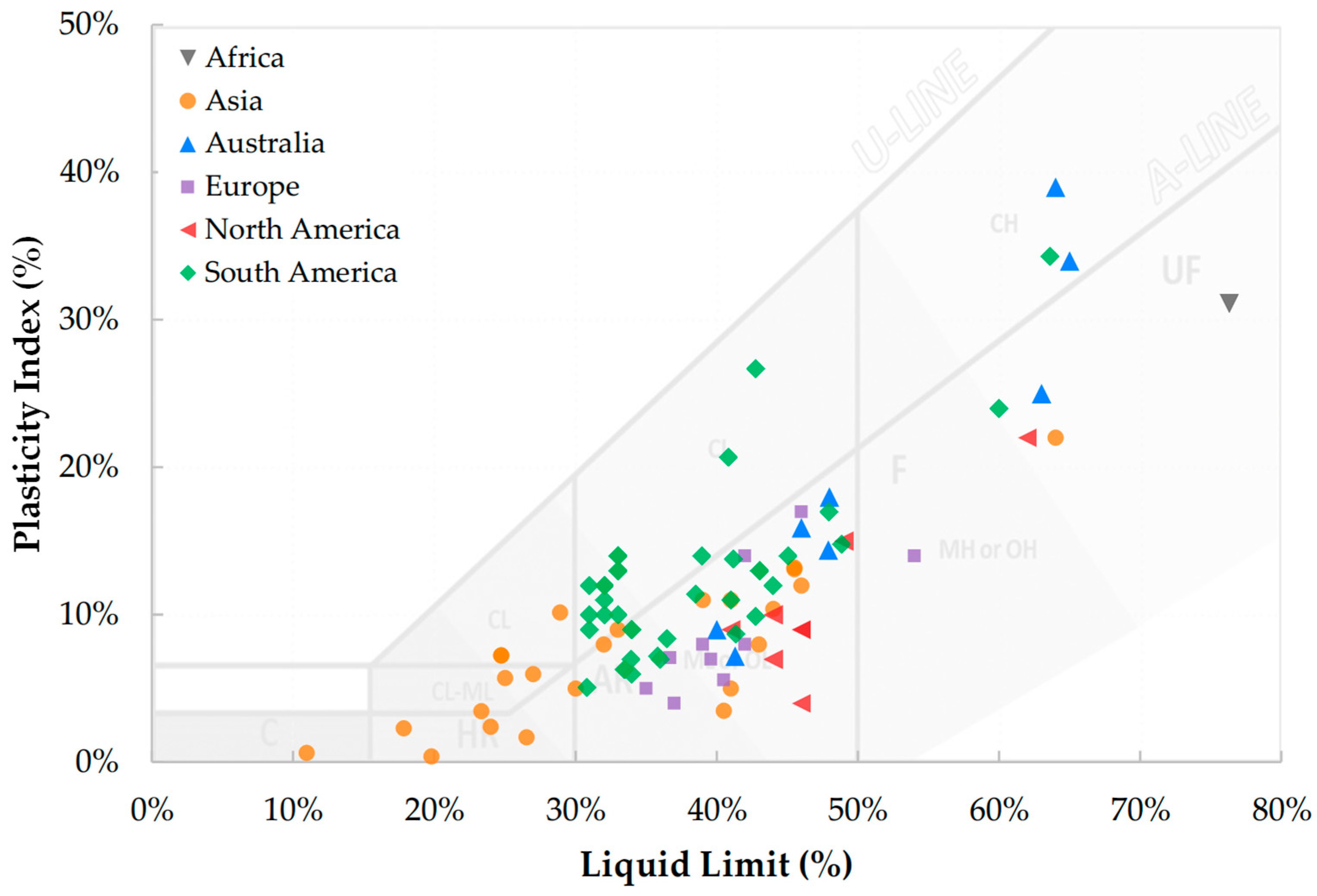
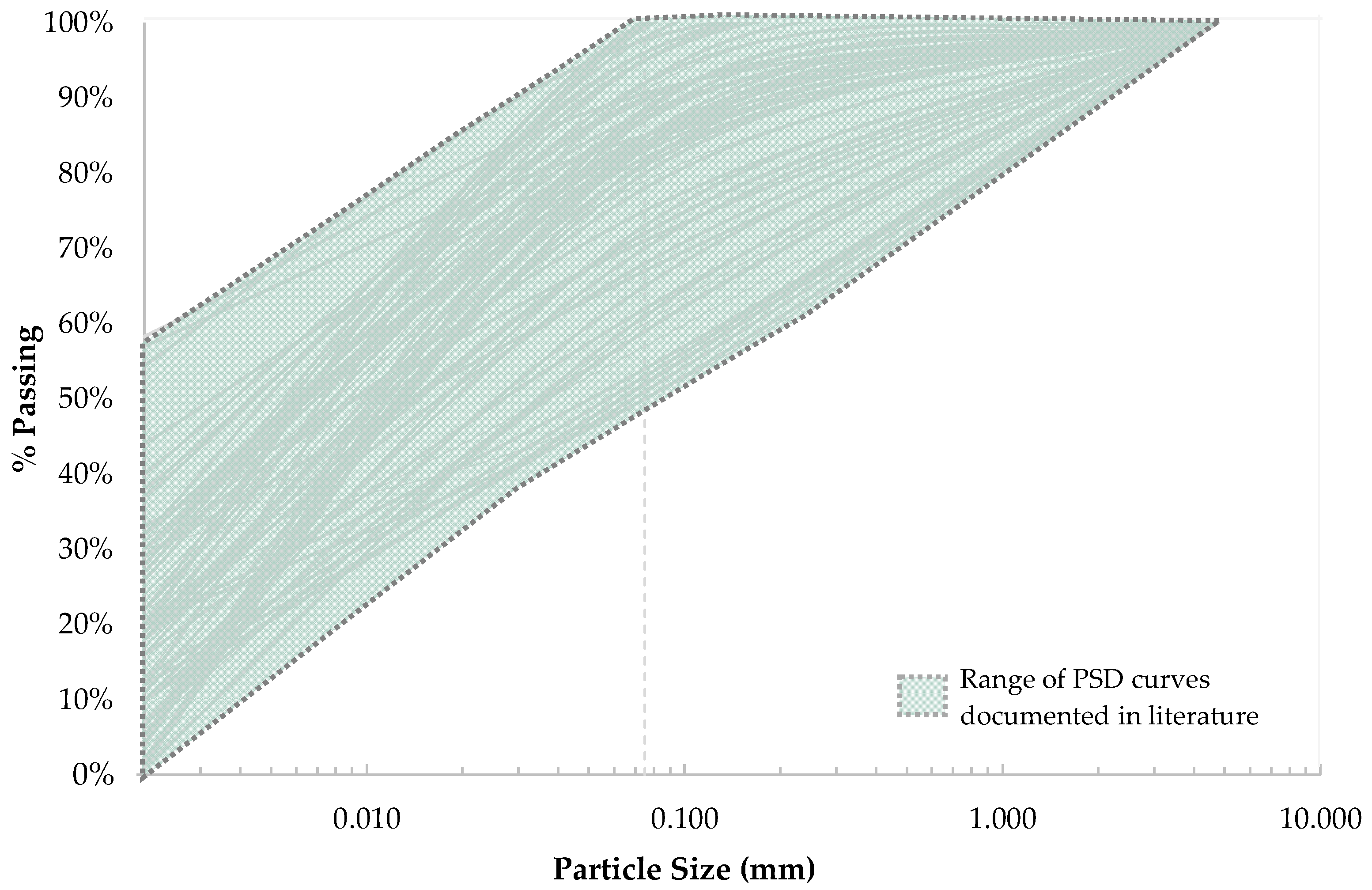
| Global 1 | 2.56–4.22 | 1–58 | 20–93 | 0–50 | 11–87 | 10–45 | 0–52 |
| Australia | 2.93–3.1 | 13–54 | 40–78 | 2–39 | 40–65 | 24–37 | 7–39 |
| Brazil | 2.86–3.99 | 1–58 | 20–93 | 0–50 | 31–64 | 16–36 | 5–34 |
| China | - | - | - | - | 43–64 | 35–42 | 8–22 |
| Germany | - | 20–57 | 28–38 | 15–42 | 42–46 | 28–29 | 14–17 |
| Greece | - | - | - | - | 35–37 | 30–33 | 4–5 |
| Guinea | - | - | - | - | 76 | 45 | 31 |
| India | 2.7–3.45 | 8–32 | 51–92 | 0–28 | 11–46 | 10–36 | 0–13 |
| Italy | 29 | 38 | 33 | 42 | 34 | 8 | |
| Jamaica | 2.92–4.22 | - | - | - | 87 | 35 | 52 |
| Spain | 3.44 | 2–38 | 38–83 | 10–29 | 37–41 | 30–35 | 6–8 |
| Turkey | 2.56–2.87 | 12–18 | 77–88 | 0–5 | 41–46 | 30–37 | 4–12 |
| UK | 3.05 | 20 | 76 | 4 | 54 | 40 | 14 |
| USA | 2.84–3.72 | 16–32 | 30–64 | 4–50 | 41–62 | 33–40 | 0–26 |
| Country | Compression Index |
|---|---|
| Global 1 | 0.05–0.65 |
| Australia | 0.27–0.58 |
| Brazil | 0.12–0.65 |
| India | 0.05–0.10 |
| Spain | 0.20 |
| UK | 0.34–0.41 |
| USA | 0.12–0.56 |
| Country | Effort Type 1 | Maximum Dry Density (kN/m3) | Optimum Moisture Content (%) |
|---|---|---|---|
| Global 2 | SP | 12.4–16.6 | 26–45 |
| MP | 15.2–20.0 | 20–30 | |
| Australia | SP | 12.4 | 35 |
| Brazil | SP | 14.0–16.3 | 26–34 |
| India | SP | 12.6–15.6 | 33–45 |
| MP | 16.8–20 | 20–28 | |
| Spain | SP | 16.6 | 28 |
| USA | SP | 14.8–15.6 | 32–33 |
| MP | 15.2–17.5 | 24–30 |
| Property | Africa | Asia | Australia | Europe | North America | South America |
|---|---|---|---|---|---|---|
| Specific Gravity | - | 3.08 (8%; 24) | 3.02 (2%; 3) | 3.25 (8%; 2) | 3.55 (11%; 16) | 3.43 (9%; 41) |
| Clay fraction (%) | - | 21% (51%; 13) | 29% (43%; 11) | 26% (71%; 12) | 24% (25%; 8) | 14% (93%; 33) |
| Sand fraction (%) | - | 10% (79%; 13) | 16% (65%; 11) | 24% (108%; 12) | 30% (54%; 8) | 27% (58%; 33) |
| Plasticity Index (%) | 31% (0%; 1) | 7% (67%; 25) | 20% (56%; 8) | 9% (49%; 10) | 12% (55%; 11) | 12% (48%; 38) |
| Compression index | - | 0.08 (26%; 10) | 0.44 (36%; 3) | 0.32 (27%; 4) | 0.32 (48%; 6) | 0.28 (47%; 21) |
| MDD (kN/m3) | - | 15.7 (13%; 23) | 12.4 (0%; 1) | 16.6 (0%; 1) | 15.8 (6%; 8) | 14.8 (5%; 12) |
| OMC (%) | - | 31% (24%; 23) | 35% (0%; 1) | 28% (0%; 1) | 29% (13%; 8) | 30% (10%; 12) |
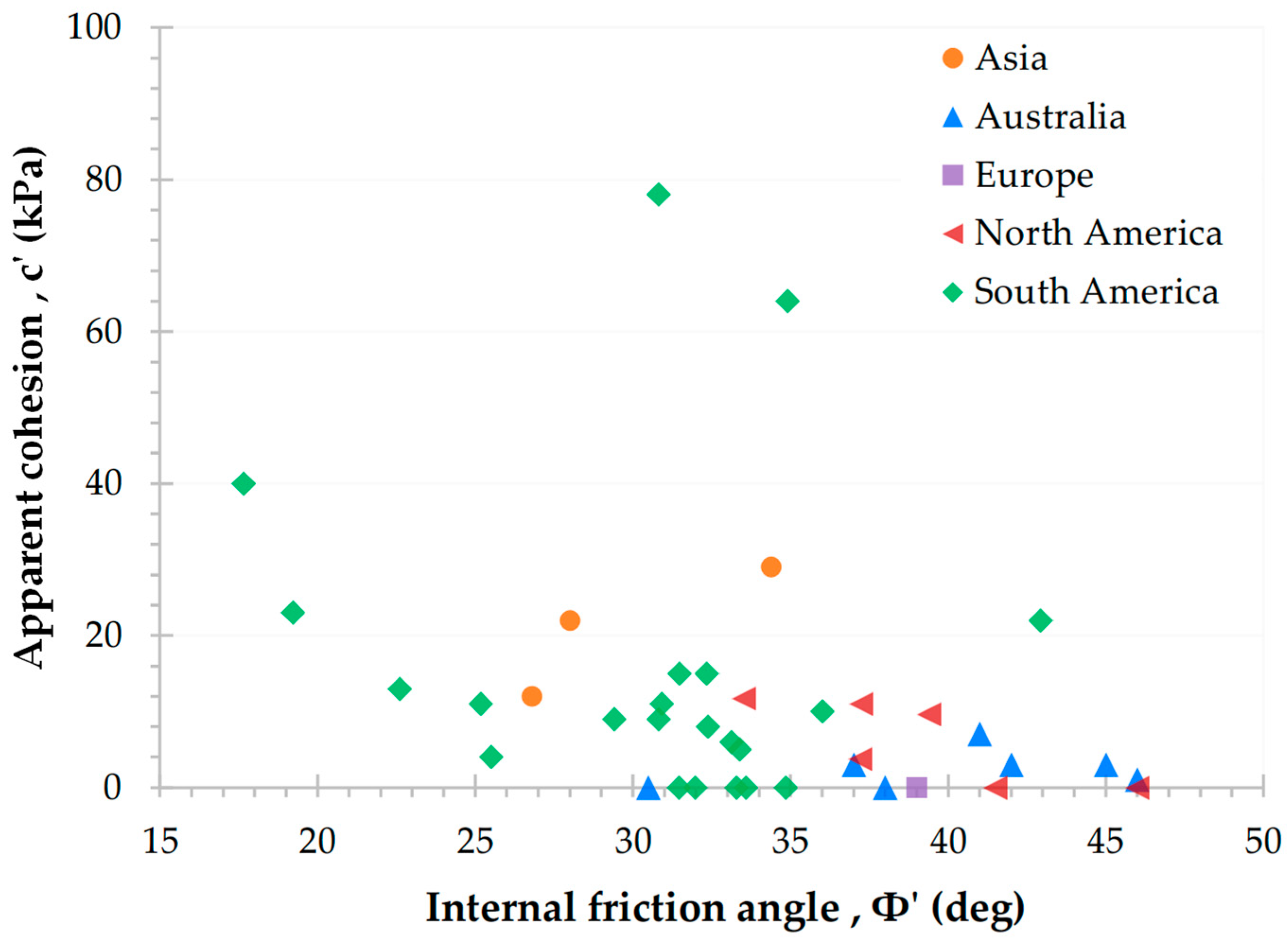
| Peak Friction Angle (°) | - | 33.1 (13%; 5) | 39.2 (13%; 8) | 39.7 (5%; 3) | 39.1 (11%; 6) | 30.6 (19%; 22) |
| Cohesion (kPa) | - | 24 (75%; 5) | 5 (161%; 8) | 27 (173%; 3) | 6 (90%; 6) | 16 (131%; 22) |
| Property | Air-Dried | Oven-Dried | Relative Change, Δ (%) | |
|---|---|---|---|---|
| Atterberg Limits | = 28 | = 22 | ||
| Liquid Limit (%) | 39% | 43% | ↑ | 8% |
| Plastic Limit (%) | 26% | 29% | ↑ | 13% |
| Plasticity Index (%) | 13% | 13% | ↓ | <1% |
| Particle Size Distribution | = 11 | = 21 | ||
| Clay Fraction (%) | 12% | 14% | ↑ | 19% |
| Silt Fraction (%) | 74% | 57% | ↓ | 22% |
| Sand Fraction (%) | 15% | 28% | ↑ | 94% |
| Particle Density | = 26 | = 17 | ||
| Specific Gravity (-) | 3.24 | 3.37 | ↑ | 4% |
| Shear Resistance | = 4 | = 1 | ||
| Friction angle, φ’ (º) | 36.8 | 30.5 | ↓ | 17% |
| Cohesion, c’ (kPa) | 9 | 0 | ↓ | 100% |
| Property | Untreated | Leached | Relative Change, Δ (%) | |
|---|---|---|---|---|
| Atterberg Limits | = 10 | = 5 | ||
| Liquid Limit (%) | 47% | 45% | ↓ | 4% |
| Plastic Limit (%) | 35% | 38% | ↑ | 8% |
| Plasticity Index (%) | 13% | 8% | ↓ | 43% |
| Particle Density | = 7 | = 3 | ||
| Specific Gravity (-) | 3.55 | 3.09 | ↓ | 13% |
| Property | Untreated | Neutralised | Relative Change, Δ (%) | |
|---|---|---|---|---|
| Atterberg Limits | = 66 | = 16 | ||
| Liquid Limit (%) | 42% | 35% | ↓ | 16% |
| Plastic Limit (%) | 29% | 26% | ↓ | 8% |
| Plasticity Index (%) | 13% | 9% | ↓ | 34% |
| Particle Size Distribution | = 35 | = 9 | ||
| Clay Fraction (%) | 15% | 13% | ↓ | 13% |
| Silt Fraction (%) | 64% | 56% | ↓ | 13% |
| Sand Fraction (%) | 21% | 31% | ↑ | 50% |
| Particle Density | = 46 | = 17 | ||
| Specific Gravity (-) | 3.26 | 3.33 | ↑ | 2% |
| Category | Knowledge Gap | Proposed Directions |
|---|---|---|
| Contextual | The impact of geochemical features on characterisation and shear strength parameters remains underexplored. Changes in the material fabric influenced by chemical factors are largely unaddressed. There is no consensus on how best to replicate field conditions in laboratory settings. Although studies indicate that the material may experience substantial strength loss under shear, the mechanisms underlying this behaviour remain poorly understood. Test results indicate that residual strength is not fully mobilised at axial strains of 25%. | Adopt multi-scale testing frameworks that couple geotechnical tests with micro-analytical monitoring (such as SEM, XRD and pore fluid concentration tracking). Utilise high-strain apparatuses to capture post-peak degradation and fully mobilise residual strength under varying chemical conditions. Design comparative testing programs to evaluate sample preparation protocols (such as oven-drying at different temperatures) and conduct sensitivity analyses. Use controlled leaching to remove salt prior to testing or measure the total salt concentration to correct the soil-phase equations. |
| Conceptual | There is no consensus on how temperature affects the Atterberg limits. | |
| Methodological | Studies rarely report any correction to BR properties due to pore fluid density. No consensus exists regarding the appropriate method for drying BR samples prior to experimental testing. Drying may induce particle aggregation and increase porosity. |
Disclaimer/Publisher’s Note: The statements, opinions and data contained in all publications are solely those of the individual author(s) and contributor(s) and not of MDPI and/or the editor(s). MDPI and/or the editor(s) disclaim responsibility for any injury to people or property resulting from any ideas, methods, instructions or products referred to in the content. |
© 2026 by the authors. Licensee MDPI, Basel, Switzerland. This article is an open access article distributed under the terms and conditions of the Creative Commons Attribution (CC BY) license.
Share and Cite
Pereira Duarte, J.; Fourie, A. Geotechnical Behaviour of Bauxite Residue (Red Mud): A Review of Global Parameter Variability and Chemical–Mechanical Interactions. Minerals 2026, 16, 787. https://doi.org/10.3390/min16080787
Pereira Duarte J, Fourie A. Geotechnical Behaviour of Bauxite Residue (Red Mud): A Review of Global Parameter Variability and Chemical–Mechanical Interactions. Minerals. 2026; 16(8):787. https://doi.org/10.3390/min16080787
Chicago/Turabian StylePereira Duarte, Jessica, and Andy Fourie. 2026. "Geotechnical Behaviour of Bauxite Residue (Red Mud): A Review of Global Parameter Variability and Chemical–Mechanical Interactions" Minerals 16, no. 8: 787. https://doi.org/10.3390/min16080787
APA StylePereira Duarte, J., & Fourie, A. (2026). Geotechnical Behaviour of Bauxite Residue (Red Mud): A Review of Global Parameter Variability and Chemical–Mechanical Interactions. Minerals, 16(8), 787. https://doi.org/10.3390/min16080787