Article

Seismic Imaging of the Crust and Upper Mantle Beneath Chinese Fujian Province and Its Implications for Deep Mineralization


1
Key Laboratory of Intraplate Volcanoes and Earthquakes (China University of Geosciences, Beijing), Ministry of Education, Beijing 100083, China
2
State Key Laboratory of Deep Earth Exploration and Imaging, School of Geophysics and Information Technology, China University of Geosciences, Beijing 100083, China
3
Lanzhou Institute of Seismology of China Earthquake Administration, Lanzhou 730030, China
4
Department of Geophysics, Tohoku University, Sendai 980-8578, Japan
*
Author to whom correspondence should be addressed.
Minerals 2026, 16(6), 593; https://doi.org/10.3390/min16060593
Submission received: 19 April 2026 / Revised: 18 May 2026 / Accepted: 29 May 2026 / Published: 1 June 2026

Abstract

Fujian Province is located in the southeast coastal region of Mainland China and belongs to the Cathaysia Block (CB). Since the Neoproterozoic, this region has experienced multi-stage tectonic activities, which have formed extensive metallogenic belts, such as the Wuyishan and Nanling metallogenic belts. To clarify deep geodynamic processes and deep metallogenic mechanisms, we determine a high-resolution three-dimensional (3-D) velocity model of the crust and upper mantle beneath the Fujian region. Two datasets are collected for the tomographic inversion. One dataset includes 70,330 P-wave and 87,057 S-wave arrival times from 6206 local earthquakes. The other dataset includes 13,714 P-wave relative travel-time residuals from 812 teleseismic events. Our tomography reveals significant low-velocity (low-V) anomalies in the upper mantle down to 500 km depth, which may represent hot ad wet upwelling flows from the mantle transition zone. We also find some low-V and high-Vp/Vs anomalies in the crust beneath major faults and the coastal area of Fujian, which are interpreted as magmatic channels. Combining with previous geological, geochemical, and geophysical results, we consider that the subduction of the Paleo-Pacific Plate in the Late Mesozoic played a crucial role in the formation of ore deposits. We propose a geodynamic model of the deep mineralization in Fujian, in which upwelling mantle flow underplated the crust and intruded into the crust along fault zones. This geodynamic model also has certain significance for the deep mineralization mechanisms of the CB and the Lower Yangtze Block.

1. Introduction

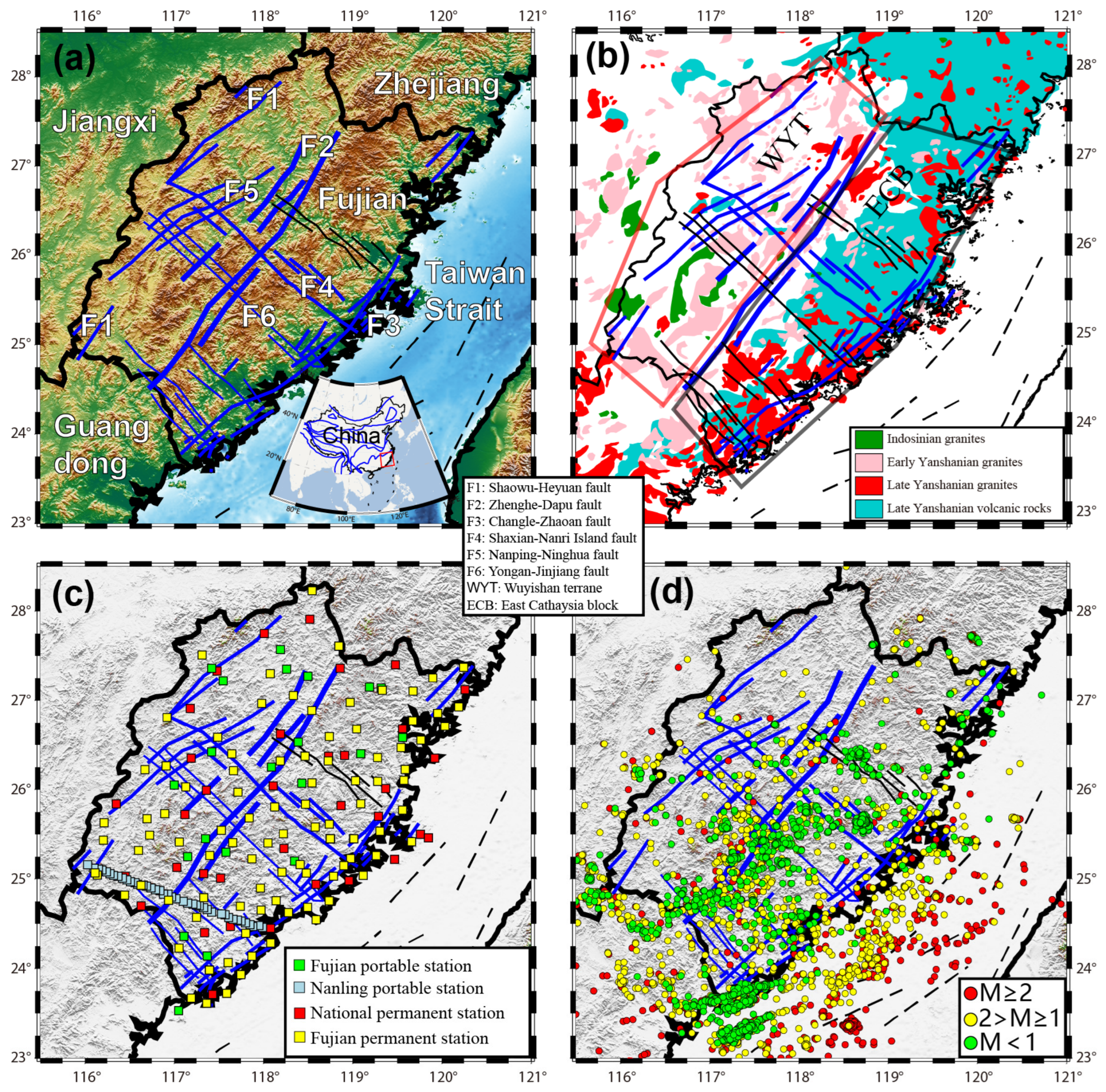
Fujian Province is located in the southeastern part of Mainland China, a tectonically active zone where the Eurasian Plate, the Western Pacific Plate, and the Philippine Sea Plate are interacting with each other. Tectonically, the Fujian region belongs to the South China Folded System and the Southeast Coastal Folded System, and it is one of the most vigorous regions of Mesozoic magmatic activity in the world [1]. Since the Neoproterozoic, the region has undergone multi-stage tectonic evolution [2], with three major NE-striking fault zones developing: the Shaowu-Heyuan, Zhenghe-Dapu and Changle-Zhaoan fault zones (Figure 1).
Fujian is a key component of the Cathaysia Block (CB), which was formed during the Neoproterozoic. Since the Paleozoic, the block has experienced a series of tectonic events, including intracontinental orogenic collapse, westward subduction of the Paleo-Pacific Plate, lithospheric thinning, and extensive magmatism [3,4,5,6]. The tectonic stress regime of the CB transitioned from intraplate compression to extension during the Mesozoic [7], and the extensional setting has persisted into the Cenozoic [8]. These tectonic processes have generated a mosaic of uplift and depression blocks bounded by NE-SW- and NW-SE-striking faults and sutures [9], with the NNE-striking Fujian offshore fault zone being an additional major structure. The Wuyi-Yunkai orogenic belt in western Fujian is bounded by the Shaowu-Heyuan and Zhenghe-Dapu fault zones, while the Cretaceous magmatic belt in eastern Fujian is distributed on either side of the Zhenghe-Dapu and Changle-Zhaoan fault zones. The Mesozoic Pingtan-Dongshan metamorphic belt runs along the Fujian coastline to the east of the Changle-Zhaoan fault zone [10]. Widespread Mesozoic magmatism has produced extensive Triassic and Cretaceous igneous rocks, which are the major geological feature of Fujian [11]. Western Fujian is dominated by outcrops of Triassic and Jurassic granites, whereas eastern Fujian is characterized by the Cretaceous granites and volcanic rocks.
Given its intense magmatic activity, the deep three-dimensional (3-D) seismic velocity structure and geodynamic evolution of Fujian and its adjacent areas have long been a focus of international geoscientific research. Zhuang et al. [12] proposed that a large-scale mantle convection system and many small-to-medium mantle plumes exist beneath Fujian, with thermal materials and plume components likely originating from the D’’ layer at the core-mantle boundary or the mantle transition zone. Based on the geological, geochemical, and isotopic investigations, Zhou [11] and Zhou and Li [13] summarized the distribution of igneous rocks in Southeast China and concluded that their formation is closely linked to the Late Mesozoic subduction of the Paleo-Pacific Plate, driven by deep crustal melting and basaltic magma underplating induced by tectonic extension.
Seismic tomography has emerged as a powerful tool for investigating the 3-D velocity structure of the interior of Earth (e.g., [14]). A 1-D crustal velocity model for Fujian was derived from 12,095 P-wave travel-time data recorded along eight seismic survey lines during 2010 to 2012 [15]. Cai et al. [16] further performed a joint inversion of passive and active seismic data to determine 3-D models of P-wave velocity (Vp), S-wave velocity (Vs), and Vp/Vs ratio for the Fujian crust, revealing that inland areas have lower Vp/Vs ratios than coastal areas, and the coastal areas exhibit high Vp, thin crust, high geothermal gradient, and high Bouguer gravity anomaly, which are attributed to back-arc extension associated with the South China Sea. Huang et al. [17] used teleseismic tomography to investigate the 3-D Vp structure of the upper mantle beneath Southeast China, identifying significant low-V anomalies that reflect residual magma chambers and magmatic channels of Late Mesozoic igneous rocks, reactivated by mantle upwelling from the lower mantle. Similar low-V anomalies have been reported by subsequent studies [18,19]. Goyal and Hung [20] investigated the crustal thickness and velocity structure of Fujian via receiver function analysis, showing that the crustal thickness decreases from ~35 km in the northwest to 27–30 km in the southeastern coastal zone.
Figure 1. (a) Surface topography of Fujian Province. The red box in the sub-figure indicates the location of the study area; (b) Distribution of Mesozoic granitic and volcanic rocks in the major Mesozoic mineral deposits (after [21]). (c,d) Distribution of seismic stations (c) and local earthquakes (d) used in this study. The blue lines denote active faults (F1–F6). F1: the Shaowu-Heyuan fault; F2: the Zhenghe-Dapu fault; F3: the Changle-Zhaoan fault; F4: the Shaxian-Nanri Island fault; F5: the Nanping-Ninghua fault; F6: the Yongan-Jinjiang fault; WYT: the Wuyishan terrane; ECB: the East Cathaysia block. The red and black boxes in figure (b) represent WYT and ECB, respectively.
Minerals 16 00593 g001
Collectively, these previous studies have suggested that the Late Mesozoic magmatism caused lithospheric delamination beneath Fujian, and subsequent underplating of hot asthenospheric material led to crustal thinning. However, the mechanisms of heat exchange between the crust and the upper mantle, and the deep mineralization process, remain unclear. In this study, we conduct a joint inversion of local earthquake travel-time data and teleseismic relative travel-time residuals to determine a high-resolution 3-D Vp model of the crust and upper mantle beneath Fujian. Our Vp tomography provides new seismological constraints on the deep geodynamic processes and metallogenic mechanisms of the region, and offers insights into material exchange between different Earth spheres in Southeast China.

2. Data

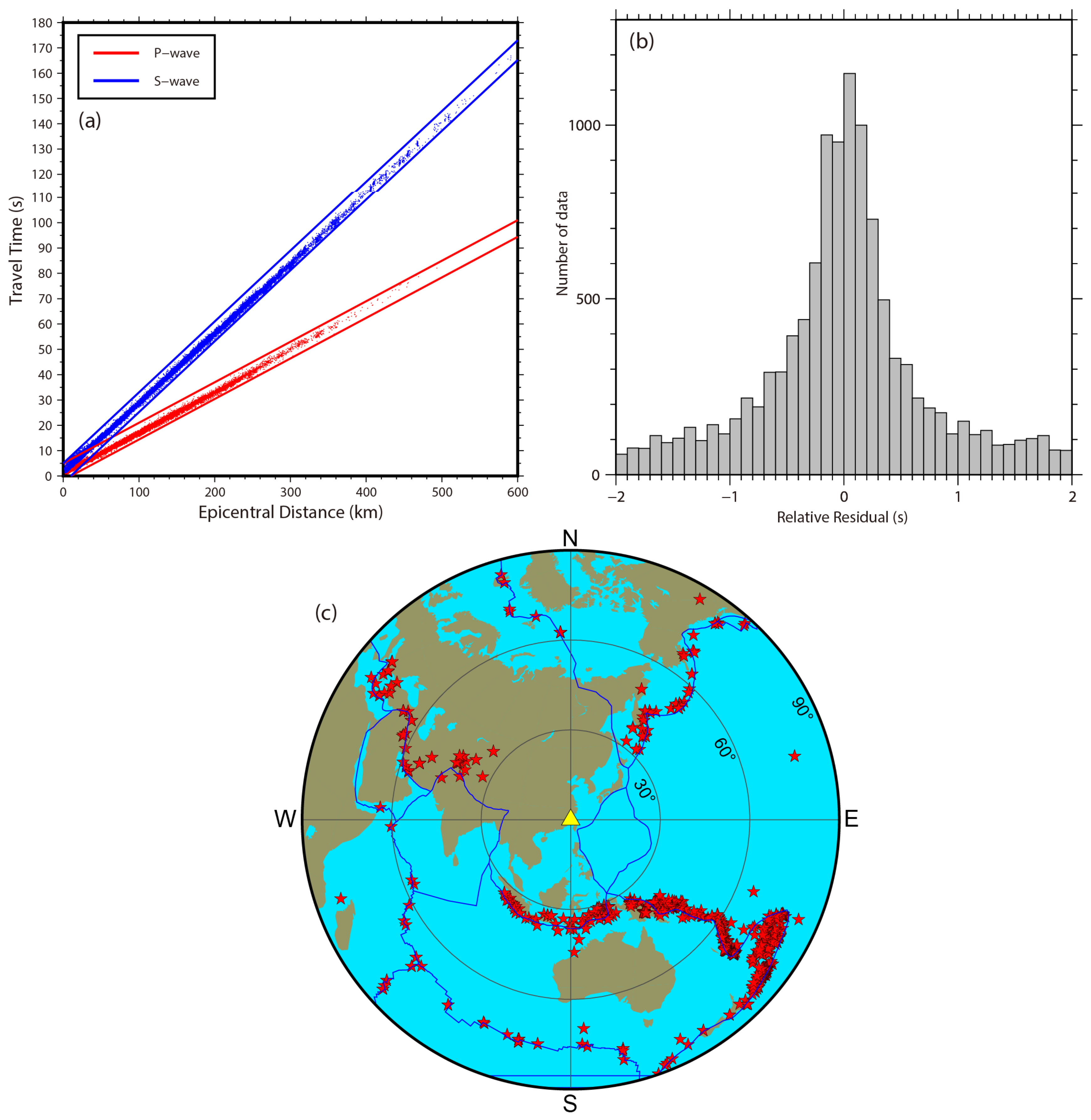
To constrain the 3-D velocity structure of the crust and upper mantle beneath Fujian, we adopt a two-step tomographic approach. In the first step, we apply local earthquake tomography [22] to invert P- and S-wave arrival times of local earthquakes for Vp and Vs tomography of the crust. In the second step, we conduct a joint inversion [23] of local and teleseismic P-wave travel-time data for the 3-D Vp structure of the crust and upper mantle beneath the study region. Therefore, we collect two types of seismic data. (1) Local seismic phase data were recorded at 130 permanent seismic stations in Fujian from August 2010 to January 2020 (Figure 1b). This dataset is provided by the Second Monitoring Center of the China Earthquake Administration and includes high-quality P-wave and S-wave arrival times of local earthquakes. To ensure the reliability of hypocenter locations, only local events recorded at six or more seismic stations are selected. As shown in Figure 2a, both P- and S-wave travel times exhibit highly consistent linear relationships with minimal scatter, even for the events with M < 2. Based on these distributions, outliers are effectively identified and removed, ensuring that only reliable phase data are included in the final tomographic inversion. As a result, 70,330 P-wave and 87,057 S-wave travel-time data from 6206 local events are obtained. (2) Teleseismic waveform data are compiled from three sources. The first is continuous waveforms recorded at 36 permanent seismic stations in Fujian, which are provided by the China Earthquake Network Center. The second is continuous waveforms recorded at 38 portable seismic stations with an interval of 5 km deployed in southern Fujian from July 2016 to August 2018 by our team. The third is continuous waveforms recorded at 21 portable seismic stations deployed across Fujian from August 2019 to July 2021 by our team. Figure 1c shows the distribution of all the seismic stations used in this work.
The teleseismic events are selected based on two criteria to ensure data quality: (1) their epicentral distances are in the range of 30–90°, and (2) the event magnitudes are larger than M5.5 to guarantee a high signal-to-noise ratio. As a result, 812 teleseismic events are selected (Figure 2c). To improve the picking accuracy and efficiency of the teleseismic data, we apply an improved multi-channel cross-correlation method [24] to calculate P-wave relative travel-time residuals directly from the teleseismic waveforms. As a result, a total of 13,714 P-wave relative travel-time residuals from the 812 teleseismic events are obtained, which have a time range of ±2.0 s (Figure 2b).

3. Method and Analysis

We perform a joint inversion of local earthquake travel-time residuals and teleseismic relative travel-time residuals to study the 3-D velocity structure using the TOMOG3D method [22,23], which has been well-validated for 3-D seismic velocity imaging of the crust and upper mantle. The core of the TOMOG3D method is an advanced 3-D ray-tracing technique that combines the pseudo-bending technique for ray propagation in continuous media with Snell’s law for ray refraction and reflection across velocity discontinuities (e.g., the Conrad and the Moho). After determining theoretical travel times and ray paths via the 3-D ray tracing technique, a large sparse system of observational equations is constructed, which is then solved using the LSQR algorithm [25,26]. LSQR is a robust iterative method for resolving sparse linear least-squares problems with damping regularization to avoid data overfitting and ensure the stability of the inversion result.
For conducting the tomographic inversion, 3-D grid nodes are arranged in the study volume. Velocity perturbations at the grid nodes are taken as unknown model parameters, and the velocity perturbation at any point in the study volume is obtained via linear interpolation of the perturbations at the eight grid nodes surrounding that point [23]. The initial velocity model is crucial to the imaging results. In this study, the 1-D velocity model proposed by Cai et al. [15] is adopted for the crust, which contains two layers. The upper layer is at depths of 0–18 km with a Vp of 6.0 km/s and a Vs of 3.46 km/s. The lower layer is at depths of 18–30 km, in which Vp is 6.39 km/s, and Vs is 3.69 km/s. The IASP91 model [27] is adopted for the upper mantle. Note that the two steps of tomography, as mentioned above, are conducted separately, both utilizing the same 1-D initial velocity model.
To reduce the influence of local earthquake mislocation on imaging results, we separate earthquake relocation from the 3-D velocity inversion. We accurately relocated the 6206 local earthquakes using the hypoDD method [28] for the 1-D velocity model [15]. To improve the relocation accuracy, we further relocate the local earthquakes using the inverted 3-D velocity model and the absolute location method [22].

4. Checkerboard Resolution Tests

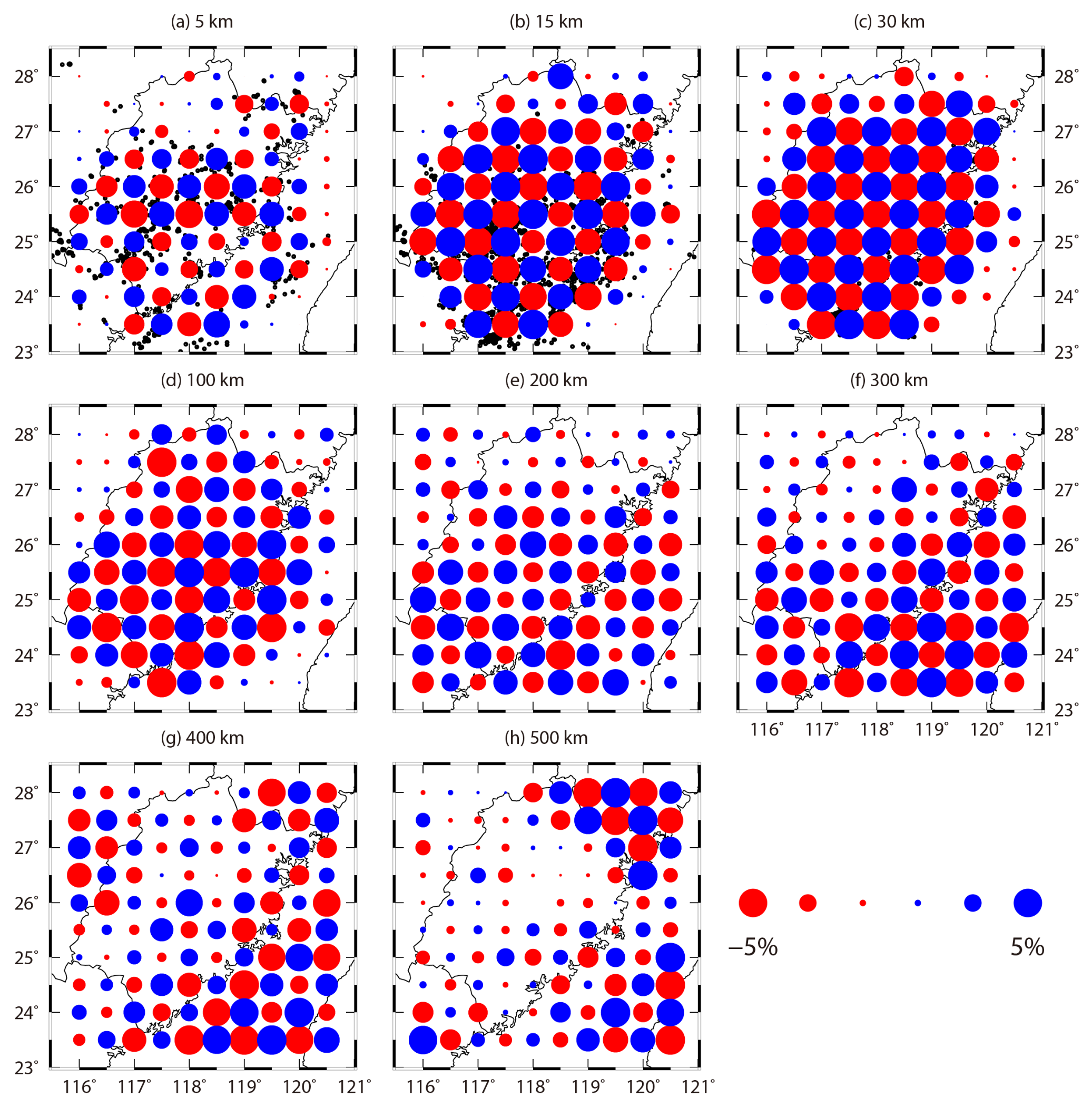
The checkerboard resolution test (CRT) is generally performed to evaluate the resolution and reliability of a tomographic model. The CRT procedure contains five primary steps. (1) The study area is discretized into a 3-D grid with a lateral grid interval of 0.5°. (2) A synthetic checkerboard velocity model is constructed by assigning alternating positive and negative velocity perturbations (e.g., ±5%) to adjacent grid nodes based on the initial velocity model. (3) Theoretical travel times for local and teleseismic events are calculated for the synthetic model with the 3-D ray tracing method [22]. (4) Random Gaussian noise (−0.3 to +0.3 s) with a variance of 0.1 s is added to the theoretical travel times to simulate real observational errors, generating synthetic travel-time data. (5) The TOMOG3D method is applied to invert the synthetic travel times to get a recovered velocity model. The resolution of the tomography is assessed by comparing the recovered model with the input synthetic checkerboard model. If the recovery rate is high, it indicates that the grid interval is appropriate and the tomography resolution is high.
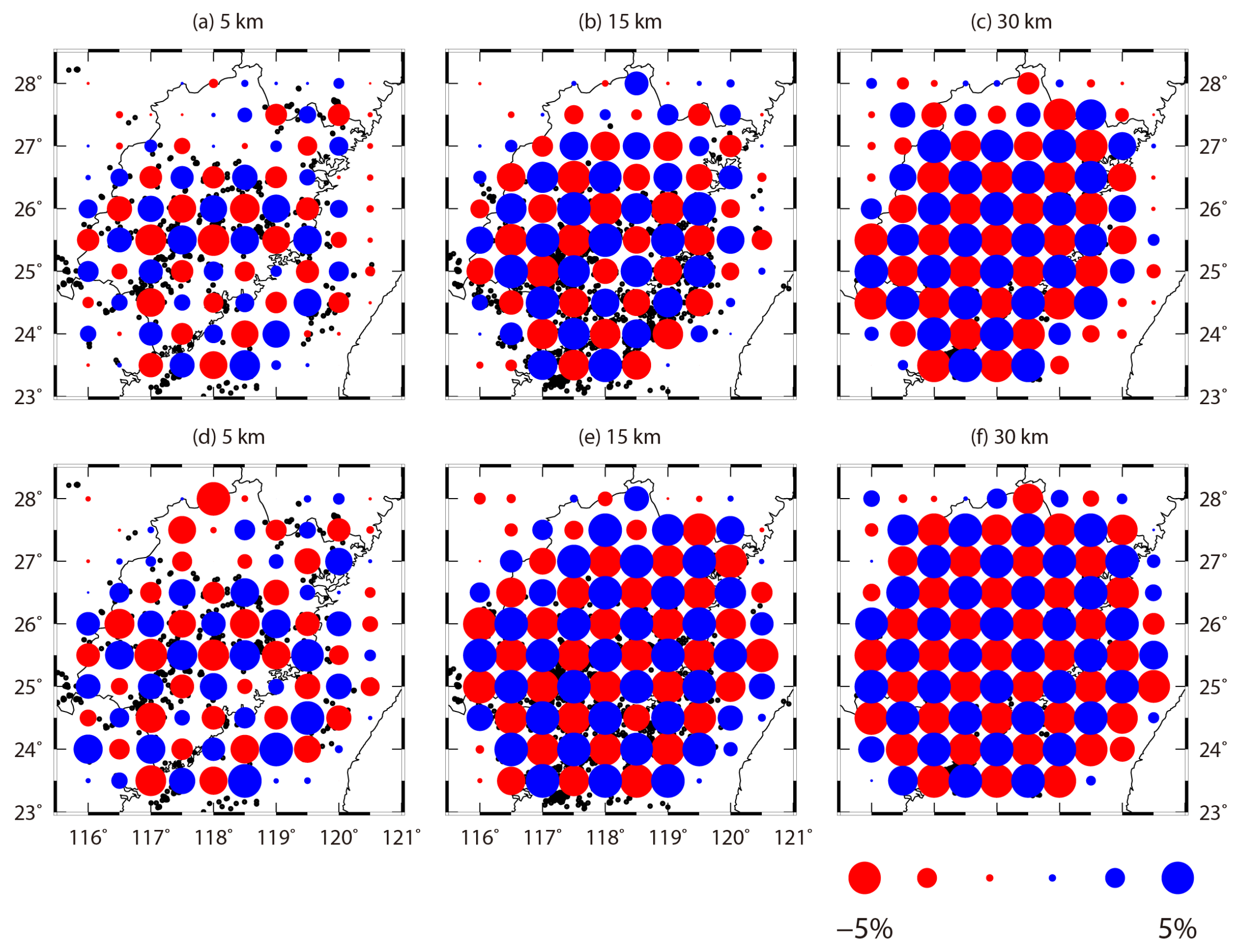
Figure 3 shows the CRT results for Vp and Vs tomography in the crust. Figure 4 presents the CRT result for Vp tomography of the crust and upper mantle, which indicates that a horizontal grid interval of 0.5° is optimal. In the crust, the CRT results for both Vp and Vs tomography are excellent (Figure 3). From Figure 3 and Figure 4, it is easy to see that the resolution is good in most parts of the study region, except at 500 km depth. Additionally, the resolution in the southeastern part of the region is slightly better than that in the northwest, because more teleseismic events used are located in the southeast quadrant (Figure 2c).

5. Results

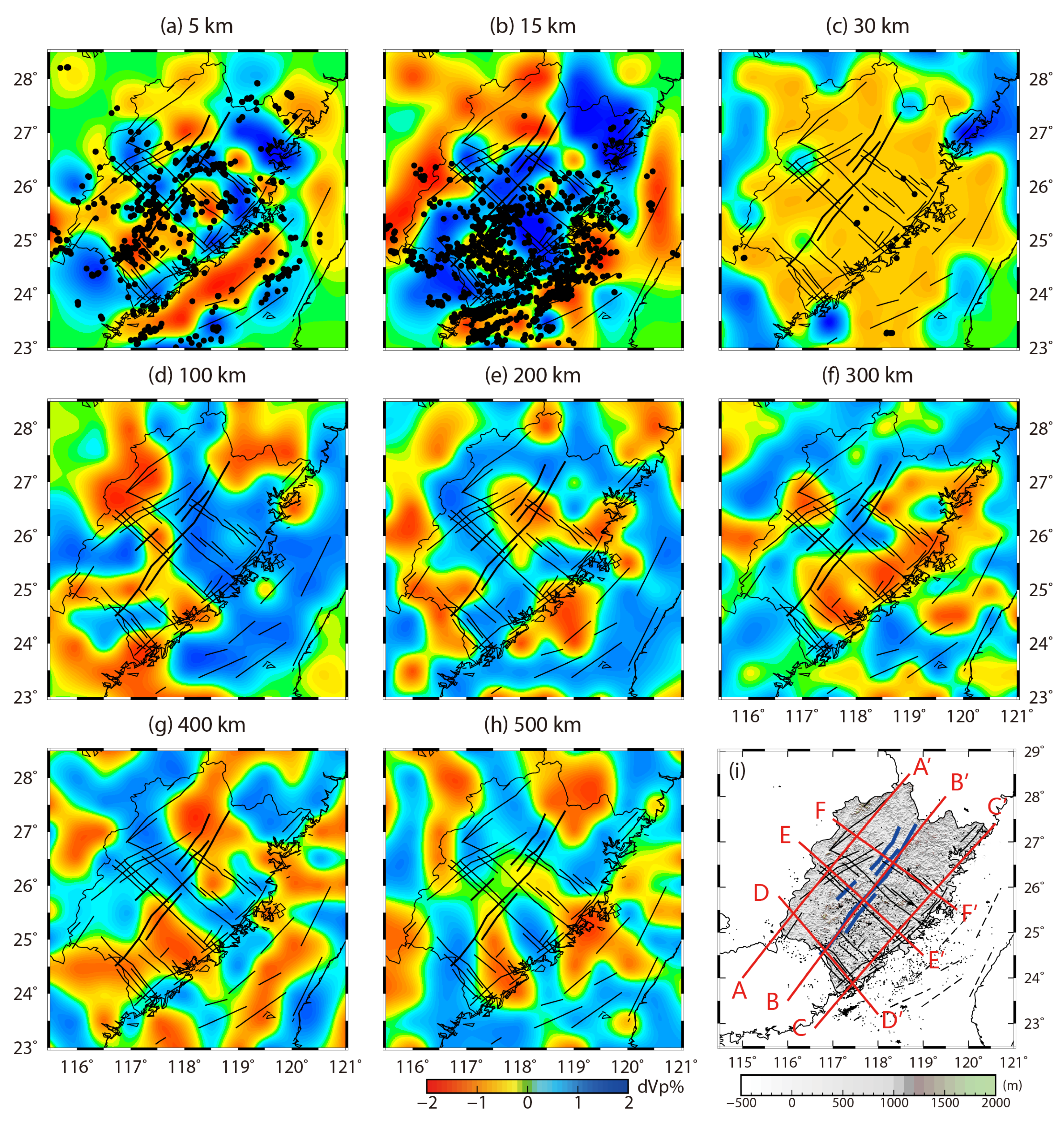
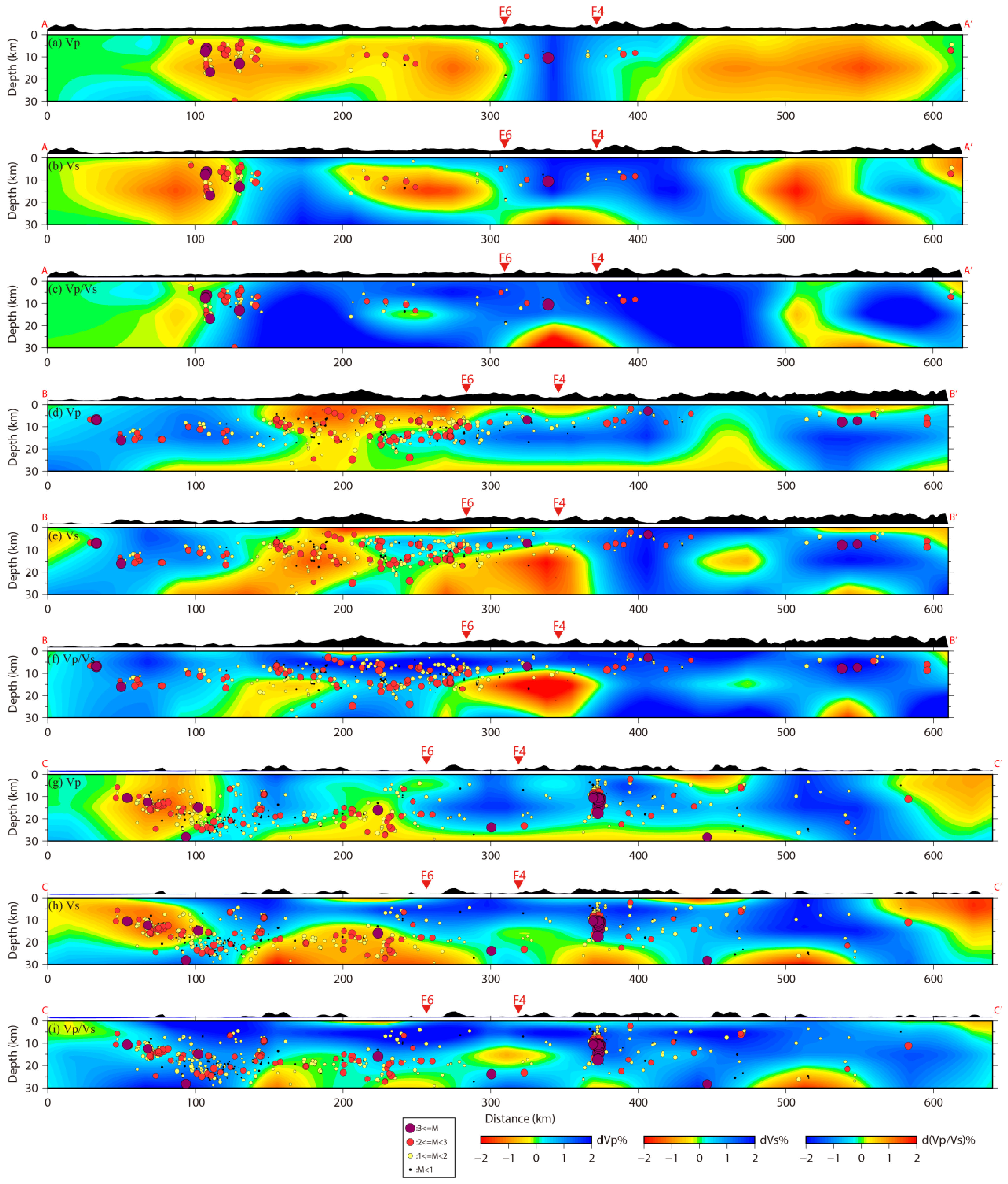
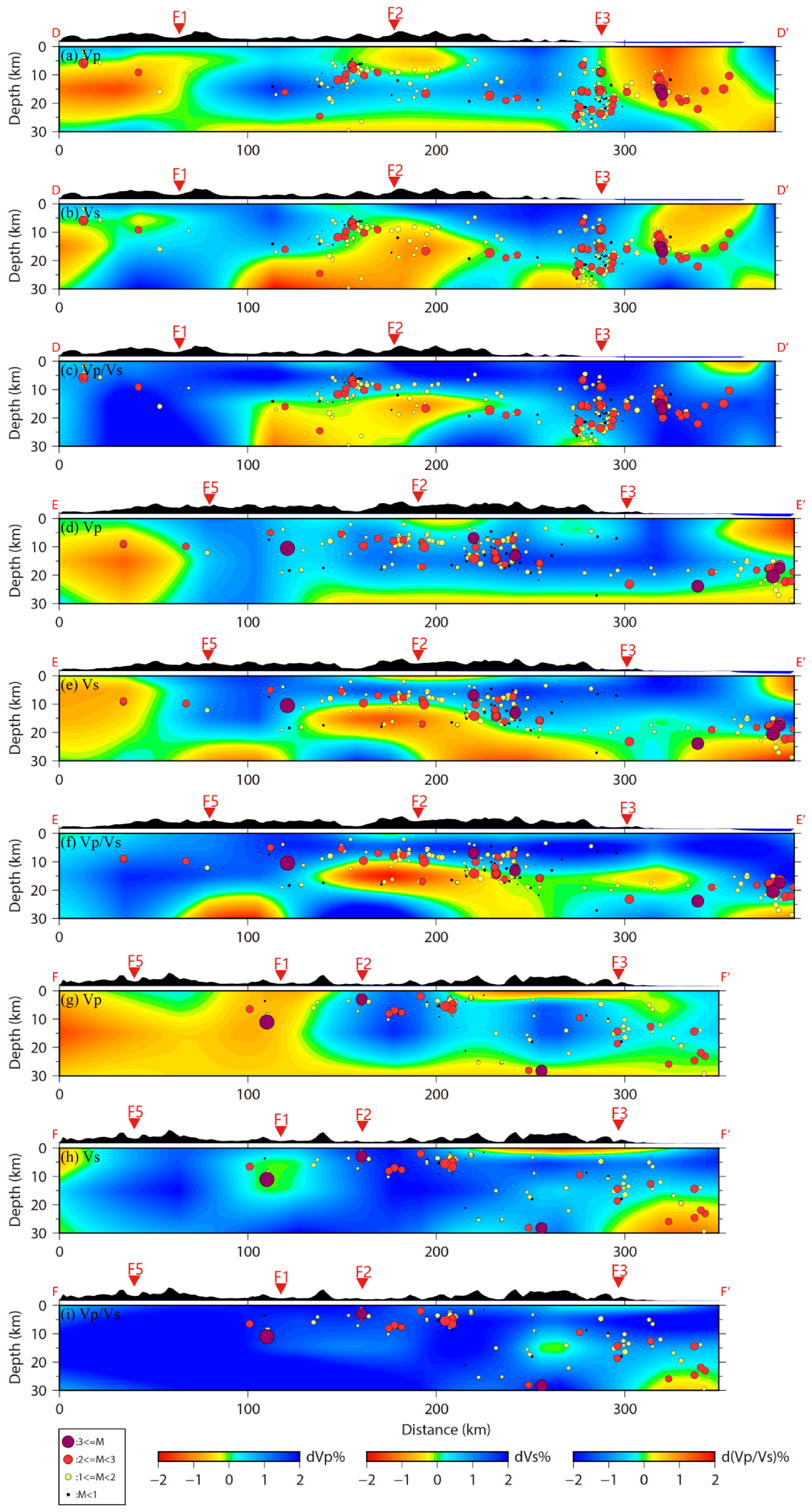
The tomographic results are presented as map views of Vp, Vs, and Vp/Vs ratios in the crust (Figure 5) obtained by local earthquake tomography, and Vp in the crust and upper mantle (Figure 6) obtained by the joint inversion of local and teleseismic data. Furthermore, the corresponding vertical cross-sections are displayed in Figure 7 and Figure 8 for the crustal structures, and in Figure 9 for the crust and upper mantle.

5.1. Map Views of Tomography

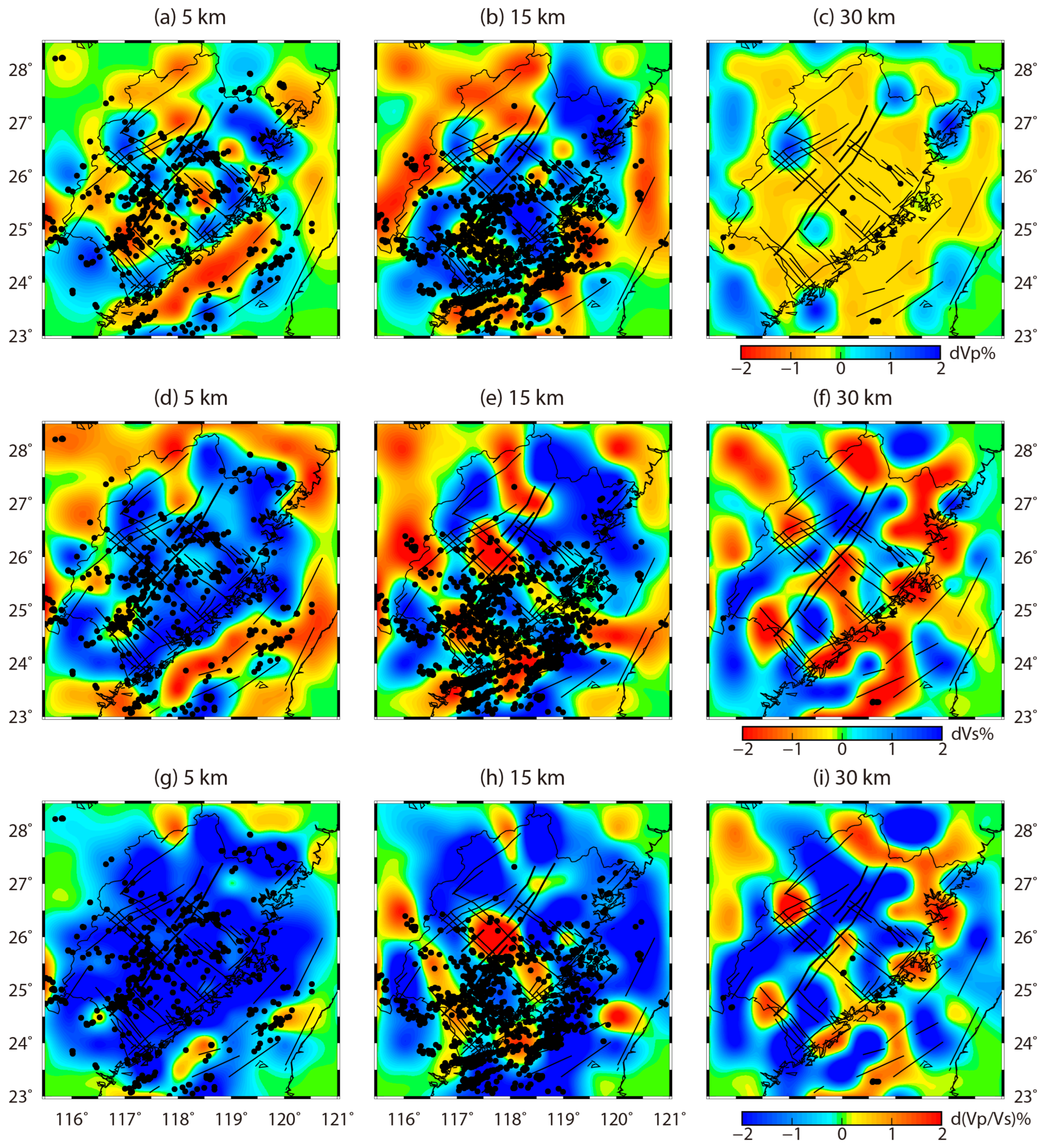
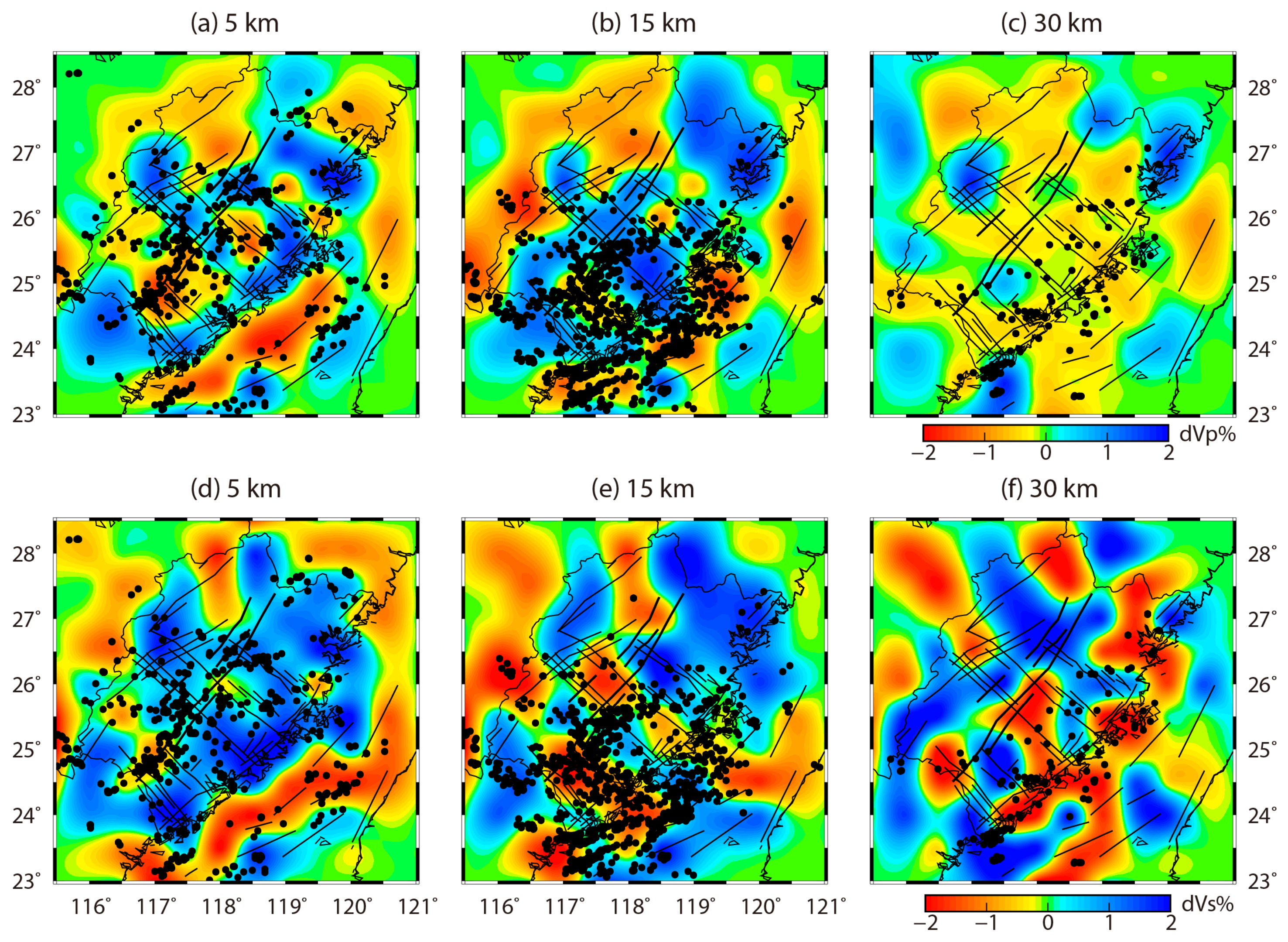
Figure 5a–c show map views of Vp tomography in the Fujian crust at depths of 5 km, 15 km, and 30 km, respectively. Figure 5d–f show the corresponding Vs tomography, and Figure 5g–i show the Vp/Vs ratio images. At 5 km depth (Figure 5a), prominent high Vp anomalies exist in the Changle-Zhao’an fault zone and its adjacent coastal areas, consistent with the findings of Cai et al. [16]. In contrast, large-scale high Vs anomalies and low Vp/Vs ratios are observed across almost the entire study area at 5 km depth (Figure 5d,g). Beneath the Zhenghe-Dapu fault zone, the Vp structure at shallow depths shows alternating high and low anomalies from the north to south. The Vs structure exhibits alternating high- and low-anomalies at both 15 km and 30 km depths (Figure 5e,f). With increasing depths, the Vp structure at 30 km depth is dominated by low-V anomalies (Figure 5c). The Vp/Vs ratio remains low across the entire study area at 15 km depth (Figure 5h), and transitions to a predominantly low Vp/Vs pattern with localized high Vp/Vs anomalies at 30 km depth (Figure 5i), which is highly consistent with the results of Cai et al. [16].
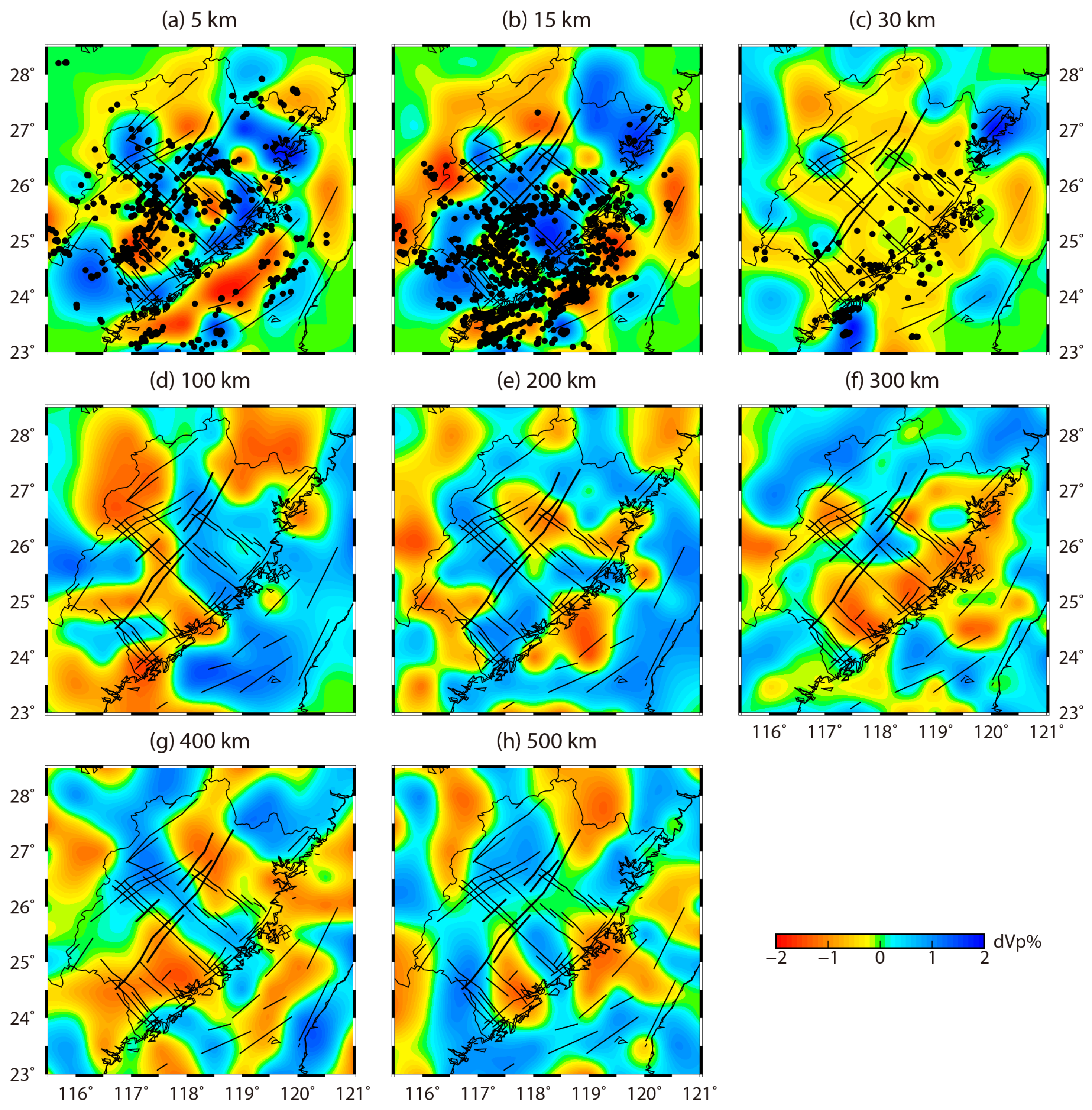
Figure 6 shows the Vp tomography of the crust and upper mantle at depths of 5 to 500 km, obtained by joint inversion of local and teleseismic data. The Vp anomalies in the crust (Figure 6a–c) are similar to those obtained by local tomography (Figure 5a–c). At 100 km depth, inland areas are dominated by low-V anomalies, while offshore areas exhibit high-velocity (high-V) anomalies (Figure 6d). At 200 km depth, a prominent low-V anomaly appears in the central part of the study area, whereas high-V anomalies exist in the north and southeast (Figure 6e). At 300 km depth, the boundary between high-V and low-V anomalies aligns roughly with the Zhenghe-Dapu fault zone, with low-V anomalies to the east and high-V anomalies to the west (Figure 5f). At 400 km depth (close to the bottom of the upper mantle), low-V anomalies are pervasive across the study area, with localized high-V anomalies embedded within them. At 500 km depth (in the mantle transition zone), the Vp structure is characterized by alternating high-V and low-V anomalies.

5.2. Vertical Cross Sections of Tomography

To further investigate the 3-D velocity structure of the crust and upper mantle beneath the Fujian region, we present six vertical cross-sections (Figure 6i) traversing major fault zones and tectonic units. Profiles AA’, BB’, and CC’ are oriented in the SW-NE direction, while profiles DD’, EE’, and FF’ are oriented in the NW-SE direction. Figure 7 shows Vp, Vs, and Vp/Vs ratio anomalies in the crust along Profiles AA’-CC’, which extend in a SW-NE direction and are almost parallel to the Zhenghe-Dapu fault. Among the three profiles, Profile BB’ right passes through the Zhenghe-Dapu fault, while Profiles AA’ and CC’ represent the western and eastern parts of the fault, respectively. Beneath the Zhenghe-Dapu fault and its eastern part, there exist obvious low-V and high-Vp/Vs anomalies in the lower crust (Figure 7d–i), where earthquakes occur actively. However, the velocity structure is dominated by low-V and low-Vp/Vs in the western part of the Zhenghe-Dapu fault (Figure 7a–c).
Figure 8 shows Vp, Vs, and Vp/Vs ratio images in the crust along Profiles DD’-FF’, which extend in a NW-SE direction and are almost perpendicular to the Zhenghe-Dapu fault. There exist clear low-Vs and high-Vp/Vs anomalies in the lower crust beneath the southern segment of the Zhenghe-Dapu fault (Figure 8a–f). However, beneath the northern Zhenghe-Dapu fault, the whole crust exhibits a high Vp/Vs ratio (Figure 8i).
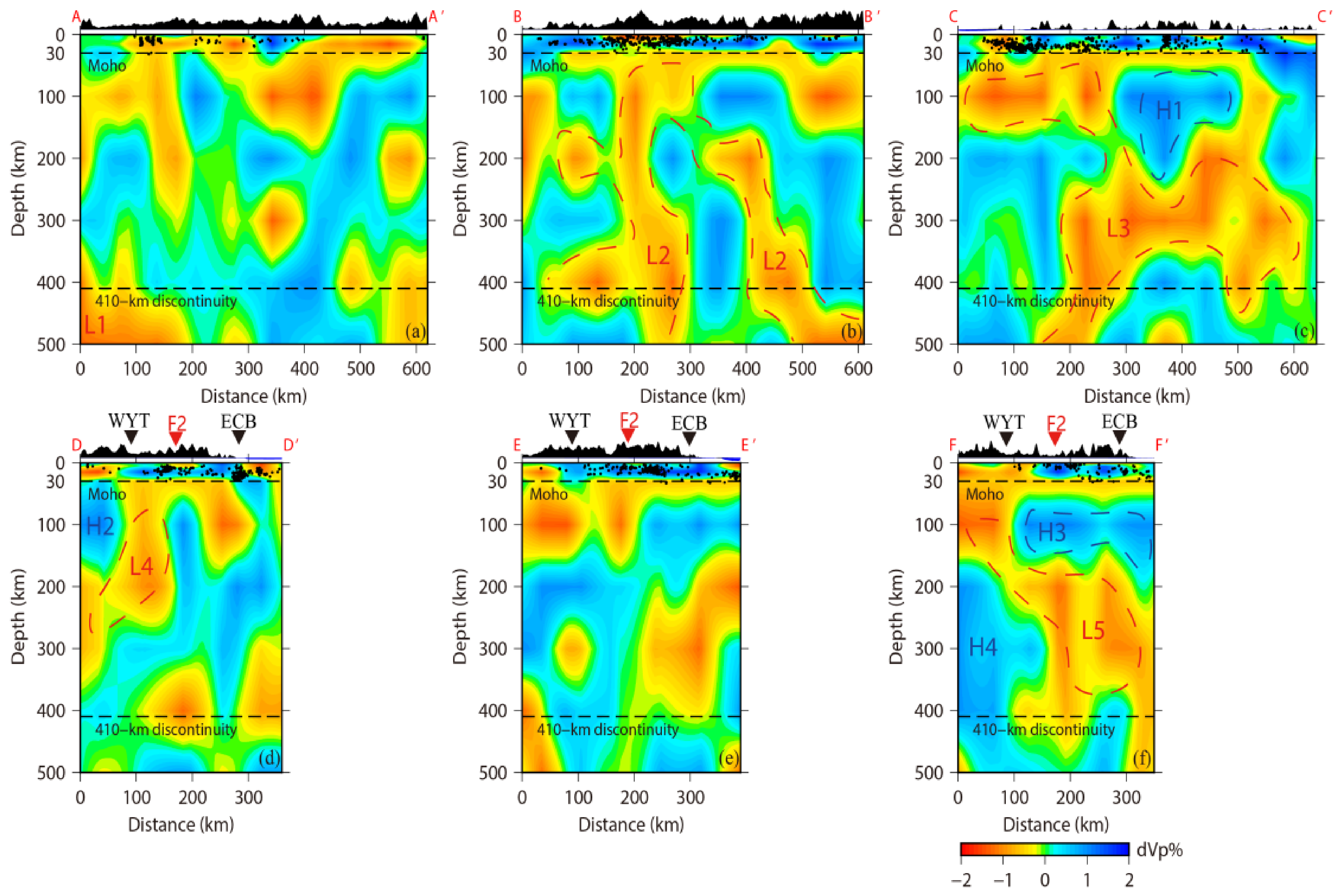
Figure 9 shows the Vp tomography of the crust and upper mantle along Profiles AA’-FF’. The most prominent feature is the abundance of low-Vp anomalies in the upper mantle. In particular, along profiles BB’ and CC’, the low-Vp anomalies in the upper mantle beneath the Zhenghe-Dapu fault and its eastern region extend continuously from the mantle transition zone up to the Moho, which are labeled as L2 and L3 in Figure 9b,c.

5.3. Restoring Resolution Test

A restoring resolution test (RRT) is performed to further validate the reliability of our tomographic results (Figure 10 and Figure 11). The RRT is similar to the CRT, but the input synthetic 3-D velocity model is different. In the RRT, the input 3-D model is derived from the inverted velocity model as shown in Figure 5, Figure 6, Figure 7, Figure 8 and Figure 9. The RRT results for the local and joint tomography are shown in Figure 10 and Figure 11, respectively. The majority of the velocity anomalies, including the major low-V and high-V features in the crust and upper mantle, are well recovered by the RRT. Only minor local details of the velocity structure exhibit relatively poor recovery, for example, the low-V in southwestern Fujian at 30 km depth. The resolution tests confirm that our tomographic model reliably represents the primary features of the deep-velocity heterogeneities beneath Fujian.

6. Discussion

6.1. Geodynamic Controls on Mineralization: Insights from Upper-Mantle Tomography

As shown in Figure 9, several prominent low-V anomalies (L1–L5) exist in the upper mantle beneath the Fujian region, extending down to ~400 km depth, which are consistent with the result of Xi et al. [29]. These low-V anomalies in the upper mantle are interpreted as major conduits for the upwelling mantle-derived hot materials, which might be associated with the Late Mesozoic slab tearing and subsequent eastward rollback of the Paleo-Pacific Plate driven by eclogite-facies metamorphism of the subducted slab [30]. The hot mantle flow indicated by these low-V anomalies likely ascended through the slab window formed by slab tearing, reached the base of the lithosphere, and thermally eroded the overlying lithospheric mantle. Mixtures of partial melts and hot mantle materials then migrated upward along the magmatic conduits and fault zones into the crust [31], triggering large-scale magmatism in Southeast China and extensive Au-Cu mineralization (110–90 Ma) in the WYT (e.g., the Zijinshan deposit; [32]).
Since the Late Mesozoic, the Paleo-Pacific Plate has subducted beneath the Eurasian Plate at a shallow angle, followed by slab rollback and tearing that triggered a regional tectonic transition from compression to extensive extension. The prominent low-Vp anomalies in the upper mantle beneath Southeast China are considered to be closely associated with the widespread Late Mesozoic magmatism [17]. During the Cenozoic, ongoing plate subduction transported the slab material into the lower mantle, driving upwelling of lower-mantle material into the upper mantle through reactivated Mesozoic magma chambers and channels. The large-scale low-V anomalies beneath the CB may indicate the presence of hot mantle materials associated with Mesozoic-Cenozoic large igneous provinces, with partial melting being the primary mechanism responsible for the low-V anomalies [33].
During the Late Jurassic, a major Au-Cu metallogenic belt (~2000 km in length) formed in the eastern CB [32,34]. The Au-Cu deposits in this belt are associated with volcanic-subvolcanic rocks and exhibit significant enrichment in large-ion lithophile elements and light rare earth elements. In contrast, the W-Sn mineralization-related granites in western Cathaysia are classified as A-type granites [35], indicating an extensional metallogenic setting induced by far-field effects of the Paleo-Pacific Plate subduction [36], which is considered as the primary control on the W-Sn mineralization in western Fujian. Similarly, an important metallogenic belt that contains rich polymetallic deposits exists in the Lower Yangtze block, and its deep dynamic mechanism of mineralization mainly originated from the subduction of the Paleo-Pacific plate [37]. Thus, we deem that the deep geodynamic mechanism related to the Paleo-Pacific plate subduction is applicable to discuss the deep mineralization mechanism of the entire eastern part of South China.
Notably, a distinct high-V anomaly (H2) overlies the low-V anomaly (L4) as shown in Figure 9, with a thickness exceeding the average lithospheric thickness of the CB (<100 km; [38]). Yang et al. [39] revealed the lithospheric thickness of the South China Block decreasing dramatically eastward from ~170 km in the west to ~60 km in the east. Integrating the seismic images with high-resistivity features identified by magnetotelluric sounding in this region [40], we infer that the high-V anomaly (H2 in Figure 8) represents a dry, refractory remnant of Proterozoic mantle lithosphere that has been relatively unmodified by subsequent mantle upwelling and magmatism. High-V anomalies (H1 and H3) are revealed at ~150 km depth beneath northeastern Fujian, with the most prominent expressions in the northeastern coastal zone (Figure 9c,f). Huang et al. [17] initially interpreted these anomalies as cooled igneous rocks in the uppermost mantle, given the extensive Late Mesozoic igneous rocks and intense volcanism along the Fujian coast. Huang et al. [41] further suggested that the anomalies represent the depleted mantle with high forsterite content formed by melt extraction.
The subduction of the Paleo-Pacific Plate during the Early Cretaceous triggered partial melting of hydrous peridotite in the mantle wedge, which ascended and underplated the overlying lithosphere. Then the lithosphere had undergone delamination and thinning, which provided the condition for the intrusion of hot materials into the crust, as shown in Figure 9. The thermal energy transferred by these melts caused partial melting of the ancient crustal basement, ultimately forming the widespread intermediate-acid igneous suite in Fujian.

6.2. Crustal Structure and Its Implications for Metallogeny

The Vp/Vs ratio in the crust is closely correlated with the quartz and feldspar compositions of crustal rocks. In general, the intrusion of mafic materials increases the crustal Vp/Vs ratio while felsic compositions result in lower Vp/Vs ratios [42]. Thus, the Vp/Vs ratio is an effective parameter for constraining crustal composition and identifying tectonically induced compositional variations. Previous studies have suggested that the crustal thickness beneath Fujian is 27.4–34.3 km [43], and there exists a clear negative correlation between the crustal thickness and Vp/Vs ratio [44]. Goyal and Hung [20] further documented a gradual thinning of the crust from ~35 km in the northwest to ~27 km in the southeastern coastal zone. Cai et al. [16] reported low Vp/Vs ratios (1.6–1.7) across most of Fujian. Our results are consistent with these previous findings, revealing pervasive low Vp/Vs ratios accompanied by relatively high Vs in the mid-upper crust beneath Fujian (Figure 5g,h), suggesting that some felsic, quartz-rich, and relatively rigid crustal compositions exist there.
However, a different velocity pattern appears at ~15 km depth within the middle crust beneath the western part of the study region, where pronounced low-Vp, low-Vs, and low Vp/Vs ratio anomalies exist (Figure 5b,e, Figure 7a–c, and Figure 8a–f). Similar mid-crustal low-V zones have also been identified across a broader area of the CB [45]. In addition, Zhou et al. [46] reported relatively low Vp/Vs ratios beneath the northern South China Sea and interpreted them as reflecting quartz-rich crustal compositions. Because partial melting generally leads to elevated Vp/Vs ratios [47], the coexistence of low seismic velocities and low Vp/Vs ratios revealed by this study does not support extensive partial melting as the dominant origin of these anomalies.
Li et al. [45] suggested that the mid-crustal low-V zones beneath the CB are more likely associated with the α–β quartz transition (ABQT). Under appropriate temperature–pressure conditions, the phase transition from α-quartz to β-quartz can significantly reduce seismic velocity [48,49]. The CB upper crust is characterized by high silica contents [50], together with elevated regional thermal activity [51] and widespread Mesozoic magmatism [52,53,54]. These geological and thermodynamic conditions provide a favorable environment for the occurrence of ABQT, particularly within a felsic and quartz-rich crustal framework. Furthermore, experimental studies [48] have found that the ABQT process is commonly accompanied by a significant reduction in rock density, which is consistent with the mid-crustal low-density anomalies identified beneath the CB [55].
Notably, the low-Vs and high-Vp/Vs anomalies are primarily concentrated at some intersections of major fault zones, for example, (1) the junction of the Shaowu-Heyuan and Nanping-Ninghua fault zones in western Fujian, (2) the intersection of the Zhenghe-Dapu and Yongan-Jinjiang fault zones in central Fujian, and (3) the Changle-Zhaoan fault zone along the coast (Figure 5i). These distribution features are consistent with the receiver function results [43]. A geothermal result further shows anomalously high heat flows beneath these areas [56]. Fault intersections are characterized by intense fracturing and mechanical weakening, making them favorable conduits for magma upwelling and eruption. Mafic magmas likely intruded into the crust along these faults and accumulated near the fault zones, increasing the mafic component of the crustal rocks and thereby elevating the Vp/Vs ratio. Meanwhile, the associated thermal perturbations and possible localized partial melting may have further reduced Vp and Vs in these regions. Our results further show that the intersection of the Zhenghe-Dapu and Yongan-Jinjiang faults exhibits prominent low-Vs (Figure 5e) and high-Vp/Vs anomalies at ~15 km depth (Figure 5h), indicating that magma ascended along these faults into the mid-crust.

7. Conclusions

In this study, we conduct a joint inversion of local and teleseismic travel-time data to determine a high-resolution 3-D velocity model of the crust and upper mantle (down to 500 km depth) beneath Fujian Province, China. Our tomography reveals some significant low-V anomalies in the upper mantle down to the mantle transition zone, which may represent upwelling mantle flows. In addition, some low-V and high-Vp/Vs anomalies exist in the crust beneath major fault zones and the coast area of Fujian, which are interpreted as magmatic channels. Combining the present results with previous findings, we consider that the deep mineralization beneath Fujian is primarily controlled by the subduction, rollback and tearing of the Paleo-Pacific Plate during the Late Mesozoic, which triggered large-scale mantle upwelling, lithospheric thinning and intense crust-mantle interactions. The fault zones provide essential conduits for the intrusion of upwelling mantle flow. This deep geodynamic model is also applicable to explain the deep mechanism of mineralization during the Mesozoic in the eastern part of South China.

Author Contributions

Conceptualization, Y.S., X.H. and G.J.; methodology, D.Z. and G.J.; data curation, Y.S.; writing—original draft preparation, Y.S.; writing—review and editing, Y.S., G.J., D.Z. and G.Z.; supervision, G.J.; funding acquisition, G.J. and G.Z. All authors have read and agreed to the published version of the manuscript.

Funding

This research was co-supported by the National Natural Science Foundation of China (41974060), the National Key Research and Development Program of China (2016YFC0600201), and the Basic Business Expenses of Central Universities.

Data Availability Statement

The data that support the findings of this study are available from the corresponding author upon reasonable request.

Acknowledgments

We thank the Second Monitoring Center of China Earthquake Administration for providing the seismic data. We are grateful to the three reviewers and the editors for their valuable comments and constructive suggestions. All the figures are drawn using GMT software versions 5 and 6 [57].

Conflicts of Interest

The authors declare no conflicts of interest.

Abbreviations

The following abbreviations are used in this manuscript:
CBCathaysia Block
WYTWuyishan Terrane
ECBEast Cathaysia Block
3-Dthree-dimensional
high-Vhigh velocity
low-Vlow velocity
CRTCheckerboard Resolution Test
RRTRestoring Resolution Test
ABQTα-β Quartz Transition

References

  1. Ren, J.S.; Chen, T.Y.; Niu, B.G. Tectonic Evolution and Metallogenesis of the Continental Lithosphere in Eastern China and Its Adjacent Areas; Science Press: Beijing, China, 1990. [Google Scholar]
  2. Li, X.B.; Xiong, Z.; Fan, X.P.; Tao, X.S.; Peng, X.B. The 3-D velocity structure of crust and uppermost mantle and its tectonic implications in Fujian Province. Seismol. Geol. 2019, 41, 1206–1222. (In Chinese) [Google Scholar]
  3. Li, X. Cretaceous magmatism and lithospheric extension in Southeast China. J. Asian Earth Sci. 2000, 18, 293–305. [Google Scholar] [CrossRef]
  4. Hsü, K.J.; Li, J.; Chen, H.; Wang, Q.; Sun, S.; Şengör, A.M.C. Tectonics of South China: Key to understanding West Pacific geology. Tectonophysics 1990, 183, 9–39. [Google Scholar] [CrossRef]
  5. Wang, Y.; Zhang, A.; Fan, W.; Zhang, Y.; Zhang, Y. Origin of paleosubduction-modified mantle for Silurian gabbro in the Cathaysia Block: Geochronological and geochemical evidence. Lithos 2013, 160, 37–54. [Google Scholar] [CrossRef]
  6. Lin, J.; Xu, T.; Cai, H.; Lü, Q.; Bai, Z.; Deng, Y.; Zhang, Y.; Huang, M.; Badal, J.; Jin, X. Crustal velocity structure of Cathaysia Block from an active-source seismic profile between Wanzai and Hui’an in SE China. Tectonophysics 2021, 811, 228874. [Google Scholar] [CrossRef]
  7. Li, Z.X.; Li, X.H. Formation of the 1300-km-wide intracontinental orogen and postorogenic magmatic province in Mesozoic South China: A flat-slab subduction model. Geology 2007, 35, 179–182. [Google Scholar] [CrossRef]
  8. Qiu, X.F.; Zhao, X.M.; Yang, H.M.; Lu, S.S.; Jiang, T.; Wu, N.W. Petrogenesis of the Early Palaeozoic granitoids from the Yunkai massif, South China block: Implications for a tectonic transition from compression to extension during the Caledonian orogenic event. Geol. Mag. 2018, 155, 1776–1792. [Google Scholar] [CrossRef]
  9. Wang, P.Z.; Chen, Y.A.; Cao, B.T.; Pan, J.D.; Wang, C.Y. Crust–upper-mantle structure and deep structural setting of Fujian province. Geol. Fujian 1993, 12, 79–158. (In Chinese) [Google Scholar]
  10. Chen, W.S.; Yang, H.C.; Wang, X.; Huang, H. Tectonic setting and exhumation history of the Pingtan–Dongshan Metamorphic Belt along the coastal area, Fujian Province, Southeast China. J. Asian Earth Sci. 2002, 20, 829–840. [Google Scholar] [CrossRef]
  11. Zhou, X.H. Major transformation of subcontinental lithosphere beneath eastern China in the Cenozoic-Mesozoic: Review and prospect. Earth Sci. Front. 2006, 13, 50–64. (In Chinese) [Google Scholar]
  12. Zhuang, Q.X.; Zheng, S.G.; Jiang, Z.J.; Zhuang, G.X. Study on the Mantle Convection System and Mantle Plume in Fujian Province. Energy Environ. 2020, 4, 2–3+17. (In Chinese) [Google Scholar]
  13. Zhou, X.M.; Li, W.X. Origin of Late Mesozoic igneous rocks in Southeastern China: Implications for lithosphere subduction and underplating of mafic magmas. Tectonophysics 2000, 326, 269–287. [Google Scholar] [CrossRef]
  14. Zhao, D. Multiscale Seismic Tomography; Springer: Tokyo, Japan, 2015. [Google Scholar] [CrossRef]
  15. Cai, H.T.; Jin, X.; Wang, S.X. One-dimensional velocity structure of the crust in Fujian, Southeast China. Terr. Atmos. Ocean. Sci. 2015, 26, 493–502. [Google Scholar] [CrossRef][Green Version]
  16. Cai, H.T.; Kuo-Chen, H.; Jin, X.; Wang, C.Y.; Huang, B.S.; Yen, H.Y. A three-dimensional Vp, Vs, and Vp/Vs crustal structure in Fujian, Southeast China, from active-and passive-source experiments. J. Asian Earth Sci. 2015, 111, 517–527. [Google Scholar] [CrossRef]
  17. Huang, Z.; Wang, L.; Zhao, D.; Xu, M.; Mi, N.; Yu, D.; Li, H.; Li, C. Upper mantle structure and dynamics beneath Southeast China. Phys. Earth Planet. Inter. 2010, 182, 161–169. [Google Scholar] [CrossRef]
  18. Xu, Y.; Zhang, Y.; Yan, J.; Xu, Z.; Chen, C. Teleseismic P-wave velocity structure of upper mantle beneath the southeastern part of South China and its implications. Geol. China 2019, 46, 737–749. (In Chinese) [Google Scholar]
  19. Li, X.L.; Hao, T.Y.; Li, Z.W. P wave velocity structure and tectonic analysis beneath southeastern China. Chin. J. Geophys. 2020, 63, 1802–1815. (In Chinese) [Google Scholar]
  20. Goyal, A.; Hung, S.H. Bulk Crustal Properties and Layered Velocity Structure in Fujian, SE China: Constraints from P and S Receiver Functions. Front. Earth Sci. 2021, 9, 743163. [Google Scholar] [CrossRef]
  21. Zhang, Y.; Shi, D.; Lü, Q.; Xu, Y.; Xu, Z.; Gong, X.; Yan, J.; Xu, T. A fine crustal structure and geodynamics revealed by receiver functions along the Guangchang-Putian line in the Cathaysia Block, South China. Tectonophysics 2021, 815, 229007. [Google Scholar] [CrossRef]
  22. Zhao, D.; Hasegawa, A.; Horiuchi, S. Tomographic imaging of P and S wave velocity structure beneath northeastern Japan. J. Geophys. Res. 1992, 97, 19909–19928. [Google Scholar] [CrossRef]
  23. Zhao, D.; Hasegawa, A.; Kanamori, H. Deep structure of Japan subduction zone as derived from local, regional, and teleseismic events. J. Geophys. Res. 1994, 99, 22313–22329. [Google Scholar] [CrossRef]
  24. Jiang, G.M.; Zhang, G.B.; Xu, Y. A fast method for calculating relative residuals of teleseismic data and its application. Chin. J. Geophys. 2012, 55, 4097–4105. (In Chinese) [Google Scholar]
  25. Paige, C.C.; Saunders, M.A. LSQR: An algorithm for sparse linear equations and sparse least squares. ACM Trans. Math. Softw. 1982, 8, 43–71. [Google Scholar] [CrossRef]
  26. Paige, C.; Saunders, M.A. LSQR: Sparse linear equations and least squares problems, Part I and Part II. ACM Trans. Math. Softw. 1982, 8, 195–209. [Google Scholar] [CrossRef]
  27. Kennett, B.L.N.; Engdahl, E.R. Traveltimes for global earthquake location and phase identification. Geophys. J. Int. 1991, 105, 429–465. [Google Scholar] [CrossRef]
  28. Waldhauser, F.; Ellsworth, W.L. A double-difference earthquake location algorithm: Method and application to the northern Hayward fault, California. Bull. Seismol. Soc. Am. 2000, 90, 1353–1368. [Google Scholar] [CrossRef]
  29. Xi, J.; Jiang, G.; Zhao, D.; Zhang, G.; She, L.; Lü, Q.; Shi, D. Hot mantle upwelling and Mesozoic mineralization in Southeast China. J. Asian Earth Sci. 2023, 258, 105648. [Google Scholar] [CrossRef]
  30. Mao, J.R.; Li, Z.L.; Ye, H.M. Mesozoic tectono-magmatic activities in South China: Retrospect and prospect. Sci. China Earth Sci. 2014, 57, 2853–2877. [Google Scholar] [CrossRef]
  31. Li, S.; Jiang, G.; Zhao, D.; Zhang, G.; Lü, Q.; Shi, D.; Chai, G. Deep geodynamics and metallogenic mechanism of the South China block: New insight from mantle tomography. Tectonophysics 2023, 869, 230107. [Google Scholar] [CrossRef]
  32. Ni, P.; Wang, G.G.; Li, W.S.; Chi, Z.; Li, S.N.; Gao, Y. A review of the Yanshanian ore-related felsic magmatism and tectonic settings in the Nanling W-Sn and Wuyi Au-Cu metallogenic belts, Cathaysia Block, South China. Ore Geol. Rev. 2021, 133, 104088. [Google Scholar] [CrossRef]
  33. Zhao, L.; Allen, R.M.; Zheng, T.; Zhu, R. High-resolution body wave tomography models of the upper mantle beneath eastern China and the adjacent areas. Geochem. Geophys. Geosyst. 2012, 13, Q06007. [Google Scholar] [CrossRef]
  34. Mao, J.; Zheng, W.; Xie, G.; Lehmann, B.; Goldfarb, R. Recognition of a Middle–Late Jurassic arc-related porphyry copper belt along the southeast China coast: Geological characteristics and metallogenic implications. Geology 2021, 49, 592–596. [Google Scholar] [CrossRef]
  35. Zhu, J.C.; Chen, J.; Wang, R.C.; Lu, J.J.; Xie, L. Early Yanshanian NE trending Sn/W-bearing A-type granites in the western-middle part of the Nanling Mts region. Geol. J. China Univ. 2008, 14, 474. (In Chinese) [Google Scholar]
  36. Groves, D.I.; Santosh, M.; Zhang, L.; Deng, J.; Yang, L.Q.; Wang, Q.F. Subduction: The recycling engine room for global metallogeny. Ore Geol. Rev. 2021, 134, 104130. [Google Scholar] [CrossRef]
  37. Jiang, G.; Zhang, G.; Zhao, D.; Lü, Q.; Shi, D.; Li, H.; Li, X. Mantle flow and dynamics beneath central-east China: New insights from P-wave anisotropic tomography. J. Geophys. Res. Solid Earth 2021, 126, e2020JB020070. [Google Scholar] [CrossRef]
  38. Zhang, Y.Y.; Chen, L.; Ai, Y.S.; Jiang, M.M.; Xu, W.W.; Shen, Z.Y. Lithospheric structure of the South China Block from S-receiver function. Chin. J. Geophys. 2018, 61, 138–149. (In Chinese) [Google Scholar]
  39. Yang, X.; Li, Y.; Afonso, J.C.; Yang, Y.; Zhang, A. Thermochemical state of the upper mantle beneath South China from multi-observable probabilistic inversion. J. Geophys. Res. Solid Earth 2021, 126, e2020JB021114. [Google Scholar] [CrossRef]
  40. Han, S. The 3D Electrical Lithosphere Structure of the South China and Its Tectonic Implications. Ph.D. Thesis, Jilin University, Changchun, China, 2017. (In Chinese) [Google Scholar]
  41. Huang, Z.; Gou, T.; Wang, L. P and S wave tomography of east-central China: Insight into past and present mantle dynamics. Tectonophysics 2021, 809, 228859. [Google Scholar] [CrossRef]
  42. Ji, S.; Wang, Q.; Salisbury, M.H. Composition and tectonic evolution of the Chinese continental crust constrained by Poisson’s ratio. Tectonophysics 2009, 463, 15–30. [Google Scholar] [CrossRef]
  43. Li, H.Y.; Cai, H.T.; Jin, X.; Yao, H.J.; Li, P.; Xu, J.J.; Lin, C.; Ren, C.R. Analysis of the crustal thickness and Poisson’s ratio in Fujian, Southeast China, from teleseismic P-wave receiver functions. Chin. J. Geophys. 2021, 64, 805–822. (In Chinese) [Google Scholar]
  44. Li, A.; Jia, Z.; Jiang, G.; Zhang, G.; Zhao, D. Crustal structure of the central Cathaysia block in South China derived from receiver functions. Earthq. Sci. 2025, 38, 545–563. [Google Scholar] [CrossRef]
  45. Li, H.; Chen, J.; Li, Z.; Chen, X.; Cai, H.; Feng, X.; Zhang, G.; Jin, Z. Mid-crustal low-velocity zones beneath Southeastern Coastal China revealed by multimodal ambient noise tomography: Insights into Mesozoic magmatic activities. Tectonophysics 2025, 898, 230636. [Google Scholar] [CrossRef]
  46. Zhou, P.; Xia, S.; Hetényi, G.; Monteiller, V.; Chevrot, S.; Sun, J. Seismic imaging of a mid-crustal low-velocity layer beneath the northern coast of the South China Sea and its tectonic implications. Phys. Earth Planet. Inter. 2020, 308, 106573. [Google Scholar] [CrossRef]
  47. Watanabe, T. Effects of water and melt on seismic velocities and their application to characterization of seismic reflectors. Geophys. Res. Lett. 1993, 20, 2933–2936. [Google Scholar] [CrossRef]
  48. Kern, H. Effect of high-low quartz transition on compressional and shear wave velocities in rocks under high pressure. Phys. Chem. Miner. 1979, 4, 161–171. [Google Scholar] [CrossRef]
  49. Peng, Z.; Redfern, S.A.T. Mechanical properties of quartz at the α-β phase transition: Implications for tectonic and seismic anomalies. Geochem. Geophys. Geosyst. 2013, 14, 18–28. [Google Scholar] [CrossRef]
  50. Sun, Y.; Gao, R.; Li, Z.; Wang, A.; Han, R.; Xi, Y.; Liu, J. Composition and Evolution of Continental Crust at Orogenic Belts: Constraints from a 3-D Crustal Model of Southeast China. J. Geophys. Res. Solid Earth 2022, 127, e2022JB025057. [Google Scholar] [CrossRef]
  51. Jiang, G.; Hu, S.; Shi, Y.; Zhang, C.; Wang, Z.; Hu, D. Terrestrial heat flow of continental China: Updated dataset and tectonic implications. Tectonophysics 2019, 753, 36–48. [Google Scholar] [CrossRef]
  52. Zhou, X.; Sun, T.; Shen, W.; Shu, L.; Niu, Y. Petrogenesis of Mesozoic granitoids and volcanic rocks in South China: A response to tectonic evolution. Epis. J. Int. Geosci. 2006, 29, 26–33. [Google Scholar] [CrossRef] [PubMed]
  53. Liu, J.X.; Wang, S.; Wang, X.L.; Du, D.H.; Xing, G.F.; Fu, J.M.; Chen, X.; Sun, Z.M. Refining the spatio-temporal distributions of Mesozoic granitoids and volcanic rocks in SE China. J. Asian Earth Sci. 2020, 201, 104503. [Google Scholar] [CrossRef]
  54. Cao, X.; Flament, N.; Li, S.; Müller, R.D. Spatio-temporal evolution and dynamic origin of Jurassic-Cretaceous magmatism in the South China Block. Earth-Sci. Rev. 2021, 217, 103605. [Google Scholar] [CrossRef]
  55. Deng, Y.; Zhang, Z.; Badal, J.; Fan, W. 3-D density structure under South China constrained by seismic velocity and gravity data. Tectonophysics 2014, 627, 159–170. [Google Scholar] [CrossRef]
  56. Hu, S.; He, L.; Wang, J. Heat flow in the continental area of China: A new data set. Earth Planet. Sci. Lett. 2000, 179, 407–419. [Google Scholar] [CrossRef]
  57. Wessel, P.; Smith, W.H.F. New, improved version of Generic Mapping Tools released. Eos Trans. AGU 1998, 79, 579. [Google Scholar] [CrossRef]
Figure 2. (a) Distribution of P-wave (red) and S-wave (blue) travel times of local earthquakes. (b) Histogram of relative travel-time residuals (in second) of teleseismic events. (c) Distribution of teleseismic events (red stars) used in this study. The blue lines denote plate boundaries. The yellow triangle denotes the center of the present study area.
Minerals 16 00593 g002
Figure 3. Results of a checkerboard resolution test in the crust by using local earthquake tomography with a lateral interval of 0.5°. (ac) For Vp tomography. (df) For Vs tomography. The layer depth is shown above each map.
Minerals 16 00593 g003
Figure 4. Results of a checkerboard resolution test for Vp tomography of the crust and upper mantle by conducting a joint inversion of local and teleseismic data. The lateral grid interval is 0.5°. The layer depth is shown above each map.
Minerals 16 00593 g004
Figure 5. Map views of crustal tomography obtained by inverting arrival times of local earthquakes. (ac) Vp images. (df) Vs images. (gi) Vp/Vs ratio images. The layer depth is shown above each map. The black dots denote local seismicity at depths of 0–10 km (a,d,g), 10–25 km (b,e,h), and 25–40 km (c,f,i). The black lines denote active faults.
Minerals 16 00593 g005
Figure 6. Map views of Vp tomography of the crust and upper mantle obtained by a joint inversion of local and teleseismic data. The layer depth is shown above each map. The red lines in (i) denote locations of the vertical cross-sections in Figure 7, Figure 8 and Figure 9. Other symbols are the same as those in Figure 5.
Minerals 16 00593 g006
Figure 7. Vertical cross-sections of crustal tomography. (ac) Vp, Vs, and Vp/Vs ratio images along Profile AA’; (df) Vp, Vs, and Vp/Vs ratio images along Profile BB’; (gi) Vp, Vs, and Vp/Vs ratio images along Profile CC’. Locations of the profiles are shown in Figure 6i. F4: the Shaxian-Nanri Island fault; F6: the Yongan-Jinjiang fault. The color dots denote local seismicity within a width of 30 km of each profile.
Minerals 16 00593 g007
Figure 8. The same as Figure 7 but along Profiles DD’, EE’, and FF’. F1: the Shaowu-Heyuan fault; F2: the Zhenghe-Dapu fault; F3: the Changle-Zhaoan fault; F5: the Nanping-Ninghua fault. The color dots denote local seismicity within a width of 30 km of each profile.
Minerals 16 00593 g008
Figure 9. Vertical cross-sections of Vp tomography in the crust and upper mantle along Profiles AA’–FF’ (corresponding to subfigures (af)). Locations of the profiles are shown in Figure 6i. F2: the Zhenghe-Dapu Fault; WYT: the Wuyishan Terrane; ECB: the East Cathaysia Block. The black dots denote local seismicity within a width of 30 km of each profile.
Minerals 16 00593 g009
Figure 10. Results of a restoring resolution test for local crustal tomography. (ac) For Vp tomography. (df) For Vs tomography. The synthetic input model is shown in Figure 5. The layer depth is shown above each map.
Minerals 16 00593 g010
Figure 11. Results of a restoring resolution test for Vp tomography of the crust and upper mantle by a joint inversion of the local and teleseismic data. The synthetic input model is shown in Figure 6. The layer depth is shown above each map.
Minerals 16 00593 g011
Disclaimer/Publisher’s Note: The statements, opinions and data contained in all publications are solely those of the individual author(s) and contributor(s) and not of MDPI and/or the editor(s). MDPI and/or the editor(s) disclaim responsibility for any injury to people or property resulting from any ideas, methods, instructions or products referred to in the content.