Article

Solubility of Auroselenide in Hydrothermal Solutions (Thermodynamic Modeling) and Conditions for AuSe(s) Formation in Natural Processes


by
Galina A. Palyanova
1,*,
Tatiana V. Beliaeva
1,
Olga L. Gaskova
1,
Nadezhda D. Tolstykh
1 and
Nikolay S. Bortnikov
2
1
Sobolev Institute of Geology and Mineralogy, Siberian Branch of Russian Academy of Sciences, Koptyuga Ave., 3, Novosibirsk 630090, Russia
2
Institute of Geology of Ore Deposits, Petrography, Mineralogy, and Geochemistry, Russian Academy of Sciences, Staromonetny, 35, Moscow 119017, Russia
*
Author to whom correspondence should be addressed.
Minerals 2026, 16(6), 562; https://doi.org/10.3390/min16060562
Submission received: 18 April 2026 / Revised: 18 May 2026 / Accepted: 20 May 2026 / Published: 22 May 2026
(This article belongs to the Special Issue Gold Deposits: From Primary to Placers and Tailings After Mining)

Abstract

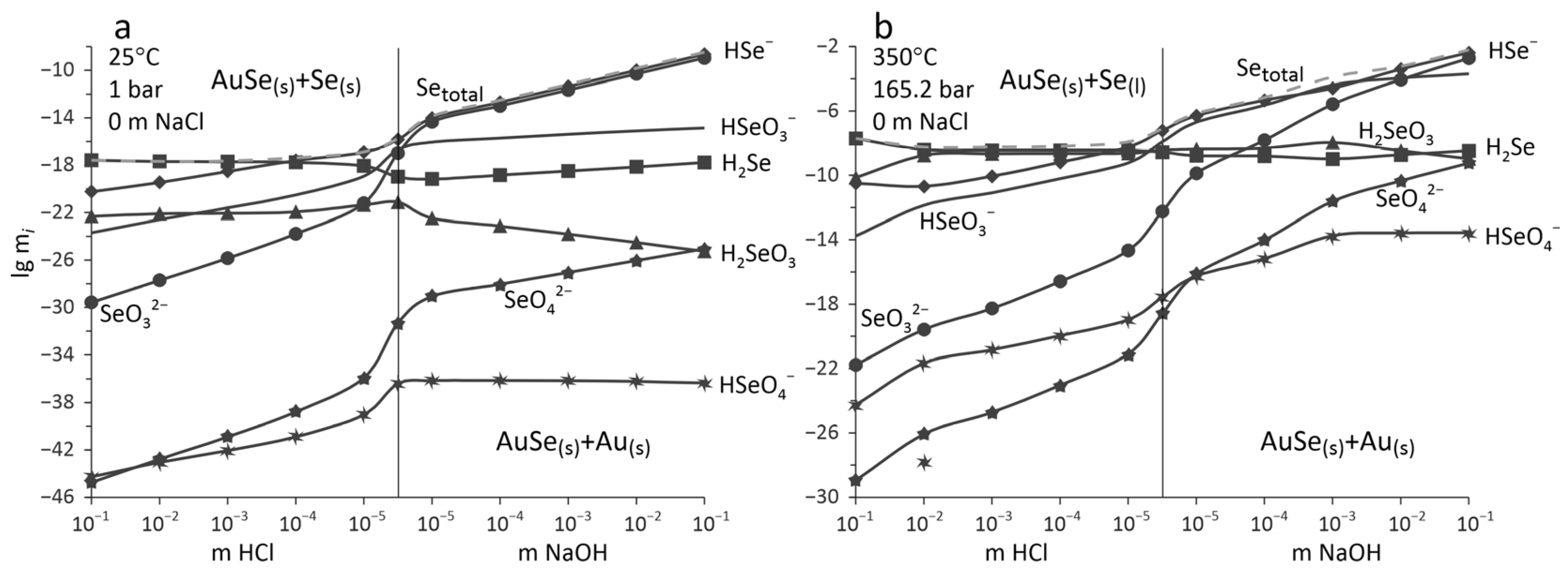
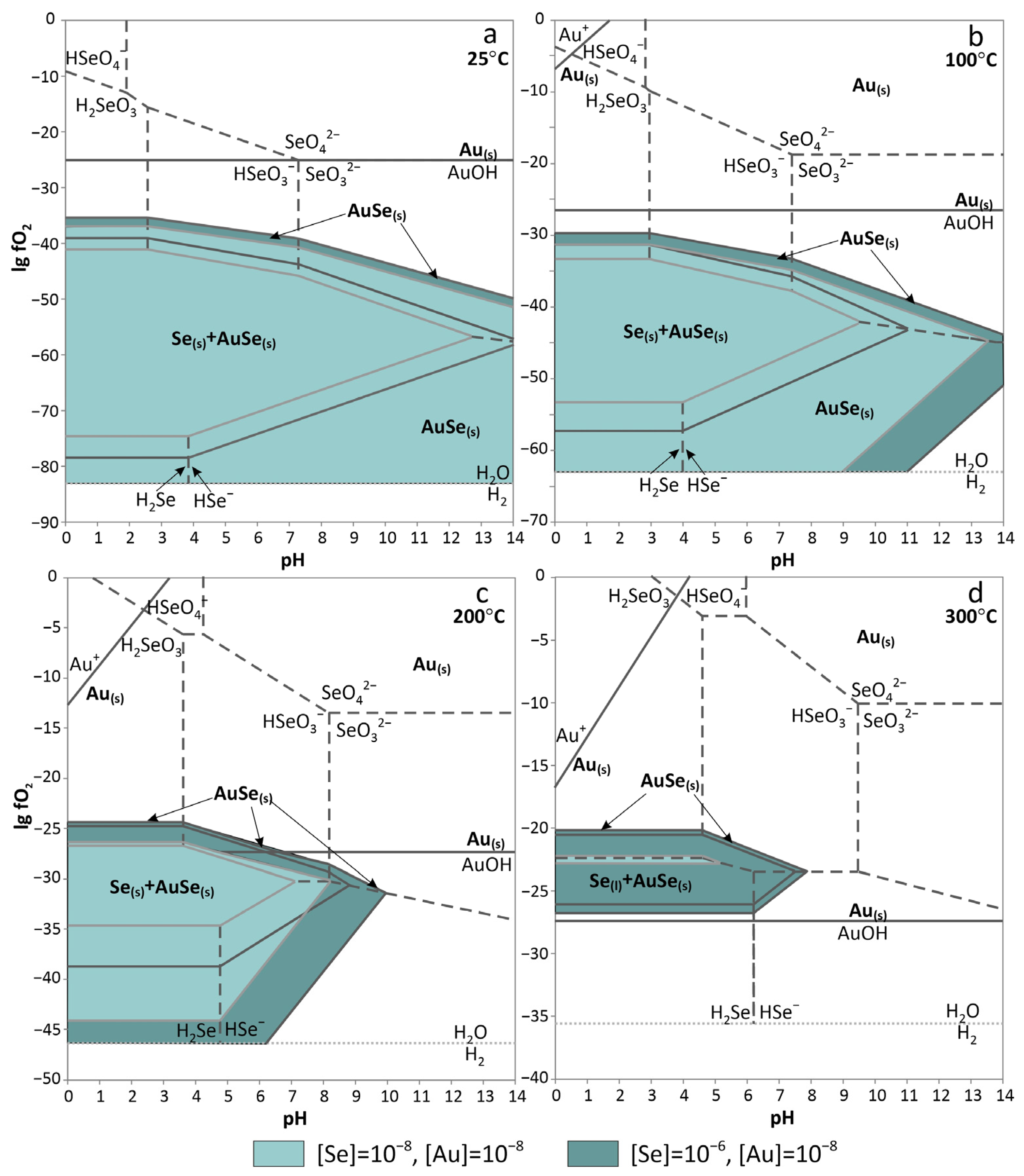
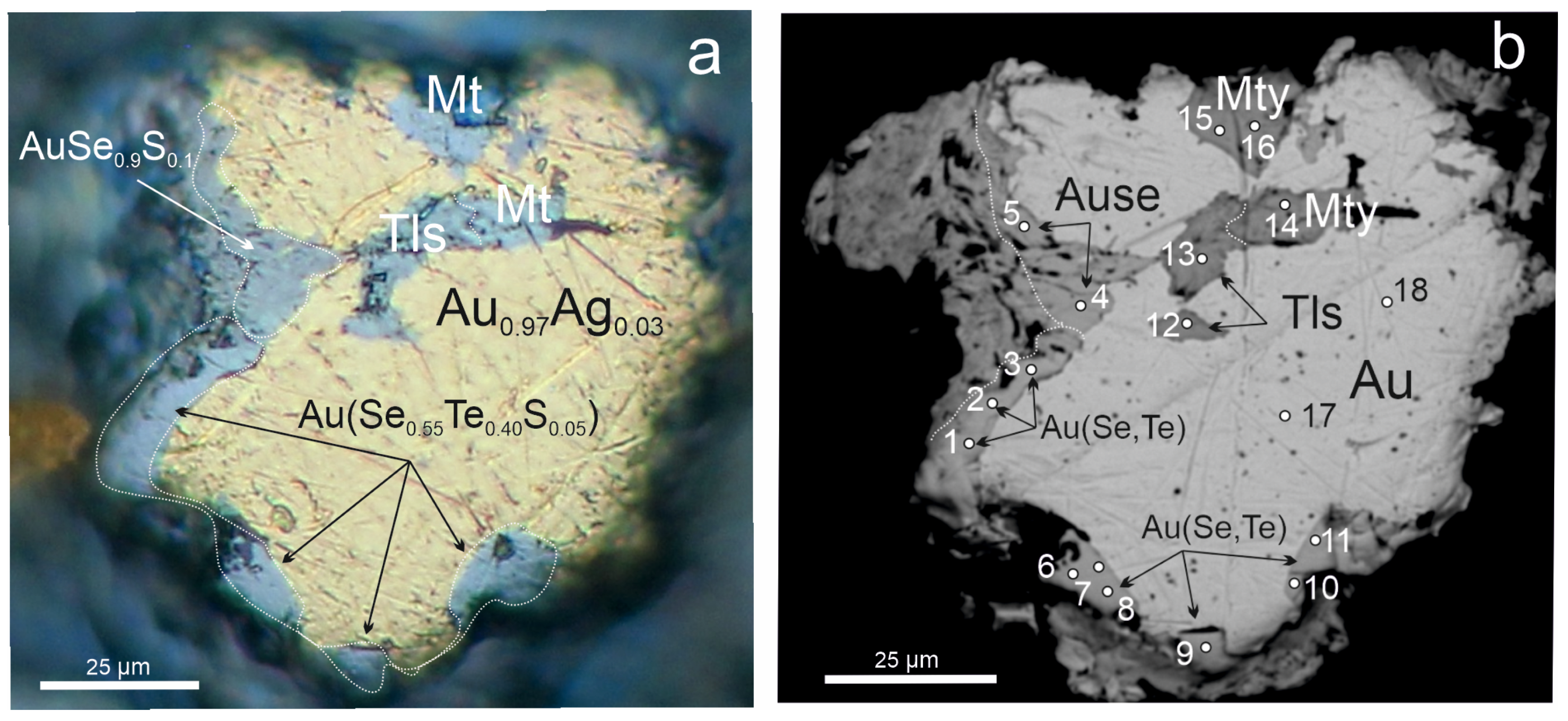
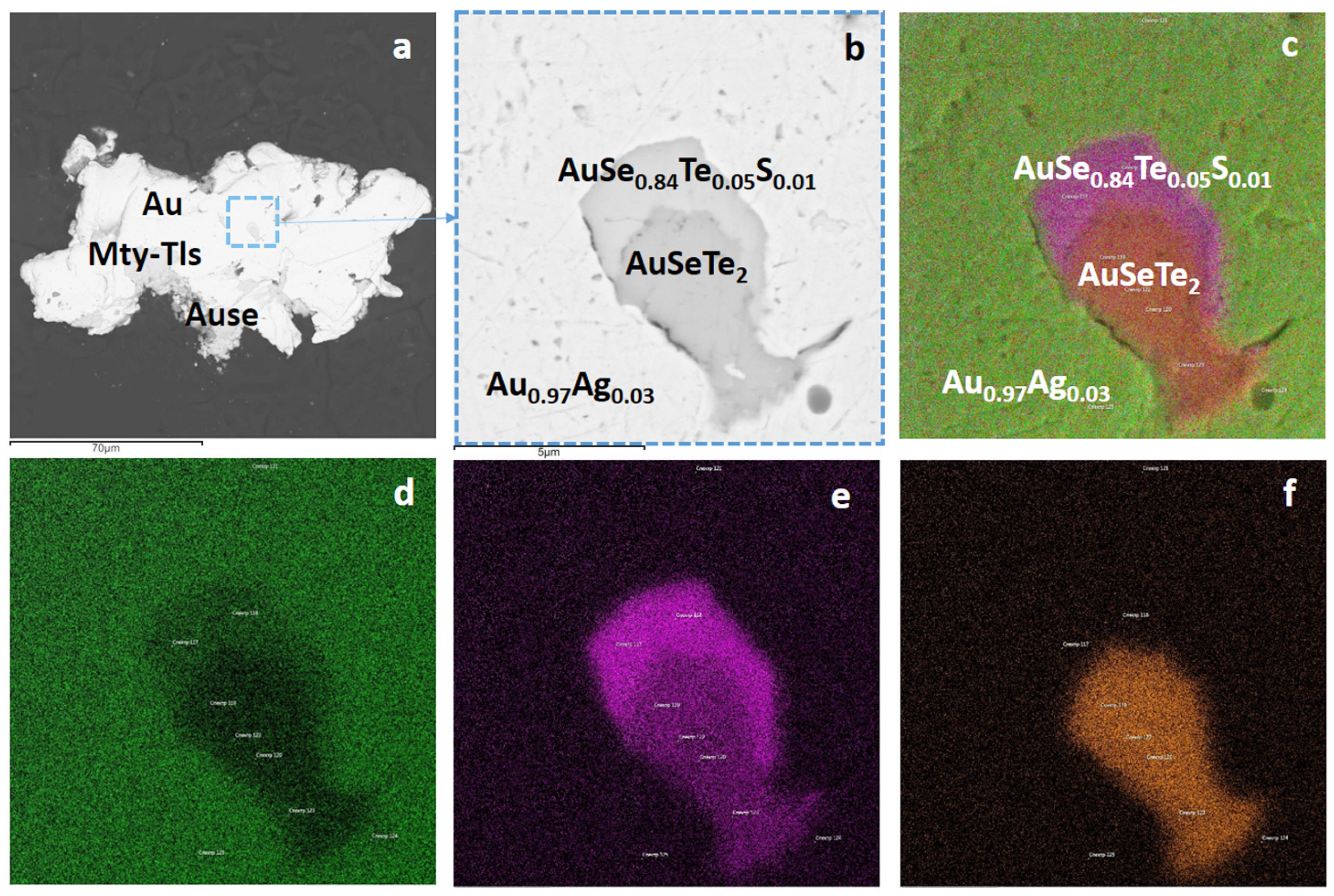
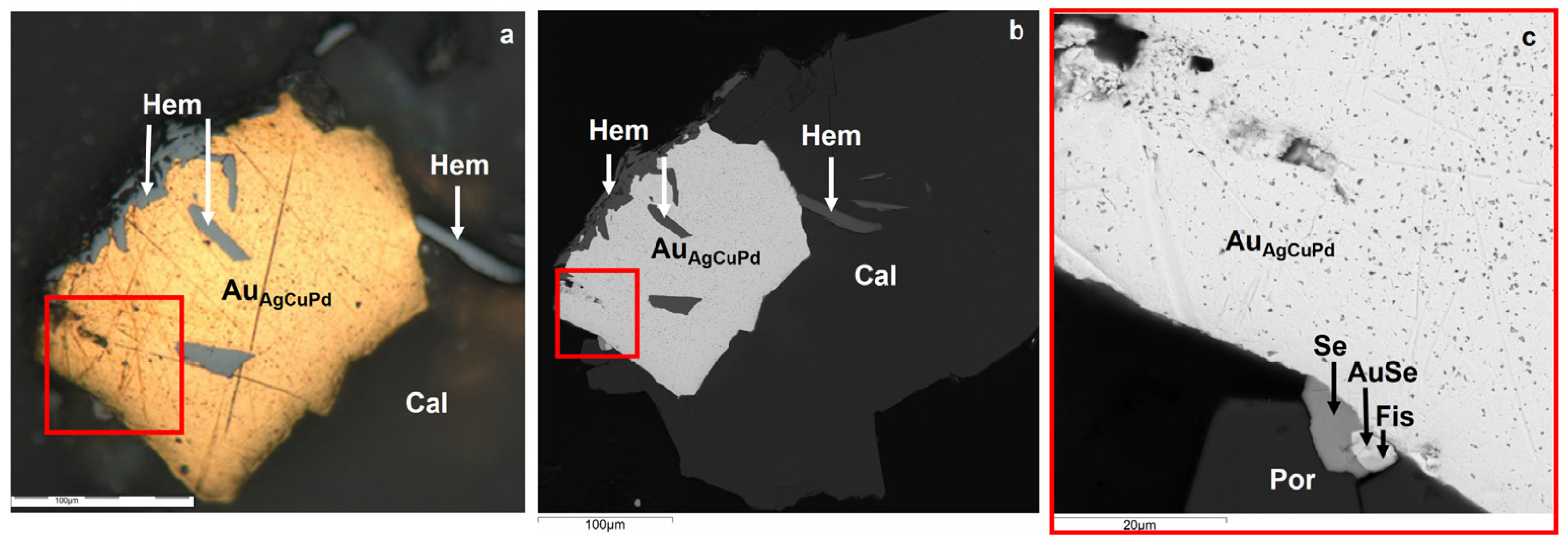
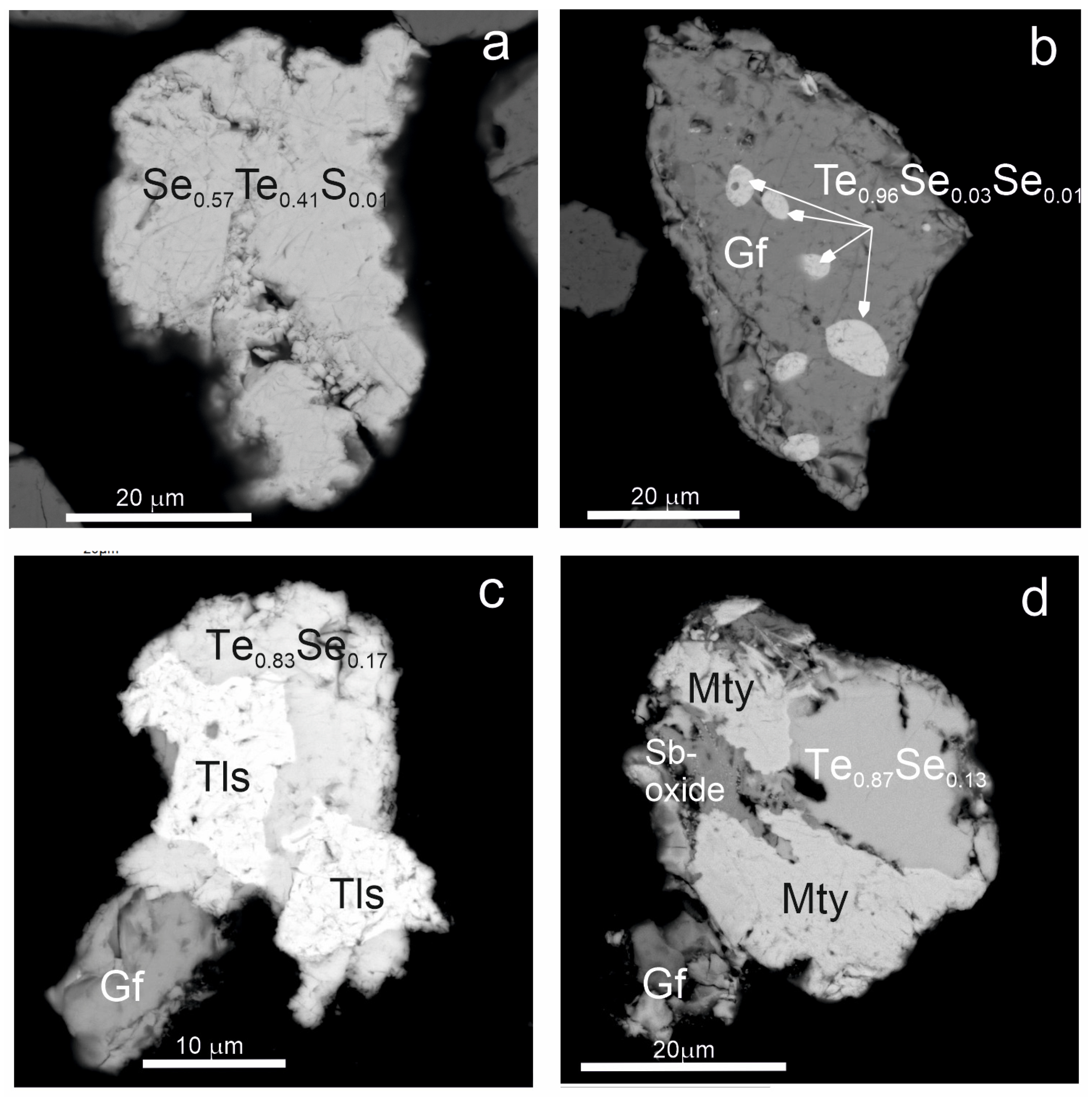
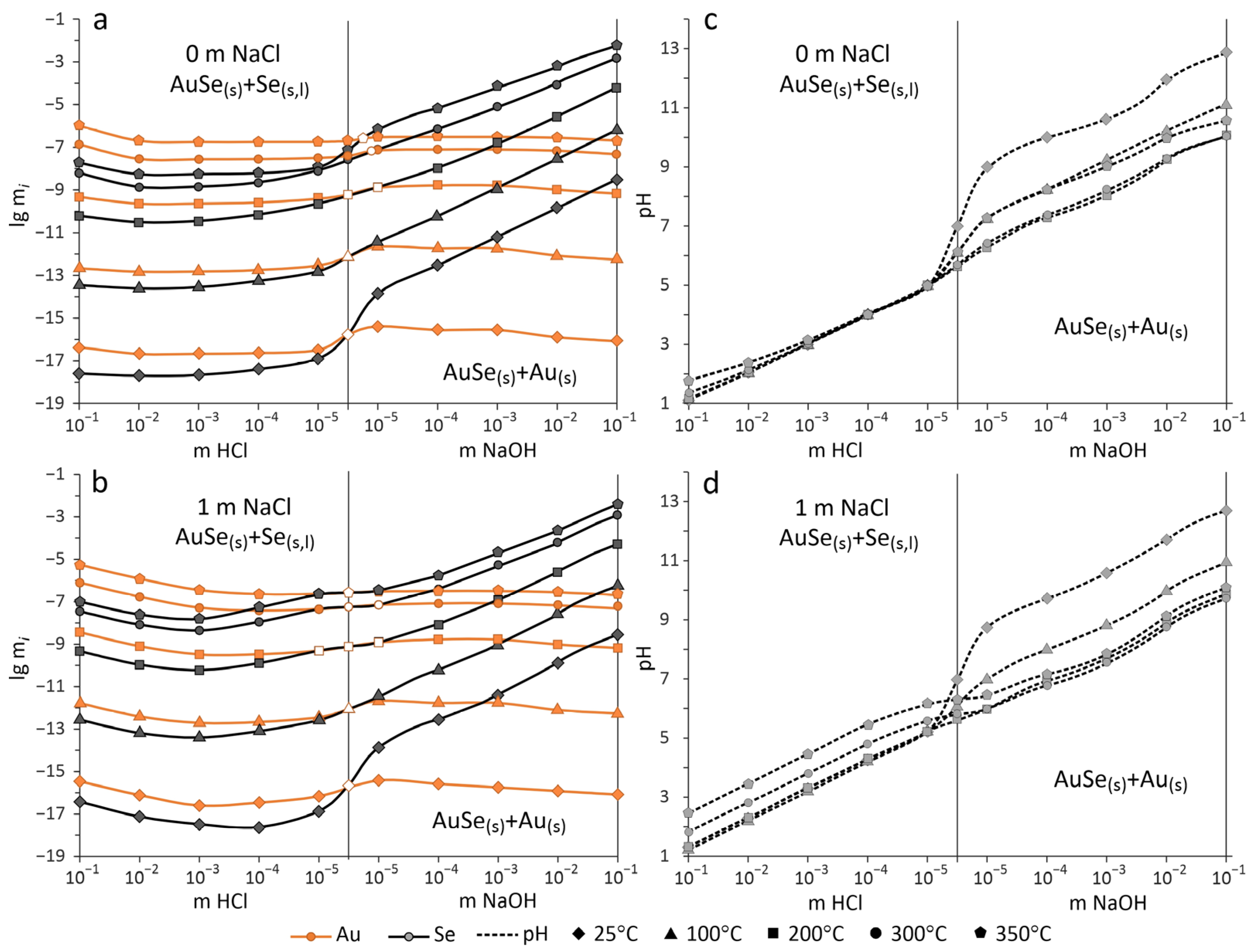
We used thermodynamic modeling methods to calculate the stability of auroselenide AuSe(s) in hydrothermal solutions at different temperatures (25–350 °C), pressures (1–165 bar), salinities (0–5 m NaCl), and acidity–alkalinity (0.00001–0.1 m HCl or NaOH). Gold selenide dissolves congruently in near-neutral solutions. In acidic chloride solutions, AuSe(s) dissolves incongruently to form selenium Se(s,l), and in alkaline solutions, to form gold Au(s). Gold selenide has a low solubility at temperatures of 25–200 °C. With increasing temperature, the solubility of AuSe(s) increases and at 350 °C the concentration of dissolved gold in highly acidic solutions (without NaCl) reaches 10−6 m, while in near-neutral and alkaline solutions, it varies from 2·10−7 to 6·10−7 m. At concentrations of NaCl and HCl higher than 0.01 m, the solubility of AuSe(s) increases by half an order of magnitude owing to the formation of gold chloride complexes. In low acidic, near-neutral, and alkaline solutions, gold hydroxocomplex is predominant. We constructed diagrams for the Au–Se–H2O system at various temperatures (25, 100, 200 and 300 °C), which show the stability fields of AuSe(s), Au(s) + AuSe(s), Se(s,l) + AuSe(s) and Au(s) on lg ƒO2–pH. Gold chalcogenides are characteristic minerals of epithermal deposits. The relationships of auroselenide with native selenium and native gold and other minerals in the Au-Ag ores of the Gaching ore occurrence (Kamchatka Peninsula, Russia) and the Bleïda Far West Au-Pd deposit (Morocco) were studied. It was revealed that auroselenide occurs in the peripheral parts of native gold grains, and, less often, in the form of inclusions and intergrowths with other gold chalcogenides in the core of native gold grains. The presence of solidified microdroplets of composition ranging from Te0.97Se0.03 to Te0.71Se0.28S0.01 and Se0.58Te0.41S0.01 in the ore minerals at these and other golddeposits suggests participation of chalcogens existing at temperatures of 217–449 °C. The formation of auroselenide and other gold chalcogenides is likely with a decrease in temperature and neutralization of highly acidic or highly alkaline solutions, or with the participation of melts or chalcogen gas particles. The results of thermodynamic calculations are confirmed by the data on the composition of mineral associations with auroselenide from gold deposits. The presence of auroselenide in the ores from Au-Ag epithermal and other gold deposits with Au–Se–Te–S mineralization is predicted.
Keywords: auroselenide; solubility of AuSe(s); lg ƒO2–pH diagrams; Gaching Au-Ag ore-occurrence; Bleïda Far West Au-Pd deposit; mineral associations; native gold; native selenium auroselenide; solubility of AuSe(s); lg ƒO2–pH diagrams; Gaching Au-Ag ore-occurrence; Bleïda Far West Au-Pd deposit; mineral associations; native gold; native selenium