1. Introduction
Comminution governs particle size distribution (PSD), mineral liberation, fracture-induced micro-crack formation, and particle surface characteristics presented to flotation, thereby strongly influencing both metallurgical recovery and concentrate grade. In the mineral processing literature, finer particle sizes are generally associated with increased liberation, higher specific surface area, and improved flotation recovery, although excessive fines may reduce selectivity, alter hydrodynamics, and impair flotation kinetics [
1,
2]. Consequently, PSD is frequently treated as a primary control variable in flotation optimisation.
However, recent studies have shown that flotation performance depends not only on nominal particle size, but also on particle generation mechanisms, breakage-induced surface modification, and downstream reagent–particle interactions [
2]. In practical comminution–flotation circuits, PSD does not vary independently, but is intrinsically coupled to crusher type, energy input, residence time, and breakage mechanism. For example, High-Pressure Grinding Rolls (HPGRs) and Vertical Shaft Impact (VSI) crushers generate fundamentally different particle populations through confined-bed compression and impact breakage, respectively, producing distinct size distributions, fracture morphologies, and liberation characteristics [
2,
3]. These crusher-specific particle populations may influence flotation response through both PSD-mediated and non-PSD-mediated mechanisms.
Despite these advances, most reported particle size–flotation relationships remain fundamentally correlation-based, relating metallurgical performance directly to PSD metrics such as D50, fine fraction, or specific surface area [
4]. As a result, conventional regression and machine-learning models often do not distinguish whether observed variations in recovery and concentrate grade arise from particle size itself or from operational variables that co-vary with particle size. This limitation is increasingly recognised in data-driven process modelling, where predictive accuracy may be achieved at the expense of mechanistic interpretability [
4,
5,
6]. Consequently, optimisation strategies based solely on empirical grind–recovery relationships may incorrectly attribute performance changes to PSD when they are instead driven by comminution-specific factors such as energy dissipation, breakage characteristics, or fracture-induced surface modification.
In parallel, structural causal modelling, mediation analysis, and counterfactual inference have emerged as powerful tools for disentangling direct and mediated effects in complex systems across medicine, economics, environmental science, and engineering [
6,
7,
8,
9]. These frameworks enable decomposition of total effects into causally interpretable pathways and permit evaluation of hypothetical interventions beyond the observed data [
8,
10,
11,
12]. However, their explicit application in mineral processing, particularly in comminution–flotation systems, remains limited. This gap is particularly significant because PSD inherently lies on the causal pathway between comminution technology and flotation performance. Treating PSD solely as an independent optimisation variable therefore obscures its role as a mediator that transmits upstream comminution effects to downstream separation outcomes.
To address this limitation, the present study applies a causal decomposition framework combining structural causal modelling, mediation analysis, and counterfactual prediction to disentangle particle size-mediated effects from non-size-mediated comminution effects in gold flotation systems, consistent with established causal inference frameworks developed [
11,
12,
13,
14,
15]. Specifically, the study aims to determine how flotation performance would change if particle size were varied independently of the comminution pathway, or if comminution mode were altered under comparable PSD conditions.
Within this framework, causal assumptions are formalised using directed acyclic graphs (DAGs), which provide a transparent representation of hypothesised cause–effect relationships among crusher type, energy input, particle size distribution (PSD), and flotation response. DAG-based modelling enables separation of direct comminution effects from particle size-mediated pathways while explicitly defining the assumptions required for causal identification, mediation analysis, and counterfactual prediction [
6,
7,
11,
15,
16,
17,
18].
The objective of this study was to quantify how comminution technology influences gold flotation recovery and concentrate grade through particle size-mediated and non-mediated pathways using structural causal modelling, mediation analysis, and counterfactual prediction. Specifically, the study aimed to determine how flotation outcomes would change if particle size were varied independently of the comminution pathway, or if crusher mode were altered under comparable particle size distributions.
Accordingly, this work advances a structural modelling approach comprising: (i) regression-based estimation of recovery and concentrate grade as functions of crusher type, PSD, collector regime, and operating conditions; (ii) explicit modelling of PSD as a mediator influenced by upstream comminution variables; and (iii) counterfactual analysis and structural decomposition of direct and indirect effects [
10,
11,
12,
19].
The present analysis is based on a controlled legacy comminution–flotation dataset previously developed for crusher comparison studies [
3]. Methodological assumptions and statistical limitations associated with the compact dataset are discussed in
Section 2.
Recovery (on a fractional scale) was modelled using generalised linear models (GLMs) with a binomial family and logit link following John Nelder and Peter McCullagh [
20]. In light of the compact sample size (N = 11), heteroskedasticity-consistent HC3 covariance estimators were employed, consistent with recommendations for small-sample and high-leverage settings [
21]. Inference is therefore interpreted cautiously, with emphasis placed on effect direction and magnitude rather than formal statistical significance. Ordinary least squares (OLSs) recovery predictions exceeding 100% reflect saturation of the linear model outside the physically bounded recovery domain and are interpreted as asymptotic directional indicators rather than physically realisable process values. Bounded generalised linear model estimates were used to confirm the robustness of all substantive conclusions [
22].
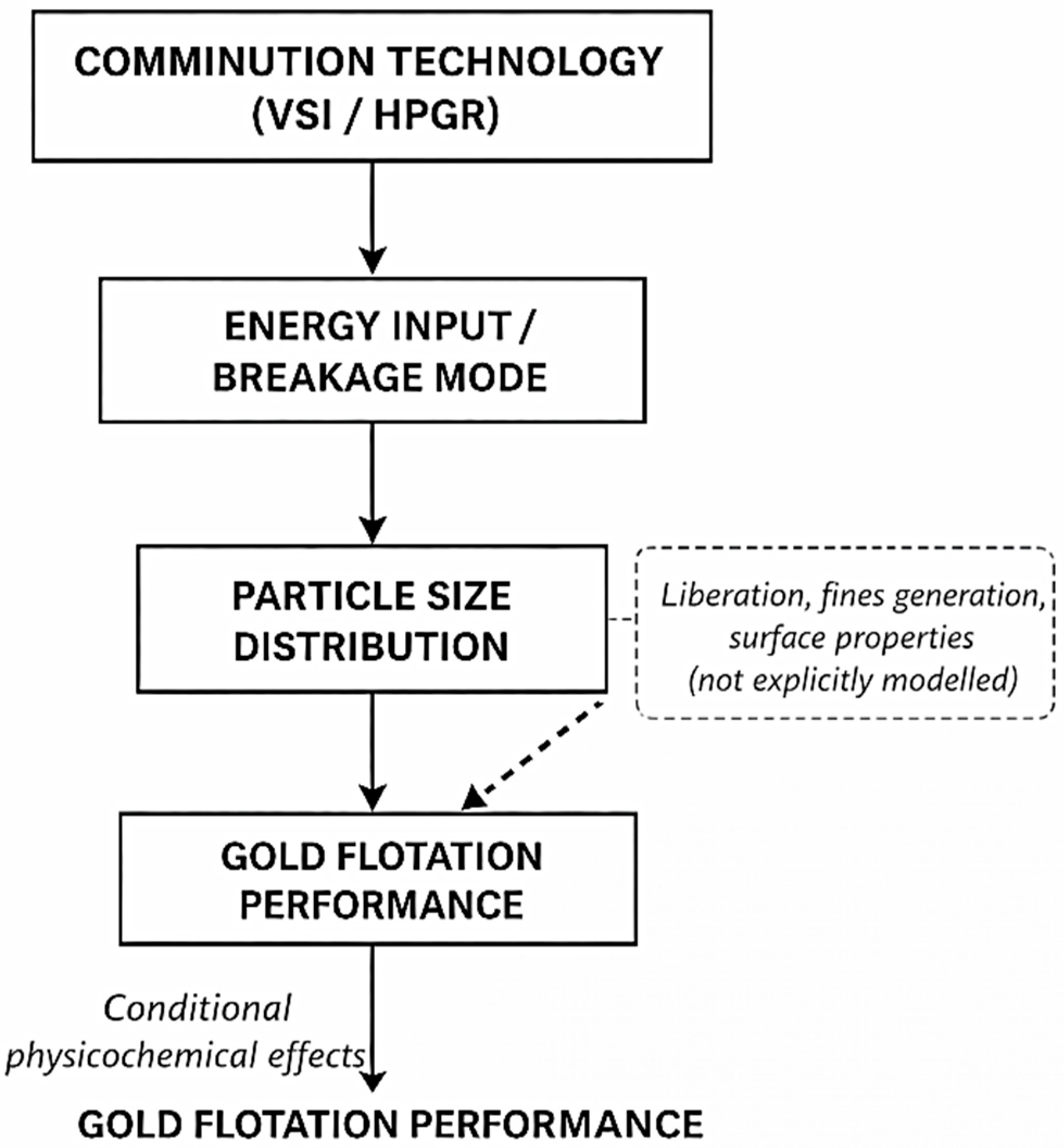
Figure 1 presents the causal framework adopted in this study. Comminution technology (VSI or HPGR) influences gold flotation performance indirectly through its effect on energy input and breakage mode, which together determine the resulting particle size distribution. Particle size distribution acts as the primary mediator linking comminution to flotation response. Secondary physicochemical effects associated with particle size, such as liberation, fine generation, and surface properties, are acknowledged as conditional influences but are not explicitly modelled due to data limitations. From a particle system perspective, this structure represents a coupled upstream–downstream operation in which equipment selection and operating decisions propagate through mediating variables to condition downstream separation performance. By making these pathways explicit, the causal framework enables decomposition of total effects into direct and mediated components and supports counterfactual evaluation of alternative process design and optimisation scenarios using observational data.
2. Materials and Methods
Exploratory Causal Modelling Data Provenance
This manuscript presents a secondary statistical and causal analysis of experimental data (
Table S1) previously reported in
Materials, “Energy-efficient gold flotation via coarse particle generation using VSI and HPGR comminution” (Thatipamula and Devasahayam) [
3]. Gold ore samples sourced from the Ballarat gold mine, Australia. The reagents used in flotation sequence included: Activator: 50 g/t of copper sulphate (CuSO
4); Collectors: PAX (Potassium Amyl Xanthate, C5H11OCSSK), (Lianyungang Huaihua International Trade Co., Ltd. Lianyungang, China); DSP002 (Sodium Dibutyl Dithiophosphate),Shark Chemical Global, Johannes burg, South Africa. Frother: DSF002A, supplied by IXOM, Melbourne, Australia.
The machine learning analyses were implemented in Python (scikit-learn 1.3). In this work, the contribution is primarily methodological, introducing an explicit particle size distribution (PSD) mediator (), applying OLS and GLMs with HC3 robust standard errors, conducting counterfactual predictions, and structurally decomposing crusher effects into direct (non-PSD pathways) and PSD-mediated components. Where raw experimental outcomes (recovery, grade, energy, and PSD) are cited, we reference the original report. OLS recovery models are used for causal decomposition and to indicate effect direction only; bounded GLM results are provided to confirm the robustness of conclusions.
Hypothesis-generating methodological analysis
The modelling outputs, tables, and figures presented in this work are derived from a structural causal modelling framework applied to a previously published experimental dataset [
3]. This includes OLS and GLM summaries, causal mediation results, structural decomposition of effects, and counterfactual analyses.
Causal interpretation is based on the assumed directed acyclic graph (DAG), the absence of unmeasured confounding between crusher type, particle size distribution (PSD), and recovery, and correct model specification. Accordingly, the results should be interpreted as structurally informed, hypothesis-generating insights supported by the available data, rather than as definitive causal proof.
The dataset analysed in this study comprises the complete set of controlled flotation experiments (N = 11) reported in the original comminution campaign [
3]. The original experiments were designed to compare crusher technologies under fixed operating conditions rather than to construct a large response-surface or machine-learning dataset. Accordingly, the objective of present study does not seek broad statistical generalisation across a multidimensional process space but instead evaluates whether structural causal modelling can extract mechanistic and decision-relevant insight from compact legacy datasets commonly encountered in mineral processing research. In such studies, each experimental condition requires ore preparation, controlled comminution, particle size characterisation, flotation testing, and chemical analysis, making large factorial datasets experimentally demanding. The sample size therefore reflects the complete available controlled dataset rather than selective subsampling, and the analysis is intentionally framed as hypothesis-generating rather than confirmatory [
23].
2.1. Experimental Data
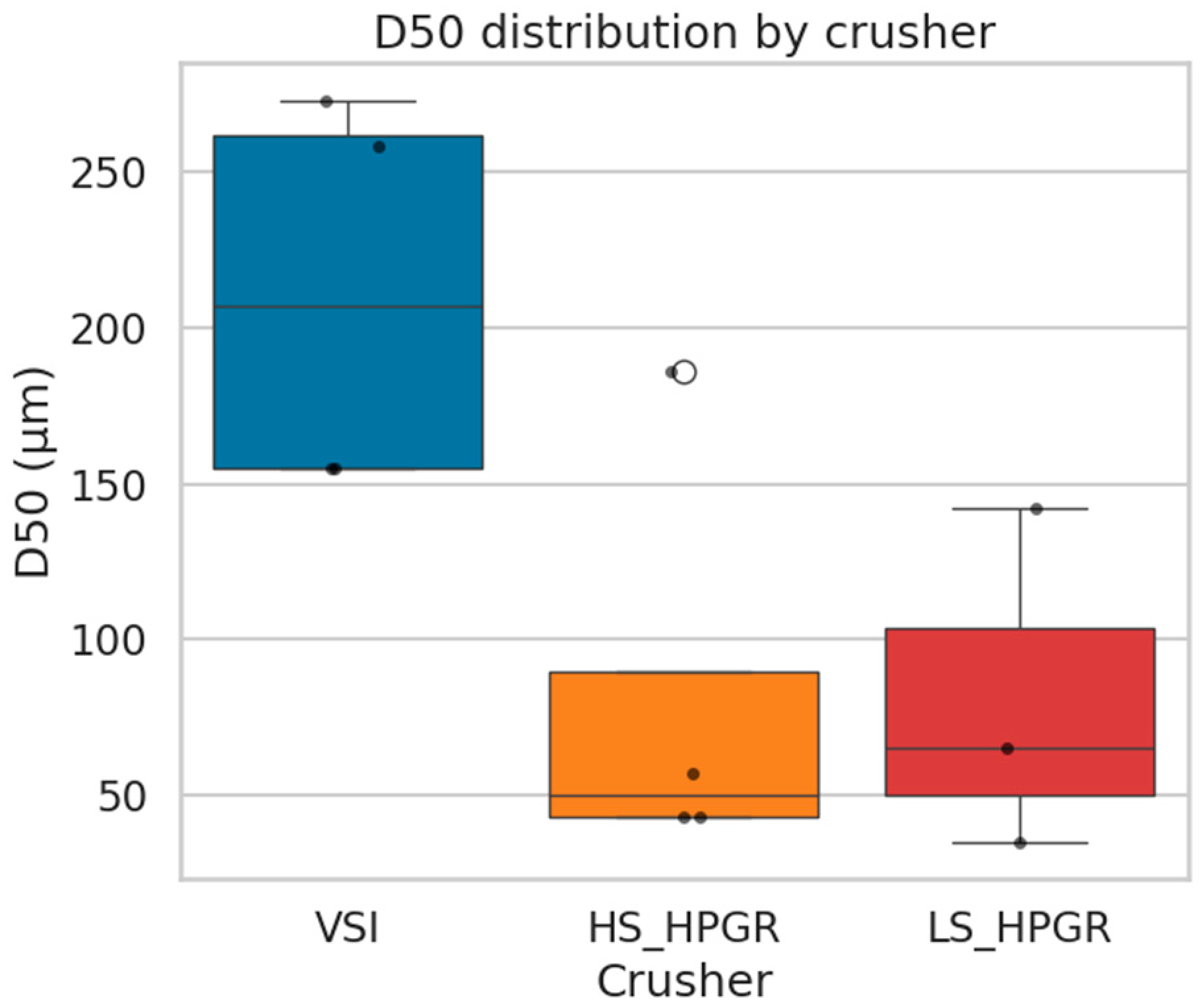
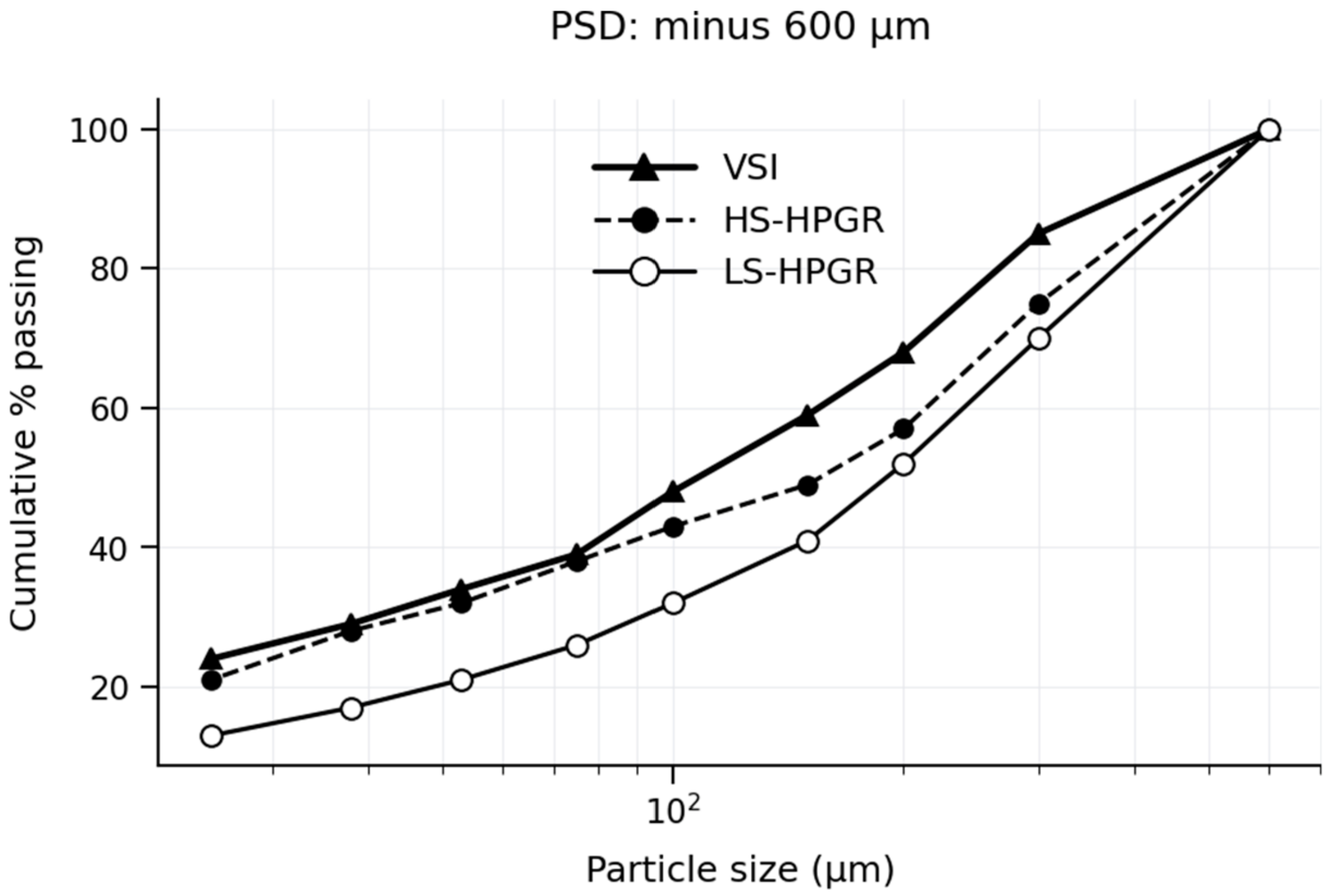
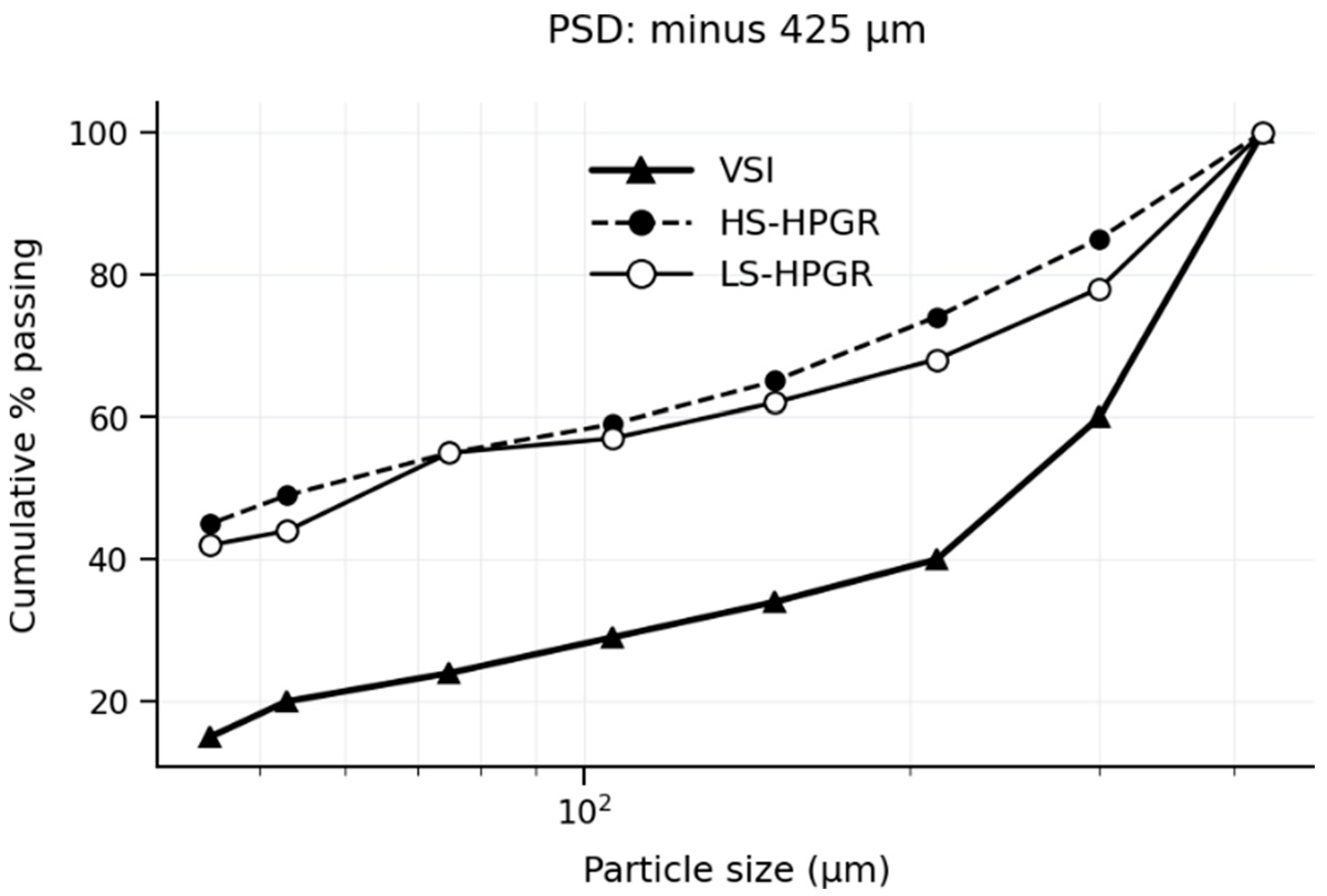
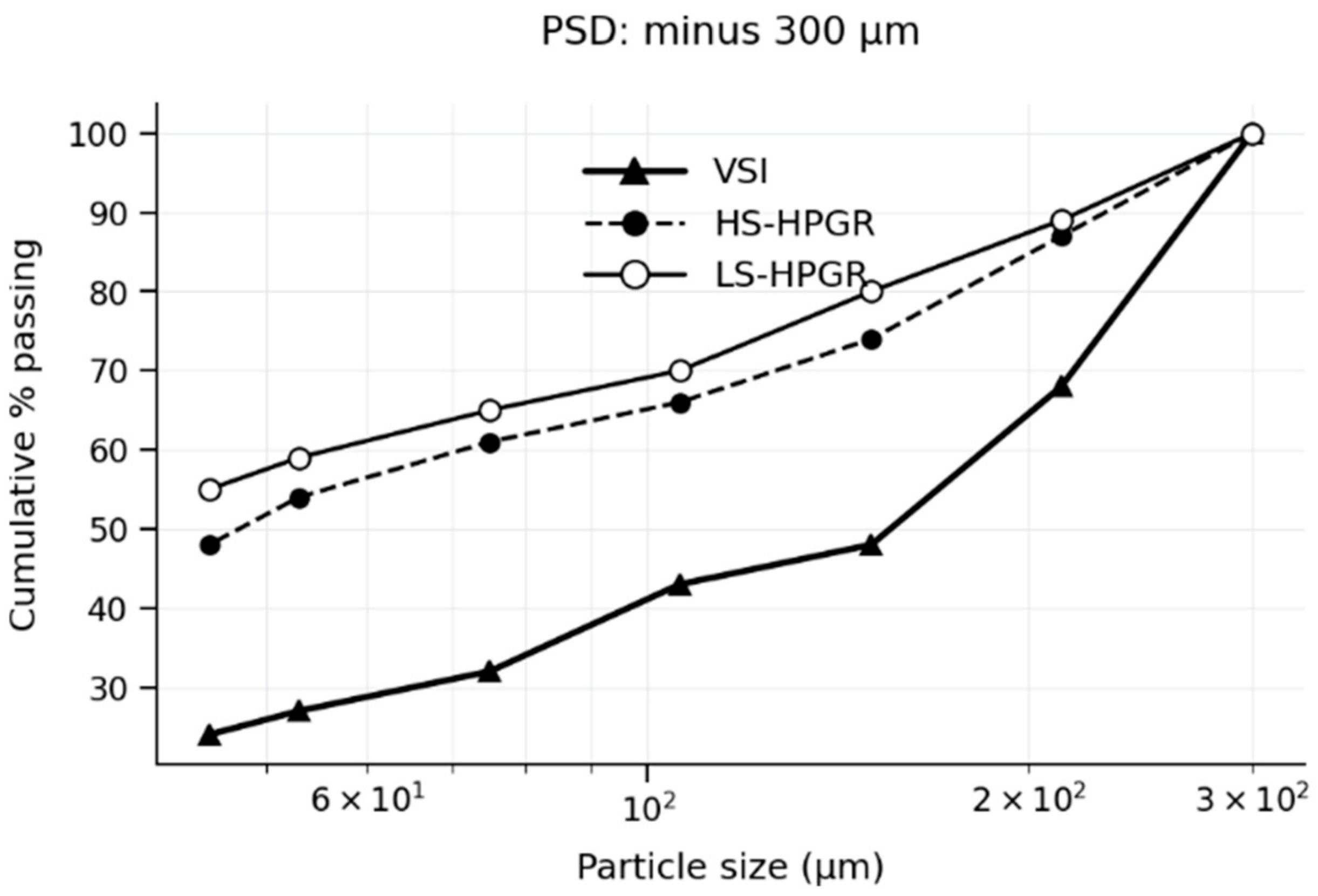
Gold ore samples originating from a previously reported experimental campaign were processed using VSI, high-speed HPGR, and low-speed HPGR under controlled laboratory conditions (Ballarat Mines, Australia). Flotation tests were conducted using PAX and DSP collector regimes under identical reagent and operating conditions as reported in the original study. Particle size distributions (D10, D50, D90, fines fraction < 75 µm, and coarse fraction > 212 µm) were determined by sieve and particle size analysis as described in the original experimental report. Crusher power, processing time, head grade, cumulative recovery, and concentrate grade were recorded for each test condition [
3].
2.2. Pre-Processing and Coding
The following pre-processing and statistical coding procedures were applied prior to model development and causal analysis:
Reference category: Crusher is encoded with dummy variables using VSI as the baseline. Coefficients for HS-HPGR and LS-HPGR represent differences relative to VSI;
Centring: The particle size variable D50 was mean-centred (D50_c) to facilitate interpretation and counterfactuals at the mean operating point;
Robust standard errors: To address heteroskedasticity, HC3 robust standard errors were employed. Given the small sample (N = 11) and evidence of heteroskedasticity, HC3 estimators were used for all OLS models following established recommendations [
21,
23,
24]. HC3 is specifically recommended for small-sample and high-leverage designs because it inflates standard errors to reduce finite-sample bias. This adjustment was applied consistently to both recovery and grade models to ensure robust statistical inference.
2.3. Statistical Modelling
2.3.1. Recovery Model (OLS)
For regression and counterfactual analyses, D50 was mean-centred (D50_c) to improve coefficient interpretability and reduce collinearity; uncentred D50 is retained when modelling PSD directly or reporting physical particle size differences. Cumulative recovery (%) was modelled using ordinary least squares (OLSs) regression (Equation (1)):
VSI and DSP serve as baseline categories. Heteroskedasticity-consistent HC3 robust standard errors were computed to mitigate the effects of heteroskedasticity and small-sample bias.
2.3.2. Recovery Model (GLM, Logit Link)
To ensure predicted recovery values remain bounded within the interval [0, 1] on the fraction scale
, recovery was modelled using a generalised linear model with a binomial family and logit link (Equation (2)) [
22,
25]:
Selected results are shown in
Table 1.
2.3.3. Grade Model (OLS)
Concentrate grade (g/t) was modelled using ordinary least squares (OLSs) regression (Equation (3)):
Heteroskedasticity-consistent HC3 robust standard errors were employed. Key parameter estimates are reported in
Section 3 (
Table 1).
2.4. PSD Mediator Model—Definition and Role
To represent particle size distribution as a mediating variable, the median particle size (D50) was modelled as a function of crusher type and operating conditions (Equation (4)). This mediator model captures the extent to which crusher choice influences recovery indirectly through changes in PSD:
This specification corresponds to the mediator equation within the structural causal model defined in
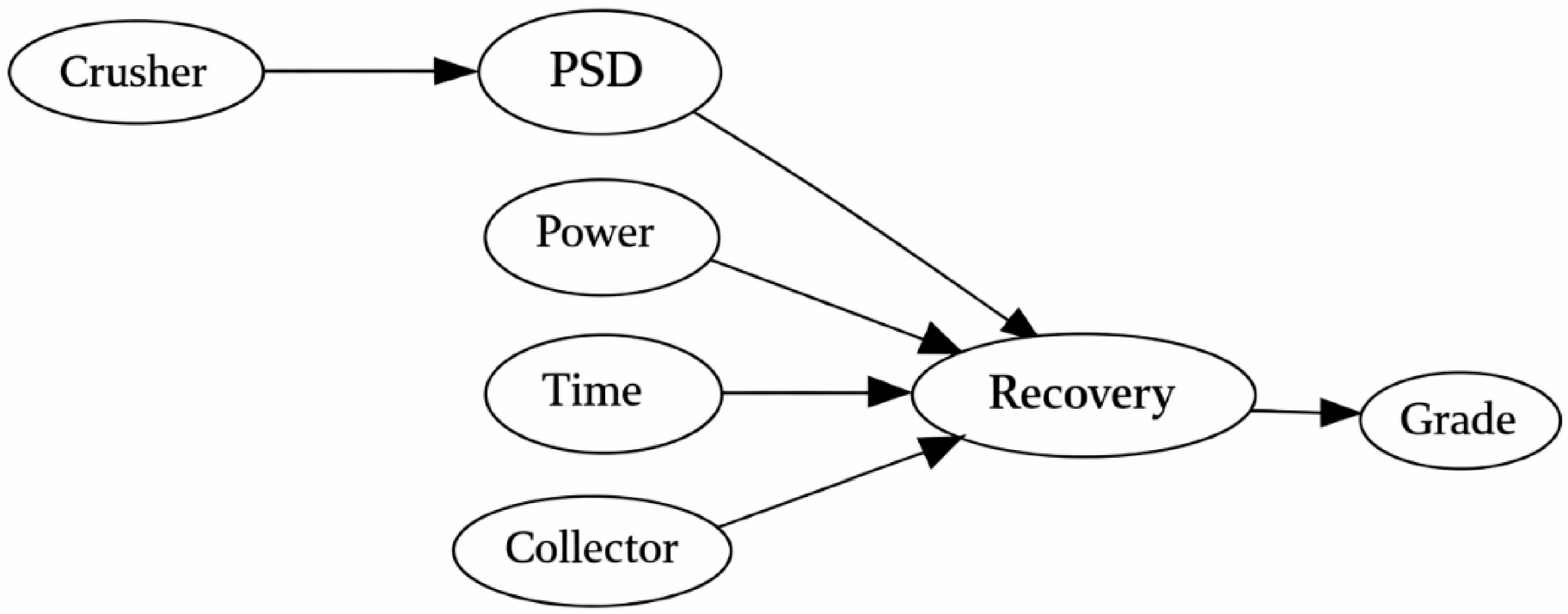
Figure 2.
Causal DAG (Conceptual):
The causal relationships considered in this study are formalised using a directed acyclic graph (DAG), as shown in
Figure 2. The DAG represents a conceptual model in which crusher type influences flotation recovery both indirectly through the particle size distribution, represented by the median particle size (D50), and potentially through direct, non-particle size pathways (Equation (5)). In addition, collector type and operating conditions are allowed to affect recovery and, where relevant, the particle size distribution.
The DAG is introduced in the Methods section because it formalises the hypothesised data-generating process based on established comminution and flotation mechanisms reported in prior experimental and theoretical studies [
11], rather than serving as a post hoc interpretation of the observed data. This structure defines the causal assumptions required for identification of direct and mediated effects and provides the basis for subsequent regression, mediation, and counterfactual analyses.
Within this framework, the indirect (mediated) effect of crusher type on recovery is defined as the pathway operating through changes in D50 (Equation (6)):
whereas the direct effect corresponds to the coefficient associated with the crusher indicator in the recovery model (for example, β
3 for LS-HPGR relative to VSI), capturing all non-PSD-mediated mechanisms. The total effect of crusher type on recovery is obtained as the sum of the direct and indirect effects.
2.5. Counterfactual Analysis—Definition and Implementation
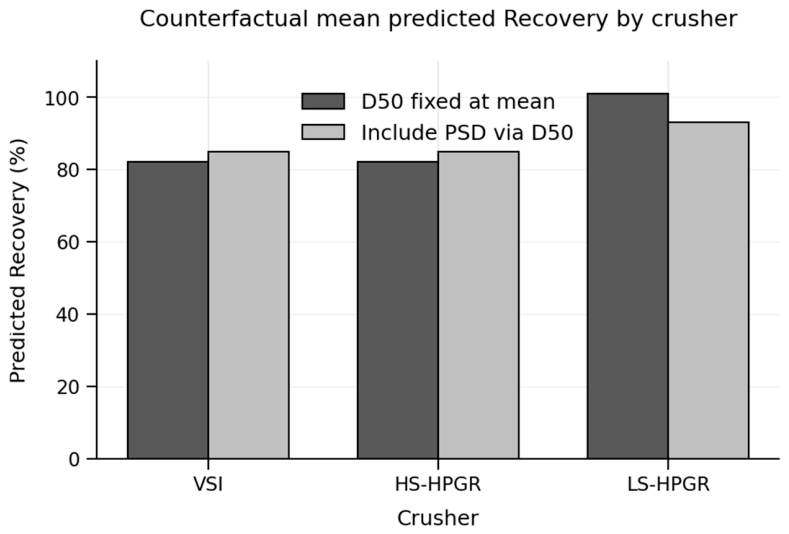
Counterfactual analysis addresses the following question: “What would recovery be under a specified intervention on a given variable?” The following two counterfactual scenarios were evaluated:
- (i)
D50 fixed at its mean. The median particle size (D50) was held at its sample mean across all crusher modes and recovery was predicted, thereby isolating non-PSD (direct) crusher pathways;
- (ii)
PSD included via D50. D50 was allowed to vary according to observed or model-predicted values for each crusher mode, capturing the combined influence of direct and PSD-mediated pathways.
2.6. Structural Decomposition—Direct, Indirect, Total
We applied structural decomposition to quantify the pathways through which crusher type influences recovery. Using the mediator model (D50) and the recovery model, we computed:
Direct effect: crusher → recovery (holding D50 constant);
Indirect effect: crusher → D50 → recovery (mediated via PSD);
Total effect: sum of direct and indirect effects;
This approach clarifies whether observed differences in recovery are primarily due to PSD changes or other crusher-specific mechanisms.
4. Discussion
The present findings are consistent with earlier Bayesian and interpretable machine-learning studies of gold flotation, which demonstrated that operational variables such as comminution conditions, reagent regime, and particle size often exhibit strong statistical coupling, limiting mechanistic interpretation when analysed using purely correlation-based frameworks [
4,
5,
12].
4.1. Interpreting the Regression and Structural Effects
This subsection synthesises the regression outputs and structural decomposition to distinguish empirical associations from causally interpretable effects [
7].
The GLM recovery model showed no statistically significant predictors and low pseudo-R2, reflecting limited explanatory power for this dataset. Directional consistency between GLM and OLS estimates indicate that collector and PSD effects on recovery are weak within the tested operating range. In contrast, the grade model identified D50 as a statistically significant driver (p ≈ 0.002), with coarser particle size distributions associated with higher concentrate grade, and recovery exerting a marginal positive influence (p ≈ 0.093).
When interpreted through the structural decomposition, these results indicate that LS-HPGR exhibits a direct recovery advantage relative to VSI that is partially offset by PSD-mediated effects. This combined interpretation underscores the value of separating direct and indirect pathways, as conventional regression alone would obscure the underlying mechanism.
4.2. Why Structural Modelling?
This study demonstrates how mediator-aware modelling clarifies crusher–flotation relationships that are conflated in traditional regression analyses.
Standard regression estimates aggregate multiple causal pathways into a single coefficient, limiting mechanistic interpretation [
25]. By explicitly modelling D50 as a mediator and combining mediation analysis with counterfactual predictions (
Table 4 and
Table 5), this framework separates crusher effects transmitted through particle size from those arising through non-PSD mechanisms [
18,
26].
From an operational perspective, this distinction enables mechanism-aligned decision-making. Where direct effects dominate, crusher selection and operating regime (e.g., LS-HPGR) can be prioritised even if downstream PSD targets are constrained. Conversely, where mediated effects dominate, investment in PSD control strategies such as classification or regrinding becomes more effective.
4.3. Interpreting LS-HPGR’s Advantage
The structural results suggest that LS-HPGR performance cannot be explained by particle size reduction alone.
The positive direct effect associated with LS-HPGR indicates benefits beyond PSD, potentially related to micro-cracking, enhanced liberation, or surface modification that improves collector adsorption. Within the analysed dataset, the negative indirect effect via D50 partially offsets this benefit, highlighting the competing influence of fine generation on flotation performance. Given the small sample size and lack of statistical significance for the D50 coefficient, these findings should be interpreted cautiously and viewed as hypothesis-generating rather than definitive.
4.4. Collector Strategy and Trade-Off at the Mean
Evaluating collector effects at a representative operating point enables quantitative comparison of recovery–grade trade-offs.
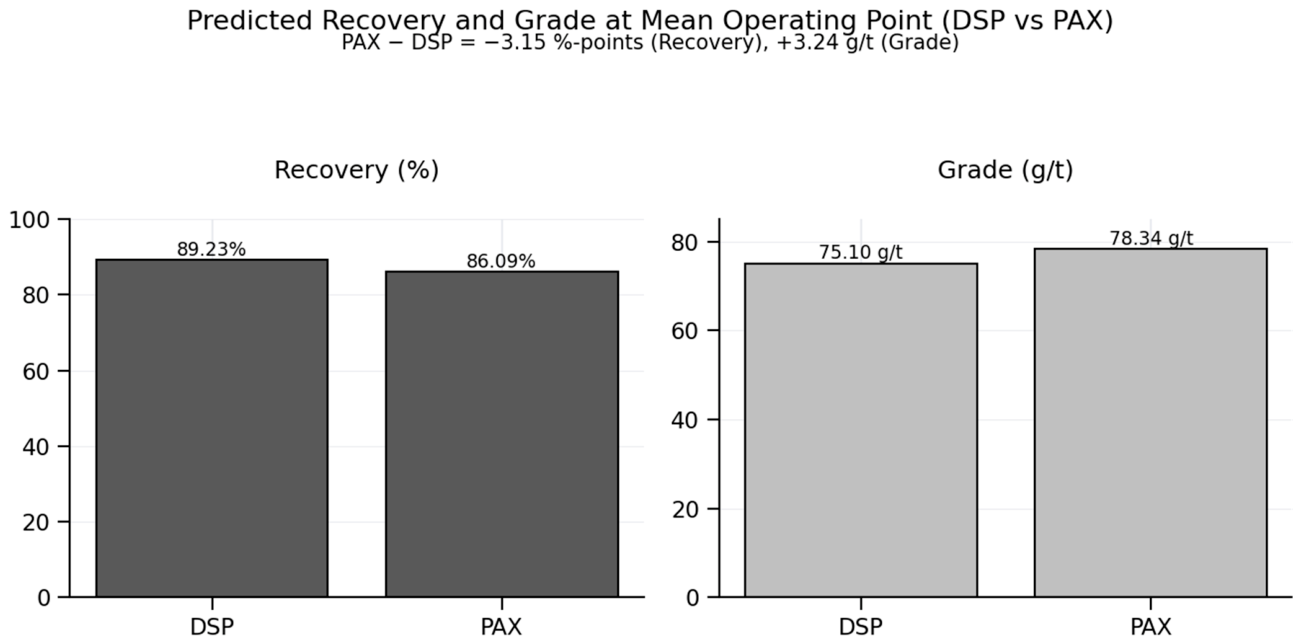
At the mean operating point, DSP maximised recovery, whereas PAX increased concentrate grade, yielding an explicit trade-off between metallurgical objectives. The −3.15 pp recovery change and +3.24 g/t grade gain when switching from DSP to PAX (
Table 6 and
Figure 8) provide actionable levers. These results provide actionable guidance as follows: DSP may be preferred when maximising mass recovery or throughput, while PAX may be advantageous when concentrate grade specifications or downstream penalties dominate economic outcomes. DSP favours recovery; PAX favours grade. Operators can exploit this trade-off by:
Figures SI-5 and SI-6 complement the counterfactual analysis by visualising the collector-specific trends across PSD. The observed patterns align with flotation chemistry expectations, with DSP favouring fine recovery and PAX stabilising froth for coarser particles, reinforcing the practical relevance of the model-based results.
4.5. Statistical Limitations
The findings of this study should be interpreted in light of several statistical and experimental limitations. In mineral processing research, experimental datasets are often necessarily compact because each test requires ore preparation, comminution, particle characterisation, flotation, and chemical analysis, making large factorial campaigns expensive and time-intensive. The compact dataset (N = 11), representing the complete set of controlled experiments from the original comminution campaign, limits statistical power and increases uncertainty in coefficient estimates. However, the objective of the present work is methodological and hypothesis-generating rather than population-level statistical generalisation. Diagnostic results indicate that individual coefficients may be unstable, necessitating cautious interpretation. Although bounded GLM formulations were used to address recovery constraints, the compact model specification further restricts statistical inference.
Variance-based global sensitivity approaches, such as Sobol analysis, were not applied because reliable estimation of global sensitivity indices generally requires substantially larger and more densely sampled experimental datasets than available here. Instead, the present work focuses on pathway-specific causal decomposition. Future studies incorporating Design of Experiments (DoE) methodologies and expanded datasets could integrate global sensitivity analysis with the causal framework adopted in this study.
In addition, the underlying experimental dataset was not designed using a formal response-surface or central composite design, which limits exploration of higher-order interactions and global optimisation. However, this study intentionally evaluates whether structural causal modelling can extract decision-relevant mechanistic insight from compact legacy datasets commonly encountered in mineral processing research.
Finally, the estimated effect magnitudes are specific to the ore type, comminution conditions, and flotation reagents examined. Broader validation across different ores and operating regimes is required to strengthen external validity and confirm the generality of the identified causal pathways.
4.6. Practical Implications for Process Optimisation
Beyond mechanistic interpretation, the structural causal framework provides operationally relevant guidance for comminution–flotation circuit optimisation. The counterfactual and decomposed analyses indicate that flotation performance depends not only on the achieved particle size distribution, but also on the pathway through which that particle population is generated. In the present dataset, LS-HPGR exhibited a positive direct recovery effect relative to VSI that remained evident even when the median particle size (D50) was held constant, suggesting that crusher-specific mechanisms such as micro-crack generation, enhanced liberation, or surface modification may contribute to downstream flotation performance beyond nominal particle size reduction.
From a process-design perspective, this distinction has important implications. Where direct crusher effects dominate, equipment selection and operating regime may exert greater influence on flotation performance than subsequent particle-size adjustment alone. Under such conditions, comminution technologies such as LS-HPGR may provide recovery benefits even when downstream classification constrains the final particle size distribution. Conversely, where particle size-mediated effects dominate, process interventions such as classification, regrinding, or PSD control may offer greater leverage than crusher substitution.
The collector-specific counterfactual analysis further demonstrates how the framework can support operational decision-making. At the mean operating point, DSP yielded higher predicted recovery, whereas PAX produced higher concentrate grade, quantifying an explicit recovery–grade trade-off. This suggests that collector selection may be aligned with production priorities, such as maximising metal recovery, meeting concentrate specifications, or minimising downstream treatment penalties. More broadly, the present framework provides a decision-support tool for evaluating hypothetical process interventions before plant-scale implementation.
4.7. Physical Interpretation of Crusher-Specific Effects
The structural decomposition indicates that LS-HPGR exhibits a positive recovery effect relative to VSI that cannot be explained by particle size distribution alone. From a comminution perspective, such non-PSD-mediated effects may arise from crusher-specific differences in particle morphology, micro-crack generation, and mineral liberation. High-pressure grinding is known to induce inter-particle compression and internal fracture networks, which can promote preferential liberation and enhance reagent accessibility during flotation. In contrast, impact-based breakage in VSI systems may generate more angular particle morphologies and different surface fracture characteristics.
Although particle shape descriptors and liberation indices were not directly measured in the present dataset, the positive direct effect associated with LS-HPGR is consistent with the hypothesis that breakage-induced physicochemical changes contribute to flotation performance beyond nominal particle size reduction alone. These observations support the interpretation that crusher selection influences flotation not only through particle size distribution, but also through particle-scale structural characteristics.
Energy efficiency provides an additional process-design consideration. Based on the experimentally measured crusher power and processing-time data, VSI consistently operated at lower power consumption, whereas HPGR configurations required higher instantaneous power but generated finer particle populations and, in the case of LS-HPGR, improved flotation recovery under selected operating conditions. This highlights a practical trade-off between specific energy input and downstream metallurgical response, reinforcing the need to evaluate comminution performance using both energy and flotation metrics rather than particle size alone.
4.8. Methodological Contributions and Transferability
A key methodological contribution of this study is the explicit separation of direct comminution effects from particle size-mediated pathways using structural causal modelling. Conventional regression-based approaches typically aggregate multiple physical mechanisms into a single empirical coefficient, limiting mechanistic interpretation and potentially obscuring actionable process variables. By explicitly modelling particle size distribution (PSD) as a mediator and integrating mediation analysis with counterfactual prediction, the present framework enables decomposition of total crusher effects into physically interpretable direct and indirect pathways.
Although structural causal modelling and counterfactual analysis are well-established in fields such as medicine, economics, and environmental systems, their application in mineral processing remains limited [
6,
10,
18,
19]. This study demonstrates that such approaches can be applied to legacy experimental datasets to generate hypothesis-driven insights without requiring additional experimentation—a capability particularly relevant in mineral processing, where experimental campaigns are often costly, time-consuming, and constrained by ore availability.
From a broader process perspective, the framework provides mechanistic insight that complements traditional metallurgical analysis by explicitly resolving causal pathways underlying observed performance. By disentangling PSD-mediated and non-mediated effects, it supports more informed process interpretation and offers a structured basis for evaluating coupled unit operations.
Beyond the specific comminution–flotation system studied, the framework is transferable to other particulate processing systems involving upstream–downstream interactions, including grinding–classification circuits, agglomeration processes, and hydrometallurgical particle–fluid systems. Future work incorporating larger datasets and additional mediators, such as mineral liberation and surface chemistry, would further strengthen its generality and predictive capability.
5. Conclusions
This study shows that particle size distributions in comminution–flotation systems should not be interpreted solely as descriptive characteristics but instead function as mediating particle-scale properties that condition system behaviour. By decomposing observed flotation responses into particle size-mediated and non-size-mediated pathways, the analysis reveals that apparent particle size effects depend strongly on the mode of particle generation. These findings extend particle and particle systems characterisation beyond conventional size–performance correlations by providing a causal interpretation of how particle populations influence macroscopic response.
The most significant scientific finding is that apparent particle size effects are strongly conditional on comminution technology. Under comparable size ranges, VSI- and HPGR-derived particles exhibit different flotation responses, indicating that breakage mechanism and energy dissipation exert causal influence beyond size classification alone. This challenges the implicit assumption that particle size can be treated as an independent optimisation variable in flotation circuit design.
From a methodological perspective, the study highlights the limitations of correlation-based analysis for interpreting experimental mineral processing data. Causal inference enables separation of direct effects from confounded operational coupling, allowing counterfactual questions—such as how flotation would respond to alternative comminution strategies at fixed particle size—to be addressed without additional experimentation.
The broader implication is that many reported particle size effects in the flotation literature may reflect operational entanglement rather than true mechanistic control. The causal workflow demonstrated here provides a transferable framework for re-evaluating legacy datasets and guiding future experimental design toward variables that exert genuine causal influence.
From a process-engineering perspective, the observed crusher-specific effects cannot be attributed to particle size distribution alone. The positive direct effect associated with LS-HPGR suggests that breakage-induced mechanisms such as micro-crack formation, altered particle morphology, and enhanced mineral liberation may contribute to flotation performance beyond nominal particle size reduction. In addition, comparison of measured power and processing-time data indicates that crusher selection involves a trade-off between comminution energy input and the flotation recovery achieved under comparable target-size conditions. These findings reinforce the importance of evaluating comminution technologies using both energy-efficiency and flotation-performance criteria.
Future work should extend this approach to larger, multi-source datasets encompassing different ores, circuit configurations, and comminution technologies. Such efforts would enable the identification of robust causal design principles for flotation circuits, supporting more efficient and evidence-based decision-making in mineral processing.