Article

Effect of Flotation Reagent as Emulsion Microbubbles on the Flotation of Gold-Bearing Ore and Technogenic Raw Materials

by
Bagdaulet Kenzhaliyev
1,
Nessipbay Tussupbayev
1,
Dulatbek Turysbekov
1,
Larissa Semushkina
1,
Sabira Narbekova
1,*,
Zhamikhan Kaldybaeva
1,
Ainyr Mukhamedilova
1 and
Nazira Samenova
1,2
1
Institute of Metallurgy and Ore Beneficiation JSC, Satbayev University, Almaty 050010, Kazakhstan
2
Faculty of Chemistry and Chemical Technology, Al-Farabi Kazakh National University, Almaty 050040, Kazakhstan
*
Author to whom correspondence should be addressed.
Minerals 2026, 16(5), 531; https://doi.org/10.3390/min16050531 (registering DOI)
Submission received: 20 February 2026 / Revised: 4 May 2026 / Accepted: 13 May 2026 / Published: 15 May 2026
(This article belongs to the Section Mineral Processing and Extractive Metallurgy)

Abstract

The use of flotation reagents in the form of microemulsions significantly enhances the recovery of noble metals during the processing of gold-bearing ore and technogenic materials by improving the flotation of finely dispersed sulfides. This study investigates the effect of dibutyldithiophosphate (DBDTP) applied as emulsion microbubbles in the form of emulsion microbubbles on the flotation of gold-bearing ores and technogenic materials. The research objects were gold-bearing ore and aged flotation tailings from a Kazakhstani deposit containing 3.20 g/t and 0.62 g/t of gold, respectively. Flotation beneficiation was carried out using dispersed DBDTP generated in a water–air microemulsion generator (WAMG). The flotation kinetics results demonstrated that the application of dispersed DBDTP accelerates the flotation process, increasing gold recovery by 4.65% and reducing the gold content in flotation tailings by 0.17 g/t. Under baseline conditions, 37.51% of gold was distributed in the −25 + 0 μm size fraction of tailings with a gold content of 0.98 g/t. When the dispersed reagent produced by the WAMG was applied, the gold distribution in the −25 + 0 μm size fraction decreased to 28.29% (9.22% lower than the baseline), with a gold content of 0.62 g/t. In the flotation of aged tailings, the use of dispersed DBDTP increased gold recovery in the concentrate by 5.88% while maintaining concentrate quality.

1. Introduction

Due to the depletion of high-grade gold deposits, low-grade gold-bearing ores with a high content of clay minerals are increasingly involved in mineral processing. However, their processing is associated with numerous challenges caused by their fine-grained, layered structure and the anisotropic surface charge of clay minerals. In [1], a lignosulfonate-based biopolymer (DP-1777) was applied to mitigate the adverse effects of clay minerals on the flotation of gold-bearing ores with high clay content. It was demonstrated that DP-1777 improved both gold grade and recovery by reducing mechanical entrainment and pulp viscosity.
The flotation recovery of finely disseminated gold associated with sulfides and quartz does not exceed 60%–80%, and in some cases is limited to 30%–40%, despite extensive studies aimed at enhancing gold extraction efficiency and developing advanced beneficiation technologies [2]. The improvement of flotation efficiency for refractory gold-bearing ore and technogenic raw materials can be achieved through the implementation of novel technological flowsheets and flotation regimes that minimize gold losses, particularly in fine size fractions [3].
Studies [4,5] have demonstrated that the use of reagent combinations provides higher gold recovery compared with the application of butyl xanthate alone. A new set of collectors was tested to improve gold recovery and reduce the dosage of potassium amyl xanthate by replacing the existing promoter (AERO®238) with a new reagent designated AEROMAXGOLD™900 [6]. In [7], an amphiphilic polymer, polyethylene glycol, was employed as a polymeric surfactant for the flotation of Au(III), resulting in selective and rapid gold recovery. The results demonstrated high separation efficiency and improved flotation kinetics. In [8,9], the effect of triethylenetetramine and the staged addition of isobutyl xanthate during copper–gold flotation with pyrrhotite depression was investigated. The staged addition of the collector promoted the formation of a more stable xanthate/dixanthogen layer and increased gold recovery. Study [10] examined the influence of particle size on flotation efficiency during the separation of copper, gold, and lead using potassium dichromate and sodium diethyldithiocarbamate. The most suitable fraction for gold enrichment in the copper concentrate was −58 + 20 µm, whereas the coarser fraction −100 + 74 µm was found to be ineffective for the selective recovery of gold.
A large-scale industrial case study [11] integrated mineral processing techniques from laboratory to industrial scale to optimize the flotation characteristics of Au–Te ore using Aerophine as a collector. The combination of Aerophine and xanthate significantly improved the recovery of gold, silver, and tellurium under industrial conditions.
Gold flotation remains challenging because gold-bearing ores are often refractory and finely disseminated. Low recovery and poor flotation kinetics of fine particles are primarily attributed to the low frequency of particle–bubble collisions, while increased entrainment of fine gangue particles reduces concentrate grade. In [12], two pilot-scale Imhoflot™ G-14 cells with tangential feed into a 1.4 m diameter separator were investigated. Bubble size measurements indicated that the pneumatic Imhoflot™ system generates extremely fine bubbles (<100 µm), thereby increasing the collision frequency between mineral particles and air bubbles.
One of the most promising approaches for recovering finely disseminated sulfide-associated gold is the use of flotation reagents in microemulsion form [13,14,15,16,17]. Previous studies have demonstrated that the application of microemulsified composite flotation reagents enhances the recovery of gold and copper from technogenic raw materials by 3%–5%.
The challenges associated with gold flotation, the presence of finely dispersed particles, and the necessity for fine grinding motivated the present study. The aim of this work is to investigate the effect of flotation reagents in the form of emulsion microbubbles on the flotation of gold-bearing ore and technogenic materials, focusing on improving the recovery of fine size fractions smaller than 30 μm. In addition, this study aims to identify methods for minimizing gold losses in flotation tailings, which is of considerable significance for processing precious metal ores. The application of flotation reagents in the form of emulsion microbubbles enables more effective separation of gold-bearing sulfides (e.g., pyrite) from gangue minerals, enhancing selectivity. The research objectives included the investigation of flotation kinetics, and the selection, and optimization of the main flotation process parameters.

2. Materials and Methods

2.1. Characterization of Samples

2.1.1. Gold-Bearing Ore Sample

A gold-bearing ore sample obtained from a Kazakhstani deposit was used in this study. Prior to experimentation, the sample was ground using a laboratory horizontal ball mill BS-BALLMILL-II («Bes Saiman Group» LLP, Almaty, Kazakhstan).
The chemical composition and particle size distribution of the sample were determined using chemical and granulometric analyses. According to the chemical analysis, the initial ore contains 3.20 g/t gold, 2.97% iron, 11.3% calcium, and 1.63% sulfur. A rational analysis of gold occurrence forms in the ore was conducted, and the results are presented in Table 1.
Granulometric analysis of the ore prior to flotation with gold distribution across size classes was also performed (Table 2).
The results indicate that 44.18% of gold in the flotation feed is contained in the −25 μm size fraction. The particle size of the ground ore before flotation corresponds to 84.2% passing −71 μm.

2.1.2. Gold-Bearing Aged Tailings Sample

The aged tailings from a Kazakhstani deposit were used in this study. The chemical and mineral composition of the sample were analyzed using chemical analysis, X-ray diffraction (D8 Advance diffractometer, Bruker, Billerica, MA, USA), X-ray fluorescence spectroscopy (Venus 200 PANalytical B.V. wavelength-dispersive spectrometer, Almelo, The Netherlands), granulometric analysis, dispersion analysis using a photometric sedimentometer (FSKh-6K, «Granat» Group, St. Petersburg, Russia). Mineral composition was examined using a JEOL JXA-5 electron probe microanalyzer (JEOL, Tokyo, Japan).
Chemical analysis indicated that the tailings contained 0.623 g/t gold and 4.18% iron. Rational analysis showed that 38.47% of gold occurs in refractory association with quartz (Table 3).
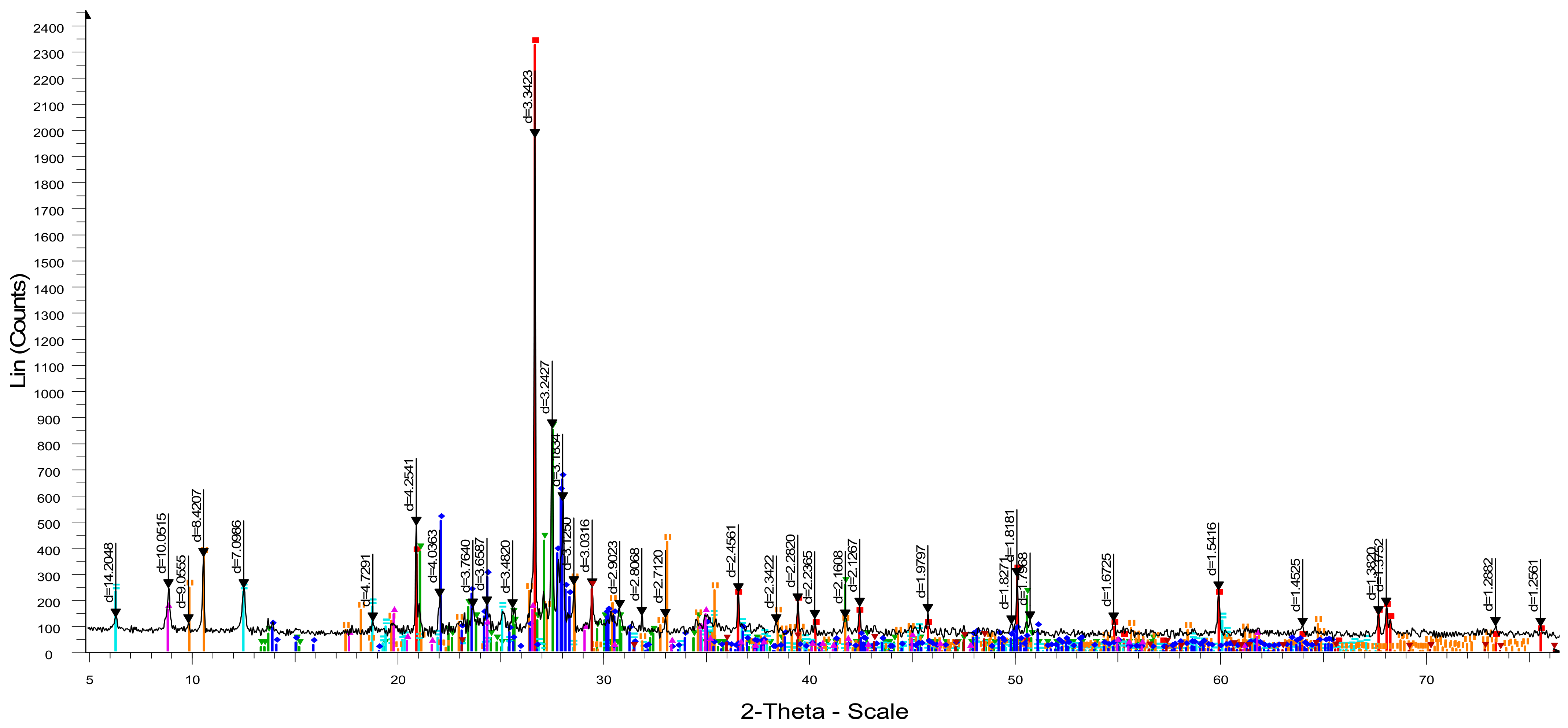
X-ray diffraction analysis (Figure 1) revealed that the tailings consisted mainly of quartz (40.2%), microcline (12.5%), clinochlore (24.2%), tremolite (12.4%), albite (5.6%), muscovite (2.3%), and calcite (2.8%).
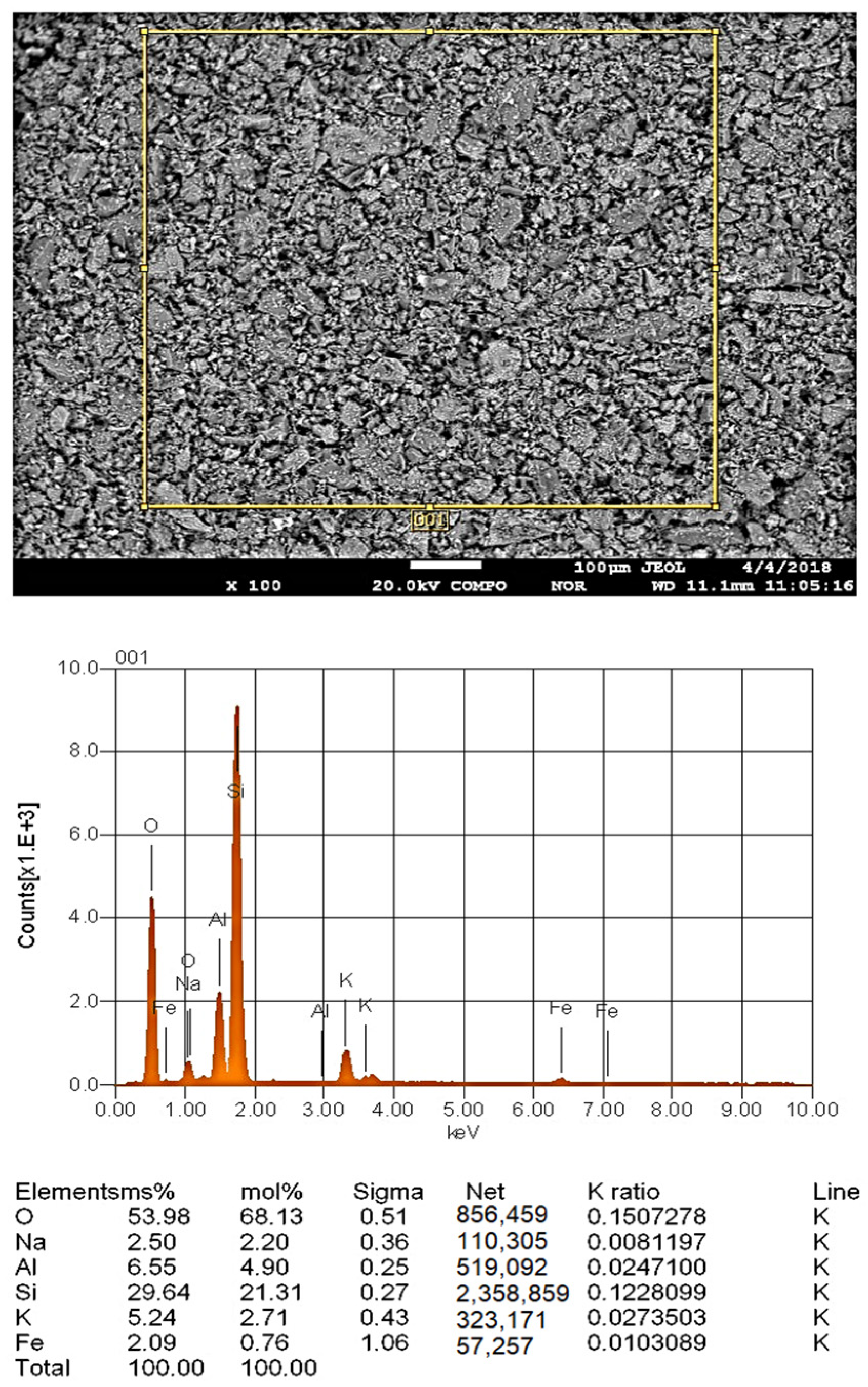
X-ray fluorescence analysis was performed using a wavelength-dispersive X-ray fluorescence spectrometer Venus 200. According to the X-ray fluorescence results, the major components of the flotation tailings sample were silicon (23.676%), oxygen (44.682%), aluminum (6.874%), iron (2.466%), and calcium (2.413%). Electron probe microanalysis of the initial tailings sample (Figure 2) confirmed that the bulk of the tailings consists of quartz and aluminosilicate minerals.
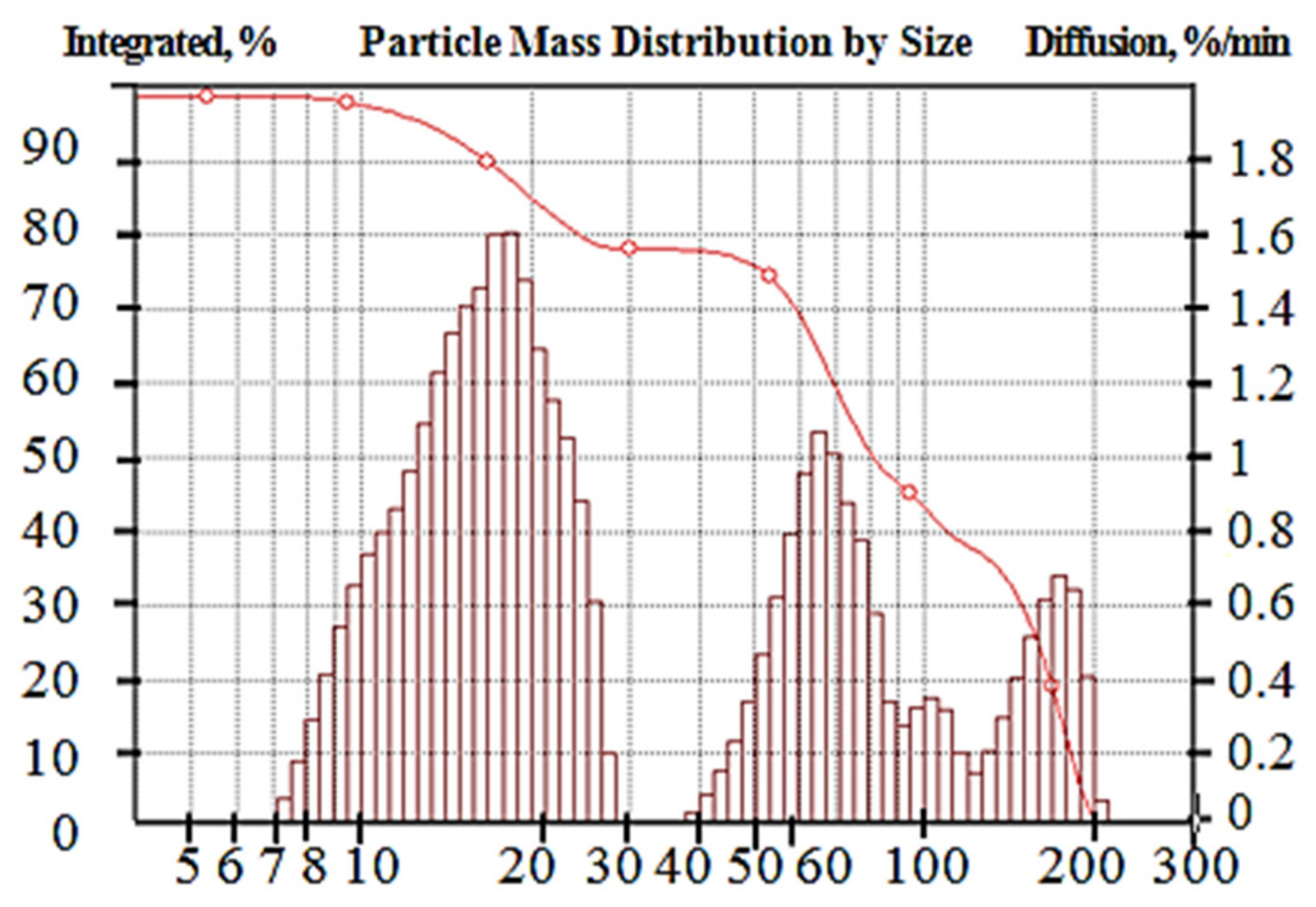
Particle size distribution analysis of the initial tailings was performed using an FSKh-6K photometric sedimentometer (Figure 3). Measurements were performed in triplicate. The results indicated that the majority of the particles are distributed within the 10–20 μm and 50–70 μm size fractions.
Particle size distribution analysis was conducted to determine the granulometric composition of the flotation tailings and the distribution of gold across size classes. The results showed that the majority of gold (53.27%) is concentrated in the 0–20 μm fraction. The particle size distribution data are presented in Table 4.

2.2. Methods

2.2.1. Flotation Experiments

Flotation experiments were conducted using laboratory flotation machines—FL-290, FM-1, and FM-2 (REC Mekhanobr-Tekhnika, St. Petersburg, Russia)—with cell volumes of 1.5, 1.0, and 0.5 L. The ore charge for each test was 500 g. The mineral pulp was conditioned with flotation reagents without air supply at a rotor speed of 1500 rpm. Sodium carbonate Na2CO3(cp) was used to maintain an alkaline medium (pH 8–8.5), sodium amyl xanthate SAX (90%, Flotent Chemicals Rus LLC, Samara, Russia) and DBDTP C8H18S2O2PNa (67 ± 2%, Square Plus, Tolyatti, Samara Region, Russia) were used as collectors, andoksalT-92 (Rushimset JSC, Moscow, Russia) served as a frother.
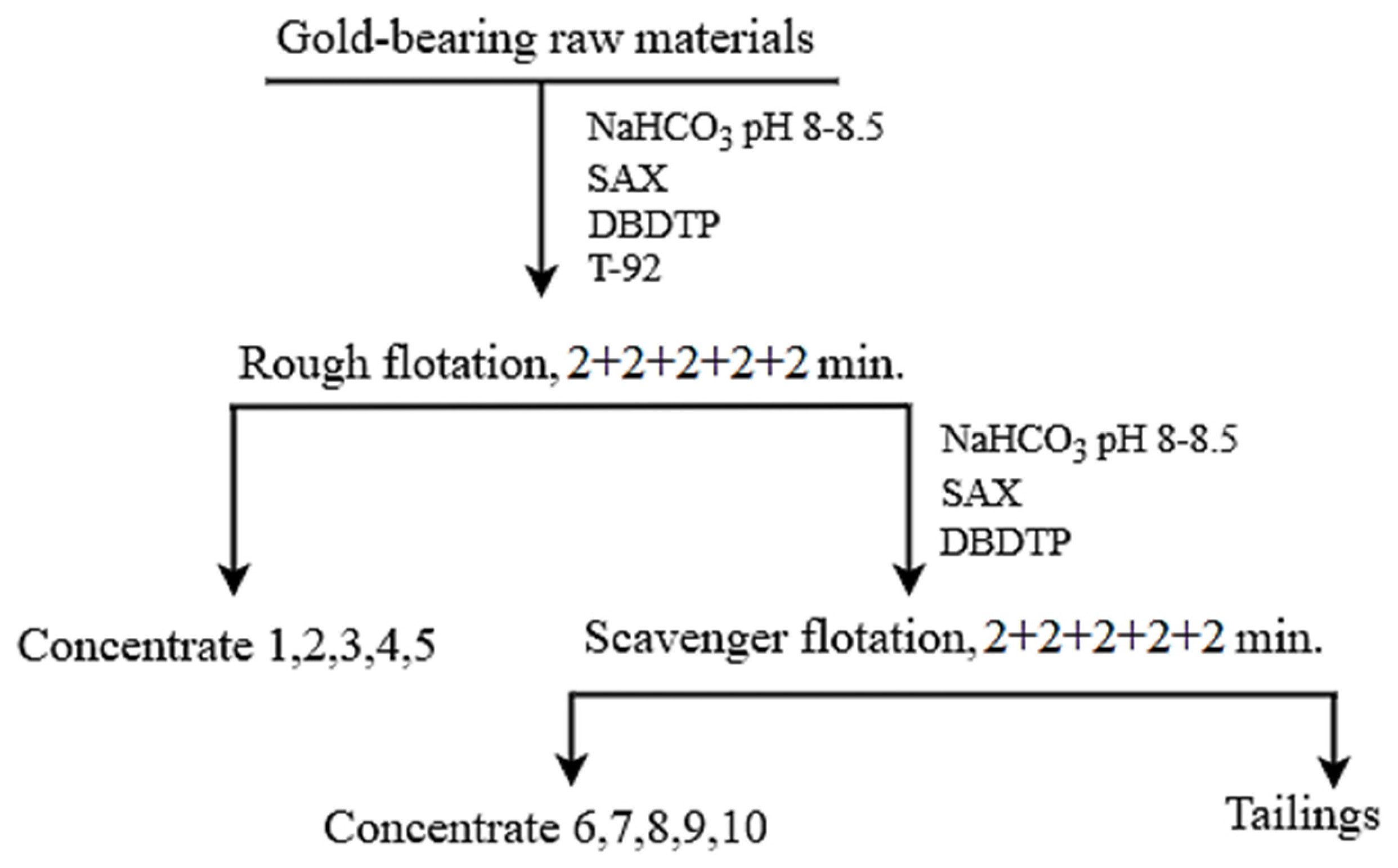
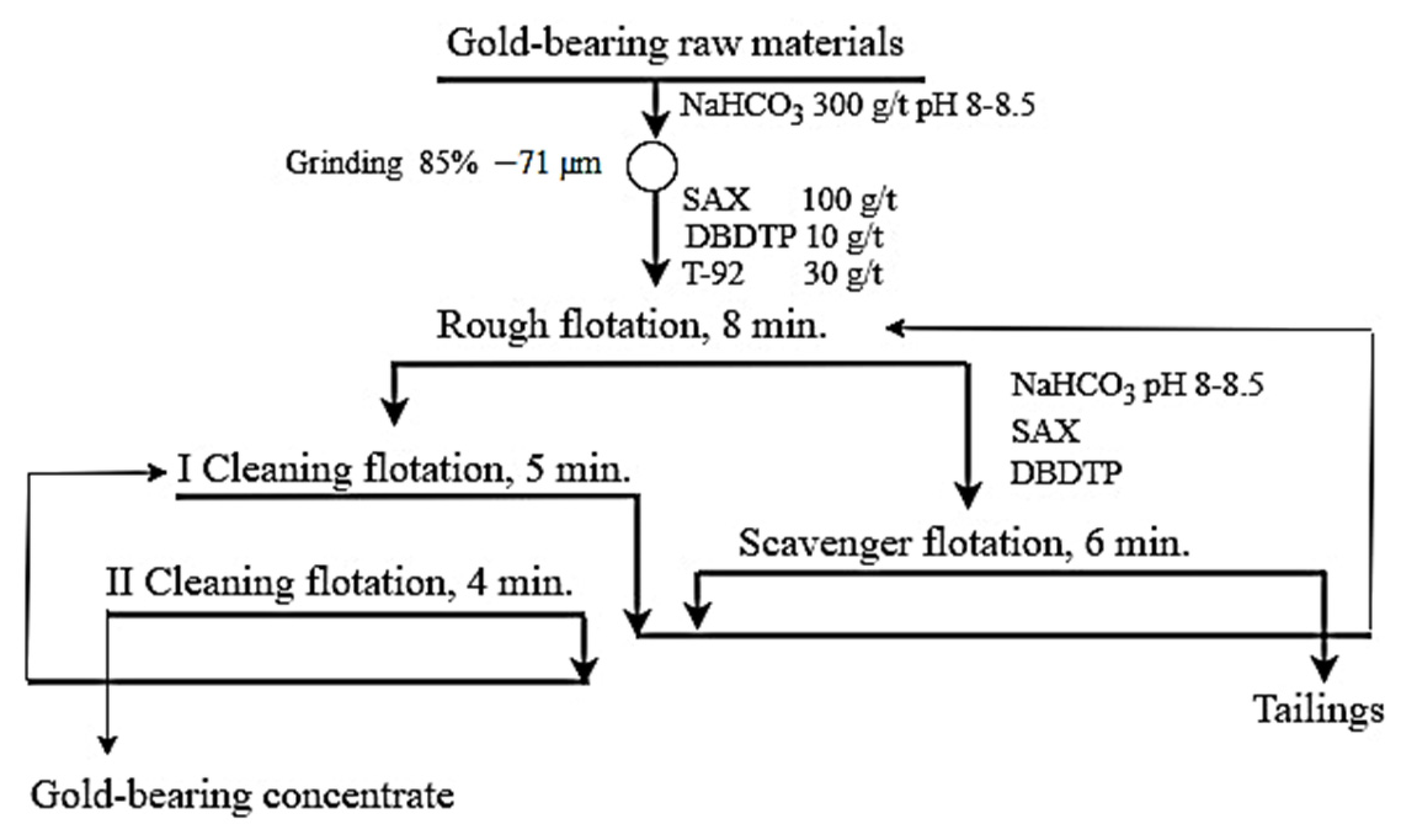
The flotation flowsheet is presented in Figure 4, indicating reagent addition points and flotation time for each stage. The reagent dosages of SAX, DBDTP, and T-92 were 35 g/t, 10 g/t, and 20 g/t, respectively, in the main flotation cycle, and 15 g/t, 5 g/t, and 7.5 g/t, respectively, in the scavenger flotation cycle. Comparative tests were carried out under two operating conditions: (1) using SAX and DBDTP; and (2) using SAX and BDTP in the form of emulsion microbubbles generated in the WAMG. Flotation experiments were performed in triplicate, and the results are reported as average value. Tap water was used in all experiments.

2.2.2. Water–Air Microemulsion Generator

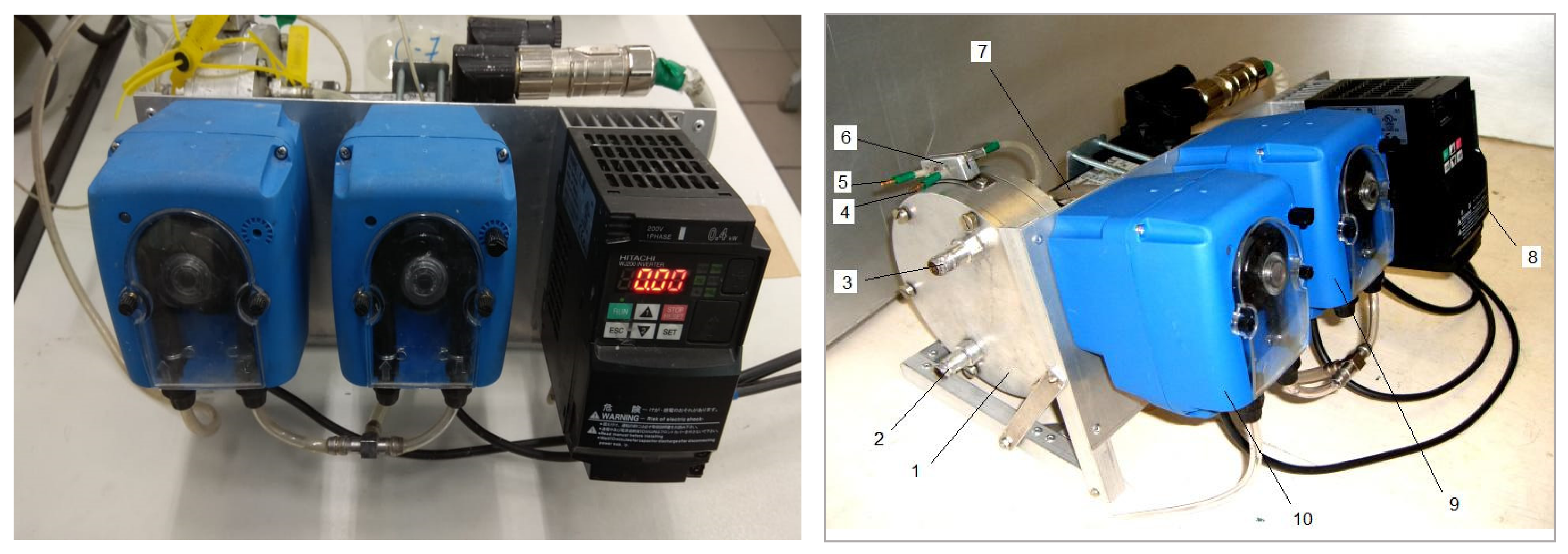
The emulsion microbubbles of DBDTP were generated using a water–air microemulsion generator (Figure 5), where a microheterogeneous gas–liquid system of microbubbles is formed. The microemulsion dispersion was introduced into the pulp after collector addition. The emulsion microbubbles of DBDTP were fed from the generator outlet into the flotation cell through a polyvinyl chloride tube with an internal diameter of 1.5–2 mm, which was connected to the suction port of the impeller stator, ensuring rapid dispersion of the microemulsion throughout the flotation cell. After the addition of emulsion microbubbles, atmospheric air was supplied at a flow rate of 3.1 L/min to initiate flotation.
The operating principle of the laboratory generator is as follows: air and the flotation reagent solution (at pH 6.5–7) are supplied to the mixing chamber through the inlet nozzle of the disperser head by means of metering pumps. In the mixing chamber, additional mixing of the mixture occurs due to the rotor part of the disperser head. Owing to the high peripheral speed of the rotor (6000 rpm), the mixture is thrown toward the periphery and passes through the gap between the rotor and the stator. The rotating rotor fragments the air bubbles with its teeth, producing a fine dispersion. The flow rate of DBDTP is 2 cm3/s, while the air flow rate is 4 cm3/s.

2.2.3. Microbubble Size Measurements

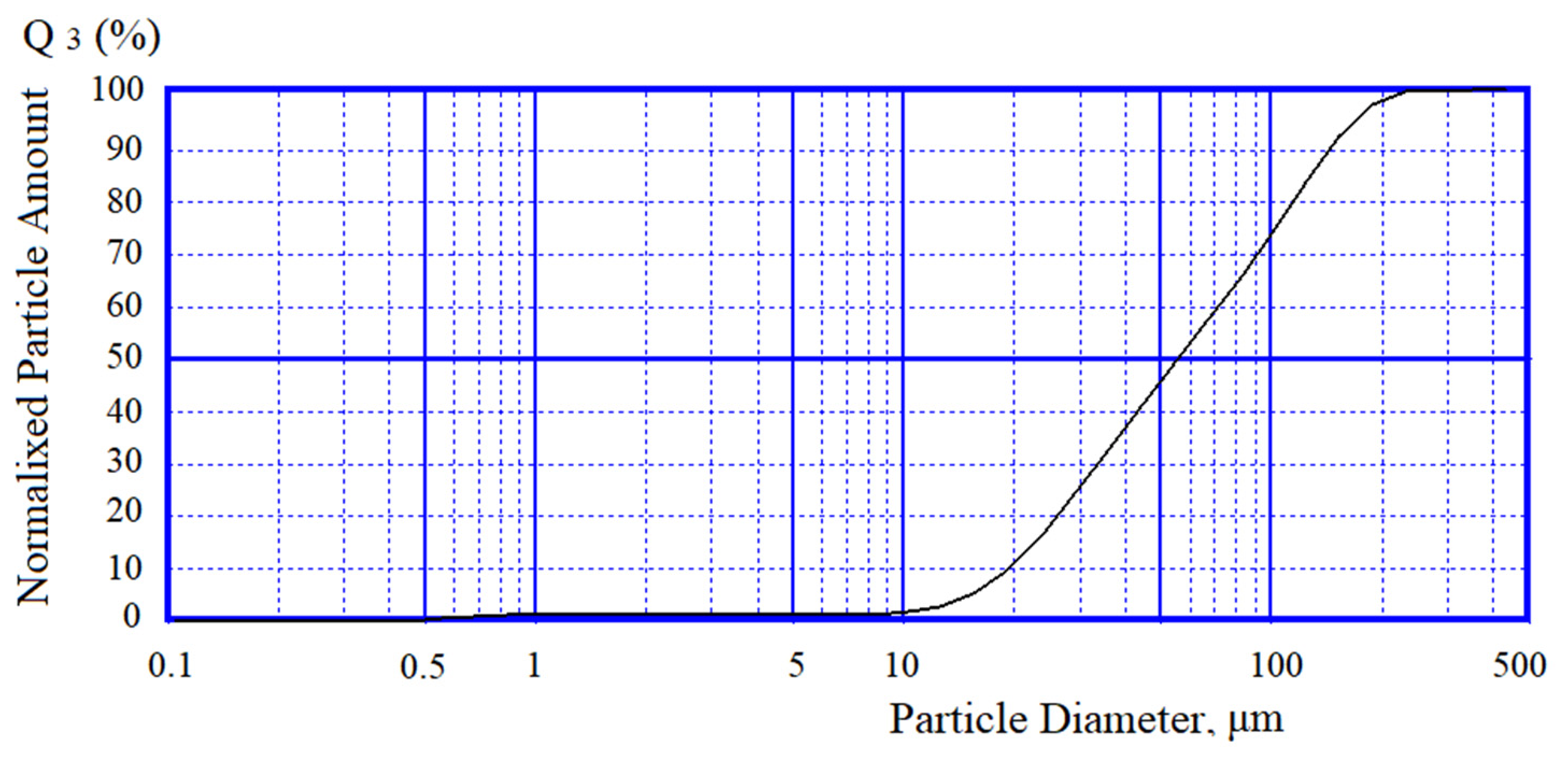
A 0.5 wt.% solution of DBDTP was passed through the generator to produce the emulsion microbubbles. Bubble size distribution was measured using a Shimadzu SALD-2101 laser particle size analyzer (Shimadzu, Kyoto, Japan). The distribution curves of emulsion microbubbles in the water–air microemulsion are presented in Figure 6. Three measurements were made with a confidence level of 95%.
The Shimadzu SALD-2101 laser analyzer determines particle size distributions in the range of 0.03–1000 μm based on laser light scattering. Detector-81 captures reflected, refracted, and scattered light, providing high resolution.
According to the differential size distribution (q3), 8.4% of bubbles had a diameter of 82.1 μm; 8.0%—66.7 μm; 7.9%—54.1 μm; 8.1%—43.97 μm; 8.4%—35.7 μm; 7.8%—28.99 μm; 6.4%—23.5 μm; 4.4%—19.1 μm; 2.4%—15.5 μm; and approximately 2%—smaller than 12 μm (Figure 2). The total content of bubbles sized 54.1–12 μm in the foam produced by the generator was 47.4%.
The percentage of particles within specific size ranges relative to the total mass was determined: d10 = 20 µm, d50 = 52 µm, and d80 = 103 µm.

2.2.4. Surface Tension Measurements

Surface tension measurements were carried out using an Easy Dyne K20 tensiometer (KRUSS, Hamburg, Germany) by the Du Nouy ring method with a platinum ring. Experiments were conducted at a temperature of 23 °C and a solution pH of 6.5. Measurements were performed in aqueous reagent solutions without the addition of a background electrolyte. The measurements were conducted in triplicate, the deviations were within 3%.

2.2.5. Method for Applying Gold to a Pyrite Surface

Gold deposition onto the pyrite surface was carried out using a modified procedure based on [18]. Pyrite with a particle size fraction of −74 + 63 μm was used as the starting material. The sample was deslimed, washed with distilled water, and air-dried at room temperature. A 5 g portion of the mineral was placed into 250 mL of an aqueous solution of chloroauric acid (HAuCl4) containing 34 mg of gold (calculated as Au). The solid–liquid contact was maintained for 12 h under continuous agitation using a mechanical stirrer. After completion of the process, the solid phase was separated by filtration and sequentially washed with distilled water.
Changes in the gold concentration in the solution were monitored spectrophotometrically by measuring the optical density at a wavelength of 312.8 nm [19]. It was established that the gold concentration decreased from 100 to 2.0 mg/L, corresponding to an average gold loading of approximately 5.6 mg/g on the pyrite.
It is assumed that gold deposition on the pyrite surface proceeds via adsorption–reduction processes, involving the reduction of AuCl4 ions to metallic gold (Au0), followed by the formation of nanoscale particles at active sites on the sulfide surface.

2.2.6. Zeta Potential Measurements

Zeta potential measurements were carried out in aqueous mineral suspensions using a zeta potential analyzer (Photocor Compact, Fotokor LLC, Moscow, Russia). A 1 g sample of gold-modified pyrite was placed in 50 mL of a 0.5 wt.% solution of DBDTP, prepared as an emulsion-based microbubble system of the flotation reagent generated using WAMG. Measurements were performed over a pH range of 2–10 using a standard electrokinetic method. The pH values were adjusted by the addition of 0.1 N HCl and NaOH solutions. The measurements were conducted in triplicate.

2.2.7. FTIR Spectroscopic Analysis

FTIR spectroscopic analysis was performed using samples of gold-modified pyrite before and after treatment with DBDTP. The mineral treatment was carried out under conditions analogous to those used for the zeta potential measurements: a 1 g sample of the mineral was treated with 50 mL of a 0.5 wt.% DBDTP solution, prepared as an emulsion-based microbubble system. After interaction, the solid phase was separated, washed with distilled water to remove unbound reagent, and dried at room temperature. The analysis was conducted using an FT/IR-6X spectrometer (JASCO, Tokyo, Japan) over a spectral range of 4000–350 cm−1. Both untreated and modified samples were examined to identify functional groups and to elucidate the nature of the interaction between the reagent and the mineral surface.

2.2.8. The Oxidation–Reduction Potential

The oxidation–reduction potential (ORP) of DBDTP solutions was measured using a Seven Direct SD20-Kit pH meter (Mettler-Toledo, Greifensee, Switzerland) equipped with a platinum indicator electrode and an Ag/AgCl reference electrode. Measurements were conducted at room temperature (22–25 °C) in a DBDTP solution of fixed concentration at pH 8.5. The pH was maintained by the addition of HCl and NaOH solutions. The measurements were conducted in triplicate.
To evaluate the effect of the treatment method, the DBDTP solution was divided into two equal portions. In the first case, air bubbling was performed for 0–10 min. In the second case, the solution was passed through WAMG for an equivalent duration.

3. Results and Discussion

3.1. Flotation Kinetics of Gold-Bearing Ore

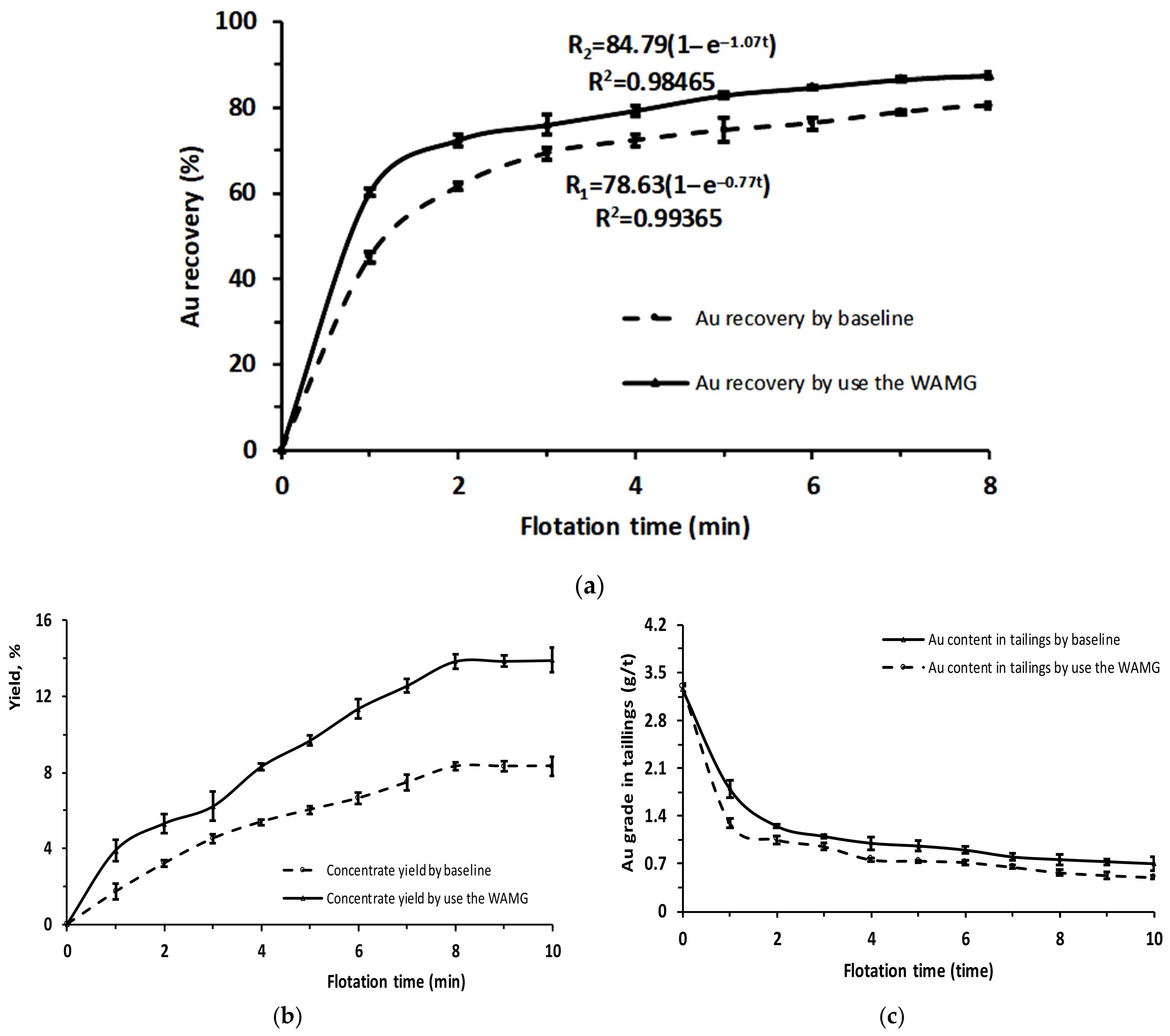
Laboratory flotation kinetics tests of gold-bearing ore were conducted under baseline reagent conditions and with the WAMG. The flotation kinetic experiments were conducted in triplicate, and the deviations in the final concentrate Au grade and recovery were both within 3%, indicating good experimental repeatability and data reliability. Figure 7 presents the dependences of cumulative concentrate yield, cumulative gold recovery, and gold grade in tailings on flotation time.
The flotation kinetics data indicate that the application of the WAMG significantly accelerates the flotation process, increasing gold recovery and reducing gold losses in tailings. With dispersed DBDTP supplied through the WAMG, a concentrate containing 32.93 g/t Au at a recovery of 79.33% was obtained after only 4 min. of flotation. Under baseline conditions, a concentrate containing 34.60 g/t Au at a recovery of 78.87% was obtained only after 7 min. Moreover, the application of the WAMG reduced gold content in flotation tailings from 0.70 to 0.50 g/t.
For the quantitative description of flotation kinetics, the classical first-order model [20] was employed, which is expressed by the following equation:
R t = R ( 1 e k t )
where
  • R t —recovery at time t;
  • R —ultimate (maximum) recovery;
  • k—first-order rate constant (min−1).
The experimental data were fitted using the least-squares method implemented in Origin Pro 2024 software, and the corresponding kinetic parameters: the values of the rate constant (k), ultimate recovery ( R ), and coefficient of determination (R2) are presented in Table 5.
The applicability of the first-order model is confirmed by high coefficients of determination (R2 > 0.98), indicating good agreement between the experimental data and the model. The rate constant (k) characterizes the flotation kinetics, and its increase from 0.77 to 1.07 min−1 indicates an intensification of particle–bubble interaction and mass transfer processes under WAMG conditions. The increase in the ultimate recovery (R∞) from 78.63% to 84.79% demonstrates an improvement in overall flotation efficiency. The use of the first-order model is consistent with literature reports, according to which the kinetics of sulfide mineral flotation can be adequately described by this model [21,22,23].

3.2. Flotation Tests of Gold-Bearing Ore in a Closed Circuit

Flotation experiments were performed in a closed circuit under baseline conditions and with the application of the WAMG. The flotation flowsheet included rougher flotation, scavenger flotation, and two stages of concentrate cleaning (Figure 8). SAX, DBDTP, and T-92 were added to both the rougher and scavenger stages.
The results of optimal closed-circuit flotation tests are summarized in Table 6.
The supply of a dispersed DBDTP through the WAMG increased gold recovery from 76.56% to 81.21% and reduced gold content in tailings by 0.17 g/t.
To assess the influence of WAMG on fine gold recovery, particle size distribution of flotation tailings was conducted (Table 7).
The results demonstrate that the application of the WAMG significantly improves the flotation of fine gold-bearing particles smaller than 25 μm. Under baseline conditions, 37.51% of gold in tailings is distributed in the −25 μm fraction at a grade of 0.98 g/t. With dispersed reagent application, this decreases to 28.29% at a grade of 0.62 g/t, representing a reduction of 9.22%.

3.3. Kinetic Flotation Experiments on Aged Tailings

The flotation kinetics of aged tailings were investigated according to the flowsheet shown in Figure 4 under the following conditions: rougher flotation—five stages of 2 min each; scavenger flotation—five stages of 2 min each. Reagent consumption in the rougher cycle was 20 g/t SAX, 5 g/t DBDTP, and 10 g/t frother T-92. In the scavenger cycle, reagent dosages were 10 g/t SAX, 2.5 g/t DBDTP, and 5 g/t T-92.
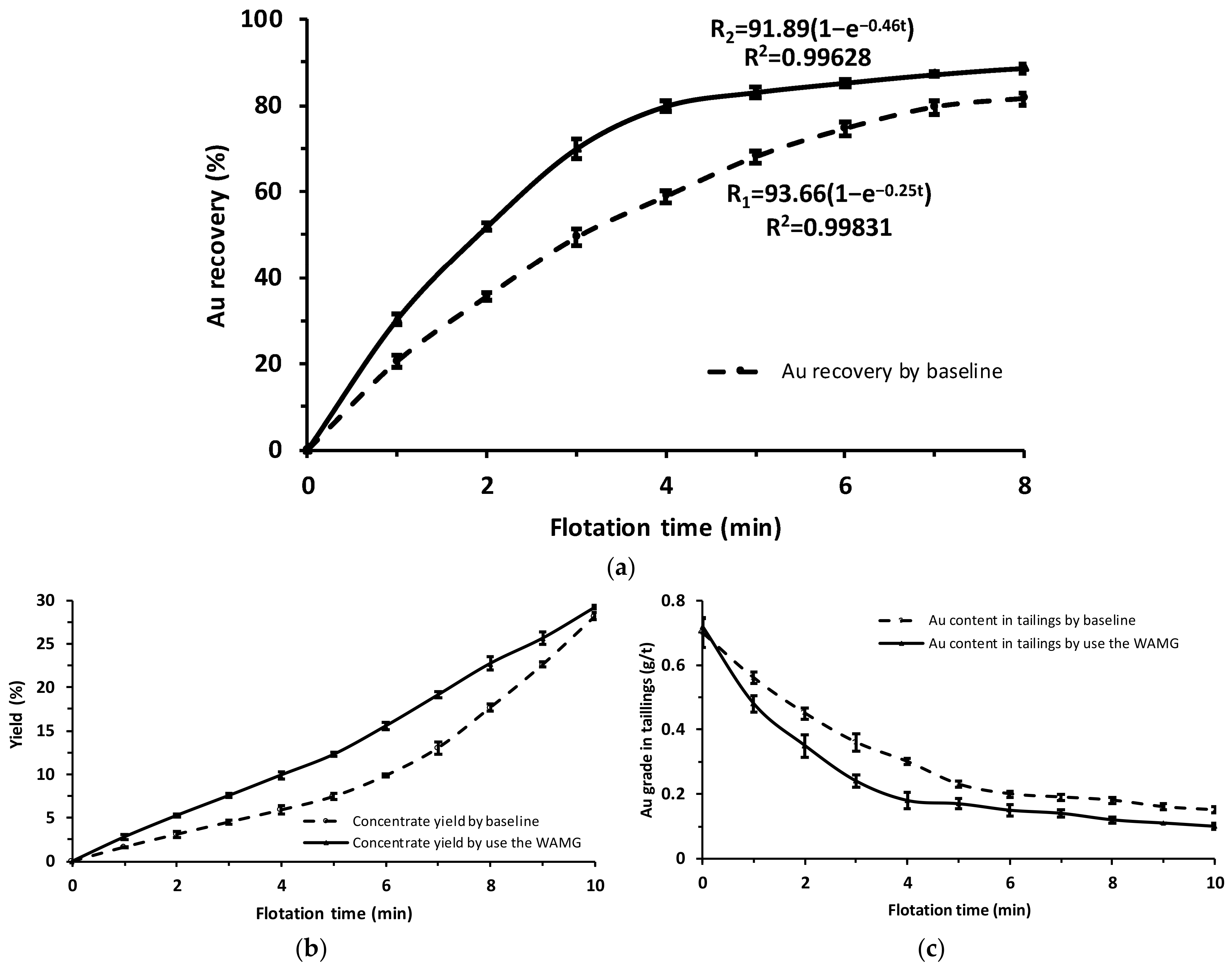
Figure 9 shows the dependence of cumulative concentrate yield, cumulative gold recovery, and gold grade in tailings on flotation time under the baseline regime and with the application of a WAMG.
For the quantitative description of the flotation kinetics of aged tailings, the classical first-order model described earlier in Section 3.1 was employed. The experimental data were fitted using the least-squares method implemented in Origin Pro software. The solid lines in Figure 9a represent the model fits to the experimental data, and the calculated kinetic parameters are presented in Table 8.
The obtained results demonstrate that the application of WAMG significantly accelerates the flotation process. The flotation rate constant k increases from 0.25 to 0.46 min−1, indicating a substantial intensification of the process kinetics. At the same time, the calculated ultimate recovery R∞ is 93.66% for the baseline regime and 91.89% when using WAMG. Despite the slightly lower ultimate recovery in the WAMG system, the higher process rate ensures the attainment of higher recovery values at the early stages of flotation.
The flotation kinetics data presented in Figure 9 show that when a flotation reagent emulsion produced via the high-pressure microemulsion process was used, a concentrate containing 6.8 g/t of gold was obtained with a recovery rate of 69.92%. The use of the high-pressure microemulsion allows for a reduction in the flotation front (accelerating the process), an increase in gold recovery in the concentrate by 1.95%, and a decrease in the gold content in the tailings from 0.15 to 0.10 g/t.

3.4. Closed-Circuit Flotation Tests of Aged Tailings

Flotation tests of gold-bearing tailings using a WAMG were conducted in a closed-circuit including regrinding of the initial tailings to 95% passing −74 μm, rougher flotation, scavenger flotation, and two stages of concentrate cleaning. The results were compared with the baseline conditions (Table 9).
The initial tailings exhibited a particle size of 88.0% passing −74 μm. Regrinding was performed in a laboratory ball mill. In the rougher flotation stage, 40 g/t SAX, 5 g/t DBDTP, and 10 g/t T-92were employed, while10 g/t SAX, 2.5 g/t DBDTP, and 5 g/t T-92were used in the scavenger stage.
Under baseline conditions, a gold-bearing concentrate containing 6.9 g/t Au was obtained at a recovery of 58.57%. With the application of the WAMG, the concentrate contained 6.8 g/t Au at a recovery of 64.45%. Compared with the baseline, the use of WAMG increased gold recovery by 5.88% while maintaining concentrate grade.

3.5. Surface Tension

The flotation activity of gold and gold-bearing sulfide minerals depends on their origin and technological characteristics. Particle size, grain morphology, and the surface chemical composition of gold and sulfide minerals are among the most significant factors influencing flotation performance [24,25,26]. Increasing the dispersion of sulfhydryl collector solutions and the use of surfactant additives and various modifiers can, in many cases, produce positive technological effects [27].
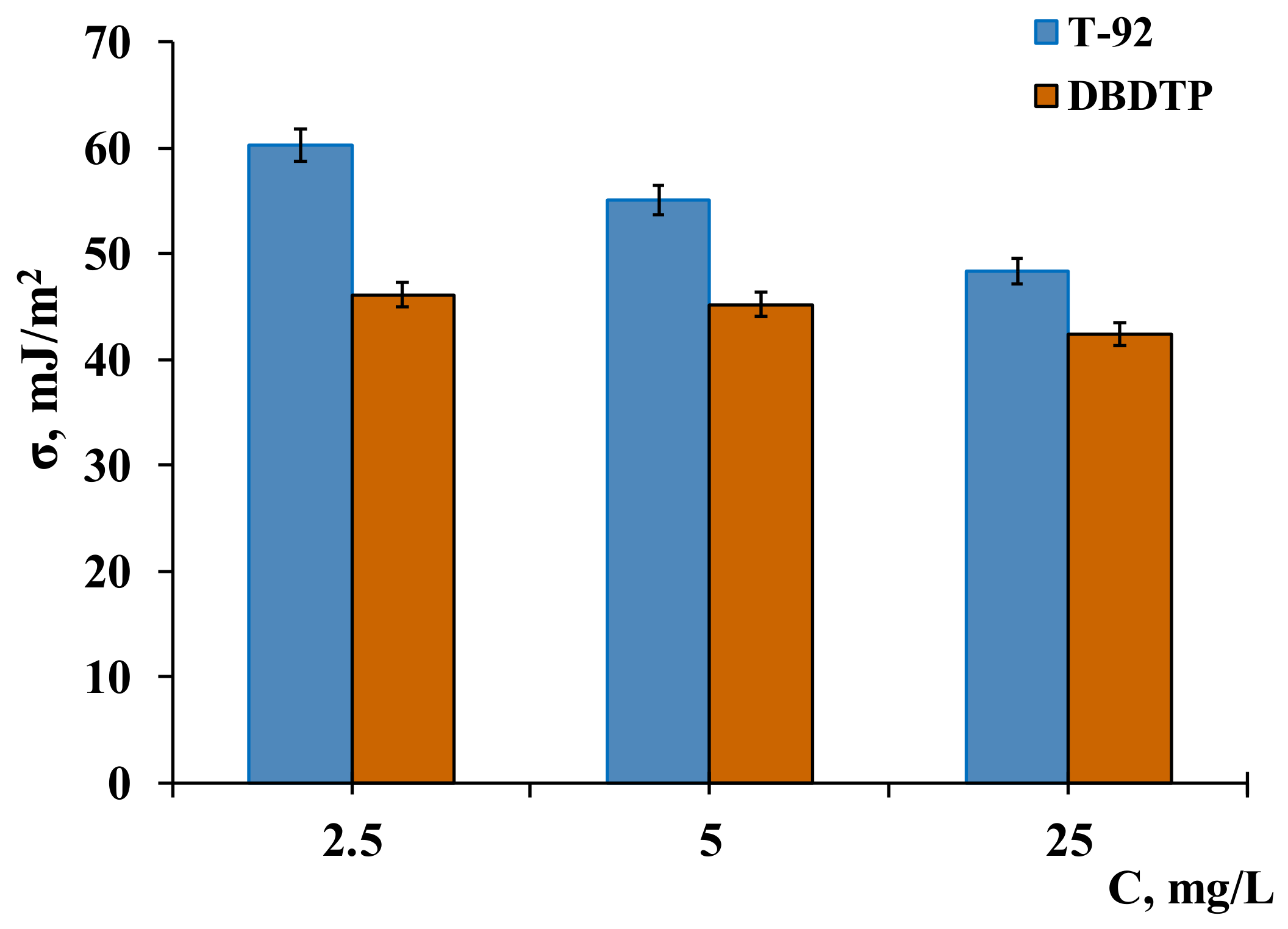
DBDTP acts as both a collector and a frother [28]. The stability of the microemulsion depends primarily on the physico-chemical properties of the flotation reagent, particularly its surface tension. Compared with frother T-92, DBDTP solutions exhibit lower surface tension (Figure 10).
It was demonstrated that across the entire investigated concentration range, the DBDTP solution exhibits lower surface tension values compared to the T-92 reagent. At a concentration of 2.5 mg/L, the surface tension of the T-92 solution is 60.2 mN/m, whereas that of the DBDTP solution is 46.1 mN/m. At 5 mg/L, the corresponding values are 55.1 and 45.2 mN/m, and at 25 mg/L, they are 48.4 and 42.4 mN/m, respectively. The lower surface tension indicates a higher surface activity of DBDTP, facilitating air dispersion and the formation of finer bubbles [29].

3.6. Zeta Potential

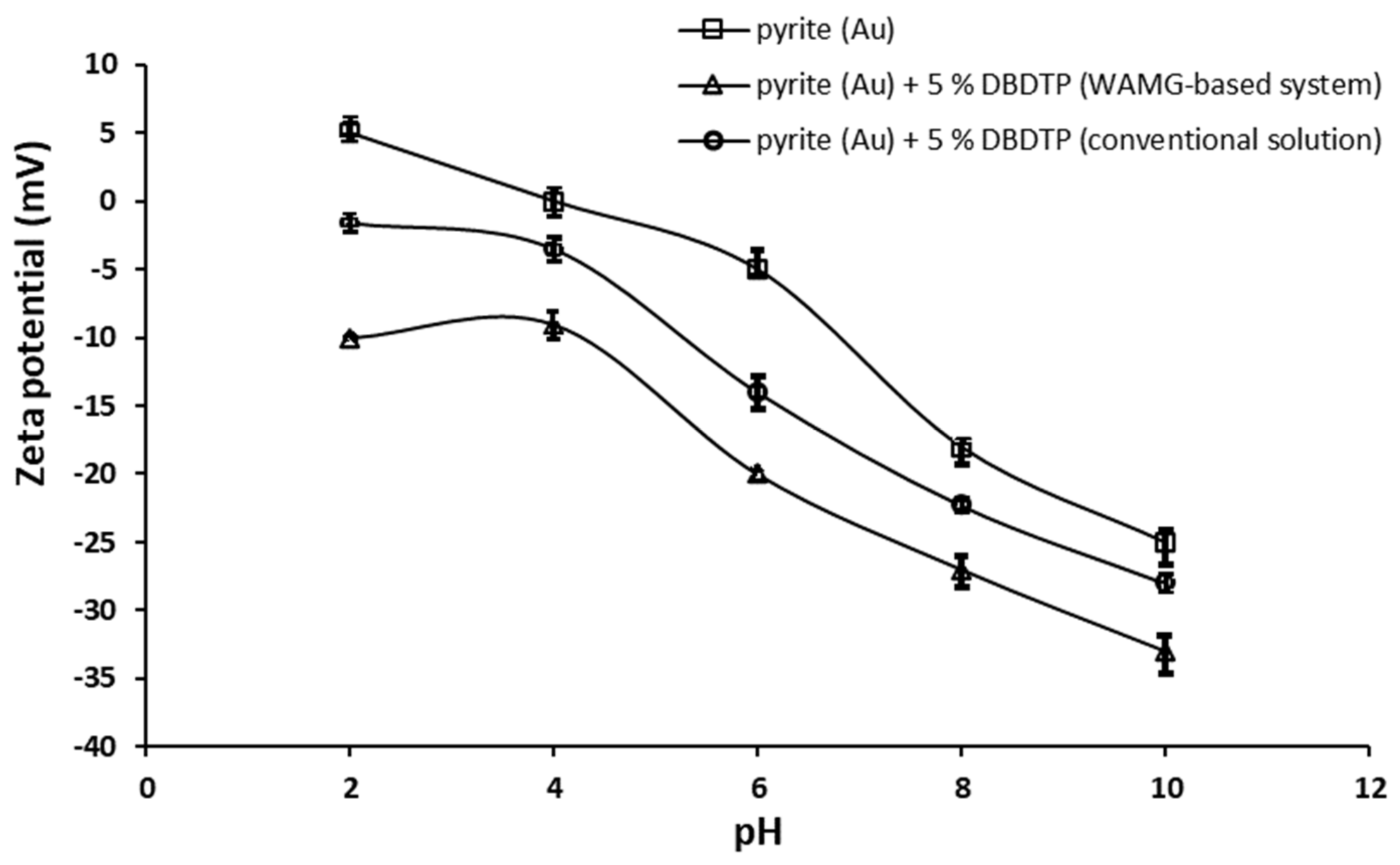
Gold is most often associated with sulfides, particularly with pyrite. The dependence of the zeta potential of gold-modified pyrite on pH is presented in Figure 11.
It was found that the untreated pyrite (Au-modified) exhibits a gradual decrease in zeta potential with increasing pH, with the isoelectric point observed at approximately pH 4.0. A similar behavior for ultrafine chalcopyrite has been reported [30].
After treatment with DBDTP in the form of an emulsion microbubble system generated using a water–air microemulsion generator (WAMG), a significant shift in the zeta potential toward more negative values is observed across the entire investigated pH range. For example, at pH 6, the ζ-potential changes from −5 mV to −20 mV, while at pH 10 it shifts from −25 mV to −33 mV. This shift indicates the adsorption of anionic dithiophosphate species on the mineral surface, leading to a modification of the electrical double layer structure. It suggests the formation of surface complexes and an increase in the negative surface charge density.
When comparing different methods of reagent introduction, it was found that the use of DBDTP in the form of a conventional aqueous solution leads to a moderate decrease in zeta potential values, whereas the application of DBDTP as an emulsion microbubble system generated using a water–air microemulsion generator (WAMG) results in a more pronounced shift in the ζ-potential toward the negative region across the entire investigated pH range.
In particular, at identical pH values, the zeta potential values in the presence of the WAMG-based system are lower than those obtained with the conventional reagent form, indicating enhanced adsorption and more intensive interaction between the reagent and the mineral surface.
This effect is attributed to the increased dispersion of the reagent in the form of emulsion microbubbles, which leads to a larger interfacial area and a higher number of active adsorption sites. In addition, microbubble formation increases the local concentration of the reagent near the mineral surface and enhances the probability of particle–bubble interactions.

3.7. FTIR Interpretation

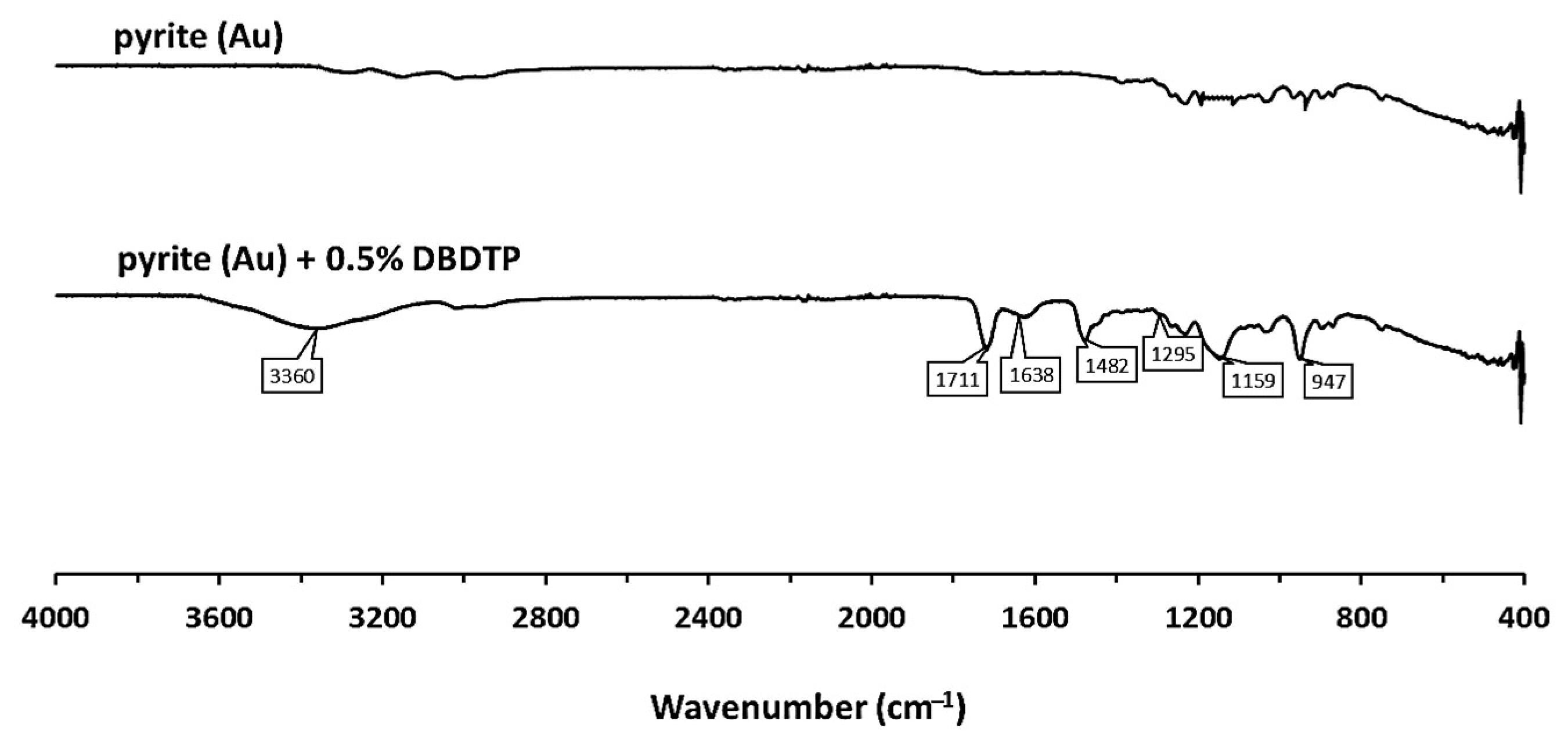
FTIR spectra of gold-modified pyrite before and after treatment with DBDTP are presented in Figure 12. Analysis of the spectra reveals significant changes in the chemical state of the mineral surface following interaction with the reagent.
The spectrum of the untreated gold-modified pyrite sample shows no pronounced bands characteristic of organic functional groups, indicating the predominantly inorganic nature of the mineral surface. After treatment with DBDTP, new absorption bands appear, indicating the adsorption of organic species on the mineral surface. The band at 3360 cm−1 corresponds to O–H stretching vibrations and may be associated with adsorbed water or surface hydroxyl groups. The bands at 1711 and 1638 cm−1 can be attributed to C=O stretching vibrations and H–O–H bending vibrations, respectively, suggesting the possible involvement of surface oxidized species or adsorbed water molecules. The band at 1722 cm−1 is not characteristic of dithiophosphate compounds. In the present work, it is interpreted as arising from secondary surface processes, such as partial oxidation under aeration conditions and WAMG treatment, as well as the presence of adsorbed organic species containing carbonyl groups. In addition, a contribution from carbonate-containing surface species may be possible due to the use of sodium carbonate as a pH regulator, which can lead to overlapping absorption bands in this spectral region.
In the 1482–1295 cm−1 region, bands characteristic of P–O–C and C–O vibrations are observed, indicating the presence of the organic component of dithiophosphate [31].
The most important features are the bands at 1159 and 947 cm−1, which correspond to P=S and P–S stretching vibrations, respectively [32,33]. The appearance of these bands provides direct evidence of the presence of dithiophosphate groups on the mineral surface. Notably, these bands are absent in the untreated sample, confirming that the observed changes are specifically due to the interaction of the reagent with the pyrite surface.
Based on the obtained results, it can be assumed that the interaction of DBDTP with the surface of gold-modified pyrite is chemical in nature and proceeds via coordination bonding of dithiophosphate anions with surface active sites, including iron and gold ions. The formation of such surface complexes is accompanied by the attachment of hydrophobic organic moieties, leading to an increase in the hydrophobicity of the mineral surface.

3.8. FTIR Redox State of DBDTP in the WAMG System

The data presented in Table 10 demonstrate that the treatment method of DBDTP solution has a significant effect on the redox potential of the system.
In the case of air bubbling, a gradual increase in ORP from 75 to 130 mV is observed with increasing treatment time, indicating the occurrence of oxidation processes in the system. This is consistent with the general understanding of the effect of oxygen on thiophosphate compounds, which are known to undergo gradual oxidative transformation.
In contrast, when the solution is treated in the WAMG system, a decrease in ORP to 54 mV is observed despite the presence of a gaseous phase. This behavior suggests that more complex processes take place in the system, associated with intense dispersion, formation of microbubbles and microemulsion structures, as well as redistribution of components between phases.
It may be assumed that under WAMG conditions, changes occur in the physicochemical state of DBDTP, including possible transformation of its active forms and an increase in their reactivity. The observed decrease in ORP may be related to the formation of more stable or less oxidized species of the reagent, as well as to altered interfacial interaction conditions.
The physico-chemical form of the reagent can be regulated through surface-active additives. Supplying DBDTP in emulsion microbubbles form promotes its effective attachment to hydrophobized areas of mineral surfaces, ensuring higher surface coverage density and improved flotation performance. The emulsion microbubbles form enhances reagent distribution and penetration to the surfaces of fine gold particles, thereby improving their floatability. Additionally, emulsion microbubbles composed of fine bubbles increase the frequency of particle–bubble collisions [12,34,35,36,37,38].
The improved flotation performance of gold-bearing raw materials is attributed, first, to the stronger adsorption of xanthate–dithiophosphate mixtures on gold particles, including plate-like grains [11,39,40]. Second, sodium amyl xanthate, similar to potassium amyl xanthate (KAX), retains high collecting ability for gold even in alkaline media up to pH 11.8 and is considered one of the most effective collectors for free gold [41,42]. Third, the delivery of dithiophosphate in emulsion microbubble form facilitates the recovery of finely dispersed gold due to enhanced collector hydrophobicity and improved froth structure [43,44].
Factors such as more uniform reagent dispersion in the pulp and modifications to the bubble phase characteristics enhance flotation performance. The WAMG produces smaller and more uniformly distributed microbubbles, increasing the specific surface area of the gas phase and the probability of collisions between mineral particles and bubbles. At the same time, more efficient dispersion of the reagent system promotes a uniform distribution of the collector in the pulp and increases the likelihood of its adsorption onto the surfaces of mineral particles. As a result, the efficiency of particle–bubble interactions is improved.
When the DBDTP reagent is passed through the WAMG, microbubbles may form from the soluble fraction of DBDTP, while flotation-active emulsion microbubbles (EMBs) are generated from both the soluble and insoluble fractions. For example, EMBs in spherical form consist of air at the core, a dense layer of the soluble DBDTP fraction, and a thin layer of the insoluble (oil) fraction. EMBs with diameters below 50 µm perform a dual function when interacting with fine mineral particles: the oil layer of the collector spreads over the surfaces of fine mineral particles, hydrophobizing them, while the remaining microbubbles adhere to these particles and transport them into the froth layer of the concentrate [45,46].

4. Conclusions

This study investigated the effect of flotation reagent DBDTP in the form of emulsion microbubbles on the flotation of gold-bearing raw materials. The study materials included gold-bearing ore and aged tailings from a Kazakhstani deposit containing 3.20 and 0.62 g/t Au, respectively.
A dispersed DBDTP produced using a water–air microemulsion generator was applied in flotation tests, and the size distribution of microbubbles in the water–air DBDTP emulsion was characterized. Bubbles in the 12–54.1 μm size range accounted for 47.4% of the total bubble population.
Flotation kinetics of the gold-bearing ore sample were studied under the baseline conditions and with the application of DBDTP in the form of emulsion microbubbles. The use of dispersed DBDTP accelerated flotation, increased gold recovery, and reduced gold losses in tailings.
The introduction of DBDTP via WAMG as emulsion microbubbles during the flotation cycle of gold-bearing ore resulted in a 4.65% increase in gold recovery and a 0.17 g/t decrease in gold content in tailings. This improvement is attributed to reduced losses of fine gold particles to final tailings.
The use of DBDTP in emulsion form improved the flotation of fine gold-bearing fractions smaller than 25 μm. Under the baseline regime, 37.51% of gold in the −25 + 0 μm size fraction was lost to tailings at a grade of 0.98 g/t. With the application of microemulsion via WAMG, only 28.29% of gold was distributed to this fraction (9.22% lower than in the baseline regime), at a reduced grade of 0.62 g/t.
In closed-circuit flotation of aged gold-bearing tailings, the baseline regime yielded a concentrate containing 6.9 g/t Au at 58.57% recovery, whereas the DBDTP in the form of emulsion microbubbles achieved 6.8 g/t Au at 64.45% recovery. Thus, the application of emulsion microbubbles increased gold recovery by 5.88% while maintaining concentrate quality.
Measurement of the zeta potential, FTIR spectroscopic analysis, and the oxidation–reduction potential of the gold-modified pyrite sample before and after treatment with DBDTP confirm the observed improvement in gold floatability.
The use of reagents in the form of emulsion microbubbles enables the reprocessing of legacy tailings, slimes, and low-grade ores containing finely disseminated gold, thereby reducing precious metal losses and expanding the resource base.


Author Contributions

Conceptualization: B.K., N.T., D.T. and L.S.; data curation: D.T., N.T. and L.S.; formal analysis: N.T. and N.S.; funding acquisition: B.K. and N.T.; investigation: S.N., Z.K., A.M. and N.S.; methodology: L.S., S.N., Z.K., A.M. and N.S.; project administration: B.K., N.T. and D.T.; resources: D.T. and N.T.; supervision: N.T., D.T. and L.S.; validation: D.T., L.S. and S.N.; visualization: L.S., S.N. and N.S.; writing—original draft: L.S., S.N. and N.S.; writing—review and editing: D.T., N.T., L.S., N.S. and S.N. All authors have read and agreed to the published version of the manuscript.

Funding

This research was funded by the Science Committee of the Ministry of Science and Higher Education of the Republic of Kazakhstan (Program No. BR24992757).

Data Availability Statement

The data for this study are available in this manuscript.

Conflicts of Interest

The authors declare no conflicts of interest.

References

  1. Liu, S.; Chen, X.; Lauten, R.A.; Peng, Y.; Liu, Q. Mitigating the negative effects of clay minerals on gold flotation by a lignosulfonate-based biopolymer. Miner. Eng. 2018, 126, 9–15. [Google Scholar] [CrossRef]
  2. Matveeva, N.N.; Chanturia, V.A.; Gapchich, A.O. Finely Dispersed Micro- and Nano-Gold Recovery Using Thermomorphic Polymer with Diphenylphosphine. J. Min. Sci. 2018, 53, 544–552. [Google Scholar] [CrossRef]
  3. Arellano-Piña, R.; Sanchez-Ramirez, E.A.; Vázquez-Sánchez, E.E.; Pérez-Garibay, R.; Rojas-Montes, J.C. Gold recovery improvements in grinding and flash flotation circuit. Miner. Eng. 2023, 199, 108130. [Google Scholar] [CrossRef]
  4. Algebraistova, N.K.; Golsman, D.A.; Kolotushkin, D.M.; Prokopyev, I.V. Technological evaluation of the stale tailings of the processing of gold-containing low-sulfide ore. Tsvetnye Met. 2018, 5, 25–30. [Google Scholar] [CrossRef]
  5. Algebraistova, N.K.; Samorodsky, P.N.; Kolotushkin, D.M.; Prokopiev, I.V. Technology of gold recovery from gold-bearing technogenic raw materials. Obogashchenie Rud 2018, 1, 33–37. [Google Scholar] [CrossRef]
  6. Demeusy, B.; Madanski, D.; Gaydardzhiev, S. Laboratory flotation study of the DPM Krumovgrad gold ore (Bulgaria)—Effects from improved collector suite and ore desliming. Miner. Eng. 2024, 208, 108596. [Google Scholar] [CrossRef]
  7. Wang, L.; Lan, H.; Guan, W.; Wang, Y.; Han, J.; Yang, Y.; Gu, L.; Wang, Y. New insights into selective flotation recovery of gold using dye-derived thermo-responsive polymeric surfactant: DFT calculation and adsorption mechanism. Sep. Purif. Technol. 2023, 320, 124199. [Google Scholar] [CrossRef]
  8. Raji, F.; Kappes, R.; Peng, Y. Deleterious impacts of triethylenetetramine and sodium metabisulphite on gold flotation during pyrrhotite depression. Miner. Eng. 2024, 216, 108884. [Google Scholar] [CrossRef]
  9. Raji, F.; Moimane, T.; Kappes, R.; Rezvani, A.; Peng, Y. Mitigating amine-induced gold depression: Mechanistic insights into stepwise xanthate addition in copper–gold flotation with pyrrhotite rejection. Miner. Eng. 2026, 238, 110056. [Google Scholar] [CrossRef]
  10. Ran, J.; Qiu, X.; Hu, Z.; Liu, Q.; Song, B.; Yao, Y. Effects of particle size on flotation performance in the separation of copper, gold and lead. Powder Technol. 2019, 344, 654–664. [Google Scholar] [CrossRef]
  11. Vasconcelos, C.; Sinche-Gonzalez, M.; Acuña-Pérez, C.; Sand, A.; Brising, D.; Gulkova, A. Mineral processing techniques to enhance gold-telluride flotation: Development from laboratory to industrial scale for Åkulla Kankberg Ore, Sweden. Miner. Eng. 2026, 235, 109859. [Google Scholar] [CrossRef]
  12. Hoang, D.H.; Imhof, R.; Sambrook, T.; Bakulin, A.E.; Murzabekov, K.M.; Abubakirov, B.A.; Baygunakova, R.K.; Rudolph, M. Recovery of fine gold loss to tailings using advanced reactor pneumatic flotation ImhoflotTM. Miner. Eng. 2022, 184, 107649. [Google Scholar] [CrossRef]
  13. Tussupbayev, N.K.; Semushkina, L.V.; Turysbekov, D.K.; Narbekova, S.M.; Muhamedilova, A.M. Processing of flotation tailings from benefication by using modified flotation reagents. In Proceedings of the XXIX International Mineral Processing Congress (IMPC 2018), Moscow, Russia, 15–21 September 2018. [Google Scholar]
  14. Semushkina, L.V.; Turysbekov, D.K.; Mukhanova, A.A.; Narbekova, S.M.; Mukhamedilova, A.M. Processing of flotation tailings from ores of Kazakhstan deposits using a modified flotation reagent. Kompl. Ispolz. Min. Syra = Compl. Use Min. Resour. 2018, 1, 5–11. [Google Scholar]
  15. Semushkina, L.V.; Tussupbayev, N.K.; Turysbekov, D.K.; Narbekova, S.M.; Musina, M.M. Processing of mature copper tailings from concentration plant using a composite reagent. Metallurgy 2022, 61, 392–394. [Google Scholar]
  16. Semushkina, L.V.; Tusupbaev, N.K.; Turysbekov, D.K.; Narbekova, S.M. Prospects for the processing of technogenic gold-bearing raw materials using a microemulsion of a composite flotation reagent. Obogashchenie Rud 2021, 5, 40–45. [Google Scholar] [CrossRef]
  17. Toktar, G.; Magomedov, D.R.; Koizhanova, A.K.; Abdyldaev, N.N.; Bakraeva, A.N. Extraction of gold from low-sulfide gold-bearing ores by beneficiating method using a pressure generator for pulp microaeration. Kompl. Ispolz. Min. Syra = Compl. Use Min. Resour. 2023, 325, 62–71. [Google Scholar] [CrossRef]
  18. Mikhlin, Y.; Romanchenko, A. Gold deposition on pyrite and the common sulfide minerals: An STM/STS and SR-XPS study of surface reactions and Au nanoparticles. Geochim. Cosmochim. Acta 2007, 71, 5985–6001. [Google Scholar] [CrossRef]
  19. Youssef, Z.; Mohamad, E.E.; Albela, B.; Bonneviot, L. Revisited UV spectra of chlorohydroxoaurate anions. Spectrochim. Acta Part A Mol. Biomol. Spectrosc. 2025, 324, 124736. [Google Scholar] [CrossRef] [PubMed]
  20. Chao, Y.; Li, Z.; Chen, J.; Xue, H.; Yang, J.; Lin, B.; Zhang, B.; Zhang, H.; Wang, H. Enhanced Rougher Recovery of Ultrafine Molybdenum Tailings Using a Novel Pilot-Scale Turbulent Micro-Vortex Mineralizer. Minerals 2026, 16, 201. [Google Scholar] [CrossRef]
  21. Vinnett, L.; Waters, K.E. Representation of Kinetics Models in Batch Flotation as Distributed First-Order Reactions. Minerals 2020, 10, 913. [Google Scholar] [CrossRef]
  22. Yalcin, E.; Kelebek, S. Flotation Kinetics of a Pyritic Gold Ore. Int. J. Miner. Process. 2011, 98, 48–54. [Google Scholar] [CrossRef]
  23. Parkes, S.; Wang, P.; Galvin, K.P. Investigating the System Flotation Kinetics of Fine Chalcopyrite in a REFLUX™ Flotation Cell using a Standardised Flotation Cell Reference Method. Miner. Eng. 2022, 178, 107411. [Google Scholar] [CrossRef]
  24. Özçelik, S.; Ekmekçi, Z. Surface Chemistry and Flotation of Gold-Bearing Pyrite. Minerals 2024, 14, 914. [Google Scholar] [CrossRef]
  25. Keleş, B.; Dinç, N.İ.; Dursun, H.N.; Burat, F.; Ulusoy, U. The effect of particle geometry (size & shape) on the recovery of gold and copper metallic particles from end-of-life random access memory cards by flotation. Waste Manag. 2024, 179, 66–76. [Google Scholar]
  26. Barmenshinova, M.B.; Motovilov, I.Y.; Telkov, S.A.; Omar, R.S. Study of the material composition of refractory gold-bearing ore from the Aktobe deposit. Kompl. Ispolz. Min. Syra = Compl. Use Min. Resour. 2024, 331, 5–11. [Google Scholar] [CrossRef]
  27. Bragin, V.I.; Usmanova, N.F.; Burdakova, E.A.; Kondratieva, A.A. Application of reagents in the form of a reverse microemulsion for the flotation of lead and zinc sulfides. Russ. J. Non-Ferr. Met. 2022, 63, 482–489. [Google Scholar] [CrossRef]
  28. Maksimov, V.I.; Ryaboy, V.I.; Koroleva, E.V. BTF=161SK reagent application in copper-nickel ores flotation. Obogashchenie Rud 2013, 3, 23–26. [Google Scholar]
  29. Turysbekov, D.; Tussupbayev, N.; Semushkina, L.; Narbekova, S.; Kaldybaeva, Z.; Mambetaliyeva, A. Effect of the water-air emulsion size of the foaming agent solution on the non-ferrous metal minerals flotation ability. Metallurgy 2021, 60, 395–398. [Google Scholar]
  30. Ignatkina, V.A.; Bocharov, V.A.; Aksenova, D.D.; Kayumov, A.A. Zeta potential of the surface of ultrafine sulfides and floatability of minerals. J. Non-Ferr. Met. 2017, 58, 95–100. [Google Scholar] [CrossRef]
  31. Dhar, P.; Thornhill, M.; Kota, H.R. Investigation of Copper Recovery from a New Copper Ore Deposit (Nussir) in Northern Norway: Dithiophosphates and Xanthate-Dithiophosphate Blend as Collectors. Minerals 2019, 9, 146. [Google Scholar] [CrossRef]
  32. Zhong, H.; Huang, Z.; Zhao, G.; Wang, S.; Liu, G.; Cao, Z. The collecting performance and interaction mechanism of sodium diisobutyldithiophosphinate in sulfide minerals flotation. J. Mater. Res. Technol. 2015, 4, 151–161. [Google Scholar] [CrossRef]
  33. Jiang, H.; Li, L.; Xu, Y.; Wang, Z.; Huang, Y.; Wang, Y. The Influence of Sodium Butyl Xanthate and Ammonium Dibutyl Dithiophosphate on the Flotation Behavior of Chalcopyrite and Bornite. Minerals 2025, 15, 1148. [Google Scholar] [CrossRef]
  34. Evdokimov, S.I.; Golikov, N.S.; Zadkov, D.A.; Voitovich, E.V.; Kondratiev, V.V.; Petrovskiy, A.A.; Konyukhov, V.Y.; Gladkikh, V.A. Studying the Flotation of Gold-Bearing Ores Using Carrier Minerals. Minerals 2024, 14, 88. [Google Scholar] [CrossRef]
  35. Evdokimov, S.I.; Golikov, N.S.; Pryalukhin, A.F.; Kondratiev, V.V.; Mishedchenko, A.; Kuzina, A.V.; Bryukhanova, N.N.; Karlina, A.I. Studying Flotation of Gold Microdispersions with Carrier Minerals and Pulp Aeration with a Steam–Air Mixture. Minerals 2024, 14, 108. [Google Scholar] [CrossRef]
  36. Chang, Z.; Niu, S.; Shen, Z.; Zou, L.; Wang, H. Latest advances and progress in the microbubble flotation of fine minerals: Microbubble preparation, equipment, and applications. Int. J. Miner. Met. Mater. 2023, 30, 1244–1260. [Google Scholar] [CrossRef]
  37. Farrokhpay, S.; Filippova, I.; Filippov, L.; Picarra, A.; Rulyov, N.; Fornasiero, D. Flotation of fine particles in the presence of combined microbubbles and conventional bubbles. Miner. Eng. 2020, 155, 106439. [Google Scholar] [CrossRef]
  38. Rulyov, N. The role of microbubble dose in combined microflotation of fine particles. Physicochem. Probl. Miner. Process. 2024, 60, 190630. [Google Scholar] [CrossRef]
  39. Xing, Q.; Li, F.; Ming, P.; Wang, Z. Enhanced Recovery of an Arsenopyrite-Type Gold Ore: Flotation Surface Chemistry and Kinetics of Blended Collector W8 with ADD. Colloids Interfaces 2025, 9, 76. [Google Scholar] [CrossRef]
  40. Liu, W.; Miller, J.D.; Sun, W.; Hu, Y. Analysis of the Selective Flotation of Elemental Gold from Pyrite Using DiisobutylMonothiophosphate. Minerals 2022, 12, 1310. [Google Scholar] [CrossRef]
  41. Lins, F.F.; Adamian, R. Some Chemical Aspects of Gold Flotation. In Proceedings of the XVIII International Mineral Processing Congress, Sydney, Australia, 23–28 May 1993; pp. 1119–1122. [Google Scholar]
  42. Forrest, K.; Yan, D.; Dunne, R. Optimisation of gold recovery by selective gold flotation for copper-gold-pyrite ores. Miner. Eng. 2001, 14, 227–241. [Google Scholar] [CrossRef]
  43. Moncayo-Riascos, I.; Hoyos, B.A. Effect of collector molecular structure on the wettability of gold for froth flotation. Appl. Surf. Sci. 2017, 420, 691–699. [Google Scholar] [CrossRef]
  44. Lee, S.; Gibson, C.E.; Ghahreman, A. Flotation of Carbonaceous Matter from a Double Refractory Gold Ore: The Effect of MIBC on Flotation Performance and Kinetics. Minerals 2021, 11, 1021. [Google Scholar] [CrossRef]
  45. Laskowski, J.S. Flotation Thermodynamics: Can We Learn anything from It? Can. Metall. Q. 2007, 46, 251–258. [Google Scholar] [CrossRef]
  46. Samenova, N.; Daulet, B.; Tussupbayev, N.; Turysbekov, D.; Narbekova, S. Influence of emulsion microbubbles on the flotation recovery of fine-dispersed chalcopyrite. Miner. Eng. 2026, 237, 110052. [Google Scholar] [CrossRef]
Figure 1. X-ray diffraction analysis of the initial gold-bearing tailings.
Minerals 16 00531 g001
Figure 2. Electron probe microanalysis of the initial tailings sample.
Minerals 16 00531 g002
Figure 3. Results of dispersion analysis of the initial tailings.
Minerals 16 00531 g003
Figure 4. Flowsheet of kinetic tests of flotation of gold-bearing raw materials.
Minerals 16 00531 g004
Figure 5. Water–air microemulsion generator. 1—disperser head; 2—cooling water inlet; 3—cooling water outlet; 4—water–air microemulsion outlet in setup mode; 5—water–air microemulsion outlet in operational mode; 6—mode switch; 7—disperser servo drive; 8—frequency servo converter; 9—peristaltic air feeder; 10—peristaltic frother solution feeder.
Minerals 16 00531 g005
Figure 6. Size distribution curve of emulsion microbubbles in the water–air emulsion of the DBDTP reagent.
Minerals 16 00531 g006
Figure 7. (a) Effect of flotation time on gold recovery; (b) effect of flotation time on concentrate yield; (c) effect of flotation time on gold grade in the tailings.
Minerals 16 00531 g007
Figure 8. Flotation flowsheet of the gold-bearing ore.
Minerals 16 00531 g008
Figure 9. (a) Dependence of gold recovery on flotation time; (b) dependence of concentrate yield on flotation time; (c) dependence of gold grade in tailings on flotation time.
Minerals 16 00531 g009
Figure 10. Dependence of reagent surface tension on concentration.
Minerals 16 00531 g010
Figure 11. Dependence of the zeta potential of gold-modified pyrite on pH in the absence of reagent and in the presence of DBDTP, introduced as a conventional solution and as an emulsion microbubble system generated using a WAMG.
Minerals 16 00531 g011
Figure 12. FTIR spectra of gold-modified pyrite before and after treatment with DBDTP, applied as an emulsion-based microbubble system of the flotation reagent generated using a WAMG.
Minerals 16 00531 g012
Table 1. Rational analysis of gold forms in the initial ore sample.
Gold Association FormContent, g/tDistribution, %
Finely disseminated native gold0.57417.468
Visible native gold0.83425.380
In intergrowths with sulfides and gangue0.53416.251
Associated with sulfides0.61518.716
Associated with gangue minerals0.34510.499
In quartz0.38411.686
Total3.286100.0
Table 2. Granulometric analysis of the initial ore before flotation.
Size Class, μmYield, %Au Grade, g/tDistribution, %
+1405.822.153.886
−140 + 7122.771.8713.225
−71 + 4027.752.4320.944
−40 + 2514.414.2819.156
−25 + 029.254.7142.789
Total100.003.22100.00
Table 3. Rational analysis of gold in aged tailings.
Gold Association FormContent, g/tDistribution, %
Finely disseminated native gold0.230.77
Visible native gold<0.115.38
In intergrowths with sulfides and gangue0.115.38
In quartz0.2538.47
Total0.65100
Table 4. Size distribution of gold in aged tailings.
Size Class, μmYield, %Au Grade, g/tDistribution, %
−71 + 6023.760.5019.57
−60 + 5011.220.509.24
−50 + 405.360.575.03
−40 + 303.760.563.47
−30 + 209.860.589.42
−20 + 1020.320.6822.76
−10 + 025.720.7230.51
Total100.00.61100.0
Table 5. Kinetic characteristics of the flotation process.
Conditionsk (min−1)R (%)R2
Baseline0.7778.630.99365
With WAMG1.0784.790.98465
Table 6. Results of flotation tests of the gold-bearing ore sample under the base reagent regime and with WAMG application.
Product NameYield, %Content, g/tRecovery, %Remarks
Concentrate4.4256.5076.56Baseline
Tailings95.580.8025.44
Feed100.003.26100.00
Concentrate4.5856.7081.21With WAMG
Tailings95.420.6318.79
Feed100.003.20100.00
Table 7. Particle size distribution of flotation tailings.
Size Class, μmYield, %Au Grade, g/tRecovery, %Remarks
+1404.981.348.57Baseline
−140 + 7121.610.9726.93
−71 + 4031.680.5221.16
−40 + 2511.940.385.83
−25 + 029.790.9837.51
Total100.000.78100.00
+1405.431.109.52With WAMG
−140 + 7122.270.9333.01
−71 + 4032.350.4422.69
−40 + 2511.320.366.49
−25 + 028.630.6228.29
Total100.000.63100.00
Table 8. Kinetic flotation parameters.
Conditionsk (min−1)R (%)R2
Baseline0.2593.660.99831
With WAMG0.4691.890.99628
Table 9. Results of processing gold-bearing flotation tailings.
Product NameYield, %Content, g/tRecovery, %Note
Concentrate5.246.9058.57Baseline
Dump tailings94.760.2741.43
Legacy tailings100.00.62100.0
Concentrate6.256.8064.45With WAMG
Dump tailings93.750.2535.55
Legacy tailings100.00.66100.0
Table 10. Effect of treatment method on the redox potential of DBDTP solution (pH = 8.5).
Time, minORP During Air Bubbling, mVORP After Treatment in WAMG, mV
075
29281
410565
611552
1013054
Disclaimer/Publisher’s Note: The statements, opinions and data contained in all publications are solely those of the individual author(s) and contributor(s) and not of MDPI and/or the editor(s). MDPI and/or the editor(s) disclaim responsibility for any injury to people or property resulting from any ideas, methods, instructions or products referred to in the content.