Article

Carbothermic Processing of Low-Grade Lithium-Bearing Aluminosilicate Ores with the Production of a Lithium-Containing Slag

by
Feruza A. Berdikulova
1,
Nazigul Zhumakynbai
1,
Alexey S. Orlov
2,
Daulet Sagzhanov
1,
Akmaral K. Serikbayeva
3,
Medet A. Mendeke
1,4,* and
Nassiba Akeshova
5
1
RSE National Center on Complex Processing of Mineral Raw Materials of the Republic of Kazakhstan, Almaty 050036, Kazakhstan
2
Chemical-Metallurgical Institute, Branch of the RSE National Center on Complex Processing of Mineral Raw Materials of the Republic of Kazakhstan, Almaty 050036, Kazakhstan
3
Department of Ecology and Geology, Faculty of Engineering, Yessenov University, Aktau 130000, Kazakhstan
4
School of Mineralogy and Green Technology, Kazakh-British Technical University, Almaty 050000, Kazakhstan
5
Department of English, Faculty of Philology, Khoja Akhmet Yassawi International Kazakh-Turkish University, Turkistan 161200, Kazakhstan
*
Author to whom correspondence should be addressed.
Minerals 2026, 16(5), 532; https://doi.org/10.3390/min16050532
Submission received: 28 March 2026 / Revised: 12 May 2026 / Accepted: 13 May 2026 / Published: 15 May 2026

Abstract

This study presents a sustainable approach for processing low-grade lithium-bearing aluminosilicate ores via carbothermic treatment with selective lithium stabilization in the slag phase. The proposed method is based on controlled phase transformations that suppress lithium volatilization and promote its retention in the condensed phases. Thermodynamic analysis revealed that lithium volatilization is unfavorable within a defined temperature window, enabling its stabilization in the slag. Experimental smelting, conducted at 1550–1600 °C with the addition of an iron-bearing component, resulted in the selective reduction of silicon and aluminum into a ferro silicon aluminum alloy, while lithium was efficiently concentrated in the slag phase. Lithium recovery to the slag reached up to 94%, with losses to the gas phase below 6%, demonstrating a significant reduction in volatilization compared to conventional high-temperature processes. X-ray diffraction (XRD) analysis confirmed that lithium is predominantly immobilized in the form of LiAlSiO4 (pseudo-eucryptite), which enhances the chemical reactivity of the slag. From a sustainability perspective, the proposed process enables efficient utilization of low-grade lithium resources, minimizes lithium losses, and eliminates the need for energy-intensive pre-treatment steps such as roasting or vacuum processing. The resulting lithium-bearing slag represents a reactive intermediate suitable for subsequent hydrometallurgical extraction, enabling an integrated and resource-efficient process route. The results demonstrate that phase-controlled carbothermic processing is a viable and sustainable strategy for lithium recovery from low-grade aluminosilicate ores.

1. Introduction

Lithium is a critical element for modern energy technologies, playing a central role in lithium-ion batteries, energy storage systems, specialty glasses, ceramics, and lightweight aluminum alloys [1,2,3]. The rapid expansion of electric mobility and renewable energy infrastructure has led to a continuous increase in global lithium demand, stimulating the development of technologies for processing low-grade and non-traditional lithium resources [2,3,4].
Industrial lithium production from hard-rock deposits is currently based predominantly on high-grade spodumene concentrates containing more than 1.0%–1.2% Li2O [5,6,7]. However, a substantial portion of lithium resources is represented by low-grade aluminosilicate ores with Li2O contents below 1%, characterized by complex mineralogical compositions including quartz, feldspars, and spodumene [6,8,9]. Conventional beneficiation and hydrometallurgical routes are often inefficient for such ores due to poor selectivity, high lithium losses, and increased reagent and energy consumption [10,11].
Pyrometallurgical approaches provide an alternative pathway by enabling high-temperature phase transformations and redistribution of elements between condensed phases. In carbothermic systems, silicon and aluminum can be selectively reduced into a metallic phase, while lithium may be retained in the slag. However, a major limitation is the high volatility of lithium at elevated temperatures, which promotes its transfer into the gas phase and leads to significant losses.
Therefore, the key challenge is to design process conditions that suppress lithium volatilization while ensuring selective reduction of silicon and aluminum. In this context, the addition of an iron-bearing component is of particular interest, as it facilitates the formation of a ferro silicon aluminum alloy, promoting the removal of silicon and aluminum from the slag and enabling lithium concentration in the condensed phase [12,13,14,15,16,17].
Lithium retention in aluminosilicate slags is strongly governed by phase transformations occurring during carbothermic treatment. The redistribution of silica and aluminum creates conditions for the formation of lithium aluminosilicate phases with enhanced chemical reactivity compared to the original spodumene structure. Among these, LiAlSiO4 (pseudo-eucryptite) is especially important due to its higher lithium content and increased susceptibility to subsequent chemical conversion.
Despite previous studies on carbothermic processing of lithium-bearing materials, most works focus on lithium reduction and volatilization, whereas the mechanisms of lithium stabilization in the slag via controlled phase transformations remain insufficiently understood [18,19,20,21].
The present study addresses this gap by investigating the thermodynamic and experimental aspects of carbothermic processing of low-grade lithium-bearing aluminosilicate ores with the aim of stabilizing lithium in the slag phase. Thermodynamic modeling was used to identify conditions that favor lithium retention in condensed phases over volatilization. Experimental smelting at 1550–1600 °C confirmed selective reduction of silicon and aluminum into a ferro silicon aluminum alloy and the formation of a lithium-rich slag, where lithium is predominantly fixed as LiAlSiO4. The transformation of lithium from α-spodumene to LiAlSiO4 is identified as the key mechanism governing lithium partitioning, enabling structural activation of lithium and the formation of a reactive intermediate suitable for subsequent hydrometallurgical extraction.
Unlike conventional approaches focused on lithium volatilization, this study demonstrates a phase-controlled strategy for lithium retention in the slag phase, enabling its subsequent hydrometallurgical recovery.

2. Materials and Methods

2.1. Raw Material Characterization

The lithium-bearing ore used in this study was obtained from a pegmatite-type deposit and represents a low-grade aluminosilicate raw material. Prior to experimental processing, the ore was crushed and sieved to obtain a particle size fraction of 3–5 mm.
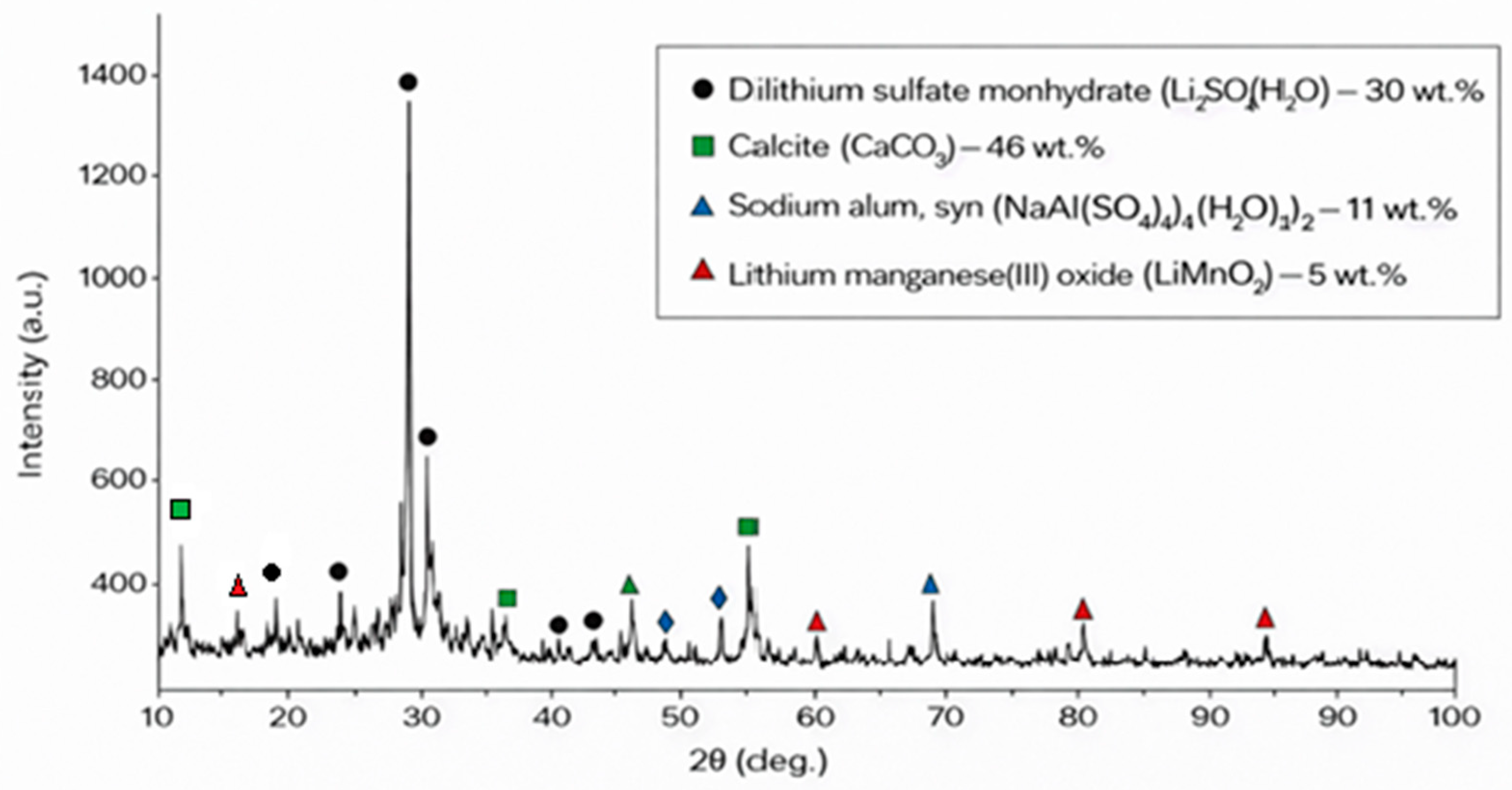
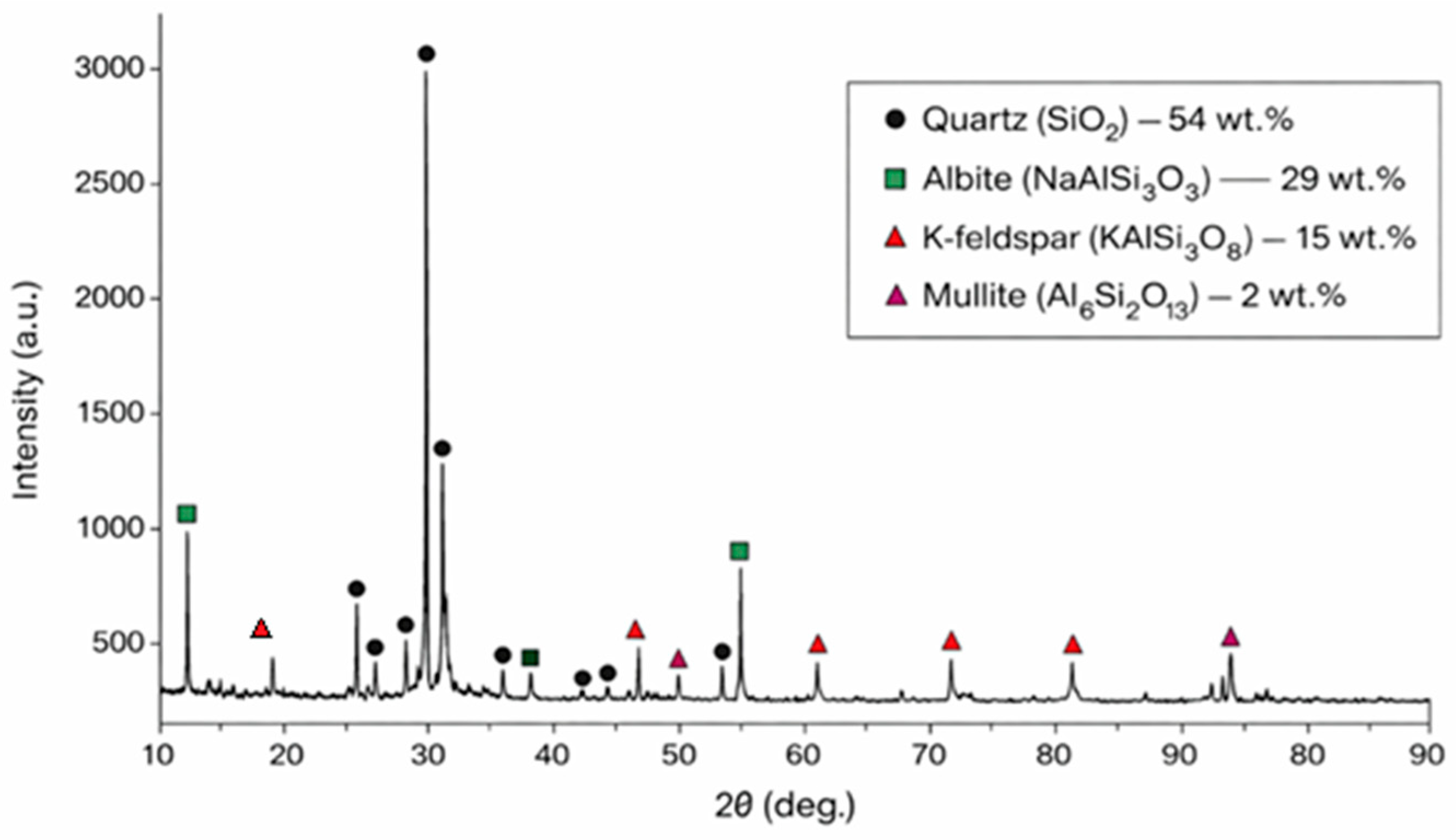
The phase composition of the ore was determined by X-ray diffraction (XRD) analysis (Figure 1). The sample is predominantly composed of quartz (SiO2), accounting for approximately 54 wt.%. Feldspar phases are also significant, including albite (NaAlSi3O8, ~29 wt.%) and K-feldspar (KAlSi3O8, ~15 wt.%). A minor amount of mullite (Al6Si2O13, ~2 wt.%) was detected. The predominance of silicate phases indicates the refractory nature of the material and its limited amenability to conventional beneficiation methods.
Lithium is primarily present in the form of α-spodumene (LiAlSi2O6), which is the main lithium-bearing mineral phase in the ore. According to chemical analysis, the Li2O content is approximately 0.5 wt.%, confirming the low-grade nature of the raw material and justifying the need for alternative processing approaches.
The selected ore composition is representative of low-grade lithium-bearing aluminosilicate resources, characterized by a high content of gangue silicates and low lithium concentration, which pose significant challenges for conventional processing routes.
The bulk chemical composition of the ore was determined and is presented in Table 1. The material is dominated by SiO2 and Al2O3, confirming its aluminosilicate nature. Significant amounts of alkali oxides (Na2O and K2O) are also present, reflecting the high feldspar content of the ore.
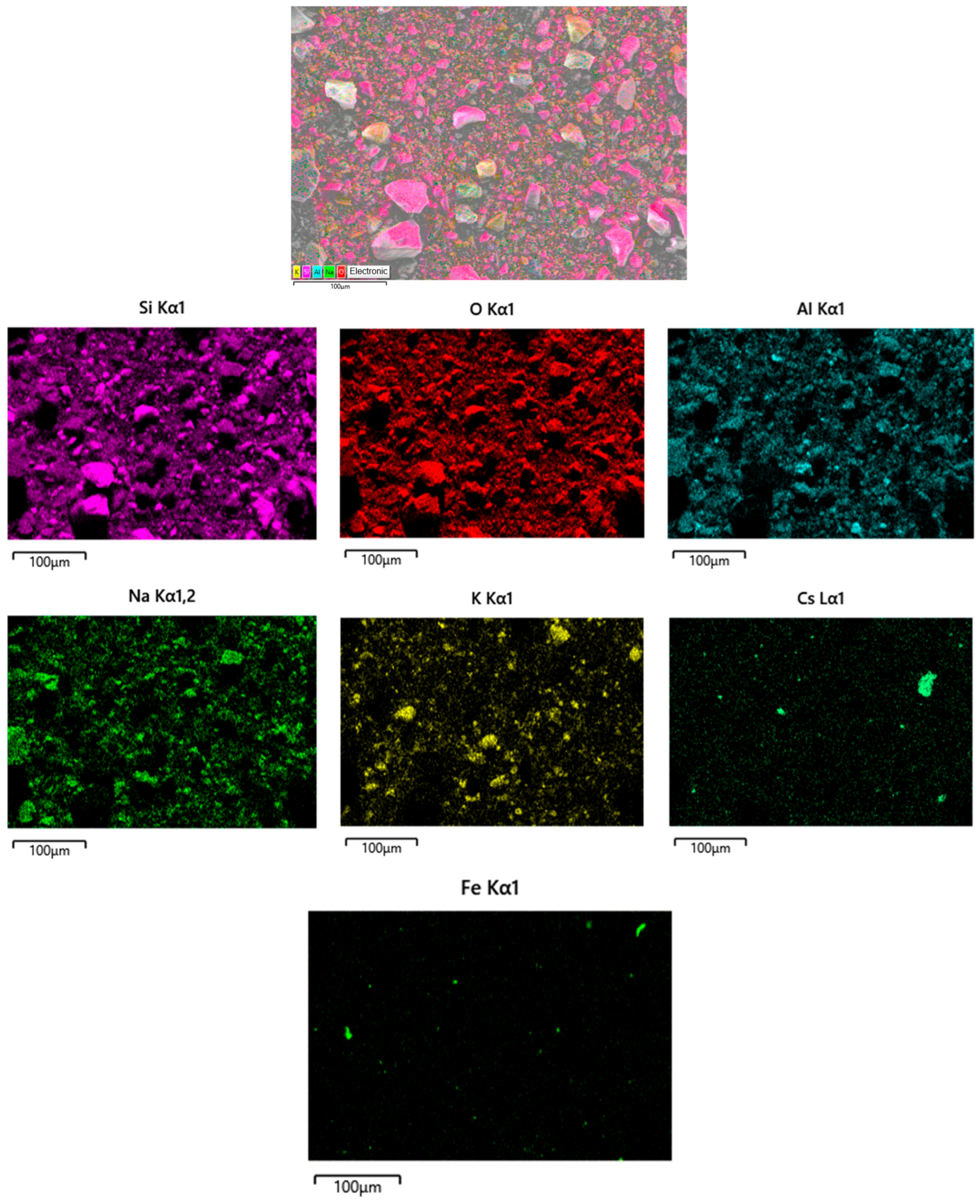
Additional investigation of the morphology and elemental distribution using scanning electron microscopy (SEM) combined with energy-dispersive X-ray spectroscopy (EDS) revealed that the ore exhibits a heterogeneous structure predominantly composed of a silicate matrix with inclusions of aluminosilicate phases.
Elemental mapping (Figure 2) indicates that the main elements are O, Si, Al, and Na, which is consistent with the results of X-ray diffraction (XRD) and chemical analysis.
Such a composition is unfavorable for conventional beneficiation methods due to the strong association of lithium with aluminosilicate phases and the high proportion of gangue minerals. At the same time, the elevated silica and alumina contents make this material suitable for carbothermic processing, where selective reduction of silicon and aluminum promotes lithium concentration in the slag phase.
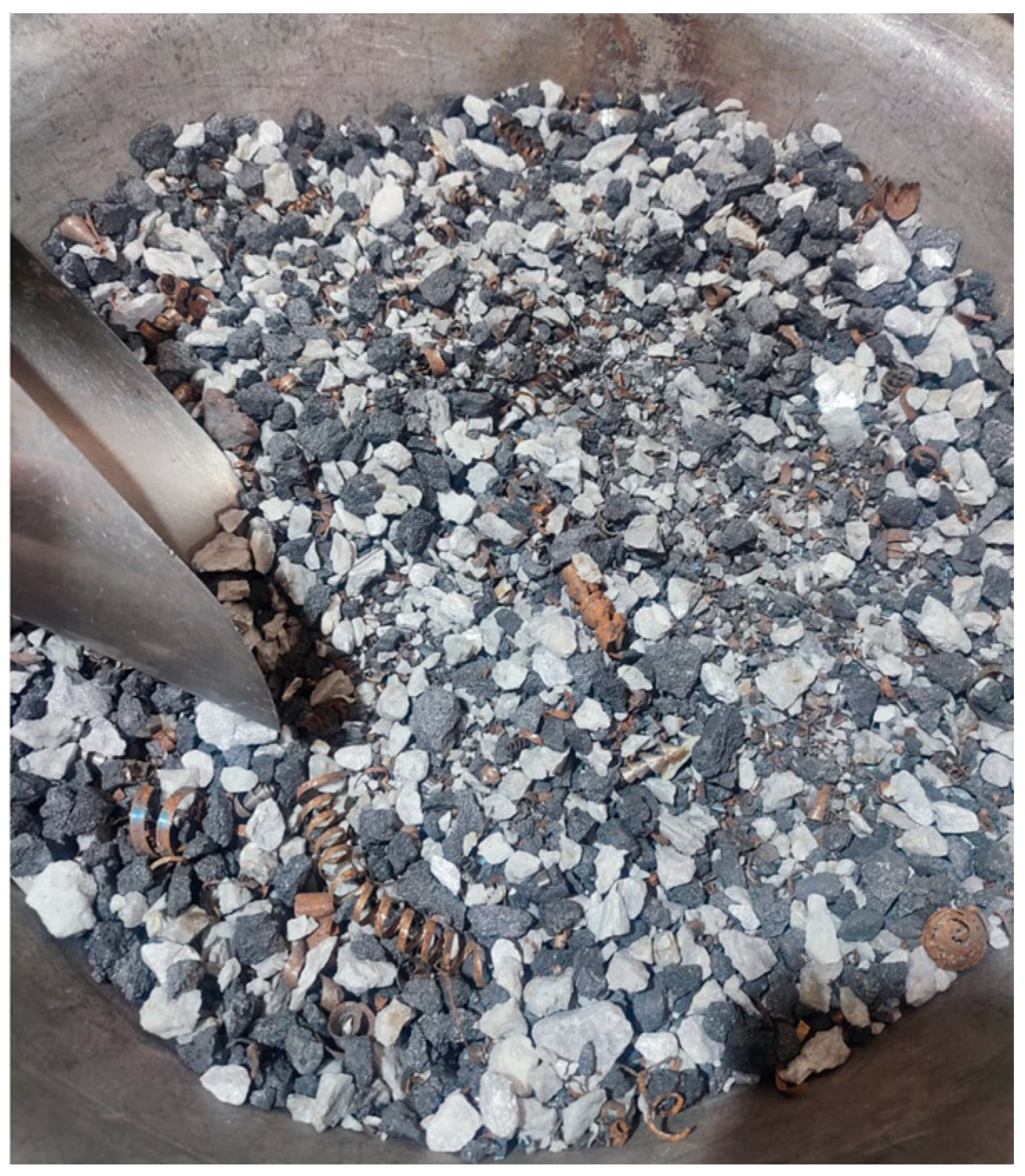
An iron-bearing additive in the form of metallic shavings of carbon structural steel grade St3 was used. The chemical composition of the steel is characterized by an iron content of no less than 97–98 wt.% with minor amounts of carbon, manganese, and silicon. The particle size of the shavings ranged from 0.5 to 3 mm, ensuring their uniform distribution within the charge and effective interaction with the silicate phase during smelting. The appearance and composition of the charge are shown in Figure 3. The mixture consists of crushed aluminosilicate ore, a carbonaceous reducing agent, and metallic iron shavings uniformly distributed throughout the charge.

2.2. Thermodynamic Modeling

Thermodynamic modeling of the carbothermic processing of lithium-bearing aluminosilicate ore was carried out to determine equilibrium phase relationships, lithium distribution behavior, and optimal temperature conditions. The calculations were performed using the Terra software ver. 4.6 package in combination with thermodynamic data from HSC Chemistry under equilibrium conditions at atmospheric pressure by minimizing the total Gibbs free energy of the system.
The simulations were conducted over a temperature range of 300–3000 K (≈3–2727 °C), covering both solid-state transformations and high-temperature smelting conditions. The initial system composition was defined based on the chemical analysis of the ore, with blast-furnace coke introduced as the reducing agent in accordance with experimental conditions.
The Al–Si–O–C–Li system was considered, including metallic, slag, and gas phases. Particular attention was given to the formation and stability of lithium-containing compounds in the condensed phase (e.g., LiAlSi2O6 and LiAlSiO4) and to the possible formation of gaseous lithium species. The distribution of elements between phases was evaluated as a function of temperature.
Special emphasis was placed on identifying temperature intervals that promote selective reduction of silicon and aluminum into the metallic phase while suppressing lithium volatilization and stabilizing lithium in the slag. The modeling results were used to define the experimental smelting conditions and to interpret the observed phase transformations during carbothermic processing.

2.3. Carbothermic Smelting Experiments

Experimental carbothermic smelting was conducted to validate the thermodynamic predictions and to investigate the partitioning of elements between metallic and slag phases. Smelting was performed in a Tammann-type high-temperature resistance furnace (HTC 08/15 (Nabertherm GmbH, Lilienthal, Germany) using graphite crucibles. Blast-furnace coke served as the carbonaceous reducing agent. To facilitate the selective reduction of silicon and aluminum and to suppress the activity of silica in the slag, metallic iron shavings were incorporated into the charge as an iron-bearing component.
The charge composition was defined based on thermodynamic modeling results to minimize lithium volatilization while ensuring effective reduction of Si and Al: 100 g ore, 60 g carbonaceous reducing agent, and 30 g metallic iron shavings. The furnace chamber was purged with argon to prevent oxidation during heating and maintain a controlled reducing environment.
Samples were heated to 1550–1600 °C, corresponding to the temperature range predicted to favor lithium retention in the slag, and held at the target temperature for 20 min to achieve near-equilibrium phase transformations. After smelting, the crucibles were removed and cooled to room temperature under ambient conditions. The solidified products were mechanically separated into metallic and slag fractions for subsequent chemical, mineralogical, and phase analyses.

2.4. Analytical Methods

Experimental conditions were selected based on thermodynamic predictions.
To quantitatively assess the elemental composition of the ore, excluding lithium, X-ray fluorescence (XRF) spectroscopy (Rigaku ZSX Primus II, Rigaku Corporation, Tokyo, Japan) was employed. This non-destructive method provided an overview of the bulk chemical composition, with particular emphasis on elements commonly associated with lithium-bearing pegmatites.
The lithium content in the initial ore and smelting products was determined by chemical analysis using microwave plasma–atomic emission spectroscopy (MP-AES, Agilent Technologies, Santa Clara, CA, USA), which provides high sensitivity for lithium detection. The Li2O content was calculated based on the measured lithium concentration. Elemental compositions of metallic and slag phases were used to evaluate lithium distribution between condensed phases, while lithium losses to the gas phase were estimated by mass balance.
The phase composition of slag and metallic products was analyzed by X-ray diffraction (XRD) using a Rigaku MiniFlex 600 diffractometer with Co Kα radiation (Rigaku Corporation, Tokyo, Japan). Data were collected over a wide 2θ range with an appropriate step size to ensure reliable phase identification. Phase identification was performed using standard reference databases, and quantitative phase analysis was conducted to estimate the relative contents of crystalline phases.
Microstructural characterization and elemental mapping were performed using scanning electron microscopy (SEM) equipped with energy-dispersive X-ray spectroscopy (EDS). This analysis enabled detailed investigation of morphology, phase distribution, and elemental localization within the ore and processed products.
The combined use of chemical analysis, XRD, and SEM-EDS enabled identification of dominant lithium-bearing phases and comprehensive assessment of lithium partitioning between metallic and slag phases formed during carbothermic processing.

3. Results and Discussion

The selection of an appropriate temperature regime is a critical factor governing the efficiency of carbothermic smelting, as insufficient temperatures limit reduction reactions, whereas excessively high temperatures promote volatilization of key elements, particularly lithium.
To identify the optimal operating conditions, thermodynamic modeling of the Al–Si–O–C–Li system was performed over a temperature range of 300–3000 K (≈3–2727 °C) using the Terra software package. The feasibility of reduction reactions and phase transformations was evaluated based on Gibbs free energy calculations using the HSC Chemistry software ver. 6.0. Blast-furnace coke was considered as the reducing agent, consistent with experimental conditions.
The modeling results indicate that silicon and aluminum reduction become thermodynamically favorable above a certain temperature threshold, leading to their transfer into the metallic phase. At the same time, lithium exhibits a strong tendency to remain in condensed phases within a specific temperature interval, while its volatilization becomes significant only at higher temperatures.
Based on these results, an optimal temperature window can be defined, in which selective reduction of silicon and aluminum is achieved while lithium is retained in the slag phase. This temperature range was subsequently used as the basis for experimental smelting conditions.
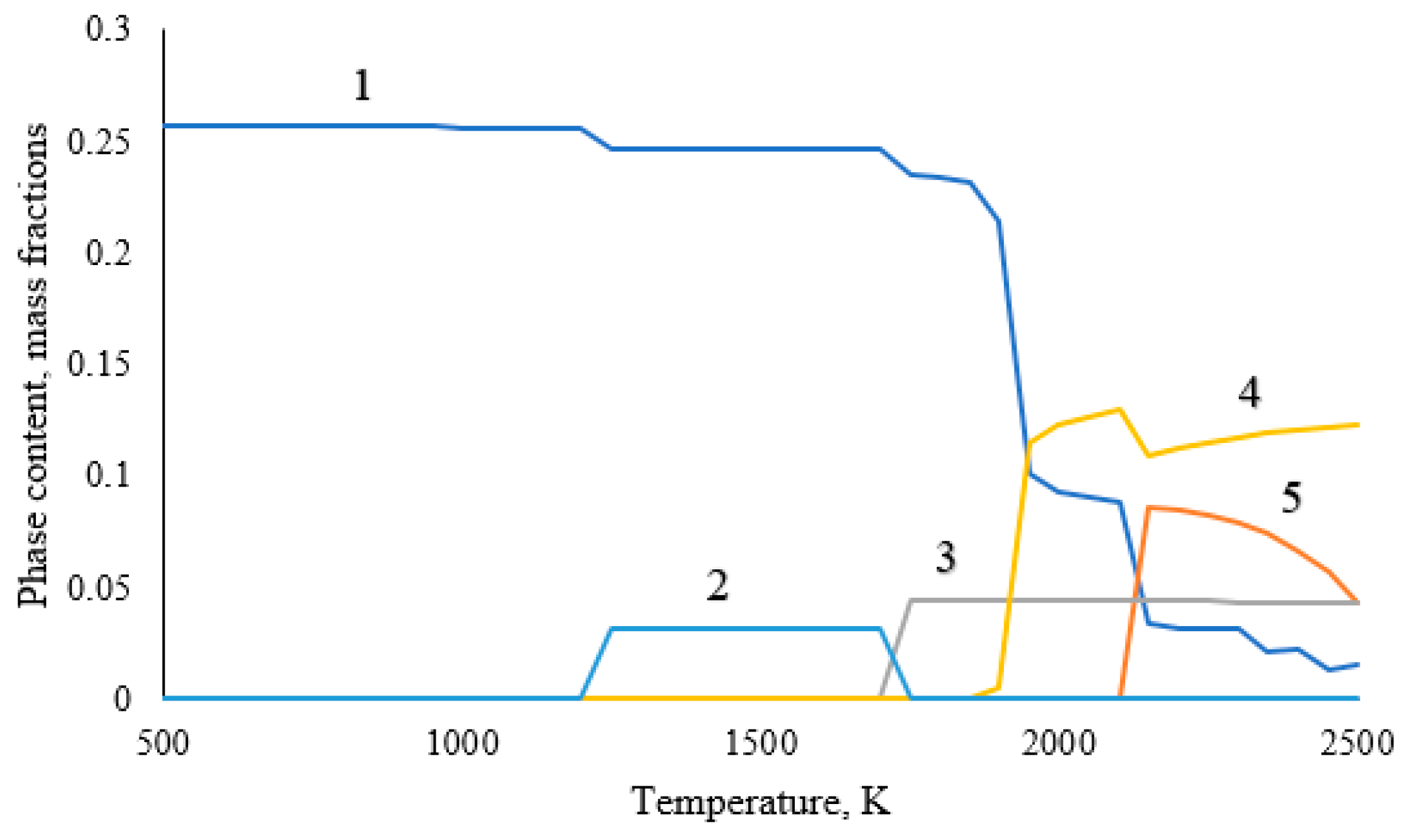
The evolution of the phase composition of the metallic phase as a function of temperature is shown in Figure 4. The identified phases include C, Fe3C, FeSi, Si, and Al4SiC4.
At temperatures below 1100 K (827 °C), metallic phase formation is not observed, indicating that reduction reactions are thermodynamically limited in this range. Beginning at approximately 1150 K (877 °C), a decrease in carbon content (curve 1, Figure 4) is accompanied by the reduction of iron oxides and the formation of iron carbide Fe3C (curve 2), according to reaction (1):
6Fe2O3 + 13C = 4Fe3C + 9CO2
This process is thermodynamically favorable, as confirmed by the negative Gibbs free energy change at 1173 K (900 °C) (ΔG1173K = −472.5 kJ). The formation of Fe3C indicates the onset of active carbothermic reduction and the transition of iron into the metallic phase.
With further temperature increase, the formation of silicide phases such as FeSi (curve 3) and elemental silicon (curve 4) is observed, indicating progressive reduction of silica. The appearance of Al4SiC4 (curve 5) at higher temperatures reflects the interaction between aluminum, silicon, and carbon under strongly reducing conditions.
These results demonstrate that increasing temperature promotes sequential reduction of iron, silicon, and aluminum, leading to the formation of complex metallic and carbide phases. This behavior is critical for the removal of silicon and aluminum from the slag phase and creates favorable conditions for lithium concentration in the slag.
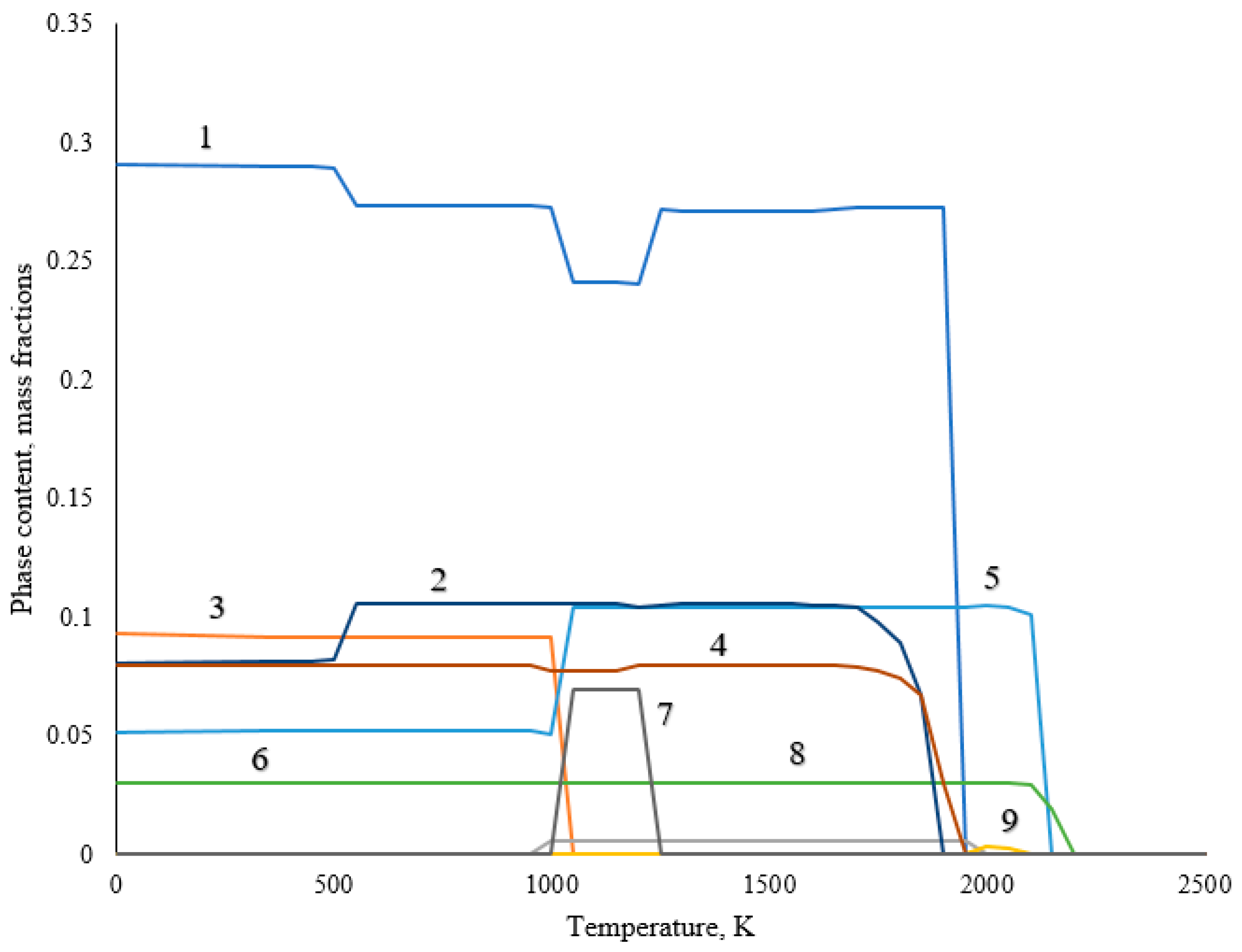
Simultaneously, in the slag phase, gehlenite Ca2Al(AlSiO7) (curve 9, Figure 5) and anorthite CaAl2Si2O8 (curve 8, Figure 5) begin to form and remain stable up to high temperatures of approximately 2000–2100 K (≈1727–1827 °C). The formation of these calcium aluminosilicate phases indicates the incorporation of aluminum and silicon into stable slag structures, thereby reducing their activity in the system.
This stabilization of Al and Si in the slag phase plays an important role in the overall element distribution, as it limits their participation in further reduction reactions and contributes to the establishment of conditions favorable for lithium retention in the condensed phase.
At temperatures of approximately 1760 K (1487 °C), a sharp decrease in the content of Fe3C (curve 2, Figure 4), SiO2, and carbon is observed, accompanied by the formation of the FeSi phase (curve 3). This behavior is consistent with the carbothermic reduction of silica in the presence of iron carbide, as described by reaction (2):
Fe3C + 5C + 3SiO2 = 3FeSi + 6CO(g)
The negative Gibbs free energy change for this reaction at elevated temperatures indicates its thermodynamic feasibility and confirms the transition from carbide-dominated to silicide-dominated metallic phases. The formation of FeSi reflects the progressive reduction of silica and the transfer of silicon from the slag to the metallic phase.
This process plays a key role in decreasing the silica activity in the slag, which significantly affects phase equilibria and promotes the redistribution of elements. The removal of silicon into the metallic phase creates favorable conditions for lithium stabilization in lithium aluminosilicate phases within the slag.
This is confirmed by the negative Gibbs free energy change, which begins at 1760 K (1487 °C): ∆G1760K = −2.631 kJ.
The formation of the FeSi phase leads to the complete consumption of free iron. Consequently, the remaining silicon oxide (SiO2), in the absence of sufficient iron, is reduced according to reaction (3):
SiO2 + 2C = Si + 2CO(g)
This reaction becomes thermodynamically favorable at temperatures above 2000 K (1727 °C).
At temperatures exceeding 2100 K (1827 °C), the contents of gehlenite, anorthite, and aluminum oxide decrease significantly. This behavior is associated with the formation of aluminum carbide (Al4SiC4), which proceeds according to reaction (4), as evidenced by the results shown in Figure 4:
2Al2O3 + Si + 10C = Al4SiC4 + 6CO
The reduction of lithium to the gaseous phase from the slag is governed by reactions (5)–(6):
2LiAlSi2O6 + 13C = 2Li(g) + Al2O3 + 4SiC + 9CO(g)
2LiAlSi2O6 + 9C = 2Li(g) + Al2O3 + 4Si + 9CO(g)
Reaction (5) becomes thermodynamically favorable at temperatures above 1950 K (1677 °C) (ΔG1950K = −11.670 kJ), indicating the preferential formation of SiC under these conditions. In contrast, reaction (6), which leads to the formation of elemental silicon, requires higher temperatures (>2050 K (1777 °C)) and is characterized by a less negative Gibbs free energy change (ΔG2050K = −1.589 kJ) (Table 2 and Table 3).
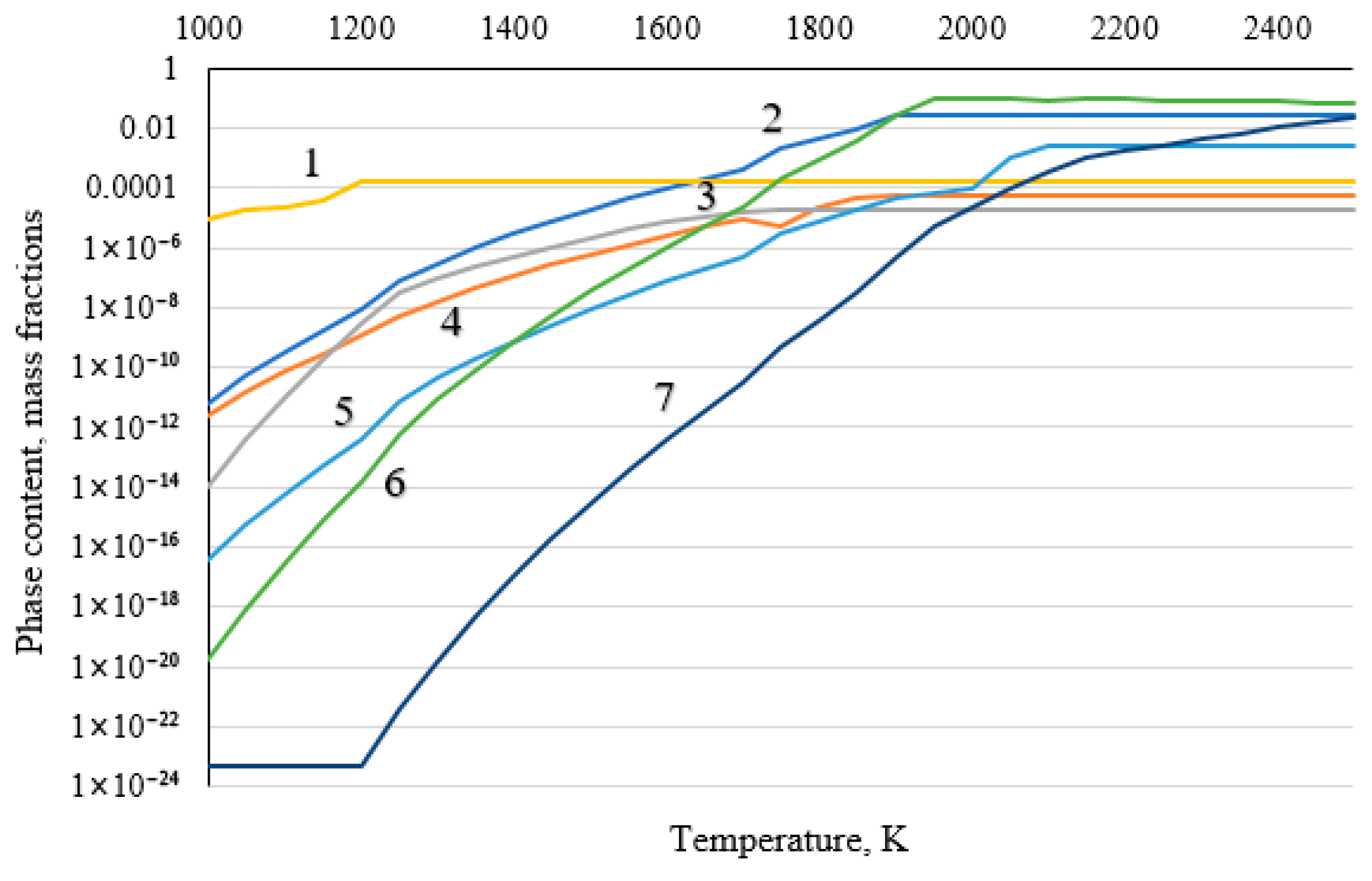
At temperatures up to 1800–1900 K (≈1527–1627 °C), the gas phase is characterized by minor concentrations of zinc, sodium, gallium, and tin (curves 1–4, Figure 6). As the temperature increases beyond 2000 K (1727 °C), silicon and lithium begin to volatilize, leading to a significant change in the composition of the gas phase.
A comprehensive thermodynamic analysis of the carbothermic smelting of lithium-bearing ore into siliceous alloys indicates that the base metal forms in the temperature range of 1700–2200 K (≈1427–1927 °C). However, lithium volatilization into the gas phase becomes significant at temperatures above 2000–2050 K (≈1727–1777 °C), whereas at lower temperatures the slag retains a substantial amount of silicon oxides.
To ensure optimal process conditions that minimize lithium losses and promote its retention in the slag, the smelting temperature should be maintained within 1800–1850 K (≈1550–1600 °C) and should not exceed 1950 K (1677 °C). Within this range, efficient silicon reduction occurs while limiting lithium volatilization.
The addition of metallic iron shavings to the charge enhances silicon recovery into the metallic phase by promoting its binding into the FeSi phase. This reduces the activity of SiO2 in the slag and creates favorable conditions for lithium retention in the condensed phase.
Thermodynamic modeling demonstrates that operation within 1800–1850 K (≈1550–1600 °C) ensures:
  • effective reduction of silicon and its incorporation into the ferrosilicide phase;
  • minimization of lithium reduction and volatilization;
  • concentration of lithium in the slag in the form of aluminosilicate phases suitable for subsequent chemical processing.
Experimental smelting carried out under the calculated temperature conditions and charge composition (including a carbonaceous reducing agent and an iron-containing additive) confirmed the thermodynamic predictions. At 1550–1600 °C, stable phase separation into metallic and slag products was observed. The metallic phase was represented by a ferro silicon aluminum alloy, into which silicon and aluminum were preferentially reduced and transferred, while lithium was almost entirely concentrated in the slag phase.
According to the material balance (Table 4), Li2O recovery in the slag reached up to 94%, while lithium losses to the gas phase did not exceed 6%. It should be noted that the reported lithium recovery values were obtained based on a series of pilot-scale laboratory experiments conducted in repeated runs under identical conditions. The results demonstrate high reproducibility, with deviations in Li2O recovery not exceeding ±2%–3%, confirming the reliability and stability of the carbothermic processing under the selected conditions. Reported lithium losses in conventional high-temperature processing routes typically range from 10% to 30%, whereas the present approach limits losses to below 6%, demonstrating a significant improvement in lithium retention. The metallic phase contained no significant amounts of lithium, confirming the selective redistribution of components during carbothermic processing.
Overall, the results demonstrate the practical feasibility and technological effectiveness of the proposed approach, which enables minimization of lithium volatilization and its retention in the slag for subsequent efficient hydrometallurgical processing.
Carbothermic processing induces a phase transformation of lithium initially present in the ore as α-spodumene. During this process, partial reduction of SiO2 into the metallic phase stabilizes silica-deficient lithium aluminosilicate phases in the slag, most notably LiAlSiO4 (pseudo-eucryptite).
The formation of LiAlSiO4 is accompanied by structural activation of lithium and increased slag reactivity. Technologically, this is advantageous because LiAlSiO4 has a higher Li2O content and provides greater lithium accessibility for subsequent sulfatization and aqueous leaching compared to α-spodumene.
Experimental data confirm that carbothermic treatment not only ensures high lithium recovery into the slag phase but also promotes a controlled transformation from refractory α-spodumene to the more reactive LiAlSiO4. The formation of LiAlSiO4 is particularly advantageous for downstream hydrometallurgical processing, as its more open and less polymerized crystal structure enhances its reactivity during acid leaching. In contrast to conventional spodumene-based routes, which require high-temperature phase transformation for activation, the produced slag is inherently reactive, eliminating the need for additional pre-treatment steps. This enables efficient lithium extraction under milder conditions, thereby improving overall process efficiency and reducing energy consumption. Consequently, the lithium-bearing slag can be considered a target intermediate product, both structurally and chemically optimized for downstream hydrometallurgical processing.
Therefore, the transition of lithium from α-spodumene in the ore to LiAlSiO4 in the slag represents a key phase effect of carbothermic processing. This transformation ensures lithium retention and concentration while simultaneously enhancing its structural reactivity through the formation of a more reactive orthosilicate phase.
The structural immobilization of lithium within the LiAlSiO4 (pseudo-eucryptite) crystal lattice significantly enhances the environmental stability of the resulting slag. Unlike glassy or unstable silicate phases, the crystalline structure of pseudo-eucryptite effectively ‘locks’ the lithium ions, reducing their chemical activity and leaching potential. This phase-controlled stabilization transforms the slag from a hazardous waste into a chemically inert and stable intermediate. Such characteristics are crucial for sustainable waste management, ensuring that the slag can be safely stored or subjected to further hydrometallurgical processing without the risk of uncontrolled element migration into the environment.
The slag obtained after carbothermic smelting was cooled naturally together with the graphite crucible under ambient atmospheric conditions. The cooling process from 1550–1600 °C to room temperature required approximately 2–3 h, resulting in relatively slow solidification of the melt.
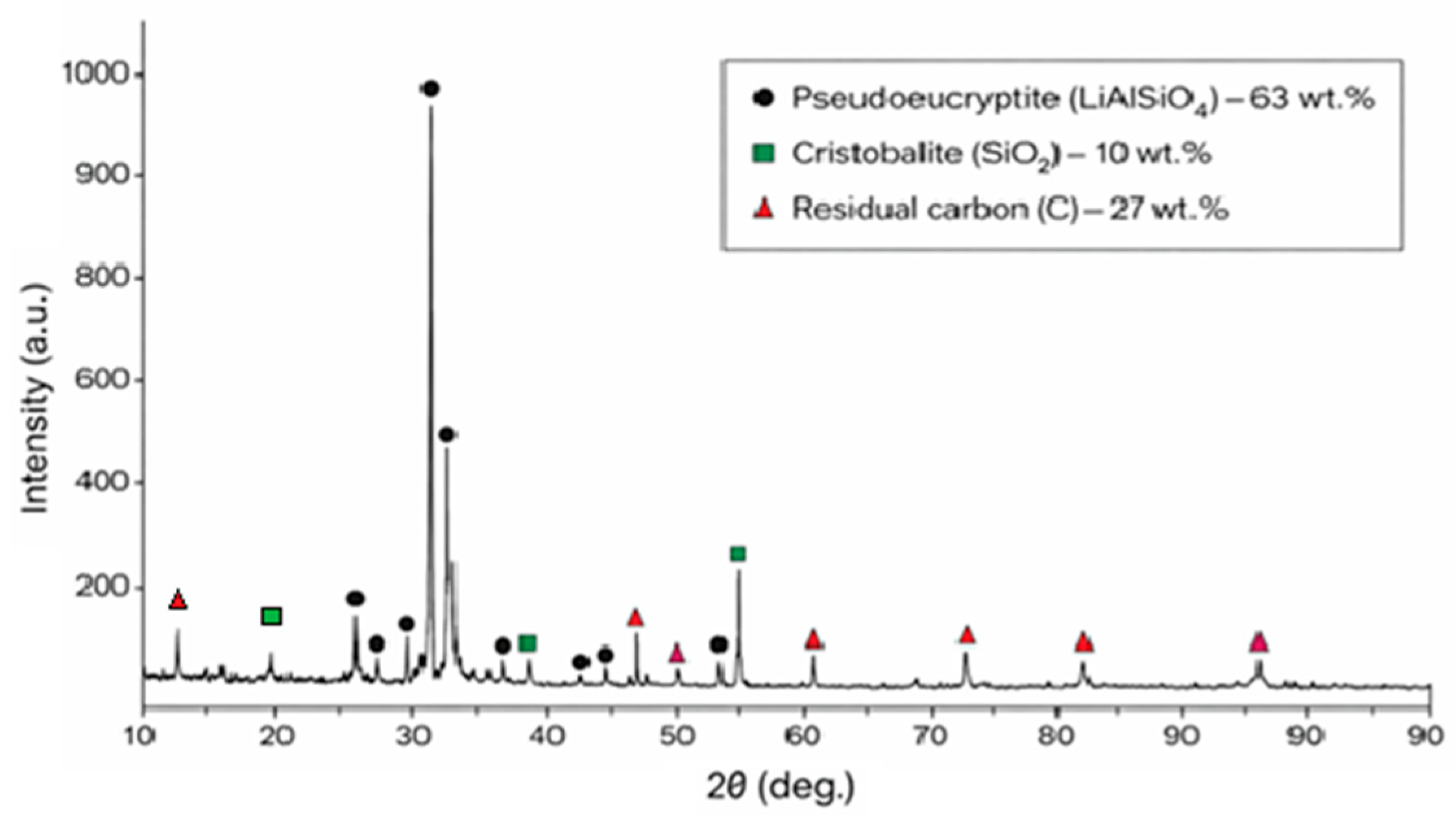
Under these conditions, the slag is expected to contain both crystalline and amorphous (glassy) components. Therefore, it should be noted that the quantitative XRD analysis presented in Figure 7 characterizes only the crystalline fraction of the slag, while the amorphous glassy phase remains undetected due to its X-ray amorphous nature.
Nevertheless, the presence of intense diffraction peaks corresponding to LiAlSiO4 (pseudo-eucryptite) indicates that a substantial portion of the slag crystallized during cooling. The relatively high crystallinity is consistent with the slow natural cooling conditions used in the experiments.
SEM observations additionally revealed a heterogeneous microstructure composed of crystalline aluminosilicate domains embedded within a partially amorphous matrix, which further supports the coexistence of crystalline and glassy phases in the slag.
The bulk chemical composition of the slag was determined by X-ray fluorescence analysis (XRF), which additionally confirmed its aluminosilicate nature. According to the obtained results, the slag is predominantly composed of Si (~22.6 wt.%), Al (~4.0 wt.%), Ca (~7.2 wt.%), Fe (~2.9 wt.%), and K (~1.8 wt.%). Minor concentrations of Pb, Ba, Ti, V, Mn, and other trace elements were also detected. These results are consistent with the formation of complex lithium-bearing aluminosilicate slag phases during carbothermic processing.
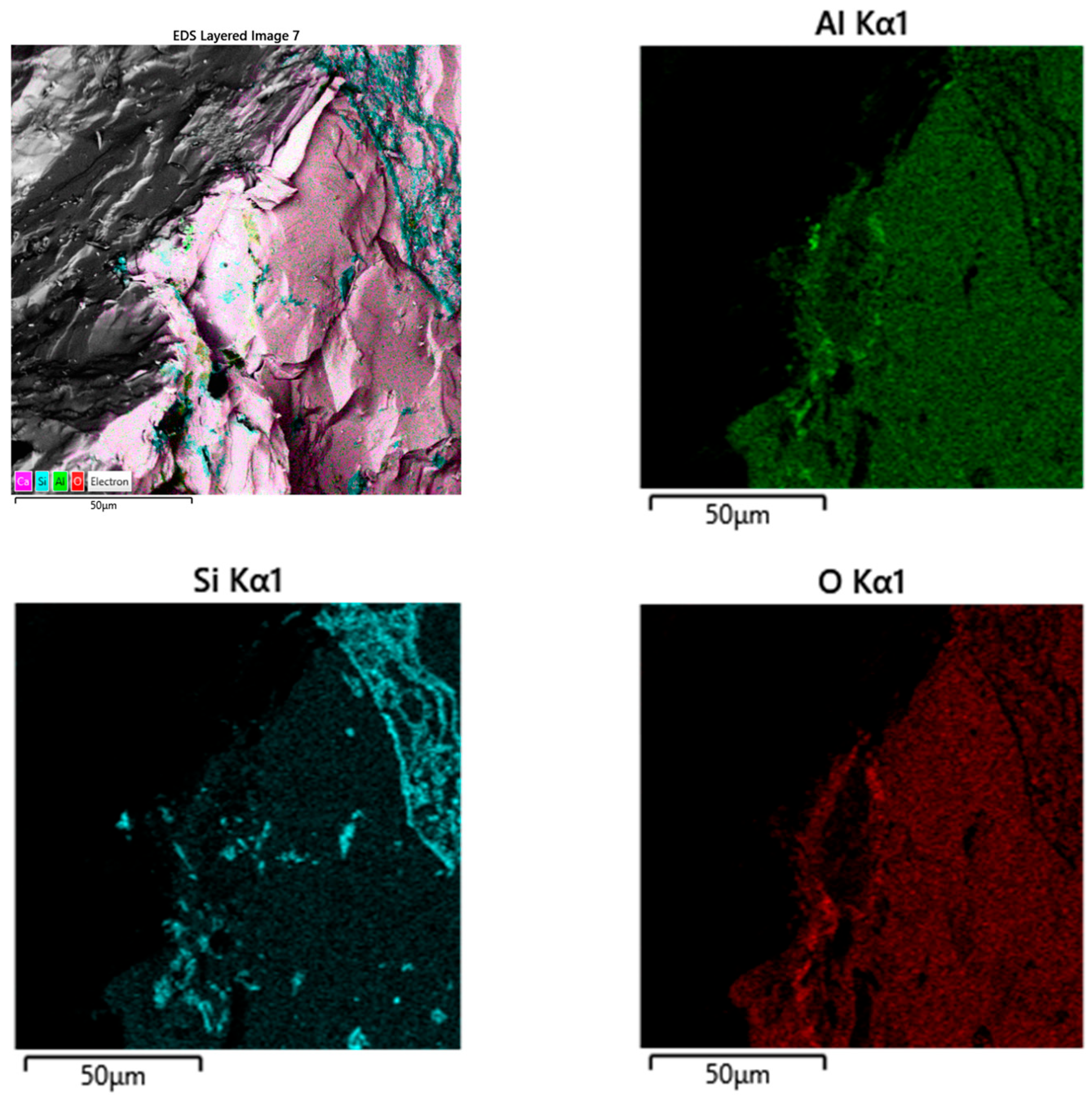
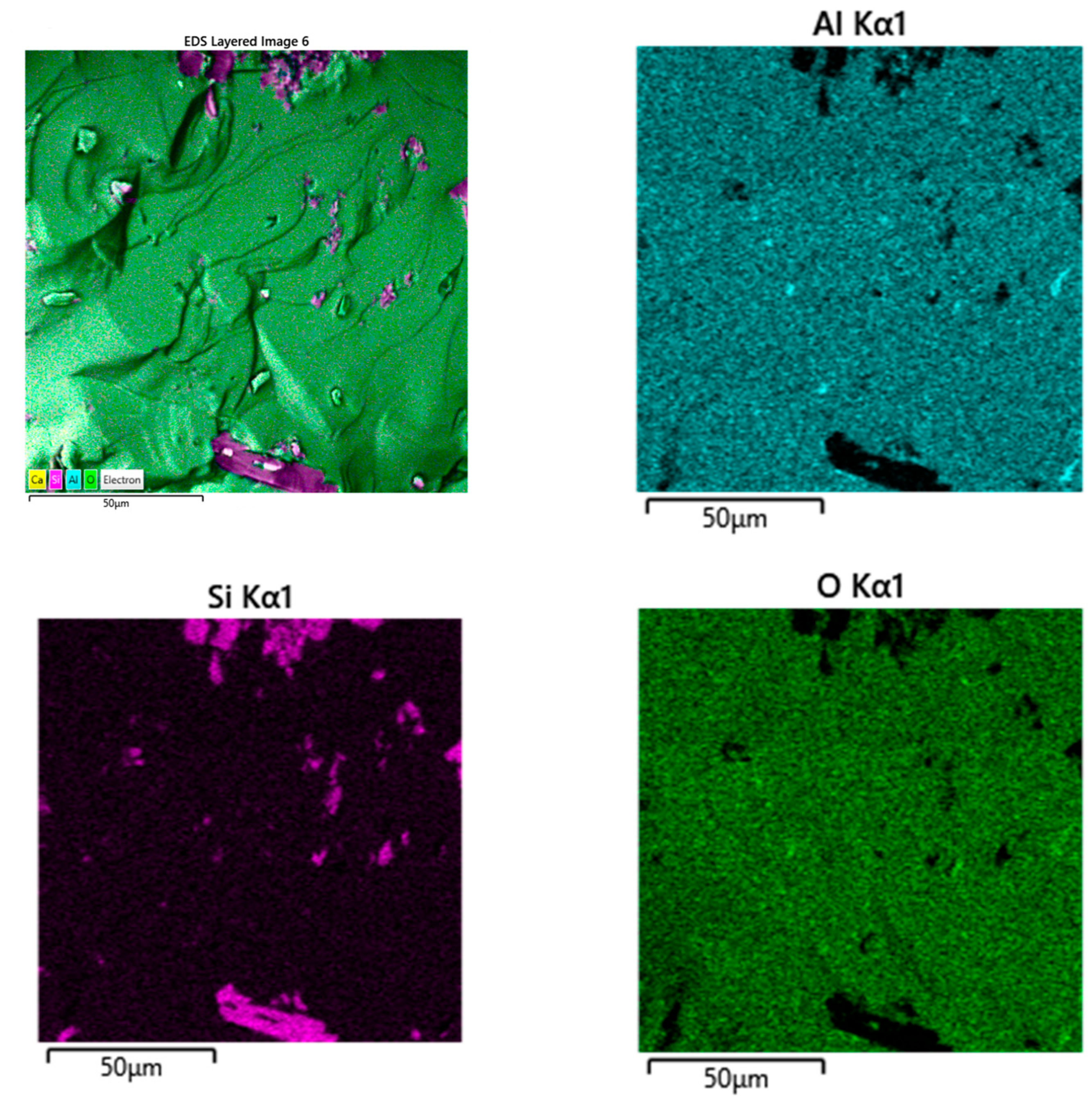
Scanning electron microscopy (SEM) combined with energy-dispersive X-ray spectroscopy (EDS) was used to investigate the morphology and elemental distribution of the slag phase formed during carbothermic processing. They are presented in Figure 8 and Figure 9.
The slag phase exhibits a heterogeneous structure composed predominantly of aluminosilicate and calcium-containing compounds. According to EDS analysis, the main elements identified in the slag are O, Al, and Si, with approximate compositions as follows: O: ~67 wt.%; Al: ~8–17 wt.%; Si: ~13–25 wt.%.
These results confirm the formation of complex aluminosilicate slag structures, consistent with the phases identified by X-ray diffraction (XRD).
This indicates partial volatilization of alkali components and their subsequent condensation in the form of fine particulate matter.
It should be noted that lithium was not detected in the EDS spectra, which is consistent with the well-known limitations of SEM/EDS for elements with low atomic numbers. Therefore, lithium distribution and phase identification were determined based on XRD and chemical analysis data.
Subsequently, to convert lithium into a water-soluble form, sulfatization was carried out at a temperature of 250–270 °C using concentrated sulfuric acid (98%) at a consumption of 250 kg per ton of slag for 60–90 min. The resulting sulfated product was subjected to aqueous leaching at a solid-to-liquid ratio of 1:4–5 and a temperature of 50–70 °C.
The obtained solution contained 90–110 g/L of lithium sulfate with a pH of 3.5–4, while the washing solutions contained 1–1.5 g/L of lithium. The average impurity concentrations in the solution (ppm) are as follows: 4664 Fe, 655 Ca, 690 Al, 1279 Si, 3751 S, and 1105 Mg. Due to the high lithium concentration, lithium sulfate precipitates began to form upon cooling (Figure 10), confirming the possibility of obtaining lithium-rich solutions.
The resulting solution can subsequently be processed to produce lithium carbonate. This procedure demonstrates that lithium-rich solutions with concentrations of 90–110 g/L Li2SO4 can be obtained, eliminating the need for solution evaporation typically required when processing low-lithium ores.
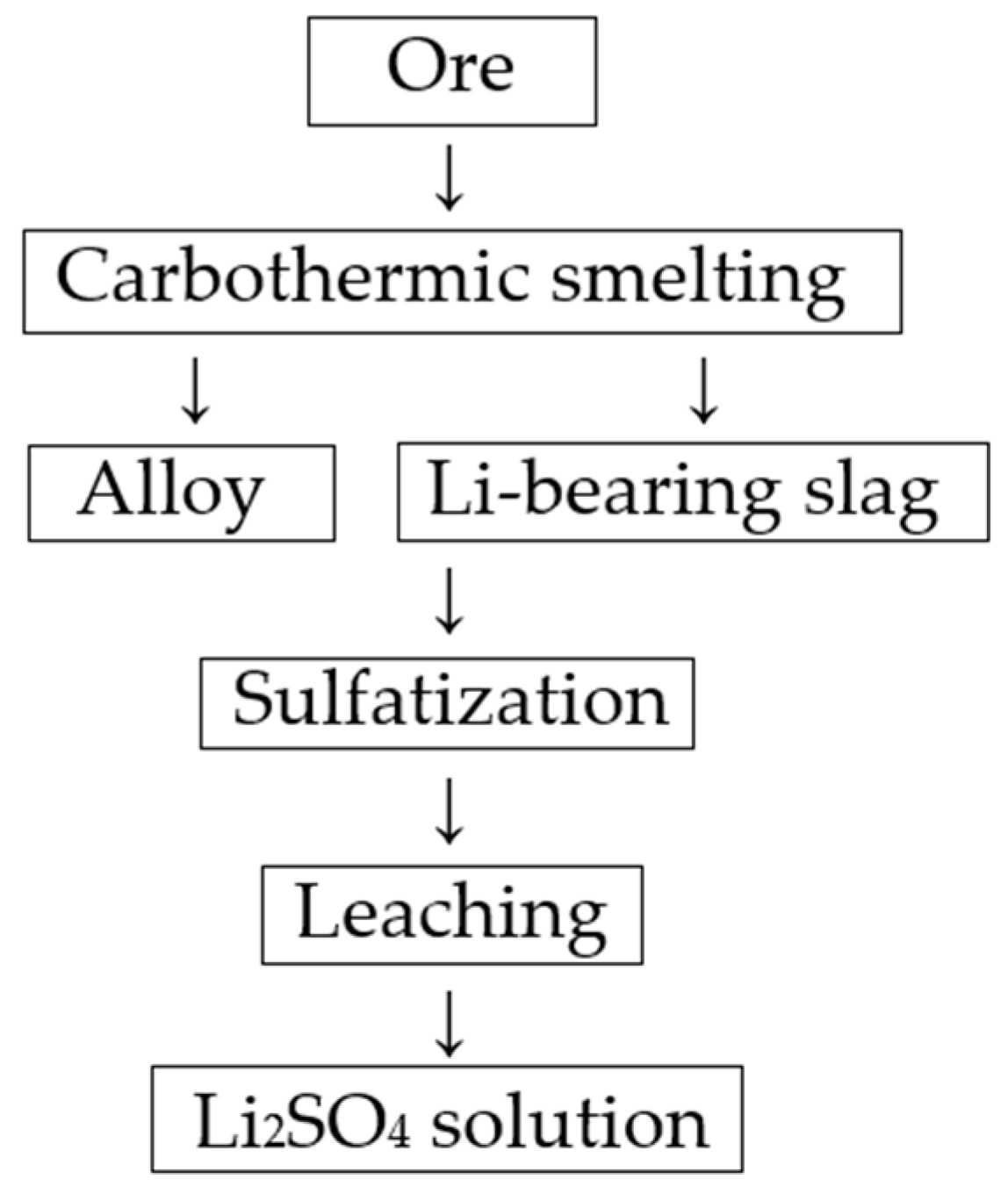
Thus, this process does not represent a single reaction but rather a controlled technological sequence: the transformation of lithium from the refractory α-spodumene phase to the more technologically favorable lithium-bearing slag phase (LiAlSiO4), followed by conversion into a water-soluble salt (Li2SO4). To summarize the proposed process, a schematic flowsheet of lithium recovery is presented in Figure 11.
This flowsheet highlights that lithium is not lost through volatilization but is deliberately stabilized in the slag phase and subsequently recovered via hydrometallurgical treatment.
From a sustainability standpoint, the proposed process offers several important advantages over conventional lithium extraction routes. First, the efficient retention of lithium in the slag phase significantly reduces losses to the gas phase, thereby improving overall resource utilization. Second, the ability to process low-grade aluminosilicate ores expands the exploitable resource base and reduces the dependence on high-grade deposits. Third, the process eliminates the need for energy-intensive pre-treatment steps such as high-temperature roasting or vacuum operation, contributing to lower energy consumption and reduced environmental footprint.
Furthermore, the formation of a chemically reactive lithium-bearing slag (LiAlSiO4) enables direct downstream hydrometallurgical processing without additional activation steps. This integrated approach simplifies the overall flowsheet, reduces reagent consumption, and enhances process efficiency. As a result, the proposed method aligns with the principles of sustainable metallurgy by combining high recovery efficiency, reduced material losses, and improved process integration.
The selective retention of lithium in the slag phase can be explained by the combined effect of silica activity reduction and phase transformation pathways during carbothermic processing. The addition of an iron-bearing component promotes the formation of Fe–Si phases, effectively decreasing the activity of SiO2 in the slag.
This shift in slag chemistry favors the transformation of lithium from α-spodumene (LiAlSi2O6) to LiAlSiO4, a phase characterized by a higher lithium concentration and increased structural openness. As a result, lithium becomes thermodynamically stabilized in the condensed phase, reducing its tendency to volatilize. At the same time, the temperature range of 1550–1600 °C ensures that silicon and aluminum are preferentially reduced and removed into the metallic phase, while lithium remains bound within aluminosilicate structures. This selective redistribution of elements is critical for achieving high lithium recovery in the slag.
Thus, lithium retention is not merely a consequence of temperature control, but rather the result of a phase-controlled process in which slag composition and reduction reactions are synergistically optimized.
The results obtained in this study correlate well with the findings of work [8], where demonstrated the feasibility of carbothermic reduction for lithium enrichment from spodumene ore while producing manganese–silicon alloys. However, while Yang et al. focused on high-temperature volatilization and subsequent recovery, our approach emphasizes the selective stabilization of lithium within the slag phase in the form of pseudo-eucryptite (LiAlSiO4). By introducing iron-bearing components instead of manganese, we achieved a lithium recovery to the slag of up to 94%, significantly reducing losses to the gas phase (below 6%).
Furthermore, from an environmental standpoint, the distribution of impurities such as phosphorus (P) and sulfur (S) is critical. Under the highly reducing conditions maintained in this study, phosphorus primarily partitions into the ferro silicon aluminum alloy, preventing hazardous gaseous emissions. The stabilization of lithium in the LiAlSiO4 matrix reduces the chemical activity of the slag, locking in trace elements and ensuring that the resulting slag is chemically stable for subsequent processing.
From the perspective of environmental impact and energy consumption, the proposed carbothermic processing route differs significantly from conventional technologies for spodumene ore treatment, including beneficiation, sulfate, alkaline, and chlorination roasting. Despite the higher operating temperature (1550–1600 °C), the proposed process eliminates the need for the preliminary roasting of α-spodumene (1000–1100 °C), which is required in conventional flowsheets for activation and is associated with additional energy consumption.
It is shown that traditional processing routes for low-grade lithium-bearing ores, involving dense media separation and flotation, are characterized by limited efficiency. These methods predominantly process coarse fractions of the ore (80%–85% of the total mass), while lithium recovery into the spodumene concentrate typically does not exceed 70%. The obtained concentrate (≤6 wt.% Li2O) undergoes thermal activation at approximately 1100 °C for 4 h, followed by magnetic separation, which does not ensure complete removal of iron-bearing impurities.
In addition, the studied raw material is characterized by a high silica content, and under conventional processing routes, this leads to the accumulation of large volumes of silicate waste. In contrast, the carbothermic approach enables the conversion of the silica component into a ferrosilicon-based alloy, thereby reducing waste generation and improving the overall utilization of the raw material.
During the sulfation stage of β-spodumene, sulfuric acid consumption significantly exceeds the stoichiometric requirement (by more than four times) due to its reaction not only with lithium-bearing phases but also with impurities, particularly iron compounds. As a result, highly acidic solutions are formed, requiring neutralization with substantial amounts of sodium carbonate. This leads to the precipitation of aluminosilicate hydroxyl compounds and iron hydroxides, which are associated with lithium sorption and additional losses.
In contrast, the proposed carbothermic approach provides:
-
elimination of the preliminary α-spodumene roasting stage;
-
reduced reagent consumption;
-
minimization of lithium losses due to its stabilization in the slag phase (up to 94% recovery with losses below 6%);
-
reduction in liquid waste generation and simplification of the overall process flowsheet;
-
conversion of the silica-rich fraction into a valuable ferrosilicon-based alloy.
Thus, despite the higher temperature range (1550–1600 °C), the sustainability of the proposed process is determined by more efficient resource utilization, reduced lithium losses, and decreased waste generation, which substantiates its advantages over conventional processing methods.


4. Conclusions

This study demonstrates the feasibility of a phase-controlled carbothermic approach for the processing of low-grade lithium-bearing aluminosilicate ores. Thermodynamic analysis and experimental validation identified an optimal temperature range of 1550–1600 °C, which enables the selective reduction of silicon and aluminum into a ferro silicon aluminum alloy while promoting lithium stabilization in the slag phase. Lithium recovery to the slag reached 94%, with minimal losses to the gas phase (below 6%), confirming the effectiveness of the proposed strategy in suppressing lithium volatilization.
The formation of LiAlSiO4 (pseudo-eucryptite) was identified as the key phase transformation governing lithium retention and the structural activation of the slag. Importantly, these results highlight a fundamental shift from conventional volatilization-based methods toward a strategy focused on lithium stabilization in condensed phases. The resulting lithium-bearing slag is not merely a by-product but a targeted reactive intermediate suitable for subsequent hydrometallurgical extraction.
From a sustainability perspective, the proposed process enables the efficient utilization of low-grade resources, reduces lithium losses, and simplifies the overall processing route by eliminating energy-intensive pre-treatment steps such as beta-spodumene roasting. These features, aligning with the principles of sustainable metallurgy, make this approach a promising and scalable alternative for the development of modern lithium extraction technologies.

Author Contributions

Conceptualization, F.A.B.; methodology, A.S.O.; software, D.S. and M.A.M.; validation, F.A.B.; formal analysis, N.Z., D.S. and N.A.; investigation, A.S.O., A.K.S. and M.A.M.; resources, D.S. and M.A.M.; writing—original draft preparation, F.A.B.; writing—review and editing, M.A.M.; visualization, N.Z.; supervision, F.A.B.; project administration, F.A.B.; funding acquisition, F.A.B. All authors have read and agreed to the published version of the manuscript.

Funding

This research has been funded by the Science Committee of the Ministry of Science and Higher Education of the Republic of Kazakhstan (Grant No. AP 23485523 Development of technology for obtaining spodumene concentrate and lithium carbonate from ores of pegmatite lithium deposits).

Data Availability Statement

The authors declare that all data supporting the findings of this study are included within the paper. Any additional raw data files in other formats are available from the corresponding author upon reasonable request. Source data are provided with this paper.

Conflicts of Interest

The authors declare no conflict of interest.

References

  1. Kudryavtsev, P. Lithium in nature, applications, and methods of extraction. Sci. Isr.—Technol. Advant. 2016, 18, 3–63. [Google Scholar]
  2. Kavanagh, L.; Keohane, J.; Garcia Cabellos, G.; Lloyd, A.; Cleary, J. Global lithium sources—Industrial use and future in the electric vehicle industry: A review. Resources 2018, 7, 57. [Google Scholar] [CrossRef]
  3. Prasad, N.E.; Gokhale, A.; Wanhill, R.J.H. Aluminum–Lithium Alloys: Processing, Properties, and Applications; Butterworth-Heinemann: Oxford, UK, 2013. [Google Scholar]
  4. Gu, J.; Liang, B.; Luo, X.; Zhang, X.; Yuan, W.; Xiao, B.; Tang, X. Recent advances and future prospects of lithium recovery from low-grade lithium resources: A review. Inorganics 2025, 13, 4. [Google Scholar] [CrossRef]
  5. Berdikulova, F.A.; Serikbayeva, A.K.; Akilbekova, S.; Seidakhmetova, N. Review of technology for lithium production from mineral raw materials. Acta Metall. Slovaca 2025, 31, 78–89. [Google Scholar] [CrossRef]
  6. Petrakis, E.; Alexopoulos, I.; Pantelaki, O.; Karmali, V.; Komnitsas, K. Advances in mineral processing of hard-rock lithium ores: A comprehensive review. Min. Metall. Explor. 2025, 42, 1251–1283. [Google Scholar] [CrossRef]
  7. Sagzhanov, D.; Ito, J.; Altansukh, B.; Godirilwe, L.L.; Haga, K.; Takasaki, Y.; Shibayama, A. Lithium ore beneficiation: Sustainable approaches for efficient recovery of lithium from a low-grade spodumene ore. J. Sustain. Metall. 2025, 11, 754–772. [Google Scholar] [CrossRef]
  8. Yang, J.; Xu, L.; Wu, H.; Wang, Z.J.; Shu, K.Q.; Xu, Y.B.; Luo, L.P.; Tang, Z. Sintering behavior and mechanical properties of ceramics based on spodumene tailings. J. Cent. South Univ. 2021, 28, 1637–1651. [Google Scholar] [CrossRef]
  9. Wang, H.; Liu, Z.; Liu, X.; Zhou, C.; Yu, M.; Peng, P. Life cycle environmental impact analysis of lithium carbonate production from lepidolite and comparison with lithium extraction from spodumene. J. Sustain. Metall. 2025, 12, 934–950. [Google Scholar] [CrossRef]
  10. Kok, A.; Cassels, T. Repurposing Waste Residue from Lithium Extraction: A Gypsum Problem. In Proceedings of the 63rd Conference of Metallurgists (COM 2024), Halifax, Canada, 19–22 August 2024; Springer: Cham, Switzerland, 2025; p. 296. [Google Scholar]
  11. Sauber, M.E.; Di Feo, A.; Almusned, B.; Hart, B.; Grammatikopoulos, T. Effect of recycled process water on spodumene flotation surface chemistry and collector interactions. Discov. Chem. 2025, 2, 261. [Google Scholar] [CrossRef]
  12. Shevko, V.; Makhambetova, B.; Aitkulov, D.; Badikova, A. Optimization of joint electric smelting of sulfide ore and beneficiation tailings with ferrosilicon production. Complex Use Min. Res. 2024, 334, 91–98. [Google Scholar]
  13. Kapsalamova, F.R.; Krasikov, S.A. Thermodynamic estimation of the phase transformations of the Fe–Ni–Cr–Cu–Si–C system. Russ. Metall. 2021, 2021, 1004–1009. [Google Scholar] [CrossRef]
  14. Akberdin, A.A.; Konurov, U.; Kim, S.V.; Orlov, A.S. Distribution of manganese and silicon between metal and slag in high-temperature processing of natural ores. CIS Iron Steel Rev. 2025, 29, 50–55. [Google Scholar] [CrossRef]
  15. Baisanov, S.; Lu, N.; Zhinova, Y.; Narikbaeva, G. Thermodynamic analysis of phase diagrams based on the Bjerrum–Guggenheim concept. Acta Metall. Slovaca 2024, 30, 77–89. [Google Scholar] [CrossRef]
  16. Maldybayev, G.; Korabayev, A.; Sharipov, R.; Al Azzam, K.M.; Negim, E.S.; Baigenzhenov, O.; Alimzhanova, A.; Panigrahi, M.; Shayakhmetova, R. Processing of titanium-containing ores for the production of titanium products: A comprehensive review. Heliyon 2024, 10, e24966. [Google Scholar] [CrossRef] [PubMed]
  17. Maldybayev, G.K.; Korabayev, A.S.; Shayakhmetova, R.A.; Khabiyev, A.T.; Baigenzhenov, O.S.; Sharipov, R.H.; Amirkhan, A.A. Separation of iron and titanium from titanomagnetite by low-temperature treatment and magnetic separation. Case Stud. Chem. Environ. Eng. 2024, 10, 100848. [Google Scholar] [CrossRef]
  18. Yang, M.; Yan, K.; Ji, R.; Cui, X.; Zhang, W.; Qu, T. Lithium enrichment by the carbothermal reduction of spodumene ore and preparation of manganese–silicon alloy. Minerals 2022, 12, 1324. [Google Scholar] [CrossRef]
  19. Tkachev, A.V.; Vishnevskaya, N.A.; Chesalova, E.I. Lithium deposits from the Mesoarchean to the present: Types, distribution, and resource base. Geol. Ore Depos. 2024, 66, 728–751. [Google Scholar] [CrossRef]
  20. Liu, Y.; Ma, B.; Lü, Y.; Wang, C.; Chen, Y. A review of lithium extraction from natural resources. Int. J. Miner. Metall. Mater. 2023, 30, 209–224. [Google Scholar] [CrossRef]
  21. Opoku, P.A.; Tadesse, B.; Albijanic, B.; Nikoloski, A.N. An overview of coarse particle beneficiation of lithium ores. Sci. Rep. 2025, 15, 29091. [Google Scholar] [CrossRef] [PubMed]
Figure 1. X-ray phase analysis of lithium-containing ore.
Minerals 16 00532 g001
Figure 2. SEM–EDS microstructure and elemental distribution of the initial lithium-bearing ore.
Minerals 16 00532 g002
Figure 3. Appearance and composition of the initial charge for carbothermic processing.
Minerals 16 00532 g003
Figure 4. Dynamics of the phase composition of the base metal with temperature. 1—C; 2—Fe3C; 3—FeSi; 4 –Si; 5—Al4SiC4.
Minerals 16 00532 g004
Figure 5. Dynamics of the slag phase composition with temperature. 1—SiO2; 2—Na2Si2O5; 3—FeAl2O4; 4—K2Si4O9; 5—Al2O3; 6—LiAlSi2O6; 7—FeSiO3; 8—CaAl2Si2O8; 9—Ca2Al (AlSiO7).
Minerals 16 00532 g005
Figure 6. Dynamics of the gas phase composition with temperature. 1—Zn; 2—Na; 3—Ga; 4—Sn; 5—Li; 6—SiO; 7—Al.
Minerals 16 00532 g006
Figure 7. X-ray diffraction analysis of the slag.
Minerals 16 00532 g007
Figure 8. Microstructure and elemental distribution map of the slag.
Minerals 16 00532 g008
Figure 9. Microstructure and elemental distribution map of the slag.
Minerals 16 00532 g009
Figure 10. Lithium-containing precipitate.
Minerals 16 00532 g010
Figure 11. Proposed integrated process flowsheet for lithium recovery from low-grade aluminosilicate ores via carbothermic processing and subsequent hydrometallurgical treatment.
Minerals 16 00532 g011
Table 1. Content of elements in ore (wt.%).
ElementContent, wt.%ElementContent, wt.%
Na2O6.0018Fe2O30.249
MgO0.0227NiO0.0038
Al2O317.6955ZnO0.0034
SiO271.1062Ga2O30.0043
P2O50.2236Rb2O0.1124
SO30.035SrO0.004
K2O3.7552ZrO20.0037
CaO0.1997Nb2O50.0087
MnO0.071Li2O0.5
Table 2. Thermodynamic characteristics of the reaction (5) for lithium formation in the gaseous phase.
T, KΔH, kJΔS, J/KΔG, kJ
5003472.2091848.1742548.122
6003468.1321840.8162363.642
7003461.5251830.6792180.050
8003452.7381818.9751997.557
9003442.3471806.7541816.269
10003430.5301794.3161636.214
11003417.3441781.7581457.410
12003402.9231769.2181279.862
13003387.2551756.6831103.567
14003370.3151744.136928.325
15003352.0811731.560754.740
16003332.5441718.956582.214
17003311.6991706.323410.950
18003289.5371693.659240.951
19003266.0541680.96672.219
19503253.8141674.607−11.670
Table 3. Thermodynamic characteristics of the reaction (6) for lithium formation in the gaseous phase.
T, KΔH, kJΔS, J/KΔG, kJ
5003759.8651850.7702819.480
6003755.6521873.1632631.754
7003748.9861826.9322444.933
8003740.1921851.2212259.216
9003729.8301839.0332074.701
10003718.0761826.6611891.415
11003705.0081814.2161709.371
12003690.6881801.7631528.572
13003675.1701789.3481349.017
14003658.4731776.9801170.701
15003640.6051764.657993.620
16003621.5741752.379817.768
17003802.0911859.262641.346
18003779.8251846.539456.055
19003756.2261833.783272.039
20003731.2831820.99289.300
20503718.3031814.582−1.589
Table 4. Material balance of the carbothermic processing of lithium-bearing ore.
ReceivedWeight, gContent Li2O, %Extraction Rate Li2O, %
Ore10000.5100
Blast furnace coke600--
Metal shavings300--
Obtained
Ferro silicon aluminum850--
Slag5000.94 ± 0.0294 ± 2
Volatilization550-6
Disclaimer/Publisher’s Note: The statements, opinions and data contained in all publications are solely those of the individual author(s) and contributor(s) and not of MDPI and/or the editor(s). MDPI and/or the editor(s) disclaim responsibility for any injury to people or property resulting from any ideas, methods, instructions or products referred to in the content.