Article

Spatial Distribution of Asbestos and Perceptions of Asbestosis Risk in the Ga-Mathabatha Community, Limpopo Province, South Africa

by
Manuel Teleki Thobejane
1,*,
Mologadi Clodean Mothapo
1,
Hector Chikoore
1 and
Fhatuwani Sengani
2
1
Department of Geography and Environmental Studies, University of Limpopo, Sovenga 0727, South Africa
2
Department of Geology and Mining, Physical and Mineral Sciences, University of Limpopo, Sovenga 0727, South Africa
*
Author to whom correspondence should be addressed.
Minerals 2026, 16(5), 527; https://doi.org/10.3390/min16050527 (registering DOI)
Submission received: 14 December 2025 / Revised: 19 February 2026 / Accepted: 27 February 2026 / Published: 15 May 2026
(This article belongs to the Topic Environmental Pollution and Remediation in Mining Areas)

Abstract

Asbestos dust exposure remains a significant public health concern, particularly in areas with unrehabilitated asbestos mines. This study aims to evaluate the spatial distribution of asbestos and community awareness and perceptions of the risk of asbestosis in Ga-Mathabatha, a rural settlement in Limpopo Province, South Africa. Using Advanced Spaceborne Thermal Emission and Reflection Radiometer (ASTER) satellite imagery, remote sensing techniques, and GIS mapping, we predicted areas containing different types of minerals associated with asbestos, validated by field observations at Makapeng, Moleke, Maseleseleng, Success, Masioneng, Olifants River, Mphogodima River, and Tongwane River sites. A mixed-methods research approach, including 18 in-depth interviews and 250 survey questionnaires, assessed community awareness and perceptions of potential asbestosis risk. Remote sensing analysis results indicated high concentrations of chrysotile asbestos in the eastern part of the study area, tremolite asbestos in the southern part, and minor serpentine deposits in the east. Field observations confirmed asbestos deposits along riverbanks and in the surrounding villages. Survey results revealed that 45.6% of participants were not aware of areas of high asbestos concentration in Ga-Mathabatha, while 28% (15% + 13%) did not perceive passing near asbestos dumps with or without herds as another source of exposure. These findings underscore the need for targeted education and awareness programs for communities living near asbestos deposits and those whose day-to-day activities increase their risk of exposure.

1. Introduction

Unrehabilitated asbestos mines continue to be a significant environmental and public health concern that impacts communities situated nearby [1,2,3]. More than 230,000 people die every year from asbestos dust exposure; meanwhile, 125 million people worldwide remain at high risk of occupational exposure to asbestos [4,5,6,7]. A recent study indicated that more than 55 countries have banned the mining and use of asbestos [8,9]. Despite the ban on exploring this mineral in countries such as Canada, China, Russia, South Korea, Kuwait, Norway, Australia, Japan, and South Africa, asbestos continues to pose substantial health and environmental hazards, especially in areas closer to unrehabilitated mines and disposal sites [8,9,10,11]. In South Africa, unrehabilitated asbestos mines are prevalent in communities of Mpumalanga, Northwest, Northern Cape, and Limpopo provinces [12,13,14,15,16]. The scientific context related to asbestos exposure from these unrehabilitated areas is important; hence, this study is inevitable.
Asbestos mines are evenly distributed globally, guided by the presence of naturally occurring asbestos in those specific areas. For example, ref. [17] focused on the distribution of active and inactive asbestos mines globally and highlighted that the chrysotile asbestos mines were located in the northern hemisphere, particularly in North America, Europe, and Asia. The authors of [18] further highlighted that, in North America, the majority of the asbestos mines were located in Canada, including British Columbia, Newfoundland and Labrador, Ontario, and Quebec, as well as Yukon Territory. Thirteen asbestos mines were located in Quebec Province, which include a small open-pit mine at Puturniq in Nunavik and the largest open-pit asbestos mine, Jeffrey Mine [19]. Abandoned asbestos mines and their associated environmental legacies are not unique to North America but represent a global concern. In Europe, the Amiantos mine in Cyprus was one of the largest asbestos mines and remains inactive, with long-term environmental and health implications. Italy also hosts several former asbestos mining and processing sites, including the Balangero mine in Piedmont and other asbestos-bearing localities in Valle d’Aosta, Biancavilla (Sicily), Lombardy (e.g., Crestun), Traversella, and Brosso [1,6]. These sites have been widely documented as sources of persistent asbestos contamination in surrounding soils, sediments, and communities, highlighting the global relevance of asbestos-related environmental risk. On the other hand, ref. [20] focused on the distribution of asbestos mines in South Africa, Lesotho, and Swaziland. Their results highlighted that chrysotile asbestos mines were predominant in Mpumalanga, Limpopo, and Northern Cape. Anthophyllite asbestos mines were mostly located in Limpopo Province, whereas crocidolite asbestos mines were situated in both Limpopo and Northern Cape. Limpopo Province is the sole province that has extracted four varieties of asbestos [20]. A study by ref. [13,21] demonstrated that there are unrehabilitated asbestos mines, shafts, tailings, and dumps in different communities of the province. However, few studies have been identified that focus on the distribution of asbestos mines in the local context where risk and vulnerability to exposure and environmental contamination are imminent. As such, this study aims to focus specifically on determining the distribution of asbestos minerals in a rural area of Limpopo, the Ga-Mathabatha community, where unrehabilitated asbestos mines are located.
Geographic information system (GIS) and remote sensing techniques are valuable tools used for mapping the potential spatial distribution of naturally occurring fibrous silicate minerals, including those associated with waste materials from abandoned asbestos mines [22,23]. In this study, these geospatial tools were applied to assess the spatial distribution of asbestos-prone lithologies and mineral assemblages associated with fibrous silicate minerals within the juristriction of the Ga-Mathabatha community.
Additionally, the field observation method was adopted to validate the distribution of asbestos in different areas. Furthermore, other conventional techniques such as rock sampling, petrographic analysis, and X-ray diffraction (XRD) have been widely used to determine the mineral composition of geological formations [24,25]. Petrographic analysis is valuable for the examination of mineral textures and fabric relationships; however, in asbestos-related investigations its applicability is limited. In particular, petrographic methods cannot reliably distinguish among serpentine polymorphs, including chrysotile, lizardite, and antigorite. Consequently, X-ray diffraction (XRD) remains essential for the accurate identification of asbestos-related mineral phases, and for this reason many studies rely primarily on XRD for mineralogical characterization [25]. For example, X-ray diffraction was used to analyze thirteen serpentinite rock samples from the Pollino area (Southern Apennines) in Italy [26]. In the Durango mining site of Mexico, ref. [27] utilized 2D electrical resistivity imaging (ERI) to detect abandoned and undocumented historic silver mining infrastructure. Meanwhile, in the Iranian city of Karaj, for instance, ref. [28] successfully employed a phase-contrast microscope and magnetic survey to investigate the airborne asbestos fiber concentration, which was 1.84 fibers per liter (f/L) using phase contrast microsopy (PCM) and 18.16 f/L using scanning electron microscopy (SEM), higher than the regulated exposure standard. In this study, however, none of the conventional techniques was utilized, and we only relied on identifying the distribution of asbestos using its physical properties, such as colors, as adopted and guided by the literature [29,30,31].
Communities residing near unrehabilitated asbestos mines remain at risk of exposure, and this raises significant public health concerns [5]. Asbestos dust exposure causes respiratory lung diseases such as asbestosis, mesothelioma, and lung cancer. Asbestosis is a chronic lung disease caused by long-term inhalation of asbestos fibers [32]. This disease leads to lung scarring (fibrosis) and respiratory complications [33]. Studies on the communities affected by unrehabilitated asbestos mines are very limited, as scholars focused on occupational exposure. For example, ref. [34] highlighted that, globally, more than 200,000 deaths are estimated to be caused by occupational exposure to asbestos, of which more than 70% are deaths from work-related cancers. For instance, in terms of occupational fatalities in the United Kingdom, the annual record is 3500, while in the United States, it is 10,000 [35]. South Africa reports approximately 200 cases of mesothelioma annually [36]. Approximately 30 percent of mesothelioma cases in South Africa are associated with environmental exposure, predominantly in the Northern Cape region. More than 70 percent of documented environmental cases impact women and children, who are most likely to have been exposed through fibers carried home on miners’ hair and clothing [36]. Other provinces such as Limpopo, Mpumalanga, and Northwest are well known for post-asbestos mines concentrated there, with an unknown number of fatalities caused by the exposure.
Existing studies in South Africa have predominantly examined asbestos contamination from a technical and environmental perspective, focusing on mine impacts, rehabilitation status, and the mineralogical and geochemical characteristics of asbestos-bearing materials [13,16,36]. Although geospatial and mineralogical analyses have improved understanding of asbestos distribution and persistence, these studies largely overlook the human dimension of exposure. Specifically, there remains a clear research gap in integrated studies that simultaneously assess the spatial distribution of asbestos debris and community awareness and perception of associated health risks. This study addresses this gap by empirically analyzing asbestos distribution in Ga-Mathabatha and evaluating community awareness and perception of asbestosis risk. The objectives of this study were to (i) evaluate the geographical distribution of asbestos-prone lithologies and mineral assemblages associated with fibrous silicate minerals within the juristriction of the Ga-Mathabatha community and (ii) awareness and perception of asbestosis risk in the Ga-Mathabatha community, Limpopo Province, South Africa.

2. Materials and Methods

2.1. Study Area

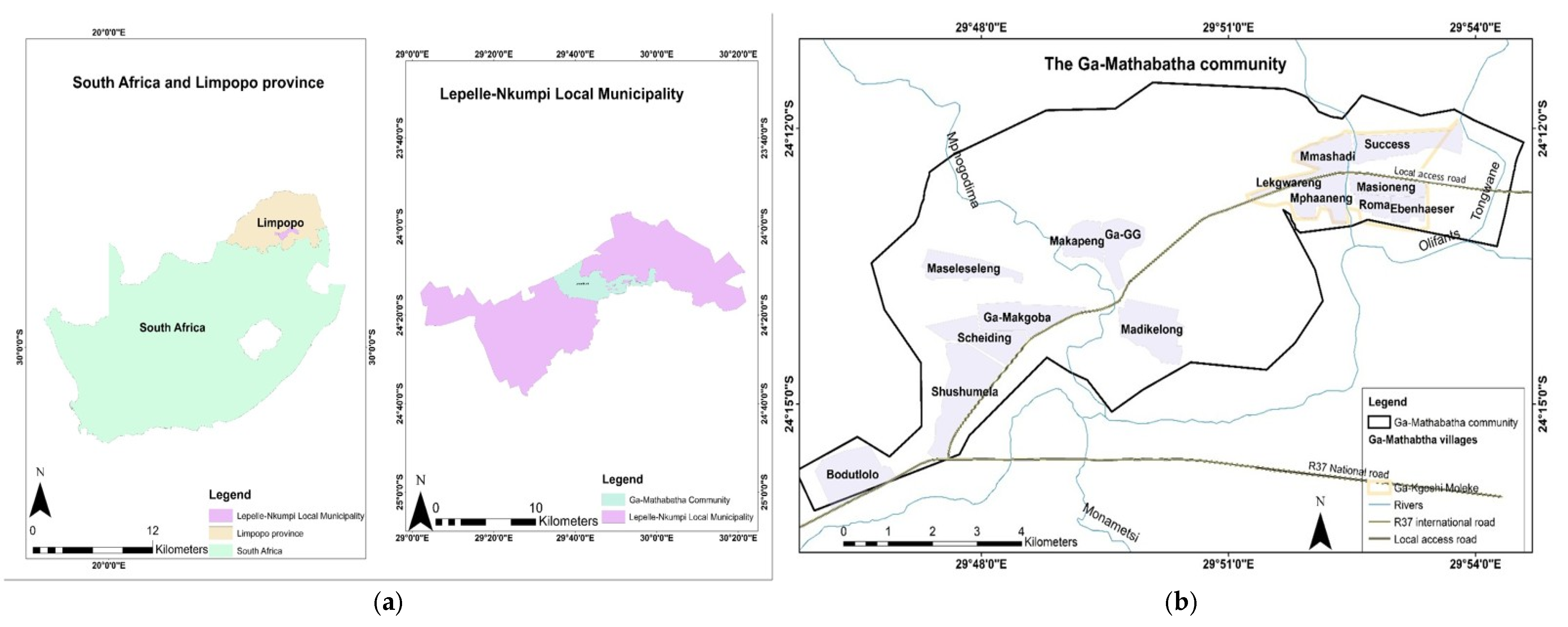
This study was conducted in Ga-Mathabatha, a rural area in the Capricorn District of Limpopo Province, South Africa (see Figure 1a,b). The area is situated between 24°11′–24°14′ S and 29°46′–29°56′ E, covering a total area of 50.4 km2 with an elevation of 772 m (2533 feet) above sea level [37,38]. It is divided into the following villages: Bodutlolo, Shushumela, Scheiding, Ga-Makgoba, Maseleseleng, Madikelong, Makapeng, Ga-GG, Lekgwareng, Mphaaneng, Roma, Ebenherzar, Masioneng, Mmashadi, and Success (see Figure 1a). Access to the community water supply is still an ongoing crisis, and community members depend on boreholes, water from local rivers, and rainwater harvested from rooftops [37]. The Ga-Mathabatha area is characterized by an annual average rainfall of 497 mm and an annual average temperature of 24 °C [39]. Regionally, the study area falls within the Kaapvaal craton, which is one of the few regions on Earth where many relatively pristine Mid-Late Archaean rocks have been preserved [40,41,42]. The craton covers an area of about 1.2 × 10⁶ km2 and predominantly comprises granitoid with interspersed greenstone belts, covered by various Late Archaean to Meso-proterozoic sedimentary and volcano-sedimentary basins.
Ga-Mathabatha is among the regions in South Africa where asbestos extraction was historically undertaken, with mining activities continuing until the government halted asbestos mining in 2002, followed by the formal closure of operations in 2008 after several decades of activity [13,16,43]. Asbestos mines in this area include the Uitkyk, Lagerdraai, and Uitval asbestos sites [44]. Upon their closure, a proper mine rehabilitation plan was implemented by the Department of Mineral Resources (DMR), and a contract to rehabilitate these mines was awarded to Minteck and GCS [45]. However, due to unforeseen circumstances, not all asbestos mines were rehabilitated. According to [16], Lagerdraai and Uitkyk sites in the Bewaarkloof Nature Reserve, near Chuenespoort, were rehabilitated, while Uitval and Weltevreden asbestos mines were abandoned with no observed evidence of rehabilitation. The Weltevreden asbestos mine was located at the Bewaarkloof near Chuenespoort, approximately 10 km from Ga-Mathabatha. Reports from [13,46] and SABC News reports highlighted that there were more than 10 unrehabilitated asbestos shafts, dumpings, and resurfacing of asbestos fibers causing environmental pollution in the community. Furthermore, abundant asbestos houses, roofing, dumpings, tailings, and asbestiform minerals were observed on the soils downstream as well as in surrounding areas [13,46]. According to the locals, the presence of asbestos debris, dust, and loose fibers in the community has contributed to respiratory health-related issues and unmeasured fatalities [13,46].

2.2. Data and Methods

A case study design was utilized for its advantage of allowing an in-depth, localized spatial analysis of distribution and human awareness and perceptions within the specific geographical context of Ga-Mathabatha. To achieve a comprehensive understanding, the study adopted a mixed-methods approach to assess the spatial distribution of asbestos and community awareness and perceptions of asbestosis risk. According to [47], a mixed-methods design collects and analyzes both qualitative and quantitative data in order to study the research problem broadly and deeply. As such, quantitative methods such as remote sensing and household survey analysis were integrated with qualitative methods such as in-depth interviews and field observations to investigate the spatial distribution of asbestos and community awareness of asbestosis risk in the study area. Furthermore, triangulation was applied by cross-validating multiple data sources—remote sensing maps with field observations and household survey responses with in-depth interviews—to enhance credibility and reliability and ensure a holistic perspective on asbestos distribution and exposure.

2.3. Satellite Data Acquisition and Processing

Advanced Spaceborne Thermal Emission and Reflection Radiometer (ASTER) satellite imagery from Ministry of Economy, Trade and Industry (METI) and Japanese industrial/research partners, Japan, Tokyo was used to map the location and distribution of asbestos minerals in the study area. ASTER is an advanced multispectral remote imaging instrument that covers a wide spectral region with 14 bands ranging from the visible to the thermal infrared region with high spatial, spectral, and radiometric resolutions. The resolution varies with the spectral region: 15 m in the visible and near-infrared (VNIR), 30 m in the short-wavelength infrared (SWIR), and 90 m in the thermal infrared (TIR). These three spectral regions have three, six, and five bands, respectively. Each ASTER scene has a swath width of 60 km. ASTER has been widely used to discriminate different Earth materials based on the dissimilarity that exists among their spectral properties [48,49,50].
The ASTER imagery selected for this study includes one ASTER L1T cloud-free scene acquired in August 2005 from the US Geological Survey (USGS) website (https://earthexplorer.usgs.gov/, accessed on 15 October 2024). This winter scene was relatively less vegetated compared to other scenes collected during the summer season. The authors of [51] argue that vegetation density negatively affects the amount of mineralogical information that can be retrieved from the processing of remote sensing data. In addition to this, ASTER data collected in 2005 carry all fourteen bands, unlike data collected post-2009, which lack SWIR bands due to the failure of the SWIR instrument in 2008 [52]. Minerals associated with asbestos, such as chrysotile, tremolite, serpentine, and actinolite, have diagnostic spectral features in the VNIR and SWIR regions, thus making these spectral regions the most significant regions for mapping minerals of interest [52]. Therefore, ASTER bands are considered appropriate for the accurate mapping of minerals of interest in this study.

2.4. Processing of ASTER Satellite Data

The processing of ASTER satellite imagery was carried out using ENVI software (version 5.1). Out of fourteen ASTER bands, only nine bands from VNIR and SWIR spectral regions were used for mineral mapping due to their relatively high spatial resolution and spectral wavelengths favorable for mapping minerals of interest [53,54]. The VNIR and SWIR bands were stacked together to form a single multiband layer. During band stacking, the SWIR bands with 30 m by 30 m resolution were resampled using the nearest neighbor resampling method to match the spatial resolution (15 m by 15 m) of VNIR bands. This was done so that all nine bands could have the same spatial resolution, which is a prerequisite for further spatial analysis.
The log residuals atmospheric correction technique was then applied to the VNIR-SWIR multiband layer to remove atmospheric effects and to convert ASTER L1T radiance data to surface reflectance data. Conversion from radiance to surface reflectance is essential for multispectral image processing when detecting the presence of surface targets using a reference mineral spectral library, as spectral libraries are signatures of surface reflectance [5].

2.5. Mapping of Asbestos Minerals

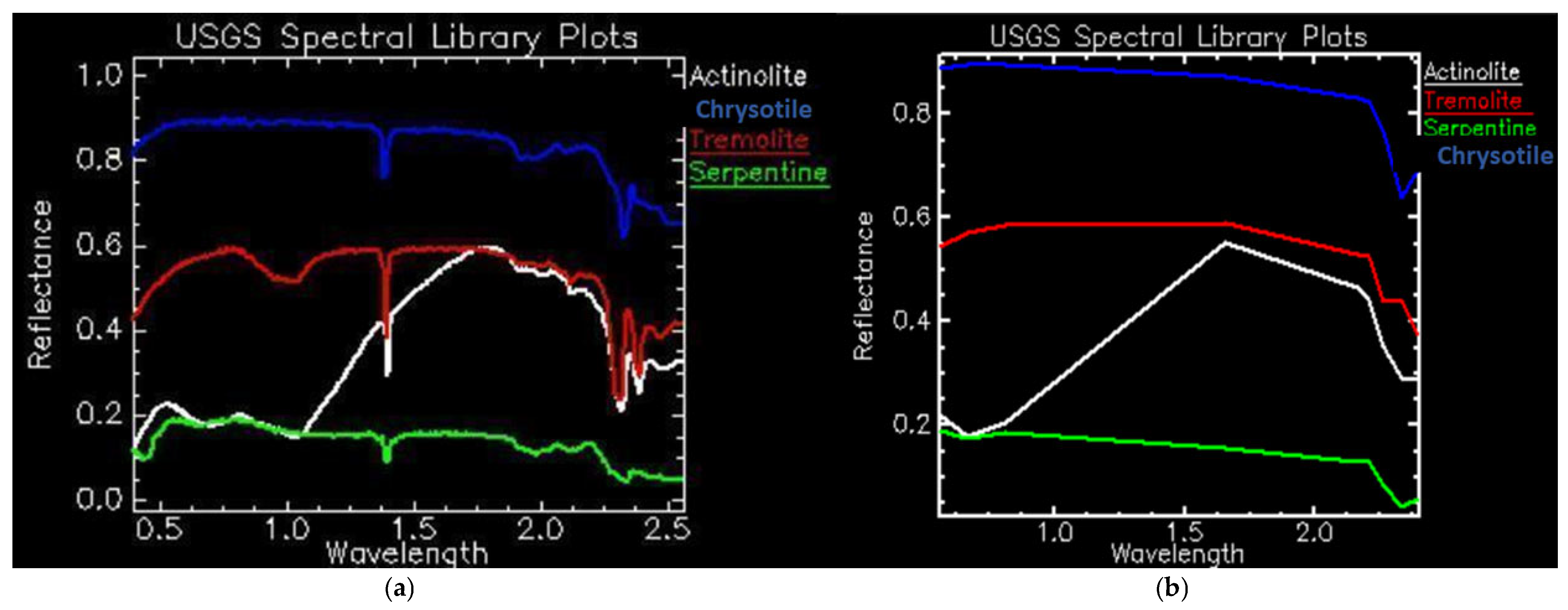
Mapping minerals of interest requires reference mineral spectra. These could be acquired from spectral libraries like the USGS or image extraction. In this study, the USGS spectral libraries of asbestos minerals were used to map chrysotile, tremolite, serpentine, and actinolite (Figure 2). The spectral libraries were resampled to match the VNIR-SWIR ASTER bands. Firstly, central wavelengths of the VNIR-SWIR bands were provided, and then ENVI assumed critical sampling and used a Gaussian model with an FWHM equal to the band spacings.
The ASTER resampled asbestos mineral libraries (Figure 2) were used to generate areas with potential to host asbestos minerals based on the spectral mapping process which is discussed in the following section.

Spectral Matching

To perform spectral matching, the spectral information divergence (SID) mapping algorithm was employed. A spectral matching process was performed in order to compare the image spectra to known mineral spectral libraries from USGS databases (Figure 3). In this case, SID uses divergence measures to match the pixels of an image (under question) to known reference mineral spectral libraries. The smaller the divergence value, the more likely the pixels and reference spectra are similar [55]. The divergence between unknown ri and rj reference spectra can be defined as:
Equation (1):
SID (ri, rj) = ((ri || rj) + ((rj || ri)
where:
SID (ri, rj) represents the symmetrized divergence between two signals or distributions ri and rj.
((ri||rj) is the Itakura–Saito divergence between ri and rj and
((rj||ri) is the Itakura–Saito divergence between rj and ri, but reversed.
SID results in a classified image showing the best fit between each pixel and input mineral reference spectra depending on the divergence measure. Additionally, rule images are provided showing the divergence measure values between each pixel and each reference spectrum [54].
Finally, the ASTER resampled spectral libraries of asbestos minerals were used to produce asbestos mineral maps of the study area.
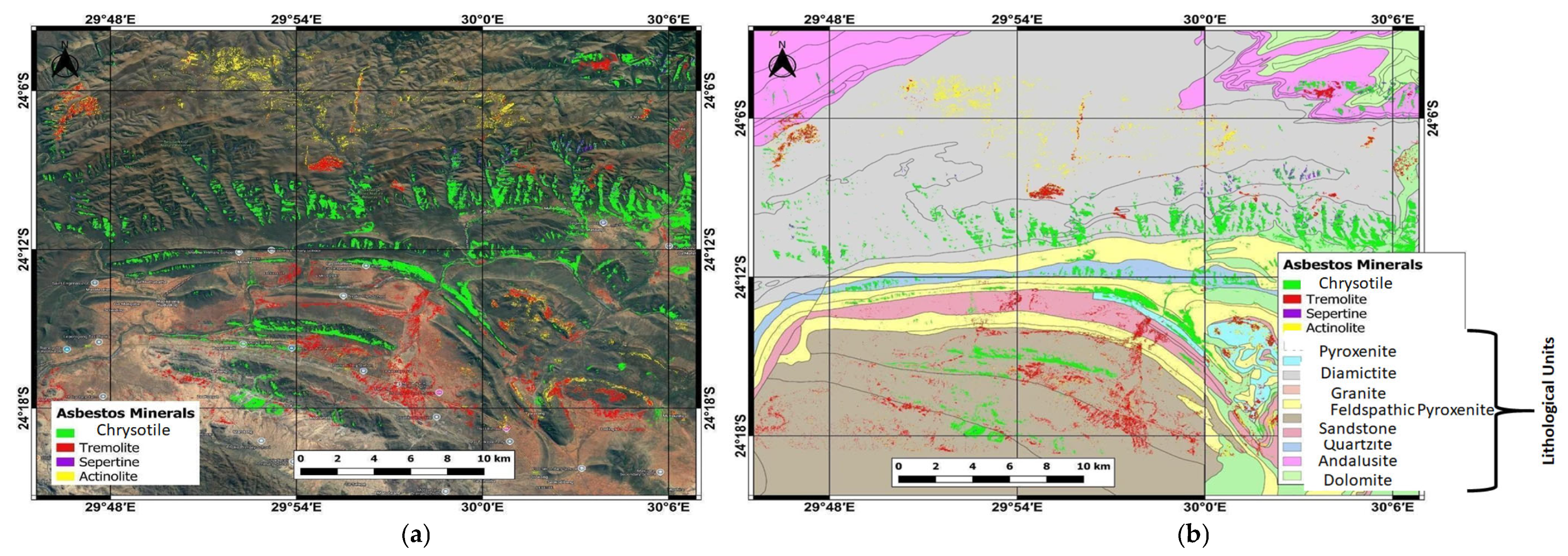
Figure 3. (a) Asbestos minerals mapped with SID algorithm; (b) The asbestos mineral and parent geology structure (Source: Authors’ creation).
Minerals 16 00527 g003

2.6. Accuracy Assessment

To evaluate the reliability of the asbestos distribution map derived from ASTER imagery, an accuracy assessment was conducted using ground truth data collected from field observations and known asbestos exposure sites. A confusion matrix was generated to compare the classified results with reference data. From this matrix, standard accuracy metrics—overall accuracy (OA), producer’s accuracy (PA), user’s accuracy (UA), and kappa coefficient (κ)—were computed following [56].
The accuracy assessment quantifies how well the spectral-angle-based classification (SID) distinguishes asbestos-bearing surfaces from non-asbestos lithologies and helps identify areas of spectral confusion, particularly between crocidolite and other fibrous or silicate minerals with similar spectral signatures.

2.7. Asbestos Field Observations

This study utilized field observation techniques to confirm areas predicted to contain high levels of asbestos-related minerals through remote sensing spectral and imagery analyses. The purpose of using field observation was to document and capture concrete, verifiable evidence of different types of asbestos rocks present in different locations within Ga-Mathabatha. A systematic side observation/inspection was conducted to eximine asbestos-bearing rocks and contaminated soils within the Ga-Mathabatha community. Rock and soil samples were collected across the community, and each sample and sample point was recorded and documented accordingly. Preliminary identification of asbestos-bearing materials was carried out using a handheld magnifying lens (field hand lens). The lens was used to examine the physical characteristics of the samples, including minerals, fibers, color variations, and structural composition to distinguish them from one another.
Observations were further adopted to identify potential asbestos-containing materials (ACMs) based on observable physical characteristics, the adjacent environmental context (local ultramafic and serpentinized lithologies), and proximity to documented historical asbestos mining operations. Photographs and notes were taken to document the extent and distribution of potential asbestos-bearing materials prior to geospatial analysis.
It is recognized that visual inspection alone cannot definitively verify the presence of asbestos, since other fibrous substances may display comparable physical characteristics [13,14,15]. Therefore, field observations were employed as a screening and contextual evaluation instrument rather than as a definitive identification method. Laboratory mineralogical analyses (such as PLM or XRD) were not performed owing to resource constraints and scope limitations. Therefore, the findings are understood as suggesting the prospective or suspected presence of asbestos rather than definitive confirmation of asbestos occurrence.

2.8. Community’s Level of Awareness and Perceptions of Asbestosis Risk

Two methods of data collection, namely, in-depth interviews and household surveys, were blended to assess the community’s level of awareness and perceptions of the risk of asbestosis. Initially, a semi-structured interview guide was used in an exploratory phase to elicit information and reveal variations in perspective, experiences, and opinions of the specific target population that revealed potential themes and variables that were important in informing the development and design of more focused and valid final questions for the survey questionnaire. As such, the respondents for the in-depth interviews were selected using purposive sampling, where the Ga-Mathabatha households were selected due to their closer proximity to unrehabilitated mines. Furthermore, the data collection process continued until a saturation point was reached, with 18 respondents, where no new information was being presented by the respondents. After the 14th interview, no new information (codes or themes) emerged and interviews 15, 16, 17, and 18 produced repetition of previously identified information. This indicated that additional interviews were unlikely to yield new insights. Therefore, recruitment was stopped at 18 respondents. The decision was based on data saturation rather than predefined sample size. The results from the interviews were used to provide depth to the interpretation of statistical analysis results from the questionnaire [57,58]. The plan was to triangulate findings from both types of data; hence, the preliminary survey instrument that aligns with the qualitative research was created during the proposal stage but was modified to create a context-specific questionnaire as new data from interviews were recorded.
Meanwhile, the household survey was conducted using a structured questionnaire with closed-ended questions to elicit information on the demographic and socio-economic characteristics, awareness, and perceptions of the participants. The total number of households in Ga-Mathabatha for the year 2023 was not known; therefore, Cochran’s formula was used to determine the estimate sample size. Cochran’s (1963:75) formula at a 90% confidence level with p = 0.5, while q is 1-p, with a confidence interval of +/− 5%, was adopted to ensure representativeness. Cochran’s formula is a well-established statistical method for determining sample sizes in survey studies that seek to ensure representativeness, particularly when the study population is larger or unknown. Equation (2):
n 0 = Z 2 p q e 2
where:
n0 = the required sample size;
Z = the z-value corresponding to the desired confidence level (1.645 for 90% confidence level);
p = the estimated proportion of the population;
e = the desired level of precision (also called margin of error);
q = 1 − p (the estimated proportion of the population).
As such:
n 0   = ( 1.645 ) 2 ( 0.5 ) ( 0.5 ) ( 0.5 ) = 217   h o u s e h o l d s
The calculated total number of households using Cochran’s formula was 271, however, only 250 questionnaires were issued and administered due to limitations such as time frame, resources and accessibility. Therefore, the total sample size used in this study was 250 households. The 250 households were selected using simple random sampling, and within each selected household, the head of the household was purposely selected to complete the survey. If the household head was not available, anyone between the ages of 15 and 18 or older was allowed to participate.
Raw data from survey questionnaires was coded using Microsoft Excel 2016 Version and imported into Statistical Package for Social Sciences (SPSS) Version 27 for analysis. Descriptive statistical analysis was used to summarize demographic characteristics (e.g., gender and age) and socio-economic characteristics (e.g., occupation, level of education, and marital status) as variables. Additionally, chi-square (χ2) statistical tests were performed to establish the possible association between independent and dependent variables. Specifically, Pearson’s chi-square analysis tool in SPSS was adopted to analyze the relationship between age and asbestosis risk, level of education and community awareness of asbestosis, and years spent in the community and awareness and perception of asbestosis risk. The significance level (α) was set at 0.05, and the results were reported using p-values derived from the chi-square test. A p-value less than 0.05 indicated a statistically significant association between the variables.

3. Results and Discussion

3.1. Spatial Distribution of Asbestos

Figure 3a shows the distribution of asbestos minerals in the study area. We detected four types of asbestos minerals through ASTER imagery mapping from local geology and legacy mining activities (unrehabilitated sites such as mine dumps, tailings, and stock piles). The detected asbestos minerals include chrysolite, tremolite, serpentine, and actinolite. The detected asbestos is predominantly attributed to the legacy of abandoned and unrehabilitated asbestos mining activities within the study area. Although naturally occurring asbestos-bearing lithologies are present in the local geology, the spatial distribution of observed fibrous materials shows a strong association with former mine shafts, waste dumps, and disturbed surfaces linked to historical mining operations. These unrehabilitated sites act as primary sources of asbestos fibers, which may be further redistributed into surrounding villages through natural processes such as weathering, erosion, and surface runoff.
In some areas of the study, the asbestos minerals appear together, forming at least two mineral clusters. Chrysotile appears to be the most dominant mineral, followed by tremolite. Actinolite dominates the northern part with some lenses of tremolite. Serpentine appears to be the least dominant mineral among the four asbestos minerals. Furthermore, remote sensing analysis results indicated high concentrations of chrysotile asbestos in the eastern part of the study area, tremolite asbestos in the southern part, and minor serpentine deposits in the east. These results align with a geological map produced by [59] on the assessment of naturally occurring asbestos in Episcopia, Italy. Their study highlighted that serpentinite rocks are widely outcropped in the Lucania region while tremolite/actinolite and/or chrysotile were detected in serpentinite outcrops of several urban centers of the region. This result demonstrates the possibility of detecting different asbestos types in the same region.
In Figure 3b, the asbestos minerals are superimposed on the geology of the study area. As observed, Chuniespoort Group appears to be the major host of asbestos minerals, which supports what has been previously reported [60,61,62]. Chuniespoort Group is followed by Rustenburg Layered Suite, while Pretoria Group comes third as one of the major hosts of minerals of interest. It is important to note that both Chuniespoort Group and Pretoria Group belong to the Transvaal Supergroup.

3.2. Classification Accuracy

An accuracy assessment was conducted to evaluate the reliability of the asbestos distribution map derived from the ASTER imagery using the spectral information divergence (SID) classification algorithm. The classified map was compared against ground truth data collected during field validation to quantify the agreement between the predicted and observed asbestos occurrences. A confusion matrix was generated, and standard accuracy metrics overall accuracy (OA), producer’s accuracy (PA), user’s accuracy (UA), and kappa coefficient (κ) were computed (see Table 1).
The results (Table 1) indicate that the ASTER–SID classification achieved an overall accuracy of 86% with a kappa coefficient of 0.81, demonstrating substantial agreement between the classification results and reference data. The highest producer’s accuracy was obtained for the asbestos-bearing lithologies class, suggesting that the spectral characteristics of crocidolite were effectively captured by the SID algorithm. However, moderate spectral confusion was observed between asbestos-contaminated soils and weathered silicate rocks, which share overlapping reflectance features in the shortwave infrared (SWIR) region. Despite these minor discrepancies, the classification results provide a robust and credible representation of asbestos spatial distribution across the study area.

3.3. Field Observations in Ga-Mathabatha Community

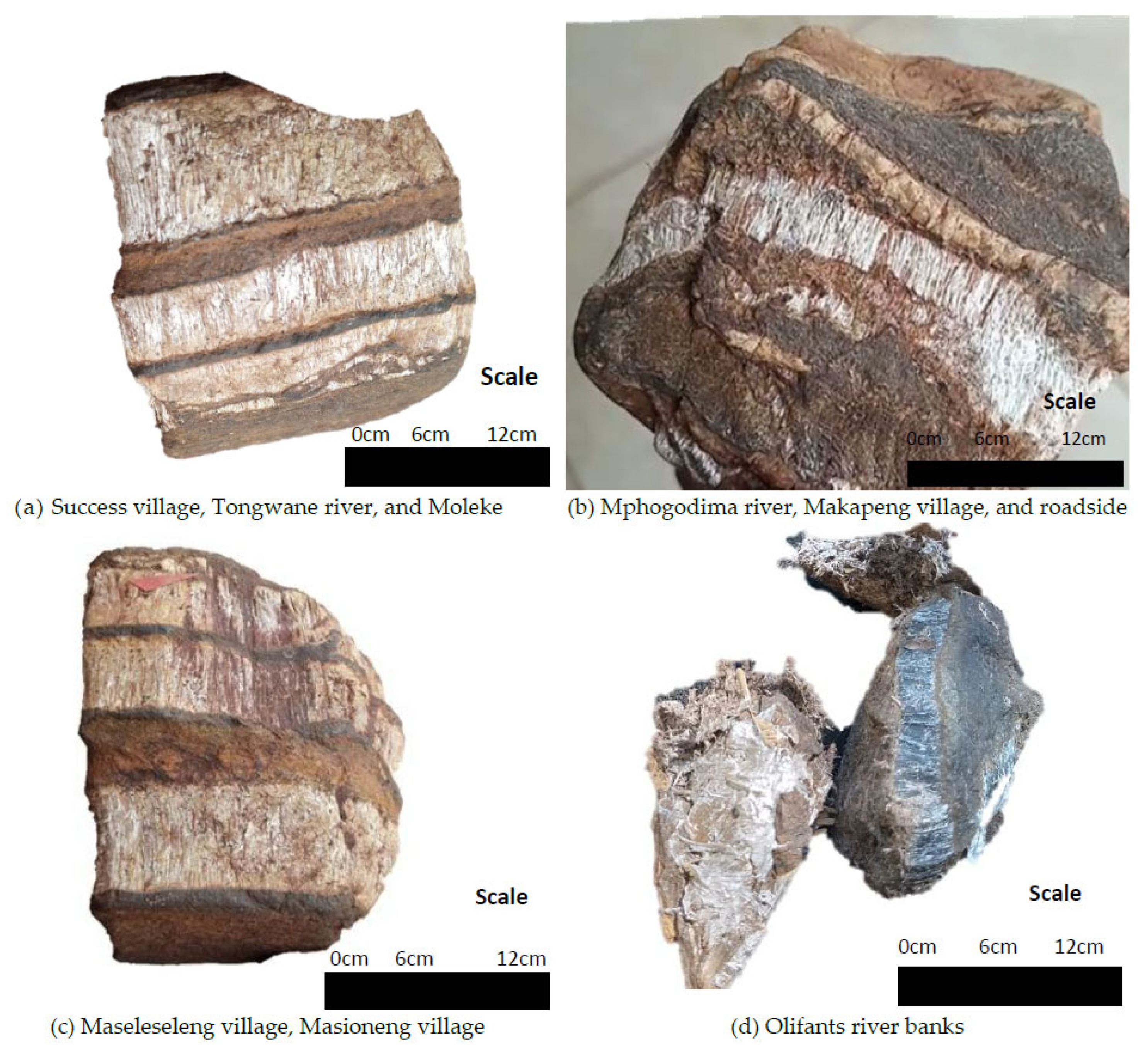
The initial field observations conducted in Success Village revealed substantial piles of asbestos mining waste stacked along the gravel road, an area frequently traversed by pedestrians, vehicles, and livestock (see Figure 4). Chrysotile asbestos was the predominant type found in the dumps, with fibers observed on the tree leaves and branches scattered along the gravel road. This type of asbestos is characterized by a white color, with thin, long, curly fibers [43,63].
The second observations were conducted at Tongwane River, located adjacent to an abandoned asbestos dumping area. In this area, asbestos fibers were visibly suspended on the surface of the water, while chrysotile rocks containing contaminated sediments were observed within the riverbed and along the banks. Locals were observed sourcing water from this river, which serves as the primary water source for the community due to a lack of a reliable and consistent municipal water supply. Similar contamination patterns were documented in Moleke Village, where chrysotile asbestos was prevalent along road surfaces and within residential yards. Tremolite asbestos was found to be dominant in Masioneng Village, the Olifants River, and parts of Maseleseng. In Masioneng, tremolite fragments were observed along gravel roads, inside gullies, and on private residential plots, indicating widespread environmental dispersal.
These findings are consistent with previous South African studies. For example, ref. [5] also reported the spatial distribution of asbestos-related minerals, mainly chrysotile, tremolite, and actinolite deposits in Mbombela (formerly Nelspruit), Malelane, and Badplaas, in Mpumalanga Province, confirming that surface-level asbestos contamination remains a persistent environmental challenge in former mining regions. Comparable field-based geological observations have also been documented internationally. For example, ref. [64] mapped amphibole asbestos occurrences across the Isadalu magmatic complex in central Sardinia, demonstrating the value of spatial observation methods in validating environmental asbestos predictions.
Tremolite asbestos in the study area displayed its characteristic white-grey color and elongated, needle-like fiber morphology, which aligns with descriptions in mineralogical literature [65]. Similar visual characteristics were documented by [66], who identified tremolite asbestos in debris from demolished structures at historical waste sites. At the Olifants River, one of Limpopo Province’s major perennial river systems, a mixture of tremolite, chrysotile, and actinolite was identified. These asbestos-bearing materials were present in the river water, on exposed riverbanks, and along the access roads leading to the river. Floating fibers were also observed on the water surface. The river’s catchment, comprising tributaries such as the Tongwane and Mphogodima rivers, drains runoff from the asbestos-rich upper slopes of Ga-Mathabatha, where mining activities historically occurred. During observations, domestic animals, including goats, sheep, cattle, and donkeys, were seen drinking from the river, highlighting the broader ecological exposure pathways.

3.4. Community Awareness and Perception on Asbestosis Risk

3.4.1. Demographic and Socio-Economic Characteristics of the Respondents

The demographic and socio-economic profile (Table 2) shows that more (60%) females participated in this study than males (40%). About one quarter (26%) of them were between 25 and 35 years old, followed by elders of 65 years (24%) and those of 45–64 years (20%). This indicates that the majority of women were more accessible, eager to engage, or interested in the research topic than men, resulting in increased participation. Furthermore, in most rural community-based research [67,68], increased female participation is frequently associated with women’s greater involvement in home, caregiving, or health-related issues, which may make them more sensitive to surveys and interviews. Additionally, women are often more likely to participate in health-related studies, which may reflect social and cultural norms that emphasize their involvement in family and community health [69]. This does not imply that men are unconcerned about health, but participation patterns in surveys may differ by gender due to these societal roles. In contrast, lesser male involvement may be attributed to employment responsibilities, cultural conventions, or limited availability during the data collection time. The young adults (25–35 years) represented the largest group (26%), possibly reflecting their active social engagement, mobility, and higher literacy or awareness levels that make participation easier. Unemployment may also affect their interest and availability, as most are homebound due to lack of funds to travel and are willing to participate in any activity for exposure [70]. The unemployment rate increased to 33.2% in the 2nd quarter of 2025, with the majority of people without jobs being 15–34 years old [71]. The elderly group aged 65 years and older (24%) also demonstrated a strong presence, which may be attributed to aging in place; their availability is influenced by potential retirements, as the South African constitution recognizes ages 55, 60, and 65 as appropriate for retirement and staying at home [71]. Table 2 further demonstrates that half (50.4%) of the participants had secondary school qualifications, while one fifth (20%) had Technikon College qualifications, and the remaining 3.6% had Adult Basic Education and Training (ABET). The majority (46%) are either married or cohabitating as husband and wife, while 35% and 8% of participants were never married or divorced, respectively. The findings further reveal that 31.6% of participants were unemployed, while 19.6% were full-time employed, and 18.8% were self-employed.
Those who lived in the community for more than 35 years were 39%, followed by 33% who had lived there for 10–15 years and 21% who had resided in the area for 0–5 years. Most of the individuals (57.6%) sourced their water from the rivers for drinking and crop irrigation, while 22.8%, 6.4%, and 13.2% sourced their water from bought water, boreholes, and communal taps, respectively. The results underscore a greater dependence on natural water sources than bought water, boreholes, and municipal supply. Agriculture and livestock farming are major sources of food for rural communities [37]; therefore, a significant amount of water is required daily, making rainwater and river water important and accessible sources of supply. The high percentage of sourcing water from the river might also be influenced by proximity and accessibility, as most rural areas reside closer to the rivers for irrigation and livestock water supply [72,73]. Fewer records show people purchasing water and drilling boreholes. Affordability may play a significant role, as purchasing water can be expensive, particularly in impoverished rural areas where job opportunities remain scarce. Additionally, drilling boreholes demands numerous pieces of equipment, such as electricity, pumps, and drillers, which most rural areas lack a supply of.
The source of untreated water from the rivers makes residents more vulnerable to waterborne diseases [74,75,76]. Furthermore, 57.6% participants revealed that their domestic animals drink primarily from the river, while 22.8%, 4.4%, and 15.2% use bought water, boreholes, and communal taps to quench the thirst of their livestock. Locals generally prefer river waters because they are an open source, easily accessible, and cost-free. Boreholes are costly, as they require tanks, pumps, and maintenance, while communal taps are metered, and farmers may find it difficult to pay for the consumption of thousands of livestock while there is a free source of water nearby [76,77,78]. For example, an average cow consumes between 30 and 50 L of water daily; however, this amount might significantly increase under some conditions [79,80]. Meeting these demands using bought water, boreholes, and communal taps will be unsustainable and inconsiderate. There is no law in South Africa that regulates the number of livestock allowed for local or commercial farmers. Hence, the majority of the local participants highlighted the use of river water more than any other source.

3.4.2. Community Knowledge and Awareness of Asbestosis Risk and Exposure

Community Knowledge of Asbestosis and Potential Causes of Exposure
Table 3 provides a comprehensive analysis of general knowledge of asbestosis and asbestos dust exposure. The majority (76%) demonstrated adequate knowledge, correctly identifying asbestosis, its incurable and often fatal nature, the morphology of asbestos fibers, and reporting that they personally knew someone affected by the disease (see Table 3). This high level of awareness suggests that previous occupational health trainings, community-based awareness campaigns, and historical exposure experiences have contributed meaningfully to public understanding within the Ga-Mathabatha community [20,34,45]. However, the 24% who lacked basic knowledge may include recent residents or individuals with limited prior exposure to asbestos-related information, placing them at high risk of exposure [21].
A chi-square test was performed between basic knowledge and age, length of residence, and education. The results revealed significant associations between knowledge and age, education level, and duration of residence (p < 0.001). Respondents aged 45 years and older, those with secondary education, and individuals who had lived in the community for over 15 years were more likely to possess adequate knowledge. These findings align with [80], who reported that 59.3% of general practitioners in Alessandria Province, northern Italy, exhibited satisfactory asbestos-related knowledge, though only a minority demonstrated optimal competence. Similarly, in [81], regarding the question of knowledge on safety and health risks, results presented that 190 (48%) of the respondents confirmed that they knew of the safety and health risks from asbestos dust/fibers among maintenance workers of public universities in Kenya. In contrast, ref. [82] highlighted that, before the training, nearly half of the respondents (49.4%) demonstrated insufficient knowledge and were unaware of the risk of asbestos exposure and procedures for asbestos checks and removal prior to demolition. Collectively, these studies reinforce the pattern identified in Ga-Mathabatha that knowledge tends to accumulate among individuals with prolonged environmental exposure, professional experience, or educational access.
Knowledge on Potential Causes of Asbestosis Risk in the Area
A substantial proportion of respondents demonstrated adequate awareness of the primary sources of asbestos exposure in the study area. Overall, 77% of respondents agreed (strongly agree + agree) that inhaling contaminated air is a major exposure pathway, with similar patterns observed for polluted water use (75%) and residence in contaminated settlements (84%) (Table 4).
This adequate knowledge signifies that these people can actively avoid high-risk areas such as Success and Makapeng (see Figure 4) and avoid engaging in activities that can generate asbestos dust, such as passing near asbestos dumping located in Success bushes (see Figure 4). Furthermore, these individuals can implement safe work practices and use proper personal protective equipment (PPE) when, for example, collecting water from rivers known to contain asbestos rocks and soils, such as the Tongwane, Mophogodima, and Olifants (see Figure 4), or when gathering rocks and firewood from local mountains that are contaminated with asbestos rocks and fibers (see Figure 3).
However, the results also revealed a substantial knowledge gap within the community. A combined 20% (5% + 7% + 8%) of respondents strongly disagreed while 43% (16% + 20% + 7%) were unsure whether these environmental factors contribute to asbestosis and asbestos dust exposure. This indicates that, despite the majority demonstrating adequate knowledge, a sizeable portion of the population remains uncertain or misinformed. Individuals within this group are at high risk because they may unknowingly work, play, build, or travel through asbestos-contaminated sites and may inadvertently disturb asbestos fibers through farming, construction, or other daily activities without taking precautionary measures. Research has shown that higher environmental risk awareness is associated with improved adoption of safety practices in contaminated communities [74].
These findings are consistent with [83], who reported that 70.4% of workers in Kartal, Maltepe, and Kadıköy districts of Istanbul’s Anatolian sides lacked basic information about asbestos, and nearly a quarter were unable to answer fundamental knowledge-based survey questions correctly. Comparable studies conducted in asbestos-endemic regions of South Africa and other developing countries have similarly noted persistent deficits in public understanding of asbestos hazards [9,13,14,16]. Taken together, the current study reinforces broader evidence that communities living near asbestos-contaminated environments require targeted health education, risk communication, and structured awareness programs to mitigate preventable exposures and long-term health impacts.
Awareness of Asbestosis and Asbestos Dust Exposure in the Area
The results indicate that over half of the respondents (54.4%) were aware that Makapeng Village, Success, and Maseleseleng, and surrounding water sources such as Olifants, Tongwane, and Mphogodima rivers, were areas of high asbestos concentration (see Table 5). These findings closely reflect field observation, which also confirms the presence of visible asbestos rocks, contaminated soils, and abandoned dumping sites across these areas (see Figure 4). These results are consistent with [84], who found that, while residents of St. Kitts and Nevis were generally aware of sources of asbestos exposure and areas of high concentration, a deeper understanding of associated health risks remained limited. Similar findings were also reflected by [84].
Qualitative interviews conducted provided broad information on the lived experience shaping this awareness among residents. One of the interviewees emphasized their long-term familiarity with asbestos dumps in Makapeng, recalling childhood experiences of playing on asbestos dumps and the historical use of contaminated bushland for grazing livestock and farming. Another participant recalled involvement in the 2019 rehabilitation project conducted by Mintek in the area, confirming the extensive unrehabilitated asbestos shafts, tailings, and waste deposits within Makapeng. These narratives reinforce the quantitative findings and demonstrate how prolonged residence in contaminated areas of Ga-Mathabatha influences awareness, a pattern also highlighted in environmental health studies from asbestos-endemic communities [1,6,14,15,16].
Despite this encouraging level of awareness and evidence of observed asbestos debris across Ga-Mathabatha, the finding also indicated significant gaps among participants. There was a significant 62% who were not aware that asbestos fibers can land on clothes when a person passes by a highly concentrated area (see Table 5). This gap is notable given extensive evidence of “take of exposure” as a significant pathway for secondary asbestos contamination [85]. Although 85% of the respondents correctly identified sources of asbestos dust exposure in the community, 14.8% did not. Similarly, 85% of the respondents correctly identified abandoned mines and unrehabilitated pits as major sources of asbestos exposure, while 14.8% did not. Encouragingly, the majority of respondents recognized that rainfall and wind significantly influence the transportation, distribution, and exposure to asbestos within the community, with only 2% reporting a lack of awareness. These findings are consistent with previous studies that have identified air- and waterborne pathways and highlighted the role of meteorological processes in the redistribution of disturbed and naturally occurring asbestos [1,6,14,15,16]. However, the present results specifically reflect community-level perceptions and awareness of these mechanisms rather than direct epidemiological or environmental measurements.

3.4.3. Community Perception on the Deadliness and Presence of Asbestos

Many participants, 40.8% (32.8% + 8%), perceive asbestosis as deadly and incurable, while 23.8% are unsure, and 35.6% (12% + 24%) disagree (see Table 6). Meanwhile, 35.6% of respondents strongly disagree that this disease is incurable and fatal, raising concerns that they may potentially be affected or spread false information about it to other community members. We performed an analysis of the association between the risk of asbestosis, areas of high asbestos exposure, and drinking water from contaminated rivers, considering demographic variables such as age, level of education, and period of residence. The study discovered a strong relationship among all these variables, with a significant level of p < 0.001. This aligns with the study [86], which indicates that people who lived longer in areas experiencing water or air pollution were more exposed to waterborne disease than those who lived in the area for less than a year [86].

3.4.4. Community Perception on Activities Related to Asbestos Exposure

The largest group, 51.2% (42.8% + 8.4%), of respondents strongly agree that Makapeng, Success, and Maseleseleng are high-risk areas for asbestos dust exposure. Meanwhile, 13% were unsure, and 25.2% strongly disagreed. The observations made in this study strongly highlight that Makapeng has high concentrations of asbestos rocks, asbestos fibers, asbestos dumping (see Figure 3), and old asbestos mines. Success Village has high concentrations of asbestos dumping near Tongwane River (see Figure 4), and Maseleseleng has asbestos rocks making a cross bridge (see Figure 3). Studies by [13,63,87] also concur with the findings that there is evidence of asbestos mines, especially in Makapeng Village, and that people currently suffer from the exposure. The evidence presented in [21] also included findings regarding asbestos dumps in Makapeng and further presented interviews with people who suffer from asbestosis residing in these villages. The result raises a big concern about the further increase in asbestos dust exposure and asbestosis fatality cases for people with negative perceptions.
Makapeng, Maseleseleng, and Makgoba villages have no access to reliable clean communal water, according to respondents from an interview presented by SABC News [21]. Community members highlighted that they buy water, use boreholes, and collect from the Tongwane River and Olifants River for drinking and other uses (see Table 2). Community members were asked whether they perceive drinking water from these rivers as the main potential source of asbestosis and asbestos exposure (Table 6). Most participants, 54% (38 + 16), strongly perceive this activity as the major source of exposure. Meanwhile, 15% were unsure, and 31% (10% + 21%) firmly disagreed. Positive perception results (54%) of respondents in this study suggest many participants recognize these activities as hazardous in terms of asbestos dust exposure, and a study by [6] highlighted that people collecting water contaminated with asbestos fibers were more vulnerable, as this type of asbestos could be ingested when drinking water.
A substantial proportion of respondents, 73% (47% + 26%), recognized that household cleaning without a respirator constitutes a significant risk for asbestos dust exposure (see Table 7). This result suggests that, although many individuals are aware that indoor dust can act as a vector for asbestos fibers, such awareness does not necessarily translate into reduced exposure or safer practices. In households located near asbestos-contaminated areas, residents may continue to experience indoor dust exposure due to structural housing conditions, limited access to mitigation measures, and unavoidable environmental contamination. This level of awareness is aligned with global evidence indicating that indoor asbestos exposure is important; however, it is often overlooked in unrehabilitated communities [1,6,14,15,16]. Nevertheless, 14% of respondents were still uncertain, while 13% do not perceive the importance of this practice, which may be attributed to the inconsistent information regarding the dangers of indoor exposure. These findings demonstrate that, while respondents perceive the importance of using protective equipment such as masks during domestic cleaning, a considerable portion of the population may still underestimate household pathways of asbestos inhalation.
There were 48% (33% + 15%) of respondents who perceive that passing near asbestos dumping sites poses a risk, while a substantial 24% are unsure and 28% (15% + 13%) disagree. This varied response may be attributable to the variability in perceived exposure, which is determined by the frequency of crossing these sites and their proximity. For example, 28% expressing negative perceptions may stem from insufficient information on exposure to asbestos clothing. A study by [88] indicated that proximity to asbestos disposal sites may result in asbestos fibers adhering to clothing, exposing individuals and their families to dust at home. This aligns with 48% of respondents who hold a favorable view of asbestos exposure.
There is a substantial level of concern regarding the ingestion of soil and rocks in asbestos-prone locations, as 60% of respondents perceive geophagia as a danger. A negative perception of 27% (20% + 7%) of the risk of rock consumption in contaminated asbestos areas, as well as a concerning 13% expressing uncertainty, is present. These reflect a high level of knowledge or awareness of the danger of ingestion of asbestos fibers. A considerable number of participants (47%) perceived that using river sand and rocks for building poses a risk of asbestos exposure. However, 23% were unsure of the risk, and 30% did not perceive this activity as a potential exposure route. During surveys, some participants presented asbestos rocks (see Figure 4) kept in their house as evidence that this area is contaminated with asbestos. This practice raised concerns about potential exposure to household members. A significant 21% (12% + 9%) did not perceive this behavior as a major risk, whereas a significant 55% raised uncertainty. This uncertainty may result from considering some materials to be less dangerous and more inert or historically significant.

3.5. Pearson’s Chi-Square Test Analysis and Presentation

Table 8 below presents the Pearson’s chi-square analysis that was used to determine the statistical associations between selected socio-economic variables and four key dependent variables: awareness, knowledge, and perceptions related to asbestos exposure and risk. A p-value of less than 0.05 was considered statistically significant, and a p-value of greater than 0.05 is considered not significant. The findings indicate that gender has a significant association with awareness (p = 0.0325) and perception (p = 0.001), however, not with the remaining variables. This suggests that gender plays an important role in shaping both the level of awareness and how individuals interpret asbestos-related risks, likely due to differences in exposure pathways and social experiences. Supporting this, ref. [89] reports that nearly half of all fatalities linked to occupational asbestos dust exposure were gender-related, with male workers accounting for the majority of recorded deaths and many others still facing elevated risks. Additional studies further highlight that, in rural communities, gendered divisions of labor often place women in domestic roles while men engage in high-risk occupations such as mining. These socio-cultural dynamics help explain the observed associations between gender, awareness, and perception in this study [90,91,92].
Age was found to have a significant association with awareness (p = 0.0032), perceptions (p = 0.0369), and practices (p = 0.0000), indicating that age plays a critical role in shaping how individuals recognize the risks of asbestosis and asbestos dust exposure, perceive their severity, and engage in behaviors that may increase or reduce exposure. The non-significant association with knowledge (p = 0.2542) suggests that factual understanding of asbestos risks does not differ substantially across age groups, even though awareness levels and behavioral responses do. Interview data further support these quantitative findings: respondents aged 45 years and older demonstrated higher levels of awareness, largely because many had previously worked in local asbestos mines or participated in rehabilitation programs. This pattern aligns with [21], who reported that older adults often exhibit heightened perceptions of asbestos risk, particularly those who have lost family members to mesothelioma or asbestosis. Observational evidence from this study also revealed that primary school children were seen playing in asbestos dump sites, and young adults aged 18–35 frequently passed through contaminated areas such as Makapeng, Ga-GG, and Success. These behaviors help explain the strong association between age and risky practices, consistent with findings from other studies [93,94,95].
Level of education shows a significant relationship with awareness (p = 0.0025) and practices (p = 0.0015) as compared to other variables, while marital status shows a significant relationship with awareness (p = 0.0258). The level of education suggests that the awareness campaigns that were distributed through inductions during rehabilitation programs and other related meetings played a significant role, as they raised strong awareness about asbestos exposure across the community. The individuals have the ability to apply knowledge and take precautionary measures to avoid practices that expose them to asbestos. Duration of residence had a significant relationship with all variables: awareness (p = 0.0035), knowledge (p = 0.00121), perceptions (p = 0.005), and practices (p = 0.0125). This suggests that individuals who lived longer in the Ga-Mathabatha community, an area of high asbestos concentration, may have developed more knowledge and awareness through their experience working in the closed asbestos mines in the area. Daily exposure and fatalities recorded in the area may have enhanced perceptions and precautionary practices or coping mechanisms related to asbestos exposure. The associations observed between selected socio-economic variables and the KAPP outcomes were interpreted with caution. Some independent variables, such as age and length of residence in the community, were highly correlated. Older participants tend to have longer periods of residence, which may partially explain their higher levels of awareness, perceptions, or practices related to asbestos exposure. Consequently, the significant chi-square associations observed may reflect overlapping socio-demographic influences rather than entirely independent effects of each variable. This limitation is inherent in bivariate analyses and highlights the need for cautious interpretation of the results. Source of water showed no significant association with any dependent variables, implying that water source does not directly affect awareness, knowledge, practices, and perceptions related to the asbestosis risk and exposure. In most areas, asbestos is known as airborne and is not associated with water; hence, there is no association.

4. Conclusions and Recommendations

This study examined the spatial distribution of asbestos and the community’s awareness of asbestosis in the Ga-Mathabatha area. Remote sensing using ASTER imagery revealed the presence of fibrous asbestos minerals—chrysotile (a serpentine polymorph), tremolite, and actinolite—often occurring in overlapping clusters. These minerals were predominantly associated with ultramafic parent lithotypes, reflecting the local geology conducive to asbestos formation. Field observations further revealed extensive surface contamination in Success, Makapeng, and Maseleseleng villages, as well as along the Olifants and Tongwane river systems. The widespread occurrence of asbestos-prone rocks, soils, and mine-related debris along gravel roads and within residential areas indicates that both naturally occurring and disturbed asbestos-bearing materials remain accessible to the community. These findings address the first objective of the study and suggest a high potential environmental and public health risk. Consequently, continuous monitoring of water, air, and soil quality is essential, together with targeted interventions such as phytoremediation, removal of scattered asbestos debris, and improved waste management in collaboration with local authorities. Demographic findings further reveal patterns that shape vulnerability and risk perception within the community. The predominance of female participants aligns with rural demographic trends, while the high representation of individuals aged 25–34 and elders above 65 reflects a population with long-term residency, historical mining ties, and lived experiences that influence their engagement with asbestos-related issues. The low participation rates of males point to a persistent challenge in rural research, suggesting the need for flexible, targeted recruitment strategies. These demographic dynamics indicate that environmental risk in Ga-Mathabatha is influenced not by a single factor but by the intersection of residence duration, historical exposure, livelihood dependence on natural resources, and accessibility of information.
Community awareness remains a critical concern. Nearly half of participants were unaware that villages such as Makapeng, Success, and Maseleseleng—including the Tongwane, Olifants, and Mphogodima rivers—are areas of high asbestos concentration. Misunderstandings about exposure pathways, especially through water sources and livestock movement, highlight a dangerous knowledge gap. This lack of awareness may contribute to ongoing exposure and future increases in asbestosis cases. Therefore, strengthening community education is essential. Public seminars, school-based programs, farmer and builder training, and regulation of asbestos-contaminated sand are necessary to reduce risk and prevent disease.
Collectively, these findings demonstrate that asbestos contamination in Ga-Mathabatha is both an environmental and social challenge, shaped by mineral distribution and geological context, demographic characteristics, and limited awareness. The study contributes new evidence on the co-occurrence of asbestos minerals, identifies specific exposure hotspots, and highlights urgent gaps in knowledge and governance. Addressing these issues requires integrated environmental monitoring, targeted health education, and coordinated intervention by government, researchers, and local communities to reduce long-term health risks and promote a safer living environment.
The spatial distribution analysis also identified Maseleseleng, Makapeng, Success, and Madikane as high-concentration asbestos zones. Accordingly, local decision-makers—including tribal authorities and ward councillors—should refrain from allocating new residential stands, farming plots, or development projects in these hazardous areas. Restricting development in contaminated zones is essential to preventing future exposure and safeguarding community health.
The community observations and asbestos distribution results demonstrate a high level of environmental contamination in Ga-Mathabatha. It is therefore recommended that the South African Government, through the Department of Mineral Resources (DMR) and Mintek, intensify and revive rehabilitation programs for abandoned asbestos mines, shafts, and associated waste dumps. The findings on community awareness further revealed that 45.6% of participants were unaware of the presence of asbestos in their surroundings, and 10% did not know what asbestosis is, highlighting a significant knowledge deficit. To address this gap, schools, hospitals, and traditional authorities should collaborate with non-governmental organizations, qualified educators, trained healthcare professionals, and environmental specialists (including Mintek Consulting) to implement regular, community-wide awareness initiatives. These programs should utilize local radio stations, community meetings, social media platforms, and strategically placed educational posters to disseminate accurate information on asbestos risks and safe practices.


Author Contributions

M.T.T., M.C.M., H.C. and F.S. contributed equally to the conceptualization, validation, scientific writing, and supervision of this paper. All authors have read and agreed to the published version of the manuscript.

Funding

This study was funded by Mining Qualification Authority (MSc007.UL.MQA).

Data Availability Statement

Data is contained within the article.

Acknowledgments

The authors would like to acknowledge community members of Ga-Mathabatha who participated in the household surveys and in-depth interviews that formed part of the backbone of this research study. We would also like to acknowledge Morwamakoti, Phineas, Thobejane for assisting in data collection of questionnaires, interviews and field observations.

Conflicts of Interest

The authors do not have any conflicts of interest.

References

  1. Campbell, S.; Greenwood, M.; Prior, S.; Shearer, T.; Walkem, K.; Young, S.; Bywaters Campopiano, A.; Cannizzaro, A.; Olori, A.; Angelosanto, F.; et al. Environmental contamination. Environmental asbestos contamination in an abandoned chrysotile mining site: The example of Val Malenco (central Alps, northern Italy). Epis. J. Int. Geosci. 2020, 43, 851–858. [Google Scholar]
  2. Ghio, A.J.; Stewart, M.; Sangani, R.G.; Pavlisko, E.N.; Roggli, V.L. Asbestos and Iron. Int. J. Mol. Sci. 2023, 24, 12390. [Google Scholar] [CrossRef] [PubMed]
  3. Kusiorowski, R.; Zaremba, T.; Piotrowski, J.; Gerle, A. Thermal decomposition of asbestos-containing ma-terials. J. Therm. Anal. Calorim. 2013, 113, 179–188. [Google Scholar] [CrossRef]
  4. Karakaya, E.; Nuur, C. Social sciences and the mining sector: Some insights into recent research trends. Resour. Policy 2018, 58, 257–267. [Google Scholar] [CrossRef]
  5. Furuya, S.; Chimed-Ochir, O.; Takahashi, K.; David, A.; Takala, J. Global asbestos disaster. Int. J. Environ. Res. Public Health 2018, 15, 1000. [Google Scholar]
  6. Avataneo, C.; Belluso, E.; Capella, S.; Cocca, D.; Lasagna, M.; Giovanni, P.; DELuca, D. Groundwater asbestos pollution from naturally occurring asbestos (NOA): A preliminary study on the lanzo valleys and Balangero plain area, NW Italy. Ital. J. Eng. Geol. Environ. 2021, 1, 5–19. [Google Scholar]
  7. Stayner, L.; Welch, L.S.; Lemen, R. The worldwide pandemic of asbestos-related diseases. Annu. Rev. Public Health 2013, 34, 205–216. [Google Scholar] [CrossRef]
  8. Van Zandwijk, N.; Reid, G.; Frank, A.L. Asbestos-related cancers: The ‘Hidden Killer’remains a global threat. Expert Rev. Anticancer. Ther. 2020, 20, 271–278. [Google Scholar]
  9. Thives, L.P.; Ghisi, E.; Júnior, J.J.T.; Vieira, A.S. Is asbestos still a problem in the world? A current review. J. Environ. Manag. 2022, 319, 115716. [Google Scholar] [CrossRef]
  10. Cheng, K.K.; Lam, T.H.; Leung, C.C. Wearing face masks in the community during the COVID-19 pandemic: Altruism and solidarity. Lancet 2022, 399, e39–e40. [Google Scholar] [CrossRef]
  11. Jacques, O.; Pienitz, R. Asbestos mining waste impacts on the sedimentological evolution of the Bécancour chain of lakes, southern Quebec (Canada). Sci. Total Environ. 2022, 807, 151079. [Google Scholar] [CrossRef] [PubMed]
  12. Wagner, J.C.; Sleggs, C.A.; Marchand, P. Diffuse pleural mesothelioma and asbestos exposure in the North Western Cape Province. Occup. Environ. Med. 1960, 17, 260–271. [Google Scholar] [CrossRef] [PubMed]
  13. Petja, B.M.; Tengbeh, G.T.; Twumasi, Y.A.; Atanasova, M. Spatial epidemiology risk assessment for rehabilitated former asbestos mining areas in Limpopo Province, South Africa, using remote sensing and conventional analytical methods. S. Afr. J. Epidemiol. Infect. 2010, 25, 32–39. [Google Scholar][Green Version]
  14. Kwata, M.G.; Moja, S.J. Characterization of settleable dust and surface dust samples from the old and abandoned asbestos mine dumps in the Limpopo Province, South Africa. J. Pollut. Eff. Control 2017, 5, 2. [Google Scholar]
  15. Kwata, M.G.; Moja, S.J.; Chadi, G.M. A physico-Chemical study of dust samples from the derelict and ownerless asbestos mine dumps in Mpumalanga Province, Republic of South Africa. Trans. Ecol. Environ. 2018, 230, 331–342. [Google Scholar]
  16. Freemantle, G.G.; Chetty, D.; Olifant, M.; Masikhwa, S. Assessment of asbestos contamination in soils at rehabilitated and abandoned mine sites, Limpopo Province, South Africa. J. Hazard. Mater. 2022, 429, 127588. [Google Scholar] [CrossRef]
  17. Ricchiuti, C.; Bloise, A.; Punturo, R. Occurrence of asbestos in soils: State of the Art. Epis. J. Int. Geosci. 2020, 43, 881–891. [Google Scholar]
  18. Slavik, C.E.; Demers, P.A.; Tamburic, L.; Warden, H.; McLeod, C. Do patterns of past asbestos use and production reflect current geographic variations of cancer risk?: Mesothelioma in Ontario and British Columbia, Canada. Cancer Causes Control 2023, 34, 349–360. [Google Scholar] [CrossRef]
  19. Kuyek, J. Asbestos mining in Canada. In A Brief Presented to the International Ban Asbestos Conference; Mining Watch Canada: Ottawa, ON, Canada, 2003. [Google Scholar]
  20. Nelson, G. Occupational respiratory diseases in the South African mining industry. Glob. Health Action 2013, 6, 19520. [Google Scholar] [CrossRef]
  21. SABC News. Ga-Mathabatha Workers Rehabilitating Asbestos Mines in Limpopo Say Their Lives are in Danger. Available online: https://youtu.be/-vvpnZpe1zU?si=Sj_S5jvomEY-ZpRh (accessed on 30 October 2025).
  22. Rajan Girija, R.; Mayappan, S. Mapping of mineral resources and lithological units: A review of remote sensing techniques. Int. J. Image Data Fusion 2019, 10, 79–106. [Google Scholar] [CrossRef]
  23. Tagwai, M.G.; Jimoh, O.A.; Shehu, S.A.; Zabidi, H. Application of GIS and remote sensing in mineral exploration: Current and future perspectives. World J. Eng. 2024, 21, 487–502. [Google Scholar] [CrossRef]
  24. Setiawan, M.R.; Iqbal, M.; Siregar, R.N. Mineral analysis in rocks using XRD and Petrography. J. Sci. Appl. Technol. 2019, 2, 206–214. [Google Scholar] [CrossRef]
  25. Amaral, P.M.; Fernandes, J.C.; Rosa, L.G. A comparison between X-ray diffraction and petrography techniques used to determine the mineralogical composition of granite and comparable hard rocks. Mater. Sci. Forum 2006, 514, 1628–1632. [Google Scholar] [CrossRef]
  26. Dichicco, M.C.; De Bonis, A.; Mongelli, G.; Rizzo, G.; Sinisi, R. μ-Raman spectroscopy and X-ray diffraction of asbestos’ minerals for geo-environmental monitoring: The case of the southern Apennines natural sources. Appl. Clay Sci. 2017, 141, 292–299. [Google Scholar] [CrossRef]
  27. Hinojosa, H.R.; Kirmizakis, P.; Soupios, P. Historic Underground Silver Mine Workings Detection Using 2D Electrical Resistivity Imaging (Durango, Mexico). Minerals 2022, 12, 491. [Google Scholar] [CrossRef]
  28. Kermani, M.; Jonidi Jafari, A.; Gholami, M.; Arfaeinia, H.; Yousefi, M.; Shahsavani, A.; Fanaei, F. Spatio-seasonal variation, distribution, levels, and risk assessment of airborne asbestos concentration in the most industrial city of Iran: Effect of meteorological factors. Environ. Sci. Pollut. Res. 2021, 28, 16434–16446. [Google Scholar] [CrossRef]
  29. Suzuki, Y.; Churg, J. Structure and development of the asbestos body. Am. J. Pathol. 1969, 55, 79. [Google Scholar] [PubMed]
  30. Millette, J.R.; Compton, S.P. Asbestos analysis methods. In Asbestos; CRC Press: Boca Raton, FL, USA, 2024; pp. 28–62. [Google Scholar]
  31. Martínez, D.E.V.; Saba, M.; Gil, L.K.T. Assessment of asbestos-cement roof distribution and prioritized intervention approaches through hyperspectral imaging. Heliyon 2024, 10, e25612. [Google Scholar] [CrossRef]
  32. Järvholm, B.; Burdorf, A. Asbestos and disease–a public health success story. Scand. J. Work. Environ. Health 2024, 50, 53. [Google Scholar] [CrossRef]
  33. Kang, D.M.; Kim, J.E.; Kim, Y.K.; Lee, H.H.; Kim, S.Y. Occupational burden of Asbestos-related diseases in Korea, 1998–2013: Asbestosis, mesothelioma, lung Cancer, laryngeal Cancer, and ovarian Cancer. J. Korean Med. Sci. 2018, 33, e226. [Google Scholar] [CrossRef]
  34. World Health Organisation. Asbestos. Who.int. Available online: https://www.who.int/news-room/fact-sheets/detail/asbestos (accessed on 10 April 2024).
  35. Vicari, K.; Ribeiro, I.M.; Aguiar, B.F.; Brey, C.; Boller, S.; Miranda, F.M.D.A. Occupational characterization of workers exposed to asbestos: An integrative review. Rev. Bras. Med. Trab. 2023, 20, 650. [Google Scholar] [CrossRef] [PubMed]
  36. Cancer Association of South Africa (CANSA) Fact Sheet and Position Statement on Asbestos. Available online: https://cansa.org.za/files/2024/09/CANSA-Fact-Sheet-and-Position-Statement-on-Asbestos-August-2024.pdf (accessed on 30 November 2024).
  37. Statistics South Africa. Main Place|Statistics South Africa. Statssa.gov.za. Available online: https://census2011.adrianfrith.com/place/976 (accessed on 18 February 2021).
  38. Google Maps. Ga-Mathabatha Area Overview (−25.1035648, 30.1130954). Available online: https://www.google.com/maps/@-25.1035648,30.1130954,16110m/data=!3m1!1e3?entry=ttu&g_ep=EgoyMDI1MTIwOC4wIKXMDSoKLDEwMDc5MjA3MUgBUAM%3D (accessed on 10 December 2025).
  39. South African Weather Service. Home Page. Available online: https://www.weathersa.co.za/ (accessed on 15 December 2024).
  40. Van Reenen, D.D.; Smit, C.A. The Limpopo metamorphic belt, South Africa: 1. Geological setting and relationship of the granulite complex with the Kaapvaal and Zimbabwe cratons. Petrology 1996, 4, 562–570. [Google Scholar]
  41. Uken, R. The Geology and Structure of the Bushveld Complex Metamorphic Aureole in the Olifants River Area. Doctoral Dissertation, University of Natal, Durban, South Africa, 1998. [Google Scholar]
  42. Baglow, N.; Brandl, G. The geology to the east of Mokopane, explanation to sheet 2429AA, University of the Witwatersrand, Johannesburg South Africa. Geoscience 2009, 66. [Google Scholar]
  43. Malatji, M.; Moja, S.J.; Kwata, M.G.; Masindi, K.; Mtyelwa, O.; Ngole-Jeme, V. Screening for asbestos fibre exposure in ambient air in Penge, Limpopo. Air Qual. Atmos. Health 2021, 14, 2073–2078. [Google Scholar] [CrossRef]
  44. Minister of Resources and Energy; South Africa. Progress Made in Rehabilitating and Closing Derelict, Hazardous Mines. 2025. Available online: https://www.bing.com/ck/a?!&&p=fbc1694a62e079c919cf4b1e8a8ef6d69cb2fbaf3da6fd9b0f304a02ebfd77f7JmltdHM9MTc2NTQxMTIwMA&ptn=3&ver=2&hsh=4&fclid=0ad75c51-bb5f-6663-11ff-4846bac8671b&psq=how+many+asbestos+mines+were+rehabilitated+in+limpopo&u=a1aHR0cHM6Ly93d3cubWluaW5ncmV2aWV3LmNvbS9uZXdzL3Byb2dyZXNzLW1hZGUtaW4tcmVoYWJpbGl0YXRpbmctYW5kLWNsb3NpbmctZGVyZWxpY3QtaGF6YXJkb3VzLW1pbmVzLyM6fjp0ZXh0PVdpdGglMjBhbiUyMGFkZGl0aW9uYWwlMjBSMTgwJTIwbWlsbGlvbiUyMGFsbG9jYXRlZCUyMHRvJTIwdGhlLENhcGUlMkMlMjBhbmQlMjBzZWFsZWQlMjBvZmYlMjAyODAlMjBkYW5nZXJvdXMlMjBtaW5lJTIwb3BlbmluZ3Mu (accessed on 11 December 2025).
  45. Department of Mineral Resources. Rehabilitation of Asbestos Mines in the Limpopo and Mpumalanga Provinces. Generic Health and Safety Specification. 2025. Available online: https://www.bing.com/ck/a?!&&p=9948967443d32658ceea34571d7d5dca3046f9c204c2412576d7689ba2ad6294JmltdHM9MTc2NTQxMTIwMA&ptn=3&ver=2&hsh=4&fclid=0ad75c51-bb5f-6663-11ff-4846bac8671b&psq=ASBESTOS+REHABILITATION+REPOTS&u=a1aHR0cHM6Ly93d3cuZXRlbmRlcnMuZ292LnphL2hvbWUvRG93bmxvYWQvP2Jsb2JOYW1lPTBjZjZhN2I2LWJjNGEtNGYzZi05NmMxLTI3YjQxOTY2MzY4Ni5wZGYmZG93bmxvYWRlZEZpbGVOYW1lPTEwJTIwTVRLJTIwMDNfMjAyNCUyMEFzYmVzdG9zJTIwTWluZSUyMFJlaGFiaWxpdGF0aW9uJTIwR2VuZXJpYyUyMEhTUy5wZGY (accessed on 11 December 2025).
  46. SABC News. Workers Rehabilitating Asbestos Mines in Limpopo Province, Ga-Mathabatha. Available online: https://youtu.be/m-16hJm8dPY?si=Tb_mfqm_cRTKy98J (accessed on 11 December 2025).
  47. Creswell, J.W.; Plano Clark, V.L. Designing and Conducting Mixed Methods Research; SAGE: Thousand Oaks, CA, USA, 2018. [Google Scholar]
  48. Gillespie, A.; Rokugawa, S.; Matsunaga, T.; Cothern, J.S.; Hook, S.; Kahle, A.B. Temperature and emissivity separation algorithm for Advanced Spaceborne Thermal Emission and Reflection Radiometer (ASTER) images. IEEE Trans. Geosci. Remote Sens. 1998, 36, 1113–1126. [Google Scholar] [CrossRef]
  49. Abrams, M.; Tsu, H.; Hulley, G.; Iwao, K.; Pieri, D.; Cudahy, T.; Kargel, J. The advanced spaceborne thermal emission and reflection radiometer (ASTER) after fifteen years: Review of global products. Int. J. Appl. Earth Obs. Geoinf. 2015, 38, 292–301. [Google Scholar] [CrossRef]
  50. Soliman, N.M.; El-Desoky, H.M.; Heikal, M.A.; Abdel-Rahman, A.M. Using ASTER images and field work data for geological mapping around Wadi Umm Ashira and Wadi Tilal Al-Qulieb, Northwestern part of Wadi Allaqi, South Eastern Desert, Egypt. Arab. J. Geosci. 2021, 14, 1826. [Google Scholar] [CrossRef]
  51. Torres Gil, L.K.; Valdelamar Martínez, D.; Saba, M. The widespread use of remote sensing in asbestos, vegetation, oil and gas, and geology applications. Atmosphere 2023, 14, 172. [Google Scholar] [CrossRef]
  52. Clark, K.J.; Nissen, E.K.; Howarth, J.D.; Hamling, I.J.; Mountjoy, J.J.; Ries, W.F.; Strong, D.T. Highly variable coastal deformation in the 2016 Mw7.8 Kaikōura earthquake reflects rupture complexity along a transpressional plate boundary. Earth Planet. Sci. Lett. 2017, 474, 334–344. [Google Scholar] [CrossRef]
  53. Muavhi, N.; Tessema, A. Identification of potential targets for kimberlite exploration using satellite imagery and map combination approach in the Lesotho Kimberlite province. Geol. Rev. 2021, 132, 104001. [Google Scholar] [CrossRef]
  54. Muavhi, N.; Mavhungu, M.E.; Ndivhudzannyi, R. Mapping of potential rare earth deposits in the Schiel Alkaline Complex using Sentinel 2 MSI. Egypt. J. Remote Sens. Space Sci. 2021, 24, 609–617. [Google Scholar]
  55. Du, Y.; Chang, C.I.; Ren, H.; D’Amico, F.M.; Jensen, J.O. New hyperspectral discrimination measure for spectral characteriztion. Opt. Eng. 2004, 43, 1777–1786. [Google Scholar]
  56. Congalton, R.G. A review of assessing the accuracy of classifications of remotely sensed data. Remote Sens. Environ. 1991, 37, 35–46. [Google Scholar] [CrossRef]
  57. Grasmück, D.; Scholz, R.W. Risk perception of heavy metal soil contamination by high-exposed and low-exposed inhabitants: The role of knowledge and emotional concerns. Risk Anal. Int. J. 2005, 25, 611–622. [Google Scholar]
  58. Oyebamiji, D.A.; Ebisike, A.N.; Egede, J.O.; Hassan, A.A. Knowledge, attitude and practice with respect to soil contamination by Soil-Transmitted Helminths in Ibadan, Southwestern Nigeria. Parasite Epidemiol. Control 2018, 3, e00075. [Google Scholar]
  59. Bloise, A.; Ricchiuti, C.; Giorno, E.; Fuoco, I.; Zumpano, P.; Miriello, D.; Apollaro, C.; Crispini, A.; De Rosa, R.; Punturo, R. Assessment of naturally occurring asbestos in the area of Episcopia (Lucania, Southern Italy). Fibers 2019, 7, 45. [Google Scholar] [CrossRef]
  60. Mndaweni, S.S.E.; Naicker, S.; Blake, D. Hydrostratigraphy of the Malmani Subgroup dolomites within the northeastern escarpment (Limpopo and Mpumalanga, South Africa). S. Afr. J. Geol. 2019, 122, 283–298. [Google Scholar] [CrossRef]
  61. Eriksson, P.G.; Altermann, W. An overview of the geology of the Transvaal Supergroup dolomites (South Africa). Environ. Geol. 1998, 36, 179–188. [Google Scholar] [CrossRef]
  62. Beukes, N.J.; De Kock, M.O.; Vorster, C.; Ravhura, L.G.; Frei, D.; Gumsley, A.P.; Harris, C. The age and country rock provenance of the Molopo Farms Complex: Implications for Transvaal Supergroup correlation in southern Africa. S. Afr. J. Geol. 2019, 122, 39–56. [Google Scholar] [CrossRef]
  63. Petja, B.M. Satellite-Derived Monitoring of Asbestos Mine Rehabilitation in the Post Mining Environments of Mafefe and Mathabatha, Limpopo Province, South Africa. Doctoral Dissertation, University of Limpopo, Polokwane, South Africa, 2009. [Google Scholar]
  64. Lucci, F.; Della Ventura, G.; Conte, A.; Nazzari, M.; Scarlato, P. Naturally occurring asbestos (NOA) in granitoid rocks, a case study from Sardinia (Italy). Minerals 2018, 8, 442. [Google Scholar] [CrossRef]
  65. Whitmer, M. Asbestos. Asbestos.com. Retrieved 8 March 2023. Available online: https://www.asbestos.com/asbestos/ (accessed on 11 December 2025).
  66. Singh, R.; Vivek, J.M.; Rao, B.; Asolekar, S.R. Significance of the presence of asbestos in construction and demolition wastes in India. In Advances in Waste Management: Select Proceedings of Recycle; Springer: Berlin/Heidelberg, Germany, 2019; pp. 303–317. [Google Scholar]
  67. Israel, B.A.; Schulz, A.J.; Parker, E.A.; Becker, A.B. Review of community-based research: Assessing partnership approaches to improve public health. Annu. Rev. Public Health 1998, 19, 173–202. [Google Scholar] [CrossRef] [PubMed]
  68. Sandström, N.; Johansson, M.; Jekunen, A.; Andersén, H. Socioeconomic status and lifestyle patterns in the most common cancer types-community-based research. BMC Public Health 2023, 23, 1722. [Google Scholar] [CrossRef] [PubMed]
  69. McCright, A.M.; Xiao, C. Gender and environmental concern: Insights from recent work and for future research. Soc. Nat. Resour. 2014, 27, 1109–1113. [Google Scholar] [CrossRef]
  70. Suarez-Balcazar, Y.; Balcazar, F.; Miranda, D.E.; Velazquez, T.; Arcidiacono, C.; Garcia-Ramirez, M. Promoting justice through community-based research: International case studies. Am. J. Community Psychol. 2022, 69, 318–330. [Google Scholar] [CrossRef]
  71. Statssa.gov.za. Available online: https://www.statssa.gov.za/?m=2025 (accessed on 9 September 2025).
  72. Gowda, P.; Steiner, J.L.; Olson, C.; Boggess, M.; Farrigan, T.; Grusak, M.A. Agriculture and Rural Communities; U.S. Global Change Research Program: Washington, DC, USA, 2018. [Google Scholar]
  73. Erdaw, M.M. Contribution prospects trends of livestock production in sub-Saharan Africa: A review. Int. J. Agric. Sustain. 2023, 21, 2247776. [Google Scholar]
  74. World Health Organization. Water, Sanitation and Hygiene (WASH)-Attributable Burden of Disease and SDG Indicator 3.9.2. Available online: https://www.who.int/data/gho/data/themes/topics/water-sanitation-and-hygiene-burden-of-disease (accessed on 11 December 2025).
  75. Statssa.gov.za. Available online: https://www.statssa.gov.za/?m=2023 (accessed on 11 October 2024).
  76. Cesoniene, L.; Dapkiene, M.; Sileikiene, D. The impact of livestock farming activity on the quality of surface water. Environ. Sci. Pollut. Res. 2019, 26, 32678–32686. [Google Scholar]
  77. Cao, S.T.; Tran, H.P.; Le, H.T.T.; Bui, H.P.K.; Nguyen, G.T.H.; Nguyen, L.T.; Nguyen, B.T.; Luong, A.D. Impacts of effluent from different livestock farm types (pig, cow, and poultry) on surrounding water quality: A comprehensive assessment using individual parameter evaluation method and water quality indices. Environ. Sci. Pollut. Res. 2021, 28, 50302–50315. [Google Scholar] [CrossRef]
  78. Ngema, N.N.; Mbanga, S.L.; Adeniran, A.A.; Kabundu, E. Integrating indigenous and modern water supply systems in rural South Africa. Front. Water 2024, 6, 1468973. [Google Scholar] [CrossRef]
  79. Rob. How Much Water Does an Average Cow Drink Per Day? [Online] Barn World|Cattle Guards & Ranch Equipment|Livestock & Farm Supplies. Available online: https://www.barnworld.com/livestock-waterer/how-much-water-does-an-average-cow-drink-per-day/ (accessed on 11 August 2025).
  80. Bertolotti, M.; Tamburro, M.; Salzo, A.; Cassinari, A.; Crivellari, S.; Bertolina, C.; Farotto, M.; Adesso, C.; Di Palma, M.A.; Natale, A.; et al. Knowledge and awareness of asbestos risk among General Practitioners: Validation of a questionnaire in an area with a high incidence of asbestos-related diseases. Prev. Med. Rep. 2025, 49, 102940. [Google Scholar] [CrossRef]
  81. Mithanga, J.; Gatebe, E.; Mburu, C. Asbestos Safety And Health Risk Awareness Among Maintenance Workers In Kenyan Public Universities. Int. J. Agric. Environ. Res. 2023, 9, 989–1006. [Google Scholar] [CrossRef]
  82. Tuncer, K.; Gomleksiz, M. Improving asbestos knowledge among demolition workers through training after earthquakes. Work 2025, 81, 2215–2220. [Google Scholar] [CrossRef]
  83. Konak, Ö.; Tatlipinar, M.E.; Omurtag, G.Z. Evaluation of knowledge level about asbestos exposure in urban transformation construction areas. Acta Pharm. Sci. 2017, 55, 85–100. [Google Scholar] [CrossRef][Green Version]
  84. Jeffers, D.; Lin, R.T. Knowledge, attitudes, and awareness of asbestos among the residents of St. Kitts and Nevis. Saf. Health Work. 2022, 13, S201. [Google Scholar] [CrossRef]
  85. Ferracini, T.V.; Sahmel, J. A Review of Take-Home Exposure and Risk Associated with the Handling of Clothing Contaminated with Asbestos. In Human and Ecological Risk Assessment; Wiley: Hoboken, NJ, USA, 2024; Volume 2, pp. 643–669. [Google Scholar]
  86. Harclerode, M.A.; Lal, P.; Vedwan, N.; Wolde, B.; Miller, M.E. Evaluation of the role of risk perception in stakeholder engagement to prevent lead exposure in an urban setting. J. Environ. Manag. 2016, 184, 132–142. [Google Scholar] [CrossRef] [PubMed]
  87. Georgina, K.M.; Moja, S.J.; Chadi Gladness, M.; Georgina, K.M.; Moja, S.J. A Geochemical and Morphological Study from Dust Samples Collected near Former Asbestos Mining in Limpopo Province, South Africa. Int. J. Environ. Sci. Nat. Resour. 2018, 8, 172–174. [Google Scholar]
  88. Maja, P.; Maseki, M.; Makhado, R. Community exposure to asbestos fibres from abandoned disposal sites in Limpopo Province, South Africa. S. Afr. J. Sci. 2020, 115. [Google Scholar]
  89. Nicholson, W.J.; Perkel, G.; Selikoff, I.J. Occupational exposure to asbestos: Population at risk and projected mortality-1980–2030. Am. J. Ind. Med. 1982, 3, 259–311. [Google Scholar]
  90. Little, J. Gender relations in rural areas: The importance of women’s domestic role. J. Rural Stud. 1987, 3, 335–342. [Google Scholar] [CrossRef]
  91. Little, J. Gender and sexuality in rural communities. In Handbook of Rural Studies; Sage: Thousand Oaks, CA, USA, 2006; pp. 365–378. [Google Scholar]
  92. Smith, K. Changing gender roles and rural poverty. In Rural Poverty United States; Columbia University Press: New York, NY, USA, 2017; pp. 115–132. [Google Scholar]
  93. Vernez, D.; Duperrex, O.; Herrera, H.; Perret, V.; Rossi, I.; Regamey, F.; Guillemin, M. Exposure to amosite-containing ceiling boards in a public school in Switzerland: A case study. Int. J. Environ. Res. Public Health 2019, 16, 5069. [Google Scholar] [CrossRef]
  94. Dalsgaard, S.B.; Würtz, E.T.; Hansen, J.; Røe, O.D.; Omland, Ø. Environmental asbestos exposure in childhood and risk of mesothelioma later in life: A long-term follow-up register-based cohort study. Occup. Environ. Med. 2019, 76, 407–413. [Google Scholar]
  95. Campopiano, A.; Cannizzaro, A.; Olori, A.; Angelosanto, F.; Ramires, D.; Basili, F.; Gargaro, G.; Massera, S.; Novembre, G.; Cavariani, F.; et al. Asbestos containing materials in schools of Rome and surrounding area (Italy). Ind. Health 2021, 59, 436–448. [Google Scholar] [CrossRef]
Figure 1. (a) A map of South Africa incorporating Limpopo Province, Lepelle-Nkumpi Local Municipality and Ga-Mathabatha, (b) The Ga-Mathabatha community incorporating its villages, rivers, and main roads and.
Minerals 16 00527 g001
Figure 2. (a) USGS spectral library of asbestos-associated minerals; (b) Resampled USGS spectral library of asbestos-associated minerals.
Minerals 16 00527 g002
Figure 4. Photographs illustrating field observations, including (a) Success Village, Tongwane River and asbestos dumping, Moleke Village, (b) Mphogodima River, Makapeng Village and its roadside, (c) Maseleseleng, Masioneng, and (d) Olifants River banks.
Minerals 16 00527 g004
Table 1. Accuracy assessment matrix.
Class CategoryReference SamplesCorrectly ClassifiedProducer’s Accuracy (%)User’s Accuracy (%)
Asbestos-bearing area453986.784.8
Non-asbestos surfaces605286.788.1
Vegetation/Other land cover302686.783.9
Total/Overall accuracy135117-85.9
Kappa coefficient (k)---0.81
Table 2. Demographic and socio-economic characteristics of Ga-Mathabatha community.
CharacteristicCategoryPercentages (%)
Male40%
GenderFemale60.0%
18–24 years9%
Age25–34 years26%
35–44 years21%
45–64 years20%
65+24%
Primary school26%
EducationSecondary school50.4%
ABET3.6
University level20%
Never married35%
Divorced8%
Marital statusWidow/Widower11%
Married or living together as husband and wife46%
EmploymentFull-time employment19.6
Part-time employment18.8%
Retired12%
Unemployed31.6%
Self-employed18%
0–521%
Length of residence5–103%
10–1533%
15–304%
30+39%
Source of water for drinking and irrigationBought22.8%
Borehole6.4%
Communal taps13.2%
River57.6%
Source of water for domestic animalsBought22.8%
Borehole4.4%
Communal taps15.2%
River57.6%
Table 3. Knowledge on asbestos, asbestosis and exposure in Ga-Mathabatha community.
Knowledge of Asbestos, Asbestosis, and ExposureYesNoTotal
Do you know what asbestosis (Marela) is?90%10%100%
Do you know that asbestosis is deadly and incurable?85%15%100%
Do you know what asbestos fibers are?68%32%100%
Are asbestos fibers hairlike structures that can be inhaled easily?58%42%100%
Are asbestos fibers wool-like structures that are found when you break down asbestos rock?76%24%100%
Do you know anyone in the household or relative who was diagnosed with asbestosis?79%21%100%
Table 4. Knowledge on causes of asbestosis and asbestos dust exposure in the Ga-Mathabatha community.
What Level of Agreement Do You Know the Following Can Cause High Asbestosis Risk and Asbestos Dust Exposure?Strongly AgreeAgreeUnsureStrongly DisagreeDisagree
Inhalation of contaminated air blowing from Makapeng, Ga-GG, Success, and Mphanama60%17%16%5%1%
Using contaminated water from Tongwane River and Mphogodima for bathing and doing chores48%27%20%7%0%
Residing in areas that are highly concentrated by asbestos (e.g., Success, Makapeng, and Mashikane villages)3054%7%8%0%
Table 5. Community awareness on asbestosis risk and asbestos dust exposure.
Are You Aware That:YesNo
Makapeng village, Success, Maseleseleng, including Tongwane River, and Mphogodima are highly concentrated asbestos rocks and are areas of high risk to asbestos dust exposure.54.4%45.6%
People and animals that pass, collect, or drink water from Tongwane, Mphogodima, are at high risk of being exposed to asbestos dust (take of exposure).38%62%
The asbestos dust that exposes the community to asbestos comes from post-asbestos shafts in the area.85%14.8%
Are you aware that rainfall and wind play an important role in asbestos transportation, distribution, and exposure?98%2%
Table 6. Community perception on asbestosis.
In Your Own Opinion, Do You Perceive:Strongly AgreeAgreeUnsureDisagreeStrongly Disagree
Asbestosis as a deadly, incurable disease33%8%24%12%24%
Areas such as Makapeng, Success, and Maseleseleng have high areas of asbestos dust exposure43%8%14%10%25%
Drinking water from Mphogodima and Tongwane as the main source of asbestosis38%14%5%20%23%
Consulting professional doctor as helpful when experiencing asbestos symptoms38%14%5%20%23%
Planting vegetation on top of asbestos dumping is effective in reducing the exposure20%9%46%24%33%
Table 7. Community perception on activities’ links to asbestos dust exposure.
In Your Own Opinion, Do You Perceive the Following Activities as Major Asbestos Dust Exposure?Strongly AgreeAgreeUnsureDisagreeStrongly Disagree
Cleaning your house and sweeping the yard without wearing face mask47%26%14%3%10%
Passing near asbestos dumping with or without herds33%15%24%15%13%
Consuming rocks (geophagia)45%15%13%20%7%
Collecting river sand, rocks, and stones from local mountains and rivers for building and renovations.15%32%23%16%14%
Storing asbestos rocks and sand at home for historical purposes20%4%55%9%12%
Doing chores, washing clothes, cars, and other items using water from Mphogodima25.2%23.616%0%35.2%
Table 8. The average Pearson’s Chi-square analysis.
Independent VariablesAverage Pearson’s Chi-Square Analysis (p-Value) for Dependent Variables
Socio-economic variablesAwarenessKnowledgePerceptionsPractices
Genderp = 0.0325p = 0.0658p = 0.0001p = 0.6651
Agep = 0.032p = 0.0254p = 0.0369p = 0.002
Level of educationp = 0.0025p = 0.765p = 0.3654p = 0.0015
Marital statusp = 0.0258p = 0.0756p = 0.09565p = 0.0556
Length of residencep = 0.00359p = 0.00121p = 0.005p = 0.0125
Source of water for domestic animals, drinking and irrigationp = 0.3564p = 0.256p = 0.756p = 02569
Disclaimer/Publisher’s Note: The statements, opinions and data contained in all publications are solely those of the individual author(s) and contributor(s) and not of MDPI and/or the editor(s). MDPI and/or the editor(s) disclaim responsibility for any injury to people or property resulting from any ideas, methods, instructions or products referred to in the content.