Article

Main Controlling Factors of Mega-Scale Heterogeneity of Rhyolite Volcanic Edifices of Block BZ8-3S in Bozhong Depression, Bohai Bay Basin, China

1
Exploration Department, China National Offshore Oil Corporation (CNOOC) Ltd., Beijing 100028, China
2
College of Earth Sciences, Jilin University, Changchun 130061, China
*
Author to whom correspondence should be addressed.
Minerals 2026, 16(5), 515; https://doi.org/10.3390/min16050515
Submission received: 4 February 2026 / Revised: 20 April 2026 / Accepted: 24 April 2026 / Published: 13 May 2026

Abstract

Rhyolites serve as unconventional hydrocarbon-water reservoirs and also as high-quality volcanic reservoirs. Well BZ8-3S-B exhibits maximum productivity in vertical wells. Drilling results reveal significant mega-scale heterogeneity among different wells within the same rhyolitic volcanic edifice, as well as between different intervals within single wells. To clarify the mega-scale heterogeneity characteristics of rhyolitic reservoirs, this study investigates Block BZ8-3S in the Bozhong Depression, Bohai Bay Basin, China. Based on sidewall cores, logging data and seismic datasets, comprehensive research methods including petrographic/mineralogical analysis, image processing, porosity–permeability testing, mercury capillary pressure measurements, logging facies interpretation and seismic facies analyses were employed. The study establishes correlations between volcanic edifice architecture, stratigraphic boundaries, depositional units and their relationships with reservoir space composition/permeability characteristics, aiming to identify principal controlling factors of mega-scale heterogeneity through systematic stratigraphic architecture analysis. The key findings are summarized as follows: (i) The volcanic edifices in Block BZ8-3S exhibit massive-pseudostratified structural characteristics. (ii) Wells A and B belong to the same volcanic edifice system but occupy distinct facies belts. Well A is located in the crater-near crater belt, while Well B lies in the proximal belt. (iii) Eruptive interval unconformity boundaries (EIUBs) are identified at 1 and 4 depths in Wells A and B, respectively. The EIUBs control the vertical heterogeneity of depositional-unit reservoirs. Reservoir porosity exhibits inverse correlation with burial depth below EIUBs, indicating stratigraphic boundary control on reservoir development. Mega-scale heterogeneity of rhyolitic reservoirs is primarily controlled by the number of stratigraphic boundaries and depositional unit types. From an exploration perspective, lava dome deposited units within crater-near crater belt should be avoided, while priority should be given to proximal belt targets featuring thick sequences with high proportions of lava flow units. This study provides critical insights for optimizing exploration strategies and enhancing development efficiency of rhyolite volcanic edifices.

1. Introduction

Volcanic reservoirs have become critical targets in deep hydrocarbon exploration due to their favorable conditions in the deep part of basins [1]. Since the early 21st century, significant discoveries in the Songliao, Junggar, Sichuan, and Bohai Bay Basins have contributed to the substantial growth of reserves. Effective exploration depends on the construction of accurate geological reservoir models to guide seismic interpretation, particularly through establishing relationships between geological attributes and seismic facies [2,3,4,5,6,7].
The heterogeneity of volcanic rock reservoirs is significantly pronounced across scales ranging from the mega-scale to the micro-scale. It is crucial to characterize the mega-scale heterogeneity features of volcanic rock reservoirs during the exploration stage. At the volcanic edifice scale, reservoir heterogeneity is manifested by enhanced reservoir quality in the crater-near crater zone compared to the proximal zone. Based on the steep bedding dip angles, low coherence, and moderate-to-high slope angle seismic response characteristics observed in the crater-proximal vent facies belt of volcanic edifices, favorable exploration targets can be identified [8]. Consequently, seismic identification of volcanic facies belts often relies on geometric and coherence attributes, as well as structural trend surface analysis [9,10,11,12,13,14,15,16]. Reservoir mega-scale heterogeneity and distribution are closely linked to volcanostratigraphic architecture. Among the recognized types, pseudostratified architectures generally develop better reservoir quality than that of stratified architectures, which, in turn, are superior to massive architectures. Complexly compound pseudostratified volcanic architectures are, thus, preferred exploration targets [17], as they often contain multiple eruptive interval unconformities [18]. These unconformities suggest intense pre-burial weathering, which enhances porosity and fracture development, contributing to reservoir formation [19]. In volcanic sequences, both lava and volcaniclastic flows provide the necessary material basis for reservoir formation. Volcaniclastic flows are prioritized in zones with burial depths of less than 3 km, whereas lava flows become dominant targets at greater depths [20,21,22,23]. Reservoir models that incorporate volcanostratigraphic elements—such as stratigraphic boundaries, eruptive unit geometries, and internal stacking patterns—exhibit stronger correlations with seismic facies interpretation and more reliably predict reservoir distribution [24]. This provides theoretical support for analyzing the mega-scale heterogeneity of the reservoir.
Recent discoveries in the Bozhong Depression include high-productivity volcanic reservoirs with daily gas outputs exceeding 1.3 million cubic meters (gas equivalent), marking a world-class breakthrough of volcanic reservoirs and positioning the Bohai Sea basin as a globally significant volcanic petroleum province [25]. For instance, the rhyolite reservoir in Well BZ8-3S-B exhibits exceptional characteristics, with a net-to-gross ratio exceeding 90% and a cumulative thickness of pay zone over 400 m. Research indicates that reservoir properties in this area are primarily controlled by the upper subfacies of effusive facies and the cryptovolcanic breccia subfacies of volcanic conduit facies. Weathering contributes to the development of dissolution pores and fractures, while tectonic activity further enhances fracture networks and porosity zones beneath weathering boundaries [26,27]. Boreholes in the proximal facies zone of volcanic edifices have revealed thicker reservoirs and higher net-to-gross ratios compared to those in the crater-near crater zones, which contradicts the pre-existed understanding of mega-scale heterogeneity and reservoir distribution pattern [8]. However, based on the current understanding of volcanic edifice facies architecture, eruption sequences, burial depth variations, and lithofacies controls on reservoir development of the Bozhong Depression, it remains challenging to adequately explain the pronounced mega-scale heterogeneity observed among different wells within the same rhyolitic volcanic edifice and between different stratigraphic intervals within individual boreholes.
These discrepancy highlights the need to incorporate volcanostratigraphic framework elements—including deposited unit types and stacking patterns—to refine analyses of reservoir distribution in lava-dominated volcanic edifices [28,29]. Accordingly, this study aims to analyze the reservoir mega-scale heterogeneity and distribution characteristics of Block BZ8-3S based on volcanostratigraphic elements. Notably, seismic reflection data reveal substantial architectural differences between Wells BZ8-3S-A and BZ8-3S-B, necessitating a volcanostratigraphic interpretation of reservoir distribution patterns. By integrating core, well logging, and seismic data, this research identifies controlling factors on reservoir development and clarifies the mega-scale heterogeneity and spatial distribution of large-scale volcanic reservoirs. The findings aim to inform exploration strategies for similar volcanic systems.

2. Geological Overview

2.1. Geological Setting

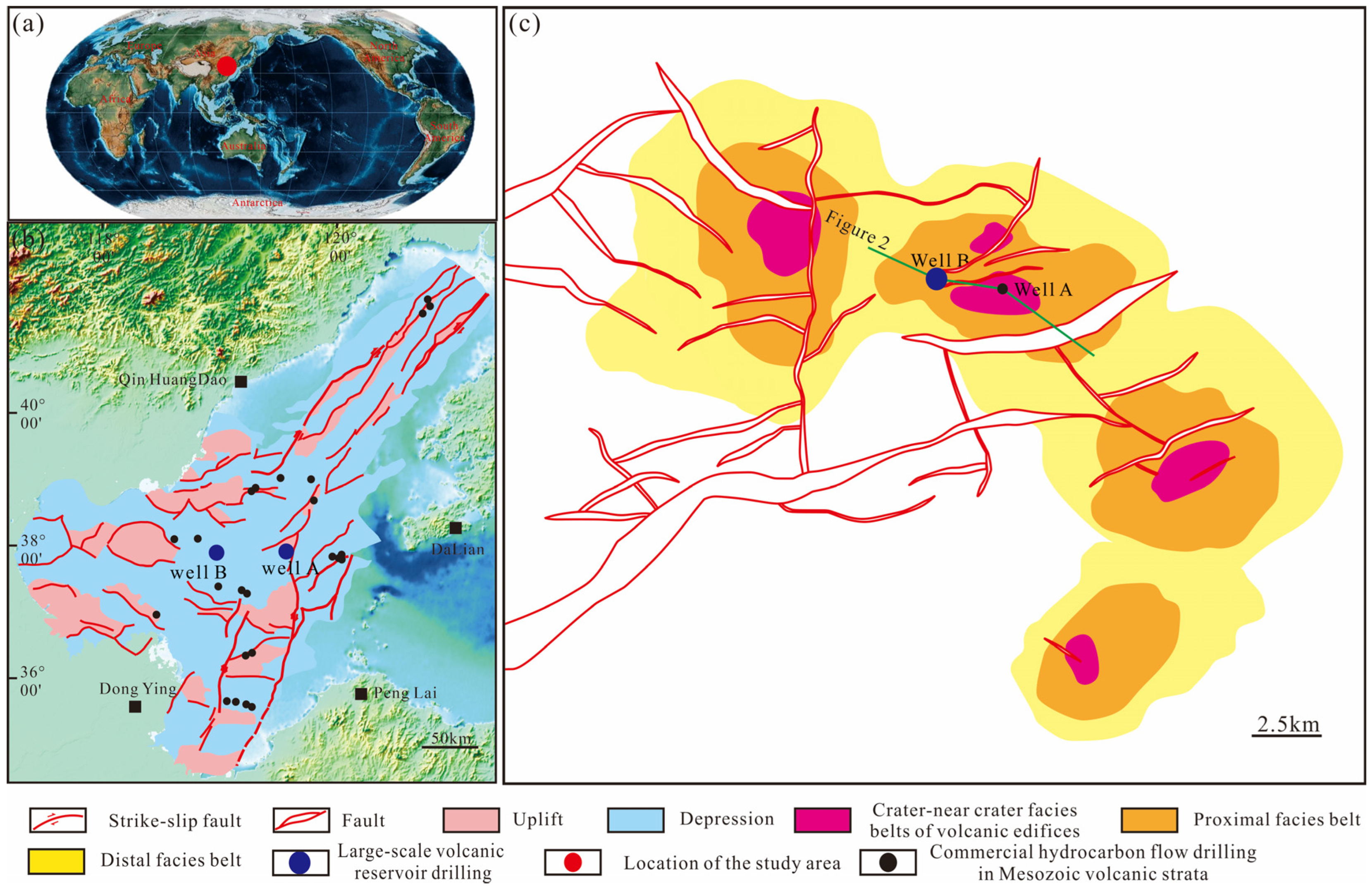
The Bohai Bay Basin, located in the northeastern portion of the North China Craton, contains widespread Mesozoic volcanic sequences. These volcanic rocks are part of the eastern China Mesozoic volcanic rift system, whose formation was influenced by Pacific Plate subduction (Figure 1). The Jurassic–Cretaceous volcanic sequences in western Liaoning include the Xinglonggou, Tiaojishan, Yixian, and Daxingzhuang formations. The Xinglonggou Formation comprises volcanic breccia, tuff, andesite, and basalt. The Tiaojishan Formation contains basalt, andesitic welded breccias, and andesite. The Yixian Formation consists of crystal-rich rhyolitic tuff, andesite, basalt, and volcanic breccia. The Daxingzhuang Formation is dominated by dacite and dacitic brecciated lava. The Mesozoic volcanic assemblages in the Bohai Bay Basin are lithologically complex, consisting of rhyolite, dacite, andesite, trachyte, basalt, tuff, and volcanic breccia. Radiometric dating places their emplacement between 130 and 110 Ma, corresponding to the Yixian Formation [30].
The Yixian Formation develops multiple stages of superimposed, very thick volcanic rocks, which can be broadly divided into the following three cycles: early, middle, and late [31,32,33]. The early cycle erupted between 128 and 122 Ma, dominated by basic basalts, primarily distributed in the northern and eastern marginal areas of the Bozhong Sag. These rocks were formed by the eruption of mantle-derived magmas ascending along large-scale strike-slip fault zones of the Yanshanian period. The middle cycle erupted from 122 to 115 Ma, with intermediate rocks such as andesite and trachyandesite being predominant. Volcanic activity peaked during this stage, accompanied by intense lithospheric mantle erosion and thinning, which triggered significant melting of lower crustal rocks. The late cycle erupted between 115 and 114 Ma, mainly consisting of intermediate-acid rocks including dacite and rhyolite. The eruption range significantly decreased during this phase, with activity concentrated mainly near the Yanshanian strike-slip faults [33].

2.2. Exploration Background

Exploration has revealed multiple wells in the Bozhong Depression with daily oil production exceeding 1.3 million cubic meters (gas equivalent) from these Mesozoic volcanic rocks. Pay zones are primarily composed of rhyolite, dacite, andesite, trachyte, basalt, and tuff [34,35]. Volcanic facies include subaqueous and subaerial lava flow subfacies (effusive facies) [33,36], lava dome subfacies (extrusive facies) [37,38,39,40]. In 2024, a well targeting rhyolitic formations reported daily gas production exceeding 1.1 million cubic meters (gas equivalent), further affirming the Bohai Sea region’s potential as a trillion-cubic-meter gas province [41,42]. This breakthrough also underscores the promise of deeply buried hill-type volcanic reservoirs in highly petroliferous basins.
The discovered large-scale reservoir is predominantly composed of rhyolite, cryptovolcanic breccia, and tectonic breccia, with the first two being dominant. A facies classification framework has been established, including five facies, fifteen subfacies, and forty-four microfacies [43]. Among these, the subaqueous lava flow subfacies of effusive facies and lava dome subfacies of extrusive facies are especially well-developed in the study area.
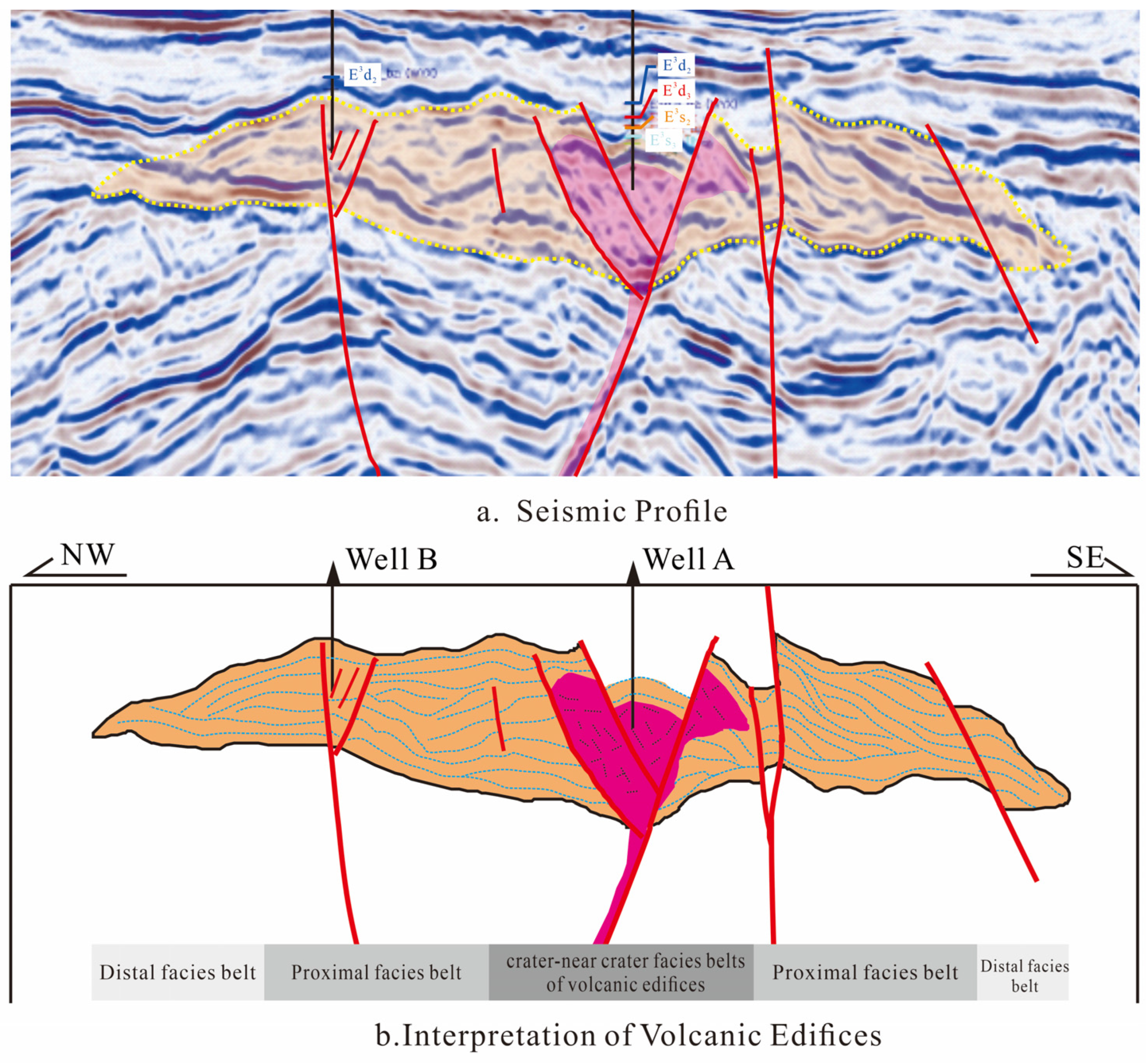
Seismic data confirm that Wells A and B penetrate the same volcanic edifice (Figure 1b and Figure 2). However, Well A, located in the crater-near crater belt, reveals significantly lower pay thickness, net-to-gross ratio, and average porosity compared to Well B in the proximal facies zone. This observation contradicts prevailing models that correlate reservoir quality with volcanic facies zoning.
Faults are well developed in Well A, which exhibits a sheet-like upper geometry with low aspect ratio and strong amplitude, good continuous seismic reflections. The lower section transitions into a funnel-shaped geometry with a high aspect ratio and chaotic, weak-amplitude reflections. In contrast, Well B features faults as well, but with distinct stratigraphic geometries. The upper section displays a sheet-like geometry with a low aspect ratio and moderate-to-strong amplitude, moderately continuous reflections. The lower portion transitions into a wedge-shaped configuration with a moderate aspect ratio, characterized by moderate amplitude and good to moderate continuity (Figure 2).
Figure 1a shows that the Mesozoic strata contain 23 commercial hydrocarbon wells, among which Well A and Well B have an oil equivalent exceeding 1000 barrels per day. In Figure 1b, although Well A and Well B are located within the same volcanic edifice, other volcanic edifices also demonstrate promising potential for hydrocarbon exploration.
Figure 2. Characteristics of volcanic edifice of the Cretaceous Yixian Formation in Block BZ8-3S, Bozhong Depression, Bohai Bay Basin, China (data sourced from CNOOC). Note: E3d2 represents the second member of the Dongying Formation, E3d3 represents the third member of the Dongying Formation, E3s2 represents the second member of the Shahejie Formation, and E3s3 represents the third member of the Shahejie Formation.
Minerals 16 00515 g002

3. Materials and Methods

Seismic data, well logs, and sidewall core samples were acquired from the Block BZ8-3S. Volcanic lithologies were identified in two wells based on the analysis of 58 sidewall cores (Figure 1), 355 cast thin sections, 300 m of Fullbore Formation Microimager (FMI) data, and gamma-ray logging. In Well A, Elemental Capture Spectroscopy Logging (ECS) was performed to determine oxide compositions, and the Chemical Index of Alteration (CIA) was calculated using the formula: CIA = [Al2O3/(Al2O3 + CaO + Na2O + K2O)] × 100.
Porosity and permeability measurements were conducted at the Rock Physics Laboratory of Jilin University (Changchun City, Jilin Province, China) using an AP608 helium (He) injection device. Testing was performed at 22 °C in accordance with the national petroleum industry standard of SY/T 5336-2006 (Analytical Method for Core Samples) [44].
High-pressure mercury injection experiments were performed at the Rock Physics Laboratory of Jilin University (Changchun City, Jilin Province, China) using a Micromeritics AutoPore IV 9505 porosimeter (Micromeritics Instrument Corp., Norcross, GA, USA) to obtain capillary pressure curves. Under controlled conditions (39% relative humidity, ambient temperature), pore-size distributions and pore volumes were calculated based on mercury intrusion at varying pressure levels. Testing followed SY/T 5346-2005 [45], the petroleum industry standard for capillary pressure measurement in rocks.
During image analysis preparation, MATLAB (R2024a)-based color segmentation was used to quantify void types by analyzing the blue-resin-filled spaces. Reservoir space types were classified through image analysis, guided by a 12-category, 28-type scheme.
Stratigraphic boundaries and deposited units were identified by calibrating well-log data against core samples. Eruptive interval unconformity boundaries (EIUBs) were recognized through characteristic well-log responses: high gamma-ray values, low resistivity values, low bulk-density values, and high acoustic values below the boundaries [40]. Seismic profiles reveal correlative features in the uppermost lava flow unit, indicating a stratigraphic equivalence between these units. The lower lava dome and lava flow units are separated by a fault contact, which also corresponds to a seismic facies boundary, supporting the interpretation of this boundary as the original intrusive contact boundary of the lava dome.

4. Volcanostratigraphic Characteristics

Volcanostratigraphic elements comprise stratigraphic boundaries, deposited units, and their stacking patterns. This section describes the identification and characterization of stratigraphic elements.

4.1. Lithology Characteristics

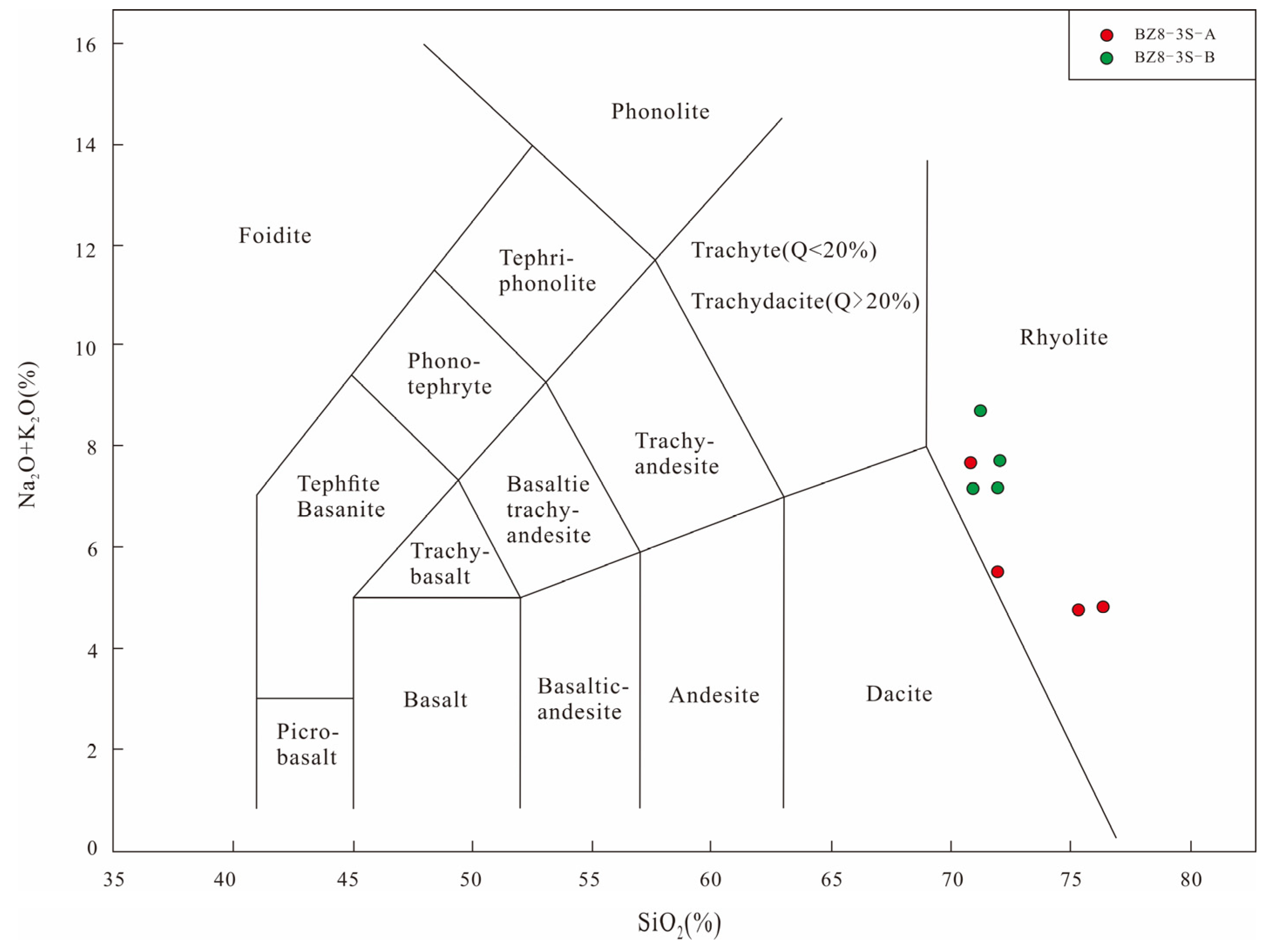
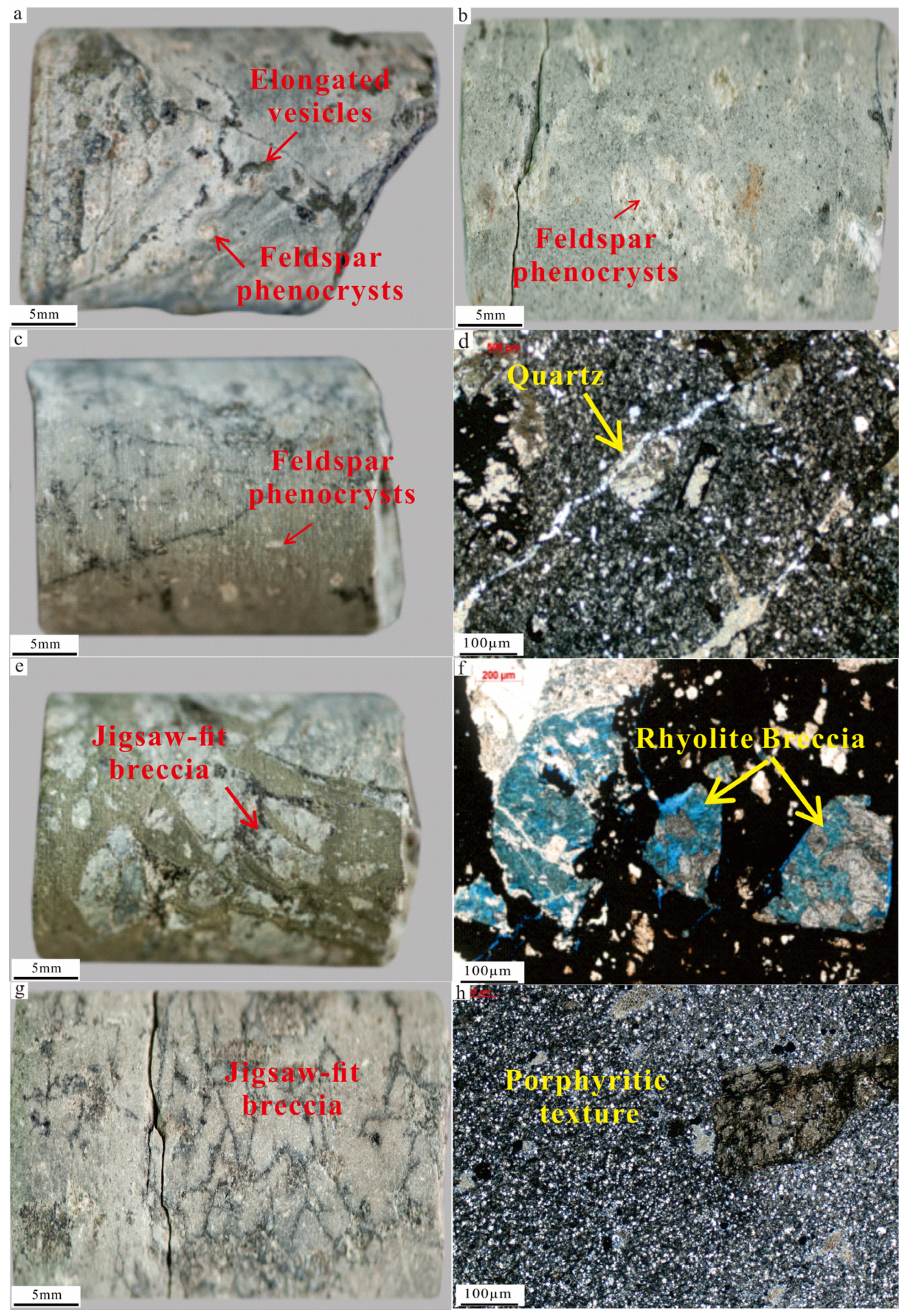
The BZ8-3S large volcanic structure contains a thick succession of rhyolite, with SiO2 contents ranging from 71.3% to 76.0% and Na2O + K2O contents between 4.8% and 8.3%. On the TAS diagram, the compositions plot within the rhyolite field (Figure 3). Structurally and genetically, both vesicular rhyolite (Figure 4a) and massive rhyolite (Figure 4b–d) are developed. The rhyolites exhibit a porphyritic texture (Figure 4a–d), with a relatively high phenocryst content accounting for 15–20% of the total rock volume (Figure 4b) [27,46]. The phenocrysts are predominantly composed of sanidine and quartz.
In addition to rhyolite, several types of breccia are present in Block BZ8-3S. Based on their genesis, they can be classified into cryptovolcanic breccia, caldera-collapse breccia lava piled rhyolitic breccia, and tectonic breccia. Among these, rhyolitic cryptovolcanic breccia is widely developed. It formed by in situ fragmentation of the pre-existing country rock adjacent to volcanic conduits during subsequent magma migration. The breccia fragments are uniformly composed of rhyolite, and some clasts can be fitted back together (Figure 4e–h).

4.2. Volcanostratigraphic Boundaries

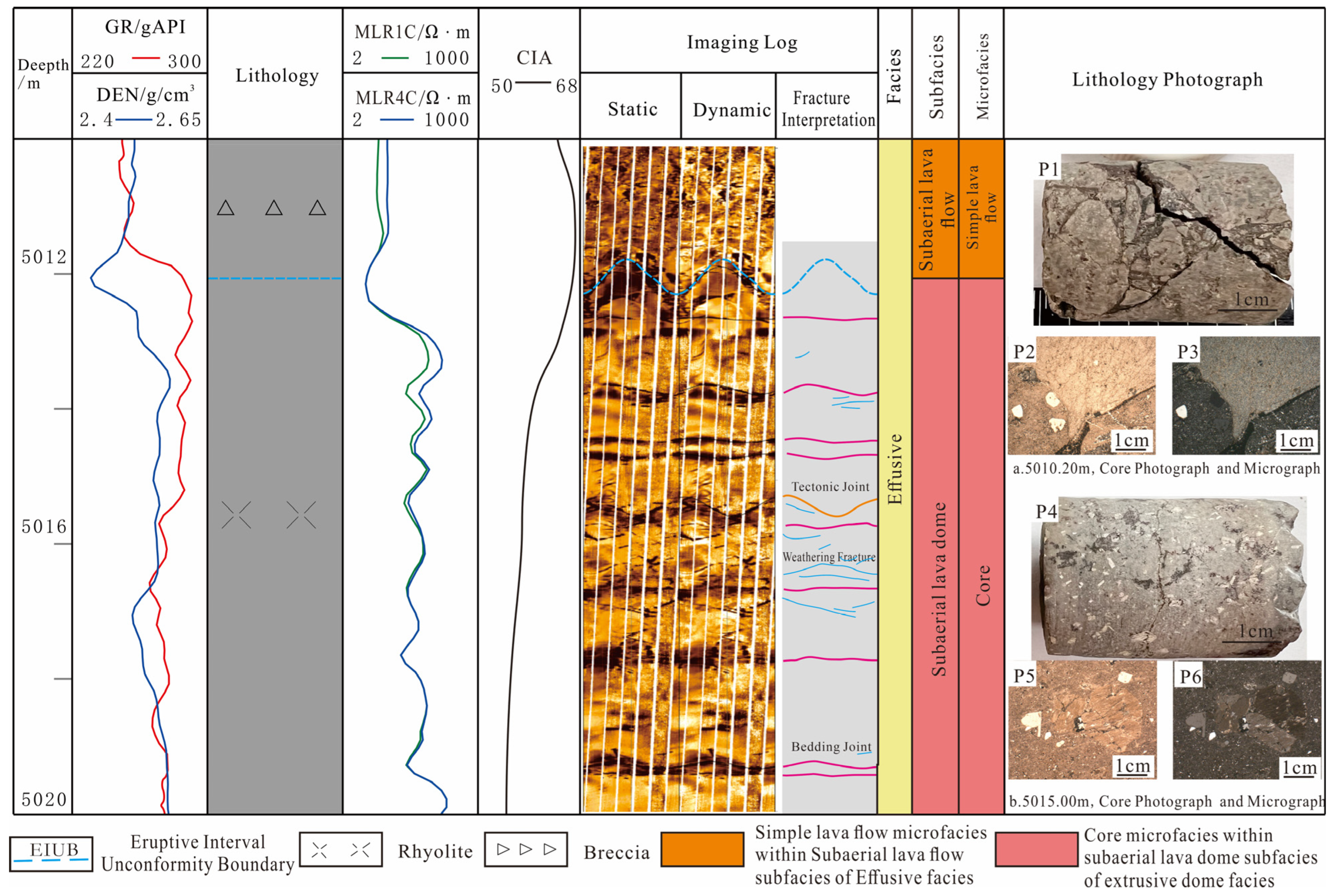
Two principal types of boundaries are common in volcanostratigraphy: eruptive unconformity and EIUBs. In this study, EIUBs in Wells A and B were identified by integrating core observations with well-log data. In Well A, a EIUB was identified at a depth of 5012.1 m within the Yixian Formation. The overlying lithology consists of breccia with welded textures (Figure 5(P1–P3), containing angular to subrounded rhyolitic clasts. The underlying unit is massive alkaline rhyolite with a porphyritic texture, containing approximately 5% alkali feldspar and 1% quartz phenocrysts. Well logging revealed high gamma-ray values, low bulk density values, and low resistivity values below the boundary. Clasts above the boundary exhibit moderate-to-low resistivity and a fragmental texture. Below the boundary, the imaging logs show thick, massive layers with gentle-angle platy joints, moderate-angle tectonic fractures, and irregular weathering fractures (Figure 5).
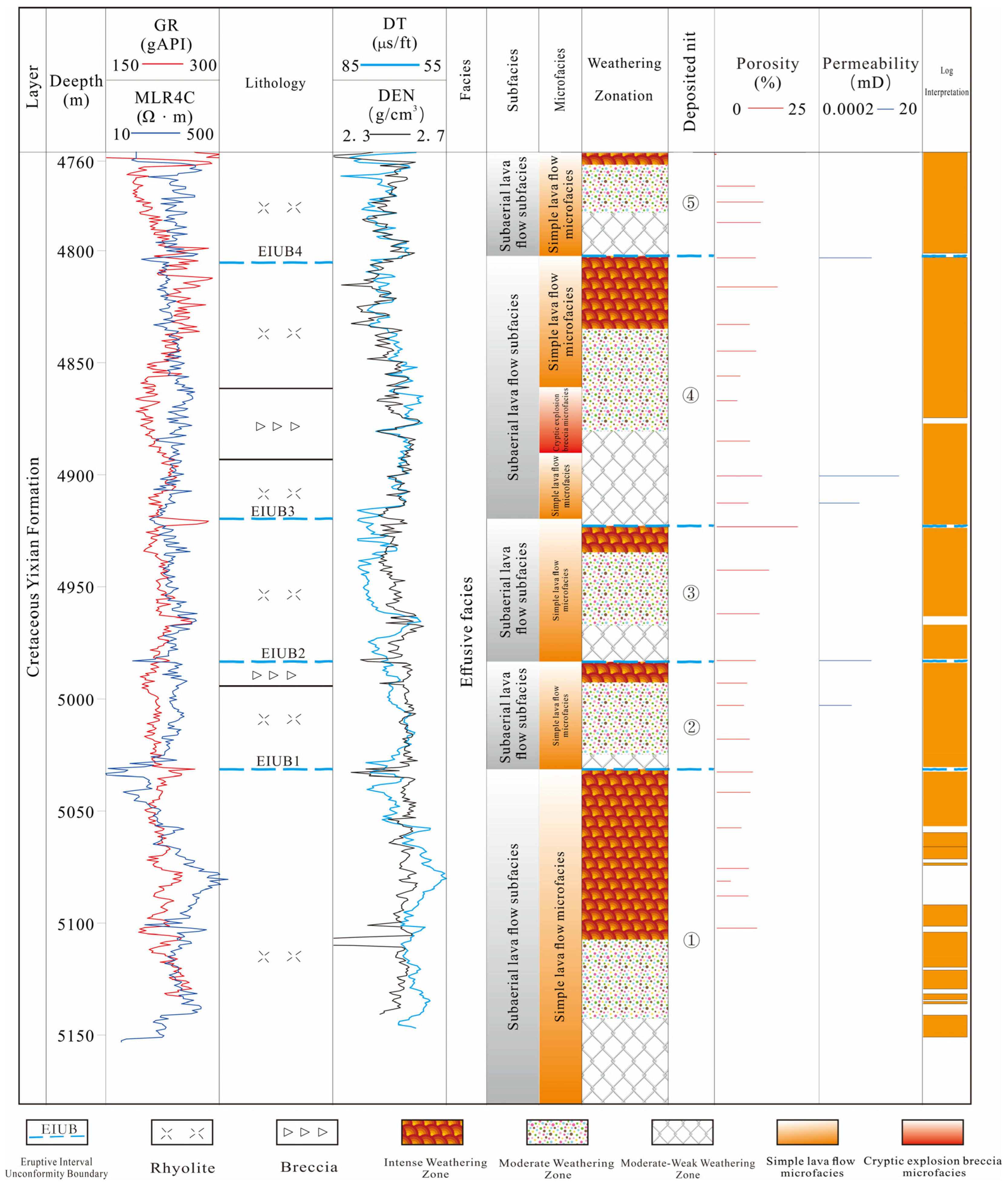
The subrounded clasts above the boundary suggest reworking process. Platy joints are denser near the boundary and become less with depth increase. A high CIA value at the boundary further supports significant weathering. These features—clast rounding, platy joint, and chemical alteration—together define the EIUB. In Well B, four EIUBs were identified within the Yixian Formation at depths of 4803.0 m, 4920.0 m, 4966.3 m, and 4717.3 m (Figure 6). All are associated with well-developed weathering crusts.

4.3. Deposited Units

Deposited units represent volcanic accumulations from single, continuous eruptive episodes or pyroclastic deposits formed by syn-transportational processes during individual emplacement events [48]. These units are bounded by eruptive interval unconformities.

4.3.1. Well A

Two deposited units were identified in Well A.
(1) Subaqueous Lava Dome Subfacies (Extrusive Facies): This lower unit, with a thickness of 275.62 m (not penetrated), comprises massive rhyolite and cryptovolcanic breccia. The rhyolite displays a massive structure and porphyritic texture, with 6% phenocrysts dominated by alkali feldspar. Extensive dissolution is observed. Cryptovolcanic breccia results from reworking of rhyolite, exhibiting chaotic geometries. Gamma-ray logs show a low-amplitude box shape with jagged; the acoustic logs display a micro-amplitude box shape. Seismic reflection data show weak amplitude, medium–high frequency, and chaotic, barrel-shaped signatures. Microfacies include a core microfacies and a cryptovolcanic breccia microfacies. The cryptovolcanic breccia is considered reservoir-enhancing and is, thus, independently classified.
(2) Subaqueous Lava Flow Subfacies (Effusive Facies): This upper unit is 89.05 m thick and contains massive rhyolite, spherulitic rhyolite, vesicular rhyolite, and cryptovolcanic breccia. The spherulitic rhyolite features randomly arranged spherules (50–150 μm) with shrinkage fractures. Vesicular rhyolite shows a porphyritic texture, with approximately 8% feldspar and minor quartz phenocrysts. Gamma-ray logs show a low-amplitude box shapes, moderately jagged; acoustic logs exhibit a medium amplitude box shape with minor jagged and localized finger-like shape. Seismic data reveal sheet-like geometry, strong amplitude, medium frequency, and good continuity. Identified microfacies include simple lava flows and cryptovolcanic breccia.

4.3.2. Well B

Well B reveals five deposited units, all belonging to the subaqueous lava flow subfacies of the effusive facies, with thickness ranging from 44 m to 151 m (Figure 6). The lithology is dominated by massive rhyolite and cryptovolcanic breccia. The massive rhyolite displays a porphyritic texture, with phenocrysts accounting for approximately 6%, primarily composed of feldspar with minor quartz. The gamma-ray curve exhibits a low- to medium-amplitude funnel shape with micro- to moderate jagged edges, while the acoustic curve presents medium- to high-amplitude box and funnel shape with moderate jagged to smooth edges. Seismic reflections show sheet- to tabular-shaped geometries, with strong to weak amplitudes, medium-to-low frequencies, and good-to-moderate continuity. Simple lava flow microfacies and cryptovolcanic breccia microfacies are developed in Well B.

4.3.3. Stratigraphic Units Correlation Between Boreholes

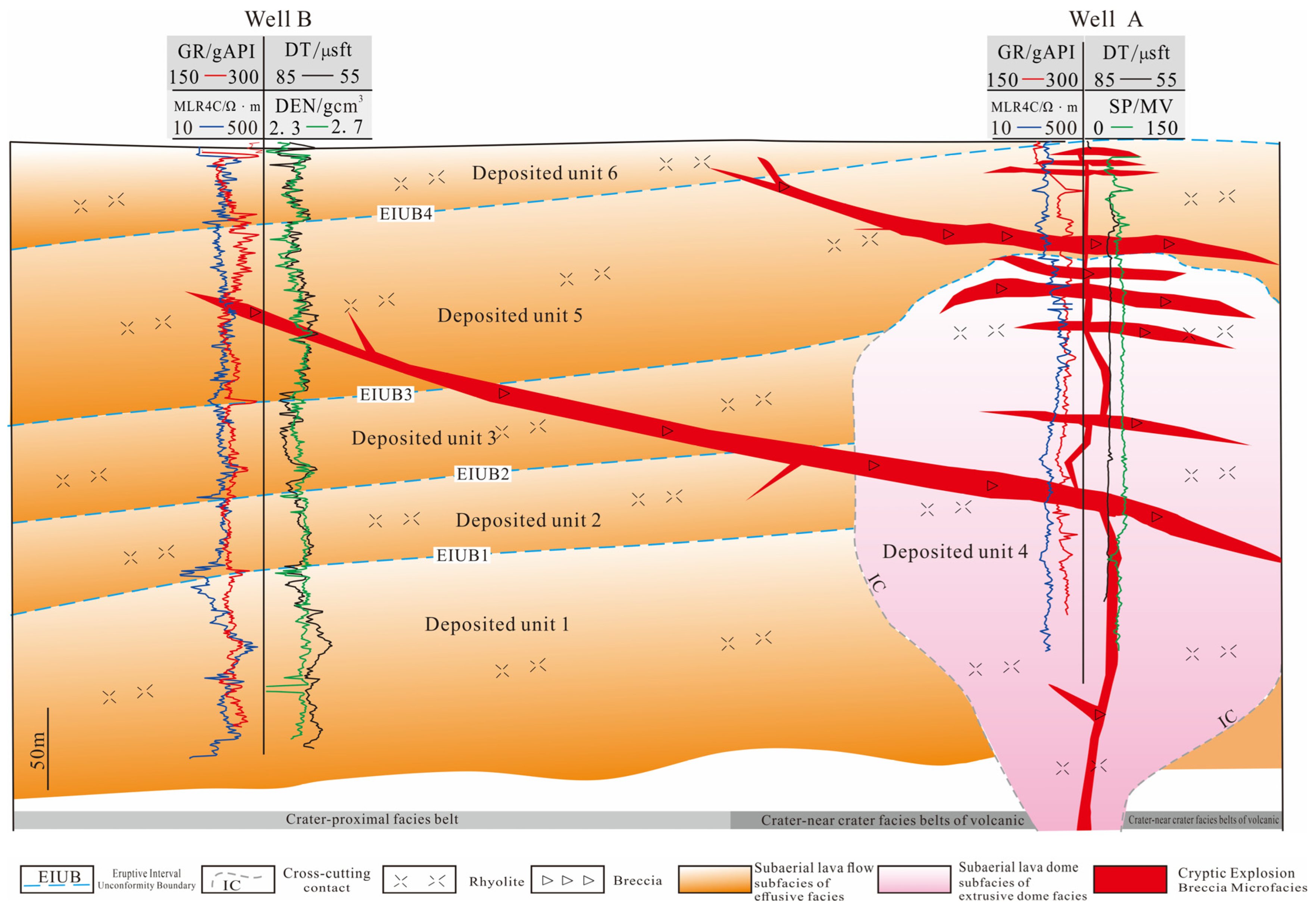
Based on the gamma-ray curve, Well B generally exhibits slightly lower gamma values compared to Well A. The gamma-ray values of the lava flow unit in Well B at 4756.7–4800.9 m are similar to those of the upper lava flow unit in Well A, while the other units in Well B consistently display lower gamma values than their counterparts in Well A. The lava dome deposited unit in Well A is stratigraphically younger than the three lower lava flow deposited units identified in Well B. In summary, the two wells collectively define six deposited units, with the fifth unit being continuous and correlatable between the two wells (Figure 7). Cryptovolcanic breccia microfacies are irregularly distributed within the lava dome and lava flows, frequently exhibiting penetrated contacts and demonstrating limited correlatability and traceability.

5. Reservoir Characteristics

5.1. Void Space Description

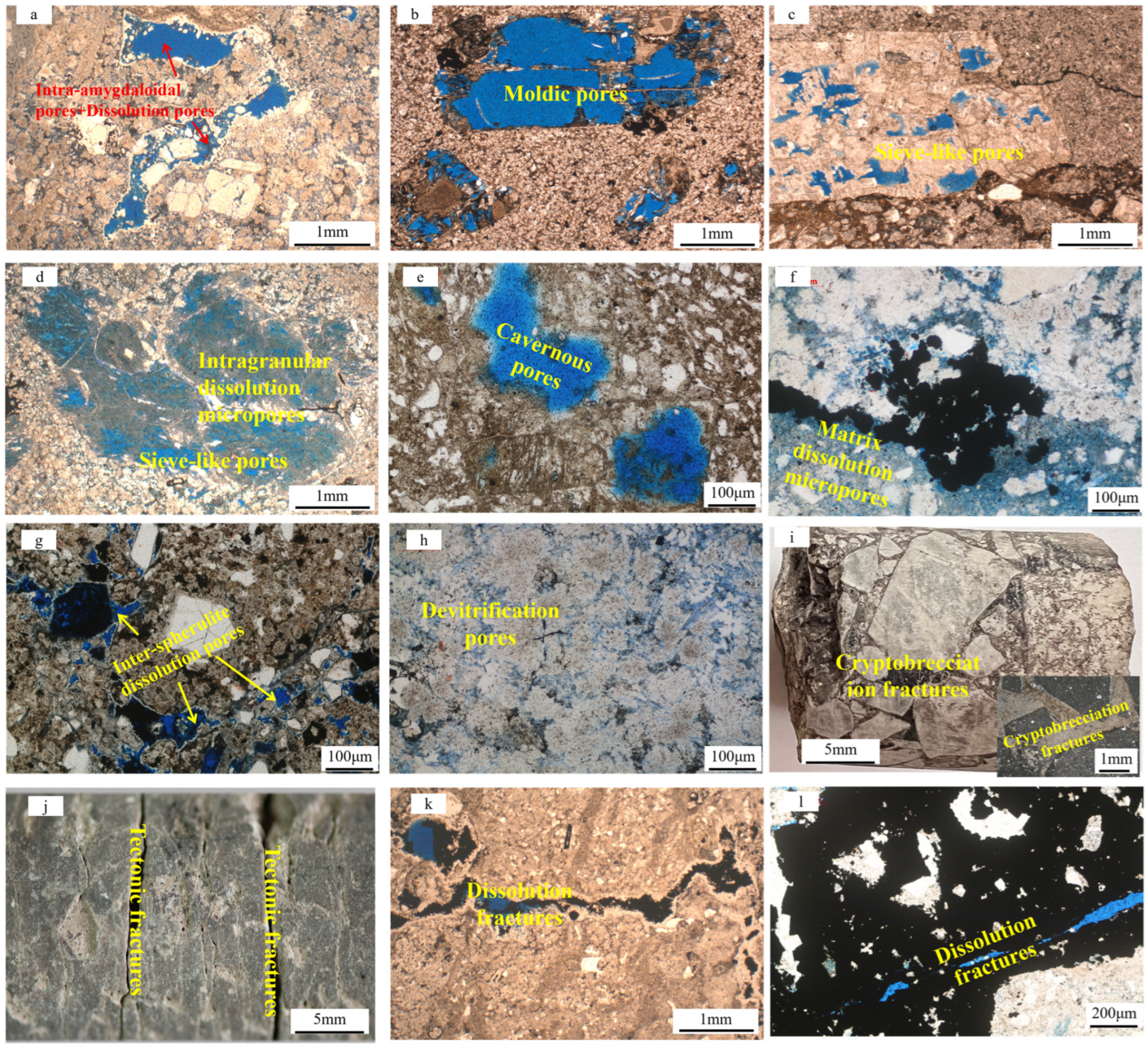
Based on the classification scheme comprising 12 categories and 28 types of reservoir spaces, six categories and 11 types have been identified in the study area. The reservoir space types include primary vesicles (including amygdaloidal); secondary dissolution pores (moldic pores, sieve pores, intragranular dissolution micropores, cavernous pores, matrix dissolution micropores, and inter-spherulite dissolution pores); secondary recrystallization micropores (devitrification pores); primary explosion fractures (cryptic explosion fractures); secondary tectonic fractures (shear fractures); and secondary dissolution fractures. Amygdaloidal exhibit irregular, flattened shapes, with scattered distribution and diameters up to 4 mm, often showing signs of dissolution enlargement (Figure 8a). Moldic pores, resulting from complete feldspar dissolution, exhibit regular boundaries, discrete distribution, and diameters ranging from 0.1 mm to 6 mm (Figure 8b). Sieve pores, formed by selective feldspar dissolution, are irregular in shape, discretely distributed, and range from 0.1 mm to 0.6 mm in diameter (Figure 8c). Intragranular dissolution micropores, produced by localized feldspar dissolution, appear as clusters of small, irregularly shaped pores with discrete distribution (Figure 8d). Cavernous pores, created by complete dissolution of the felsic matrix in rhyolite, are massive, irregularly edged, and discretely distributed, with diameters between 0.5 mm and 3.0 mm (Figure 8e). Matrix dissolution micropores, also originating from felsic matrix dissolution, are irregular in shape and often associated with cavernous pores (Figure 8f). Inter-spherulite dissolution pores form along spherule boundaries in spherulitic rhyolite and are irregular in shape, discretely distributed, and tens of micrometers in size (Figure 8g). Devitrification pores consist of micropores among radiating microcrystal of feldspar and quartz formed during the burial recrystallization or geothermal alteration of vitreous rocks (Figure 8h). Cryptoexplosive fractures are dendritic cracks resulting from explosive fragmentation of volatile-rich magma in near-surface country rocks, typically filled with magmatic fluids [49] (Figure 8i). Shear fractures are structurally induced, steeply dipping cracks with smooth surfaces that occur in sets. These fractures are mostly unfilled fractures and contribute significantly to rock fragmentation (Figure 8j). Dissolution fractures form via dissolution along pre-existing fractures during late-stage fluid interaction. In this study area, these fractures are often well-filled, formed by late-stage calcite dissolution, and contain pyrite and calcite as infill materials (Figure 8k,l).

5.2. Porosity and Permeability Characteristics

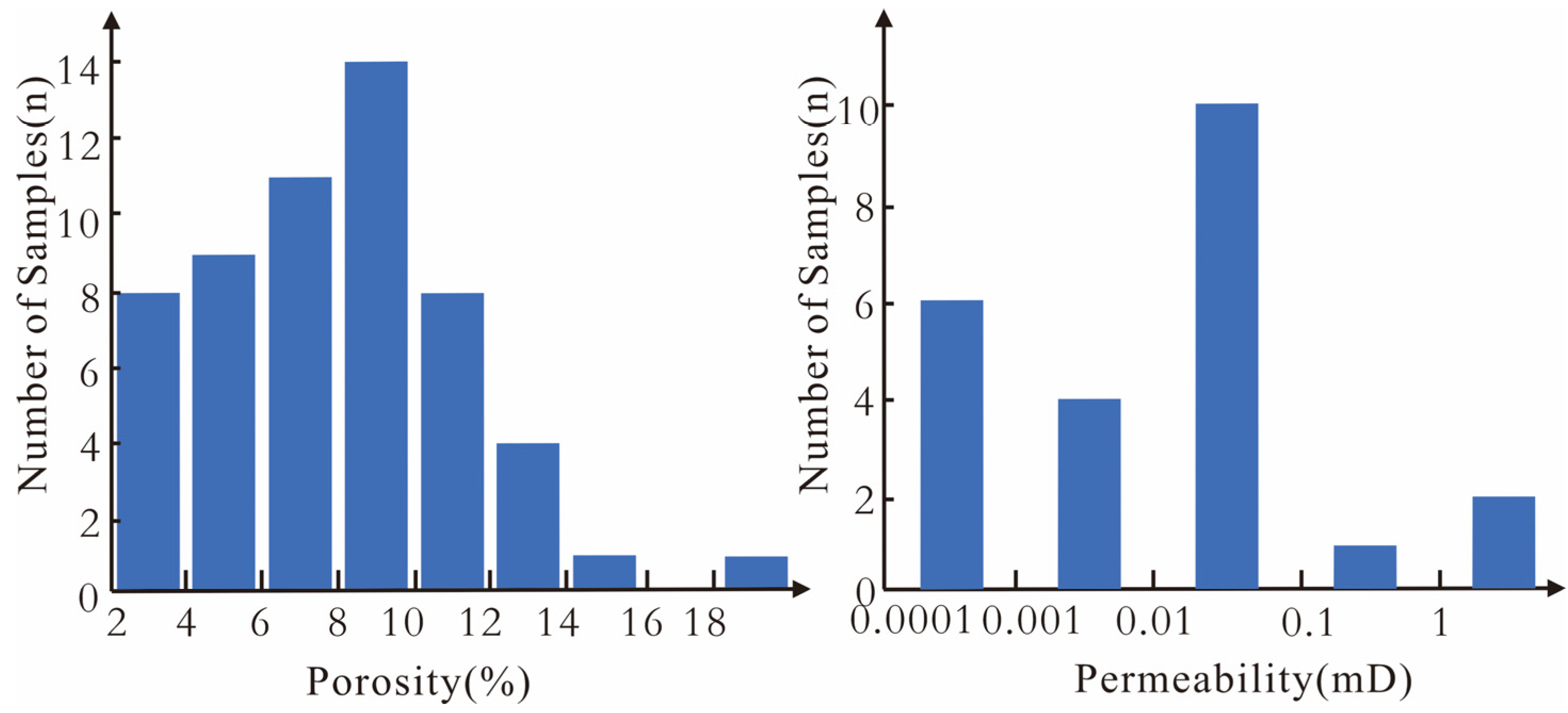
A total of 56 porosity and 23 permeability values were obtained in the study area. Porosity values range from 2.2% to 19.8%, with a geometric mean of 8.2%. Permeability values range from 0.0001 mD to 1.53 mD, with a geometric mean of 0.14 mD (Figure 9). The reservoir is primarily characterized by moderate porosity and low permeability, high porosity and low permeability, and low porosity and low permeability, with localized intervals displaying moderate porosity and moderate permeability.

5.3. Pore-Throat Characteristics

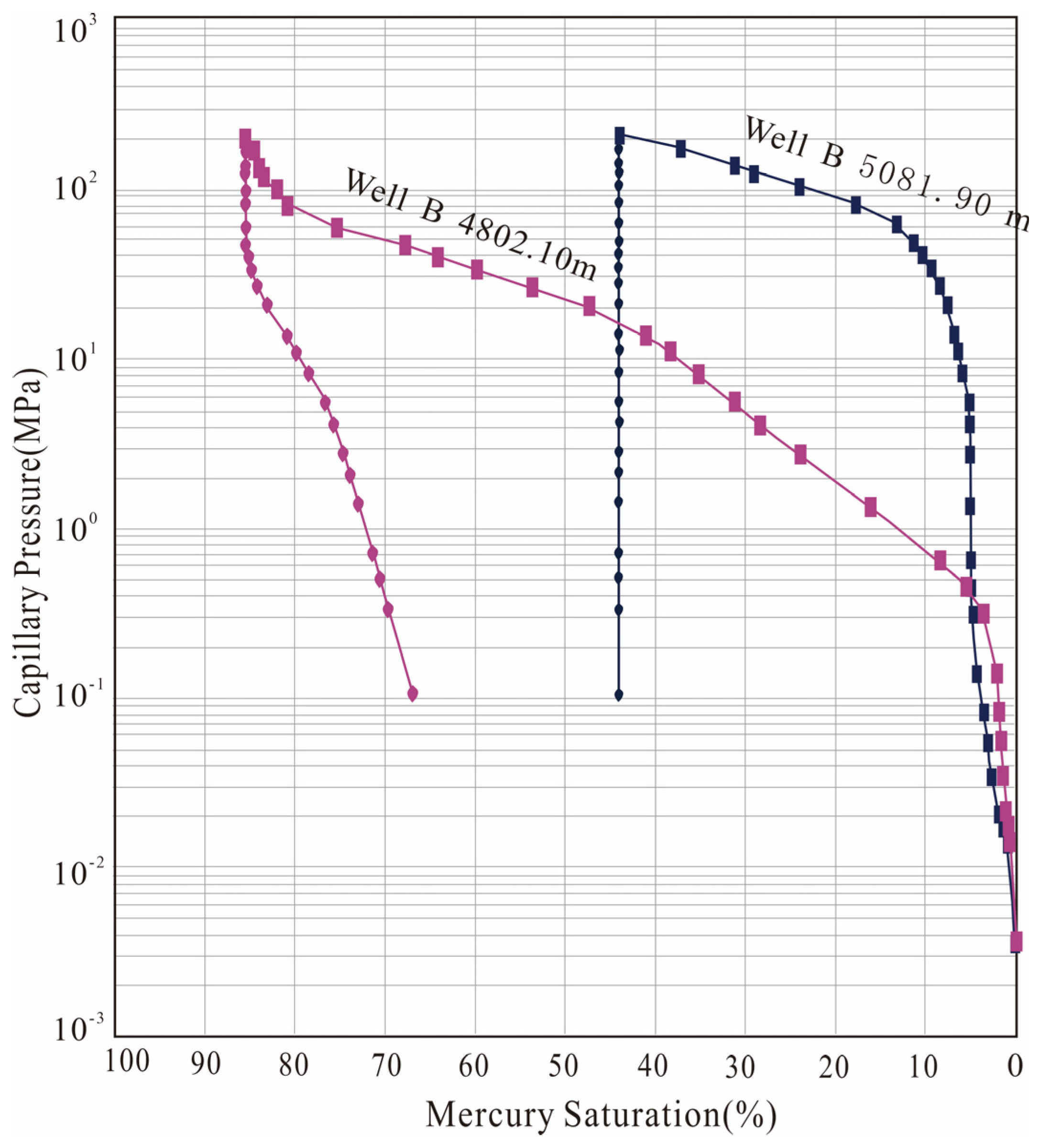
High-pressure mercury injection capillary pressure experiments were performed on two samples collected from a simple lava flow microfacies within the subaqueous lava flow subfacies of the effusive phase. The mercury injection and withdrawal curves delineated two distinct reservoir types (Figure 10). The first type is characterized by microporosity and displays low mercury injection saturation. For example, a tight rock sample from 5081.90 m in Well B exhibited a displacement pressure of 25.990 MPa, a maximum pore-throat radius of 0.028 μm, a maximum mercury intrusion saturation of 35.853%, and negligible withdrawal efficiency. This indicates poor reservoir flow capacity and limited effectiveness. The second reservoir type is characterized by large-to-coarse pore throats superimposed with fine micropore throats and also shows low mercury injection saturation. A sample from 4802.10 m in Well B exhibited a displacement pressure of 0.185 MPa, a maximum mercury intrusion saturation of 85.722%, a withdrawal efficiency of 21.350%, a maximum pore-throat radius of 3.970 μm, and an average radius of 0.030 μm. This reservoir demonstrates heterogeneous pore-throat distribution, indicating moderate overall connectivity.

6. Controlling Factors of Reservoir Mega-Scale Heterogeneity and Its Exploration Significance

6.1. The Composition of Depositional Units Control on Reservoir Heterogeneity Within Volcanic Edifice Facies Belts

6.1.1. Reservoir Space Composition of Depositional Units

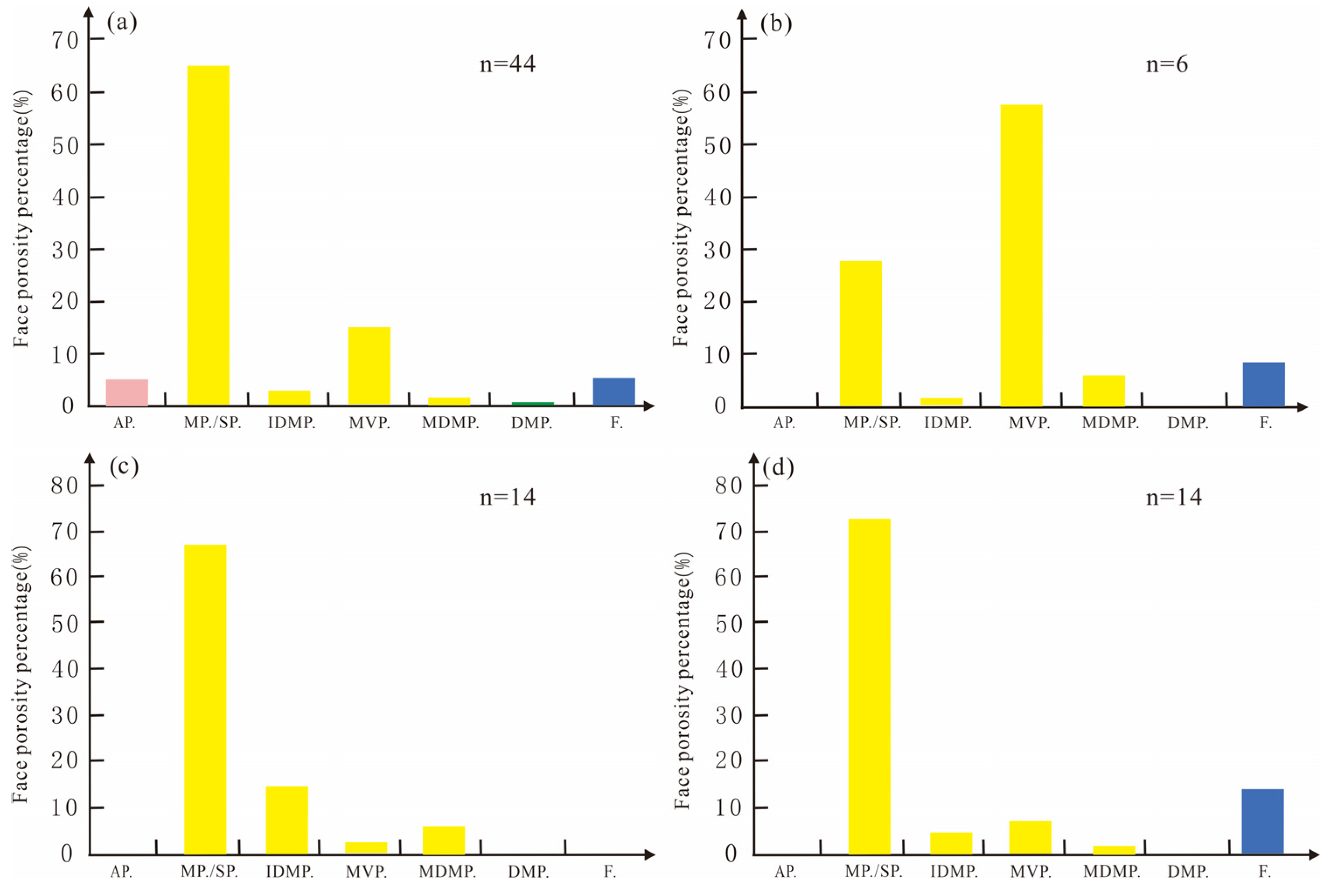
Drilling data indicate that the identified deposited units belong to the subaqueous lava flow subfacies of the effusive facies and the subaqueous lava dome subfacies of the extrusive facies. Volcanic rocks in this area are predominantly characterized by secondary porosity, with limited development of primary pores and fractures. According to surface porosity statistics, the simple lava flow microfacies within the subaqueous effusive facies displays minor development of amygdaloidal pores, dominance of moldic and sieve pores, and a notable proportion of matrix-hosted vuggy pores (Figure 11a), yielding an average total porosity of 2.37%. In the cryptovolcanic breccia microfacies of the same facies, the pore system is primarily composed of matrix vuggy pores and moldic/sieve pores, with fractures accounting for a slightly larger proportion (Figure 11b) and a total porosity of 4.9%.
Within the subaqueous lava dome subfacies of the extrusive facies, the core microfacies exhibits negligible primary porosity. Instead, moldic and sieve pores represent the principal reservoir space types (Figure 11c), with an average surface porosity of 0.67%. The cryptovolcanic breccia microfacies in this subfacies also lacks primary porosity and is similarly dominated by moldic and sieve pores (Figure 11d), with a total surface porosity of 1.11%. While both volcanic deposited units display similar types of reservoir space, the effusive facies—particularly the lava flow unit—shows significantly higher surface porosity and overall superior reservoir quality.
A comparative analysis between the simple lava flow microfacies and the core microfacies of the lava dome unit reveals that the former has better-developed primary vesicles and fractures, the latter being largely controlled by tectonic activity. The well-developed tectonic fractures (Figure 8j) and high fracture intensity observed at Well B (Figure 2) indicate stronger structural modification relative to Well A. Thus, the lava flow unit provides the material foundation, while tectonic activity acts as a key controlling factor for reservoir development.

6.1.2. Porosity and Permeability Characteristics of Depositional Units

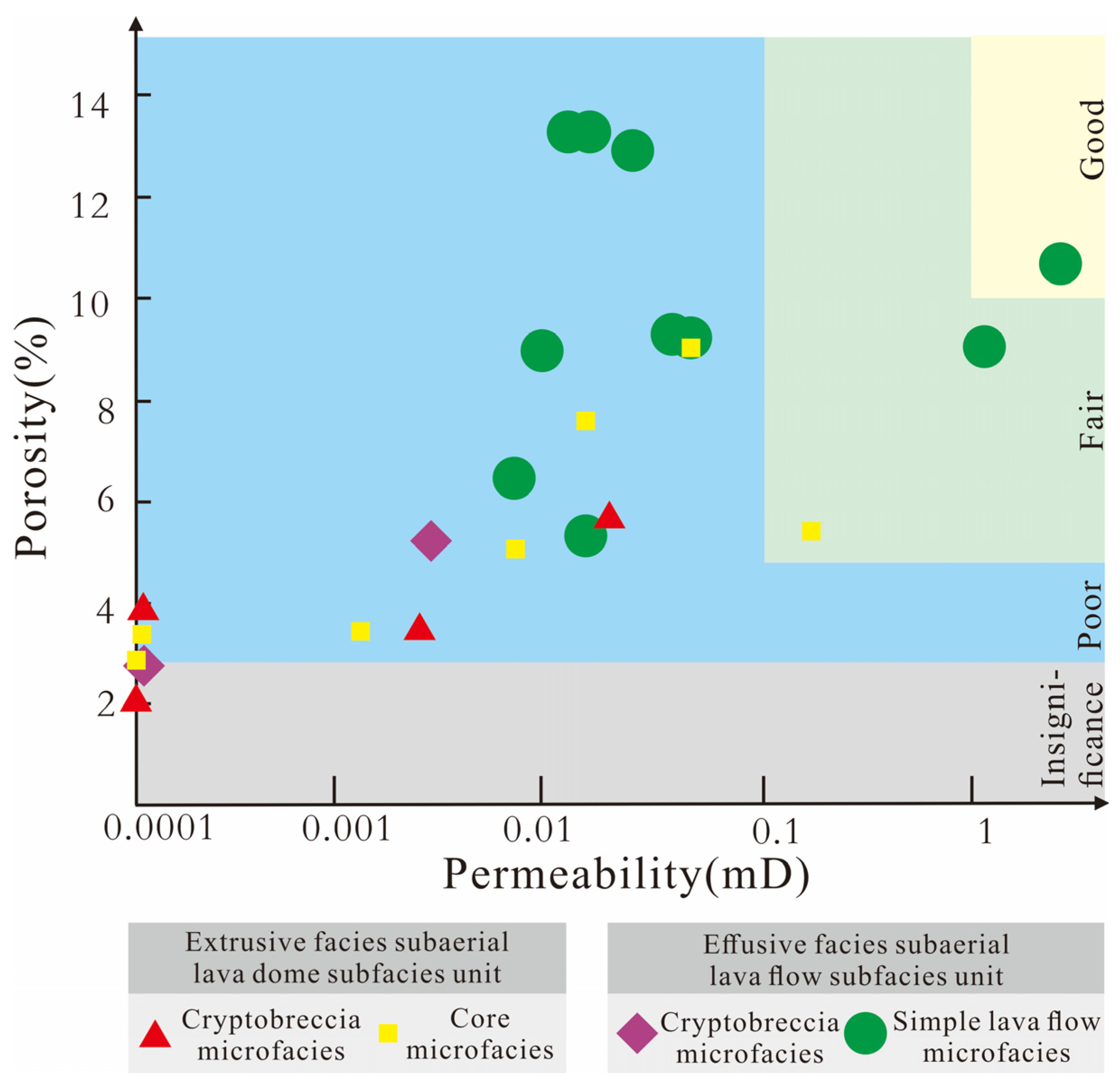
The porosity and permeability characteristics of the two main types of deposited units are summarized as follows. The simple lava flow microfacies of the subaqueous lava flow unit has a porosity range of 3.0 to 19.8%, with a geometric mean of 9.1%. Permeability value range from 0.0002 to 1.53 mD, with a geometric mean of 0.28 mD. The cryptovolcanic breccia microfacies within this unit exhibits a porosity range of 2.8–5.7% and a permeability range of 0.0001–0.006 mD.
In contrast, the core microfacies of the subaqueous lava dome unit displays a porosity range of 2.7–11.3% (geometric mean value 6.9%) and a permeability range of 0.0001–0.22 mD (geometric mean value 0.05 mD). The associated cryptovolcanic breccia microfacies shows a porosity range of 2.2–10.7% (geometric mean value 6.4%) and a permeability range of 0.0001–0.012 mD (geometric mean value 0.003 mD). These data clearly indicate that the subaqueous lava flow unit exhibits better petrophysical properties than the subaqueous lava dome unit (Figure 12). Therefore, the lava flow unit within the volcanic sequence provides the essential lithological basis for the reservoirs development.

6.1.3. Deposited Unit Composition of Block BZ8-3

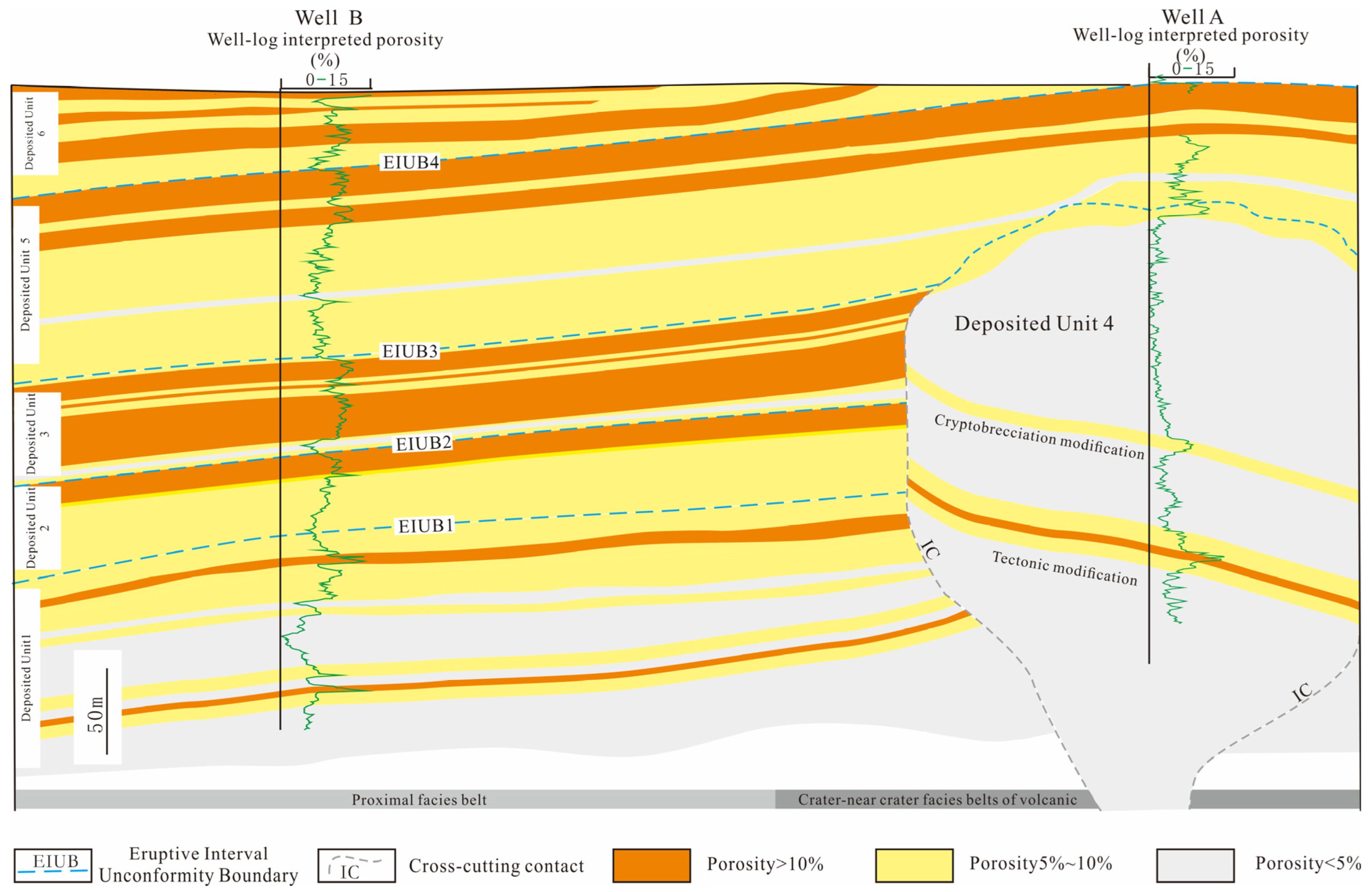
Comparative analysis reveals that Well B contains five lava flow units, while Well A comprises one lava flow and one lava dome unit. In terms of primary porosity distribution, subaqueous lava flows exhibit a “top-excellent, base-poor” pattern, characterized by higher reservoir quality and net-to-gross ratios. Although subaqueous lava domes follow a similar trend, they generally show lower reservoir quality and reduced net-to-gross ratios [48,51,52]. This pattern is applicable to the Block BZ8-3S.
Porosity interpretations from well logs show that Well B, with its vertically stacked lava flow units, exhibits favorable reservoir quality, with enhanced porosity at the top of each unit (Figure 13). In contrast, Well A presents a composite volcanic architecture, with upper lava flows overlying middle to lower lava domes. This results in vertically stratified reservoirs, with superior quality in the upper intervals and progressively declining properties toward the base. Notably, two high-porosity zones in Well A’s lava domes are genetically linked to late-stage cryptoexplosion and tectonic activity (Figure 13), demonstrating the susceptibility of these units to such processes.
The well-developed primary porosity system facilitates fluid migration, promoting “fluid channel piracy” effects [53] that enhance secondary porosity development in already porous lithologies. Consequently, the dominance of subaqueous lava flow units in the volcanic stratigraphy forms the essential framework for large-scale reservoir formation. Variations in deposited unit types and proportions between the two wells fundamentally control their respective reservoir properties and scales.

6.2. Stratigraphic Boundaries Control the Vertical Heterogeneity of Depositional-Unit Reservoirs

A comparison of acoustic and density log-derived boundary identification reveals that below boundary zones typically show a transition from low density and high acoustic velocity to high density and low acoustic velocity. This trend reflects improved reservoir properties near these boundaries and is attributed to the spatiotemporal dynamics of rapid volcanic construction followed by prolonged modification within the volcanostratigraphy.
EIUBs mark volcanic hiatuses or weathering episodes lasting from years to thousands of years [14,42]. Weathering processes progress downward from the boundary, enhancing reservoir quality near these boundaries. Along these eruptive unconformities, rhyolites often show a downward petrophysical transition from low density and high acoustic velocity to higher density and lower acoustic velocity (Figure 6). Combined with the dominance of secondary dissolution pores (Figure 11), these trends indicate that weathering during volcanic hiatuses and subsequent burial dissolution predominantly propagate downward into unit interiors.
Well B contains four EIUBs, forming four distinct weathering crusts, whereas Well A contains has only one such boundary and corresponding weathering crust (Figure 7). From this perspective, Well B offers a more favorable setting for the development of weathering crust-type reservoirs. Following volcanic edifice formation, caldera collapse and subsequent burial-induced tilting elevated Well B topographically, leading to prolonged subaerial exposure and more intense weathering modification.
Above all, EIUBs control the vertical heterogeneity of depositional-unit reservoirs.

6.3. Exploration Significance

A comprehensive analysis of the relationships among deposited units, stratigraphic boundaries, and reservoir characteristics reveals that the combination of stacked lava flows and multi-phase processes—weathering, cryptoexplosion, tectonism, and burial dissolution—contribute to a vertically connected, multi-layer composite reservoir system. The development of large-scale reservoirs in Well B, characterized by greater net pay thickness and higher net-to-gross ratios, is governed by the following three key factors: (1) a high proportion of lava flow subfacies within the lithofacies assemblage, (2) an abundance of EIUBs, and (3) strong tectonic modification. These factors jointly support the formation of laterally continuous and vertically connected reservoir systems in proximal belts, surpassing those developed in crater and near-crater facies belts.
In the early stages of hydrocarbon exploration, the accuracy of seismic interpretation is a critical determinant of success, while geological models of volcanic systems provide essential constraints for improving such interpretations. The reservoir distribution patterns associated with acidic lava volcanic edifices in the study area suggest that proximal facies belts offer higher reservoir potential. Seismic data indicate that crater and near-crater facies belts typically exhibit massive, chaotic to weak-amplitude reflection characteristics, which correlate with lower reservoir quality. In contrast, higher-quality reservoirs are associated with seismic facies showing pseudostratified, parallel to subparallel, well-continuous, and moderate- to strong-amplitude reflections. Reservoir development is particularly favorable when pseudostratified seismic architectures are observed in crater-near crater facies belts, as exemplified by Well Yaoshen-1 in the Changling Fault Depression, Songliao Basin [54].
The Mesozoic volcanic edifices of the Bohai Bay Basin have experienced tens of millions of years of post-emplacement modification and often exist as remnant structures. These frequently host weathering crust-type reservoirs. However, the development of such reservoirs requires favorable preservation conditions. From a geomorphological perspective, steep remnant volcanic topographies tend to feature denser lava flow accumulation, poorly preserved weathering crusts, and thin zones of weathering-related dissolution and fracturing—ultimately resulting in inferior reservoir quality.
Therefore, exploration strategies should prioritize proximal facies belts that contain thick, lava flow-dominated deposited units, especially in structurally active zones. In contrast, areas dominated by lava domes within crater or near-crater facies belts should be avoided due to their generally poorer reservoir characteristics.

7. Conclusions

Based on the aforementioned experimental results, two distinct volcanic lithofacies belts have been identified in Block BZ8-3S. The influence of EIUBs on the vertical heterogeneity of reservoir units has been clarified, as well as the impact of depositional unit composition on reservoir heterogeneity across different lithofacies belts within the volcanic edifice. The key insights are as follows:
(1)
The volcanic edifices in Block BZ8-3S exhibit massive-pseudostratified structural characteristics. Wells A and B belong to the same volcanic edifice system but occupy distinct facies belts: Well A is located in the crater-near crater belt while Well B lies in the proximal belt. EIUBs are identified at 1 and 4 levels in Wells A and B, respectively. A total of eleven types of reservoir spaces, grouped into six categories, have been identified. The pore system is dominated by dissolution pores. Reservoirs in the study area are generally characterized by moderate porosity and low permeability. Microscopically, these reservoirs display a coexistence of coarse to large pore throats with finer ones.
(2)
The composition of depositional units control on reservoir heterogeneity within volcanic edifice facies belts. Well A contains two primary units comprising extrusive lava dome subfacies (77% thickness proportion) and effusive lava flow subfacies; Well B reveals five stacked effusive lava flow subfacies units. Although both lava dome and lava flow subfacies share analogous reservoir space types, the latter demonstrates superior pore surface porosity, porosity and permeability characteristics.
(3)
EIUBs control the vertical heterogeneity of depositional-unit reservoirs. Reservoir porosity exhibits inverse correlation with burial depth below EIUBs, indicating stratigraphic control on reservoir development. These unconformities facilitate pre-burial weathering processes and enhance post-burial fluid migration/dissolution along their planes. Mega-scale heterogeneity of rhyolitic reservoirs is primarily controlled by the number of stratigraphic boundaries and depositional unit types.
(4)
Exploration strategies should prioritize proximal facies belts that contain thick, lava flow-dominated deposited units, especially in structurally active zones. In contrast, areas dominated by lava domes within crater or near-crater facies belts should be avoided due to their generally poorer reservoir characteristics.

Author Contributions

Conceptualization, X.Z.; Methodology, X.Z.; Validation, Q.F.; Investigation, Q.F.; Data curation, X.Z.; Writing—original draft, X.Z.; Writing—review & editing, Q.F.; Project administration, X.Z.; Funding acquisition, X.Z. All authors have read and agreed to the published version of the manuscript.

Funding

This research was funded by CNOOC’s 14th Five-Year Plan Major Scientific & Technological Project in Geological Research grant number [KJGG2021-0300].

Data Availability Statement

The data presented in this study are available on request from the corresponding author due to commercial confidentiality restrictions imposed by CNOOC Ltd.

Conflicts of Interest

The authors declare no conflicts of interest. Author Xintao Zhang is an employee of CNOOC Ltd., which provided the data for this study. The company had no role in the design, analysis, interpretation, or writing of the manuscript.

Appendix A

Table A1. Major Element Analysis Data Table.
WellDepth (m) Test Results Summary (%)
Al2O3CaOFe2O3FeOMgOMnOP2O5K2OSiO2Na2OTiO2Loss on IgnitionTotal
Well A4950~49558.477 1.225 3.596 2.177 0.216 0.035 0.089 4.268 74.417 0.546 0.240 4.71 95.286
4970~49758.341 1.469 2.979 3.496 0.191 0.044 0.068 5.122 72.262 0.544 0.117 5.37 94.633
5005~50109.430 0.907 3.341 1.312 0.156 0.038 0.093 4.432 75.957 0.353 0.201 3.78 96.220
5040~504510.524 1.221 3.571 1.731 0.216 0.093 0.095 5.088 71.297 2.122 0.187 3.86 96.145
Well B5120~512510.835 0.803 3.754 0.537 0.211 0.098 0.080 5.491 72.898 1.729 0.230 3.33 96.666
5155~51609.233 0.691 3.473 0.884 0.158 0.064 0.096 5.522 72.954 1.490 0.177 5.26 94.742
5190~519510.932 0.802 3.963 0.149 0.381 0.115 0.115 5.259 71.902 1.822 0.263 4.30 95.703
5285~528810.719 0.512 3.225 0.586 0.168 0.109 0.084 6.796 71.941 1.469 0.252 4.14 95.861

Appendix B

Table A2. Block BZ8-3S logging permeability and porosity data.
WellDepth (m)Porosity (%)Permeability (mD)
Well A4912.3 7.8 0.0181
50152.7-
50242.2-
5034.82.7-
5040.33.9-
5081.9 3.5 0.0002
50945.50.22
51843.60.004
5204.87.90.018
5242.89.20.075
5267.250.009
Well B4802.1 9.6 0.0711
4900.1 11.1 1.53
4968.513.30.015
4973.413.20.033
4979.213.30.014
4982.9 9.6 0.0692
5003.0 6.7 0.0076
5005.79.11.078
5076.73.3-
5125.35.20.004
5137.85.60.012
5258.89.20.017

References

  1. Wang, P.J.; Chen, S.M. Cretaceous volcanic reservoirs and their exploration in the Songliao Basin, Northeast China. AAPG Bull. 2015, 99, 499–523. [Google Scholar] [CrossRef] [Scilit]
  2. Amendola, A.; Gabbriellini, G.; Dell’Aversana, P.; Marini, A.J. Seismic facies analysis through musical attributes. Geophys. Prospect. 2017, 65, 49–58. [Google Scholar] [CrossRef] [Scilit]
  3. Pigott, J.D.; Kang, M.H.; Han, H.C. First order seismic attributes for clastic seismic facies interpretation: Examples from the East China Sea. J. Asian Earth Sci. 2013, 66, 34–54. [Google Scholar] [CrossRef] [Scilit]
  4. Zahmatkesh, I.; Kadkhodaie, A.; Soleimani, B.; Azarpour, M. Integration of well log-derived facies and 3D seismic attributes for seismic facies mapping: A case study from mansuri oil field, SW Iran. J. Pet. Sci. Eng. 2021, 202, 108563. [Google Scholar] [CrossRef] [Scilit]
  5. Owusu, B.A.; Boateng, C.D.; Asare, V.D.S.; Danuor, S.K.; Adenutsi, C.D.; Quaye, J.A. Seismic facies analysis using machine learning techniques: A review and case study. Earth Sci. Inform. 2024, 17, 3899–3924. [Google Scholar] [CrossRef] [Scilit]
  6. Chopra, S.; Marfurt, K.J. Introduction to this special section—Seismic attributes. Lead. Edge 2008, 27, 296–297. [Google Scholar] [CrossRef] [Scilit]
  7. Ashraf, U.; Zhu, P.; Yasin, Q.; Anees, A.; Imraz, M.; Mangi, H.N.; Shakeel, S. Classification of reservoir facies using well log and 3D seismic attributes for prospect evaluation and field development: A case study of Sawan gas field, Pakistan. J. Pet. Sci. Eng. 2019, 175, 338–351. [Google Scholar] [CrossRef] [Scilit]
  8. Tang, H.F.; Pang, Y.M.; Bian, W.H.; Wang, P.J.; Min, F.Q.; Ding, R.X. Quantitative analysis on reservoirs in volcanic edifice of Early Cretaceous Yingch-eng Formation in Songliao Basin. Acta Pet. Sin. 2008, 29, 841–852. [Google Scholar]
  9. Wright, J.V.; Giordano, G.; Cas, R. Documenting the Geology of Volcanoes and Volcanic Terrains: Mapping, Litho-to Chrono-Stratigraphic Framework and Facies Architecture and Constructing Facies Models; Springer: Berlin/Heidelberg, Germany, 2024; pp. 1161–1236. [Google Scholar]
  10. Mansourian, D.; Lubo-Robles, D.; Bedle, H. Locating volcanic facies to find critical minerals through the lens of seismic attributes and machine learning. Soc. Explor. Geophys. 2026, 44, 1623–1627. [Google Scholar]
  11. Rey, S.S.; Planke, S.; Symonds, P.A.; Faleide, J.I. Seismic volcanostratigraphy of the Gascoyne margin, Western Australia. J. Volcanol. Geotherm. Res. 2008, 172, 112–131. [Google Scholar] [CrossRef] [Scilit]
  12. Cortez, M.M.; Cetale Santos, M.A. Seismic interpretation, attribute analysis, and illumination study for targets below a volcanic-sedimentary succession, Santos Basin, offshore Brazil. Interpretation 2016, 4, SB37–SB50. [Google Scholar] [CrossRef] [Scilit]
  13. Klarner, S.; Klarner, O. Identification of paleo-volcanic rocks on seismic data. In Updates in Volcanology—A Comprehensive Approach to Volcanological Problems; Intech: Rijeka, Croatia, 2012; pp. 181–206. [Google Scholar]
  14. Bogzil, A.; Abdalla, M.; Elshari, S. Sequence stratigraphic architecture and evolution history of the Late Cretaceous–Paleocene Assamoud carbonate platform, NE Sirte Basin, north-central Libya: Eustasy, tectonic, and inherited topography controls. J. Afr. Earth Sci. 2026, 237, 106060. [Google Scholar] [CrossRef] [Scilit]
  15. Jiang, C.J.; Lu, S.F.; Zhang, Y.G. Three-D Seismic Description of Volcanic Gas Pool: A Case Study from Exploration to the Lower Cretaceous Volcanics in Xujiaweizi Fault Depression, Northern Songliao Basin. J. Jilin Univ. 2010, 1, 841–852. [Google Scholar]
  16. Tang, H.F.; Wang, P.J.; Jiang, C.J.; Bian, W.H.; Huang, Y.L. Physical model and seismic recognition of concealed volcanic edifices of Yingcheng Formation in Songliao Basin, Cretaceous, NE China. Prog. Geophys. 2007, 22, 530–536. [Google Scholar]
  17. Tang, H.F.; Hu, J.; Li, J.H.; Chen, M.F.; Gao, Y.F. Geological interpretation of typical seismic facies of volcanic rocks during fault depression in Songliao Basin. Oil Geophys. Prospect. 2018, 6, 1075–1084. [Google Scholar]
  18. Xing, G.F.; Li, J.Q.; Duan, Z.; Cao, M.X.; Yu, M.G.; Chu, P.L.; Chen, R. Mesozoic-Cenozoic volcanic cycle and volcanic reservoirs in east China. J. Earth Sci. 2021, 32, 742–765. [Google Scholar] [CrossRef] [Scilit]
  19. Tang, H.F.; Cryton, P.; Gao, Y.F.; Huang, Y.L.; Bian, W.H. Types and Characteristics of Volcanostratigraphic Boundaries and Their Oil-Gas Reservoir Significance. Acta Geol. Sin. 2015, 89, 163–174. [Google Scholar]
  20. Mansyur, M. Dolomitization Related to Fracture Porosity Evolution: A Case Study in Permian Ratburi Carbonate Outcrop, Yat Pho Sila Thong Dolomite Quarry–Krabi, Southern Thailand. Bull. Earth Sci. Thail. 2012, 5, 56–67. [Google Scholar]
  21. Tang, H.F.; Tian, Z.W.; Gao, Y.F.; Dai, X.J. Review of volcanic geology in China. Earth Sci. Rev. 2022, 9, 232. [Google Scholar]
  22. Navarre-Sitchler, A.K.; Cole, D.R.; Rother, G.; Jin, L.; Brantley, W.F. Porosity and surface area evolution during weathering of two igneous rocks. Geochim. Et Cosmochim. Acta 2013, 109, 400–413. [Google Scholar] [CrossRef] [Scilit]
  23. Smellie, J.L.; Rocchi, S.; Armienti, P. Late Miocene volcanic sequences in northern Victoria Land, Antarctica: Products of glaciovolcanic eruptions under different thermal regimes. Bull. Volcanol. 2011, 73, 1–25. [Google Scholar] [CrossRef] [Scilit]
  24. Wang, H.F.; Hu, J.S.; Zou, M.Z.; He, M.W.; Wang, S.C.; Tang, H.F. Mesozoic Volcanic Facies Model and Reservoir Characteristics in the Southern slope of Laizhou Bay Depression, Bohai Bay Basin. Acta Geol. Sin. 2024, 98, 1814–1828. [Google Scholar]
  25. Xu, C.G.; Yang, H.F.; Wang, F.L.; Peng, J.S. Formation conditions of deep to ultra-deep large composite buried-hill hydrocarbon reservoirs in offshore Bohai Bay Basin, China. Pet. Explor. Dev. 2024, 51, 1421–1434. [Google Scholar] [CrossRef] [Scilit]
  26. Bazilevskaya, E.; Rother, G.; Mildner, D.F.R. How oxidation and dissolution in diabase and granite control porosity during weathering. Soil Sci. Soc. Am. J. 2015, 79, 55–73. [Google Scholar] [CrossRef] [Scilit]
  27. Zhou, J.X.; Xu, C.Q.; Huang, Z.; Shan, X.L.; Zhang, J.T.; Yi, J. Enhanced Formation Conditions of the Large-scale Volcanic Reservoir in the BZ8-3S Large Volcanic Structure in Bozhong Sag, Bohai Bay Basin. Earth Sci. 2024, 4, 388–404. [Google Scholar]
  28. Wang, B.Q.; Wang, Z.P.; Tang, G.M.; Yu, X.T. Characteristics of Mesozoic volcanic reservoir rocks and their main controlling factors in the central Bohai sea. Mar. Geol. Front. 2020, 36, 36–42. [Google Scholar]
  29. Xu, C.G.; Zhang, G.C.; Huang, S.B.; Shan, X.L.; Li, J.H. Formation of large-and medium-sized Cretaceous volcanic reservoirs in the offshore Bohai Bay Basin, East China. Pet. Explor. Dev. 2024, 51, 467–477. [Google Scholar] [CrossRef] [Scilit]
  30. Zhao, M.; Pan, W.J.; Hao, Y.W.; Li, H.; Liu, S.L. Zircon U-Pb age and its geological significance of volcanic rocks from Bozhong 29-6 structure in Huanghe Sag, Bohai Sea. Mar. Geol. Front. 2019, 1, 22–24. [Google Scholar]
  31. Ye, T.; Wei, A.J.; Zhu, C.R.; Wang, A.C.; Gao, K.S.; Zeng, J.C. Characteristics of “Modified Volcanic edifices” in Basement of Bohai Sea and Its Significance for Reservoirs. Acta Pet. Sin. 2016, 11, 1370–1380. [Google Scholar]
  32. Wang, B.Q.; Wang, Z.P.; Tang, G.M.; Yu, X.T. Reservoir characteristics and main controlling factors of Mesozoic volcanic rocks in central Bohai Sea area. Mar. Geol. Front. 2020, 5, 36–42. [Google Scholar]
  33. Zhang, Y.; Liu, Z.F.; Zhu, W.Q.; Wang, J.; Bian, H.Y.; Zhang, J.M.; Tang, H.F. Facies Architecture and Reservoir Significances of Subaqueous Lava Flow: A Case Study of Cretaceous Yixian Formation in Yixian Area. World Geol. 2024, 43, 255–262. [Google Scholar]
  34. Zhu, W.L.; Mi, L.J.; Gong, Z.S. Oil and Gas Accumulation and Exploration in Bohai Sea; Science Press: Beijing, China, 2009. [Google Scholar]
  35. Huang, Y.L.; Shan, J.F.; Bian, W.H.; Gu, G.Z.; Feng, Y.H.; Zhang, B.; Wang, P.J. Facies classification and reservoir significance of the Cenozoic intermediate and mafic igneous rocks in Liaohe Depression, East China. Pet. Explor. Dev. 2014, 41, 734–744. [Google Scholar] [CrossRef] [Scilit]
  36. Shan, X.L.; Mu, H.S.; Liu, Y.H.; Li, R.L.; Zhu, J.F.; Shi, Y.Q.; Leng, Q.L.; Yi, J. Subaqueous volcanic eruptive facies, facies model and its reservoir significance in a continental lacustrine basin: A case from the Cretaceous in Chaganhua area of southern Songliao Basin, NE China. Pet. Explor. Dev. 2023, 50, 826–839. [Google Scholar] [CrossRef] [Scilit]
  37. Ye, T.; Wei, A.J.; Peng, J.S.; Gao, K.S.; Deng, H.; Lu, F.T.; Guo, Y.; Ren, Y.P. Characteristics and reservoir-forming differences of volcanic lithofacies in Yixian formation of Cretaceous in Bohai Bay area. J. China Univ. Min. Technol. 2017, 47, 1081–1091. [Google Scholar]
  38. Xie, Y.H.; Luo, X.P.; Wang, D.Y.; Xu, C.Q.; Xu, Y.L.; Hou, M.C.; Chen, A.Q. Hydrocarbon accumulation of composite-buried hill reservoirs in the western subsag of Bozhong Sag, Bohai Bay Basin. Nat. Gas Ind. 2019, 6, 546–555. [Google Scholar] [CrossRef] [Scilit]
  39. Zhang, L.; Xu, C.G.; Wang, G.Q.; Liu, Y.M.; Guo, R. Lithofacies identification and favorable reservoir prediction of volcanic rocks BZ 8-A structure. Oil Drill. Prod. Technol. 2018, 40, 24–27. [Google Scholar]
  40. Zhang, X.T.; Zhang, L.; Liu, X.J. Development Regularity of the Mesozoic Volcanic Reservoir in Bozhong Sag, Bohai Bay Basin, China. J. Jilin Univ. 2023, 53, 1–16. [Google Scholar]
  41. Xu, C.G.; Zhou, J.X.; Yang, H.F.; Ye, T. New Fields, New Types and Resource Potential of Oil-gas Exploration in Bohai Sea. Acta Pet. Sin. 2024, 45, 163–182. [Google Scholar]
  42. Xu, C.G. Strategic thinking on exploration of three trillion cubic meters gas provinces of CNOOC under the dual carbon target background. China Offshore Oil Gas. 2023, 35, 1–12. [Google Scholar]
  43. Tang, H.F.; Bian, W.H.; Wang, P.J.; Gao, Y.F.; Huang, Y.L.; Zhang, Y.; Hu, J.S. Classification and Mode of Volcanic Facies in the Basin. J. Jilin Univ. 2023, 53, 1651–1671. [Google Scholar]
  44. SY/T 5336-2006; Analytical Method for Core Samples. Petroleum Industry Press: Beijing, China, 2006.
  45. SY/T 5346-2005; Rock Capillary Pressure Measurement. Petroleum Industry Press: Beijing, China, 2005.
  46. Tang, H.F.; Sun, H.B.; Gao, Y.F.; Yi, J.; Yao, R.S. Types and Characteristics of Volcanostratigraphic Boundary and Its Signification of Reservoirs. J. Jilin Univ. 2013, 43, 1320–1329. [Google Scholar]
  47. LeMaitre, R.W.; Streckeisen, A.; Zanettin, B.; Lebas, M.J.; Bonin, B.; Bateman, P.; Bellieni, G.; Dudek, A.; Efremova, S.; Keller, J.; et al. Igneous rocks: A classification and Glossary of Terms: Recommendations of the International Union of Geological Sciences Subcommission on the Systematics of Igneous Rocks; Cambridge University Press: Cambridge, UK, 2005; p. 33. [Google Scholar]
  48. Tang, H.F.; Zhao, P.J.; Gao, Y.F.; Wang, P.J.; Qi, Y.N. Spatio-Temporal Attributes of Volcano Stratigraphy and its Lithostratigraphic Units in a Basin. J. Jilin Univ. 2017, 47, 949–973. [Google Scholar]
  49. Neuendorf, K.K.E. Glossary of Geology; Springer Science & Business Media: Dordrecht, The Netherlands, 2005; p. 753. [Google Scholar]
  50. SY/T 6285–2011; Evaluation method of oil and gas reservoirs. Petroleum Industry Press: Beijing, China, 2011.
  51. Tang, H.F.; Wang, P.J.; Bian, W.H.; Huang, Y.L.; Gao, Y.F.; Dai, X.J. Review of Volcanic Reservoir Geology. Acta Pet. Sin. 2020, 41, 1744–1773. [Google Scholar] [CrossRef] [Scilit]
  52. Tang, H.F.; Dai, Y.L.; Guo, T.C.; Liu, Z.; He, X.P.; Zhang, Y.C. Distribution pattern of reservoirs in the extrusive volcanic edifice: A case study of the Yitong volcanoes. Acta Pet. Sin. 2020, 41, 809–820. [Google Scholar]
  53. Li, R.L.; Yang, L.Y.; Zhu, J.F.; Liu, Y.H.; Xu, W.; Li, Z.B.; Fan, X.P.; Leng, Q.L.; Zhang, T.T. Volcanic reservoir characteristics and hydrocarbon accumulation control factors of rift depressions in southern Songliao Basin. Earth Sci. Front. 2022, 30, 100–111. [Google Scholar]
  54. Tang, H.F.; Wang, H.F.; Ben, K.; Zhang, X.Y.; Marcos, R.; Alan, P.B.; Andrew, N. Characteristics and controlling factors of volcanic reservoirs of subaqueous pyroclastic rocks: An analysis of the Miocene Kora Volcano in Taranaki Basin, New Zealand. Earth Sci. Front. 2020, 28, 375–387. [Google Scholar]
Figure 1. Pilot map of Block BZ8-3S in Bozhong Depression, Bohai Bay Basin, China. Notes: (a) location of the study area; (b) geological overview of industrial oil and gas flow wells in the Mesozoic Strata of the Bohai Sea area; (c) geological distribution of volcanic edifices in the study area. The green lines in the figure indicate the location of the section shown in Figure 2.
Minerals 16 00515 g001
Figure 3. Total Alkali Silica diagram for rhyolites from Block BZ-8-3S [21,47]. (The data of the samples are detailed in Appendix A, Table A1).
Minerals 16 00515 g003
Figure 4. The lithological characteristics of volcanic rocks in the Block BZ8-3S. (a) 4955 m, vesicular rhyolite, slab photo of sidewall core; (b) 4912.3 m, massive rhyolite, slab photo of sidewall core, Well BZ8-3S-B; (c) 5094 m, massive rhyolite, slab photo of sidewall core, Well BZ8-3S-A; (d) 5094 m, massive rhyolite, thin-section photograph, crossed polarized light, Well BZ8-3S-A; (e) 4993.7 m, volcanic breccia lava, slab photo of sidewall core, Well BZ8-3S-A; (f) 4993.7 m, cryptovolcanic breccia, cast thin-section photograph, crossed polarized light, Well BZ8-3S-A; (g) 4982.9 m, cryptovolcanic breccia, slab photo of sidewall core, Well BZ8-3S-B; (h) 4982.9 m, cryptovolcanic breccia, thin-section photograph, Well BZ8-3S-B.
Minerals 16 00515 g004
Figure 5. Characteristics of the eruptive interval unconformity boundary of the Cretaceous Yixian Formation in Well A, Block BZ8-3S, Bozhong Depression, Bohai Bay Basin, China.
Minerals 16 00515 g005
Figure 6. Volcanostratigraphic boundary and deposited unit characteristics of Cretaceous Yixian Formation in Well B, Block BZ8-3S, Bozhong Depression, Bohai Bay Basin, China.
Minerals 16 00515 g006
Figure 7. Volcanostratigraphic framework model of Cretaceous Yixian Formation in Block BZ8-3S, Bozhong Depression, Bohai Bay Basin, China.
Minerals 16 00515 g007
Figure 8. Reservoir space types of Cretaceous Yixian Formation volcanic rocks in Block BZ8-3S, Bozhong Depression, Bohai Bay Basin, China. (a) Well A, 4945 m, spherulitic rhyolite, irregular amygdaloidal; (b) Well B, 4900.1 m, rhyolite, moldic pores; (c) Well B, 4866.3 m, rhyolite, sieve pores; (d) Well A, 4955 m, rhyolite, intragranular dissolution micropores; (e) Well A, 4979.2 m, rhyolitic vitrophyre, cavernous pores; (f) Well A, 4941 m, rhyolite, matrix dissolution micropores; (g) Well A, 4938.5 m, spherulitic rhyolite, inter-spherulite dissolution pores; (h) Well A, 4945 m, spherulitic rhyolite, devitrification pores; (i) Well A, 5005.7 m, cryptovolcanic breccia, cryptoexplosion fractures; (j) Well B, 4993 m, rhyolite, tectonic fractures; (k) Well A, 5149.8 m, rhyolite, dissolution fractures; (l) Well A, 4993.7 m, tectonic breccia, dissolution fractures.
Minerals 16 00515 g008
Figure 9. Porosity and permeability characteristics of the Cretaceous Yixian Formation volcanic rock reservoir in Block BZ8-3S, Bozhong Depression, Bohai Bay Basin, China.
Minerals 16 00515 g009
Figure 10. Characteristics of the capillary pressure curve of Cretaceous Yixian Formation volcanic rocks in Block BZ8-3S, Bozhong Depression, Bohai Bay Basin, China.
Minerals 16 00515 g010
Figure 11. Reservoir space composition characteristics of the volcanostratigraphic deposited unit of the Cretaceous Yixian Formation in Block BZ8-3S, Bozhong Depression, Bohai Bay Basin, China. (a) simple lava flow microfacies of the subaerial effusive facies; (b) Cryptobreccia microfacies of the subaerial effusive facies; (c) nuclear microfacies of the subaerial lava dome subfacies within the extrusive facies; (d) Cryptobreccia microfacies of the subaerial lava dome subfacies within the extrusive facies. Note: AP—amygdaloidal pores; MP—moldic pores; SP—sieve pores; IDMP—intragranular dissolution micropores; MVP—matrix vuggy pores; MDMP—matrix dissolution micropores; DMP—devitrification micropores; F—fractures.
Minerals 16 00515 g011
Figure 12. Porosity and permeability characteristics of the volcanostratigraphic deposited unit of the Cretaceous Yixian Formation in Block BZ8-3S, Bozhong Depression, Bohai Bay Basin, China. (Data sourced from CNOOC; Reservoir classifications were determined based on “Evaluating Methods of Oil and Gas Reservoirs: SY/T 6285–2011 [50]”. The porosity and permeability data of the samples are detailed in Appendix B, Table A2).
Minerals 16 00515 g012
Figure 13. Volcanic reservoir distribution pattern in Block BZ8-3S, Bozhong Depression, Bohai Bay Basin, China based on volcanostratigraphic elements.
Minerals 16 00515 g013
Disclaimer/Publisher’s Note: The statements, opinions and data contained in all publications are solely those of the individual author(s) and contributor(s) and not of MDPI and/or the editor(s). MDPI and/or the editor(s) disclaim responsibility for any injury to people or property resulting from any ideas, methods, instructions or products referred to in the content.