Article

Geochemistry of Chlorite from the North Zegulang Ore Block of the Jiama Deposit, Tibet: Implications for Fluid Evolution and the Mineralization Center


1
College of Earth and Planetary Sciences, Chengdu University of Technology, Chengdu 610059, China
2
State Key Laboratory of Deep Earth and Mineral Exploration, Chinese Academy of Geological Sciences, Beijing 100037, China
3
The Key Laboratory of the Ministry of Education on Solid Waste Treatment and Recycling, School of Environment and Resource, Southwest University of Science and Technology, Mianyang 644000, China
4
MNR Key Laboratory of Metallogeny and Mineral Assessment, Institute of Mineral Resources, Chinese Academy of Geological Sciences, Beijing 100037, China
5
School of Earth Sciences and Resources, China University of Geosciences, Beijing 100083, China
*
Authors to whom correspondence should be addressed.
Minerals 2026, 16(5), 508; https://doi.org/10.3390/min16050508
Submission received: 6 March 2026 / Revised: 7 May 2026 / Accepted: 9 May 2026 / Published: 12 May 2026

Abstract

Jiama is a significant porphyry system in Tibet’s Gangdese Metallogenic Belt, characterized by a typical composite system with multicenter mineralization. The North Zegulang Ore Block, a recently identified mineralization center in the Jiama mining area, has remained understudied, particularly regarding its ore-forming fluid evolution. This study integrates microscopic identification, EPMA, and LA-ICP-MS to investigate the mineral chemistry of widely developed chlorite in the North Zegulang Ore Block, aiming to elucidate fluid evolution and its implications for identifying the mineralization center. Chlorite in the North Zegulang Ore Block is genetically classified into retrograde (Chl-1) and hydrothermal (Chl-2) types. Both are Fe-rich varieties, indicating formation under reducing conditions. Element substitution is dominated by Fe2+-Mg2+ exchange, accompanied by Tschermak and di-trioctahedral substitutions. The chlorite geothermometer yields formation temperatures of 260–400 °C and log fO2 values of −38 to −26 for Chl-1, while Chl-2 shows a wider temperature range of 220–400 °C and log fO2 values of −42 to −20, reflecting a medium-temperature, low-oxygen-fugacity environment. Outward from the granodiorite porphyry, fluid temperature decreases and Cu-Mo grades gradually decrease, confirming the intrusion as the mineralization center. With increasing distance from the mineralization center, chlorite Mg/Sr, Ti/Sr, and Ti/Pb ratios progressively decrease, whereas Th/U ratios and Sr, Th, U, and B contents increase. These systematic variations demonstrate that chlorite serves as an effective exploration tool in collisional-type porphyry systems.

1. Introduction

Chlorite is a hydrous, layered iron-magnesium-aluminum silicate mineral that forms in diverse geological settings, including high- to low-grade metamorphism, diagenesis, and hydrothermal alteration [1,2]. It occurs widely in nature and is closely associated with the mineralization of various metal deposits, such as copper, gold, and uranium [3,4,5]. The composition of chlorite varies significantly with its genesis, making its chemical composition a valuable tool for reconstructing the physicochemical conditions of its formation. Consequently, chlorite serves as a mineral probe for critical parameters in ore-forming systems, including temperature, oxygen fugacity, and sulfur fugacity [6,7,8,9]. Systematic changes in its chemical composition and crystal structure with temperature also qualify chlorite as a reliable geothermometer [10,11,12], used to determine formation temperatures and trace the pathways of ore-forming fluids [13,14,15]. Extensive research on its formation conditions, mechanisms, and temperature has yielded significant insights into its role as an indicator of mineralization processes [16,17,18,19]. Recently, the use of trace element compositions of alteration minerals such as chlorite and epidote as geochemical vectors to mineralization centers has gained considerable traction. This approach is rapidly being adopted in the global mining industry due to its cost-effectiveness, efficiency, and minimal environmental impact [20].
Porphyry deposits are a class of magmatic-hydrothermal deposits characterized by close spatial, temporal, and genetic links to shallow- to ultra-shallow-level intermediate to acidic porphyry intrusions. They typically occur within the porphyry bodies themselves and their surrounding contact zones, primarily forming in tectonic settings such as subduction zones and continental collision zones. Although these deposits generally have relatively low grades, they feature uniform mineralization and enormous tonnages (0.1–20 Gt), with ore bodies situated at shallow depths (1–3 km), making them amenable to large-scale open-pit mining [21]. Notably, porphyry deposits are the principal global source for many critical metals, supplying approximately 75% of the world’s copper, 95% of its molybdenum, 80% of its rhenium, 20% of its gold, and nearly all its selenium and tellurium [21,22]. The Jiama copper-polymetallic deposit is a well-studied, typical example of a collisional porphyry system. Previous research has systematically investigated its geology [23], geochronology [24], mineralogy [25,26,27], petrology and geochemistry [28], fluid inclusions [24], isotope geochemistry [29,30], and alteration characteristics [31,32]. In contrast, the North Zegulang Ore Block, a recently discovered mineralization center within the Jiama district, remains relatively understudied. To date, only detailed geochronological and geochemical investigations have been conducted [33,34]; the evolution of its ore-forming fluids remains poorly constrained. This study, therefore, focuses on the widely developed chlorite in the North Zegulang Ore Block. We aim to characterize its mineral chemistry to decipher the evolution of the ore-forming fluids, establish chlorite as a geochemical vector, and guide further prospecting in the area.

2. Geological Setting

The Gangdese Porphyry Copper Belt in Tibet is situated within the Tethyan-Himalayan metallogenic domain, one of the three major global porphyry copper belts. Its formation and evolution were controlled by the prolonged influence of the Paleo-Tethyan and Neo-Tethyan tectonic systems, a process that involved complex geological, tectonic, and magmatic activities. This established it as a renowned polymetallic metallogenic belt both in China and worldwide [35,36]. In contrast to typical large to super-large porphyry deposits formed in global subduction settings, most porphyry deposits in the Gangdese belt were generated during the collisional to post-collisional stage [37,38,39]. Throughout its geological evolution, the Gangdese belt has accumulated abundant metallic and non-metallic mineral resources, primarily including Cu, Fe, Mo, Pb, Zn, W, Au, and Ag. Five significant polymetallic clusters have been identified (Figure 1): the Xiongcun Cu-Au cluster, Chongmuda-Chengba Mo-Cu-W cluster, Jiama-Qulong-Bangpu Cu-Mo polymetallic cluster, Tinggong-Chongjiang Cu cluster, and Yaguila-Mengya’a Pb-Zn-Mo polymetallic cluster. Research indicates that the metallogenic element assemblages in these clusters exhibit remarkable north–south (N-S) spatial zonation. From south to north, the trend is Cu-Au → Mo-W (Cu) → Cu-Mo-Pb-Zn (Au-Ag) → Mo (Cu) → Pb-Zn-Mo-W-Fe → Pb-Zn (Ag). This zonation also reflects an age distribution, with older mineralization on the northern and southern sides and relatively younger mineralization in the central part [23]. The Jiama copper-polymetallic deposit is a world-class, collision-type porphyry-skarn system. It is located in the eastern segment of the Gangdese belt, on the southern margin of the Lhasa Terrane, and north of the Yarlung-Zangbo Suture Zone [35].

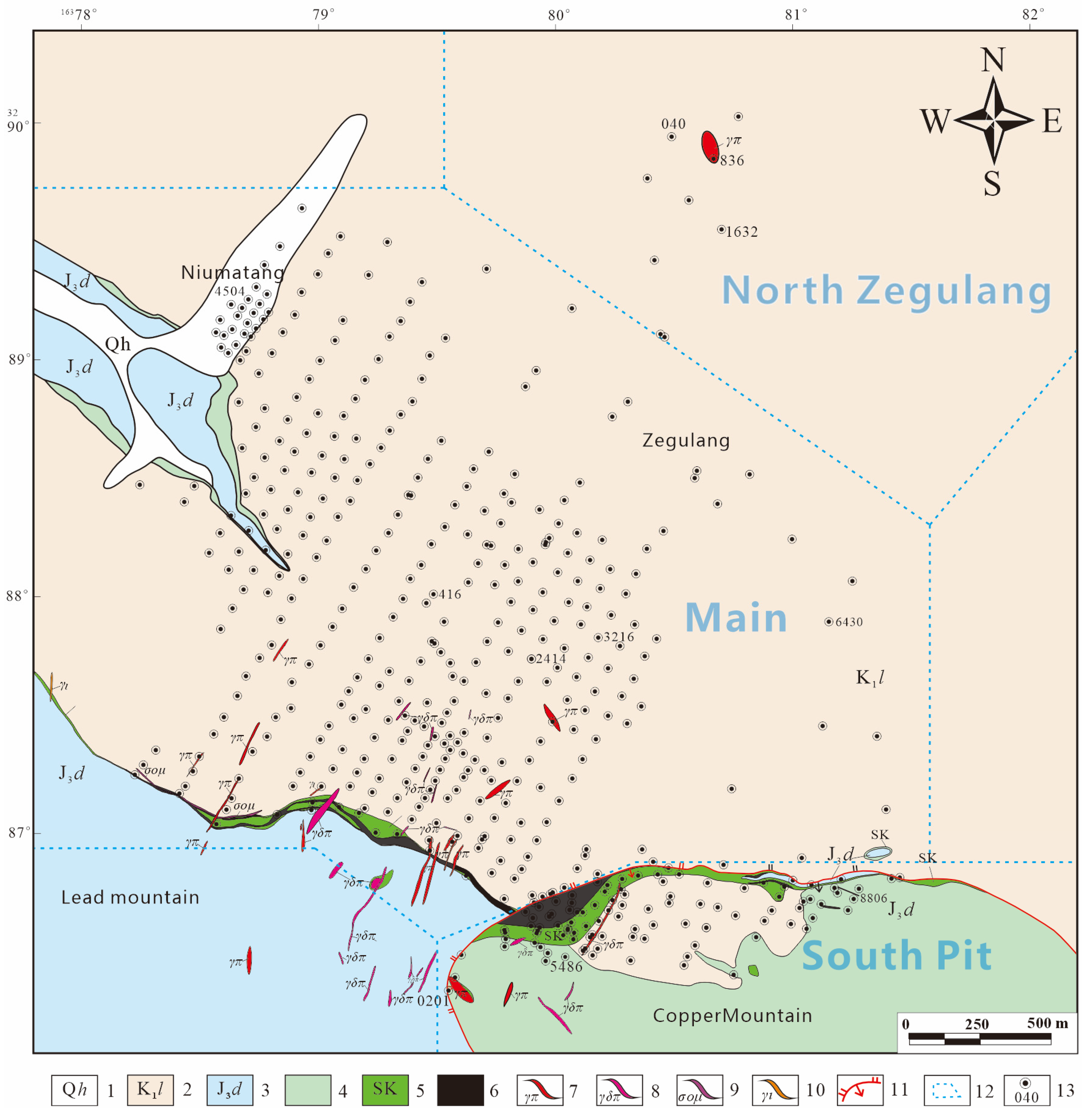
3. Deposit Geology

The Jiama mining area comprises three main ore blocks: the Main, South Pit, and North Zegulang Ore Blocks (Figure 2) [34,41]. The stratigraphy comprises Jurassic to Cretaceous marine sedimentary rocks deposited in a passive continental margin setting. The main units, from oldest to youngest, are the Upper Jurassic Duodigou Formation limestone and marble (J3d), the Lower Cretaceous Linbuzong Formation slate and sandy slate (K1l), and localized Quaternary deposits (Q) in valleys (Figure 2). Structurally, the deposit is controlled by the Jiama-Kajunguo thrust system and the Copper Mountain gliding nappe structures [42]. Magmatic rocks are rarely exposed at the surface; intermediate to acidic intrusions are predominantly concealed. These intrusions include quartz diorite porphyry, granodiorite porphyry, monzogranite porphyry, granite porphyry, and aplite dikes [40].
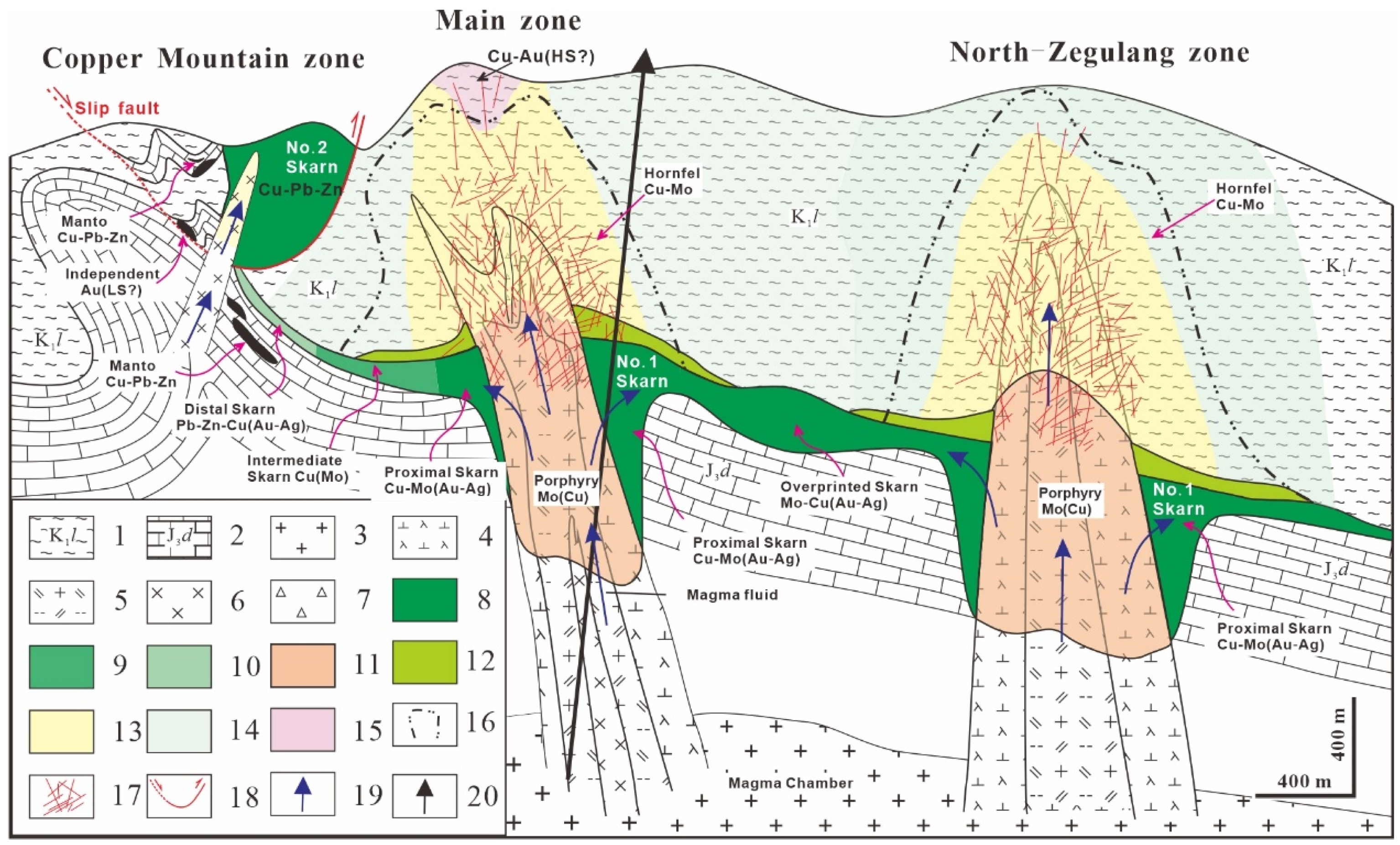
The Jiama mining area exhibits a typical composite mineralizing system characterized by multicenter mineralization (Figure 3). This system comprises five distinct orebody types: the copper-polymetallic Skarn Orebody, the copper-molybdenum Hornfels Orebody, the molybdenum-copper Porphyry Orebody, independent gold orebodies in peripheral structural alteration zones, and a Manto-type orebody hosted in marble within the Nankeng Ore Block [32,43]. The copper-polymetallic Skarn Orebody forms thick slabs within the Linbuzong Formation (sandy slate, hornfels) and the Duodigou Formation (limestone, marble), and at contacts between marble and porphyritic intrusions, displaying Cu, Mo, Pb, Zn, Au, and Ag mineralization. The copper-molybdenum Hornfels Orebody forms pipe-like masses within silicified hornfels enveloping the porphyries and is dominated by Cu and Mo mineralization. The molybdenum-copper Porphyry Orebody is hosted within the porphyritic intrusions, presenting as vein and disseminated types with primarily Mo and Cu mineralization. Independent gold orebodies occur as veins in peripheral or distal fracture zones, characterized by Au and Ag mineralization [30].
The mining area exhibits a zonal distribution of typical porphyry-style hydrothermal alteration, in addition to early-stage hornfelsization, marbleization, and skarn contact metasomatism. The main alteration types include potassic, phyllic, sericite-chlorite, and propylitic alterations, with localized argillic alteration and tourmalinization (Figure 4) [41,44].

4. Sampling and Analytical Methods

4.1. Sampling

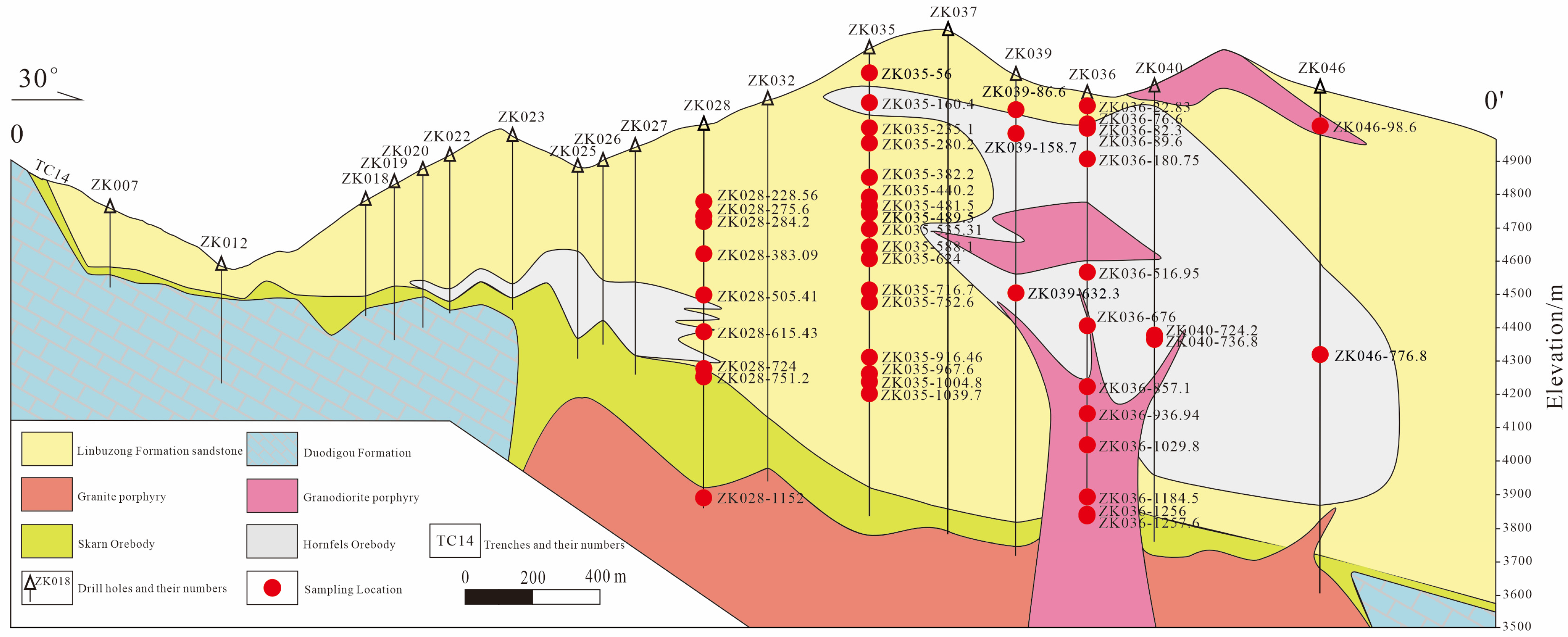
This study focuses on chlorite samples collected from six drill holes (ZK0028, ZK035, ZK036, ZK039, ZK040, and ZK046) along exploration line 0 in the North Zegulang Ore Block of the Jiama copper-polymetallic deposit. Representative samples were selected across vertical profiles from shallow to deep intervals, with precise sampling locations indicated in Figure 4.
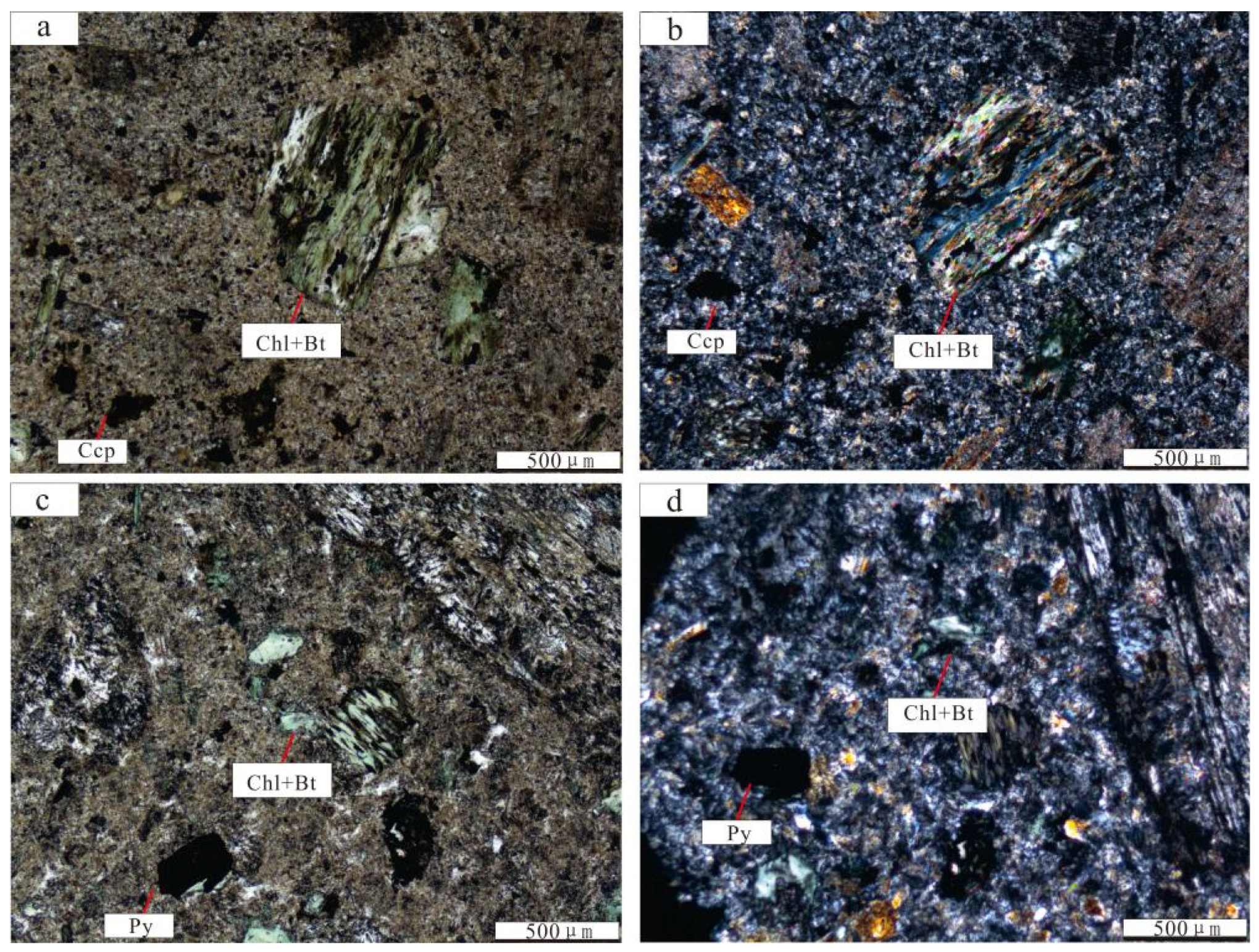
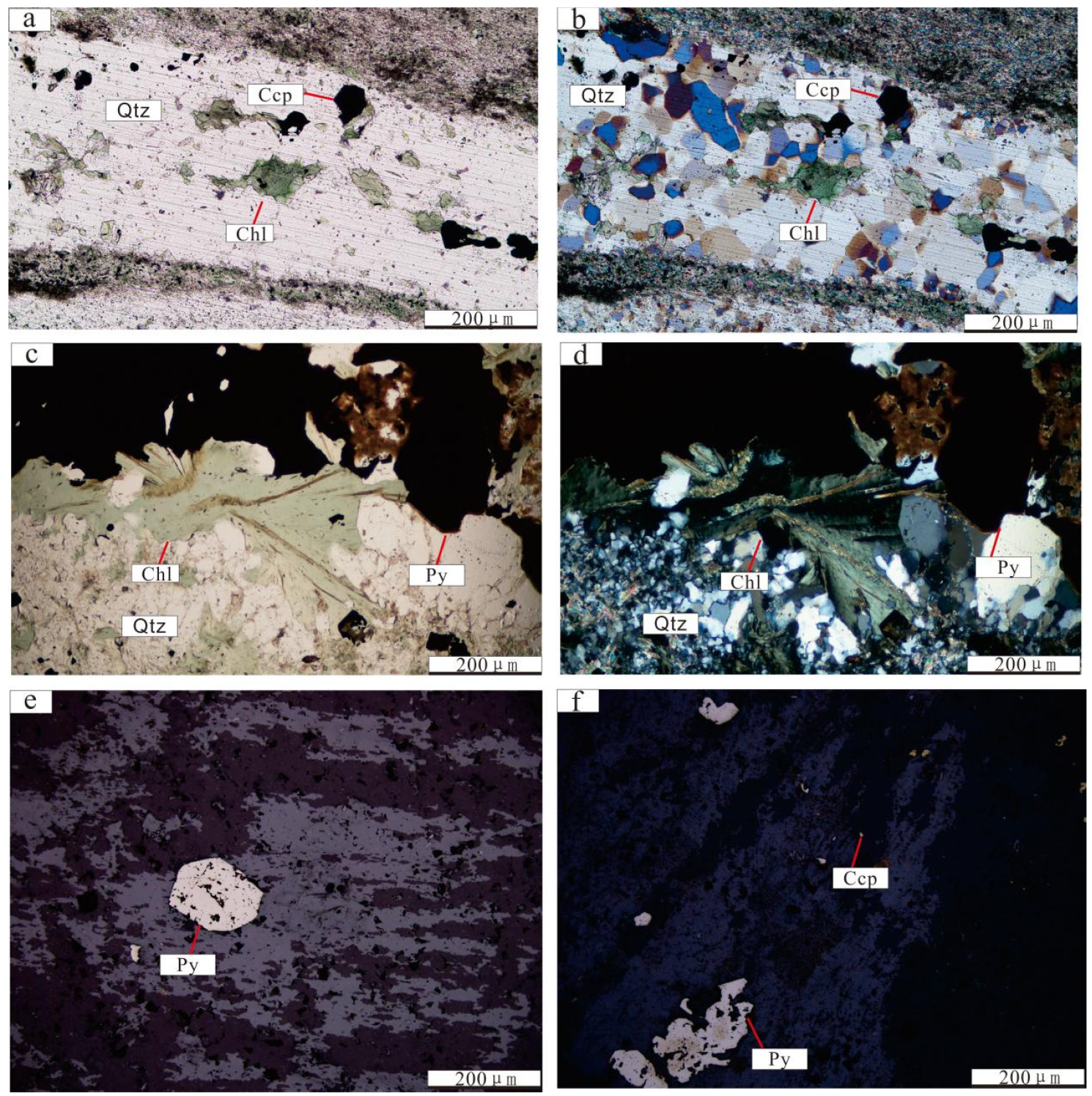
Two main genetic types of chlorite are identified in the North Zegulang Ore Block: retrograde and hydrothermal. Metasomatic chlorite occurs primarily in hornfels and porphyry, displaying disseminated, planar, and irregular textures. It is associated with a chlorite-biotite-magnetite assemblage. In hand specimens, it is dark green and commonly replaces biotite or amphibole, with minor coexistence of chalcopyrite and pyrite. Under the microscope, it forms anhedral, irregular, fan-shaped, or vermicular aggregates in green, grass-green, or dark green colors (Figure 5). In contrast, hydrothermal chlorite is mainly hosted in hornfels and spatially associated with quartz-sulfide veins and disseminations containing chalcopyrite and pyrite. Hand specimens are light green and show a strong correlation with mineralization. Microscopically, it exhibits bladed, spherulitic, and radial habits, appearing dark green or grayish-green with corresponding interference colors. Distinct anomalous indigo blue and purple interference colors are also observed (Figure 6). Based on their genesis, the chlorites are classified into two groups: Chl-1 (retrograde) and Chl-2 (hydrothermal).

4.2. Analytical Methods

Electron probe microanalysis (EPMA) of chlorite was conducted at the Key Laboratory of Metallogeny and Mineral Assessment, Ministry of Natural Resources; Institute of Mineral Resources, Chinese Academy of Geological Sciences. Analysis was performed using a JEOL JXA-8230 instrument operating at 15 kV and 10 nA, with a 5 μm spot size. Standards were calibrated against reference materials, with analytical accuracy for major elements better than 0.01%. Subsequently, selected chlorite samples underwent in situ trace element analysis at the Institute of Geochemistry, Chinese Academy of Sciences.
The analysis was performed in the State Key Laboratory of Ore Deposit Geochemistry at the same institute, employing laser ablation-inductively coupled plasma-mass spectrometry (LA-ICP-MS). The analysis employed a GeoLasPro laser ablation system coupled with an Agilent 7700x ICP-MS, using helium as the carrier gas. The laser spot diameter was 50 μm, with an energy density of 6.06 J/cm2 and a frequency of 6 Hz. Analyzed elements included MgO, Al2O3, SiO2, MnO, FeO, Li, B, Na, K, Ca, Ti, V, Cr, Co, Ni, Cu, Zn, As, Sr, Y, Zr, Ag, Sn, Sb, Ba, La, Ce, Pr, Nd, Sm, Eu, Gd, Tb, Dy, Ho, Er, Tm, Yb, Lu, Pb, Bi, Th and U. Data calibration utilized USGS reference materials (BIR-1G, BHVO-2G, BCR-2G) and NIST SRM 610 and 612. For quality control, fused glass standards (QCCGSG-1, CGSG-2) were analyzed as unknowns. Data processing was performed using ICPMSDataCal10.2 software.

5. Results

5.1. Major Elements

This study performed electron probe microanalysis (EPMA) on 138 chlorite grains from 39 samples, with results presented in Table S1. The structural formulas of chlorite were calculated on the basis of 28 oxygen atoms, and the Fe3+/Fe2+ ratio was determined using the charge-balance method of Zheng (1983) [45]. To ensure data quality, analyses yielding a total mass fraction of (Na2O + K2O + CaO) > 0.5% were identified as potentially contaminated and excluded from the dataset, following established criteria [46,47].
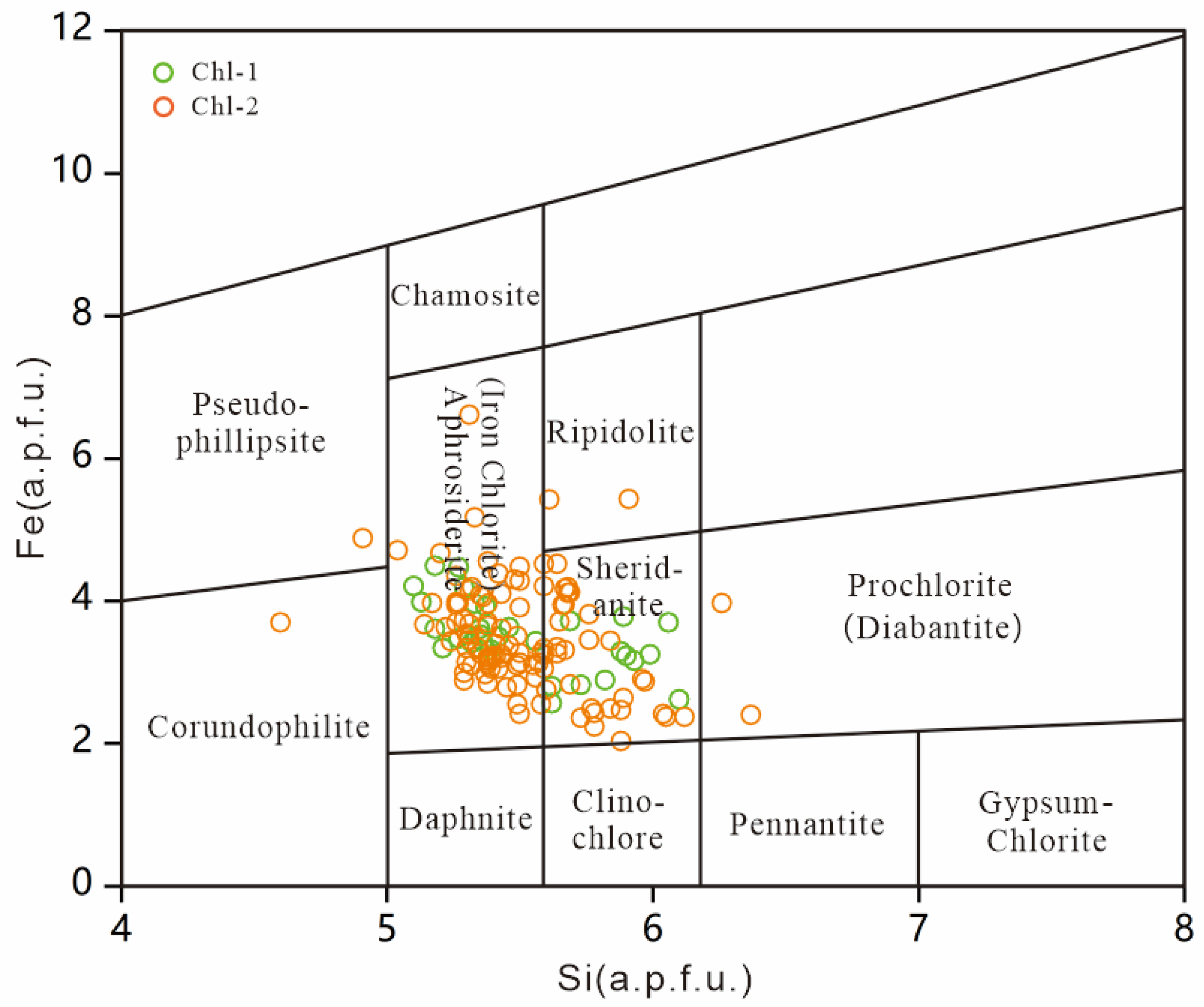
The EPMA results reveal that chlorite from the North Zegulang Ore Block exhibits the following major element concentration ranges: SiO2 (23.63–32.37 wt.%, avg. 27.40), Al2O3 (16.4–24.88 wt.%, avg. 21.95), FeO (11–35.57 wt.%, avg. 19.55), and MgO (4.83–23.83 wt.%, avg. 17.98). Several classification schemes have been proposed for chlorite [48,49]. Based on the widely adopted Fe-Si classification diagram [48], chlorite in the study area is predominantly classified as Aphrosiderite and Sheridanite (Figure 7), indicating an Fe-rich variety.

5.2. Trace Elements

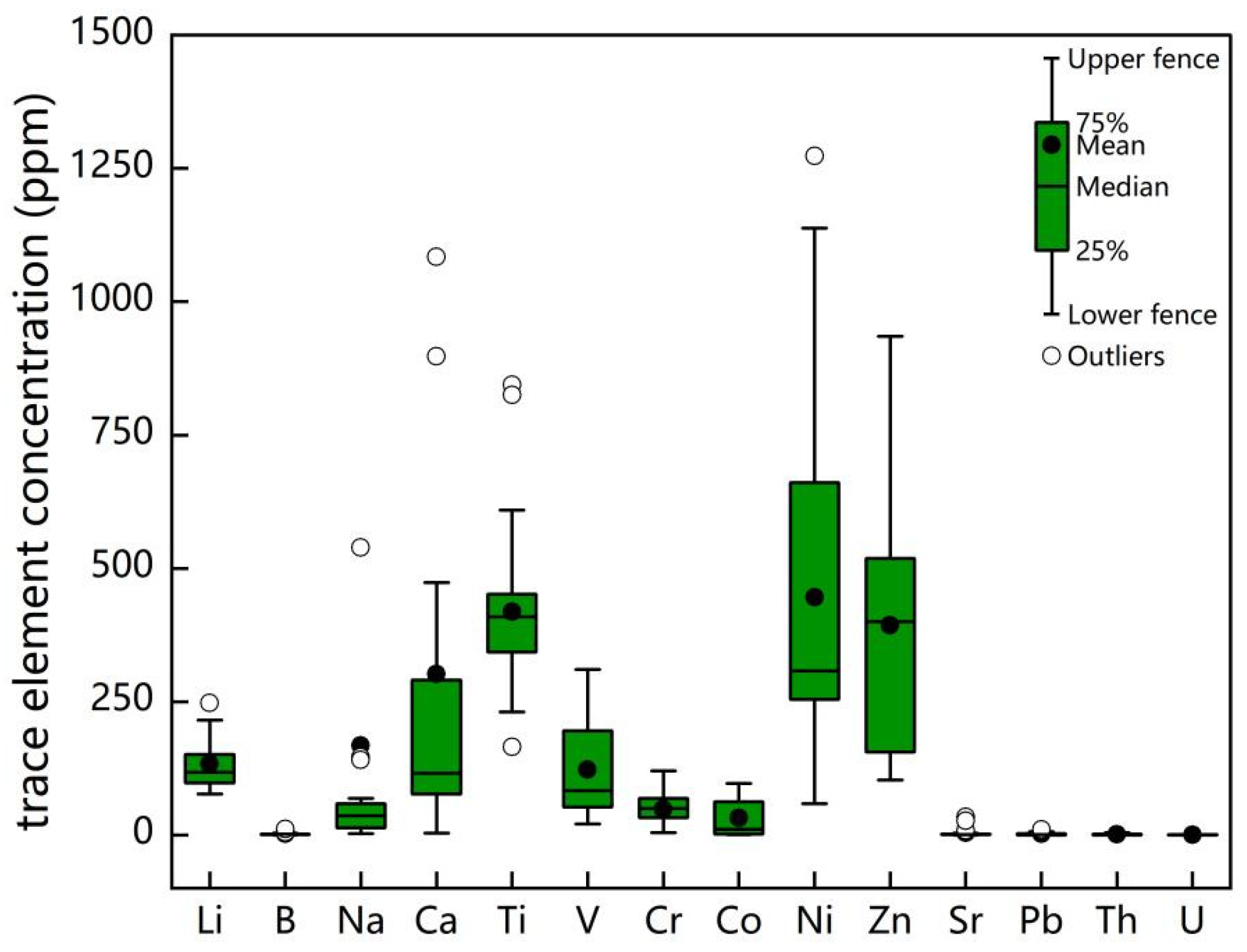
The trace element compositions of Chl-2 analyzed by LA-ICP-MS are presented in Table S2. The results show wide concentration ranges for several elements, including Ti (165.28–844.31 ppm, avg. 418.18), Sr (0.064–34.13 ppm, avg. 3.85), Pb (0.026–10.40 ppm, avg. 1.81), Th (0–4.27 ppm, avg. 1.10), U (0.001–0.515 ppm, avg. 0.182), and B (0.034–11.209 ppm, avg. 2.157). These elements were selected to characterize the trace element geochemistry of chlorite. Box plots (Figure 8) reveal that Ni has the highest concentrations (249.87–676.13 ppm). Besides Ni, the chlorite is characterized by relatively high concentrations of Zn, V, Cr, and Ti; lower concentrations of Sr, Pb, Th, U, and B; and moderately low concentrations of Co, Na, and Li.

6. Discussion

6.1. Substitution Mechanism of Elements in Chlorite

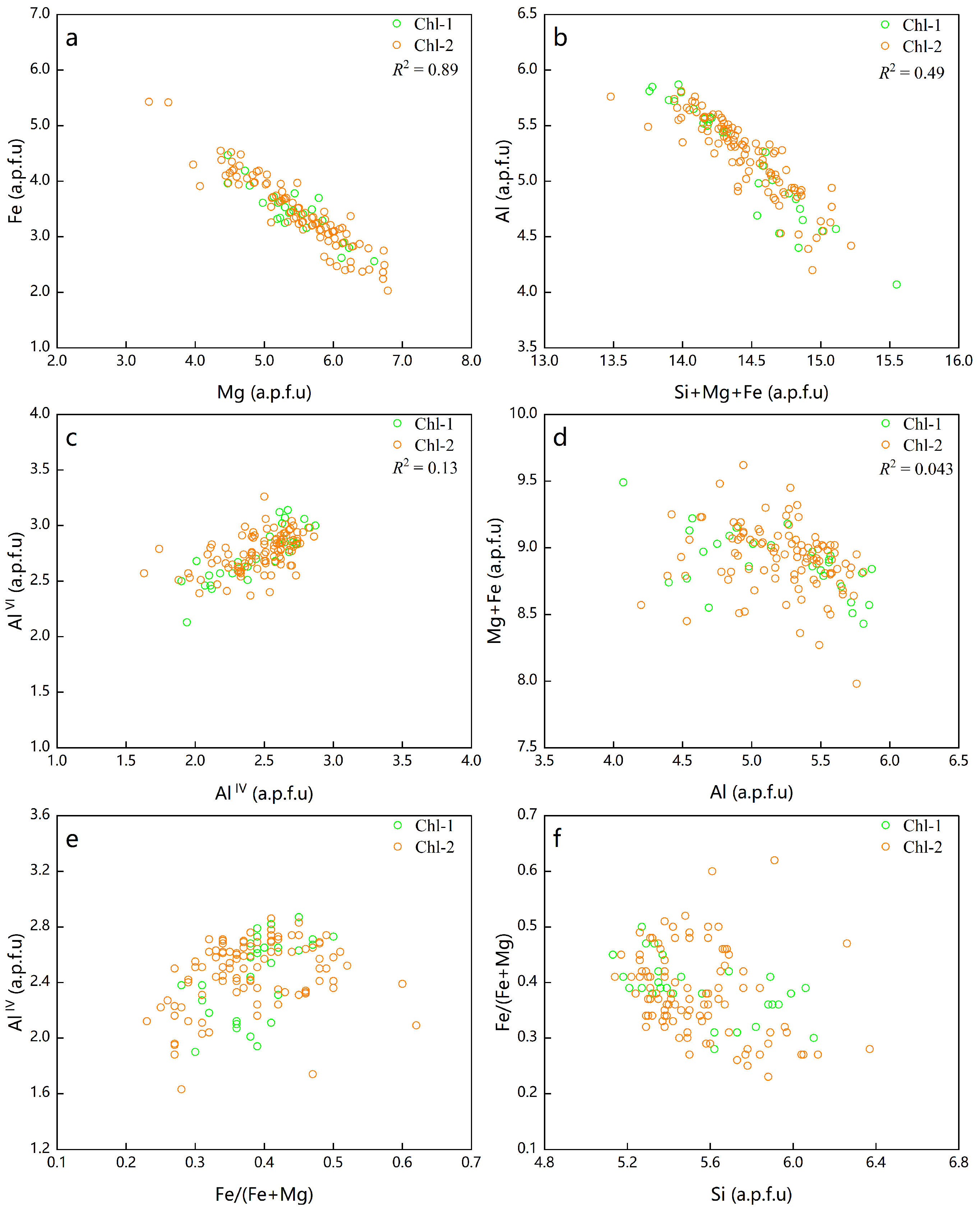
The composition of chlorite in magmatic-hydrothermal deposits is primarily controlled by the physicochemical conditions of the fluids [50]. Based on their genesis, chlorites in this study are classified into two types: retrograde chlorite (Chl-1) and hydrothermal chlorite (Chl-2). The elemental composition of retrograde chlorite is influenced by both the altering hydrothermal fluids and the original rock mineralogy, whereas hydrothermal chlorite composition is predominantly controlled by the altering fluids. The classification diagram (Figure 7) shows that the chlorites in the study area are primarily Fe-rich species, corrensite and pennantite, suggesting formation in a reducing environment [12]. Based on Figure 9e,f, the Fe/(Fe + Mg) ratio in chlorite shows a positive correlation with AlIV but a negative correlation with Si. This relationship indicates that an Fe-rich environment is associated with low silica activity, suggesting chlorite formation occurred in an Fe-rich, silica-poor system.
Due to their compositional complexity and susceptibility to external physicochemical conditions, chlorites often undergo various ionic substitutions. Four major cationic substitution mechanisms typically operate during chlorite formation [51,52]: (1) Fe-Mg substitution: a continuous (Fe2+)VI ↔ (Mg2+)VI exchange; (2) Tschermak substitution: AlIV + AlVI ↔ (Si4+)IV + (Mg2+, Fe2+)VI [11]; (3) Di-trioctahedral substitution: 3(Mg2+, Fe2+)VIVI + 2(Al3+, Fe3+)VI [6]; (4) Trivalent cation substitution: (Al3+)VI ↔ (Fe3+)VI and (Si4+)VI + (Al3+)VI + VI ↔ (Al3+)IV + 2(Fe3+)VI. Additionally, processes such as hydroxyl substitution and dehydrogenation may occur [50]. In the chlorite structure, the tetrahedral sites are occupied mainly by Si and Al, while the octahedral sites host Mg, Fe, and AlVI. Chlorites from the North Zegulang Ore Block show a strong negative linear correlation between Mg and Fe (R2 = 0.89; Figure 9a), indicating the Fe-Mg substitution is the dominant mechanism. Furthermore, a negative correlation exists between (Si + Fe + Mg) and Al (R2 = 0.49; Figure 9b), suggesting the presence of the Tschermak substitution. A positive correlation between AlIV and AlVI (R2 = 0.13; Figure 9c), with AlIV generally lower than AlVI, and negative correlations of Fe and Mg with Al (R2 = 0.043; Figure 9d), imply the di-trioctahedral substitution is also active.
In summary, substitutions in the octahedral sites of chlorites from the North Zegulang Ore Block of the Jiama deposit are dominated by Fe-Mg exchange, with limited substitution between Mg/Fe and AlVI. The primary substitution mechanism involves Fe2+-Mg2+ exchange, accompanied by the Tschermak and di-trioctahedral substitutions.

6.2. Formation Temperature and Oxygen Fugacity of Chlorite

Chlorite, forming under medium- to low-temperature conditions, exhibits a composition highly sensitive to its environment, which establishes it as a reliable geothermometer for reconstructing formation temperatures [10,47,53]. In this study, the chlorite basal spacing geothermometer [54,55] was applied. The calculation formula is as follows:
d001 (0.1 nm) = 14.339 − 0.1155 AlIV − 0.0201Fe2+
d001 (0.1 nm) = 14.339 − 0.001T (°C)
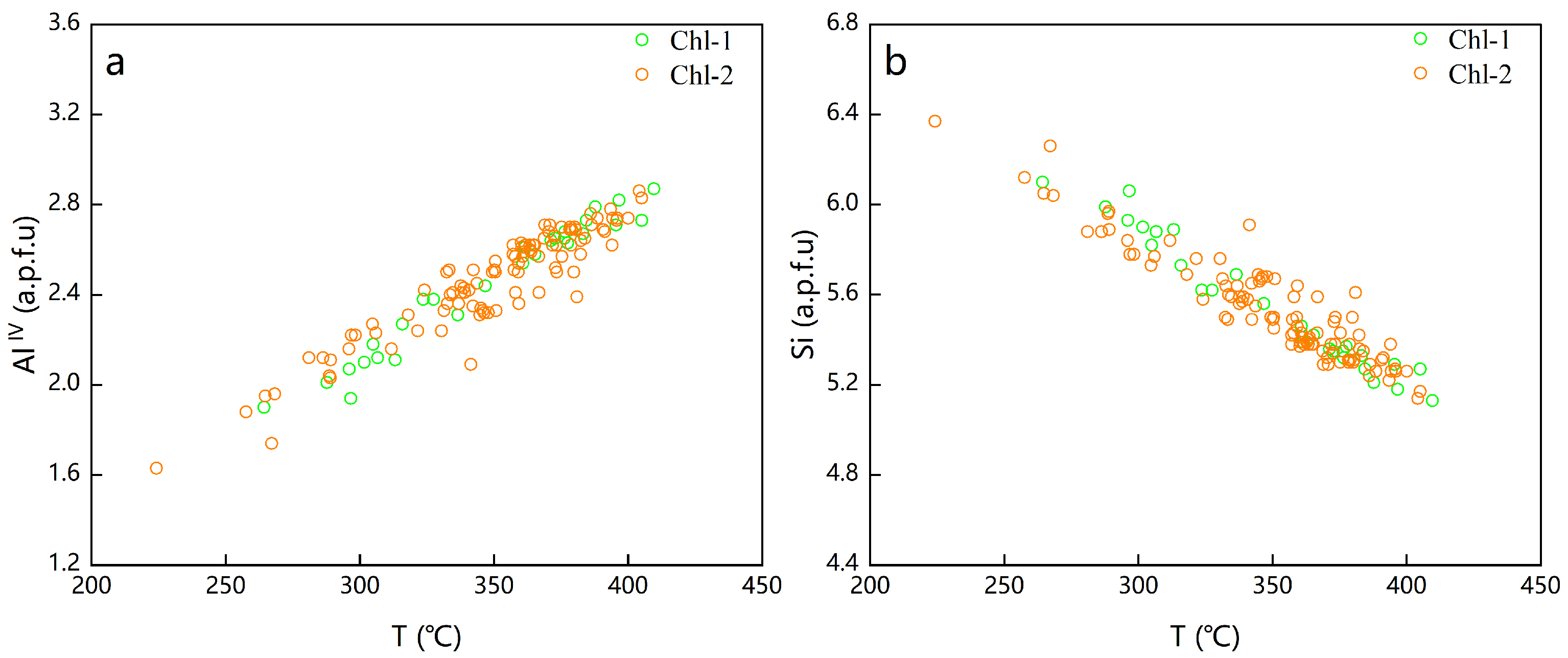
The two formulas above yield formation temperatures ranging from 220 to 400 °C (average 350 °C) (Table S3). This temperature range corresponds to a medium-temperature hydrothermal alteration environment, and its wide spread suggests multiple hydrothermal events in the mining area. Chl-1 yields temperatures of 260–400 °C (avg. 348 °C), while Chl-2 records a broader range of 220–400 °C (avg. 350 °C). Previous studies have reported positive correlations between temperature and AlIV content and negative correlations with octahedral vacancies and Si within the 100–350 °C interval [11,51]. In this study, formation temperature shows good linear correlations with both AlIV and Si (Figure 10), which is consistent with previous findings and supports the applicability of this geothermometer [56,57].
Fluid inclusion data from the Jiama deposit indicate copper mineralization occurred at 235–451 °C [58]. The chlorite temperatures obtained here, particularly the concentrated peak between 280 °C and 420 °C (Table S3), align well with this copper precipitation range. This agreement suggests that most chlorite formed during the main mineralization stage, with a minor portion forming post-mineralization, which is consistent with its modes of occurrence: within hornfels and porphyry, and closely associated with chalcopyrite and pyrite in hornfels. As the ore-forming fluids evolved from acidic to neutral or weakly alkaline and cooled through water-rock interaction, physicochemical changes likely triggered simultaneous chlorite formation and metal sulfide precipitation [13]. Therefore, chlorite development is closely linked to hydrothermal mineralization and may serve as an indicator of ore fluid precipitation, offering potential exploration significance.
Walshe (1986), Bryndzia (1987), Scott (1987) established methods to estimate oxygen fugacity, sulfur fugacity, temperature, and pressure from chlorite composition [59,60]. These approaches were later successfully applied by Xiao et al. (1993) and Zheng et al. (1997) to determine the oxygen and sulfur fugacity of chlorite in gold deposits, yielding reliable results [61,62]. In this study, Walshe’s oxygen fugacity calculation method was adopted, yielding log fO2 values ranging from −42 to −20 (avg. −31) for chlorites from the North Zegulang Ore Block (Table S3), indicating a low-oxygen-fugacity environment. Specifically, Chl-1 yields log fO2 values of −38 to −26 (avg. −31), while Chl-2 shows a broader range from −42 to −20 (avg. −31). The wider variations in both temperature and oxygen fugacity recorded by Chl-2 may be attributed to the open and dynamic nature of the hydrothermal system, which facilitated the mixing of fluids from different sources and with varying properties. In contrast, the retrograde system likely represents a relatively closed and stable local reaction, resulting in the narrower ranges preserved in Chl-1.

6.3. Coupling of Temperature with Mineralization: Implications for Fluid Evolution

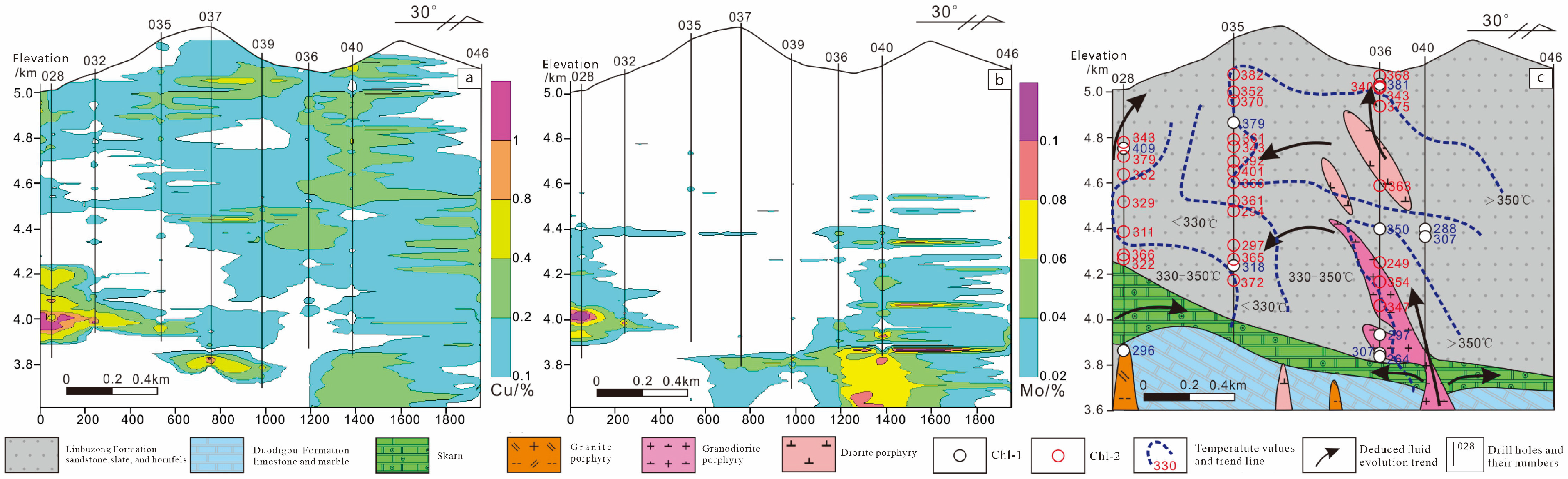
In porphyry mineralization systems, fluid temperature and oxygen fugacity are critical factors controlling metal precipitation [63]. This study projects the average temperature of chlorite samples onto a cross-section, integrating geological data with Cu and Mo grade intensities (Figure 11) to investigate the coupling between chlorite temperature and mineralization in the North Zegulang Ore Block. As shown in Figure 11c, crystallization temperatures decrease gradually outward from the deeply emplaced granodiorite porphyry (330–350 °C) to below 330 °C, with a corresponding weakening of Cu-Mo mineralization, identifying the intrusion as the mineralization center. A notable temperature anomaly (>350 °C) around the middle of drill hole ZK036 and its vicinity is attributed to post-mineralization emplacement of diorite porphyry. A slight temperature increase in the shallow part of ZK028 is likely influenced by shallow intrusions from the Main Ore Block.
Based on the basic geological information, mineralization intensity, and fluid temperatures estimated from chlorite geochemistry along section line 0, it is clearly revealed that Cu and Mo mineralization in the North Zegulang Ore Block shows a close genetic relationship with the emplacement of granodiorite porphyry. Metal precipitation predominantly occurred at temperatures between 330 °C and 380 °C (Figure 11). This mineralization was subsequently overprinted by magmatic intrusions and ore-forming fluids from the Main Ore Block, leading to the development of thick, high-grade Cu-Mo skarn mineralization between the two domains. Subsequent to metal precipitation, the emplacement of diorite porphyry partially overprinted the chlorite alteration, thereby affecting the temperature signatures reconstructed from its composition.

6.4. Chlorite Trace Elements as Vectors to Mineralization

Numerous studies have demonstrated that trace elements in chlorite can serve as effective vectors in subduction-related porphyry deposits [64,65,66]. Analysis of chlorite for elements including K, Li, Mg, Ca, Sr, Ba, Ti, V, Mn, Co, Ni, Zn, and Pb [14] shows that Ti, V, and Mg decrease exponentially with distance from the deposit center, whereas other elements increase. Ratios including Ti/Pb, Mg/Sr, Ni/V, and Ti/Sr also vary systematically, decreasing away from the mineralization center. Although the correlations of Zn, Mn, Sc, Sr, and Li with temperature vary among deposits, studies confirm that Ti and V contents decrease with distance from the hydrothermal center [17,67].
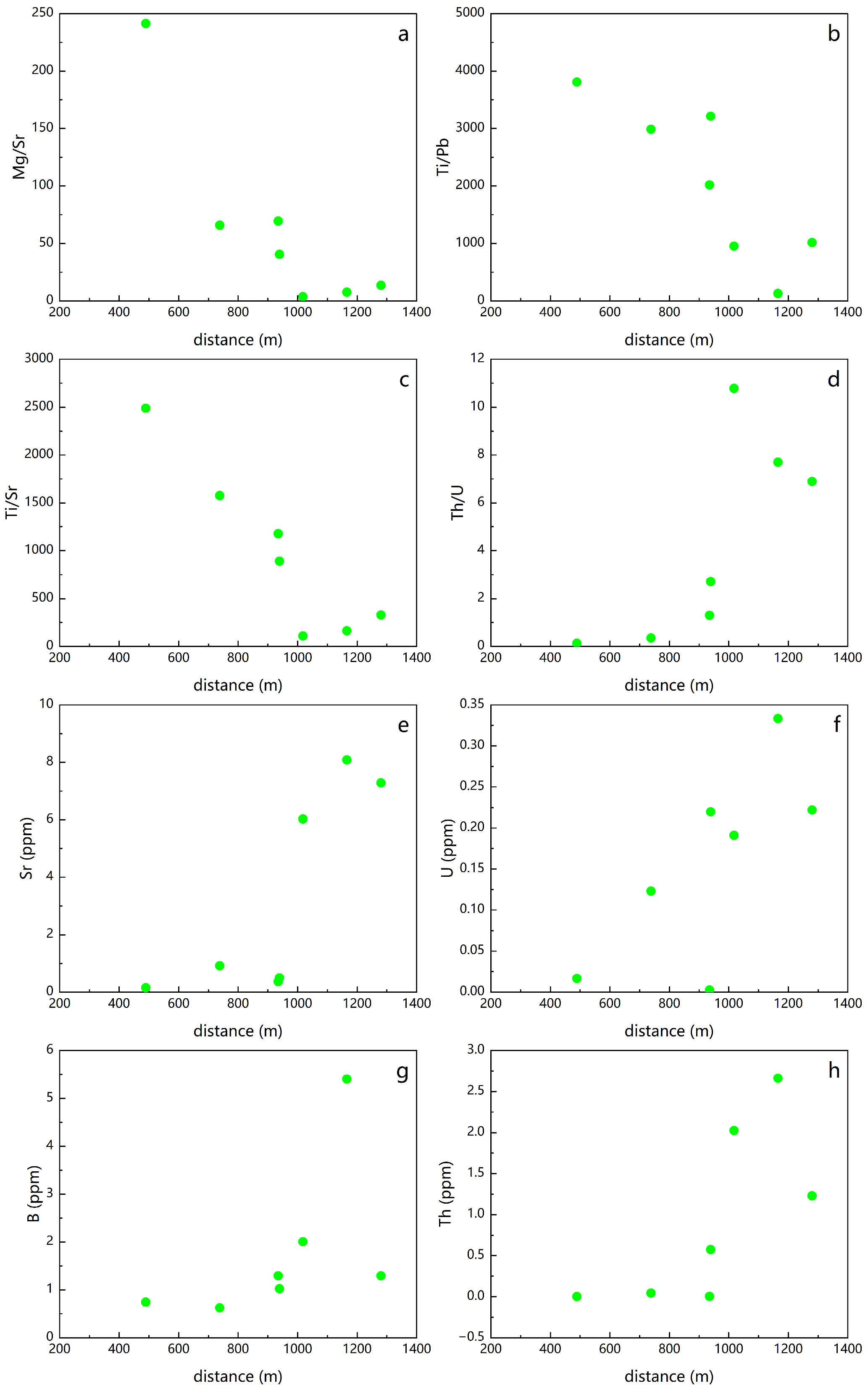
In this study, trace elements and their ratios in chlorite from the North Zegulang Ore Block of the Jiama deposit were analyzed. The results indicate that with increasing distance, the Mg/Sr, Ti/Sr, and Ti/Pb ratios systematically decrease, whereas the Th/U ratio increases (Figure 12a,b). Similarly, Sr, U, B, and Th contents generally increase with distance (Figure 12e–h). These patterns confirm that chlorite is an effective exploration tool for collisional-type porphyry systems.
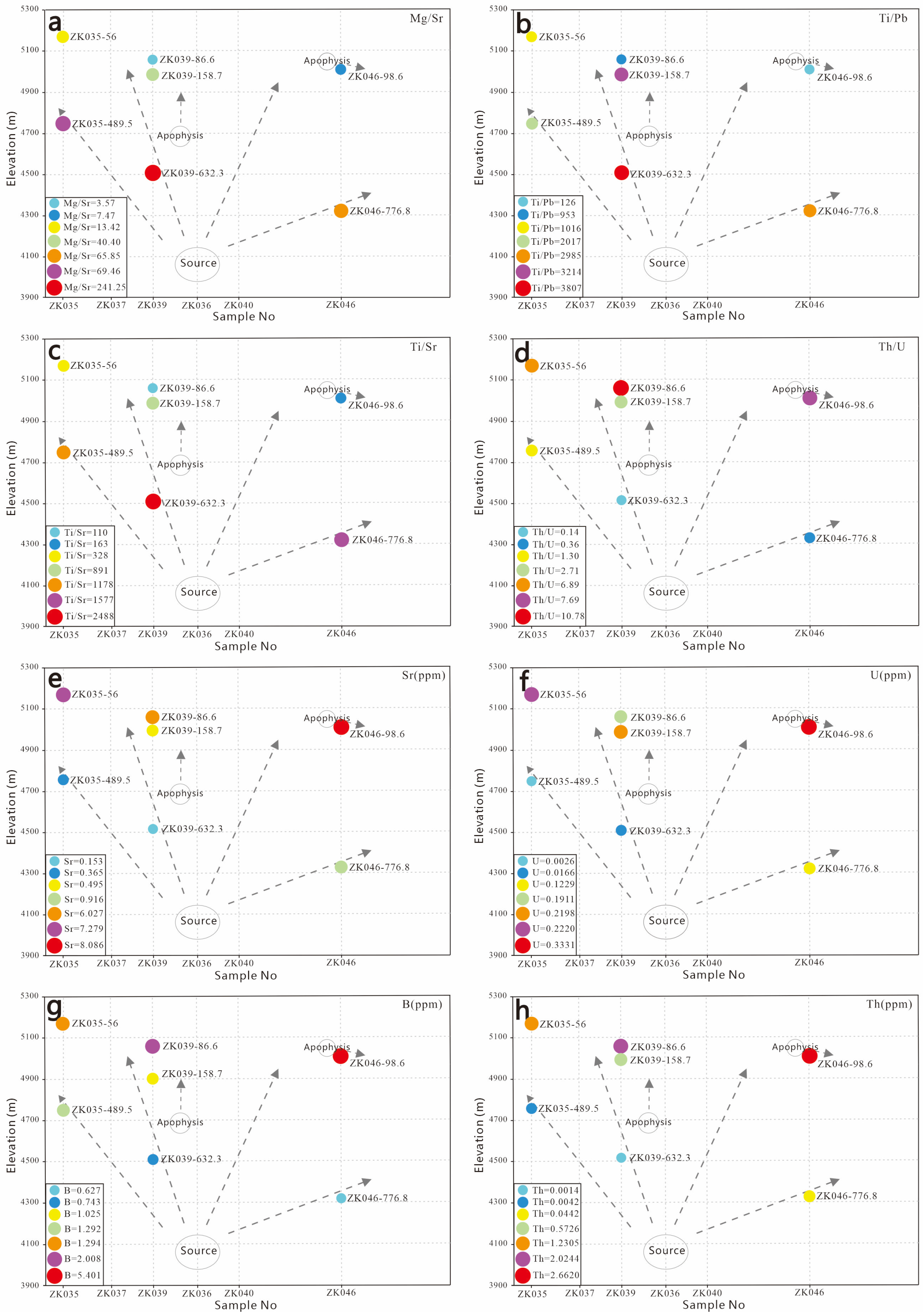
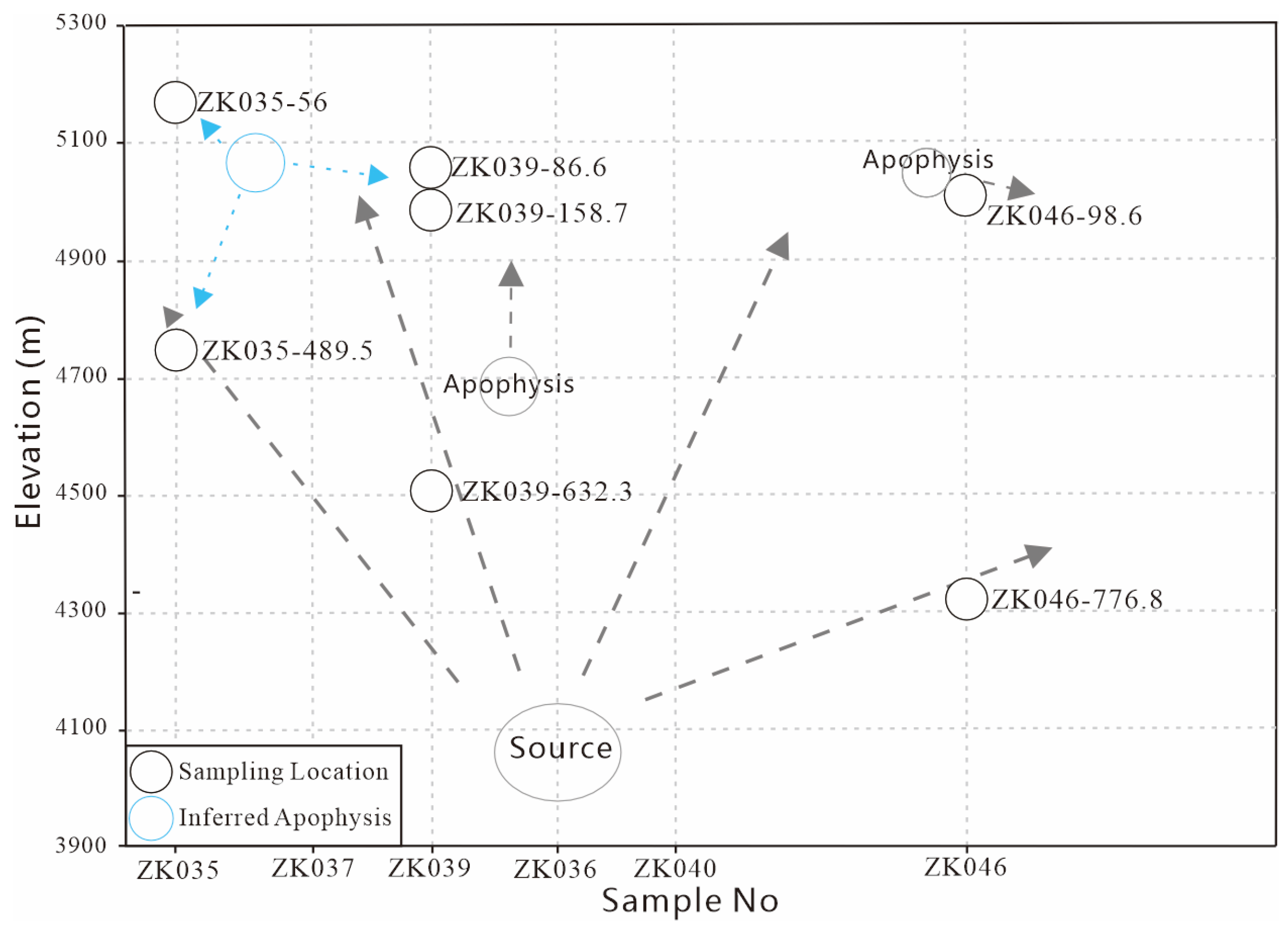
The vertical distribution of chlorite trace elements over a 1400 m interval is shown in Figure 13. The Mg/Sr, Ti/Sr, and Ti/Pb ratios are enriched toward the mineralization center, whereas the Th/U ratio, along with Sr, U, B, and Th contents, decreases. Although local variations occur due to minor apophyses (Figure 13) or shallow intrusions from the Main Ore Block (Figure 12), the overall trends remain clear. Additionally, elemental anomalies at sampling points 035–489.5, 039–158.7, and 035–36 (the numbers indicate the depth below surface in meters) in Figure 12e–h suggest the presence of an unidentified minor apophysis between these points (Figure 14).
Wilkinson et al. (2015) proposed using chlorite trace elements to estimate the location of mineralization centers in porphyry deposits and developed a corresponding formula [14]. Cooke et al. (2020) successfully applied this formula in a blind test at the Resolution porphyry Cu-Mo deposit [68]. The distance between a chlorite sample and the mineralized center is calculated as:
x = l n ( R / a ) b
where x is the distance in meters, R is the element ratio, and a and b are exponential fit parameters (from [14]).
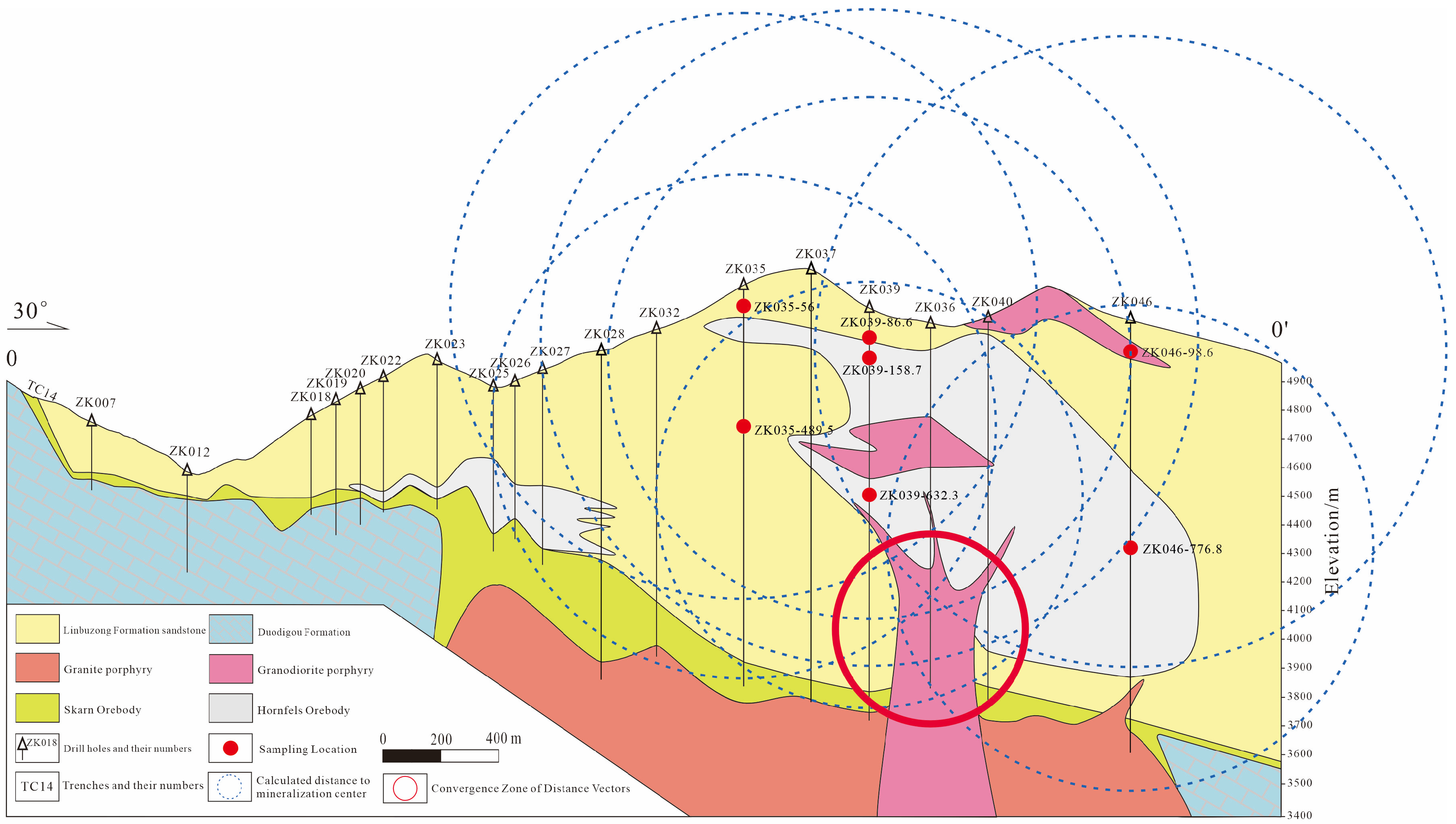
The systematic variation of element concentrations with proximity to the mineralization center in the North Zegulang Ore Block, as documented above, provides the basis for this calculation. To validate its applicability to collisional-type porphyry deposits, we applied the formula to samples along Exploration Line 0. For this study, R represents the Ti/Sr ratio, with a = 3 × 10⁶ and b = −0.0088. The calculated distances are plotted for verification (Figure 15). Figure 15 shows that the calculated center coincides with the known, drilled mineralization center, demonstrating the formula’s applicability to collisional-type porphyry deposits such as Jiama. This confirms chlorite as an effective exploration tool for collisional-type porphyry systems.

7. Conclusions

(1) Based on genetic type, chlorites from the North Zegulang Ore Block are classified into two categories: retrograde chlorite (Chl-1), which occurs mainly in hornfels and porphyry and displays a weak correlation with mineralization; and hydrothermal chlorite (Chl-2), which is predominantly hosted in hornfels and exhibits a strong genetic link to mineralization. Both types are Fe-rich varieties, with Fe2+-Mg3+ substitution as the dominant mechanism, accompanied by Tschermak and di-trioctahedral substitutions.
(2) Chl-1 formed at temperatures of 260–400 °C with log fO2 values of −38 to −26. Chl-2 exhibits a wider formation temperature range of 220–400 °C and log fO2 values of −42 to −20, indicating a medium-temperature, low-oxygen-fugacity environment. Chlorite-associated Cu-Mo mineralization primarily occurred under medium-temperature (330–380 °C) and low log fO2 (−38 to −28) conditions.
(3) Outward from the granodiorite porphyry, fluid temperature gradually decreases, accompanied by a systematic decrease in Cu and Mo grades. This trend confirms the granodiorite porphyry as the mineralization center of the North Zegulang Ore Block. With increasing distance from the mineralization center, the Mg/Sr, Ti/Sr, and Ti/Pb ratios in chlorite progressively decrease, whereas the contents of Sr, Th, U, and B increase. These systematic variations demonstrate that chlorite serves as an effective exploration tool in collisional-type porphyry systems.

Supplementary Materials

The following supporting information can be downloaded at: https://www.mdpi.com/article/10.3390/min16050508/s1, Table S1: Results of calculation of chemical composition of chlorite by electron probe (%); Table S2: Results of the in-situ micro-area chemical composition analysis of chlorite (ppm); Table S3: Calculation results of chlorite temperature and oxygen fugacity.

Author Contributions

Conceptualization, J.Z. and J.T.; Methodology, J.Z. and J.T.; Writing—review and editing, J.Z. and P.T.; Resources, B.W.; Investigation, B.W., J.Q. and Z.W.; Supervision, P.T. and B.L.; Data curation, Y.L. and M.W.; Writing—original draft preparation, Y.L. and M.W.; Visualization, J.Q. and Z.W.; Software, S.X. and Y.X.; Validation, S.X. and Y.X. All authors have read and agreed to the published version of the manuscript.

Funding

This work was supported by Deep Earth Probe and Mineral Resources Exploration—National Science and Technology Major Project (2025ZD1008807, 2025ZD1008805), National Natural Science Foundation of China (42572090, 42272093, 42230813), the Tibet Autonomous Region Science and Technology Program Project (XZ202401YD0006), the New Round of Strategic Action for Mineral Exploration Breakthrough Science and Technology Support Project (ZKKJ202429), China Geological Survey Basic Scientific Research Project (JKYDM2025211), Natural Science Foundation of Xizang (XZ202501ZR0041) and China Geological Survey Projects (DD20230054).

Data Availability Statement

The original contributions presented in this study are included in the Supplementary Materials. Further inquiries can be directed to the corresponding authors.

Acknowledgments

The authors would like to thank two anonymous reviewers and editors for their constructive comments and input.

Conflicts of Interest

The authors declare no conflict of interest.

References

  1. Zane, A.; Weiss, Z. A procedure for classifying rock-forming chlorites based on microprobe data. Rend. Lincei. 1998, 9, 51–56. [Google Scholar] [CrossRef]
  2. Li, C.; Shen, P.; Zhao, Y.; Li, P.; Zhang, L.; Pan, H. Mineral chemistry of chlorite in different geologic environments and its implications for porphyry Cu ± Au ± Mo deposits. Ore Geol. Rev. 2022, 149, 105112. [Google Scholar] [CrossRef]
  3. Basori, M.B.I.; Zaw, K.; McNeill, A.; Large, R.R. A mineralogical and geochemical application for determining hydrothermal alteration zones associated with volcanic-hosted massive sulphide deposits at Tasik Chini area, Peninsular Malaysia. Appl. Geochem. 2022, 145, 105404. [Google Scholar] [CrossRef]
  4. Feng, Y.; Chu, G.; Xiao, B.; Li, R.; Deng, C.; Li, G.; Shi, H. Chlorite mineralogy, geochemistry and exploration implications: A case study of the Xiaokelehe porphyry Cu-Mo deposit in NE China. Ore Geol. Rev. 2022, 140, 104568. [Google Scholar] [CrossRef]
  5. Zeng, S.M.; Zhang, Y.; Han, R.S.; Liu, F.; Wang, M.Z.; Wu, Z.Z.; Tian, Y.T. Characteristics and geological significance of chlorite in Wengkongba copper polymetallic deposit, southwestern Yunnan. Miner. Depos. 2023, 42, 828–844. [Google Scholar]
  6. Inoue, A.; Meunier, A.; Patrier-Mas, P.; Rigault, C.; Beaufort, D.; Vieillard, P. Application of chemical geothermometry to low-temperature trioctahedral chlorites. Clays Clay Miner. 2009, 57, 371–382. [Google Scholar] [CrossRef]
  7. Bourdelle, F.; Parra, T.; Chopin, C.; Beyssac, O. A new chlorite geothermometer for diagenetic to low-grade metamorphic conditions. Contrib. Mineral. Petrol. 2013, 165, 723–735. [Google Scholar] [CrossRef]
  8. Sun, C.; Yang, X.; Du, G.; Aziz, J.H.A. Genesis of the Selinsing gold deposit, Peninsular Malaysia: Constraints from mineralogy, geochemistry and in situ sulfur isotope compositions of sulfides. Ore Geol. Rev. 2019, 113, 103111. [Google Scholar] [CrossRef]
  9. Raza, M.Q.; Absar, N.; Pandalai, H.S.; Patel, S.C. Chlorite thermometry and fluid inclusion studies on vein-type Tintini copper deposit, Eastern Dharwar Craton, India: Ore genetic implications. Ore Geol. Rev. 2021, 131, 104058. [Google Scholar] [CrossRef]
  10. Kranidiotis, P.; MacLean, W.H. Systematics of chlorite alteration at the Phelps Dodge massive sulfide deposit, Matagami, Quebec. Econ. Geol. 1987, 82, 1898–1911. [Google Scholar] [CrossRef]
  11. Cathelineau, M. Cation site occupancy in chlorites and illites as a function of temperature. Clay Miner. 1988, 23, 471–485. [Google Scholar] [CrossRef]
  12. Inoue, A. Formation of clay minerals in hydrothermal environments. In Origin and Mineralogy of Clays: Clays and the Environment; Velde, B., Ed.; Springer: Berlin/Heidelberg, Germany, 1995; pp. 268–329. [Google Scholar]
  13. Liang, W.J.; Du, Z.Z.; Zhen, S.J.; Zhang, Z.H.; Li, Y.S.; Zhen, S.M. Characteristics of chlorite and its metallogenic significance in the Baiyinchang deposit, Gansu Province. Acta Mineral. Sin. 2013, 33, 464–465. [Google Scholar]
  14. Wilkinson, J.J.; Chang, Z.S.; David, R.C.; Michael, J.B.; Clara, C.W.; Shaun, I.; Chen, H.Y.; Bruce, G. The chlorite proximitor: A new tool for detecting porphyry ore deposits. J. Geochem. Explor. 2015, 152, 10–26. [Google Scholar] [CrossRef]
  15. Lu, J.; Fang, W.X.; Wang, T.R.; Sun, Z.J.; Guo, Y.Q.; Song, L.H. Mineralogy and geochemistry of biotite and chlorite in subvolcanic complex rock from Yinmin iron-copper mining area in Yunnan Province, China and their mineralization. Acta Mineral. Sin. 2017, 37, 576–587. [Google Scholar]
  16. Zhao, Y.D.; Wu, J.Q.; Ling, H.F.; Wang, H.Z. Mineral chemistry of biotite and chlorite in western part of Fucheng granite, southern Jiangxi Province: Implications for uranium mineralization. Miner. Depos. 2016, 35, 153–168. [Google Scholar]
  17. Xiao, B.; Chen, H.; Hollings, P.; Wang, Y.; Yang, J.; Wang, F. Element transport and enrichment during propylitic alteration in Paleozoic porphyry Cu mineralization systems: Insights from chlorite chemistry. Ore Geol. Rev. 2018, 102, 437–448. [Google Scholar] [CrossRef]
  18. Wu, D.; Pan, J.; Xia, F.; Huang, G.; Lai, J. The mineral chemistry of chlorites and its relationship with uranium mineralization from Huangsha uranium mining area in the Middle Nanling Range, SE China. Minerals 2019, 9, 199. [Google Scholar] [CrossRef]
  19. Zhang, S.; Xiao, B.; Long, X.; Chu, G.; Cheng, J.; Zhang, Y.; Tian, J.; Xu, G. Chlorite as an exploration indicator for concealed skarn mineralization: Perspective from the Tonglushan Cu–Au–Fe skarn deposit, Eastern China. Ore Geol. Rev. 2020, 126, 103778. [Google Scholar] [CrossRef]
  20. Cooke, D.R.; Baker, M.; Hollings, P.; Sweet, G.; Chang, Z.; Danyushevsky, L.; Gilbert, S.; Zhou, T.; White, N.C.; Gemmell, J.B.; et al. New advances in detecting the distal geochemical footprints of porphyry systems—Epidote mineral chemistry as a tool for vectoring and fertility assessments. Econ. Geol. Spec. Publ. 2014, 18, 127–152. [Google Scholar]
  21. John, D.A.; Taylor, R.D.; Verplanck, P.L.; Hitzman, M.W. By-products of porphyry copper and molybdenum deposits. In Rare Earth and Critical Elements in Ore Deposits; Verplanck, P.L., Hitzman, M.W., Eds.; Society of Economic Geologists: Littleton, CO, USA, 2016; Volume 18, pp. 137–164. [Google Scholar]
  22. Sillitoe, R.H. Porphyry copper systems. Econ. Geol. 2010, 105, 3–41. [Google Scholar] [CrossRef]
  23. Tang, J.X.; Dorji; Liu, H.F.; Lang, X.H.; Zhang, J.S.; Zheng, W.B.; Ying, L.J. Minerogenetic series of ore deposits in the east part of the Gangdise metallogenic belt. Acta Geosci. Sin. 2012, 33, 393–410. [Google Scholar]
  24. Qin, Z.P. Genetic Model of the Jiama Copper-Polymetallic Ore Deposits, Tibet. Master’s Thesis, Chengdu University of Technology, Chengdu, China, 2013. [Google Scholar]
  25. Wang, M.D.; Tang, J.X.; Lin, B.; Tang, P.; Tang, X.Q.; Sun, M.; Li, F.Q.; Qi, J.; Fu, Y.H.; Zhang, Z.K.; et al. Mineral zoning and geological significance of skarns in the Jiama 3000 m scientific deep borehole, Tibet. Acta Geol. Sin. 2023, 97, 1956–1971. [Google Scholar]
  26. Guo, D.D. Geochemical Characteristics of Chlorite from the Jiama Deposit, Tibet, and Their Geological Significance. Ph.D. Thesis, Xizang University, Lhasa, China, 2025. [Google Scholar]
  27. Xiong, Y.; Tang, J.X.; Tang, P.; Li, F.Q.; Wang, M.D.; Qi, J.; Wang, Z.C.; Xu, S.H.; Fu, Y.H.; Wang, W.; et al. LA-ICP-MS trace element geochemistry and sulfur isotopic compositions of sphalerite from Jiama deposit: Implications for its genesis and mineralization processes. Ore Geol. Rev. 2025, 186, 106856. [Google Scholar] [CrossRef]
  28. Zhang, Z.B.; Tang, J.X.; Tang, P.; Chen, G.L.; Zhang, Z.K.; Gao, X.; Yang, Y. The origin of the mafic microgranular enclaves from Jiama porphyry Cu polymetallic deposit, Tibet: Implications for magma mixing/mingling and mineralization. Acta Petrol. Sin. 2019, 35, 934–952. [Google Scholar]
  29. Li, Y.S.; Lü, Z.C.; Yan, G.S.; Zhen, S.M.; Du, Z.Z. Isotopic characteristics of S, Pb, H and O of Jiama copper-polymetallic ore deposit, Tibet and their significance. Earth Sci. Front. 2012, 19, 72–81. [Google Scholar]
  30. Zheng, W.B. The Study on Metallogenic Model and Prospecting Pattern for Jiama Polymetallic Copper Deposit, Tibet. Ph.D. Thesis, Chengdu University of Technology, Chengdu, China, 2012. [Google Scholar]
  31. Zou, B.; Lin, B.; Zheng, W.B.; Song, Y.; Tang, P.; Zhang, Z.B.; Gao, X. The characteristics of alteration and mineralization and geochronology of ore-bearing porphyry in south pit of Jiama copper-polymetallic deposit, Tibet. Acta Petrol. Sin. 2019, 35, 953–967. [Google Scholar]
  32. Lin, B.; Tang, J.X.; Tang, P.; Zheng, W.B.; Hall, G.; Chen, G.L.; Zhang, Z.K. A multi-center and composite mineralization model for porphyry metallogenic system: A case study of the Jiama superlarge deposit in Tibet. Miner. Depos. 2019, 38, 1204–1222. [Google Scholar]
  33. Qi, J.; Tang, J.X.; Lin, B.; Tang, P.; Chen, G.L.; Zhang, Z.K.; Zhang, Z.B.; Li, Y.X.; Wu, C.N.; Sun, M.; et al. Zircon U-Pb age and geochemistry of the granite porphyry in northern Zegulang of Jiama deposit, Tibet. Acta Geol. Sin. 2021, 95, 822–836. [Google Scholar]
  34. Tang, P.; Tang, J.X.; Lin, B.; Fang, X.; Sun, M.; Li, F.Q.; Qi, J.; Cui, H.; Wang, M.D.; Xiong, Y.; et al. Geology, geochemistry, and geochronology of the North Zegulang deposit in the Jiama ore district: Implications for a polycentric, complex porphyry mineralization system model. Ore Geol. Rev. 2023, 159, 105558. [Google Scholar] [CrossRef]
  35. Pan, G.T.; Mo, X.X.; Hou, Z.Q.; Zhu, D.C.; Wang, L.Q.; Li, G.M.; Zhao, Z.D.; Geng, Q.R.; Liao, Z.L. Spatial-temporal framework of the Gangdese Orogenic Belt and its evolution. Acta Petrol. Sin. 2006, 22, 521–533. [Google Scholar]
  36. Mo, X.X.; Dong, G.C.; Zhao, Z.D.; Zhou, S.; Wang, L.L.; Qiu, R.Z.; Zhang, F.Q. Spatial and temporal distribution and characteristics of granitoids in the Gangdese, Tibet and implication for crustal growth and evolution. Geol. J. China Univ. 2005, 11, 281–290. [Google Scholar]
  37. Hou, Z.; Yang, Z.; Qu, X.; Meng, X.; Li, Z.; Beaudoin, G.; Rui, Z.; Gao, Y.; Zaw, K. The Miocene Gangdese porphyry copper belt generated during post-collisional extension in the Tibetan Orogen. Ore Geol. Rev. 2009, 36, 25–51. [Google Scholar] [CrossRef]
  38. Wang, R.; Weinberg, R.F.; Collins, W.J.; Richards, J.P.; Zhu, D.C. Origin of postcollisional magmas and formation of porphyry Cu deposits in southern Tibet. Earth-Sci. Rev. 2018, 181, 122–143. [Google Scholar] [CrossRef]
  39. Zheng, Y.Y.; Wu, S.; Ci, Q.; Chen, X.; Gao, S.B.; Liu, X.F.; Jiang, X.W.; Zheng, S.L.; Li, M.; Jiang, X.J. Cu-Mo-Au metallogenesis and minerogenetic series during superimposed. Earth Sci. 2021, 46, 1909–1940. [Google Scholar]
  40. Lin, B.; Tang, J.X.; Tang, P.; Beaudoin, G.; Laflamme, C.; Li, F.Q.; Zheng, W.B.; Song, Y.; Qi, J.; Sun, M.; et al. Multipulsed magmatism and duration of the hydrothermal system of the giant Jiama porphyry Cu system, Tibet, China. Econ. Geol. 2024, 119, 201–217. [Google Scholar] [CrossRef]
  41. Tang, P.; Tang, J.X.; Lin, B.; Zhou, A.; Li, F.Q.; Fang, X.; Qi, J.; Wang, M.D.; Xiong, Y.; Xie, Y.K.; et al. Genesis of the South pit Deposit in Jiama District, Tibet: Constraints from geology, geochronology and amphibole geochemistry. J. Earth Sci. 2026, 36, 1479–1492. [Google Scholar] [CrossRef]
  42. Zhong, K.H.; Li, L.; Zhou, H.W. Features of Jiama(Gyama)-Kajunguo thrust-gliding nappe tectonic system in Tibet. Acta Geosci. Sin. 2012, 33, 411–423. [Google Scholar]
  43. Tang, P.; Tang, J.X.; Zheng, W.B.; Leng, Q.F.; Lin, B.; Tang, X.Q.; Wang, H.; Gao, X.; Zhang, Z.B.; Zhou, H.B. Is Tongshan orebody in the Jiama copper-polymetallic deposit manto-type ore? Acta Geosci. Sin. 2017, 38, 829–838. [Google Scholar]
  44. Hu, Z.H.; Tang, J.X.; Ding, F.; Zheng, W.B.; Deng, S.L.; Yang, Y.; Zhang, Z.; Wang, Y.Y.; Lin, B.; Ding, S. A study of features, modes of occurrence and enrichment mechanism of silver-rich ore bodies in the Jiama copper-polymetallic deposit of Tibet. Acta Geosci. Sin. 2011, 32, 668–680. [Google Scholar]
  45. Zheng, Q.R. Calculation of the Fe3+ and Fe2+ contents in silicate and Ti-Fe oxide minerals from EPMA data. Acta Mineral. Sin. 1983, 3, 55–62. [Google Scholar]
  46. Inoue, A.; Kurokawa, K.; Hatta, T. Application of chlorite geothermometry to hydrothermal alteration in Toyoha geothermal system, Southwestern Hokkaido, Japan. Resour. Geol. 2010, 60, 52–70. [Google Scholar] [CrossRef]
  47. Zang, W.; Fyfe, W.S. Chloritization of the hydrothermally altered bedrock at the Igarape Bahia gold deposit, Carajas, Brazil. Miner. Depos. 1995, 30, 30–38. [Google Scholar] [CrossRef]
  48. Hey, M.H. A new review of the chlorites. Mineral. Mag. J. Mineral. Soc. 1954, 30, 277–292. [Google Scholar] [CrossRef]
  49. Deer, W.A.; Howie, R.A.; Zussman, J. Rock-Forming Minerals: Sheet Silicates; Longman: London, UK, 1962; pp. 1–270. [Google Scholar]
  50. Zheng, H.; Zhang, A.S.; Rao, D.P.; Xie, G.Q.; Shan, S.Q.; Liu, W.Y.; Chen, A.S.; Chen, S.Y.; Huang, W.S. Chlorite geochemical characterization and prospecting indication for ČukaruPeki copper-gold deposit, Serbia. Miner. Depos. 2025, 44, 215–230. [Google Scholar]
  51. Cathelineau, M.; Nieva, D. A chlorite solid solution geothermometer: The Los Azufres (Mexico) geothermal system. Contrib. Mineral. Petrol. 1985, 91, 235–244. [Google Scholar] [CrossRef]
  52. Bourdelle, F. Low-temperature chlorite geothermometry and related recent analytical advances: A review. Minerals 2021, 11, 130. [Google Scholar] [CrossRef]
  53. Zhang, W.; Zhang, F.F.; Wang, Y.H.; Wang, J.P.; Li, Y.Y.; Pei, X.X.; Gao, J.B.; Chen, Y.M. Chlorite chemistry, HOS-Pb isotopes and fluid characteristics of the Yuhai Cu-Mo deposit in Eastern Tianshan: Implications for porphyry copper mineralization and exploration. J. Geochem. Explor. 2022, 241, 59–107. [Google Scholar] [CrossRef]
  54. Battaglia, S. Applying X-ray geothermometer diffraction to a chlorite. Clays Clay Miner. 1999, 47, 54–63. [Google Scholar] [CrossRef]
  55. Nieto, F. Chemical composition of metapelitic chlorites: X-ray diffraction and optical property approach. Eur. J. Mineral. 1997, 9, 829–842. [Google Scholar] [CrossRef]
  56. Zhang, J.; Liu, X.X.; Wang, Y.T.; Chen, S.C.; Hu, Q.Q.; Liu, X.L. Characteristics of chlorite from the Baguamiao gold deposit in Shaanxi Province and its geological implication. Geol. Bull. China 2021, 40, 586–603. [Google Scholar]
  57. Liu, S.Y.; Zhang, D.; Yang, M.J.; Zhang, X.M.; Wei, G.D.; Nie, S.Q.; Wang, X.; Feng, Y.P.; Li, W.J.; Chen, G.L. Characteristics of chlorites from the Haopinggou Ag-Au polymetallic deposit in the Xiong’ershan ore concentration area and its exploration implications. J. Geomech. 2024, 30, 129–146. [Google Scholar]
  58. Wang, Y.Y.; Zheng, W.B.; Chen, Y.C.; Tang, J.X.; Leng, Q.F.; Tang, P.; Ding, S.; Zhou, Y. Discussion on the mechanism of separation of copper and molybdenum in Jiama porphyry deposit system, Tibet. Acta Petrol. Sin. 2017, 33, 495–514. [Google Scholar]
  59. Walshe, J.L. A six-component chlorite solid solution model and the conditions of chlorite formation in hydrothermal and geothermal systems. Econ. Geol. 1986, 81, 681–703. [Google Scholar] [CrossRef]
  60. Bryndzia, L.T.; Scott, S.D. The composition of chlorite as a function of sulfur and oxygen fugacity: An experimental study. Am. J. Sci. 1987, 287, 50–76. [Google Scholar] [CrossRef]
  61. Xiao, Z.F.; Ouyang, Z.Y.; Lu, H.Z.; Cheng, J.P. The characteristics of chlorites in the wall-rock alteration zone in the Baoban gold field, Hainan Island with emphasis on the physico-chemical conditions of hydrothermal alteration. Acta Mineral. Sin. 1993, 13, 319–324. [Google Scholar]
  62. Zheng, Z.P.; Chen, F.R.; Yu, X.Y. Characteristics of chlorite in Baguamiao gold deposit and their geological significance. Acta Mineral. Sin. 1997, 17, 100–106. [Google Scholar]
  63. Li, Y.X. Geochemistry of Chlorite from North Zegulang Ore Segment in the Jiama Deposit, Tibet. Master’s Thesis, China University of Geosciences, Beijing, China, 2021. [Google Scholar]
  64. Jago, C.P.; Tosdal, R.M.; Cooke, D.R.; Harris, A.C. Vertical and lateral variation of mineralogy and chemistry in the Early Jurassic Mt. Milligan alkalic porphyry Au-Cu deposit, British Columbia, Canada. Econ. Geol. 2014, 109, 1005–1033. [Google Scholar] [CrossRef]
  65. Pacey, A.; Wilkinson, J.J.; Cooke, D.R. Chlorite and epidote mineral chemistry in porphyry ore systems: A case study of the Northparkes district, New South Wales, Australia. Econ. Geol. 2020, 115, 701–727. [Google Scholar] [CrossRef]
  66. Xue, Q.; Wang, R.; Liu, S.; Shi, W.; Tong, X.; Li, Y.; Sun, F. Significance of chlorite hyperspectral and geochemical characteristics in exploration: A case study of the giant Qulong porphyry Cu-Mo deposit in collisional orogen, Southern Tibet. Ore Geol. Rev. 2021, 134, 104156. [Google Scholar] [CrossRef]
  67. Xiao, B.; Chen, H. Elemental behavior during chlorite alteration: New insights from a combined EMPA and LA-ICP-MS study in porphyry Cu systems. Chem. Geol. 2020, 543, 119604. [Google Scholar] [CrossRef]
  68. Cooke, D.R.; Wilkinson, J.J.; Baker, M.; Agnew, P.; Phillips, J.; Chang, Z.; Chen, H.; Wilkinson, C.C.; Inglis, S.; Hollings, P.; et al. Using mineral chemistry to aid exploration: A case study from the Resolution porphyry Cu-Mo deposit, Arizona. Econ. Geol. 2020, 115, 813–840. [Google Scholar] [CrossRef]
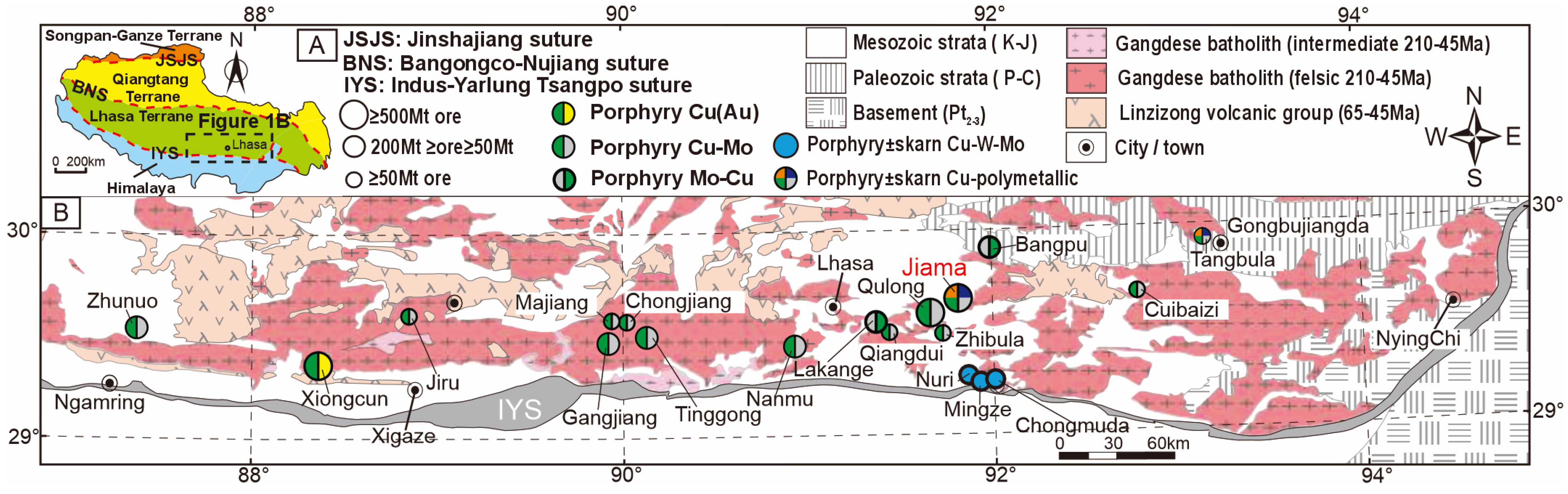
Figure 1. Simplified geological map of Tibet: (A) and distribution of porphyry deposits in the Gangdese metallogenic belt, Tibet (B) (after [40]).
Minerals 16 00508 g001
Figure 2. Geological map of the Jiama mining area (after [32]): 1—Quaternary sediments; 2—Lower Cretaceous Linbuzong Formation sandstone, slate, and hornfels; 3—Upper Jurassic Duodigou Formation limestone and marble; 4—Skarnized marble; 5—Skarn; 6—Skarn-type ore bodies; 7—Granite porphyry dikes; 8—Granodiorite porphyry dikes; 9—Quartz diorite porphyry dikes; 10—Aplite dikes; 11—Detachment fault; 12—Drill holes and their numbers; 13—Scientific deep drill holes and their numbers.
Minerals 16 00508 g002
Figure 3. Structural framework of the Jiama porphyry metallogenic system and the multi-center composite mineralization model (after [32]): 1—Sandstone and slate of the Linbuzong Formation; 2—Limestone and marble of the Duodigou Formation; 3—Shallow magma reservoir; 4—Monzogranite porphyry; 5—Granodiorite porphyry; 6—Granite porphyry; 7—Breccia; 8—Proximal skarn; 9—Intermediate skarn; 10—Distal skarn; 11—Potassic alteration; 12—Chloritization and epidotization; 13—Sericitization and weak argillic alteration; 14—Hornfelsization; 15—Strong silicification; 16—Boundaries of hornfels ore bodies; 17—Fracture systems; 18—Detachment structures; 19—Fluid migration direction; 20—Scientific deep drill hole.
Minerals 16 00508 g003
Figure 4. Chlorite Sampling Location Map.
Minerals 16 00508 g004
Figure 5. Photomicrographs of retrograde chlorite: (a) Chlorite replacing biotite, showing planar texture (PPL); (b) Chlorite replacing biitite, showing planar texture (XPL); (c) Chlorite replacing biotite, showing vermicular texture (PPL); (d) Chlorite replacing biotite, showing vermicular texture (XPL). Abbreviations: Chl = chlorite, Bt = biotite, Ccp = chalcopyrite, Py = pyrite.
Minerals 16 00508 g005
Figure 6. Photomicrographs of hydrothermal chlorite: (a) Chlorite associated with quartz-sulfide minerals, showing disseminated texture (PPL); (b) Chlorite associated with quartz-sulfide minerals, showing disseminated texture (XPL); (c) Chlorite associated with quartz-sulfide minerals, showing bladed texture (PPL); (d) Chlorite associated with quartz-sulfide minerals, showing bladed texture (XPL); (e) Chlorite associated with pyrite (RL); (f) Chlorite associated with pyrite and chalcopyrite (RL). Abbreviations: Qtz = quartz, Chl = chlorite, Ccp = chalcopyrite, Py = pyrite.
Minerals 16 00508 g006
Figure 7. Classification diagram for chlorite (after [48]).
Minerals 16 00508 g007
Figure 8. Box plot of trace elements in chlorite.
Minerals 16 00508 g008
Figure 9. Correlation characteristics of major elements in chlorite. (a) Fe vs. Mg; (b) Al vs. Si + Mg + Fe; (c) AlVI vs. AlIV; (d) Mg + Fe vs. Al; (e) AlIV vs. Fe/(Fe + Mg); (f) Fe/(Fe + Mg) vs. Si.
Minerals 16 00508 g009
Figure 10. Variation diagram of chlorite formation temperature versus AlIV and Si contents. (a) AlIV vs. T; (b) Si vs. T.
Minerals 16 00508 g010
Figure 11. Chlorite formation temperature vs. Mineralization. (a) Cu mineralization grade intensity map; (b) Mo mineralization grade intensity map; (c) Temperature variation and fluid migration direction map.
Minerals 16 00508 g011
Figure 12. Chlorite trace elements and ratios vs. distance to mineralization center. (a) Mg/Sr vs. distance from center; (b) Ti/Pb vs. distance from center: (c) Ti/Sr vs. distance from center; (d) Th/U vs. distance from center; (e) Sr content vs. distance from center; (f) U content vs. distance from center; (g) B content vs. distance from center; (h) Th content vs. distance from center. green circles: average element contents or ratios per drill hole.
Minerals 16 00508 g012
Figure 13. Spatial distribution of element concentrations in chlorite. (a) Vertical distribution characteristic of Mg/Sr ratio; (b) Vertical distribution characteristic of Ti/Pb ratio; (c) Vertical distribution characteristic of Ti/Sr ratio; (d) Vertical distribution characteristic of Th/U ratio; (e) Vertical distribution characteristic of Sr content; (f) Vertical distribution characteristic of U content; (g) Vertical distribution characteristic of B content; (h) Vertical distribution characteristic of Th content.
Minerals 16 00508 g013
Figure 14. Inferred spatial location of minor apophyses.
Minerals 16 00508 g014
Figure 15. Distance to the mineralization center calculated using chlorite as a geochemical vector.
Minerals 16 00508 g015
Disclaimer/Publisher’s Note: The statements, opinions and data contained in all publications are solely those of the individual author(s) and contributor(s) and not of MDPI and/or the editor(s). MDPI and/or the editor(s) disclaim responsibility for any injury to people or property resulting from any ideas, methods, instructions or products referred to in the content.