Article

Conceptual Development of a Process to Recover Platinum Group Metals from Base Metal Leach Tailings Using Alkaline Glycine-Based Lixiviants

Western Australian School of Mines: Minerals, Energy and Chemical Engineering, Curtin University, Perth, WA 6102, Australia
*
Author to whom correspondence should be addressed.
Minerals 2026, 16(5), 464; https://doi.org/10.3390/min16050464
Submission received: 26 March 2026 / Revised: 22 April 2026 / Accepted: 28 April 2026 / Published: 29 April 2026

Abstract

The increasing demand for platinum group metals (PGMs) and critical base metals (BMs) underscores the critical roles these metals play in renewable energy and advanced technologies, enabling more efficient, environmentally sustainable operations. A hydrometallurgical approach to Au, Pd, and Pt tailings, derived from the glycine leaching of low-grade nickel and iron sulfide flotation concentrates, is investigated. The proposed process evaluates two glycine-based systems: glycine combined with KMnO4 and catalyzed by cyanide under starvation conditions. Leaching with glycine in the presence of KMnO4 (72 h, 25% solids, 60 °C, pH 11, dissolved oxygen 10 ppm, 126.7 kg/t glycine, and 7 kg/t KMnO4) achieved extraction efficiencies of up to 66.7% Au, 89.1% Pd, and 95.8% Pt. In comparison, the cyanide-starved glycine system (72 h, 30% solids, 60 °C, pH 11, dissolved oxygen 20 ppm, 98.5 kg/t glycine, and 3.3 kg/t cyanide) resulted in up to 80.8% Au, 78.3% Pd, and 14.3% Pt. Activated carbon and Amberlite resin demonstrated selective adsorption of Au and PGMs. For activated carbon, Au adsorption exhibited a non-linear dependence on carbon dosage, reaching a maximum of 77.61% at 20 g/L, then decreasing to 50.85% at 25 g/L, and finally increasing to 65.04% at 30 g/L, indicating variable adsorption behavior. In contrast, Amberlite resin exhibited more consistent, progressive adsorption with increasing dosage. Au adsorption remained high across all conditions, increasing from 88.06% at 10 g/L to 99.67% at 30 g/L. Similarly, Pd and Pt adsorption improved significantly with resin dosage, reaching maximum values of 81.32% and 83.36% at 25 g/L, respectively, followed by a slight decline at 30 g/L. Implementing a two-stage process using carbon + resin (30 g/L) increased PGM recovery, achieving 99.89% Au, 81.8% Pd, and 92.4% Pt. Elution tests showed that Au (61.97%) and Pd (60.55%) were desorbed efficiently using thiourea (2% w/v) and HCl (0.5 M), whereas Pt elution proved difficult and required alternative strategies. The findings confirm glycine-based technologies as a promising, environmentally friendly alternative to conventional methods and provide a basis for further process development and optimization.

1. Introduction

The transition to a carbon-neutral economy has placed a spotlight on the critical role of base metals (BMs) such as nickel (Ni), cobalt (Co) and copper (Cu), and platinum group metals (PGMs) due to their diverse range of applications in technologies essential for reducing greenhouse gas emissions [1,2,3]. These metals are integral to producing electric vehicle batteries, fuel cell catalysts, medicines, permanent magnets, superalloys, and other renewable energy technologies, making their sustainable extraction increasingly important, so much so that they have been classified as a critical row material in Europe, North America, and Australia [1,4,5,6]. In a conservative scenario, nickel demand is projected to double by 2040, while cobalt demand is expected to rise by 100%. In a more aggressive scenario, nickel demand could nearly triple, and cobalt demand could soar up to 480% [1,7]. Additionally, demand for PGMs is steadily increasing, potentially leading to a situation in which combined demand for cobalt and PGMs outstrips supply, creating a significant market bottleneck [1].
These pressures are compounded by the ongoing decline in ore grades, which presents a major challenge for the mining sector. As a fundamental thermodynamic principle, the energy required for mining increases exponentially as ore grades decrease. This rise in energy consumption drives up extraction costs, threatening the economic viability of mining operations if commodity prices remain low. As a result, the industry faces the dual challenge of meeting escalating demand while managing the rising costs associated with lower ore grades [1].
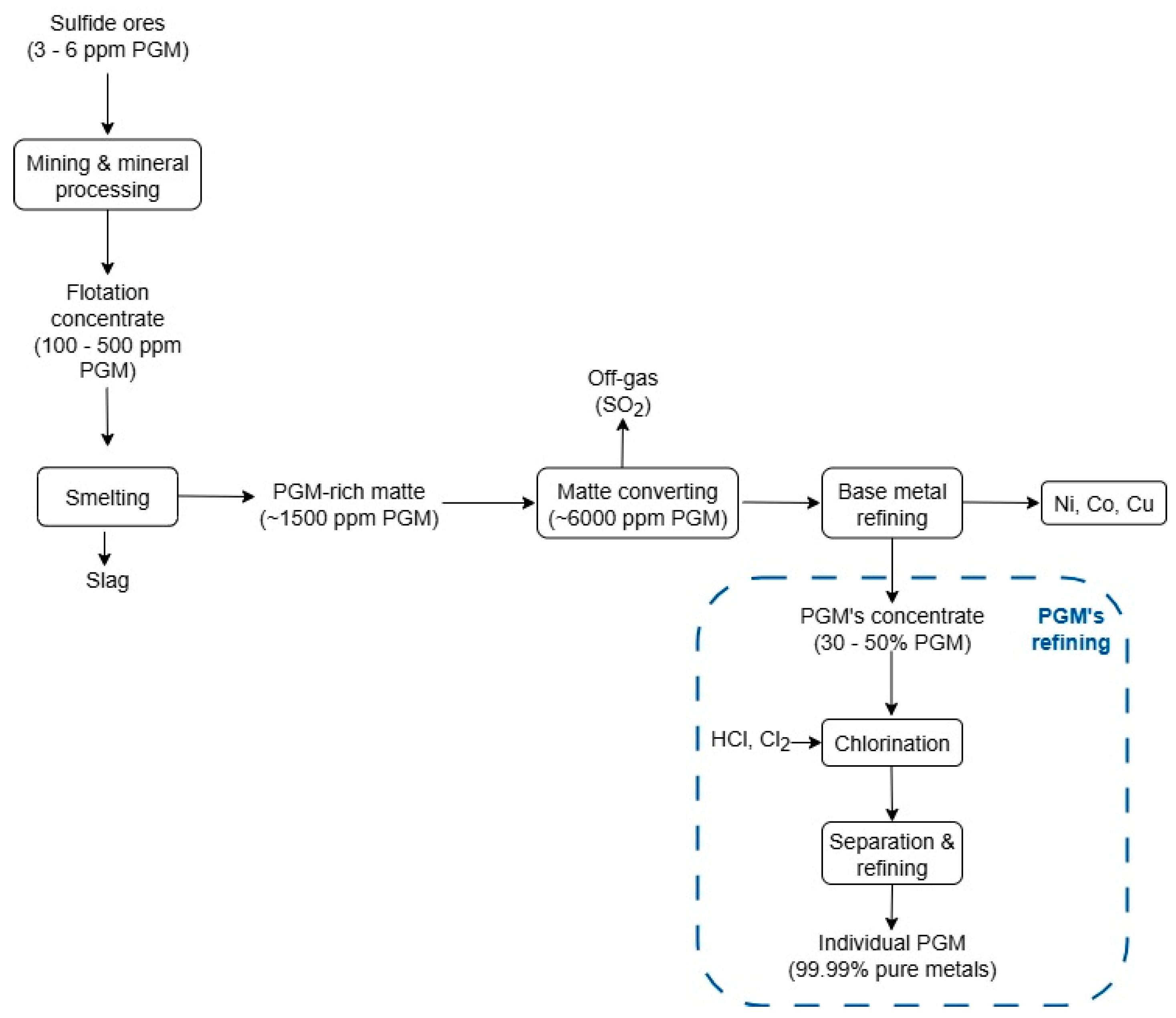
Approximately 71% of the global annual platinum supply is derived from primary mining activities, including primary concentrates and by-products from chromite or Ni-Co-Cu sulfide mines, with the remaining 29% sourced from recycling [4]. Traditionally, these PGM-bearing sulfide ores are processed using pyrometallurgical methods, such as the conventional matte-smelting-refining technique illustrated in Figure 1. While effective, this approach is associated with significant drawbacks, including high energy consumption, substantial greenhouse gas emissions, and the production of hazardous by-products [2,8]. Specifically, this smelt-refine pathway generates approximately 144 kg of CO2 equivalents, 0.45 kg of SO2, and consumes about 753 cubic meters of water per ton of ore milled [9]. Given the anticipated increase in demand and production for these metals, the corresponding rise in emissions and waste generated by the metal industry is of growing concern [1], underscoring the urgent need for more sustainable processing methods. In addition, PGM (particularly palladium) production tends to be concentrated in Russia, South Africa, and Zimbabwe, which comes with various trade and supply chain risks. Most other deposits worldwide are much smaller in scale, and PGM production is insufficient to economically justify smelting or pressure-leach operations. Often, PGM operations outside Russia, South Africa, and Zimbabwe also have to deal with lower resource grades, making it hard to produce smeltable concentrates.
For these reasons, hydrometallurgical methods have emerged as a promising alternative to traditional smelting, offering several advantages, including improved energy efficiency, reduced environmental impact, and selective extraction of valuable metals [7,11]. In industrial practice, acids such as HCl, HNO3, and H2SO4 have been widely used as conventional leaching agents for base metals (BMs) and platinum group metals (PGMs) from both primary and secondary sources [12,13,14,15,16,17,18,19]. Other reagent combinations, such as HCl-H2O2 and HCl-HNO3 (aqua regia), have also been explored [20,21,22,23]. However, using strong mineral acids presents inherent challenges, including high corrosivity and extreme acidity, which pose significant safety and health risks. In addition, inorganic mineral acids are difficult to recover, reconcentrate, and reuse, as they form high-boiling azeotropes, are volatile, or decompose. These processes often require expensive anti-corrosive equipment and lead to high acid consumption, particularly in gangue minerals containing magnesium, iron, and carbonates, which react with the acids [7,24].
Cyanidation has also been employed for PGM extraction, with two-stage processes investigated, such as oxidative pressure leaching to extract base metals followed by cyanidation to recover PGMs and gold [25]. Other two-stage processes, such as bioleaching followed by cyanidation, have also been explored. For instance, column bioleaching at elevated temperatures (65–80 °C) has been shown to extract 69.9–91% copper, 93–98.5% nickel, and 76.8–86.1% cobalt from a concentrate containing 2.3% copper, 3.4% nickel, and 0.1% cobalt. Cyanidation of the solid bioleached residue enabled the extraction of 32.2–34.3% platinum, 92.5–96.5% palladium, and 63.4–97.5% gold [25,26]. Invariably, very high cyanide concentrations are required for sufficient PGM dissolution. Despite these successes, the environmental risks and toxicity associated with cyanide continue to drive the search for safer, more sustainable alternatives in hydrometallurgical processing.
Ammonia leaching can be an alternative pretreatment for PGM-containing ores to recover Ni, Co, and Cu, enabling the production of high-grade PGM concentrates [25]. Among these methods, glycine—a non-toxic, biodegradable amino acid—has shown significant promise [3]. Glycine’s ability to form stable complexes with various metals, including Ni, Co, and PGMs, makes it a suitable leachate for processing complex sulfide ores [3,9,27,28,29,30,31,32,33,34,35,36,37]. The GlyCat™ process, an enhanced version of glycine leaching that incorporates a catalytic system, further improves the kinetics of metal dissolution, offering a more efficient route for metal recovery from mixed sulfide ores [38,39].
After the leaching, PGMs into aqueous solutions can be recovered through various methods, such as cementation [23,40], solvent extraction [13,41,42,43,44,45,46,47], ion exchange by resin [5,19,48,49,50,51,52,53], and carbon adsorption [54,55,56,57,58,59]. This study focuses on the hydrometallurgical processing of a low-grade Australian disseminated sulfide ore containing nickel, cobalt, and PGMs using alkaline glycine solutions under starved cyanide conditions (referred to by the trade name “GlyCatTM”, which was initially used for leaching precious-metal-base metal polymetallic ores using glycine and cyanide as a catalyst under starvation conditions). Building on previous work that explored the fundamental principles of glycine-based leaching, this research aims to deepen the understanding of how these systems can be applied to the selective extraction of metals crucial for achieving carbon neutrality. This study evaluates PGM extraction rates under the optimized leaching conditions defined in transition-metal (TM) leaching and exploratory tests, with Ni, Co, and Cu as transition metals. The recovery of the leached PGMs was further evaluated using ion exchange with resin and activated carbon at varying dosages and elution with thiourea and thiosulfate as cleaner technologies to extract the Pt, Pd, and Au.
The objective of this research is to be context-setting and explore the technical potential of a process to recover PGMs from the PGM-bearing leach tailings derived from low-grade base metal flotation concentrates. The concentrates were derived from a finely disseminated ultramafic Ni-Co-Cu-PGM polymetallic ore from Western Australia. These ores are characterized by high magnesium content, natural alkalinity, and low base-metal sulfide grade.

2. Materials and Methods

It is important to highlight that, to the authors’ knowledge, neither the leaching nor the subsequent recovery of PGMs from solutions has been attempted for alkaline glycine solutions from leached tailings (or ore/concentrate) in the presence or absence of cyanide. Due to the limited amount of exploration material, the experimental program has necessarily been limited to a few leaching and recovery tests instead of a more extensive parametric investigation. However, it has been possible to assess the amount of material available to demonstrate the feasibility of the proposed approach under controlled conditions, and the analytical results are reliable for gaining insight into the behavior of PGMs in the proposed system. Thus, this work represents an initial effort to develop a method and demonstrate the feasibility of a technically viable and plausible process.

2.1. Preparation of Samples

After TM leaching, DC Ni and DC Fe sulfide concentrate samples were received, homogenized, dried at 60 °C, and split into two samples for use in the PGM leaching test (where the DC refers to samples produced from diamond drill core rather than samples sourced from RC chips, or reverse circulation chips, which often show oxidation). Sub-samples were analyzed by X-ray fluorescence (XRF) and fire assay at ALS to determine their chemical composition. Table 1 shows the elemental composition of the DC Ni and DC Fe concentrate samples before TM leaching by XRF and fire assay analysis. In contrast, Table 2 shows the elemental composition of the DC Ni L-Tails and DC Fe L-Tails concentrate samples after TM leaching by XRF and fire assay analysis at ALS, Perth, WA, Australia. These results indicate that the first glycine-only leaching stage effectively extracted most base metals, as reflected in the flotation concentrate leach tailings (DC Ni L-Tails and DC Fe L-Tails). However, mineralogical analysis suggests that a significant portion of the remaining nickel in the first-stage leach tailings is likely associated with sulfide phases, which are more refractory to leaching. Some PGMs, particularly palladium, are also partially leached during this stage. Since the leach solution is recycled after base metal recovery, these dissolved PGMs can be recovered during the second leaching stage. The DC Ni and DC Fe flotation concentrates were also characterized for PGMs using SEM-EDS, QEMSCAN, and XRD. The DC Ni PGMs are primarily associated with silicate-hosted phases such as serpentine and chlorite. Identified PGM species include palladium tellurides, platinum sulfides, and minor alloyed PGMs. At the same time, the DC Fe PGMs are predominantly associated with sulfide-hosted phases, including platinum and palladium sulfides, arsenides, and base metal alloys (Ni, Cu, Fe).

2.2. Reagents

Analytical-grade glycine provided by Draslovka a.s., Perth, WA, Australia was used as a leaching reagent, sodium cyanide (NaCN) provided by Merck (Bayswater, Australia) was used as a catalyst, sodium hydroxide (NaOH) supplied by Rowe Scientific Pty Ltd. (Wangara, WA, Australia) was used for pH adjustment, oxygen (99.99%) supplied by WA gas, Perth, Australia, and analytical-grade potassium permanganate (KMnO4) supplied by Rowe Scientific Pty Ltd. (Australia) were used as oxidizing agents, and ion-exchange resin Amberlite HPR4100 Cl and freshly activated carbon derived from coconut shell supplied for Rowe Scientific Pty Ltd., Wangara, WA, Australia. were used as adsorbents. All leach solutions and analytical samples were prepared using deionized water.

2.3. Experimental Procedures

2.3.1. Leaching Experiment

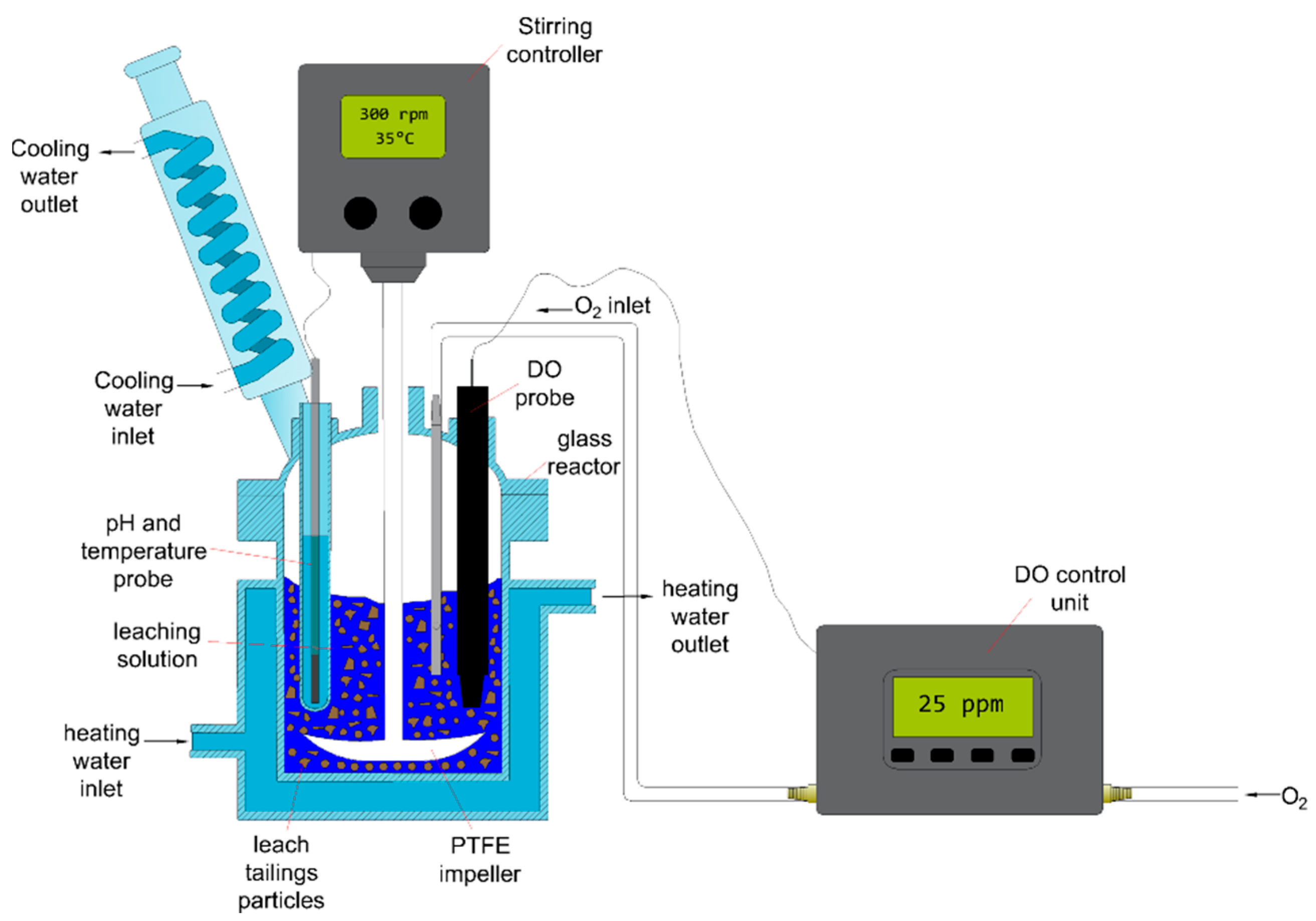
Batch isothermal leaching tests with a dissolved oxygen (DO) control system (John Morris Scientific Pty Ltd., Chatswood, Australia) were conducted in 1 L glass reactors (Figure 2) using glycine with KMnO4 (cyanide-free) and GlyCatTM (starved cyanide) solutions. The reactors were heated using a water bath (TG-2005) and stirred at 300 rpm. The DO control system (John Morris Scientific Pty Ltd.) monitored and adjusted oxygen concentration in real time (only during tests with GlyCatTM solutions). Once the solutions reached 60 °C and the pH was adjusted to 11 with NaOH, the filtered material from the initial Ni, Co, and Cu leaching with glycine and oxygen was loaded into the reactor. Solution samples were collected at 2, 4, 24, 48, and 72 h using a vacuum filter and analyzed by ICP-OES and ICP-MS at Commonwealth Scientific and Industrial Research Organization (CSIRO), Perth, WA, Australia. The leach residues were collected using a pressure filter, dried overnight at 70 °C, weighed, and subsequently sent to ALS Metallurgy, Perth, Australia for XRF analysis. Table 3 summarizes all the tests completed on the glycine process.
The concentrations of Pd, Pt, Au, Co, Cu, and Ni in solution samples were measured using two techniques: inductively coupled plasma-optical emission spectrometry (ICP-OES) for Cu, Ni, and Co, and inductively coupled plasma-mass spectrometry (ICP-MS) for Pd, Au and Pt. These analyses were independently performed by CSIRO, Perth, WA, Australia. The PGM extraction efficiency was determined using the following Equation:
E = m t + m s 1 m f + m s 2 + m r × 100 %
where
  • m t   is the mass of metal in the solution at time t;
  • m f  is the mass of metal in the final solution;
  • m s 1 and m s 2  represent the masses of metal collected from samples taken prior to time t and prior to the final sampling point, respectively;
  • m r  is the mass of metal in the final residue.
The PGM (Pd, Au, and Pt) content in both the feed and residue were determined via fire assay. The concentrations of BM in the feed and residue were assessed by X-ray fluorescence (XRF).

2.3.2. Metal Recovery from Solution Using Adsorption

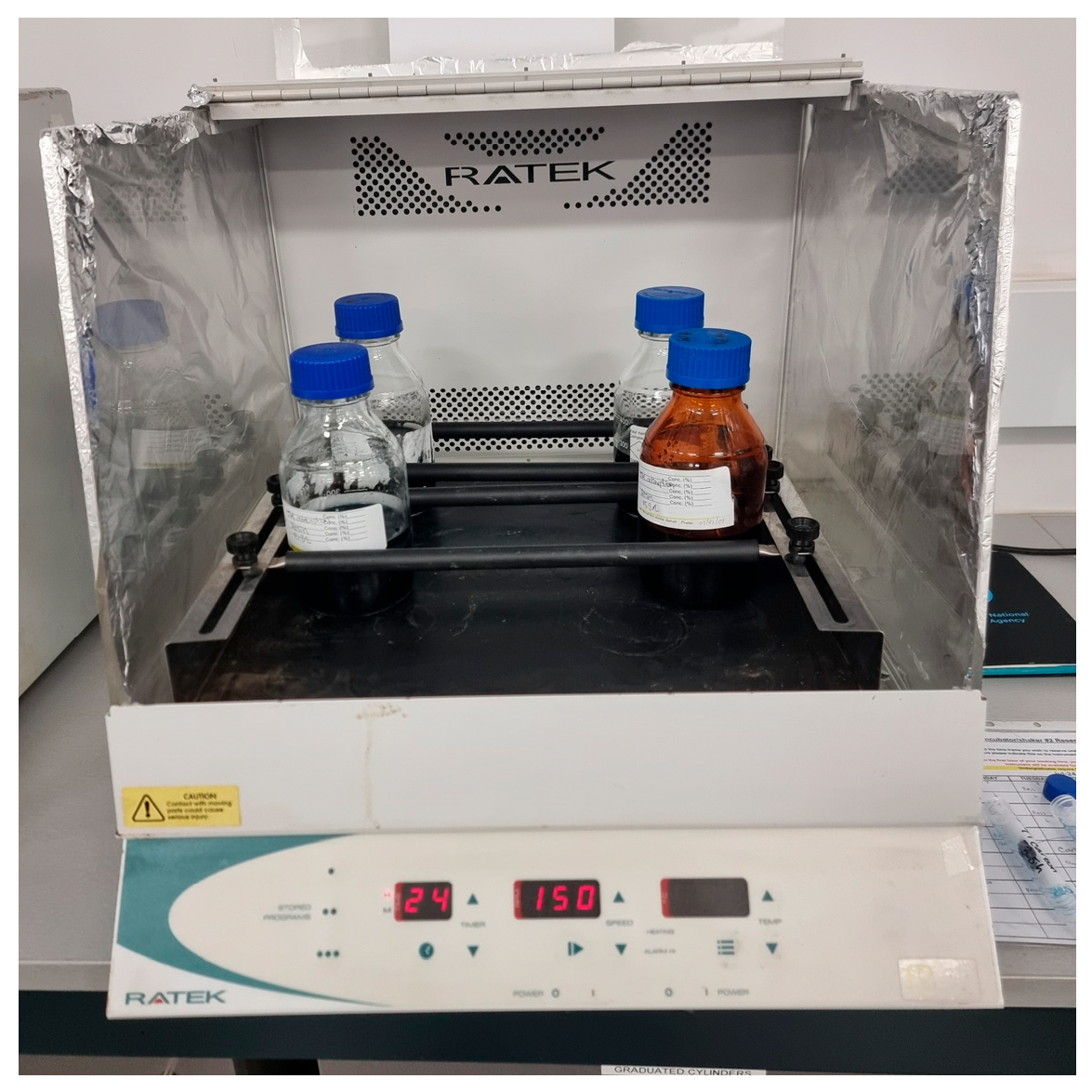
In the PGM recovery test, activated carbon and resin were employed to adsorb PGM from leachate, followed by the desorption of PGM from the PGM-loaded activated carbon and resin. Batch adsorption tests were conducted using a shaker to mix the adsorbent with 250 mL of Glycine solution at pH 10.5 and at different resin dosages of 10, 15, 20, 25, and 30 g/L in 500 mL conical flasks (Figure 3). The mixtures were agitated at 150 rpm for 4 h for resin and 24 h for activated carbon at room temperature. Due to the limited number of leachates available, an insufficient solution was available for a complete evaluation of adsorption and elution using breakthrough curves and diverse adsorption and stripping conditions. The results presented in this paper are exploratory at best and intended to serve as a demonstration of the leach-recovery steps, rather than an exhaustive study of mechanisms and isotherms/kinetics.
A two-step adsorption process was employed to enhance the recovery efficiency of target metal ions. The process was conducted in two steps: in the first, activated carbon was used for initial adsorption, followed by ion-exchange resin in the second. The rationale for this two-step configuration was to exploit the different adsorption characteristics and affinities of the resin and carbon, thereby optimizing overall metal ion uptake. Each material’s adsorption capacity, selectivity, and kinetic behavior were evaluated to determine the optimal arrangement for maximizing recovery while minimizing reagent consumption and processing time.
Samples of 5 mL were collected at 15, 30, 45, and 60-min intervals. Post-adsorption, the solution samples were analyzed using Inductively Coupled Plasma Mass Spectroscopy (ICP-MS) and Inductively Coupled Plasma-Optical Emission Spectroscopy (ICP-OES) at CSIRO, Perth, WA, Australia to determine the concentrations of the adsorbed species. The PGMs recovery efficiency of activated carbon and resin were determined using Equation (2):
R = 1 C t C i × 100 %
where
  • C i   is the concentration of metal in the leach solution (mg/L) at the beginning of adsorption;
  • C t   is the concentration of metal in the leach solution (mg/L) at time t.
Desorption experiments were conducted using 1 g of PGM-loaded resin or activated carbon, which was immersed in either 1 M thiourea with 2 M HCl for 5 h or 1 M sodium thiosulfate solution at pH 9 at room temperature. These experiments aimed to evaluate and compare the desorption efficiency and kinetics of each reagent under controlled conditions. This comparison provided valuable insights into the optimal recovery strategies for PGMs from loaded adsorbents. The PGM desorption efficiency was calculated as follows:
D = P i P t P i × 100 %
where:
  • P i   is the content of metal in the activated carbon and resin before desorption;
  • P t   is the content of metal in the activated carbon and resin after desorption.

3. Results and Discussion

3.1. Leaching Mechanisms and Metal Complex Formation

Leaching of Platinum Group Metals (PGMs) from flotation concentrate leach tailings is oxidative leaching, wherein PGMs exist as soluble metal complexes. Due to the intricate mineralogy of PGMs, the leaching behavior is best characterized by assuming Pt2+ and Pd2+ ions as model species, as they are stable complexes in cyanide-based (GlyCat™) and glycinate-based (alkaline glycine) systems. PGMs dissolve and stabilize as cyanide complexes in the GlyCat™ process, like gold leaching. Platinum and palladium dissolution and complex reactions are:
P t 2 + + 4 C N P t ( C N ) 4 2
P d 2 + + 4 C N P d ( C N ) 4 2
In the alkaline glycine system, PGMs form glycinate complexes, which facilitate metal stabilization in solution:
P t 2 + + 2 G l y P t ( G l y ) 2
P d 2 + + 2 G l y P d ( G l y ) 2
This reaction is crucial in promoting PGM dissolution, as oxygen availability directly influences leaching kinetics and overall extraction efficiency.
O 2 + 2 H 2 O + 4 e 4 O H
This reaction plays a crucial role in promoting PGM dissolution, as oxygen availability directly influences leaching kinetics and overall extraction efficiency.
For sulfide-hosted PGMs, sulfide decomposition also controls oxidative leaching by promoting the liberation of the metals. Metal sulfide oxidation to sulfate is described as follows:
M S + 2 O 2 M 2 + + S O 4 2
where M represents base metals such as Ni, Co, and Cu, which are often associated with PGMs, the oxidation of sulfides enhances PGM exposure, increasing dissolution rates.

3.2. Leaching

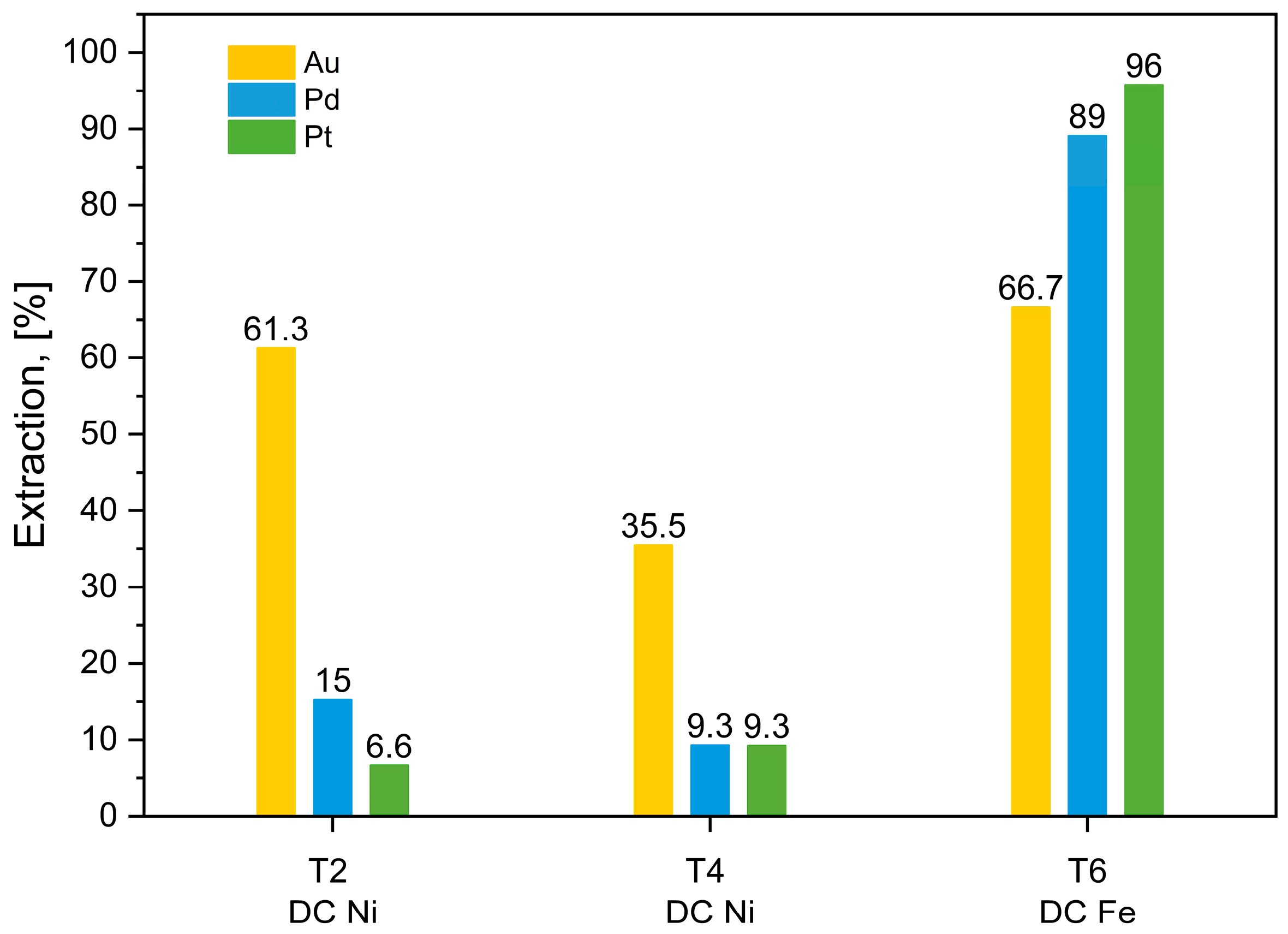
All experiments involving glycine and KMnO4 were conducted without the addition of oxygen. The average dissolved oxygen (DO) concentration was maintained at 10 ppm during the tests. As illustrated in Figure 4, the highest extraction efficiencies, based on the solid residue and the initial precious metal content, were achieved in test 5 using DC Fe L-Tails with 126.7 kg/t glycine and 7 kg/t KMnO4, resulting in recoveries of 66.7% Au, 89.1% Pd, and 95.8% Pt. It was followed by test 2 using DC Ni L-Tails with 98.4 kg/t glycine and 5.5 kg/t KMnO4, which yielded recoveries of 61.3% Au, 15.3% Pd, and 6.62% Pt. Characterization of the samples revealed that both DC Fe and DC Ni had similar compositions, with DC Fe L-Tails exhibiting a lower PGM concentration. The phases identified included kotulskite, sperrylite, and native palladium in both samples, while platinum-free particles were observed exclusively in the DC Ni L-Tails. The low extraction rates observed in tests 2 and 4 could be attributed to the need for highly oxidizing conditions to leach Pt effectively. The results indicate that high glycine concentrations can efficiently leach PGMs, particularly under conditions involving KMnO4 as an oxidizing agent. The DC Fe tailings exhibited higher PGM extraction efficiency than DC Ni, as KMnO4 oxidation in alkaline glycine solutions is more effective at dissolving sulfide-hosted PGMs. In contrast, the PGMs in DC Ni are primarily associated with silicate phases, making them more refractory to leaching and less responsive to oxidative dissolution.
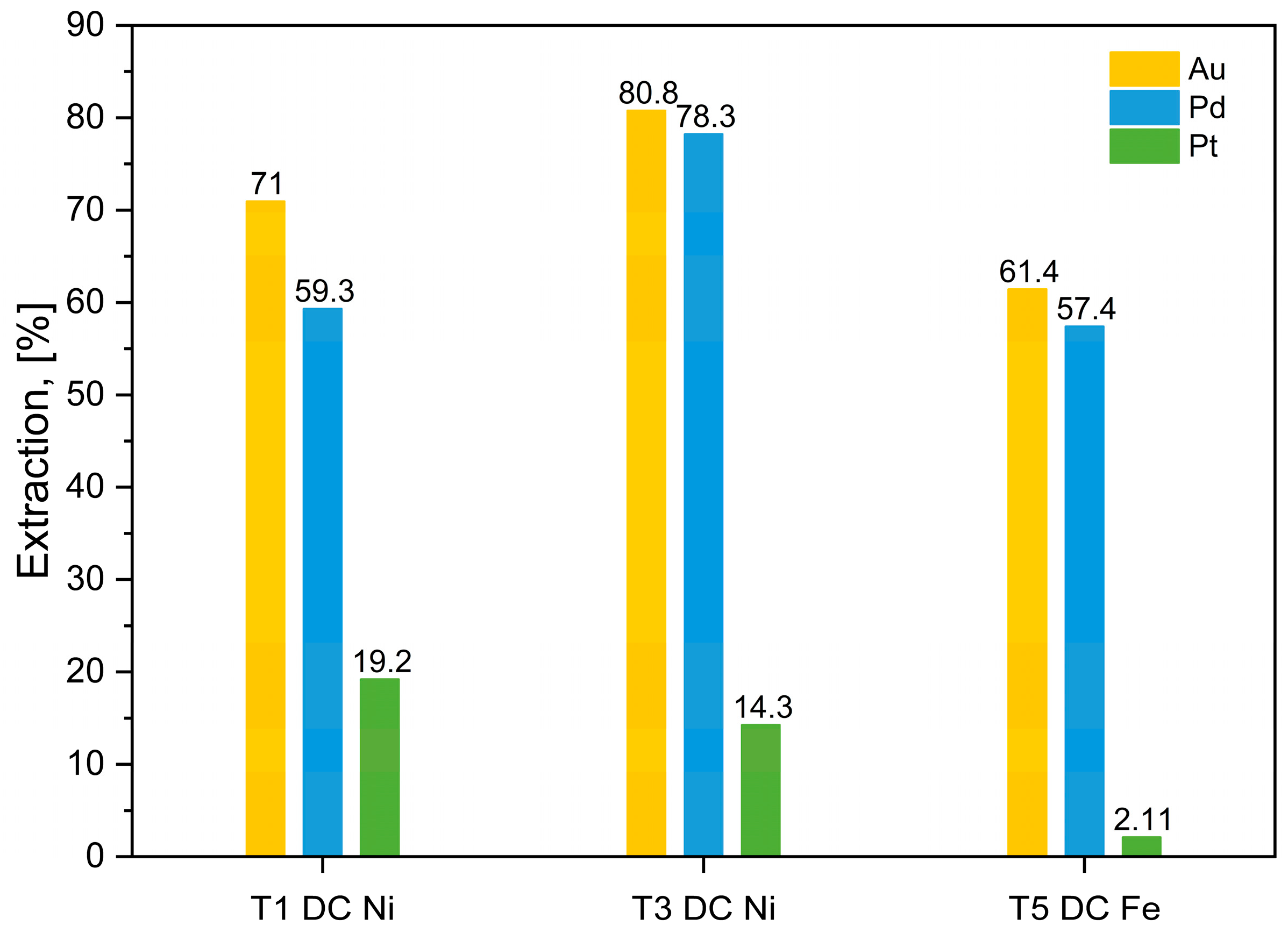
Figure 5 illustrates the extraction of PGMs using GlyCat™ under oxygen-enriched conditions, with dissolved oxygen maintained at 20 ppm throughout the test. The results indicate that increasing the cyanide concentration in DC Ni L-Tails from 2.7 kg/t to 3.3 kg/t had no significant impact on palladium extraction efficiency. However, since oxygen availability was the rate-controlling factor for PGM dissolution, the increased cyanide concentration, in combination with elevated oxygen levels, led to a notable improvement in gold and palladium extraction efficiencies, increasing from 59.3% to 78.3% for palladium and from 71% to 80.8% for gold. Although for the DC Fe samples, the glycine and cyanide concentrations are higher (test 5), the extraction yields were 61.4% Au, 57.4% Pd, and 2.11 Pt, which are lower than those for tests 1 and 3 and for the test on the same sample using glycine and KMnO4. This phenomenon may occur because, under these high glycine-concentration conditions, a passivation layer on the PGM surface may form, preventing reaction with glycine and even cyanide.

3.3. Recovery of PGM’s from PLS by Resin and Activated Carbon

The study of precious metal recovery via sorption processes (carbon adsorption and ion exchange) was limited by the amount of solution available for systematic isotherm and kinetic study. The results discussed below reflect a statement of potential related to real leachate solutions and demonstrate the adsorption behavior for flowsheet development. However, detailed isotherm and kinetic studies are still required and are currently beyond the scope of this paper.
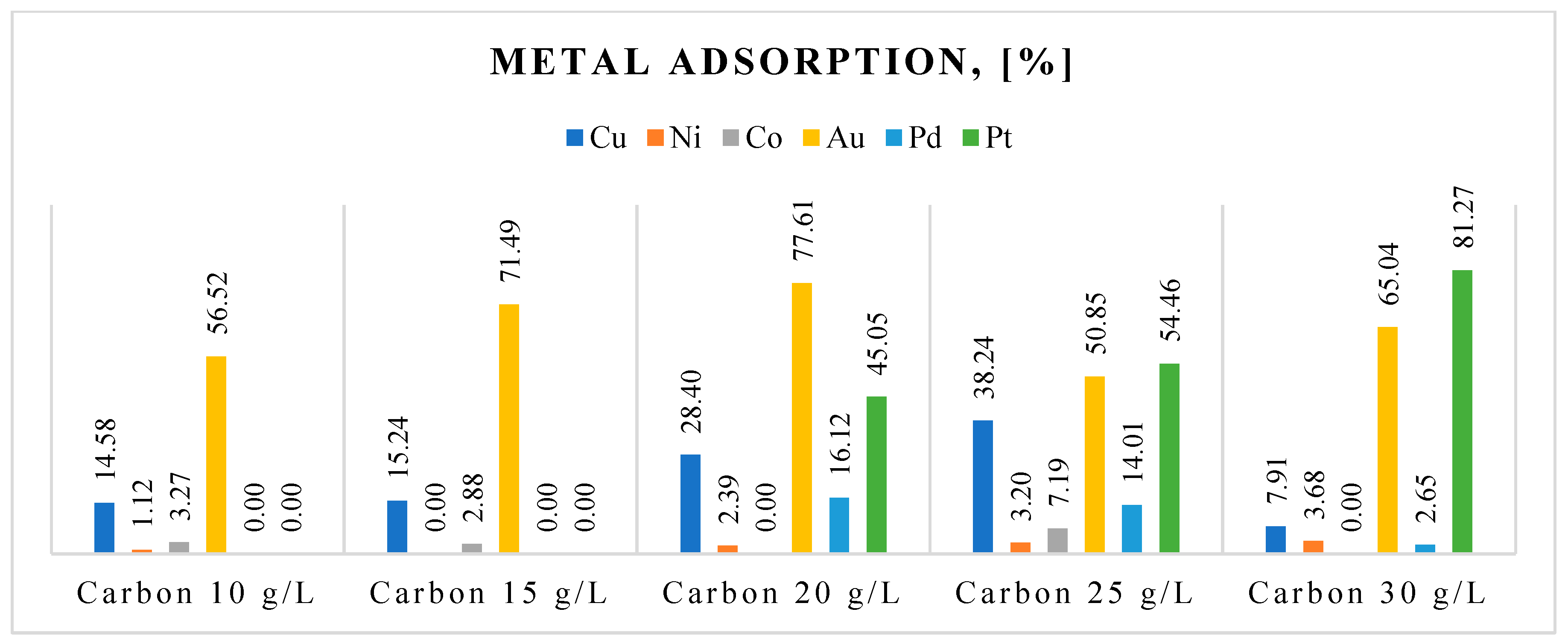
Figure 6 shows the metal adsorption in glycine solutions using activated carbon. The adsorption efficiency of Au increases with the carbon dosage up to 20 g/L, reaching a peak of approximately 78% after 24 h. However, efficiency decreases at the highest concentration, obtaining approximately 51% and 65% at 25 and 30 g/L, respectively. In contrast, Pt adsorption increased significantly with higher carbon dosages, reaching a peak of 81% at 30 g/L. That contrasts with the more variable performance in gold recovery at higher dosages, where Au recovery was less stable at 25 g/L and 30 g/L. For Pt, the 30 g/L dosage offers a rapid initial recovery and sustained adsorption over time, suggesting a clear benefit of using higher carbon concentrations for Pt adsorption. The 20 g/L dosage, while more consistent, results in much slower recovery for both Pt and Au, underscoring the need to balance dosage and stability for the specific metal being targeted. In the case of Pd adsorption, however, it remained consistently low across all carbon dosages. Additionally, increasing the carbon dosage reduces the selectivity, raising the extraction of base metals.
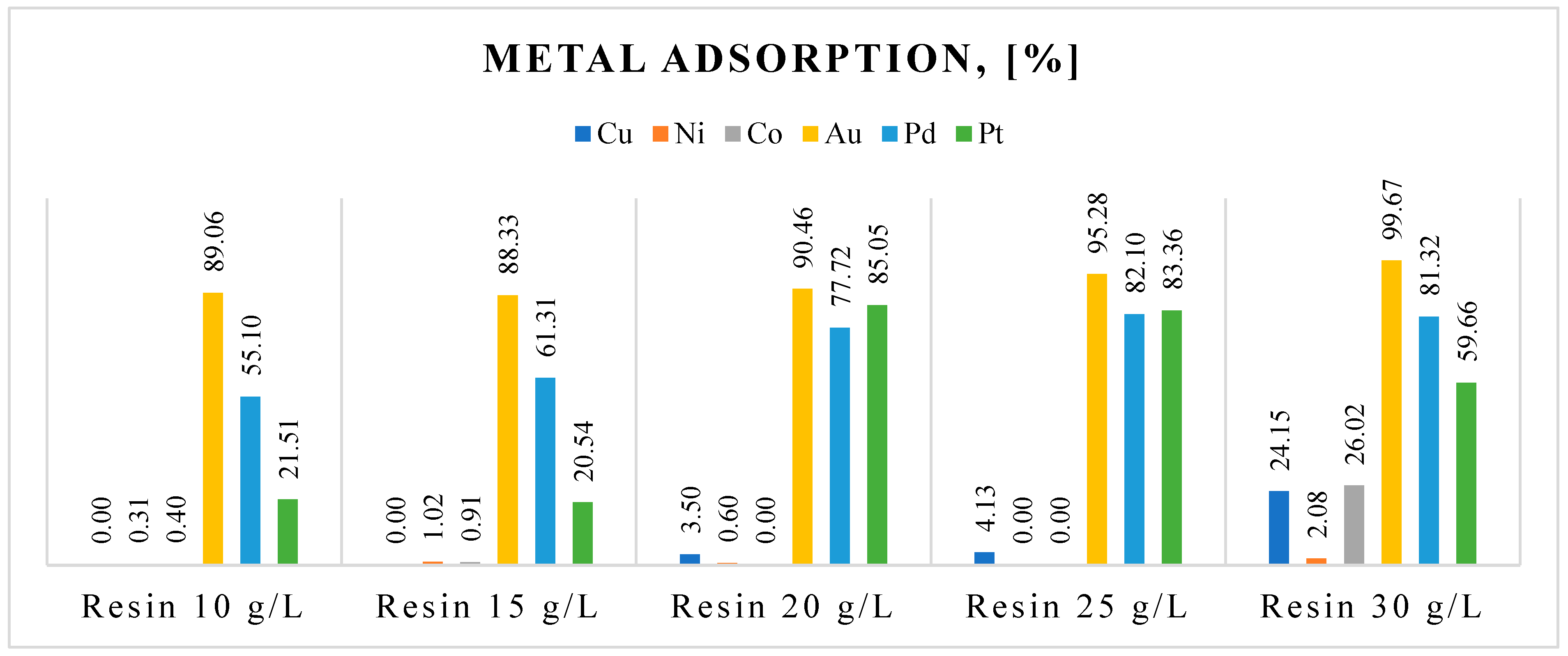
The adsorption efficiency of PGMs obtained using Amberlite resin is shown in Figure 7. As with activated carbon, the results show that the kinetic extraction of Au increases slightly with increasing resin concentration, achieving almost complete extraction at a resin dosage of 30 g/L. Additionally, the adsorption efficiency of Pd and Pt is higher than that of activated carbon. Similar behavior was observed for Pd: recovery increased with resin concentration, from 55% at 10 g/L to approximately 82% at 25 and 30 g/L. Pt adsorption improved significantly with resin dosages, increasing from 21% at 10 g/L to 83% at 25 g/L. Amberlite resin has been reported to have a strong affinity for Au and to exhibit higher Au adsorption than Pd and Pt in earlier tests. Despite this, the resin showed greater selectivity for PGMs than activated carbon.
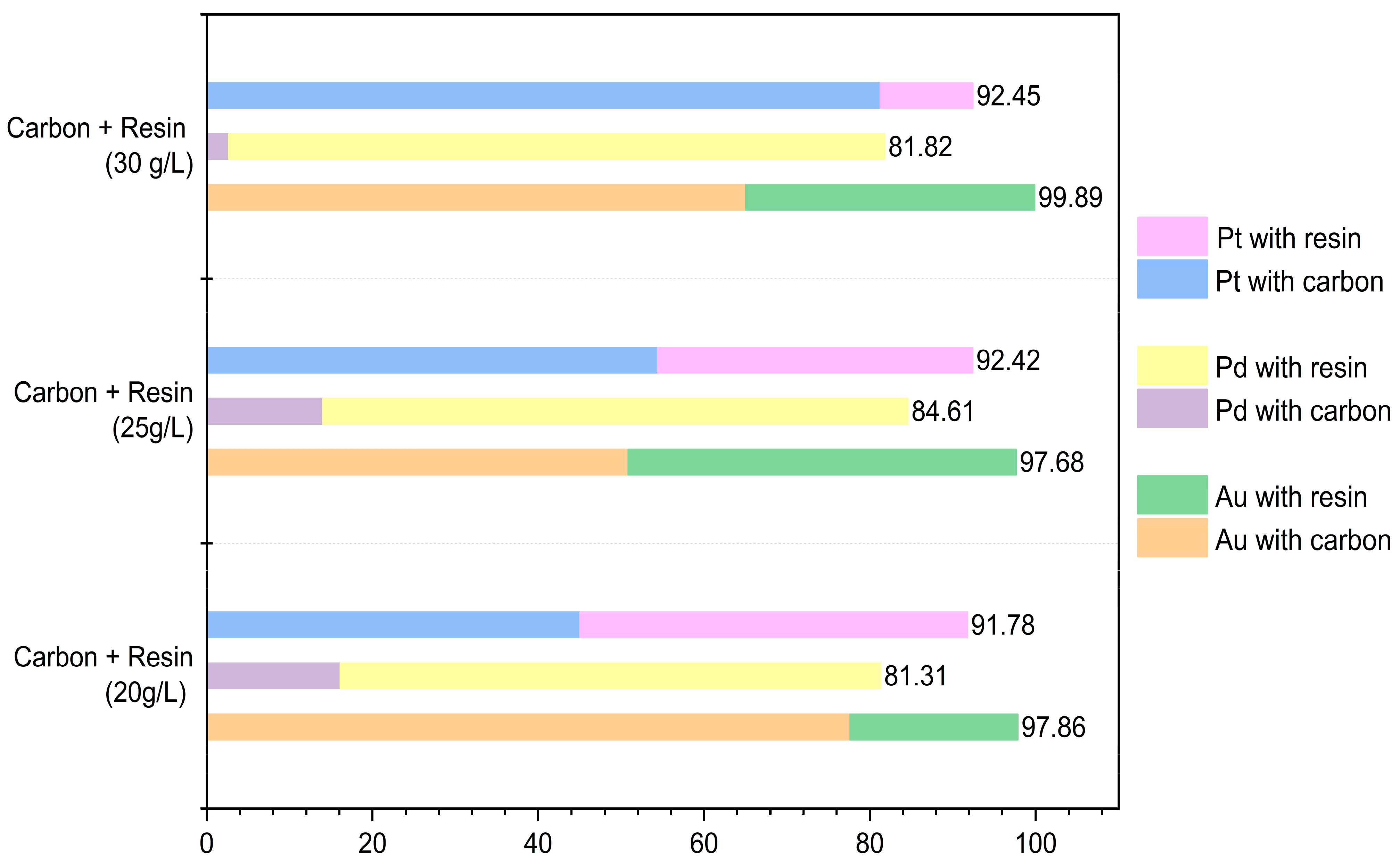
It is reported that the Amberlite resin shows a very high affinity for Au; it has a much greater adsorption capacity for Au than for Pd and platinum (Pt); however, it remains extremely selective towards PGMs. Since carbon has such a high affinity for Au, it is recommended for use as the primary adsorbent in the initial stage of the gold extraction process, followed by resins for Pd and Pt recovery. Figure 8 illustrates the results of a two-step PGM adsorption process conducted at room temperature. First-stage adsorption with activated carbon for 24 h, followed by resin adsorption in the second stage for 4 h. Adsorbent dosages were the same in both stages: 20, 25, and 30 g/L. Increasing the activated carbon dosage in the first stage enhanced Pt adsorption onto carbon, resulting in a higher overall Pt recovery (up to 92.5% at 30 g/L after the resin stage). For Pd, the distribution between stages changes with carbon dosage: at 25 g/L, only a small fraction is adsorbed onto carbon (10%), with most Pd recovered by the resin (84.6%), whereas at 30 g/L, Pd adsorption onto carbon decreases further (3%), and resin recovery also slightly decreases (81.8%). This indicates that increasing carbon dosage does not enhance Pd removal in the first stage and, instead, slightly reduces its overall recovery in the second stage.
Furthermore, the decrease in gold concentration in the solution in the first step by activated carbon improved Pd adsorption by the resin in the second step. The two-step process enhanced the adsorption efficiency for both Pt and Pd. Sequentially using the first activated carbon to extract Au and Pt, followed by resin to capture Pd and the remaining Pt, is quite effective. With dosage levels of 25 g/L of activated carbon and 25 g/L of resin, respectively, recoveries of up to 85% for Pd and 92% for Pt can be achieved in this process.

3.4. Elution Process of PGM’s from Loaded Resin and Activated Carbon

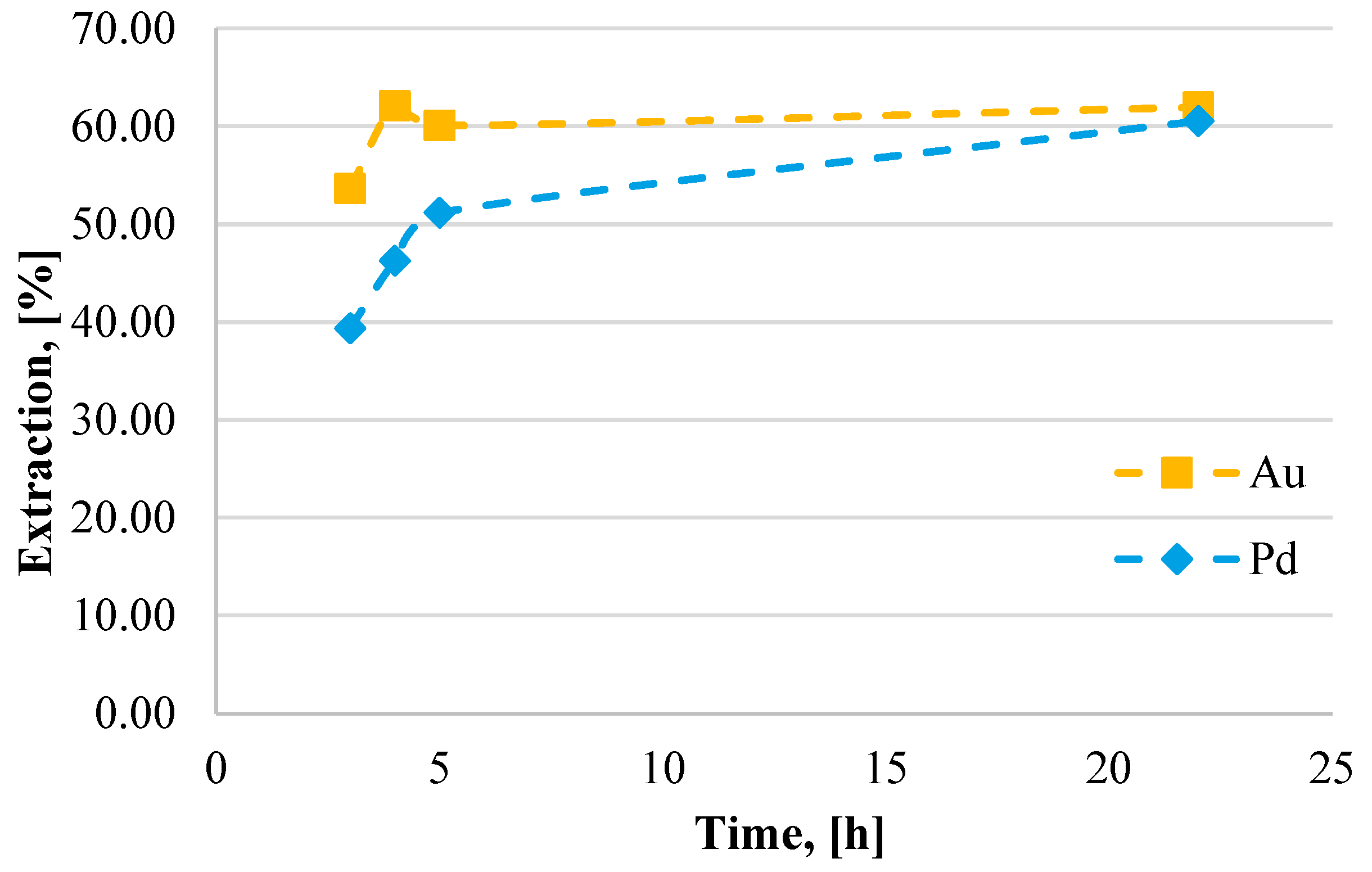
Preliminary results in Figure 9 show the elution behavior of gold (Au) and palladium (Pd) from the resin during a bulk stripping test. As much as 60% of both metals were eluted using 2% w/v thiourea and 0.5 M HCl under ambient conditions. Gold showed faster elution kinetics, reaching its peak within the first hours and stabilizing thereafter. The faster elution of thiourea is likely due to its stronger interaction with gold, which forms very stable complexes. The palladium eluted much more slowly, reaching ca. 50% extraction at 24 h. It can be explained by differences in the strength of metal–ligand interactions or in the complexation modes of thiourea with these metals.
Notably, Pt elution was negligible under the tested conditions; thus, this protocol was ineffective for Pt recovery. This might suggest that platinum is bound more strongly to the resin; thus, more severe elution conditions may be required, such as higher acid concentrations or reducing agents, to enhance desorption.
While a detailed explanation of the elution process is beyond the scope of this work, Equations (10) and (11) explain the elution reactions for Au and Pd, respectively [19,60]. The equations represent the probable formation of thiourea-metal complexes that control desorption. These results provide a basic understanding of the elution dynamics and indicate the need for further optimization of the process, with a focus on improving palladium recovery and addressing platinum desorption.
P d C l 4 2 + 4 S C ( N H 2 ) 2 P d [ C S ( N H 2 ) 2 ] 4 2 + + 4 C l
A u C l 4 + 2 S C ( N H 2 ) 2 A u [ C S ( N H 2 ) 2 ] + + 4 C l
PGMs are then recovered from thiourea strip liquors by reduction-precipitation using alkali metal borohydrides, for example, NaBH4. In this case, metal ions in solution are reduced to produce high-purity PGMs in solid form, as summarized in the reactions shown in Equations (12)–(14) [19,61]. This provides efficient recovery and metals in a form suitable for further processing or direct use.
8 A u [ C S ( N H 2 ) 2 ] 2 + + B H 4 + 2 H 2 O 8 A u 0 + 16 C S ( N H 2 ) 2 + B O 2 + 8 H +
4 P d [ C S ( N H 2 ) 2 ] 4 2 + + B H 4 + 2 H 2 O 4 P d 0 + 16 C S ( N H 2 ) 2 + B O 2 + 8 H +
2 P t [ C S ( N H 2 ) 2 ] 4 4 + + B H 4 + 2 H 2 O 2 P t 0 + 8 C S ( N H 2 ) 2 + B O 2 + 8 H +

3.5. Conceptual Flowsheet

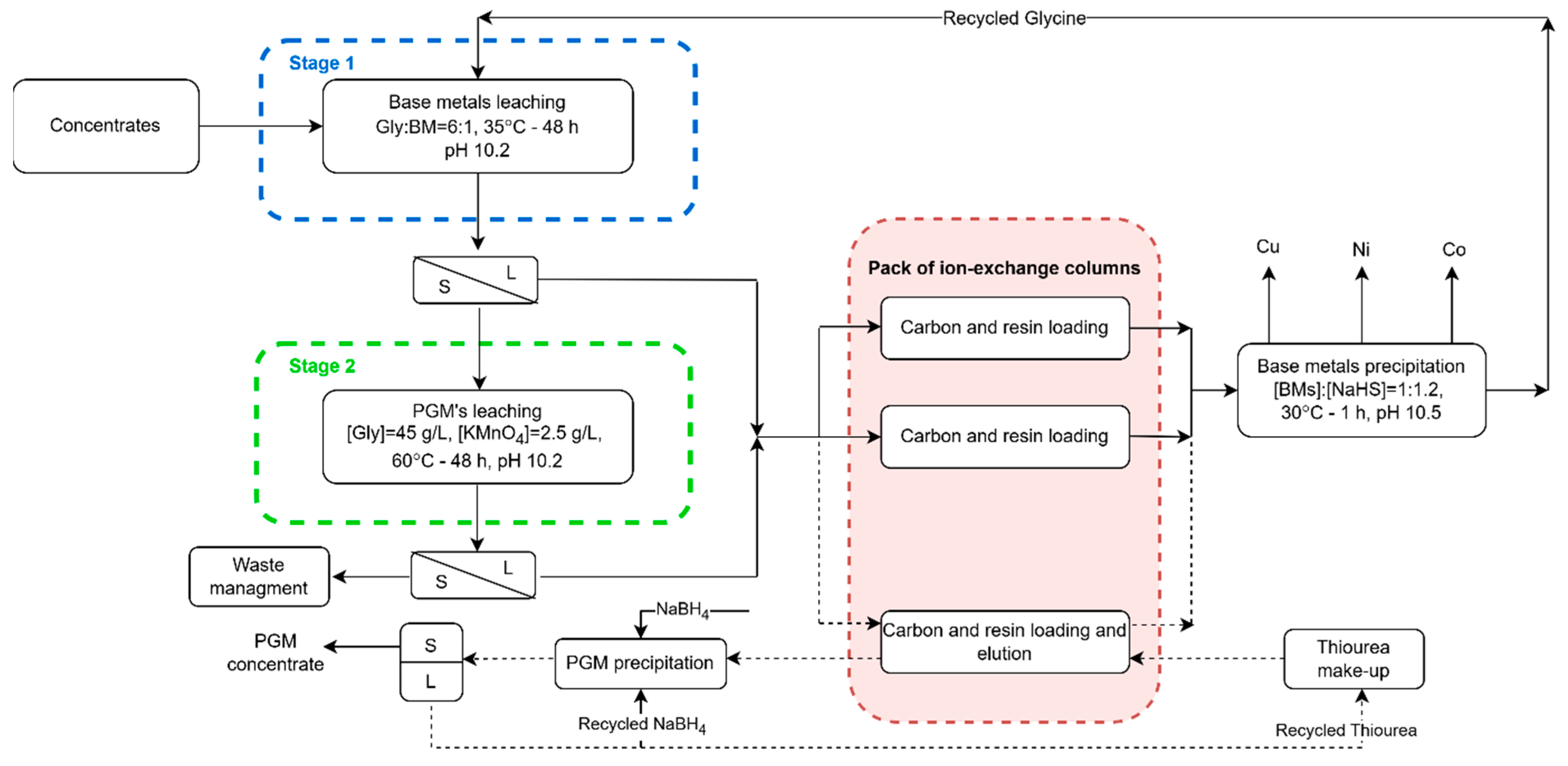
Based on experimental results, observations, and earlier research on the leaching of PGM-bearing nickel sulfide ore, a conceptual flowsheet has been proposed for hydrometallurgical pilot-scale testing (Figure 10). This is to recover the key metals of interest, namely, Cu, Ni, Co, Au, Pd, and Pt, while allowing economic evaluation and environmental impact assessment. The process flow diagram discussed a two-step glycine-based leaching system followed by ion exchange and precipitation for metal recovery. Stage 1 involves the base metals leaching at pH 10.2 using a Gly:BM molar ratio of 6:1 at 35 °C for 48 h. This results in a BM-rich solution that can be subjected to ion exchange, while leaving the solids to stage 2, which involves leaching PGMs with 45 g/L glycine and 5 g/L KMnO4 under similar conditions. The dissolved PGMs are directed to ion-exchange columns, while undissolved solids are sent to waste. The ion exchange system facilitates the selective recovery of Cu, Ni, and Co via precipitation with NaHS, and PGMs are recovered through thiourea elution and subsequent precipitation with NaBH4. Recycling glycine and thiourea during the process enhances sustainability by minimizing reagent consumption and reducing waste.

4. Conclusions

The findings of this study demonstrated the potential of glycine-based systems, especially Glycine with KMnO4 and GlyCat™, to leach the precious metals Au, Pd, and Pt from leach tailings derived from the base metal concentrates that stem from diamond drill core samples. The leach tailings were derived from two types of concentrates that were leached: DC Ni, a nickel-rich sulfide concentrate, and DC Fe, an iron-rich sulfide concentrate. Glycine was shown to be effective with KMnO4 as the oxidant, recording extraction efficiencies of 66.7% Au, 89.1% Pd, and 95.8% Pt at optimal conditions of 126.7 kg/t glycine, 7 kg/t KMnO4, pH 11, and 60 °C. High extractions of 80.8% Au, 78.3% Pd, and 14.3% Pt were also recorded with GlyCat™ at optimal conditions of 98.5 kg/t glycine, 3.3 kg/t NaCN, DO = 20 ppm, pH 11, and 60 °C. Comparative analysis shows that GlyCat™ is generally more efficient at Pd extraction but less so at Pt recovery, with both processes performing equally for Au; this was a slight GlyCat™ advantage demonstrated in Test 3. These results demonstrate that alkaline glycine systems are suitable glycine-based technologies and should be considered as an alternative for the recovery of precious metals from polymetallic ores.
The study explored the potential for recovering precious metals (Au and PGMs) from their leachates using adsorption onto activated carbon and ion-exchange resins, followed by elution. This inherent potential was demonstrated, although significant optimization remains required, and further fundamental studies on sorption isotherms and kinetics were not the intent of this research.
Activated carbon was a strong sorbent for Au, with increased Au extraction at carbon dosages of 10–20 g/L; at higher dosages, Au extraction decreased significantly. In contrast, higher carbon dosages (30 g/L) maintain stability in the Pt adsorption process; hence, an increased recovery, with a peak equivalent to 85%, was reached after 24 h. Thus, higher dosages are more effective for Pt recovery than Au, where instability issues occur at comparable dosages. Amberlite resin showed high selectivity for both Au and Pd. The resin dosage had almost no effect on gold recovery, with all dosages achieving above 90% recovery in 1 h. However, Pd adsorption is more dependent on resin dosage, with 25 g/L yielding the best recovery (84% at 4 h), while Pt recovery remains almost constant (80%) at both 20 and 25 g/L.
A two-stage adsorption process with activated carbon as the first stage and resin as the second would suggest that higher doses of activated carbon improve Pt extraction in the first stage (up to 81%). It enhances the efficiency of Pd adsorption in the second step with the resin by reducing the Au concentration in solution, thereby improving the resin’s selectivity for Pd. This two-step process improves the overall adsorption efficiency for both Pt and Pd. It demonstrates the effectiveness of using carbon first to extract Au and Pt, followed by resin to capture Pd and the remaining Pt.
The elution studies showed that Au and Pd can be satisfactorily stripped from the resin using 2% w/v thiourea and 0.5 M HCl, with recoveries of up to 60% for both metals. In contrast, under these conditions, Pt elution was negligible, suggesting the use of stronger eluting agents or possibly an alternative protocol for the elution of this metal.
These results have shown that glycine-based leaching systems, combined with ion exchange and elution techniques, are a suitable alternative for the leaching and recovery of precious metals from polymetallic resources. Combining these processes opens the way for possible applications in hydrometallurgical operations, with further optimization necessary to improve Pt recovery.

Author Contributions

Conceptualization, C.G.P.S.; methodology, C.G.P.S. and C.H.; validation, C.G.P.S., T.T. and J.E.; formal analysis, C.G.P.S.; investigation, C.G.P.S., C.H. and A.P.; resources, C.G.P.S., T.T. and J.E.; data curation, C.G.P.S. and C.H.; writing—original draft preparation, C.G.P.S.; writing—review and editing, C.G.P.S. and J.E.; visualization, C.G.P.S.; supervision, T.T. and J.E.; project administration, T.T. and J.E.; funding acquisition, T.T. and J.E. All authors have read and agreed to the published version of the manuscript.

Funding

This research received no external funding.

Data Availability Statement

The original contributions presented in this study are included in the article. Further inquiries can be directed to the corresponding author.

Acknowledgments

The authors gratefully acknowledge the financial and research support provided by the Australian Government, Chalice Mining, Draslovka a.s., and Curtin University through the Australian Government Cooperative Research Centre (CRC) Program. This study was conducted as part of an Australian Commonwealth supported CRC Project, which focuses on the hydrometallurgical recovery of critical metals from polymetallic deposits. The glycine technology utilized in this research was developed by Curtin University, with Draslovka a.s. holding the exclusive rights to the glycine leaching process.

Conflicts of Interest

The authors declare no conflict of interest.

References

  1. Atta Mends, E.; Manka Tita, A.; Hussaini, S.; Samuel Thella, J.; Pan, L.; Chu, P. Investigation of leaching of nickel sulfide flotation tailings to recover valuable metals. Miner. Eng. 2024, 212, 108716. [Google Scholar] [CrossRef]
  2. Awadalla, F.T.; Ritcey, G.M. Recovery of Gold from Thiourea, Thiocyanate, or Thiosulfate Solutions by Reduction-Precipitation with a Stabilized form of Sodium Borohydride. Sep. Sci. Technol. 1991, 26, 1207–1228. [Google Scholar] [CrossRef]
  3. Azizitorghabeh, A.; Mahandra, H.; Ramsay, J.; Ghahreman, A. Selective gold recovery from pregnant thiocyanate leach solution using ion exchange resins. Hydrometallurgy 2023, 218, 106055. [Google Scholar] [CrossRef]
  4. Chipise, L.; Ndlovu, S.; Shemi, A.; Moodley, S.S.; Kumar, A.; Simate, G.S.; Yah, C.S. Towards bioleaching of PGMS. Miner. Eng. 2023, 202, 108291. [Google Scholar] [CrossRef]
  5. de Oliveira Demarco, J.; Stefanello Cadore, J.; Veit, H.M.; Bremm Madalosso, H.; Hiromitsu Tanabe, E.; Assumpção Bertuol, D. Leaching of platinum group metals from spent automotive catalysts using organic acids. Miner. Eng. 2020, 159, 106634. [Google Scholar] [CrossRef]
  6. Ding, Y.; Zheng, H.; Li, J.; Zhang, S.; Liu, B.; Ekberg, C.; Jian, Z. Recovery of platinum from spent petroleum catalysts: Optimization using response surface methodology. Metals 2019, 9, 354. [Google Scholar] [CrossRef]
  7. Eksteen, J.J.; Oraby, E.A.; Nguyen, V. Leaching and ion exchange based recovery of nickel and cobalt from a low grade, serpentine-rich sulfide ore using an alkaline glycine lixiviant system. Miner. Eng. 2020, 145, 106073. [Google Scholar] [CrossRef]
  8. Eksteen, J.J.; Oraby, E.A.; Tanda, B.C. A conceptual process for copper extraction from chalcopyrite in alkaline glycinate solutions. Miner. Eng. 2017, 108, 53–66. [Google Scholar] [CrossRef]
  9. Fornalczyk, A.; Kraszewski, M.; Willner, J.; Kaduková, J.; Mrážiková, A.; Marcinčáková, R.; Velgosová, O. Dissolution of metal supported spent auto catalysts in acids. Arch. Metall. Mater. 2016, 61, 233–236. [Google Scholar] [CrossRef]
  10. Hammadi, M.Q.; Yassen, R.S.; Abid, K.N. Recovery of Platinum and Palladium from Scrap Automotive Catalytic Converters. Al-Khwarizmi Eng. J. 2017, 13, 131–141. [Google Scholar] [CrossRef]
  11. Hosseinzadeh, M.; Petersen, J. Recovery of Pt, Pd, and Rh from spent automotive catalysts through combined chloride leaching and ion exchange: A review. Hydrometallurgy 2024, 228, 106360. [Google Scholar] [CrossRef]
  12. Hubicki, Z.; Wołowicz, A. Adsorption of palladium(II) from chloride solutions on Amberlyst A 29 and Amberlyst A 21 resins. Hydrometallurgy 2009, 96, 159–165. [Google Scholar] [CrossRef]
  13. Hussein, H.E.M.; Ray, A.D.; MacPherson, J.V. Switching on palladium catalyst electrochemical removal from a palladium acetate-acetonitrile system: Via trace water addition. Green Chem. 2019, 21, 4662–4672. [Google Scholar] [CrossRef]
  14. Jamett, I.; Carrasco, P.; Olmos, M.; Hernández, P. Glycine/Glutamate: “Green” Alternatives to Recover Metals from Minerals/Residues—Review of Current Research. Minerals 2023, 13, 22. [Google Scholar] [CrossRef]
  15. Karim, S.; Ting, Y.P. Bioleaching of platinum, palladium, and rhodium from spent automotive catalyst using bacterial cyanogenesis. Bioresour. Technol. Rep. 2022, 18, 101069. [Google Scholar] [CrossRef]
  16. Khezri, M.; Rezai, B.; Akbar Abdollahzadeh, A.; Molaeinasab, M.; Wilson, B.P.; Lundström, M. Glycine leaching of Sarcheshmeh chalcopyrite concentrate at high pulp densities in a stirred tank reactor. Miner. Eng. 2020, 157, 106555. [Google Scholar] [CrossRef]
  17. Latyuk, E.; Melamud, V.; Lavrinenko, A.; Makarov, D.; Bulaev, A. Non-Ferrous Metals and PGM Recovery from Low-Grade Copper–Nickel Concentrate by Bioleaching and Further Cyanidation. Minerals 2022, 12, 340. [Google Scholar] [CrossRef]
  18. Lee, J.-C.; Kurniawan; Hong, H.-J.; Chung, K.W.; Kim, S. Separation of platinum, palladium and rhodium from aqueous solutions using ion exchange resin: A review. Sep. Purif. Technol. 2020, 246, 116896. [Google Scholar] [CrossRef]
  19. Li, H.; Oraby, E.; Bezuidenhout, G.A.; Eksteen, J. The Leaching of Palladium from Polymetallic Oxide Ores using Alkaline Ferricyanide Solutions. Miner. Process. Extr. Metall. Rev. 2023, 46, 79–88. [Google Scholar] [CrossRef]
  20. Lin, Y.; Chen, Y.; Chen, S.; Hu, X.; Zi, F.; Yang, P. Facile and novel method for the recovery of gold from a calcined concentrate via copper–ammonia -thiourea system and activated carbon. Hydrometallurgy 2024, 225, 106260. [Google Scholar] [CrossRef]
  21. Magdalena, R.; Valero, A.; Calvo, G. Limit of recovery: How future evolution of ore grades could influence energy consumption and prices for Nickel, Cobalt, and PGMs. Miner. Eng. 2023, 200, 108150. [Google Scholar] [CrossRef]
  22. Marinho, R.S.; da Silva, C.N.; Afonso, J.C.; da Cunha, J.W.S.D. Recovery of platinum, tin and indium from spent catalysts in chloride medium using strong basic anion exchange resins. J. Hazard. Mater. 2011, 192, 1155–1160. [Google Scholar] [CrossRef]
  23. Mowafy, E.A.; Mohamed, D. Separation and recovery of palladium(II) from nitrate solutions using dithiodiglycolamide (DTDGA) derivatives as novel extractants. Desalination Water Treat. 2017, 68, 190–198. [Google Scholar] [CrossRef]
  24. Mowafy, E.A.; Mohamed, D. Recovery of palladium from concentrated nitrate solutions with N,N 2-dimethyl-N,N 2-dioctyltetradecy lmalonamide as new extractant. Orient. J. Chem. 2017, 33, 2377–2385. [Google Scholar] [CrossRef]
  25. Mpinga, C.N.; Bradshaw, S.M.; Akdogan, G.; Snyders, C.A.; Eksteen, J.J. Evaluation of the Merrill-Crowe process for the simultaneous removal of platinum, palladium and gold from cyanide leach solutions. Hydrometallurgy 2014, 142, 36–46. [Google Scholar] [CrossRef]
  26. Mpinga, C.N.; Bradshaw, S.M.; Akdogan, G.; Snyders, C.A.; Eksteen, J.J. The extraction of Pt, Pd and Au from an alkaline cyanide simulated heap leachate by granular activated carbon. Miner. Eng. 2014, 55, 11–17. [Google Scholar] [CrossRef]
  27. Mpinga, C.N.; Eksteen, J.J.; Aldrich, C.; Dyer, L. Atmospheric leach process of high-chromitite PGM-bearing oxidized mineralized ore through a single-stage and two-stage techniques. Miner. Eng. 2018, 125, 165–175. [Google Scholar] [CrossRef]
  28. Mpinga, C.N.; Eksteen, J.J.; Aldrich, C.; Dyer, L. A conceptual hybrid process flowsheet for platinum group metals (PGMs) recovery from a chromite-rich Cu-Ni PGM bearing ore in oxidized mineralization through a single-stage leach and adsorption onto ion exchange resin. Hydrometallurgy 2018, 178, 88–96. [Google Scholar] [CrossRef]
  29. Mpinga, C.N.; Eksteen, J.J.; Aldrich, C.; Dyer, L. Direct leach approaches to Platinum Group Metal (PGM) ores and concentrates: A review. Miner. Eng. 2015, 78, 93–113. [Google Scholar] [CrossRef]
  30. Mwase, J.M.; Petersen, J.; Eksteen, J.J. A novel sequential heap leach process for treating crushed Platreef ore. Hydrometallurgy 2014, 141, 97–104. [Google Scholar] [CrossRef]
  31. Nikoloski, A.N.; Ang, K.L.; Li, D. Recovery of platinum, palladium and rhodium from acidic chloride leach solution using ion exchange resins. Hydrometallurgy 2015, 152, 20–32. [Google Scholar] [CrossRef]
  32. Oraby, E.; Li, H.; Deng, Z.; Eksteen, J. Selective extraction of Ni and Co from a pyrrhotite-rich flotation slime using an alkaline glycine-based leach system. Miner. Eng. 2023, 203, 108330. [Google Scholar] [CrossRef]
  33. Oraby, E.A.; Eksteen, J.J. The leaching of gold, silver and their alloys in alkaline glycine-peroxide solutions and their adsorption on carbon. Hydrometallurgy 2015, 152, 199–203. [Google Scholar] [CrossRef]
  34. Oraby, E.A.; Eksteen, J.J. Gold leaching in cyanide-starved copper solutions in the presence of glycine. Hydrometallurgy 2015, 156, 81–88. [Google Scholar] [CrossRef]
  35. Oraby, E.A.; Eksteen, J.J. The selective leaching of copper from a gold-copper concentrate in glycine solutions. Hydrometallurgy 2014, 150, 14–19. [Google Scholar] [CrossRef]
  36. Oraby, E.A.; Eksteen, J.J.; O’Connor, G.M. Gold leaching from oxide ores in alkaline glycine solutions in the presence of permanganate. Hydrometallurgy 2020, 198, 105527. [Google Scholar] [CrossRef]
  37. Oraby, E.A.; Eksteen, J.J.; Tanda, B.C. Gold and copper leaching from gold-copper ores and concentrates using a synergistic lixiviant mixture of glycine and cyanide. Hydrometallurgy 2017, 169, 339–345. [Google Scholar] [CrossRef]
  38. Perea, C.G.; Ihle, C.F.; Dyer, L.; Quezada, S.D.; González, C.; Estay, H. Leaching of complex copper concentrates in alkaline monosodium glutamate solutions. Miner. Eng. 2025, 232, 109560. [Google Scholar] [CrossRef]
  39. Perea, C.G.; Restrepo, O.J. Use of amino acids for gold dissolution. Hydrometallurgy 2018, 177, 79–85. [Google Scholar] [CrossRef]
  40. Perea, C.G.; Tang, T.; He, C.; Polenio, A.; Eksteen, J.J. Extraction of nickel, cobalt and copper from low grade finely disseminated polymetallic concentrates utilizing alkaline glycine and subsequent metal recovery from solution. Hydrometallurgy 2026, 242, 106668. [Google Scholar] [CrossRef]
  41. Rane, M.V. PGM ore processing: LIX reagents for palladium extraction & platinum stripping from Alamine 336 using NaOH-NaCl. Miner. Eng. 2019, 138, 119–124. [Google Scholar] [CrossRef]
  42. Rao, S.; Liu, Z.; Qiu, X.; Wang, D.; Cao, H.; Tao, J. Beneficiation-Hydrometallurgy Combined Process for the Jinbaoshan Platinum Group Concentrate. JOM 2019, 71, 1991–1996. [Google Scholar] [CrossRef]
  43. Safarzadeh, M.S.; Horton, M.; Van Rythoven, A.D. Review of Recovery of Platinum Group Metals from Copper Leach Residues and Other Resources. Miner. Process. Extr. Metall. Rev. 2018, 39, 1–17. [Google Scholar] [CrossRef]
  44. Saguru, C.; Ndlovu, S.; Moropeng, D. A review of recent studies into hydrometallurgical methods for recovering PGMs from used catalytic converters. Hydrometallurgy 2018, 182, 44–56. [Google Scholar] [CrossRef]
  45. Sasaki, Y. Various metal extraction from hydrochloric acid into n-dodecane by methylimino-dioctylacetamide (MIDOA). Sep. Sci. Technol. 2020, 55, 708–715. [Google Scholar] [CrossRef]
  46. Schoeman, E.; Bradshaw, S.M.; Akdogan, G.; Eksteen, J.J. The recovery of platinum, palladium, and gold from a cyanide heap solution, with use of ion exchange resins. South. Afr. Inst. Min. Metall. Platin. 2012, 729–742. Available online: https://www.saimm.co.za/Conferences/Pt2012/729-742_Scoeman.pdf (accessed on 25 March 2026).
  47. Schoeman, E.; Bradshaw, S.M.; Akdogan, G.; Snyders, C.A.; Eksteen, J.J. The extraction of platinum and palladium from a synthetic cyanide heap leach solution with strong base anion exchange resins. Int. J. Miner. Process. 2017, 162, 27–35. [Google Scholar] [CrossRef]
  48. Sefako, R.; Sekgarametso, K.; Sibanda, V. Potential Processing Routes for Recovery of Platinum Group Metals from Southern African Oxidized PGM Ores: A Review. J. Sustain. Metall. 2017, 3, 797–807. [Google Scholar] [CrossRef]
  49. Shen, Y.F.; Xue, W.Y. Recovery palladium, gold and platinum from hydrochloric acid solution using 2-hydroxy-4-sec-octanoyl diphenyl-ketoxime. Sep. Purif. Technol. 2007, 56, 278–283. [Google Scholar] [CrossRef]
  50. Sinisalo, P.; Lundström, M. Refining approaches in the platinum group metal processing value chain—A review. Metals 2018, 8, 203. [Google Scholar] [CrossRef]
  51. Snyders, C.A.; Bradshaw, S.M.; Akdogan, G.; Eksteen, J.J. The effect of temperature, cyanide and base metals on the adsorption of Pt, Pd and Au onto activated carbon. Hydrometallurgy 2014, 149, 132–142. [Google Scholar] [CrossRef]
  52. Snyders, C.A.; Mpinga, C.N.; Bradshaw, S.M.; Akdogan, G.; Eksteen, J.J. The application of activated carbon for the adsorption and elution of platinum group metals from dilute cyanide leach solutions. J. South. Afr. Inst. Min. Metall. 2013, 113, 381–388. [Google Scholar]
  53. Snyders, C.A.; Mpinga, C.N.; Bradshaw, S.M.; Akdogan, G.; Eksteen, J.J. The adsorption and elution of platinum group metals (Pt, Pd, and Au) from cyanide leach solutions using activated carbon. South. Afr. Inst. Min. Metall. Platin. 2012, 743–766. Available online: https://www.saimm.co.za/Conferences/Pt2012/743-766_Snyders.pdf (accessed on 25 March 2026).
  54. Tanda, B.C.; Eksteen, J.J.; Oraby, E.A. An investigation into the leaching behaviour of copper oxide minerals in aqueous alkaline glycine solutions. Hydrometallurgy 2017, 167, 153–162. [Google Scholar] [CrossRef]
  55. Tauetsile, P.J.; Oraby, E.A.; Eksteen, J.J. Adsorption behaviour of copper and gold glycinates in alkaline media onto activated carbon. Part 1: Isotherms. Hydrometallurgy 2018, 178, 202–208. [Google Scholar] [CrossRef]
  56. Torres, R.; Lapidus, G.T. Platinum, palladium and gold leaching from magnetite ore, with concentrated chloride solutions and ozone. Hydrometallurgy 2016, 166, 185–194. [Google Scholar] [CrossRef]
  57. Wiecka, Z.; Rzelewska-Piekut, M.; Regel-Rosocka, M. Recovery of platinum group metals from spent automotive converters by leaching with organic and inorganic acids and extraction with quaternary phosphonium salts. Sep. Purif. Technol. 2022, 280, 119933. [Google Scholar] [CrossRef]
  58. Xiao, Q.; Wang, X.; Song, L.; Li, F.; Li, Q.; He, L.; Shen, Z.; Luo, F.; Ding, S. Highly efficient and selective adsorption of palladium(II) from simulated nuclear waste solution using Amberlite XAD-7 resin impregnated with a phenanthroline-derived diamide. Hydrometallurgy 2023, 221, 106127. [Google Scholar] [CrossRef]
  59. Xing, W.D.; Lee, M.S.; Kim, Y.H. Separation of gold(III) from hydrochloric acid solution containing platinum(IV) and palladium(II) by solvent extraction with Cyanex 272 and LIX 63. J. Ind. Eng. Chem. 2018, 59, 328–334. [Google Scholar] [CrossRef]
  60. Xing, W.D.; Lee, M.S.; Senanayake, G. Recovery of metals from chloride leach solutions of anode slimes by solvent extraction. Part I: Recovery of gold with Cyanex 272. Hydrometallurgy 2018, 180, 58–64. [Google Scholar] [CrossRef]
  61. Yousif, A.M. Recovery and then individual separation of platinum, palladium, and rhodium from spent car catalytic converters using hydrometallurgical technique followed by successive precipitation methods. J. Chem. 2019, 2019, 2318157. [Google Scholar] [CrossRef]
Figure 1. Traditional beneficiation of platinum-group metals (PGMs) as a primary resource (adapted from [4,10]).
Minerals 16 00464 g001
Figure 2. The experimental set-up for leaching at controlled temperature.
Minerals 16 00464 g002
Figure 3. The experimental set-up for ion exchange adsorption.
Minerals 16 00464 g003
Figure 4. PGMs leaching using glycine and KMnO4. Extraction = 1 − residue/head. Working conditions: pH = 11, glycine concentration = 45 g/L, solids content = 25%−30% w/w, KMnO4 = 5 g/L, temperature = 60 °C, and DO = ~10 ppm.
Minerals 16 00464 g004
Figure 5. PGM’s leaching using GlyCatTM. Extraction = 1 − residue/head. Working conditions: pH = 11, glycine concentration = 45 g/L, solids content = 25%−30% w/w, cyanide = 1.5 g/L, temperature = 60 °C, and DO = 20 ppm.
Minerals 16 00464 g005
Figure 6. Metal adsorption in Glycine solutions using activated carbon. Working conditions: pH = 10.5, carbon dosage = 10, 15, 20, 25, and 30 g/L, agitation = 150 rpm, and temperature = room temperature.
Minerals 16 00464 g006
Figure 7. Metal adsorption in Glycine solutions using resin. Working conditions: pH = 10.5, resin dosage = 10, 15, 20, 25, and 30 g/L, agitation = 150 rpm, and temperature = room temperature.
Minerals 16 00464 g007
Figure 8. PGM adsorption from Glycine solutions using a two-step process: one activated carbon step followed by resin. Working conditions: pH = 10.5, carbon and resin dosage = 20, 25, and 30 g/L, agitation = 150 rpm, and temperature = room temperature.
Minerals 16 00464 g008
Figure 9. PGM’s Elution using thiourea. Working conditions: thiourea concentration = 2% w/v, HCl concentration = 0.5 M, solids content = 1.5% w/v, and room temperature.
Minerals 16 00464 g009
Figure 10. The proposed process flowsheet outlines the recovery of platinum group metals (PGMs) from a nickel-rich ore containing copper, cobalt, and PGMs in sulfide mineralization. Dashed lines in the schematic highlight the shift to elution and carbon and resin regeneration once the ion exchange materials are fully loaded with precious metals.
Minerals 16 00464 g010
Table 1. Elemental composition of the DC Ni and DC Fe concentrates samples.
SampleNi
(%)
Cu
(%)
Co
(%)
S
(%)
Fe
(%)
Pd
(g/t)
Pt
(g/t)
Au
(g/t)
Non-S Ni (%)Mass Pull (%)
DC Ni Conc2.210.450.189.4918.47.652.120.350.2322.9
DC Fe Conc1.620.200.1312.90243.031.420.180.1632.0
Table 2. Elemental composition of the DC Ni L-Tails and DC Fe L-Tails flotation concentrates leach tailing samples.
SampleNi
(%)
Cu
(%)
Co
(%)
S
(%)
Fe
(%)
Pd
(g/t)
Pt
(g/t)
Au
(g/t)
DC Ni Conc0.550.090.0626.8118.83.541.510.31
DC Fe Conc0.610.100.0719.1220.82.271.280.10
Table 3. Experimental conditions using GlyCatTM and glycine + KMnO4.
Test N°:
Method:
T1
GlyCatTM
T2
Glycine + KMnO4
T3
GlyCatTM
T4
Glycine + KMnO4
T5
GlyCatTM
T6
Glycine + KMnO4
SampleDC NiDC NiDC NiDC NiDC FeDC Fe
Duration (h)727272727272
Solid Density (%)303030302525
Temperature °C606060606060
pH111111111111
DO Content (ppm)20~1020~1020~10
Reagents
Glycine kg/t98.598.498.598.4126.9126.7
g/L45.34545.345.245.345.3
KMnO4 kg/t 5.5 5.5 7
g/L 2.5 2.5 2.5
Cyanide kg/t2.7 3.3 4.2
g/L1.3 1.5 1.5
NaOH kg/t52.952.252.952.267.369
g/L25.725.424.3242424.7
Disclaimer/Publisher’s Note: The statements, opinions and data contained in all publications are solely those of the individual author(s) and contributor(s) and not of MDPI and/or the editor(s). MDPI and/or the editor(s) disclaim responsibility for any injury to people or property resulting from any ideas, methods, instructions or products referred to in the content.