Review

A Review on the Resource Utilization of Iron Tailings: Pathways, Challenges, and Prospects

1
Department of Architectural Engineering, North China Institute of Aerospace Engineering, Langfang 065000, China
2
CVTIC, Research Institute of Highway, Ministry of Transport, Beijing 100088, China
3
Hebei Provincial Institute of Building Science and Technology Co., Ltd., Shijiazhuang 050021, China
4
Hebei Province Science and Technology Key Laboratory of Solid Waste for Building Materials, Shijiazhuang 050021, China
5
School of Mechanical Science and Engineering, Huazhong University of Science and Technology, Wuhan 430079, China
*
Author to whom correspondence should be addressed.
Minerals 2026, 16(5), 455; https://doi.org/10.3390/min16050455
Submission received: 15 March 2026 / Revised: 17 April 2026 / Accepted: 24 April 2026 / Published: 28 April 2026
(This article belongs to the Section Environmental Mineralogy and Biogeochemistry)

Abstract

The complexity of physicochemical properties in iron ore tailings has led to extensive and varied study avenues. Moreover, changes in these features resulting from source discrepancies have complicated the identification of consistent patterns in study findings, thereby hindering the standardization and advancement of resource exploitation technologies. This paper provides a comprehensive analysis of the utilization pathways for iron tailings. It identifies the mainstream recovery processes for rare earth minerals, a relatively less-researched direction. It also describes research progress on the use of iron tailings for the preparation of fertilizers and soil conditioners, as well as their application as cementitious materials or aggregates in building materials and mine backfilling engineering. It incorporates various activation methods for the preparation of cementitious materials from iron tailings into a unified comparative framework and quantifies the key performance indicators of different activation pathways through a summary table. It also summarizes studies on the ecological reclamation of tailings ponds based on bioremediation techniques. The essential physicochemical properties of iron deposits are meticulously analyzed, and this is followed by a specialized overview of the principal treatment techniques, critical performance indicators, and their foundational mechanisms. The current application of various technical approaches is examined to identify key problems, and future development opportunities are outlined.

1. Introduction

Iron ore tailings are solid waste products that persist after the processes of crushing, screening, grinding, classification, and beneficiation, including gravity separation, flotation, or chlorination, aimed at extracting valuable metal components. These tailings are challenging to recycle under current technical and economic conditions. Between 0.4 and 3 tons of iron ore tailings are produced per ton of iron concentrate, depending on the iron ore grade in different regions [1]. China’s iron ore resources are predominantly low-grade, resulting in the generation of substantial quantities of iron ore tailings. Since 2018, China has produced over 520 million tons of iron ore tailings each year [2].
The principal applications of iron ore tailings encompass the secondary extraction and recovery of important metals, mine backfilling, and utilization as raw materials in the creation of building products. Nevertheless, owing to insufficient vast and thorough research on the composition and characteristics of iron ore tailings, the overall utilization rate of iron ore tailings in China remains very low. Statistical data released by the Ministry of Ecology and Environment of China indicates that the complete utilization rate of tailings was approximately 27% in 2019, with the majority of tailings being discharged and kept in tailings ponds. Consequently, large ponds necessitate considerable land use and substantial management resources, while also presenting severe environmental pollution threats. The shear strength of the accumulated tailings is considerably diminished by their tiny particle size and high water content. The exceedingly small particles within them can be elevated by wind and, in severe instances, may even provoke sand and dust storms. Moreover, sulfur, arsenic, and various heavy metals, including lead, zinc, and cadmium, along with residual chemical reagents from iron ore beneficiation processes in tailings, are susceptible to leaching and migration with rainwater during flood seasons, thereby presenting a significant risk to groundwater and downstream aquatic ecosystems.
Tailings ponds are typically established in valleys, creating artificial accumulations with significant potential energy, posing a risk of debris flow. The tiny particle size and elevated water content of iron ore tailings markedly diminish the shear strength of the accumulation mass. In circumstances such as significant earthquakes, intense rainfall, and foundation subsidence, the stress and displacement fields of tailings ponds alter, resulting in a marked escalation in the danger of dam failure. Mining cities are predominantly situated in seismically active regions, with densely populated residential areas and infrastructure positioned downstream of tailings ponds, creating a catastrophic chain scenario of “elevated hazardous rocks–saturated tailings–disaster-prone entities”. Statistics from the International Commission on Large Dams indicate that over 200 distinct tailings pond safety incidents have transpired globally since the early 20th century. In the present context of prioritizing efficient resource utilization and dual-carbon objectives, it is imperative and urgent to enhance the utilization of iron ore tailings to mitigate significant issues associated with tailings storage, including environmental pollution, land occupation, and the compounded risks of multiple disasters (dam failure, landslide, and overtopping).
To ensure the transparency and reproducibility of the literature selection process, a systematic search was conducted in two electronic databases: Web of Science Core Collection and China National Knowledge Infrastructure (CNKI). The search covered publications from 2016 to 2026, including journal articles as well as doctoral and master’s theses, while conference papers, patents, newspapers, and other document types were excluded. The search strategy was as follows: “iron tailings” was used as the title keyword; meanwhile, the following terms were used as topic keywords: “Recycle iron elements”, “Recycle rare earth elements”, “Recycle metal elements”, “Recycling minerals”, “Soil Amendments”, “Trace Element Fertilizers”, “Reclamation”, “Preparation of Chemical Products”, “Mine Filling”, “cementitious materials”, and “Concrete”. The initial search yielded 1260 records. Through manual screening, studies focusing on the physicochemical characterization, activation, or valorization of iron tailings were retained. In addition, a backward snowballing method was applied to manually supplement relevant references cited by the initially screened articles. Ultimately, 109 publications were included in this review. Based on these 109 selected articles, this review provides a comprehensive overview of the valorization pathways of iron tailings, covering valuable metal recovery, agricultural applications, construction materials, mine backfilling, ecological reclamation, and other emerging uses. The review of rare earth recovery technologies, which have received relatively less attention, is strengthened. A comparative table is also provided to summarize the performance data of different activation pathways for cementitious materials, facilitating a rapid comparison of the advantages and disadvantages of each technical route.

2. Physicochemical Properties of Iron Ore Tailings

2.1. Physical Properties

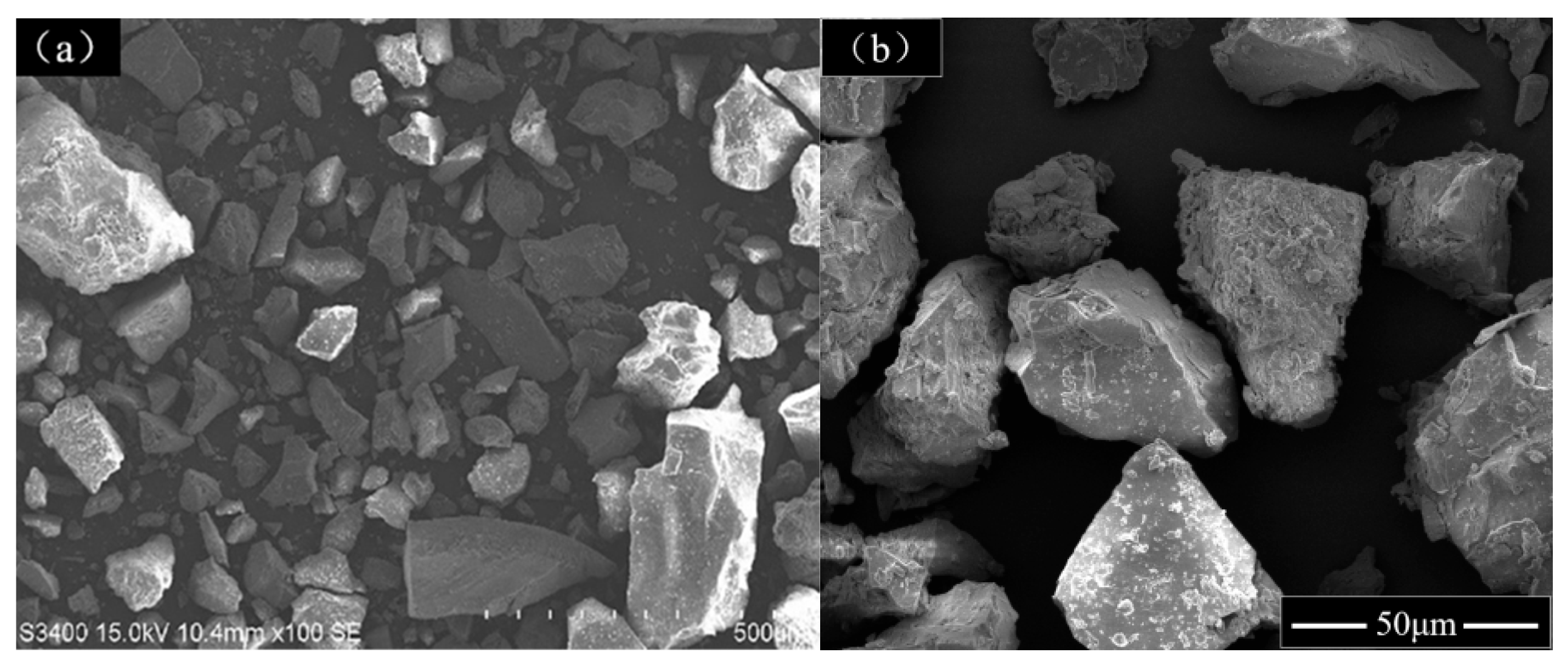
The physical qualities of iron ore tailings vary due to discrepancies in ore parameters and beneficiation procedures. Table 1 illustrates the density and particle size of various iron ore tailings, indicating that the fraction of particles smaller than 132 μm surpasses 50% of the total particle count [3]. To obtain additional iron concentrate powder, two-stage grinding and two or three stages of beneficiation are required, together with sand fishing and other procedures. As a result, the tailings discharged into ponds have a relatively small particle size. A reduced particle size of iron ore tailings enhances their cementitious activity but may impair the mixture’s workability. Elevated iron content in iron ore tailings results in increased density, hence enhancing the potential for iron recovery but adversely impacting the workability of fresh concrete and augmenting the self-weight of construction materials. Figure 1 presents the SEM images of iron ore tailing powders sourced from various origins. Despite the varied origins of iron ore tailings, their particle morphologies exhibit notable similarity. The iron ore tailing particles exhibit heterogeneous sizes and irregular shapes, characterized by distinct edges and corners, with a mixture and distribution of varied particle sizes. Conversely, the surface of natural sand predominantly exhibits an uneven circular configuration. The morphological properties of iron ore tailings, when utilized as a substitute for natural sand, can negatively affect fluidity.

2.2. Chemical Properties

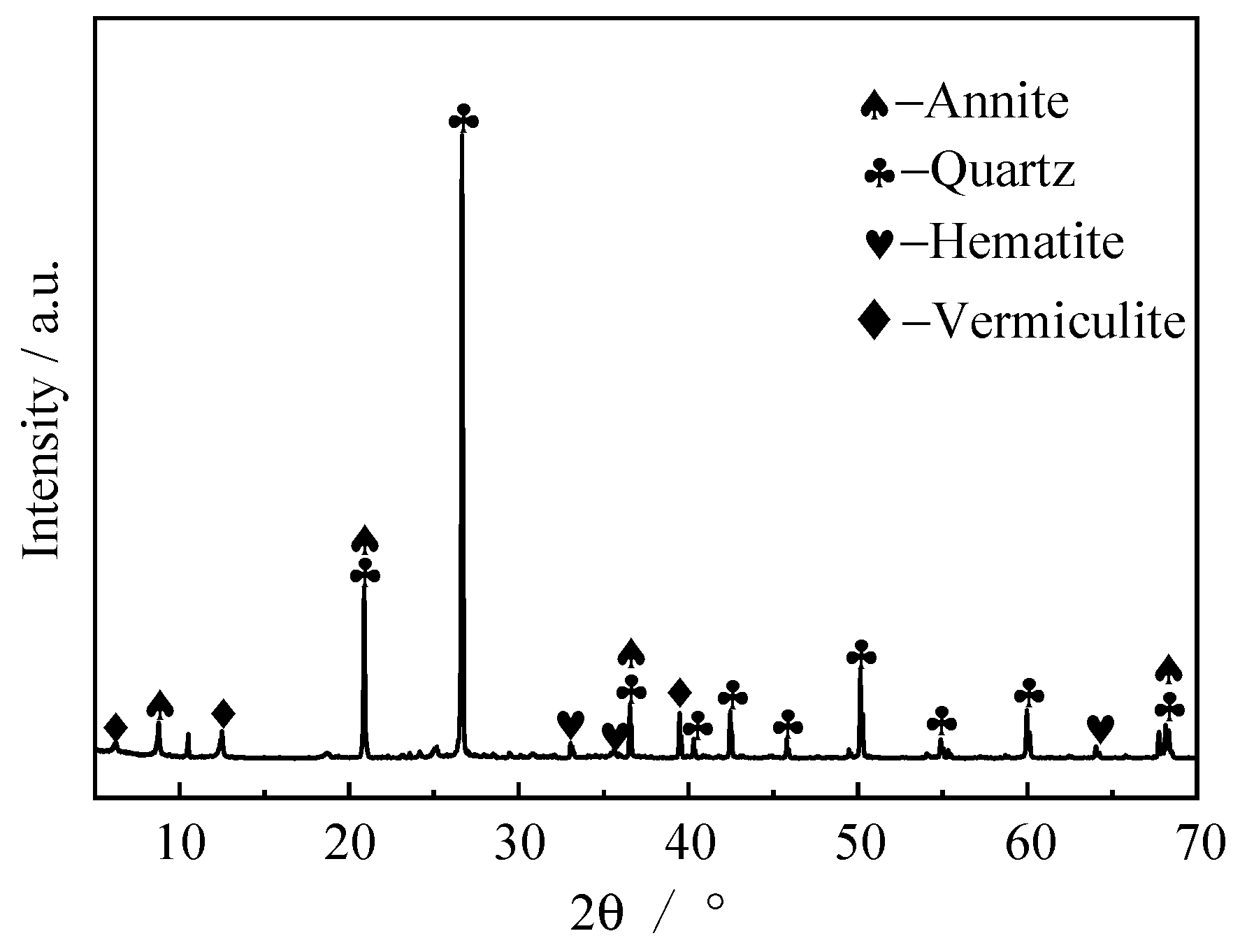
Iron ore tailings are composite minerals mostly composed of gangue minerals, including quartz, pyroxene, feldspar, amphibole, garnet, and their changed derivatives. The X-ray diffraction pattern of Sijiaying iron ore tailings is illustrated in Figure 2. The primary mineral constituents include quartz, hematite, iron-bearing mica minerals, and a little quantity of vermiculite.
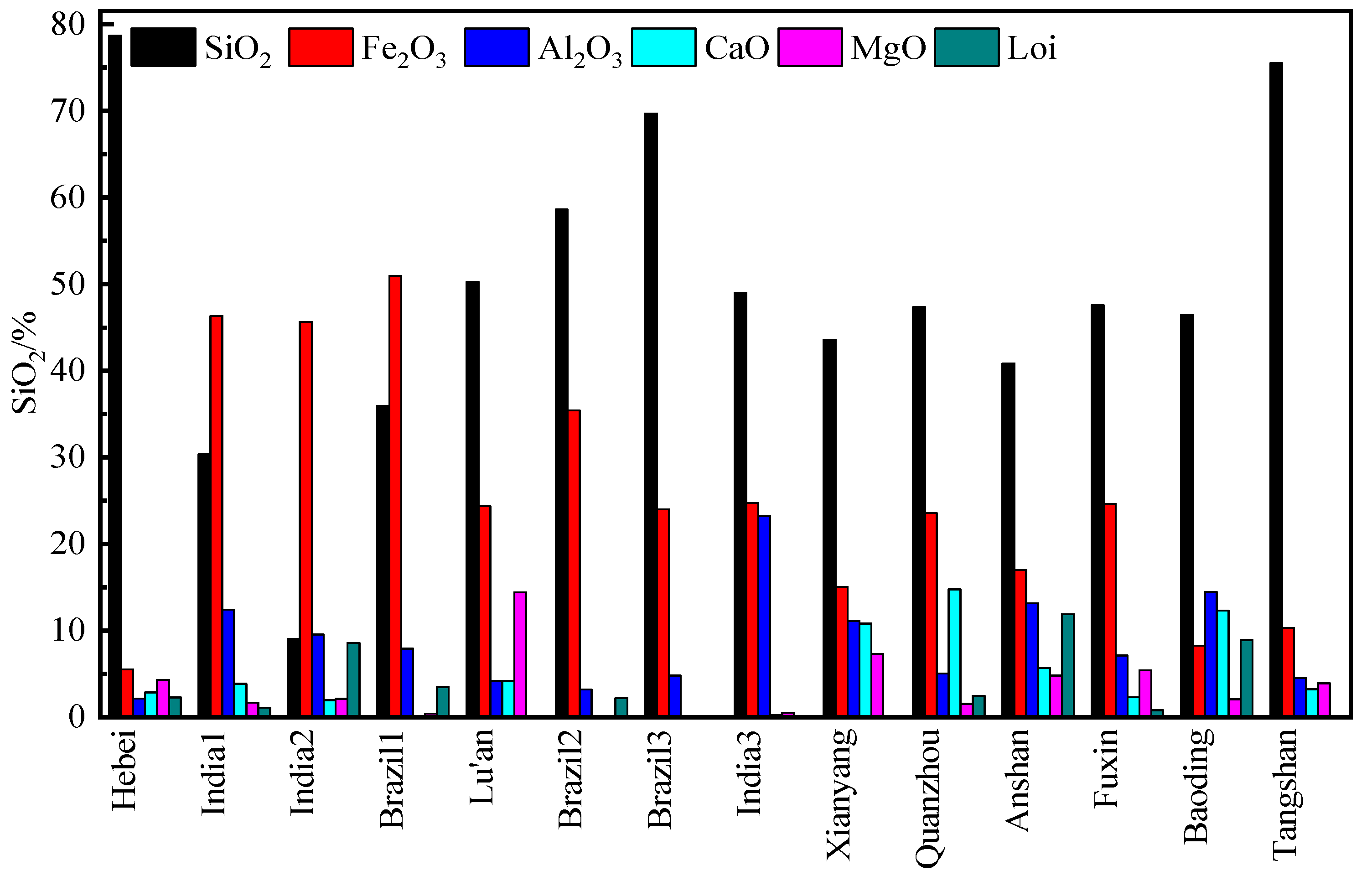
The chemical composition of the tailings is revealed by investigations of key literature and experimental analysis of Sijiaying iron ore tailings in Tangshan, as illustrated in Figure 3. The primary chemical constituents of iron ore tailings include SiO2, Al2O3, CaO, Fe2O3, MgO, along with trace amounts of K2O, Na2O, S, P, and other elements. The chemical and mineral contents of iron ore tailings range between areas due to variations in host rocks, ore body properties, and beneficiation procedures. The constituents with elevated levels in iron ore tailings include SiO2 and Fe2O3, comprising 54.68%–94% of the overall composition [4,5,6,7,8,9,10,11,12,13,14,15,16,17]. The Fe2O3 concentration in iron ore tailings from India and Brazil is comparatively elevated. With the exception of the Indian No.2 iron ore tailing sample, the Fe2O3 percentage in Indian and Brazilian iron ore tailings exceeds that of domestic tailings.
Iron ore tailings can be classified into two categories based on the variations in the types and compositions of related elements: single-metal type and polymetallic type. Consequently, considering the variations in silicon, aluminum, and other elemental compositions in iron ore tailings, single-metal type iron ore tailings can be further categorized into four distinct types: (1) High-silicon Anshan-type iron ore tailings characterized by elevated SiO2 levels; (2) High-aluminum Maanshan-type iron ore tailings distinguished by significant Al2O3 concentrations; (3) High-calcium–magnesium-type iron ore tailings with substantial CaO and MgO contents; and (4) Jiugang-type iron ore tailings exhibiting low levels of calcium, magnesium, aluminum, and silicon, and associated with nickel, cobalt, lead, and other elements. In contrast to single-metal iron ore tailings, polymetallic iron ore tailings exhibit more intricate mineral compositions and a greater variety of associated components. In China, they are predominantly located in the Panxi region in Southwest China, the Baotou area of Inner Mongolia, and in proximity to Wuhan Iron and Steel along the middle and lower portions of the Yangtze River [18].
The aforementioned studies indicate that variations in metallogenic conditions and the origin of iron ore deposits result in differing chemical and mineral compositions of iron ore tailings across various areas. Moreover, various beneficiation techniques influence the physicochemical characteristics of tailings. The varying physicochemical features of iron ore tailings lead to substantial discrepancies in their resource usage, hindering the ability to generalize research findings. Different places find it challenging to have identical application experiences with iron ore tailings.

3. Current Status of Comprehensive Utilization of Iron Ore Tailings

China’s iron ore resources predominantly consist of lean ores, with a scarcity of rich ores; around 80% of these mineral resources are classified as related and symbiotic types. The disparities in technical proficiency and beneficiation methods among regions result in the incomplete extraction of numerous valuable components, which remain in the tailings. Consequently, iron ore tailings are considered “secondary resources” or “synthetic ore deposits”. Enhancing the full exploitation of iron ore tailings is crucial for enhancing resource efficiency, conserving natural resources, and fostering sustainable economic and social development.

3.1. Recovery of Valuable Metals and Minerals

3.1.1. Recovery of Iron Element

The iron content in iron ore tailings is typically low. Pre-concentration and enrichment are usually performed first, followed by additional purification. The decision to perform grinding operations is based on the degree of mineral dissociation. Deng et al. [19] implemented the separation process of “pre-concentration–grinding–flocculation desliming–reverse flotation” on iron ore tailings with an iron grade of 19.97%, ultimately achieving an iron concentrate with an iron grade of 65.43% and a recovery rate of 53.34%. Fan Dun et al. [20] employed pre-concentration and deep reduction technology, utilizing a process of “high-intensity magnetic separation–grinding–low-intensity magnetic separation–medium-intensity magnetic separation” to achieve a crude concentrate with an iron grade of 36.41% and a recovery rate of 69.86%. The crude concentrate underwent a temperature increase in a furnace, followed by high-temperature reduction during furnace charge, resulting in reduced iron powder with an iron grade exceeding 93.41% and an iron recovery rate surpassing 93.65%.
International studies on the extraction of metallic iron from iron ore tailings commenced early. In 1973, Kim et al. [21] utilized the pneumatic transport method to extract precious metallic iron from iron ore flotation tailings. The iron recovery rate utilizing a singular beneficiation process is suboptimal. Typically, two or three processes are amalgamated to enhance the iron recovery rate. Su et al. [22] employed a method combining magnetization roasting and magnetic separation to extract tin and iron from high-calcium tin-iron tailings, which contained 35.53% iron and 0.56% tin by mass. This process yielded a magnetic concentrate with an iron grade of 66.3% and a tin grade of 0.07%, achieving an iron recovery rate of 92.9%. Fu et al. [23] employed a combination method of direct reduction roasting and leaching to extract gold and iron from iron ore tailings, achieving a gold recovery rate of 94.23%. Wang et al. [24] proposed a novel method for the separation of gold and iron from cyanidation tailings through a one-step chlorination reduction roasting process, leveraging the benefits of high-temperature chlorination and reduction roasting. This method achieved commendable technical metrics, including a gold chlorination efficiency of 83.1%, an iron grade of 92.0%, and an iron recovery rate of 84.9%.
Table 2 summarizes the main methods and technical indicators used by different researchers for iron recovery from iron tailings. Iron recovery is relatively low with a single beneficiation method. Combined processes such as magnetization roasting–magnetic separation and direct reduction roasting can increase iron recovery to 84.9%–92.9%. Su et al. achieved an iron recovery rate of 92.9% via magnetization roasting combined with magnetic separation, while simultaneously separating tin. Wang et al. applied a one-step chlorination-reduction roasting process to recover iron at 84.9% and gold at 83.1% synchronously. These results demonstrate that the combined use of multiple processes is an effective approach to improve the recovery efficiency of valuable metals.

3.1.2. Recovery of Rare Earth Elements

Rare earth minerals are extensively utilized in permanent magnets, catalysts, laser devices, and various other domains, rendering them a strategic resource. The extraction of rare earth elements from tailings has emerged as a research priority for numerous leading nations [25]. In 1980, the Beijing General Research Institute of Mining and Metallurgy collaborated with the Baotou Iron and Steel Nonferrous Metals No.3 Plant to investigate the re-extraction of high-grade rare earth concentrate through a single flotation method, utilizing tailings from concentrators in the Bayan Obo region of Baotou as raw materials. Wang et al. [26] used a hydroxamic acid collector, sodium silicate as a depressant, and FM-132 as a frother to recover rare earth oxide minerals (e.g., bastnaesite and monazite) from a tailing in Inner Mongolia. Through a closed-circuit flotation process comprising one roughing stage and two cleaning stages, they obtained a rare earth concentrate with an REO grade of 51.85% and a recovery of 79.12%. Wang et al. [27] applied a cascade magnetic separation process consisting of permanent magnetic separation, electromagnetic separation, and superconducting magnetic separation to preconcentrate weakly magnetic rare earth and niobium minerals from Bayan Obo tailings. The superconducting magnetic separation concentrate achieved a rare earth grade of 11.53% with a comprehensive recovery of 80.38%, and a niobium grade of 0.21% with a comprehensive recovery of 72.82%.
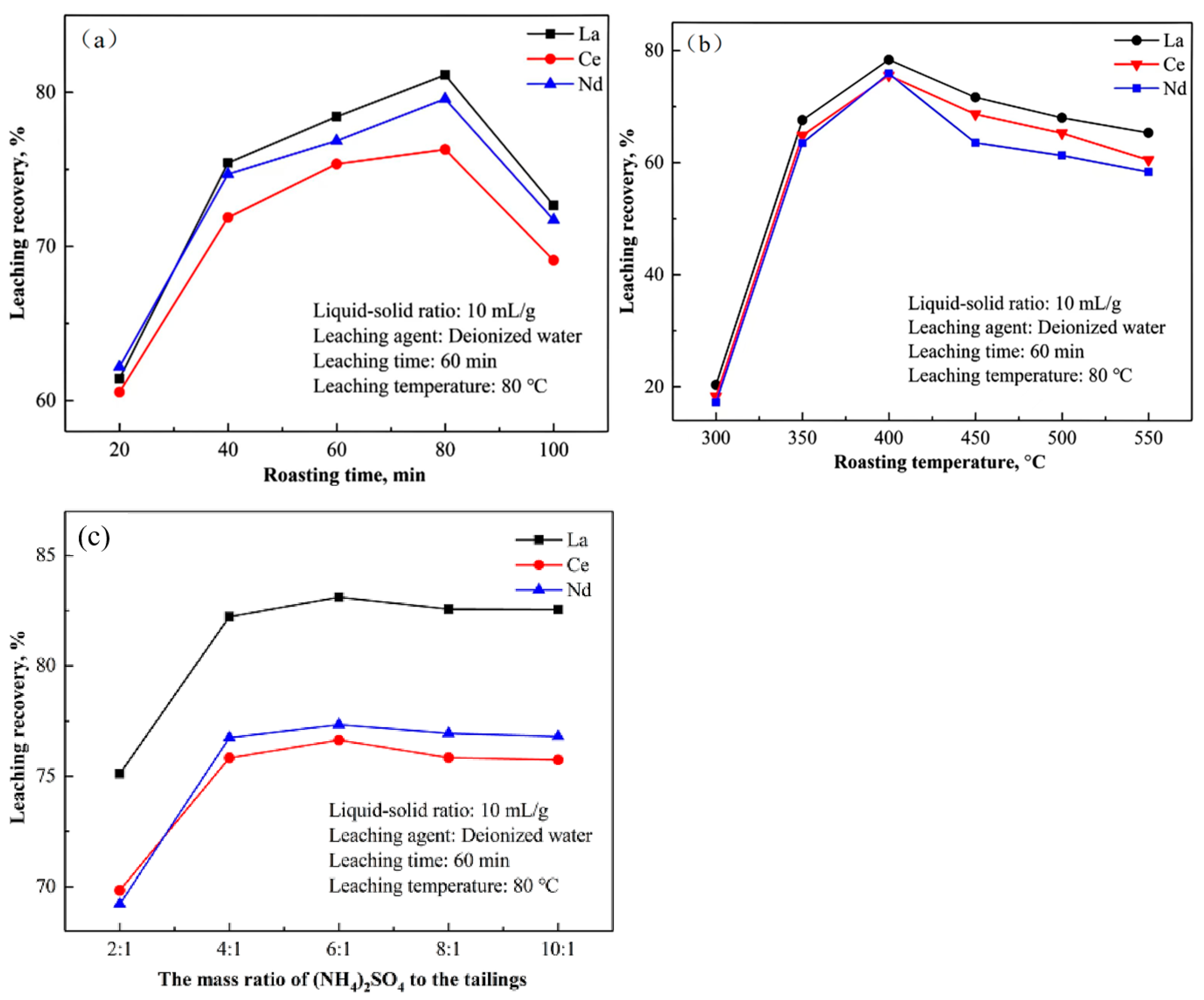
When traditional beneficiation methods such as magnetic separation and flotation are used, non-target minerals are often inadvertently extracted. This diminishes the quality of the target concentrate and obstructs the recovery of other valuable minerals. Mineral phase transition technology has been progressively implemented in beneficiation processes to enhance recovery efficiency. Ning et al. [28] investigated the recovery of rare earth elements from iron tailings treated by hydrogen-based mineral phase transformation (HMPT). In open-circuit flotation, the rare earth oxides (REOs, mainly Ce7O12, which is formed from bastnaesite via HMPT) reached a grade of 74.12% (mass fraction) and a recovery of 37.17%. In closed-circuit flotation, the REO grade reached 60.27% (mass fraction) with a recovery of 73%. These results indicate that the rare earths in the HMPT-treated iron tailings exhibit good floatability, thus enabling effective recovery. Zhou et al. [29] employed magnetization roasting and magnetic separation to recover iron from tailings, subsequently utilizing ammonium sulfate ((NH4)2SO4) activation roasting in conjunction with water leaching to further remove rare earth elements from the magnetic separation tailings. The mass ratio of (NH4)2SO4 to magnetic separation tailings, together with roasting temperature and duration, were examined as conditional variables to investigate the primary parameters influencing the leaching recovery rate in the (NH4)2SO4 activation roasting process, as seen in Figure 4. Under optimal conditions (roasting temperature 400 °C, roasting duration 80 min, mass ratio 6:1), the leaching recovery rates of La, Ce, and Nd were 83.12%, 76.64%, and 77.35%, respectively. Currently, there is a scarcity of research on the holistic recovery of three or more valuable components. Zhang et al. [30] investigated the comprehensive tailings of Baotou Iron and Steel, successfully recovering four valuable components: total iron (TFe), rare earth oxide (REO), niobium, and fluorite. This was achieved through a combination of low-intensity magnetic separation (0.15 T) and high-intensity magnetic separation (1.56 T), supplemented by froth flotation and reduction roasting in a low-intensity magnetic separation combined process. The recovery rates were 72.70%, 81.84%, 78.58%, and 60.18%, respectively. The direct flotation of rare earth oxides from the concentrate of high-intensity magnetic separation attained a recovery rate of 75.43%.
It should be noted that the technologies for recovering rare earths from low-grade waste materials such as tailings are generally at the laboratory-scale to pilot-scale development stage, and are far from reaching large-scale industrial application [31]. Moreover, conventional recovery processes cannot be directly applied to such materials, and additional steps such as pre-concentration are required, which significantly increase reagent consumption and overall processing costs. Consequently, the cost of recovering rare earths from tailings is often not offset by the economic value of the recovered products [32]. Therefore, the economic feasibility of recovering rare earths from iron tailings is still considered low. Break-even is only expected when rare earth prices are high or when the recovery is performed as a by-product benefit of iron recovery. In the future, low-cost and high-selectivity rare earth extraction technologies need to be developed, and the synergistic recovery of multiple valuable components from tailings should be explored.

3.1.3. Recovery of Other Metal Elements

Besides iron, iron ore tailings also comprise additional metallic elements including titanium, copper, zinc, and molybdenum. These symbiotic components are primarily disseminated as small particles with intricate symbiotic interactions, complicating the attainment of monomer dissociation. Consequently, during the recovery process, pre-concentration techniques such as flotation, magnetic separation, and gravity separation are typically employed initially, succeeded by the purification of iron ore tailings. Ma et al. [33] employed the comprehensive process of “preliminary flotation–gravity separation enrichment–tungsten/tin separation” to produce arsenic concentrate, tungsten concentrate, and tin concentrate, achieving grades and recovery rates of 63.71% and 85.43%, 60.13% and 58.38%, and 21.08% and 44.87%, respectively. Wang et al. [34] utilized the iron-separating tailings of vanadium–titanium magnetite from Heishan Iron Mine as the subject of their study, employing a full-scale single flotation technique. Following the flotation procedure comprising one roughing and five cleaning stages, titanium concentrate with a TiO2 grade of 36.50% and a recovery rate of 61.01% was produced. Gallium compounds primarily serve as semiconductors in the production of solar panels and LED diodes; nevertheless, commercially available gallium supplies are limited. Macias et al. [35] suggested the extraction of gallium from iron ore tailings in Mexico. Experiments demonstrated that tributyl phosphate (TBP) can extract 100% of gallium and 35% of iron. During the separation phase, as much as 100% of the recovered gallium can be leached using 0.1 mol/L H2SO4.

3.1.4. Recovery of Non-Metallic Minerals

The primary mineral constituents of iron ore tailings are often non-metallic minerals. Researchers have also performed pertinent studies on the extraction of mineral resources from iron ore tailings. For instance, Lv et al. [36] employed sodium dodecyl sulfonate (SDS) and dodecylamine (DDA) as anionic and cationic collectors, respectively, and implemented a closed-circuit flotation process comprising “one roughing, one scavenging, and five cleanings” for Dahongshan iron ore tailings, achieving the effective recovery of mica from these tailings. Valderrama et al. [37] examined the collecting efficacy of a novel synthetic collector on minerals including quartz, iron oxide, feldspar, carbonate, and amphibole in the magnetic separation of iron ore tailings, and introduced a new synthetic collector for the flotation concentration of apatite minerals in these tailings. Araujo et al. [38] implemented a novel cationic collector including a high-intensity adjustment capability for Brazilian iron-bearing fine tailings, enabling the extraction of iron concentrate as well as a higher-purity siliceous concentrate suitable for use as an additive in construction materials.
From the above studies, it can be seen that a technical system has been established for recovering iron, rare earths, associated metals, and non-metallic minerals from iron tailings. With the advancement of research, a transition has been made from single beneficiation methods to combined processes, and from the separation of a single target to the stepwise recovery and synergistic extraction of multiple components. Among these, the recovery of rare earth elements has become a research hotspot in recent years. However, most studies in this field are still at the laboratory or pilot stage, and a considerable gap remains from industrial application. In most cases, the output value of the recovered iron concentrate only covers part of the treatment cost. Therefore, projects often rely on government subsidies or the synergistic recovery of associated valuable components (such as rare earths or gold) to achieve break-even. Furthermore, the recovery of valuable components does not completely consume all tailings, and new tailings that cannot be further extracted are still generated during the process. Thus, future research should be directed toward the development of short-process, low-cost, and green combined beneficiation-metallurgical processes. Deeper precise separation based on the physicochemical properties of minerals should also be pursued, along with the cascade utilization of all tailings components, in order to achieve the sustainable development goals of resource utilization and high-value application of iron tailings.

3.2. Preparation of Soil Amendments and Fertilizers

Iron ore tailings frequently comprise diverse trace elements, including boron, zinc, and molybdenum. Utilizing them to make trace element fertilizers enhances soil structure and augments soil fertility. Moreover, the constituents like calcium, magnesium, and sulfur present in iron ore tailings can be utilized to make medium-element fertilizers and composite mineral fertilizers. Tailings with a minor concentration of magnetite can be converted into magnetic fertilizers via magnetization treatment, owing to their magnetic properties, which serve as soil enhancement materials.

3.2.1. Preparation of Soil Amendments

Since the mid-1980s, the Maanshan Institute of Mining Research has initiated investigations into the technical methodology for producing magnetized fertilizers from magnetic separation iron ore tailings, establishing itself as one of the earliest scientific research institutions in China to examine the application of magnetized iron ore tailings as soil amendments. Magnetic fertilizers can markedly improve the magnetic aggregation effect of soil and optimize soil aggregate structure, consequently enhancing soil porosity and air permeability, and establishing conducive conditions for crop growth and development. Ding et al. [39] formulated magnetized compound fertilizers utilizing fly ash, steel slag powder, and iron ore tailing powder as magnetic constituents. The magnetic induction intensity of fertilizers produced through granulation and screening, followed by magnetization, is double that of the procedure involving magnetization prior to granulation, while the magnetization efficacy and magnetic stability of iron ore tailing powder are optimal. Considering the potential nutrient depletion of magnetized compound fertilizers, which diminishes their nutrient utilization efficiency, Li [40] used iron-separation tailings as a magnetizing material and combined them with slow-release materials and inorganic fertilizer raw materials. He performed granulation under the conditions of an initial moisture content of 5%–8%, a granulator speed of 35–40 r/min, and a drying temperature of 60 °C. He then subjected the granules to magnetization treatment at 8000 mT for 5 s to produce a slow-release magnetized compound fertilizer. Through sand column and soil column leaching experiments, he confirmed that this fertilizer achieved a nutrient loss control rate of over 65% and 54%, respectively. Therefore, it significantly reduces the loss of nitrogen, phosphorus, and potassium nutrients and effectively improves the nutrient utilization efficiency of the fertilizer.

3.2.2. Preparation of Trace Element Fertilizers

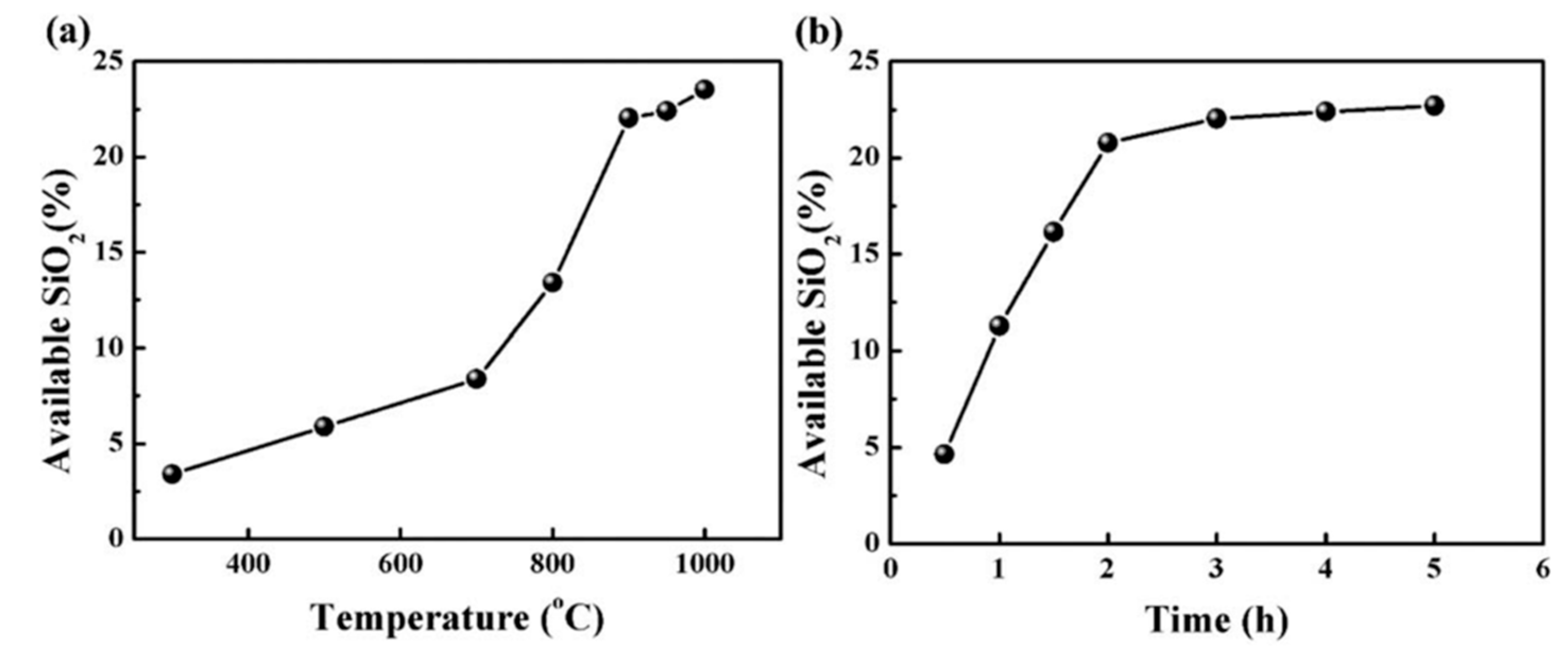
In terms of using iron ore tailings to prepare trace element fertilizers, slow-release nitrogen–phosphorus–potassium–sulfur multi-element granular compound fertilizers can be directly synthesized using phosphorus-iron tailings, sulfuric acid and urea as main raw materials. This technique not only prevents the discharge of phosphogypsum but also demonstrates a substantial yield-enhancing effect in real applications [41]. Hu et al. [42] synthesized slow-release silicon fertilizer using a solid-phase sintering technique with iron ore tailings as the primary raw material. Figure 5 illustrates the ideal preparation temperature and duration. Upon calcining iron ore tailings at 950 °C for 2 h, the available SiO2 rose from 0.70% to 20.77%, thereby satisfying the Chinese agricultural silicon fertilizer criterion (available SiO2 > 20%). Tozsin et al. [43] employed pyrite tailings as modifiers for calcareous soils, enhancing the nutrient profile of iron (Fe) and other trace elements such as copper (Cu), zinc (Zn), and manganese (Mn), thereby augmenting the concentrations of these nutrients and the dry matter biomass of wheat.
Currently, there is a paucity of domestic and international research on amendments and fertilizers for iron ore tailing soil. The collection and reuse of tailings as fertilizer source materials entail significant operational expenses and technical challenges. While the minerals in iron ore tailings can serve as a source of soil amendments, they also contain trace elements, such as arsenic and lead, that may adversely affect human health and the environment. Consequently, comprehensive research and evaluation must be conducted on iron ore tailing fertilizers to ascertain the threats posed by heavy metals to water resources and soil.

3.3. Tailings Pond Reclamation

China commenced the reclamation of wasteland in the 1960s; nevertheless, the advancement was gradual. Studies on tailings pond reclamation emerged in the early 1980s. At that time, merely 0.5 m of loess was applied to the surface of tailings ponds to mitigate environmental pollution and facilitate crop cultivation. Following the enactment and enforcement of pertinent legislation and the recognition of the dangers associated with tailings ponds, China has achieved significant advancements in tailings pond reclamation after decades of development.
The research on the phytoremediation of iron ore tailings mostly concentrates on reclamation techniques, models, outcomes, and their assessment methodologies. Reclamation is primarily carried out by mixing raw soil, mushroom residue, soil conditioners, and various tailings in different proportions. The restoration efficacy is then examined. Zhang et al. [44] utilized two water-retaining agents, Heijinzi and Hanluzhibao, in varying mass ratios for the reclamation of chives from iron ore tailings, examining their impact on chive development and the characteristics of the tailings. Lv et al. [45] combined raw soil, mushroom residue, and iron ore tailings in varying ratios for reclamation trials, examining the runoff and sediment yield characteristics, as well as the hydraulic aspects of recovered slopes under rainy conditions. Norland et al. [46] mixed municipal waste compost and phosphorus fertilizer in different proportions for iron tailings reclamation, and investigated the changes in vegetation cover and soil physicochemical properties in the reclaimed area under long-term observation. Noyd et al. [47] adopted a reclamation mode combining compost, arbuscular mycorrhizal fungi, and fertilizer to conduct a field vegetation reconstruction experiment on taconite tailings, and studied its effects on plant cover, biomass, species composition, and mycorrhizal infection rate. Yan et al. [48] set up three reclamation modes—foreign soil covering, vegetation blanket, and foreign soil plus vegetation blanket—to carry out a vegetation reconstruction experiment on an iron tailings dam, and studied the effects of different treatments on vegetation establishment, community structure, and soil physicochemical properties on the tailings slope.
The primary research on reclamation impacts centers on the growth of reclaimed vegetation, the enhancement of the iron ore tailing microenvironment, the soil and water conservation efficacy of reclaimed soil, and the migration of heavy metals. Liu [49] examined three varieties of mycorrhizal fungi, utilizing soybean and corn as the inoculated plants, to investigate the growth of these mycorrhizal plants on iron ore tailings and their uptake of mineral nutrients. Guo [50] examined the characteristics of soil particle size distribution, soil water retention capacity, and infiltration properties of iron ore tailings under various reclamation methods, and investigated the impact of reclamation on runoff and sediment yield from iron ore tailing sand slopes before and after reclamation. Yu et al. [51] used Amorpha fruticosa as the reclamation plant and studied the effects of adding mountain soil and straw on the improvement of iron tailings substrate and plant growth.
Zhang et al. [52] conducted field plot tests on iron ore tailings utilizing five plant species: Elaeagnus angustifolia, Tamarix chinensis, Caragana korshinskii, Hedysarum mongolicum, and Hylotelephium erythrostictum, to assess the enhancement of the microenvironment. The study indicated that Hedysarum mongolicum and Elaeagnus angustifolia are more appropriate for ecological restoration on iron ore tailings, enhancing nutrient levels and microbial populations. The physicochemical properties and micro-environment of iron tailings can be improved by reclamation, and the heavy metal content in the soil should not be ignored. Liu [53] utilized municipal sludge as a soil supplement for iron mine tailings. The study indicated that when the volume ratio of sludge to iron ore tailing sand ranges from 2:4 to 3:4, the growth of Pinus sylvestris var. is seen. The seedlings of mongolica exhibit optimal growth, with the highest absorption of heavy metals. Cele et al. [54] studied the effects of sludge and plants on the physicochemical conditions of iron tailings soil in Eswatini. Although sludge contains important nutrients that can greatly improve the physicochemical conditions of mining soil and enhance vegetation reconstruction, the threat of increased trace element contents (Cu, Zn, Cd, Hg, and Pb) in the treated tailings, compared to the surrounding adjacent soil, should never be underestimated.
Wang et al. [55] proposed an evaluation approach to assess the influence of varying reclamation durations on the soil quality of iron ore tailing wastelands. The overall soil quality of restored iron ore tailing wastelands surpasses that of bare tailings, and the soil quality improves with the passage of restoration years. de Sousa et al. [56] used a comprehensive evaluation model combining principal component analysis and soil physical properties to assess the soil structure, porosity, and water-holding capacity of different habitat types. The results showed that this combined evaluation model can more comprehensively reflect the soil quality status of the restored areas, and its evaluation effect is better than that of a single evaluation method. Yan et al. [57] employed an evaluation model that integrates analytic hierarchy process (AHP) and principal component analysis (PCA) weights to assess the soil pH, organic matter, and available nutrients across six vegetation restoration modalities. The findings indicate that the AHP-PCA assessment model more fully represents the actual conditions of the evaluation subjects, yielding superior outcomes compared to a singular technique. Numerous studies have demonstrated that vegetation regeneration following the reclamation of iron ore tailing wastelands significantly enhances the tailings matrix.
In summary, the existing research on the phytoremediation of iron ore tailings has established a comprehensive technical framework encompassing “reclamation methods,” “reclamation effects,” and “comprehensive evaluation.” Iron ore tailings, however, lack essential nutrients, possess an inadequate physical structure, and contain elevated levels of heavy metals, which impede the natural growth of plants. Furthermore, phytoremediation is hindered by a sluggish development rate of species and limited bioavailability of heavy metals. Consequently, phytoremediation is typically integrated with traditional remediation techniques, including soil enhancement, microbial inoculation, and bioengineering. Animal and insect dung serve as organic fertilizers to enhance iron ore tailings, consequently augmenting the dry biomass of plant stems and roots, as well as boosting root length, volume, surface area, and diameter, which facilitates the absorption of macro- and microelements [58].

3.4. Preparation of Chemical Products

The presence of Fe2O3 and SiO2 in iron ore tailings creates advantageous circumstances for the synthesis of advanced oxidation process catalysts. de Freitas et al. [59] employed methylene blue as a model compound, utilized the catalytic properties of iron ore tailings, and incorporated bentonite as a pellet binder to formulate catalysts for the removal of organic dyes in continuous flow wastewater treatment. Silva et al. [60] employed iron ore tailings as catalysts for the synthesis of carbon nanotubes using chemical vapor deposition (CVD) in a fluidized bed system, demonstrating effective adsorption capacity for contaminants in wastewater. Iron ore tailings can be utilized as a source of iron oxide to construct acidic heterogeneous catalysts based on iron sulfate, which exhibit promising applications in the esterification reaction of oleic acid and methanol [61]. Vitor et al. [62] employed hydrochloric acid as a leaching agent to directly process Brazilian iron ore tailings, dissolving iron oxides via acid leaching, and subsequently obtained a high-concentration ferric chloride solution through filtration and evaporation for application as a coagulant in wastewater treatment. Experiments have shown that the tailings–ferric chloride coagulant effectively regulates the chromaticity and turbidity of raw water for public water supply.
The current literature on the production of chemical compounds from iron ore tailings is limited, with the majority in the laboratory verification stage. The precise mechanisms of catalysis and coagulation, along with the viability of large-scale manufacture and application, require additional investigation. Nonetheless, the aforementioned investigations have unveiled new avenues for the high-value usage of iron ore tailings.

3.5. Preparation of Mine Filling Materials

When iron ore tailings are used as backfill for mine goafs, two problems are addressed. First, environmental issues caused by tailings accumulation and land occupation are reduced. Second, safety concerns related to the goafs themselves are mitigated. Furthermore, following the filling process, pillars and ore walls can be reinstated, enhancing the resource recovery rate [63]. China implemented the filling mining technique in the 1950s, which has undergone many developmental phases, including waste rock filling, classed tailings filling, and cemented filling. The examination of the international literature on tailings filling via Web of Science reveals that Chinese scientists have authored the majority of publications, at 53.8%, followed by Canada, Australia, Turkey, and other nations. Liu [64] examined the slump, bleeding characteristics, and compressive strength of filling slurry formulated by incorporating varying quantities of cement into categorized tailings from the Liutangfang Iron Mine. The study showed that the classified tailings from the Liutangfang Iron Mine, utilized as filling aggregates, completely satisfy the criteria for underground filling mining. Classified iron ore tailings exhibit superior performance compared to unclassified tailings, attributable to the elimination of fine-grained fractions [65]. Liu et al. [66] and Liu et al. [67] conducted studies on unclassified and classified tailings infill materials. The elevated presence of ultrafine fractions in unclassified tailings impedes the development of a network structure among calcium silicate hydrate from cement hydration, leading to the inadequate strength of the unclassified tailings filling body, which fails to satisfy the strength criteria for the upward drift filling mining method in the mine. To satisfy the strength criteria, the quantity of cement must be augmented, resulting in an unfeasible unclassified tailings cemented filling methodology. Consequently, categorized tailings are advised for use as filler aggregates.
Backfill mining is widely applied globally due to its technical and economic advantages and a higher industrial waste utilization rate. It is noted that 25% of the total mining cost is accounted for by mine backfilling cost. Furthermore, within the fixed and variable costs of mine backfilling, when ordinary Portland cement is used as the sole binder, 75% of the backfilling cost is accounted for by the binder cost [68]. This significantly increases the cost of backfill materials when cement is used as the binder. Therefore, the preparation of backfill materials using solid waste-based binders or clinker-free binders is not only an application of green recycled cementitious materials but also a new type of backfill technology. Moreover, by utilizing locally sourced materials, the overall cost of goaf backfilling can be greatly reduced. Consequently, many scholars have carried out related research. Yuan et al. [69] used iron tailings powder and a self-developed TF binder to prepare a solidified iron tailings powder slurry (SITP). Their study showed that the addition of the TF binder effectively improves the uniformity of the slurry and the degree of hydration reaction. Under a low binder dosage, the required strength and fluidity of the backfill can still be achieved. The SITP slurry prepared with the self-developed TF binder and vibration mixing not only meets the quality requirements of goaf backfilling engineering but also significantly reduces construction costs. Li et al. [70] also used iron tailings sand and a self-developed new binder (NCM) to prepare a high-fluidity backfill slurry. Their study showed that under a binder tailings ratio of 1: 10 and a slurry concentration of 70%, the 28-day compressive strength of the backfill reached 3.14 MPa. This value is significantly higher than that of the ordinary Portland cement and slag powder system under the same conditions. The backfill achieves both good strength and transport performance. In engineering applications, this approach can save approximately 13 million CNY per year in backfill costs. He et al. [71] used iron tailings as fine aggregates to prepare a clinker-free cemented iron tailings backfill material (HPG) with an ultra-low binder to tailings ratio. HPG is simple to produce and exhibits good compressive performance, settling ratio, and water resistance. Meanwhile, the workability, mechanical properties, and ion leaching of the clinker-free backfill material meet the specification requirements, and each cubic meter of backfill material can absorb up to 1699.92 kg/m3 of iron tailings. An et al. [72] utilized ultrafine iron tailings powder to prepare a clinker-free full-tailings binder and systematically investigated the rheological properties, mechanical performance, and consolidation mechanism of the resulting full-tailings backfill material. Their study showed that the ultrafine iron tailings powder not only participates in the hydration reaction as an active component, but also exerts a micro-aggregate filling effect and acts as active nodes. This significantly optimizes the pore structure and reduces the proportion of harmful pores. The overall consolidation effect of this system is superior to that of ordinary Portland cement at the same dosage.
A significant number of research on iron ore tailings as filler materials have been conducted in China and implemented in practice. In recent years, international researchers have mostly concentrated on novel tailings filling materials, the interaction between the filling medium and surrounding rock, heavy metal leaching characteristics, corrosion resistance, and the impact of curing conditions on the performance of the filling medium. The tailings designated for overseas filling primarily consist of those from precious metals, including gold, silver, copper, and zinc, with minimal representation from iron ore tailings. The primary reason is that the majority of significant iron ore-producing nations, including Australia and Brazil, utilize open-pit mining, which does not necessitate backfilling operations. Moreover, the iron ore grade in prominent foreign producing nations is comparatively high, ranging from 60% to 70%, allowing for direct smelting without the need for beneficiation, hence resulting in an absence of iron ore tailings for filling purposes. Owing to the variances in goaf conditions and tailings raw materials across different mines, each mine must do a comprehensive analysis based on its unique characteristics prior to filling and implement an appropriate filling procedure.

3.6. Preparation of Building Materials

Since the Liaoning Provincial Institute of Building Science endeavored to manufacture aerated concrete utilizing Anshan Qidashan iron ore tailings in the 1970s, domestic research on iron ore tailing building materials has progressively advanced. Iron ore tailings have been effectively utilized in cement manufacturing, the creation of diverse tailing bricks and boards, glass-ceramics, and as aggregates to substitute natural sand and gravel. The research focus has transitioned from raw material ratios, preparation, and application to the microstructure, high performance, and enhanced value of materials.

3.6.1. Preparation of Cementitious Materials

Because of its favorable cementitious qualities, cement has become the most widely consumed fundamental material. As a result, it is challenging for cement raw materials to meet the industry’s sustainable development criteria. The mass fraction of SiO2 and Al2O3 in iron ore tailings typically ranges from 65% to 80%, resembling the primary chemical composition of clay. Consequently, iron ore tailings may substitute clay raw materials in cement manufacturing as siliceous and iron correction materials [73]. Moreover, iron ore tailings may serve as supplemental cementitious materials to partially substitute cement following activation treatment.
(1)
As raw materials for cement production
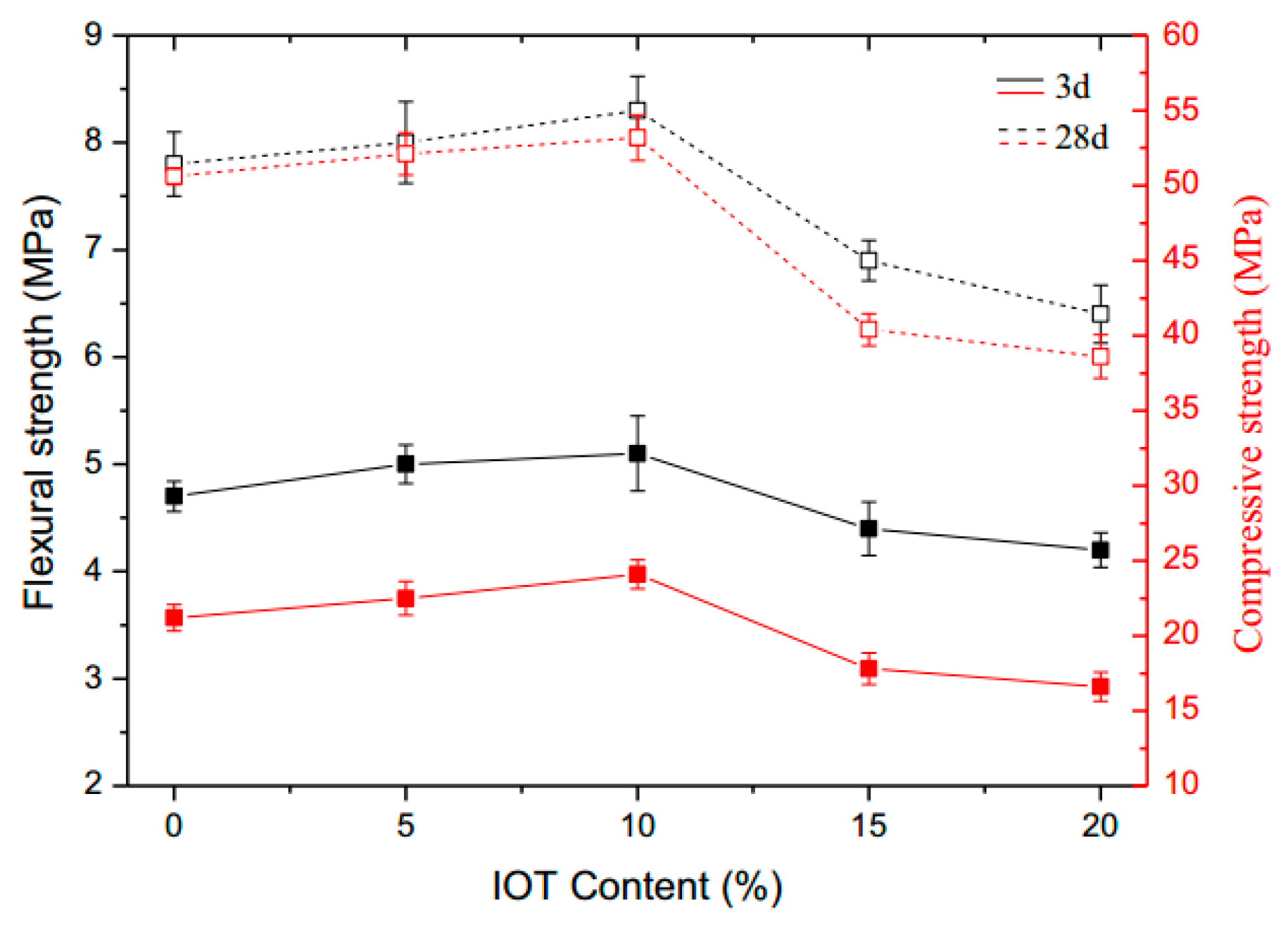
Due to their high iron content, iron ore tailings can serve as iron correction raw materials, substituting iron powder in conventional cement raw materials. The utilization of iron ore tailings using this technique is constrained, typically comprising less than 5% of the cement raw material ratio. Wang et al. [74] posited that substituting iron powder with iron ore tailings for the calcination of cement clinker promotes the formation of clinker mineral phases, resulting in a clinker with elevated hydration activity, whose strength surpasses that of cement produced with iron powder; however, the maximum proportion of iron ore tailings as an iron raw material is limited to 3.1%. Young et al. [75] utilized high-magnesium and low-silicon iron ore tailings as a substitute for clay and produced cement clinker through a normal sintering process. As the proportion of iron ore tailings increased, both the flexural strength and compressive strength exhibited a small enhancement, as illustrated in Figure 6. Nonetheless, when the percentage of iron ore tailings is above 10% (mass fraction), the strength diminishes significantly. The raw meal containing up to 10% iron ore tailings can yield high-quality cement clinker when fired at 1420 °C for 1 h.
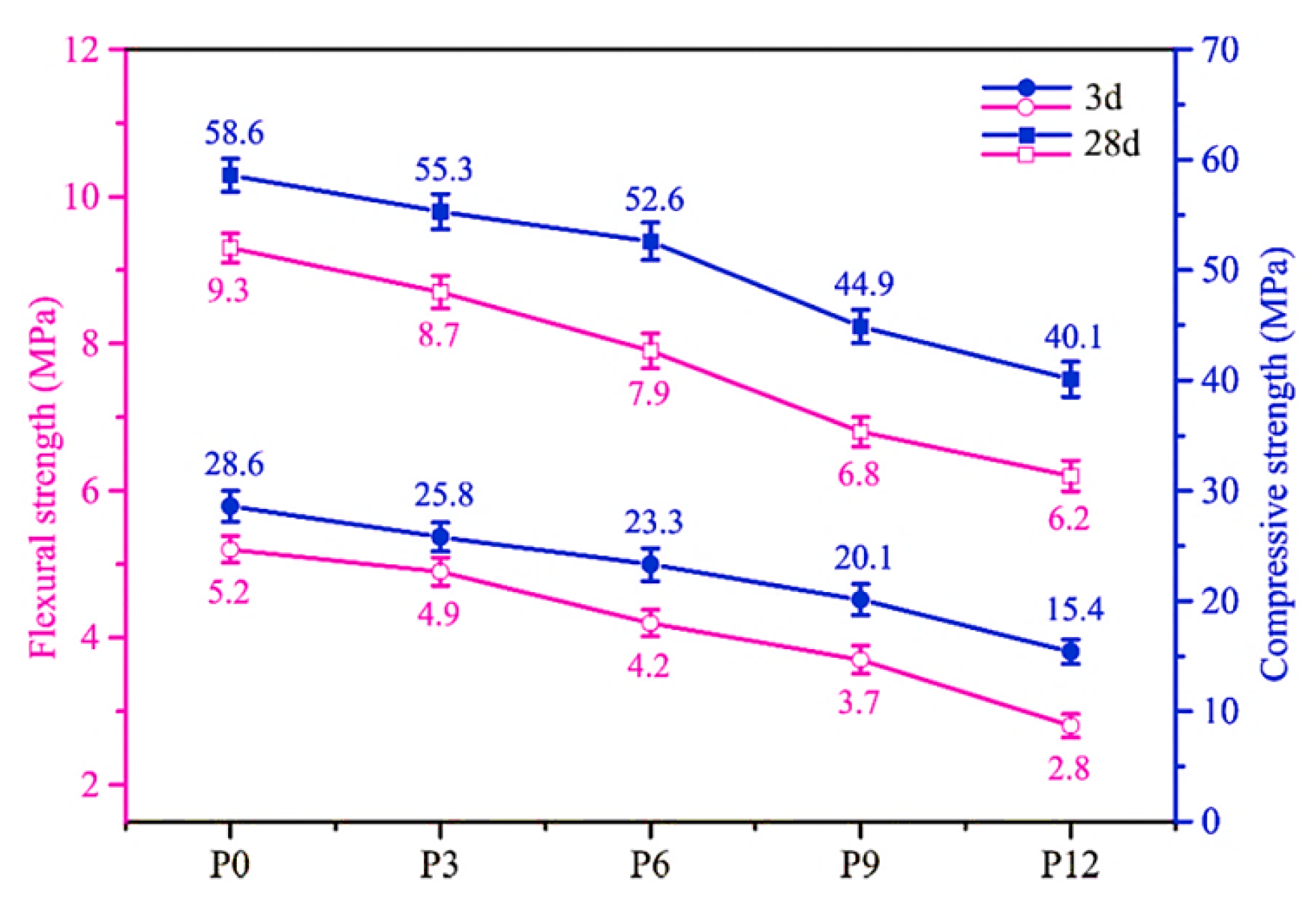
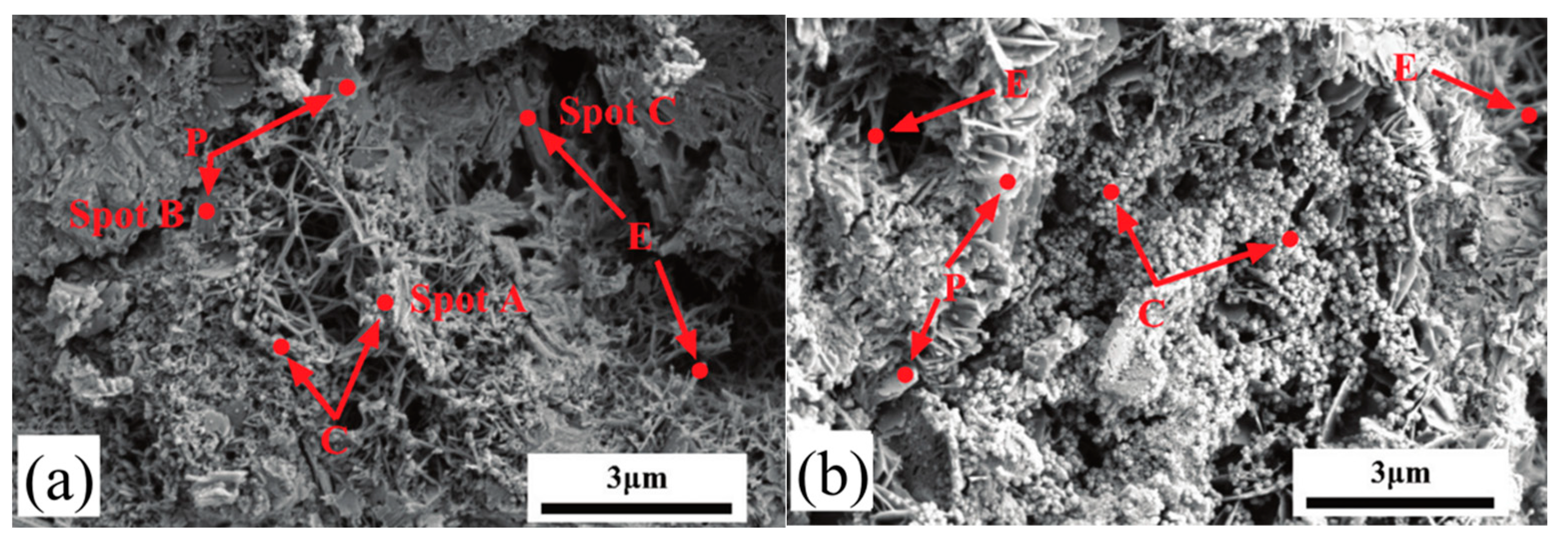
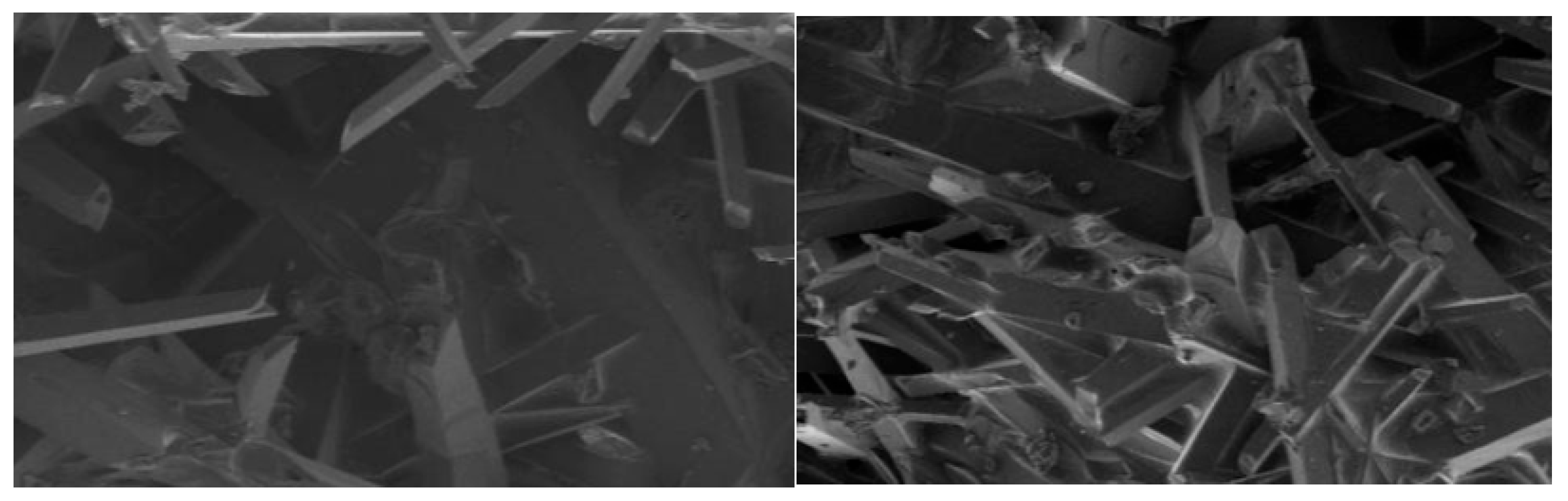
Wang et al. [76] examined the feasibility of utilizing calcareous iron ore tailings in cement manufacturing. The study indicated that the hydration products predominantly consist of ettringite, calcium silicate hydrate (C-S-H), and calcium hydroxide (Ca(OH)2). The mechanical properties of cement clinkers containing 0%, 3%, 6%, 9%, and 12% (mass fraction) of calcareous iron ore tailings at various curing ages are illustrated in Figure 7. As the proportion of iron ore tailings increases, the flexural and compressive strengths of cement samples at 3 and 28 days of curing exhibit a declining trend. When percentage of iron ore tailings is 6%, the flexural and compressive strengths remain compliant with the standards of 52.5 grade cement. Figure 8 illustrates the SEM results of cement using 6% iron ore tailings, cured for 28 days. The substances at locations C, E, and P are granular C-S-H gel, rod-like ettringite, and lamellar Ca(OH)2, respectively. They are intricately connected, serving as binders that are the primary sources of cement’s flexural and compressive strength.
(2)
Preparation of supplementary cementitious materials by mechanical activation of iron ore tailings
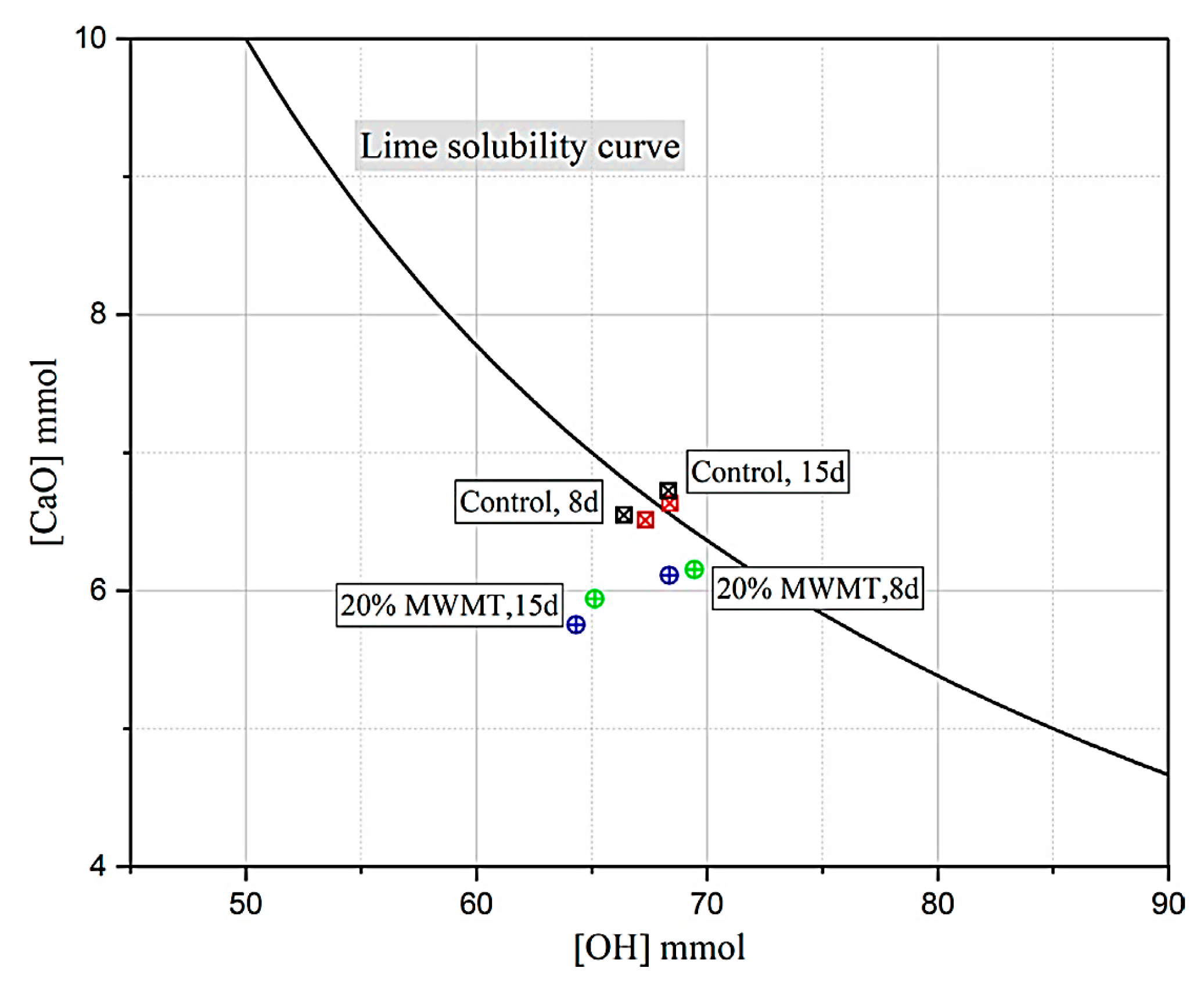
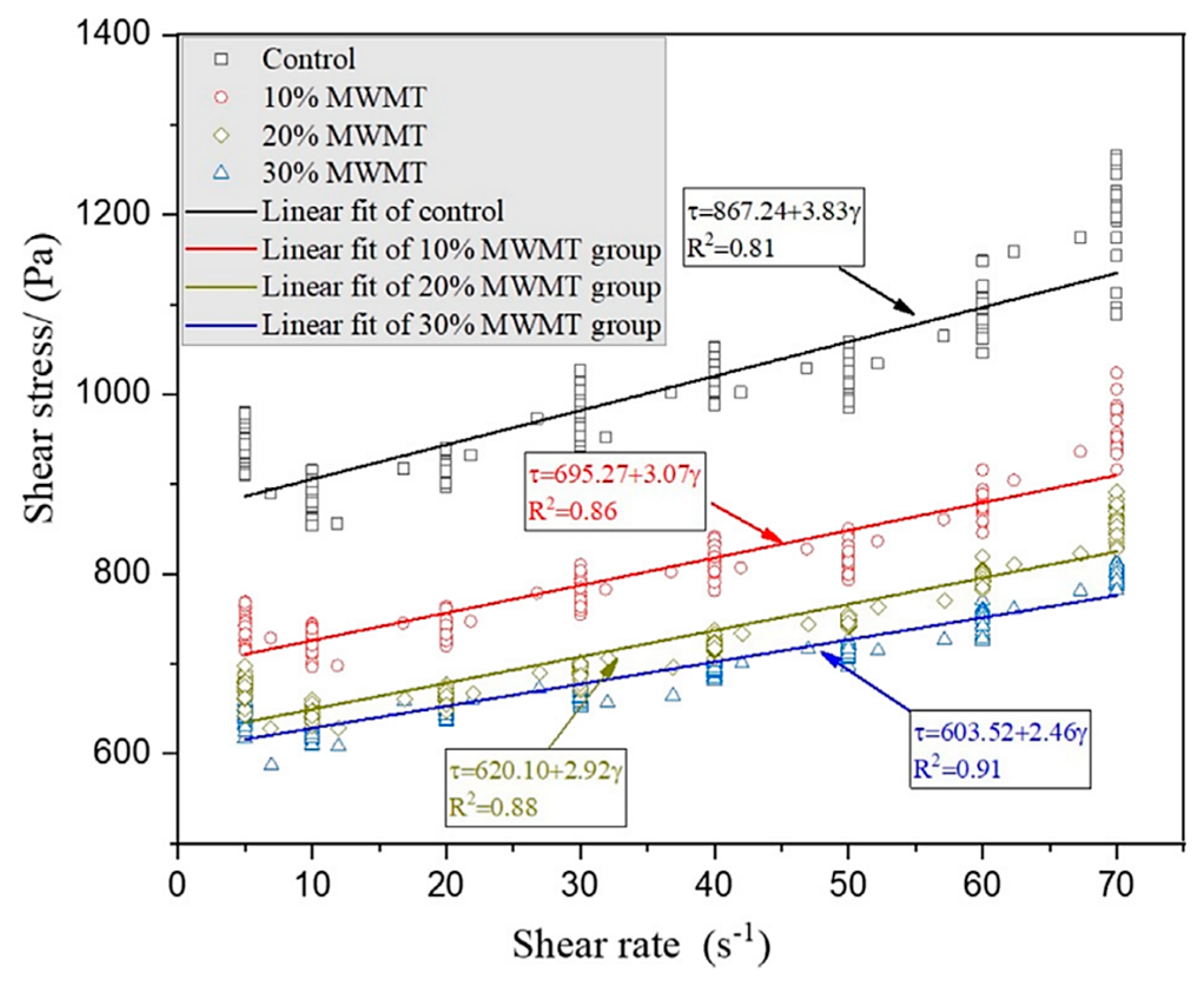
Mechanical activation consistently enhances the particle size of iron ore tailings, augments the specific surface area, and transforms mechanical energy into surface and internal energy of the tailings to elevate their reactivity. Yao et al. [77] employed mechanical grinding to activate iron ore tailings. Incorporating 10%, 20%, and 30% of activated iron ore tailings into cement results in a composite cement that meets the technical specifications for 32.5 composite Portland cement. Wu et al. [78] employed mechanically activated waste magnetite tailings (MWMT) as pozzolanic substitutes for cement in the formulation of cement products. The Frattini test results depicted in Figure 9 indicate that the CaO content of the sample with 20% MWMT, cured for 8 days, is nearly equivalent to but slightly below the curve. This suggests that a portion of the Ca2+ released into the solution during cement hydration is utilized in the pozzolanic reaction, although the pozzolanic activity is comparatively feeble. After a 15-day curing period, the coordinate point is situated at the lower left of the curve (pozzolanic zone), signifying increased consumption of Ca2+ and the ongoing occurrence of the pozzolanic reaction between days 7 and 15. Figure 10 illustrates the rheological properties of fresh mortar. As the MWMT content escalated from 10% to 30%, the plastic viscosity values of fresh mortar diminished by 19.8%, 23.8%, and 35.8%, respectively. At a constant shear rate, the shear stress progressively diminishes with an increase in MWMT content. The low specific surface area of MWMT mitigates the negative impacts of its rough and angular particles, hence enhancing the rheological qualities of fresh mortar.
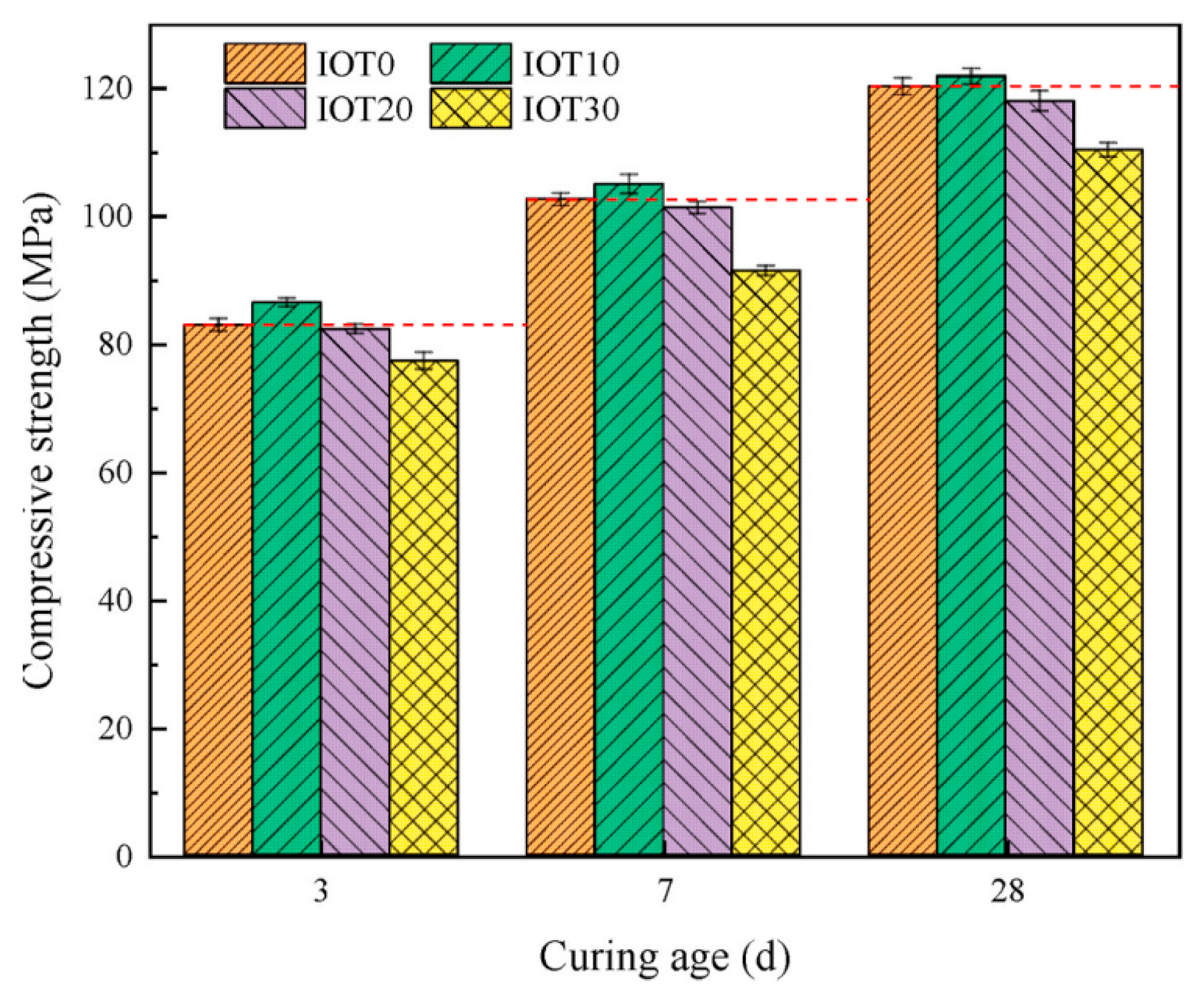
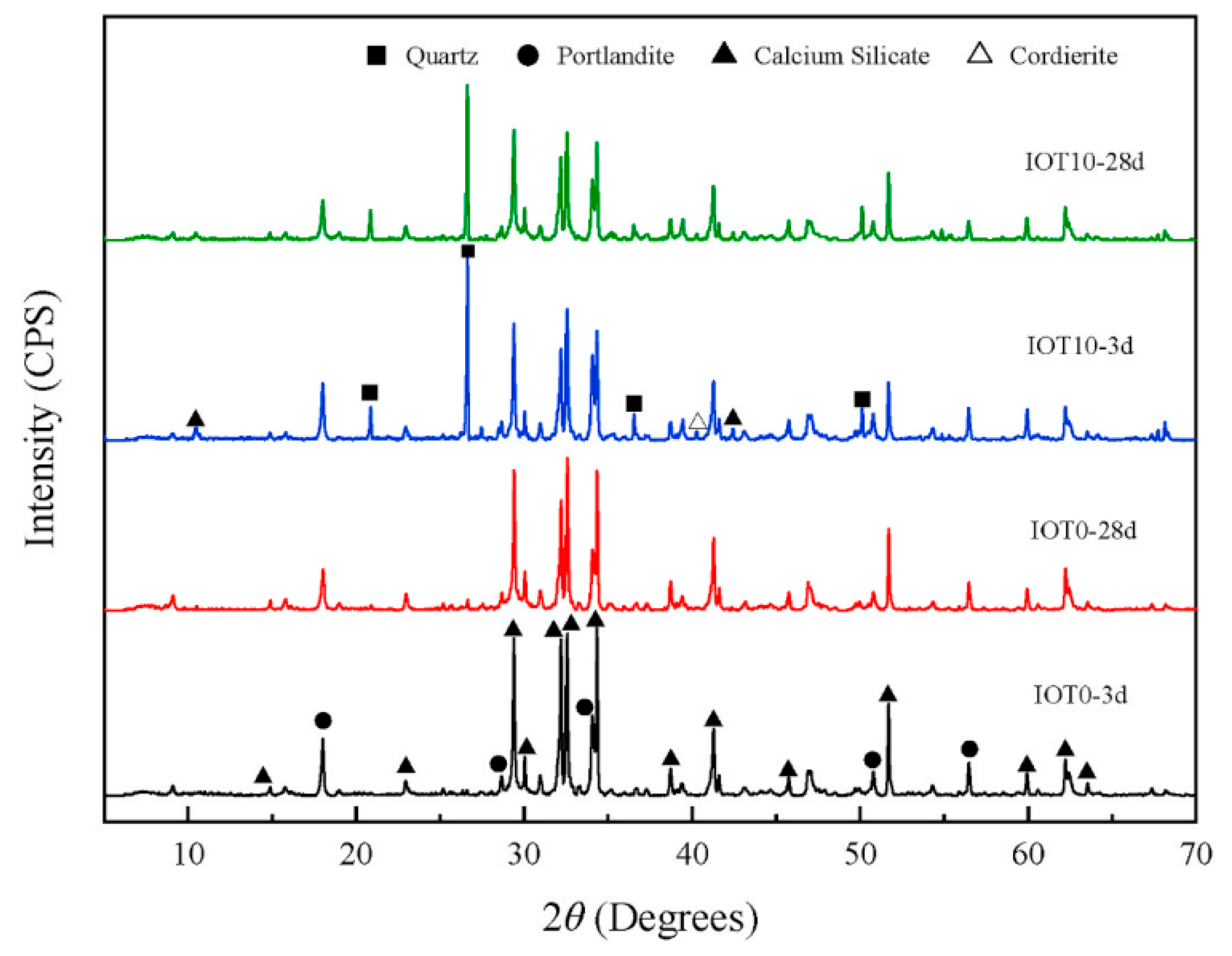
Gu et al. [79] investigated the impact of substituting cement with mechanically activated iron ore tailings (IOT) in ultra-high-performance concrete (UHPC). Figure 11 illustrates the compressive strength values of UHPC modified with mechanically activated IOT at 3, 7, and 28 days. The numeral following IOT denotes the percentage of cement substitution. At a replacement rate of 10% for mechanically activated iron ore tailings, the compressive strength at all ages exceeds that of the control group. Figure 12 displays the XRD analyses of the IOT0 and IOT10 mortar samples. Diffraction peaks of the C-S-H phase are observed in both samples during hydration. In comparison to the IOT0 sample, the portlandite peak of the IOT10 sample diminishes with prolonged curing time, suggesting that Ca(OH)2 is depleted as a result of the pozzolanic reaction. The mechanically activated IOT engages in the secondary hydration reaction, and owing to its potential pozzolanic activity, it can facilitate the creation of active SiO2, thus producing amorphous C-S-H, which is more favorable for strength development.
Mechanical activation generally lowers the concentration of mineral phases in iron ore tailings. Activated iron ore tailings may serve as a supplemental cementitious material. The inclusion of iron ore tailings will not alter the type of hydration products, simply their quantity. An appropriate dosage can compensate for the loss of compressive strength resulting from the lowering of cement.
(3)
Preparation of geopolymers by chemical activation of iron ore tailings
Chemical activation involves enhancing the potential activity of iron ore tailing sand with the addition of suitable inorganic or organic chemical activators, hence augmenting its cementation capacity. Li [80] investigated the impact of four chemical activators—Na2SiO3, NaOH, CaSO4, and Na2SO4—on the reactivity of iron ore tailings. The trials demonstrated that all four activators effectively activate iron ore tailings, with NaOH and Na2SiO3 exhibiting the most pronounced activation effects. The paste produced through chemical activation is typically referred to as geopolymer, resulting from the reaction between strong acids or strong alkalis and siliceous and aluminous-rich materials. The silicon and aluminum constituents of the materials experience a sequence of reactions, including dissolution, depolymerization of aluminate and silicate tetrahedrons, and repolymerization, ultimately resulting in the formation of a three-dimensional network polymer with aluminate and silicate tetrahedrons as fundamental structural units [81]. The preparation of geopolymers with iron ore tailings as the primary raw material typically necessitates the incorporation of natural silicate minerals, fly ash, blast furnace slag, steel slag, and other compounds. Wang et al. [82] utilized low-silicon iron ore tailings as the primary raw material, incorporated metakaolin as a silicon–aluminum corrective agent, and synthesized geopolymers using a composite alkali activator comprising NaOH and water glass. With the ideal ratio and curing conditions, the 28-day compressive strength of the geopolymer reaches 72.3 MPa. Liu et al. [83] employed a composite technique with fly ash and iron ore tailings, activating solely with NaOH, resulting in a geopolymer with a comparatively low compressive strength, peaking at merely 18.33 MPa.
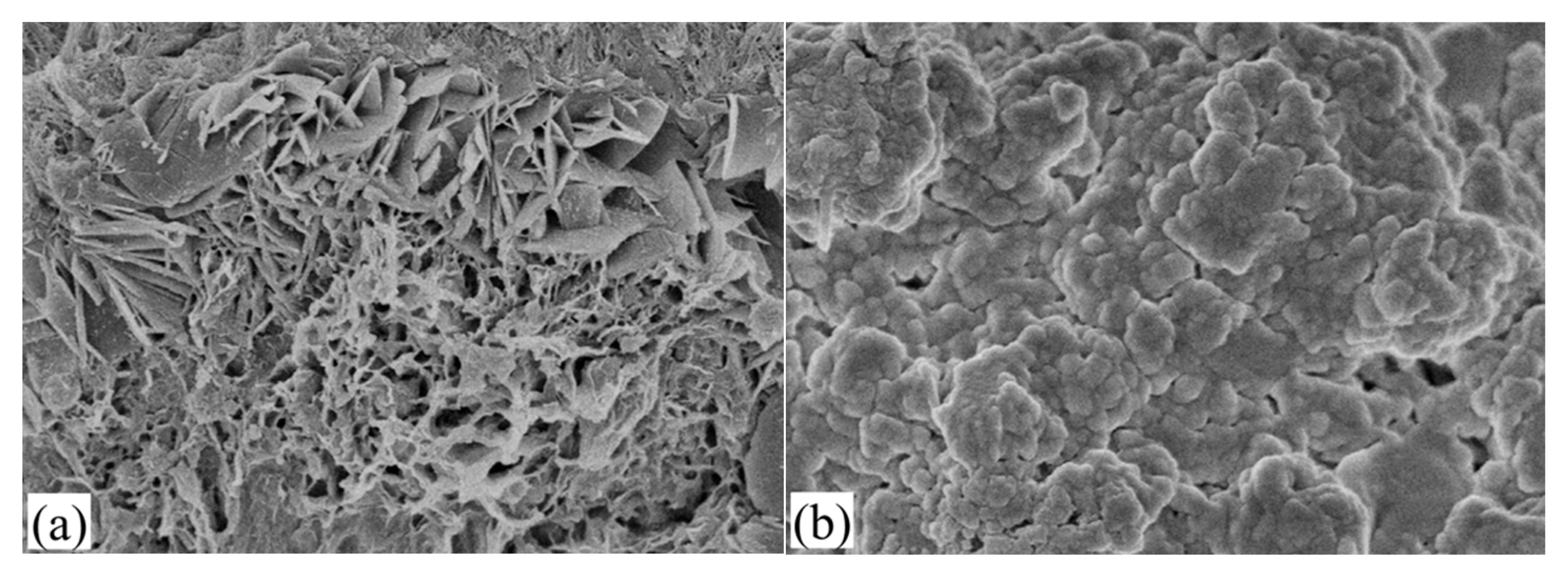
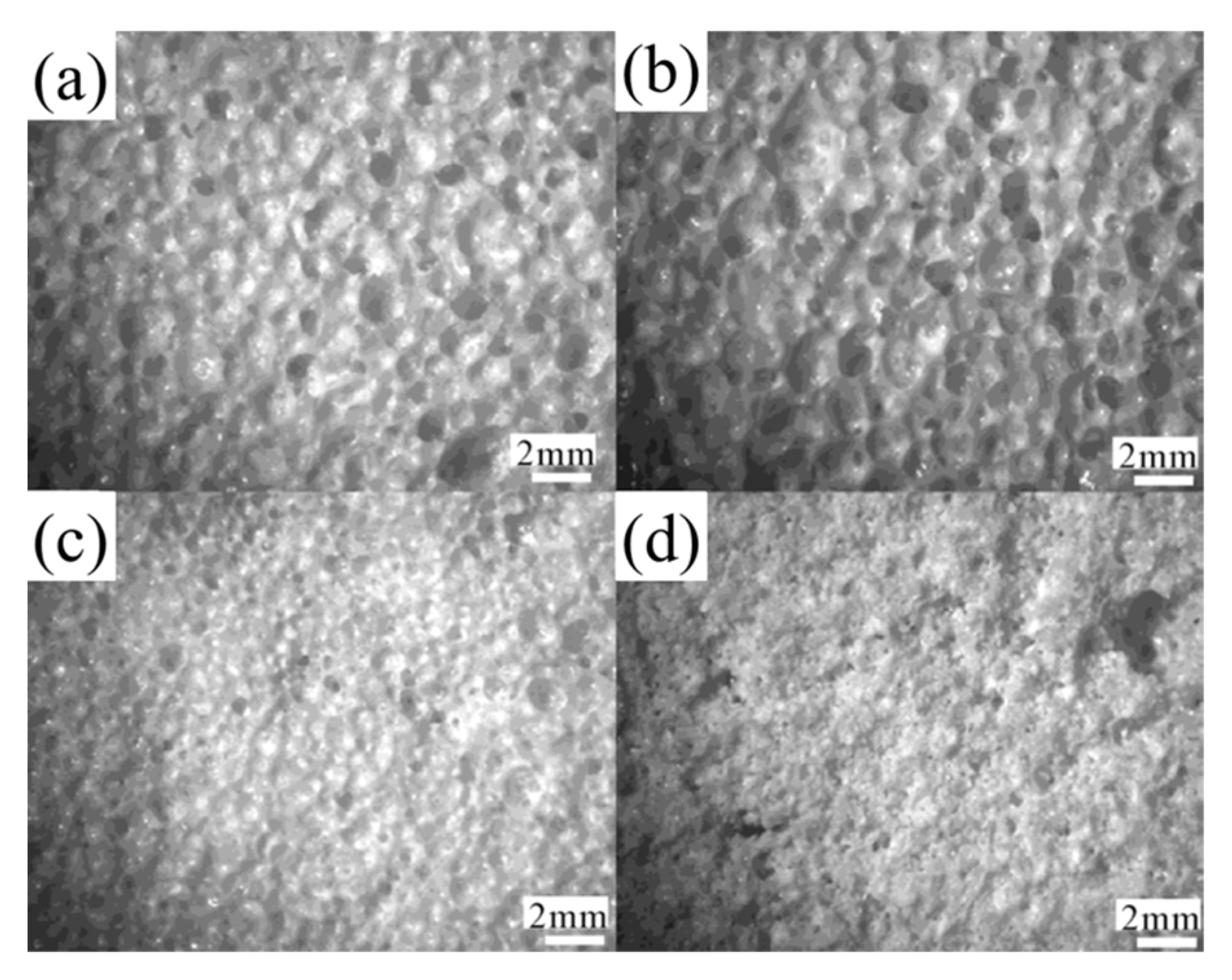
Liu et al. [84] used iron ore tailings, steel slag and fly ash as aggregates to replace river sand, and polystyrene-hydroxyethyl methacrylate (P(St-co-HEMA)) core–shell structure microspheres as modifiers to develop a new type of polymer-modified waterproof mortar. Figure 13a illustrates that the internal structure of ordinary mortar is porous, containing needle-like components with substantial pore sizes, which leads to diminished water resistance of the mortar. Figure 13b clearly illustrates that the pores of the polymer-modified mortar are saturated with many hydrates and polymers, which cohesively bond the aggregates. Consequently, the integration of these hydrates and polymers reduces the voids inside the polymer-modified mortar. Duan et al. [72] investigated the adsorption efficacy of fly ash geopolymers integrated with iron ore tailings on the heavy metal copper. Thirty percent (mass fraction) of iron ore tailings were utilized to partially substitute fly ash, while H2O2 served as a foaming agent for the preparation of porous geopolymers. Figure 14 illustrates that, in contrast to the reference geopolymers depicted in Figure 14c,d, the incorporation of H2O2 results in the formation of numerous pores within the porous geopolymers, as evidenced in Figure 14a,b. This modification ultimately elevates the total porosity from 27.9% to 74.6%, creating a porous structure that facilitates the adsorption of Cu2+.
While iron ore tailing geopolymers exhibit qualities akin to cement concrete, the iron ore tailings from various production regions possess distinct physicochemical and mineralogical characteristics. Consequently, various treatment procedures, curing systems, and mix designs are necessary when incorporating geopolymers. Currently, there are no established development methodologies or design criteria for iron ore tailing geopolymers.
(4)
Preparation of geopolymers by composite activation of iron ore tailings
Physical and chemical composite activation methods can be employed to enhance the efficacy of iron ore tailings. Wang et al. [86] pulverized iron ore tailings to enhance the reactivity of raw materials, included metakaolin, and employed a mixed solution of sodium hydroxide and water glass as an alkaline activator. The compressive strength of the prepared geopolymer, cured for 28 days, reached 55.97 MPa. Jiang et al. [87] initially crushed iron ore tailings for 30 min, subsequently combined them with alkali activators (sodium hydroxide or calcium hydroxide) in a specified mass ratio, and then subjected the mixture to calcination in a muffle furnace at varying temperatures. Consequently, it was combined with metakaolin, and a composite solution of sodium hydroxide and water glass served as the alkali activator. The iron ore tailings were activated using three methods: mechanical activation, alkali activation, and high-temperature calcination. The completed geopolymer cementitious material exhibited a compressive strength of up to 40 MPa following a 28-day curing period.
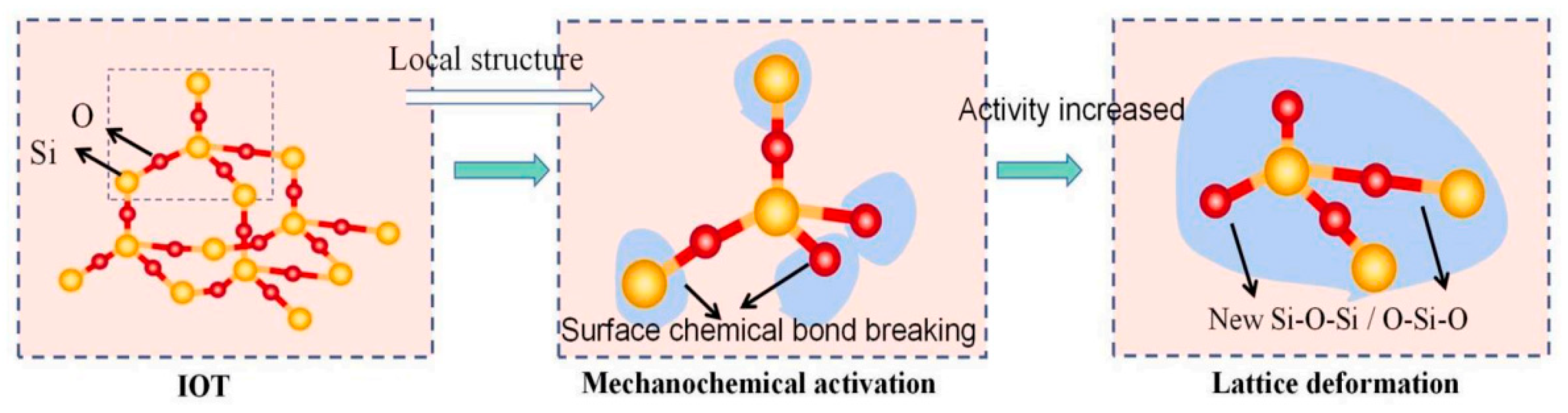
Mechanical action induces the rupture of chemical bonds on the surface of iron ore tailings. The Si-O bond action at the powder’s terminus induces a charged new fracture surface, subsequently facilitating adsorption and polymerization between sections, resulting in the formation of new Si-O-Si or O-Si-O bridge bonds. The disordered substances on the surface progressively accumulate, resulting in lattice distortion and dislocation, which cause fissures on the surface and within the crystal structure. Simultaneously, the polar water molecules supplied by the chemical activator and the dispersed hydroxide ions infiltrate the internal pores of the crystal structure, interact with active cations, subsequently diffuse and dissolve the iron ore tailings, and facilitate the nucleation, growth, and interweaving of hydration products, ultimately resulting in the formation of a dense microstructure. Figure 15 [88] illustrates the mechanism of mechanical–chemical activation connection.
Based on the above, the application of iron tailings in cementitious materials can be divided into three main routes: use as raw materials for cement production, activated preparation of supplementary cementitious materials, and preparation of geopolymers. The effects of different activation methods on the cementitious performance of iron tailings are presented in Table 3, where the key parameters and mechanical properties of various activation methods are summarized. As shown in Table 3, when iron tailings are directly used as a siliceous–ferrous corrective raw material in cement production, the tailings content generally does not exceed 10%. However, after mechanical, chemical, or combined activation, iron tailings can be converted into supplementary cementitious materials with pozzolanic activity or into geopolymers, thereby allowing for a much higher tailings content. When iron tailings are used as a cement raw material or silicate to mechanical activation, hydration products such as ettringite, calcium silicate hydrate (C-S-H), and Ca(OH)2 are generated. In contrast, during chemical activation, the iron tailings undergo dissolution, polycondensation, and gelation, ultimately forming a three-dimensional network structure. The process of mechanical activation facilitates large-scale production, thus promoting the application of mechanically activated iron tailings. The cost of activators for chemical activation is relatively high, and stricter requirements are imposed on the expertise of technical personnel and the production equipment. To some extent, these factors hinder its large-scale application. Currently, when iron tailings are used to produce cement or supplementary cementitious materials with an appropriate tailings content, satisfactory mechanical properties can generally be achieved. However, research on their long-term durability remains insufficient. Future research efforts should be directed toward scientific design and large-scale application, and a performance evaluation system covering the whole life cycle should be established.

3.6.2. As Concrete Aggregates

Iron ore tailings have been utilized to some degree as concrete aggregates in the construction materials sector, primarily serving as a substitute for natural aggregates in concrete. Shettima et al. [89] assessed the impact of substituting fine particles in concrete with iron ore tailings. As the replacement ratio of iron ore tailings increases, the elastic modulus, tensile strength, and carbonation resistance of concrete improve, while drying shrinkage diminishes; nevertheless, the effect of iron ore tailings on the workability of concrete must be considered. The primary factor affecting the workability of concrete due to iron ore tailings is their fine particle size, which restricts the replacement rate of these tailings. To enhance the incorporation of iron ore tailings, they may be processed into pellets to substitute coarse aggregates. Wang et al. [90] utilized iron ore tailing powder to produce tailing balls, which were employed as coarse aggregates in the formulation of concrete with varying strengths. The high density and low strength of the tailing balls result in a low strength of the produced tailing ball concrete, but the overall elastic modulus is substantial. Zuccheratte et al. [91] produced porous lightweight synthetic gravel utilizing waste plastics and iron ore tailing sand as basic materials, which were subsequently integrated into concrete as coarse aggregates. The bulk proportion of iron ore tailing sand and its incorporation in synthetic gravel within concrete reaches 65%.
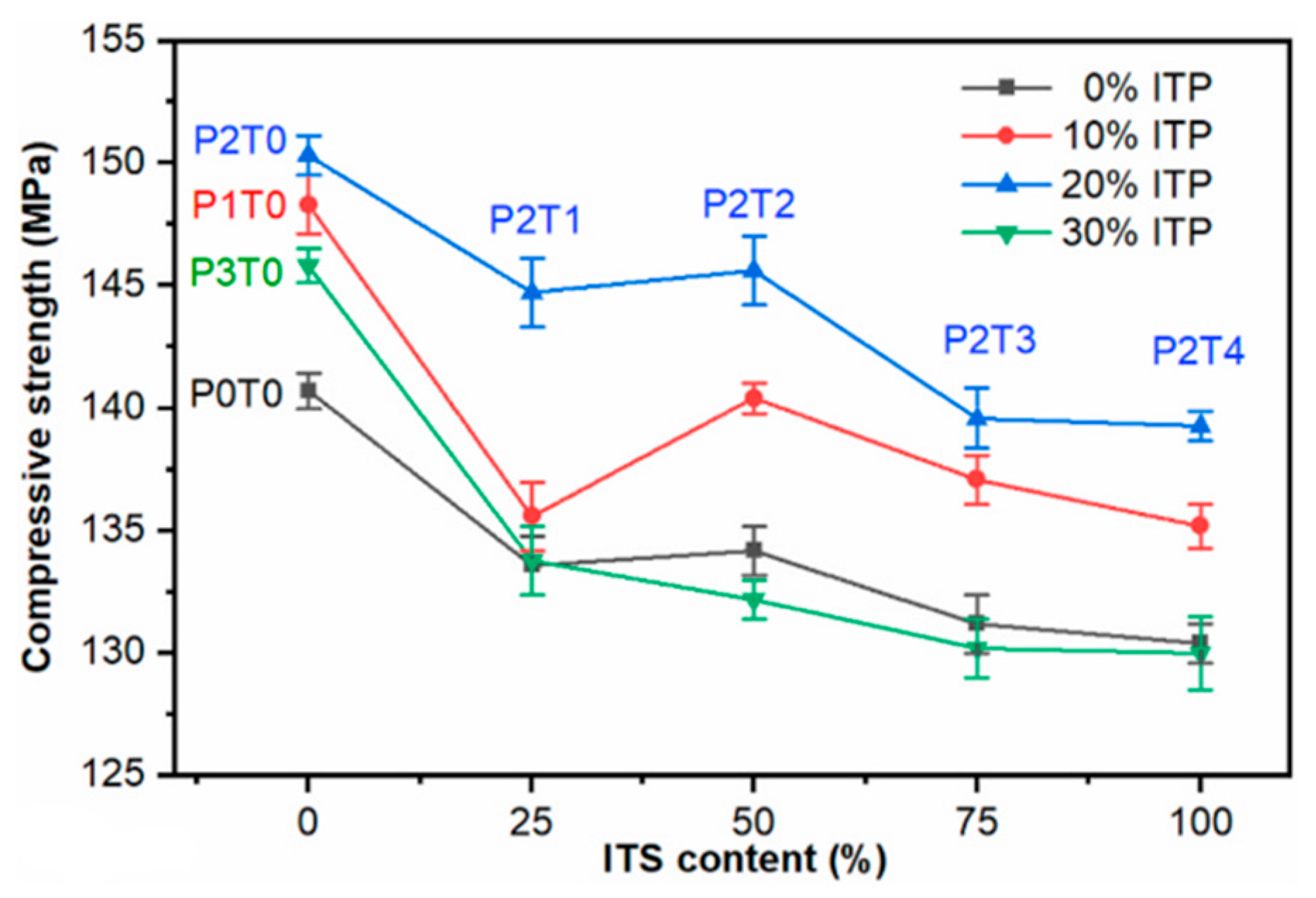
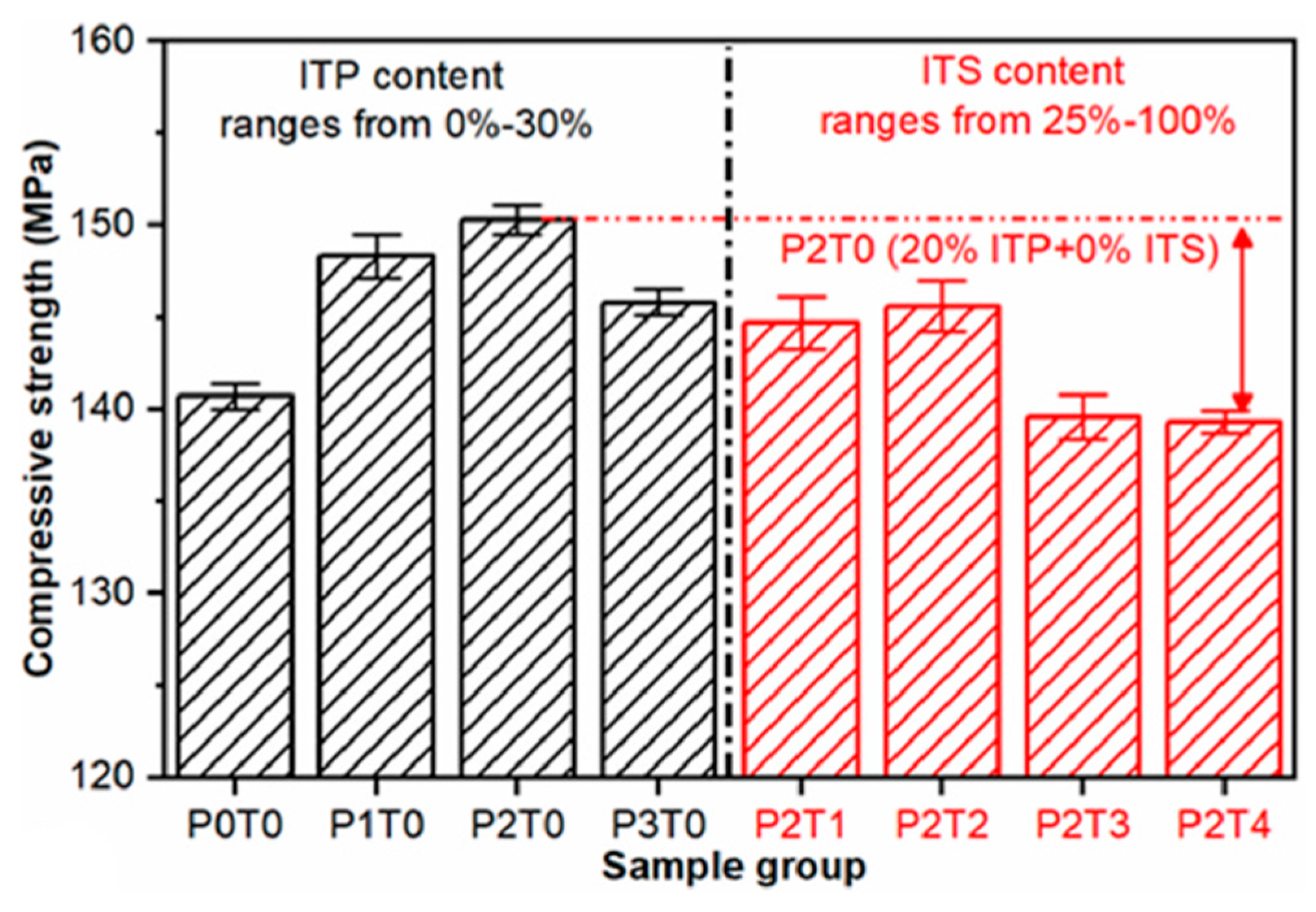
Zhang et al. [92] utilized iron ore tailing powder as a substitute for quartz powder in the formulation of ultra-high-performance concrete (UHPC). The study indicated that when the replacement ratio of iron ore tailing powder increased, the fluidity of UHPC diminished marginally, while its mechanical qualities remained mostly stable. Under consistent temperature water curing and autoclaved curing conditions, the hydration of cement in samples containing iron ore tailing powder was enhanced, resulting in better microhardness of the cement paste and a refined pore structure. Shi et al. [93] investigated the synergistic application of iron ore tailing powder (ITP) and iron ore tailing sand (ITS), employing ITP and ITS as substitutes for cement and quartz sand, respectively, in the preparation of ultra-high-performance concrete (UHPC). The study showed that P2T2 UHPC containing 20% ITP and 50% ITS exhibits favorable compressive characteristics. Figure 16 illustrates that the compressive strength of UHPC diminishes as ITS content increases; however, the inclusion of ITP enhances the mechanical properties of UHPC, with an optimal dosage of 20% ITP. Figure 17 displays the compressive strengths of eight samples with varying ITP and ITS contents. The compressive strength of UHPC initially rises and thereafter declines with an increase in ITP concentration. This is attributable to the pozzolanic potential of ITP. UHPC integrated with ITP can experience secondary hydration to enhance hydration products; however, the reactivity of ITP is minimal, and the surplus (unhydrated) ITP serves as a filler in UHPC. The compressive strengths of groups P2T1 to P2T4, incorporating ITS into UHPC, are markedly inferior to that of the control group P2T0.The aggregate performance of ITS is inferior to that of quartz sand, leading to reduced compressive strength of the specimens.
From the aforementioned experiments, it is demonstrated that when iron ore tailings are used as fine aggregates at an optimal dosage, the compressive strength of conventional concrete can be improved. However, it should be noted that the fine particles of iron tailings impair the workability of concrete. To augment the dose of iron ore tailings, techniques such as mechanical activation, granulation, or the formulation of specialized concrete may be employed. The “powder–sand synergy” can be achieved in ultra-high-performance concrete (UHPC). Iron ore tailing powder specifically demonstrates micro-aggregate and weak pozzolanic effects that enhance the paste, so alleviates the adverse impacts of iron ore tailing sand on the compressive strength of UHPC. Nonetheless, contemporary research primarily focuses on the characterization of macroscopic properties, while the examination of iron ore tailing modification, interfacial microstructure, long-term durability, and the synergistic utilization theory of particle size remains inadequate, necessitating further exploration in the future.

3.6.3. Preparation of Ceramics

The complex chemical composition of iron ore tailings satisfies the fundamental criteria for ceramics for the silica–alumina matrix, flux adjustment, and coloring agents. By means of formulation design and process optimization, the efficient exploitation of iron ore tailings in high-value-added ceramic products can be achieved. For example, Pan et al. [94] fabricated thermal insulation foam ceramics utilizing iron ore tailings from Fushun, Liaoning Province as the primary raw material. Li [95] utilized fine-grained iron ore tailings from Miyun, Beijing, to fabricate porous ceramics with customizable porosity and superior mechanical characteristics. Additionally, a composite phase change energy storage material suitable for indoor solar water heating floor systems was developed utilizing these porous ceramics as carriers. The diminutive particle size and clay-like chemical characteristics of iron ore tailings allow for their substitution of clay in red ceramics manufacturing, concurrently enhancing ceramic performance by increasing flexural strength and porosity, while decreasing density and water absorption rates of ceramic bodies [96]. Nonetheless, not all iron ore tailings are suitable for direct application in ceramic calcination. The coarse particles in iron ore tailings adversely impact plasticity and influence the density of ceramics. Moreover, varying chemical compositions may influence the iron–oxygen equilibrium. Fontes et al. [97] dehydrated and segregated iron ore tailings into usable iron ore, uniformly graded quartz sand, and finer clay mineral powder. The isolated clay was utilized independently to manufacture ceramic tiles, which demonstrated consistent formation, a dark brown sheen, a dense structure, little porosity, and elevated mechanical strength.
The aforementioned investigations illustrate that innovative ceramic materials can be synthesized by leveraging the properties of iron ore tailings abundant in silica–alumina and iron-based pigments. The considerable variations in the chemical composition and particle size distribution of iron ore tailings directly influence the stability of the firing system and the uniformity of the final product performance. While pre-treatment procedures like screening and separation of iron ore tailings might enhance ceramic quality, they simultaneously elevate prices and complicate the process. Current research primarily continues in the experimental phase concerning individual tailings sources, necessitating further investigation into the universal raw material adaption theory and performance control methodologies.

3.6.4. Preparation of Building Blocks and Bricks

Research on the preparation of building blocks and bricks from iron ore tailings encompasses different varieties, including sintered bricks, autoclaved cured bricks, and non-fired bricks, all demonstrating effective applications. Lin et al. [98] fabricated autoclaved sand–lime bricks with iron ore tailings, and the mechanical qualities of these bricks conformed to the technical specifications of MU15 grade. Wang [99] utilized iron ore tailings as the primary raw material, supplemented by suitable quantities of fly ash and kaolin as auxiliary components. The ideal raw material ratio for the preparation of sintered bricks was established as m(iron ore tailings):m(fly ash):m(kaolin) = 60:30:10. The bricks attained the MU10 grade during sintering at 1050 °C and might obtain the MU30 grade when sintered at 1100 °C. Mendes et al. [100] investigated the fabrication of clay construction bricks using an amalgamation of high-silica iron ore tailings and clay, and introduced a mixture design methodology to ascertain the appropriate ratio. The experimental findings indicated that the incorporation of iron ore tailings diminished firing linear shrinkage and compaction strength, while enhancing bulk density, water absorption rate, and apparent porosity.
Cement or geopolymers are typically employed as binders in the manufacture of non-fired bricks. Filho et al. [101] substituted natural sand with iron ore tailings as fine aggregates to manufacture interlocking concrete pavement blocks. This technique employed cement as the binder without high-temperature sintering. The constructed blocks exhibited a low water absorption rate and porosity, demonstrating a 20% decrease in surface wear relative to conventional blocks. Their performance conformed to Brazilian national criteria and surpassed that of traditional paving blocks. Liu et al. [102] utilized iron ore tailings from Baotou as the primary raw material, with a ratio of m(iron ore tailings):m(hydrated lime):m(standard sand):m(cement):m(gypsum) set at 100:25:22:15:2. By regulating the water-to-solid ratio at 10% and exerting a molding pressure of 20 MPa, they effectively produced non-fired bricks that conformed to the MU10 strength requirement. Zhao et al. [103] utilized iron ore tailings, processed via roasting and magnetic separation, as raw materials to fabricate permeable bricks through normal curing, achieving a non-fired and non-autoclaved production method.
de Freitas et al. [104] investigated the feasibility of fabricating solid bricks with steel slag and iron ore tailings as primary ingredients. The bricks generated by this procedure are geopolymer bricks, which do not necessitate cement or sintering. Nevertheless, comprehensive research is still required regarding the durability and heavy metal contamination of bricks produced from steel slag and iron ore tailings. Kumar et al. [105] employed sodium silicate and sodium hydroxide solutions as alkaline activators to fabricate polymer bricks devoid of cement and sintering, utilizing iron ore tailing sand, fly ash, and slag as raw materials. This technology may effectively utilize substantial quantities of industrial solid waste, offering benefits of economic efficiency and environmental sustainability.
Research on the fabrication of building blocks and bricks with iron ore tailings encompasses sintered, autoclaved, and non-fired methodologies. Contemporary research emphasizes the fabrication of bricks using the amalgamation of solid wastes, including iron ore tailings, fly ash, and gypsum. Specifically, non-fired bricks and geopolymer bricks possess considerable low-carbon benefits. Nevertheless, current research predominantly emphasizes short-term mechanical strength and ratio optimization, while failing to systematically assess the long-term durability, environmental safety, and carbon emission calculations of the blocks and bricks.

3.6.5. Preparation of Glass-Ceramics

The chemical composition of iron ore tailings is abundant in oxides, including silicon, aluminum, and calcium, which are essential components for the formation of glass systems. Consequently, iron ore tailings possess prospective utility in the fabrication of glass-ceramics. The sintering process is now employed to produce glass-ceramics from iron ore tailings. This approach has drawbacks, including elevated sintering temperatures, significant energy consumption, extended production cycles, and substantial development costs [106]. To resolve these difficulties, various novel production techniques for glass-ceramics have been suggested. Zhao [107] performed the purification and separation of valuable elements from iron ore tailings, rendering them appropriate for the preparation of glass-ceramics by the sol–gel process. Microwave heating technology possesses active sintering properties, facilitating the acquisition of materials with superior microstructure. Li et al. [108] incorporated microwave heating into the heat treatment of glass-ceramics and regulated the crystallization process by modulating the microwave treatment temperature, thereby establishing a theoretical foundation for the future production of tailing-based glass-ceramics with reduced energy consumption. Xu et al. [109] initially recovered valuable elements from iron ore tailings, dissolved beneficial components such as Si and Al through thermal alkali activation, and obtained Fe via an acid reaction, thereby producing Ca-Mg-Al-Si system glass-ceramics. The foundation glass was synthesized using the sol–gel technique, followed by nucleation and crystallization to produce glass-ceramics predominantly composed of diopside as the crystalline phase. Figure 18 illustrates that the crystal size conforms to the criteria for microcrystals, and the shape of the precipitated crystals is either columnar or lamellar, aligning with the morphology of diopside crystals.
Investigations into the fabrication of glass-ceramics from iron ore tailings are transitioning from the energy-intensive sintering technique to innovative, energy-efficient approaches exemplified by the sol–gel process and microwave heating technology. Current research indicates that raw material pre-treatment and purification, along with the implementation of novel heating procedures, can both diminish energy usage and enhance material performance.

4. Conclusions

The usage of iron ore tailings is a crucial strategy for mitigating the issues of “tailing storage pollution” and “resource scarcity”. Current research accomplishments mostly concentrate on the recovery of valuable components, the formulation of soil amendments or fertilizers, and the fabrication of construction materials. In recent years, advancements in research have led to the continual enhancement of methodologies, technologies, and procedures for the resource use of iron ore tailings.
(1)
The diverse and intricate origins of iron ore tailings result in considerable variations in their chemical makeup, mineral composition, and particle size distribution across different areas. Consequently, numerous efficacious treatment procedures cannot be directly implemented on local iron ore tailings. Consequently, iron ore tailings must be identified with greater precision based on their distinct physico-chemical properties. In the treatment and utilization of iron ore tailings, specific treatment and utilization strategies must be developed for various types of iron ore tailings, and a database for their resource utilization should be created to furnish pertinent data support for this purpose.
(2)
The extraction of rich metals and minerals has progressed from a singular beneficiation technique to the integration of numerous processes, transitioning from single-target separation to multi-component cascade recovery and synergistic extraction. The rising global need for key vital minerals has rendered the recovery of rare earth elements a focal point of research in recent years. The extraction of valuable metals and minerals incurs significant expenses and cannot process all tailings. Furthermore, new non-extractable tailings will be produced during the recovery process.
(3)
The formulation of soil amendments and fertilizers encounters obstacles including significant technical complexity, inadequate fertility, potential risks of heavy metal contamination, and issues in large-scale dissemination. Reclamation of tailings ponds merely provides a temporary solution to the existing issue of iron ore tailings storage. The utilization of iron ore tailings as backfill materials can significantly reduce tailings volume; nevertheless, the filling procedure is intricate and yields minimal economic advantages.
(4)
The utilization of iron ore tailings for the production of construction materials is the most effective method for large-scale consumption of these accumulated resources. Contemporary research primarily concentrates on employing iron ore tailings as aggregates or activated cementitious materials for the formulation of concrete or mortar, in addition to utilizing iron ore tailings as raw materials for the production of ceramics, glass-ceramics, bricks, and similar products. Currently, research predominantly focuses on the workability and mechanical properties of building materials; however, there is a lack of investigation into the constitutive model, durability, environmental safety, and large-scale manufacturing of building materials derived from iron ore tailings. Moreover, problems include restricted dose and elevated activation costs in the domains of cementitious materials and glass-ceramics.

5. Prospects

(1)
Given the substantial expenses associated with the recovery of precious metals and minerals, it is advisable to create efficient, cost-effective green mineral processing and metallurgy integrated processes, while enhancing precise separation based on the physicochemical characteristics of minerals, to attain the sustainable development objective of comprehensive resource utilization and high-value extraction of iron ore tailings.
(2)
Considering the potential secondary pollution risk posed by heavy metals and residual beneficiation reagents in iron ore tailings during their resource utilization, it is recommended to conduct further research on the safe treatment and environmental assessment of iron ore tailings. This aims to mitigate the detrimental effects of harmful substances produced during the resource utilization of iron ore tailings on the environment, thereby ensuring sustainable resource utilization and harmonious development with the environment.
(3)
Due to the inadequate research on the constitutive model and durability of iron ore tailing-based building materials, a systematic investigation into the constitutive model and the multi-factor coupled durability under real working conditions is proposed.
(4)
Considering the constraints of existing resource utilization methods for iron ore tailings, it is advisable to advance the resource exploitation of iron ore tailings towards greater value, diverse applications, innovative technologies, and enhanced applicability. For instance, employing the fine particle size properties of iron ore tailings to formulate controlled low-strength materials for trench backfilling, and leveraging iron resources in iron ore tailings to manufacture battery anode materials, which can create novel high-tech application opportunities for the utilization of iron ore tailings.
(5)
To facilitate the essential conversion of iron ore tailings from “waste” to “resources,” future research must persistently enhance foundational studies, overcome critical technical barriers to high-value utilization, and proactively advance the industrial demonstration and application of established technologies, ensuring both technical and economic viability as well as environmental safety.

Author Contributions

Conceptualization, Y.L., D.C. and Z.L.; methodology, Y.L.; software, S.Z.; formal analysis, Y.L. and G.Y.; investigation, G.Z. and C.Z.; data curation, S.Z. and C.Z.; writing—original draft preparation, S.Z.; writing—review and editing, Y.L. and D.C.; visualization, G.Z.; supervision, Y.L.; project administration, Z.L. and G.Z.; funding acquisition, G.Z. All authors have read and agreed to the published version of the manuscript.

Funding

This research was funded by the Scientific Research Foundation of North China Institute of Aerospace Engineering (ZD-2025-02), Central Guidance Fund for Local Scientific and Technological Development (246Z3806G).

Data Availability Statement

The original contributions presented in this study are included in the article. Further inquiries can be directed to the corresponding author.

Acknowledgments

We are grateful for the foundational contributions of researchers in the field of iron tailings utilization, upon which this review is built. We acknowledge the anonymous reviewers for their comments that greatly improved the earlier version of this manuscript. We also appreciate the technical support and helpful discussions provided by our research group members.

Conflicts of Interest

Guangtian Zhang is employee of Hebei Provincial Institute of Building Science and Technology Co., Ltd. The paper reflects the views of the scientists and not the company.

References

  1. Jiang, P.; Chen, Y.; Wang, W.; Yang, J.; Wang, H.; Li, N.; Wang, W. Flexural behavior evaluation and energy dissipation mechanisms of modified iron tailings powder incorporating cement and fibers subjected to freeze-thaw cycles. J. Clean. Prod. 2022, 351, 131527. [Google Scholar] [CrossRef]
  2. Gu, X.W.; Ai, Y.Y.; Zhao, Y.Q.; Sun, W. Status quo of resource utilization of iron ore tailings. Chin. J. Nonferr. Met. 2022, 1–29. [Google Scholar]
  3. Yu, H.H. Study on Value-Added Utilization of Anshan Iron Ore Tailings with High Silica. Ph.D. Thesis, Northeastern University, Shenyang, China, 2010. [Google Scholar]
  4. Yun, H.C.; Si, H.Y.; Jing, Y.Z.; Xiao, H.S. Test research on hydration process of cement-iron tailings powder composite cementitious materials. Powder Technol. 2022, 399, 117215. [Google Scholar] [CrossRef]
  5. Bezerra, C.G.; Rocha, C.A.A.; de Siqueira, I.S.; Toledo Filho, R.D. Feasibility of iron-rich ore tailing as supplementary cementitious material in cement pastes. Constr. Build. Mater. 2021, 303, 124496. [Google Scholar] [CrossRef]
  6. Beulah, M.; Sudhir, M.R.; Mohan, M.K.; Gayathri, G.; Jain, D. Mine Waste-Based Next Generation Bricks: A Case Study of Iron Ore Tailings, Red Mudand GGBS Utilization in Bricks. Adv. Mater. Sci. Eng. 2021, 2021, 9499613. [Google Scholar] [CrossRef]
  7. Consoli, N.C.; Vogt, J.C.; Silva, J.P.S.; Chaves, H.M.; Scheuermann Filho, H.C.; Moreira, E.B.; Lotero, A. Behaviour of compacted filtered iron ore tailings–Portland cement blends: New Brazilian trend for tailings disposal by stacking. Appl. Sci. 2022, 12, 836. [Google Scholar] [CrossRef]
  8. Yang, Y.; Chen, L.; Sun, X.; Mao, Y. Preparation of micro-iron ore tailings by wet-grinding and its application in sulphoaluminate cement. J. Renew. Mater. 2022, 10, 1007–1016. [Google Scholar] [CrossRef]
  9. Singh, R.K.; Pal, D.; Singh, S.K.; Tripathi, N.; Singh, R.S. Utilization of iron ore tailings for brick manufacture from donimalai mines of Karnataka, India. J. Sci. Ind. Res. 2021, 80, 210–215. [Google Scholar] [CrossRef]
  10. Cechin, L.; Mymrine, V.; Avanci, M.A.; Povaluk, A.E. Ceramics composites from iron ore tailings and blast furnace slag. Ceram. Int. 2022, 48, 10506. [Google Scholar] [CrossRef]
  11. Thejas, H.K.; Hossiney, N. Alkali-activated bricks made with mining waste iron ore tailings. Case Stud. Constr. Mater. 2022, 16, e00973. [Google Scholar] [CrossRef]
  12. Li, X.; Wang, P.; Guo, Z.; Qin, J.; Liang, K. Effect of Fe2+/Fe3+ on high-strength ceramsite prepared by sintering geopolymers using iron ore tailings. Ceram. Int. 2022, 48, 5681–5688. [Google Scholar] [CrossRef]
  13. Liu, Y.; Hao, W.; He, W.; Meng, X.; Shen, Y.; Du, T.; Wang, H. Influence of dolomite rock powder and iron tailings powder on the electrical resistivity, strength and microstructure of cement pastes and concrete. Coatings 2022, 12, 95. [Google Scholar] [CrossRef]
  14. Lu, H.; Sun, Q. Preparation and strength formation mechanism of calcined oyster shell, red mud, slag, and iron tailing composite cemented paste backfill. Materials 2022, 15, 2199. [Google Scholar] [CrossRef] [PubMed]
  15. Jin, J.; Qin, Z.; Lü, X.; Liu, T.; Zhang, G.; Shi, J.; Zuo, S.; Li, D. Rheology control of self-consolidating cement-tailings grout for the feasible use in coal gangue-filled backfill. Constr. Build. Mater. 2022, 316, 125836. [Google Scholar] [CrossRef]
  16. Li, C.; Zhang, N.; Zhang, J.; Song, S.; Zhang, Y. C-A-S-H gel and pore structure characteristics of alkali-activated red mud–iron tailings cementitious mortar. Materials 2021, 15, 112. [Google Scholar] [CrossRef]
  17. Song, S.; Zhang, N.; Yuan, J.; Zhang, Y. New attempt to produce red mud-iron tailing based alkali-activated mortar: Performance and microstructural characteristics. J. Build. Eng. 2021, 43, 103222. [Google Scholar] [CrossRef]
  18. Pu, A.C. Study on the Activation Process and Mechanism of Iron Tailings Powder and Its Influence on the Performance of Concrete. Ph.D. Thesis, China University of Mining and Technology Beijing, Beijing, China, 2012. [Google Scholar]
  19. Deng, X.L. Experimental Study on Recovery of Iron Concentrate from an Iron Tailings in Shandong. Ph.D. Thesis, Wuhan University of Science and Technology, Wuhan, China, 2018. [Google Scholar]
  20. Fan, D.C. Research on Pre-Concentration and Deep Reduction of Qi Da Shan Iron Ore Tailings and the Comprehensive Utilization of Tailin. Ph.D. Thesis, University of Science and Technology Beijing, Beijing, China, 2018. [Google Scholar]
  21. Kim, C.S.; Rhee, C.S.; Li, K.; Rothfus, R.R. Recovery of metallic iron from flotation tailings by pneumatolytic transport. I. Reduction by carbon monoxide in fluidized bed. Environ. Sci. Technol. 1973, 7, 725–729. [Google Scholar] [CrossRef]
  22. Su, Z.; Zhang, Y.; Chen, J.; Liu, B.; Li, G.; Jiang, T. Selective separation and recovery of iron and tin from high calcium type tin- and iron-bearing tailings using magnetizing roasting followed by magnetic separation. Sep. Sci. Technol. 2016, 51, 1900–1908. [Google Scholar] [CrossRef]
  23. Fu, P.; Li, Z.; Feng, J.; Bian, Z. Recovery of gold and iron from cyanide tailings with a combined direct reduction roasting and leaching process. Metals 2018, 8, 561. [Google Scholar] [CrossRef]
  24. Wang, W.; Li, Z. Recovery and kinetics of gold and iron from cyanide tailings by one-step chlorination–reduction roasting. Miner. Eng. 2020, 155, 106453. [Google Scholar] [CrossRef]
  25. Peiravi, M.; Dehghani, F.; Ackah, L.; Baharlouei, A.; Godbold, J.; Liu, J.; Mohanty, M.; Ghosh, T. A review of rare-earth elements extraction with emphasis on non-conventional sources: Coal and coal byproducts, iron ore tailings, apatite, and phosphate byproducts. Min. Metall. Explor. 2021, 38, 1–26. [Google Scholar] [CrossRef]
  26. Wang, X.; Zhao, Z.W.; Jia, Y.; He, Y.L.; Cheng, C.H. Rare earth recovery experiment and adsorption kinetics of a tailings in inner Mongolia. Nonferrous Met. (Miner. Process. Sect.) 2024, 104. [Google Scholar] [CrossRef]
  27. Wang, J.L.; Sun, H.W.; Zhan, W.S.; Ren, H.D.; Lei, X. Enrichment behavior of weak magnetic rare earth and niobium in Bayan Obo ore through cascade magnetic separation. J. Chin. Soc. Rare Earths 2025, 43, 205. [Google Scholar]
  28. Ning, J.; Gao, P.; Wang, Y.; Li, Z.; Yuan, S.; Sun, Y.; Sun, Y.; Tang, Z. Mineralogical characterization and flotation properties of rare earths in refractory iron tailings subjected to hydrogen-based mineral phase transformation. Int. J. Miner. Metall. Mater. 2025, 32, 1309–1321. [Google Scholar] [CrossRef]
  29. Zhou, Y.; Yang, H.; Xue, X.X.; Yuan, S. Separation and recovery of iron and rare earth from Bayan Obo tailings by magnetizing roasting and (NH4)2SO4 activation roasting. Metals 2017, 7, 195. [Google Scholar] [CrossRef]
  30. Zhang, Y.; Lin, H.; Dong, Y.B.; Xu, X.F.; Wang, X.; Gao, Y.J. Coupling relationship between multicomponent recovery of rare earth tailings. Rare Met. 2017, 36, 220–228. [Google Scholar] [CrossRef]
  31. Srivastava, A.; Singh, A.K.; Meshram, A. Underlying advances in rare earth elements recovery from waste: A com-prehensive review. J. Environ. Chem. Eng. 2025, 14, 120957. [Google Scholar] [CrossRef]
  32. Hajdu-Rahkama, R.; Kinnunen, P. Tailings valorisation: Opportunities to secure rare earth supply and make mining environmentally more sustainable. J. Clean. Prod. 2025, 520, 146147. [Google Scholar] [CrossRef]
  33. Ma, L.C.; Zheng, Q.; Che, X.Q.; Yan, B.; Feng, H.L. On tungsten and tin recovery from iron trailings. Nonferr. Met. (Miner. Process. Sect.) 2016, 52. [Google Scholar] [CrossRef]
  34. Chui, C.L.; Wang, W.Z.; Zhao, Z.W.; Wu, H.; Wang, S. Experimental research on recovery of titanium by full flotation from Heishan’s iron separation tailings. Multipurp. Util. Miner. Resour. 2018, 6, 102–105. [Google Scholar] [CrossRef]
  35. Macias-Macias, K.Y.; Ceniceros-Gomez, A.E.; Gutierrez-Ruiz, M.E.; González-Chávez, J.L.; Martínez-Jardines, L.G. Extraction and recovery of the strategic element gallium from an iron mine tailing. J. Environ. Chem. Eng. 2019, 7, 102964. [Google Scholar] [CrossRef]
  36. Lv, H.Z.; Tong, X.; Xie, X.; Qi, P. Experimental research on flotation low grade mica from lron tailings by mixed cationic/anionic collectors. Bull. Chin. Ceram. Soc. 2016, 35, 2047–2052. [Google Scholar] [CrossRef]
  37. Valderrama, L.; Oliva, J.; Gomez, O.; Zazzali, B. Recovery of tailings apatite produced in the magnetic concentration of iron. HOLOS 2019, 1, 1–11. [Google Scholar] [CrossRef]
  38. Araujo, V.A.; Lima, N.; Azevedo, A.; Bicalho, L.; Rubio, J. Column reverse rougher flotation of iron bearing fine tailings assisted by HIC and a new cationic collector. Miner. Eng. 2020, 156, 106531. [Google Scholar] [CrossRef]
  39. Ding, W.J.; Li, J.; Ma, Y.H.; Fang, F.; Fang, X.L.; Wang, L.X. Research on magnetization process and magnetization stability of magnetized compound fertilizer. Phosphate Compd. Fertil. 2014, 29, 13. [Google Scholar] [CrossRef]
  40. Li, D. The Development of Slow-Release Magnetized Compound Fertilizer and Fertilizer Efficiency Studies. Master’s Thesis, Anhui Agricultural University, Hefei, China, 2013. [Google Scholar]
  41. Liu, D.J.; Qiu, L.Y.; Jiang, Z.Z.; Zhang, Y.X.; Lou, X.B.; Du, B.G.; Lan, Y.F.; Fan, C.; Gu, M.X. Research progress of phosphate resource processing: 5. progress on MUSP new process of compound fertilizer production from the tailings of phosphate rock with iron-containing element. Phosphate Compd. Fertil. 2009, 24, 18. [Google Scholar] [CrossRef]
  42. Hu, P.; Zhang, Y.; Zhou, Y.; Ma, X.; Wang, X.; Tong, W.; Luan, X.; Chu, P.K. Preparation and effectiveness of slow-release silicon fertilizer by sintering with iron ore tailings. Environ. Prog. Sustain. Energy 2018, 37, 1011–1019. [Google Scholar] [CrossRef]
  43. Tozsin, G.; Arol, A.I. Pyritic tailings as a source of plant micronutrients in calcareous soils. Commun. Soil Sci. Plant Anal. 2015, 46, 1473–1482. [Google Scholar] [CrossRef]
  44. Zhang, J.Y.; Xu, Y.L.; Li, F.P. Studies on the effects of different reclamation measures on iron mine tailings wasteland. Hebei J. For. Orchard Res. 2016, 39, 143. [Google Scholar]
  45. Lv, C.J.; Guo, Y.S.; Bi, R.T.; Liang, J.C.; Guo, X.X.; Chen, D.; Wang, Y.; Xu, C.C. Effects of different reclamation patterns on surface runoff, sediment yield and hydraulic characteristics of slopes in iron ore tailings. Trans. Chin. Soc. Agric. Eng. 2020, 36, 156–163. [Google Scholar] [CrossRef]
  46. Norland, M.R.; Veith, D.L. Revegetation of coarse taconite iron ore tailing using municipal solid waste compost. J. Hazard. Mater. 1995, 41, 123–134. [Google Scholar] [CrossRef]
  47. Noyd, R.K.; Pfleger, F.L.; Norland, M.R. Field responses to added organic matter, arbuscular mycorrhizal fungi, and fertilizer in reclamation of taconite iron ore tailing. Plant Soil 1996, 179, 89–97. [Google Scholar] [CrossRef]
  48. Yan, D.; Zhao, F.; Sun, O.J. Assessment of vegetation establishment on tailings dam at an iron ore mining site of suburban Beijing, China, 7 years after reclamation with contrasting site treatment methods. Environ. Manag. 2013, 52, 748–757. [Google Scholar] [CrossRef]
  49. Liu, H.X. Research on Test of Mycorhiza Ecological Restoration on the Iron Tailings. Master’s Thesis, Hebei Polytechnic University, Tangshan, China, 2008. [Google Scholar]
  50. Guo, X.X. Study on Runoff and Sediment Yield Mechanism of Different Reclamation Slopes in Dry Iron Tailings. Master’s Thesis, Shanxi Agriculture University, Taiyuan, China, 2019. [Google Scholar]
  51. Yu, H.B.; Chi, G.Y.; Chen, X.; Ma, J.; Shao, Y.F. Effects of adding hill-skill soil and straw on the properties of ferrous mill tailings substrate and plant growth. Chin. J. Ecol. 2018, 37, 1654–1661. [Google Scholar] [CrossRef]
  52. Zhang, J.Y.; Xu, Y.L.; Li, F.P. Changes of nutrients and microbial population in rhizosphere of five species grown in iron tailings. Environ. Sci. Technol. 2016, 39, 11. [Google Scholar]
  53. Liu, Y. Effect of Sludge on the Growth and Heavy Metal Absorption Characters of Pinus sylvestris Seedlings in Mined Land. Master’s Thesis, Liaoning University, Shenyang, China, 2016. [Google Scholar]
  54. Cele, E.N.; Maboeta, M. A greenhouse trial to investigate the ameliorative properties of biosolids and plants on physicochemical conditions of iron ore tailings: Implications for an iron ore mine site remediation. J. Environ. Manag. 2016, 165, 167–174. [Google Scholar] [CrossRef]
  55. Wang, A.N.; Liu, G.C.; Xu, X.H.; Li, X.G.; Li, Y.L. Evaluation of soil quality in iron tailing ore wastelands of various reclamation periods. J. Beijing For. Univ. 2020, 42, 104–111. [Google Scholar] [CrossRef]
  56. de Sousa, S.S.; Freitas, D.A.F.; Latini, A.O.; Silva, B.M.; Viana, J.H.M.; Campos, M.P.; Botula, Y.D. Iron ore mining areas and their reclamation in Minas Gerais State, Brazil: Impacts on soil physical properties. SN Appl. Sci. 2020, 2, 1659. [Google Scholar] [CrossRef]
  57. Yan, S.; Yang, J.Y.; Shi, C.C.; Zhang, L.Y.; Zhao, T.L. Soil nutrient evaluation of iron tailings in different vegetation restoration modes based on AHP-PCA. Sci. Soil Water Conserv. 2019, 17, 111. [Google Scholar] [CrossRef]
  58. de Fátima Esteves, G.; de Souza, K.R.D.; Bressanin, L.A.; Andrade, P.C.C.; Júnior, V.V.; Dos Reis, P.E.; de Souza, T.C. Vermicompost improves maize, millet and sorghum growth in iron mine tailings. J. Environ. Manag. 2020, 264, 110468. [Google Scholar] [CrossRef] [PubMed]
  59. de Freitas, V.A.A.; Breder, S.M.; Silvas, F.P.C.; Rouse, P.R.; de Oliveira, L.C.A. Use of iron ore tailing from tailing dam as catalyst in a fenton-like process for methylene blue oxidation in continuous flow mode. Chemosphere 2019, 219, 328–334. [Google Scholar] [CrossRef]
  60. Silva, R.C.F.; Ardisson, J.D.; Cotta, A.A.C.; Araujo, M.H.; de Carvalho Teixeira, A.P. Use of iron mining tailings from dams for carbon nanotubes synthesis in fluidized bed for 17α-ethinylestradiol removal. Environ. Pollut. 2020, 260, 114099. [Google Scholar] [CrossRef] [PubMed]
  61. Prates, C.D.; Ballotin, F.C.; Limborço, H.; Ardisson, J.D.; Lago, R.M.; de Carvalho Teixeira, A.P. Heterogeneous acid catalyst based on sulfated iron ore tailings for oleic acid esterification. Appl. Catal. A Gen. 2020, 600, 117624. [Google Scholar] [CrossRef]
  62. Almeida, V.O.; Schneider, I.A.H. Production of a ferric chloride coagulant by leaching an iron ore tailing. Miner. Eng. 2020, 156, 106511. [Google Scholar] [CrossRef]
  63. Ma, G.W.; Li, Z.J.; Yi, X.W.; Guo, L.J. Macro-meso experiment of fiber-reinforced cement paste filling material. J. Beijing Univ. Technol. 2016, 42, 406–412. [Google Scholar] [CrossRef]
  64. Liu, X.J. Research on Backfilling Filling Technology in Liutangfang Iron Mine. Master’s Thesis, Xi’an University of Architecture and Technology, Xi’an, China, 2014. [Google Scholar]
  65. Xu, Y.F.; Song, Z.G.; Wen, S.B.; Mai, Z.H.; Dong, L.H. Application and filling strength test of fine-grained tailings cement filling material in dahongshan iron mine. Mod. Min. 2019, 35, 89–93. [Google Scholar] [CrossRef]
  66. Liu, W.Y.; Lai, W. Experimental study on the application of tailings filling with high mud content. Min. Res. Dev. 2020, 40, 70. [Google Scholar] [CrossRef]
  67. Liu, E.Y.; Liu, C.F.; Xiong, Y.E. Study on the dynamic mechanical properties of ultrafine tailing backfill. Met. Mine 2020, 40, 81–86. [Google Scholar] [CrossRef]
  68. Behera, S.K.; Mishra, D.P.; Singh, P.; Mishra, K.; Mandal, S.K.; Ghosh, C.N.; Mandal, P.K. Utilization of mill tailings, fly ash and slag as mine paste backfill material: Review and future perspective. Constr. Build. Mater. 2021, 309, 125120. [Google Scholar] [CrossRef]
  69. Yuan, G.H.; Yao, Y.S.; Zhang, P.G.; Hao, W.G.; Huang, K.P.; Shang, Q.F. Experimental research on resource utilization of iron tailings powder in backfilling engineering. Sci. Rep. 2025, 15, 3562. [Google Scholar] [CrossRef]
  70. Li, S.; Guo, Z.; Ma, Y.; Dan, Z.; Yin, T. Preparation and Optimization of Backfill Slurry from Ultrafine Tailings in Tianxing Iron Mine and Its Engineering Application. Processes 2026, 14, 727. [Google Scholar] [CrossRef]
  71. He, X.; Li, W.; Yang, J.; Su, Y.; Zhang, Y.; Zeng, J.; Tan, H. Multi-solid waste collaborative production of clinker-free cemented iron tailings backfill material with ultra-low binder-tailing ratio. Constr. Build. Mater. 2023, 367, 130271. [Google Scholar] [CrossRef]
  72. An, S.; Liu, J.; Cheng, L.; Guo, L.; Zhou, D. Rheological and mechanical properties of full-tailings backfill material prepared by ultrafine-iron-tailings-powder-based consolidation agent. Constr. Build. Mater. 2024, 417, 135286. [Google Scholar] [CrossRef]
  73. Lu, X.D.; Liu, Z.A.; Zhu, Z.G.; Li, B.X. Study of the progress of tailings comprehensive utilization of raw materials in cement and concrete. Mater. Rep. 2018, 32, 452. [Google Scholar]
  74. Wang, H.X.; Zhang, W.S.; Ye, J.Y.; Zhang, J.B. Study on Portland cement clinker manufacture using iron ore tailing instead of iron powder. Cem. Guide New Epoch 2015, 21, 32–36. [Google Scholar] [CrossRef]
  75. Young, G.; Yang, M. Preparation and characterization of Portland cement clinker from iron ore tailings. Constr. Build. Mater. 2019, 197, 152–158. [Google Scholar] [CrossRef]
  76. Wang, Q.; Wang, Z.; Su, Y.; Wu, P.; Hu, S.; Chen, P.; Lyu, X. Application of calcareous iron ore tailings in the production of cement. Energy Sources Part A Recovery Util. Environ. Eff. 2024, 46, 12700–12709. [Google Scholar] [CrossRef]
  77. Yao, G.; Wang, Q.; Wang, Z.; Wang, J.; Lyu, X. Activation of hydration properties of iron ore tailings and their application as supplementary cementitious materials in cement. Powder Technol. 2020, 360, 863–871. [Google Scholar] [CrossRef]
  78. Wu, C.R.; Hong, Z.Q.; Yin, Y.H.; Kou, S.C. Mechanical activated waste magnetite tailing as pozzolanic material substitute for cement in the preparation of cement products. Constr. Build. Mater. 2020, 252, 119129. [Google Scholar] [CrossRef]
  79. Gu, X.; Zhang, W.; Zhang, X.; Li, X.; Qiu, J. Hydration characteristics investigation of iron tailings blended ultra high performance concrete: The effects of mechanical activation and iron tailings content. J. Build. Eng. 2022, 45, 103459. [Google Scholar] [CrossRef]
  80. Li, H.T. Research and Development of Iron Tailing Based Filling Material and Its Properties. Master’s Thesis, Shandong University, Jinan, China, 2020. [Google Scholar]
  81. Chen, Y.L.; Wu, S.Y.; Qi, C.H.; Xiao, H.F.; Xie, Y.B.; Wang, M.C. Formula optimization and mechanism of preparing geopolymers based on iron tailings and metakaolin. Met. Mine 2019, 48, 199–203. [Google Scholar] [CrossRef]
  82. Wang, M.C.; Zhang, H.L.; Chen, Y.L.; Wu, S.Y.; Qi, C.H.; Xiao, H.P.; Cai, J.Y. Utilization of low-silicon iron tailings for the preparation of geopolymers. China Min. Mag. 2019, 28, 170–174. [Google Scholar] [CrossRef]
  83. Liu, X.; Cui, X.W. Study on the preparation and properties of geopolymer based on material iron tailings and fly ash. J. Shangluo Univ. 2016, 30, 43–47. [Google Scholar]
  84. Liu, S.J.; Hu, Q.Q.; Zhao, F.Q.; Chu, X.M. Utilization of steel slag, iron tailings and fly ash as aggregates to prepare a polymer-modified waterproof mortar with a core–shell styrene–acrylic copolymer as the modifier. Constr. Build. Mater. 2014, 72, 15–22. [Google Scholar] [CrossRef]
  85. Duan, P.; Yan, C.; Zhou, W.; Ren, D. Development of fly ash and iron ore tailing based porous geopolymer for removal of Cu(II) from wastewater. Ceram. Int. 2016, 42, 13507–13518. [Google Scholar] [CrossRef]
  86. Wang, Y.L.; Luo, S.H.; Jiang, M.F.; Liu, C.J.; Deng, M.X.; Zhao, X. Process conditions for geopolymer from iron tailings. Multipurp. Util. Miner. Resour. 2019, 41, 121–125. [Google Scholar] [CrossRef]
  87. Jiang, Y.F.; Wu, L.; Liu, Y. Utilization of the iron tailings to prepare geopolymer. New Build. Mater. 2019, 46, 57–61. [Google Scholar] [CrossRef]
  88. Liu, J.; Ge, X.; Liu, P.; Song, G.; Hu, Z. Experimental study on the preparation of cementitious materials from iron ore tailings by activation. Constr. Build. Mater. 2023, 385, 131409. [Google Scholar] [CrossRef]
  89. Shettima, A.U.; Hussin, M.W.; Ahmad, Y.; Mirza, J. Evaluation of iron ore tailings as replacement for fine aggregate in concrete. Constr. Build. Mater. 2016, 120, 72–79. [Google Scholar] [CrossRef]
  90. Wang, Y.K.; Hao, Z.H.; Wang, F.Z.; Wu, X.M.; Ma, H. Experimental study on mechanical properties of new concrete with the coarse aggregate replaced by iron tailing powder bonded balls. Concrete 2020, 42, 78–82. [Google Scholar] [CrossRef]
  91. Zuccheratte, A.C.V.; Freire, C.B.; Lameiras, F.S. Synthetic gravel for concrete obtained from sandy iron ore tailing and recycled polyethyltherephtalate. Constr. Build. Mater. 2017, 151, 859–865. [Google Scholar] [CrossRef]
  92. Zhang, H.R.; Ji, T.; Liu, F.J.; He, B.J.; Zhang, S.A. Mechanical properties of UHPC prepared with iron tail mineral powder cured under different condition. J. Fuzhou Univ. (Nat. Sci. Ed.) 2020, 48, 90–95. [Google Scholar]
  93. Shi, J.; Pan, W.; Kang, J.; Yu, Z.; Sun, G.; Li, J.; Zheng, K.K.; Shen, J. Properties of Ultra-High Performance Concrete incorporating iron tailings powder and iron tailings sand. J. Build. Eng. 2024, 83, 108442. [Google Scholar] [CrossRef]
  94. Pan, D.A.; Lu, H.Y.; Liu, X.M.; Wu, Y.F.; Yang, F.H.; Chen, N. Study on preparation of lightweight closed-pore foaming ceramics with high silicon iron tailings. Chin. Ceram. 2020, 56, 51–55. [Google Scholar] [CrossRef]
  95. Li, R.F. Preparation and Properties of Porous Iron Tailing Ceramic/Paraffin Composite Phase Change Materials for Thermal Energy Storage. Ph.D. Thesis, Beijing Jiaotong University, Beijing, China, 2019. [Google Scholar]
  96. Da Silva, F.L.; Araújo, F.G.S.; Teixeira, M.P. Study of the recovery and recycling of tailings from the concentration of iron ore for the production of ceramic. Ceram. Int. 2014, 40, 16085–16089. [Google Scholar] [CrossRef]
  97. Fontes, W.C.; de Carvalho, J.M.F.; Andrade, L.C.; Segadães, A.M.; Peixoto, R.A. Assessment of the use potential of iron ore tailings in the manufacture of ceramic tiles: From tailings-dams to “brown porcelain”. Constr. Build. Mater. 2019, 206, 111–121. [Google Scholar] [CrossRef]
  98. Lin, X.R.; Wang, C.L.; Zhang, K.F.; Huo, Z.K.; Chang, N.; Ye, P.F.; Liu, Z.Y.; Meng, X.Q. Preparation of autoclaved sand-lime bricks from iron ore tailings and waste rocks. Min. Res. Dev. 2019, 39, 109–113. [Google Scholar] [CrossRef]
  99. Wang, G.W. Mechanism of Phase Transformation and Solidification of Heavy Metals in Iron Tailings Sintered Brick. Master’s Thesis, Guangdong University of Technology, Guangzhou, China, 2019. [Google Scholar]
  100. Mendes, B.C.; Pedroti, L.G.; Fontes, M.P.; Ribeiro, J.C.L.; Vieira, C.M.; Pacheco, A.A.; de Azevedo, A.R. Technical and environmental assessment of the incorporation of iron ore tailings in construction clay bricks. Constr. Build. Mater. 2019, 227, 116669. [Google Scholar] [CrossRef]
  101. Filho, J.N.S.A.; Da Silva, S.N.; Silva, G.C.; Mendes, J.C.; Peixoto, R.A.F. Technical and environmental feasibility of interlocking concrete pavers with iron ore tailings from tailings dams. J. Mater. Civ. Eng. 2017, 29, 04017104. [Google Scholar] [CrossRef]
  102. Liu, J.J.; Liang, J.; Zeng, Y.; Jian, S.F.; Bao, S.X. Preparation of non-fired bricks from iron tailings. Multipurp. Util. Miner. Resour. 2020, 41, 136–140. [Google Scholar] [CrossRef]
  103. Zhao, L.B.; Wang, S.; Liang, Y.T.; Li, G.F.; Wang, P. Experiment study on preparation of permeable brick from roasted iron tailings. Met. Mine 2020, 49, 216. [Google Scholar] [CrossRef]
  104. de Freitas, S.M.A.C.; Sousa, L.N.; Diniz, P.; Martins, M.E.; Assis, P.S. Steel slag and iron ore tailings to produce solid brick. Clean Technol. Environ. Policy 2018, 20, 1087–1095. [Google Scholar] [CrossRef]
  105. Kumar, R.; Das, P.; Beulah, M.; Arjun, H.R.; Ignatius, G. Utilization of iron ore tailings for the production of fly ash—GGBS-based geopolymer bricks. J. Adv. Manuf. Syst. 2017, 16, 275–290. [Google Scholar] [CrossRef]
  106. Sun, Q.Q.; Yang, W.K.; Li, Z.; Nan, N.; Cui, X.W. Research on heat treatment process of foam glass-ceramics from iron tailings. Conserv. Util. Miner. Resour. 2020, 40, 69–73. [Google Scholar] [CrossRef]
  107. Zhao, J.X. Preparation of Iron Tailings Glass-Ceramics by Sol-Gel Method. Master’s Thesis, Shenyang Jianzhu University, Shenyang, China, 2019. [Google Scholar]
  108. Li, H.X.; Li, B.W.; Deng, L.B.; Xu, P.F.; Liu, Z.X. Effects of microwave heat treatment temperature on crystallization and properties of tailing-based glass-ceramics. Mater. Rep. 2019, 33, 3401. [Google Scholar] [CrossRef]
  109. Xu, C.; Zhao, J. Preparation of iron tailings glass-ceramics by sol-gel method. In Conference Series: Materials Science and Engineering; IOP Publishing: Bristol, UK, 2019; Volume 612, p. 032028. [Google Scholar] [CrossRef]
Figure 1. SEM image of iron tailings powder (a) Quoted from Reference [4]; (b) Sijiaying.
Minerals 16 00455 g001
Figure 2. XRD pattern of Sijiaying iron tailings.
Minerals 16 00455 g002
Figure 3. Chemical composition of iron tailings from different sources. Data sources: Hebei [4]; India1 [5]; India2 [6]; Brazil1 [7]; Liuan [8]; Brazil2 [9]; Brazil3 [10]; India3 [11]; Xianyang [12]; Quanzhou [13]; Anshan [14]; Fuxin [15]; Baoding [16]; Tangshan [17].
Minerals 16 00455 g003
Figure 4. The influence of different conditions on the leaching recovery rate of rare earth elements: (a) roasting time; (b) roasting temperature; (c) mass ratio [29].
Minerals 16 00455 g004
Figure 5. The influence of different parameters on the available SiO2: (a) calcination temperature; (b) Time [42].
Minerals 16 00455 g005
Figure 6. Flexural and compression strengths of cement clinkers with different ITO addition [75].
Minerals 16 00455 g006
Figure 7. Strength development of cement samples with different iron tailings contents [76].
Minerals 16 00455 g007
Figure 8. SEM analysis of the hydration products: (a) Tightly interwoven granular C-S-H gels, claviform ettringite, and layered Ca(OH)2; (b) Well-formed similar phases in another region [76].
Minerals 16 00455 g008
Figure 9. Frattini test results [78].
Minerals 16 00455 g009
Figure 10. Rheological behaviour of fresh mortar [78].
Minerals 16 00455 g010
Figure 11. Compressive strengths of UHPC mortars with activated IOT at 3, 7, and 28 d [79].
Minerals 16 00455 g011
Figure 12. Diffractograms of the IOT0 and IOT10 pastes at different curing ages [79].
Minerals 16 00455 g012
Figure 13. SEM images of (a) ordinary mortar and (b) P(St-co-HEMA)-modified mortar [84].
Minerals 16 00455 g013
Figure 14. The pore structure of geopolymer and porous geopolymer by optical microscope and SEM (a,b) Porous geopolymer with H2O2; (c,d) Reference geopolymer without H2O2 [85].
Minerals 16 00455 g014
Figure 15. Schema of mechanical–chemical activation coupling of Iron tailings [88].
Minerals 16 00455 g015
Figure 16. Compressive strength of UHPC mixtures with different ITP and ITS contents [93].
Minerals 16 00455 g016
Figure 17. Compressive strength of ITP/ITS-contained UHPC samples [93].
Minerals 16 00455 g017
Figure 18. SEM diagram of the sample [109].
Minerals 16 00455 g018
Table 1. Analysis Results of Iron Ore Tailing Powder Screening.
Sample Origin and NumberDensity (kg·m−3)Specific Surface Area (m2·kg−1)Median Particle Size (μm)Source or Reference
Sijiaying2.81596.8563.82Experimental test
Hebei2.773122132[4]
India 13.6773512.84[5]
India 2/59017.88[6]
Brazil 1//85[7]
Lu’an//53.48[8]
Table 2. Comparison of iron recovery methods from iron ore tailings.
Source of Raw MaterialsMethodFeed Fe Grade (%)Concentrate Fe Grade (%)Recovery (%)Key ConclusionsRef.
High calcium–magnesium-type iron tailingsPre-concentration–grinding–flocculation desliming–reverse flotation19.9765.4353.34Multi-stage flotation effectively upgrades low-grade tailings[19]
High-silicon Anshan-type iron tailingsHigh-intensity magnetic separation–grinding–low-/medium-intensity magnetic separation/36.41 69.86Pre-concentration followed by deep reduction yields >93% Fe powder.[20]
High-calcium tin-iron tailingsMagnetizing roasting + magnetic separation35.53 (Fe)66.392.9Simultaneously separates Sn and Fe; suitable for complex tailings[22]
Gold-bearing iron tailingsDirect reduction roasting + leaching//94.23 (Au)Co-recovery of Au and Fe enhances economic value.[23]
Cyanidation tailingsOne-step chlorination-reduction roasting/92.084.9 (Fe) + 83.1 (Au)Synergistic high-temperature chlorination and reduction achieve excellent indices.[24]
Table 3. Comparison of IOT cementitious materials under different activation methods.
Method/IOT (wt.%)Raw MaterialsStrengthConclusionRef.
I. Direct substitution for cement raw materialsHigh-calcium–magnesium-type iron tailings3.1Cement raw meal + IOTBetter than iron powder cementPromotes clinker formation, limited dosage[74]
High-silicon Anshan-type iron tailings≤10High-Mg low-Si IOT + clayIncreased slightly10% upper limit; 1420 °C/1 h[75]
High-calcium tin–iron tailings6Calcareous IOT + cement raw mealMeets 52.5 gradeHydration: C-S-H, ettringite[76]
II. Mechanical activationMechanical grinding10–30Activated IOT + cementMeets 32.5 compositeImproves reactivity, scalable[77]
Mechanical activation (waste magnetite tailings)10–30MWMT + cementPlastic viscosity decreased by 19.8%–35.8%Low SSA improves rheology[78]
Mechanical activation (UHPC)10Activated IOT + cementStrength > controlSecondary hydration, more C-S-H[79]
III. Chemical activation (alkali)Alkali (NaOH + water glass)/IOT + metakaolin + alkali28 d: 72.3 MPaComposite alkali effective[82]
Alkali (NaOH only)/IOT + fly ash + NaOH28 d: ≤18.33 MPaSingle alkali low strength[83]
IV. Composite activationMechanical + alkali/Ground IOT + metakaolin + alkali28 d: 55.97 MPaComposite > single[86]
Mechanical + alkali + calcination/IOT + metakaolin + alkali28 d: 40 MPaTriple activation improves activity[87]
Mechanical-chemical coupling/IOT + chemical activatorDense microstructureMechanism: bond breakage–polymerization[88]
Disclaimer/Publisher’s Note: The statements, opinions and data contained in all publications are solely those of the individual author(s) and contributor(s) and not of MDPI and/or the editor(s). MDPI and/or the editor(s) disclaim responsibility for any injury to people or property resulting from any ideas, methods, instructions or products referred to in the content.