


Abstract
Extensive igneous intrusions in the northern Datong Coalfield have significantly altered coal seams. The Chaigou coalmine is an area in the Datong Coalfield that has been severely affected by igneous intrusions, yet it has remained a research gap to date. To more intuitively visualize the three-dimensional morphology of igneous rocks, investigate the differentiation laws of magma intrusion in multi-seam systems, and explore the thermal evolution characteristics of coal macerals, this study investigated diabase characteristics using borehole data, laboratory tests, and three-dimensional modeling. The samples were subjected to vitrinite reflectance measurements, proximate analysis, and ultimate analysis, as well as systematic observations of macroscopic coal petrological characteristics and microscopic maceral characteristics. The differences in coal petrological parameters between normal coal and contact-metamorphosed coal were identified and statistically analyzed. On the basis of summarizing and classifying the maceral types, the evolution and identification of macerals in the contact-metamorphosed coal were discussed. Results indicate diabase was primarily intruded as multilayer sills along coal roofs and weak planes. The intrusion covers over 95% of the area. Magma preferentially invaded the Upper Carboniferous–Lower Permian Taiyuan Formation #5(3+5) coal seam, causing maximum impact with a cumulative thickness of 8.31 m. Intense contact metamorphism increased vitrinite reflectance (Ro,max) to 3.05%–3.85%. The coal exhibits high ash and low volatile matter. Microscopic observations reveal significant thermal evolution in macerals. Vitrinite transforms into anisotropic structures, while liptinite vanishes completely. Neo-formed high-temperature components are generated, including mesophase spheres, mosaic structures, and pyrolytic carbon. This study provides an important reference for three-dimensional geological modeling, differentiation laws of magma intrusion in multi-seam systems, and coal mine safety production in coalfields affected by igneous intrusions under similar geological conditions.
1. Introduction
Intense magmatic activities occurred in the northern and eastern parts of the Datong Coalfield during the Yanshanian (Late Jurassic–Early Cretaceous) period. The region experienced multiple phases of tectonic magmatic events during the Indosinian (Late Permian–Late Triassic) and Yanshanian periods. Lamprophyre and carbonate rocks dominated the Indosinian period [1,2,3]. In contrast, diabase and basalt characterized the Yanshanian period [4]. Compared to other rock layers, coal seams are relatively weak. Therefore, when magma ascends, it preferentially intrudes into the coal seams. Regarding the alteration of coal seams, magmatic thermal events elevated the coal rank in the contact zones. Specifically, the vitrinite reflectance of coal increased sharply [5,6]. Concurrently, the volatile matter decreased while the ash content increased. These processes promoted the formation of metamorphic products such as natural coke. Consequently, the economic value of the coal declined [7,8]. Microscopically, typical thermally altered components appeared in the macerals. These components include anisotropic structures [9,10], mesophase spheres [11], and pyrolytic carbon [9,12,13]. Furthermore, carbon spherules formed [11], and flow and pore structures developed [9]. Additionally, previous studies have focused on other impacts of intrusion. These include the risks of spontaneous combustion and gas outbursts [8,14,15]. Researchers also investigated the occurrence conditions of coalbed methane [15,16,17,18] and the geochemical behavior of trace elements [19].
Many important coalbed methane basins worldwide, such as the San Juan and Raton basins in the United States, the Gunnedah Basin in Australia, and the Qinshui and Fuxin basins in China, have experienced contact metamorphism associated with igneous intrusions [20,21,22]. Similar studies have been conducted in other coal mining regions of North China, including Huainan [23,24], Huaibei [25,26], and Eastern Henan [27]. These works revealed the widespread influence of igneous intrusions on coal rank, coal quality, and coalbed methane characteristics. The latter researchers investigated the geochemical and mineralogical changes in thermally altered coal. Furthermore, they established thermal action models for organic matter maturity. Additionally, attention was focused on the geological exploration and classification of contact metamorphic coal, such as natural coke. During the process of magmatic intrusion, various types of igneous intrusions are formed, generating numerous secondary structures. The characteristics and intrinsic relationships of these igneous intrusions and associated structures not only provide important clues for understanding magmatic activity but are also closely related to hydrocarbon accumulation, offering significant guidance for oil and gas exploration and coal mine safety production [28,29,30,31,32,33].
However, existing studies remain insufficient in certain aspects. Specifically, the differentiation laws and three-dimensional distribution patterns of magma intrusion in multi-seam systems require further investigation. The Chaigou Coalmine represents one of the most severely intruded areas within the Datong Coalfield. This study utilized data from boreholes, sampling tests, and three-dimensional modeling. The primary aim is to reveal the spatial distribution and morphological characteristics of the diabase intrusion in this coalmine. This paper also seeks to clarify the alteration laws of coal petrology and coal quality. Additionally, this paper quantitatively estimated the resources of contact metamorphic coal. These findings provide a scientific basis for evaluating coal resources and ensuring safe mining in regions with similar geological conditions.
2. Geological Background
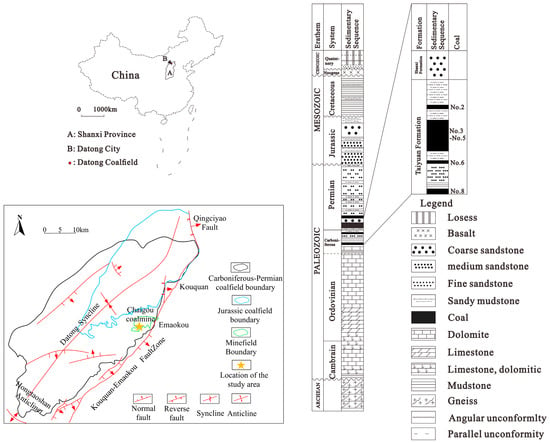
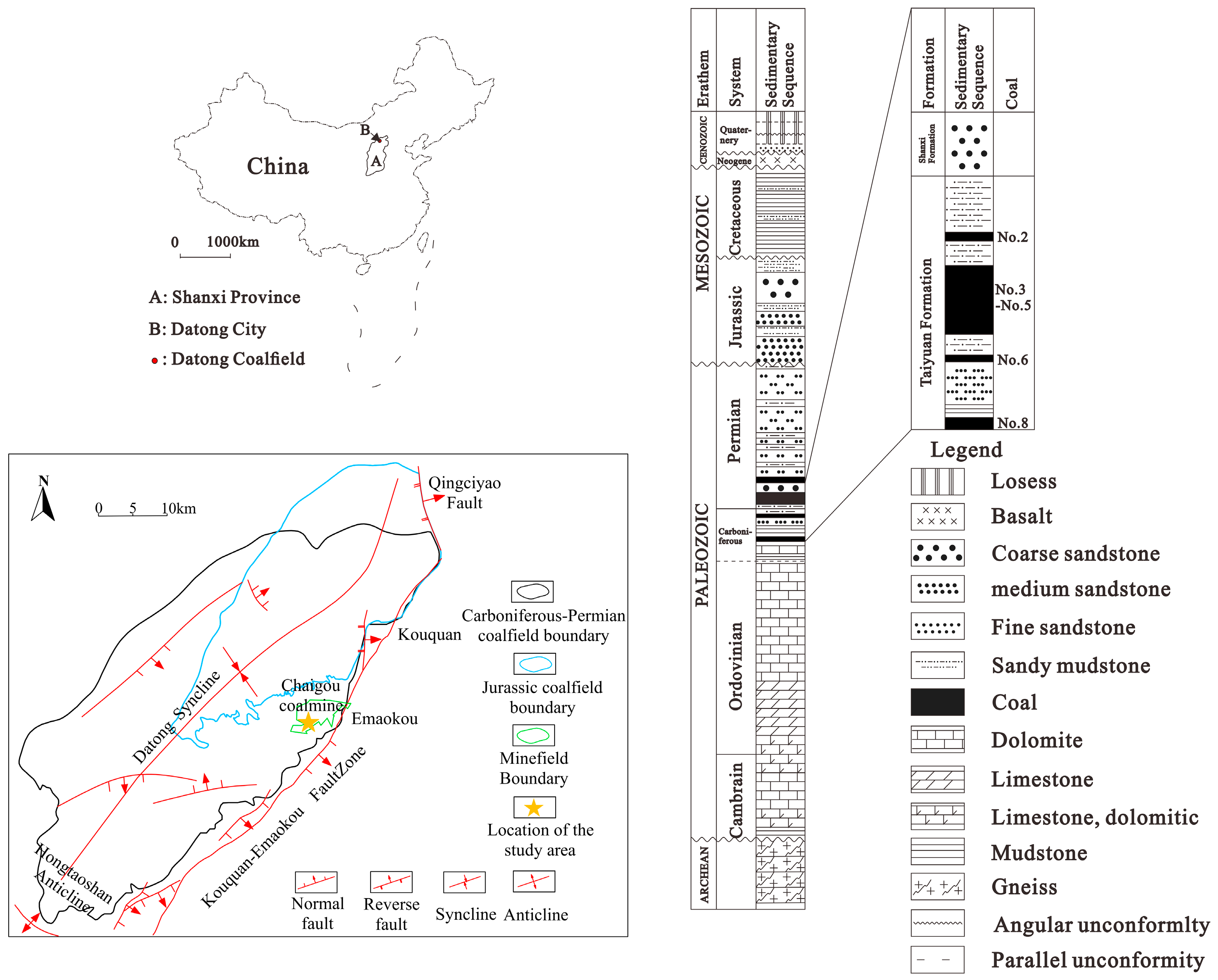
The Chaigou Coalmine is located 12 km west of Huairen City, Shuozhou City, Shanxi Province, as shown in Figure 1. It lies on the eastern margin of the central Datong Coalfield. The basement of the coalfield consists of Cambrian-Ordovician strata: the Cambrian System is mainly composed of mudstone, limestone, and dolomite, while the Ordovician System is dominated by limestone, dolomite, and dolomitic limestone, overlain by Carboniferous-Permian, Jurassic coal-bearing strata, as well as Cretaceous, Neogene, and Quaternary strata.
Figure 1.
Position, geological map, and stratigraphic column of the Datong Coalfield and the Taiyuan Formation.
The principal coal-bearing formation in the Chaigou Coalmine is the Taiyuan Formation, with a thickness ranging from 76.80 m to 137.23 m and an average thickness of 100.03 m. A total of 9 coal seams are developed in the formation, numbered #1, #2, #3, #5(3+5), #6, #7, #8−1, #8(8−1+8), and #9 from top to bottom. Among them, the #3, #5, #8−1, and #8 coal seams are the main minable seams (the #3 and #5 coal seams are largely coalesced throughout the coalmine, and the #8−1 and #8 coal seams are also mostly merged, hereinafter referred to as the #5 and #8 coal seams respectively); the #2 coal seam is locally minable; and the #1, #6, #7, and #9 coal seams are sporadically distributed. The total thickness of the coal seams reaches 34.81 m.
The strata in the coalmine form a gently west-dipping monocline structure with a relatively gentle attitude. The dip angle of the strata generally ranges from 1° to 7°, and can reach approximately 11° in some sections in the southeastern part of the central coalmine. Regionally, it is situated in the transition zone between the Lüliangshan Uplift and the Ordos Block. The superposition of multi-stage tectonic movements has formed a complex fault-fold system, providing favorable conduit conditions for Yanshanian magmatic intrusion. Studies have shown that tectonic-magmatic activity occurred in the Chaigou Coalmine: diabase intruded into the Carboniferous and Permian strata in the form of dikes, and simultaneously penetrated the Taiyuan Formation as sills, indicating intense magmatic activity.
3. Samples and Methods
3.1. Data Collection and Samples
Existing exploration data from the coalmine were initially collected and reviewed. A total of 108 borehole datasets in the Chaigou Coalmine were compiled. Among these, diabase intrusions were encountered in 75 boreholes.
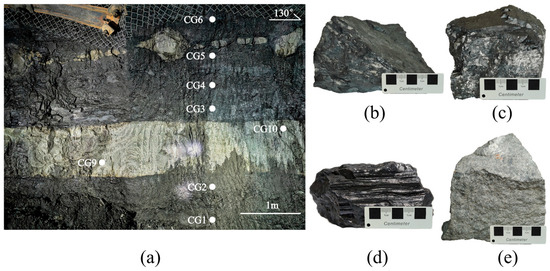
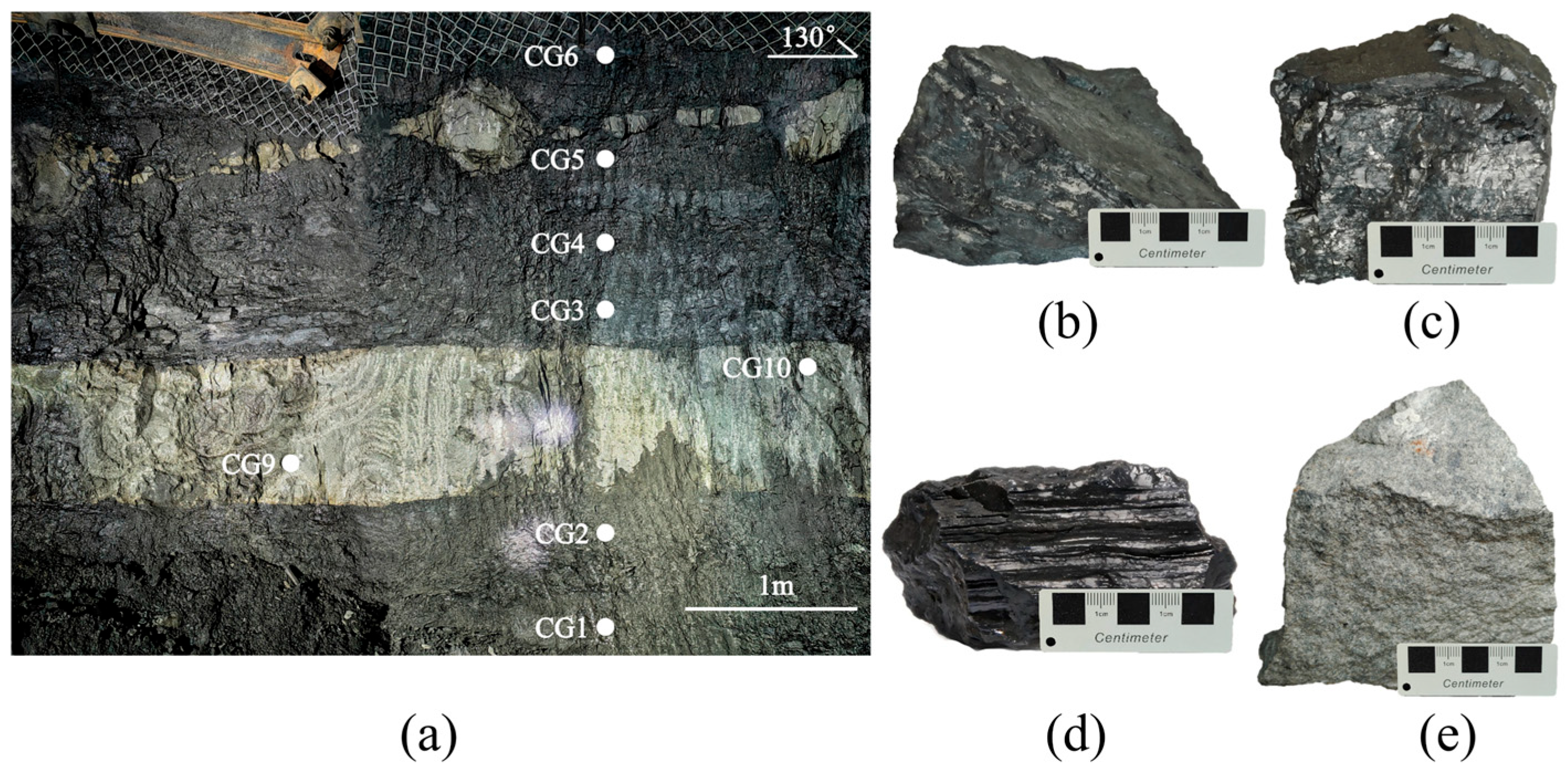
Field reconnaissance was conducted within the coalmine and its surrounding regions. Sampling activities focused specifically on the heading face of the East Wing Auxiliary Transport Roadway in the #5 coal seam. Six contact metamorphic coal samples were collected and labeled as CG1 through CG6. Additionally, two igneous rock samples were obtained and designated as CG9 and CG10. For comparative purposes, two normal coal samples (CG7 and CG8) and two drill core samples (CG11 and CG12) were acquired. The specific sampling locations and photographs of the specimens are illustrated in Figure 2, and the coordinates, elevation and distance to the igneous rock of the samples are illustrated in Table 1.
Figure 2.
Sampling locations and photographs of samples: (a) the East Wing Auxiliary Transport Roadway in the #5 coal seam; (b) CG3; (c) CG6; (d) CG8; (e) CG10.
Table 1.
Sample ID, coordinates, elevation and distance to the igneous rock of the samples.
3.2. 3D Geological Modeling
A specific area in the western part of the coalmine, characterized by detailed borehole data, was selected for modeling. Based on these data, a full stratigraphic model, a model of the #5 coal seam, and a distribution model of igneous rocks within the coal were constructed. Furthermore, a region with more specific data regarding intrusion horizons was chosen. In this area, a meso-scale grid model and a cross-sectional model of the igneous sills were established.
3.3. Experimental Methods
Coal samples were crushed and prepared as polished powder briquettes using the hot setting method. This preparation followed the Standard GB/T 16773-2008 [34]. Quantitative analysis of macerals and measurement of vitrinite reflectance were conducted using a BRICC-M2 automatic coal petrography system (Manufacturer: China Coal Research Institute Co., Ltd., Beijing, China). The evolutionary characteristics of vitrinite and inertinite, as well as the newly formed natural coke matrix, were identified. Additionally, rock thin sections were prepared in accordance with SY/T 5368-2016 [35]. These thin sections were examined using a Leica 2700P transmission-reflection microscope (Manufacturer: Leica Microsystems GmbH, Wetzlar, Germany) at magnifications of 50×, 100×, and 200×. Mineral compositions were identified, and microphotographs were captured for documentation.
4. Results
4.1. Sample Description
The macroscopic characteristics of coal samples can be broadly classified into three types:
- (1)
- Normal coal: dark black in color, with a strong vitreous luster and generally uniform coloration; local reflective surfaces are readily observed, and bedding is well developed. The fracture surface is predominantly uneven and jagged, with relatively well-developed fissures. Both density and hardness are moderate, and no mineral infilling is observed.
- (2)
- Contact-metamorphosed coal: dark black in color, with comparatively strong luster and relatively uniform coloration; local variations in luster are present as a result of contact metamorphism. The sample occurs as an irregular block. The fracture surface is jagged, with densely distributed vertical fissures. Its density is slightly higher than that of normal coal, and its hardness is correspondingly greater. No significant mineral infilling is observed.
- (3)
- Massive coke: dark gray to steel gray in color, with a dull, non-lustrous surface; bedding is obliterated, and the sample occurs as a homogeneous massive block. Its density is markedly higher than that of contact-metamorphosed coal, and the texture is compact and hard. Hardness is relatively high. The fracture surface is generally irregular, although some areas exhibit a jagged fracture morphology due to fissure development. Considerable infilling by gray-white or light-colored carbonate minerals is present.
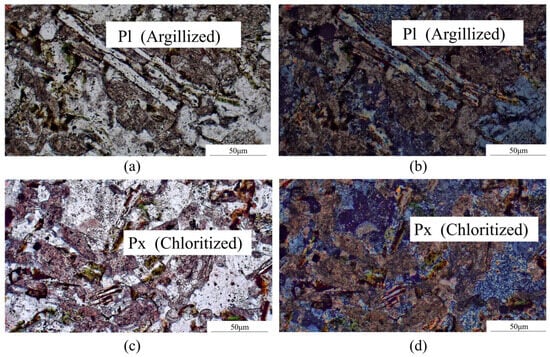
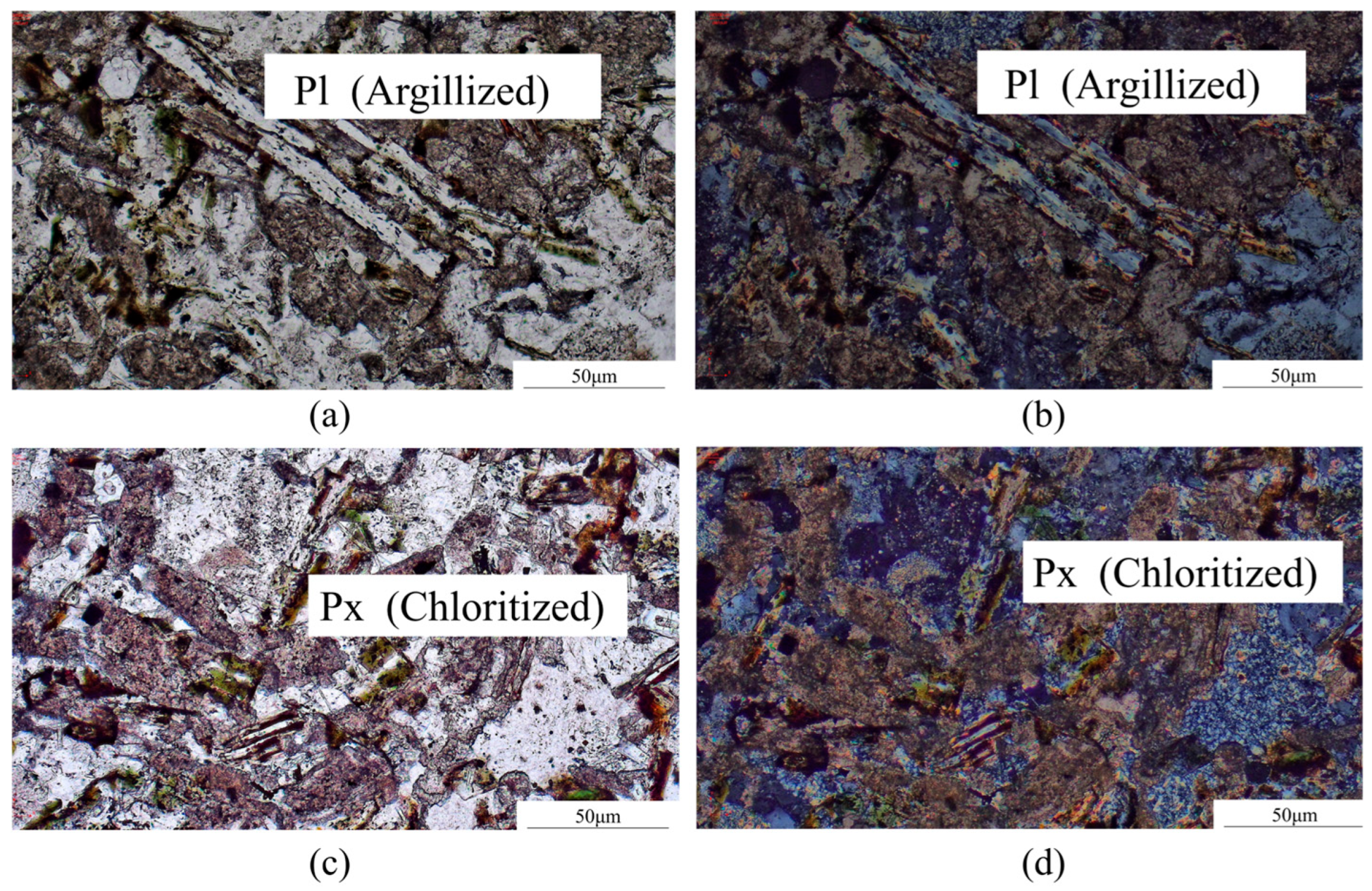
Microphotographs of the rock samples, shown in Figure 3, reveal a roughly recognizable original diabasic texture. Plagioclase has been replaced by fine clay mineral particles—a process known as argillization—retaining only its original crystal morphology as a lath-shaped, light-colored interlaced framework. Meanwhile, pyroxene exhibits significant chloritization. Under cross-polarized light, most pyroxene grains have lost their original optical properties, displaying abnormal interference colors such as ink-blue and rust-brown. Consequently, the rock is identified as altered diabase.
Figure 3.
Thin section images: (a) plane-polarized light (PPL) photomicrograph of CG8; (b) cross-polarized light (XPL) photomicrograph of CG8; (c) PPL photomicrograph of CG12; (d) XPL photomicrograph of CG12.
4.2. Impact of Igneous Intrusions on Coal
4.2.1. Impact on Coal Quality
The collected samples of normal coal are deep black in color with a weak vitreous luster. They exhibit a blocky structure and banded texture, with uneven fractures and brownish-black streaks. The coal is dense and relatively hard, with well-developed endogenous fractures. The contact metamorphic coal samples appear grayish-black to dark gray and generally display poor luster. However, local variations in luster are observed due to thermal metamorphism. These samples are generally irregular and blocky in shape, featuring uneven fractures and rough surfaces. The texture is dense and hard, with developed fractures. Both density and hardness are notably higher than those of normal coal. Additionally, some samples contain abundant carbonate mineral fillings. The vitrinite reflectance test data and the proximate and ultimate analyses for the coal samples are presented in Table 2.
Table 2.
Vitrinite reflectance, proximate and ultimate analyses of coal samples. (%).
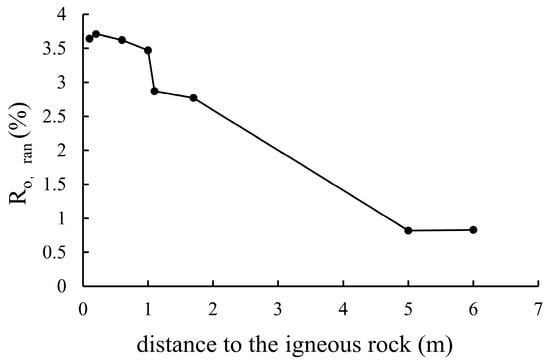
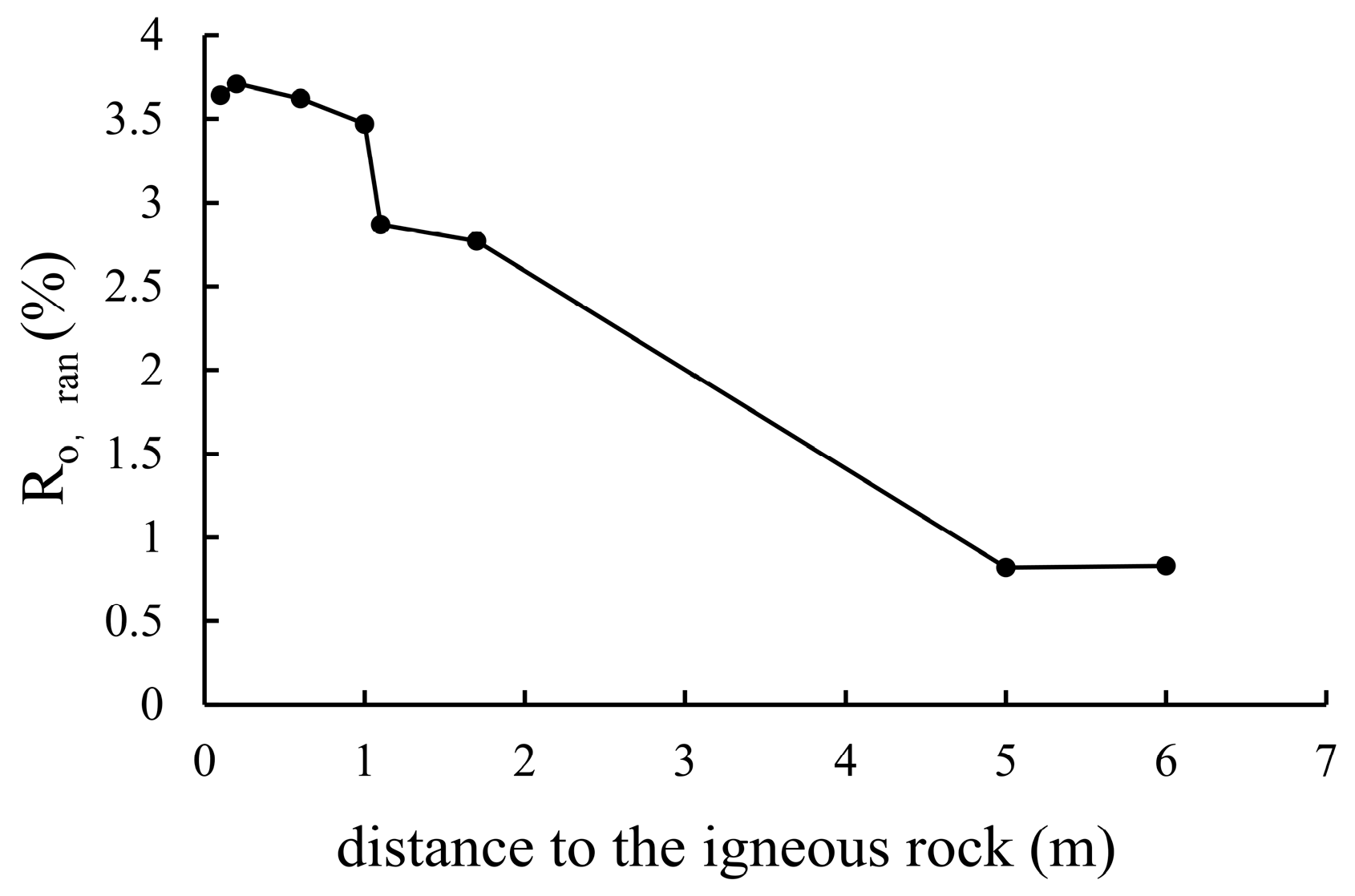
Vitrinite reflectance is a crucial indicator for characterizing the metamorphic grade of coal [36,37], with its value increasing as coal rank advances. The map of the variation in Ro depending on the distance from the intrusion is shown in Figure 4. Borehole coal quality data indicate that the average maximum vitrinite reflectance (Ro,max) of the coal seams in the Chaigou Coalmine is 0.81%. This classifies the coal into Metamorphic Stage II, corresponding to the oil window stage. In this study, the collected contact metamorphic coal samples exhibited random reflectance values ranging from 3.05% to 3.85% (measured under oil immersion on altered organic matter). This significant increase suggests that the heat carried by the magmatic intrusion accelerated the maturation of the coal, elevating the coal rank in the vicinity of the intrusion. Furthermore, samples closer to the intrusion body showed higher vitrinite reflectance values, confirming that higher thermal intensity results in a higher degree of thermal metamorphism.
Figure 4.
Diagram of the variation in Ro depending on the distance from the intrusion.
An analysis of coal quality data from the 108 boreholes revealing igneous rocks demonstrated an inverse relationship between volatile matter and vitrinite reflectance: as reflectance increases, volatile matter decreases. Specifically, the volatile matter content (Vdaf) of normal coal dropped to 5%–30% after transforming into contact metamorphic coal, a level generally lower than that of unaffected normal coal (>30%). Conversely, ash content exhibited a positive correlation with vitrinite reflectance. Coal samples near the igneous rocks showed a sharp increase in ash yield; for contact metamorphic coal with low volatile matter, the ash content could exceed 60%. This increase in ash content is attributed to two primary mechanisms. First, high-temperature baking during or after intrusion destroys a portion of the organic components in the coal, leaving behind residual inorganic constituents and thus increasing the proportion of primary minerals. Second, substantial amounts of mineral matter gradually infiltrate the coal matrix via hydrothermal convection or groundwater flow. This process significantly increases the ash content and severely degrades the utilization value of the coal [38].
4.2.2. Maceral Characteristics of Contact Metamorphic Coal
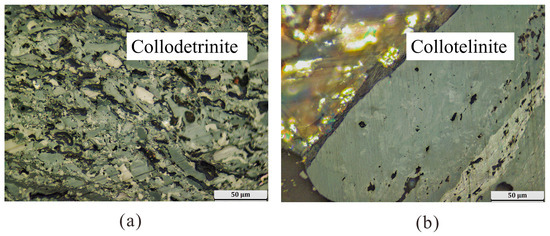
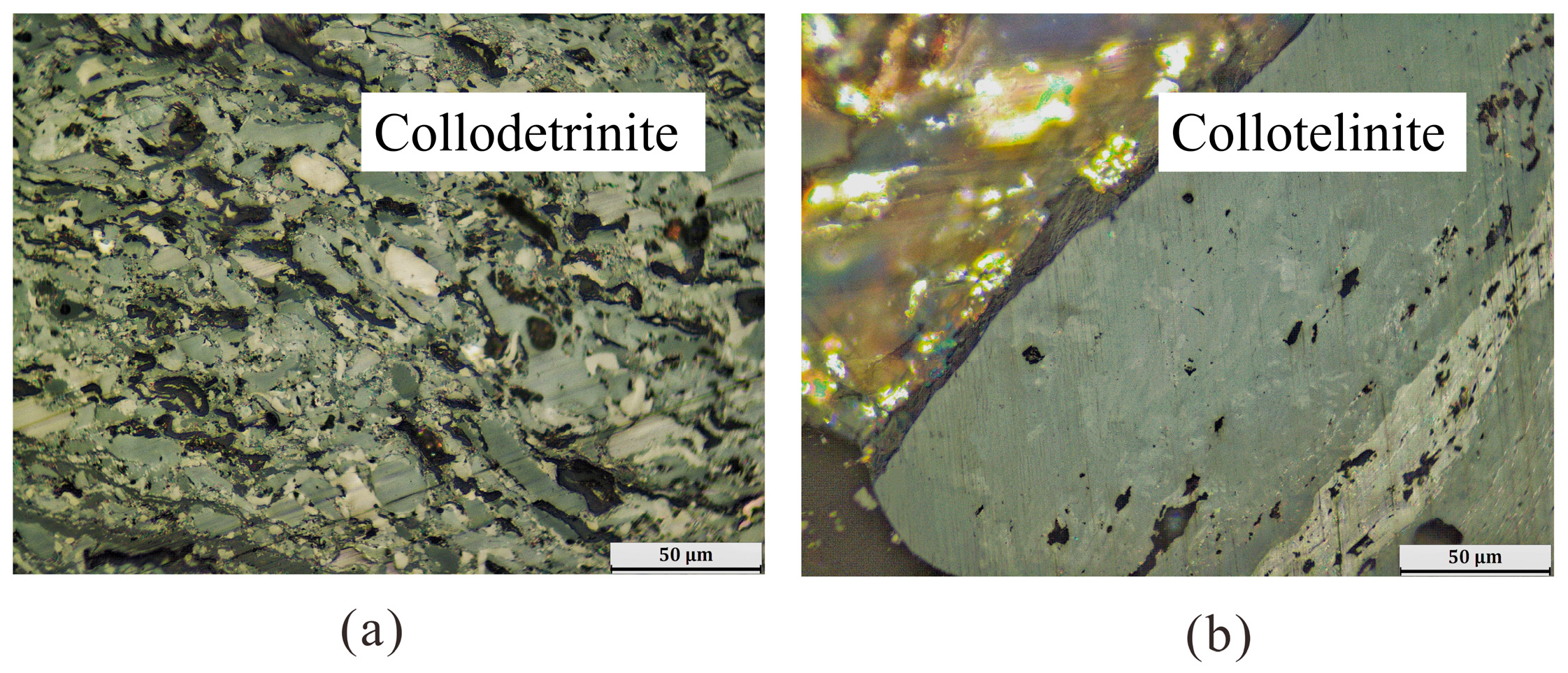
The average semiquantitative content of macerals and minerals of coal samples is shown in Table 3. Under an optical microscope, normal coal (samples CG7, CG8) unaffected by igneous intrusion exhibits specific maceral compositions. Vitrinite constitutes 60–75 vol.% of the total composition, dominated by collotelinite. Within the telinite, residual plant cell structures are visible. Inertinite accounts for 15–30 vol.%, with fusinite being the most common maceral. The cell lumens of the fusinite are frequently filled with clay minerals. Liptinite comprises 5–10 vol.% of the composition, consisting primarily of sporinite and cutinite, shown in Figure 5.
Table 3.
Average semiquantitative content of macerals and minerals of coal samples (vol.%).
Figure 5.
Photomicrographs of macerals in normal coal: (a) PPL; (b) PPL.
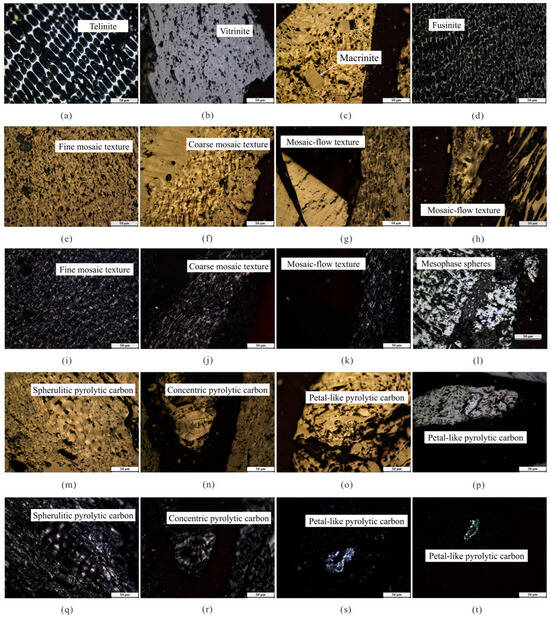
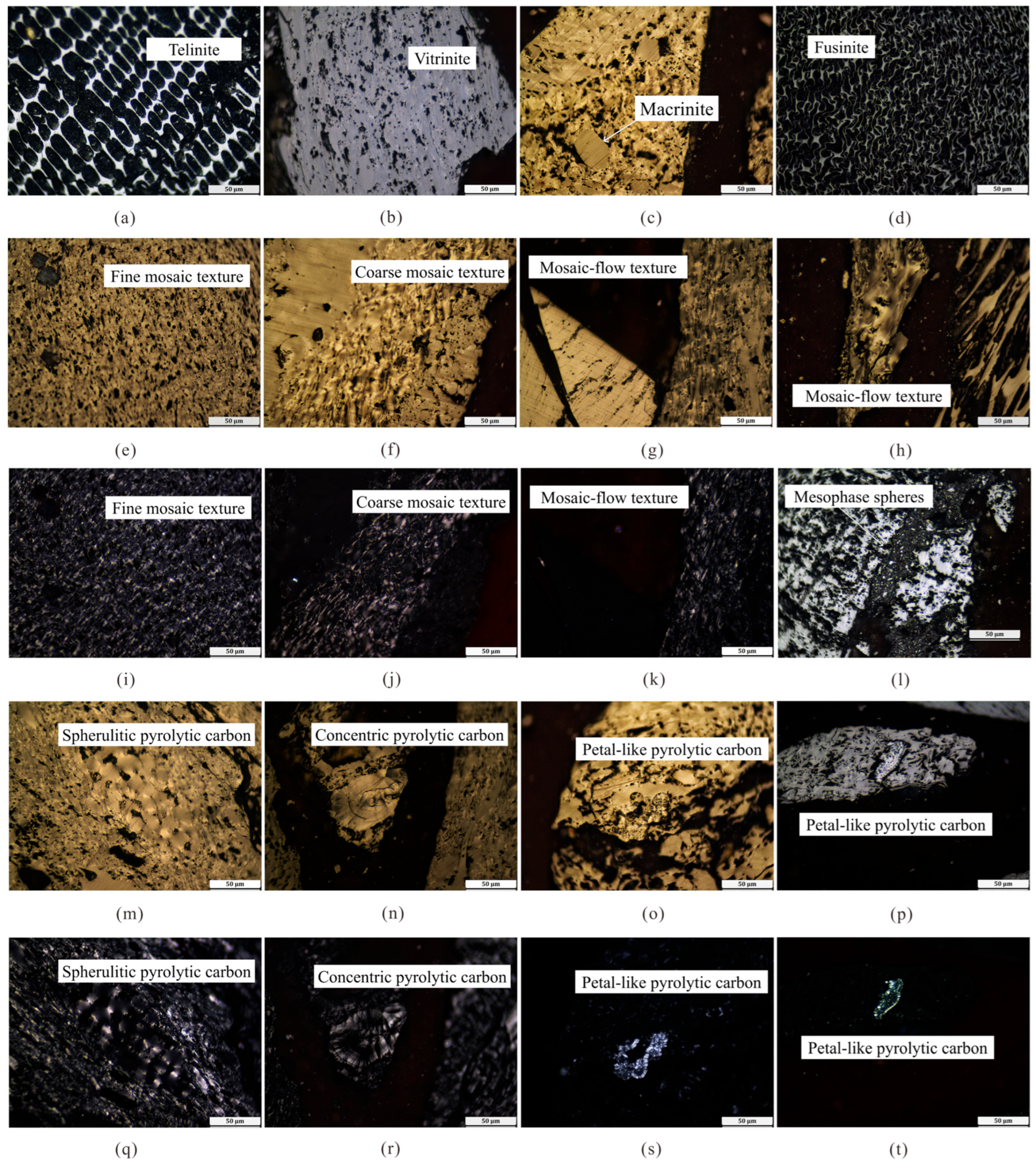
Coal subjected to contact metamorphism (samples CG1–CG4) exhibits unique optical properties, which are manifested in three primary aspects: (1) generally higher reflectance; (2) the presence of newly formed natural coke components; and (3) distinct optical anisotropy in certain components [39]. Magmatic thermal metamorphism induces the formation of unique coking microstructures. These structures are predominantly identified as mesophase spheres, mosaic structures, and flow structures. Pyrolytic carbon is a specialized organic component formed during high-temperature geological processes. Its genesis involves a complex interplay of physicochemical mechanisms and environmental conditions, shown in Figure 6.
Figure 6.
Photomicrographs of macerals in contact metamorphic coal: (a) PPL, (b) PPL, (c) PPL, and (d) PPL show the primary macerals in contact metamorphic coal; (e) PPL, (f) PPL, (g) PPL, (h) PPL, (i) XPL, (j) XPL, (k) XPL, and (l) XPL show the mosaic texture, mosaic-flow texture and mesophase spheres in contact metamorphic coal; (m) PPL, (n) PPL, (o) PPL, (p) PPL, (q) XPL, (r) XPL, (s) XPL, and (t) XPL show the different morphologies of pyrolytic carbon in contact metamorphic coal.
4.3. Distribution Characteristics of Igneous Rocks
4.3.1. Three-Dimensional Modeling Process and Models
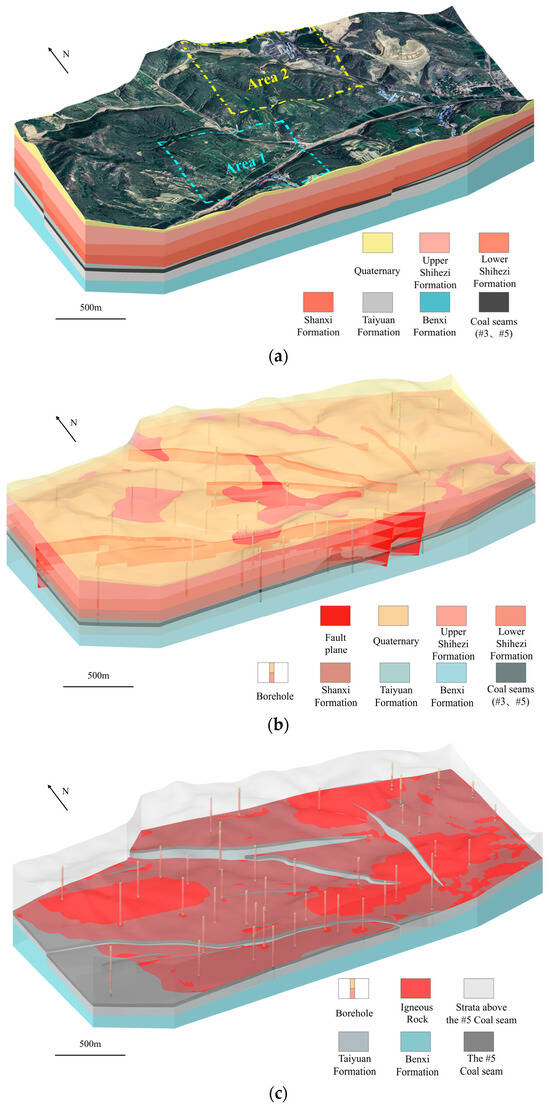
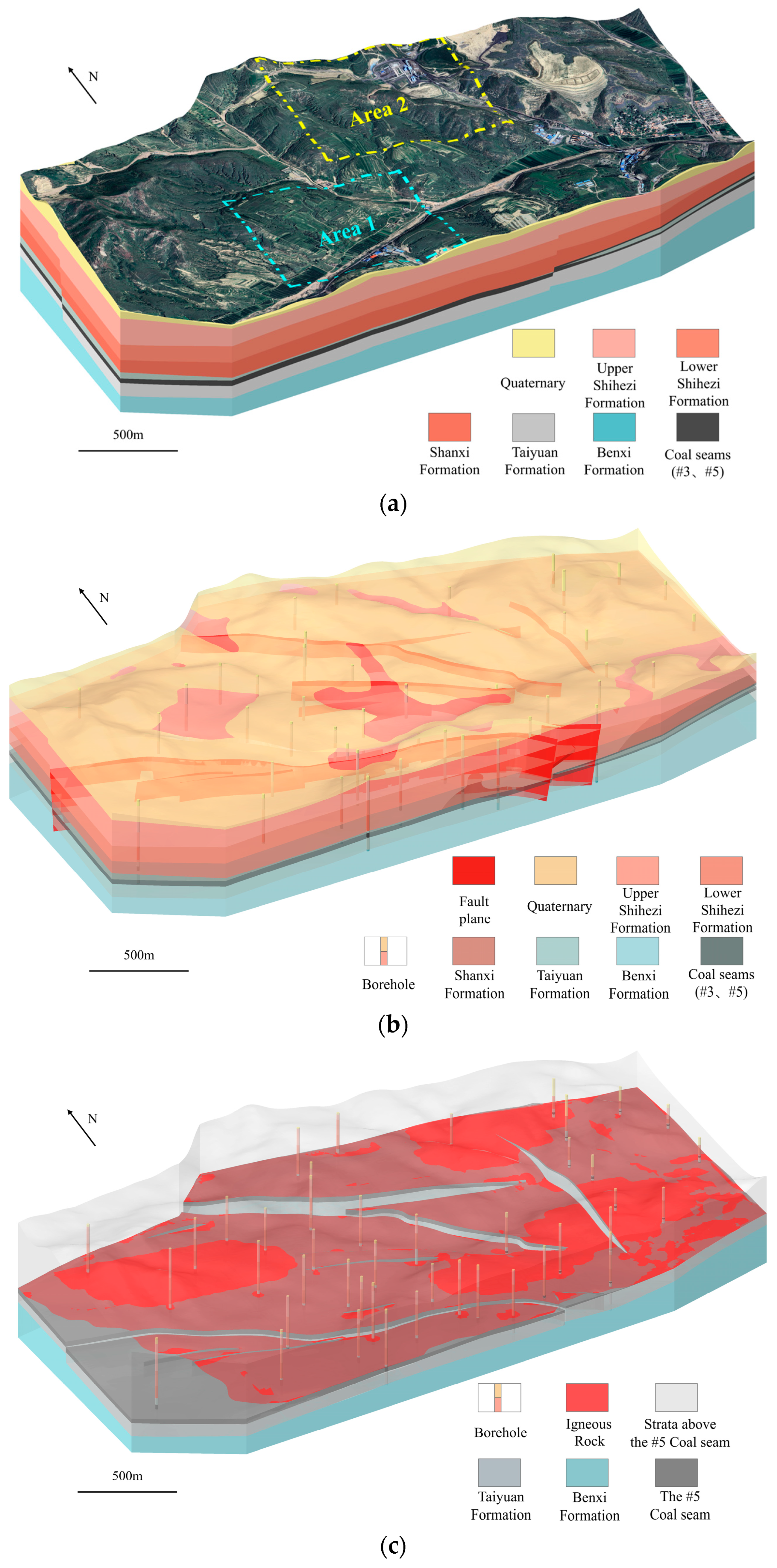
Constructing a 3D model based on borehole data facilitates a more comprehensive observation of the morphology of igneous intrusions. The northwestern region of the coalmine, which is characterized by severe igneous intrusion and abundant data availability, was selected for detailed analysis. With the help of Leapfrog Geo three-dimensional geological modeling software, based on the two-dimensional map geological data such as borehole histogram, mining plane engineering map and structural data provided by Chaigou Coal Industry, using implicit modeling, spatial interpolation and multi-source data fusion methods and techniques, the structure-stratum solid model and intrusion model in Chaigou Coalmine are constructed. The geological information of the study area can be transparentized and visualized, and can be truly expressed in the form of a three-dimensional model, which provides an intuitive effect for the subsequent analysis of igneous rock intrusion characteristics. The model construction process is as follows:
(1) Based on the original multi-source two-dimensional geological data, it is digitized into data types such as discrete points, vector lines, and table structuring, and saved as a file that can be read by the modeling software on the system to provide data support for subsequent construction of the model. (2) The above data files are imported into the corresponding modules of Leapfrog Geo 5.1.4 software, and the drilling model is constructed according to the drilling data, and the data preparation and loading are completed. (3) Based on the surface contour data, the surface DTM is generated and the image is superimposed. Then, the geological model blank body with the specified surface resolution is created according to the range of the well field, and the blank body model is limited by the lateral boundary and the surface topography. (4) Combined with geological knowledge and drilling information, the stratigraphic sequence is defined, the stratigraphic contact interface is generated and the stratigraphic unit is divided. The fault surface model is constructed by using the fault occurrence point data and the fault system is activated to complete the initial geological body construction. Finally, through the fusion of spatial interpolation points, fault lines and coal seam floor contour lines and other data, the ground level and fault surface model are automatically updated and optimized to form a three-dimensional geological model of the mine with high precision and in line with the actual geological conditions. These models are visualized in Figure 7.
Figure 7.
Model of the Chaigou Coalmine: (a) Full stratigraphic and the #5 coal seam model. (b) Fault mode. (c) Distribution model of igneous rocks within the #5 coal seam.
The 3D-geological model intuitively reconstructs the spatial relationship of strata, structural morphology, and the regularity and characteristics of igneous intrusion within the Chaigou Coalmine, providing a visualized and robust basis for the accurate understanding of the geological conditions of the study area.
Within the coalmine, the underlying strata maintain a stable thickness. In contrast, the Upper Shihezi Formation and Quaternary strata present a relatively scattered distribution, with their thickness showing significant fluctuations controlled by topography, which is the combined result of the primary sedimentary environment and late-stage denudation. Faults in the coalmine are distributed in linear and zonal patterns, cutting through coal seams and igneous intrusions. Some faults have significant throw, directly truncating the #3 and #5 coal seams. Igneous intrusions occur in sheet-like forms: intense intrusion is developed in the northwestern and eastern parts of the coalmine, covering extensive areas of the #5 coal seam; while the southwestern region is characterized by relatively sparse igneous intrusions and weak intrusion intensity, with the southwestern corner of the coalmine being one of the few intrusion-free zones within the study area.
4.3.2. Plane Distribution Characteristics of Igneous Rock
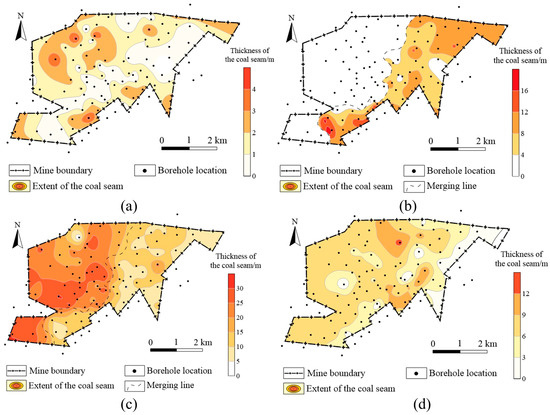
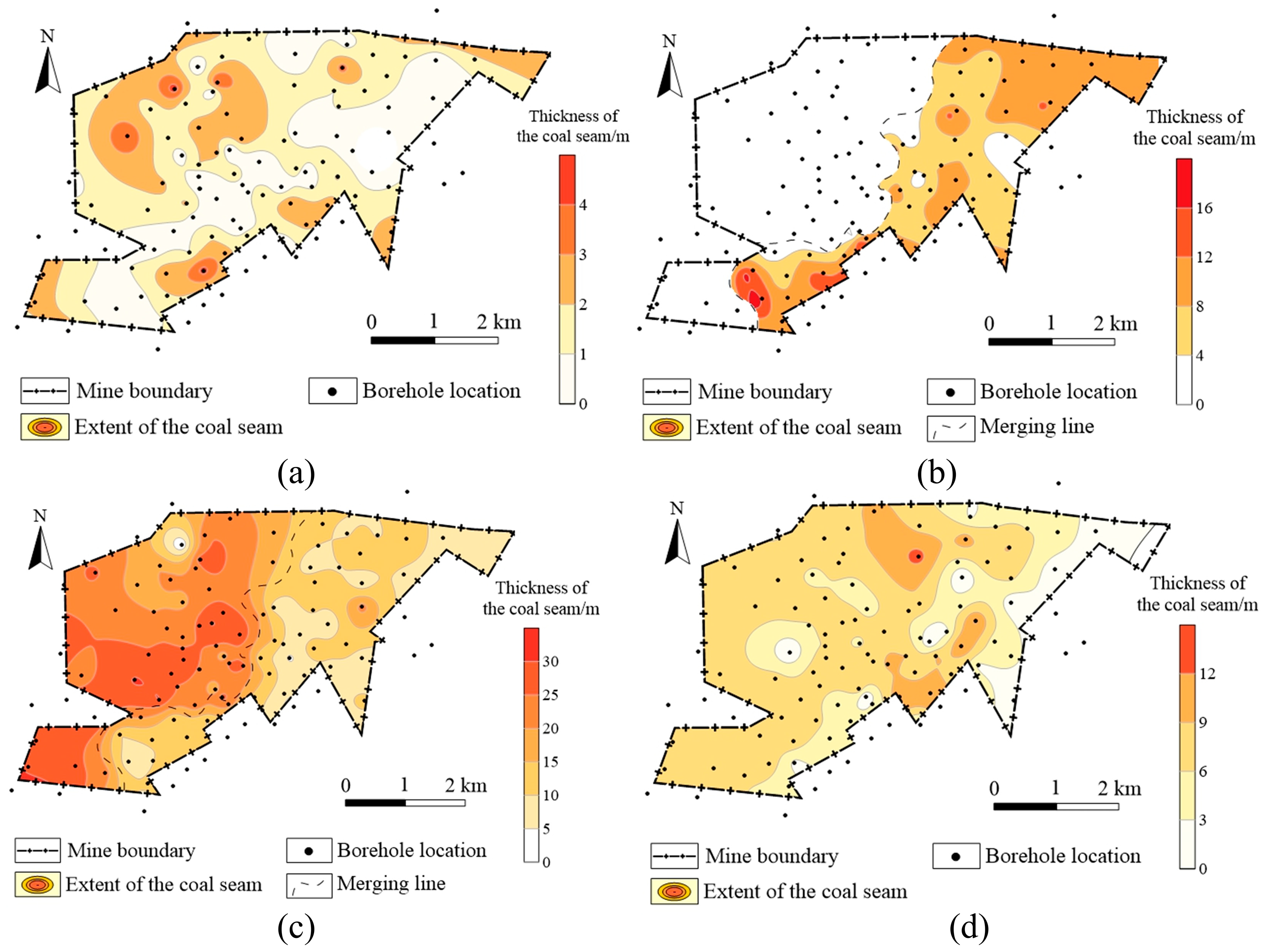
The extent of the different coal seams is shown in Figure 8. The main minable coal seams in Chaigou Coal Mine are #2, #3, #5 and #8 coal seams, and the occurrence characteristics of each coal seam are significantly different. Among them, the overall thickness of #2 coal seam is small, mostly concentrated in the range of 0–4 m, the plane distribution is scattered, the mining range is limited, and the stability is poor. The thickness of #3 coal seam can reach 8–16 m, and the west and northwest areas of the mine field are merged with #5 coal seam. The #5 coal seam is the core mineable coal seam in the mine field. The plane distribution range is the widest, and the overall thickness is significantly larger than that of #2 and #3 coal seams. The main thickness is between 9 and 32 m, and the average thickness is about 23.90 m, which belongs to the extremely thick coal seam in the mine field. The #8 coal seam is the main mineable coal seam in the lower group, with a thickness range of 0–12 m. The overall occurrence continuity is good and the stability is high.
Figure 8.
Extent of the different coal seams: (a) The #2 coal seam. (b) The #3 coal seam. (c) The #5 coal seam. (d) The #8 coal seam.
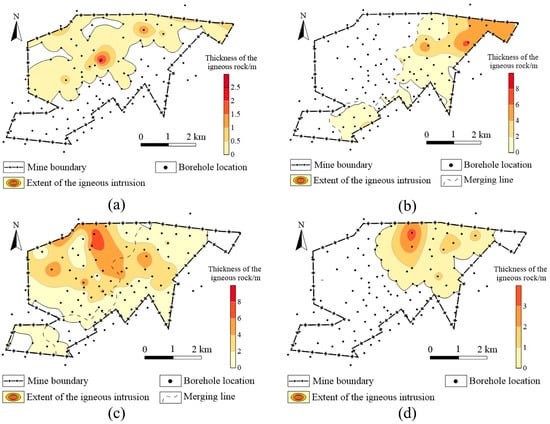
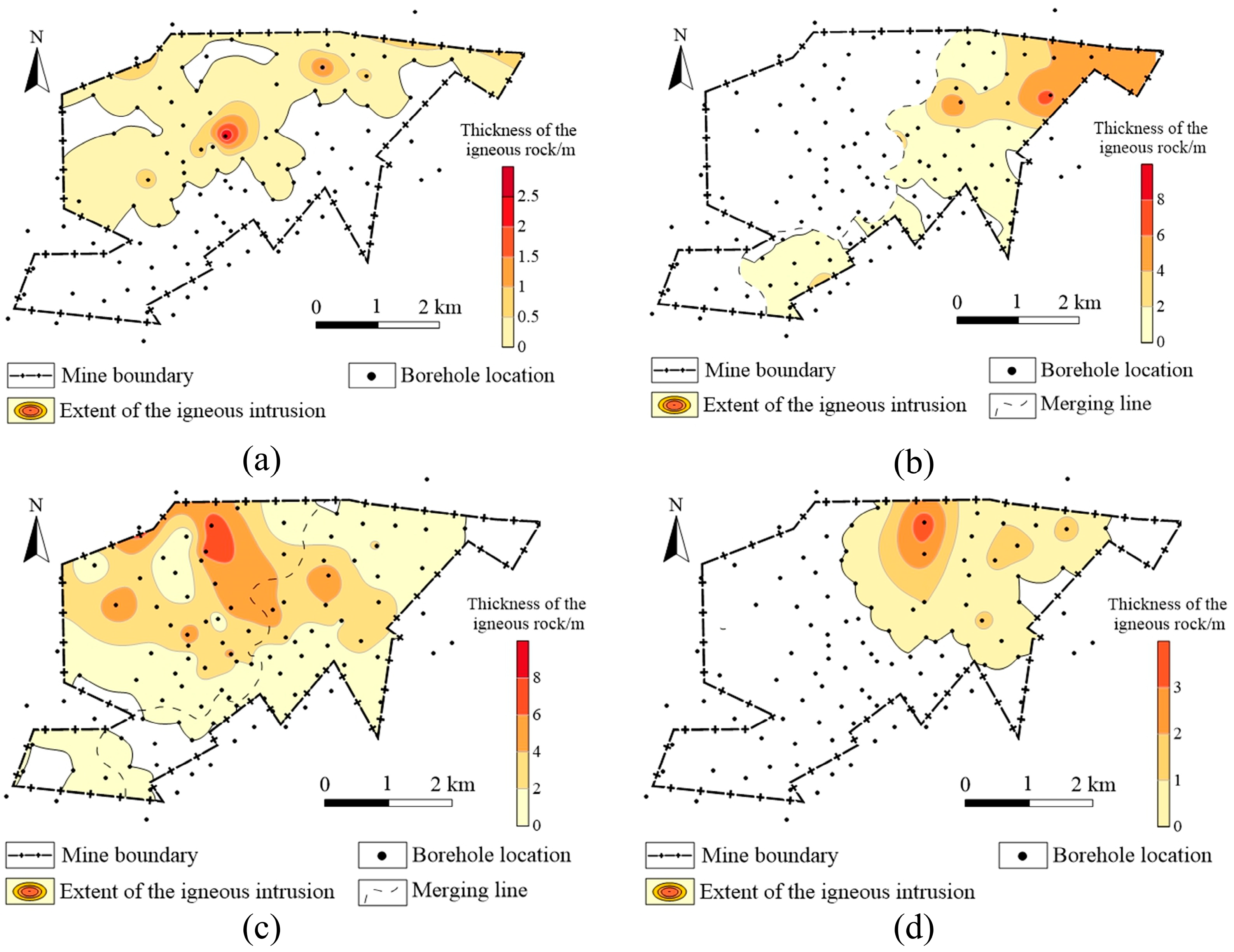
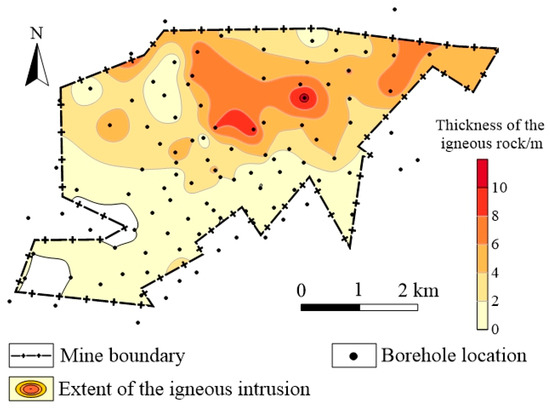
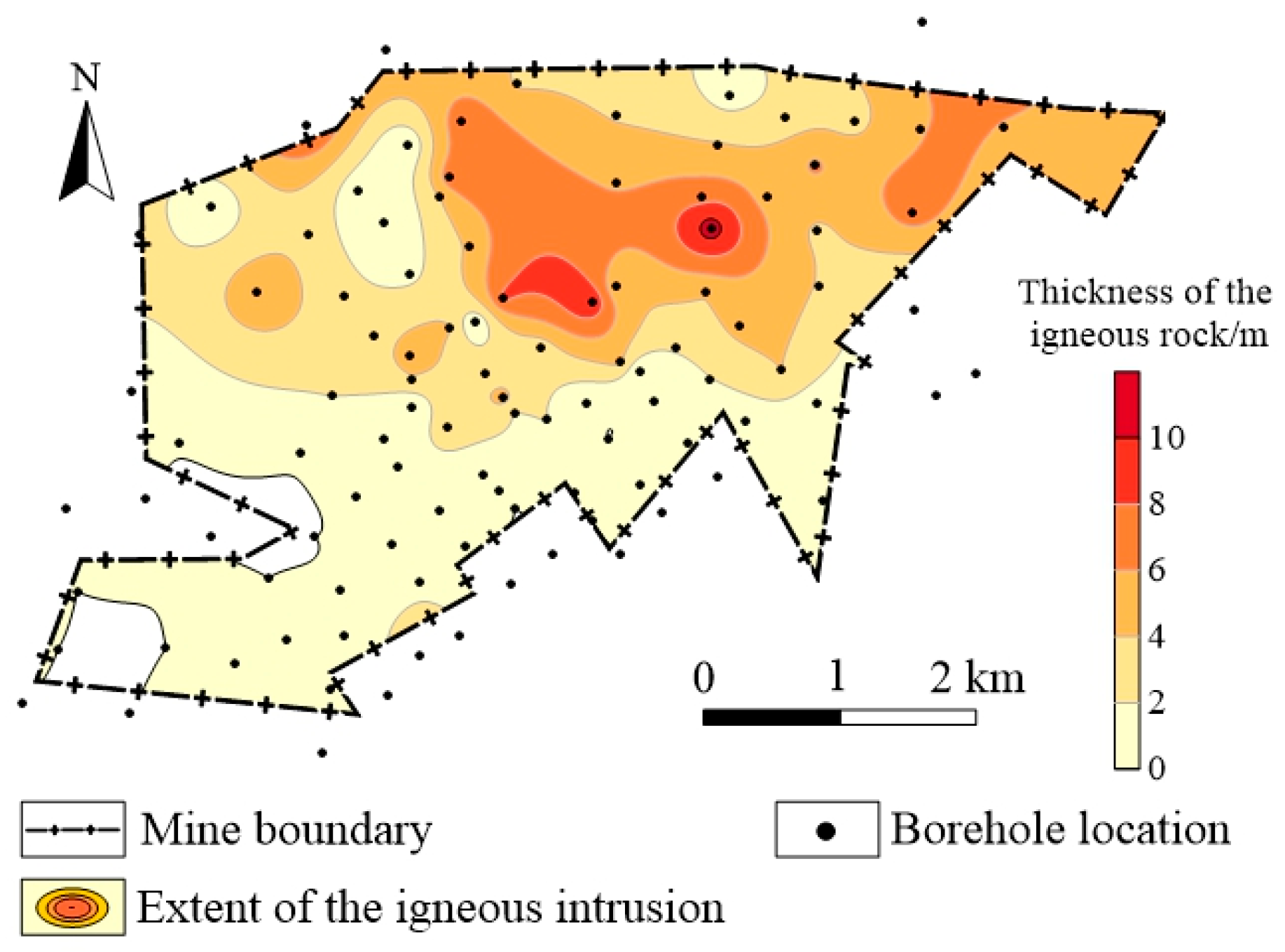
The primary magmatic activity within the Chaigou Coalmine is characterized by diabase intrusion. The thickness distribution of igneous rocks within the coal seams is presented in Figure 9, and the thickness variations of the igneous rocks in the Chaigou Coalmine are shown in Figure 10. In terms of planar distribution, igneous rocks are predominantly concentrated in the northern sector of the coalmine. The total area affected by intrusion covers approximately 19 km2, accounting for over 95% of the total coalmine area.
Figure 9.
Isopach map of magmatic intrusions in different coal seams: (a) The #2 coal seam. (b) The #3 coal seam. (c) The #5 coal seam. (d) The #8 coal seam.
Figure 10.
Isopach map of the total thickness of magmatic intrusions in coal seams.
Regarding the stratigraphic horizons, the intrusions are mainly located within the Upper Carboniferous–Lower Permian Taiyuan Formation. However, significant variations exist among different coal seams. The #5 coal seam exhibits the most extensive intrusion range. Diabase was encountered in 60 boreholes within this seam, with intrusion layers ranging from one to 15 and a cumulative thickness of 0.10 m to 8.31 m. The #3 coal seam ranks second in terms of intrusion extent, with diabase observed in 32 boreholes and intrusion layers ranging from one to 13. Conversely, the #2 and #8 coal seams show the smallest intrusion ranges; diabase was found in 13 and 11 boreholes, respectively, with one to 11 intrusion layers. The maximum single-borehole intrusion thickness recorded is 11.2 m, and the maximum number of intrusion layers is 15.
4.3.3. Spatial Distribution Characteristics of Igneous Rock
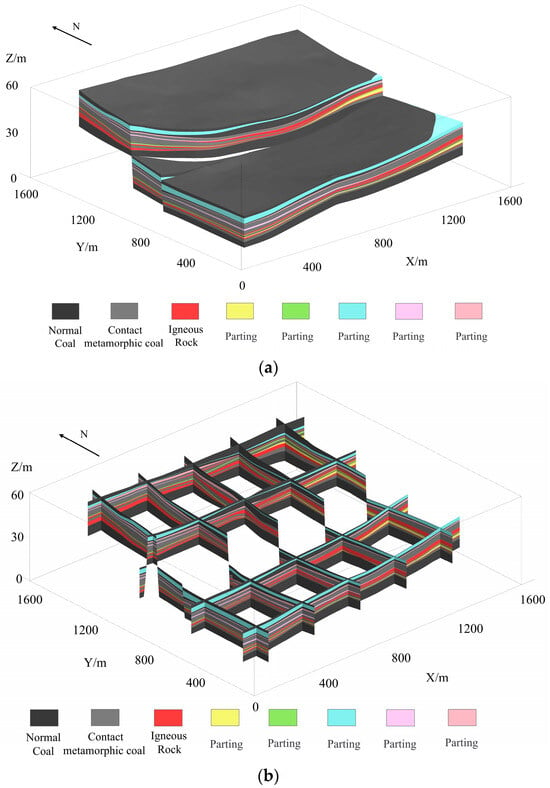
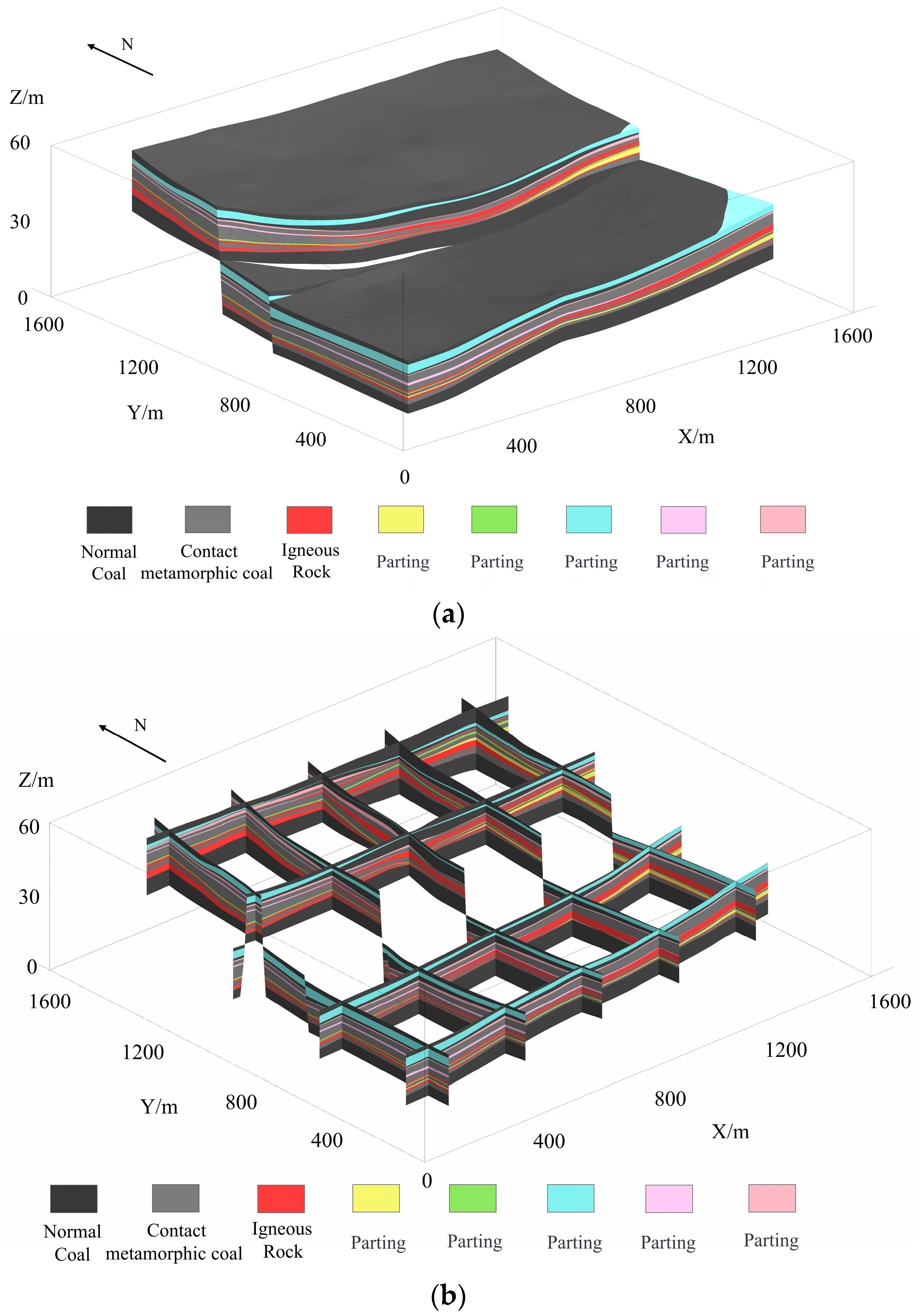
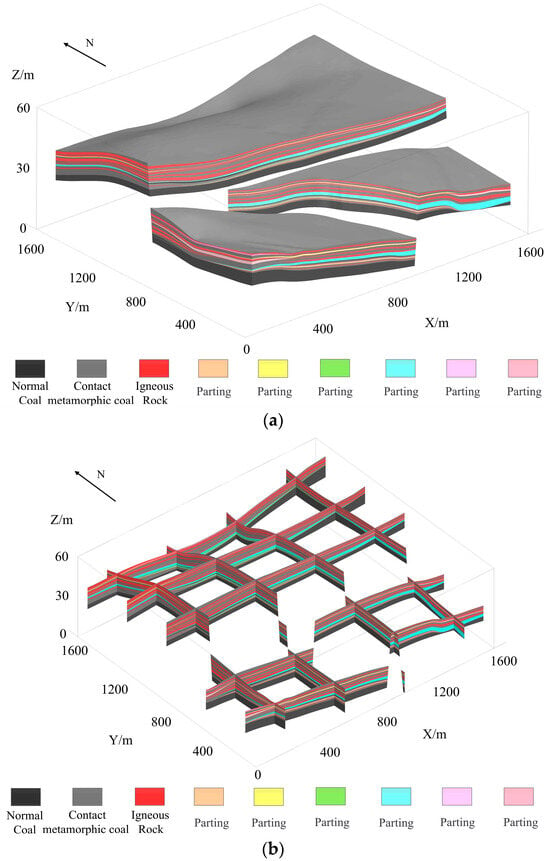
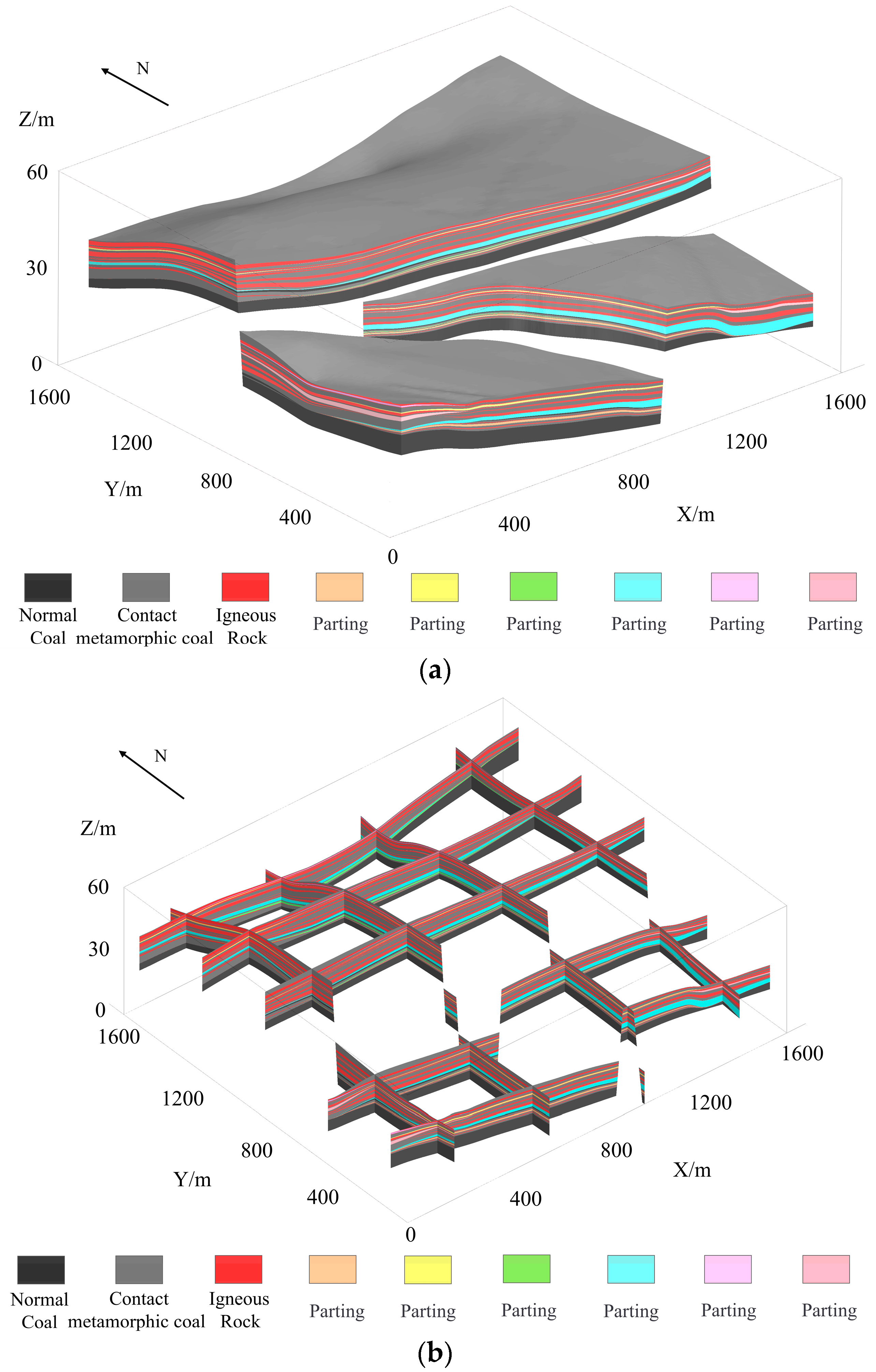
To further illustrate the spatial distribution characteristics of the igneous intrusions in 3D, local borehole data from Area 1 and Area 2 were selected to construct meso-scale models, as shown in Figure 11 and Figure 12.
Figure 11.
Meso-scale magmatic intrusion models for Area 1: (a) Model of the #5 coal seam and magmatic rocks in Area 1. (b) Mesh of the Area 1 model.
Figure 12.
Meso-scale magmatic intrusion models for Area 2: (a) Model of the #5 coal seam and magmatic rocks in Area 2. (b) Mesh of the Area 2 model.
Within the Chaigou Coalmine, the spatial relationship between igneous intrusions and coal seams is highly complex, with the intrusions overall characterized by multi-layer superimposition and parallel emplacement. From a vertical perspective, igneous intrusions mostly invade the coal seam along the coal seam roof and interlayer weak planes, indicating that their emplacement process is significantly controlled by the bedding planes and structural planes of the coal seam, presenting strong strata-bound characteristics. Notable differences exist in the number of intrusive horizons and intrusive positions of igneous rocks across different zones, which demonstrates the spatial heterogeneity of igneous activity intensity and its modification degree to the coal seam.
Specifically, in Area 1, igneous rocks have 3 to 4 intrusive horizons, with intrusive positions mainly located in the middle of the coal seam. This indicates that the penetration and intercalation effect of igneous rocks on the coal seam in this zone is relatively limited, the intrusion range is small, and the overall structure of the coal seam is well preserved.
By contrast, in Area 2, the number of intrusive horizons of igneous rocks increases to 6 to 8, with intrusive positions mainly concentrated in the roof and middle-upper part of the coal seam. An igneous rock immediate roof has formed near local boreholes, indicating that the intensity of igneous intrusion in this zone is significantly enhanced, with a more severe modification effect on the coal seam roof and its upper structure. These differences not only reflect the spatial differentiation characteristics of igneous intrusion within the coalmine but also may exert a critical impact on coal seam thickness variation, roof stability, and the development and utilization conditions of the coal seam.
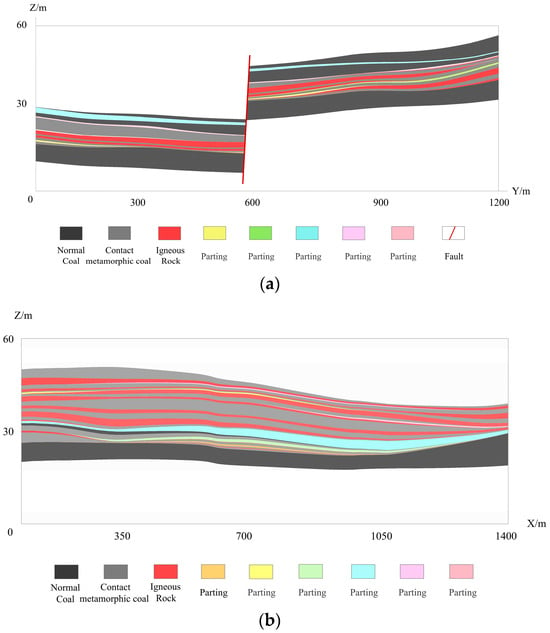
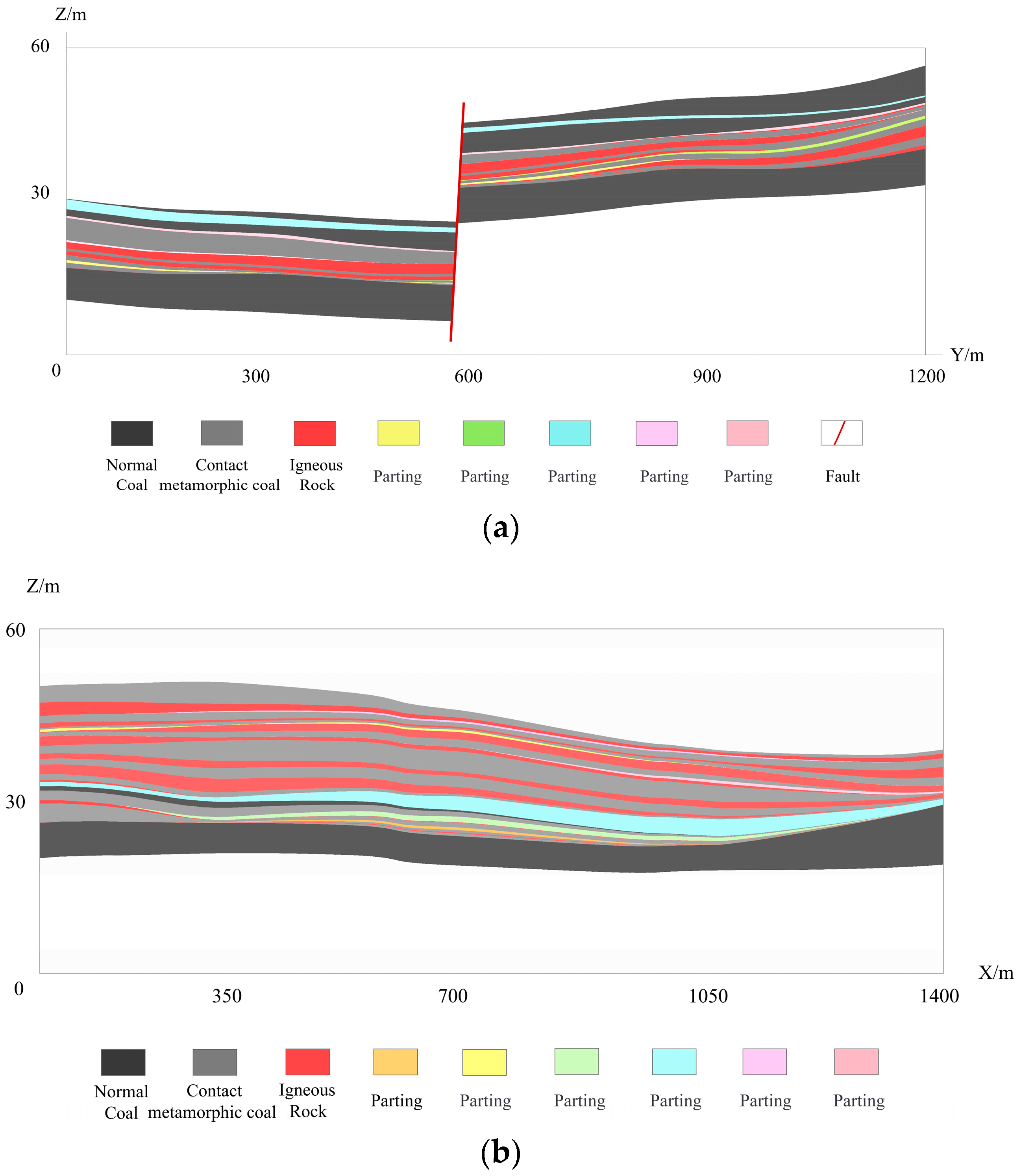
Cross-sections extracted from the meso-scale model, as depicted in Figure 13, reveal that multi-layered intrusions have caused severe metamorphism within the coal seams. In Area 1, where the igneous rock intruded along the middle of the coal seam, thermal alteration is confined to the coal layers immediately above and below the intrusion. The thickness of the thermally altered coal is approximately equal to that of the intrusion itself. In contrast, the multi-layered intrusions in Area 2 have resulted in thermal alteration throughout the entire upper section of the coal seam. Only the lower part of the seam (approximately 4–8 m thick) and portions of normal coal within the middle gangue layers remain unaffected. Borehole data indicate that in some areas, such as E38 and BKE1, almost the entire coal seam has undergone thermal metamorphism, transforming into natural coke. Conversely, the phenomenon of igneous intrusion along the floor of the coal seam is relatively rare in the Chaigou Coalmine.
Figure 13.
Schematic cross-section of magmatic intrusions: (a) Area 1; (b) Area 2.
5. Discussion
5.1. Intrusion Mechanism of Igneous Rocks
In the study area, magma primarily intruded into the coal seams in the form of sills. During lateral flow, the thickness of these sills gradually decreases from the center toward the margins as the migration distance increases. Based on the thickness variations of the igneous rocks in the Chaigou Coalmine shown in Figure 9, it can be inferred that the magma within the coal seams originated mainly from the northern and central parts of the coalmine and flowed southward. The igneous bodies extend from the northern intrusion zone toward the south, forming a large-scale, continuous, and parallel distribution belt. In the southern region, however, the intrusions appear only sporadically due to the attenuation of magmatic energy.
Statistical analysis of intrusion data from 108 boreholes revealed that igneous intrusions are most severe in the #5 and #3 coal seams, whereas the #2 and #8 coal seams are less affected. This suggests that magma preferentially intrudes into thicker coal seams. Magma tends to follow paths of least resistance; compared to the roof and floor rocks, coal has lower mechanical strength and is more prone to plastic deformation [40]. Furthermore, weak bedding planes readily form within the coal seam and at its interfaces with the roof and floor. So rising magma is more likely to intrude along these contact surfaces or directly into the coal seam. Additionally, thick coal seams provide an ideal accommodation space, allowing magma to spread extensively without the need to continuously fracture harder surrounding rocks.
Field reconnaissance in the mine revealed distinct beaded intrusion features, characteristic of a fingering intrusion structure [41,42,43]. This structure arises when a low-viscosity fluid flows into a high-viscosity medium, causing the leading edge of the low-viscosity fluid to bifurcate into finger-like projections [44]. During lateral magmatic flow, restricted channels and viscosity differences cause the tips to penetrate rapidly, forming elongated “fingers.” These magma-filled narrow channels subsequently cool and solidify, creating the observed finger-like intrusions. The formation of such structures can be divided into three stages: finger formation, finger expansion, and finger coalescence [45]. The upper sill observed in this study consists of discontinuous but closely spaced intrusion blocks. This indicates that the sill is likely in the second stage of development—finger expansion and mutual approximation.
5.2. Evolution Characteristics of Macerals in Contact Metamorphic Coal
The evolution of macerals in contact metamorphic coal is a progressive process transforming organic components into a coke matrix and subsequently into high-temperature carbonization products. The key indicators of this process are increased vitrinite reflectance and thermal alteration of original components. As the degree of thermal metamorphism increases, the proportion of coke matrix rises. During thermal alteration, the original vitrinite, inertinite, and liptinite gradually lose volatile matter, forming mesophase spheres and mosaic structures. Occasionally, flow structures and pyrolytic carbon are observed, the morphologies of which are clearly identifiable under a microscope.
Due to the high temperature, gas, liquid, and pressure associated with magmatic intrusion, the original macerals undergo significant changes, most notably in the vitrinite group. Vitrinite reflectance increases markedly, and birefringence is enhanced. The color transitions from dark gray to bright gray and white, exhibiting a homogenized dense structure or containing anisotropic spheres. Concurrently, micron-scale pores appear on the vitrinite surface, creating a “worm-eaten” texture [46], partly filled with minerals like calcite and quartz. Some cellular structures, such as mineral-filled lumens in telinite, are preserved.
Inertinite, being more heat-resistant, remains relatively stable during contact metamorphism. Its sieve-like and fibrous cellular structures retain much of their original morphology. Reflectance and shape show no significant changes, except for local pore expansion [47] and partial mineral filling. Under reflected light, inertinite remains white with high relief, preserving its original fusain characteristics. In contrast, high temperatures cause the complete decomposition of liptinite; only trace amounts of pyrolytic bitumen residues are visible in slightly thermally altered areas.
Mesophase spheres, formed by the thermal polycondensation of vitrinite, appear as spherical or hemispherical structures with diameters of 1–150 μm. Mosaic structures result from the melting and rearrangement of carbonaceous mesophase at high temperatures, forming mosaic-like optical anisotropic regions, commonly found in severely thermally altered coal (Ro > 2.0%). Flow structures are formed by the plastic flow of pyrolytic carbon within the magmatic thermal field, creating directional banded or vortex-like structures, often accompanied by gas bubbles and tar droplets. The estimated formation temperature of mosaic structures is approximately 400–500 °C, while the appearance of mesophase spheres indicates exposure to temperatures of around 400 °C. The results are in accordance with previous research [7,48,49].
The formation of pyrolytic carbon is closely related to temperature. Microscopic observation identified several types: (1) Spherulitic pyrolytic carbon: Spherical particles (0.1–2 μm in diameter) with smooth or microporous surfaces, common in rapidly pyrolyzed coal coke; (2) Concentric pyrolytic carbon: Characterized by concentric rings radiating from an aromatic ring core, common in the activated regions of inertinite in thermally altered coal; and (3) Petal-like pyrolytic carbon: Exhibiting layered or sheet-like stacking, common in areas subjected to rapid thermal alteration by intrusion. The presence of pyrolytic carbon serves as a significant indicator of high-temperature magmatic events and aids in locating concealed igneous bodies.
In terms of maceral composition, the contact metamorphosed coal exhibits marked differences from normal coal at both the group and subgroup levels. Changes in maceral composition during contact metamorphism are not limited to the variation in maceral groups; they also involve the redistribution and transformation of specific maceral components. In the unaltered coal, vitrinite dominates, mainly represented by collotelinite, with minor telinite, fusinite, and liptinite. The inertinite group is dominated by fusinite and semifusinite, which retain well-preserved cellular structures, while liptinite, mainly sporinite and cutinite, is present in small amounts, typically less than five percent. After diabase intrusion, the maceral composition changes markedly. The proportion of primary vitrinite decreases sharply, whereas liptinite is almost completely eliminated due to its low thermal stability. Instead, the organic matter has been transformed into a homogeneous or anisotropic coke matrix. Within this matrix, mesophase spheres with diameters of 1–150 μm and mosaic textures varying from fine- to coarse-grained are widely developed. Inertinite macerals, particularly fusinite, are more resistant to thermal alteration; they preserve their original morphology but often show enlarged pores and local devolatilization vacuoles. Liptinite is completely absent. In addition, three types of neo-formed pyrolytic carbon—spherulitic, concentric, and petal-like—are identified, none of which are present in normal coal. These components gradually increase with increasing thermal alteration intensity, indicating progressive devolatilization, aromatization, and structural ordering of organic matter. Therefore, the evolution of contact metamorphosed coal should be understood as a compositional transition from primary macerals to secondary high-temperature carbonaceous products, rather than merely a change in the proportions of maceral groups.
6. Conclusions
- (1)
- Diabase intrusions in the Chaigou Coalmine occur predominantly as multilayer sills emplaced along coal roofs and weak bedding planes, covering more than 95% of the coalfield area, approximately 19 km2. Magma preferentially invaded the #5(3+5) coal seam of the Upper Carboniferous–Lower Permian Taiyuan Formation, with a cumulative intrusion thickness up to 8.31 m.
- (2)
- Contact metamorphism caused a pronounced increase in coal rank, with vitrinite reflectance rising to 3.05%–3.85%. This thermal alteration also led to higher ash content and lower volatile matter, significantly degrading coal quality and utilization value.
- (3)
- The thermal evolution of macerals is characterized by the complete disappearance of liptinite, transformation of vitrinite into anisotropic structures, namely mosaic and flow textures, and mesophase spheres, and the formation of neo-high-temperature components including spherulitic, concentric, and petal-like pyrolytic carbon.
- (4)
- The three-dimensional borehole-based model effectively reveals the spatial distribution and morphology of concealed igneous intrusions, providing a useful tool for identifying intrusion pathways and assessing the extent of contact metamorphism in coal seams.
Author Contributions
Conceptualization, Y.Z. and X.S.; methodology, X.S.; software, Z.H.; data curation, Y.Z. and Z.H.; writing—original draft preparation, Y.Z.; writing—review and editing, X.S. All authors have read and agreed to the published version of the manuscript.
Funding
This research received no external funding.
Data Availability Statement
The original contributions presented in this study are included in the article. Further inquiries can be directed to the corresponding author.
Conflicts of Interest
The authors declare no conflicts of interest.
References
- Shao, J.A.; Zhang, Y.B.; Zhang, L.Q.; Mu, B.L. Early Mesozoic dike swarns of carbonatites and lamprophyres in Datong area. Acta Petrol. Sin. 2003, 19, 93–104. [Google Scholar]
- Niu, X.; Chen, B.; Feng, G.; Liu, F.; Yang, J. Origin of lamprophyres from the northern margin of the North China Craton: Implications for mantle metasomatism. J. Geol. Soc. 2017, 174, 353–364. [Google Scholar] [CrossRef] [Scilit]
- Song, X.X.; Li, K.J.; Ma, H.T.; Liu, D.; Zhao, J.; Zhou, J. Characteristics of an altered diabase dike in a coal seam: A case study from the Datong Coalfield, Shanxi, China. Geofluids 2020, 2020, 3593827. [Google Scholar] [CrossRef] [Scilit]
- Zhou, A.C. Study on Intrusion Characteristics and Occurrence Law of Igneous Rocks in Tashan Mine Field; Technical Report; Taiyuan University of Technology: Taiyuan, China, 2004. [Google Scholar]
- Quaderer, A.; Mastalerz, M.; Schimmelmann, A.; Drobniak, A.; Bish, D.; Wintsch, R. Dike-induced thermal alteration of the Springfield Coal Member (Pennsylvanian) and adjacent clastic rocks, Illinois Basin, USA. Int. J. Coal Geol. 2016, 166, 108–117. [Google Scholar] [CrossRef] [Scilit]
- Rahman, M.W.; Rimmer, S.M. Effects of rapid thermal alteration on coal: Geochemical and petrographic signatures in the Springfield (No. 5) Coal, Illinois Basin. Int. J. Coal Geol. 2014, 131, 214–226. [Google Scholar] [CrossRef] [Scilit]
- Singh, A.K.; Singh, M.P.; Sharma, M.; Srivastava, S.K. Microstructures and microtextures of natural cokes: A case study of heat-affected coking coals from the Jharia coalfield, India. Int. J. Coal Geol. 2007, 71, 153–175. [Google Scholar] [CrossRef] [Scilit]
- Saghafi, A.; Pinetown, K.L.; Grobler, P.G.; van Heerden, J. CO2 storage potential of South African coals and gas entrapment enhancement due to igneous intrusions. Int. J. Coal Geol. 2008, 73, 74–87. [Google Scholar] [CrossRef] [Scilit]
- Singh, A.K.; Sharma, M.; Singh, M.P. SEM and reflected light petrography: A case study on natural cokes from seam XIV, Jharia coalfield, India. Fuel 2013, 112, 502–512. [Google Scholar] [CrossRef] [Scilit]
- Rimmer, S.M.; Yoksoulian, L.E.; Hower, J.C. Anatomy of an intruded coal, I: Effect of contact metamorphism on whole-coal geochemistry, Springfield (No. 5) (Pennsylvanian) coal, Illinois Basin. Int. J. Coal Geol. 2009, 79, 74–82. [Google Scholar] [CrossRef] [Scilit]
- Rimmer, S.M.; Crelling, J.C.; Yoksoulian, L.E. An occurrence of coked bitumen, Raton Formation, Purgatoire River Valley, Colorado, USA. Int. J. Coal Geol. 2015, 141–142, 63–73. [Google Scholar] [CrossRef] [Scilit]
- Song, X.X.; Ma, H.T.; Li, K.J.; Liu, D.; Zhao, J.; Xue, D. Study on coal petrology characteristics of contact metamorphosed coal from Carboniferous-Permian in Datong Coalfield. Coal Sci. Technol. 2020, 48, 182–191. [Google Scholar]
- Ma, H.T.; Song, X.X.; Li, K.J.; Zhao, J.; Zhang, T.; Liu, J. Changes of petrographic characteristics and quality of contact-metamorphosed coals in the Datong coalfield. Coal Geol. Explor. 2020, 48, 99–105. [Google Scholar]
- Golab, A.N.; Carr, P.F. Changes in geochemistry and mineralogy of thermally altered coal, Upper Hunter Valley, Australia. Int. J. Coal Geol. 2004, 57, 197–210. [Google Scholar] [CrossRef] [Scilit]
- Jiang, J.Y.; Cheng, Y.P.; Wang, L.; Li, W.; Wang, L. Petrographic and geochemical effects of sill intrusions on coal and their implications for gas outbursts in the Wolonghu Mine, Huaibei Coalfield, China. Int. J. Coal Geol. 2011, 88, 55–66. [Google Scholar] [CrossRef] [Scilit]
- Yao, Y.; Liu, D. Effects of igneous intrusions on coal petrology, pore-fracture and coalbed methane characteristics in Hongyang, Handan and Huaibei coalfields, North China. Int. J. Coal Geol. 2012, 96–97, 72–81. [Google Scholar] [CrossRef] [Scilit]
- Yao, Y.; Liu, D.; Huang, W. Influences of igneous intrusions on coal rank, coal quality and adsorption capacity in Hongyang, Handan and Huaibei coalfields, North China. Int. J. Coal Geol. 2011, 88, 135–146. [Google Scholar] [CrossRef] [Scilit]
- Li, H.L.; Zhang, Y.G.; Qin, Y.; He, S.P. Influence of Mesozoic magmatic intrusion on coalbed gas occurrence in Qidong well field, Huaibei mining area. J. China Coal Soc. 2015, 38, 1982–1987. [Google Scholar]
- Men, C.Y.; Song, X.X.; Ma, H.T.; Li, W. Occurrence characteristics of Sr in coal from Tashan Coal Mine in Datong, Shanxi Province. Coal Sci. Technol. 2024, 52, 164–173. [Google Scholar] [CrossRef]
- Ooper, J.R.; Crelling, J.C.; Rimmer, S.M.; Whittington, A.G. Coal metamorphism by igneous intrusion in the Raton Basin, CO and NM: Implication for generation of volatiles. Int. J. Coal Geol. 2007, 71, 15–27. [Google Scholar] [CrossRef] [Scilit]
- Gurba, L.W.; Weber, C.R. Effects of igneous intrusions on coalbed methane potential, Gunnedah Basin, Australia. Int. J. Coal Geol. 2001, 46, 113–131. [Google Scholar] [CrossRef] [Scilit]
- Wang, L.; Cheng, Y.; Li, F.; Wang, H.-F.; Liu, H.-B. Fracture evolution and pressure relief gas drainage from distant protected coal seams under an extremely thick key stratum. J. China Univ. Min. Technol. 2008, 18, 182–186. [Google Scholar] [CrossRef] [Scilit]
- Jiang, W.F.; Liu, L.; Chen, J. A Study on Magmatic Lithologic Evolution Features in Panji No.3 Coalmine, Huainan Coalfield. Coal Geol. China 2014, 26, 18–20+29. [Google Scholar]
- Liu, B.X.; Liu, C.P.; Sun, M.C.; Liu, G.J. A Study on Magmatic Intrusion Features in Zhuji Coalmine, Huainan Coalfield. Coal Geol. China 2010, 22, 13–16+27. [Google Scholar]
- Xu, D.J.; Hu, B.L.; Hu, W. Geological structure controlling magmatic intrusions into coalbeds in the Wolong coalmine of Huaibei coalfield. Coal Geol. Explor. 2011, 39, 1–5. [Google Scholar]
- Jin, F.L.; Ji, M.J.; Zhang, P.C. Magmatic rock intrusive characteristics and coal thickness prediction in Yonggu coalmine of Huaibei coalfield. J. China Univ. Min. Technol. 1998, 27, 209–212. [Google Scholar]
- Li, W.Q. Effects of igneous intrusions on texture and quality of coal seam in eastern Henan Province. Coal Geol. Explor. 2014, 42, 8–13. [Google Scholar]
- Olford, S.; Schofield, N.; Macdonald, J.; Duddy, I.; Green, P. Seismic analysis of igneous systems in sedimentary basins and their impacts on hydrocarbon prospectivity: Examples from the southern Australian margin. APPEA J. 2012, 52, 229–252. [Google Scholar] [CrossRef] [Scilit]
- Orreiaum, D.C.; Honóriobruno, C.Z.; Kuroda, M.C.; Melani, L.H.; Vidal, A.C. Geometric characterization of igneous intrusions: 3D seismic insights from the Campos Basin, SE Brazil. Mar. Pet. Geol. 2019, 102, 725–739. [Google Scholar]
- Mallwood, J.R.; Maresh, J. The properties morphology and distribution of igneous sills: Modelling, borehole data and 3D seismic from the Faroe Shetland area. Geol. Soc. Lond. Spec. Publ. 2002, 197, 271–306. [Google Scholar] [CrossRef] [Scilit]
- Chutter, S.R. Hydrocarbon occurrence and exploration in and around igneous rocks. Geol. Soc. Lond. Spec. Publ. 2003, 214, 7–33. [Google Scholar] [CrossRef] [Scilit]
- Enger, K.; Millett, J.M.; Planke, S.; Ogata, K.; Eide, C.H.; Festøy, M.; Galland, O.; Jerram, D.A. Effects of igneous intrusions on the petroleum system: A review. First Break 2017, 35, 47–56. [Google Scholar] [CrossRef] [Scilit]
- Pacapan, J.B.; Palma, J.O.; Galland, O.; Manceda, R.; Rocha, E.; D’ODorico, A.; Leanza, H. Thermal impact of igneous sill complexes on organic rich formations and implications for petroleum systems: A case study in the northern Neuquén Basin, Argentina. Mar. Pet. Geol. 2018, 91, 519–531. [Google Scholar] [CrossRef] [Scilit]
- GB/T 16773-2008; Coal and rock analysis–Sample preparation. Standardization Administration of China: Beijing, China, 2008.
- SY/T 5368-2016; Identification for Thin Section of Rocks. National Energy Administration: Beijing, China, 2016.
- Gurba, L.W.; Ward, C.R. Elemental composition of coal macerals in relation to vitrinite reflectance, Gunnedah basin, Australia, as determined by electron microprobe analysis. Int. J. Coal Geol. 2000, 44, 127–147. [Google Scholar] [CrossRef] [Scilit]
- Othman, R.; Ward, C.R. Thermal maturation pattern in the southern Bowen, northern Gunnedah and Surat basins, northern New South Wales, Australia. Int. J. Coal Geol. 2000, 51, 145–167. [Google Scholar] [CrossRef] [Scilit]
- Ma, L. Effect of magmatic intrusion activity on coal bed and quality in Liujiang Basin. Coal Sci. Technol. 2019, 47, 226–234. [Google Scholar]
- Wang, S.Q.; Zhang, X.M.; Li, X.Q.; Chen, H. Study on specific properties of thermally altered coal and its utilization suggestions. Coal Sci. Technol. 2021, 49, 179–188. [Google Scholar]
- Meng, Z.P.; Wang, B.Y.; Xie, X.T.; Xue, Y.D.; Du, X.Y. Mechanical properties of coal deformation and its influence on permeability. Coal Sci. Technol. 2012, 37, 1342–1347. [Google Scholar]
- Schofield, N. Linking Sill Morphology to Emplacement Mechanisms. Ph.D. Thesis, University of Birmingham, Birmingham, UK, 2009. [Google Scholar]
- Pollard, D.D.; Muller, O.H.; Dockstader, D.R. The form and growth of fingered sheet intrusions. Geol. Soc. Am. Bull. 1975, 86, 351–363. [Google Scholar] [CrossRef] [Scilit]
- Schofield, N.; Stevenson, C.; Reston, T. Magma fingers and host rock fluidization in the emplacement of sills. Geology 2010, 38, 63–66. [Google Scholar] [CrossRef] [Scilit]
- Saffman, P.G.; Taylor, G.I. The penetration of a fluid into a porous medium or Hele-Shaw cell containing a more viscous liquid. Proc. R. Soc. Lond. Ser. A Math. Phys. Sci. 1958, 245, 312–329. [Google Scholar] [CrossRef] [Scilit]
- Schofield, N.J.; Brown, D.J.; Magee, C.; Stevenson, C.T. Sill morphology and comparison of brittle and nonbrittle emplacement mechanisms. J. Geol. Soc. 2012, 169, 127–141. [Google Scholar] [CrossRef] [Scilit]
- Mishra, V.; Sharma, M.; Chakravarty, S.; Banerjee, A. Changes in organic structure and mineral phases transformation of coal during heat treatment on laboratory scale. Int. J. Coal Sci. Technol. 2016, 3, 418–428. [Google Scholar] [CrossRef] [Scilit]
- Chang, H.Z.; Zeng, F.G.; Li, W.Y.; Li, M.F.; Li, J.; Xie, K.-C. Semicoke Contraction Kinetics of Coal and Its Macerals in Pyrolysis. Acta Phys.-Chim. Sin. 2008, 24, 675–680. [Google Scholar]
- Presswood, S.; Rimmer, S.; Anderson, K.; Filiberto, J. Geochemical and petrographic alteration of rapidly heated coals from the Herrin (No. 6) Coal Seam, Illinois Basin. Int. J. Coal Geol. 2016, 165, 243–256. [Google Scholar] [CrossRef] [Scilit]
- Rahman, M.; Rimmer, S.; Rowe, H. The impact of rapid heating by intrusion on the geochemistry and petrography of coals and organic-rich shales in the Illinois Basin. Int. J. Coal Geol. 2018, 187, 45–53. [Google Scholar] [CrossRef] [Scilit]

Disclaimer/Publisher’s Note: The statements, opinions and data contained in all publications are solely those of the individual author(s) and contributor(s) and not of MDPI and/or the editor(s). MDPI and/or the editor(s) disclaim responsibility for any injury to people or property resulting from any ideas, methods, instructions or products referred to in the content. |
© 2026 by the authors. Licensee MDPI, Basel, Switzerland. This article is an open access article distributed under the terms and conditions of the Creative Commons Attribution (CC BY) license.