

Triaxial Creep Behavior of Gangue–Gypsum Cemented Backfill and Applicability Verification of the Burgers Model

Abstract
1. Introduction
2. Specimens and Test Methods: Production in Dezhou City, Shandong Province, China
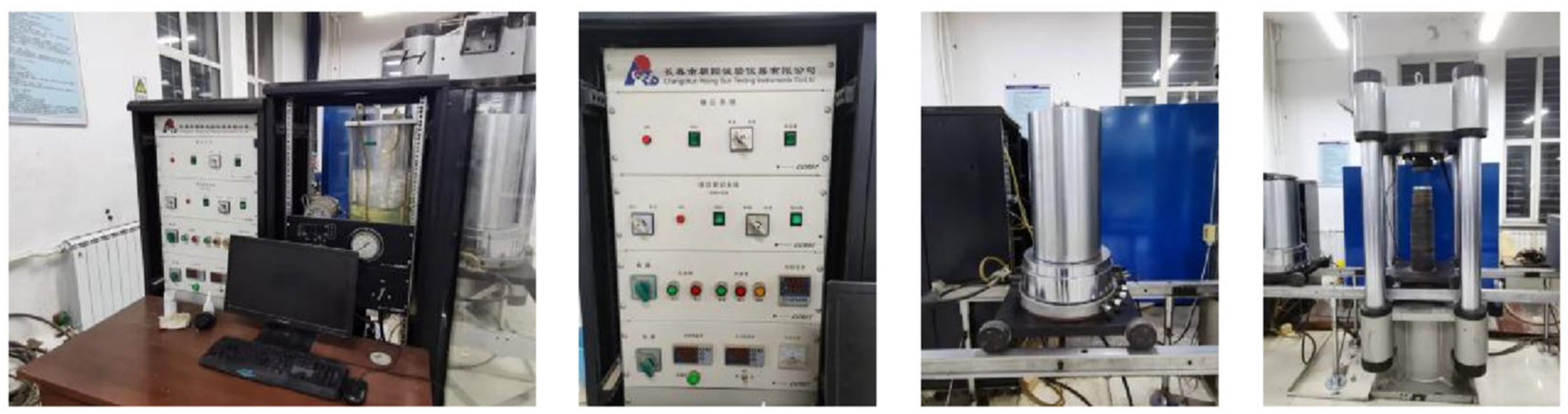
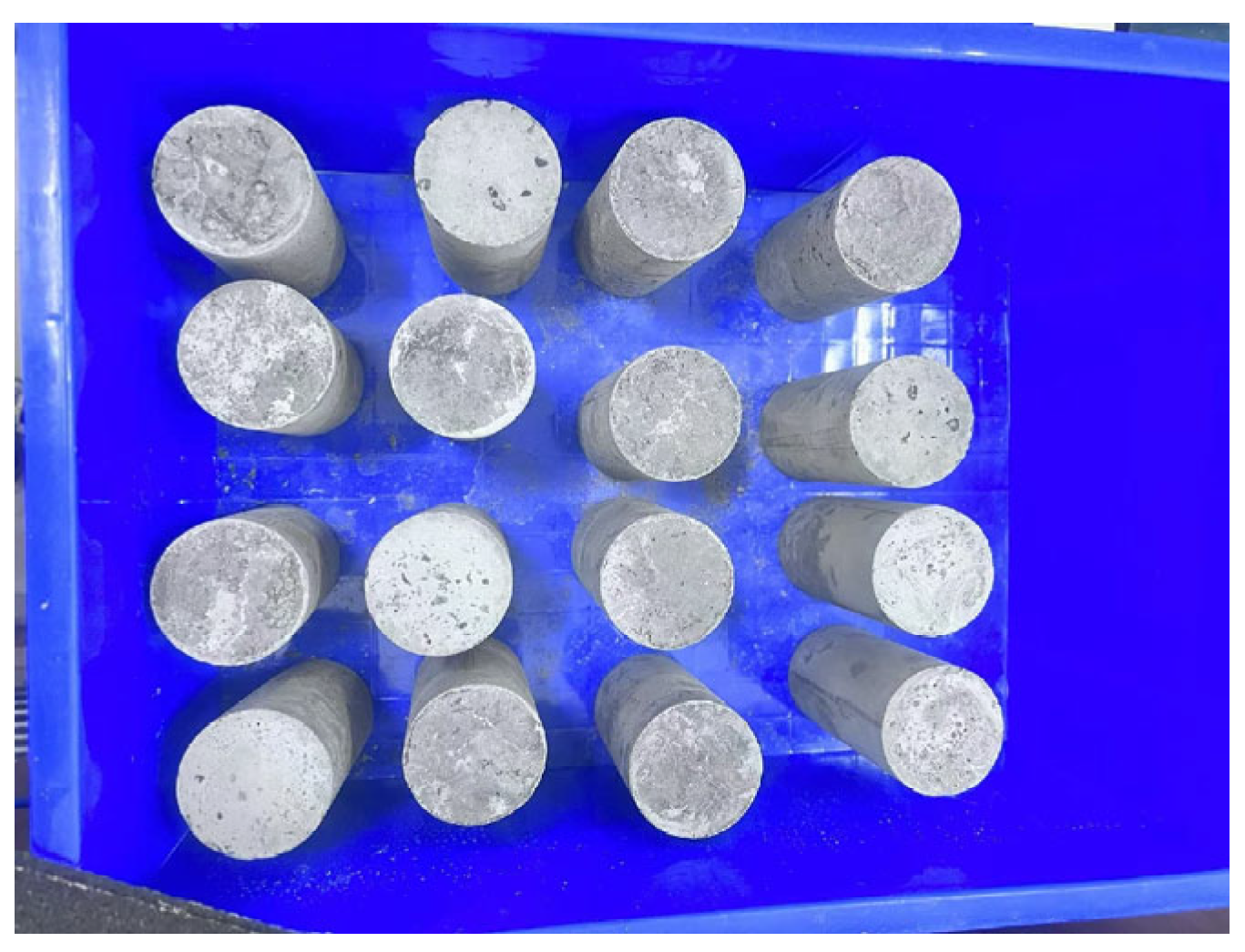
2.1. Test Materials and Equipment
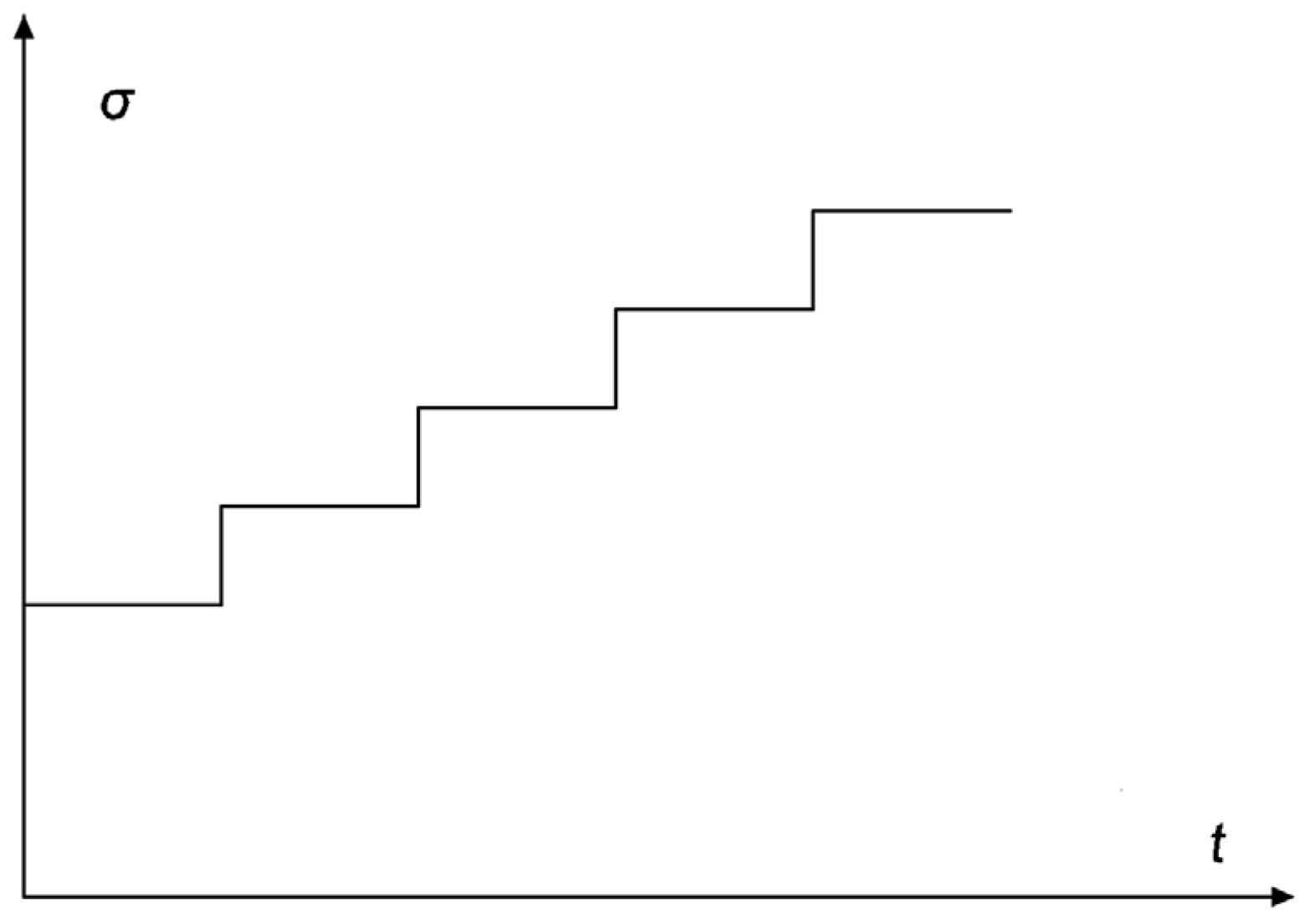
2.2. Triaxial Creep Test Program
3. Test and Analysis Outcomes
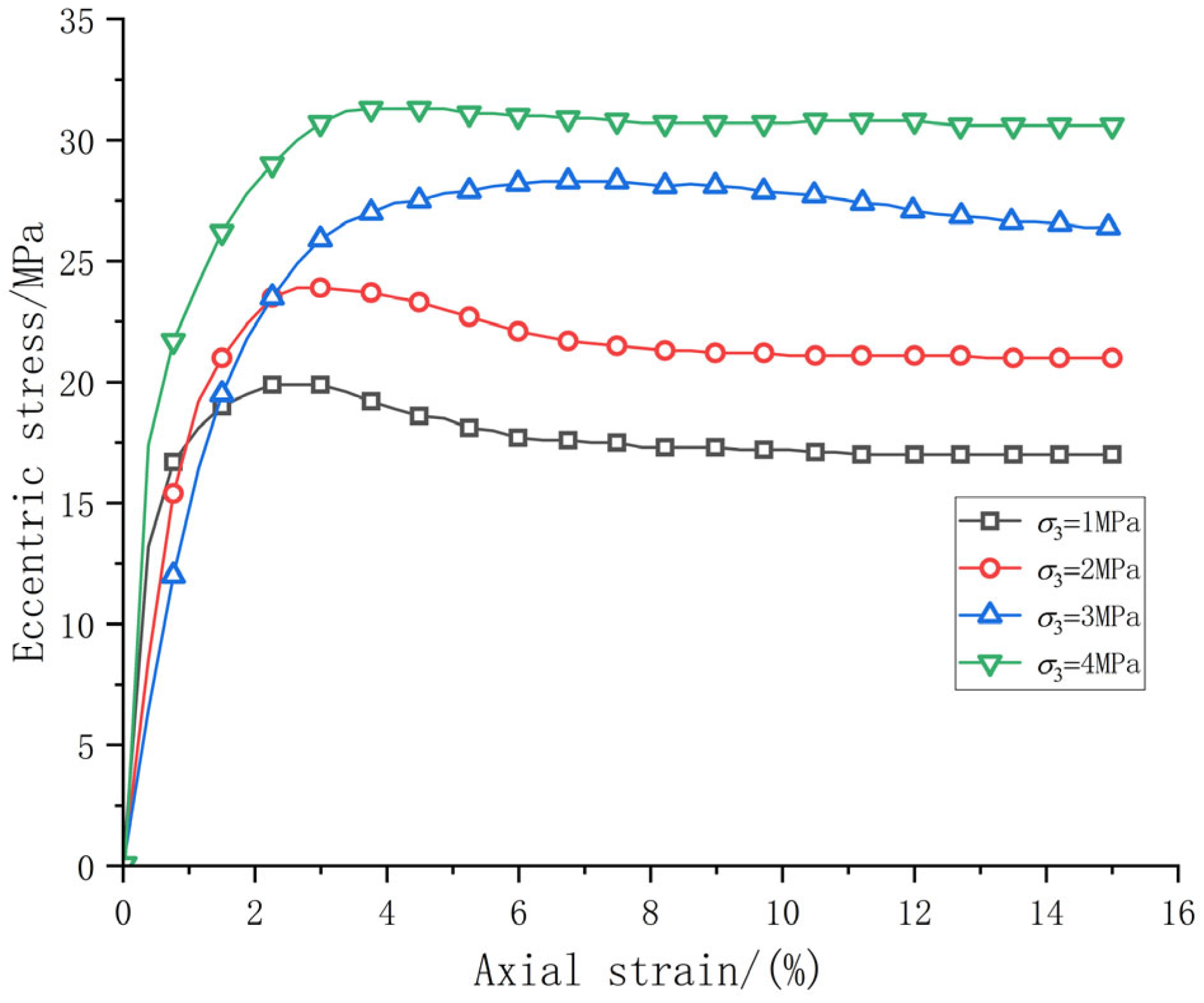
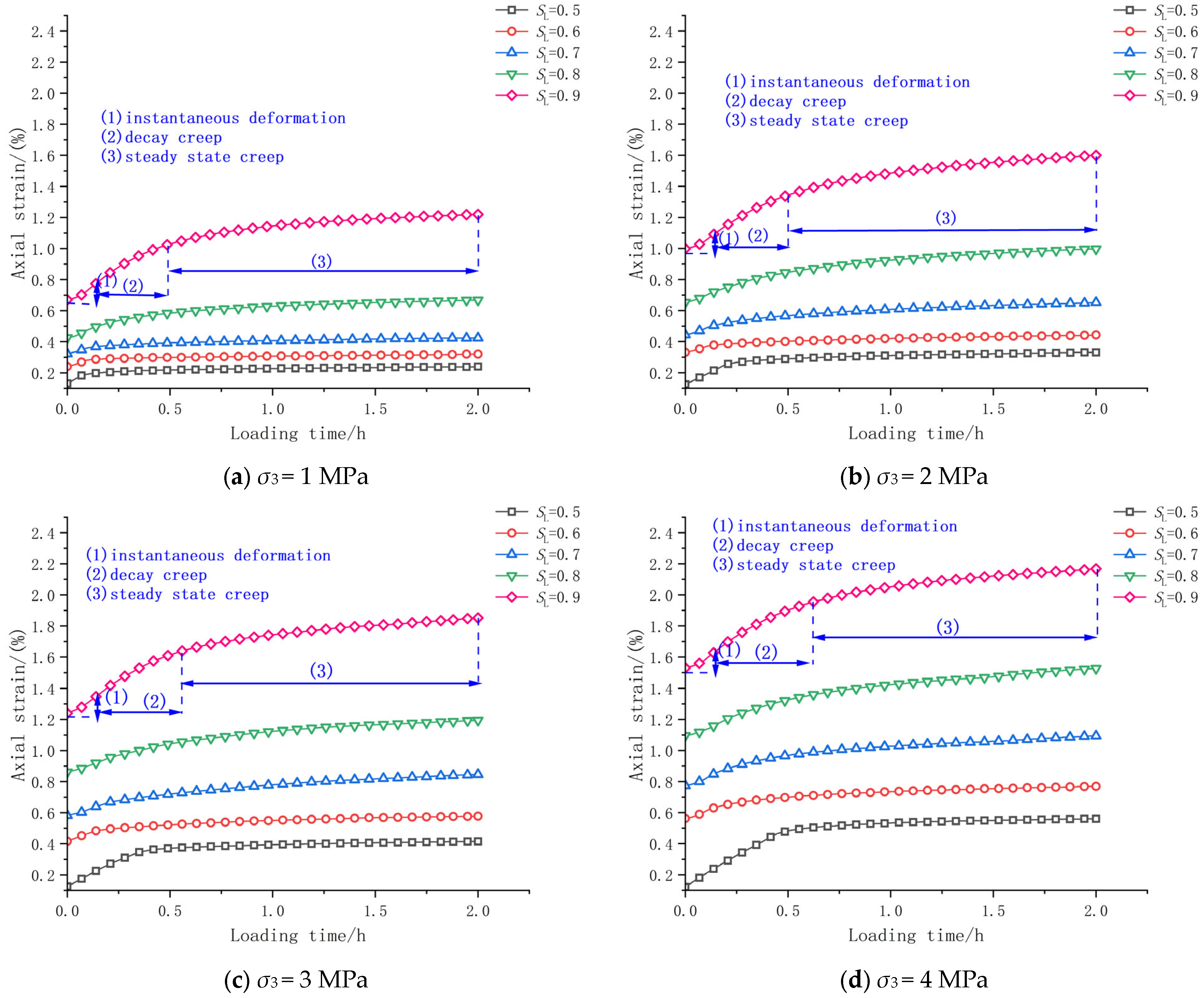
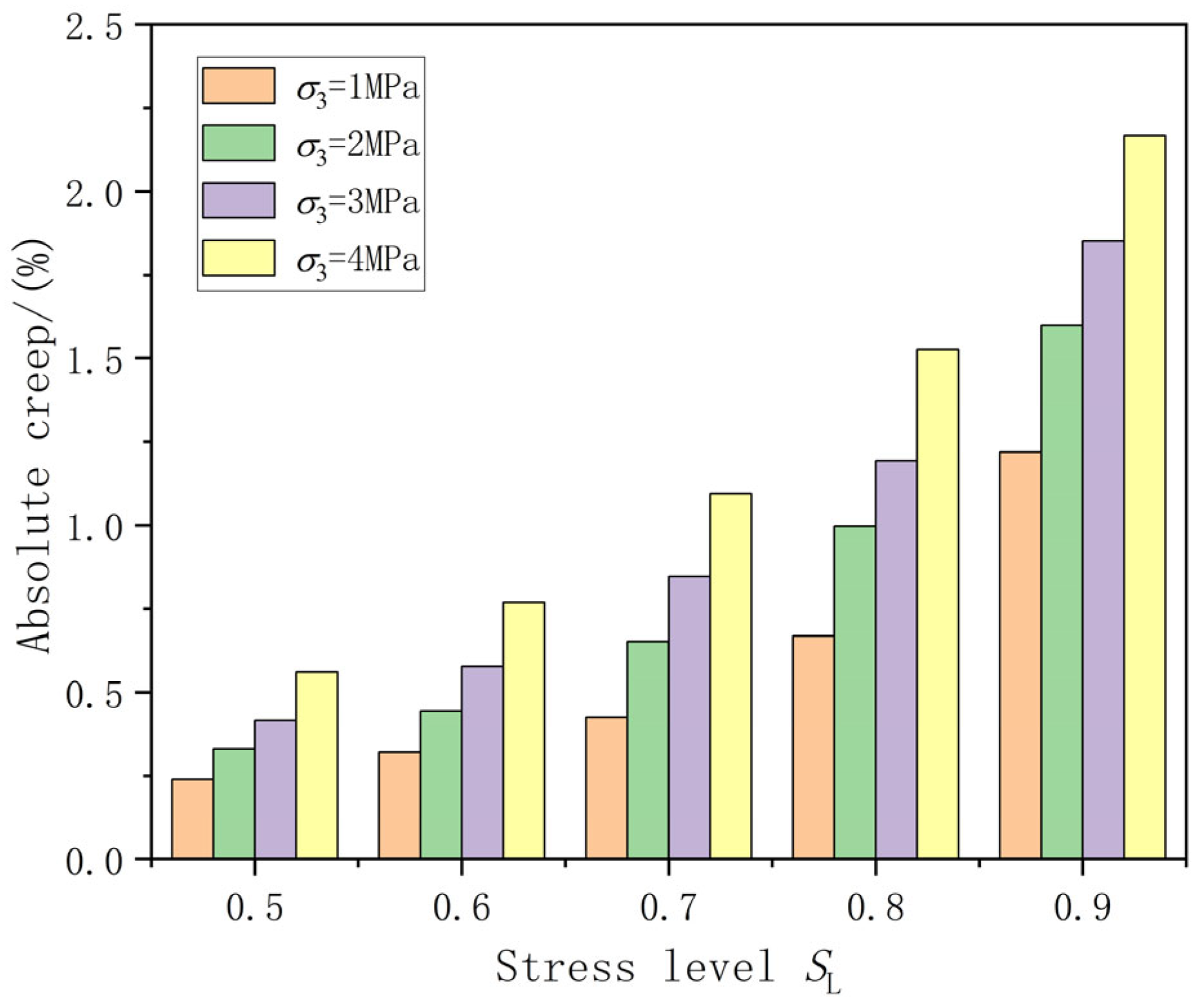
3.1. Triaxial Compression Creep Properties
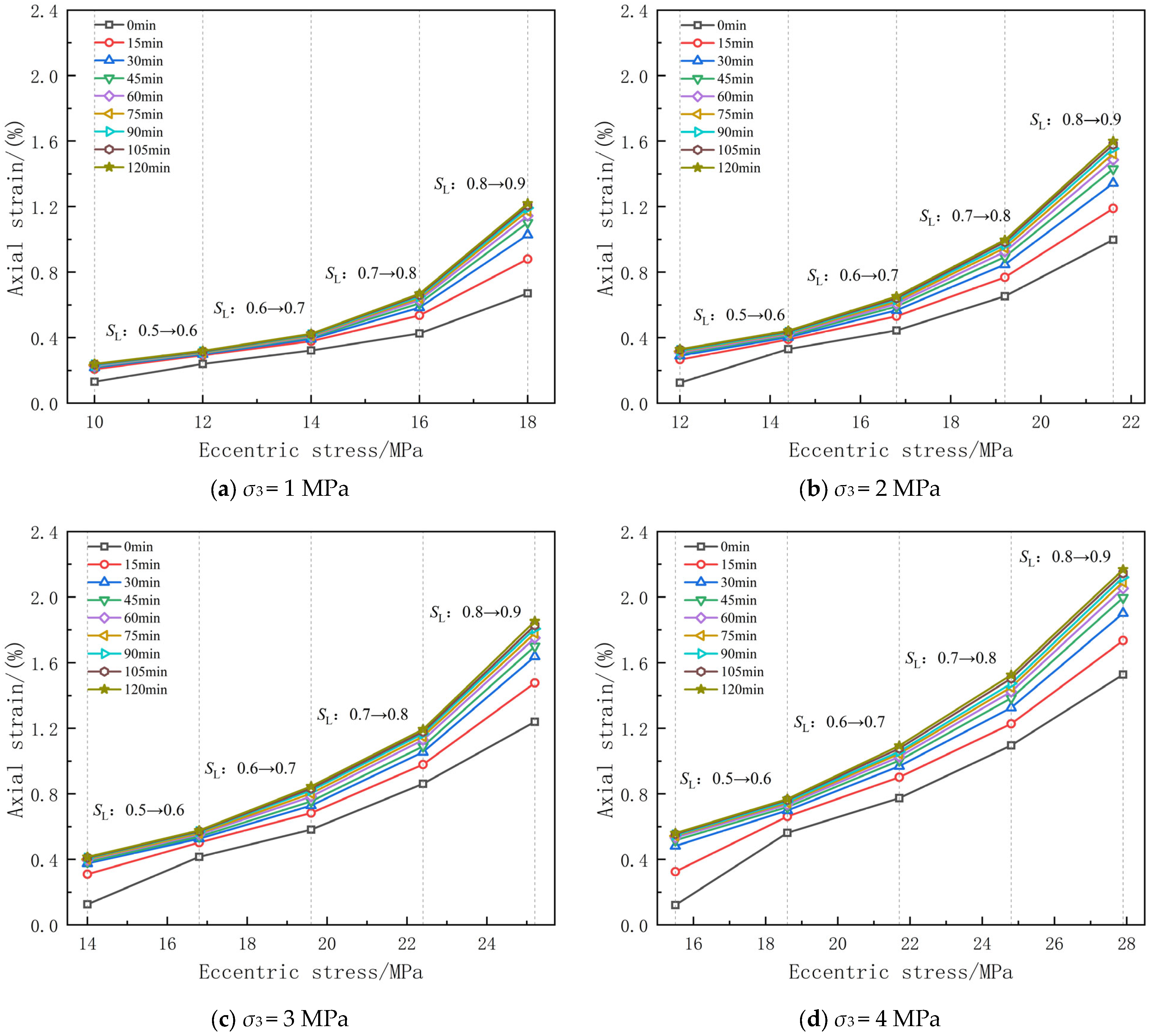
3.2. Isochronous Stress–Strain Curves
4. Determination of Creep Parameters for Gangue–Paste Cemented Backfill
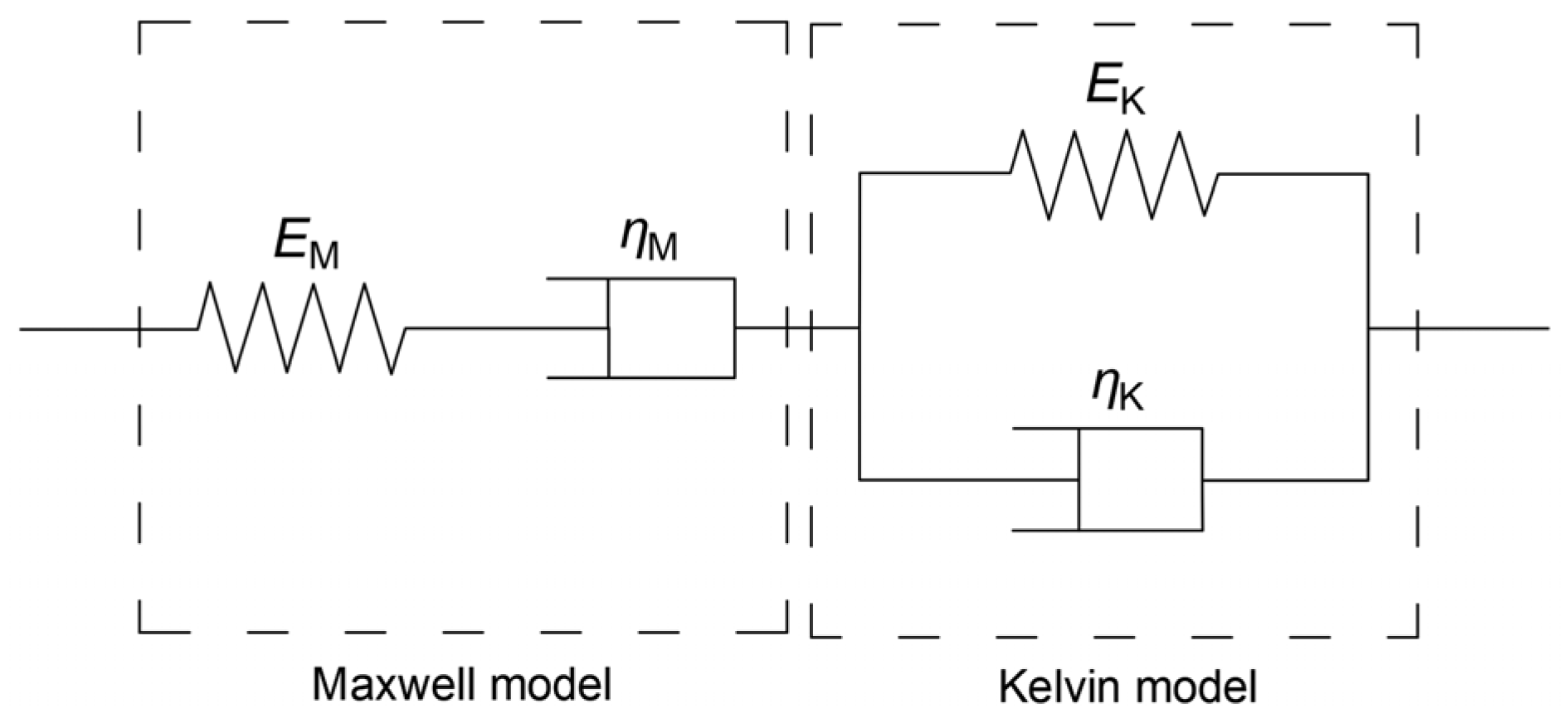
4.1. Burgers Constitutive Model
4.2. 3D Creep Equation
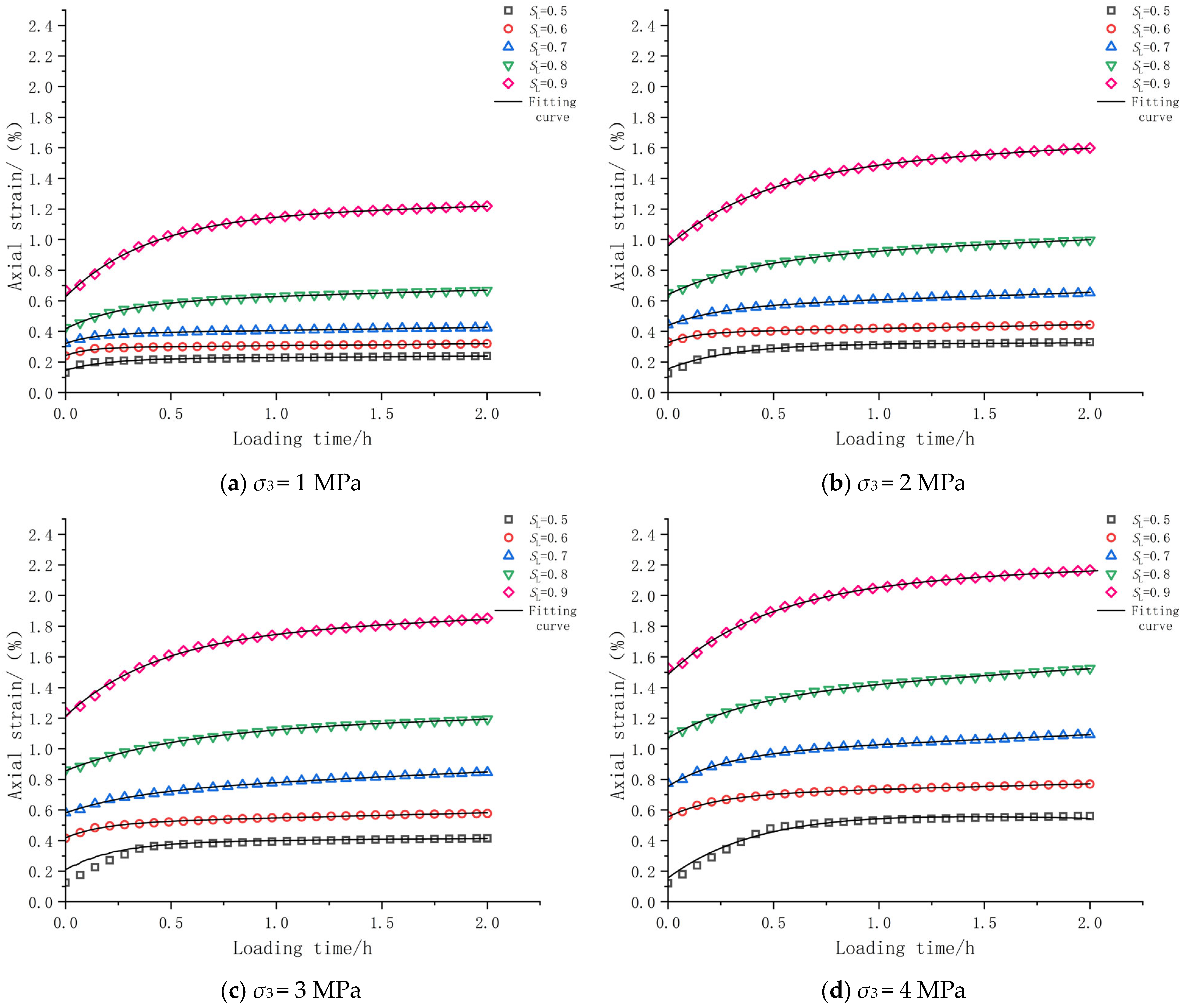
4.3. Model Parameter Identification Through Experimental Outcomes
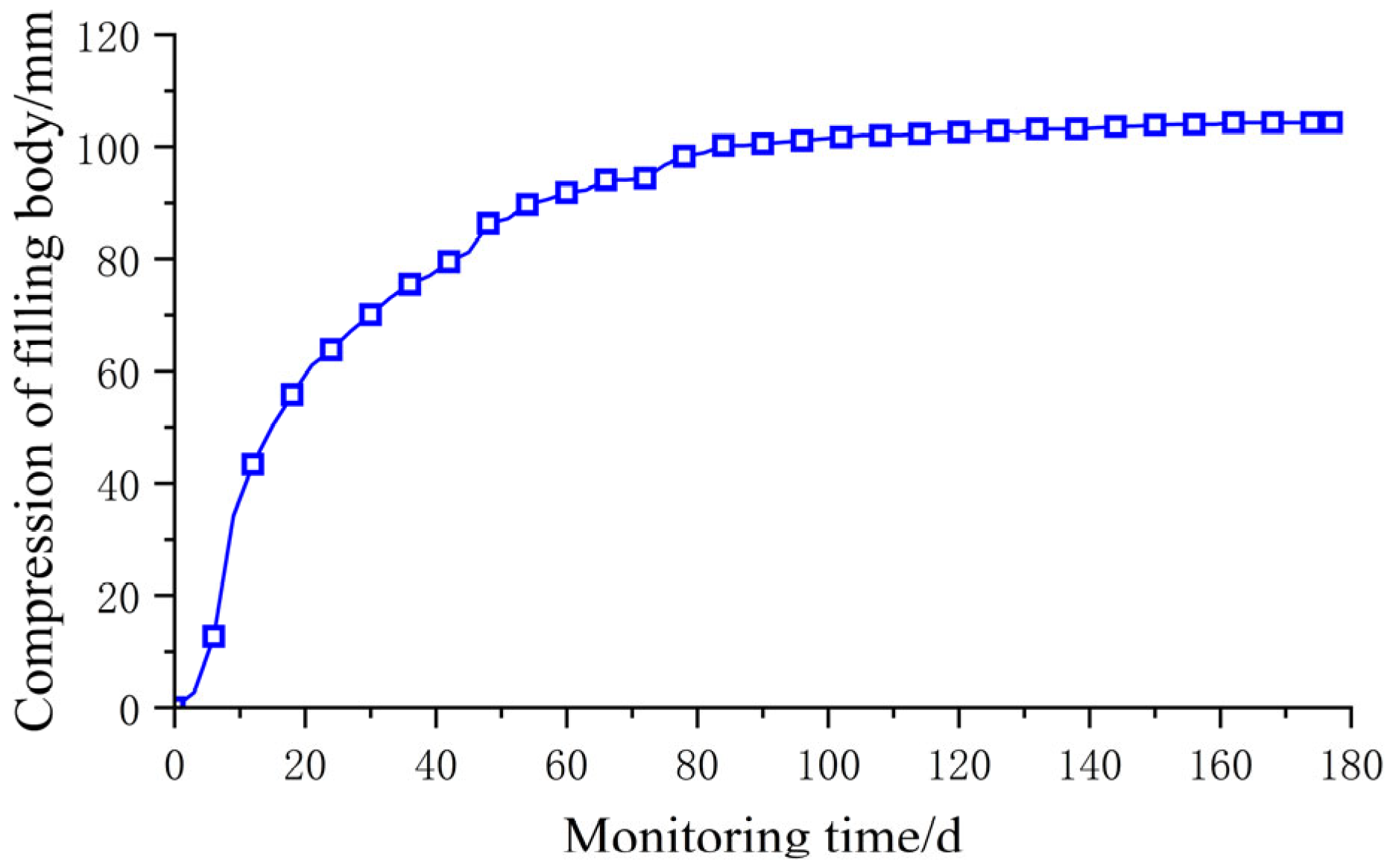
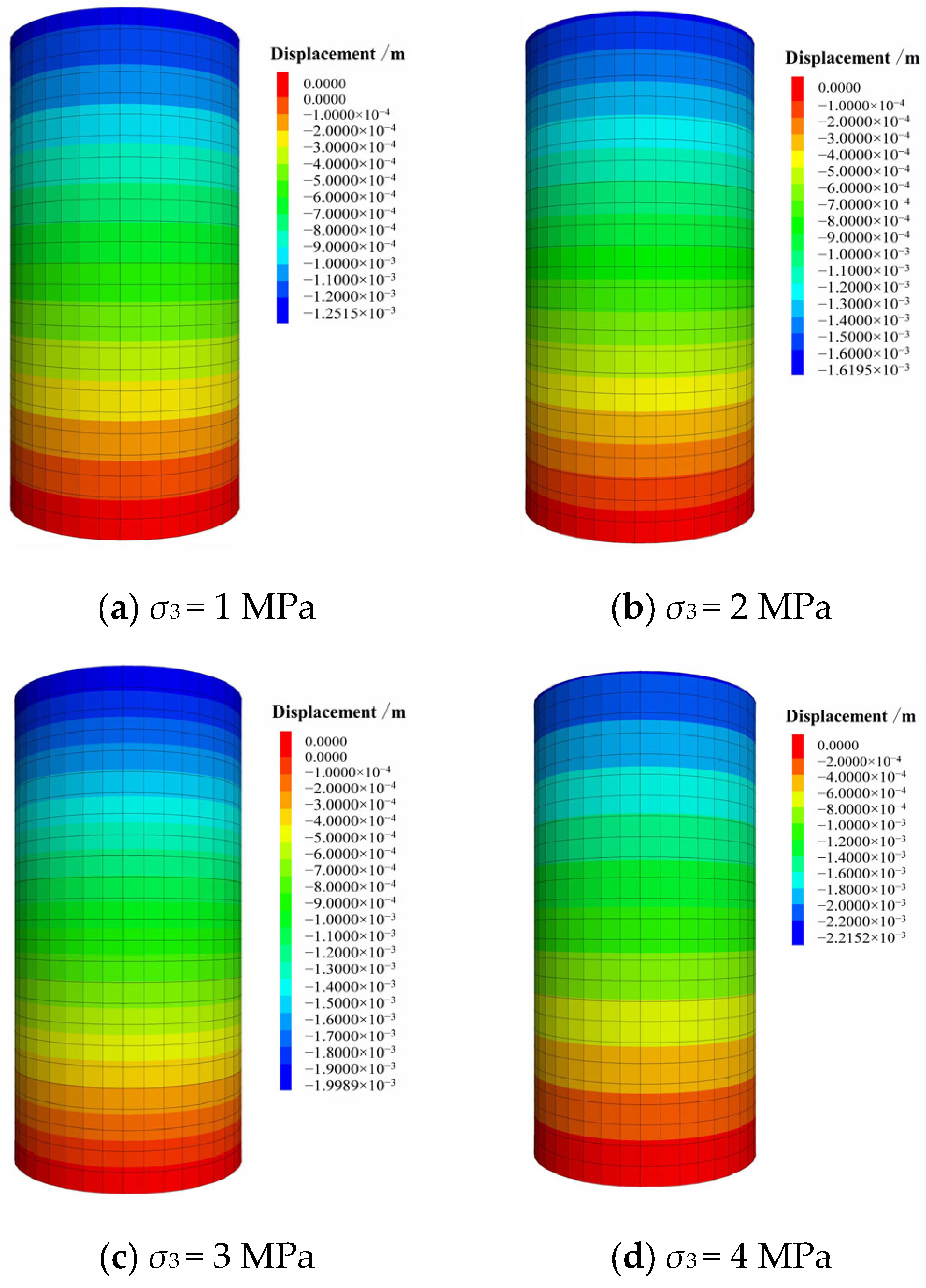
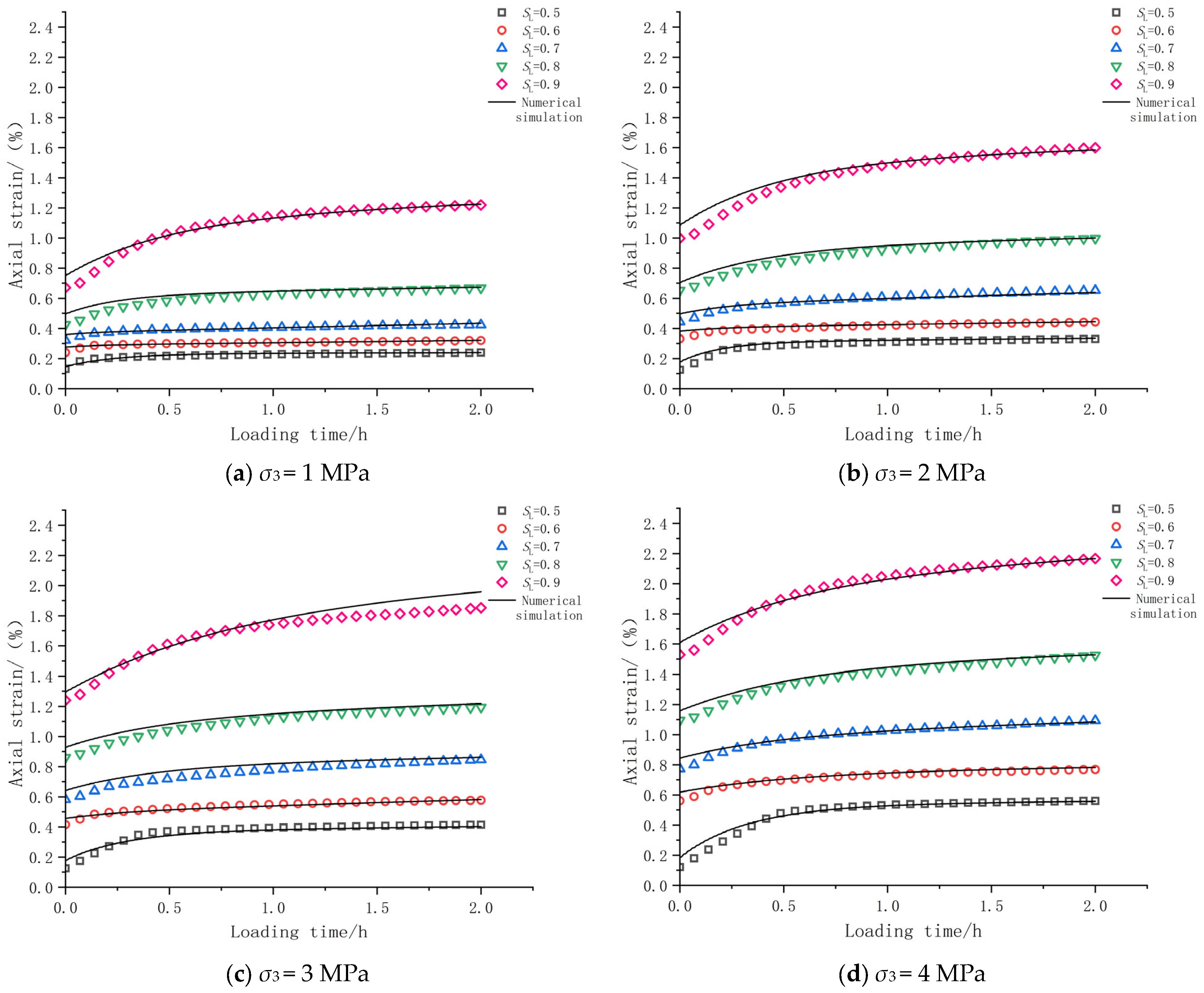
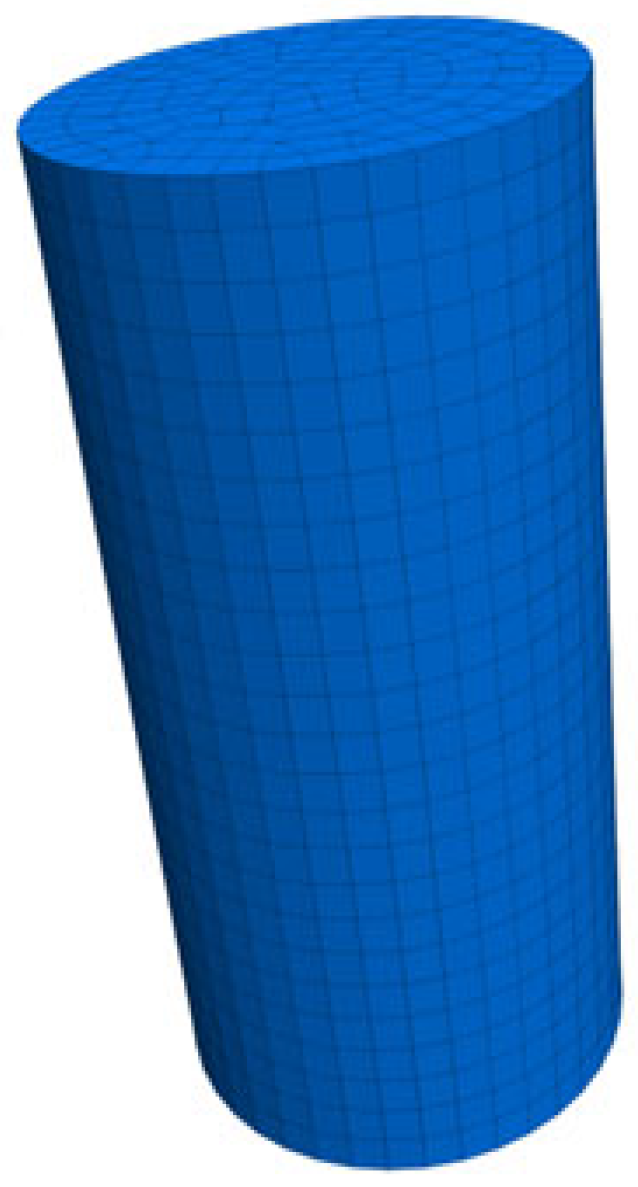
4.4. Numerical Verification of Model Based on FLAC
5. Conclusions
- (1)
- By analyzing the step-loading creep test data using Chen’s superposition method, the creep evolution characteristics of gangue–gypsum cemented backfill under different confining pressures were revealed. Within the investigated stress range, the creep process can be divided into three typical stages: instantaneous deformation, decelerating creep, and steady-state creep, while no accelerated creep or instability failure occurred. Moreover, the absolute creep deformation increases progressively with surging SL, indicating that the time-dependent deformation behavior becomes more pronounced under higher stress conditions.
- (2)
- The isochronous stress–strain curves were used to further analyze the time-dependent deformation behavior of the backfill. The outcomes imply that within the experimental stress range the material mainly exhibits linear elastic and linear viscoelastic responses, and no viscoplastic yielding was observed. The critical long-term strength of the backfill is therefore estimated to be not less than 0.9 times the qf. The long-term strength values under confining pressures of 1, 2, 3, and 4 MPa were determined using the inflection point method of isochronous curves. Although confining pressure enhances the long-term strength of the backfill, the magnitude of this strengthening effect gradually decreases as the confining pressure increases. These findings provide theoretical guidance for mixture proportion optimization and long-term stability control of gangue backfill mining under different mining depth conditions.
- (3)
- The absolute creep strain exhibits a nonlinear increasing trend with SL, while confining pressure significantly suppresses the creep deformation. Under the same SL, specimens subjected to higher confining pressure show noticeably smaller creep strain than those under lower confining pressure. This phenomenon indicates that lateral confinement effectively inhibits the initiation and propagation of microcracks within the cemented skeleton, thereby delaying internal damage evolution.
- (4)
- The Burgers creep model provides an effective description of the creep behavior of gangue–paste cemented backfill. The R2 of the fitted curves under different test conditions are all greater than 0.97, demonstrating a high fitting accuracy. The identified model parameters exhibit systematic variation with SL, reflecting the stiffness degradation and viscous evolution of the cemented material during loading. It should be noted that the present study adopts segmental fitting for graded creep curves. Future studies may consider using global parameters to perform unified fitting for the entire multi-stage creep process, which would further improve the applicability and predictive capability of the model.
Author Contributions
Funding
Data Availability Statement
Conflicts of Interest
References
- Zaman, A.U. A comprehensive review of the development of zero waste management: Lessons learned and guidelines. J. Clean. Prod. 2015, 91, 12–25. [Google Scholar] [CrossRef] [Scilit]
- Yao, Y.; Cui, Z.; Wu, R. Development and challenges on mining backfill technology. J. Mater. Sci. Res. 2012, 1, 73. [Google Scholar] [CrossRef] [Scilit]
- Roy, R.; Chakraborty, S.; Bisai, R.; Pal, S.K.; Mishra, S. Gravity blind backfilling of abandoned underground mine voids using suitable mix proportion of fill materials and method of filling. Geotech. Geol. Eng. 2023, 41, 1801−1819. [Google Scholar] [CrossRef] [Scilit]
- Shirin, S.; Jamal, A.; Emmanouil, C.; Singh, V.P.; Yadav, A.K. Assessment and characterization of waste material used as backfilling in an abandoned mine. Int. J. Coal Prep. Util. 2023, 43, 1402–1410. [Google Scholar] [CrossRef] [Scilit]
- Yin, S.; Shao, Y.; Wu, A.; Wang, H.; Liu, X.; Wang, Y. A systematic review of paste technology in metal mines for cleaner production in China. J. Clean. Prod. 2020, 247, 119590. [Google Scholar] [CrossRef] [Scilit]
- Blanc, P.; Lach, A.; Lassin, A.; Falah, M.; Obenaus-Emler, R.; Guignot, S. Modeling hydration of mine tailings: Production of hydraulic binders from alkaliactivated materials. Cem. Concr. Res. 2020, 137, 106216. [Google Scholar] [CrossRef] [Scilit]
- Behera, S.K.; Mishra, D.P.; Singh, P.; Mishra, K.; Mandal, S.K.; Ghosh, C.N.; Kumar, R.; Mandal, P.K. Utilization of mill tailings, fly ash and slag as mine paste backfill material: Review and future perspective. Constr. Build. Mater. 2021, 309, 125120. [Google Scholar] [CrossRef] [Scilit]
- Li, L.; Aubertin, M.; Belem, T. Formulation of a three dimensional analytical solution to evaluate stresses in backfilled vertical narrow openings. Can. Geotech. J. 2006, 43, 338–339. [Google Scholar] [CrossRef] [Scilit]
- Li, L.; Aubertin, M. Numerical investigation of the stress state in inclined backfilled stopes. Int. J. Geomech. 2009, 9, 52−62. [Google Scholar] [CrossRef] [Scilit]
- Yang, S.Q.; Jiang, Y.Z. Triaxial mechanical creep behavior of sandstone. Min. Sci. Technol. 2010, 20, 339–349. [Google Scholar] [CrossRef] [Scilit]
- Mansouri, H.; Ajalloeian, R. Mechanical behavior of salt rock under uniaxial compression and creep tests. Int. J. Rock Mech. Min. Sci. 2018, 110, 19–27. [Google Scholar] [CrossRef] [Scilit]
- Sun, X.; Jiang, M.; Miao, C.; Wang, J.; Zhang, J. Study on large deformation and failure mechanism of deep buried stratified slate tunnel and control strategy of high constant resistance anchor cable. Eng. Fail. Anal. 2023, 144, 106953. [Google Scholar] [CrossRef] [Scilit]
- Yang, S.-Q.; Hu, B. Creep and long-term permeability of a red sandstone subjected to cyclic loading after thermal treatments. Rock Mech. Rock Eng. 2018, 51, 2981−3004. [Google Scholar] [CrossRef] [Scilit]
- Kilburn, C.R.J.; Petley, D.N. Forecasting giant, catastrophic slope collapse: Lessons from Vajont, Northern Italy. Geomorphology 2003, 54, 21–32. [Google Scholar] [CrossRef] [Scilit]
- Hu, Q.; Li, Y.; Wu, N.; Sun, J.; Chen, Q.; Sun, X. Study on creep behaviors and nonlinear creep constitutive model for sandy marine hydrate-bearing sediments. Ocean Eng. 2023, 286, 115717. [Google Scholar] [CrossRef] [Scilit]
- Yang, S.Q.; Tang, J.Z.; Wang, S.S.; Yang, D.S.; Zheng, W.T. An experimental and modeling investigation on creep mechanical behavior of granite under triaxial cyclic loading and unloading. Rock Mech. Rock Eng. 2022, 55, 5577–5597. [Google Scholar] [CrossRef] [Scilit]
- Mishra, B.; Verma, P. Uniaxial and triaxial single and multistage creep tests on coal-measure shale rocks. Int. J. Coal Geol. 2015, 137, 55–65. [Google Scholar] [CrossRef] [Scilit]
- Pan, X.; Zhou, X. Creep damage properties and nonlinear creep model of red sandstone treated at high temperature based on acoustic emission. Acta Geotech. 2023, 18, 4077−4095. [Google Scholar] [CrossRef] [Scilit]
- Momeni, A.; Abdilor, Y.; Khanlari, G.R.; Heidari, M.; Sepahi, A.A. The effect of freeze-thaw cycles on physical and mechanical properties of granitoid hard rocks. Bull. Eng. Geol. Environ. 2016, 75, 1649−1656. [Google Scholar] [CrossRef] [Scilit]
- Doan, M.L.; d’Hour, V. Effect of initial damage on rock pulverization along faults. J. Struct. Geol. 2012, 45, 113−124. [Google Scholar] [CrossRef] [Scilit]
- Chen, Y.; Wu, H.; Pu, H.; Zhang, K.; Ju, F.; Wu, Y.; Liu, J. Investigations of damage characteristics in rock material subjected to the joint effect of cyclic loading and impact. Energies 2020, 13, 2154. [Google Scholar] [CrossRef] [Scilit]
- Tang, S.B.; Yu, C.Y.; Heap, M.J.; Chen, P.Z.; Ren, Y.G. The influence of water saturation on the short- and long-term mechanical behavior of red sandstone. Rock Mech. Rock Eng. 2018, 51, 2669−2687. [Google Scholar] [CrossRef] [Scilit]
- Yu, C.; Tang, S.; Tang, C.A.; Duan, D.; Zhang, Y.; Liang, Z.; Ma, K.; Ma, T. The effect of water on the creep behavior of red sandstone. Eng. Geol. 2019, 253, 64–74. [Google Scholar] [CrossRef] [Scilit]
- Li, B. Research on Creep Properties and Damage Rupture Mechanism of Concrete Under Freeze-Thaw Effect. Ph.D. Thesis, China University of Mining and Technology, Xuzhou, China, 2016. (In Chinese) [Google Scholar]
- Karaca, Z.; Deliormanli, A.H.; Elci, H.; Pamukcu, C. Effect of freeze-thaw process on the abrasion loss value of stones. Int. J. Rock Mech. Min. Sci. 2010, 47, 1207−1211. [Google Scholar] [CrossRef] [Scilit]
- Wei, L.D.; Yang, C.H.; Xu, W.Y. Study on creep damage constitutive model of salt rock based on mesomechanics. Chin. J. Rock Mech. Eng. 2005, 24, 4253–4258. (In Chinese) [Google Scholar]
- GB/T 50123-2019; Standard for Soil Test Method. China Planning Press: Beijing, China, 2019. (In Chinese)
- Wang, W.B.; Zhang, Q.S.; Dong, J.L.; Xu, F.; Leng, W.M.; Liu, Q.; Weng, C.P.; Tian, X.W. Study on creep characteristics of silt filler for railway subgrade and its nonlinear fractional-order creep model. Eng. Mech. 2025, 3–5. (In Chinese) [Google Scholar]
- Li, N.; Zhang, M.J.; Zhang, H.L.; Xu, C.; Wang, B. Shear creep characteristics and constitutive model of red-bed mud-stone in Central Yunnan. J. Cent. South Univ. (Sci. Technol.) 2024, 55, 3520–3529. (In Chinese) [Google Scholar]
- Sun, M.J.; Tang, H.M.; Wang, X.H.; Hu, X.L.; Wang, M.Y.; Ni, H.D. Creep properties of sliding-zone soil from a creeping landslide. Rock Soil Mech. 2017, 38, 385–391+399. (In Chinese) [Google Scholar]
- Liu, H.H.; Miao, H.B.; Chen, Z.W.; Huang, J.Y. Shear creep behaviors of sliding-zone soil of bedding landslide in Jurassic stratum in three gorges reservoir area. Chin. J. Geotech. Eng. 2019, 41, 1573–1580. (In Chinese) [Google Scholar]
- Ren, P.; Wang, P.; Zhang, H.; Tang, Y. Nonlinear behavior of clay creep and its fractional derivative creep model. Eng. Mech. 2020, 37, 153–160+207. (In Chinese) [Google Scholar]





| Bulk Density (g/cm3) | Real Density (g/cm3) | Moisture Content (%) | Loss on Ignition (%) | Natural Repose Angle (°) | Porosity (%) | Water Absorption Rate (%) |
|---|---|---|---|---|---|---|
| 1.78 | 2.4885 | 3.11 | 3.47 | 44 | 28.47 | 4.2 |
| Particle Size Range (mm) | Trial 1 (1000 g) | Trial 2 (1000 g) | Trial 3 (1000 g) | Average Mass (1000 g) | Average Screen Residue (%) | Average Cumulative Screen Residue (%) |
|---|---|---|---|---|---|---|
| 5.0~15.0 | 214 | 223 | 236 | 224 | 22.4 | |
| 3.0~5.0 | 180 | 194 | 152 | 175 | 17.5 | 39.9 |
| 2.0~3.0 | 124 | 122 | 118 | 121 | 12.1 | 52.0 |
| 1.0~2.0 | 148 | 150 | 152 | 150 | 15.0 | 67.0 |
| 0.5~1.0 | 126 | 119 | 129 | 125 | 12.5 | 79.5 |
| 0.15~0.5 | 134 | 123 | 138 | 132 | 13.2 | 92.7 |
| 0.075~0.15 | 48 | 50 | 55 | 51 | 5.1 | 97.8 |
| ≤0.075 | 26 | 19 | 20 | 22 | 2.2 | 100 |
| Bulk Density (g/cm3) | Real Density (g/cm3) | Moisture Content (%) | Loss on Ignition (%) | Natural Repose Angle (°) | Porosity (%) | Residue on 0.045 mm Sieve (%) |
|---|---|---|---|---|---|---|
| 0.65 | 2.2961 | 2.46 | 16.19 | 37 | 71.69 | 72.82 |
| Gangue (%) | Fly Ash (%) | Cement (%) | Total (%) |
|---|---|---|---|
| 57 | 14 | 8 | 79 |
| Specimen | σ3 (MPa) | σ1 (MPa) | σ1 − σ3 (MPa) |
|---|---|---|---|
| R-01 | 1.0 | 11.0 | 10.0 |
| 13.0 | 12.0 | ||
| 15.0 | 14.0 | ||
| 17.0 | 16.0 | ||
| 19.0 | 18.0 | ||
| R-02 | 2.0 | 14.0 | 12.0 |
| 16.4 | 14.4 | ||
| 18.8 | 16.8 | ||
| 21.2 | 19.2 | ||
| 23.6 | 21.6 | ||
| R-03 | 3.0 | 17.0 | 14.0 |
| 19.8 | 16.8 | ||
| 22.6 | 19.6 | ||
| 25.4 | 22.4 | ||
| 28.2 | 25.2 | ||
| R-04 | 4.0 | 19.5 | 15.5 |
| 22.6 | 18.6 | ||
| 25.7 | 21.7 | ||
| 28.8 | 24.8 | ||
| 31.9 | 27.9 |
| Test Conditions | SL | K (GPa) | GM (GPa) | (GPa·h) | GK (GPa) | (GPa·h) | Correlation Coefficient R2 |
|---|---|---|---|---|---|---|---|
| σ3 = 1 MPa | 0.5 | 0.572 | 1.903 | 33.333 | 1.515 | 0.291 | 0.979 |
| 0.6 | 0.748 | 1.706 | 40.000 | 8.000 | 0.824 | 0.989 | |
| 0.7 | 0.912 | 1.488 | 23.333 | 7.778 | 1.054 | 0.997 | |
| 0.8 | 1.063 | 1.292 | 13.333 | 2.963 | 0.793 | 0.999 | |
| 0.9 | 1.243 | 0.980 | 20.000 | 1.132 | 0.445 | 0.999 | |
| σ3 = 2 MPa | 0.5 | 0.688 | 1.968 | 13.333 | 1.143 | 0.344 | 0.986 |
| 0.6 | 0.832 | 1.489 | 16.000 | 6.857 | 0.871 | 0.994 | |
| 0.7 | 0.976 | 1.298 | 11.200 | 4.667 | 1.129 | 0.998 | |
| 0.8 | 1.151 | 1.015 | 10.667 | 2.560 | 1.036 | 0.999 | |
| 0.9 | 1.306 | 0.758 | 12.000 | 1.358 | 0.623 | 0.999 | |
| σ3 = 3 MPa | 0.5 | 0.734 | 1.933 | 23.333 | 1.197 | 0.334 | 0.981 |
| 0.6 | 0.896 | 1.472 | 9.333 | 4.000 | 1.433 | 0.987 | |
| 0.7 | 1.042 | 1.189 | 8.167 | 13.067 | 2.332 | 0.988 | |
| 0.8 | 1.239 | 0.901 | 6.222 | 8.296 | 2.056 | 0.986 | |
| 0.9 | 1.432 | 0.708 | 3.652 | 2.471 | 1.546 | 0.974 | |
| σ3 = 4 MPa | 0.5 | 0.893 | 1.477 | 17.222 | 0.728 | 0.328 | 0.991 |
| 0.6 | 1.027 | 1.151 | 15.500 | 4.133 | 0.943 | 0.998 | |
| 0.7 | 1.194 | 0.968 | 12.056 | 3.288 | 0.905 | 0.999 | |
| 0.8 | 1.358 | 0.783 | 10.333 | 2.851 | 1.117 | 0.998 | |
| 0.9 | 1.600 | 0.630 | 23.250 | 1.550 | 0.748 | 0.999 |
Disclaimer/Publisher’s Note: The statements, opinions and data contained in all publications are solely those of the individual author(s) and contributor(s) and not of MDPI and/or the editor(s). MDPI and/or the editor(s) disclaim responsibility for any injury to people or property resulting from any ideas, methods, instructions or products referred to in the content. |
© 2026 by the authors. Licensee MDPI, Basel, Switzerland. This article is an open access article distributed under the terms and conditions of the Creative Commons Attribution (CC BY) license.
Share and Cite
Liu, J.; Zhang, X.; Jiao, J.; Zhang, Z.; Wang, P.; Li, Y. Triaxial Creep Behavior of Gangue–Gypsum Cemented Backfill and Applicability Verification of the Burgers Model. Minerals 2026, 16, 353. https://doi.org/10.3390/min16040353
Liu J, Zhang X, Jiao J, Zhang Z, Wang P, Li Y. Triaxial Creep Behavior of Gangue–Gypsum Cemented Backfill and Applicability Verification of the Burgers Model. Minerals. 2026; 16(4):353. https://doi.org/10.3390/min16040353
Chicago/Turabian StyleLiu, Jingduo, Xinguo Zhang, Jingjing Jiao, Zhongying Zhang, Pengkun Wang, and Youpeng Li. 2026. "Triaxial Creep Behavior of Gangue–Gypsum Cemented Backfill and Applicability Verification of the Burgers Model" Minerals 16, no. 4: 353. https://doi.org/10.3390/min16040353
APA StyleLiu, J., Zhang, X., Jiao, J., Zhang, Z., Wang, P., & Li, Y. (2026). Triaxial Creep Behavior of Gangue–Gypsum Cemented Backfill and Applicability Verification of the Burgers Model. Minerals, 16(4), 353. https://doi.org/10.3390/min16040353