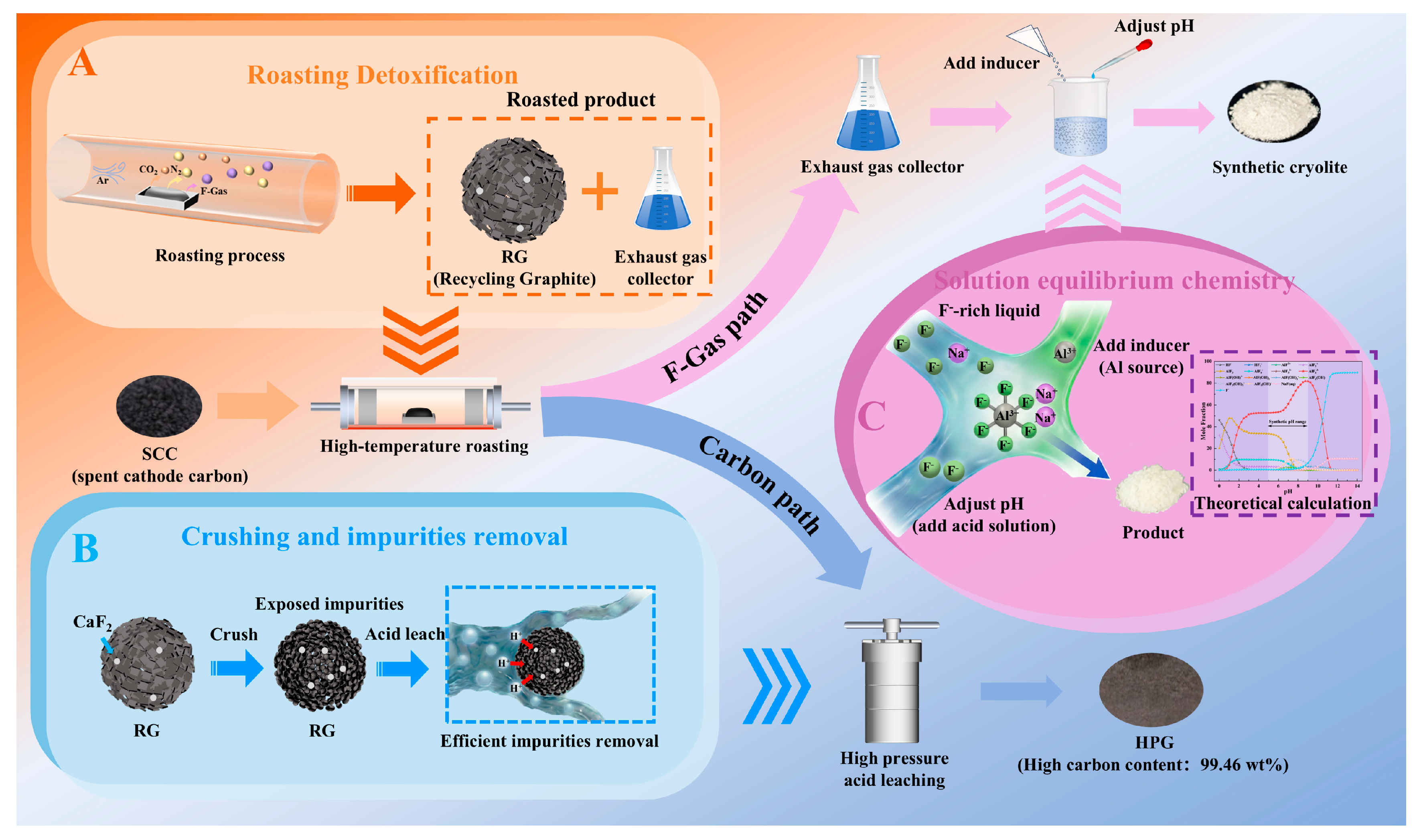
Directional Conversion of Valuable Components from Spent Carbon Cathode via High-Temperature Roasting



Abstract
1. Introduction
2. Materials and Methods
2.1. Materials
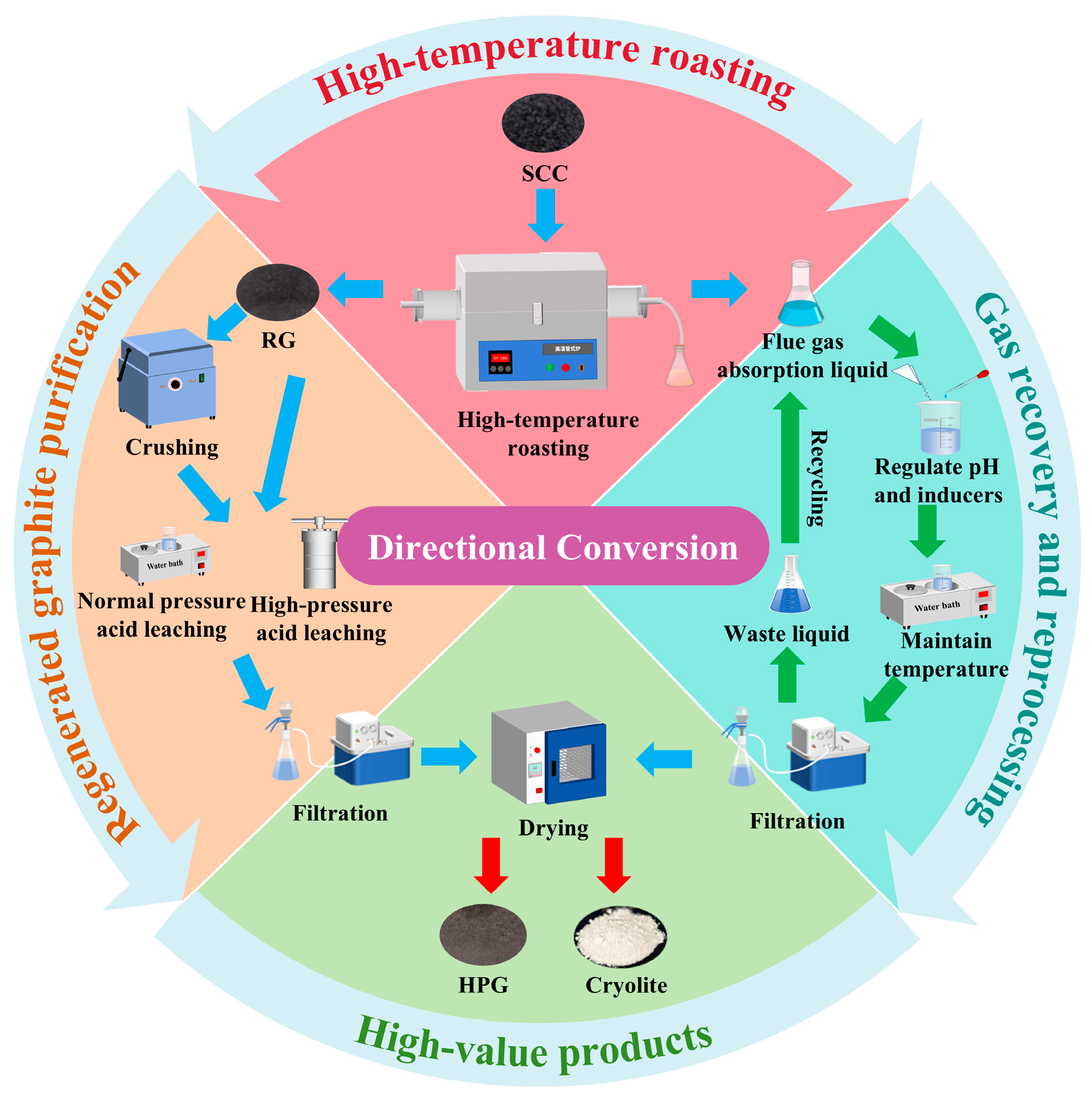
2.2. Experimental Procedure
2.2.1. High-Temperature Roasting
2.2.2. Regenerated Graphite Purification
2.2.3. Flue Gas Absorption Liquor Treatment
2.3. Characterization
2.4. Volatility Kinetics
3. Results and Discussion
3.1. Treatment of SCC by High-Temperature Roasting
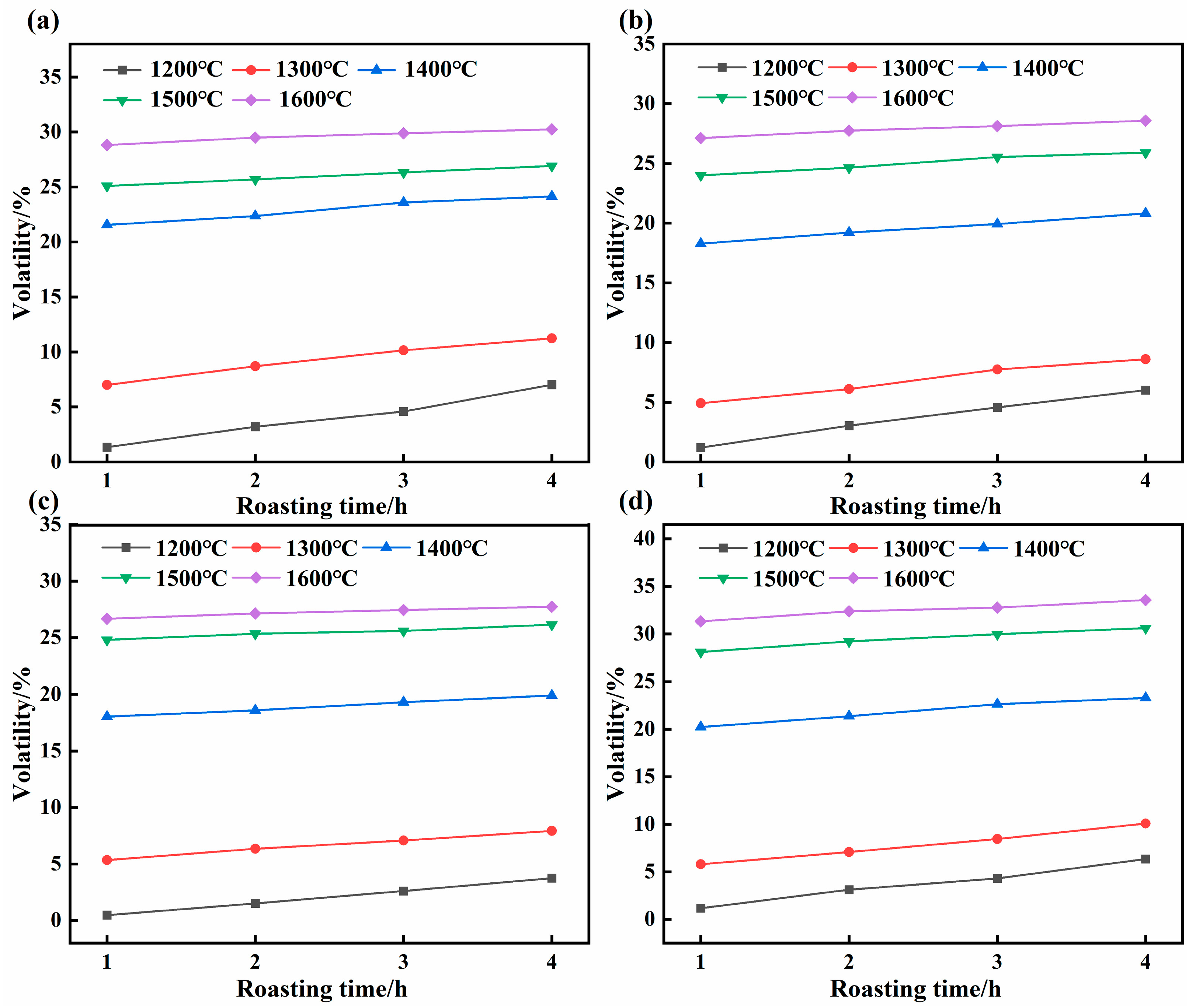
3.1.1. Effect of Roasting Parameters on the Volatility of Non-Carbon Impurities
3.1.2. Volatility Kinetics Analysis
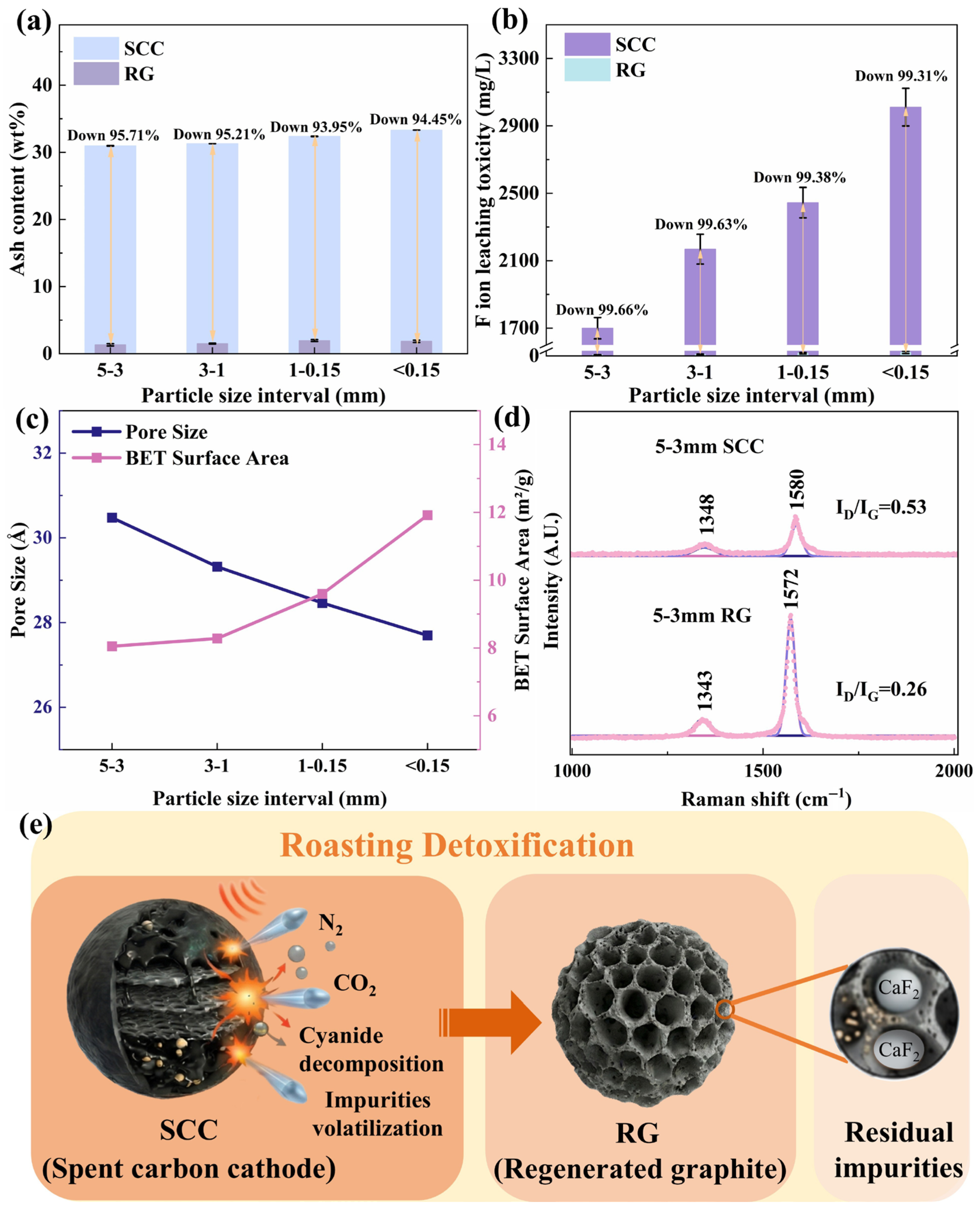
3.1.3. Mechanism of Toxic Substance Removal in SCC During High-Temperature Roasting
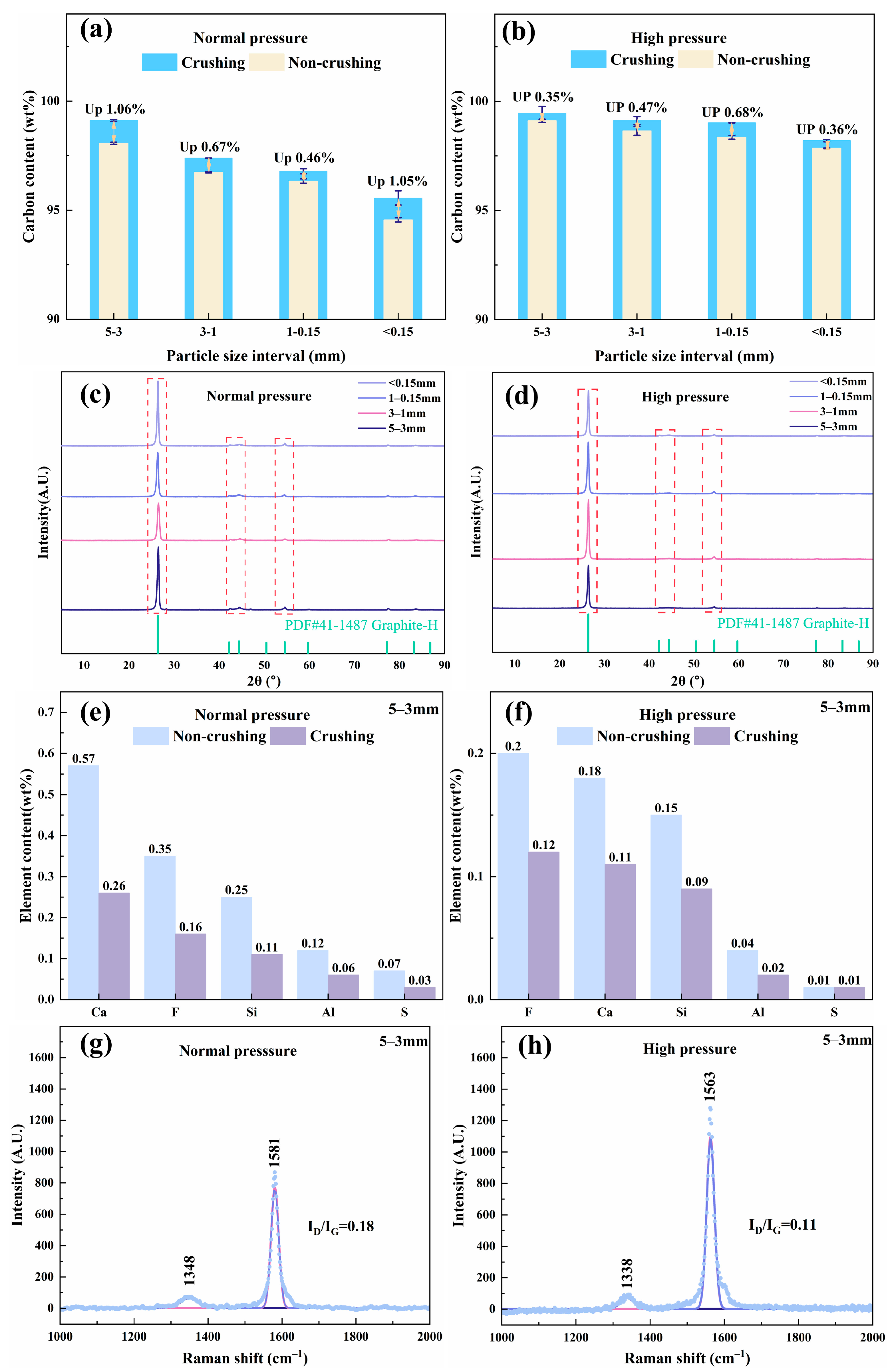
3.2. Purification of Regenerated Graphite
3.3. Flue Gas Absorption Liquid Treatment
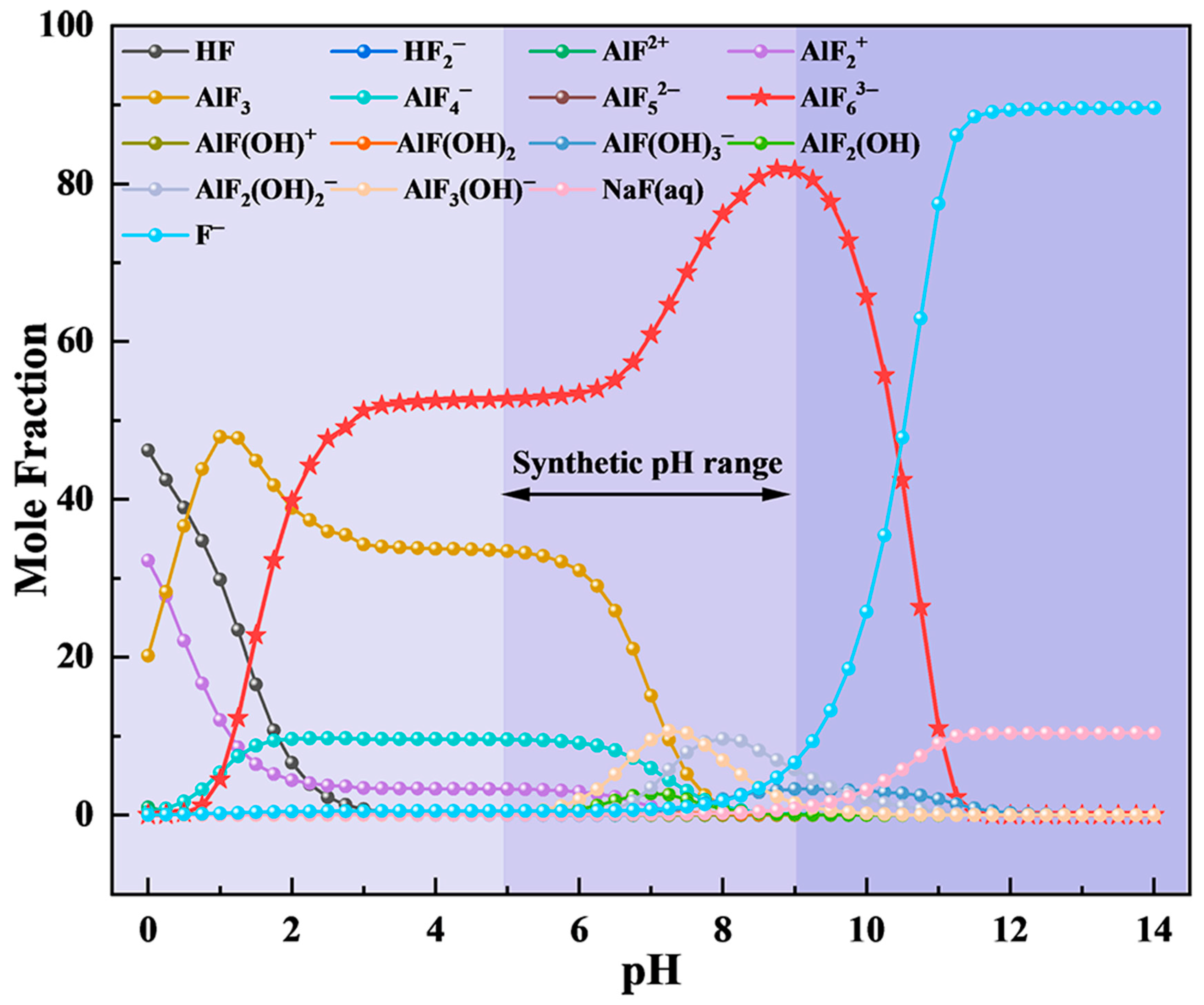
3.3.1. Ion Balance Calculation
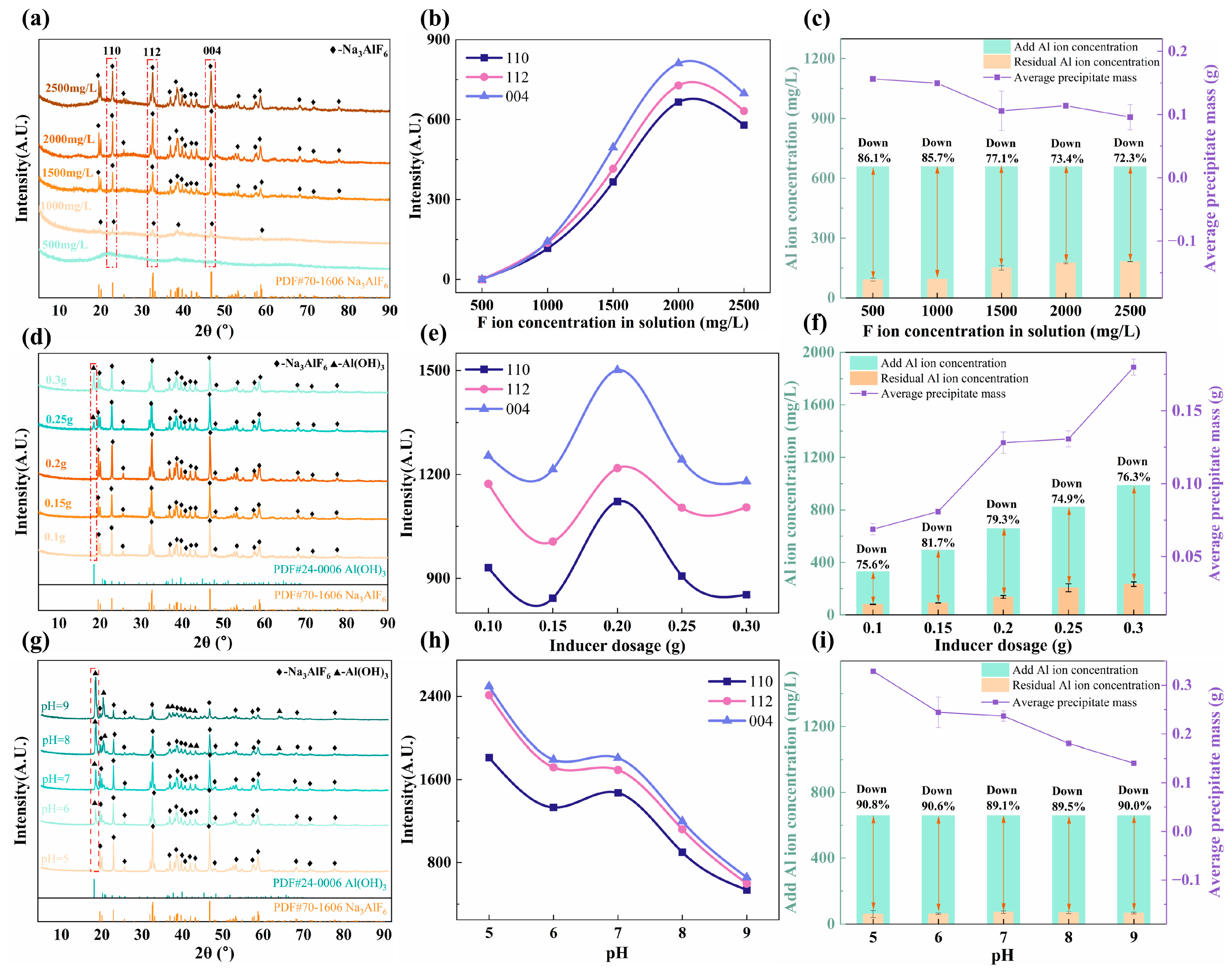
3.3.2. Cryolite Synthesis
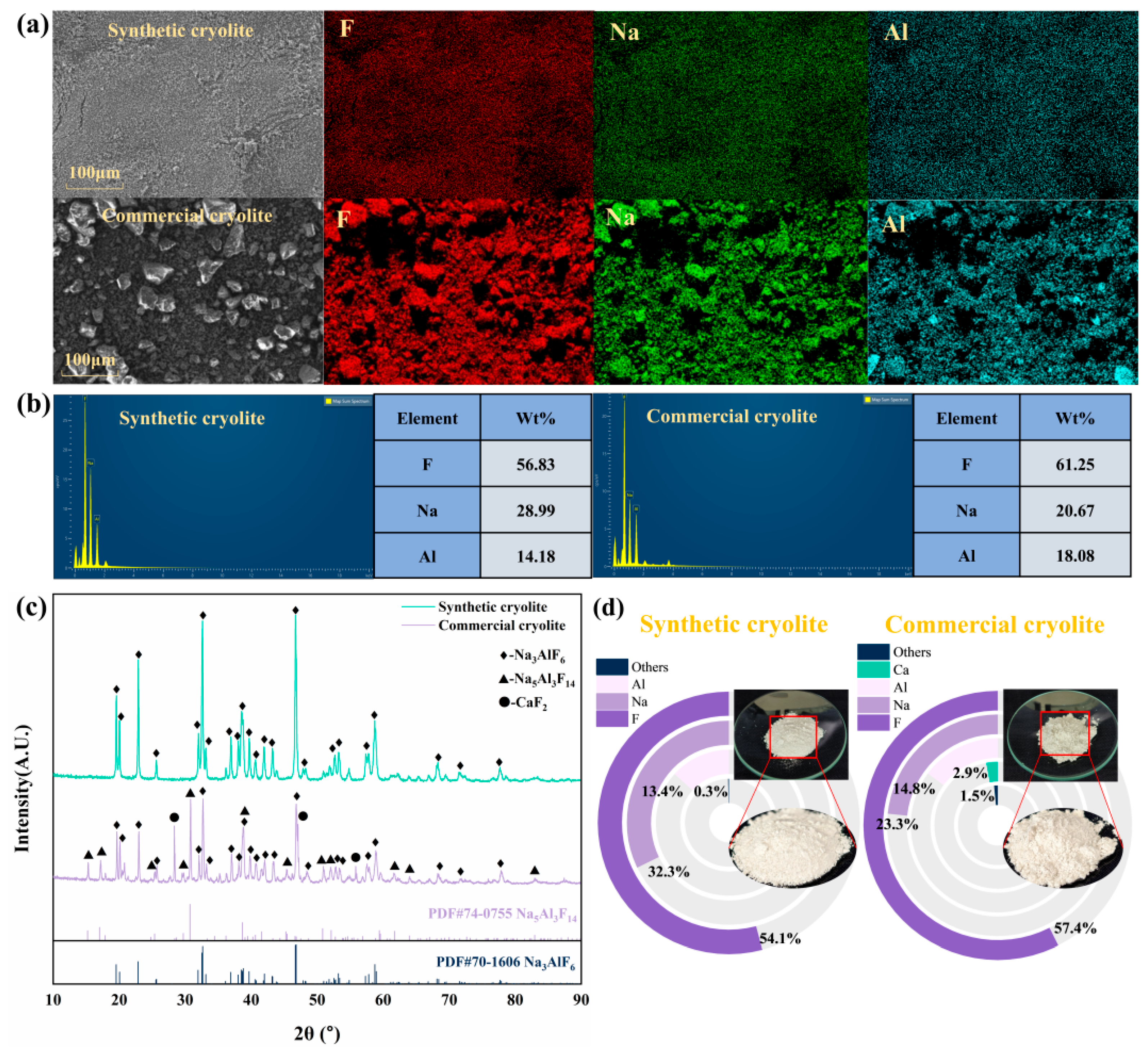
3.3.3. Characterization of Cryolite Products
3.4. Analysis of Economic and Environmental Benefits
4. Conclusions
- (1)
- Appropriately increasing the particle size, roasting temperature, and roasting duration are all beneficial for the phase transformation and volatilization of noncarbon impurities in SCC. The kinetic results indicated that the activation energy for the volatilization of non-carbon impurities during high-temperature roasting decreased with decreasing particle size. It should be noted that the reason why the optimization of high-temperature roasting parameters is opposite to the volatilization kinetics results in terms of particle size is the non-uniform distribution of non-carbon impurities in SCC of different particle sizes. With the same roasting parameters and impurity content, reducing particle size increased the specific surface area, facilitating heat transfer and phase transformation of noncarbon impurities. However, high-melting-point impurities (such as CaF2) are difficult to volatilize and remove during high-temperature roasting under normal pressure.
- (2)
- The combination of secondary mechanical crushing and high-pressure acid leaching was more conducive to the deep purification of recycled graphite. The increased specific surface area and high pressure jointly enhanced the reaction efficiency between non-carbon impurities and the reaction medium. Under the optimal deep purification parameter combination, high-purity recycled graphite with a carbon content of 99.46 wt% was successfully recovered. At the same time, the high-purity recycled graphite also exhibits a high graphitization degree (ID/IG: 0.11) and a low sulfur content (0.01 wt%). Accordingly, recycled graphite with excellent physicochemical properties has a significantly higher added value and potential for multi-scenario applications.
- (3)
- Under the guidance of the solution equilibrium chemistry, Na and F in the flue gas absorption liquid are driven and directed to form Na3AlF6 through Al-based inducers and pH regulation. The results showed that the synthesized cryolite exhibited a high NaF/AlF3 molecular ratio, uniform particle size distribution, and qualified elemental content, demonstrating its high added value and market application prospects. In addition, deeply purified cryolite extraction wastewater can be used in stages for acid-base regulation and flue gas absorption, thereby avoiding the environmental pollution risks posed by acidic fluoride-containing waste liquids.
- (4)
- Based on the concept of a circular economy, the feasibility of using high-purity graphite to prepare prebaked anodes and synthetic cryolite products as raw materials for Al electrolysis will be further explored in future research. The objective is to establish a targeted conversion and resource-recycling pathway for valuable components from hazardous waste generated during the aluminum electrolysis production process.
Supplementary Materials
Author Contributions
Funding
Data Availability Statement
Conflicts of Interest
References
- Lisbona, D.F.; Somerfield, C.; Steel, K.M. Leaching of Spent Pot-Lining with Aluminium Nitrate and Nitric Acid: Effect of Reaction Conditions and Thermodynamic Modelling of Solution Speciation. Hydrometallurgy 2013, 134–135, 132–143. [Google Scholar] [CrossRef]
- Yao, Z.; Zhong, Q.; Xiao, J.; Ye, S.; Tang, L.; Wang, Z. Efficient Separation of Fluoride and Graphite Carbon in Spent Cathode Carbon from Aluminum Electrolysis by Mechanical Activation Assisted Alkali Fusion Treatment. Miner. Eng. 2021, 161, 106717. [Google Scholar] [CrossRef]
- Chen, Y.; Li, P.; Bu, X.; Chehreh Chelgani, S.; Kong, Y.; Liang, X. Resource Utilization Strategies for Spent Pot Lining: A Review of the Current State. Sep. Purif. Technol. 2022, 300, 121816. [Google Scholar] [CrossRef]
- He, L.; Tu, C.; He, S.; Long, J.; Sun, Y.; Sun, Y.; Lin, C. Fluorine Enrichment of Vegetables and Soil around an Abandoned Aluminium Plant and Its Risk to Human Health. Environ. Geochem. Health 2021, 43, 1137–1154. [Google Scholar] [CrossRef]
- Sleap, S.B.; Turner, B.D.; Sloan, S.W. Kinetics of Fluoride Removal from Spent Pot Liner Leachate (SPLL) Contaminated Groundwater. J. Environ. Chem. Eng. 2015, 3, 2580–2587. [Google Scholar] [CrossRef]
- Andrade-Vieira, L.F.; Palmieri, M.J.; Davide, L.C. Effects of Long Exposure to Spent Potliner on Seeds, Root Tips, and Meristematic Cells of Allium Cepa L. Environ. Monit. Assess. 2017, 189, 489. [Google Scholar] [CrossRef]
- Sun, G.; Zhang, G.; Liu, J.; Xie, W.; Evrendilek, F.; Buyukada, M. (Co-)Combustion Behaviors and Products of Spent Potlining and Textile Dyeing Sludge. J. Clean. Prod. 2019, 224, 384–395. [Google Scholar] [CrossRef]
- Yang, K.; Gong, P.; Tian, Z.; Lai, Y.; Li, J. Recycling Spent Carbon Cathode by a Roasting Method and Its Application in Li-Ion Batteries Anodes. J. Clean. Prod. 2020, 261, 121090. [Google Scholar] [CrossRef]
- Liu, F.; Xie, M.; Liu, W.; Zhao, H. Footprint of Harmful Substances in Spent Pot Lining of Aluminum Reduction Cell. Trans. Nonferrous Met. Soc. China 2020, 30, 1956–1963. [Google Scholar] [CrossRef]
- Mazumder, B.; Devi, S.R. Adsorption of Oils, Heavy Metals and Dyes by Recovered Carbon Powder from Spent Pot Liner of Aluminum Smelter Plant. J. Environ. Sci. Eng. 2008, 50, 203–206. [Google Scholar]
- Yao, Z.; Zhong, Q.; Xiao, J.; Ye, S.; Tang, L.; Zhang, Z. An Environmental-Friendly Process for Dissociating Toxic Substances and Recovering Valuable Components from Spent Carbon Cathode. J. Hazard. Mater. 2021, 404, 124120. [Google Scholar] [CrossRef]
- Yang, K.; Li, J.; Huang, W.; Zhu, C.; Tian, Z.; Zhu, X.; Fang, Z. A Closed-Circuit Cycle Process for Recovery of Carbon and Valuable Components from Spent Carbon Cathode by Hydrothermal Acid-Leaching Method. J. Environ. Manag. 2022, 318, 115503. [Google Scholar] [CrossRef]
- Meng, L.; Hao, T.; Xu, E.; Miao, Z.; Jiang, X.; Zhao, S.; Wang, H.; Song, Z. Green and Efficient Separation of Fluorine from Spent Aluminum Electrolyte by Aluminum Sulfate Solution: Leaching Behavior and Mechanism. Sep. Purif. Technol. 2025, 357, 130089. [Google Scholar] [CrossRef]
- Zhang, X.; Xu, L.; Ren, Y.; Xie, C.; Wei, Q.; Shu, J. Graphitization Transformation of Aluminum Electrolytic Spent Carbon Cathode. Ceram. Int. 2024, 50, 32118–32128. [Google Scholar] [CrossRef]
- Zhang, B.; Zhu, C.; Zhou, S.; Wei, Y.; Li, B.; Wang, H. Defluoridation of Spent Cathode Carbon Using Molten Salt Assisted Roasting. Sep. Purif. Technol. 2025, 356, 129885. [Google Scholar] [CrossRef]
- Li, B.; Ding, Y.; Jiao, Y.; Xu, F.; Wang, X.; Zheng, F.; Zou, J.; Gao, Q.; Hu, H. A Sustainable Strategy for Spent Cathode Carbon Blocks Hazardous Waste Recycling Using Binary Molten Salt Thermal Treatment. J. Therm. Sci. 2024, 33, 1082–1093. [Google Scholar] [CrossRef]
- Lv, X.; Sun, X.; Bu, W.; Tan, X.; Zhu, J.; Han, Z. An Efficient Recycling Process of Spent Cathode Carbon Blocks via Low Temperature Molten Salt Roasting and Two Stage Leaching. Sep. Purif. Technol. 2025, 361, 131566. [Google Scholar] [CrossRef]
- Zhu, Z.; Xu, L.; Han, Z.; Liu, J.; Zhang, L.; Yang, C.; Xu, Z.; Liu, P. Defluorination Study of Spent Carbon Cathode by Microwave High-Temperature Roasting. J. Environ. Manag. 2022, 302, 114028. [Google Scholar] [CrossRef]
- Huang, P.; Zhu, R.; Zhang, X.; Zhang, W. A Milliseconds Flash Joule Heating Method for the Regeneration of Spent Cathode Carbon. J. Environ. Sci. Health Part A 2022, 57, 33–44. [Google Scholar] [CrossRef] [PubMed]
- Li, N.; Jiang, Y.; Lv, X.; Gao, L.; Chattopadhyay, K. Vacuum Distillation-Treated Spent Potlining as an Alternative Fuel for Metallurgical Furnaces. JOM 2019, 71, 2978–2985. [Google Scholar] [CrossRef]
- YS/T 63:2021; Test Methods for Carbonaceous Materials Used for Aluminium Production. Ministry of Industry and Information Technology of the People’s Republic of China: Beijing, China, 2021.
- HJ/T 299-2007; Solid Waste—Extraction Procedure for Leaching Toxicity—Sulphuric Acid and Nitric Acid Method. State Environmental Protection Administration of the People’s Republic of China: Beijing, China, 2007.
- Frugier, P.; Godon, N.; Vernaz, E.; Larché, F. Influence of Composition Variations on the Initial Alteration Rate of Vitrified Domestic Waste Incineration Fly-Ash. Waste Manag. 2002, 22, 137–142. [Google Scholar] [CrossRef] [PubMed]
- Xie, M.; Zhao, H.; Wu, Z.; Liu, W.; Li, R.; Liu, F. Study on Kinetics of Vacuum Heat Treatment Process of the Spent Cathode Carbon Blocks from Aluminum Smelters. J. Sustain. Metall. 2020, 6, 715–723. [Google Scholar] [CrossRef]
- Zhu, Z.; Xu, L.; Han, Z.; Liu, J.; Zhang, L.; Tian, S.; Xu, Y.; Koppala, S. Optimization of Response Surface Methodology (RSM) for Defluorination of Spent Carbon Cathode (SCC) in Fire-Roasting Aluminum Electrolysis. Miner. Eng. 2022, 182, 107565. [Google Scholar] [CrossRef]
- Chen, Z.; Chen, S.; Dai, W.; Wang, Y.; Evrendilek, F.; Liu, J.; Liang, G.; Zhong, S.; Yang, Z.; Zhang, G.; et al. Insights into Optimal Gas-Ash-Energy Nexus: Oxy-Steam Combustion of Spent Pot Lining. J. Clean. Prod. 2023, 425, 138707. [Google Scholar] [CrossRef]
- Xie, M.; Li, R.; Zhao, H.; Liu, W.; Lu, T.; Liu, F. Detoxification of Spent Cathode Carbon Blocks from Aluminum Smelters by Joint Controlling Temperature-Vacuum Process. J. Clean. Prod. 2020, 249, 119370. [Google Scholar] [CrossRef]
- Padilla, R.; Aracena, A.; Ruiz, M.C. Reaction Mechanism and Kinetics of Enargite Oxidation at Roasting Temperatures. Metall. Mater. Trans. B 2012, 43, 1119–1126. [Google Scholar] [CrossRef]
- Li, K.; Lan, X.; Gao, J.; Guan, W.; Li, X.; Shi, A.; Guo, Z. Efficient Recovery of Carbon and Electrolyte from Spent Cathode Carbon Block via Supergravity-Enhanced Separation. Sep. Purif. Technol. 2026, 383, 136272. [Google Scholar] [CrossRef]
- GB 5085.3-2007; Identification Standard for Hazardous Wastes—Identification for Leaching Toxicity. State Environmental Protection Administration of the People’s Republic of China, General Administration of Quality Supervision, Inspection and Quarantine of the People’s Republic of China: Beijing, China, 2007.
- Wang, M.; Tan, Q.; Li, J. Unveiling the Role and Mechanism of Mechanochemical Activation on Lithium Cobalt Oxide Powders from Spent Lithium-Ion Batteries. Environ. Sci. Technol. 2018, 52, 13136–13143. [Google Scholar] [CrossRef]
- Ruan, S.; He, X.; Huang, H.; Gan, Y.; Xia, Y.; Zhang, J.; Wan, W.; Wang, C.; Xia, X.; Zhang, W. Innovative Approaches of Porous Carbon Materials Derived from Energy Waste and Their Electrochemical Properties. Energy Mater. 2025, 5, 500066. [Google Scholar] [CrossRef]
- Tan, Q.; Deng, C.; Li, J. Enhanced Recovery of Rare Earth Elements from Waste Phosphors by Mechanical Activation. J. Clean. Prod. 2017, 142, 2187–2191. [Google Scholar] [CrossRef]
- Zhang, Y.; Zheng, S.; Du, H.; Xu, H.; Zhang, Y. Effect of Mechanical Activation on Alkali Leaching of Chromite Ore. Trans. Nonferrous Met. Soc. China 2010, 20, 888–891. [Google Scholar] [CrossRef]
- Wu, D.; Wang, D.; Liu, Z.; Rao, S.; Zhang, K. Selective Recovery of Lithium from Spent Lithium Iron Phosphate Batteries Using Oxidation Pressure Sulfuric Acid Leaching System. Trans. Nonferrous Met. Soc. China 2022, 32, 2071–2079. [Google Scholar] [CrossRef]
- Lisbona, D.F.; Somerfield, C.; Steel, K.M. Treatment of Spent Pot-Lining with Aluminum Anodizing Wastewaters: Selective Precipitation of Aluminum and Fluoride as an Aluminum Hydroxyfluoride Hydrate Product. Ind. Eng. Chem. Res. 2012, 51, 12712–12722. [Google Scholar] [CrossRef]
- Lisbona, D.F.; Somerfield, C.; Steel, K.M. Leaching of Spent Pot-Lining with Aluminum Anodizing Wastewaters: Fluoride Extraction and Thermodynamic Modeling of Aqueous Speciation. Ind. Eng. Chem. Res. 2012, 51, 8366–8377. [Google Scholar] [CrossRef]
- Ntuk, U.; Tait, S.; White, E.T.; Steel, K.M. The Precipitation and Solubility of Aluminium Hydroxyfluoride Hydrate between 30 and 70 °C. Hydrometallurgy 2015, 155, 79–87. [Google Scholar] [CrossRef]
- Mahinroosta, M.; Allahverdi, A. Pilot-Scale Valorization of Hazardous Aluminum Dross into γ-Al2O3 Nanoadsorbent for Efficient Removal of Fluoride. Environ. Technol. Innov. 2021, 23, 101549. [Google Scholar] [CrossRef]
- Tropenauer, B.; Klinar, D.; Golob, J. Improved Understanding of Sodium Hydroxide Concentration Role and Kinetic Model of Cryolite Reactive Extraction in Cathode Spent Pot Linings. Pol. J. Chem. Technol. 2021, 23, 37–44. [Google Scholar] [CrossRef]
- Cao, X.; Peng, J.; Dong, W.; Li, Y.; Wang, Y.; Di, Y. Review on the Preparation of Cryolite from Industry Waste Containing Fluorine. J. Sustain. Metall. 2024, 10, 419–434. [Google Scholar] [CrossRef]
- Wan, B.; Li, W.; Sun, W.; Liu, F.; Chen, B.; Xu, S.; Chen, W.; Yi, A. Synthesis of Cryolite (Na3AlF6) from Secondary Aluminum Dross Generated in the Aluminum Recycling Process. Materials 2020, 13, 3871. [Google Scholar] [CrossRef] [PubMed]
- GB/T 4291-2017; Synthetic Cryolite. General Administration of Quality Supervision, Inspection and Quarantine of the People’s Republic of China, Standardization Administration of the People’s Republic of China: Beijing, China, 2017.





| Particle Size/mm | Comminution Time/Min | Leaching Method | Leaching Agent | Leaching Temperature/℃ | Concentration/mol·L−1 | Liquid/Solid Ratio/mL·g−1 | Time/h |
|---|---|---|---|---|---|---|---|
| 5–3 | 0 | Normal pressure | H2SO4 | 70 | 2 | 20 | 4 |
| 4 | |||||||
| 0 | High pressure | HCl | 200 | 6 | 15 | 8 | |
| 4 | |||||||
| 3–1 | 0 | Normal pressure | H2SO4 | 70 | 2 | 20 | 4 |
| 4 | |||||||
| 0 | High pressure | HCl | 200 | 6 | 15 | 8 | |
| 4 | |||||||
| 1–0.15 | 0 | Normal pressure | H2SO4 | 70 | 2 | 20 | 4 |
| 4 | |||||||
| 0 | High pressure | HCl | 200 | 6 | 15 | 8 | |
| 4 | |||||||
| <0.15 | 0 | Normal pressure | H2SO4 | 70 | 2 | 20 | 4 |
| 4 | |||||||
| 0 | High pressure | HCl | 200 | 6 | 15 | 8 | |
| 4 |
| No. | Reaction Order (n) | Differential Form f(α) | Integral Form G(α) |
|---|---|---|---|
| 01 | 0 | 1 | α |
| 02 | 1/2 | (1 − α)1/2 | 2[1 − (1 − α)1/2] |
| 03 | 2/3 | (1 − α)2/3 | 3[1 − (1 − α)1/3] |
| 04 | 1 | (1 − α) | −ln(1 − α) |
| 05 | 2 | (1 − α)2 | (1 − α)−1−1 |
| Reaction Order (n) | Fitting Parameter | 5–3 mm | 3–1 mm | 1–0.15 mm | −0.15 mm |
|---|---|---|---|---|---|
| 0 | k | 0.0085 | 0.0083 | 0.0061 | 0.0105 |
| b | 0.2091 | 0.1749 | 0.1750 | 0.1928 | |
| R2 | 0.9595 | 0.9975 | 0.9941 | 0.9842 | |
| 1/2 | k | 0.0097 | 0.0093 | 0.0068 | 0.0118 |
| b | 0.2212 | 0.1832 | 0.1833 | 0.2029 | |
| R2 | 0.9604 | 0.9976 | 0.9943 | 0.9846 | |
| 2/3 | k | 0.0101 | 0.0096 | 0.0070 | 0.0123 |
| b | 0.2255 | 0.1861 | 0.1862 | 0.2064 | |
| R2 | 0.9607 | 0.9976 | 0.9943 | 0.9847 | |
| 1 | k | 0.0117 | 0.0103 | 0.0078 | 0.0134 |
| b | 0.2311 | 0.1920 | 0.1910 | 0.2137 | |
| R2 | 0.9816 | 0.9977 | 0.9977 | 0.9850 | |
| 2 | k | 0.0143 | 0.0098 | 0.0093 | 0.0201 |
| b | 0.2638 | 0.2163 | 0.2117 | 0.2278 | |
| R2 | 0.9632 | 0.9489 | 0.9949 | 0.9650 |
| Reaction Order (n) | Fitting Parameter | 5–3 mm | 3–1 mm | 1–0.15 mm | −0.15 mm |
|---|---|---|---|---|---|
| 1200 °C | k | 0.0192 | 0.0166 | 0.0112 | 0.0174 |
| b | −0.0066 | −0.0035 | −0.0070 | −0.0053 | |
| R2 | 0.9871 | 0.9976 | 0.9995 | 0.9904 | |
| 1300 °C | k | 0.0156 | 0.0135 | 0.0090 | 0.0155 |
| b | 0.0585 | 0.0371 | 0.0464 | 0.0432 | |
| R2 | 0.9917 | 0.9880 | 0.9962 | 0.9957 | |
| 1400 °C | k | 0.0117 | 0.0103 | 0.0078 | 0.0134 |
| b | 0.2311 | 0.1920 | 0.1910 | 0.2134 | |
| R2 | 0.9816 | 0.9977 | 0.9977 | 0.9850 | |
| 1500 °C | k | 0.0082 | 0.0087 | 0.0058 | 0.0118 |
| b | 0.2805 | 0.2662 | 0.2795 | 0.3198 | |
| R2 | 0.9997 | 0.9792 | 0.9823 | 0.9836 | |
| 1600 °C | k | 0.0066 | 0.0066 | 0.0048 | 0.0105 |
| b | 0.3344 | 0.3107 | 0.3061 | 0.3670 | |
| R2 | 0.9752 | 0.9902 | 0.9899 | 0.9735 |
Disclaimer/Publisher’s Note: The statements, opinions and data contained in all publications are solely those of the individual author(s) and contributor(s) and not of MDPI and/or the editor(s). MDPI and/or the editor(s) disclaim responsibility for any injury to people or property resulting from any ideas, methods, instructions or products referred to in the content. |
© 2026 by the authors. Licensee MDPI, Basel, Switzerland. This article is an open access article distributed under the terms and conditions of the Creative Commons Attribution (CC BY) license.
Share and Cite
Tian, Y.; Zhou, L.; Chen, Z.; Zhou, J.; Liu, W.; Yao, Z.; Zhong, Q. Directional Conversion of Valuable Components from Spent Carbon Cathode via High-Temperature Roasting. Minerals 2026, 16, 300. https://doi.org/10.3390/min16030300
Tian Y, Zhou L, Chen Z, Zhou J, Liu W, Yao Z, Zhong Q. Directional Conversion of Valuable Components from Spent Carbon Cathode via High-Temperature Roasting. Minerals. 2026; 16(3):300. https://doi.org/10.3390/min16030300
Chicago/Turabian StyleTian, Yuan, Liuzhou Zhou, Zhaowang Chen, Jun Zhou, Wei Liu, Zhen Yao, and Qifan Zhong. 2026. "Directional Conversion of Valuable Components from Spent Carbon Cathode via High-Temperature Roasting" Minerals 16, no. 3: 300. https://doi.org/10.3390/min16030300
APA StyleTian, Y., Zhou, L., Chen, Z., Zhou, J., Liu, W., Yao, Z., & Zhong, Q. (2026). Directional Conversion of Valuable Components from Spent Carbon Cathode via High-Temperature Roasting. Minerals, 16(3), 300. https://doi.org/10.3390/min16030300