Article

Mechanistic Analysis of the Effect of Hematite Concentrates on the Sintering Properties of Iron Ore Fines: Based on Process Mineralogy and Sintering Properties

1
School of Minerals Processing and Bioengineering, Central South University, Changsha 410083, China
2
Low Carbon and Hydrogen Metallurgy Research Central of Central South University, Changsha 410083, China
3
Vale Metals (Shanghai) Co., Ltd., Shanghai 200070, China
*
Author to whom correspondence should be addressed.
Minerals 2026, 16(3), 255; https://doi.org/10.3390/min16030255
Submission received: 19 January 2026 / Revised: 25 February 2026 / Accepted: 26 February 2026 / Published: 28 February 2026
(This article belongs to the Special Issue Mineralogy of Iron Ore Sinters, 3rd Edition)

Abstract

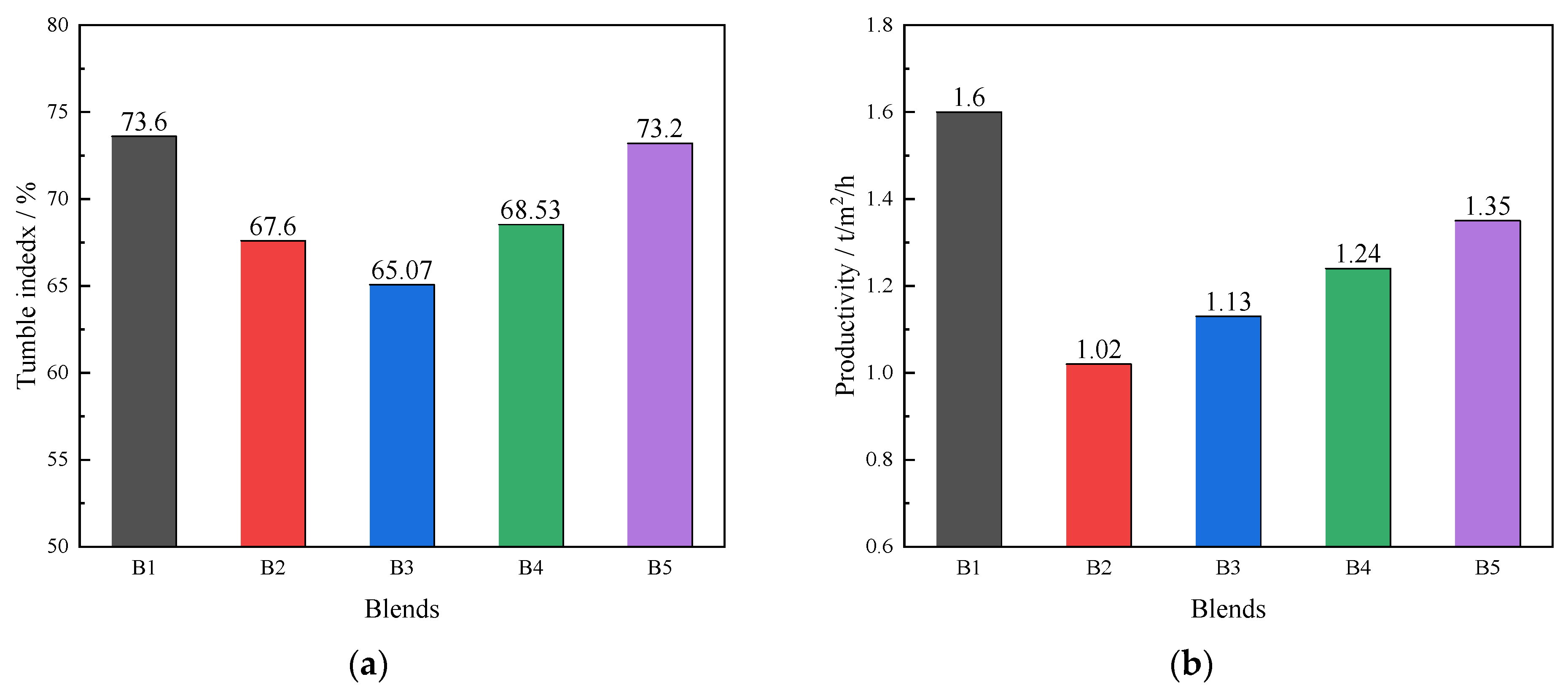
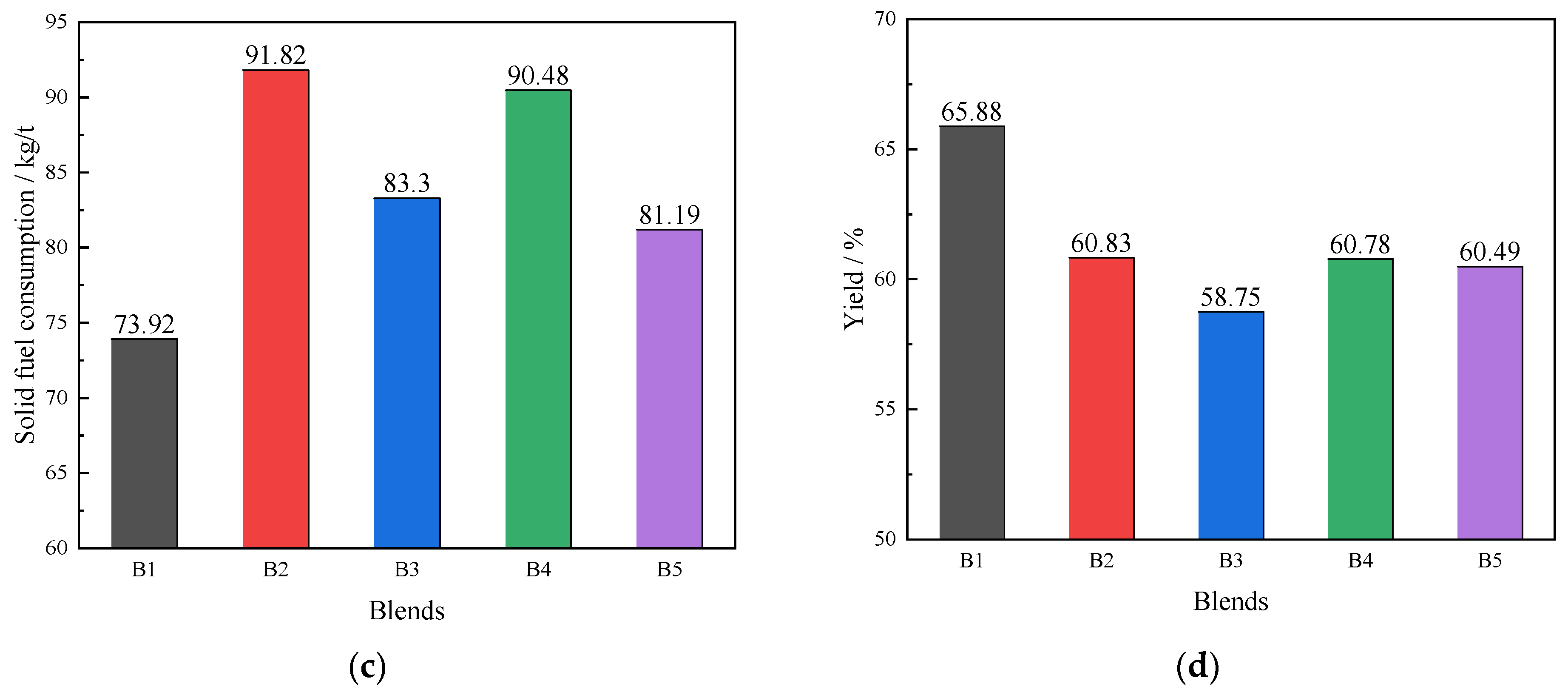
The sintering process represents a primary source of dust, SO2, NOx, and CO2 emissions in steel mills. Utilizing high-grade concentrate with low impurity content can directly reduce slag generation at the source, thereby decreasing fuel consumption and minimizing associated emissions. This study investigated the physicochemical properties, microstructure, and elemental distribution of hematite concentrates (H2 and H3) and H1 sinter fines. Sinter pot tests were conducted to evaluate the effects of blending these two concentrates on sintering performance and key quality indices. Microstructural analysis and quantitative phase composition statistics of the sintered products were performed to elucidate the mechanisms by which these concentrates influence sintering outcomes. Results demonstrated that replacing 33% H1 sinter fines with 33% H2 or H3 concentrates reduced the tumbler index from 73.6% to 68.5% and 73.2%, respectively. The productivity coefficient decreased to 68.5% and 73.2%, while solid fuel consumption increased from 73.9 kg/t to 90.5 kg/t and 81.2 kg/t. RI declined from 80.0% to 77.9% and 78.4%, whereas RDI improved from 72.9% to 76.8% and 75.8%.

1. Introduction

The iron and steel industry remains an indispensable pillar of global infrastructure, making substantial contributions to the global material base and economic development [1,2]. China continues to dominate global steel production and consumption, with annual crude steel output exceeding 1 billion metric tons [3,4,5]. BF-basic oxygen furnace integrated route still accounts for 72% of steelmaking processes globally [6,7]. Within BF operations, sintered ore constitutes approximately 75% of ferrous burdens. Its production involves mixing iron ore fines, fluxes (e.g., quicklime, limestone), solid fuels (e.g., coke breeze), return fines, and water, followed by granulation and sintering [8,9,10,11,12]. As Brazilian hematite is a natural iron ore with high iron content and low impurity levels, it is widely traded in the market and is also a high-quality raw material for BF. It effectively enhances iron grade, reduces impurity levels, and stabilizes BF operation [13]. The chemical phase composition, particle size distribution, and morphology of hematite critically influence sinter layer permeability, heat/mass transfer during sintering, and the properties of high-temperature bonding phases [12,13].
In recent years, significant efforts have been made to improve the sintering performance of ultrafine iron ore concentrates. Conventional sinter feed requires moderate particle size distribution, wherein coarse particles (1–3 mm) act as nuclei during granulation while fine particles (<0.2 mm) adhere to promote nuclei growth. However, excessive fine-grained concentrate and poor particle morphology adversely affect granulation efficiency, subsequently deteriorating the permeability of the sinter bed and leading to incomplete combustion [14,15]. Que et al.’s study found that when the iron ore concentrate was increased by 15%, the yield decreased by 3.32%, and the productivity dropped by 0.19 t/m2/h [15]. Pan et al. [16] and Zhu et al. [17] demonstrated that pre-briquetting or mechanical activation of Brazilian specularite concentrates could effectively enhance granulation and sintering indices, although these approaches require additional unit operations. However, the increase in iron concentrate leads to a decline in sintering performance. When the proportion of hematite increased from 24% to 36%, the productivity decreased from 1.41 t/m2/h to 1.24 t/m2/h, the TI decreased from 67.47% to 65.40%, and the solid fuel consumption increased by 2.28 kg/t [16]. Nyembwe et al. investigated the mechanisms governing granule structure, mean particle size, size distribution, and sphericity on bed porosity and permeability by blending various concentrates and micro-pellets during mixed granulation [18]. Takehara et al. analyzed granule size distribution through granulation experiments using probabilistic models and a novel model incorporating granulation kinetics, elucidating the impact of moisture content on granulation rates [19]. Zhu et al. showed the fine-grained DM ore has higher fluidity and better oxidation properties than the coarser-grained high-silicon AM ore. This makes it conducive to the formation of primary liquid phase, promotes the assimilation of nuclei, and results in a strong bonding phase with high bonding strength [20]. These findings highlight that ore characteristics significantly influence sintering behavior. Notably, due to the oxidation consolidation sintering mechanism of magnetite, the sintering behavior of magnetite concentrates differs fundamentally from that of hematite concentrates, warranting separate investigation.
The sintering process is primarily governed by liquid-phase sintering. The primary phase in sintered ore is silico-ferrite of calcium and aluminum (SFCA), whose morphology and content govern the strength and reduction characteristics of the final sinter product [21,22]. Dmitriev et al. regulated the basicity of sintering raw materials to produce sinters with varying SFCA contents, revealing a direct correlation between the metallurgical performance of sintered ore and the presence of SFCA [23]. Park et al. systematically reviewed the phase composition and structural features of sintered ore, concluding that SFCA forms via reactions between calcium ferrite and gangue components. They reported that SFCA in sintered ore exhibits columnar or needle-like morphologies depending on cooling rates, and its proportion increases with elevated iron ore basicity or alumina concentrations during sintering [24].
This study investigates the chemical composition, particle size, phase constituents, and microstructure of hematite concentrates. Sinter pot tests were conducted under single-ore and mixed-ore sintering conditions to evaluate the effects of hematite concentrates on granulation efficiency and sintering performance. Furthermore, the influence of hematite concentrates granules on the reduction behavior, mineralogical composition, and microstructure of the final sintered ore was analyzed. The findings provide critical insights for optimizing the sintering process through hematite concentrates blending, offering a scientific basis for industrial applications.

2. Materials and Methods

2.1. Raw Materials

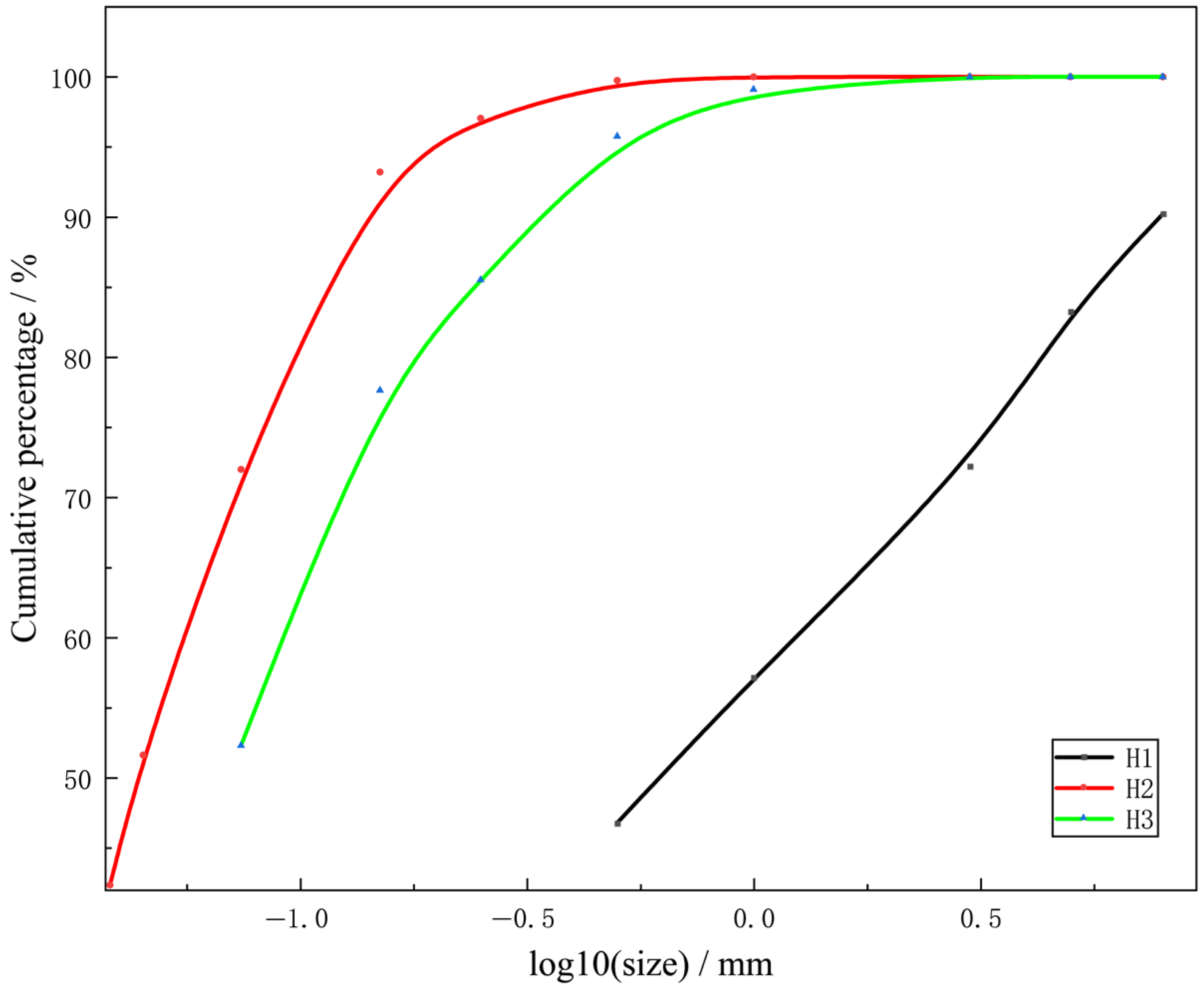
The main raw materials used in sintering tests include various iron-containing raw materials, fluxes, fuel (coke breeze) and return fines. The basic physical and chemical properties of the first three kinds of raw materials are mainly composed of chemical compositions and size distributions, as shown in Table 1, Table 2 and Table 3, respectively. Figure 1 compares the particle size distribution of three types of iron ores. The methods for determining the chemical compositions of the raw materials and sinter products were determined as follows. The chemical compositions of raw materials were analyzed at the Changsha Research Institute of Mining and Metallurgy. TFe and FeO contents were measured by standard volumetric titration according to Chinese National Standard. SiO2 and Al2O3 contents were also determined using standard volumetric titration methods. Calcium (CaO) and magnesium (MgO) contents were analyzed by atomic absorption spectrometry (AAS, Model: WYS2000). Phosphorus (P) was quantified using a spectrophotometer (Model: V1800). Sulfur (S) content was determined using a carbon-sulfur analyzer (Model: CS-300). The Loss on Ignition (LOI) quantifies the mass loss of a sample following calcination at 900 °C to constant mass.
Due to the uncontrollable nature of the raw material sources, steel mills usually use multiple iron-containing raw materials to produce sintered ore. This not only meets the needs of BF ironmaking but also reduces the production cost of ironmaking and ensures the stability of production. In this experiment, three iron-containing raw materials were used. The reason for selecting these three types of iron ore for comparison is that H1 is the common mainstream sintered ore, while H2 and H3 were typical hematite fines with low aluminum content. The particle size compositions of H1, H2, and H3 are all different, allowing for a comparison of the impact of particle size on pelletizing from the perspective of iron ore. The specific compositions are shown in Table 1.
The fluxes employed in this experiment include quicklime, limestone, and dolomite.
Coke breeze is used as a solid fuel in sintering process. The combustion of coke in the sinter bed can provide sufficient heat for sinter layers, leading to the partial melting of the sinter mixture and the formation of effective bonding by the consolidation of liquid phase, which consequently imparts sufficient mechanical strength and good metallurgical properties to product sinter for the requirements of blast furnace production.
As illustrated in Table 2 and Table 3, H2 and H3 are exhibiting notably fine particle size distributions. The −1 mm fraction constitutes 100% and 99.11% of these materials, respectively, whereas the −1 mm fraction of H1 fines is merely 57.14%.
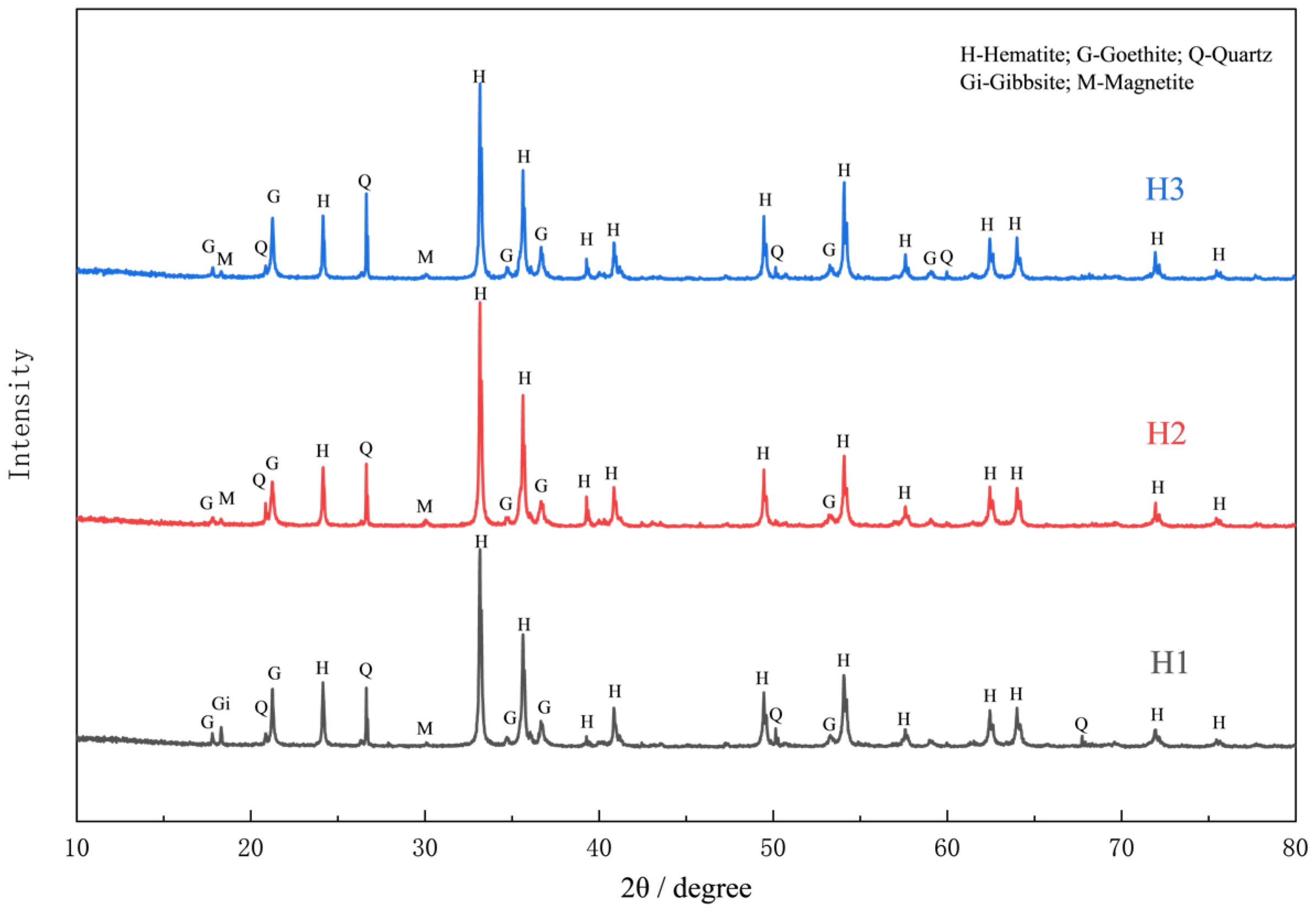
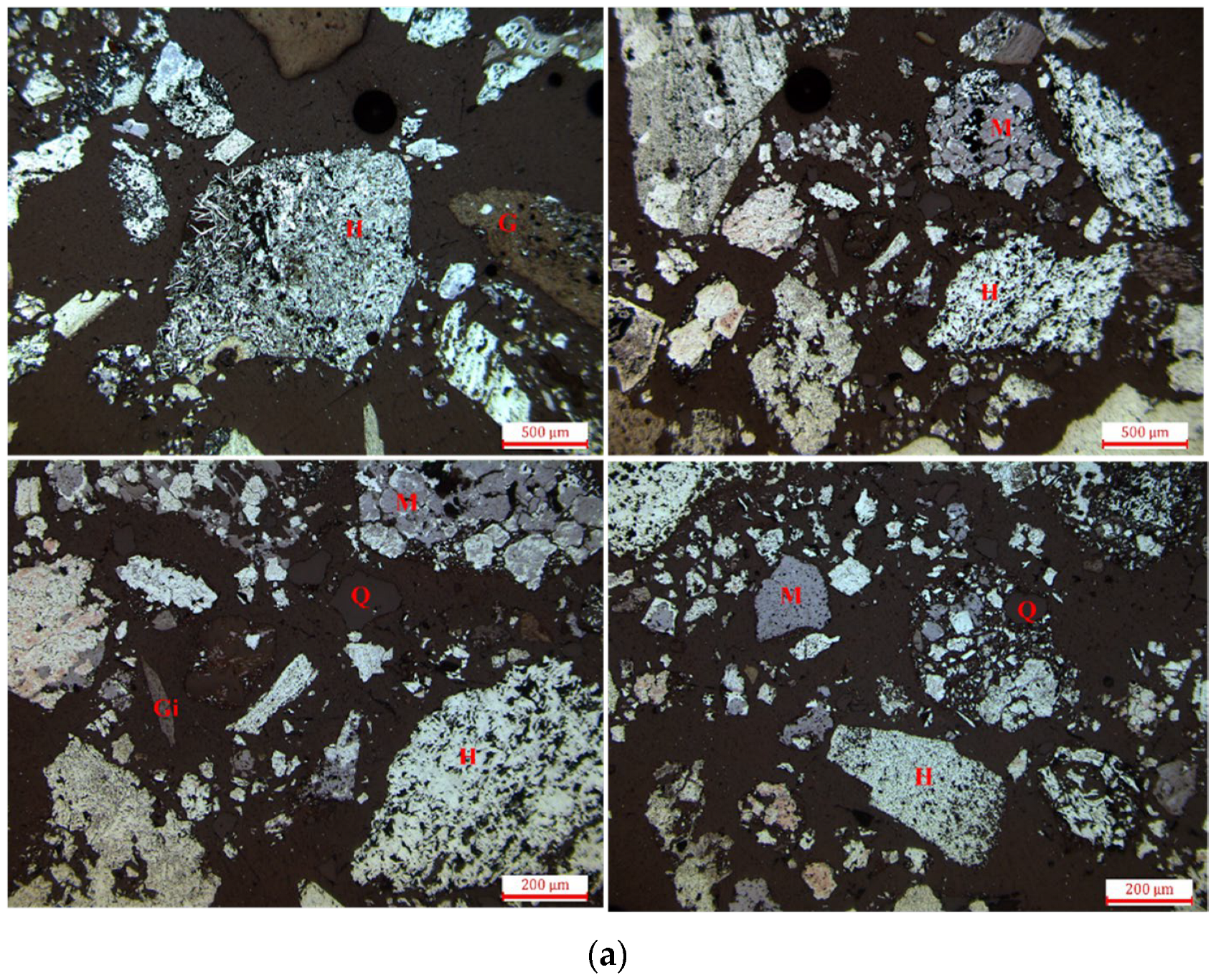
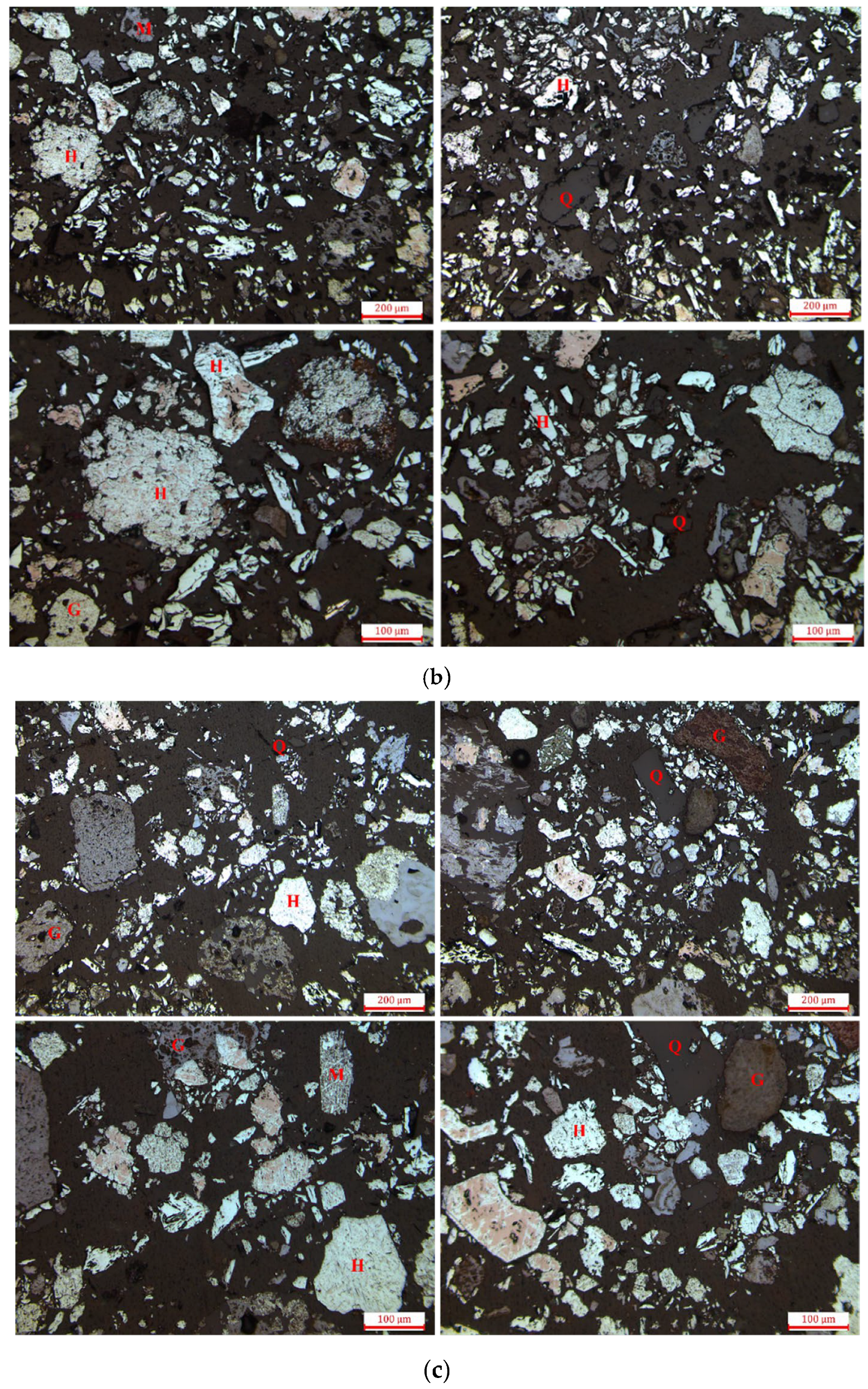
Figure 2 and Figure 3 show the phase analysis and photographs of main mineral phases in H1 fines, H2 and H3 concentrates, respectively. Table 4 shows the composition of main mineral phase. The main mineral compositions listed in Table 4 were quantified based on area percentage using image analysis of optical micrographs with ImageJ 1.54g software. It is known that higher proportion of goethite and quartz can be observed in the H1 fines. H2 is a hematite concentrate produced by Vale, it is mainly composed of hematite, goethite, magnetite, and quartz. It can be seen that iron mainly occurs in the form of hematite, accounting for 76%. In addition, there are small proportions of magnetite (6%) and goethite (7%). Silicon mainly occurs in the form of free quartz, which is mostly doped in the form of the independent mineral. Aluminum mainly exists in the form of gibbsite, and kaolinite and goethite are present only in small proportion. H3 is also a hematite concentrate from Vale. Meanwhile, the most main mineral phase (such as hematite, goethite, magnetite, and quartz) in the H3 and their occurrence are very similar to H2. However, from Figure 1 and Figure 2, it can be found that H3 is different from H2, the peak intensity of goethite and quartz increases.
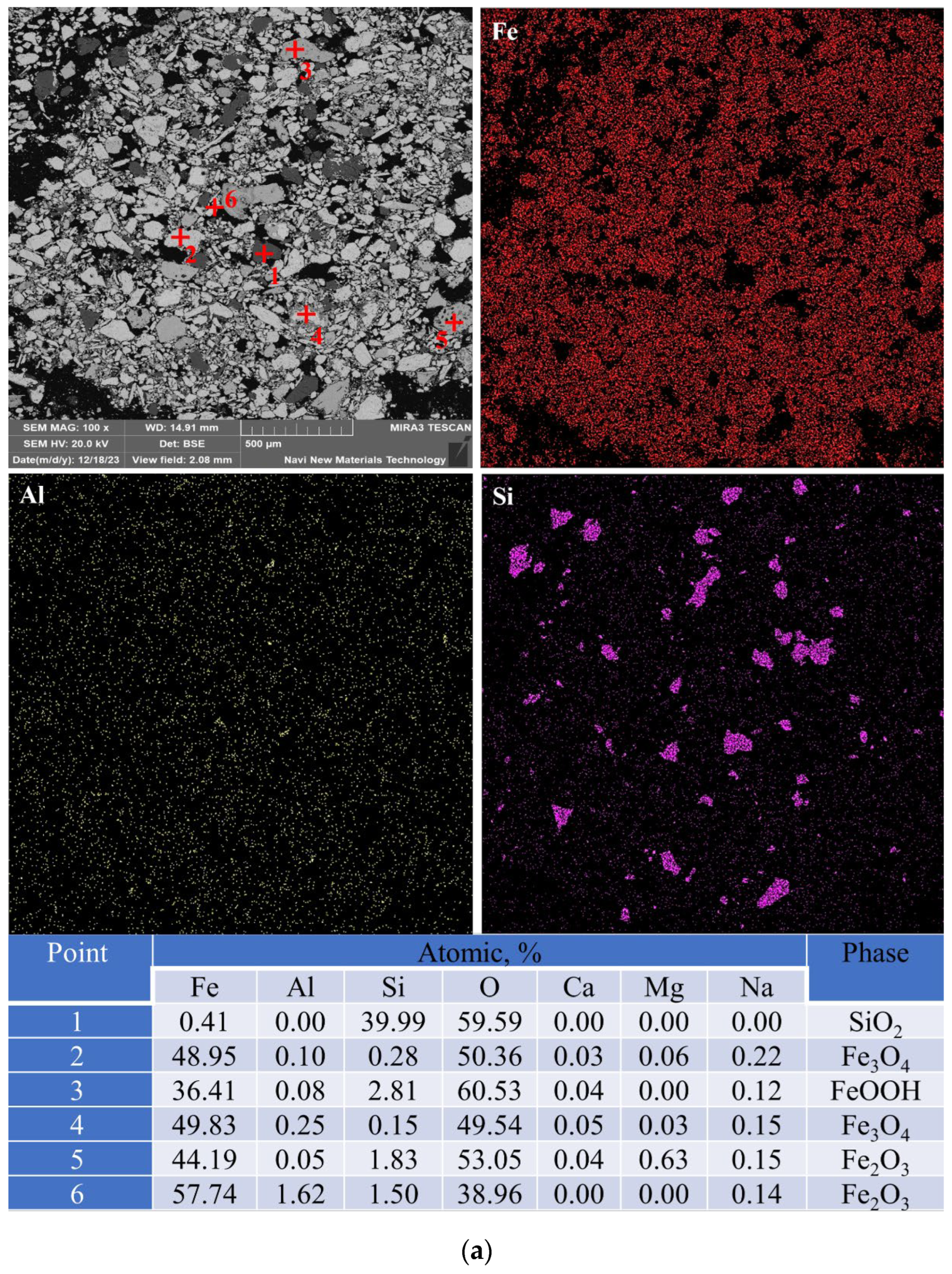
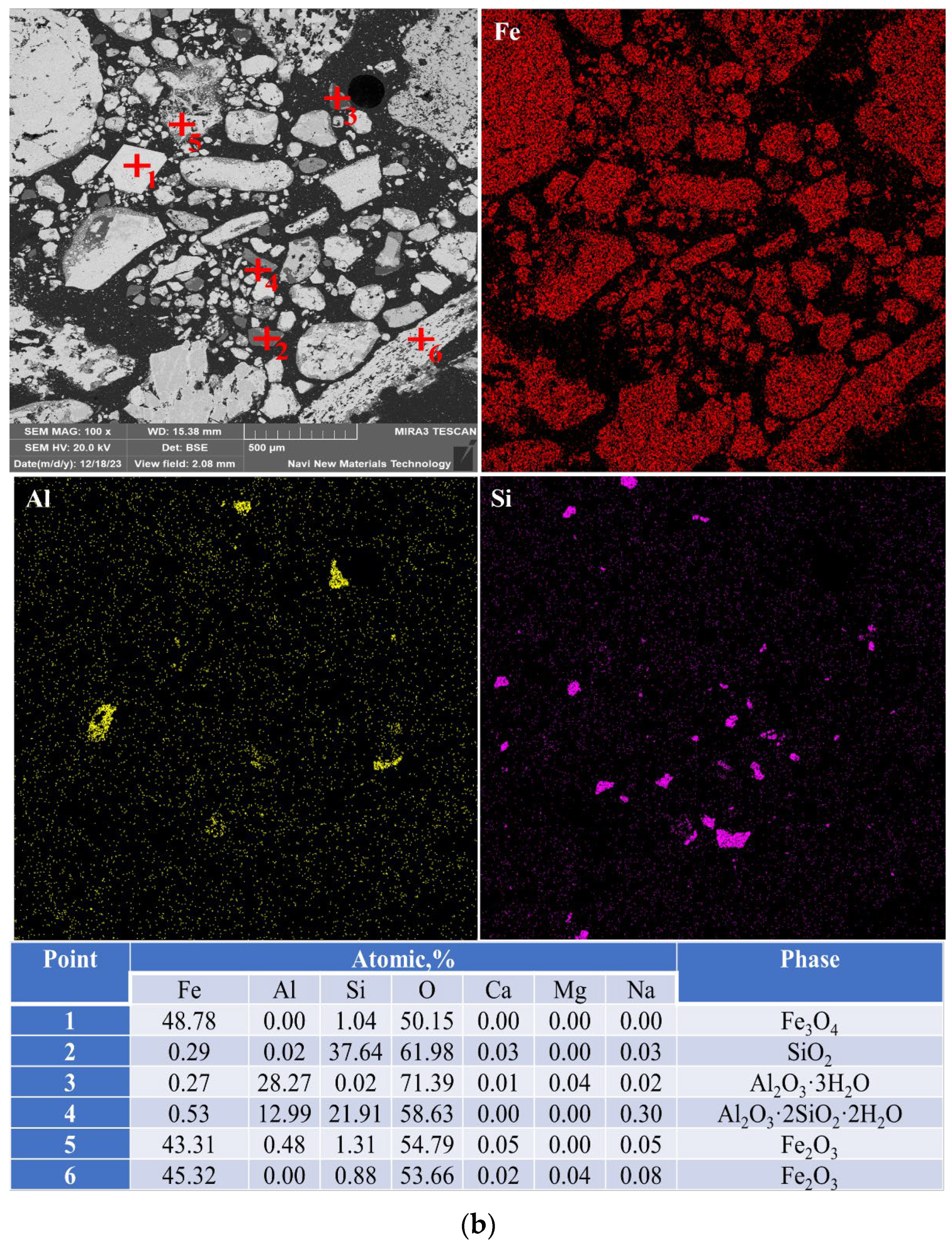
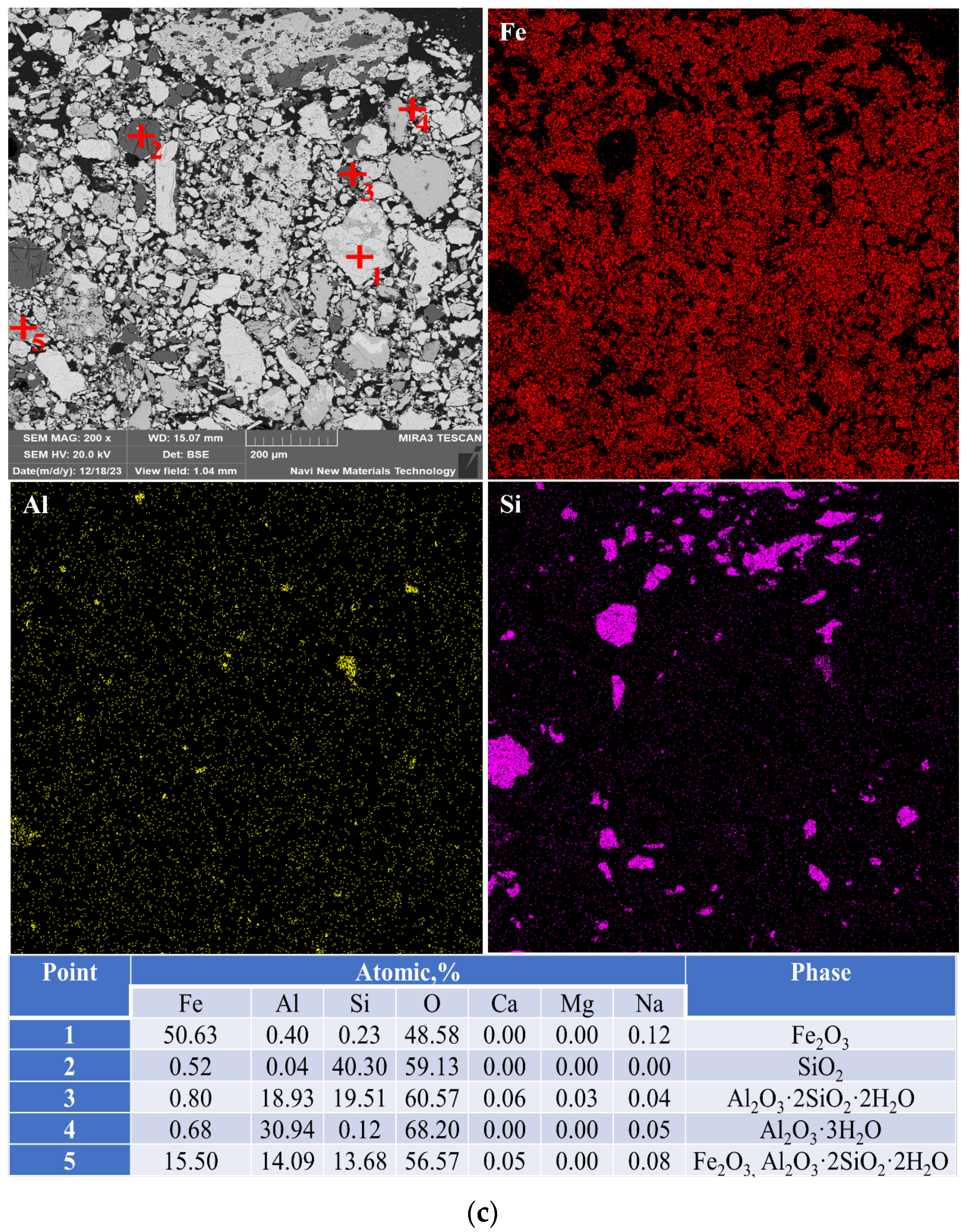
Figure 4 shows the SEM-EDS of H1 fines, H2 and H3 concentrates. It can be seen that hematite occurs as platy and granular solely or closely intergrow with goethite, magnetite, or gangue minerals, while goethite mainly occurs with hematite and in some cases with magnetite and quartz. Silicon mainly occurs in the form of free quartz, which is mostly doped in the form of the independent mineral. The Al element is finely disseminated in iron ore and gangue minerals. Aluminum mainly exists in the form of gibbsite, and there are small proportions in goethite and kaolinite. The content of SiO2 and LOI of H3 is higher than that of H2. Figure 4 shows the element distribution characteristics of Fe, Si and Al at local areas in H3. Similar to H2, it can be observed that the Al element is finely disseminated in iron ore and gangue minerals, while Si element mainly occurs in free quartz. According to Figure 4, aluminum mainly exists in kaolinite, and gibbsite and goethite are present only in small proportions.

2.2. Methods

2.2.1. Granulation Tests

For the granulation tests, all sinter feeds including iron ores, fluxes, coke breeze and return fines were homogenized manually with measured mass of water, and then transferred to a typical granulating drum 600 mm diameter and 270 mm length (small scale). The drum contained ten lifter bars of 10 mm height. The rotary speed of the drum was set to 16 rpm corresponding to a Froude number of 0.0045 similar to the industrial granulation drum in sintering plant. The space factor of the drum for all tests was maintained at about 10%. The typical granulation duration was set at 5 min. When the granulation was finished, the granulated material was immediately removed from the drum and transferred to a rotary sample divider to prepare several samples: one for moisture measurement, one for size analysis, one for packed bed permeability measurement, one for dropping test and the remainder for sintering. In this research, the effect of granulating moisture on the granulation of various iron ores was investigated. On this basis, the effect of iron ore characteristics on their granulation performance can be also revealed.
Size distribution: over 1 kg granulated materials were sieved at 0.5, 1, 3, 5 and 8 mm, and the mass fraction of the material retained on each sieve was calculated.
Average size of the granulated mix: the Harmonic Mean Particle Size (dp) of the granulated materials was calculated from its particle size distribution using Equation (1).
d p = 1 i n w i d i
where di represents the mean size of size fraction i, mm; wi represents the mass fraction of the size fraction i, mm.
Permeability of the granulated materials: The packed bed permeability index of the granulated materials was measured in JPU using a cylindrical permeability pot of 100 mm diameter and 200 mm height. The permeability index was calculated using Equation (2).
J P U = Q A ( h P ) n
where, Q is the air flow rate, m3/min; A is the bed section area, m2; h is bed height of granulated material, 200 mm; ΔP is pressure drop, mmH2O; and n is a constant, usually at 0.6.

2.2.2. Small-Scale Sinter Pot Test

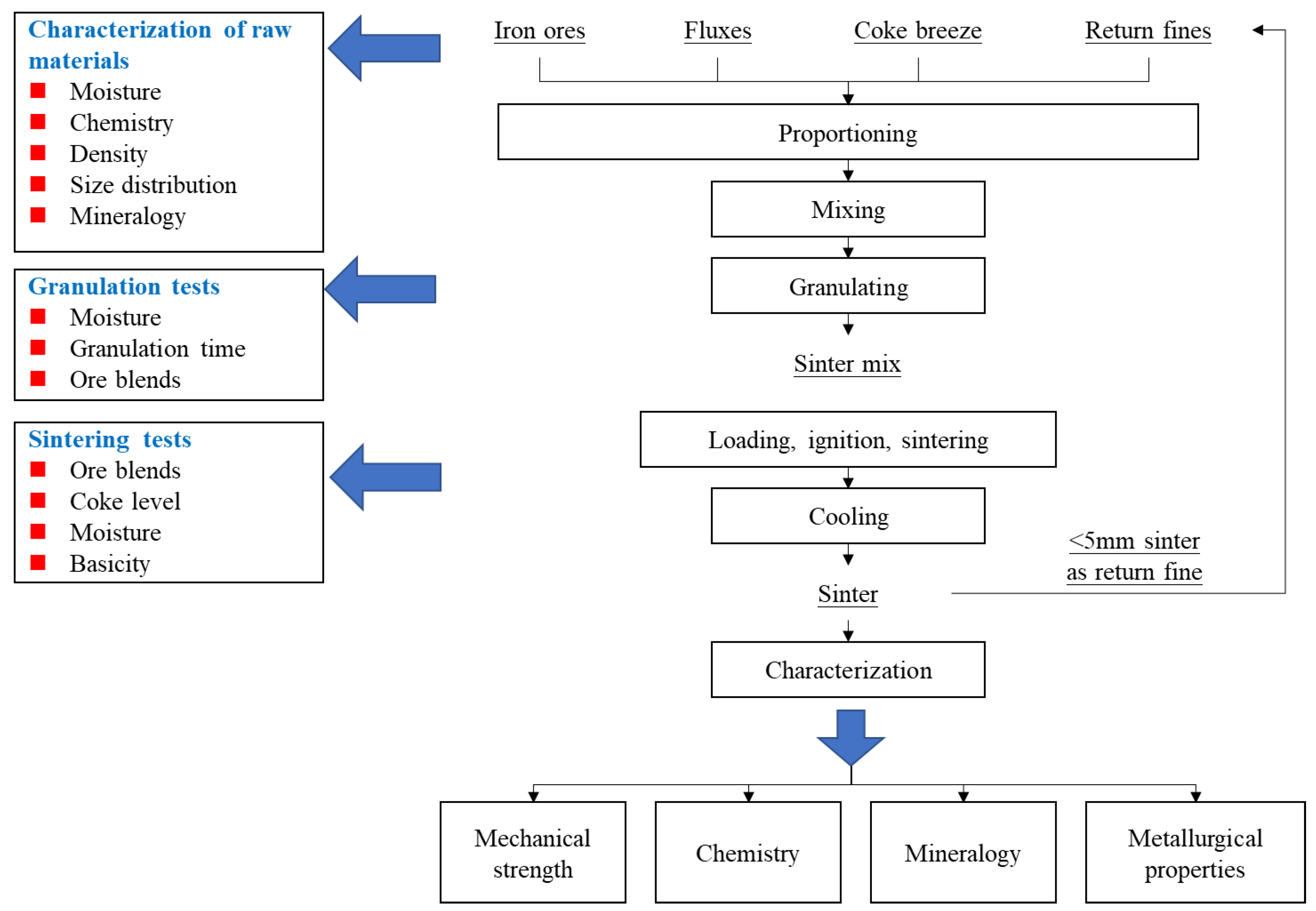
Typical experimental procedure of small-scale sintering pot tests for different ores mainly includes the following steps: proportioning, mixing, granulation, sintering and characterization of the sinter product. The sinter pot was first loaded with 0.5 kg of hearth layer material (10–16 mm), then the granulated mix was uniformly charged into the pot. The ignition temperature was 1100 ± 50 °C with an ignition time of 1.5 min under an ignition suction of 5 kPa. Sintering proceeded under a main suction of 10 kPa, after the sintering temperature began to drop, followed by cooling under a suction of 5 kPa for 5 min. After sintering, the sinter cake was discharged and cooled naturally in air.
In this research, sinter pot tests were conducted in terms of three single ores and their mixture from Vale under fixed conditions of 3% burnt lime, 5.5% SiO2 and 1.55% MgO, binary basicity (CaO/SiO2 = 1.75). Simultaneously, the ratio of return fines was set at 35% on ore basis. Figure 5 and Table 5 respectively present the basic conditions and test procedures of this experiment.

2.2.3. Metallurgical Properties of Sinter Product

In addition, the metallurgical properties of sinter products made from different iron ores, including the reduction index (RI) and the reduction degradation index (RDI), were also measured in accordance with the national standards GB 13241-2017 [25] and GB 31923.1-2015 [26], respectively. The Chinese national standards GB/T 13241-2017, GB/T 31923.1-2015 for RI and RDI measurement coincide with ISO standards 4695 and 4696-1 [27,28], respectively.

2.2.4. Mineralogy Performance of Sinter Products

The mineralogy of sinter products of all ore blends was investigated to understand the phase compositions, occurrence state, microstructure and SFCA formation of sinter products and its relationship with the quality (mechanical strength and metallurgical properties) of the resultant sinters. For each sinter product, it is firstly crushed to below 8 mm and homogenized. About 20 particles of 5–6.3 mm were selected and subjected to mounting, cutting, grinding and polishing to prepare sections. Subsequently, the mineralogical study was performed by a Leica DM4500P microscope. Ten different areas from the sample were selected for photography, and ImageJ 1.54g analysis software was used to distinguish them based on the different colors of the minerals, and then the proportions were calculated.

3. Results and Discussion

3.1. Granulation Behaviors

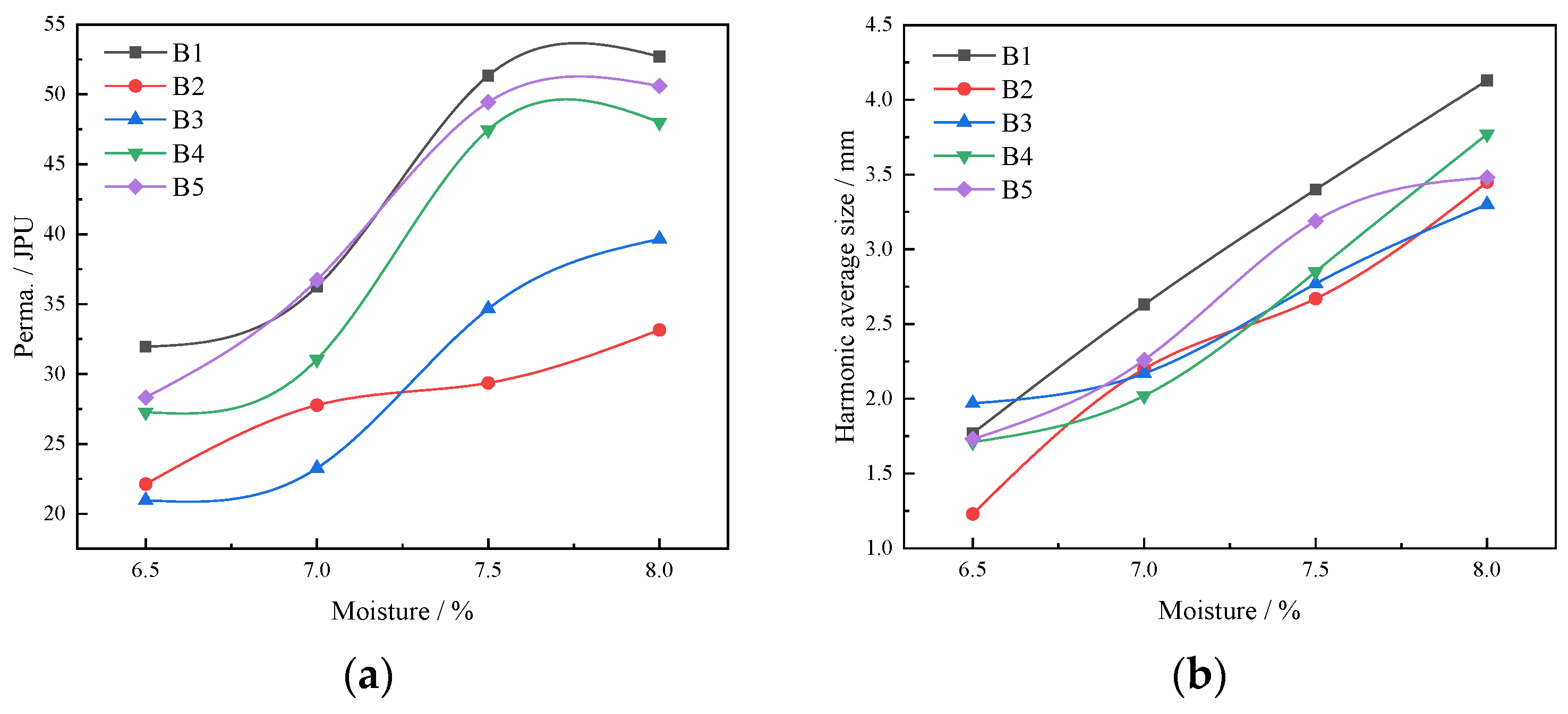
Table 6 is mainly aimed at comparing the differences among various mineral types and assessing the overall changes in performance after the adjustment. B1: establishes the baseline performance of the conventional sinter feed. B2 and B3: reveal the inherent and challenging sintering characteristics of the pure concentrates, highlighting their limitations. B4 and B5 (blends): systematically test the impact of a significant but fixed replacement level (33%) of H1 with each concentrate. In Table 6, only the proportion of iron ore is listed. Additionally, silica, dolomite, limestone and other fluxes will be added to adjust the silicon and calcium compositions to be consistent. The influence of moisture content on the granulation performance of sintered ore with varying ratios is illustrated in Figure 6. As depicted in the figure, an increase in moisture content (mass fraction) from 6.5% to 8.0% resulted in a corresponding increase in both the permeability index and average particle size across all proportions. The superior pelletizing performance of H1 raw material can be attributed to its coarser particle size distribution, which also contributes to enhanced air permeability at lower pelletizing moisture levels. Conversely, the inferior pelletizing performance observed in H2 and H3 concentrates is primarily due to their excessively fine particle sizes, which hinder effective pellet formation during the granulation process. Since the average particle size of iron ore H3 is coarser than that of iron ore H2, the granulation behavior of B3 is superior to that of B2. It is noteworthy that when 33% of H1 was replaced by 33% of H2 and H3, there was a significant decrease in the granulation performance of the mixture, characterized by a decrease in the permeability index and the average particle size. This enhancement is ascribed to the impact of the substantial presence of fine-grained particles in the H2 and H3 concentrates, which are challenging to roll into balls during pelletizing. This facilitates the saturation of the pores between the large particles in the H1 with smaller-sized concentrates, resulting in a denser sinter layer and a substantial reduction in the permeability index, thereby diminishing the pelletizing effect. Granulation testing indicates that the incorporation of fine mineral particles adversely affects granule formation and bed permeability, thereby impairing airflow distribution and fuel combustion efficiency; consequently, these effects may compromise subsequent sintering tests.

3.2. Sintering Performances

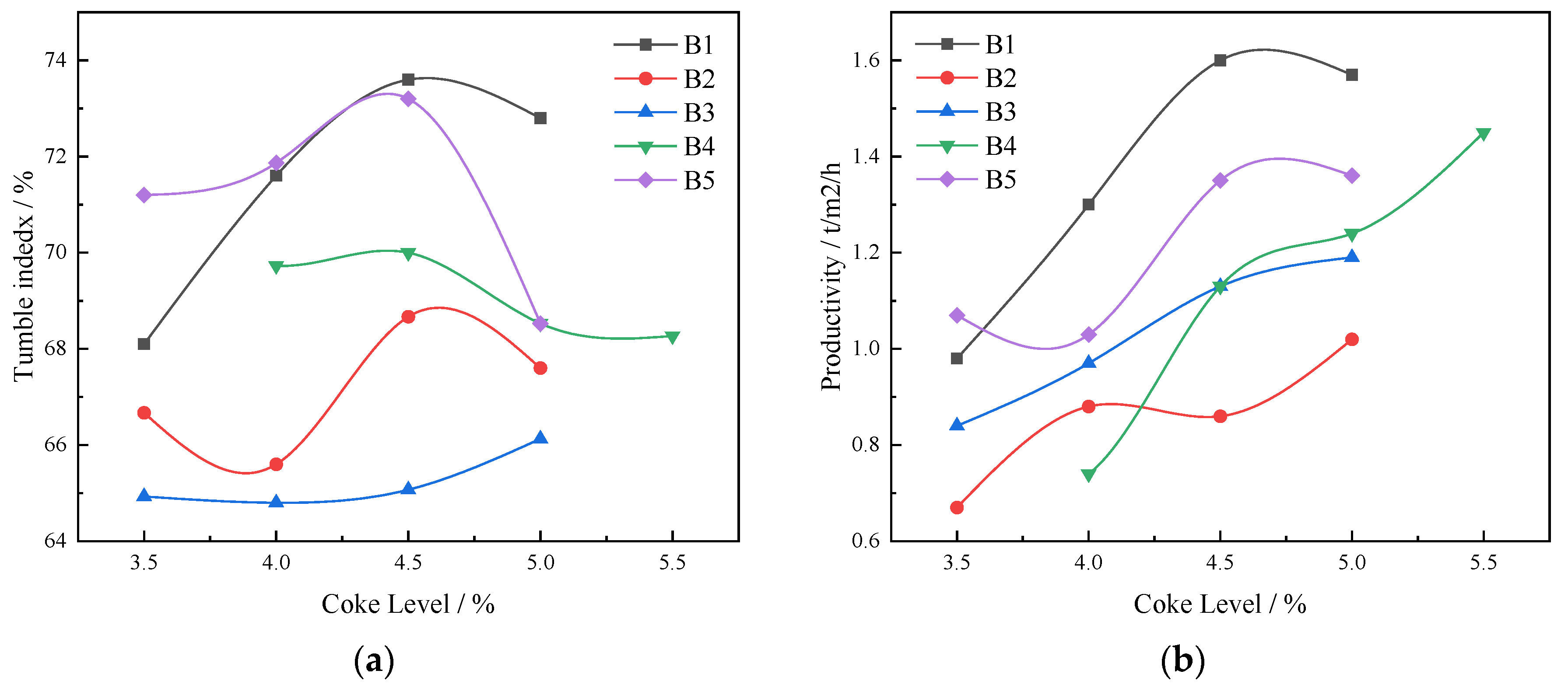
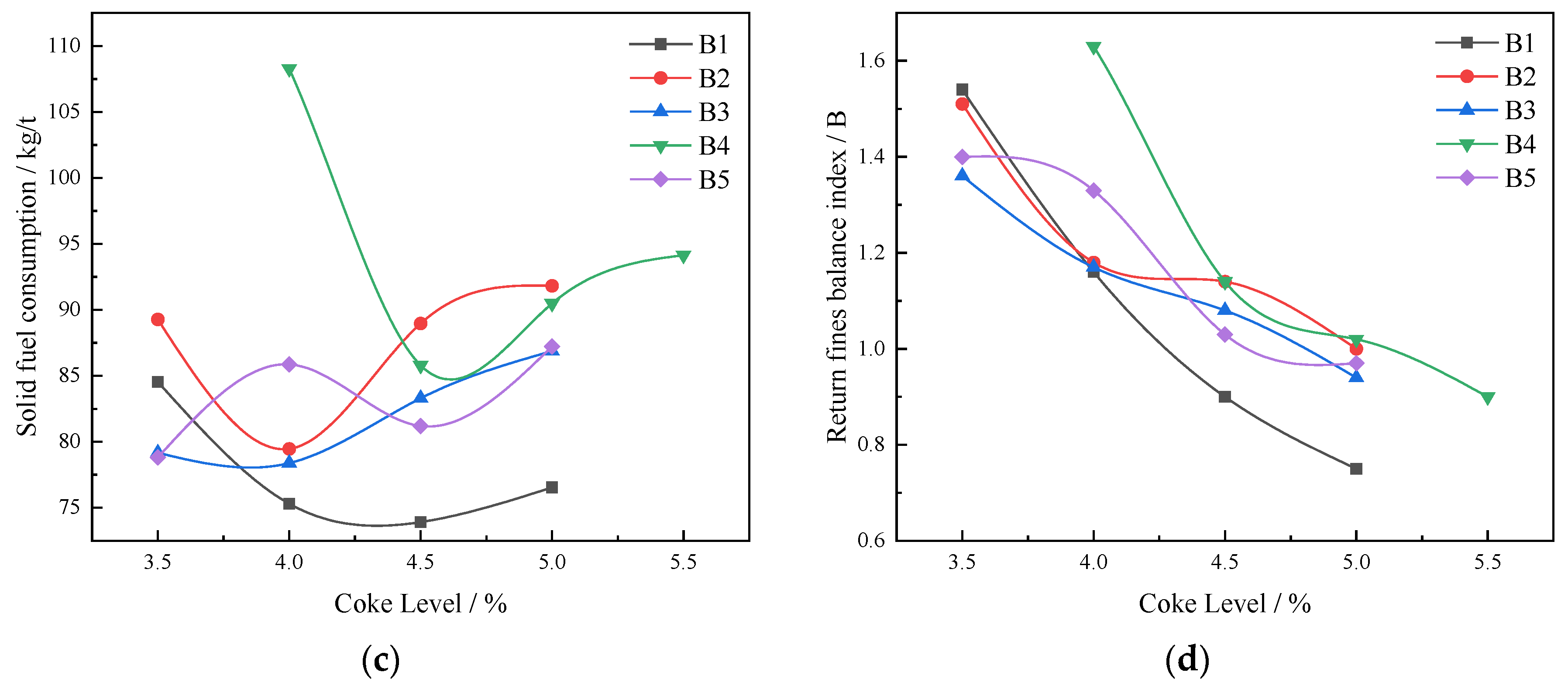
At moisture of 7.5% and basicity of 1.75, a series of experiments were conducted with the objective of optimizing the conditions for the dosage of coke powder in relation to varying ratios of sintered ores. The results of these experiments are presented in Figure 7. It was observed that as the percentage of coke powder increased from 3.5% to 5.0% (4.0% to 5.5% for H3 concentrate), there was a tendency for the drum index to increase and then decrease, while the solid fuel consumption exhibited a similar tendency, decreasing and then increasing. The overall yield exhibited an upward trend, while the ore return balance index demonstrated a reverse trend.
As demonstrated in Figure 7, the sintering performance of H1 sintered powder is significantly superior to that of the best index of H2 and H3 fine powder, even at lower coke ratios. This is attributable to the fact that the particle size of these two fine powders is considerably finer than that of conventional sintered powder, which hinders the formation of a ball in the granulation process. This, in turn, results in poor permeability of the material layer, high negative pressure during sintering, and insufficient combustion of the material layer. Consequently, the sintering performance of H1 sintered powder is superior. It is evident that pure H2 and H3 fine powders are not conducive to direct sintering. Pure H3, due to its coarser particle size compared to pure H2, has slightly better sintering performance. However, the replacement of 33% of the H1 with 33% of the H2 and H3 resulted in a significant decrease in the drum index and yield. Concurrently, there was a significant increase in the solids burning consumption and the ore return balance index. This outcome is consistent with the findings presented in Figure 7, which demonstrates that the presence of fine particles in the H2 and H3 fines significantly affects the granulation of the H1 sintered powder. This deterioration in granulation, in turn, will reduce the permeability of the sinter layer, decrease the combustion efficiency, and lead to a more heterogeneous temperature distribution within the sinter layer. From this, it can be seen that as the addition of ultrafine particles occurs, the observed decline in sintering performance is consistent with the established principle that fine particles have a detrimental effect on granulation and bed layer permeability [16]. Therefore, in order to enhance the sintering performance, the coke ratio must be increased to improve the sintering performance of the fine powders of H2 and H3.
The sintering performance trends for all blends across a range of coke levels are shown in Figure 7. Based on these results, the optimal coke level for each blend was determined. The sintering indexes of each proportion under optimum conditions are shown in Figure 8. Following the replacement of 33% H1 sintered powder with 33% H2 and H3 fine powders, there was a significant decrease in utilization coefficients and drum indexes, and a slight increase in solid combustion consumption. There was no significant change in yield. It is evident that the sintering performance of H2 and H3 fine powders is inferior to that of H1 sintering powder. The incorporation of these two types of fine powders will have a detrimental effect on the sintering process and will result in a decline in the sintering index.

3.3. Metallurgical Performance of Sinters

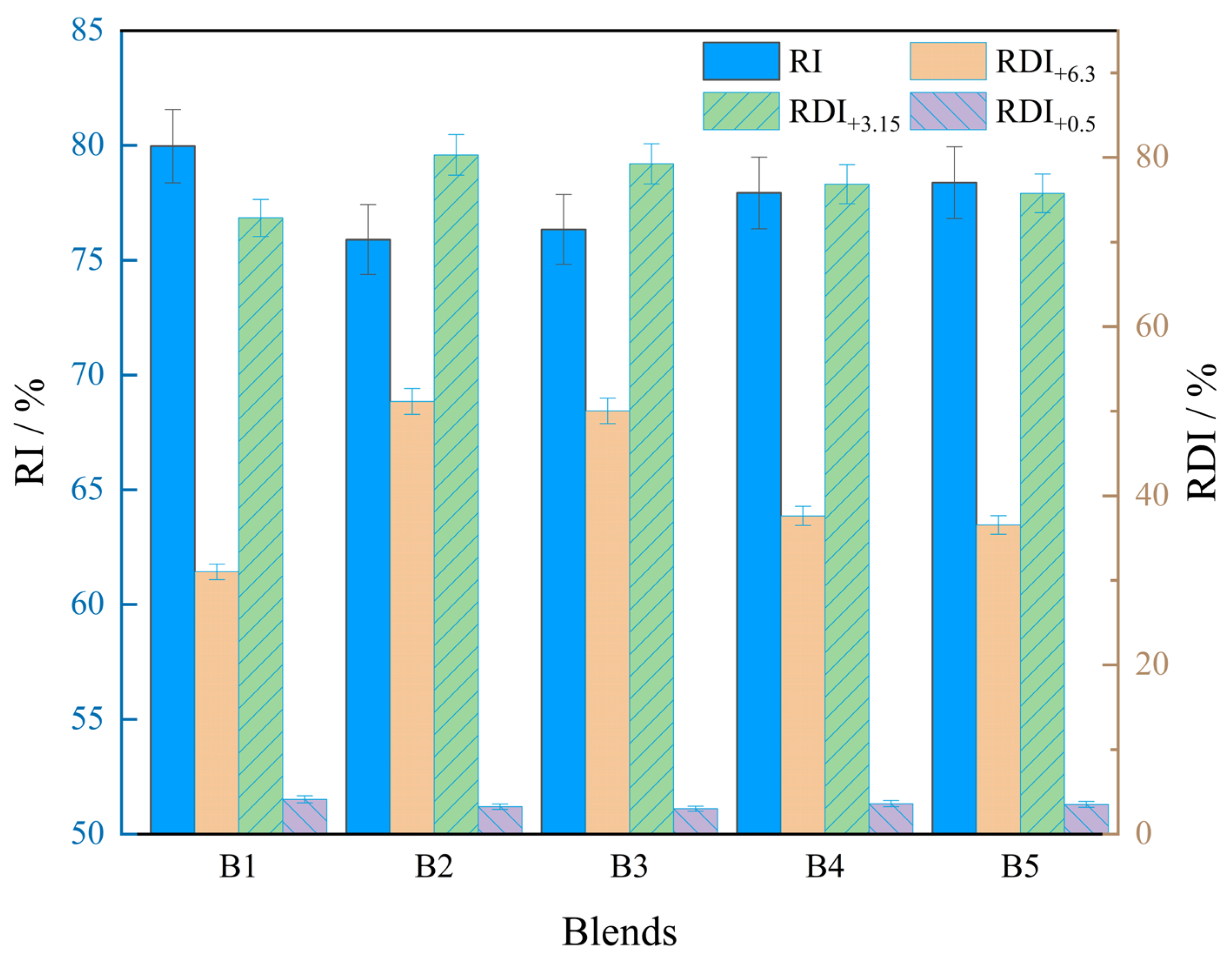
The chemical composition of the sintered ores under different ore blending schemes is shown in Table 7. The metallurgical performance of sinters was tested. The reducibility and low temperature reduction degradation of the sinter product was given in Figure 9, which were affected by the minerology of the sinter product, such as mineral compositions and microstructure (pores and fracture etc). It can be seen that all the sinter product possesses excellent reducibility with an RI higher than 70%. Especially, H1 possesses a high RI of 80.0%, obviously higher than other two concentrates. In the instance of 33% H2 or 33% H3 replacing 33% H1, there is a decline in RI from 80.0% to 77.9% and 78.4%. Conversely, RDI+3.15 demonstrates an enhancement from 72.9% to 76.8% and 75.8%, respectively.

3.4. Mineralogy of Sinter Products

3.4.1. Mineral Compositions of Sinter Products

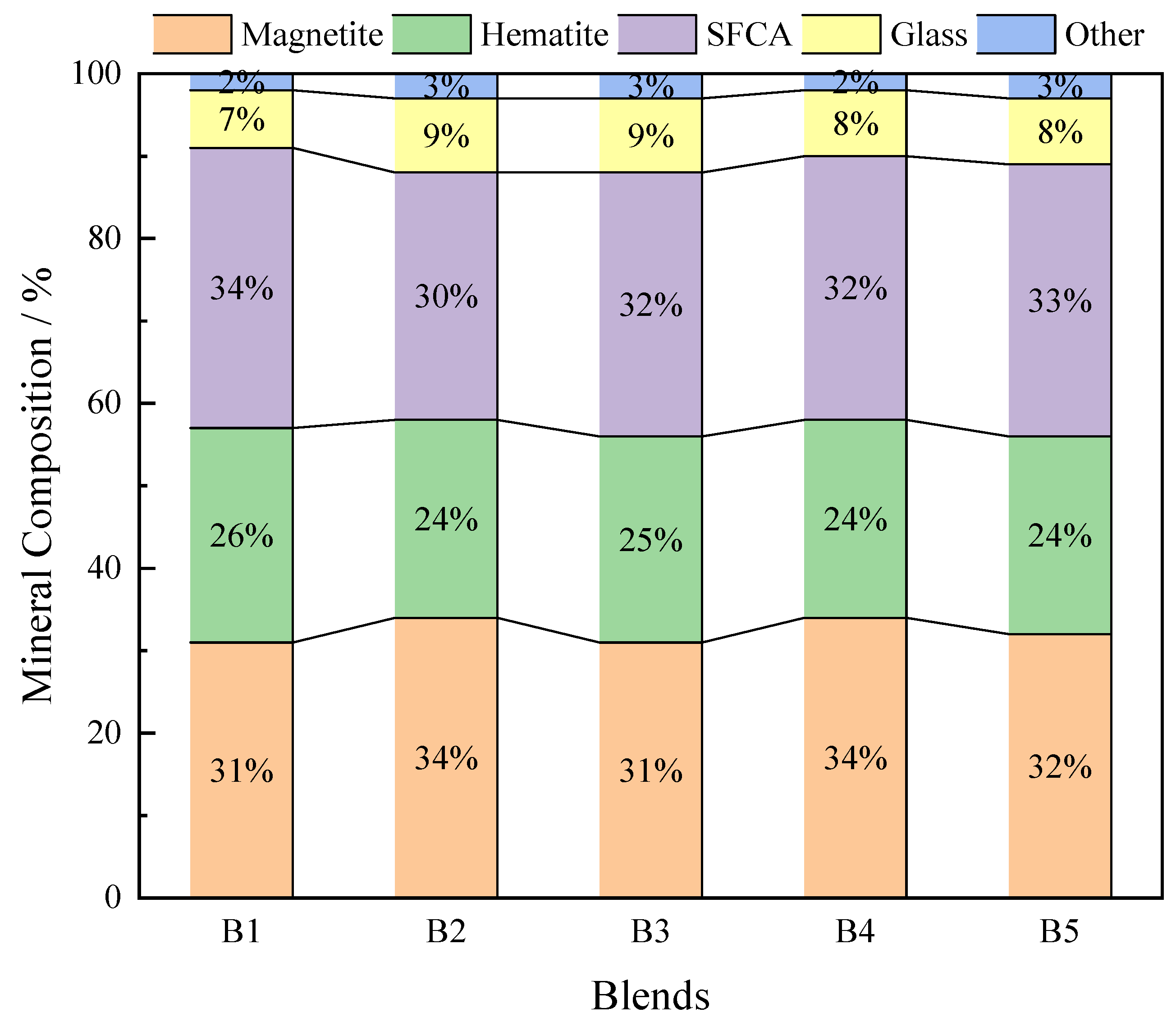
The metallurgical performance of a sinter product is contingent on its mineralogy, encompassing mineral compositions, microstructures, porosity, and chemical compositions. Consequently, the mineralogy of sinter production can elucidate the underlying mechanisms governing its metallurgical performance. The samples of sinter products from diverse blends, fabricated under optimal sintering conditions, were prepared by immersing lump sinter in epoxy resin, followed by degassing, hardening, and polishing. These samples were then examined under microscopic analysis. The mineral compositions and microstructures are presented in Table 8 and Figure 10.
The analysis revealed that all sinter products consist of calcium ferrite, magnetite, hematite and glass phases. Due to poor air permeability, incomplete combustion, insufficient high-temperature holding time and low local oxygen potential, the melt of B2–B5 failed to fully crystallize SFCA (The content of SFCA: H1 > H3 > H2) and instead rapidly cooled and solidified into an amorphous silicate glass phase, resulting in reduced strength of the sinter product. The mineral composition and microstructure of sinter from different blends are presented in Table 8 and Figure 10. The analysis indicates that the sinter contains 30%–34% magnetite, 23%–26% hematite, 30%–34% SFCA, 7%–11% glass phase, and 2%–3% other phases.
The study shows that the sinter from B2 and B3 contains more glassy phases compared to the B1 blend, leading to enhanced low-temperature reduction degradation. Furthermore, replacing 33% of H1 with 33% H2 or H3 results in a decrease in the content of SFCA in the sinter product, thereby leading to a lower reducibility. Concurrently, an increase in the occurrence of glassy phases is observed, which in turn leads to enhanced low-temperature reduction degradation.

3.4.2. Microstructure of Sinter Products

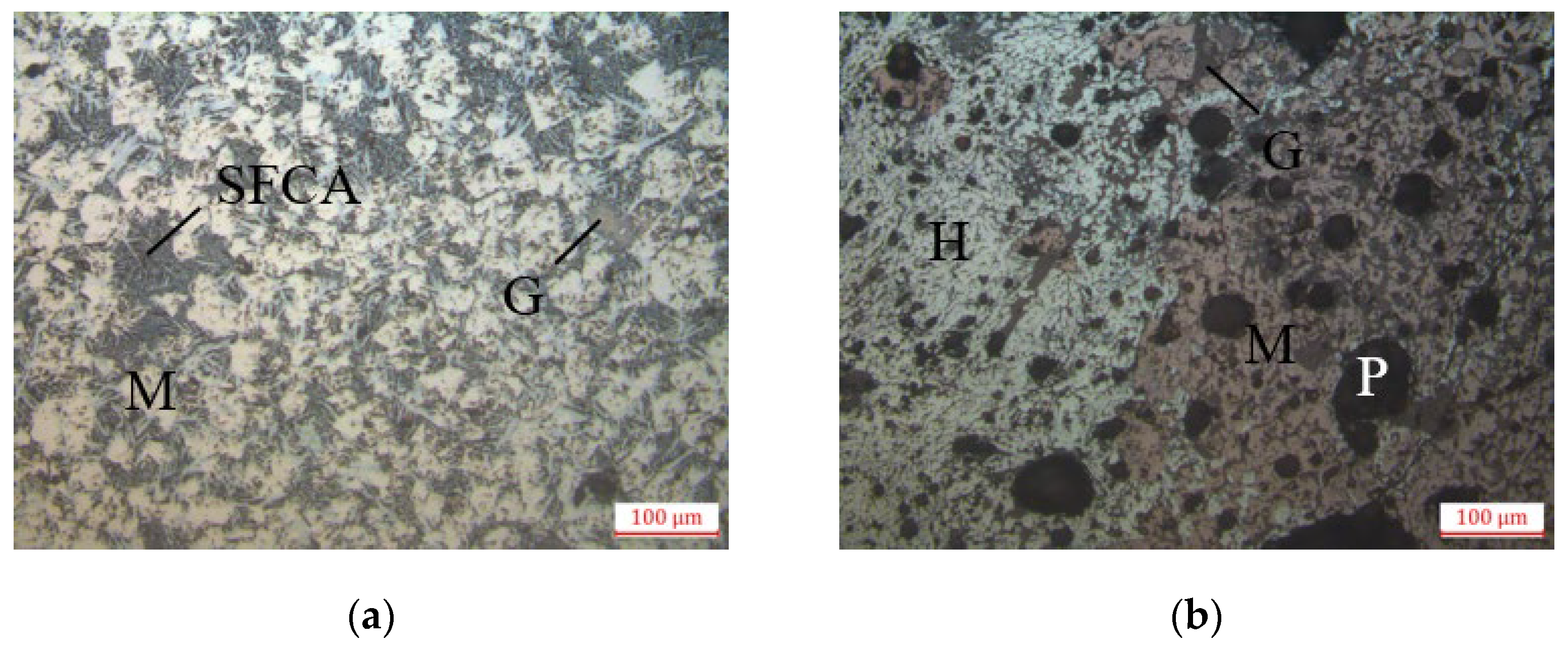
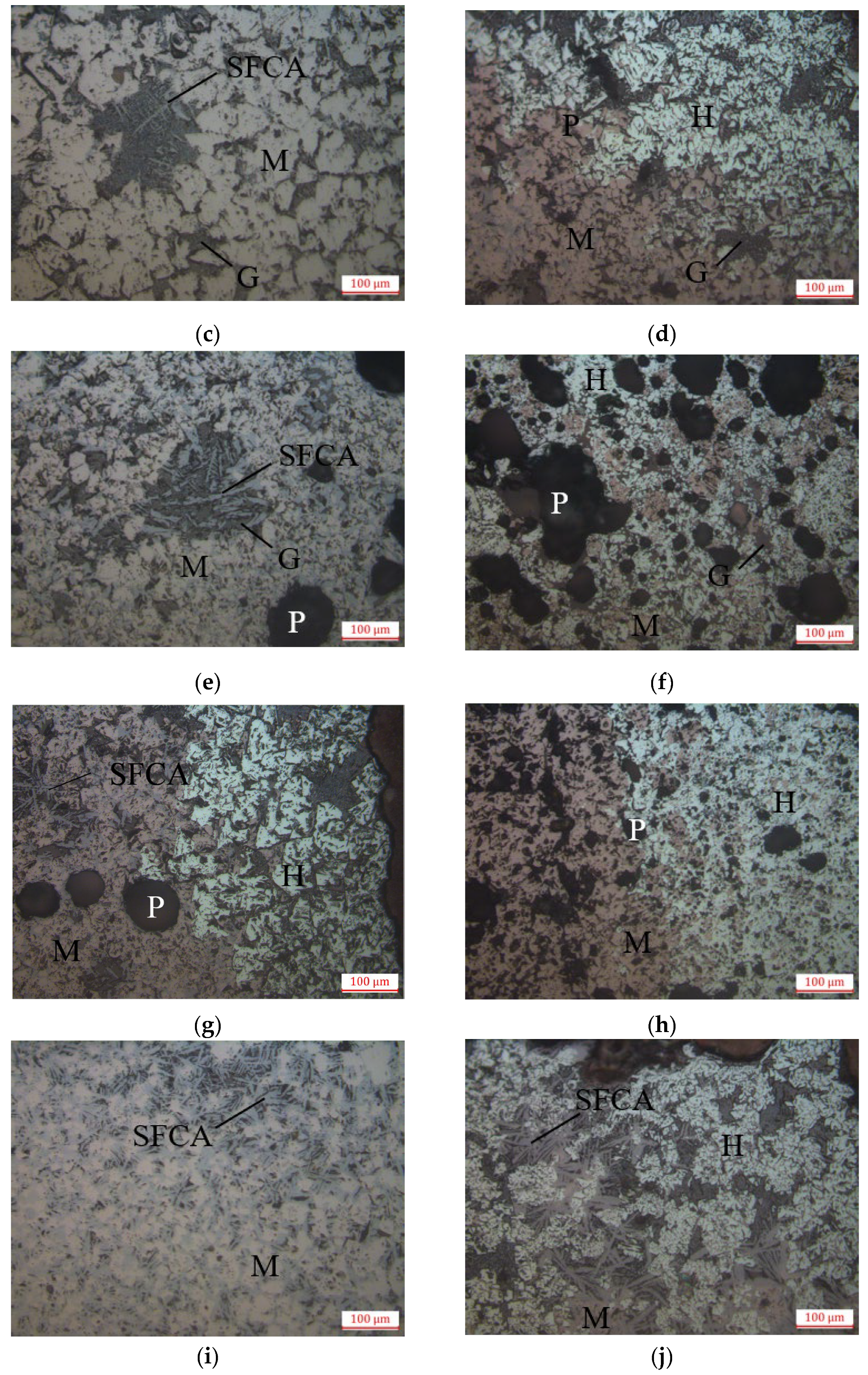
As illustrated in Figure 11, the microstructures of the individual sintered finished ores were examined under an optical microscope. The results indicate that the main minerals in the sintered products consist of SFCA, hematite, magnetite and a small amount of glassy phase. In the B1 ratio, SFCA, magnetite and hematite all have good crystalline morphology. SFCA, a high-quality binding phase, is tightly bound to magnetite in the form of needles, columns and plates. Meanwhile, a small amount of silicate glass phases are present between magnetite, hematite voids and fine pores, which are uniformly distributed among the phases. In B2 and B3, SFCA precipitation is significantly less, occurring only in aggregates, and the crystalline morphology is incomplete. Hematite manifested in the form of irregular skeleton crystals and was partially distributed around the large pores, a consequence of the cooling airflow passing through these pores. Magnetite underwent oxidation during the oxidative cooling phase, resulting in incomplete crystallization. In the B4 and B5 ratios, the crystalline morphology of SFCA is poor, and the percentage of SFCA decreases, which is slightly worse than that of B1 in general, but significantly improved compared to B2 and B3. Some of these SFCA-magnetite interwoven structures are embedded between hematite.
SFCA has been shown to be a high-quality binding phase with high mechanical strength and good reducibility [18,20,21]. It has been demonstrated that the sintered material layer with this ratio has better permeability and burns more sufficiently during the sintering process, which provides it with higher mechanical strength and better reducibility [12,16]. During the reduction process, hematite typically leads to the destruction of the structure due to the crystalline transformation. However, in some cases, the interwoven structure formed by part of the SFCA and hematite can effectively stifle the structural destruction of hematite due to the crystalline transformation that occurs during the reduction process, thereby enhancing the overall stability of the structure. It is plausible that this is the reason why the RDIs of the low-temperature reduction pulverization of B4 and B5 are marginally higher than that of B1.
In summary, the B1 ratio demonstrates optimal mechanical strength and reduction properties, attributable to the favorable crystalline morphology of the phase. Conversely, the B2 and B3 ratios exhibit the least favorable sintered ore properties, due to the significantly diminished permeability of their sintered layers in comparison to that of B1. This results in reduced SFCA content, incomplete crystalline morphology, and diminished degree of bonding with magnetite. Following the replacement of 33% H1 with 33% H2 and H3 in the B4 and B5 ratios, respectively, there was a reduction in the mechanical strength and reducibility of the sintered ores. However, the presence of a part of the interwoven-magnetite-melting structure of SFCA-magnetite and the inter-embedded presence of the hematite grains meant that the chalking phenomenon during the reduction process could be suppressed.

4. Conclusions

In this study, a typical hematite iron ore fines and two kinds of hematite concentrates with low aluminum and high iron were selected. Single-ore sintering and mixed sintering experiments with concentrates and sintered powders were carried out. The following conclusions were drawn:
(1) H2 and H3 concentrates have higher iron grade and lower aluminum content. They are suitable additives for enhancing the quality. The main phase is hematite, with a small amount of acicular iron ore and quartz phase. The particles are of a very fine size, with a proportion of 100.00% and 99.11%, respectively, and a high specific surface area of 1217 cm2/g and 1047 cm2/g, respectively. The particles have a rough surface, which has a good balling performance.
(2) The H2 and H3 concentrates may have a negative impact on the permeability of the sintering process, resulting in a varying degree of decline in both sintering performance and reduction performance. Following the replacement of 33% H1 sintered powder with 33% H2 and 33% H3 fine powder, respectively, there was a significant decrease in the permeability of the material layer. This led to inadequate combustion and an uneven temperature distribution, which had a clear adverse effect on the sintering process. The sintering utilization factor decreased from 1.60 t/m2/h to 1.24 and 1.35; the drum index decreased from 73.6% to 68.5% and 73.2%; and the solid combustion consumption increased from 73.9 kt/t to 90.5 kt/t and 81.2 kt/t. The reduction index, RI, decreased from 80.0% to 77.9% and 78.4%, while the low temperature reduction pulverization index, RDI, increased from 72.9% to 76.8% and 75.8%.
(3) The excessive fineness of the concentrates first severely impairs granulation efficiency, leading to the formation of densely packed, low-permeability quasi-particles. This compromised bed permeability subsequently disrupts the sintering thermal regime, resulting in insufficient and uneven heat distribution, which hinders adequate liquid phase formation and shortens the high-temperature dwell time. These adverse process conditions directly govern the microstructural development of the sinter product: they inhibit the crystallization and growth of the key high-strength bonding phase, silico-ferrite of calcium and aluminum (SFCA), while promoting the formation of weaker silicate glass phases and irregular skeletal hematite. Consequently, these microstructural changes determine the final sinter quality, manifesting as reduced mechanical strength and reducibility. However, the interwoven fusion structure of some SFCA-magnetite and hematite is embedded and distributed with each other, which alleviates the structural damage due to the crystalline transformation in the reduction process of hematite to a certain extent, and makes its low-temperature reduction pulverization index, RDI, increase.


Author Contributions

S.X.: data curation, writing-original draft preparation and validation; J.P.: resources, project administration. D.Z.: supervision, validation. Q.S.: conceptualization, resources; S.L.: supervision, writing-review and editing; C.Y.: methodology; Z.G.: project administration. M.H.: writing-review and editing. All authors have read and agreed to the published version of the manuscript.

Funding

This work was supported by the Young Scientists Fund of the National Natural Science Foundation of China (No. 52404356).

Data Availability Statement

The data presented in this study are available on request from the corresponding author due to some information that could compromise the privacy of research participants.

Acknowledgments

Thanks to the support from the National Natural Science Foundation of China’s Young Scientists Fund (52404356).

Conflicts of Interest

Author Q. S. was employed by the Vale Metals (Shanghai) Co., Ltd., Shanghai 200070, China. The remaining authors declare that the research was conducted in the absence of any commercial or financial relationships that could be construed as a potential conflict of interest.

Abbreviations

The following abbreviations are used in this manuscript:
SSASpecific surface area
RIReduction index
RDIReduction degradation index
BFBlast furnace
SFCAsilico-ferrite of Calcium and aluminum
JPUJapanese Permeability Units

References

  1. Zhu, T.; Liu, X.; Wang, X.; He, H. Technical Development and Prospect for Collaborative Reduction of Pollution and Carbon Emissions from Iron and Steel Industry in China. Engineering 2023, 31, 37–49. [Google Scholar] [CrossRef]
  2. Qiao, Y.; Wang, G. Recent Status of Production, Administration Policies, and Low-Carbon Technology Development of China’s Steel Industry. Metals 2024, 14, 480. [Google Scholar] [CrossRef]
  3. Zhang, F.; Hong, L.; Xu, Y. Prospects for green steelmaking technology with low carbon emissions in China. Carbon Energy 2024, 6, e456. [Google Scholar] [CrossRef]
  4. Li, J.; He, X.; Pei, B.; Li, X.; Ying, D.; Wang, Y.; Jia, J. The ignored emission of volatile organic compounds from iron ore sinter process. J. Environ. Sci. 2019, 77, 282–290. [Google Scholar] [CrossRef]
  5. Feng, C.; Huang, J.-B.; Wang, M.; Song, Y. Energy efficiency in China’s iron and steel industry: Evidence and policy implications. J. Clean. Prod. 2018, 177, 837–845. [Google Scholar] [CrossRef]
  6. Adhikari, N.; Khanam, S. Toward Sustainable Production: Emerging Trends in Iron and Steel Making. ChemBioEng Rev. 2024, 11, e202300055. [Google Scholar] [CrossRef]
  7. Tang, C.; Guo, Z.; Pan, J.; Zhu, D.; Li, S.; Yang, C.; Tian, H. Current situation of carbon emissions and countermeasures in China’s ironmaking industry. Int. J. Miner. Metall. Mater. 2023, 30, 1633–1650. [Google Scholar] [CrossRef]
  8. Wang, Y.-Z.; Zhang, J.-L.; Liu, Z.-J.; Du, C.-B. Recent Advances and Research Status in Energy Conservation of Iron Ore Sintering in China. J. Manag. 2017, 69, 2404–2411. [Google Scholar] [CrossRef]
  9. Xu, W.; Shao, M.; Yang, Y.; Liu, R.; Wu, Y.; Zhu, T. Mercury emission from sintering process in the iron and steel industry of China. Fuel Process. Technol. 2017, 159, 340–344. [Google Scholar] [CrossRef]
  10. Fernández-González, D.; Ruiz-Bustinza, I.; Mochón, J.; González-Gasca, C.; Verdeja, L.F. Iron Ore Sintering: Environment, Automatic, and Control Techniques. Miner. Process. Extr. Metall. Rev. 2017, 38, 238–249. [Google Scholar] [CrossRef]
  11. Zhou, M.; Xu, J.; Zhou, H. Evaluating the permeability properties of green bed in iron ore sintering using high resolution X-ray computed tomography and orthogonal array tests. Powder Technol. 2020, 375, 360–368. [Google Scholar] [CrossRef]
  12. Zhou, M.; Zhou, H.; O’dea, D.P.; Ellis, B.G.; Honeyands, T.; Guo, X. Characterization of Granule Structure and Packed Bed Properties of Iron Ore Sinter Feeds that Contain Concentrate. ISIJ Int. 2017, 57, 1004–1011. [Google Scholar] [CrossRef]
  13. Silva, M.S.S.; Lima, M.M.F.; Graça, L.M.; Lima, R.M.F. Bench-scale calcination and sintering of a goethite iron ore sample. Int. J. Miner. Process. 2016, 150, 54–64. [Google Scholar] [CrossRef]
  14. Wu, S.-l.; Zhu, J.; Bei, J.-c.; Zhang, G.-l.; Zhai, X.-b. Effects of particle characteristics on the granulation ability of iron ores during the sintering process. Int. J. Miner. Metall. Mater. 2015, 22, 907–991. [Google Scholar] [CrossRef]
  15. Que, Z.; Wu, S.; Zhai, X.; Li, K. Effect of characteristics of coarse iron ores on the granulation behaviour of concentrates in the sintering process. Ironmak. Steelmak. 2017, 46, 246–252. [Google Scholar] [CrossRef]
  16. Pan, J.; Shi, B.; Zhu, D.; Mo, Y. Improving Sintering Performance of Specularite Concentrates by Pre-briquetting Process. ISIJ Int. 2016, 56, 777–785. [Google Scholar] [CrossRef]
  17. Zhu, D.; Guo, Z.; Pan, J.; Zhang, F. A study of pre-briquetting granulation sintering of the mixtures with high ratio of Brazilian specularite concentrate. Ironmak. Steelmak. 2016, 43, 721–729. [Google Scholar] [CrossRef]
  18. Nyembwe, A.; Cromarty, R.; Garbers-Craig, A. Relationship Between Iron Ore Granulation Mechanisms, Granule Shapes, and Sinter Bed Permeability. Miner. Process. Extr. Metall. Rev. 2017, 38, 388–402. [Google Scholar] [CrossRef]
  19. Takehara, K.; Higuchi, T.; Hirosawa, T.; Yamamoto, T. Effect of Granule’s Moisture on Granulation Rate of Iron Ore. ISIJ Int. 2022, 62, 1363–1370. [Google Scholar] [CrossRef]
  20. Zhu, D.; Song, L.; Yang, C.; Pan, J.; Guo, Z.; Li, S. Analysis of the Mechanism of the Influence of Magnetite Concentrate Properties on the Sintering Characteristics of Iron Ore Powder. Iron Steel 2024, 59, 20–31. (In Chinese) [Google Scholar] [CrossRef]
  21. Xue, Y.; Pan, J.; Zhu, D.; Guo, Z.; Tian, H.; Shi, Y.; Lu, S. Effect of alumina occurrence on sintering performance of iron ores and its action mechanism. J. Mater. Res. Technol. 2021, 12, 1157–1170. [Google Scholar] [CrossRef]
  22. Chen, J.; Hou, J.; Li, Y.; Tan, R.; Bai, C.; Zhang, S.; Hu, M. Effect of Al2O3 on the sintering process and the metallurgical performance of sinter. Can. Metall. Q. 2024, 64, 1608–1616. [Google Scholar] [CrossRef]
  23. Dmitriev, A.N.; Vyaznikova, E.A.; Vitkina, G.Y.; Karlina, A.I. A Study of the Structure and Physicochemical Properties of the Mixed Basicity Iron Ore Sinter. Magnetochemistry 2023, 9, 212. [Google Scholar] [CrossRef]
  24. Park, J.; Kim, E.; Suh, I.-k.; Lee, J. A Short Review of the Effect of Iron Ore Selection on Mineral Phases of Iron Ore Sinter. Minerals 2021, 12, 35. [Google Scholar] [CrossRef]
  25. GB 13241-2017; Iron Ores—Determination of Reducibility. Standards Press of China: Beijing, China, 2017.
  26. GB 31923.1-2015; Iron Ores for Blast Furnace Feedstocks—Determination of Low-Temperature Reduction-Disintegration Indices by Static Method—Part 1: Reduction with CO, CO2, H2 and N2. Standards Press of China: Beijing, China, 2015.
  27. ISO 4695; Iron Ores for Blast Furnace Feedstocks—Determination of the Reducibility by the Rate of Reduction Index. International Organization for Standardization: Geneva, Switzerland, 2021.
  28. ISO 4696-1; Iron Ores for Blast Furnace Feedstocks—Determination of Low-Temperature Reduction-Disintegration Indices by Static Method—Part 1: Reduction with CO, CO2, H2 and N2. International Organization for Standardization: Geneva, Switzerland, 2015.
Figure 1. Cumulative grain size curves of H1, H2, and H3.
Minerals 16 00255 g001
Figure 2. XRD pattern of raw materials.
Minerals 16 00255 g002
Figure 3. Photograph of the main mineral phases in raw materials: (a) H1; (b) H2; (c) H3 (Labels: H-Hematite, M-Magnetite, G-Goethite, Gi-Gibbsite, Q-Quartz).
Minerals 16 00255 g003aMinerals 16 00255 g003b
Figure 4. SEM-EDS of raw materials: (a) H1, (b) H2 and (c) H3.
Minerals 16 00255 g004aMinerals 16 00255 g004bMinerals 16 00255 g004c
Figure 5. Experimental flowsheet of sintering pot tests.
Minerals 16 00255 g005
Figure 6. Effect of moisture on granulation performance from different ore blends. (a) The permeability index; (b) harmonic average size.
Minerals 16 00255 g006
Figure 7. Effect of coke level on sintering performance of different ore blends. (a) Tumble index; (b) productivity; (c) solid fuel consumption; (d) return fines balance index.
Minerals 16 00255 g007aMinerals 16 00255 g007b
Figure 8. Comparison of sintering performance from different ore blends under optimum condition. (a) Tumble index; (b) productivity; (c) solid fuel consumption; (d) yield.
Minerals 16 00255 g008aMinerals 16 00255 g008b
Figure 9. RI and RDI of sinter products made from different ore blends.
Minerals 16 00255 g009
Figure 10. The percentage content of each phase in sinter products for different blends.
Minerals 16 00255 g010
Figure 11. Microstructure and occurrence of main phases in the sinter products (H-hematite, M-magnetite, SFCA-calcium ferrites, G-glass, P-pore). (a,b) B1; (c,d) B2; (e,f) B3; (g,h) B4; (i,j) B5.
Minerals 16 00255 g011aMinerals 16 00255 g011b
Table 1. Chemical compositions of raw materials/wt%.
MaterialsFeFeOSiO2CaOMgOAl2O3SPLOI
H162.370.794.580.0760.0671.550.0260.0563.41
H263.761.964.390.140.0440.770.0150.0692.99
H363.071.994.600.0850.110.950.0470.0574.01
Burnt lime0.10-0.6488.631.540.600.0640.00366.83
Dolomite0.16-0.1432.2819.680.140.00260.005245.02
Limestone0.26-3.8351.780.920.470.00910.0540.43
Quartz--99.790.010.010.10---
Coke0.77-6.110.710.0973.990.920.04186.64
Table 2. Size distribution of raw materials/wt%.
Materials+8 mm5–8 mm3–5 mm1–3 mm0.5–1 mm−0.5 mmSubtotal of −1 mm Fraction
H19.786.9911.0315.0610.3946.7557.14
H200000.2599.75100.00
H30000.893.3595.7699.11
Burnt lime00.1511.8526.6820.6640.6661.32
Dolomite0012.2544.8920.4522.4142.86
Limestone00.6513.2337.4123.4425.5748.71
Quartz00000100.00100.00
Coke017.5819.4320.5214.1828.2942.47
Table 3. Size distributions of iron ore concentrates/wt%.
Materials1–3 mm0.5–1 mm0.25–0.5 mm0.15–0.25 mm0.074–0.15 mm0.045–0.074 mm0.038–0.045 mm−0.038 mmSSA/
cm2/g
H200.252.713.8421.2220.399.2942.301217
H30.893.3510.257.8925.3552.271047
Table 4. Main mineral compositions of sinter fines/(area, %).
Iron OreHematiteGoethiteMagnetiteQuartzGibbsiteOthers
H172103852
H276769-2
H37110611-2
Table 5. Basic conditions for small-scale sinter pot tests.
ItemUnitValue
Size of the granulating drum
(diameter × length)
mm600 × 270
Mass of hearth layer sinterkg0.5
Chargekg~6.5
Bed heightmm500
Pot diametermm100
Ignition temperature°C1100 ± 50
Ignition suctionkPa5
Ignition timemin1.5
Sintering suctionkPa10
Cooling suction; and timekPa; min5; 5
Table 6. Iron ore ratio design scheme %.
BlendH1H2H3
B110000
B201000
B300100
B467330
B567033
Table 7. Chemical compositions of sinters made from different iron ores.
Iron OreFeFeOSiO2Al2O3CaOMgOK2ONa2OPSR
B155.849.005.491.749.641.500.0240.0320.0580.0261.76
B256.8711.735.531.219.631.580.0230.0380.0650.0281.74
B357.2512.055.591.399.721.480.0420.0480.0620.0481.74
B456.129.785.461.439.771.510.0230.0290.0610.0181.79
B556.4010.145.591.609.631.540.0280.0340.0670.0171.72
Table 8. The percentage content of each phase in sinter products for different blends/%.
BlendMagnetiteHematiteSFCAGlassOthersTotal
B131263472100
B234243093100
B331253293100
B434243282100
B532243383100
Disclaimer/Publisher’s Note: The statements, opinions and data contained in all publications are solely those of the individual author(s) and contributor(s) and not of MDPI and/or the editor(s). MDPI and/or the editor(s) disclaim responsibility for any injury to people or property resulting from any ideas, methods, instructions or products referred to in the content.