1. Introduction
Phosphate fertilizer is essential for crop growth and is extensively used worldwide. Currently, over 80% of global phosphoric acid is produced via the wet process, which generates significant amounts of the solid by-product phosphogypsum (PG). The production of 1 ton of phosphoric acid yields approximately 5 tons of PG. The global stockpile of PG is estimated at about 6 billion tons, with a comprehensive utilization rate of only around 25%. This stockpile continues to grow at an annual rate of 150–350 million tons [
1,
2,
3].
The composition of PG is relatively complex. Its main component is dihydrate calcium sulfate (CaSO
4·2H
2O), but it also contains phosphates, silicates, and minor amounts of heavy metals, all incorporating elements such as phosphorus, fluorine, and calcium [
4,
5]. Due to its inherent properties, the stockpiling of PG not only occupies vast land resources but also poses multifaceted risks to the surrounding environment and residents’ livelihoods. PG particles are predominantly fine, with sizes concentrated in the 0.04–0.075 mm range, and exhibit poor cementitious properties. Upon natural drying, these fine particles are prone to becoming windborne dust under windy conditions, leading to air pollution and increasing the risk of respiratory diseases for people in exposed areas [
6,
7,
8]. Furthermore, PG contains residual sulfuric and hydrofluoric acids, rendering it acidic overall, with pH values as low as 2. This acidity severely impacts soil and water environments within a radius of several kilometers [
9]. Consequently, the large-scale resource utilization of PG has become a major research focus globally. Reducing PG stockpiling at the source holds significant economic and environmental benefits.
Current primary methods for PG resource utilization span the construction, chemical, agricultural, and environmental sectors. In construction, the effective elements Ca and Si in PG are utilized under alkaline conditions. Through coupling with other solid wastes, pozzolanic reactions occur, forming C-S-H and C-A-H gels with strong binding properties. These are used to produce cement retarders, gypsum blocks, cement mortar, roadbed materials, and cementitious materials [
10,
11,
12]. In the chemical industry, PG is processed into high-value products like nano-calcium sulfate whiskers and nano-calcium carbonate, although these processes are complex and demand high product purity [
13]. In agriculture, PG is applied as a fertilizer, soil amendment, or compost additive. Its water-soluble Ca, S, and P elements can effectively supplement soil nutrients, serving as calcium, sulfur, and compound fertilizers. This is currently a widely applied direction [
14,
15]. However, due to the enormous volume of PG generated, its overall resource utilization rate remains low. The application of PG for artificial soil formation is considered one of the most economical and feasible methods for its large-scale disposal. This approach involves transforming solid wastes with certain soil-like characteristics into artificial soil through various means to achieve bulk consumption. It features low cost, environmental friendliness, and high-volume potential, making it a hotspot in industrial solid waste resource utilization.
PG has been widely used in agricultural soils, serving not only as an additive to improve soil properties but also as a supplement for acidic soil remediation, an amendment for saline–alkali soils, and a nutrient source for plant growth. Jiang et al. developed a nanocomposite soil conditioner composed of bentonite, PG, sodium polyacrylate, and weathered coal. When applied in combination with conventional fertilizers to saline soil, the remediation process effectively reduced salinity and alkalinity through mechanisms such as ion exchange, passivation, and pH regulation, thereby promoting crop development and enhancing plant salt tolerance. In a study by Batukaev et al., it was found that PG reduced the concentration of free Cd
2+ in heavy metal-contaminated soil by 57.1%, while the total Cd
2+ content or its water-soluble form in the soil remained within safe limits. However, the use of PG as a soil amendment is not without controversy. Excessive application of PG may introduce heavy metals or even radioactive elements into the soil, posing potential risks and necessitating more detailed assessment. Furthermore, PG can be combined with other solid wastes to enhance treatment effectiveness. For instance, Jones et al. added a series of organic amendments to red mud, which lowered the pH, salinity, and bulk density of the red mud matrix while increasing nutrient content and microbial activity [
16]. Similarly, coal gangue can be amended with microbial inoculants and organic fertilizers to enhance its nutrient content and matrix aggregation, enabling the improved matrix to perform normal soil ecological functions. Compared to these wastes, PG appears even more suitable for artificial soil formation. It inherently contains abundant Ca, P, S, and most trace elements and is already widely used for soil improvement. PG itself can be viewed as a problematic soil. With effective remediation, it holds promise for transformation into a soil-like matrix capable of supporting plant colonization. Guo et al. found that biochar possesses abundant pores and excellent electron transfer capability. The combination of biochar and PG enables the aggregation of PG and its sufficient dispersion on the surface of the biochar reaction platform, increasing the likelihood of interaction with metal ions. Meanwhile, the accelerated electron transfer from biochar promotes the binding of Pb
2+ with elements such as P, S, and F released from PG, further enhancing the transformation of Pb minerals into pyromorphite precipitates, thereby achieving Pb immobilization [
17]. This combination improves soil properties, such as pH regulation, nutrient availability (Ca, S, P, K, Mg), and organic matter content, while reducing heavy metal mobility. It also promotes crop growth and yield by providing a balanced soil environment that simultaneously addresses challenges posed by saline–alkali, loamy, or sandy soils, as well as acidic soils, and mitigates toxic elements. This is crucial for enhancing soil health and agricultural productivity. However, PG faces several challenges in this direction: low pH, poor physical structure, excessive phosphate and fluoride content, and excessive levels of heavy metal ions [
18,
19]. Therefore, the key to transforming PG into artificial soil and achieving its harmless treatment lies in elevating its pH and reducing the leaching of soluble P and F.
This study combines PG with phosphorus tailings (PT), adhering to the principle of “treating waste with waste.” It investigates the leaching and leaching toxicity of P and F in products obtained under different conditions. Combined with characterization analyses, the study aims to elucidate the mechanisms of immobilization and stabilization between PG and PT. The findings are intended to provide data and theoretical support for the soil-like utilization of PG and PT and to offer a new research perspective for the large-scale disposal of PG.
2. Materials and Methods
2.1. Materials
The primary raw materials used in this study were phosphogypsum (PG) and phosphorus tailings (PT). Both PG and PT were collected from Qujing, Yunnan Province, China. The materials were air-dried under natural conditions in the absence of light and then ground to a particle size of <0.212 mm for subsequent use. All experiments were conducted using ultrapure water.
The main chemical properties of PG and PT were analyzed using X-ray fluorescence spectroscopy (XRF, Zeitum, Malvern Panalytical B.V., Almelo, The Netherlands). For PG, as shown in the
Table 1 and
Table 2, the contents of the major elements Ca, S, and Si were 16.21%, 12.93%, and 13.12%, respectively. The contents of the harmful elements phosphorus and fluorine were 0.44% and 0.20%, respectively. The water-soluble phosphorus and fluorine contents were 0.037% and 0.020%, respectively. As shown in the
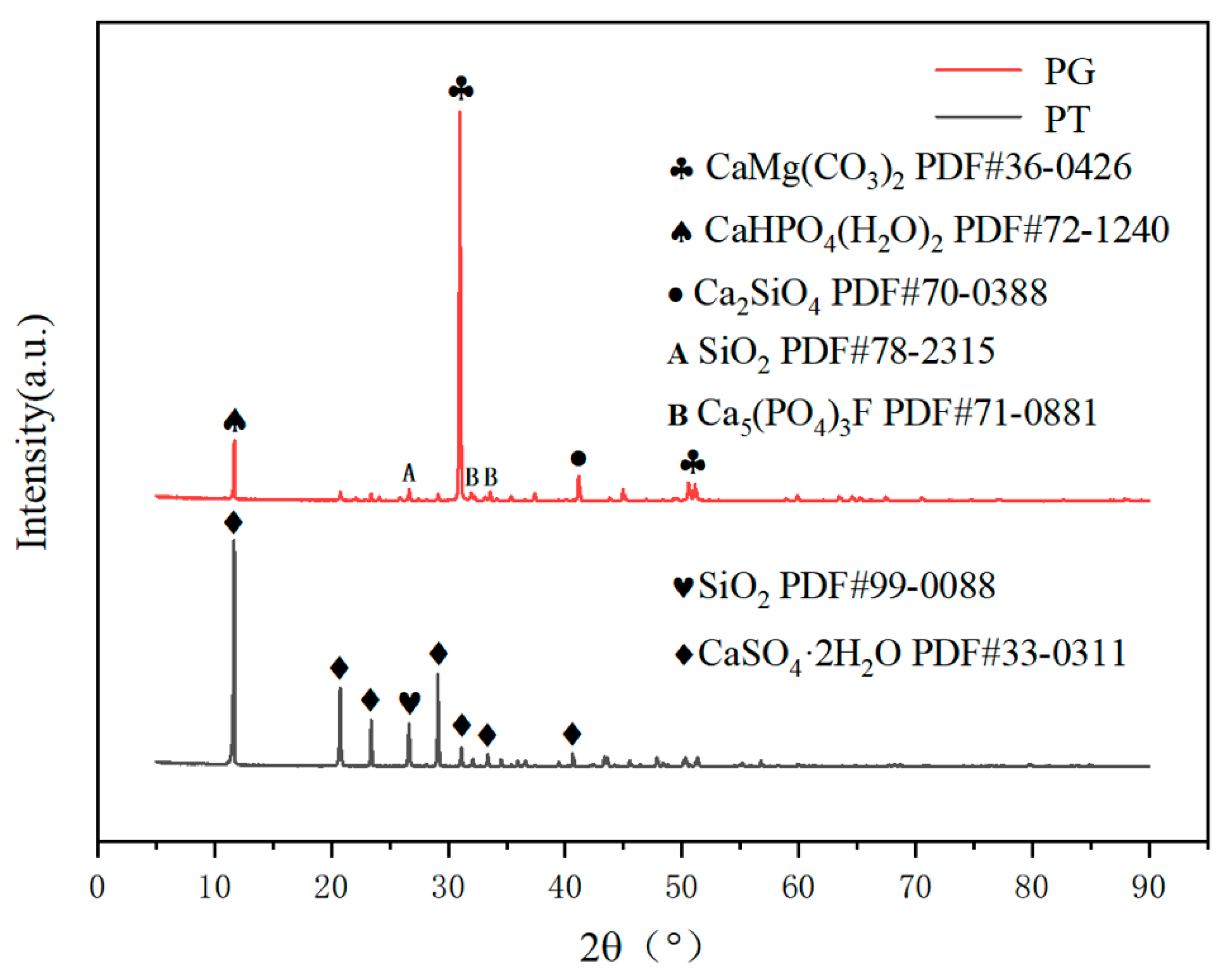
Figure 1, XRD((XRD; D8 Advance, Bruker AXS GmbH, Karlsruhe, Germany)patterns indicated that the primary phases in PG were SiO
2 and CaSO
4. For PT, the contents of SiO
2 and Al
2O
3 were 5.28% and 0.49%, respectively, classifying it as a typical “high-silicon and low-aluminum” hazardous waste that is difficult to use directly for geopolymer synthesis. XRD patterns revealed that the main components of PT were dihydrate gypsum, anhydrite, and iron oxide, which can be modified to exhibit cementitious properties. Rice husk biomass was used, with proximate analysis showing volatile matter ~65%, ash content ~15%, and low inherent halogen and heavy metal content.
2.2. Experimental Procedure
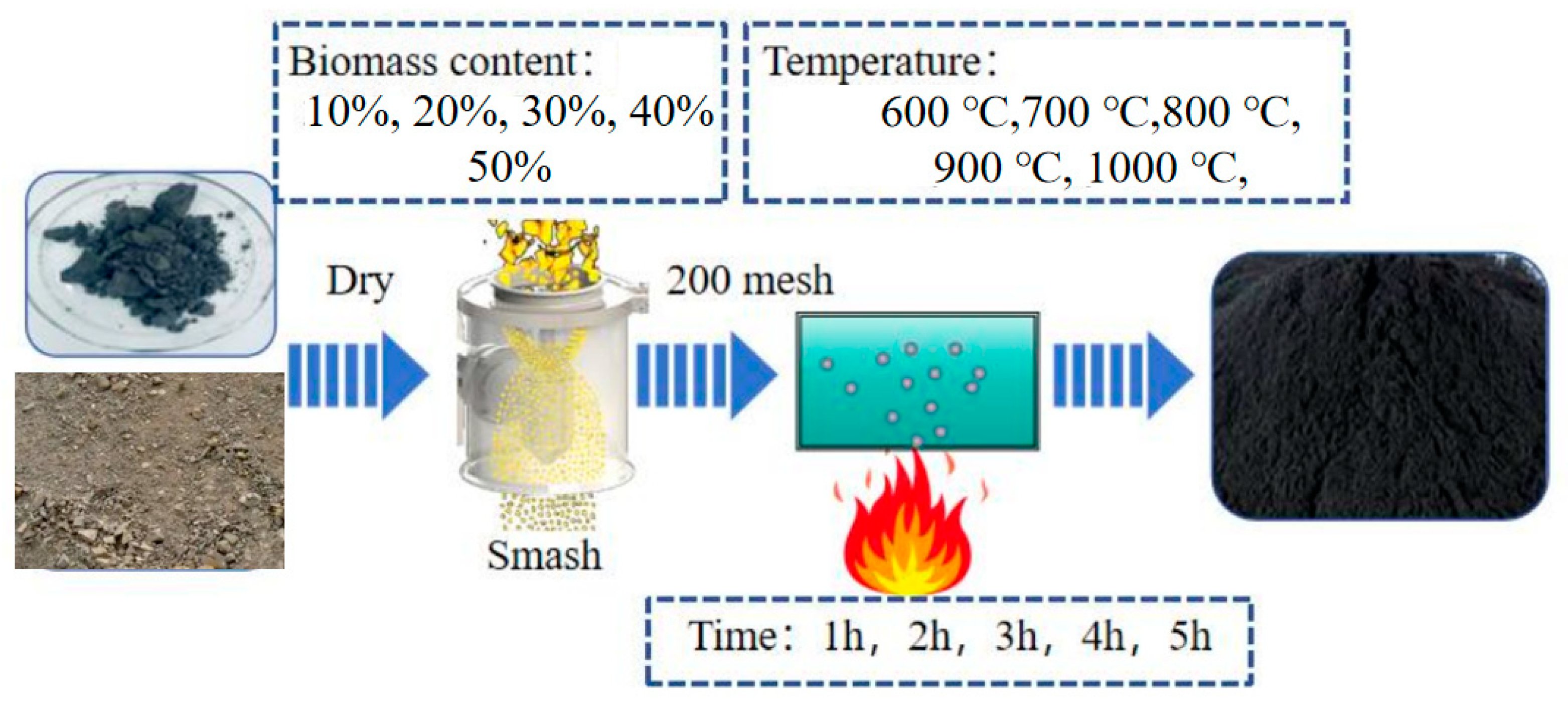
The main experimental steps for the co-pyrolysis technology aimed at preparing soil-like materials from PG and PT are illustrated in
Figure 2. The PG and PT were dried and passed through a 60-mesh standard sieve. They were then mixed at specific mass ratios. The mixtures were placed in a tube furnace under a nitrogen atmosphere to investigate the effects of pyrolysis temperature and duration on the transformation of different chemical forms of fluorine and phosphorus within the samples.
2.3. Analytical Methods
Sequential Extraction Procedure for Fluorine Speciation:
Water-soluble Fluorine: A 2 g sample was placed in a centrifuge tube. 20 mL of high-purity water was added using a pipette. The tube was gently shaken to fully wet the sample, then oscillated at 70 °C for 0.5 h.
Exchangeable Fluorine (Ex-F): To the residue from step (1) after centrifugation, 20 mL of 1 mol/L MgCl2 solution was added. The mixture was oscillated at 25 °C for 1 h and then filtered through a 0.45 μm membrane.
Fe/Mn Oxide-bound Fluorine: To the residue from step (2) after centrifugation, 10 mL of 0.04 mol/L MgCl2 and 10 mL of 20% (v/v) HAC (acetic acid) were added. The mixture was oscillated in a 60 °C water bath for 1 h and then filtered through a 0.45 μm membrane.
Organically Bound Fluorine: To the residue from step (3) after centrifugation, 6 mL of 0.02 mol/L HNO3, 6 mL of 30% H2O2, and 8 mL of 3.2 mol/L NH4Ac (ammonium acetate) were added. The mixture was oscillated in a 25 °C water bath for 0.5 h and then filtered through a 0.45 μm membrane.
Residual Fluorine: The residual fluorine content was calculated by subtracting the sum of fluorine concentrations from the first four steps from the total fluorine concentration.
After each extraction step, the solid residue was washed once with 20 mL of ultrapure water by oscillating at 25 °C and 243 r/min for 30 min, followed by centrifugation at 5000 r/min for 5 min, in preparation for the next extraction step. After each leaching step, the mixture was centrifuged at 5000 r/min for 10 min. A 10 mL aliquot of the supernatant was then precisely collected for measurement, following the same analytical procedure as for total fluorine determination.
Determination of Soil Phosphorus Content: Based on the Standards, Measurements and Testing (SMT) protocol, phosphorus was fractionated into five forms: total phosphorus (TP), inorganic phosphorus (IP), organic phosphorus (OP), apatite inorganic phosphorus (AP), and non-apatite inorganic phosphorus (NAIP). The sequential extraction steps are as follows:
Inorganic Phosphorus (IP): 0.2 g of sample was weighed into a centrifuge tube. 20 mL of 1 mol/L HCl was added, and the mixture was oscillated on a horizontal shaker at room temperature for 16 h. The supernatant was collected after centrifugation for analysis.
Organic Phosphorus (OP): The solid residue from the IP extraction was calcined at 450 °C for 3 h. It was then extracted with 20 mL of 1 mol/L HCl at room temperature for 16 h.
Apatite Inorganic Phosphorus (AP): 0.2 g of sample was weighed into a centrifuge tube. 20 mL of 1 mol/L NaOH was added, and the mixture was oscillated at room temperature for 16 h. After centrifugation, 10 mL of the supernatant was collected, mixed with 4 mL of 3.5 mol/L HCl, and oscillated at room temperature for another 16 h. The final supernatant was collected after centrifugation for analysis.
Non-apatite Inorganic Phosphorus (NAIP): The solid residue from the AP extraction was extracted with 20 mL of 1 mol/L HCl for 16 h. The supernatant was collected after centrifugation for analysis.
The phosphorus concentration in all extracts was determined following the Chinese National Standard GB 11893-89 (“Water Quality-Determination of Total Phosphorus-Ammonium Molybdate Spectrophotometric Method”) using an ultraviolet-visible spectrophotometer.
3. Results and Discussion
3.1. Raw Material Characteristics and Initial Environmental Risk
The initial leaching toxicity of phosphogypsum (PG) and phosphorus tailings (PT) is a critical factor for their long-term stockpiling and a primary indicator for their resource utilization. Prior to the co-pyrolysis treatment, an analysis of their leaching toxicity and the chemical speciation of major toxic and harmful elements was conducted, as detailed in
Table 3.
As shown in the table, fluorine in PG exists predominantly in the water-soluble (39.14%) and Fe/Mn oxide-bound (36.14%) forms, with a total fluorine content as high as 3621.55 mg/kg. This high proportion of water-soluble fluoride (F−) constitutes the primary source of its environmental toxicity, as it is highly susceptible to migration with precipitation or leachate, potentially contaminating groundwater. In contrast, fluorine in PT is significantly more stable, with the Fe/Mn oxide-bound fraction accounting for over 65.32% and the water-soluble fraction only 8.37%. Fe/Mn oxide-bound fluorine is typically adsorbed or co-precipitated within or on the surfaces of iron (hydr)oxides or manganese oxides and is not easily released under natural pH conditions. The speciation analysis of phosphorus reveals that in PG, the more active inorganic phosphorus (including water-soluble and partly weakly bound forms) accounts for over 42% of the total phosphorus. In PT, however, more than 57% of the phosphorus exists in the stable form of apatite inorganic phosphorus. This highlights the fundamental difference between the two wastes: PG is a residue from an acidic industrial process, containing a significant amount of incompletely recovered, highly active soluble phosphorus. PT, on the other hand, is a residual from physical ore beneficiation, where phosphorus is predominantly locked within stable mineral lattices. Therefore, combining the two materials aims to utilize the stable components in PT (such as iron/aluminum oxides and calcareous minerals) and their potential reactivity under thermal treatment to immobilize the mobile contaminants in PG, thereby achieving the goal of “treating waste with waste”.
3.2. Effect of Mixing Ratio on Immobilization
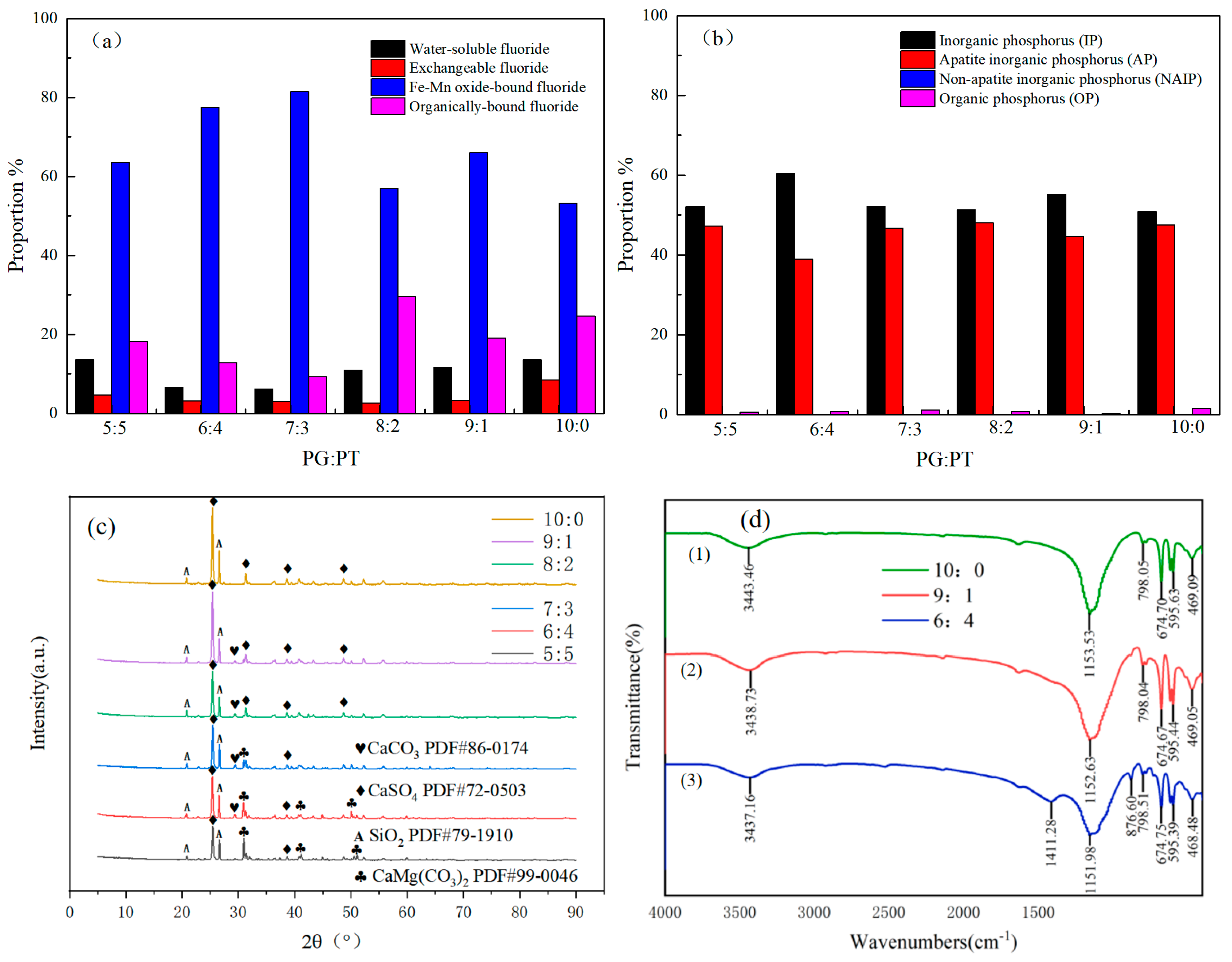
Following co-pyrolysis with different phosphogypsum to phosphorus tailings ratios (PG:PT), a fundamental transformation occurred in the fluorine speciation distribution within the products, as detailed in the corresponding
Figure 3. With an increasing proportion of PT (from 10:0 to 5:5), the most significant trend observed was the sharp decline in the combined proportion of water-soluble and exchangeable fluorine (collectively termed “active fluorine”), accompanied by a substantial increase in the Fe/Mn oxide-bound fluorine fraction. At a PG:PT ratio of 6:4, the total active fluorine decreased to below 10%, while the Fe/Mn oxide-bound fraction rose to nearly 80%. This indicates that the addition of PT is not merely a dilution effect but rather triggers a potent chemical immobilization process.
Changes in phosphorus speciation further corroborate this mechanism. The data show that with an increasing PT ratio, the proportion of apatite inorganic phosphorus within the total phosphorus increased significantly, while the proportion of the more active inorganic phosphorus decreased. This directly demonstrates that co-pyrolysis promotes the conversion of non-stable phosphorus phases into apatite-like structures. This process occurs synergistically with fluorine immobilization, sharing calcium and phosphate sources.
XRD analysis supports these findings. With an increasing PT ratio, the diffraction peaks corresponding to CaSO
4 gradually weakened. In samples with PG:PT ratios of 6:4 and 7:3, distinct characteristic peaks of fluorapatite (Ca
5(PO
4)
3F) emerged. This represents a hallmark stabilization pathway. Soluble phosphates, Ca
2+, and F
− from PG react under thermal activation to form Ca
5(PO
4)
3F. The formation of this mineral permanently incorporates fluorine into a stable crystal lattice, constituting the primary mineralogical mechanism for the conversion of active fluorine into stable forms [
20].
3.3. Effect of Pyrolysis Temperature on Immobilization
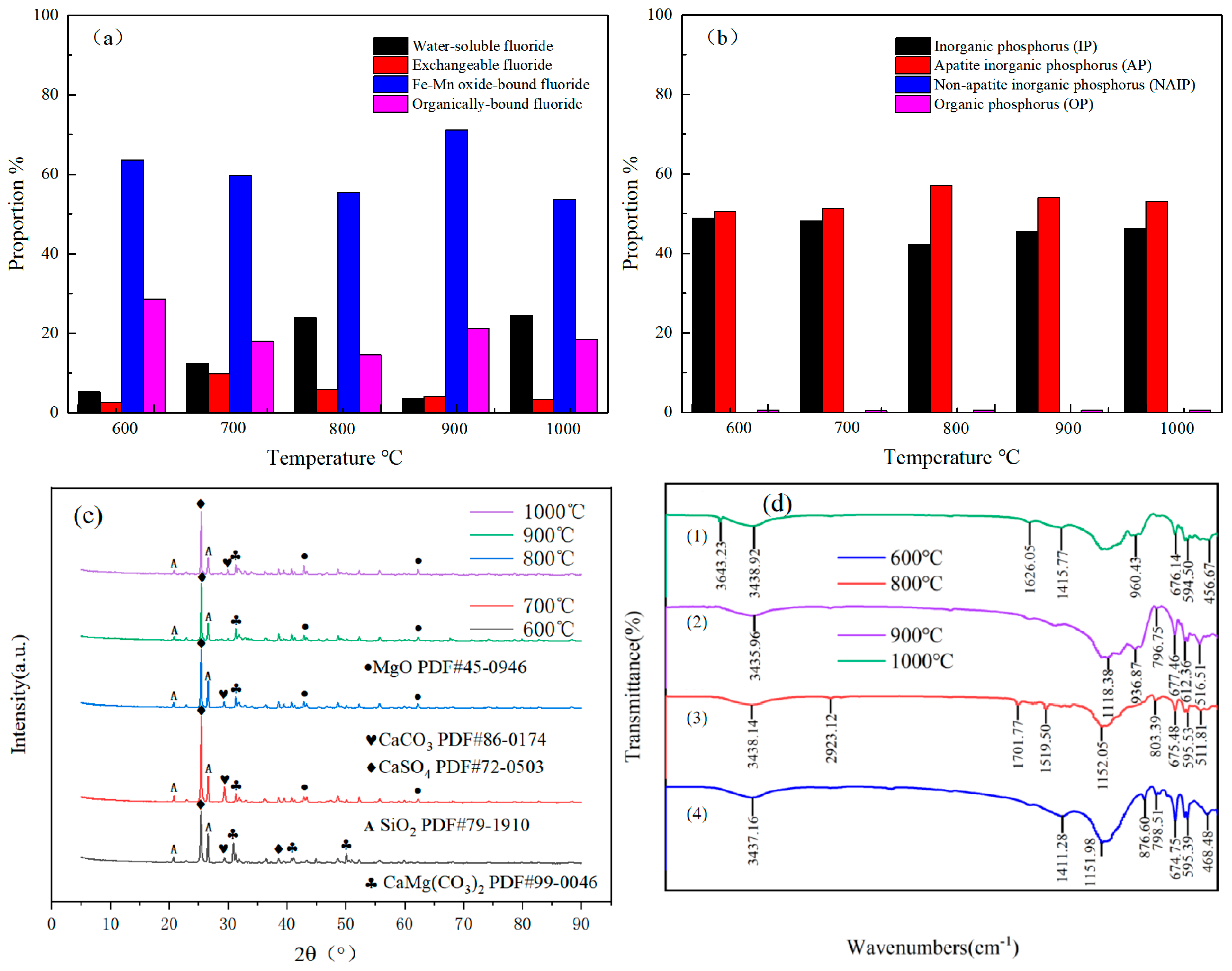
Temperature is a critical factor driving solid-phase reactions and phase transformations. The influence of different pyrolysis temperatures on the immobilization efficiency was investigated under a fixed PG:PT ratio of 6:4, with the results presented in
Figure 4.
As illustrated in the figures, the process can be described in two key temperature ranges: 600–800 °C: Activation and Reaction Stage. Within this temperature range, PG undergoes gradual dehydration to anhydrite (CaSO
4), leading to an increase in specific surface area and reactivity. Concurrently, the crystal structure of iron/aluminum oxides in PT begins to relax, providing more adsorption sites. More importantly, this temperature range is sufficient to initiate the synthesis reaction of fluorapatite without causing the decomposition of certain intermediate products. The XRD patterns indicate that at 600 °C, a small amount of the intermediate phase CaSO
4·0.5H
2O remains in the product. Furthermore, the diffraction peaks of fluorapatite are broadened and of low intensity, suggesting incomplete crystallization. When the temperature is increased to 800 °C, the CaSO
4 diffraction peaks become sharp, and the fluorapatite peaks reach their maximum intensity with sharp profiles, indicating well-developed crystallinity. Upon further increasing the temperature to 900 °C, the intensity of the fluorapatite peaks slightly decreases, and new diffraction peaks corresponding to phases such as calcium silicate (Ca
2SiO
4) appear. Notably, CaSO
4 may partially decompose into CaO and SO
3 at high temperatures (>900 °C) [
21]. The strong alkalinity of the resulting CaO could potentially remobilize some of the immobilized fluorine, causing it to exist in the form of CaF
2, whose solubility under certain pH conditions is higher than that of fluorapatite. Moreover, excess free CaO can hydrate to form Ca(OH)
2 upon contact with water, altering the pH of the product matrix and potentially affecting its long-term stability. Concurrently, excessive sintering reduces the specific surface area and porosity of the material. This may encapsulate some incompletely reacted active fluorine, leading to its slow release during long-term hydration processes [
22]. Therefore, controlling the immobilization temperature at approximately 800 °C yields the most favorable results.
3.4. Effect of Pyrolysis Duration on Immobilization
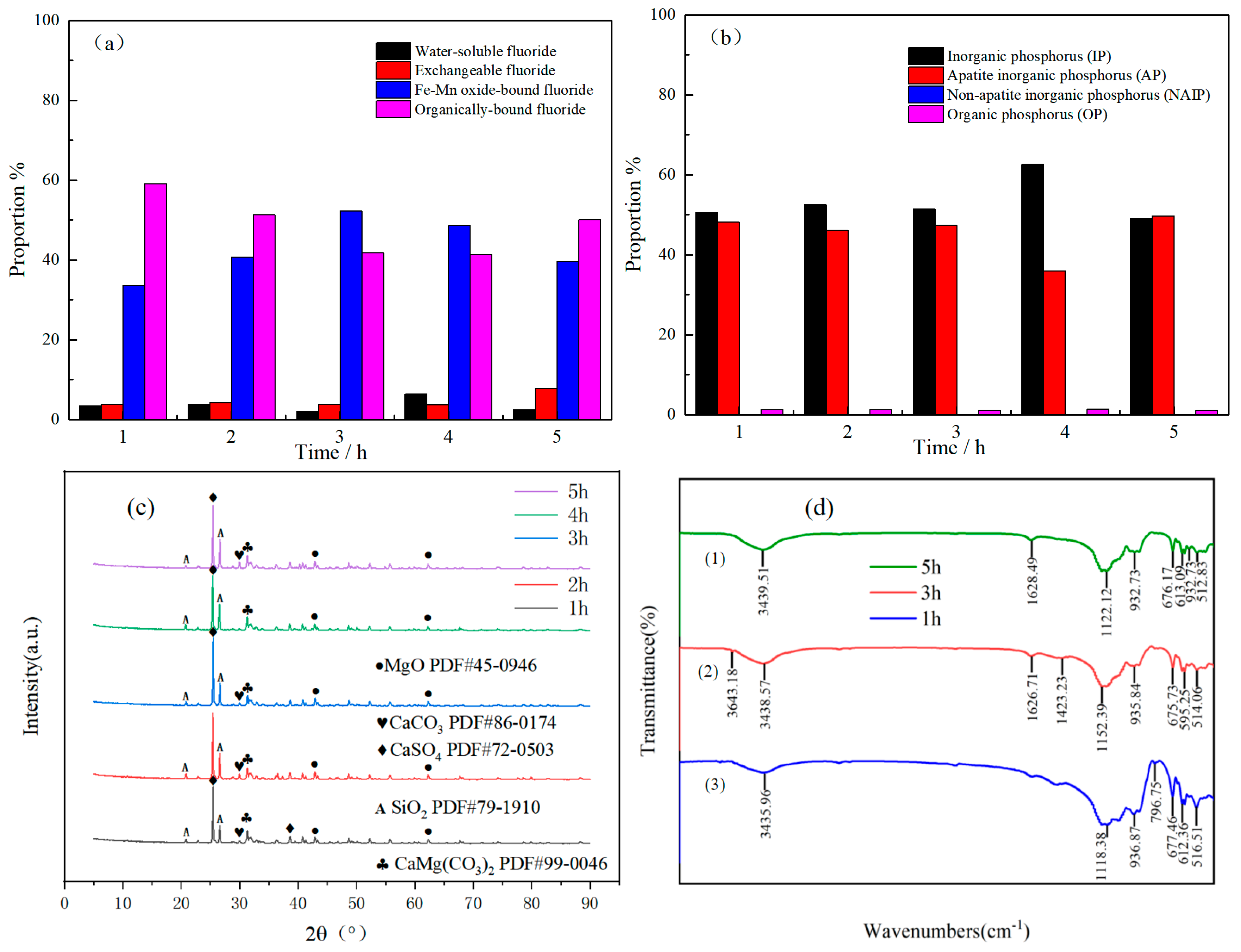
Under the optimal conditions of a co-pyrolysis temperature of 800 °C and a PG:PT ratio of 6:4, the influence of different co-pyrolysis durations on the immobilization effectiveness was investigated, with the results presented in
Figure 5.
As shown in the figure, extending the pyrolysis duration from 1 h to 3–4 h significantly reduces the proportion of water-soluble fluorine in the product from approximately 4% to below 2%, while the proportion of Fe/Mn oxide-bound fluorine steadily increases from about 33% to over 50%. This trend clearly indicates that sufficient residence time is an essential prerequisite for achieving deep immobilization of the contaminants. In the initial stage (<1 h), reactions primarily occur at the contact interfaces between PG and PT, where the most active sites engage first, immobilizing a portion of fluorine and phosphorus through surface adsorption and preliminary precipitation reactions. In the intermediate stage (2–4 h), diffusion processes proceed sufficiently, allowing for the growth and coarsening (i.e., improved crystallinity) of fluorapatite crystals. Concurrently, the specific adsorption of fluorine onto iron/aluminum oxides tends to reach saturation. These processes facilitate the thorough conversion of active fluorine into stable forms [
23]. When the pyrolysis duration is extended to 5 h, the data do not show further improvement in immobilization effectiveness. Instead, the total fluorine content exhibits a slight increase, and the speciation distribution shows fluctuations. This suggests that the system may have reached thermodynamic equilibrium, and further prolonging the duration only increases energy consumption without providing additional benefits for immobilization. Therefore, controlling the pyrolysis duration to 2–3 h yields the most effective immobilization results. Corroborated by XRD analysis, at 800 °C, extending the pyrolysis time from 1 h to 3 h leads to a significant enhancement in the diffraction peak intensities of both fluorapatite and CaSO
4, accompanied by a narrowing of their full width at half maximum (FWHM). This indicates that a longer reaction time favors crystal growth and perfection, thereby enhancing crystallinity and subsequently strengthening the lattice-fixation capacity for P and F. When the duration is further extended to 5 h, the phase composition shows no significant change compared to that at 3 h, suggesting that the primary reactions are substantially complete within 3 h. Continuing the pyrolysis beyond this point offers limited improvement to the phase constitution.
3.5. Effect of Biomass Addition on Immobilization
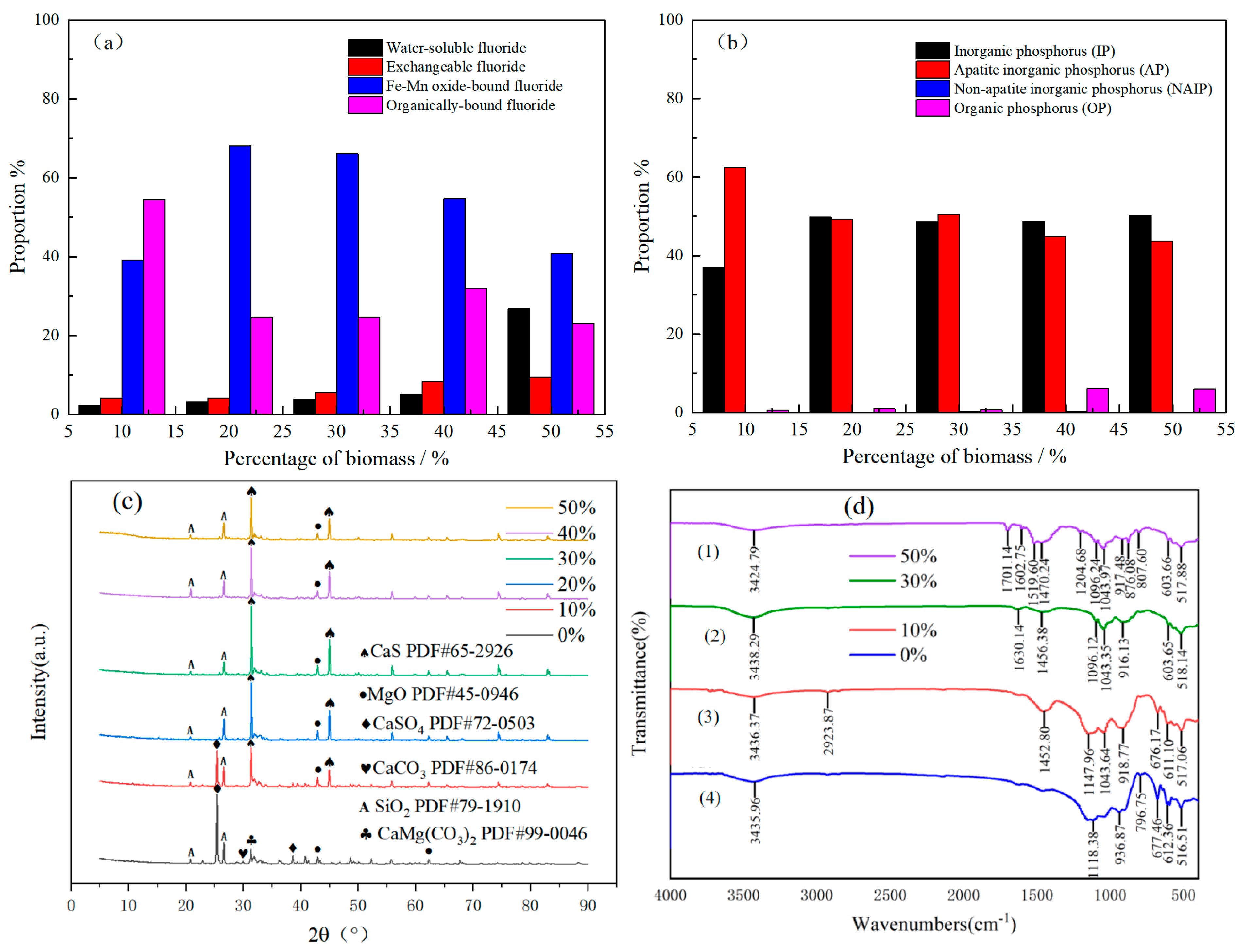
Under the optimal conditions of a co-pyrolysis temperature of 800 °C, duration of 2–3 h, and a PG:PT ratio of 6:4, the influence of different biomass addition ratios on immobilization effectiveness was investigated, with the results presented in
Figure 6.
As shown in the figure, when the biomass addition ratio was 20%–30%, the immobilization effectiveness reached its optimum. The proportion of water-soluble fluorine decreased to approximately 3%, while the proportion of Fe/Mn oxide-bound fluorine increased to over 68%. However, when the addition ratio was increased to 50%, the proportion of water-soluble fluorine rebounded sharply to about 30%, indicating a failure in immobilization. This phenomenon reveals the dual role of biomass in the system: an optimizer at appropriate levels and a disruptor in excess. During oxygen-limited pyrolysis, biomass undergoes cracking and carbonization, generating reducing gases such as CO, H2, and CH4. These gases can partially reduce the iron oxides present in PT. The resulting reduced iron compounds (e.g., magnetite, wüstite) or their oxyhydroxides typically exhibit higher surface activity and greater affinity for anions (e.g., F−, PO43−) compared to their ferric (Fe3+) oxide precursors, thereby enhancing chemical adsorption and co-precipitation capacity.
Concurrently, the carbonization of biomass yields biochar characterized by a highly porous structure and an extensive specific surface area. This not only provides a valuable porous framework for the entire matrix, improving essential soil-like properties such as aeration and water retention, but the abundant oxygen-containing functional groups (e.g., -COOH, -OH, -C=O) on the biochar surface can also directly adsorb and immobilize a portion of soluble fluoride and phosphate ions through mechanisms such as electrostatic attraction, hydrogen bonding, or surface complexation. Upon the addition of biomass, new absorption bands emerge in the spectra at approximately ~1580 cm−1 and ~1380 cm−1. These are attributed to the C=C vibration of the aromatic skeleton in biochar and the C=O vibration of carboxylate or carbonate groups, respectively. At the optimal addition ratio (20%), these carbonaceous characteristic peaks coexist distinctly with the characteristic peaks of the mineral phases. However, when biomass is added excessively (50%), the carbonaceous signals become significantly intensified, while the characteristic peaks of PO43− (e.g., at ~1030 cm−1) are relatively weakened and broadened. This suggests that excessive carbonaceous material may cover the mineral surfaces or form amorphous complexes, thereby hindering the formation of a well-ordered apatite structure.
4. Mechanism of Immobilization
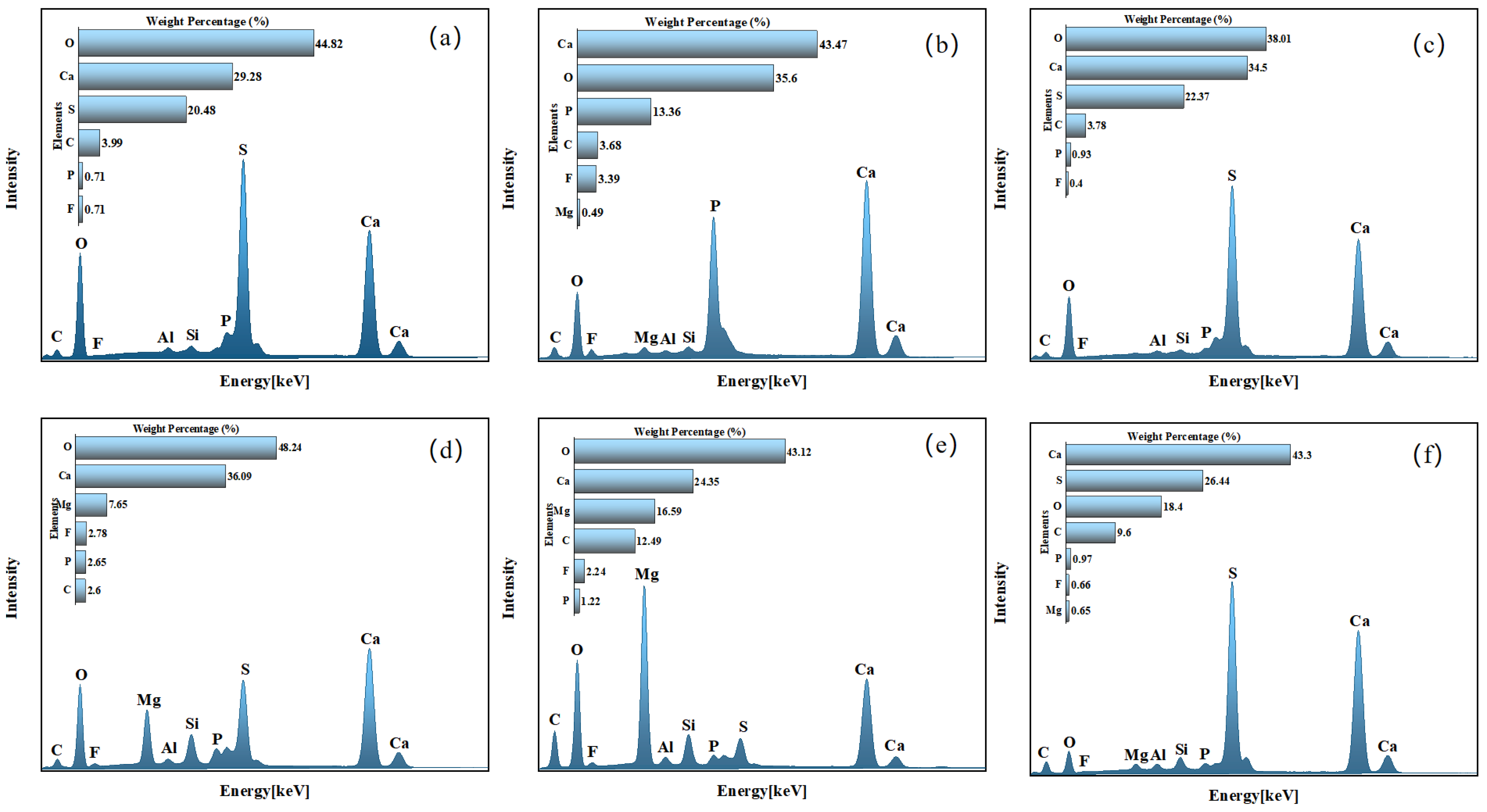
SEM analysis was conducted on the products obtained from co-pyrolysis under various conditions, as shown in
Figure 7. Under the optimal PG:PT ratio of 6:4, the platy structure of PG was tightly bonded with the granular material of PT, forming more dense and uniform aggregates with indistinct interfaces. This observation aligns with mechanisms involving chemical adsorption, co-precipitation, and initial-stage liquid phase sintering. After pyrolysis at 800 °C, the sample surface exhibited distinct features of melting and re-solidification. In some areas, fine, nascent spherical or short-columnar microcrystals (suspected to be initial fluorapatite) were embedded within a smooth, vitreous matrix. This corresponds to the synergy between fluorapatite crystal growth and encapsulation by an amorphous silicate network. With a further increase in temperature, the morphology became more densified with reduced porosity, showing clear sintering necks and particle fusion. This excessive sintering likely reduced active sites and potentially increased the risk of fluorine volatilization, correlating with the decreased effectiveness observed in the leaching data at higher temperatures. With the addition of 30% biomass, the sample clearly displayed a porous biochar framework interwoven and encasing mineral particles, forming a typical “organic-inorganic composite” structure. This porous architecture is conducive to adsorption and provides reactive space. However, when the biomass addition was excessive (50%), the surplus carbon and porous structure may have compromised the overall skeletal strength.
Combined with previous FTIR analyses under different conditions, the persistent and stable PO
43− characteristic peaks at 1030 cm
−1 and 560 cm
−1 reinforced the conclusion of widespread apatite structure formation. The broad, strong absorption band near 1000 cm
−1 (Si-O-Si/Al) was significantly enhanced in the co-pyrolysis products, confirming that the silicon–aluminum components derived from PT participated in forming an amorphous aluminosilicate network. This provides evidence at the chemical bonding level for physical encapsulation. In the spectra of samples with added biomass, characteristic peaks such as those near 1600 cm
−1 (aromatic carbon) and 1400 cm
−1 (carboxylate/carbonate) were observed, directly confirming the presence of biochar and indicating the potential complexation role of its surface functional groups in contaminant immobilization [
24].
Based on the analyses above, the fundamental processes for the immobilization of contaminants such as phosphorus and fluorine during the co-pyrolysis of PG and PT can be summarized as follows.
Under thermal activation, soluble phosphates and fluoride ions from PG react with calcium sources provided by PT and calcium ions released from PG itself, forming thermodynamically stable fluorapatite. This is the most decisive mechanism for reducing the leaching toxicity of fluorine and phosphorus. The primary reaction involved is shown below.
(Ca2+ sources: CaSO4·2H2O, CaSO4 from PG; CaO from PT)
(PO43− sources: soluble phosphates in PG; decomposition of apatite precursors in PT)
Iron and aluminum oxides (Fe
2O
3, Al
2O
3) present in PT exhibit enhanced surface activity after thermal treatment, forming inner-sphere surface complexes with F
− via specific adsorption. The introduction of biochar further provides abundant oxygen-containing functional groups as adsorption sites. The primary interactions are represented below.
In addition, SiO2 and Al2O3 from PT partially melt at the co-pyrolysis temperature, forming an amorphous aluminosilicate glassy or gel phase. This phase acts as a binder, encapsulating and cementing the generated fluorapatite microcrystals, unreacted particles, and other products into a dense microstructure, thereby physically hindering contact between the contaminants and external aqueous solutions.
5. Conclusions
Guided by the core principle of “treating waste with waste,” this study systematically investigated the feasibility, process optimization, and contaminant immobilization mechanisms involved in the co-pyrolysis of phosphogypsum (PG) and phosphorus tailings (PT) for the preparation of artificial planting soil. The aim was to transform two typical phosphorus chemical industry solid wastes into an ecological restoration substrate with environmental safety, favorable physical structure, and nutrient potential, thereby opening a new pathway for the large-scale and value-added resource utilization of PG. The main conclusions are as follows:
The complementarity of the raw materials forms the basis for synergistic immobilization. PG is rich in reactive calcium, sulfur, and highly mobile contaminants such as phosphorus and fluorine, while PT contains stable mineral phases (e.g., dolomite, quartz, apatite) and iron/aluminum oxides. Their combination utilizes the former as a source of pollutants to be treated along with some nutrients, while the latter provides the stable skeleton, phosphate sources, and adsorptive active components required for immobilization.
Process conditions have a decisive impact on the immobilization effectiveness. Through single-factor experiments, the optimal co-pyrolysis parameters were determined: a PG to PT mass ratio of 6:4, a pyrolysis temperature of 800 °C, a pyrolysis duration of 3 h, and a biomass addition of 20%. Under these conditions, the conversion of active phosphorus and fluorine into stable forms in the product was most thorough, effectively suppressing their environmental leaching risk. Simultaneously, the product developed a porous aggregated structure conducive to plant growth.
Comprehensive analyses using XRD, FT-IR, and SEM revealed that the core mechanisms involve synergistic effects including chemical fixation, physicochemical adsorption and encapsulation, and physical structure and microenvironment optimization. Specifically, (i) thermodynamically stable fluorapatite is formed through chemical reactions; (ii) contaminants are captured via surface complexation on iron/aluminum oxides and biochar; and (iii) a molten amorphous aluminosilicate network physically encapsulates pollutant microcrystals. These pathways collectively enhance the immobilization efficiency of soluble P and F.