Article

Adsorption of Quercetin on Mesoporous Silica Modified with Cationic Surfactants

1
Department of Inorganic and Analytical Chemistry, Faculty of Chemistry, Rzeszow University of Technology, 35-959 Rzeszow, Poland
2
Department of Water Purification and Protection, Faculty of Civil, Environmental Engineering and Architecture, Rzeszow University of Technology, 35-959 Rzeszow, Poland
*
Authors to whom correspondence should be addressed.
Minerals 2026, 16(3), 230; https://doi.org/10.3390/min16030230
Submission received: 7 January 2026 / Revised: 20 February 2026 / Accepted: 23 February 2026 / Published: 25 February 2026

Abstract

Ordered mesoporous silica (OMS) is widely investigated as a mineral carrier for bioactive compounds; however, the adsorption of poorly soluble flavonoids such as quercetin on unmodified silica remains limited, and the effect of cationic surfactant modification on adsorption performance is still insufficiently understood. This study evaluates the adsorption of quercetin on OMS modified with tetrabutylammonium bromide (TBA-Br) and hexadecyltrimethylammonium bromide (HDTMA-Br). Batch adsorption experiments were analyzed using various adsorption isotherm models, and the quality of fit was evaluated based on the coefficient of determination (R2) and the reduced chi-square statistic (χ2/DoF). The results indicated that quercetin adsorption followed a physisorption mechanism, predominantly governed by hydrophobic interactions and surface heterogeneity. Silica modified with HDTMA-Br exhibited a significantly higher maximum sorption capacity compared to OMS-TBA-Br, reaching gmax values of up to 5.2 mg·g−1, whereas the maximum adsorption for OMS-TBA-Br did not exceed 4.2 mg·g−1. The best fit of the experimental data was obtained for models accounting for the heterogeneous nature of the adsorbent surface, particularly the Tóth model. The obtained results clearly demonstrate that modification of OMS with a cationic surfactant possessing a long alkyl chain significantly enhances the adsorption capacity of silica toward quercetin, which is of considerable importance for the design of mineral carriers for bioactive compounds.

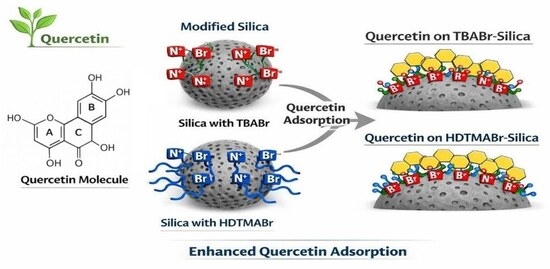
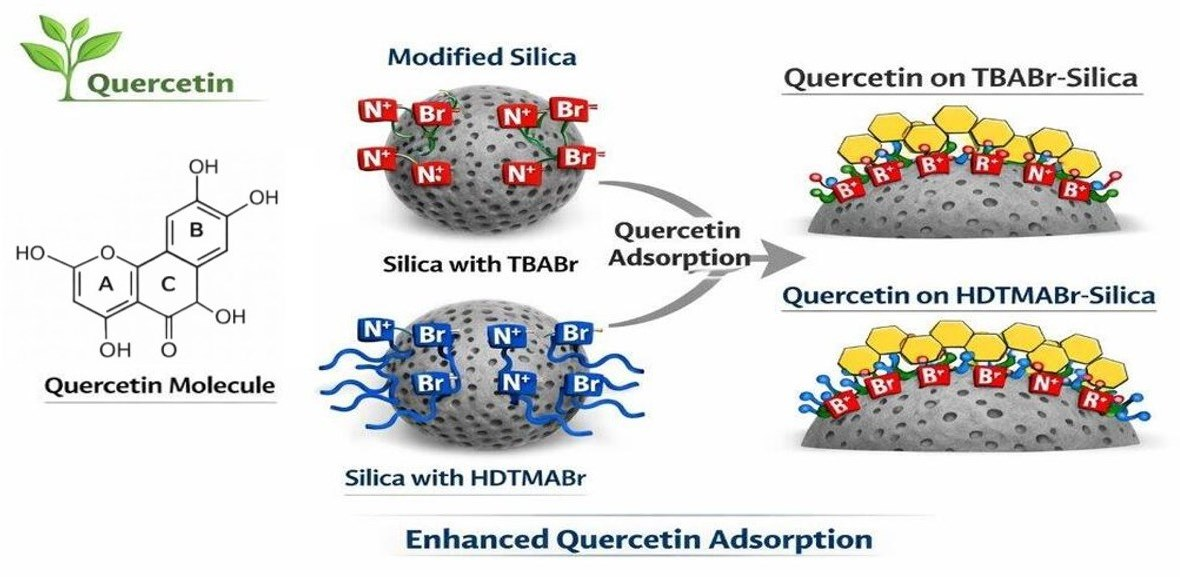
Graphical Abstract

1. Introduction

Silica-based mesoporous adsorbents constitute a broad class of porous materials characterized by a homogeneous pore structure in the mesoporous range. These materials exhibit high specific surface areas, tunable surface chemistry, and good hydrothermal stability, which makes them attractive candidates for adsorption-based applications [1,2,3]. A breakthrough in the synthesis of ordered mesoporous materials was the introduction of micellar aggregates as structure-directing agents (SDAs), enabling the preparation of mesoporous silica and aluminosilica families, including MCM-41 materials with a hexagonal arrangement of cylindrical pores and a highly ordered mesostructure [4]. In contrast to conventional zeolites, these materials possess significantly larger pore diameters, allowing for the adsorption of bulky molecules [1,2]. Despite the amorphous nature of their pore walls, MCM-41 exhibits a long-range periodic arrangement of pores [5]. Other representatives of mesoporous silica materials include cubic and lamellar structures such as MCM-48 and MCM-50, as well as Santa Barbara Amorphous (SBA) materials characterized by larger pores and thicker silica walls (SBA-11–16). Additional systems such as FSM-16, TUD-1, HMM-33, COK-12, FDU-2, and KIT-1 differ in pore architecture and synthesis routes, often involving surfactant-assisted modifications [6,7,8,9,10,11]. The synthesis of ordered mesoporous silica is typically based on the sol–gel process, comprising hydrolysis, condensation, and gelation reactions. In the case of ordered materials, acidic conditions are commonly employed to slow down condensation reactions and enable precise replication of the micellar template structure [1,12,13]. The combination of sol–gel chemistry with templating strategies allows the preparation of materials with uniform, ordered pores, adjustable pore sizes, and tailored surface functionalities. Surface functionalization introduces specific chemical groups that enhance adsorption efficiency, which is particularly important for pharmaceutical applications [1,14]. The effectiveness of such modifications has been confirmed in numerous studies on the adsorption of organic compounds, pharmaceuticals, and heavy metal ions on functionalized mesoporous silicas, where the introduction of amine, thiol or cationic surfactant groups led to a significant increase in the sorption capacity of the materials [15,16,17].
Currently, mesoporous silica materials are widely investigated in biomedical applications, especially as carriers for drugs and bioactive compounds, including plant-derived flavonoids [18]. Most studies focus on their use as nanocarriers due to their favorable properties, such as biocompatibility, high loading capacity, prevention of premature release, targeted delivery potential, and controlled release behavior, enabling effective local drug concentrations [9,19,20]. Quercetin, a bioactive flavonoid belonging to the vitamin P group, exhibits antioxidant, anti-inflammatory, and metal-chelating properties, as well as protective effects on capillary vessels [21,22,23,24]. Numerous studies have demonstrated its beneficial impact on human health, including blood pressure regulation, cardioprotective effects, modulation of immune responses in autoimmune diseases, and antimicrobial and antiviral activities [25]. Moreover, quercetin shows strong anticancer activity resulting from its multi-target interactions with cancer-related signaling pathways [10,26]. The main dietary sources of quercetin include onions, apples, wine, berries, and tea [10,27]. In recent years, attempts have been made to immobilize flavonoids on mesoporous silica materials in order to enhance their stability and bioavailability. Effective adsorption and encapsulation of quercetin have been demonstrated on functionalized SBA-15 and MCM-41 materials, as well as on silica modified with metal oxides or organic ligands, which resulted in improved retention and controlled release of the compound [28,29,30]. However, the adsorption of quercetin on silica surfaces in polar solvents such as water and ethanol is relatively low (<0.6 μmol·g−1), which limits its application in drug delivery systems [31,32]. Enhanced adsorption can be achieved through the formation of supramolecular complexes with biopolymers such as albumin or poly(vinylpyrrolidone), with adsorption efficiency strongly dependent on pH conditions [31,33,34].
To further improve quercetin immobilization on mesoporous silica surfaces, surfactant-assisted modification represents a promising alternative approach. Surfactants, composed of hydrophobic tails and polar head groups, can significantly alter surface properties and influence flavonoid adsorption from metanol solutions [35]. Therefore, this study aimed to investigate the adsorption behavior and interaction mechanisms of quercetin on ordered mesoporous silica modified with two cationic surfactants, tetrabutylammonium bromide (TBA-Br) and hexadecyltrimethylammonium bromide (HDTMA-Br). The novelty of this study lies in the direct comparison of the effect of the surfactant type on the physicochemical properties of the materials and the adsorption efficiency of quercetin, which allows for a better understanding of the relationship between surface functionalization and sorption capacity.

2. Materials and Methods

2.1. Point of Zero Charge Analysis of Ordered Mesoporous Silica

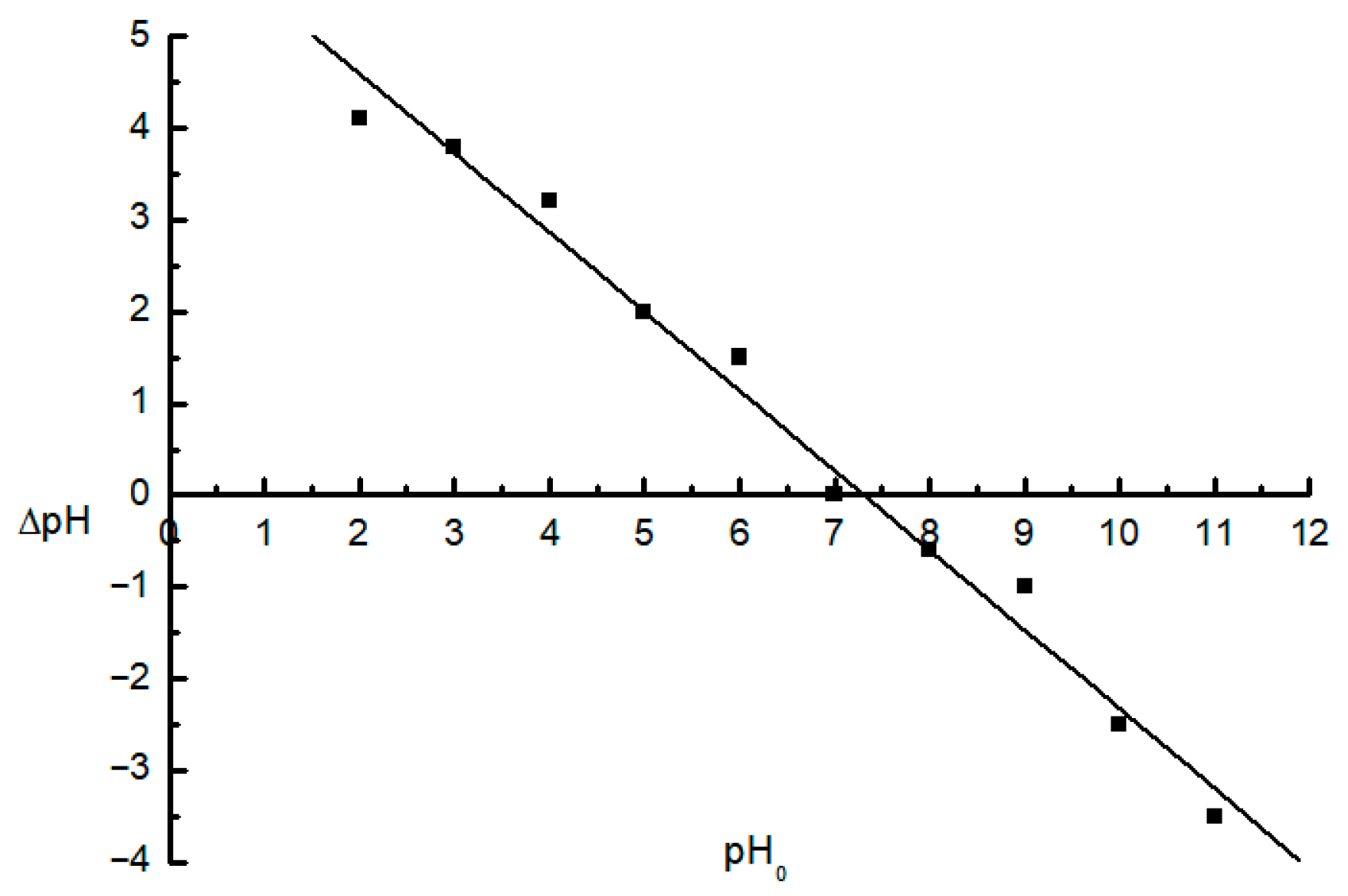
For the determination of the point of zero charge, 0.5 g of OMS was placed into each of ten Erlenmeyer flasks, followed by the addition of 50 mL of 0.1 M NaNO3 solution as an inert background electrolyte. The pH of the suspensions was adjusted in the range of 2–11 (at one-unit intervals) using 0.1 M HNO3 or 0.1 M NaOH. The samples were then shaken for 24 h at room temperature using a laboratory shaker (Elpin Plus, type 358A, Mińsk Mazowiecki, Poland). After equilibration, the final pH of each suspension was measured. Based on the initial (pH0) and final (pH1) values, the difference was calculated as ΔpH = pH1 − pH0, and the dependence of ΔpH on pH0 was plotted.

2.2. Preparation of Mesoporous Silica Modified with Cationic Surfactants

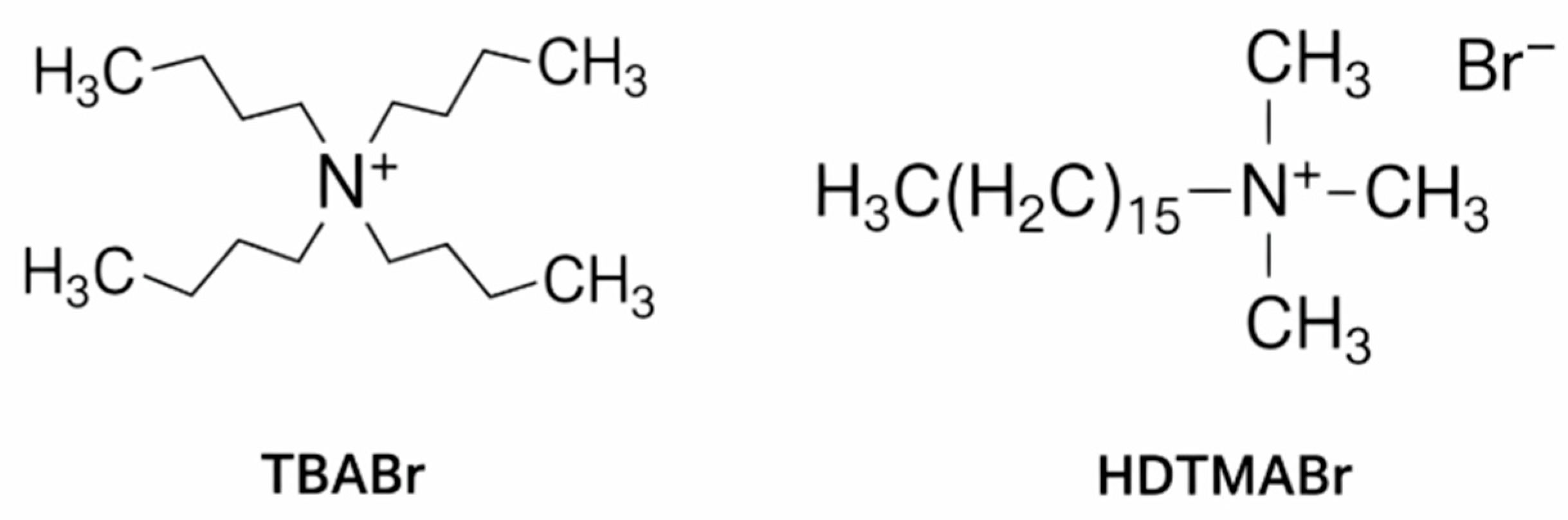
Mesoporous silica modified with tetrabutylammonium bromide (TBA-Br) and hexadecyltrimethylammonium bromide (HDTMA-Br) was used in this study (Figure 1). The silica samples were treated with aqueous solutions of the surfactants at concentrations of CTBA-Br = 2 mmol·L−1 or CHDTMA-Br = 8 mmol·L−1. Subsequently, the suspensions were heated on a hot plate at 60 °C for 4 h under continuous stirring. After 72 h, the samples were filtered, thoroughly washed with distilled water, and finally dried at 100 °C.

2.3. Spectroscopic Analysis of Quercetin in the Presence of Cationic Surfactants

To evaluate the effect of cationic surfactants—tetrabutylammonium bromide (TBA-Br) and hexadecyltrimethylammonium bromide (HDTMA-Br)—on the spectral properties of quercetin, UV–Vis absorption spectra were recorded using a JASCO V-670 spectrophotometer (JASCO Corporation, Tokyo, Japan). The measurements were performed before the adsorption experiments to determine whether the presence of surfactants modifies the absorption behavior of the flavonoid and whether the nature of these changes depends on the pH of the system.
Quercetin solutions were prepared in methanol and buffered to pH 3.0 and 7.5. Subsequently, defined amounts of TBA-Br or HDTMA-Br were added to the solutions, and the samples were subjected to spectral analysis. The obtained spectra were compared with those of control samples that did not contain surfactant. Changes in band intensity as well as possible shifts in absorption maxima were analyzed to assess the interactions between quercetin and the surfactants and to evaluate the influence of pH on these interactions.

2.4. Fourier Transform Infrared Spectroscopy (FT-IR)

FT-IR spectra were recorded using a Bruker FT-IR spectrophotometer (Bruker, Billerica, MA, USA) in the range of 400–4000 cm−1 with a resolution of 0.7 cm−1. FT-IR measurements were performed on samples suspended in KBr discs.

2.5. Batch Kinetic Study of Quercetin Adsorption on Surfactant-Modified Silica

The kinetics of quercetin adsorption on surfactant-modified silica were investigated using the batch method. Adsorption of the flavonoid from methanolic solutions was monitored at selected time intervals of 0.5, 1.0, 1.5, 2.0, 3.0, and 4.0 h. The experiments were conducted in a series of 100 cm3 glass conical flasks, each containing 20 cm3 of quercetin solution at a constant initial concentration of 6 mg·L−1.
The solutions were prepared in a phosphate buffer (pH 7–8) to ensure stable ionic conditions, with the ionic strength adjusted to I = 0.2 M (NaCl). Subsequently, 0.1 g of surfactant-modified silica was added to each flask, and the samples were subjected to continuous stirring at a controlled temperature of 20 ± 1 °C.
After completion of the adsorption process, the samples were centrifuged and filtered. The supernatants were then analyzed by UV–Vis spectrophotometry to determine the residual concentration of quercetin in solution. Based on the changes in concentration as a function of time, the amount of adsorbed quercetin and the adsorption kinetic parameters were calculated.

2.6. Adsorption Isotherm Studies of Quercetin on Surfactant-Modified Silica

A sorbent sample (0.1 g) was added to 20 cm3 of quercetin solution with concentrations ranging from 0.5 to 6 mg·L−1, prepared in a phosphate buffer maintaining a constant pH in the range of 7–8. The system was agitated for 2 h at room temperature (20 ± 1 °C) to ensure the attainment of adsorption equilibrium. After completion of the process, the sorbent was separated from the solution by centrifugation for 15 min at 3000 rpm. The concentration of quercetin in the supernatant after adsorption was determined using UV–Vis spectrophotometry.
The amount of quercetin adsorbed onto the surfactant-modified silica and the adsorption percentage were calculated using Equations (1) and (2). In these equations, q denotes the adsorption capacity (mg·g−1), C0 and Ce represent the initial and equilibrium concentrations of quercetin in solution (mg·L−1), V is the solution volume (L), and m is the mass of the dry adsorbent (g).
q = ( C 0 C e ) ·   V         m
A = ( C 0 C e ) C 0   ·   100 %
To quantitatively describe the adsorption equilibrium of quercetin on surfactant-modified silica, several adsorption isotherm models were applied, including the Freundlich, Langmuir, Redlich–Peterson, Jovanović, the extended Jovanović model, Tóth, Dubinin–Radushkevich, Temkin, BET, and Halsey. These models were selected to account for different adsorption mechanisms, such as monolayer and multilayer adsorption, surface heterogeneity, adsorbate–adsorbent interactions, and energetic heterogeneity of the adsorption sites. The applied models, together with their corresponding mathematical equations, are summarized in Table 1.
The fitting of adsorption isotherm models to the experimental data was evaluated using the reduced chi-square test (χ2/DoF), which provides a quantitative measure of the agreement between experimental values and those predicted by the models. This parameter was calculated as the sum of the squared differences between the experimentally determined and model-predicted amounts of sorbate in the solid phase, normalized by the model values and the number of degrees of freedom, according to Equation (3). In Equation (3), qe—denotes the experimentally determined amount of sorbate adsorbed in the solid phase (mg·g−1), qe.m—represents the amount of sorbate calculated from a given isotherm model (mg·g−1), and d is the number of degrees of freedom. Lower χ2/DoF values indicate a better fit of the model to the experimental data [45].
χ 2 / DoF = 1 d · i = 1 N q e i q e i , m   2 q e i , m
Adsorption isotherm plots were prepared using OriginPro 8 software, which also enabled the determination of model parameters and the evaluation of their goodness of fit to the experimental data. The fitting of adsorption isotherm models to the experimental points was assessed using the reduced chi-square test (χ2/DoF) and the coefficient of determination (R2).

2.7. Thermodynamics of Quercetin Adsorption on Surfactant-Modified Silica

The adsorption of quercetin was investigated over a temperature range of 293 to 333 K, utilizing TBA-Br and HDTMA-Br as adsorbents at an initial quercetin concentration of 6 mg·L−1. The temperature dependence of the adsorption capacity was evaluated through thermodynamic parameters: Gibbs free energy change (ΔG°), enthalpy change (ΔH°), and entropy change (ΔS°). These parameters were determined using the following equations:
Δ G °   =   RT   lnK L
l n K L = Δ H ° R   · 1 T + Δ S ° R
Δ G °   =   Δ H °     Δ S ° T
where KL is the Langmuir equilibrium constant (dimensionless), R is the universal gas constant (8.314 J·mol−1·K−1), and T is the absolute temperature (K). The values of ΔH° and ΔS° were calculated from the slope and intercept of the linear plot of ln KL versus 1/T, respectively.

3. Results and Discussion

3.1. Determination of the Point of Zero Charge (pHPZC) of OMS

Based on the ΔpH = f(pH0) relationship, the point of zero charge (pHPZC) of OMS was determined to be approximately 7.0 (Figure 2). Below this value, the silica surface is positively charged, whereas above pHPZC it becomes negatively charged due to the deprotonation of silanol groups (Si–OH → Si–O). Therefore, the modification with cationic surfactants (TBA-Br and HDTMA-Br) was carried out at pH values higher than the pHPZC to promote electrostatic attraction between the negatively charged surface and surfactant cations, enhancing their immobilization. These conditions favor higher surface coverage and more effective functionalization of the material.

3.2. Effect of Cationic Surfactants on the Electronic Absorption Spectra of Quercetin and FT-IR Characterization of Surface Modification

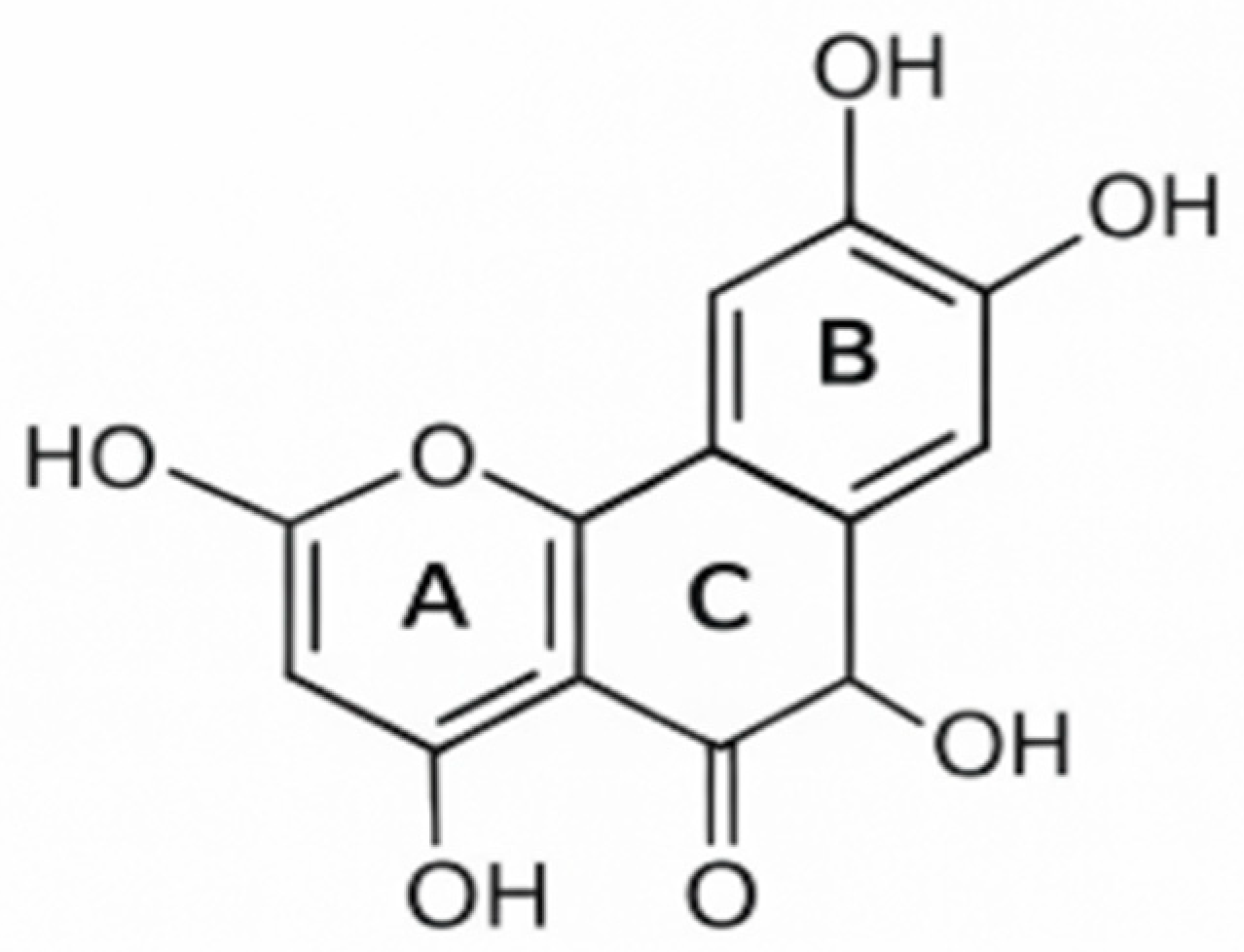
Surfactants exert a significant influence on the spectral properties of flavonoids, indicating the possibility of specific interactions between the components of the system. The changes observed in the absorption spectra of quercetin in the presence of cationic surfactants may be associated, among others, with electrostatic and hydrophobic interactions as well as with the formation of molecular associates, the nature of which depends on the pH conditions. In this study, the effects of tetrabutylammonium bromide (TBA-Br) and hexadecyltrimethylammonium bromide (HDTMA-Br) on the absorption properties of quercetin under different pH conditions were investigated. Quercetin, as a representative flavonoid, has a molecular structure composed of two aromatic rings (A and B) linked by a heterocyclic ring containing an oxygen atom (ring C), which promotes its ability to interact with surfactants and undergo conformational changes; a schematic representation of its structure is shown in Figure 3.
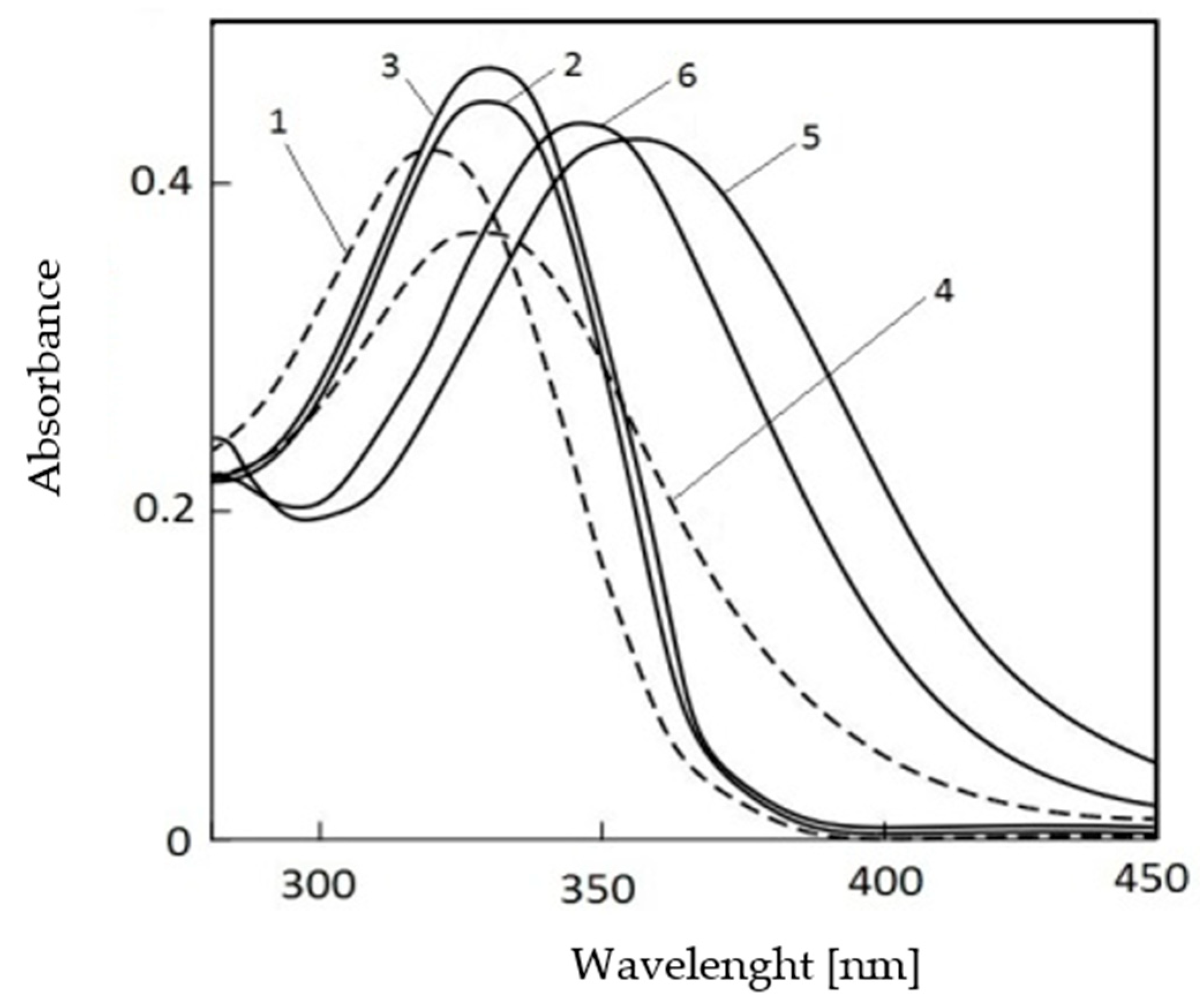
The absorption spectra of quercetin are characterized by the presence of an intense band in the 300–400 nm range, attributed to π→π* transitions within the cinnamoyl system involving rings B and C, which is typical of flavonoid structures [24]. Figure 4 presents the absorption spectra of quercetin recorded in solutions at pH 3.0 and 7.5, both in the absence of surfactant and in the presence of TBA-Br and HDTMA-Br. Increasing the pH of the solution from 3.0 to 7.5 results in a pronounced bathochromic shift of the absorption maximum accompanied by an increase in band intensity, indicating deprotonation of quercetin hydroxyl groups and the associated reorganization of the electronic structure of the molecule. The addition of cationic surfactants causes further modifications of the flavonoid absorption spectra, manifested by a shift of the absorption maximum toward longer wavelengths and changes in band intensity. These effects indicate the occurrence of interactions between quercetin molecules and surfactants, involving both electrostatic and hydrophobic interactions. The spectral changes are more pronounced in the presence of HDTMA-Br, which can be attributed to the presence of a long alkyl chain that promotes the formation of hydrophobic domains and more stable surfactant–flavonoid associates compared to the short-chain TBA-Br. The obtained results confirm that both the pH of the system and the structure of the cationic surfactant significantly affect the electronic properties of quercetin, which may directly determine its behavior in adsorption processes on the surface of surfactant-modified mesoporous silica. Similar bathochromic shifts of absorption bands have previously been observed in systems containing quercetin and various surfactants, such as anionic sodium dodecyl sulfate, cationic cetyltrimethylammonium bromide (CTA-Br), and nonionic Triton X-100, where these effects were attributed to interactions between the flavonoid and surfactant aggregates [46].
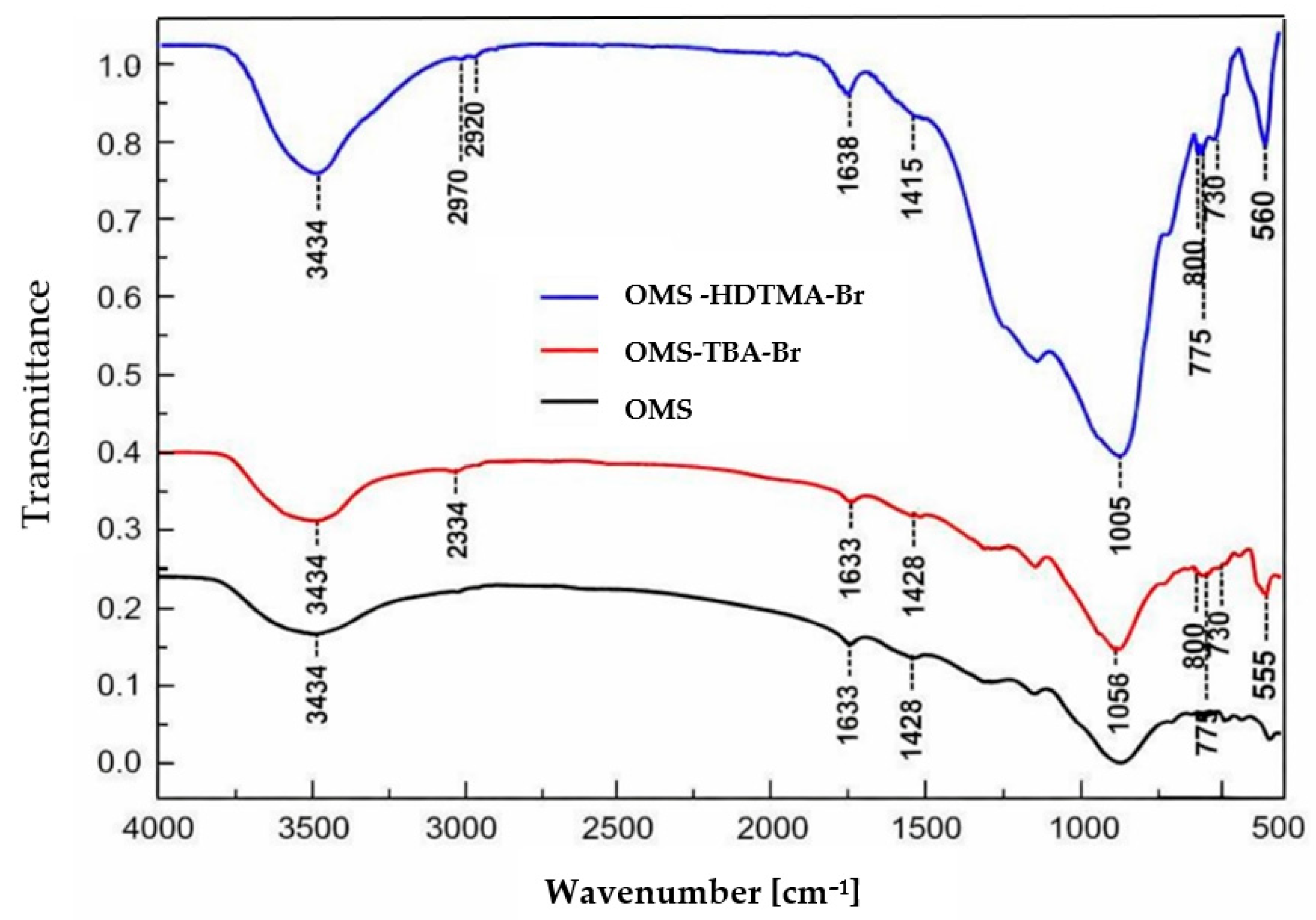
The FT-IR spectra of unmodified silica and samples modified with TBA-Br and HDTMA-Br are presented in Figure 5. All materials exhibit characteristic silica bands: a broad band at ~3434 cm−1 attributed to O–H stretching vibrations, a signal at 1633 cm−1 corresponding to H2O bending, and an intense band in the 1025–1050 cm−1 region assigned to asymmetric stretching of Si–O–Si bridges. Additional bands at approximately 800 and 560 cm−1 are related to symmetric stretching and bending vibrations of Si–O–Si bonds, respectively. After surfactant modification, new bands characteristic of alkyl groups appear at 2970–2920 cm−1 (C–H stretching) and 1470–1430 cm−1 (C–H bending), confirming the immobilization of organic species on the silica surface [47,48]. The higher intensity of hydrocarbon bands observed for HDTMA-Br compared to TBA-Br indicates greater surface coverage and more effective functionalization of the material.
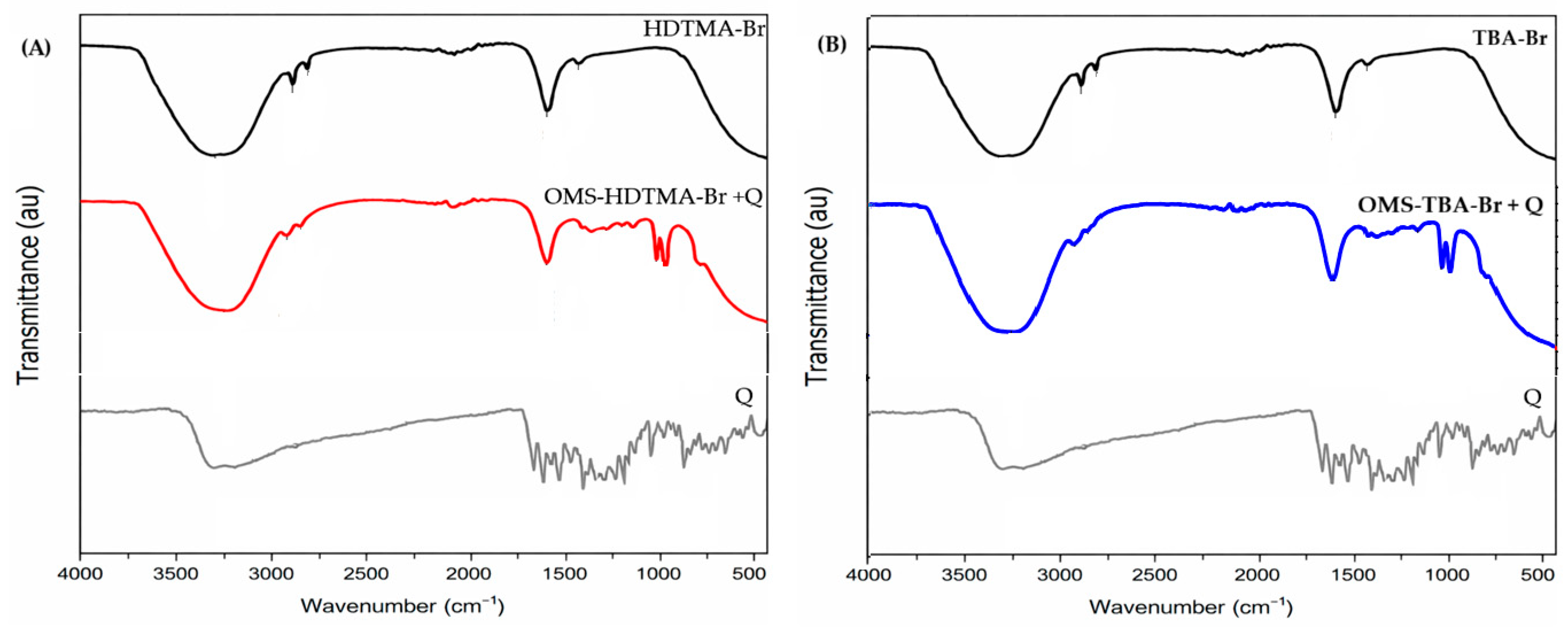
The characteristic FT-IR absorption spectra of pure HDTMA-Br and TBA-Br surfactants, as well as modified silica and quercetin, are summarized in Figure 6. The FT-IR spectrum of both surfactants has a strong and broad band at 3335 cm−1, which can be assigned to the stretching vibrations of the ammonium group. The bands at 2923 cm−1 and 2853 cm−1 are assigned to two different vibrations of the C–H band of the –CH2 group in the surfactants. The bands at 1636 cm−1 and 1473 cm−1 correspond to the asymmetric and symmetric stretching vibrations of N+–CH3 [49,50,51]. The spectrum of pure quercetin shows characteristic absorption bands associated with phenolic O–H stretching (3200–3500 cm−1), a distinct carbonyl (C=O) stretching band at approximately 1660 cm−1, and aromatic C=C stretching vibrations in the 1400–1600 cm−1 region. After adsorption, these bands are partially retained in the spectra of the modified silica samples, with slight changes in intensity and position, indicating interactions between quercetin functional groups and the adsorbent surface. These observations confirm the successful adsorption and immobilization of the flavonoid onto the modified silica.

3.3. Kinetics of Quercetin Adsorption on Surfactant-Modified Silica

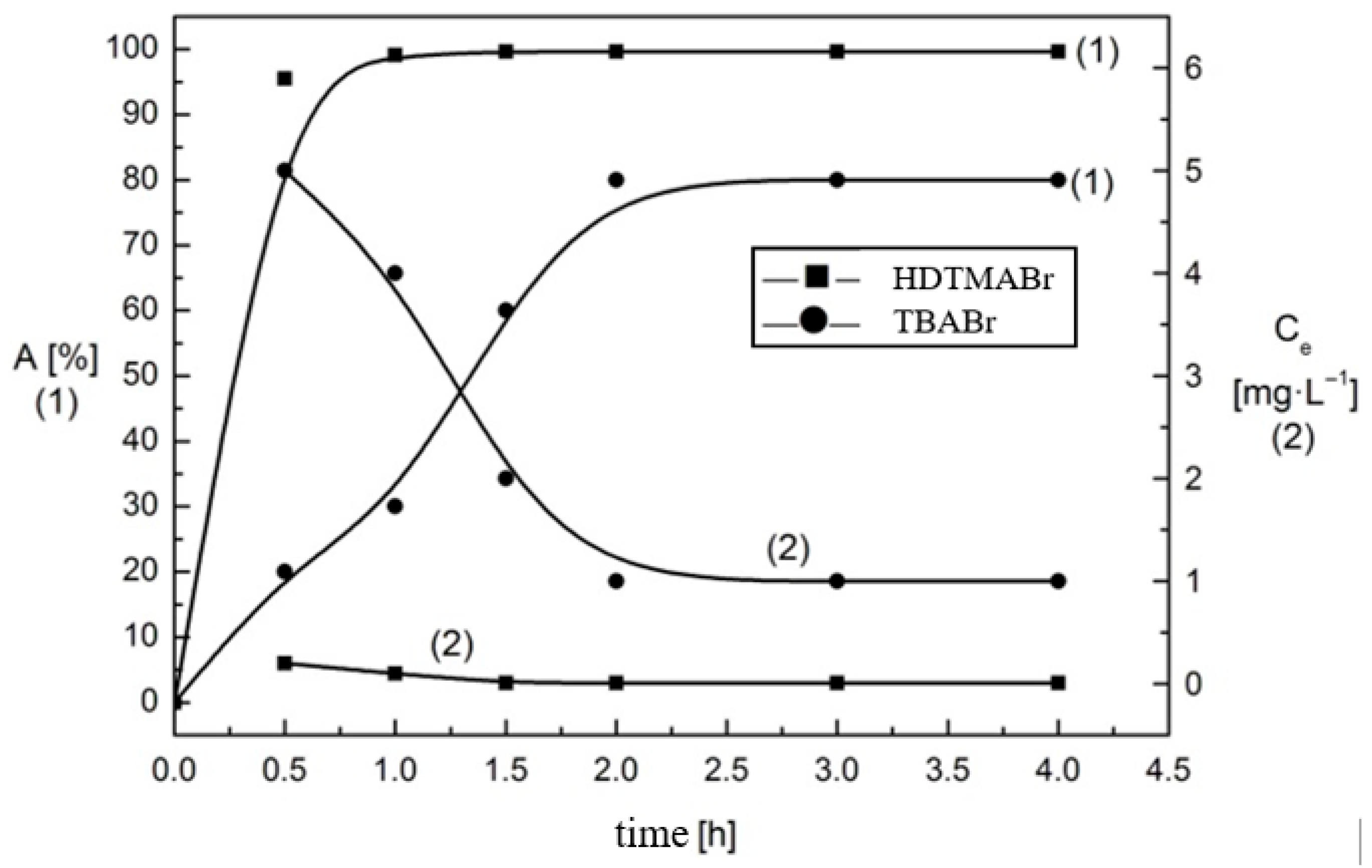
The effect of contact time on the amount of quercetin remaining in solution after adsorption onto surfactant-modified silica was investigated. As shown in Figure 7, the concentration of quercetin in the solution decreased rapidly with increasing contact time until adsorption equilibrium was reached between the flavonoid molecules adsorbed on the surface of the adsorbent and those remaining in the liquid phase. After reaching equilibrium, no significant changes in quercetin concentration were observed. The adsorption process proceeded rapidly during the initial stage, which can be attributed to the high availability of active adsorption sites on the sorbent surface, and then gradually slowed down as these sites became progressively saturated. Such kinetic behavior is typical of adsorption systems and is widely reported in the literature. Based on the experimental results, adsorption equilibrium was achieved after approximately 2 h for both modified adsorbents, indicating saturation of the available adsorption sites.
At the same time, both the adsorption rate and the final adsorption capacity of quercetin were higher for HDTMA-Br-modified silica than for TBA-Br-modified silica. This behavior can be attributed to the presence of the longer alkyl chain in HDTMA-Br, which promotes the stabilization of surfactant–flavonoid associates and enhances hydrophobic interactions between quercetin molecules and the modified silica surface [52,53]. This mechanism is consistent with literature reports on surfactant adsorption on silica surfaces, which emphasize the key role of cooperative adsorption arising from hydrophobic interactions between surfactant alkyl chains and hydrophobic fragments of the adsorbent surface in determining both the maximum adsorption capacity and the structure of the adsorption layer [54].
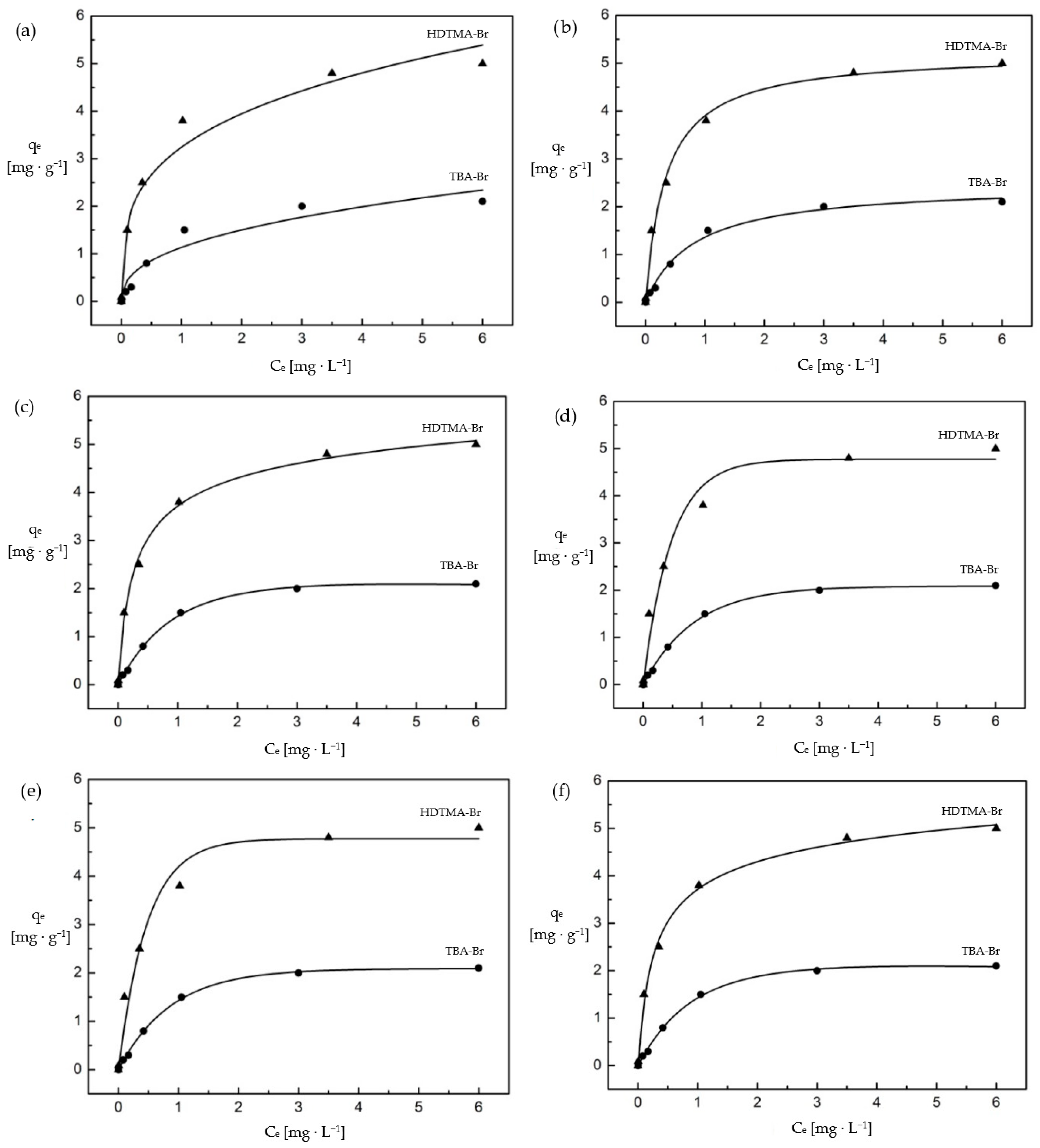
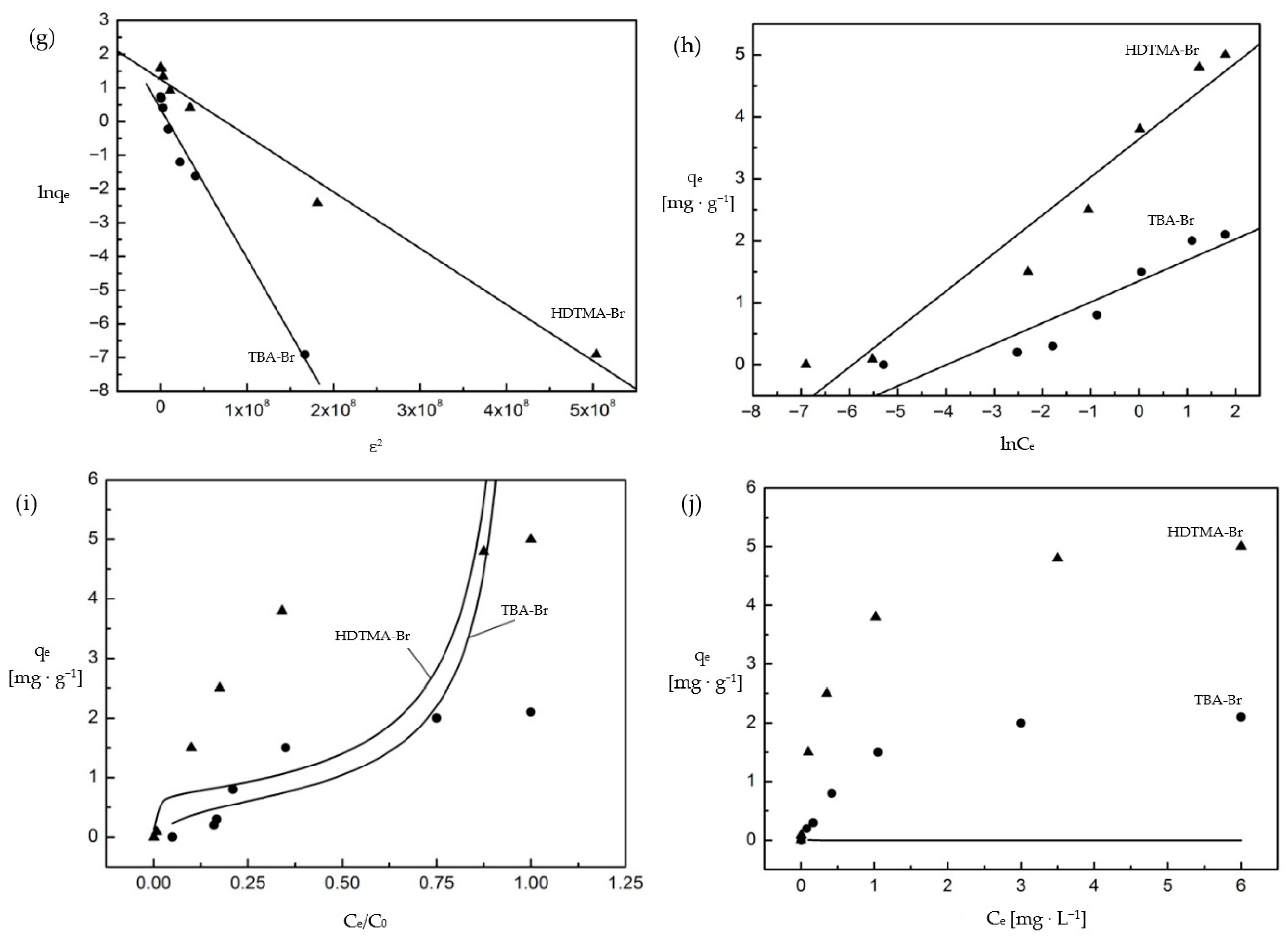
Adsorption isotherms describe the equilibrium state between the concentration of an adsorbate in the liquid phase and the amount adsorbed on the solid phase. Analysis of isotherm profiles enables the determination of the maximum sorption capacity of an adsorbent and provides information on its efficiency as well as the amount of sorbent required to remove a unit mass of adsorbate under given process conditions [55,56]. Experimental data for the adsorption of quercetin on silica modified with tetrabutylammonium bromide (TBA-Br) and hexadecyltrimethylammonium bromide (HDTMA-Br) were analyzed using various adsorption isotherm models in a solid–liquid system. The obtained isotherms are presented in Figure 8, while the model parameters and fitting results are summarized in Table 2. The isotherm analysis was conducted to evaluate the nature of the adsorption equilibrium of quercetin on both modified adsorbents.
Based on the obtained results, it was found that quercetin sorption on HDTMA-Br-modified silica was well described by the Redlich–Peterson, Jovanović, extended Jovanović, and Tóth models, whereas adsorption on TBA-Br-modified silica followed the Langmuir, Redlich–Peterson, Jovanović, and Tóth models. This conclusion is supported by the lowest chi-square error values (χ2/DoF < 0.14) and high coefficients of determination (R2 > 0.995). The maximum sorption capacities determined from the Langmuir, Jovanović, and Tóth models for TBA-Br-modified silica were 2.5, 2.1, and 4.2 mg·g−1, respectively. In contrast, higher sorption capacities were obtained for HDTMABr-modified silica, amounting to 5.2, 4.8, and 3.4 mg·g−1, respectively, indicating a stronger affinity of this sorbent toward quercetin molecules. The Freundlich parameter n, which reflects the intensity of the adsorption process, ranged between 1 and 10, indicating favorable sorption conditions. The reciprocal parameter (1/n) provides information on the degree of surface heterogeneity of the adsorbent; lower values correspond to greater energetic heterogeneity of adsorption sites. In the investigated system, n values were 2.5 for TBA-Br and 3.5 for HDTMA-Br, while the corresponding 1/n values were 0.40 and 0.28, respectively. These results indicate that the surface of HDTMA-Br-modified silica exhibits greater heterogeneity and a higher number of accessible active sites for quercetin molecules compared to TBA-Br-modified silica.
Although most of the analyzed adsorption isotherm models exhibited high coefficients of determination (R2 > 0.977), significant differences in the quality of fit became apparent when the reduced chi-square statistic (χ2/DoF) was considered. This parameter provides a more rigorous assessment of the agreement between experimental data and model-predicted values. For the system with TBA-Br-modified silica, the lowest χ2/DoF values were obtained for the Jovanović, extended Jovanović, and Tóth models, indicating their superior fitting performance. In contrast, the Redlich–Peterson model, despite its very high R2 values, exhibited higher χ2/DoF values, suggesting a less accurate point-by-point representation of the experimental data. For the HDTMA-Br-modified system, the Tóth model yielded the lowest χ2/DoF value, clearly outperforming the other isotherm models. This result confirms the heterogeneous nature of the adsorbent surface and the non-uniform energy distribution of adsorption sites. The Dubinin–Radushkevich (D–R) model was applied to differentiate between physical and chemical adsorption mechanisms based on the mean free adsorption energy (ɛ). The calculated adsorption energies were 3.4 and 5.5 kJ·mol−1 for TBA-Br and HDTMA-Br modified silica, respectively. As these values are well below 8 kJ·mol−1, the adsorption process can be classified as physisorption, governed predominantly by weak van der Waals and electrostatic interactions rather than chemisorption [57]. The remaining isotherm models showed markedly poorer agreement with the experimental data. In particular, the Halsey and Brunauer–Emmett–Teller (BET) models provided unsatisfactory fits, as the assumption of multilayer adsorption was not fulfilled (χ2/DoF > 70), demonstrating their limited applicability for describing the investigated adsorption system.
The observed differences in sorption capacity and isotherm fitting quality between TBA-Br and HDTMA-Br modified silica can be attributed to the nature of the applied surface modifiers, particularly the alkyl chain length of the cationic surfactants. The presence of a longer alkyl chain in HDTMA-Br promotes stronger hydrophobic interactions between quercetin molecules and the modified silica surface, leading to an increased effective number of adsorption sites and higher sorption capacity. This behavior is consistent with previous reports demonstrating that the adsorption efficiency of cationic surfactants on mineral and silica surfaces strongly depends on the hydrophobic chain length. Increasing the alkyl chain length shifts adsorption isotherms toward lower equilibrium concentrations, enhances surface coverage, and improves the overall adsorption capacity due to stronger hydrophobic interactions and cooperative aggregation of surfactant molecules at the solid–liquid interface [58,59,60]. Similar trends have been reported in the literature for systems based on modified silica and other layered materials, where increased surface hydrophobicity resulted in enhanced adsorption performance toward polyphenolic compounds [35,61]. The superior performance of models accounting for surface heterogeneity (Tóth and Jovanović) compared to the classical Langmuir model further confirms the heterogeneous energetic nature of the adsorption sites and the complexity of the adsorption mechanism. The predominance of physisorption, as confirmed by the Dubinin–Radushkevich model, suggests that quercetin adsorption occurs mainly via electrostatic and hydrophobic interactions without the formation of chemical bonds, which is advantageous from the perspective of potential sorbent regeneration.
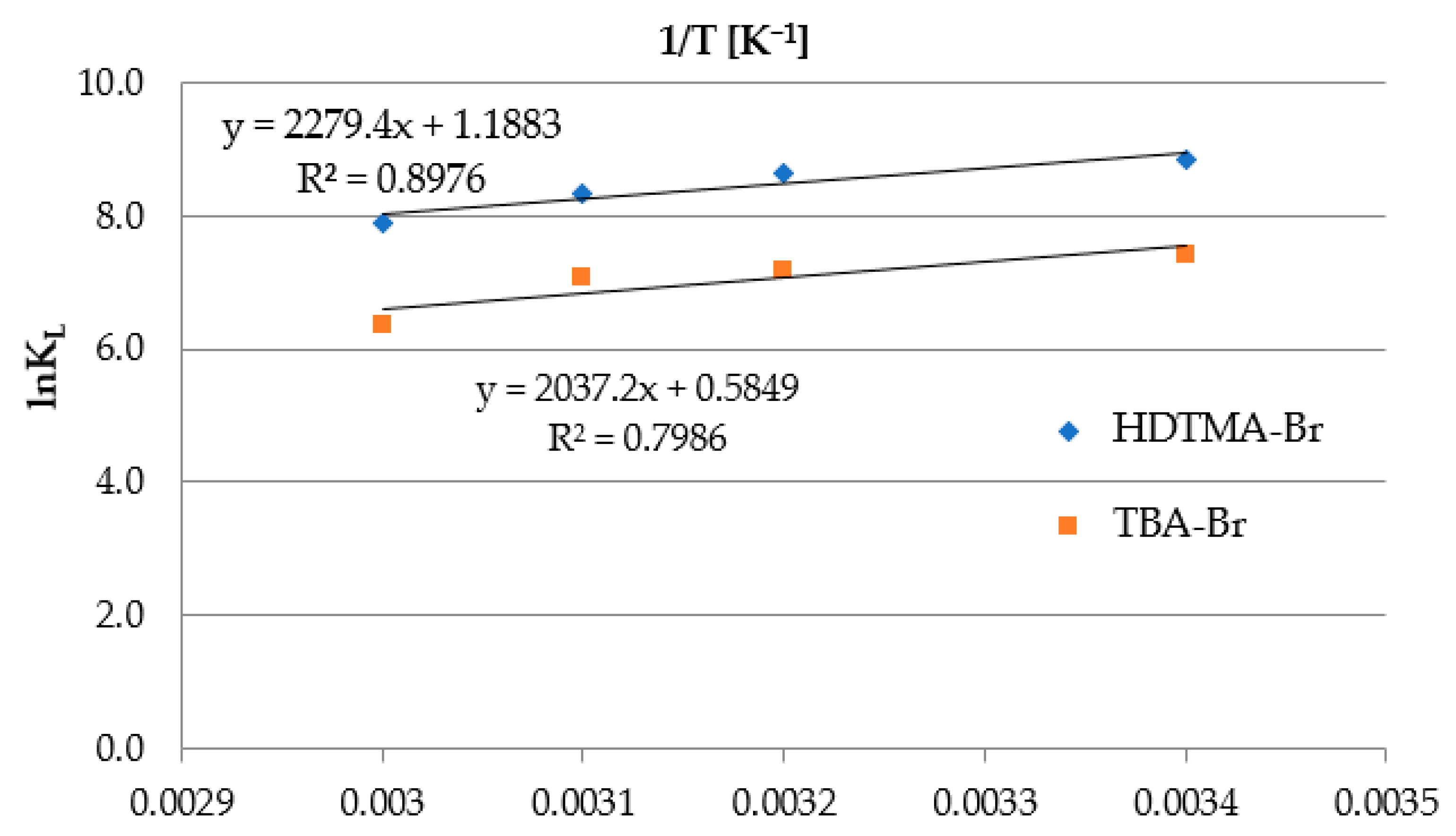
The negative values of standard enthalpy (ΔH° = −18.95 and −16.94 kJ·mol−1) indicate the exothermic nature of the quercetin adsorption process on TBA-Br and HDTMA-Br (Table 3). These values are within the typical range for physisorption (ǀΔH°ǀ ˂ 20.9 kJ·mol−1), which suggests the dominance of physical interactions, such as van der Waals forces or hydrogen bonds. At the same time, ΔH° values close to the lower limit of the range 13 ≤ ǀΔH°ǀ ≤ 76.5 kJ·mol−1 may indicate a small contribution of chemical interactions with low binding energy. The positive ΔS° values indicate a slight increase in disorder at the adsorbent–solution interface during the process. The negative Gibbs free energy values (ΔG° < 0) confirm that quercetin adsorption is spontaneous. The increase in ΔG° with temperature (values becoming less negative) indicates that the adsorption becomes less favorable at higher temperatures, which is consistent with the exothermic nature of the process. As shown in Figure 9, a higher correlation coefficient was obtained for quercetin adsorption on HDTMA-Br (R2 = 0.8976).

4. Conclusions

The conducted studies demonstrated that mesoporous ordered silica materials modified with cationic surfactants—tetrabutylammonium bromide (TBA-Br) and hexadecyltrimethylammonium bromide (HDTMA-Br)—effectively adsorb quercetin from metanol solutions. Adsorption isotherm analysis confirmed a significant influence of surfactant type on the nature of the sorption equilibrium and the adsorption capacity of the modified sorbents. Experimental data for the HDTMA-Br-modified system were best described by the Redlich–Peterson, Jovanović (both conventional and extended forms), and Tóth models, whereas in the case of TBA-Br-modified silica, good agreement was obtained for the Langmuir, Redlich–Peterson, Jovanović, and Tóth models. This was confirmed by high coefficients of determination (R2 > 0.995) and low values of the reduced chi-square statistic (χ2/DoF < 0.14). Incorporation of the χ2/DoF criterion enabled a more rigorous evaluation of model fitting quality and revealed the superiority of the Tóth model in describing quercetin adsorption on HDTMA-Br-modified silica.
The maximum sorption capacities determined from the Langmuir, Jovanović, and Tóth models were markedly higher for OMS-HDTMA-Br than for OMS-TBA-Br, indicating a stronger affinity of the surface modified with a long alkyl-chain surfactant toward quercetin molecules. Analysis of the Freundlich and Redlich–Peterson model parameters confirmed the more heterogeneous surface character of OMS-HDTMA-Br and a higher number of accessible adsorption sites. Application of the Dubinin–Radushkevich model demonstrated that quercetin adsorption on OMS-HDTMA-Br is dominated by physisorption, which favors process reversibility and highlights the potential applicability of these materials in carrier systems for bioactive compounds. The obtained results clearly indicate that modification of OMS with cationic surfactants—particularly HDTMA-Br—represents an effective strategy for enhancing the adsorption capacity of silica toward flavonoids such as quercetin.

Author Contributions

Conceptualization, E.S. and A.D.; methodology, E.S.; validation, E.S.; formal analysis, E.S. and A.D.; investigation, E.S.; resources, E.S.; writing—original draft preparation, E.S. and A.D.; writing—review and editing, E.S., A.D. and D.P.; visualization, E.S. and A.D.; supervision, E.S., A.D. and D.P.; project administration, E.S. and A.D.; funding acquisition, E.S. All authors have read and agreed to the published version of the manuscript.

Funding

This research was funded by the Minister of Science and Higher Education Republic of Poland within the program “Regional Excellence Initiative” no. RID/SP/0032/2024/01.

Data Availability Statement

The data are contained within the article.

Conflicts of Interest

The authors declare no conflicts of interest.

Abbreviations

OMSOrdered mesoporous silica
TBA-BrTetrabutylammonium bromide
HDTMA-BrHexadecyltrimethylammonium bromide

References

  1. Oszust, M.; Barczak, M.; Dąbrowski, A. Mezoporowate materiały krzemionkowe—Charakterystyka i zastosowanie. Zakład Adsorpcji, Wydział Chemii, Uniwersytet Marii Curie-Skłodowskiej: Lublin, Poland. 2019. Available online: https://phavi.umcs.pl/at/attachments/2016/0119/082257-rozdzial-03.pdf (accessed on 5 December 2025).
  2. Burleigh, M.C.; Dai, S. Functionalized nanoporous adsorbents for environmental remediation. In Nanoporous Materials: Science and Engineering; Lu, G.Q., Zhao, X.S., Eds.; Imperial College Press: London, UK, 2004; pp. 1–28. [Google Scholar]
  3. Florek, J.; Caillard, R.; Kleitz, F. Evaluation of mesoporous silica nanoparticles for oral drug delivery—Current status and perspective of MSN drug carriers. Nanoscale 2017, 9, 15252–15277. [Google Scholar] [PubMed]
  4. Matos, J.R.; Kruk, M.; Mercuri, L.P.; Jaroniec, M.; Zhao, L.; Kamiyama, T.; Terasaki, O.; Pinnavaia, T.J.; Liu, Y. Ordered mesoporous silica with large cage-like pores: Structural identification and pore connectivity design by controlling the synthesis temperature and time. J. Am. Chem. Soc. 2003, 125, 821–829. [Google Scholar] [CrossRef] [PubMed]
  5. Nowak, I.; Ziółek, M. Mezoporowate sita Molekularne—Synteza, Charakterystyka, Właściwości Fizykochemiczne i Katalityczne; Wydawnictwo Uniwersytetu Wrocławskiego: Wrocław, Poland, 2001; pp. 5–88. [Google Scholar]
  6. Chon, H.; Ihm, S.-K.; Uh, Y.S. (Eds.) Progress in Zeolite and Microporous Materials; Elsevier Science: Amsterdam, The Netherlands, 1997; Volume 105. [Google Scholar]
  7. Yanagisawa, T.; Shimizu, T.; Kuroda, K.; Kato, C. The preparation of alkyltrimethylammonium–kanemite complexes and their conversion to microporous materials. Bull. Chem. Soc. Jpn. 1990, 63, 988–992. [Google Scholar] [CrossRef]
  8. Chen, C.-Y.; Li, H.-X.; Davis, M.E. Studies on mesoporous materials: I. Synthesis and characterization of MCM-41. Microporous Mater. 1993, 2, 17–26. [Google Scholar] [CrossRef]
  9. Kumar, V.; Kaur, G.; Pickrell, G.R. Silica nanospheres. In Biomedical, Therapeutic and Clinical Applications of Bioactive Glasses; Kaur, G., Ed.; Woodhead Publishing: Cambridge, UK, 2019; pp. 521–544. [Google Scholar]
  10. Hou, D.X.; Kumamoto, T. Flavonoids as protein kinase inhibitors for cancer chemoprevention: Direct binding and molecular modeling. Antioxid. Redox Signal. 2010, 13, 691–719. [Google Scholar] [CrossRef]
  11. Thanabodeekij, N.; Sadthayanon, S.; Gulari, E.; Wongkasemjit, S. Extremely high surface area of ordered mesoporous MCM-41 by atrane route. Mater. Chem. Phys. 2006, 98, 131–137. [Google Scholar] [CrossRef]
  12. Barczak, M.; Dąbrowski, A. Mostkowane polisilseskwioksany: Synteza, struktura i właściwości adsorpcyjne. Wiad. Chem. 2008, 62, 977–998. [Google Scholar]
  13. Vartuli, J.C.; Kresge, C.T.; Leonowicz, M.E.; Chu, A.S.; McCullen, S.B.; Johnson, I.D.; Sheppard, E.W. Synthesis of mesoporous materials: Liquid-crystal templating versus intercalation of layered silicates. Chem. Mater. 1994, 6, 2070–2077. [Google Scholar] [CrossRef]
  14. Yu, C.; Tian, B.; Liu, X.; Fan, J.; Yang, H.; Zhao, D. Advances in mesoporous materials templated by nonionic block copolymers. In Nanoporous Materials: Science and Engineering; Lu, G.Q., Zhao, X.S., Eds.; Imperial College Press: London, UK, 2004; pp. 1–35. [Google Scholar]
  15. Da’na, E. Adsorption of Heavy Metals on Functionalized-Mesoporous Silica: A Review. Microporous Mesoporous Mater. 2017, 247, 145–157. [Google Scholar] [CrossRef]
  16. Ezzeddine, Z.; Batonneau-Gener, I.; Ghssein, G.; Pouilloux, Y. Recent Advances in Heavy Metal Adsorption via Organically Modified Mesoporous Silica: A Review. Water 2025, 17, 669. [Google Scholar] [CrossRef]
  17. Wu, Y.Q.; Wei, J.W.; Wang, D.Q. Removal of Heavy Metals in Water by Functionalized Mesoporous Silica Materials: A Review. AMR 2013, 785–786, 693–696. [Google Scholar]
  18. Pogorelyi, V.K.; Barvinchenko, V.N.; Pakhlov, E.M.; Smirnova, O.V. The effect of solvent nature on the adsorption interaction between cinnamic acid and silicon dioxide. Colloid J. 2005, 67, 172–176. [Google Scholar] [CrossRef]
  19. Mitran, R.-A.; Deaconu, M.; Matei, C.; Berger, D. Mesoporous silica as carrier for drug-delivery systems. In Nanocarriers for Drug Delivery; Mohapatra, S.S., Ranjan, S., Dasgupta, N., Mishra, R.K., Thomas, S., Eds.; Elsevier: Amsterdam, The Netherlands, 2019; pp. 351–374. [Google Scholar]
  20. Zhi, K.; Li, Z.; Luo, H.; Ding, Y.; Chen, F.; Tan, Y.; Liu, H. Selective adsorption of quercetin by the sol–gel surface molecularly imprinted polymer. Polymers 2023, 15, 905. [Google Scholar]
  21. Algandaby, M.M. Quercetin attenuates cisplatin-induced ovarian toxicity in rats: Emphasis on antioxidant, anti-inflammatory and anti-apoptotic activities. Arab. J. Chem. 2021, 14, 103191. [Google Scholar] [CrossRef]
  22. Trendafilova, I.; Szegedi, A.; Mihály, J.; Momekov, G.; Lihareva, N.; Popova, M. Preparation of efficient quercetin delivery system on Zn-modified mesoporous SBA-15 silica carrier. Mater. Sci. Eng. C 2017, 73, 285–292. [Google Scholar] [CrossRef] [PubMed]
  23. Andersen, O.M.; Markham, K.R. (Eds.) Flavonoids: Chemistry, Biochemistry and Applications; CRC Press: Boca Raton, FL, USA, 2006. [Google Scholar]
  24. Russo, M.; Spagnuolo, C.; Tedesco, I.; Bilotto, S.; Russo, G.L. The flavonoid quercetin in disease prevention and therapy: Facts and fancies. Biochem. Pharmacol. 2012, 83, 6–15. [Google Scholar] [CrossRef] [PubMed]
  25. Alva-Ensastegui, J.C.; Ramírez-Silva, M.T. Study of the interaction between polyphenol quercetin and three micelles with different electric charges in acidic and aqueous media. J. Indian Chem. Soc. 2023, 100, 101063. [Google Scholar] [CrossRef]
  26. Erlund, I. Review of the flavonoids quercetin, hesperetin, and naringenin: Dietary sources, bioactivities, bioavailability, and epidemiology. Nutr. Res. 2004, 24, 851–874. [Google Scholar] [CrossRef]
  27. Parida, K.; Rath, D.; Rana, S. Organic amine-functionalized silica-based mesoporous materials: An update of syntheses and catalytic applications. RSC Adv. 2014, 4, 57111–57124. [Google Scholar]
  28. Popova, M.; Trendafilova, I.; Szegedi, Á.; Mihály, J.; Németh, P.; Marinova, S.G.; Aleksandrov, H.A.; Vayssilov, G.N. Experimental and Theoretical Study of Quercetin Complexes Formed on Pure Silica and Zn-Modified Mesoporous MCM-41 and SBA-16 Materials. Microporous Mesoporous Mater. 2016, 228, 256–265. [Google Scholar] [CrossRef]
  29. Sapino, S.; Ugazio, E.; Gastaldi, L.; Miletto, I.; Berlier, G.; Zonari, D.; Oliaro-Bosso, S. Mesoporous Silica as Topical Nanocarriers for Quercetin: Characterization and in Vitro Studies. Eur. J. Pharm. Biopharm. 2015, 89, 116–125. [Google Scholar] [CrossRef] [PubMed]
  30. Dulski, M.; Laskowska, M.; Sułowicz, S.; Krzykawski, T.; Pastukh, O.; Zieliński, P.M.; Pawlik, P.; Nowak, A.; Laskowski, Ł. The Impact of the Functionalization of Silica Mesopores on the Structural and Biological Features of SBA-15. Microporous Mesoporous Mater. 2020, 306, 110453. [Google Scholar] [CrossRef]
  31. Kazakova, O.A.; Gun’ko, V.M.; Lipkovskaya, N.A.; Voronin, E.F.; Pogorelyi, V.K. Interaction of quercetin with highly dispersed silica in aqueous suspensions. Colloid J. 2002, 64, 412–418. [Google Scholar] [CrossRef]
  32. Barvinchenko, V.N.; Lipkovskaya, N.A.; Fedyanina, T.V.; Rugal’, A.A. Effect of supramolecular interactions with cationic surfactants on adsorption of flavonoids on highly dispersed silica surface. Colloid J. 2014, 76, 139–145. [Google Scholar] [CrossRef]
  33. Fedyanina, T.V.; Barvinchenko, V.N.; Lipkovskaya, N.A.; Pogorelyi, V.K. Effect of complexation with biopolymers on the adsorption of quercetin on silica. Colloid J. 2008, 70, 215–220. [Google Scholar] [CrossRef]
  34. Fedyanina, T.V.; Barvinchenko, V.N.; Lipkovskaya, N.A.; Pogorelyi, V.K. Adsorption interaction of a rutin–biopolymer complex with nanosized silica particles. Russ. J. Phys. Chem. A 2008, 82, 1790–1793. [Google Scholar] [CrossRef]
  35. Shukla, D.T.; Yagi, V.K. Cationic gemini surfactants: A review. J. Oleo Sci. 2006, 55, 381–390. [Google Scholar] [CrossRef]
  36. Freundlich, H.M.F. Over the adsorption in solution. J. Phys. Chem. 1906, 10, 385–471. [Google Scholar]
  37. Langmuir, I. The constitution and fundamental properties of solids and liquids. Part I. Solids. J. Am. Chem. Soc. 1916, 38, 2221–2295. [Google Scholar] [CrossRef]
  38. Redlich, O.; Peterson, D.L. A useful adsorption isotherm. J. Phys. Chem. 1959, 63, 1024. [Google Scholar] [CrossRef]
  39. Jovanović, D.S. Physical adsorption of gases: II. Practical application of derived isotherms for monolayer and multilayer adsorption. Kolloid Z. Z. Polym. 1969, 235, 1214–1225. [Google Scholar] [CrossRef]
  40. Tóth, J. State equations of the solid–gas interface layer. Acta Chim. Acad. Sci. Hung. 1971, 69, 311–317. [Google Scholar]
  41. Dubinin, M.M.; Radushkevich, L.V. The equation of the characteristic curve of activated charcoal. Proc. Acad. Sci. USSR Phys. Chem. Sect. 1947, 55, 331–337. [Google Scholar]
  42. Temkin, M.I.; Pyzhev, V. Kinetics of ammonia synthesis on promoted iron catalyst. Acta Physicochim. URSS 1940, 12, 217–222. [Google Scholar]
  43. Brunauer, S.; Emmett, P.H.; Teller, E. Adsorption of gases in multimolecular layers. J. Am. Chem. Soc. 1938, 60, 309–319. [Google Scholar] [CrossRef]
  44. Halsey, G.D. The role of surface heterogeneity in adsorption. In Advances in Catalysis; Elsevier: New York, NY, USA, 1952; Volume 4, pp. 259–269. [Google Scholar]
  45. Foo, K.Y.; Hameed, B.H. Insights into the modeling of adsorption isotherm systems. Chem. Eng. J. 2010, 156, 2–10. [Google Scholar] [CrossRef]
  46. Liu, W.; Guo, R. Interaction of flavonoid quercetin with organized molecular assemblies of nonionic surfactant. Colloids Surf. A 2006, 274, 192–199. [Google Scholar] [CrossRef]
  47. Sandomierski, M.; Poniedziałek, K.; Bielicka-Daszkiewicz, K.; Voelkel, A. Influence of Diazonium and Surfactant Modification of the Mesoporous Material on Its Adsorption Properties. Chem. Pap. 2020, 74, 929–938. [Google Scholar] [CrossRef]
  48. Andrunik, M.; Bajda, T. Modification of Bentonite with Cationic and Nonionic Surfactants: Structural and Textural Features. Materials 2019, 12, 3772. [Google Scholar] [CrossRef]
  49. Elfeky, S.A.; Mahmoud, S.E.; Youssef, A.F. Applications of CTAB Modified Magnetic Nanoparticles for Removal of Chromium (VI) from Contaminated Water. J. Adv. Res. 2017, 8, 435–443. [Google Scholar] [CrossRef]
  50. Ramos Guivar, J.A.; Sanches, E.A.; Magon, C.J.; Ramos Fernandes, E.G. Preparation and Characterization of Cetyltrime-thylammonium Bromide (CTAB)-Stabilized Fe3O4 Nanoparticles for Electrochemistry Detection of Citric Acid. J. Electronal. Chem. 2015, 755, 158–166. [Google Scholar] [CrossRef]
  51. Su, G.; Yang, C.; Zhu, J.-J. Fabrication of Gold Nanorods with Tunable Longitudinal Surface Plasmon Resonance Peaks by Reductive Dopamine. Langmuir 2015, 31, 817–823. [Google Scholar] [CrossRef] [PubMed]
  52. Rosen, M.J.; Kunjappu, J.T. Surfactants and Interfacial Phenomena, 4th ed.; Wiley: New York, NY, USA, 2012. [Google Scholar]
  53. Li, P.; Ishiguro, M. Adsorption of an anionic surfactant (sodium dodecyl sulfate) on silica. Soil Sci. Plant Nutr. 2016, 62, 223–229. [Google Scholar] [CrossRef]
  54. Arabmofrad, S.; Jafari, S.M.; Ziaiifar, A.M.; Shahiri Tabarestani, H.; Bahlakeh, G.; Nasiri Sarvi, M.; Shafeeyan, M.S. Synthesis and characterization of surface-modified montmorillonite for nano-adsorption of phenolic compounds from olive mill wastewater. Results Eng. 2025, 26, 105088. [Google Scholar] [CrossRef]
  55. Srivastava, V.C.; Mall, I.D.; Mishra, I.M. Equilibrium modeling of single and binary adsorption of cadmium and nickel onto bagasse fly ash. Chem. Eng. J. 2006, 117, 79–91. [Google Scholar] [CrossRef]
  56. Kleinübing, S.J.; Guibal, E.; da Silva, E.A.; da Silva, M.G.C. Copper and nickel competitive biosorption simulation from single and binary systems by Sargassum filipendula. Chem. Eng. J. 2012, 184, 16–22. [Google Scholar] [CrossRef]
  57. Alam, S.; Ullah, B.; Khan, M.S.; Rahman, N.U.; Khan, L.; Shah, L.A.; Zekker, I.; Burlakovs, J.; Kallistova, A.; Pimenov, N.; et al. Adsorption Kinetics and Isotherm Study of Basic Red 5 on Synthesized Silica Monolith Particles. Water 2021, 13, 2803. [Google Scholar] [CrossRef]
  58. Atkin, R.; Craig, V.S.J.; Wanless, E.J.; Biggs, S. The Influence of Chain Length and Electrolyte on the Adsorption Kinetics of Cationic Surfactants at the Silica–Aqueous Solution Interface. J. Colloid Interface Sci. 2003, 266, 236–244. [Google Scholar] [CrossRef]
  59. Choi, J.; Hong, J.; Park, K.; Kim, G.; Han, Y.; Kim, S.; Kim, H. Role of Chain Length and Type on the Adsorption Behavior of Cationic Surfactants and the Silica Floatability. Mater. Trans. 2014, 55, 1344–1349. [Google Scholar] [CrossRef]
  60. Wang, J.; Han, B.; Dai, M.; Yan, H.; Li, Z.; Thomas, R.K. Effects of Chain Length and Structure of Cationic Surfactants on the Adsorption onto Na–Kaolinite. J. Colloid Interface Sci. 1999, 213, 596–601. [Google Scholar] [CrossRef]
  61. Vallet-Regí, M.; Colilla, M.; Izquierdo-Barba, I.; Manzano, M. Mesoporous silica nanoparticles for drug delivery: Current insights. Molecules 2018, 23, 47. [Google Scholar] [CrossRef] [PubMed]
Figure 1. Chemical structures of the cationic surfactants used in this study: tetrabutylammonium bromide (TBA-Br) and hexadecyltrimethylammonium bromide (HDTMA-Br).
Minerals 16 00230 g001
Figure 2. Point of zero charge (pHPZC) of OMS determined by the suspension method.
Minerals 16 00230 g002
Figure 3. Chemical structure of quercetin, showing the A, B, and C rings characteristic of flavonoid compounds.
Minerals 16 00230 g003
Figure 4. UV–Vis absorption spectra of quercetin in aqueous solutions at pH 3.0 and 7.5 recorded without and with cationic surfactants (TBA-Br, HDTMA-Br). Curves: (1) pH 3.0, no surfactant; (2) pH 3.0 + TBA-Br; (3) pH 3.0 + HDTMA-Br; (4) pH 7.5, no surfactant; (5) pH 7.5 + TBA-Br; (6) pH 7.5 + HDTMA-Br.
Minerals 16 00230 g004
Figure 5. FT-IR spectra of pure silica and silica modified with tetrabutylammonium bromide (TBA-Br) and hexadecyltrimethylammonium bromide (HDTMA-Br).
Minerals 16 00230 g005
Figure 6. FTIR spectra of (A) HDTMA-Br-based system and (B) TBA-Br-based system. The comparison includes pure surfactants (black lines), pure quercetin (grey lines, Q), and modified mesoporous silicas after quercetin adsorption (colored lines: red for OMS-HDTMA-Br + Q and blue for OMS-TBA-Br + Q).
Minerals 16 00230 g006
Figure 7. Effect of time on quercetin adsorption using HDTMA-Br and TBA-Br.
Minerals 16 00230 g007
Figure 8. Adsorption isotherms for the quercetin system: (a) Freundlich, (b) Langmuir, (c) Redlich–Peterson, (d) Jovanović, (e) extended Jovanović, (f) Tóth, (g) Dubinin–Radushkevich, (h) Temkin, (i) BET, and (j) Halsey models.
Minerals 16 00230 g008aMinerals 16 00230 g008b
Figure 9. Linear regression of lnKL versus reciprocal temperature (1/T) for quercetin adsorption onto HDTMA-Br-modified and TBA-Br-modified silica.
Minerals 16 00230 g009
Table 1. Adsorption isotherm models applied for quercetin adsorption on surfactant-modified silica.
IsothermEquationExplanation of Abbreviations
Freundlich [36] q e = K F · ( C e ) 1 n q e the   concentration   of   the   adsorbate   on   the   adsorbent   surface   [ mg · g 1 ] ,   K F Freundlich   isotherm   constant   [ mg 1 1 / n · L 1 / n · g 1 ] ,   C e denotes   the   ion   concentration   at   equilibrium   [ mg · L 1 ] ,   n heterogeneity   factor ,   q max signifies   the   maximal   ion   adsorption   capacity   [ mg · g 1 ] ,   K L Langmuir   constant   [ L · mg 1 ] ,   K R Redlich Peterson   isotherm   constant   [ L · g 1 ] ,   a R —Redlich–Peterson isotherm constant [L·mg−1], β—dimensionless exponent (value ranges from 0 to 1), KJ—Jovanović isotherm constant [L·mg−1], KT—Tóth isotherm constant [L·mg−1], KDR—Dubinin-Radushkevich isotherm constant [mol2·kJ−2], ε—Polanyi potential, KT—Temkina isotherm constant [L·g−1], BT—constant related to adsorption energy, R—universal gas constant [8.314 J·mol−1·K−1], T—temperature [K], b—Temkin constant related to the heat of adsorption [J·mol−1], KBET—adsorption constant [L−1·mg], C0—initial concentration of the substance [mg·L−1], KH—Halsey isotherm constant [mg n−1·g−n·L], nH—parameter describing the adsorption intensity.
Langmuir [37] q e = q max K L · C e 1 + K L · C e
Redlich-Peterson [38] q e = K R · C e 1 + a R   · C e β
Jovanović [39] q e = q max 1 exp K J · C e
Jovanović-extended form q e = q max 1 exp K J · C e n
Tóth [40] q e = q max K T · C e n 1 + K T · C e n
Dubinin-Radushkevich [41] l n q e = K D R · ɛ 2 + l n q m a x ;
ɛ = R T l n ( 1 + 1 C e )
Temkin [42] q e = B T · ln K T + B T · ln C e ;
B T = R T b
Brunauer, Emmett, and Teller [43] q e = q max   K B E T C e C 0 1 C e C 0 1 + K B E T 1 C e C 0
Halsey [44] q e = ( K H C e ) 1 n H    
Table 2. Isotherm model comparison for quercetin adsorption on surfactant-modified silica.
IsothermParameterTBA-BrHDTMA-Br
FreundlichKF [mg1−1/n·L1/n·g−1]1.13.2
n2.53.5
R20.9230.967
X2/DoF0.070.17
LangmuirKL [L·mg−1]1.23.0
qmax [mg·g−1]2.55.2
R20.9920.994
X2/DoF0.010.03
Redlich and PetersonKR [L·g−1]2.322.6
aR [(L·mg−1)β]0.65.1
β1.20.9
R20.9980.997
X2/DoF0.140.02
JovanovićKJ [L·mg−1]1.22.1
qmax [mg·g−1]2.14.8
R20.9980.977
X2/DoF0.000.12
Jovanović extended formKJ [L·mg−1]0.41.7
qmax [mg·g−1]2.14.8
n0.38.3
R20.9980.977
X2/DoF0.000.14
TóthKTh [mg−n·Ln]0.76.0
qmax [mg·g−1]4.23.4
Th1.20.9
R20.9980.997
X2/DoF0.000.01
Dubinin and RadushkevichKDR [mol2·J−2]0.000.00
qmax [mg·g−1]1.53.5
lnqmax0.41.6
ε [kJ·mol−1]3.45.5
R20.9840.986
TemkinKT [L·mg−1]38753.5
BT [J·mol−1]0.60.4
lnKT6.04.0
R20.8410.857
Brunauer, Emmett and TellerKBET [L·mg−1]12.1221.7
qmax [mg·g−1]0.560.7
R2<0<0
x2/DoF10.473.3
HalseyKH [mgn−1·g−n·L]0.1 × 10−30.3 × 10−4
nH0.20.036
R2<0<0
X2/DoF141142
Table 3. Thermodynamic parameters of quercetin adsorption on TBA-Br and HDTMA-Br.
Temperature1/TTBA-BHDTMA-Br
ΔG°ΔH°ΔS°ΔG°ΔH°ΔS°
[°C][K][K−1][kJ·mol−1][kJ·mol−1][J·mol−1·K−1][kJ·mol−1][kJ·mol−1][J·mol−1·K−1]
202930.0034−18.09−16.944.86−21.55−18.959.87
353080.0032−18.40−22.11
403130.0031−18.43−21.66
603330.0030−17.62−21.87
Disclaimer/Publisher’s Note: The statements, opinions and data contained in all publications are solely those of the individual author(s) and contributor(s) and not of MDPI and/or the editor(s). MDPI and/or the editor(s) disclaim responsibility for any injury to people or property resulting from any ideas, methods, instructions or products referred to in the content.