1. Introduction
The growing global population and the associated demand for accommodation lead to an increase in the number of buildings and, consequently, the consumption of cement and cement-based construction materials worldwide. The global environmental circumstances, particularly carbon emissions, have attained dangerous levels [
1,
2,
3].
The manufacture of cement significantly contributes to global carbon emissions. It constitutes roughly 6%–8% of total global emissions, rendering it one of the principal industrial emitters of greenhouse gases. The cement production process entails the thermal breakdown of limestone (calcium carbonate) into lime (calcium oxide) and carbon dioxide, resulting in substantial CO
2 emissions. Furthermore, the combustion of fossil fuels achieves the necessary elevated temperatures for production, thereby intensifying emissions [
4]. The rising urbanization and population expansion are anticipated to elevate the demand for construction materials, thus raising the carbon footprint of cement production. Initiatives to mitigate emissions encompass the development of alternative materials, enhancement of energy efficiency, and implementation of carbon capture systems [
5].
The ceramics sector predominantly generates emissions due to energy consumption from kilns operating at temperatures above 1000 °C for firing ceramics. The ceramics industry accounts for a modest fraction of worldwide carbon emissions in comparison to sectors like steel and cement. While precise statistics differ, estimations indicate that ceramics contribute less than 1% to total global emissions [
6,
7].
In such circumstances, pertinent challenges have emerged, particularly in industries such as cement, ceramics, and iron and steel, where production involves high-temperature operations, including minimizing energy requirements, assessing waste materials in production processes, and designing systems for waste heat recovery [
8,
9]. Materials including fly ash [
10,
11], blast furnace slag [
12,
13], different natural and calcined pozzolanic additives [
14,
15,
16], and silica fume [
17,
18,
19] are commonly utilized in both academic and industrial sectors [
20].
The ceramic industry produces substantial quantities of waste during processing and transportation. This industry faces significant pressure to identify effective recycling techniques for its waste and by-products in order to reduce the quantity of landfills and mitigate the detrimental effects of environmentally harmful waste. Furthermore, considering the finite supplies of conventional aggregates, energy conservation, and environmental protection, the building industry is pursuing alternative sources of consolidation [
21,
22].
Consequently, CWP is widely utilized as coarse and fine aggregate in both mortars and concrete mixtures. Klimek et al. [
23] reported that wall tile waste was utilized as a 25% substitute for sand, and mortars using CWP exhibited comparable density and porosity to those with quartz aggregate, albeit the water absorption rate was reduced. In strength tests performed following freeze–thaw cycles, the tensile and compressive strengths of mortars incorporating CWP were markedly superior to those utilizing natural sand, demonstrating that CWP exhibited greater resistance to temperature fluctuations.
Guendouz et al. [
24] noticed a 30% enhancement in compressive strength and a 57% improvement in the flexural strength of fluidized sand concrete by substituting 25% of the sand with wall tile waste. The assessment and repurposing of CWP (wall tiles) as fine aggregate in place of sand for the manufacturing of fluidized sand concrete (FSC) were investigated, with sand being substituted by CWP at varying proportions (0, 5, 10, 15, 20, and 25% of the sand volume). The study observed that the partial substitution of sand enhanced the workability of FSC, decreased its bulk density, and improved its mechanical strength relative to the incorporation of 25% wall tile waste.
The study by Mawashee et al. [
25] found that substituting CWP for sand enhanced resistance to sulfate attack and improved the waterproofing qualities of concrete. This study aims to enhance certain mechanical properties of concrete through the incorporation of an integrated waterproofing additive (IWP) and fine-grained CWP in concrete manufacture. Utilizing CWP in place of sand resulted in an increase in compressive strength from 41.7 MPa to 47.8 MPa, an enhancement in elasticity modulus from 25.22 GPa to 29.61 GPa, a reduction in water absorption rate to below 1%, and an improvement in resistance to sulfate attack. These studies demonstrate that utilizing CWP as a filler material offers benefits in both environmental and mechanical dimensions.
Besides employing CWP as a filler in concrete applications, much research also explores its use as a partial alternative for cement. Alotaibi et al. [
26] assessed the compressive strength and water absorption characteristics by incorporating 5%, 15%, 25%, 35%, and 45% CWP into concrete mixtures, revealing that a 5% addition of CWP enhanced the compressive strength of concrete by approximately 12.5%. Nevertheless, the strength diminished and the water absorption rate escalated with additions exceeding this threshold. SEM tests indicated that elevated ceramic content resulted in poor particle bonding and aggregation development.
The research conducted by Dehghani et al. [
27] assessed the mechanical and environmental impacts of substituting CWP for cement in concrete paving blocks. The study evaluated the compressive strength, tensile strength, water absorption, freeze–thaw resistance, and abrasion resistance of paving blocks produced by replacing 10%, 20%, and 30% of the cement with CWP. A 20% substitution of CWP enhanced compressive strength by 30% and tensile strength by 19%. The freeze–thaw process reduced the mass loss by 40%. The water absorption rate decreased but failed to comply with the EN 1338 standard limitations. No notable alteration was detected in the abrasion resistance. The life cycle evaluation indicated substantial decreases in environmental consequences.
Utilizing CWP as a filler or partial alternative for cement has certain challenges and constraints. Research indicates that CWP causes bleeding in concrete by gradually releasing retained water, diminishes workability owing to its abrasive surface, and lowers fresh density due to its reduced specific gravity.
Literature indicates that the incorporation of CWP in concrete and cement-based products elevates the water demand of the mixture, and this increase adversely affects performance. Alotaibi et al. [
26,
28] noticed that the water intake increased with the addition of 5% to 45% CWP in the concrete mixture. The utilization of elevated concentrations of CWP augmented the porosity of the concrete and enhanced its water absorption capacity. This resulted in a reduction of the concrete’s strength.
Korat et al. [
29] examined the utilization of CWP as a substitute for cement and fine aggregate in ultra-high performance concrete (UHPC). The investigation revealed a reduction in the workability of the mixture attributable to the elevated surface area of CWP. This correlated with increased water absorption of CWP.
In their research, Ghonaim and Morsy [
30] utilized fine CWP sourced from cyclones associated with spray dryers in ceramic tile manufacturing as a partial cement replacement material, owing to its pozzolanic characteristics in concrete production. They noted that an increase in the CWP ratio resulted in diminished workability of the concrete, with a 30% substitution leading to a 32% reduction in workability.
Recent research have investigated the integration of ceramic waste and nanosilica in cementitious materials; however, the simultaneous application of hydrophobized ceramic waste powder (CWP) and nanosilica has been largely overlooked. Alvansazyazdi et al. (2023) [
31] examined the impact of hydrophobic nanosilica on the corrosion resistance and mechanical properties of concrete mixtures, whereas Korat et al. (2025) thoroughly evaluated the use of ceramic waste powder as a cement substitute in ultra-high-performance concrete, highlighting mechanical and microstructural advantages with up to 20% replacement [
29,
32]. Alotaibi et al. (2024) investigated the incorporation of waste ceramic powder as a filler in traditional concrete, demonstrating enhanced strength at low concentrations while noting challenges related to particle aggregation and porosity at elevated levels [
26]. This study combines the inclusion of nanosilica with both natural and hydrophobized CWP to examine their synergistic effects on cement hydration, microstructure, and durability. This innovative dual strategy integrates two previously distinct study domains—nanosilica-induced nanoreactivity and hydrophobization for water repellence—providing fresh perspectives on enhancing the interfacial performance and corrosion resistance of cementitious composites.
The nanosilica dosage range (0.5–2 wt% of cement) was determined from prior studies that indicated optimal enhancements in mechanical strength and microstructure within this range, while preventing severe agglomeration and loss of workability. Fallah-Valukolaee et al. (2022) indicated that a 2% substitution of cement with nanosilica resulted in optimal strength and densification in high-performance concrete [
33]. Du et al. (2014) and Lu & Poon (2018) similarly established that nanosilica concentrations over 2% result in particle aggregation, adversely impacting dispersion and hydration efficacy [
34,
35]. To confirm this range for the current system, first mixing studies were performed using nanosilica dosages of 0.5%, 1%, and 2%. The results validated constant workability and a consistent increase in compressive strength up to 2%, after which no more enhancement was noted.
The hydrophobization of ceramic waste powder (CWP) was executed utilizing a polydimethylsiloxane (PDMS)-based organosiloxane treatment, selected for its shown effectiveness in providing lasting hydrophobicity and chemical compatibility with silicate materials. PDMS-based siloxanes form Si–O–Si connections on the CWP surface, thereby diminishing surface energy while preserving its pozzolanic activity. Mora et al. (2019) and Wang et al. (2020) effectively employed analogous organosiloxane treatments to enhance the water resistance and corrosion durability of concrete [
36,
37]. In initial laboratory experiments, PDMS-treated CWP demonstrated a contact angle of around 120°, validating the successful hydrophobization and efficient dispersion within the cement matrix.
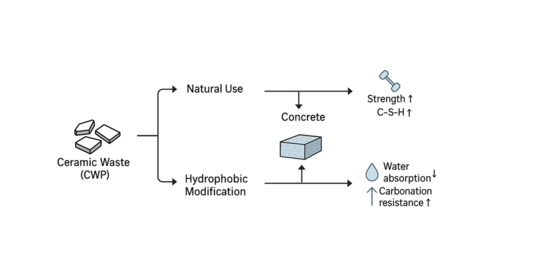
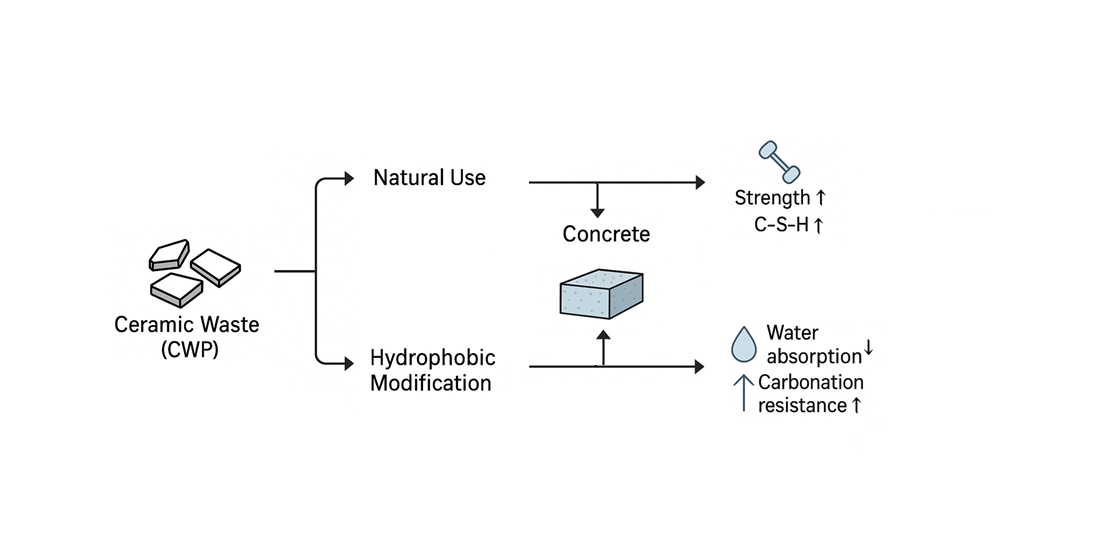
The outcome gathered from all research studies is that, while the incorporation of CWP in limited quantities may enhance both environmental and mechanical performance, positioning it as a sustainable substitute for cement and a viable filler requires extensive long-term durability research. Additionally, the application of superplasticizers is advised to improve workability and sustain a consistent water/cement ratio. This study investigated an alternative method involving the hydrophobization of CWP through chemical agents. It examined the impact of incorporating both unmodified and modified CWP, with nanosilica additions of 0.5%, 1%, 1.5%, and 2%, as a partial replacement for sand in concrete structures, focusing on fresh mortar and mechanical performance properties. The hydration reaction was monitored using X-ray Diffraction (XRD) and Fourier Transform Infrared spectroscopy (FTIR) techniques, establishing a correlation between microstructure and performance.
3. Experimental
The experimental plan for the study was primarily formulated for the utilization of CWP in its natural state and after hydrophobization. The supplied CWP was initially processed and sieved to achieve a particle size of less than 63 μm. The unmodified portion was retained as is, while the hydrophobization agent was diluted with water to maintain a 15% concentration for the modification procedure. The hydrophobization procedure involved combining ceramic waste powder (CWP) with polydimethylsiloxane (PDMS) at a 1:6.6 weight ratio. The mixture was formulated under standard laboratory conditions at a temperature of 23 ± 1 °C and a pH of 7.2, then mechanically stirred for 10 min to achieve homogeneous mixture. The diluted chemical was incorporated into CWP and homogenized using a shaker. The resulting cake was dehydrated at 105 °C overnight. After the drying procedure, the film layer that formed on the surface was mechanically removed, and the sample was re-ground to produce hydrophobized CWP. In the experimental design, the quantities of cement, sand, ceramic waste powder, and plasticizer were maintained constant, while nanosilica was included in the mixture at concentrations of 0.5%, 1%, 1.5%, and 2%. The samples were designated as follows: the experimental set utilizing unmodified CWP was labeled N (natural), while the modified experimental set was labeled H (hydrophobized). The samples were further identified by appending the nanosilica ratio to their names.
Table 1 presents the proportions of the components used in the preparation of the samples. The reported water content corresponds to the amount necessary to ensure the desired consistency, which was assessed using the flow table method in accordance with EN 1015-3.
All powder-based raw materials were premixed using a shaker for 3 min. Subsequently, water was added to the mixture in an amount sufficient to achieve a consistent flow value. The mortar was then prepared using a mortar mixer, following the mixing procedure specified in the relevant standard. Fresh densities were measured for all mortar mixes in accordance with EN 1015-6, and setting time tests were performed to assess their curing characteristics, following the procedure defined in EN 196-3 [
32,
44]. The mortar was placed in two layers into 40 mm × 40 mm × 160 mm molds and compacted using a flow table by applying 60 drops for each layer, as specified in EN 196-1 [
39]. After casting, the specimens were kept in their molds for 24 h while sealed in plastic bags to prevent moisture loss. Subsequently, they were demolded and stored in the same sealed condition for an additional 7 days. After this period, the samples were immersed in water and cured until 28 days of age in accordance with the procedure defined in EN 12190 [
42]. All specimens were subjected to flexural and compressive strength testing at the curing ages of 2, 7, and 28 days to evaluate the development of mechanical properties over time. During the strength examination, a piece of each sample was taken out for XRD and FTIR investigations to monitor the reaction. Furthermore, capillary water absorption was evaluated for each specimen, following the sample preparation and testing methodology specified in EN 1015-18 [
43].
4. Results
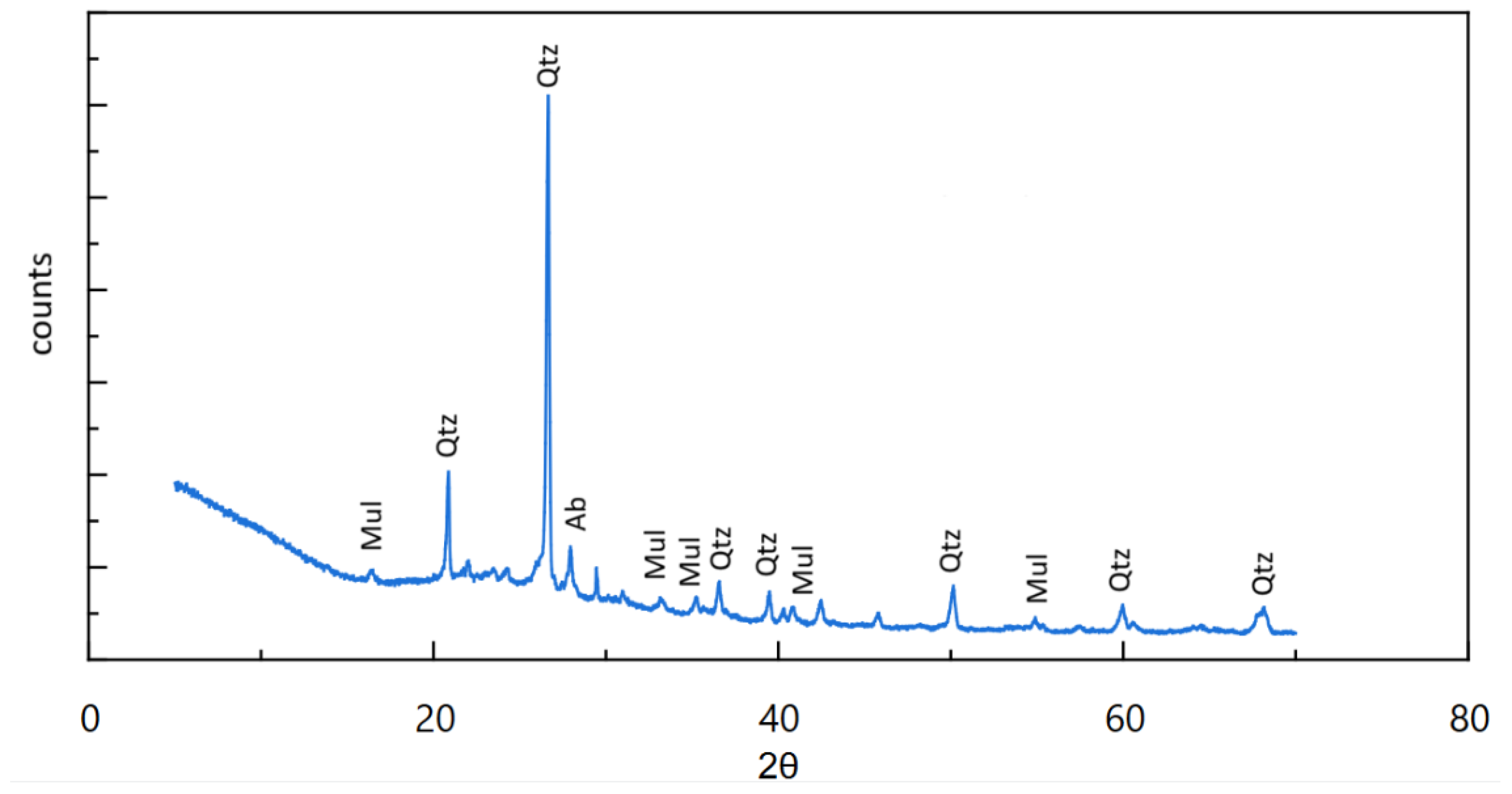
The XRD pattern of the untreated CWP displays predominant crystalline phases characteristic of high-temperature burned ceramics. In
Figure 1, the strong peak at 26.6° (2θ) is characteristic of quartz (SiO
2), although supplementary reflections at 20.8°, 22°, 28–30°, and 40–45° are linked to feldspathic phases (albite/microcline). Mullite peaks are distinctly observed at around 16.4°, 26°, and 40.8°, thereby affirming the existence of this aluminosilicate phase generated during the ceramic fire process. Minor high-angle peaks ranging from 50° to 65° correspond to secondary reflections of quartz and feldspar. Alongside the crystalline constituents, a low-intensity broad hump between 20 and 25° signifies the existence of amorphous silica, derived from glassy phases within the ceramic matrix. The comprehensive spectrum indicates that raw CWP is primarily crystalline with minimal amorphous content, implying low pozzolanic reactivity and that the material functions chiefly as an inert microfiller in cementitious systems.
Table 2 shows the analysis of the cement used in the study using XRD Rietveld. The Rietveld refinement results indicate that the CEM I cement utilized in this study mostly consists of hatrurite (C
3S, 66%) and larnite (C
2S, 11%), signifying a clinker abundant in silicate phases that influence both early and long-term strength development. The occurrence of brownmillerite (C
4AF, 10%) and calcium sodium aluminate–titanate (≈2.4%) indicates the standard ferrite and minor aluminate influences on hydration and setting characteristics. Sulfate-bearing phases, including gypsum (2.3%), anhydrite (0.6%), and bassanite (0.9%), govern the initial hydration of C
3A and influence setting regulation. Trivial amounts of periclase (1.4%), arcanite (0.3%), and calcite (4.9%) align with typical CEM I compositions and contribute minimally to expansion regulation and carbonation-related phenomena. The mineralogical profile corresponds with standard high-quality Portland cement and corroborates the anticipated hydration mechanisms identified in the study.
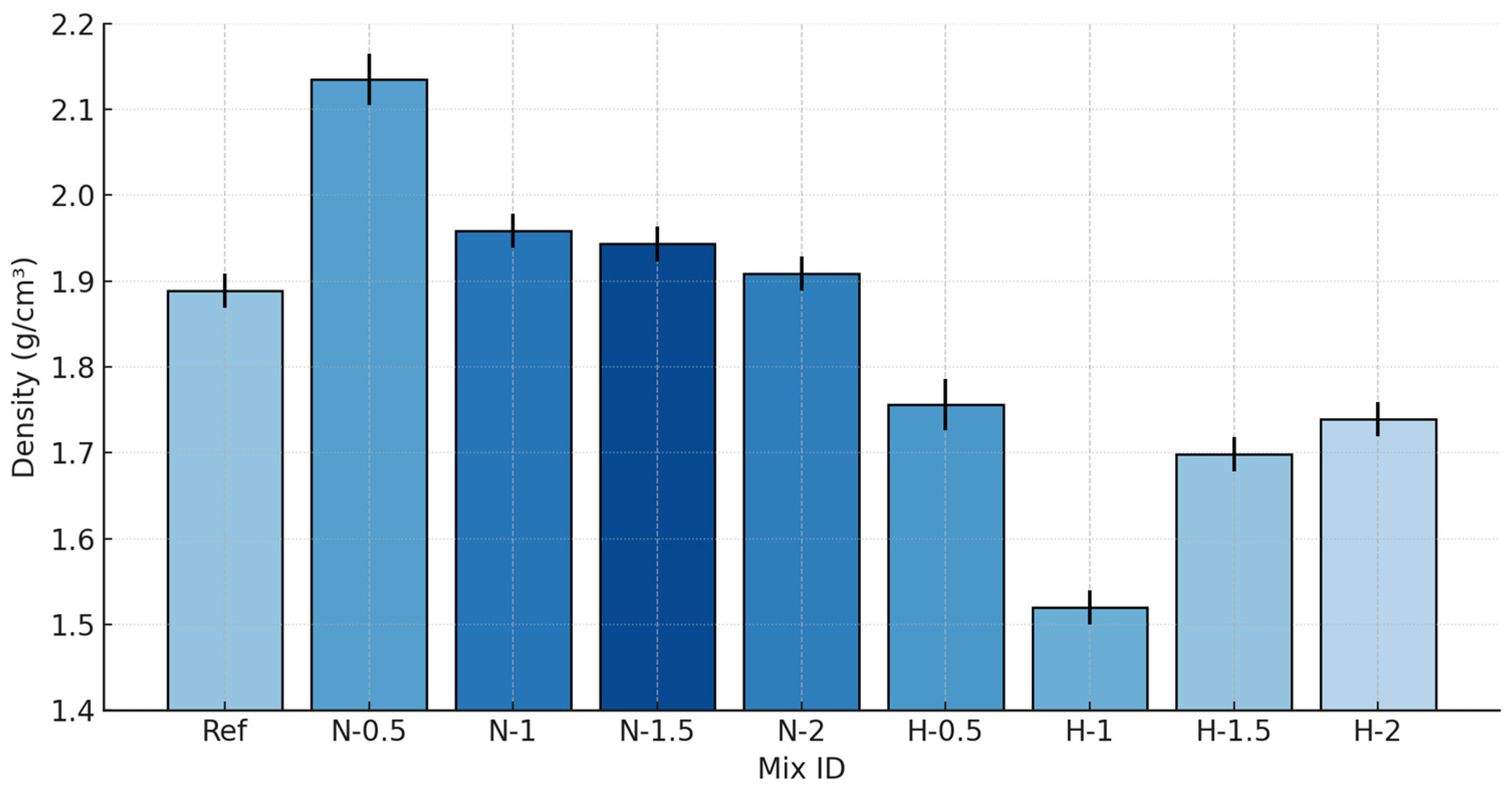
The water content was adjusted for each mixture to maintain a constant flow diameter within the range of 28–30 cm, ensuring uniform workability across all mortar compositions. Fresh mortar densities of the samples are given in
Figure 2. The density values of the fresh mortar mixtures exhibited considerable variation based on the type and dosage of nanosilica used. The N-series mixtures demonstrated higher densities (from 1.909 to 2.135 g/cm
3) relative to the reference sample (1.889 g/cm
3), signifying a denser and more compact matrix, presumably attributable to the presence of heavier particles that reduced entrapped air content [
45]. Conversely, the H-series combinations exhibited significantly lower densities (between 1.520 and 1.756 g/cm
3), indicating a lighter and maybe more porous structure attributed to the nanosilica concentration and the water-repellent characteristics of hydrophobized CWP [
46]. The observed differences at constant flow values (28–30 cm) highlight the influence of compositional variations on the fresh-state properties of the mortars. Such density trends are expected to influence the mechanical strength and durability performance of the hardened materials, which are further discussed in the following sections.
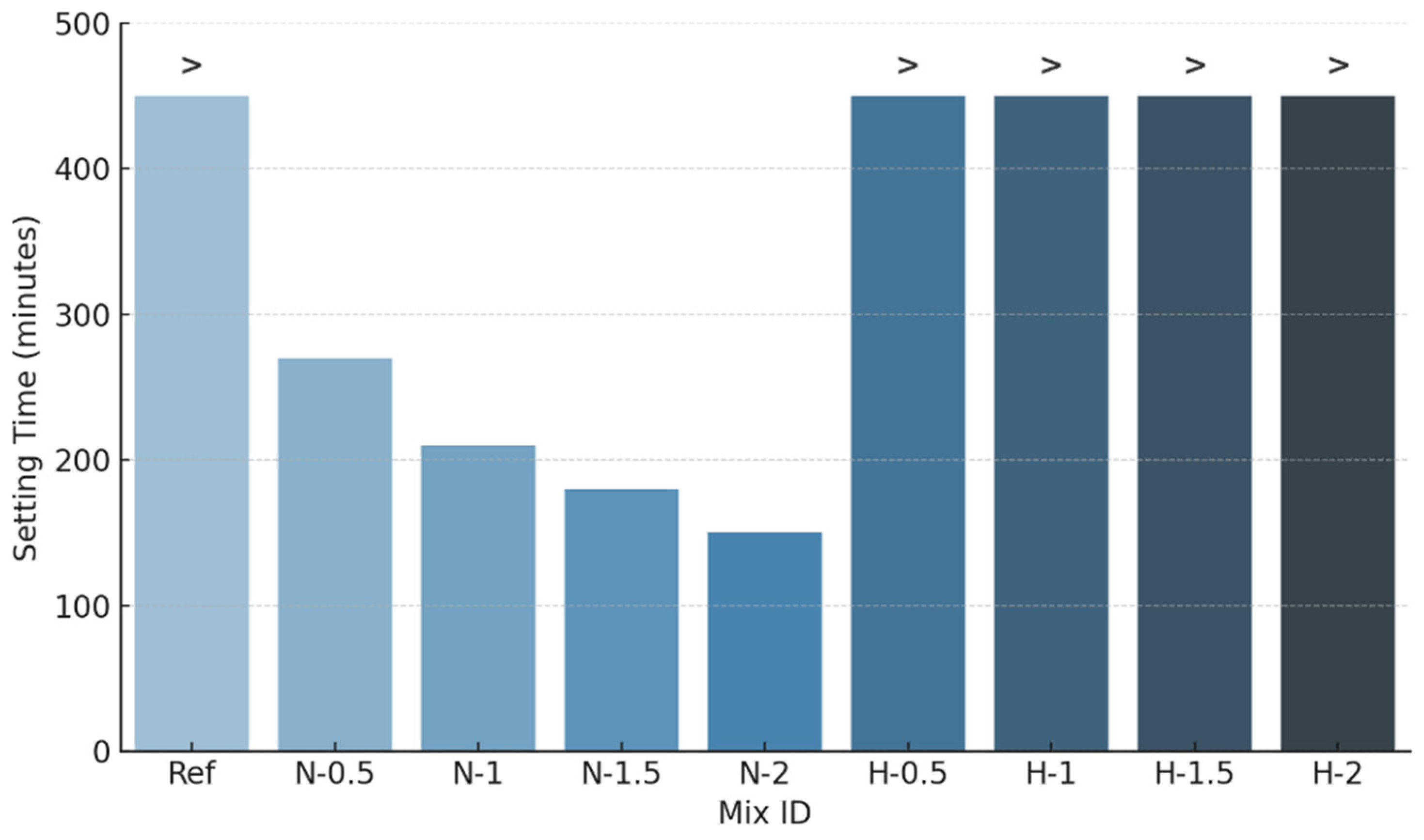
Setting times of the samples are given in
Figure 3. Although both N series and H series mixtures incorporate micro silica, a notable reduction in setting time was recorded mainly in the N series (from 270 min to 150 min). Conversely, the setting time exceeded the measurement threshold of 450 min in all H series mixes. This data indicates that the hydrophobic filler substantially delayed the setting process by limiting water–cement interaction and potentially hindering the dispersion and reactivity of nanosilica. As a result, the hydrophobic component’s delaying effect was more significant than the accelerating influence of nano-silica in the H-series mixtures.
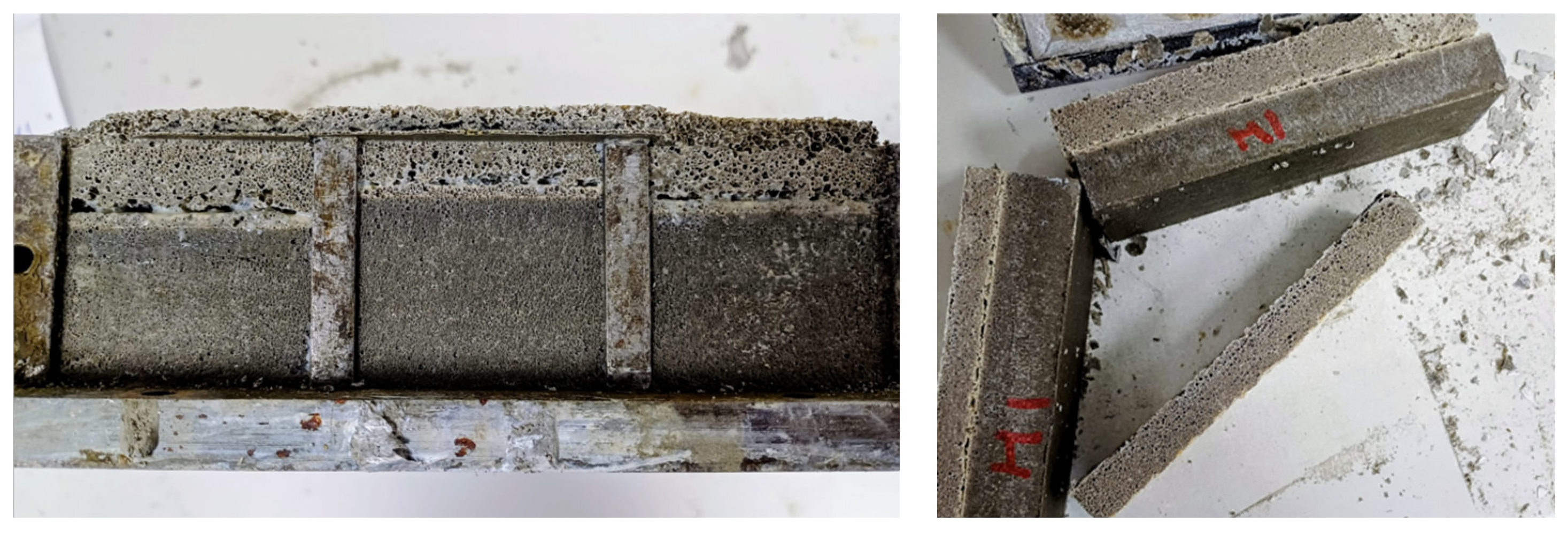
It was noted that the addition of water to samples containing hydrophobized CWP during mortar preparation resulted in mixing difficulties and foaming, attributable to the surface energy generated by the hydrophobic ingredient. Upon curing the materials, it was ascertained that the lower section comprised concrete, while an upper layer of foam, in variable proportions, was present on the components, as illustrated in
Figure 4.
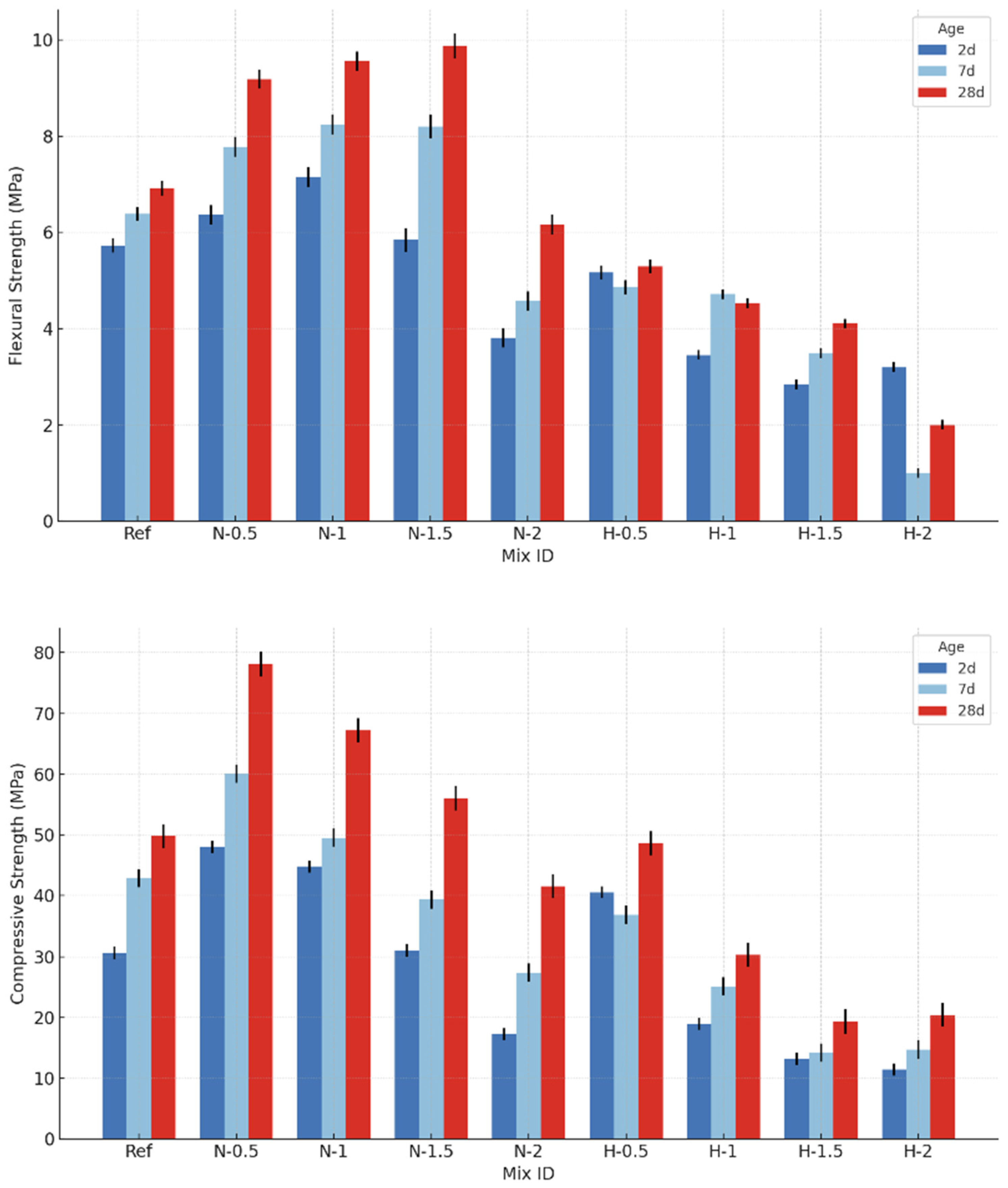
The flexural and compression strength tests of the samples on the 2nd, 7th, and 28th days were conducted in accordance with the EN 12190 standard, and the results are presented in
Figure 5. The flexural strength data exhibited a clear developing trend, with an increase in curing age across all combinations. As anticipated, extended curing periods resulted in increased strength due to the advancement of cement hydration and the ensuing densification of the matrix. Among all mixes, the N-series demonstrated the most significant improvement in flexural strength. The N-1 and N-1.5 combinations achieved peak values of roughly 9.5 and 9.8 MPa at 28 days, significantly exceeding the reference mixture. This behavior underscores the beneficial impact of nanosilica due to its nucleating effect and its capacity to enhance the microstructure. Conversely, the H-series mixtures, which contained nanosilica together with hydrophobic CWP, exhibited significantly reduced flexural strength values. In H-1.5 and H-2, the strength was markedly lower than both the N-series and the reference combination. The results indicate that the hydrophobic filler may have obstructed the contact between cement particles and water, thereby delaying hydration and restricting strength development. Furthermore, the hydrophobic environment may have adversely impacted the dispersion and reactivity of nanosilica particles [
31,
47].
The reference combination exhibited a progressive enhancement in strength over time, reaching around 6.9 MPa at 28 days. This number functioned as a benchmark for assessing the impacts of the various additions. The N-series exceeded the reference performance across all age groups, whereas the H-series typically underperformed.
The compressive strength data clearly illustrates the influence of nanosilica dose and the use of hydrophobic filler on the mechanical properties of cement-based composites. The reference mixture demonstrated a consistent and predicted increase in strength over time, functioning as a reliable baseline. Conversely, the N-series combinations, containing different quantities of nanosilica, demonstrated improved strength progression, especially after 28 days. The N-0.5 mixture attained the highest compressive strength (~78 MPa), demonstrating that a low-to-moderate dosage of nanosilica effectively enhances hydration and compacts the microstructure. Nonetheless, an additional increase in nanosilica concentration (as observed in N-2) resulted in a decline in strength, likely due to particle agglomeration and an imbalance in water demand.
The integration of nanosilica markedly improves the hydration process of cement-based systems via both physical and chemical mechanisms. Nanosilica particles, owing to their elevated specific surface area, facilitate the nucleation of hydration products, hence expediting the development of calcium silicate hydrate (C–S–H) gel, especially in the early stages [
48]. Moreover, their elevated pozzolanic reactivity facilitates the utilization of calcium hydroxide produced during hydration, resulting in the generation of supplementary C–S–H, which enhances the volume and continuity of binding phases [
49]. Their synergistic effects result in a denser microstructure and decreased porosity, hence enhancing compressive strengths at both early and late ages [
50]. Thus, nanosilica emerges as a potent additive for improving the mechanical properties and microstructural integrity of concrete systems.
Conversely, the H-series mixtures, comprising both nanosilica and hydrophobic filler, consistently exhibited reduced compressive strength values at all ages. This indicates that the hydrophobic component considerably inhibited the hydration process by limiting water-cement interaction and maybe hindering the dispersion and reactivity of nanosilica [
31,
46].
As a result, mixes like H-1.5 and H-2 demonstrated both postponed strength growth and diminished final performance. These findings highlight the necessity of carefully calibrating chemical admixtures in cementitious systems to prevent adverse interactions and to maximize the advantages of nanoscale additives.
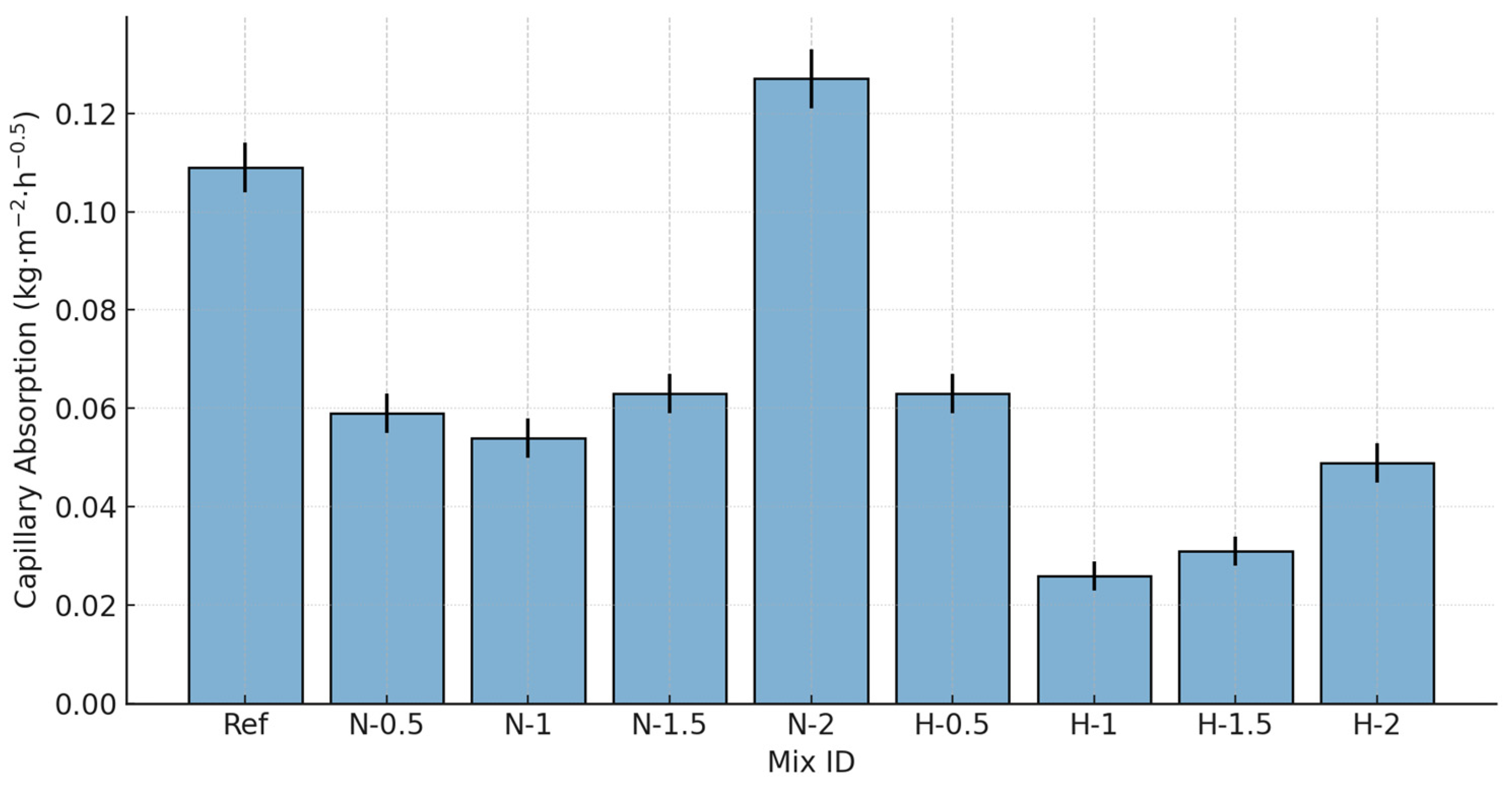
Results of capillary water absorption (
Figure 6) demonstrate a substantial impact of both nanosilica dose and the inclusion of hydrophobic filler on the permeability of the mortars. The reference combination exhibited the highest absorption rate (0.109 kg·m
−2·h
−0.5), while all modified systems showed lower values. The N-series combinations, especially N-0.5 and N-1, exhibited improved matrix densification, hence decreasing water penetration. Nevertheless, an excessive concentration of nanosilica (N-2) resulted in increased absorption, possibly attributable to particle agglomeration or microcracking. Conversely, H-series mortars demonstrated the lowest absorption values, with H-1 and H-1.5 registering below 0.035 kg·m
−2·h
−0.5. This validates the efficacy of hydrophobic filler inhibiting capillary transport, underscoring its potential for applications where durability is important.
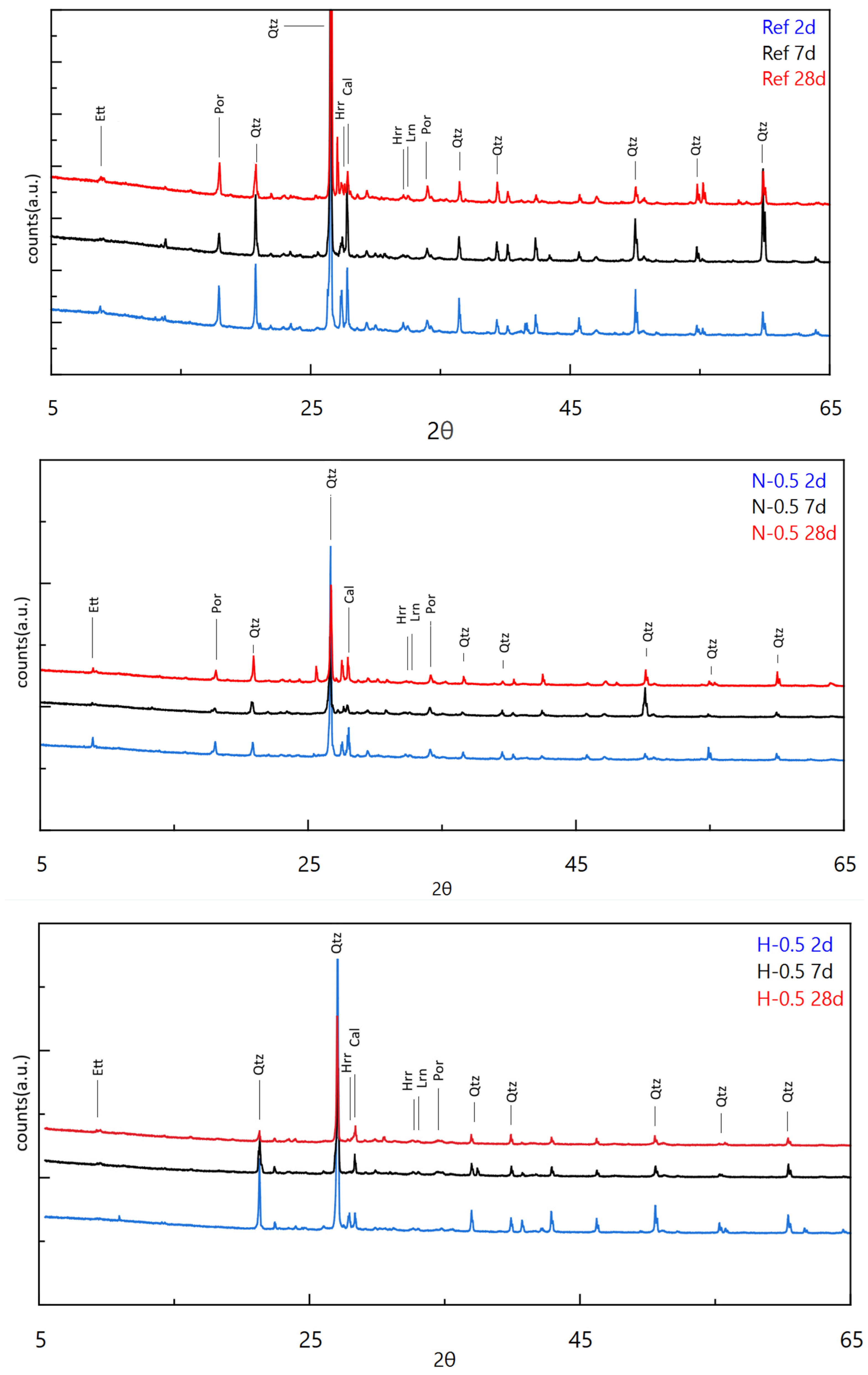
Figure 7 presents the XRD analysis diffractograms of the reference, N-0.5, and H-0.5 samples obtained after 2, 7 and 28 days of curing. The advancement of the hydration process in the samples can be monitored by the reduction of the primary cement phase (alite) at 32.5° in the XRD diffractograms and the increase of the portlandite peak at 18°. The reduction in cement quantities is evident as a result of the prolonged reaction time [
51]. The XRD patterns exhibited distinct peaks associated with portlandite (18° and 34°), quartz (26.6°), and calcite (29.3° and 43°), in addition to a large amorphous hump between 20° and 22°, attributable to C–S–H gel. A slow decline in portlandite peaks and an augmentation of the amorphous C–S–H area from 2 to 28 days signified ongoing hydration and pozzolanic activity, especially in the N-0.5 mix. In the H-0.5 series, the consumption of portlandite transpired at a slower rate due to the hydrophobic surface; yet, a comparable trend was noted at later ages, affirming delayed yet ongoing hydration.
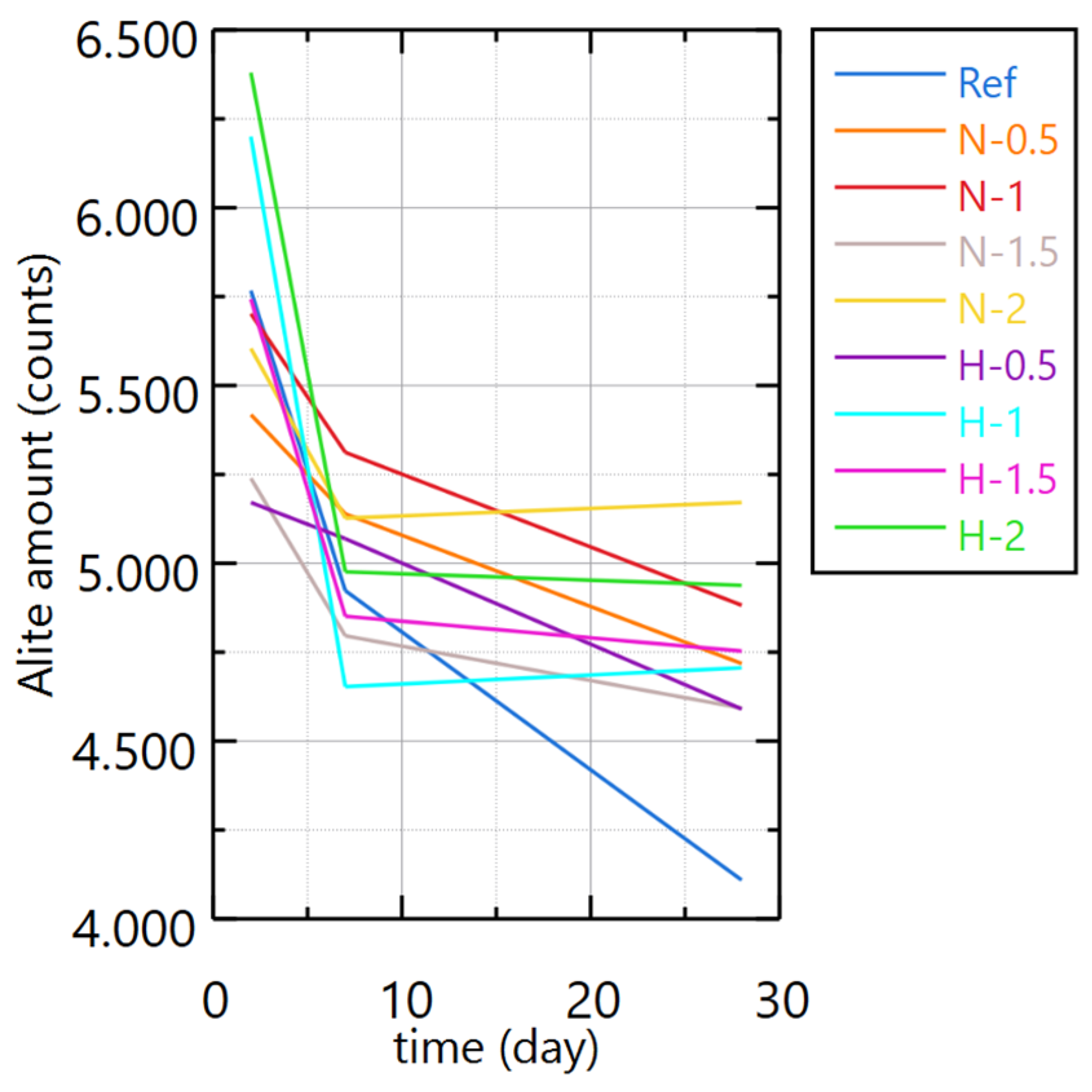
To observe the reaction progress rate for all samples, graphs were constructed based on the count values of the alite phase, the main component of cement, corresponding to their curing durations, as illustrated in
Figure 8 [
52]. An evaluation of cement consumption on the 2nd and 28th days of the reaction reveals that the reference sample exhibits the highest level of consumption. While the N series generally demonstrates better cement utilization than the H series, the second sample in both series shows the weakest performance. This trend aligns with the observed strength results.
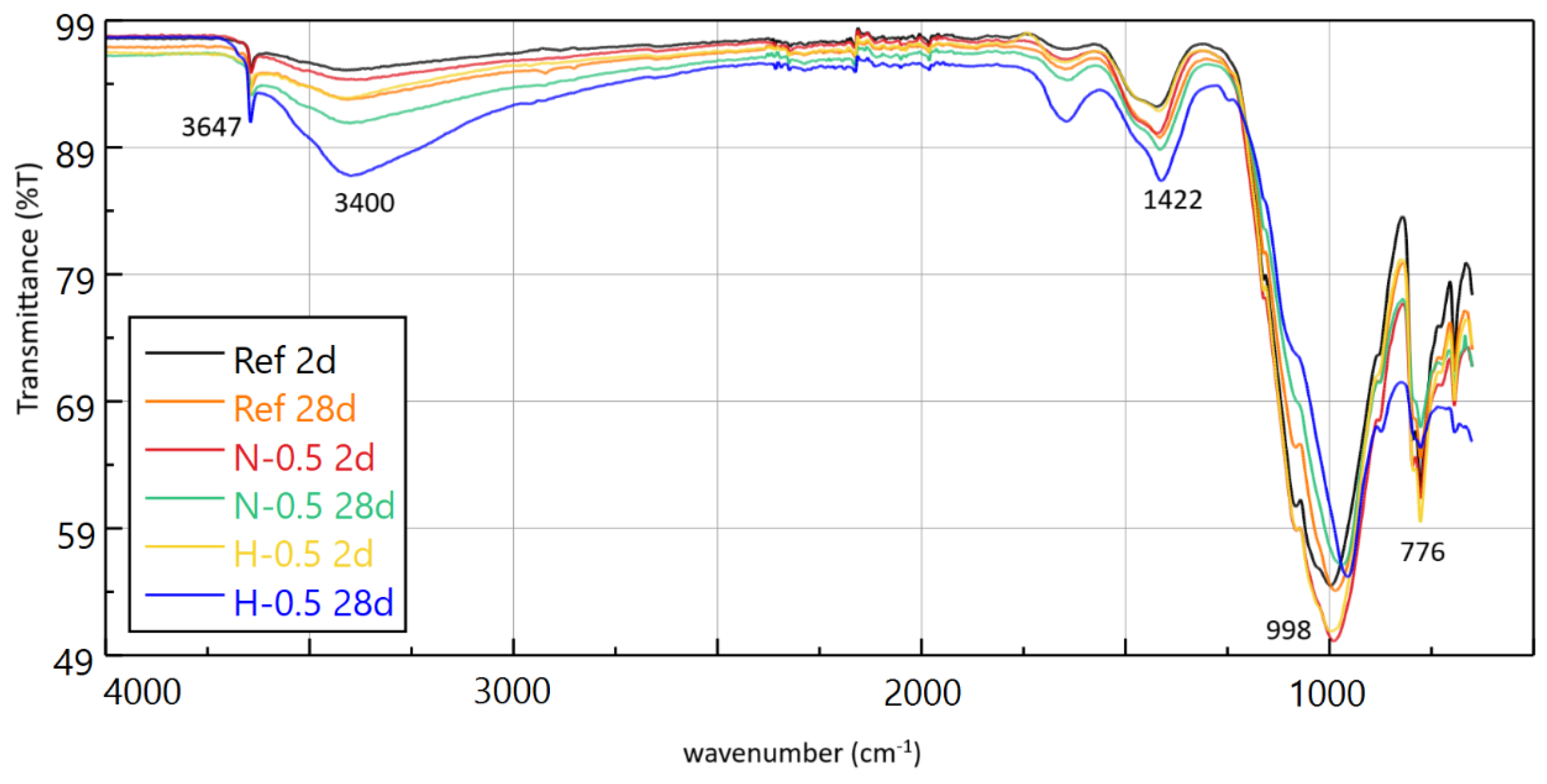
FTIR analysis is especially critical for monitoring the C-S-H gel, which cannot be detected in XRD analysis due to its amorphous structure. The FTIR analysis results for varying curing durations (2 and 28 days) were assessed to analyze the production and progression of hydration products in the samples (
Figure 9). Spectra were analyzed primarily based on bands associated with C–S–H gel, Ca(OH)
2, carbonate, and water.
The weak band at around 3640 cm
−1 corresponds to the O–H stretching vibration of Ca(OH)
2. The band is stronger on the second day, particularly in the reference and N-0.5 samples, and it diminishes in the 28-day samples. This scenario illustrates that the portlandite generated by hydration is gradually utilized by pozzolanic processes over time. This band exhibits considerable weakness in the H-0.5 28-day sample, potentially attributable to the influence of the addition on the hydration process [
53].
The extensive bands at 3400–3450 cm
−1 and 1650 cm
−1 are indicative of the O–H stretching and bending vibrations of physical water, respectively. It is noted that these bands diminish in 28-day samples; this phenomenon suggests that free water is utilized during the curing period and gelation intensifies as hydration advances. Conversely, the permeability (%T) in these places is diminished in the H-0.5 28 d sample, indicating that the sample retains more water or possesses greater structural porosity [
54].
The peaks detected in the ~1420 cm
−1 range signify the existence of carbonate (CO
32−). These peaks grew increasingly apparent, particularly in the 28-day data. The rise, linked to the generation of CaCO
3 by the reaction of Ca(OH)
2 with ambient CO
2, signifies the progression of the carbonation process over time [
53].
The distinctive band of the C–S–H gel, the principal hydration product, is detected at around 970 cm
−1. The pronounced and intensified development of this band in the 28-day samples corroborates that the creation of C–S–H has augmented, and the hydration process has advanced. This rise is particularly significant in the reference samples and those doped with N-0.5. The results from the 28th day of the H-0.5 sample indicate a diminished gelation relative to the other samples [
55].
5. Conclusions
This study evaluated the utilization of CWP as alternatives for aggregate in cement-based systems through a comprehensive approach. The research examined the mechanical capabilities, microstructural characteristics, and durability performance of mortar and concrete samples with varying quantities of CWP additives.
Mechanical testing revealed that low-ratio ceramic waste additions, particularly at 0.5% and 1% concentrations, yielded compressive and tensile strengths comparable to, or in certain instances superior to, the reference combinations. Nevertheless, an increase in the additive ratio to 1.5% and 2% resulted in a reduction of strength values, attributed to the inert nature of the additives and the increased void volume.
XRD analyses demonstrated the temporal progression of hydration products. Regarding the production of portlandite (Ca(OH)2) and C–S–H gel, it was noted that the reference and low-additive mixes exhibited larger amounts of crystalline phases. The reduction of portlandite peaks in 28-day samples and the augmentation of amorphous regions associated with C–S–H validated the advancement of hydration.
FTIR investigations corroborate these findings, indicating that the characteristic bands of C–S–H gel near 970 cm−1 intensify over time, whereas the bands associated with water (3400 and 1650 cm−1) and portlandite (3640 cm−1) diminish. The elevation of carbonate bands noted around 1420 cm−1 signifies the carbonation process resulting from environmental contact. It was shown that, particularly in groups utilizing hydrophobic additive ceramic waste, hydration commenced later, and water was kept inside the system for an extended duration.
Tests on capillary water absorption and hydrophobic performance indicated that certain additives diminished the water permeability of concrete; nevertheless, in some samples, water absorption increased due to heightened porosity. Hydrophobized chemicals, while initially retarding hydration, ultimately enhanced carbonation resistance over time. The synergistic application of nanosilica and ceramic waste powder (CWP) significantly enhanced the mechanical and durability characteristics of the mixtures. In comparison to the reference, compressive and flexural strengths improved by as much as 57% and 43%, respectively, with the incorporation of 0.5%–1.5% nanosilica, whilst hydrophobized CWP diminished capillary water absorption by up to 76%. The findings validate that nanosilica promotes matrix densification, while PDMS-based hydrophobization significantly boosts water resistance, positioning the proposed system as a viable approach for sustainable high-performance cementitious composites.
From an environmental standpoint, replacing 30% of natural aggregate with recycled ceramic waste powder diminishes virgin material usage by around 30% and is projected to reduce CO2 emissions linked to aggregate manufacturing and transportation by about 8%–10%.
Using CWP in cement-based systems in small, controlled amounts is good for both the environment and the technology. The type of additive (e.g., granular or powder, hydrophobic or otherwise), along with its structure and dosage, significantly influences this performance. Therefore, in future studies, it is recommended that surface modification, activation processes and long-term durability performances be evaluated in detail.