Review

Leaching of Scheelite Concentrate for Tungsten Extraction

School of Minerals Processing & Bioengineering, Central South University, Changsha 410083, China
*
Author to whom correspondence should be addressed.
Minerals 2025, 15(5), 475; https://doi.org/10.3390/min15050475
Submission received: 3 April 2025 / Revised: 28 April 2025 / Accepted: 29 April 2025 / Published: 30 April 2025
(This article belongs to the Section Mineral Processing and Extractive Metallurgy)

Abstract

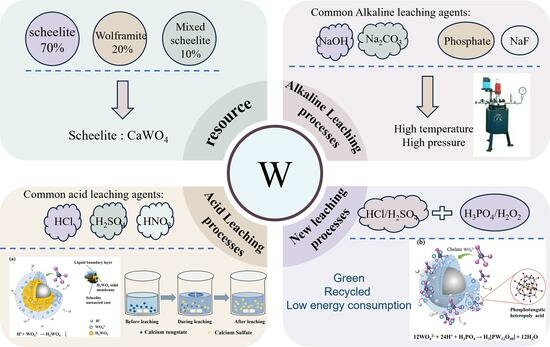
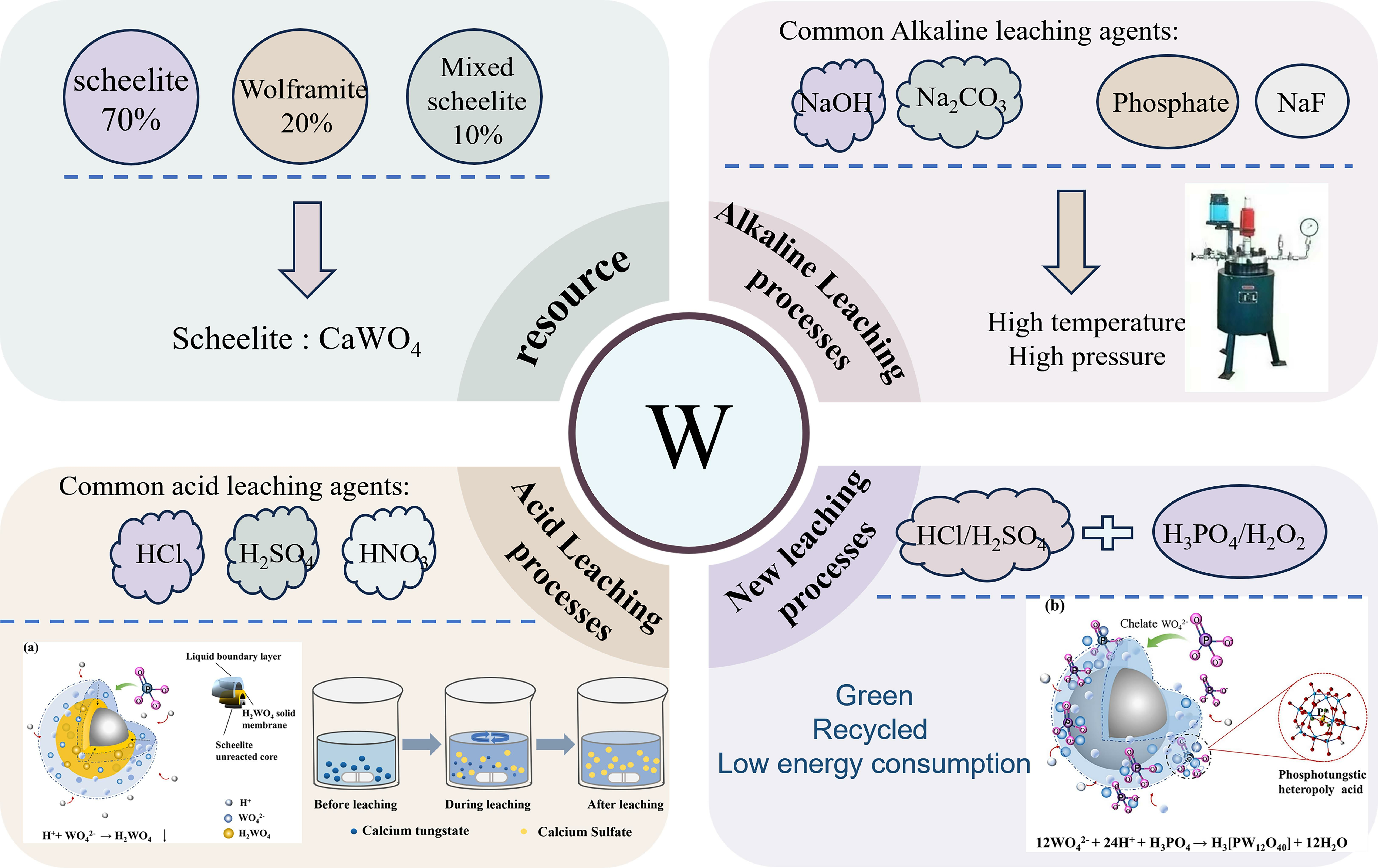
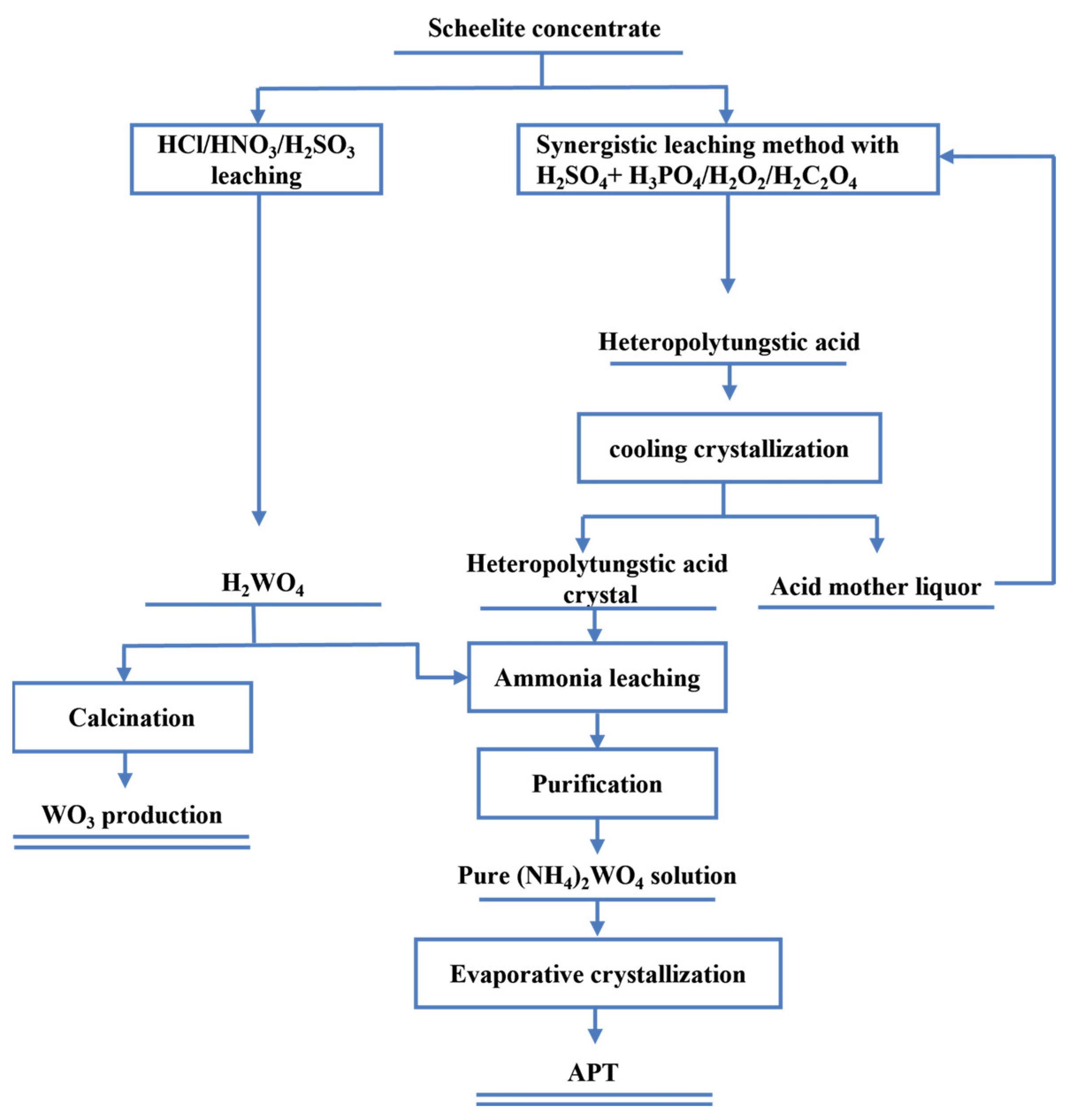
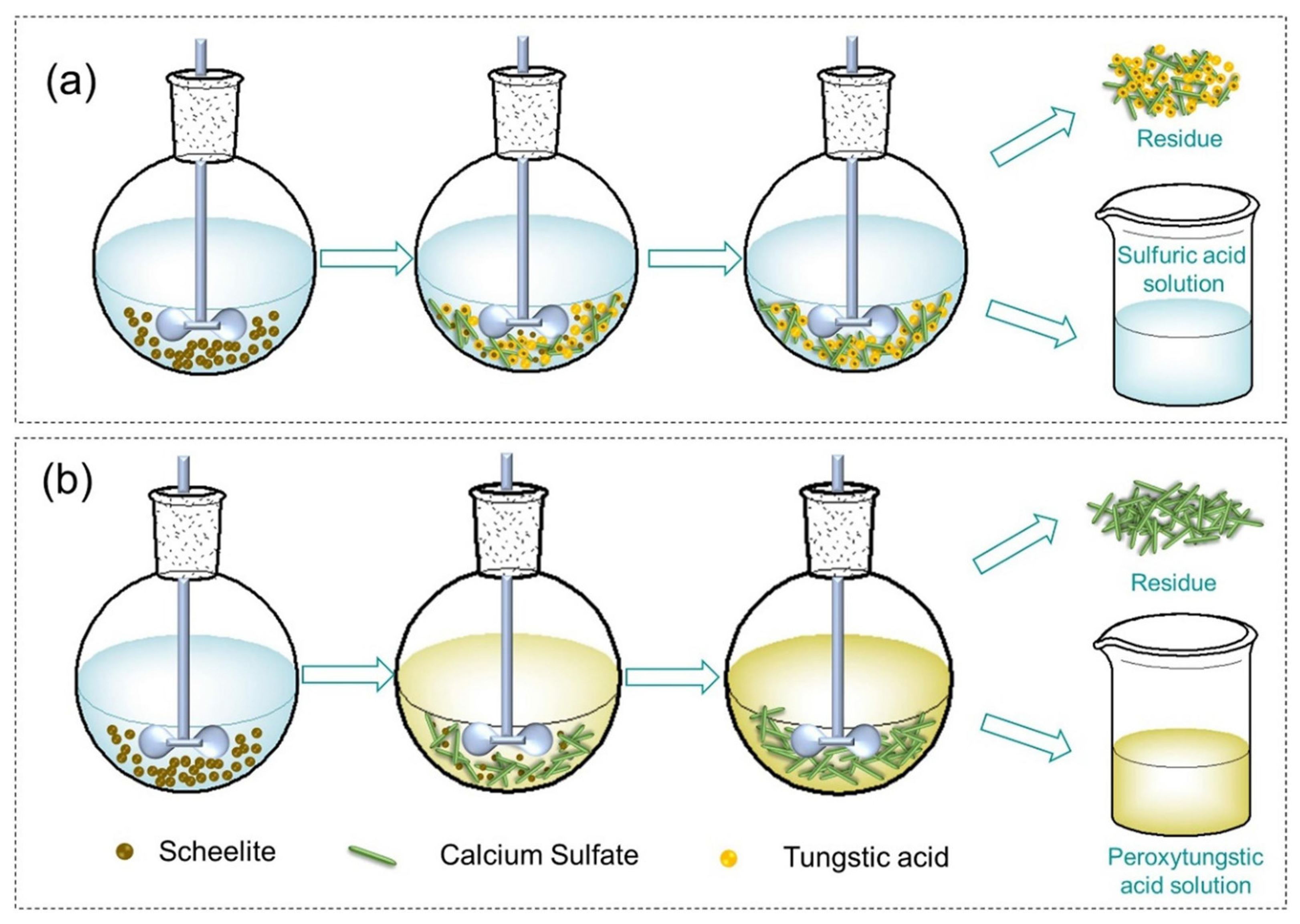
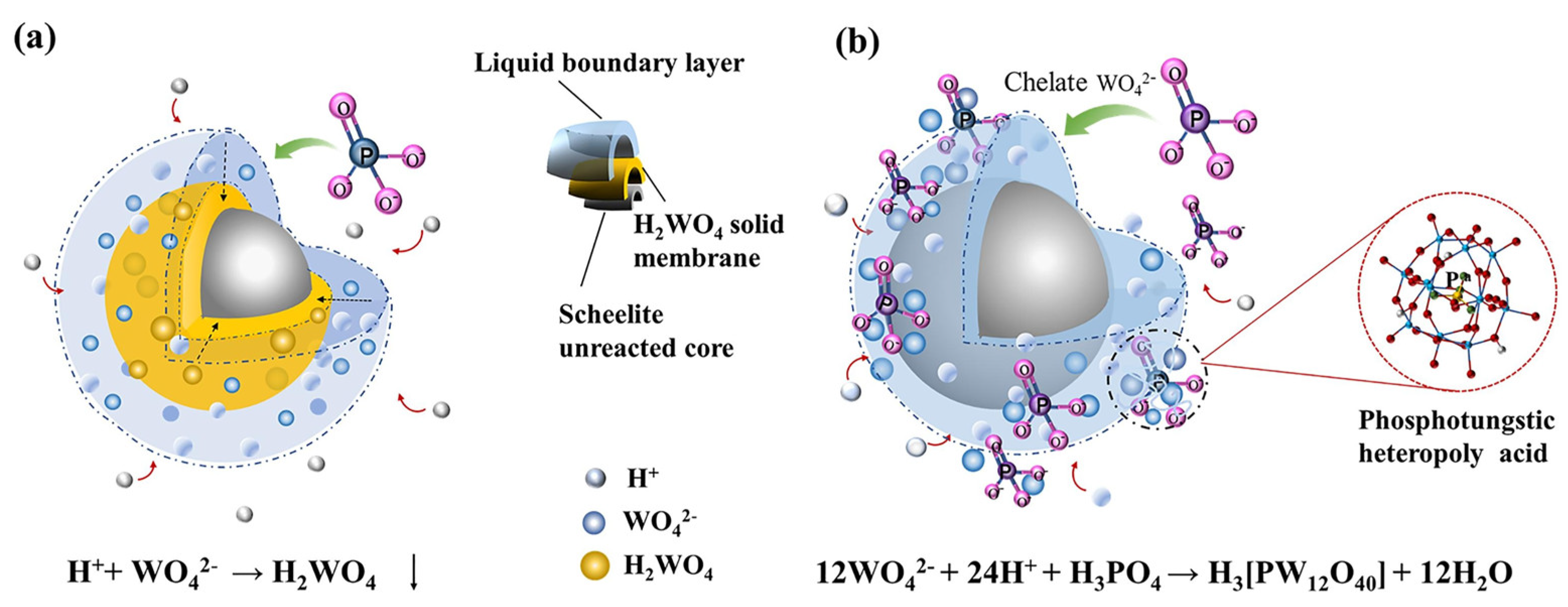
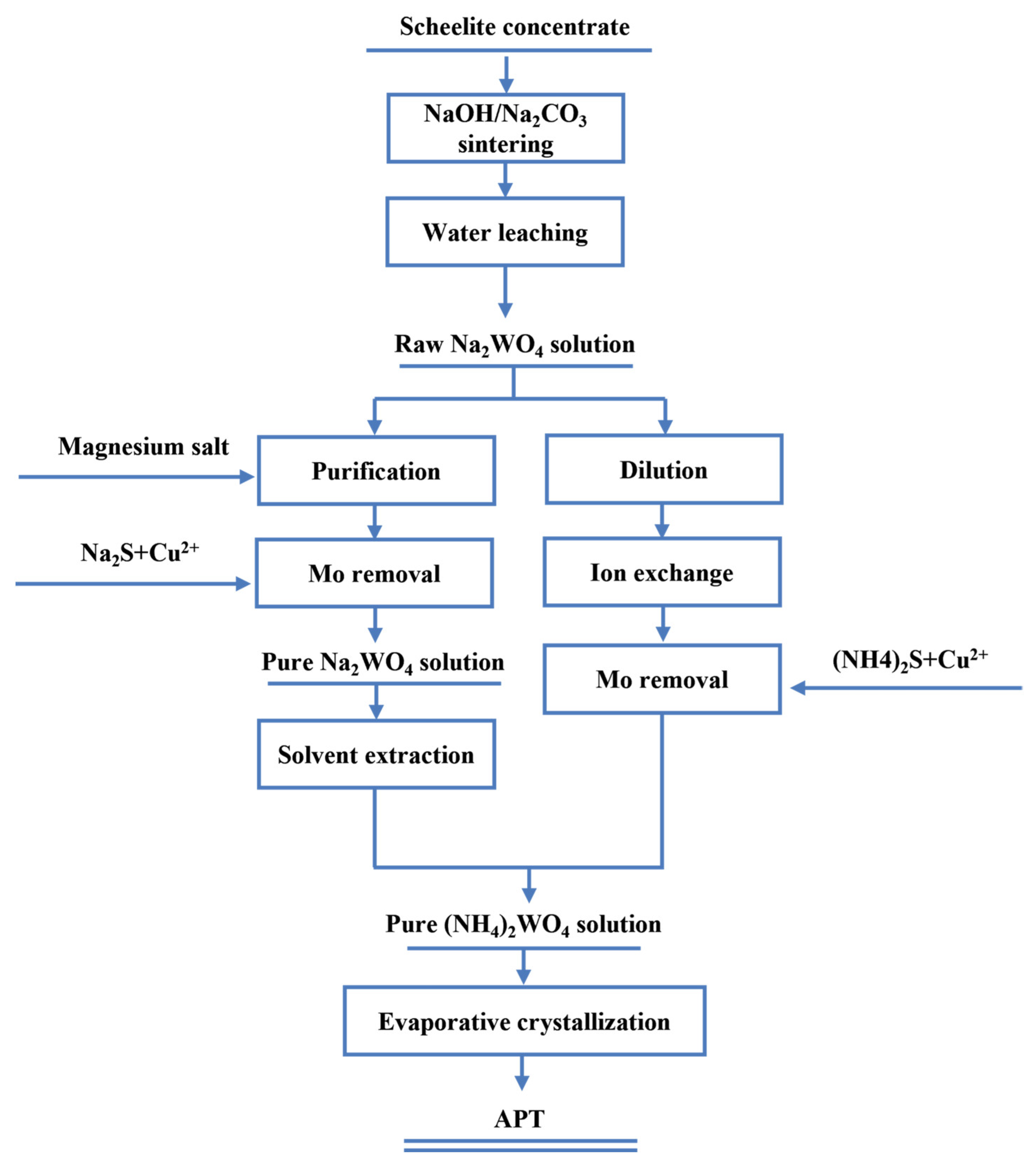
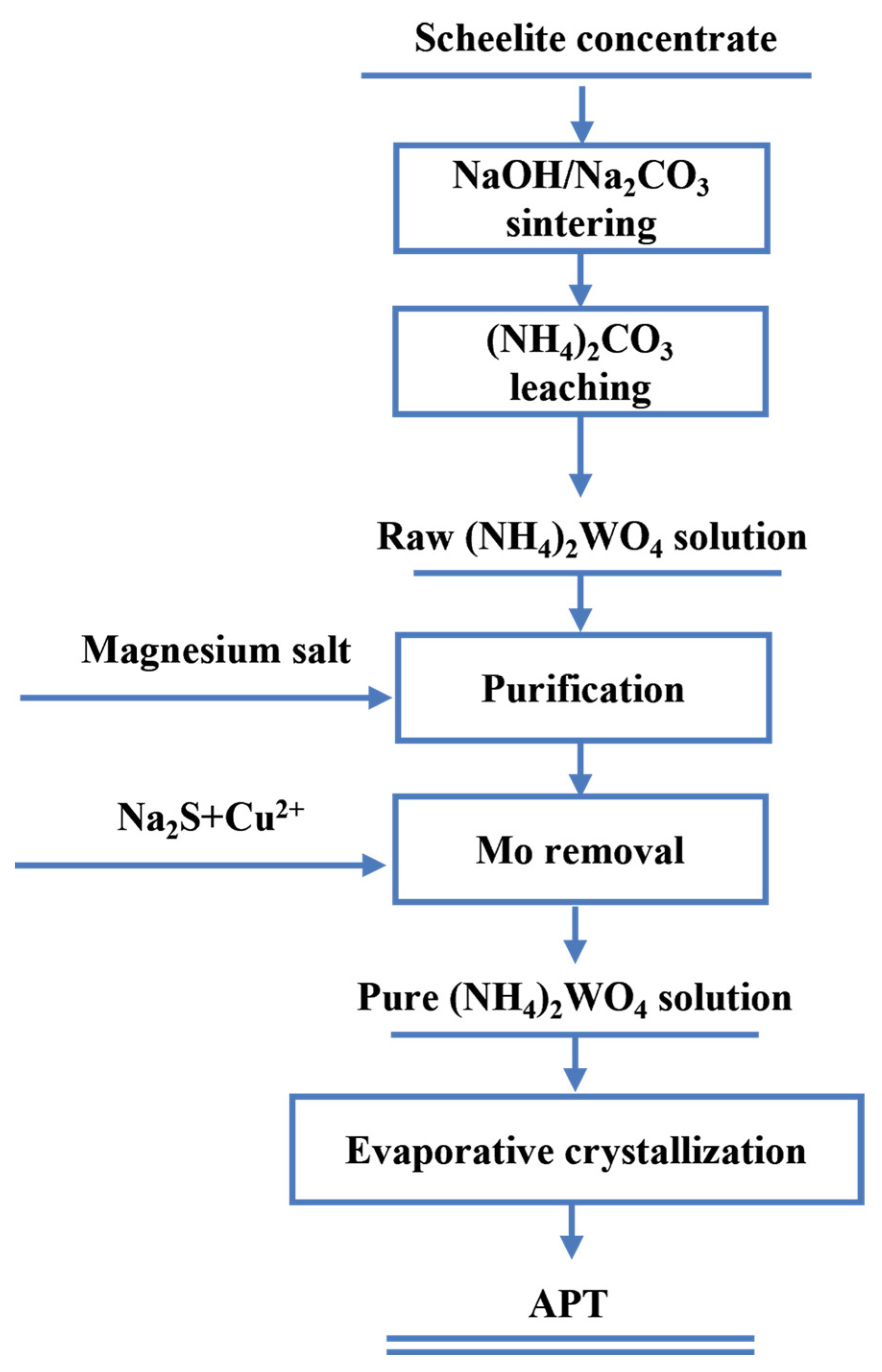
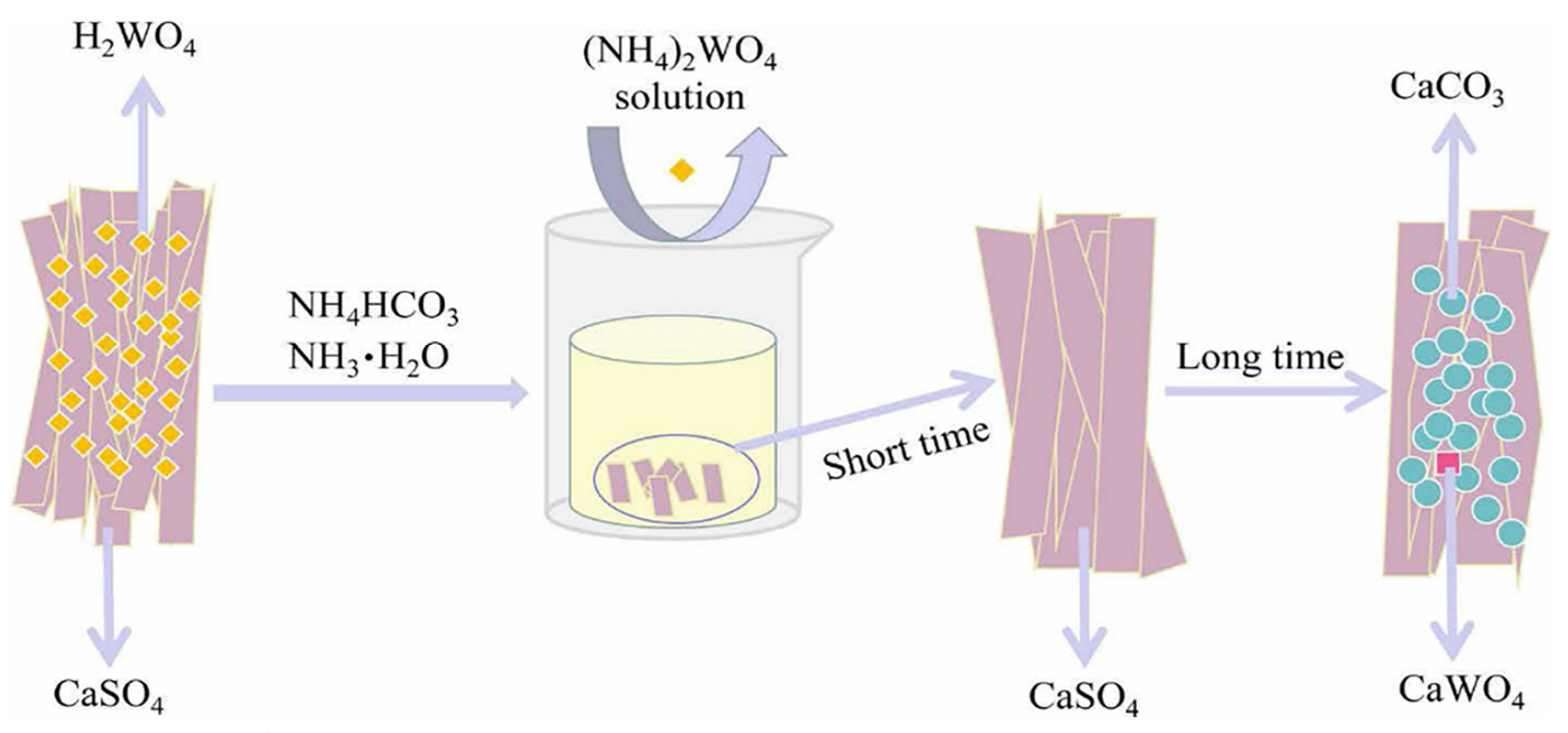
As a critical raw material, tungsten plays a broad role in machining, electronics, aerospace, and other high-tech industries. The extraction of tungsten from tungsten concentrates is a prerequisite for the production of high-purity products. Approximately 70% of China’s tungsten resources are in the form of scheelite. The extraction method of low-quality scheelite is crucial for the production application of the tungsten process as resources of high-quality wolframite are gradually being depleted. This article systematically reviews the processes and challenges faced in the hydrometallurgical process of scheelite concentrates and provides useful insights. Typical leaching processes for scheelite concentrate have shown excellent leaching efficiencies, with tungsten trioxide (WO3) recoveries exceeding 90%. Alkaline leaching processes are promising, but temperature and pressure are crucial for this method. The sintering–leaching process is energy-consuming and costly. Meanwhile, leaching with hydrochloric acid (HCl) or sulfuric acid (H2SO4) often results in the formation of tungstic acid (H2WO4) on the mineral surface, which inhibits further leaching and leads to a low extraction rate. In contrast, the mixed-acid leaching method is more promising, with recovery close to 100%, a short process, and low-cost, and the acid leaching solution is recyclable.
Keywords: tungsten resources; scheelite; leaching process; tungsten extraction; sustainability tungsten resources; scheelite; leaching process; tungsten extraction; sustainability
Graphical Abstract