Article

Evaluated Utilization of Middle–Heavy REE Resources in Bayan Obo Deposit: Insight from Geochemical Composition and Process Mineralogy

1
Baotou Rare Earth Research Institute, Baotou 014000, China
2
National Key Laboratory of Baiyunobo Rare Earth Resource Researches and Comprehensive Utilization, Baotou 014000, China
*
Author to whom correspondence should be addressed.
Minerals 2025, 15(3), 212; https://doi.org/10.3390/min15030212
Submission received: 12 December 2024 / Revised: 8 February 2025 / Accepted: 12 February 2025 / Published: 22 February 2025
(This article belongs to the Section Mineral Geochemistry and Geochronology)

Abstract

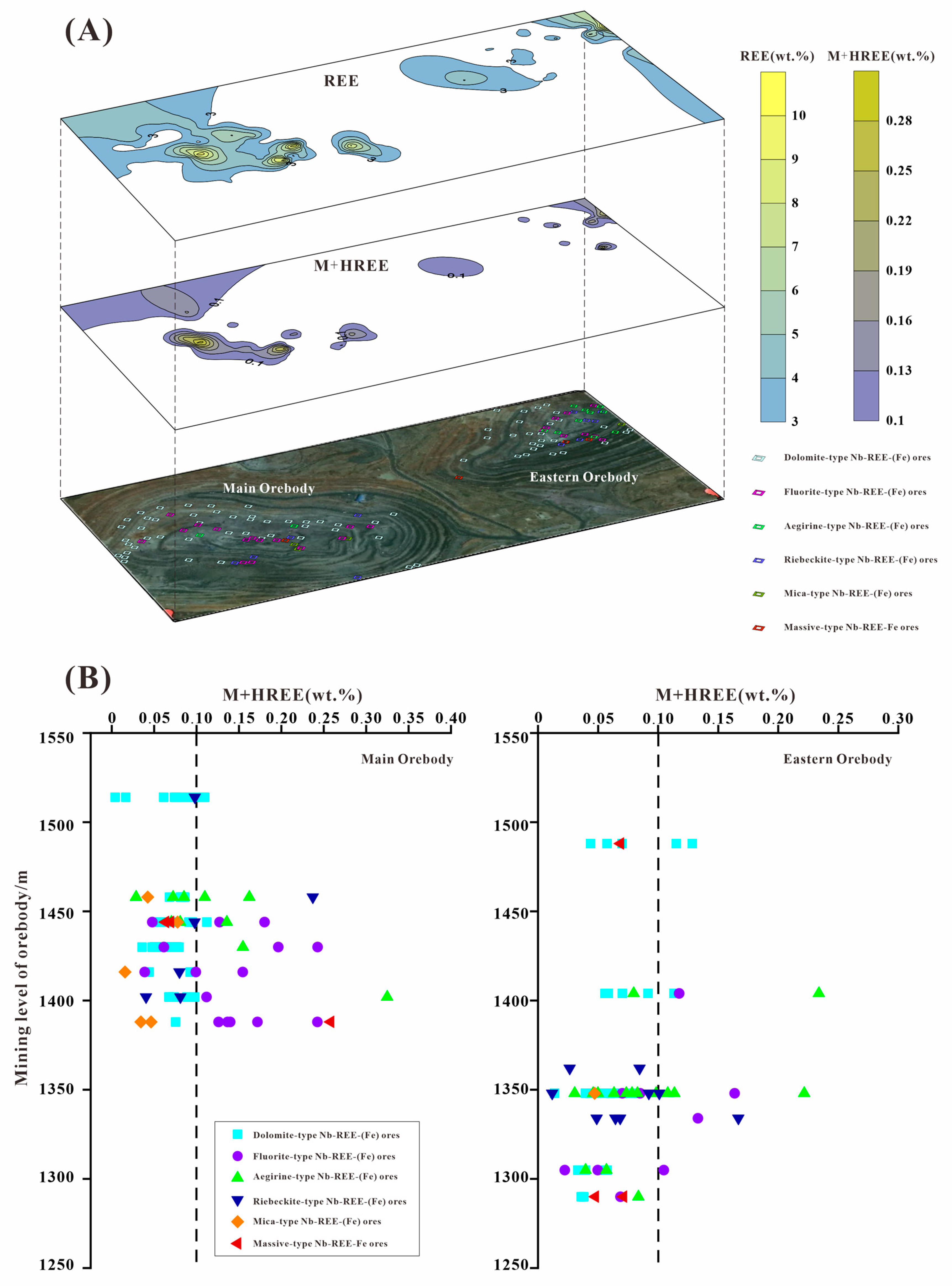
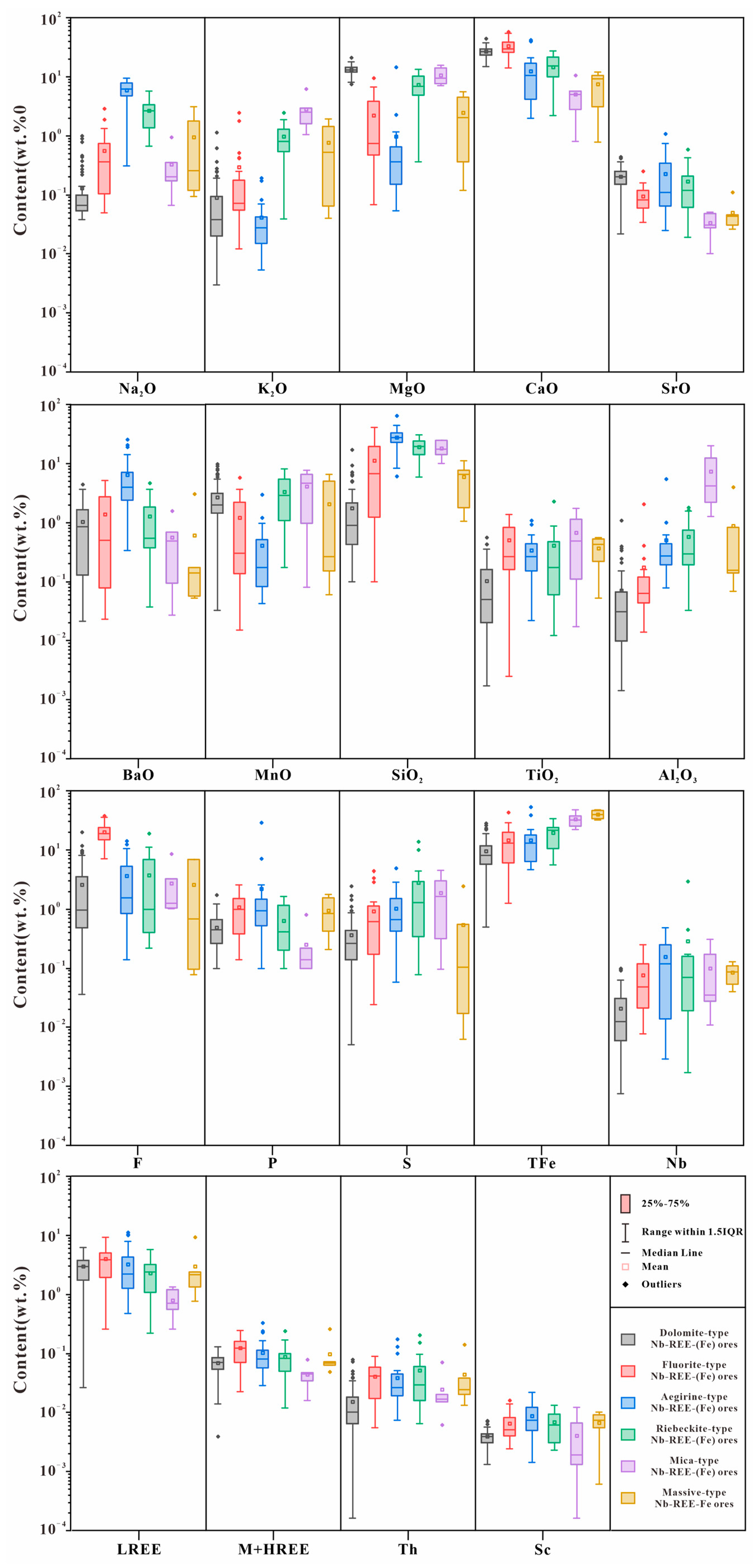
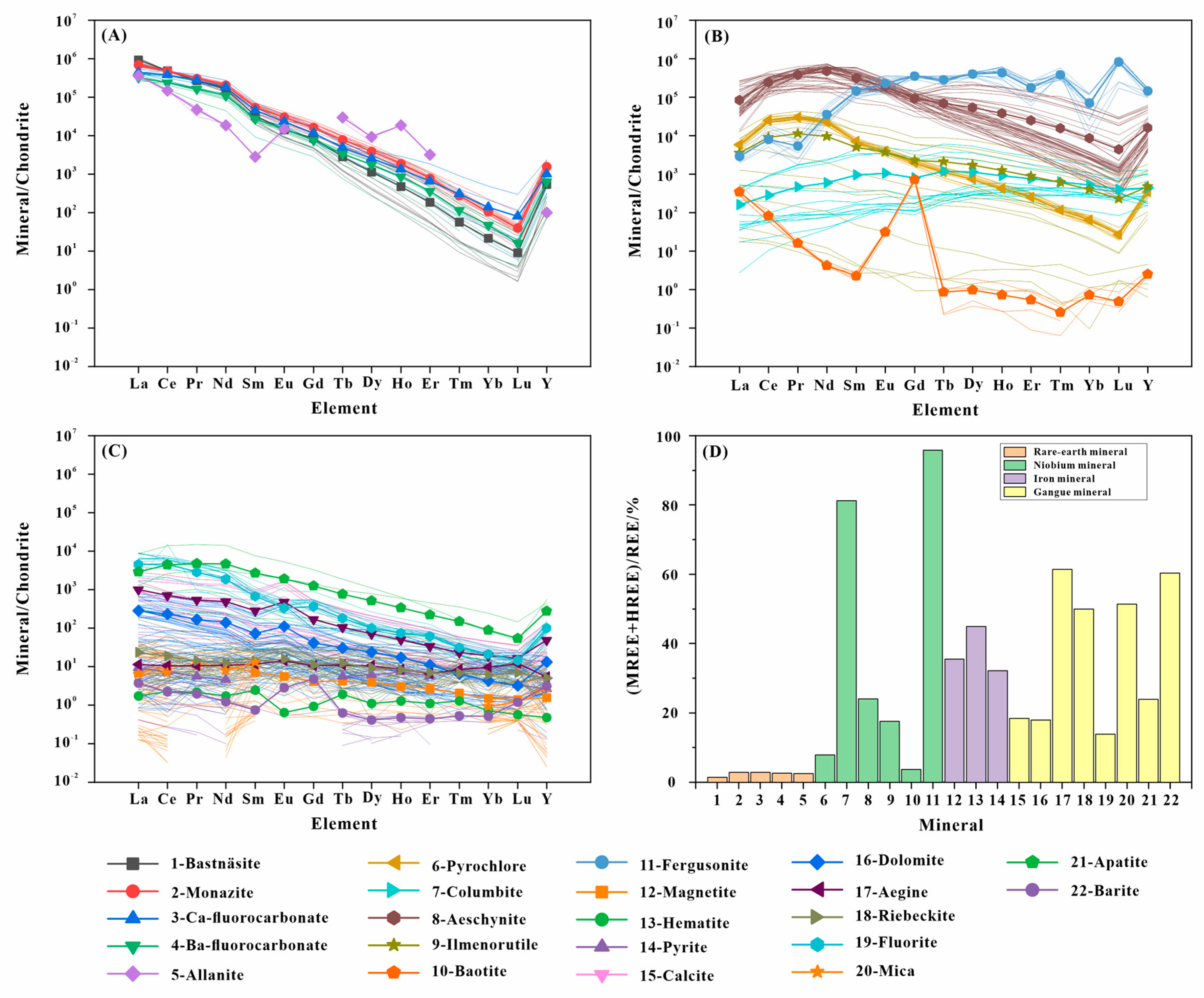
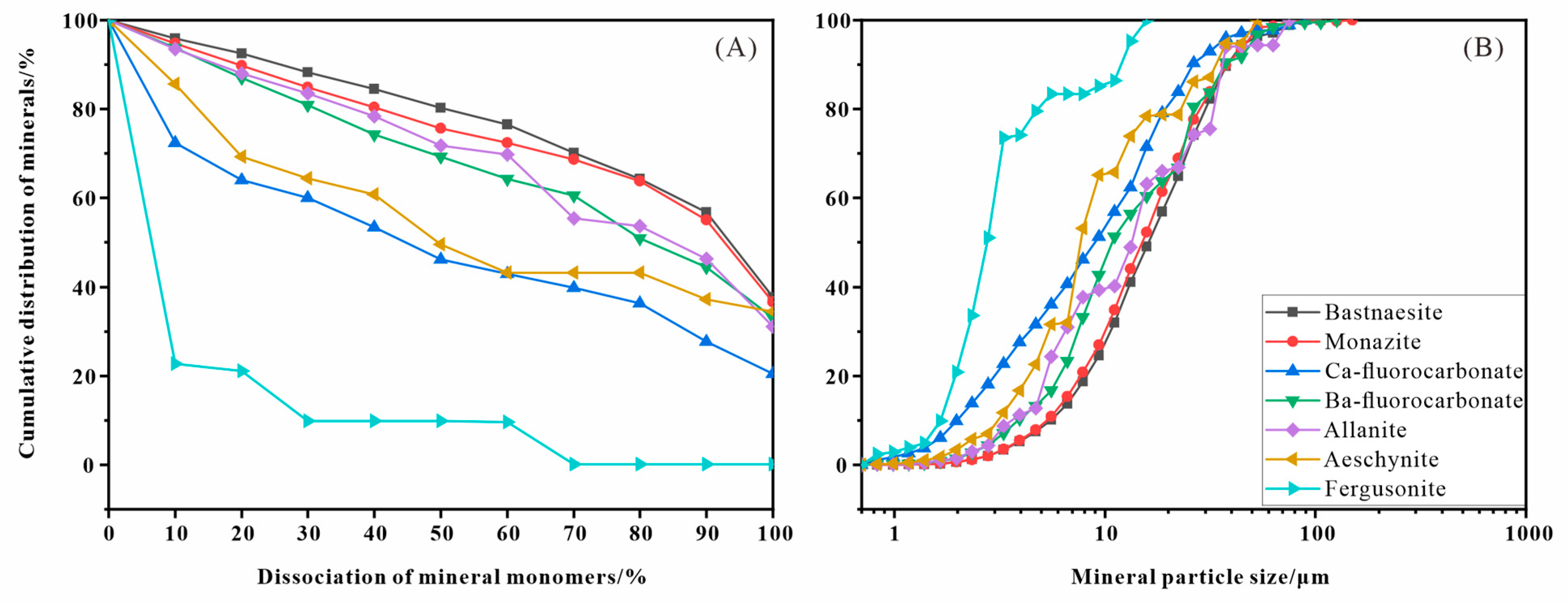
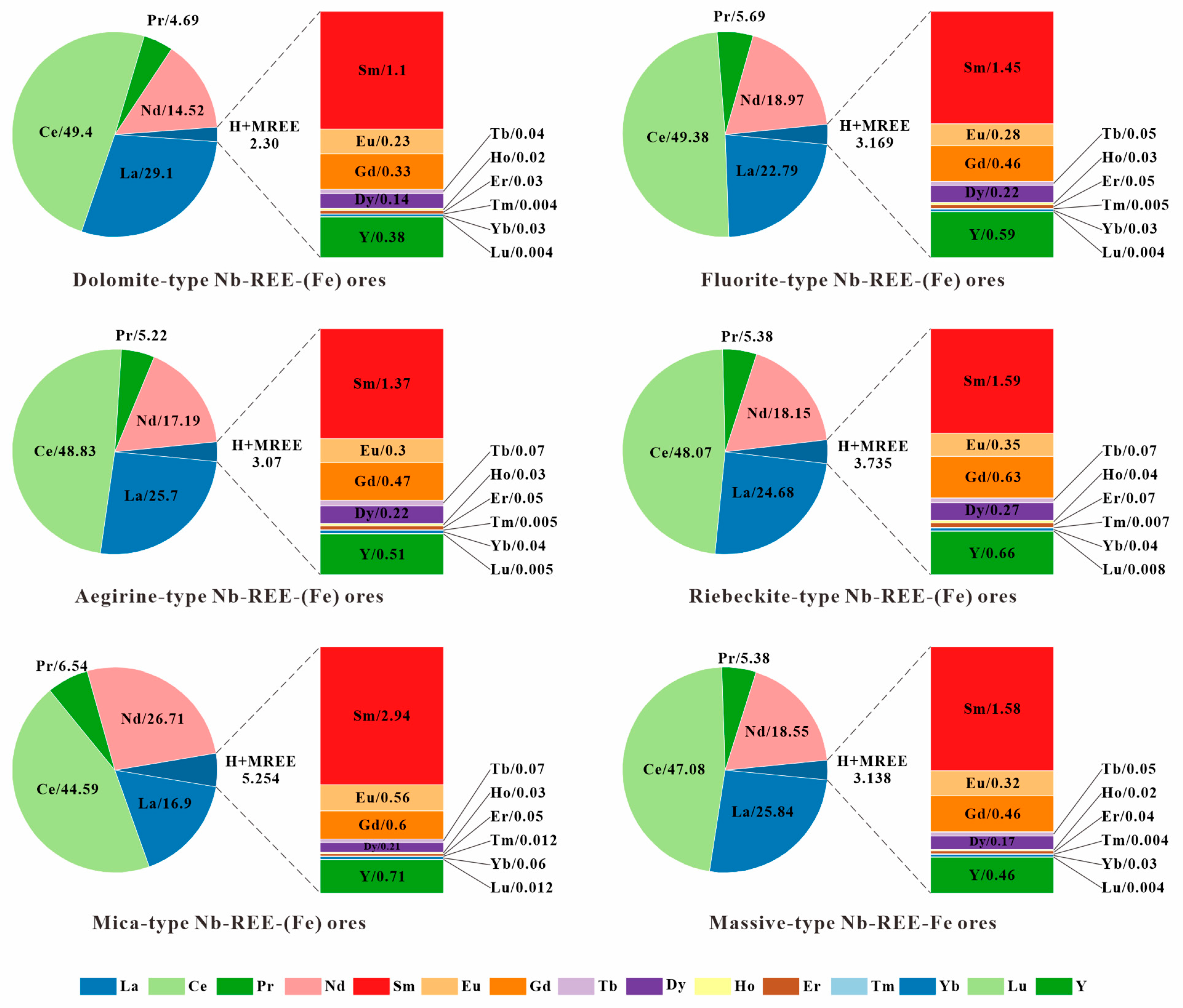
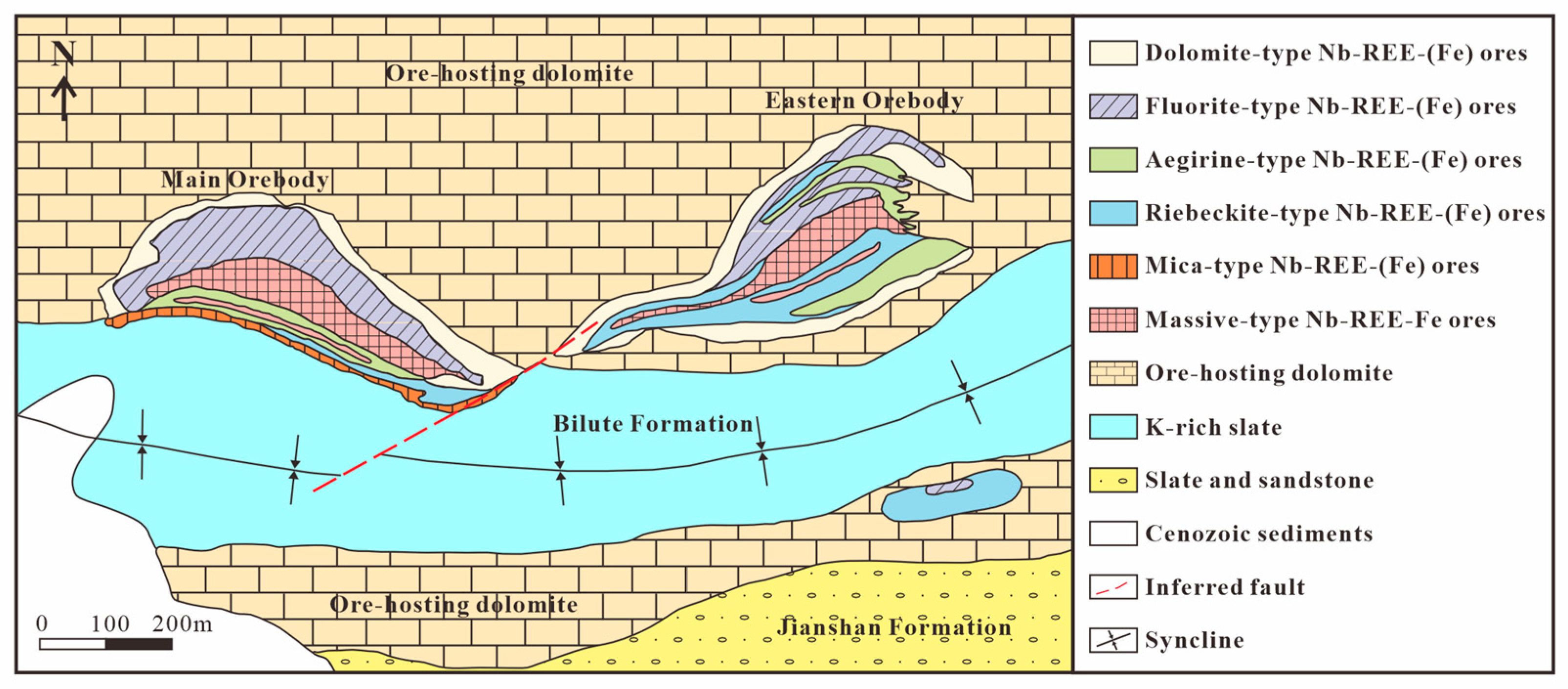
The Bayan Obo is the largest carbonatite-type rare earth deposit in the world. It not only has a large amount of light rare earth element (LREE) resources but also hosts approximately 9 million tons of medium and heavy rare earth element (M+HREE) resources. However, the M+HREE resources have not received enough attention, which hinders their further utilization. In this study, we conduct a systematic investigation of the distribution and process mineralogy properties of M+HREE in different types of ores in the Bayan Obo deposit. The high-value area (>0.1%) of M+HREE elements is found concentrated in the central and deeper parts of the Main and East orebodies. The content of M+HREE varies among different types of ores, with the Aegirine type (1005 ppm) and Fluorite type (1204 ppm) showing a higher average M+HREE concentration. The minerals rich in M+HREE include bastnäsite, monazite, Ca-fluorocarbonate, Ba-fluorocarbonate, allanite, aeschynite, and fergusonite, each with concentrations exceeding 4000 ppm. Aeschynite and fergusonite, in particular, exhibit high M+HREE concentrations and are enriched in fluorite-type and aegirine-type ores. Analysis of the mixed raw ores from the production line at the concentrating plant reveals an M+HREE concentration of approximately 0.2% and a concentration of the seven target minerals at around 12%. However, the particle size distribution and monomer dissociation degree are limited to below 22.3 µm and 40%, respectively. Based on these integrated analyses, we propose that the fluorite-type and aegirine-type ores within the Main and East open-pits are potential M+HREE targets. Furthermore, the recycling and utilization of M+HREE resources in the Bayan Obo deposit require a well-structured process flow and the selection of advanced processing equipment in the future.
Keywords: M+HREE resource; Geochemical composition; Process properties; M+HREE utilization; Bayan Obo deposit M+HREE resource; Geochemical composition; Process properties; M+HREE utilization; Bayan Obo deposit
Graphical Abstract