Article

Genesis of High-Grade Gold Mineralization at the Guocheng Deposit, Jiaodong Peninsula: Constraints from Magnetite Geochemistry


1
State Key Laboratory of Geological Processes and Mineral Resources, Frontiers Science Center for Deep-Time Digital Earth, School of Earth Sciences and Resources, China University of Geosciences, Beijing 100083, China
2
Key Laboratory of Gold Mineralization Processes and Resource Utilization Subordinated to the Ministry of Natural Resources, Shandong Key Laboratory of Mineralization Processes and Resources Utilization of Strategic Metal Minerals (Preparatory), Shandong Institute of Geological Sciences, Jinan 250013, China
3
Shandong Gold Geological Mineral Exploration Co., Ltd., Yantai 265147, China
4
State Key Laboratory of Process Automation in Mining & Metallurgy, Beijing Key Laboratory of Process Automation in Mining & Metallurgy, BGRIMM Technology Group, Beijing 100160, China
5
Shandong Yantai Xintai Gold Mining Industry Co., Ltd., Yantai 265147, China
6
Shandong Provincial No. 3 Exploration Institute of Geology and Mineral Resources, Yantai 264011, China
*
Authors to whom correspondence should be addressed.
Minerals 2025, 15(12), 1267; https://doi.org/10.3390/min15121267
Submission received: 25 October 2025 / Revised: 20 November 2025 / Accepted: 24 November 2025 / Published: 29 November 2025
(This article belongs to the Special Issue Gold–Polymetallic Deposits in Convergent Margins)

Abstract

The processes responsible for high-grade disseminated gold mineralization remain poorly constrained, hindering effective exploration. This study integrates petrography, BPMA, and LA-ICP-MS analysis of magnetite from marble- and granite-hosted ores with contrasting gold grades, to constrain wall-rock-induced changes in the thermodynamic environment. BPMA results show distinct mineral assemblages: granite-hosted ores are characterized by quartz (52.31%)-K-feldspar (19.65%)-sericite (9.56%)-pyrite (8.36%), whereas marble-hosted ores feature pyrrhotite (33.90%)-chlorite (27.50%)-pyrite (15.22%)-magnetite (1.94%). The closed intergrowths of magnetite with gold and sulfides, along with the magnetite Ga-V (Grant-Vaughan) discrimination diagram, indicate a hydrothermal origin for magnetite formed during the mineralization stage. Geochemical data show that marble-hosted magnetite has lower V and chalcophile element (Co, Ni, Sn, Zn) concentrations than granite-hosted magnetite. Considering the partitioning behavior of these elements in magnetite, these differences indicate magnetite crystallization under increasing oxygen fugacity (fO2) and decreasing sulfur fugacity (fS2). Thermodynamic modeling results demonstrate that these changes in fO2 and fS2 destabilized gold-sulfur complexes in the ore-forming fluid, significantly enhancing gold precipitation efficiency and ultimately leading to the formation of high-grade ores in marble.

1. Introduction

High-grade disseminated gold ores constitute an economically crucial component of many gold deposits, as their formation directly determines the overall ore grade and mining potential of a deposit [1,2,3,4]. The formation of disseminated gold ores is widely recognized to be controlled by fluid–rock interactions, through which ore-forming fluids exchange components with wall rocks, leading to thermodynamic variations such as changes in redox state, pH, and sulfur activity [5,6,7,8]. These variations can significantly influence the solubility and transportation of gold, thereby controlling the efficiency of gold precipitation [9,10,11]. However, because different deposits mostly form under distinct temperature, pressure, and fluid-composition conditions, it remains challenging to systematically compare gold-precipitation efficiency among disseminated gold systems [5,12,13]. Consequently, the influence of different fluid–rock interaction mechanisms on gold-precipitation efficiency and ore grade is still unclear [14,15,16]. This uncertainty limits our understanding of gold precipitation processes in disseminated system and impedes the advancement of exploration efforts.
The Jiaodong gold province, located on the southeastern margin of the North China Craton, is the largest gold-producing region in China, with total gold resources exceeding 5000 tonnes [17,18]. The majority of gold deposits in this region display highly consistent mineral assemblages, alteration zonation, mineralization stages, isotopic signatures and ages [19,20,21,22,23]. Their ore-forming fluids are widely regarded as having similar source and properties, characterized by medium-to-low temperatures (~200–400 °C), low salinities (2–10 wt% NaCl eqv.) and near-neutral to weakly acidic pH [19,24]. The Guocheng gold deposit is situated within this province, shares these common features. Previous studies on the Guocheng gold deposit indicate that mineralization occurred at 119 ± 2 Ma [25], and the ore-forming fluids were of medium–low temperature, low salinity, and weakly acidic to near-neutral properties [26,27,28], consistent with the mineralization peak (120 ± 2 Ma) and fluid characteristics of the Jiaodong gold deposits [29,30]. These similarities suggest that the Guocheng deposit shares the same ore-forming fluid system with other deposits in the province, and that it was formed by the fluid which ascended along the Guocheng fault. However, field investigations at Guocheng reveal a marked difference in gold grade between ores hosted in its two main wall rock (marble and granite): marble-hosted ores often display high-grade gold mineralization (gold grade typically 5–10 g/t Au), whereas granite-hosted ores generally show lower gold grades (~1.4 g/t Au) [31,32]. The significant gold-grade disparity between the two types of disseminated ores within the same metallogenic system at Guocheng gold deposit, provides ideal conditions to investigate how different fluid–rock interactions control gold-precipitation efficiency and the formation of high-grade disseminated gold ores. Nevertheless, the processes controlling the distinct contrast in gold grades between the two types of disseminated ores within the same system have not yet been convincingly explained.
In recent years, the trace element composition of magnetite has been demonstrated as an effective tracer of the thermodynamic environment during its formation [33,34,35]. For example, by comparing two types of magnetite in the Weizigou gold deposit, previous researchers found that the V content of early-generation magnetite (Mag-II-B) was significantly higher than that of late-generation magnetite (Mag-II-A), revealing that the ore-forming fluid evolved from relatively high oxygen fugacity in the early stage to low oxygen fugacity in the late stage [15]. At the Guocheng gold deposit, magnetite is widely developed in the gold ores and can serve as a reliable indicator for reflecting the physicochemical conditions of mineralization. To better understand the mineralogical characteristics associated with gold mineralization, we employed the BGRIMM Process Mineralogy Analyzer (BPMA)—the first automated mineralogy system independently developed in China by the Beijing General Research Institute of Mining & Metallurgy (BGRIMM Technology Group). This SEM–EDS–based technology enables rapid and quantitative characterization of mineral composition [36,37,38], providing an effective tool for investigating ore-forming processes [39]. In this study, we conducted an integrated investigation combining microscopic petrography, automated mineralogy (BPMA), and LA-ICP-MS trace-element analysis of magnetite from representative disseminated marble-hosted and granite-hosted ores at Guocheng gold deposit. By systematically comparing mineral assemblages and magnetite geochemical characteristics between the two ore types, we constrained the variations in thermodynamic conditions during gold precipitation, and revealed how different fluid–rock interactions controlled gold precipitation efficiency and the formation of high-grade disseminated ores at Guocheng gold deposit. The study can advance the understanding of the formation mechanisms of high-grade disseminated gold ores and provide a theoretical basis for their exploration and targeting.

2. Regional Geologic Setting

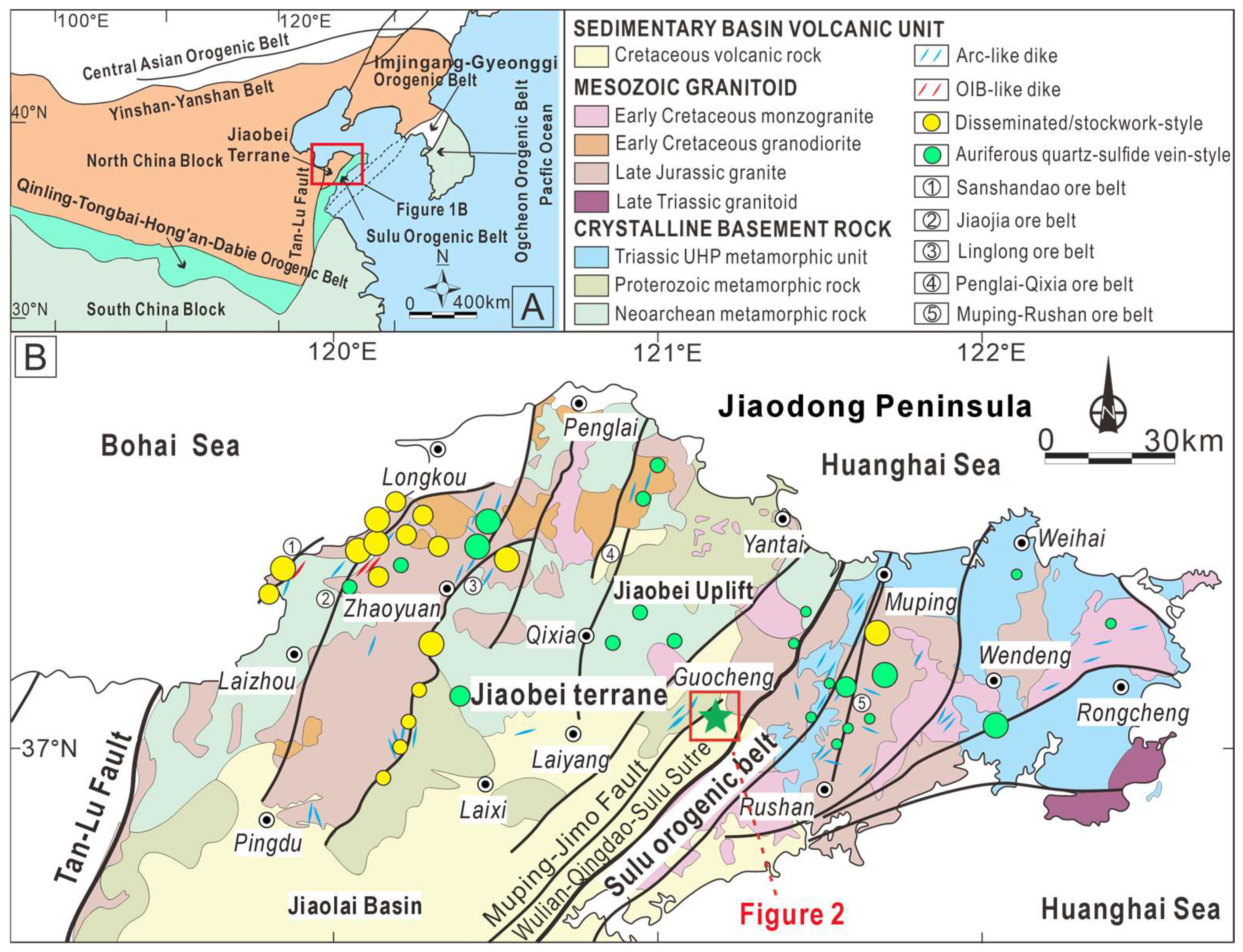
The Jiaodong Peninsula lies along the southeastern margin of the North China Craton, bounded by the Tan–Lu strike-slip fault zone to the west, the Yellow Sea to the east, and surrounded on the remaining three sides by the Bohai Sea (Figure 1A). The region is tectonically divided by the N–NE-trending Wulian–Yantai Fault Zone into the Sulu Terrane to the southeast and the Jiaobei Terrane to the northwest, the latter of which is further subdivided into the Jiaobei Uplift and the Jiaolai Basin (Figure 1B) [19]. The Sulu Terrane is mainly composed of metamorphic basement rocks overlain by Jurassic–Cretaceous volcanic–sedimentary sequences and intruded by Cretaceous magmatic bodies [17]. In contrast, the Jiaobei Terrane, occupying the northwestern to central-northern part of the peninsula, exposes extensive Neoarchean–Paleoproterozoic basement rocks of the North China Craton [20], consisting of Precambrian metamorphic sequences, Mesozoic granites, and volcanic–sedimentary assemblages. The metamorphic basement includes the Neoarchean Jiaodong Group dominated by tonalite–trondhjemite–granodiorite (TTG) gneisses [29], the Paleoproterozoic Jingshan and Fenzishan Groups characterized by gneiss, marble, calc-silicate, graphitic schist assemblages [40], and the Neoproterozoic Penglai Group composed mainly of marble, slate, and marl [41]. Spatially, the Jingshan Group is predominantly exposed east of the Wulian–Qingdao–Yantai Fault Zone. The Sulu Terrane, on the other hand, exhibits a distinct dual structural framework, with an ultrahigh-pressure metamorphic belt distributed linearly along the Wulian–Qingdao–Yantai Fault Zone and forming continuous outcrops in its eastern part [42].
Mesozoic magmatism in Jiaodong was driven by the subduction of the Paleo-Pacific Plate. It comprises two main phases: (1) emplacement of the Linglong biotite granite (160–145 Ma) and (2) emplacement of the Guojialing porphyritic granodiorite (130–122 Ma) [40,43]. During the Triassic to Jurassic, flat-slab subduction induced a compressional collisional stress regime in the North China Craton lithospheric mantle [43]. Magmatism was minimal in Jiaodong during this period, represented mainly by the Linglong granites [44]. A fundamental tectonic shift occurred in the Cretaceous with the onset of slab rollback of the Paleo-Pacific Plate. This triggered intense NW-SE lithospheric extension and large-scale thinning beneath the North China Craton [44,45]. Concurrently, widespread magmatic activity peaked around 125 Ma, producing abundant intermediate-acid intrusive rocks (notably the Guojialing suite) and volcanic assemblages [46,47]. Critically, the major gold mineralization events in Jiaodong are both temporally and genetically associated with this Early Cretaceous (ca. 130–120 Ma) magmatic–hydrothermal activity, particularly with the Guojialing intrusions and related fluid systems, wherein gold deposits are primarily hosted within the Linglong and Guojialing granites [29,43].
The Jiaodong region is predominantly governed by E-W and NNE-NE trending tectonic systems (Figure 1B). E-W trending structures mainly manifest as ancient basement folds, whereas the spatial distribution of gold deposits is strictly controlled by NNE-NE trending regional fault zones and their subsidiary structures (Figure 1B) [48]. First-order lithospheric-scale faults include the Wulian-Yantai Fault Zone and the Tan-Lu Fault Zone, with NNE-NE trending second- and third-order fault networks constituting their branch systems [49]. Within the region, five major fault zones develop from west to east: Sanshandao-Cangshang, Jiaojia, Zhaoyuan-Pingdu, Penglai-Qixia, and Muping-Rusha [49]. These fault systems fundamentally control gold deposit localization (Figure 1B). Among these, three major ore belts develop along the Penglai-Qixia Fault Zone in western Jiaodong [19,48], while the Muping-Rushan metallogenic belt dominates the east. The NE-NNE trending fault systems control over 90% of the region’s gold resources, concentrated particularly within the three major ore belts in the west [50].

3. Deposit Geology

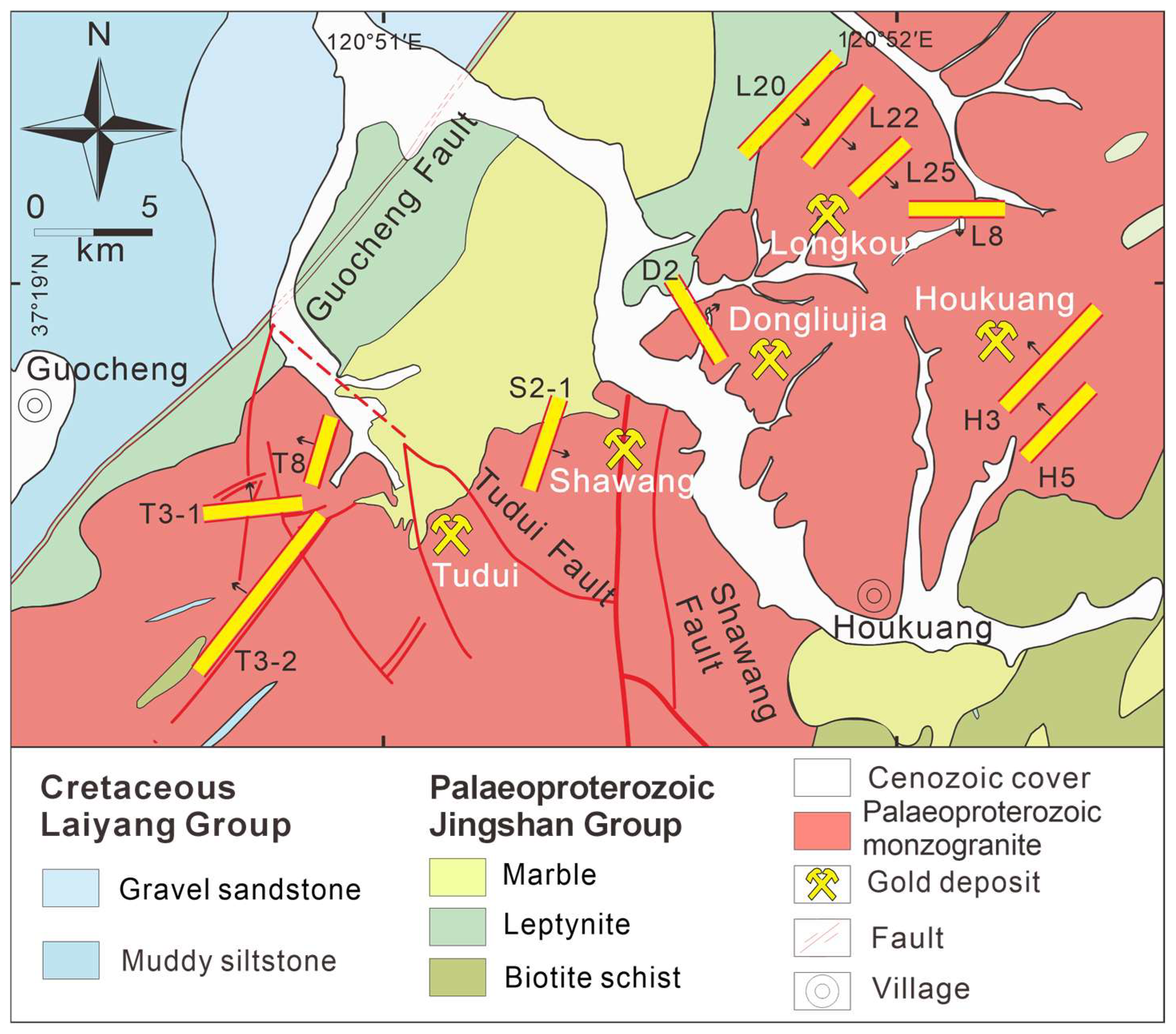
The Guocheng gold deposit is situated in the northeastern part of the Jiaolai Basin, occupying a key tectonic position at the junction of the Sulu ultrahigh-pressure metamorphic belt, the Jiaolai Basin, and the Jiaobei Terrane [19,51]. The exposed strata are mainly composed of Archean Jingshan Group metamorphic rocks and Mesozoic Laiyang Group sedimentary rocks (Figure 2). The Jingshan Group is dominated by marbles, which are metamorphosed carbonate rocks formed during the Paleoproterozoic regional metamorphic event associated with the Jingshan orogeny [52]. Intrusive rocks are widely distributed in the southern and eastern parts of the area, covering about half of the total surface. The dominant intrusive unit is the Late Proterozoic Muniushan adamellite pluton, which intrudes the Archean Jingshan Group with a tongue-like morphology. Mesozoic mafic to felsic dikes, including dolerite, monzonite porphyry and lamprophyre, are also common. These bodies are mainly of Late Yanshanian age and cut through both the Jingshan Group and the Muniushan pluton.
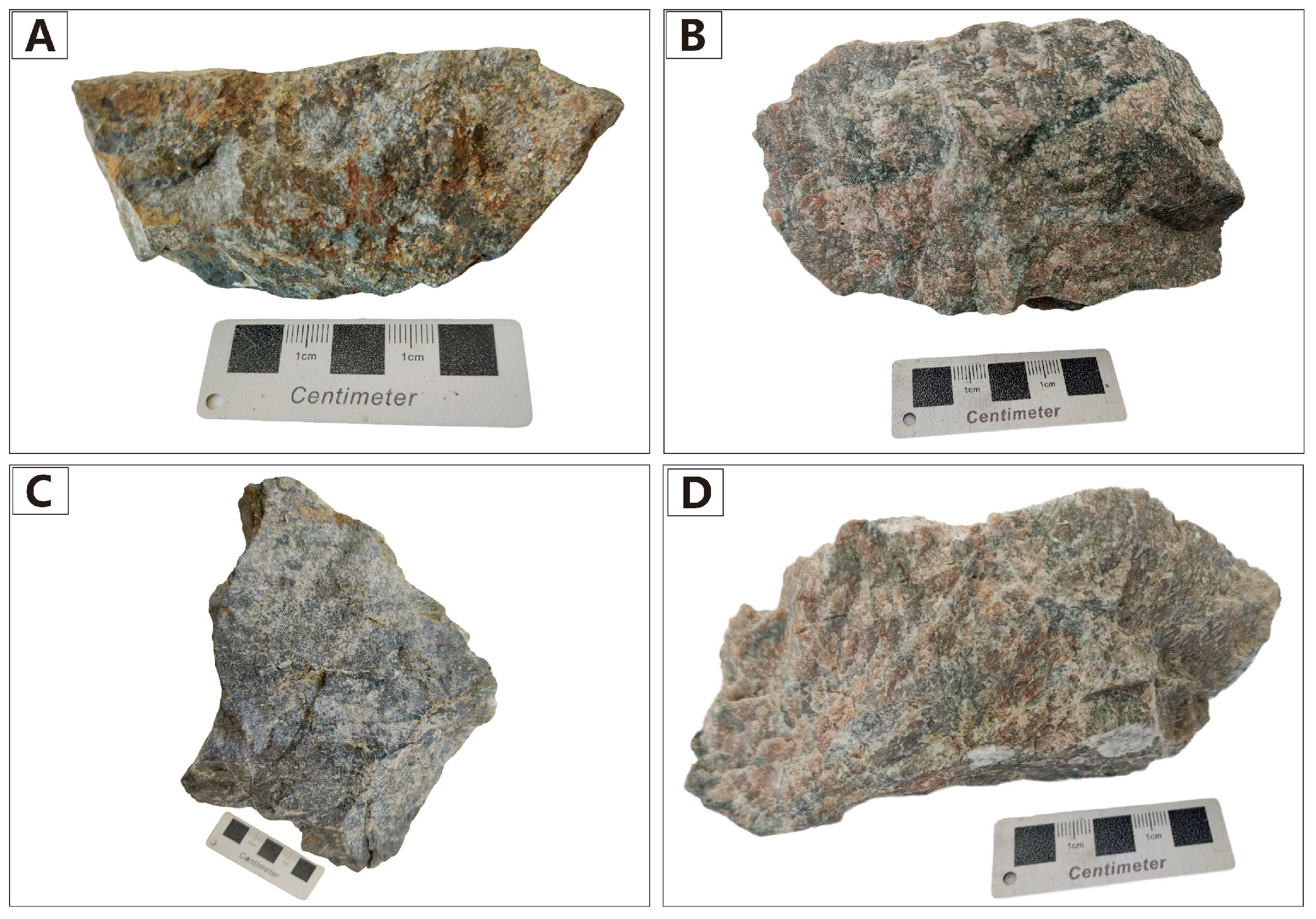
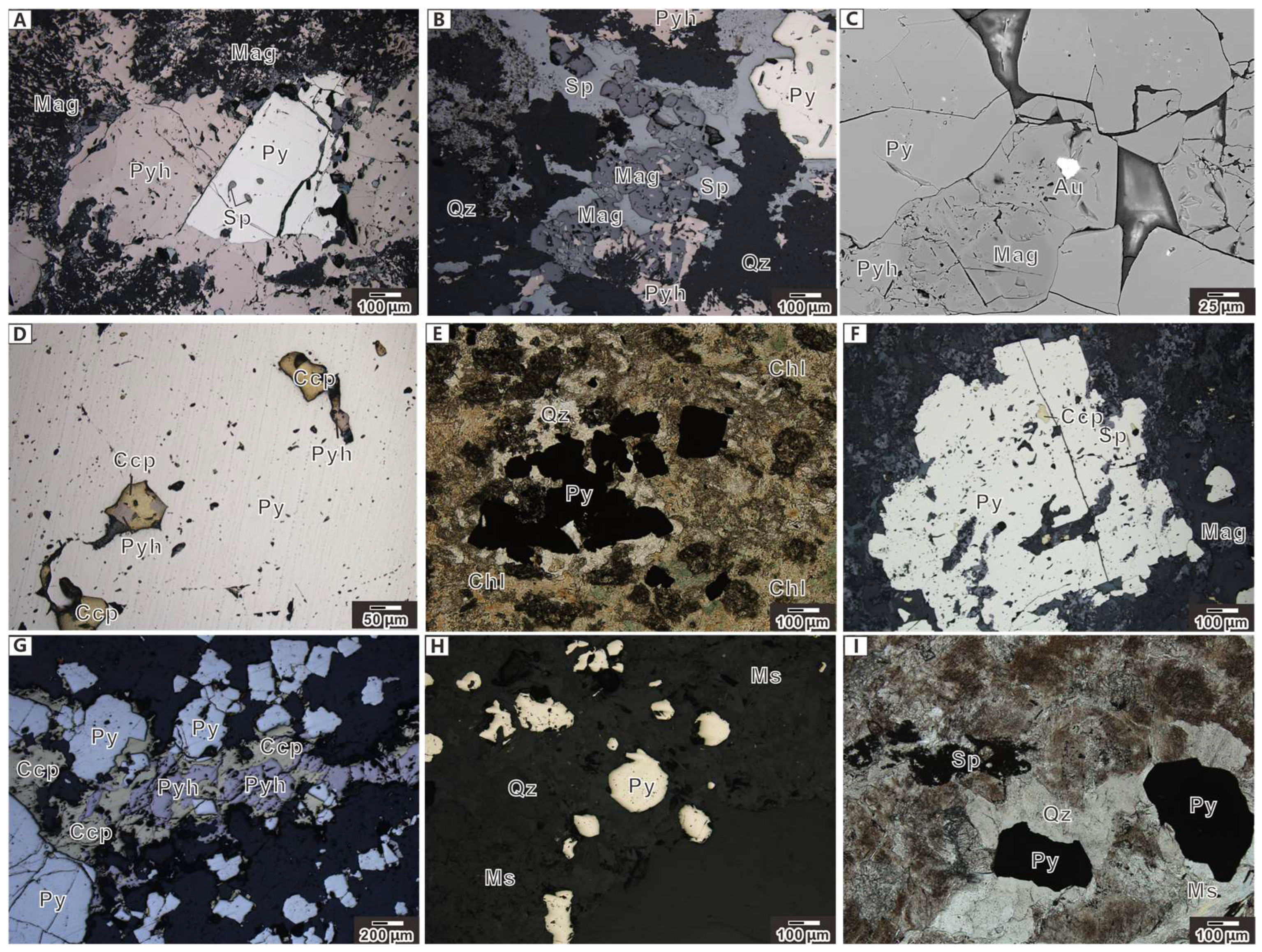
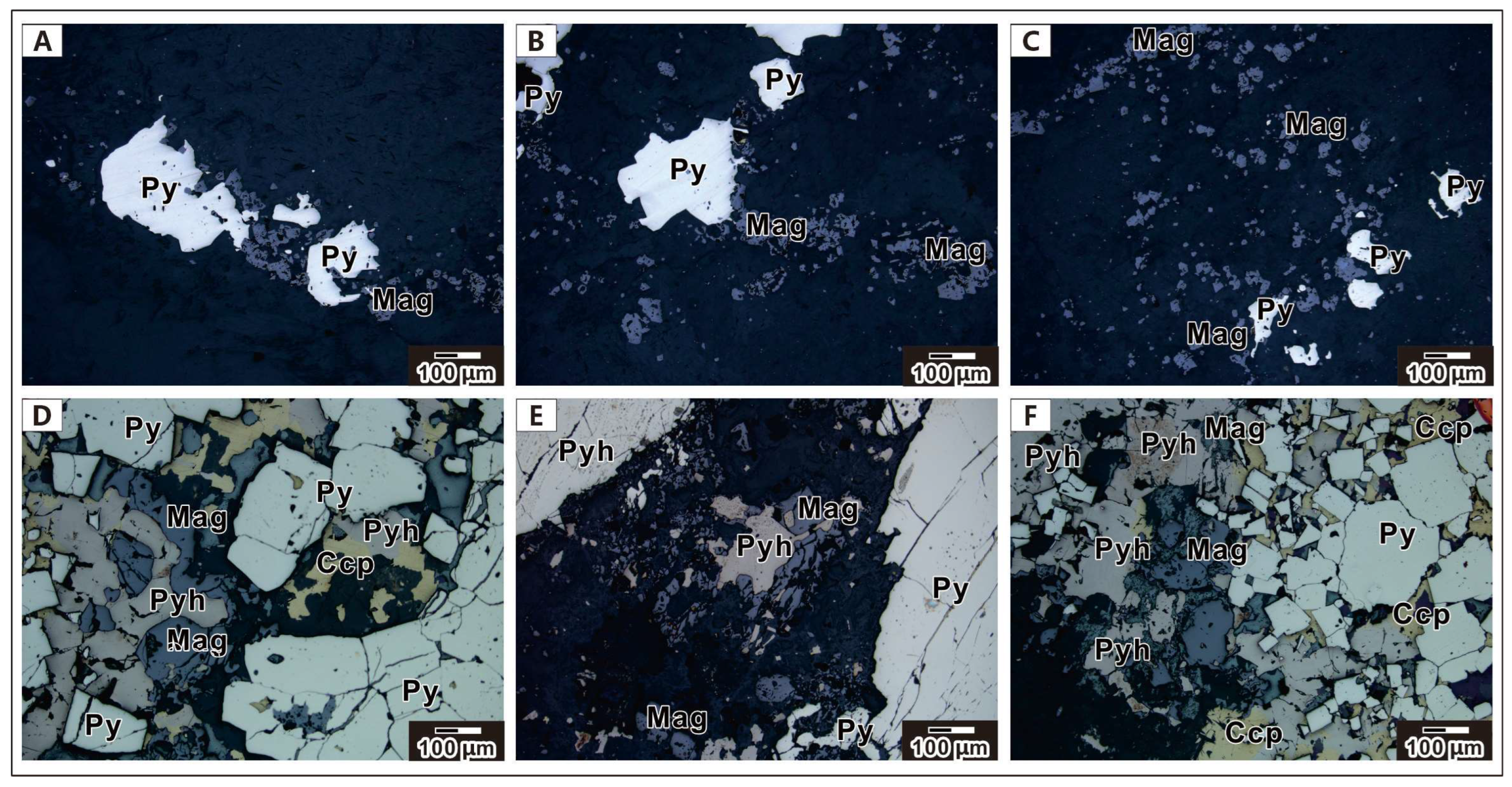
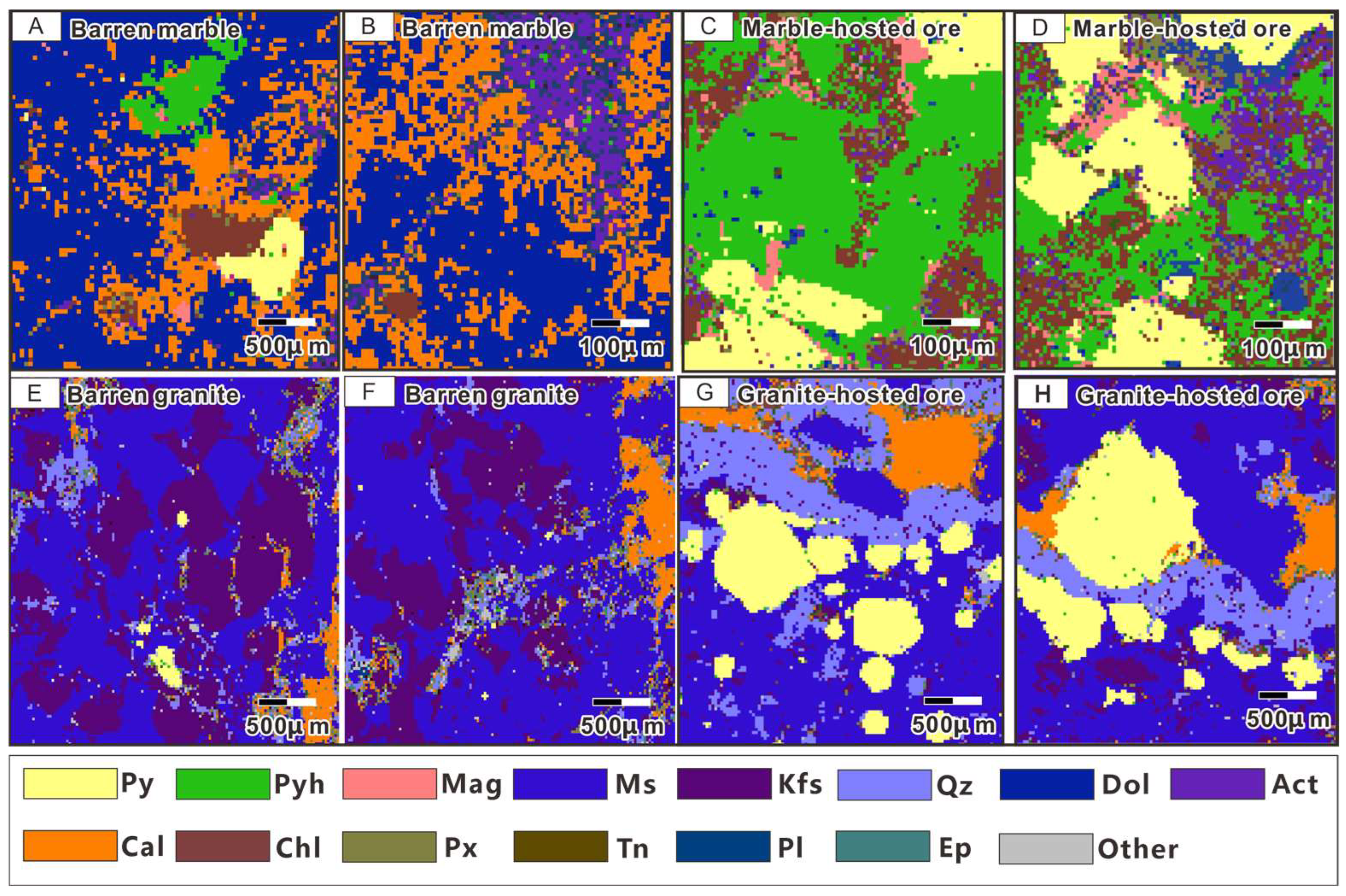
The Guocheng gold deposit contains five main mines: Tuidui, Shawan, Dongliujia, Houkuang, and Longkou, which are distributed along subsidiary NE–SW-trending faults related to the Guocheng Fault (Figure 2). The gold orebodies are predominantly fault-controlled, occurring as NE–SW–striking veins and lenses within the marble of the Jingshan Group and the granite of the Muniushan pluton (Figure 2) [53]. The ore exhibits disseminated mineralization (Figure 3), characterized by a pronounced contrast in gold grade between the two main wall-rock types, with altered granites hosting relatively low-grade ores (~1.4 g/t Au) and altered marbles containing significantly higher-grade ores, typically ranging from 5 to 10 g/t Au [27]. The BGRIMM Process Mineralogy Analyzing System (BPMA) indicates that the dominant ore minerals in the Guocheng deposit include pyrite, pyrrhotite, and magnetite, accompanied by minor chalcopyrite, sphalerite, and galena (Figure 4 and Figure 5). The gangue minerals are mainly composed of quartz, dolomite, calcite, chlorite, and sericite (Figure 5). Distinct contrasts in mineral assemblages are observed both among different ore types and among their corresponding wall rocks. The marble-hosted ores comprise pyrrhotite (33.90%), chlorite (27.5%), pyrite (15.22%), actinolite (5.82%), pyroxene (4.64%), sericite (4.47%), calcite (1.99%), magnetite (1.94%), dolomite (1.35%), and accessory minerals (1.33%), with magnetite commonly intergrown with pyrrhotite and pyrite (Figure 4A–G, Figure 5A–C and Figure 6C,D). In contrast, the barren marble is dominated by dolomite (72.46%) and calcite (18.85%), with minor actinolite (3.28%), chlorite (1.24%), pyrrhotite (0.33%), pyrite (0.21%), and magnetite (0.63%) (Figure 6A,B). The granite-hosted ores contain quartz (52.31%), K-feldspar (19.65%), sericite (9.56%), and pyrite (8.36%), with trace pyrrhotite (0.14%) and magnetite (<0.01%) (Figure 4H,I, Figure 5D–F and Figure 6G,H). The barren granite consists mainly of quartz (47.84%) and plagioclase (41.81%), with muscovite (4.24%) after feldspar and biotite alteration (Figure 6E,F).

4. Samples and Analysis Methods

4.1. Samples

Systematic sampling was conducted at the Guocheng gold deposit to collect both marble-hosted and granite-hosted ores, along with their respective barren wall rocks (Figure 3). This sampling strategy aimed to compare and evaluate mineralization differences between ore units hosted in distinct barren lithologies.

4.2. BGRIMM Process Mineralogy Analyzing System (BPMA)

To mitigate analyst-induced bias, representative samples of marble-hosted ore, granite-hosted ore, and their wall rocks—selected based on detailed fieldwork—were subjected to automated mineral identification testing. Analyses were performed at the State Key Laboratory of Mineral Processing (BGRIMM Technology Group, Beijing, China), using a TESCAN VEGA scanning electron microscope coupled with a Bruker energy dispersive spectrometer and the BPMA software (version 2.0). Operational parameters included high-vacuum mode, a 15 mm working distance, 20 kV accelerating voltage, and a 2 nA beam current, with backscattered electron detection. A whole-particle measurement mode was employed to automatically identify metallic sulfides. Quantitative parameters (e.g., sulfide content, particle size distribution, and dissemination complexity) were acquired under high magnification. Detailed analytical procedures follow references [38].

4.3. LA-ICP-MS Analysis of Magnetite

In situ trace element analyses of magnetite were conducted via laser ablation-inductively coupled plasma mass spectrometry (LA-ICP-MS) at the National Research Center for Geoanalysis (CAGS, Beijing, China). An Agilent 8900 ICP-MS/MS Triple Quad coupled with an NWR 193™ laser (Elemental Scientific Lasers, Bozeman, MT, USA) was utilized. Helium carrier gas transported ablated aerosols from the chamber, where they were mixed with argon and nitrogen (as a diatomic gas, N2) to enhance sensitivity. Laser ablation employed a 6 Hz repetition rate at 5 J/cm2 energy density with 30 μm spot diameters. A baffle-type smoothing device installed upstream of the ICP-MS minimized signal fluctuations induced by laser pulses, improving data quality. Each analysis comprised 10 s of gas blank (background) acquisition followed by 30 s of sample data acquisition. Calibration standards NIST SRM 610 and MASS-1 were analyzed after every ten samples to correct for time-dependent instrumental drift and mass bias. Data reduction utilized ICPMSDataCal 11.8 software employing specific protocols and calibration methods following [54]. A total of 59 magnetite analyses were performed, of which 56 were retained after applying strict quality control criteria, including rejection of analyses with low signal intensity, unstable baselines, or >15% relative standard deviation for key elements (e.g., Ti, V, Fe, Mn, Mg). The detection: limits for Ti, V, Ga, Mn, Co and Ni are <0.1 ppm. For Sn and Zn, the detection limits are <1 ppm; for Mg and Al, it is approximately 3 ppm. The precision and accuracy are better than 10% for most analyzed elements.

5. Results

5.1. Mineral Size Distribution and Mineral Intergrowth Assemblages

Mineral intergrowth assemblages can reveal spatial relationships and crystallization sequences between minerals, providing key insights into the mineralization process [55]. In the marble-hosted ores, pyrite most frequently intergrows with pyrrhotite (47.84%), chlorite (12.96%), and magnetite (6.42%), while pyrrhotite mainly associates with pyrite (15.97%), iron-rich chlorite (42.95%), and magnetite (4.59%) (Figure 4A–G, Figure 5A,B and Figure 6C,D; Table 1). In the granite-hosted ores, pyrite primarily intergrows with quartz (39.14%) and sericite (15.01%), along with minor associations with plagioclase (6.72%) and pyrrhotite (8.06%) (Figure 4H,I, Figure 5D–F and Figure 6G,H; Table 1).
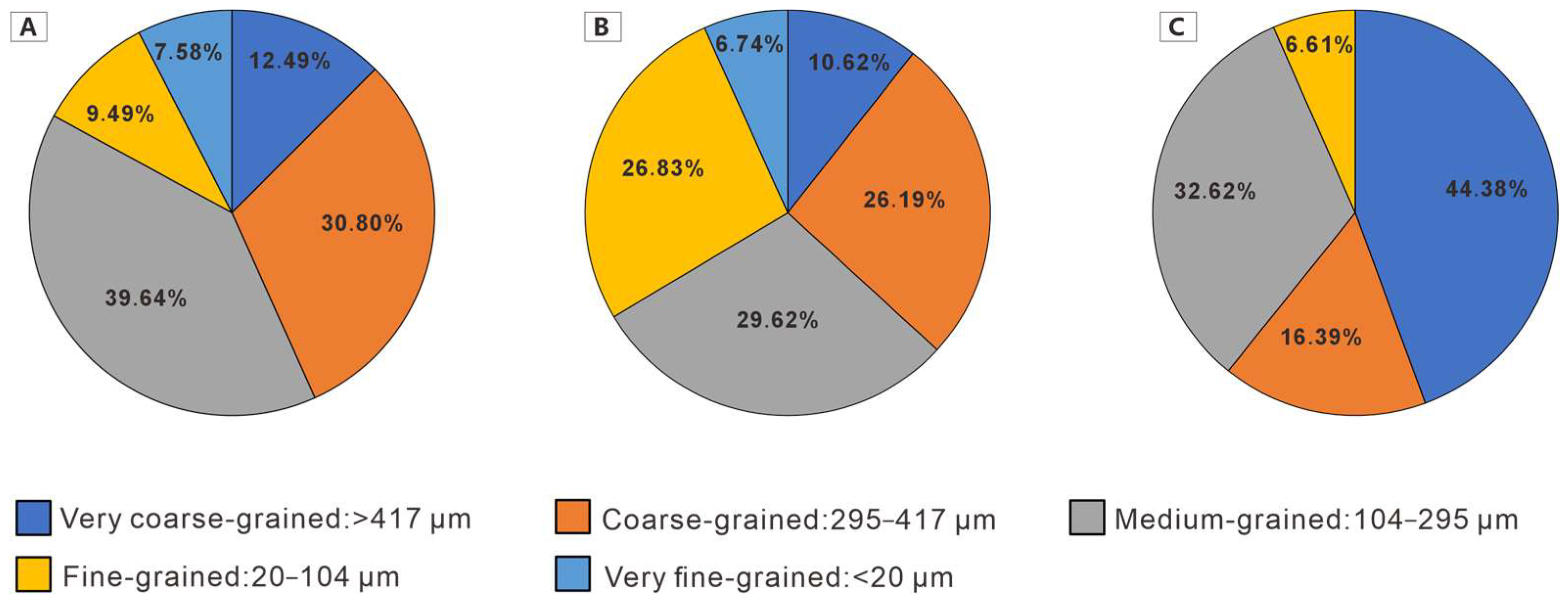
Sulfides such as pyrrhotite and pyrite can be classified by grain size into ultrafine (<20 µm), fine (20–100 µm), medium (104–295 µm), coarse (295–417 µm), and ultra-coarse (>417 µm) categories [56]. Grain size differences reflect variations in crystallization rate and the stability of the hydrothermal environment during mineralization [57]. In the marble-hosted ores, pyrite is predominantly medium to coarse grained, with medium grains accounting for 39.64%, coarse grains for 30.80%, ultra-coarse grains for 12.49%, while fine and ultrafine grains make up 9.49% and 7.58%, respectively (Figure 7A). Pyrrhotite shows a more scattered distribution, with medium grains comprising 29.62%, coarse grains 26.19%, ultra-coarse grains 10.62%, fine grains 26.83%, and ultrafine grains 6.74% (Figure 7B). In the granite-hosted ores, pyrite is mainly coarse to ultra-coarse grained, with medium grains accounting for 32.62%, coarse grains for 16.39%, and ultra-coarse grains for 37.28% (Figure 7C), while fine and ultrafine fractions are almost absent.

5.2. LA-ICP-MS Trace Element Analysis of Magnetite

The LA-ICP-MS results of magnetite from the Guocheng gold deposit are summarized in Table 2. A total of 56 analytical spots were conducted, including 38 spots on magnetite in marble-hosted ores and 18 spots on magnetite in granite-hosted ores. Mag in marble-hosted ores exhibits larger and more euhedral crystal forms (Figure 7A–C), whereas Mag in granite-hosted ores commonly contains vugs filled with calcite cementation (Figure 7A–C). For magnetite in marble-hosted ores, the lithophile elements show highly heterogeneous distributions. Ti concentrations are consistently below 20 ppm (average = 9.41 ppm), whereas V contents are irregular but mostly <25 ppm (average = 36.23 ppm). Al and Ga have mean concentrations of 393 ppm and 3.96 ppm, respectively. Mg is notably enriched (average = 12,030 ppm), while Mn averages 1405 ppm. The chalcophile elements in magnetite in marble-hosted ores are generally low: Co is frequently below the detection limit, with an average of 0.12 ppm for detected samples; Ni and Sn are mostly below 3 ppm, averaging 1.74 ppm and 2.78 ppm, respectively; and Zn averages 63.87 ppm.
In magnetite from granite-hosted ores, the lithophile elements remain low but display distinct differences compared with marble-hosted ores. Ti concentrations are similar (<20 ppm), whereas V contents are slightly higher (40–70 ppm, average = 46.21 ppm). Al and Ga are significantly enriched (average = 888 ppm and 11.17 ppm, respectively), while Mg and Mn are depleted (average = 5670 ppm and 925 ppm, respectively). Although the chalcophile elements in Mag in granite-hosted ores also exhibit low concentrations, they are notably higher than those in magnetite in marble-hosted ores: Co concentrations, though low, are detectable, averaging 0.71 ppm; Ni concentrations mostly range between 2 and 8 ppm, averaging 4.47 ppm; Sn concentrations vary widely, averaging 37.54 ppm; and Zn averages 74.36 ppm.

6. Discussion

6.1. Classification and Origins of Magnetite in Marble-Hosted Ores and Granite-Hosted Ores

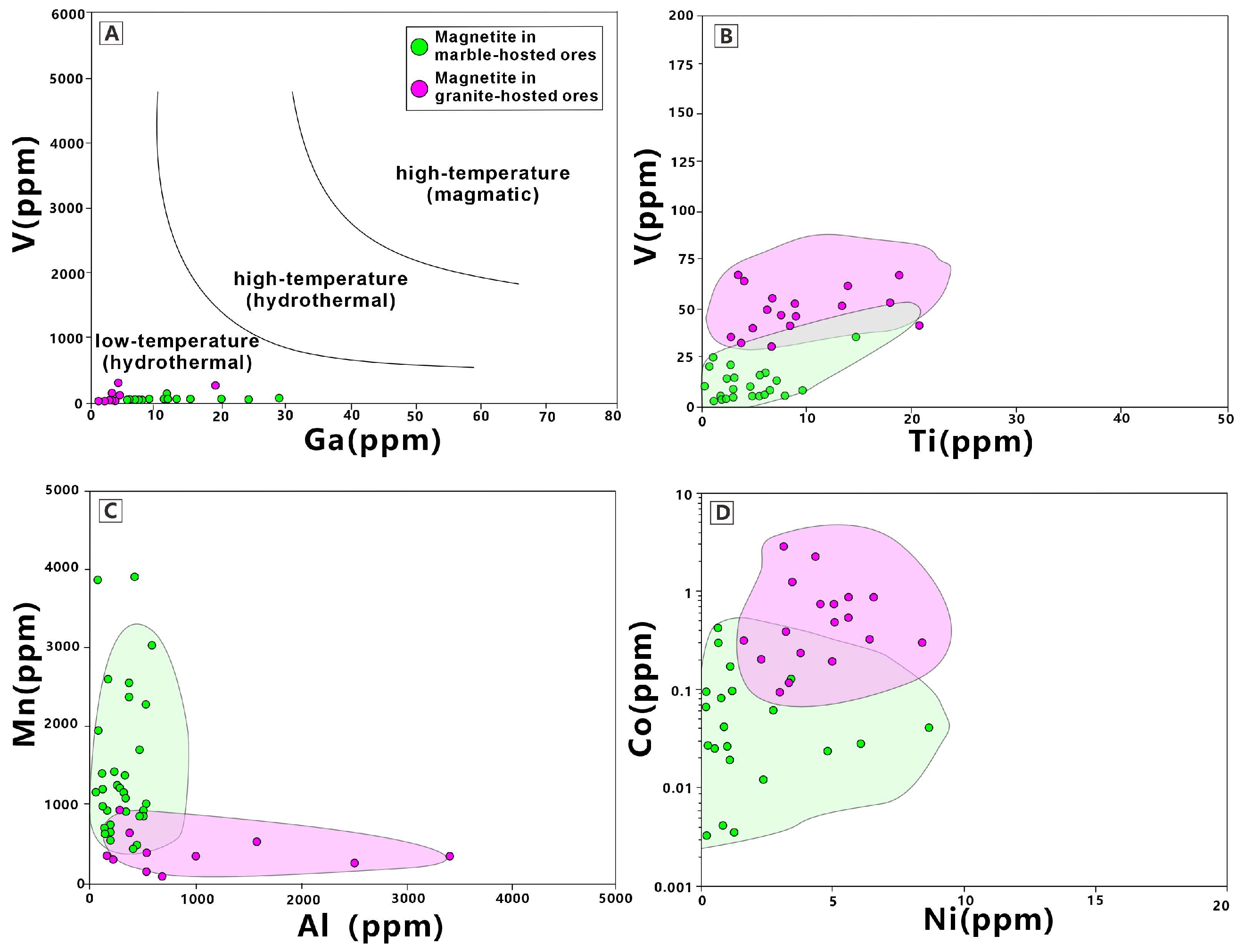
Magnetite develops in diverse geological environments, and its composition is influenced by physicochemical conditions as well as by the chemistry of both fluids and wall rocks, resulting in a wide compositional range [58,59,60,61]. Consequently, comparisons of magnetite compositions between different regions or deposits are often difficult to establish. However, the different wall rocks but coeval mineralization styles at the Guocheng gold deposit provide an ideal opportunity to compare hydrothermal magnetite compositional variations controlled by the same mineralizing event under comparable physicochemical conditions. Based on its formation process, magnetite can be classified into hydrothermal and magmatic types [33,62]. In this study, petrographic observations reveal that magnetite is closely associated with pyrite, pyrrhotite and gold (Figure 4C and Figure 5A–F), combined with the Ga–V discrimination diagrams (Figure 8A) that classify this magnetite from both ore types into the low-temperature hydrothermal category [63]. This suggests that the magnetite crystallized during the main mineralization stage and can be used to constrain the thermodynamic conditions of gold precipitation (Figure 4C).
In hydrothermal systems, magnetite can form either through in-situ dissolution-recrystallization or through dissolution-migration-recrystallization [59,63]. The former preserves pseudomorphic structures inherited from precursor minerals, while the latter involves direct precipitation of minerals from hydrothermal fluids without the participation of specific precursors [64,65]. Petrographic observations reveal that magnetite exhibits two distinct textural types in both granite-hosted and marble-hosted ores. Most of these magnetite grains exhibit euhedral to subhedral crystal forms and show no evidence of replacing any precursor minerals (Figure 5), indicating that they formed via dissolution–migration–recrystallization [59]. The formation mechanism of this type of magnetite indicates that elements such as Fe were released into the fluid as chloride complexes (for example, Fe-Cl) from iron-magnesium-rich minerals (ankerite, biotite, amphibole) in wall rocks (Reactions (1)–(3)). These components were then transported along permeable pathways and eventually co-precipitated with sulfides (mainly pyrite, pyrrhotite) in favorable locations (Reaction (4)). Additionally, some magnetite replaces pyrite (Figure 5), indicating formation through replacement of precursor pyrite. This reaction process is shown in Equation (5). Notably, the primary textures of both types of magnetite are well preserved and show no visible signs of secondary alteration, such as corrosion, dissolution, or replacement by hematite (Figure 5). This suggests that their chemical compositions have likely retained primary hydrothermal signatures without significant post-mineralization alteration. Although these two types of magnetite formed through different mechanisms, both of them occur in close association with gold and sulfides (Figure 4C and Figure 5A–F) and crystallized from the same ore-forming hydrothermal system. Therefore, they can be regarded as reliable tracers for constraining the physicochemical conditions of gold precipitation of Guocheng gold deposit.
C a ( F e , M g ) ( C O 3 ) 2 ( D o l ) + 4 H + = C a 2 + + F e 2 + + M g 2 + + 2 C O 2 + 2 H 2 O ( a q )
2 K F e 3 A l S i 3 O 10 ( O H ) 2 ( B t ) + 14 H + + 6 H 2 O = 6 F e 2 + + 2 K + + 2 A l ( O H ) 3 ( a q ) + 6 H 4 S i O 4 ( a q )
C a 2 F e 5 S i 8 O 22 ( O H ) 2 ( H b l ) + 14 H + = 2 C a 2 + + 5 F e 2 + + 8 H 4 S i O 4 ( a q )
3 F e C l + + 4 H 2 O ( a q ) = F e 3 O 4 ( M a g ) + H 2 ( a q ) + 6 H + + 3 C l
3 F e S 2 ( P y ) + 4 H 2 O = F e 3 O 4 ( M a g ) + 6 H 2 S ( a q )

6.2. Thermodynamic Conditions of High-Grade Disseminated Gold Ore Formation Constrained by Magnetite Geochemistry

Disseminated mineralization is widely attributed to fluid–rock interactions [5,6,7,8]. Both the marble-hosted and granite-hosted ores at Guocheng exhibit typical disseminated mineralization (Figure 3A,C), with gold grades strictly controlled by the lithology of the surrounding rock (marble vs. granite). These observations suggest that the significant difference in ore grade is closely related to distinct fluid–rock interactions with the different wall rocks. In this section, we compare the ore-forming environments of marble-hosted and granite-hosted ores by contrasting magnetite geochemistry and mineral assemblages, and discuss variations in (1) oxygen fugacity and (2) sulfur fugacity, as well as their roles in controlling gold precipitation and ore grade. Furthermore, magnetite from both ore types exhibits similarly low Ti concentrations (mostly <20 ppm, Table 2). Given that Ti incorporation into magnetite is highly sensitive and positive correlated with temperature [63,66], this consistent low-Ti signature confirms that both two types of magnetite crystallized under similar low-temperature conditions.
(1)
Oxygen fugacity (fO2)
Magnetite from marble-hosted ores contains significantly lower vanadium (V) concentrations (mostly <25 ppm) than that from granite-hosted ores, where V contents are typically concentrated between 40 and 70 ppm (Figure 8B). Because V is highly sensitive to the redox state of hydrothermal fluids, this compositional contrast directly reflects differences in the oxygen fugacity during magnetite formation [67,68,69]. In fluids, V mainly exists as V3+ and V4+, among which V3+ can replace Fe3+ in magnetite through isomorphic substitution via exchange reactions [70,71]. As oxygen fugacity increases, V3+ in the fluid is oxidized to V4+, resulting in less V entering the magnetite lattice [67]. Therefore, the lower V concentrations in marble-hosted magnetite indicate crystallization under more oxidizing conditions than granite-hosted magnetite. Thermodynamic models have demonstrated that fluid oxidation can occur due to different degrees of fluid-rock interaction, primarily through carbonation reactions, without requiring externally derived oxidizing fluids [72]. The elevated fO2 in the marble-hosted system likely resulted from strong fluid–rock interactions with the Fe-rich marble rocks of the Jingshan Group, which formed during the Paleoproterozoic Lomagundi-Jatuli oxidation event [52]. Consequently, the elevated fO2 in the marble-hosted system likely resulted from strong fluid–rock interactions with the Fe-rich marble rocks of the Jingshan Group. During carbonatization, Fe2+ released from these wall rocks was oxidized and precipitated as ankerite and magnetite, thereby increasing the oxygen fugacity of the fluid [73,74]. This interpretation is supported by the widespread ankerite and magnetite assemblages and pervasive carbonatization observed in marble-hosted ores (Figure 6C,D). The ore-forming fluids of the Guocheng deposit belong to the medium- to low-temperature reduced H2O-CO2-NaCl ± CH4 system [26,27], consistent with other Jiaodong gold deposits [19]. In these deposits, gold is mainly transported as hydrosulfide complexes (AuHS(aq) and Au(HS)2) [75,76]. Thermodynamic modeling results demonstrate that elevated oxygen fugacity in the ore-forming fluid would lead to the destabilization of Au–S complexes, reduce gold solubility, and consequently enhance gold precipitation efficiency [24,77]. Consequently, the elevated oxygen fugacity induced by carbonate–fluid interaction is a primary control on the formation of high-grade disseminated gold ores in marble-hosted zones.
(2)
Sulfur fugacity (fS2)
The concentrations of chalcophile elements such as Co, Ni, Sn, and Zn in magnetite are mainly governed by their partitioning behavior between sulfide and oxide phases [33]. In sulfur-bearing hydrothermal systems, these elements are highly compatible with sulfide minerals but incompatible with magnetite [78,79,80]. As sulfides begin to crystallize from the ore-forming fluid, they preferentially incorporate these elements, thereby depleting the coexisting magnetite in chalcophile components [81]. Consequently, the lower concentrations of chalcophile elements in magnetite from marble-hosted ores, compared with those from granite-hosted ores (Table 2, Figure 8C), indicate more extensive sulfide precipitation. Considering that both ore types were derived from the same ore-forming fluid, this trend suggests a decrease in sulfur fugacity (fS2) during fluid–rock interaction with the marble wall rocks.
This process of a decrease in sulfur fugacity is further supported by the widespread pyrrhotite–magnetite mineral assemblage observed in marble-hosted ores (Figure 4A–C, Figure 5D–F and Figure 6C,D). Magnetite is an oxidizing mineral, whereas pyrrhotite is a reducing mineral, their coexistence commonly indicates that the ore-forming fluids experienced complex physicochemical evolution during gold mineralization [28,77,82]. Thermodynamic modeling shows that a decrease in total sulfur concentration and an increase in fluid pH can effectively expand the upper stability limit of pyrrhotite with respect to logfO2, while the decline in sulfur fugacity can broaden the stability field of magnetite, allowing pyrrhotite and magnetite to co-precipitate [24,77]. The abundant occurrence of pyrrhotite in marble-hosted ores, in contrast to its scarcity in granite-hosted ores, suggests that during fluid passage through the Jingshan Group metamorphic wall rocks, the sulfur and H+ in fluids were continuously consumed (Reactions (2) and (7)), causing sulfide precipitation to shift from pyrite (Reaction (8)) to pyrrhotite (Reaction (9)). This decrease in sulfur fugacity can significantly reduce gold solubility, thereby destabilizing Au–S complexes and promoting rapid precipitation (Figure 4C) [83,84]. This decrease in sulfur fugacity thus represents a key factor controlling the formation of high-grade marble-hosted ores.
C a C O 3 ( C a l ) + 2 H + = C a 2 + + C O 2 + H 2 O ( a q )
F e C l + + 2 H 2 S ( a q ) = F e S 2 ( P y ) + C l + H 2 ( a q ) + 2 H +
F e C l + + H 2 S ( a q ) + 4 H 2 O ( a q ) = F e S ( P y h ) + 2 H + + C l
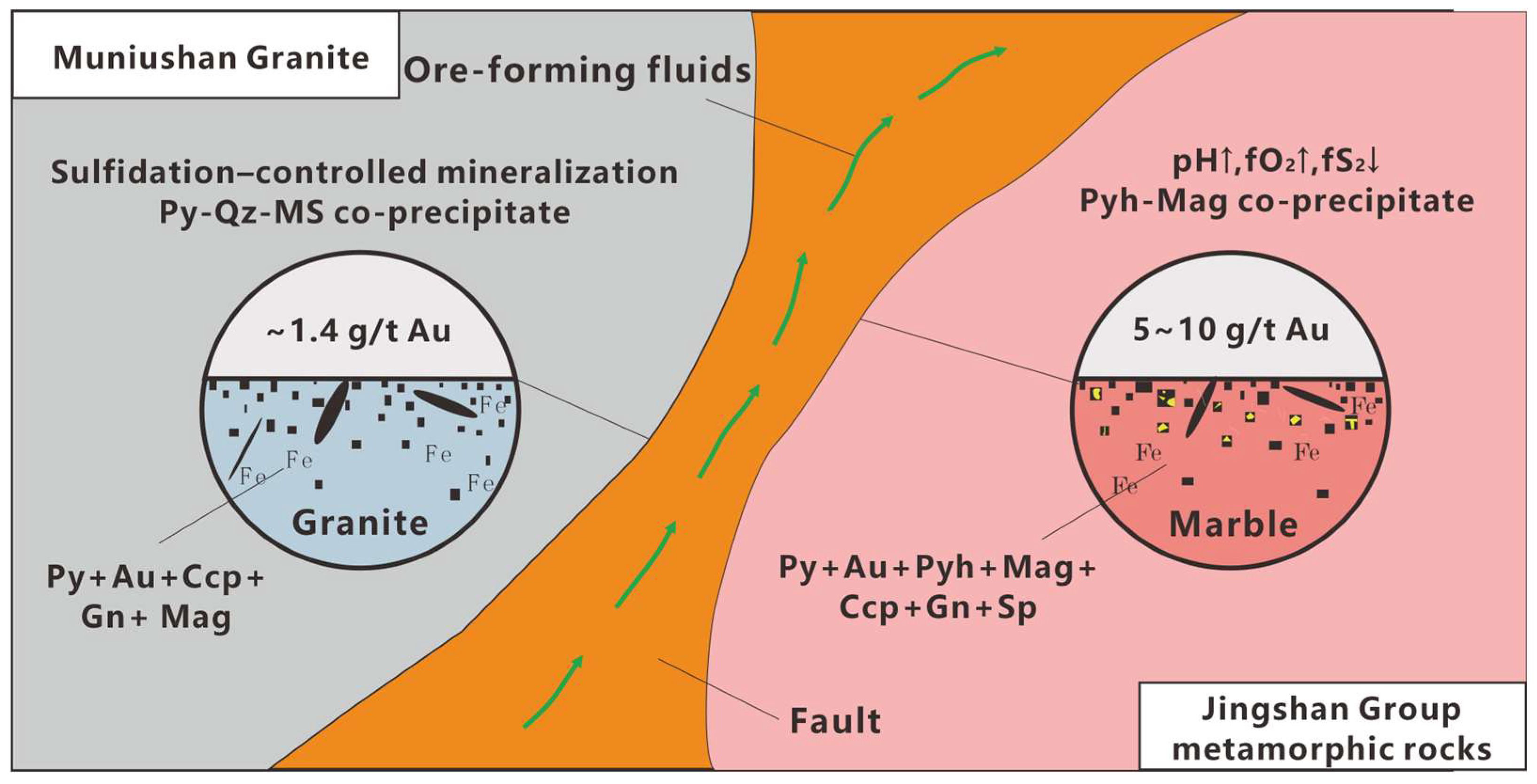
In summary, comparative data on magnetite geochemistry and mineral assemblages indicates that marble-hosted ores formed under increasing oxygen fugacity and decreasing sulfur fugacity. This dual evolution drove large-scale co-precipitation of pyrrhotite and magnetite, while a decrease in dissolved sulfur and an increase in fluid oxidation state destabilized Au-S complexes (e.g., AuHS(aq) and Au(HS)2), reducing gold solubility and promoting efficient gold precipitation [85], which ultimately formed the high-grade disseminated ores in the marble-hosted zones (Figure 9).

7. Conclusions

(1)
Magnetite in the Guocheng gold deposit is of hydrothermal origin and was formed during the main mineralization stage. Petrographic observations indicate that most magnetite crystallized via dissolution–migration–recrystallization, while a minor proportion formed through in situ dissolution–recrystallization. The close association of all magnetite with gold and sulfides, together with their classification into the low-temperature hydrothermal category via Ga–V diagrams, indicates that they reliably record the ore-forming environment of gold precipitation.
(2)
A systematic comparison of magnetite geochemistry between the two ore types reveals distinct mineralization environments. Specifically, the lower V and chalcophile element (Co, Ni, Sn, Zn) concentrations in marble-hosted magnetite, demonstrate that it crystallized under increasing oxygen fugacity (fO2) and decreasing sulfur fugacity (fS2) compared to its granite-hosted counterpart.
(3)
The pronounced contrast in gold grades between the two ore types is closely related to the variations in fluid thermodynamic conditions induced by different fluid–rock reactions. In the marble-hosted ores, coupled carbonate dissolution and sulfide precipitation increased fO2 and decreased fS2, driving a mineralogical transition from pyrite to pyrrhotite–magnetite co-precipitation. This transition destabilized gold–sulfur complexes, enhanced gold precipitation efficiency, ultimately leading to the formation of high-grade disseminated ores.

Author Contributions

Conceptualization, T.C. and X.-F.W.; methodology, Q.F.; software, Y.-Y.L.; validation, L.-Y.Q. and R.-Z.Z.; formal analysis, N.-H.S. and Q.-J.D.; investigation, N.-H.S., T.C., L.-Y.Q., R.-Z.Z. and X.-F.W.; resources, T.C. and X.-F.W.; data curation, N.-H.S., Y.-Y.L. and R.-Z.Z.; writing—original draft preparation, N.-H.S.; writing—review and editing, T.C. and X.-F.W.; visualization, N.-H.S., Q.-J.D. and R.-Z.Z.; supervision, T.C. and X.-F.W.; project administration, T.C.; funding acquisition, T.C. and X.-F.W. All authors have read and agreed to the published version of the manuscript.

Funding

This research was funded by the National Key R&D Program of China (grant 2023YFC2906900); the Open Project of Technology Innovation Center for Deep Gold Resources Exploration and Mining, Ministry of Natural Resources (No. LDKF-2023BZX-04); the Joint Project of Ministry of Natural Resources and Shandong Province (grant 2024ZRBSHZ130); the Key Laboratory of Gold Mineralization Processes and Resource Utilization Subordinated to the Ministry of Natural Resources and Shandong Key Laboratory of Metallogenic Geological Process and Resources Utilization (grant KFKT202414); the Technology Research Project of No. 6 Geological Team of Shandong Provincial Bureau of Geology and Mineral Resources (grant LDKJ20240101); the Frontiers Science Center for Deep-Time Digital Earth (grant 2652023001); the Taishan Scholar Program of Shandong (tstp20240847).

Data Availability Statement

The data presented in this study are available within the article.

Acknowledgments

We are grateful to Hao-Cheng Yu and Shan-Shan Li for their field guidance and constructive discussions. We are grateful to Peng-Yue Yu for the assistance with the sample preparation and analysis. We also deeply thank the anonymous reviewers and editors for their helpful comments and suggestions.

Conflicts of Interest

Authors Qiang Fu was employed by the BGRIMM Technology Group, Rong-Zhi Zhou was employed by the Shandong Gold Geological Mineral Exploration Co., Ltd., and Lian-Yuan Qin was employed by the Shandong Yantai Xintai Gold Mining Industry Co., Ltd. The remaining authors declare that the research was conducted in the absence of any commercial or financial relationships that could be construed as a potential conflict of interest.

References

  1. Lunt, D.; Weeks, T. Process flowsheet selection. Dev. Miner. Process. 2005, 15, 73–96. [Google Scholar]
  2. Gao, P.; Zhang, Y.-J.; Liu, Z.-P.; Wang, P.-F.; Li, J.-Y.; Li, S.-B. Polymetallic metallogenic law and mineral resources prediction in Shanghuangqi Banner area in North Hebei province. Contrib. Geol. Miner. Resour. Res. 2024, 39, 35–44. [Google Scholar]
  3. Huang, H.-G.; Li, Z.; Liu, X.-L.; Zhang, C.-G.; Liu, L.-Q. Geological characteristics and genesis of Chafang gold deposit in Fanshi County, Shanxi Province. Contrib. Geol. Miner. Resour. Res. 2024, 39, 169–176. [Google Scholar]
  4. Qiu, K.-F.; Yu, H.-C.; Deng, J.; McIntire, D.; Gou, Z.-Y.; Geng, J.-Z.; Chang, Z.-S.; Zhu, R.; Li, K.-N.; Goldfarb, R. The giant Zaozigou Au-Sb deposit in West Qinling, China: Magmatic-or metamorphic-hydrothermal origin? Miner. Depos. 2020, 55, 345–362. [Google Scholar] [CrossRef]
  5. Petrella, L.; Thébaud, N.; Evans, K.; LaFlamme, C.; Occhipinti, S. The role of competitive fluid-rock interaction processes in the formation of high-grade gold deposits. Geochim. Cosmochim. Acta 2021, 313, 38–54. [Google Scholar] [CrossRef]
  6. Herzog, M.; LaFlamme, C.; Beaudoin, G.; Barré, G.; Martin, L.; Savard, D. Fluid-rock sulfidation reactions control Au-Ag-Te-Bi precipitation in the Val-d’Or orogenic gold vein field (Abitibi subprovince, Canada). Miner. Depos. 2024, 59, 1039–1064. [Google Scholar] [CrossRef]
  7. Farsang, S.; Zajacz, Z. Sulfur species and gold transport in arc magmatic fluids. Nat. Geosci. 2024, 18, 98–104. [Google Scholar] [CrossRef]
  8. Lang, X.-C.; Han, X.-B.; Zhi, Y.-D.; Li, P.-L.; Wu, Q.-H. Geological characteristics and ore-forming mechanism of Au deposits in Kanggur area, East Tianshan mountainous district, Xinjiang Autonomous Region. Contrib. Geol. Miner. Resour. Res. 2024, 39, 177–185. [Google Scholar]
  9. Zhu, Y.; An, F.; Tan, J. Geochemistry of hydrothermal gold deposits: A review. Geosci. Front. 2011, 2, 367–374. [Google Scholar] [CrossRef]
  10. Liu, W.; Etschmann, B.; Testemale, D.; Hazemann, J.-L.; Rempel, K.; Müller, H.; Brugger, J. Gold transport in hydrothermal fluids: Competition among the Cl, Br, HS and NH3 (aq) ligands. Chem. Geol. 2014, 376, 11–19. [Google Scholar] [CrossRef]
  11. Li, H.; Wang, Q.; Weng, W.; Dong, C.; Yang, L.; Wang, X.; Deng, J. Co-precipitation of gold and base metal sulfides during fluid boiling triggered by fault-valve processes in orogenic gold deposits. Ore Geol. Rev. 2022, 149, 105090. [Google Scholar] [CrossRef]
  12. Wang, J.-Q.; Han, J.-H. Study on ore material of Au-minerals in Au deposit in surrounding of Bieluwu Cu deposit in Sunituyue Banner, Inner Mongolia. Contrib. Geol. Miner. Resour. Res. 2025, 40, 27–32. [Google Scholar]
  13. Qiu, K.-F.; Deng, J.; Yu, H.-C.; Rasbury, T.; Tang, Y.-W.; Zhu, R.; Zhang, P.-C.; Goldfarb, R. The Zaozigou orogenic gold-antimony deposit, West Qinling Orogen, China: Structural controls on multiple mineralization events. Geol. Soc. Am. Bull. 2024, 136, 4218–4232. [Google Scholar] [CrossRef]
  14. Zhou, Y.; Wen, Z.; Liu, Y.; Wu, J.; Huang, B.; He, H.; Luo, Y.; Fan, P.; Wang, X.; Liu, X.; et al. The Contribution of Carbonaceous Material to Gold Mineralization in the Huangjindong Deposit, Central Jiangnan Orogen, China. Minerals 2024, 14, 1042. [Google Scholar] [CrossRef]
  15. Gao, H.; Chen, J.; Leng, C.; Hu, Y.; Xie, H.; Li, Z. Ore-forming mechanism of Huxu Au-dominated polymetallic deposit in the Dongxiang Basin, South China: Constraints from in-situ trace elements and S–Pb isotopes of pyrite. Acta Geochim. 2024, 43, 1223–1240. [Google Scholar] [CrossRef]
  16. Wang, J.-Y.; Zhang, L.; Yang, L.-Q.; Sun, S.-C.; Li, R.-H.; Gao, X.; Olin, P.; Shu, L.; Zhang, Q.-B.; Chen, X.-G.; et al. Ore-forming fluid evolution and gold precipitation mechanism at Huangjindong gold deposit, southern China: Insights from fluid inclusions and trace elements in quartz. Ore Geol. Rev. 2025, 178, 106444. [Google Scholar] [CrossRef]
  17. Deng, J.; Yang, L.Q.; Li, R.H.; Groves, D.I.; Santosh, M.; Wang, Z.L.; Sai, S.X.; Wang, S.R.; Li, S. Regional structural control on the distribution of world-class gold deposits: An overview from the Giant Jiaodong Gold Province, China. Geol. J. 2018, 54, 378–391. [Google Scholar] [CrossRef]
  18. He, D.-Y.; Qiu, K.-F.; Simon, A.C.; Pokrovski, G.S.; Yu, H.-C.; Connolly, J.A.; Li, S.-S.; Turner, S.; Wang, Q.-F.; Yang, M.-F.; et al. Mantle oxidation by sulfur drives the formation of giant gold deposits in subduction zones. Proc. Natl. Acad. Sci. USA 2024, 121, e2404731121. [Google Scholar] [CrossRef] [PubMed]
  19. Deng, J.; Yang, L.-Q.; Groves, D.I.; Zhang, L.; Qiu, K.-F.; Wang, Q.-F. An integrated mineral system model for the gold deposits of the giant Jiaodong province, eastern China. Earth Sci. Rev. 2020, 208, 103274. [Google Scholar] [CrossRef]
  20. Qiu, K.-F.; Goldfarb, R.J.; Deng, J.; Yu, H.-C.; Gou, Z.-Y.; Ding, Z.-J.; Wang, Z.-K.; Li, D.-P. Chapter 35: Gold Deposits of the Jiaodong Peninsula, Eastern China. In Geology of the World’s Major Gold Deposits and Provinces; Society of Economic Geologists: Littleton, CO, USA, 2020; pp. 753–774. [Google Scholar]
  21. Qiu, K.F.; Deng, J.; Sai, S.X.; Yu, H.C.; Tamer, M.T.; Ding, Z.J.; Yu, X.F.; Goldfarb, R. Low-temperature thermochronology for defining the tectonic controls on heterogeneous gold endowment across the Jiaodong peninsula, eastern China. Tectonics 2023, 42, e2022TC007669. [Google Scholar] [CrossRef]
  22. Qiu, K.-F.; Romer, R.L.; Long, Z.-Y.; Yu, H.-C.; Turner, S.; Wan, R.-Q.; Li, X.-Q.; Gao, Z.-Y.; Deng, J. Potassium isotopes as a tracer of hydrothermal alteration in ore systems. Geochim. Cosmochim. Acta 2024, 368, 185–196. [Google Scholar] [CrossRef]
  23. Zhang, J.-Y.; Qiu, K.-F.; Yin, R.; Long, Z.-Y.; Feng, Y.-C.; Yu, H.-C.; Gao, Z.-Y.; Deng, J. Lithospheric mantle as a metal storage reservoir for orogenic gold deposits in active continental margins: Evidence from Hg isotopes. Geology 2024, 52, 423–428. [Google Scholar] [CrossRef]
  24. Fan, H.; Lan, T.; Li, X.; Santosh, M.; Yang, K.; Hu, F.; Feng, K.; Hu, H.; Peng, H.; Zhang, Y. Conditions and processes leading to large-scale gold deposition in the Jiaodong province, eastern China. Sci. China Earth Sci. 2021, 64, 1504–1523. [Google Scholar] [CrossRef]
  25. Li, J.; Zhang, L.-P.; Li, C.-Y.; Jiang, M.-Y. Rb-Sr isochron age of the Guocheng gold deposit in the Jiaodong Peninsula, Shandong. Geol. China 2020, 47, 894–895. [Google Scholar]
  26. Wu, J.; Chen, Y.; Zheng, C.; Li, H.; Yonezu, K.; Tang, Y.; Zong, Q. Genesis of the Longkou–Tudui gold deposit, Jiaodong Peninsula, eastern China: Constraints from zircon U-Pb dating, fluid inclusion studies and C–H–O–S stable isotopes. Ore Geol. Rev. 2021, 139, 104449. [Google Scholar] [CrossRef]
  27. Cui, T.; Yu, H.-C.; Jowitt, S.M.; Li, Z.-S.; Wei, X.-L.; Zou, S.-H.; Bo, J.-W.; Pei, L.; Li, S.-S.; Nassif, M.T.; et al. Chlorite composition records the formation of increased oxygen fugacity-induced disseminated gold mineralization within the Guocheng gold deposit, China. Geol. Soc. Am. Bull. 2025, 137, 4786–4800. [Google Scholar] [CrossRef]
  28. Yang, L.-Q.; Deng, J.; Wang, Z.-L.; Guo, L.-N.; Li, R.-H.; Groves, D.I.; Danyushevsky, L.V.; Zhang, C.; Zheng, X.-L.; Zhao, H. Relationships between gold and pyrite at the Xincheng gold deposit, Jiaodong Peninsula, China: Implications for gold source and deposition in a brittle epizonal environment. Econ. Geol. 2016, 111, 105–126. [Google Scholar] [CrossRef]
  29. Deng, J.; Qiu, K.-F.; Wang, Q.-F.; Goldfarb, R.; Yang, L.-Q.; Zi, J.-W.; Geng, J.-Z.; Ma, Y. In situ dating of hydrothermal monazite and implications for the geodynamic controls on ore formation in the Jiaodong gold province, eastern China. Econ. Geol. 2020, 115, 671–685. [Google Scholar] [CrossRef]
  30. Zhang, L.; Weinberg, R.F.; Yang, L.-Q.; Groves, D.I.; Sai, S.-X.; Matchan, E.; Phillips, D.; Kohn, B.P.; Miggins, D.P.; Liu, Y. Mesozoic orogenic gold mineralization in the Jiaodong Peninsula, China: A focused event at 120 ± 2 Ma during cooling of pregold granite intrusions. Econ. Geol. 2020, 115, 415–441. [Google Scholar] [CrossRef]
  31. Tan, J.; Wei, J.; Li, Y.; Fu, L.; Li, H.; Shi, W.; Tian, N. Origin and geodynamic significance of fault-hosted massive sulfide gold deposits from the Guocheng–Liaoshang metallogenic belt, eastern Jiaodong Peninsula: Rb–Sr dating, and H–O–S–Pb isotopic constraints. Ore Geol. Rev. 2015, 65, 687–700. [Google Scholar] [CrossRef]
  32. Bo, J.-W.; Ding, Z.-J.; Deng, J.; Sun, F.-Y.; Qiu, K.-F.; Song, M.-C. Metallogenic characteristics and mineralization of supergiant gold deposits (223 t) in the northeastern margin of the Jiaolai Basin, Shandong Province: A review. China Geol. 2025, 8, 806–842. [Google Scholar]
  33. Dare, S.A.S.; Barnes, S.-J.; Beaudoin, G.; Méric, J.; Boutroy, E.; Potvin-Doucet, C. Trace elements in magnetite as petrogenetic indicators. Miner. Depos. 2014, 49, 785–796. [Google Scholar] [CrossRef]
  34. Huang, X.-W.; Sappin, A.-A.; Boutroy, É.; Beaudoin, G.; Makvandi, S. Trace Element Composition of Igneous and Hydrothermal Magnetite from Porphyry Deposits: Relationship to Deposit Subtypes and Magmatic Affinity. Econ. Geol. 2019, 114, 917–952. [Google Scholar] [CrossRef]
  35. Zeng, L.-P.; Zhao, X.-F.; Spandler, C.; Hu, H.; Hu, B.; Li, J.-W.; Hu, Y. Origin of high-Ti magnetite in magmatic-hydrothermal systems: Evidence from iron oxide-apatite (IOA) deposits of eastern China. Econ. Geol. 2022, 117, 923–942. [Google Scholar]
  36. Yang, J.; Qiu, Y. Comparative study on mineral dissemination characteristics of phosphate ores by X-ray micro computed tomography and BGRIMM Process Mineralogy Analysis. Sci. Rep. 2022, 12, 21122. [Google Scholar] [CrossRef]
  37. Li, Y.; Kou, J.; Sun, C.; Wang, P.; Wang, X. Enhancing Copper Leaching from Refractory Copper Oxide Ore Using Organic Cationic Surfactant. Separations 2025, 12, 212. [Google Scholar] [CrossRef]
  38. Wen, L.-G.; Jia, M.-X.; Wang, Q.; Fu, Q.; Zhao, J.-J. A new SEM-based automated mineralogy system: BPMA and its application prospects in mining industry. Nonferrous Met. 2021, 2, 12–23. [Google Scholar]
  39. Feng, Y.-C.; Deng, J.; Yu, H.-C.; Fu, Q.; Cui, T.; Shan, W.; Li, Z.-S.; Li, S.-S. Gold occurrence and its indicative significance to mineralization process in Linglong gold district, Jiaodong gold province. Acta Petrol. Sin. 2023, 39, 377–392. [Google Scholar] [CrossRef]
  40. Wang, L.; Qiu, Y.; McNaughton, N.; Groves, D.; Luo, Z.; Huang, J.; Miao, L.; Liu, Y. Constraints on crustal evolution and gold metallogeny in the Northwestern Jiaodong Peninsula, China, from SHRIMP U–Pb zircon studies of granitoids. Ore Geol. Rev. 1998, 13, 275–291. [Google Scholar] [CrossRef]
  41. Tan, J.; Wei, J.; He, H.; Su, F.; Li, Y.; Fu, L.; Zhao, S.; Xiao, G.; Zhang, F.; Xu, J.; et al. Noble gases in pyrites from the Guocheng-Liaoshang gold belt in the Jiaodong province: Evidence for a mantle source of gold. Chem. Geol. 2018, 480, 105–115. [Google Scholar] [CrossRef]
  42. Qiu, K.-F.; Romer, R.L.; Long, Z.-Y.; Williams-Jones, A.E.; Yu, H.-C.; Turner, S.; Wang, Q.-F.; Li, S.-S.; Zhang, J.-Y.; Duan, H.-R.; et al. The role of an oxidized lithospheric mantle in gold mobilization. Sci. Adv. 2024, 10, eado6262. [Google Scholar] [CrossRef] [PubMed]
  43. Goldfarb, R.J.; Santosh, M. The dilemma of the Jiaodong gold deposits: Are they unique? Geosci. Front. 2014, 5, 139–153. [Google Scholar] [CrossRef]
  44. Zheng, Y.; Xu, Z.; Zhao, Z.; Dai, L. Mesozoic mafic magmatism in North China: Implications for thinning and destruction of cratonic lithosphere. Sci. China Earth Sci. 2018, 61, 353–385. [Google Scholar] [CrossRef]
  45. Zhu, R.; Xu, Y. The subduction of the west Pacific plate and the destruction of the North China Craton. Sci. China Earth Sci. 2019, 62, 1340–1350. [Google Scholar] [CrossRef]
  46. Wu, F.-Y.; Yang, J.-H.; Xu, Y.-G.; Wilde, S.A.; Walker, R.J. Destruction of the North China Craton in the Mesozoic. Annu. Rev. Earth Planet. Sci. 2019, 47, 173–195. [Google Scholar] [CrossRef]
  47. Zhang, J.-H.; Gao, S.; Ge, W.-C.; Wu, F.-Y.; Yang, J.-H.; Wilde, S.A.; Li, M. Geochronology of the Mesozoic volcanic rocks in the Great Xing’an Range, northeastern China: Implications for subduction-induced delamination. Chem. Geol. 2010, 276, 144–165. [Google Scholar] [CrossRef]
  48. Hacker, B.R.; Wallis, S.R.; McWilliams, M.O.; Gans, P.B. 40Ar/39Ar Constraints on the tectonic history and architecture of the ultrahigh-pressure Sulu orogen. J. Metamorph. Geol. 2009, 27, 827–844. [Google Scholar] [CrossRef]
  49. Goldfarb, R.J.; Groves, D.I.; Gardoll, S. Orogenic gold and geologic time: A global synthesis. Ore Geol. Rev. 2001, 18, 1–75. [Google Scholar] [CrossRef]
  50. Qiu, Y.; Groves, D.I.; McNaughton, N.J.; Wang, L.-G.; Zhou, T. Nature, age, and tectonic setting of granitoid-hosted, orogenic gold deposits of the Jiaodong Peninsula, eastern North China craton, China. Miner. Depos. 2002, 37, 283–305. [Google Scholar] [CrossRef]
  51. Tan, J.; Wei, J.; Audétat, A.; Pettke, T. Source of metals in the Guocheng gold deposit, Jiaodong Peninsula, North China Craton: Link to early Cretaceous mafic magmatism originating from Paleoproterozoic metasomatized lithospheric mantle. Ore Geol. Rev. 2012, 48, 70–87. [Google Scholar] [CrossRef]
  52. Chen, Y.; Li, H.; Gu, S.; Lash, G.G.; Zheng, C.; Chen, S.; Li, D.; Elatikpo, S.M.; Duan, L. Marble trace element and C-O isotope geochemistry of the Paleoproterozoic Jingshan Group, North China: Insights into BIF formation during the Lomagundi-Jatuli Event. Precambrian Res. 2023, 395, 107152. [Google Scholar] [CrossRef]
  53. Tan, J.; Wei, J.; Guo, L.; Zhang, K.; Yao, C.; Lu, J.; Li, H. LA-ICP-MS zircon U-Pb dating and phenocryst EPMA of dikes, Guocheng, Jiaodong Peninsula: Implications for North China Craton lithosphere evolution. Sci. China Ser. D Earth Sci. 2008, 51, 1483–1500. [Google Scholar] [CrossRef]
  54. Nadoll, P.; Koenig, A.E. LA-ICP-MS of magnetite: Methods and reference materials. J. Anal. At. Spectrom. 2011, 26, 1872–1877. [Google Scholar] [CrossRef]
  55. Zhang, L.; Qiu, K.; Hou, Z.; Pirajno, F.; Shivute, E.; Cai, Y. Fluid-rock reactions of the Triassic Taiyangshan porphyry Cu-Mo deposit (West Qinling, China) constrained by QEMSCAN and iron isotope. Ore Geol. Rev. 2021, 132, 104068. [Google Scholar] [CrossRef]
  56. Blott, S.J.; Pye, K. Particle size scales and classification of sediment types based on particle size distributions: Review and recommended procedures. Sedimentology 2012, 59, 2071–2096. [Google Scholar] [CrossRef]
  57. Reich, M.; Deditius, A.; Chryssoulis, S.; Li, J.-W.; Ma, C.-Q.; Parada, M.A.; Barra, F.; Mittermayr, F. Pyrite as a record of hydrothermal fluid evolution in a porphyry copper system: A SIMS/EMPA trace element study. Geochim. Cosmochim. Acta 2013, 104, 42–62. [Google Scholar] [CrossRef]
  58. Palma, G.; Reich, M.; Barra, F.; Ovalle, J.T.; Del Real, I.; Simon, A.C. Thermal evolution of Andean iron oxide–apatite (IOA) deposits as revealed by magnetite thermometry. Sci. Rep. 2021, 11, 18424. [Google Scholar] [CrossRef]
  59. Wen, G.; Li, J.-W.; Hofstra, A.H.; Koenig, A.E.; Lowers, H.A.; Adams, D. Hydrothermal reequilibration of igneous magnetite in altered granitic plutons and its implications for magnetite classification schemes: Insights from the Handan-Xingtai iron district, North China Craton. Geochim. Cosmochim. Acta 2017, 213, 255–270. [Google Scholar] [CrossRef]
  60. Knipping, J.L.; Bilenker, L.D.; Simon, A.C.; Reich, M.; Barra, F.; Deditius, A.P.; Wӓlle, M.; Heinrich, C.A.; Holtz, F.; Munizaga, R. Trace elements in magnetite from massive iron oxide-apatite deposits indicate a combined formation by igneous and magmatic-hydrothermal processes. Geochim. Cosmochim. Acta 2015, 171, 15–38. [Google Scholar] [CrossRef]
  61. Hassanpour, S.; Rajabpour, S. Magmatic–hydrothermal evolution of the Anjerd Cu skarn deposit, NW Iran: Perspectives on mineral chemistry, fluid inclusions and stable isotopes. Ore Geol. Rev. 2020, 117, 103269. [Google Scholar] [CrossRef]
  62. Anderson, J.L.; Barth, A.P.; Wooden, J.L.; Mazdab, F. Thermometers and Thermobarometers in Granitic Systems. Rev. Mineral. Geochem. 2008, 69, 121–142. [Google Scholar] [CrossRef]
  63. Nadoll, P.; Angerer, T.; Mauk, J.L.; French, D.; Walshe, J. The chemistry of hydrothermal magnetite: A review. Ore Geol. Rev. 2014, 61, 1–32. [Google Scholar] [CrossRef]
  64. Schirra, M.; Zajacz, Z.; Müller, D. Magnetite geochemistry of giant alkalic-type epithermal gold deposits: Insights into the magmatic evolution of mineralized alkaline systems. Geol. Soc. Lond. Spec. Publ. 2024, 551, 385–408. [Google Scholar] [CrossRef]
  65. Hu, H.; Li, J.-W.; Lentz, D.; Ren, Z.; Zhao, X.-F.; Deng, X.-D.; Hall, D. Dissolution–reprecipitation process of magnetite from the Chengchao iron deposit: Insights into ore genesis and implication for in-situ chemical analysis of magnetite. Ore Geol. Rev. 2014, 57, 393–405. [Google Scholar] [CrossRef]
  66. Toplis, M.; Carroll, M. An experimental study of the influence of oxygen fugacity on Fe-Ti oxide stability, phase relations, and mineral—Melt equilibria in ferro-basaltic systems. J. Petrol. 1995, 36, 1137–1170. [Google Scholar] [CrossRef]
  67. Dupuis, C.; Beaudoin, G. Discriminant diagrams for iron oxide trace element fingerprinting of mineral deposit types. Miner. Depos. 2011, 46, 319–335. [Google Scholar] [CrossRef]
  68. Toplis, M.J.; Corgne, A. An experimental study of element partitioning between magnetite, clinopyroxene and iron-bearing silicate liquids with particular emphasis on vanadium. Contrib. Mineral. Petrol. 2002, 144, 22–37. [Google Scholar] [CrossRef]
  69. Bordage, A.; Balan, E.; de Villiers, J.P.R.; Cromarty, R.; Juhin, A.; Carvallo, C.; Calas, G.; Sunder Raju, P.V.; Glatzel, P. V oxidation state in Fe–Ti oxides by high-energy resolution fluorescence-detected X-ray absorption spectroscopy. Phys. Chem. Miner. 2011, 38, 449–458. [Google Scholar] [CrossRef]
  70. Reguir, E.P.; Chakhmouradian, A.R.; Halden, N.M.; Yang, P.; Zaitsev, A.N. Early Magmatic and Reaction-Induced Trends in Magnetite from the Carbonatites of Kerimasi, Tanzania. Can. Mineral. 2008, 46, 879–900. [Google Scholar] [CrossRef]
  71. Righter, K.; Leeman, W.P.; Hervig, R.L. Partitioning of Ni, Co and V between spinel-structured oxides and silicate melts: Importance of spinel composition. Chem. Geol. 2006, 227, 1–25. [Google Scholar] [CrossRef]
  72. Evans, K.A. A test of the viability of fluid–wall rock interaction mechanisms for changes in opaque phase assemblage in metasedimentary rocks in the Kambalda-St. Ives goldfield, Western Australia. Miner. Depos. 2009, 45, 207–213. [Google Scholar] [CrossRef]
  73. Hodkiewicz, P.F.; Groves, D.I.; Davidson, G.J.; Weinberg, R.F.; Hagemann, S.G. Influence of structural setting on sulphur isotopes in Archean orogenic gold deposits, Eastern Goldfields Province, Yilgarn, Western Australia. Miner. Depos. 2008, 44, 129–150. [Google Scholar] [CrossRef]
  74. Feng, K.; Fan, H.-R.; Ulrich, T.; Yang, K.-F.; Hu, F.-F.; Liu, X. Contribution of Precambrian basements to the Mesozoic ore-fluid system: An illustration using the Majiayao gold deposit, Jiaodong, China. Ore Geol. Rev. 2021, 139, 104447. [Google Scholar] [CrossRef]
  75. Pokrovski, G.S.; Akinfiev, N.N.; Borisova, A.Y.; Zotov, A.V.; Kouzmanov, K. Gold speciation and transport in geological fluids: Insights from experiments and physical-chemical modelling. Geol. Soc. Lond. Spec. Publ. 2014, 402, 9–70. [Google Scholar] [CrossRef]
  76. Williams-Jones, A.E.; Bowell, R.J.; Migdisov, A.A. Gold in Solution. Elements 2009, 5, 281–287. [Google Scholar] [CrossRef]
  77. Hu, H.-L.; Fan, H.-R.; Liu, X.; Cai, Y.-C.; Yang, K.-F.; Ma, W.-D. Two-stage gold deposition in response to H2S loss from a single fluid in the Sizhuang deposit (Jiaodong, China). Ore Geol. Rev. 2020, 120, 103450. [Google Scholar] [CrossRef]
  78. Wang, Y.; Lai, J.; Cao, Y.; Brzozowski, M. Compositional variations of magnetite in different sulfide ore types in the Jinchuan Ni-Cu-PGE sulfide deposit, NW China: Insights into the mineralizing processes of conduit-type systems. Chem. Geol. 2023, 637, 121679. [Google Scholar] [CrossRef]
  79. Wen, G.; Li, J.-W.; Hofstra, A.H.; Harlov, D.E.; Zhao, X.-F.; Lowers, H.A.; Koenig, A.E. Trace element fractionation in magnetite as a function of Fe depletion from ore fluids at the Baijian Fe-(Co) skarn deposit, eastern China: Implications for Co mineralization in Fe skarns. Am. Mineral. 2024, 109, 1657–1669. [Google Scholar] [CrossRef]
  80. Simpson, B.; Fitzherbert, J.; Moltzen, J.; Baillie, I.; Cox, B.; Huang, H. Magnetite trace element characteristics and their use as a proximity indicator to the Avoca Tank Cu-Au prospect, Girilambone copper province, New South Wales, Australia. Miner. Depos. 2024, 59, 169–187. [Google Scholar] [CrossRef]
  81. Duran, C.J.; Barnes, S.-J.; Mansur, E.T.; Dare, S.A.; Bédard, L.P.; Sluzhenikin, S.F. Magnetite chemistry by LA-ICP-MS records sulfide fractional crystallization in massive nickel-copper-platinum group element ores from the Norilsk-Talnakh mining district (Siberia, Russia): Implications for trace element partitioning into magnetite. Econ. Geol. 2020, 115, 1245–1266. [Google Scholar] [CrossRef]
  82. Wen, B.-J.; Fan, H.-R.; Hu, F.-F.; Liu, X.; Yang, K.-F.; Sun, Z.-F.; Sun, Z.-F. Fluid evolution and ore genesis of the giant Sanshandao gold deposit, Jiaodong gold province, China: Constrains from geology, fluid inclusions and H–O–S–He–Ar isotopic compositions. J. Geochem. Explor. 2016, 171, 96–112. [Google Scholar] [CrossRef]
  83. Hayashi, K.-I.; Ohmoto, H. Solubility of gold in NaCl-and H2S-bearing aqueous solutions at 250–350 °C. Geochim. Cosmochim. Acta 1991, 55, 2111–2126. [Google Scholar] [CrossRef]
  84. Gibert, F.; Pascal, M.-L.; Pichavant, M. Gold solubility and speciation in hydrothermal solutions: Experimental study of the stability of hydrosulphide complex of gold (AuHS) at 350 to 450 C and 500 bars. Geochim. Cosmochim. Acta 1998, 62, 2931–2947. [Google Scholar] [CrossRef]
  85. Pokrovski, G.S.; Kokh, M.A.; Guillaume, D.; Borisova, A.Y.; Gisquet, P.; Hazemann, J.-L.; Lahera, E.; Del Net, W.; Proux, O.; Testemale, D.; et al. Sulfur radical species form gold deposits on Earth. Proc. Natl. Acad. Sci. USA 2015, 112, 13484–13489. [Google Scholar] [CrossRef] [PubMed]
Figure 1. (A) Simplified geological map showing the tectonic setting of the Jiaodong gold province, China. (B) Geological map of the Jiaodong gold province showing the distribution of gold deposits in terms of size, modified after [29]. UHP—ultra high-pressure; OIB—ocean island basalt.
Minerals 15 01267 g001
Figure 2. Simplified geological map of Guocheng gold deposit in Jiaodong, modified after [27].
Minerals 15 01267 g002
Figure 3. Displays photographs of representative marble-hosted ores samples (A), granite-hosted ores (B), as well as the wall rocks of barren marble (C) and barren granite (D) in the Guocheng gold deposit.
Minerals 15 01267 g003
Figure 4. Micrographs of metal sulfide of marble-hosted ores samples, sulfides are dominated by Pyh and Py, accompanied by minor Sp, Mag, and Ccp; meanwhile, sulfides show close paragenetic relationships with Mag and Chl, particularly characterized by Pyh-Mag assemblages (AG). Euhedral Py is closely intergrown with Ser and Qz in granite-hosted gold ores samples (H,I). Mineral abbreviations: Py = pyrite, Pyh = pyrrhotite, Mag = magnetite, Au = gold, Ccp = chalcopyrite, Sp = sphalerite, Chl = chlorite, Ms = sericite, Qz = quartz.
Minerals 15 01267 g004
Figure 5. In marble-hosted ores, magnetite content is higher (2~5 wt%), characterized by coarser-grained and more euhedral crystals, showing close relationships with Pyh and Ccp (AC). In altered granite-hosted ores, porous magnetite widely developed and filled by calcite, with low magnetite content (<0.5 wt%), exhibiting small crystal sizes and anhedral forms, commonly associated with Py (DF).
Minerals 15 01267 g005
Figure 6. Advanced Mineral Identification and Characterization System-derived maps showing variations in mineral assemblages in representative samples from the study area in the Guocheng gold deposit, China. (A,B) Barren marble is dominated by dolomite (72.46%) and calcite (18.85%), with minor actinolite (3.28%) and chlorite (1.24%). (C,D) Marble-hosted ores consist mainly of pyrrhotite (33.90%), chlorite (27.50%), and pyrite (15.22%), accompanied by actinolite (5.82%), pyroxene (4.64%), sericite (4.47%), calcite (1.99%), magnetite (1.94%), and dolomite (1.35%). (E,F) Barren granite is composed predominantly of quartz (47.84%) and plagioclase (41.81%), with minor muscovite (4.24%). (G,H) Granite-hosted ores are characterized by a quartz–K-feldspar–sericite–pyrite assemblage, containing quartz (52.31%), K-feldspar (19.65%), sericite (9.56%), and pyrite (8.36%). Mineral abbreviations: Py = pyrite, Pyh = pyrrhotite, Mag = magnetite, Ms = sericite, Kfs = K-feldspar, Qz = quartz, Dol = dolomite, Act = actinolite, Cal = calcite, Chl = chlorite, Px = pyroxene, Tn = titanite, Pl = plagioclase, Ep = epidote, Other = other minerals.
Minerals 15 01267 g006
Figure 7. Statistical Table of Particle Size Distribution of Metal Sulfides in Gold Ores. (A) Pyrite in marble-hosted ores, predominantly medium to coarse grained. (B) Pyrrhotite in marble-hosted ores, showing a scattered grain-size distribution. (C) Pyrite in granite-hosted ores, mainly coarse to ultra-coarse grained.
Minerals 15 01267 g007
Figure 8. V vs. Ga discrimination diagram for high-temperature magmatic, high–temperature hydrothermal and low-temperature hydrothermal magnetite (A) modified after [63]). V vs. Ti content (B) and Al vs. Mn content (C) in magnetite for comparing formation fO2. Co vs. Ni content (D) for comparing formation fS2.
Minerals 15 01267 g008
Figure 9. Ore-forming models of different host rocks in Guocheng gold deposit.
Minerals 15 01267 g009
Table 1. Statistical table of the association and combination of metal sulfides.
MineralMarble-Hosted OresGranite-Hosted Ores
PyrrhotitePyritePyrite
pyrrhotite\47.848.06
pyrite15.97\\
magnetite4.596.42\
sericite7.315.7415.01
iron chlorite42.9512.962.80
feldspar\\6.72
quartz\\39.14
other29.1827.0422.27
Table 2. Trace element characteristics of magnetite analyzed by LA-ICP-MS in marble- and granite-hosted gold ores from the Guocheng deposit.
TypeSamplesTiVAlGaMgMnCoNiSnZn
Magnetite in marble-hosted ores25GC-M-011.55 1.53 92.64 5.14 18,889.51 1178.56 0 0.30 0.80420.36
25GC-M-022.38 13.18 74.98 4.31 7893.42 1366.66 0 0.99 0.9247.92
25GC-M-037.48 128.52 160.68 4.73 7095.37 536.03 0.03 0.99 0.8033.91
25GC-M-049.65 44.02 308.51 4.85 10,008.75 1136.88 0.07 0.01 0.9870.14
25GC-M-052.68 21.37 125.60 6.83 3969.90 605.63 0.30 0.65 0.6931.93
25GC-M-0614.70 34.86 512.36 5.41 10,867.31 981.48 0.09 0.19 0.9477.45
25GC-M-0720.97 47.04 321.09 2.96 15,027.13 1039.42 0.03 6.06 1.1648.09
25GC-M-082.96 3.74 293.61 1.59 34,613.43 1334.99 0 0.34 1.29103.06
25GC-M-094.77 4.69 217.89 1.26 7811.52 1378.32 0.03 0.24 1.0555.59
25GC-M-100.60 0.53 49.97 1.94 25,943.93 1371.73 0 0.83 5.7871.40
25GC-M-110.85 1.07 29.27 1.18 12,772.48 1907.82 01.25 3.2370.33
25GC-M-120.70 1.02 27.67 1.44 2195.17 1146.40 0 1.26 0.3720.75
25GC-M-136.12 16.14 261.17 3.55 3874.90 1198.41 0 0.71 0.9150.25
25GC-M-142.16 2.42 167.76 2.04 1002.34 626.55 0.10 1.15 1.15132.13
25GC-M-151.95 2.33 130.12 2.05 1742.14 902.58 0 0.75 1.4229.70
25GC-M-161.23 1.83 124.46 1.09 465.84 693.22 0 0.83 1.3025.81
25GC-M-174.62 9.39 482.87 1.78 1822.56 898.60 0 3.20 2.9622.28
25GC-M-188.01 4.46 454.02 5.15 32,495.20 1669.53 0.02 0.50 2.89113.97
25GC-M-1946.81 254.25 1953.28 19.38 2374.26 203.66 0.13 3.43 2.159.89
25GC-M-205.84 144.75 1095.38 11.81 2817.30 174.57 0.04 8.66 1.978.68
25GC-M-2152.20 13.00 452.32 4.59 18,043.83 832.00 0.42 0.64 0.5452.54
25GC-M-2260.29 12.82 527.37 4.44 17,130.37 2245.09 0.17 1.11 0.6597.04
25GC-M-236.43 7.60 314.82 2.68 15,909.26 910.37 0.08 0.76 0.6949.77
25GC-M-245.56 14.83 177.34 0.96 12,459.35 722.42 0 0.23 42.9346.82
25GC-M-253.05 7.72 242.24 1.42 25,015.49 1235.95 0.07 0.14 0.9372.68
25GC-M-265.94 5.60 384.56 1.18 14,140.47 430.01 0.02 4.80 0.4644.40
25GC-M-2725.61 126.38 1305.63 3.58 17,423.18 1006.48 0 0.79 16.4645.08
25GC-M-289.64 7.49 492.82 3.84 20,988.47 848.98 0 0.54 0.5477.17
25GC-M-295.51 4.32 91.20 3.82 11,728.98 963.50 00 0.82 0.850.00
25GC-M-302.73 21.21 564.11 5.96 13,807.69 3027.67 0.02 1.10 1.1765.55
25GC-M-310.70 20.12 140.46 3.95 7452.43 2585.04 0.04 0.86 0.8236.35
25GC-M-321.68 4.62 371.26 2.50 8322.82 2331.17 0.01 2.34 1.1836.33
25GC-M-337.21 13.07 339.63 2.74 18,549.06 2541.47 01.02 1.1463.45
25GC-M-343.04 13.62 406.69 2.93 18,903.83 3907.35 0 1.77 1.2277.24
25GC-M-355.50 29.81 432.78 5.17 7239.37 471.84 0.25 7.77 0.7245.16
25GC-M-361.07 24.56 60.22 3.61 8445.28 3839.19 0.06 2.75 0.9025.51
25GC-M-370.21 9.50 23.63 4.09 8595.96 3865.44 0.00 2.68 1.0181.98
25GC-M-3815.31 303.28 1705.34 4.35 9295.10 1274.92 0.98 3.74 0.8566.29
Magnetite in granite-hosted ores25GC-G-018.41 40.95 3388.67 8.24 4266.75 338.51 0.20 4.99 0.4432.59
25GC-G-023.30 66.98 0.00 0.00 0.00 0.00 0.32 1.65 0.720.00
25GC-G-037.64 12.52 527.87 8.41 65.03 125.09 0.09 2.98 8.6147.18
25GC-G-044.02 63.44 288.65 29.14 8178.99 3209.20 2.83 3.16 1.92261.97
25GC-G-056.73 54.43 983.83 7.68 2024.78 316.57 0.75 5.08 102.8515.84
25GC-G-068.92 45.70 519.42 7.23 957.40 380.63 0.73 4.54 25.9411.10
25GC-G-077.57 46.13 13,684.61 24.44 13,563.58 338.38 0.30 8.39 0.6359.69
25GC-G-0818.81 66.40 1571.77 9.23 2748.99 510.74 0.32 6.41 15.1816.16
25GC-G-092.74 34.76 263.77 5.70 2257.63 911.11 0.53 5.61 0.588.10
25GC-G-1013.31 51.00 654.10 11.92 2665.75 1952.74 1.24 3.45 112.7413.35
25GC-G-1118.11 52.19 1019.86 15.62 17,227.56 2550.01 0.85 5.62 0.9532.31
25GC-G-1213.99 61.56 154.75 11.49 1064.08 347.78 0.48 5.08 276.4816.78
25GC-G-136.22 48.94 1082.95 13.49 23,869.25 3654.22 2.26 4.36 0.98161.14
25GC-G-1420.74 41.07 14,453.95 20.46 17,632.71 798.36 0.85 6.53 4.02163.69
25GC-G-153.69 31.34 359.86 5.49 2052.51 621.53 0.20 2.30 0.4812.66
25GC-G-164.83 39.22 2511.24 7.83 2435.40 232.85 0.39 3.22 77.15443.82
25GC-G-178.80 52.20 674.62 6.65 829.39 79.89 0.23 3.75 9.2022.53
25GC-G-186.71 30.37 212.22 8.09 222.02 289.74 0.11 3.31 36.8119.59
Disclaimer/Publisher’s Note: The statements, opinions and data contained in all publications are solely those of the individual author(s) and contributor(s) and not of MDPI and/or the editor(s). MDPI and/or the editor(s) disclaim responsibility for any injury to people or property resulting from any ideas, methods, instructions or products referred to in the content.