1. Introduction
Tungsten (W) is crucial for contemporary technology due to its distinctive properties of high density, the highest melting point, 3422 °C, among all metals, and low reactivity and toxicity [
1,
2,
3]. These properties make it indispensable in the production of machine tools, super alloys, high-speed steels, cutting and drilling tools, mill products, and various applications in the chemical industry, to enhance their durability, hardness, and resistance to corrosion [
4]. Two emerging industrial applications that are projected to further boost tungsten consumption are its use in lithium-ion batteries and as tungsten powders for additive manufacturing [
5]. Tungsten is currently classified as a critical metal in the European Union (EU), Australia, the United States of America (USA), and Japan due to its economic importance, as well as potential risks to supply as 80% of worldwide production, and ~ 50% of known tungsten ore (scheelite) reserves are held by one country (China), which is the leading producer of tungsten trioxide (WO
3) [
6,
7,
8,
9,
10,
11].
Scheelite (CaWO
4) has become the main global supply of tungsten due to the exhaustion of more easily extractable and processable wolframite, (Fe,Mn)WO
4 [
12,
13,
14], and scheelite-bearing tungsten skarn deposits are considered a primary source of global tungsten production [
8,
10,
11]. However, in skarn deposits, scheelite must be separated from complex associated gangue minerals, such as fluorite, apatite, and calcite, which have some properties similar to scheelite and make separation challenging [
15]. Froth flotation, a widely used technique in the mining industry for separating valuable minerals from gangue materials [
16,
17], has been the primary method for scheelite beneficiation since the 1970s [
12,
18]. This technique is based on the surface characteristics of minerals, including physical and chemical qualities such as surface dissolution and adsorption, which dictate floatability [
19,
20]. Scheelite, calcite, fluorite, and apatite share similar surface characteristics, which lead to difficulty in selective separation [
12,
13,
21]. These Ca-bearing gangue minerals compete with scheelite for collector and depressant adsorption due to their similar surface chemistry.
Another potential challenge in the processing of scheelite is the brittle nature of the mineral itself [
8,
13,
22], as this can lead to overgrinding during comminution and the production of excess amounts of fine particles (<40 µm) [
8,
22,
23]. The presence of abundant fine fractions can adversely impact downstream processes, resulting in considerable material losses, entrainment, or slime coating and poor selectivity [
20,
24,
25,
26]. For example, froth flotation is ineffective in recovering fine and ultrafine particles [
22]. Mitigation techniques, including implementing coarse grinding, can reduce the production of ultrafine fractions while guaranteeing optimal mineral liberation. This approach also enhances the performance of downstream processes by maintaining a more controlled particle size distribution, which is critical for improving recovery rates [
27]. Specifically, integrating coarse grinding with froth flotation of coarse-size particles can offer a synergistic approach, as coarse flotation methods can efficiently recover bigger mineral particles, while minimising reagent and energy usage, and enhancing selectivity [
28,
29].
This study addresses challenges associated with scheelite recovery by examining the combined effects of scheelite particle size and interactions with flotation parameters to identify optimal conditions. Key variables, including impeller speed, collector dosage, depressant dosage, and pH, were evaluated using samples from the Kara mine, a magnetite–scheelite-bearing skarn deposit in northwestern Tasmania, Australia, known for its coarse scheelite mineralization.
2. Geological and Mineralogical Characteristics
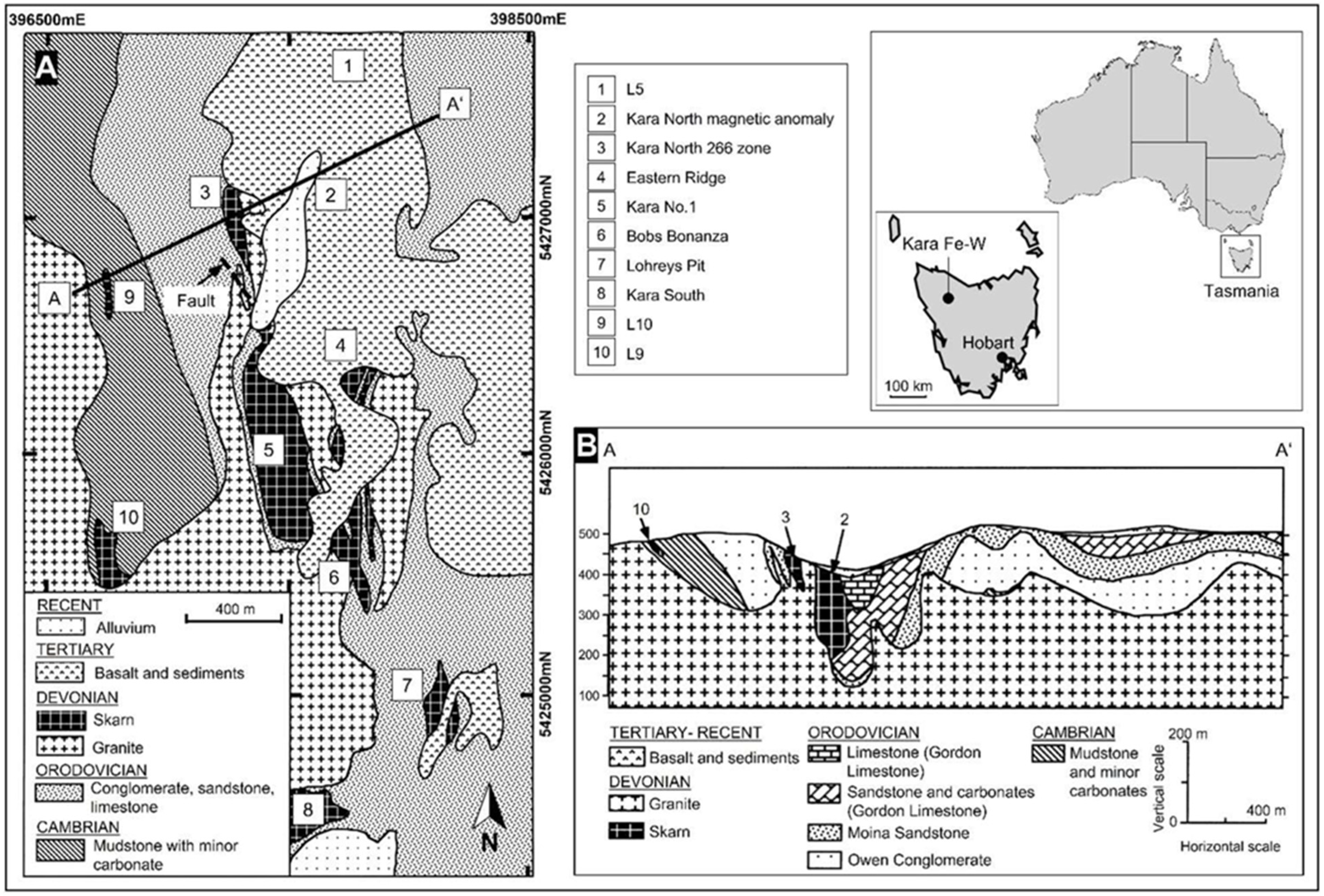
The Kara magnetite–scheelite skarn deposit in northwestern Tasmania, Australia [
30] is associated with granite and sedimentary rocks and has been deformed by several episodes of folding and faulting (
Figure 1) [
31].
Four stages of skarn formation have been identified, of which the third stage (stage III) is most important for scheelite mineralisation [
32]. In addition to scheelite, skarn minerals found at Kara include magnetite, garnet, vesuvianite, clinopyroxene, epidote, and amphibole, as well as minor fluorite, calcite, apatite, titanite, wollastonite, quartz, pyrite, chalcopyrite, and chlorite [
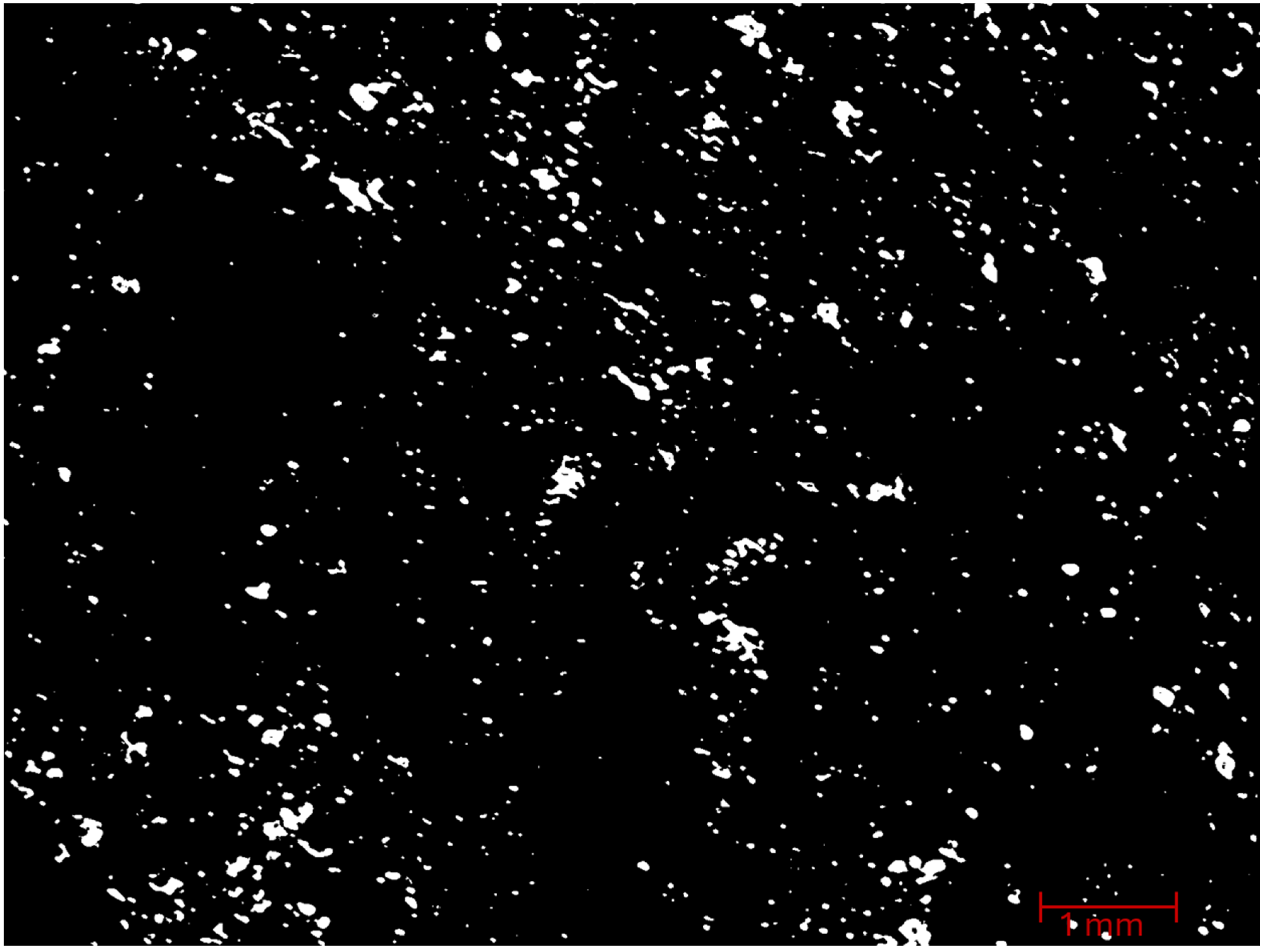
33]. Scheelite occurs in large grains, sometimes exceeding 5 cm in size (
Figure 2) and shares grain boundaries with other stage III minerals, mainly magnetite, plus garnet, vesuvianite, epidote, and amphibole. Estimates show the total remaining mineable reserves at Kara are 9.9 Mt ore, averaging >30% Fe and 365 ppm of WO
3 [
34]. In 2018, the tungsten reserves were 3.66 kt WO
3 with a yearly production of 0.025 kt WO
3 [
33].
3. Materials and Methods
3.1. Feed Sample for Flotation Experiments
A 100 kg composite sample was created to use as feed for flotation testing by collecting a grab sample of 20 kg every hour for a period of 5 h from the Kara mine spiral concentrator (MG6, Mineral technologies, North Ryde, NSW, Australia). The composite sample was decanted, dried at ~70 °C for 24 h to minimise heat-driven clay mineral transformations, homogenised, and then a 525 g representative sample for each flotation test was obtained using a riffle splitter (Carpco splitter 324SY157; Warman Equipment Inc., Jacksonville, FL, USA). The spiral concentrator samples were collected before the regrinding process to retain a larger average scheelite particle size for coarse flotation testing. In addition to the 100 kg composite sample, a 2 kg composite sample, rich in coarse scheelite, was created by hourly grab sampling of shaking table concentrate discharge at the Kara mine processing plant. The 2 kg sample was then decanted, dried at 70 °C for 24 h, and sieved into +150, +300, and +425 µm size fractions.
Sample feed material for each flotation test comprises 525 g of spiral concentrate (unsieved) plus 100 g of sieved shaking table concentrate (i.e., +150, +300, or +425 µm) to give a total of 625 g. The aim of each test was to target recovery of scheelite in the specific size range; for example, when +150 µm scheelite-rich shaker table concentrate was added, the aim was a recovery of +150 µm particles. The same procedure was followed for the +300 and +425 µm size fractions. For clarity, these composite feeds are referred to throughout the manuscript as the +150 µm feed, +300 µm feed, and +425 µm feed, respectively.
3.2. Reagents Used for Flotation Experiments
The reagents utilised in the flotation experiments, along with their functions and corresponding dosages, are detailed in
Table 1. Sodium oleate (NaOl, C
18H
33NaO
2) was employed as a collector due to its strong chemisorption on scheelite surfaces, forming a hydrophobic calcium oleate layer that enhances particle–bubble attachment [
12,
13]. Sodium silicate (Na
2SiO
3) acted as a depressant for silicate gangue minerals, reducing their floatability by forming negatively charged silicate-based layers that repel oleate ions, thereby enhancing selectivity [
13]. Quebracho, a natural tannin extract, effectively depressed calcite and fluorite through the formation of hydrophilic films on these mineral surfaces, preventing their flotation and improving scheelite selectivity [
13,
35,
36]. Additionally, 2-ethylhexanol was utilised as a frother to reduce the surface tension of the pulp, creating a stable froth and facilitating particle–bubble attachment [
13,
37]. The pH was controlled using sodium carbonate (Na
2CO
3) and hydrochloric acid (HCl), ensuring the optimal chemical environment for collector adsorption and mineral selectivity [
13,
38].
3.3. Method Used for Flotation Experiments
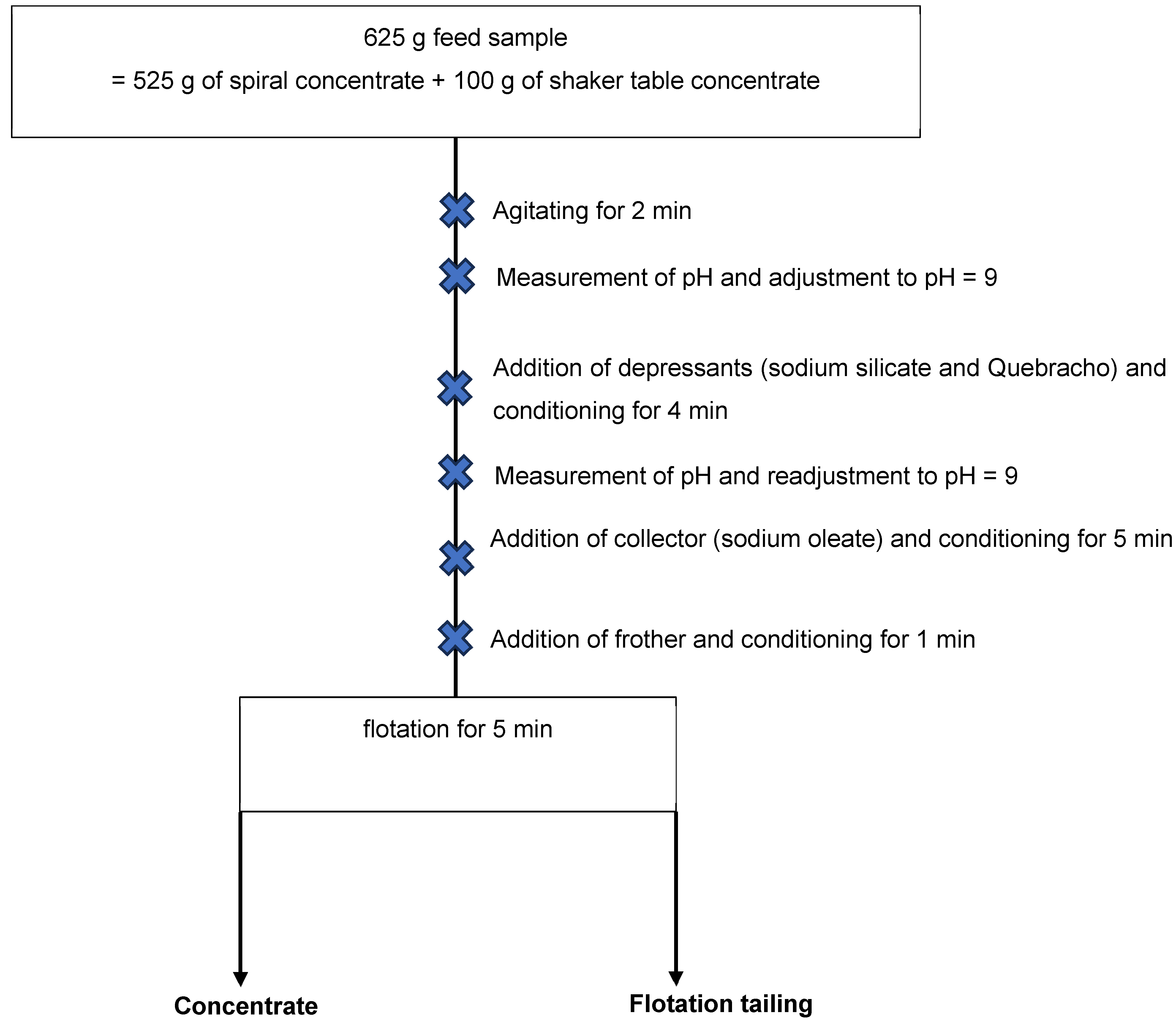
The flotation experiment carried out was intended to simulate rougher flotation used to eliminate gangue minerals such as calcium–silicate minerals, calcite, and fluorite, while improving the collection of scheelite, and followed the flowchart depicted in
Figure 3. Feed material was combined with 2000 mL of site water (using a pulp density of around 25%), and the slurry was pre-agitated for 2 min, after which pH was measured and adjusted. Operational parameters, including impeller speed, pH, and reagent dosages, were optimised at varying levels, as presented in
Table 1. Frother dosage and airflow rate were the only parameters kept constant. During each experimental stage, only the parameter under investigation was adjusted, while all other parameters remained constant. For example, the impeller speed was adjusted from 700 to 1100 rpm by incrementally increasing the speed by 100 rpm while the pH, collector (sodium oleate), and depressants were constant.
The optimal conditions for coarse scheelite flotation were identified at pH 9, as anionic collectors like NaOl exhibit strong adsorption onto the scheelite surface, improving hydrophobicity and flotation recovery [
25,
39]. Next, depressants were added (4 g/t of Na
2SiO
3 and 4 g/t of quebracho), and the resulting mix was conditioned for 4 min. Subsequently, the pH was measured and readjusted to 9 if needed. Next, a collector (5 g/t of NaOl) was introduced, and the slurry was conditioned for 5 min. Then a frother (1 g/t of 2-ethylhexanol) was added and the mixture conditioned for 1 min prior to flotation (steps used for the flotation experiments are shown in
Figure 3). Each test was carried out in a laboratory-scale flotation cell (Agitair-67377, the Galigher Co. Salt Lake, UT, USA) at an ambient temperature of 25 °C. A flotation time of 5 min was used with an airflow rate of 0.21 m
3/h. Each test was conducted in triplicate, and the average result is reported in this paper.
The optimisation of operational parameters, including impeller speed, pH, and dosages of depressants and collector, was conducted by examining a range of values, as presented in
Table 1. During each experimental stage, only the parameter under investigation was adjusted while all other parameters remained constant. For example, the impeller speed was adjusted from 700 to 1100 rpm by incrementally increasing the speed by 100 rpm while the pH, collector (sodium oleate), and depressant dosages were constant.
The floated (scheelite concentrate) and unfloated (gangue) materials were collected, decanted, dried in ovens at 70 °C for 24 h, weighed, sieved, and pulverised using a ring mill (Rocklabs 1A-BT model, Auckland, New Zealand). The tungsten content of the feed, concentrate, and tailings was determined using portable X-ray fluorescence (VMR-842800, Olympus, Waltham, MA, USA. See
Section 3.5) and used to evaluate process performance by calculating recovery in accordance with the three-product formula shown in Equation (1) [
40,
41]. R represents the recovery percentage of WO
3, and c, f, and t represent the grade of WO
3 in the concentrate, feed, and tailings, respectively [
17].
3.4. Particle Size Distribution Measurement
Prior to the flotation test, the feed material (i.e., subsample 525 g + 100 g of shaking table concentrate) was subjected to sieving to ascertain the particle size distribution (PSD) based on three replicate tests. Standard sieves with screen sizes of +425, +300, and +150 µm were utilised for this purpose. Additionally, sieve analyses were conducted on the concentrate and tailings after the flotation test to determine the percentage of coarse particles recovered in the concentrate and the amount remaining with gangue minerals in the tailings. This was conducted to assess the susceptibility of scheelite to coarse particle flotation. The PSD for the concentrate and tails was conducted using a laser diffraction analyser (Mastersizer 3000, Malvern Panalytical., Malvern, Worcestershire, UK). The measurements utilised Mie theory [
42], with a particle refractive index of 2.420, an absorption index of 0.100, and water as the dispersion medium (refractive index: 1.330). A typical sample (about 5 g) was placed into a water-filled sample beaker, and obscuration levels (approximately 5%) were observed. Additional dispersant was used as needed to reduce laser obscuration. Measurements were conducted three times, and the mean data were utilised to create particle size distribution plots, incorporating essential size metrics such as d
50 and d
80. The weighted residual error in the analysis was 0.18%.
3.5. Elemental Composition
The elemental composition of feed, concentrate, and tails was assessed using a portable X-ray fluorescence (pXRF) spectrometer (VMR-842800, Olympus, Waltham, MA, USA). The instrument was operated with a factory-configured Geochem 3-Beam-Au method, which utilises three distinct beam settings (24, 30, and 36 keV) optimised for the detection of a broad suite of geochemical elements found in geological materials [
43]. This method employs beam filtering and energy optimisation to enhance analytical sensitivity and spectral resolution. All measurements were conducted under consistent operating conditions. The elemental analysis was conducted over a period of 90 s, comprising three scans of 30 s each at beam energies of 24, 30, and 36 keV. The measured elements included iron (Fe), calcium (Ca), and tungsten (W). Quantification of WO
3 was validated against laboratory XRF analyses using a Certified Reference Material (CRM) OREAS 700 series, 0.2%–70% WO
3 [
44]. Calibration provided strong agreement (R
2 = 0.97). All reported WO
3 grades are pXRF corrected values based on this calibration.
3.6. Quantitative X-Ray Diffraction Analysis
A representative sample was ground to a grain size of <10 µm using a Retsch McCrone micronising mill with ethanol as a wetting agent for 3–7 min. The resulting slurry was air-dried and further homogenised in an agate mortar to minimise preferred orientation. X-ray powder diffraction data were collected using a Bruker D2 Phaser diffractometer (Bruker AXS GmbH, Karlsruhe, Germany) in Bragg–Brentano geometry, equipped with a CoKα radiation source, Fe Kβ filter, 2.5° incident and diffracted beam Soller slits, and a lynx eye detector (Bruker AXS GmbH, Karlsruhe, Germany). Scanning was performed continuously over a 2θ range of 5–95°, with operational settings of 30 kV and 10 mA. Mineral phase identification was conducted using the International Centre for Diffraction Data (2025). Trace phases were identified based on distinctive peak positions in complex diffraction patterns. Quantitative phase analysis was performed using rietveld refinement with TOPAS v5 (Bruker AXS GmbH, Karlsruhe, Germany).
3.7. SEM-Automated Mineralogy
In this study, the primary objective of conducting automated mineralogical analyses was to characterise the feed material and monitor the distribution of coarse scheelite in the flotation products. Mineralogical characterisation was carried out using the particle-based method in Automated Material Identification and Classification System (AMICS) software (v3.1) on grain mounts prepared by embedding a representative sample of ~70 g mineral particles in epoxy, polished to a flat surface, and coated with 20 nm of carbon. Analyses were performed using a tungsten-source FEI MLA650 scanning electron microscope (SEM) at the Central Science Laboratory, University of Tasmania. The instrument is equipped with a Bruker Quantax Esprit 1.9.4 energy-dispersive X-ray spectroscopy (EDS) system (Bruker AXS GmbH, Karlsruhe, Germany) and two XFlash 5030 silicon drift detectors (SDDs; Bruker AXS GmbH, Karlsruhe, Germany) with 133 eV energy resolution.
The SEM operated at an accelerating voltage of 20 kV and a beam current of ~7 nA, producing an EDS X-ray intensity of approximately 600,000 counts per second (cps) with a dead time of ~30% on quartz. Backscattered electron (BSE) contrast and brightness were calibrated using gold and epoxy standards. For the particle analysis, acquisition settings included a resolution of 1024 × 1024 pixels, a field of view of 1.536 mm, and an acquisition time of ~16 s per frame, resulting in a pixel size of approximately 1.5 × 1.5 µm2. Grain segmentation was performed automatically, and each segment was analysed with a 5 ms spectrum acquisition time and a minimum segment size of 3 µm. All grains present in the mounts were analysed. Mineral identification was achieved through spectral matching against the internal reference library, with a minimum match quality threshold of 60%.
Modal mineralogy was determined based on the relative abundance (area percentage) of each mineral phase identified across all analysed grains. Mineral liberation analysis was conducted by quantifying the degree of exposure and association of target minerals (e.g., scheelite) within individual particles. Liberation was classified into categories (liberated, binary, and ternary) based on the proportion of exposed mineral surface area (in 2D), using standard thresholds defined within AMICS.
4. Results and Discussion
Detailed results of the testwork for the scheelite-bearing samples are presented below.
4.1. Particle Size Distribution
Understanding the particle size distribution of the flotation feed is crucial in assessing its flotation behaviour, as fine and coarse particles present distinct challenges during processing [
45,
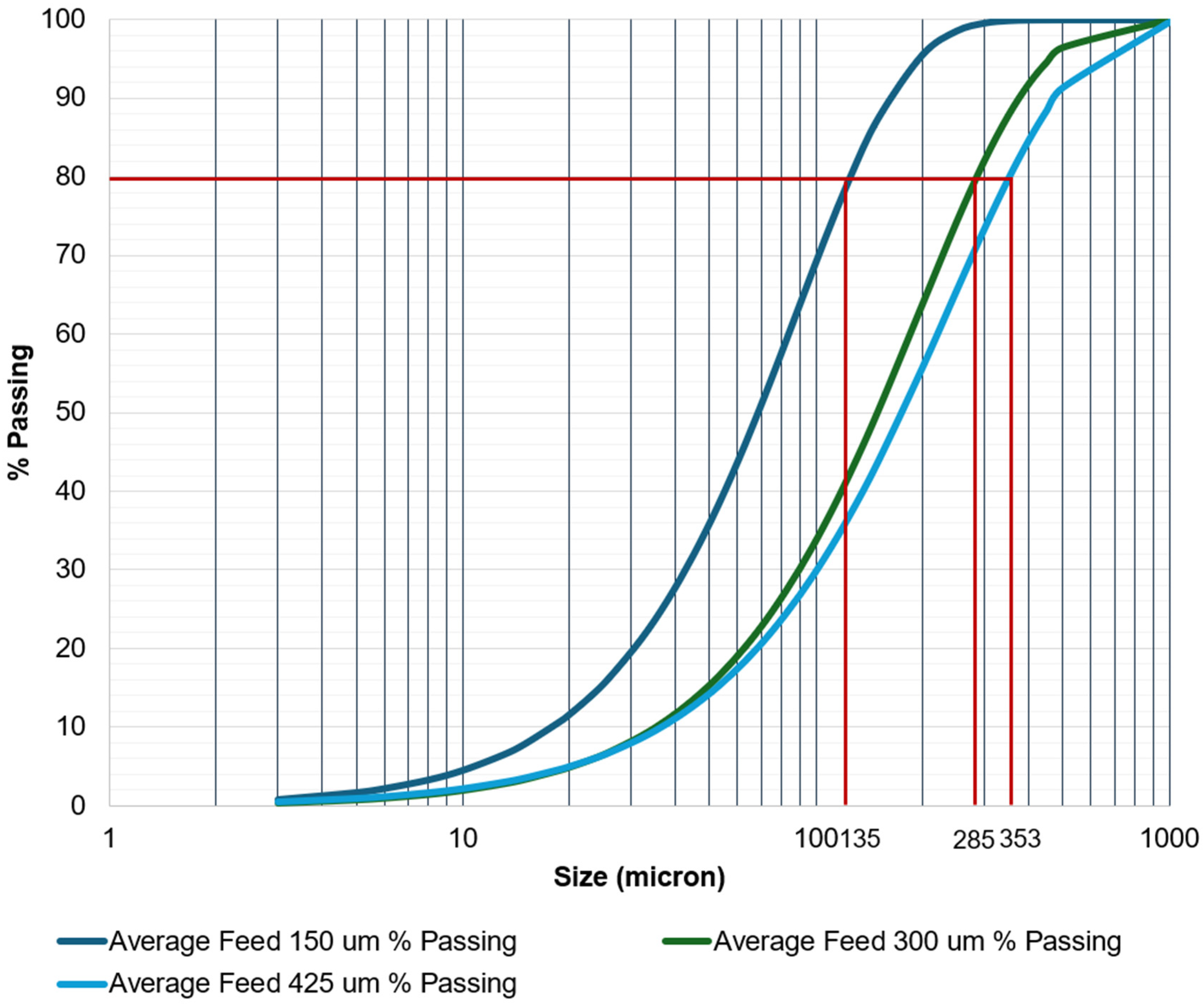
46]. The particle size distributions (PSDs) of the three feed materials are presented in
Figure 4. The cumulative passing curves illustrate the progressively coarser characteristics of the feeds: +150 µm, +300 µm, and +425 µm nominal sizes. The P
80 values, identified by the red intercepts at 80% passing, were approximately 135 µm, 285 µm, and 353 µm, respectively.
The +150 µm feed is characterised by a steeper distribution, indicative of tighter classification and a higher proportion of fine particles (28% < 40 µm), whereas the 300 µm and 425 µm feeds show broader distributions reflecting a higher proportion of coarse material, with fine particles of 13% and 11%, <40 µm, respectively.
From a flotation perspective, the finer feed +150 µm maximises liberation potential but also introduces a higher proportion of fines, which are prone to entrainment and may adversely affect concentrate grade. In contrast, the coarser feeds, +300 µm and +425 µm, retain larger particle fractions that are less liberated but can reduce overgrinding losses, reagents, and energy consumption. These results highlight the inherent trade-off between achieving sufficient liberation for scheelite recovery and managing the adverse effects of fine gangue entrainment.
The differences in PSD among the three feeds are therefore critical to downstream flotation response. The coarser distributions suggest potential for improved selectivity through preferential flotation of liberated coarse scheelite grains, while the finer distribution provides higher liberation but greater risk of recovery losses to entrainment. This balance underpins the subsequent flotation tests and supports the evaluation of coarse particle flotation strategies as a sustainable pathway to enhance scheelite recovery.
4.2. Elemental and Mineralogical Composition of the Feed Material
The elemental composition of the feed, determined by pXRF (
Table 2), reflects the skarn-type nature of the deposit. Major elements include Si, Ca, and Fe, consistent with the dominance of silicate, calcium, and iron-bearing gangue phases. The tungsten content, expressed as WO
3, occurs at a minor concentration of 0.42%, highlighting the challenge of recovering a minor valuable component from a complex matrix. Other minor elements, such as sulphur (0.08%) and lead (0.02%), are present only at trace levels, but their potential influence on flotation chemistry and concentrate quality cannot be overlooked.
XRD analysis (
Table 3) confirmed that scheelite is the sole tungsten-bearing phase, accounting for 0.40% WO
3 in the feed. The bulk mineralogy is dominated by gangue phases, including garnet (39%), clinopyroxene (25.5%), vesuvianite–wiluite (18.9%), epidote (4.1%), and quartz (2.1%), with minor fluorite (0.4%). The predominance of garnet, clinopyroxene, and vesuvianite underscores the calcium–silicate gangue environment typical of skarn deposits, which is known to complicate selective scheelite flotation due to their similar surface chemistry and high calcium content.
The close result between the elemental (WO3 = 0.42%) and mineralogical (scheelite = 0.40% WO3) estimates confirms that tungsten in this ore is hosted in scheelite. This agreement provides confidence in the analytical methods and validates the use of scheelite as the sole mineral of interest in subsequent flotation investigations.
4.3. Processing and Potential Problems Caused by the Elemental and Mineralogical Makeup of the Feed Material
The processing technique selected for this ore, i.e., froth flotation, must overcome the challenges of the low WO
3 concentration and the presence of multiple gangue minerals to produce a saleable concentrate. In addition, processing this ore presents challenges due to the significant hardness disparities among the primary gangue minerals and the scheelite. Garnet, vesuvianite, and epidote are notably harder than scheelite. This hardness variation can lead to the preferential breakage of softer minerals such as scheelite during comminution, resulting in the formation of slimes. The generation of slimes is detrimental, as it can cause mechanical losses and decrease recovery rates [
47]. Also, the feed material contains large quantities of calcium-bearing minerals like garnet, clinopyroxene, calcite, and fluorite, which, as mentioned, have similar surface properties to scheelite. The similarities create a challenge in scheelite processing as they compete for adsorption of reagents (collectors and depressants) intended for the recovery of scheelite [
12,
13,
14,
48,
49].
4.4. Flotation Experiments
The effects of operating parameters: impeller speed, pH, depressant (Na
2SiO
3 and Na
2SiO
3 + Quebracho), and collector (sodium oleate NaOl) dosages on WO
3 recovery and coarse particle scheelite recovery are discussed in the following sections and shown in
Figure 4,
Figure 5,
Figure 6,
Figure 7 and
Figure 8.
4.4.1. Impeller Speed
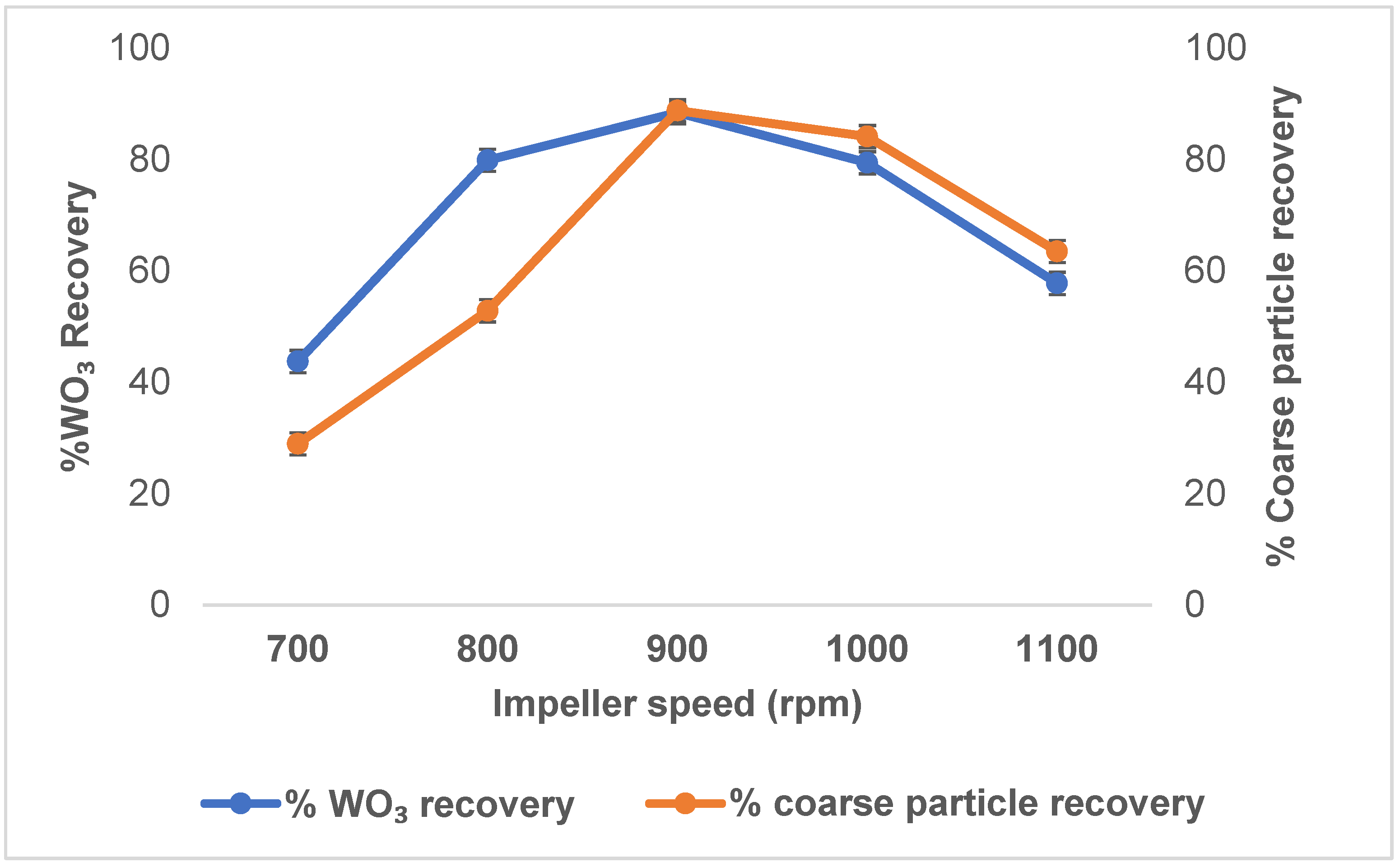
The influence of impeller speed on the flotation performance of scheelite was evaluated by measuring the recovery of WO
3 and coarse particles at different impeller speeds, as shown in
Figure 5. At an impeller speed of 700 rpm, the recovery of WO
3 was 43.75%, with a coarse particle recovery of 28.96%, indicating insufficient agitation or hydrodynamic energy. This low impeller speed likely resulted in inadequate particle suspension, reduced bubble–particle collision frequency, and poor dispersion of reagents. The sedimentation of coarse particles at the bottom of the cell (71.04% of coarse particles), which is attributed to gravity-driven sedimentation resulting from the high density of scheelite, likely further limited the effective interaction between particles and bubbles.
When the speed was increased to 1100 rpm, WO3 recovery improved moderately to 57.78%, with a significant enhancement in coarse particle recovery to 63.50%. This can be attributed to improved hydrodynamic conditions, including enhanced turbulence and bubble dispersion, which promote more efficient collision and attachment of larger scheelite particles to air bubbles. However, excessive agitation likely generated strong turbulence, leading to particle detachment from bubbles, bubble rupture and disappearance, and froth instability. This disruption to the froth structure would reduce its ability to maintain stable particle–bubble attachment. Additionally, the higher impeller speed could increase particle–particle collisions, further affecting the flotation efficiency. The inherent brittleness of scheelite, combined with particle–particle and particle–impeller collisions during froth flotation, contributes to the comminution of coarse scheelite particles, which likely contributed to the lower WO3 and coarse particles recovery.
The optimal flotation performance was achieved at 900 rpm, where WO3 recovery peaked at 88.45% and coarse particle recovery reached 88.81%. The impeller speed seems to provide sufficient hydrodynamic energy, adequate for sustaining coarse particle suspension and enhancing effective reagent–particle interaction, while reducing the adverse impacts of excessive turbulence. These findings highlight the critical role of impeller speed in balancing particle suspension, bubble–particle attachment, and froth stability for the efficient recovery of scheelite, especially in the coarse size fractions.
Figure 5.
The impact of impeller speed on scheelite and coarse particles recovery. Other parameters (pH 9, NaOl 5 g/t and Na2SiO3 12 g/t) were held constant.
Figure 5.
The impact of impeller speed on scheelite and coarse particles recovery. Other parameters (pH 9, NaOl 5 g/t and Na2SiO3 12 g/t) were held constant.
4.4.2. Reagents
pH Regulation: Sodium Carbonate
The regulation of pH during flotation is considered essential due to the variation in mineral surface characteristics in the slurry and their reactivity with reagents as the pH changes [
12]. This pH variation underscores the importance of using specific reagents to maintain optimal flotation conditions. Sodium carbonate (Na
2CO
3) is a key reagent in scheelite flotation, offering a range of synergistic effects beyond just pH adjustment, as reported by [
12]. It also acts to precipitate and restrict free calcium (Ca
2+) and magnesium (Mg
2+) ions in the pulp that can form less soluble salts with carbonate ions (CO
32−) from Na
2CO
3. The carbonate in the solution is protonated to form hydrogen carbonate and subsequently converts those surfaces into calcium carbonate in accordance with reactions outlined in Equations (2), (3), (4), and (5), as reported by [
38]. Specifically, calcium ions tend to precipitate as calcium carbonate (CaCO
3), as shown in Equation (5). This precipitation reduces the concentration of free calcium ions in the flotation solution, thereby enhancing flotation performance and selectivity against gangue minerals, particularly Ca
2+-bearing gangue minerals such as calcite [
8,
12,
13,
49,
50]. In summary, sodium carbonate acts as a pH regulator by producing alkalinity upon contact with water, assisting in sustaining an alkaline medium conducive to scheelite flotation.
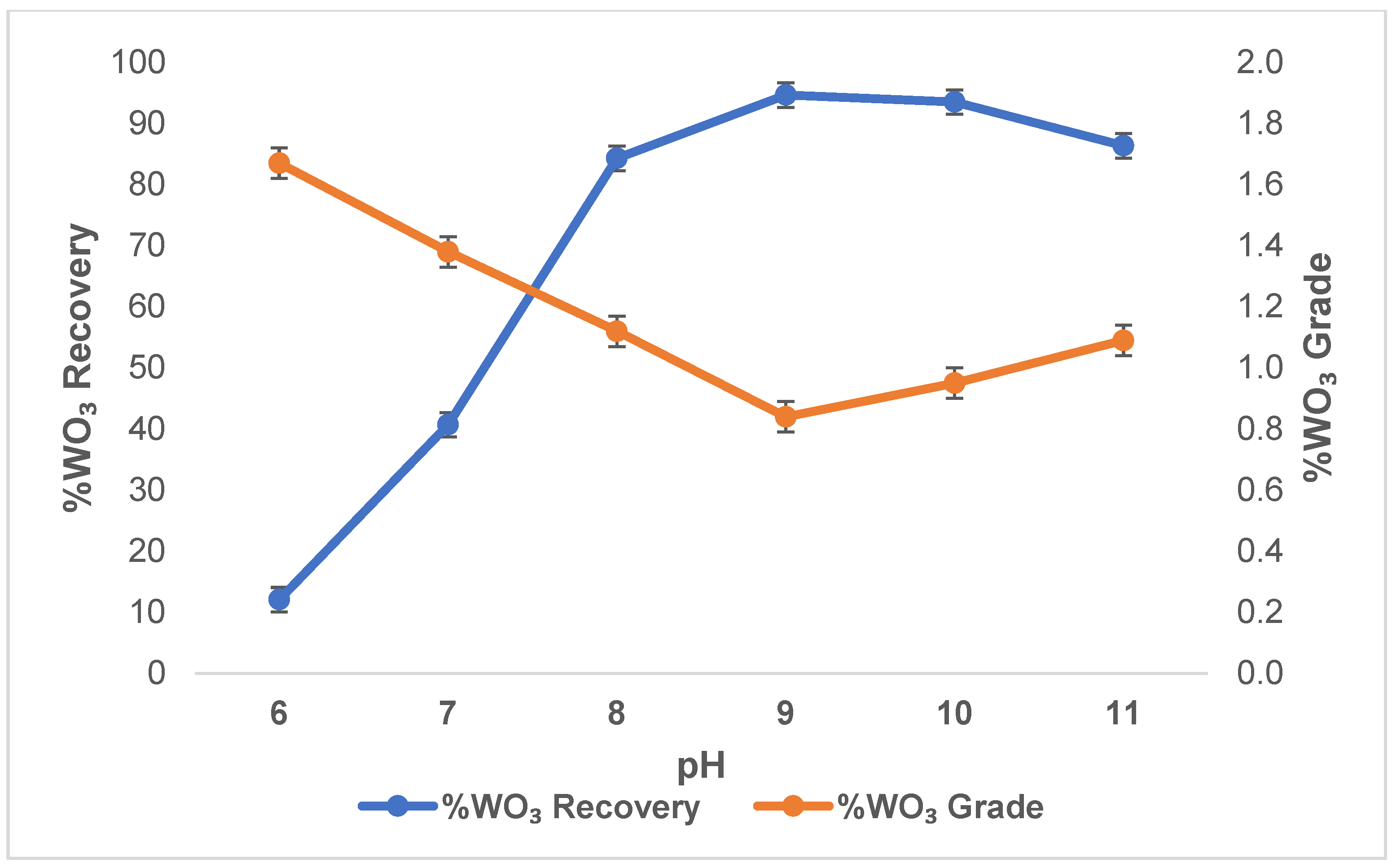
Figure 6 demonstrates the influence of pH on WO
3 grade and recovery when employing Na
2CO
3 as a pH regulator. Recovery increases from 12% at pH 6, with a grade of 1.67%, and peaks at 94% at pH 9, although the grade decreases to 0.8%, which is the lowest grade for any pH. Recovery decreases slightly beyond pH 9 to 86% at pH 11, although this is accompanied by an increased grade of 1.1%.
At a lower pH (6–7), the recovery of WO
3 is low due to insufficient carbonation on the scheelite surfaces. This could be because the interaction between carbonate ions (CO
32−) and calcium ions (Ca
2+) on the scheelite surface is not fully optimised. The optimum flotation performance was observed at a pH level of 9–10. This is because at pH 9–10, the surface of scheelite becomes moderately negatively charged, which facilitates electrostatic interaction with anionic collectors through chemisorption or surface complexation with calcium sites, thereby enhancing its hydrophobicity and floatability [
51]. Also, Na
2CO
3 allows the formation of a CaCO
3 surface layer, which improves scheelite hydrophobicity [
14,
38], enhancing attachment to air bubbles significantly while rendering most gangue minerals inactive, yielding a grade of 0.8% WO
3 and a recovery rate of 94% WO
3. Beyond pH 10, the recovery sharply declines, which is in line with what was previously reported by [
13]. At a more basic pH, hydroxide ions (OH
−) significantly influence scheelite flotation by competing with anionic collectors for adsorption sites on the material surface. This occurs because OH
− ions can occupy active areas on the mineral surface, hence diminishing the adhesion of collectors essential for efficient flotation [
13]. This outcome is consistent with the findings reported by [
12] as well as [
52], who similarly examined the influence of pH on the floatability of fluorite and scheelite. Their study indicated that scheelite can be floated at a lower pH of 9, whereas fluorite requires a higher pH of 11 for effective flotation. The selective depression of calcite and fluorite by sodium carbonate, as opposed to scheelite, is influenced by the density of calcium (Ca
2+) surface sites on these minerals. Calcite and fluorite exhibit higher densities of exposed calcium atoms compared to scheelite, facilitating greater adsorption of sodium carbonate on their surfaces. This increased adsorption leads to the effective depression of calcite and fluorite during flotation processes. In contrast, the lower density of calcium surface sites on scheelite results in reduced sodium carbonate adsorption, allowing scheelite to remain floatable under similar conditions [
38,
52,
53].
Figure 6.
The effect of pH variation on % WO3 recovery and grade. Other parameters (impeller speed 900 rpm, NaOl 5 g/t, Na2SiO3 12 g/t, and airflow 1 cm3/s) were held constant.
Figure 6.
The effect of pH variation on % WO3 recovery and grade. Other parameters (impeller speed 900 rpm, NaOl 5 g/t, Na2SiO3 12 g/t, and airflow 1 cm3/s) were held constant.
Silicate Gangue Removal: Depressant–Sodium Silicate
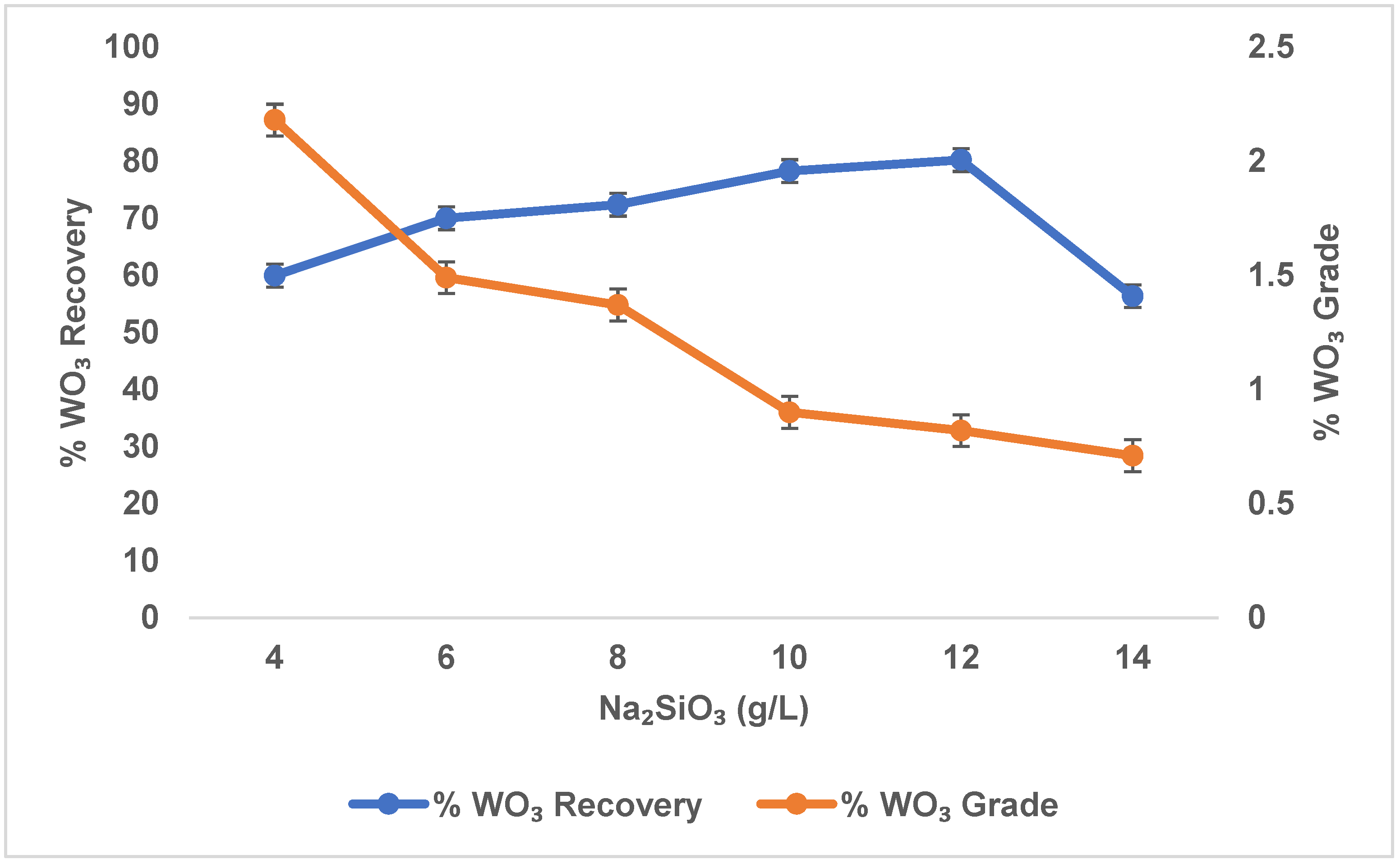
Figure 7 illustrates the optimisation of silicate gangue removal through the addition of the depressant sodium silicate (Na
2SiO
3), showing the relationship between the grade, recovery of the concentrate, and the amount of sodium silicate used. As the dosages of Na
2SiO
3 increase, the flotation recovery of WO
3 shows a gradual rise, while the grade exhibits a gradual decline. However, the peak in recovery is reached at a dosage of 12 g/t of Na
2SiO
3, where there is an 80.2% recovery and a grade of 0.82% WO
3. Beyond this dosage, WO
3 recovery declined sharply, likely due to excess Na
2SiO
3, causing over-dispersion or surface coating on the scheelite surface, thereby reducing hydrophobicity and impairing bubble–particle attachment. When excess Na
2SiO
3 is introduced, SiO
32− is protonated in solution, and HSiO
3− anions interact with scheelite to produce Ca(HSiO
3)
2 on the scheelite surface, which is hydrophilic [
12,
13,
21,
26,
54].
Figure 7.
The effect of Na2SiO3 dosage on % WO3 recovery and grade. Other parameters (impeller speed 900 rpm, NaOl 5 g/t, and pH 9) were held constant.
Figure 7.
The effect of Na2SiO3 dosage on % WO3 recovery and grade. Other parameters (impeller speed 900 rpm, NaOl 5 g/t, and pH 9) were held constant.
Silicate and Ca-bearing gangue removal: depressants–sodium silicate plus quebracho combination.
A mixture of Na
2SiO
3 and quebracho in a 1:1 ratio was utilised as a depressant. Na
2SiO
3 acts as a dispersant and depressant for silicate gangue minerals, while quebracho depresses calcium-bearing gangue minerals like calcite and fluorite. This mixture renders both silicate and calcium-bearing gangue minerals hydrophilic, while the scheelite surface remains hydrophobic [
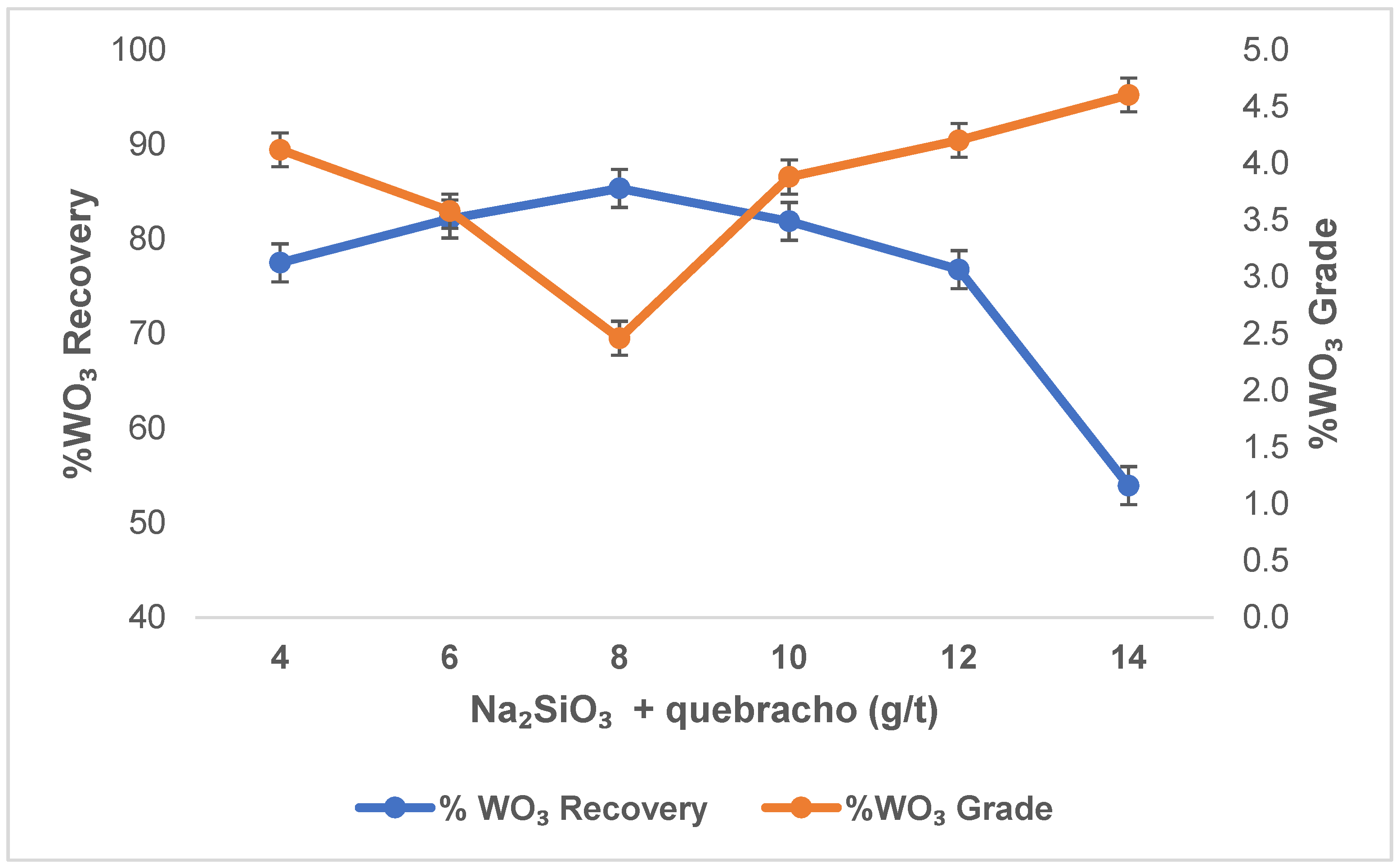
55]. This synergistic action ensures better flotation of scheelite and leads to superior recovery, as illustrated in
Figure 8, when compared to the use of Na
2SiO
3 alone (
Figure 7). The optimal WO
3 recovery of 85% with a grade of 2.5% is attained with a combined dosage of 8 g/t, derived from an equal mix of Na
2SiO
3 and quebracho, i.e., 4 g/t each, surpassing the performance of sodium silicate alone, which yielded 80% recovery and a grade of 0.8% at 12 g/t dosage. This suggests that a reduced reagent dosage (4 g/t each) is more effective with the Na
2SiO
3+quebracho mixture than 12 g/t of Na
2SiO
3 alone.
Figure 8.
The effect of Na2SiO3 plus quebracho dosage on % WO3 recovery and grade. Other parameters (NaOl 5 g/t, pH 9, and impeller speed 900 rpm) were held constant.
Figure 8.
The effect of Na2SiO3 plus quebracho dosage on % WO3 recovery and grade. Other parameters (NaOl 5 g/t, pH 9, and impeller speed 900 rpm) were held constant.
Scheelite Recovery: Collector–Sodium Oleate
Sodium oleate was used as a collector, and the quantity added varied from 1 g/t to 6 g/t. This dosage range was chosen based on values cited in the known literature [
56]. The addition of NaOl enhances the hydrophobicity of the particle surface and increases the potential for adhesion to bubbles during flotation [
39].
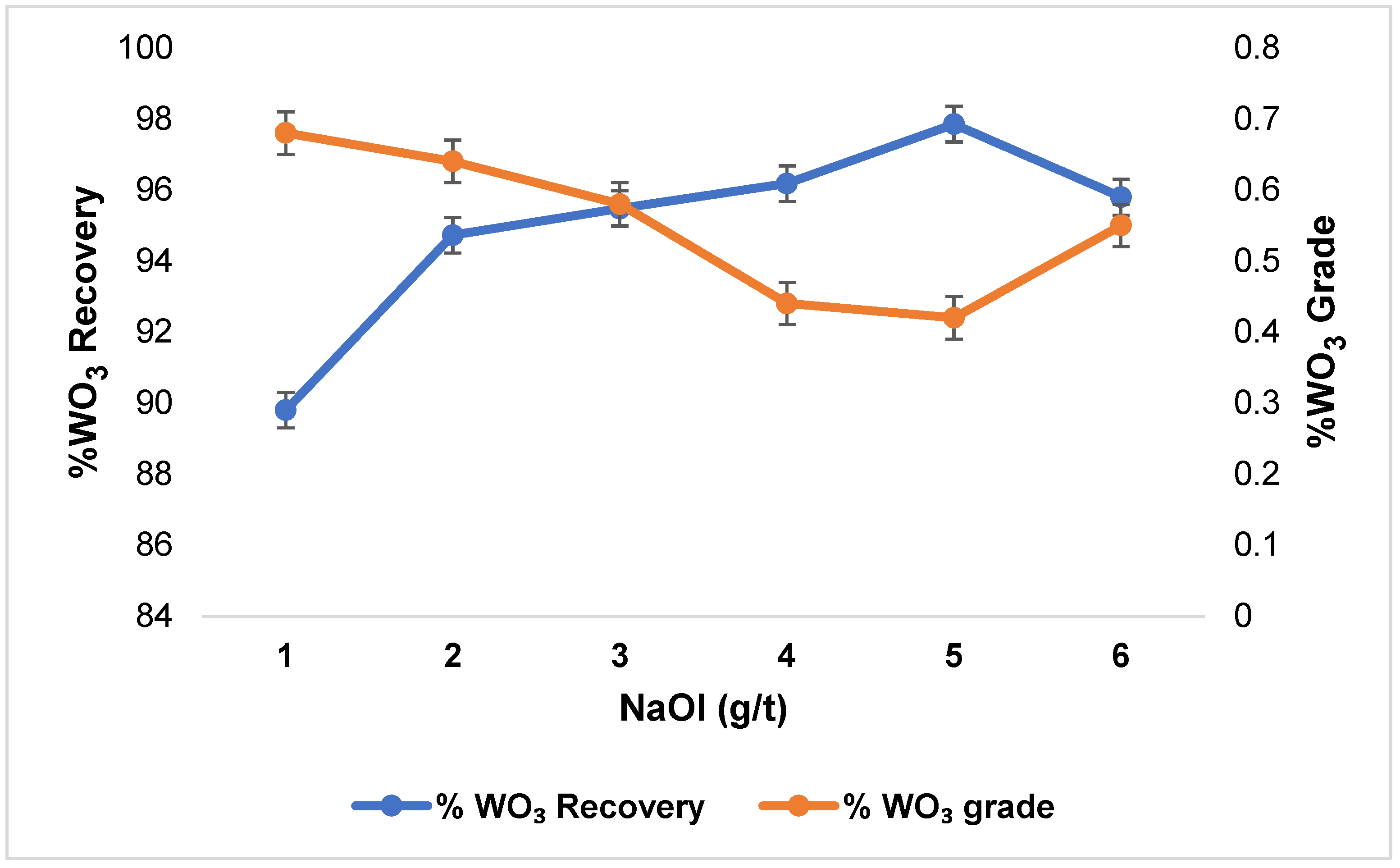
Figure 8 illustrates the grade and recovery of the concentrate in relation to the quantity of NaOl added as a collector. As the dosage of the collector increased, the recovery progressively improved and reached its peak at 5 g/t of NaOl with a recovery of 97.8% and a grade of 0.42% WO
3; however, the recovery diminished beyond 5 g/t. When NaOl is added in high dosages, in flotation systems, the concentration of oleate ions in solution can exceed the critical micelle concentration (CMC), triggering micellization. Once this point is reached, sodium oleate molecules begin to self-assemble into micelles, a spherical aggregate with hydrophobic tails inward and hydrophilic heads facing the aqueous phase [
57]. This behaviour typically results in non-selective adsorption of oleate anions on Ca
2+ bearing mineral surfaces, facilitated by the presence of surface calcium sites common to these calcium-bearing gangues and scheelite. Such interactions are known to enhance hydrophobicity across multiple mineral phases, leading to increased flotation of gangue calcium minerals [
6], thereby reducing recovery of WO
3 as observed when the NaOl dosage is 6 g/t (
Figure 9). This finding underscores the significance of optimising collector dosage to enhance scheelite recovery while reducing gangue entrainment.
4.5. Recovery of Coarse Scheelite Particles in Flotation Concentrate
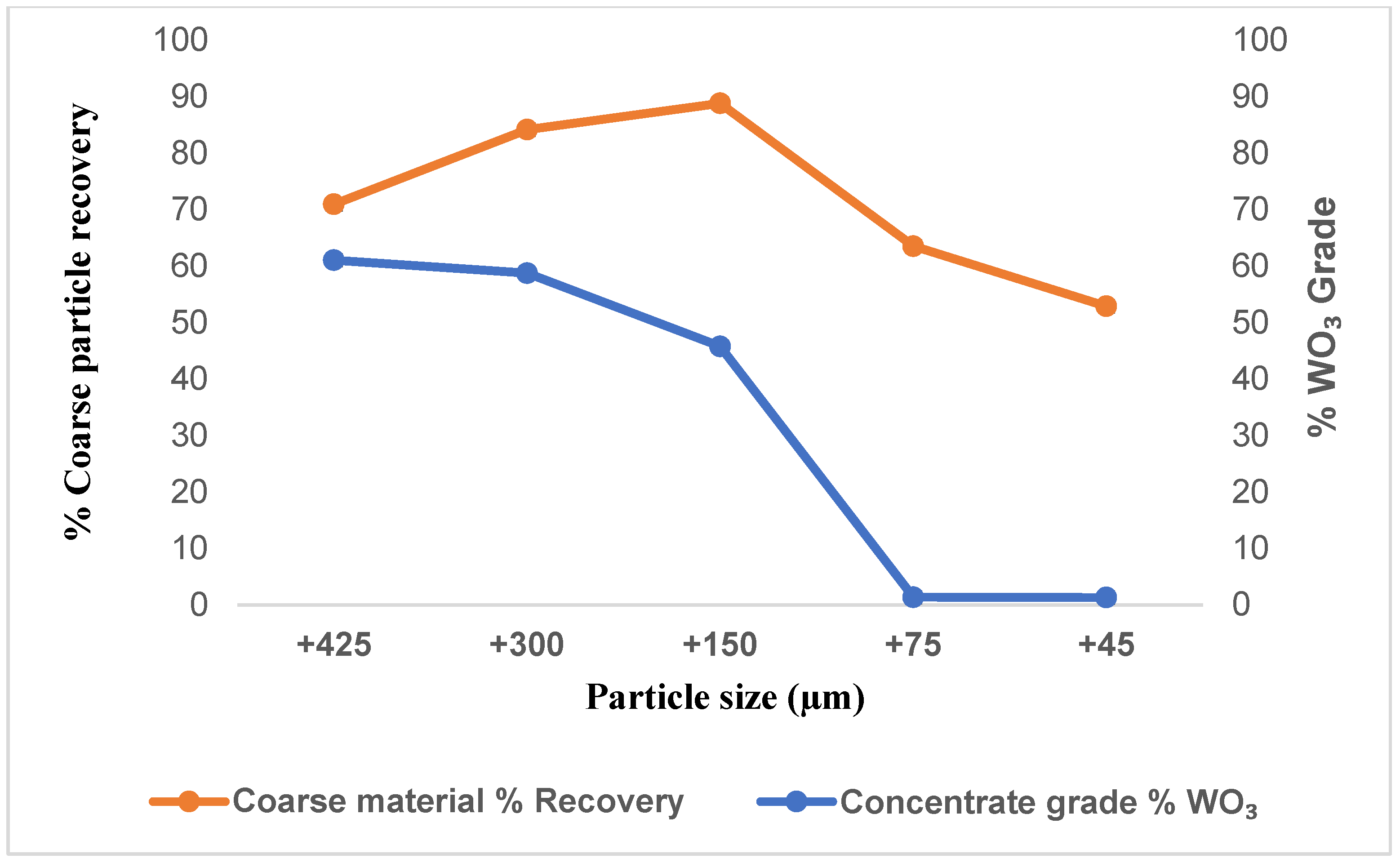
The results of flotation experiments show a clear positive correlation between particle size and scheelite recovery and grade (
Figure 10). The +425 µm fraction achieved the highest WO
3 content at 61.03%, followed by 58.73% and 45.76% for the +300 µm and +150 µm fractions, respectively. This trend highlights the favourable flotation response of coarser scheelite particles under the tested reagents scheme and hydrodynamic conditions. This trend is consistent with previous studies suggesting that flotation cell hydrodynamics, particularly bubble–particle collision efficiency and reduced detachment, are critical for coarse particle recovery [
58,
59]. The progressive increase in WO
3 content with particle size suggests that there is more efficient recovery of liberated scheelite in the coarser fractions, which can be attributed to improved bubble attachment. This size-dependent enrichment underscores the importance of particle size control in optimising separation efficiency and concentrate quality.
The reagent regime was instrumental in promoting selective flotation. NaOl, applied at 5 g/t and maintained at pH 9, enhanced scheelite hydrophobicity likely through the formation of calcium oleate complexes on the mineral surface [
13]. Concurrently, gangue depression was effectively achieved using 4 g/t each of sodium silicate and quebracho. These depressants selectively adsorb onto the surfaces of gangue minerals such as calcite and silicates, thereby inhibiting their flotation and improving the selectivity of scheelite recovery [
36]. Flotation hydrodynamics further contributed to the observed performance. Operating at an impeller speed of 900 rpm and an airflow rate of 1 cm
3/s, the system provided adequate bubble–particle interactions while minimising turbulent detachment. These results confirm that high-grade recovery of coarse scheelite particles (+425 µm) can be successfully achieved through the integration of a targeted reagent scheme and optimised hydrodynamics conditions.
4.6. Size by Size Flotation Performance
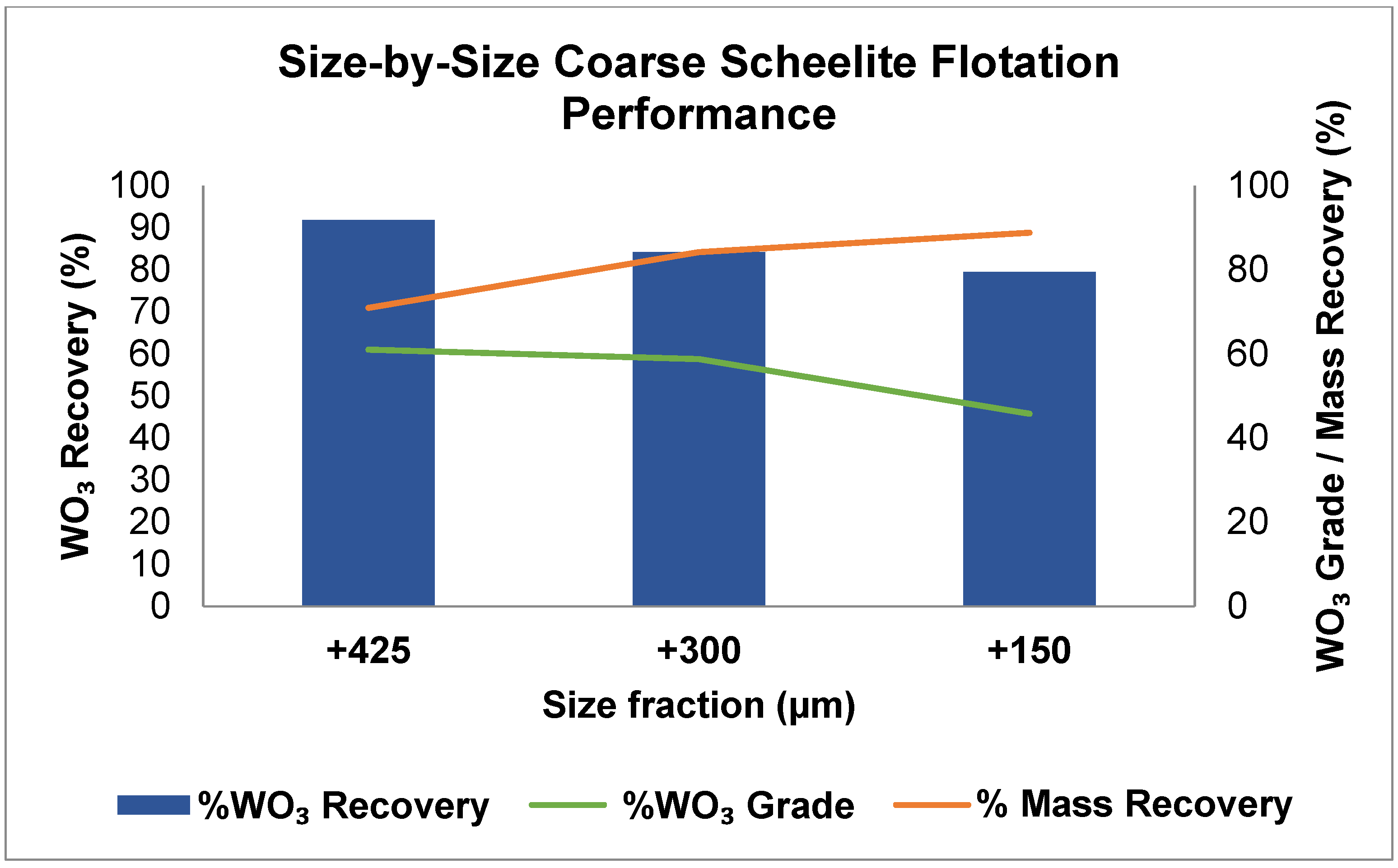
Table 4 summarises the WO
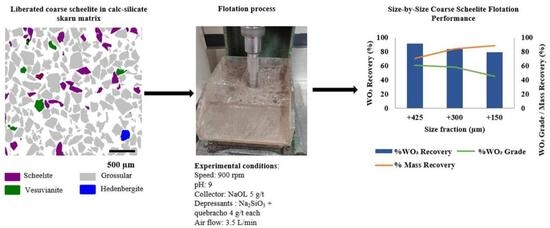
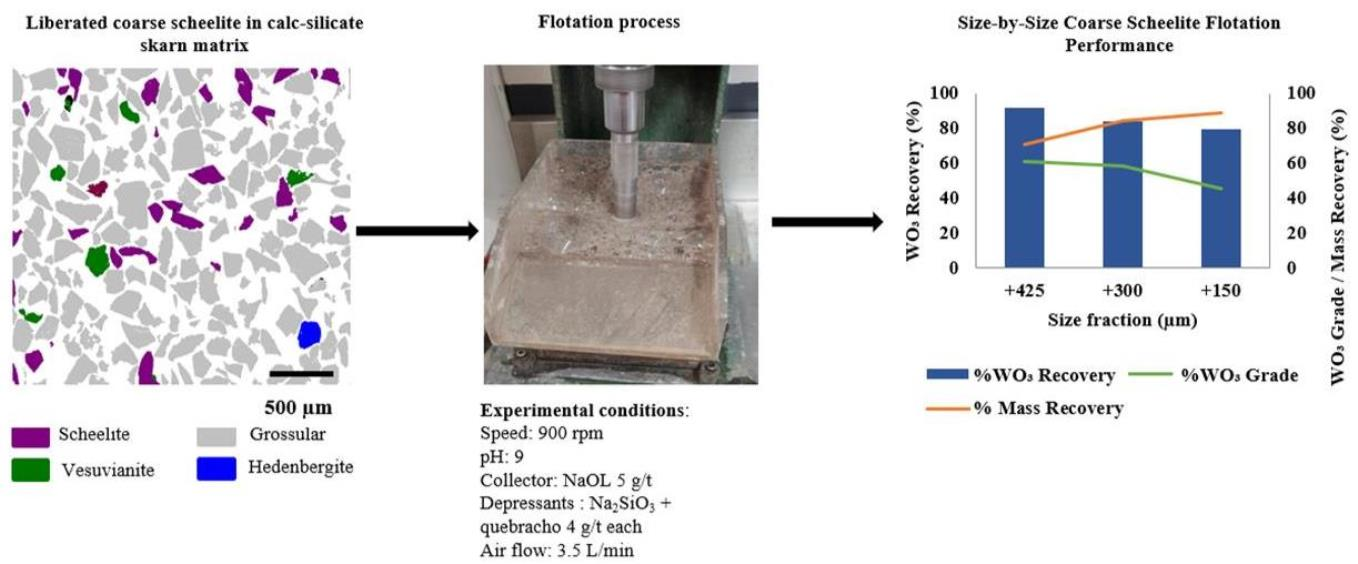
3 recovery, concentrate grade, and mass recovery for the +425, +300, and +150 µm fractions under optimal flotation conditions (900 rpm, pH 9, sodium oleate 5 g/t, and sodium silicate–quebracho at 4 g/t each). The coarser fractions (+425 and +300 µm) achieved the highest WO
3 recoveries (91.76% and 84.15%, respectively) and grades (61.03% and 58.73%) (
Table 4 and
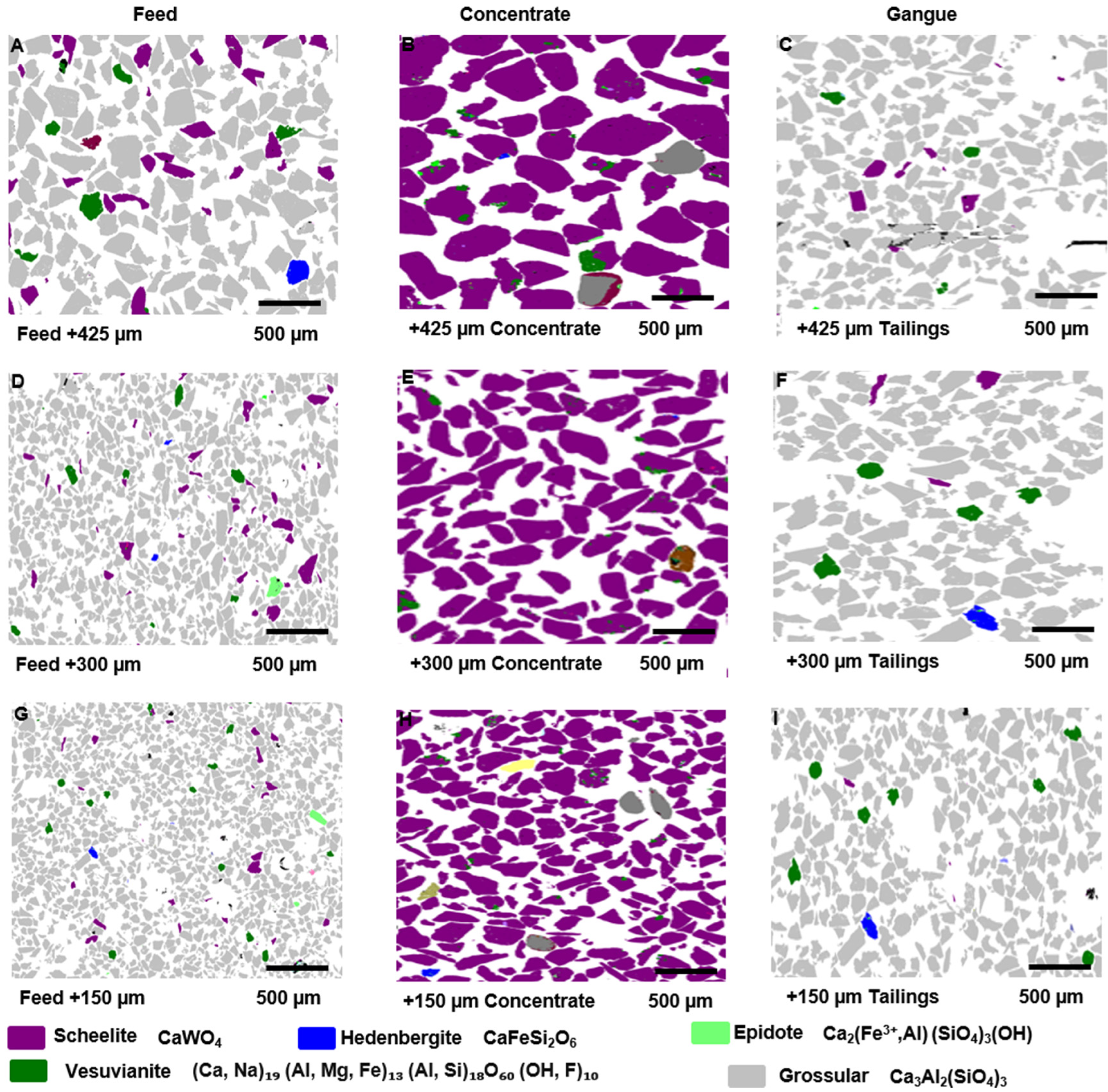
Figure 11). These results can be attributed to the higher proportion of liberated scheelite observed in these size classes, as confirmed by mineralogical mapping (
Figure 12), which showed large scheelite grains predominantly liberated or in simple binary associations. Such liberation characteristics promote efficient bubble–particle attachment and selective flotation. Despite their metallurgical advantage, these fractions exhibited lower mass recoveries (70.95% and 84.15%), which may be attributed to the inherent density of scheelite.
In contrast, the finer +150 µm fraction exhibited lower WO
3 recovery (80.00%) and grade (45.76%) but the highest mass recovery (88.81%). Liberation analysis showed that in this fraction, 82.3% of scheelite was fully liberated, while 11.5% and 6.2% occurred in binary and ternary associations, respectively. The combination of these locked particles with the larger surface area of fine gangue minerals, particularly calcium-bearing silicates, likely enhanced water recovery and entrainment, or mechanical carryover, contributing to the reduced concentrate grade observed in this size fraction. This size-dependent trade-off between recovery and selectivity, clearly illustrated in
Figure 11.
4.7. Mineralogical and Liberation Characteristics
Mineralogical and liberation analyses were conducted to assess compositional and liberation-related factors controlling scheelite recovery and losses across coarse particle size fractions (+425, +300, and +150 µm) under the optimised flotation conditions described in
Section 4.4.
Figure 12 shows the automated mineralogy maps of feed, concentrate, and gangue for +425, +300, and +150 µm size fractions,
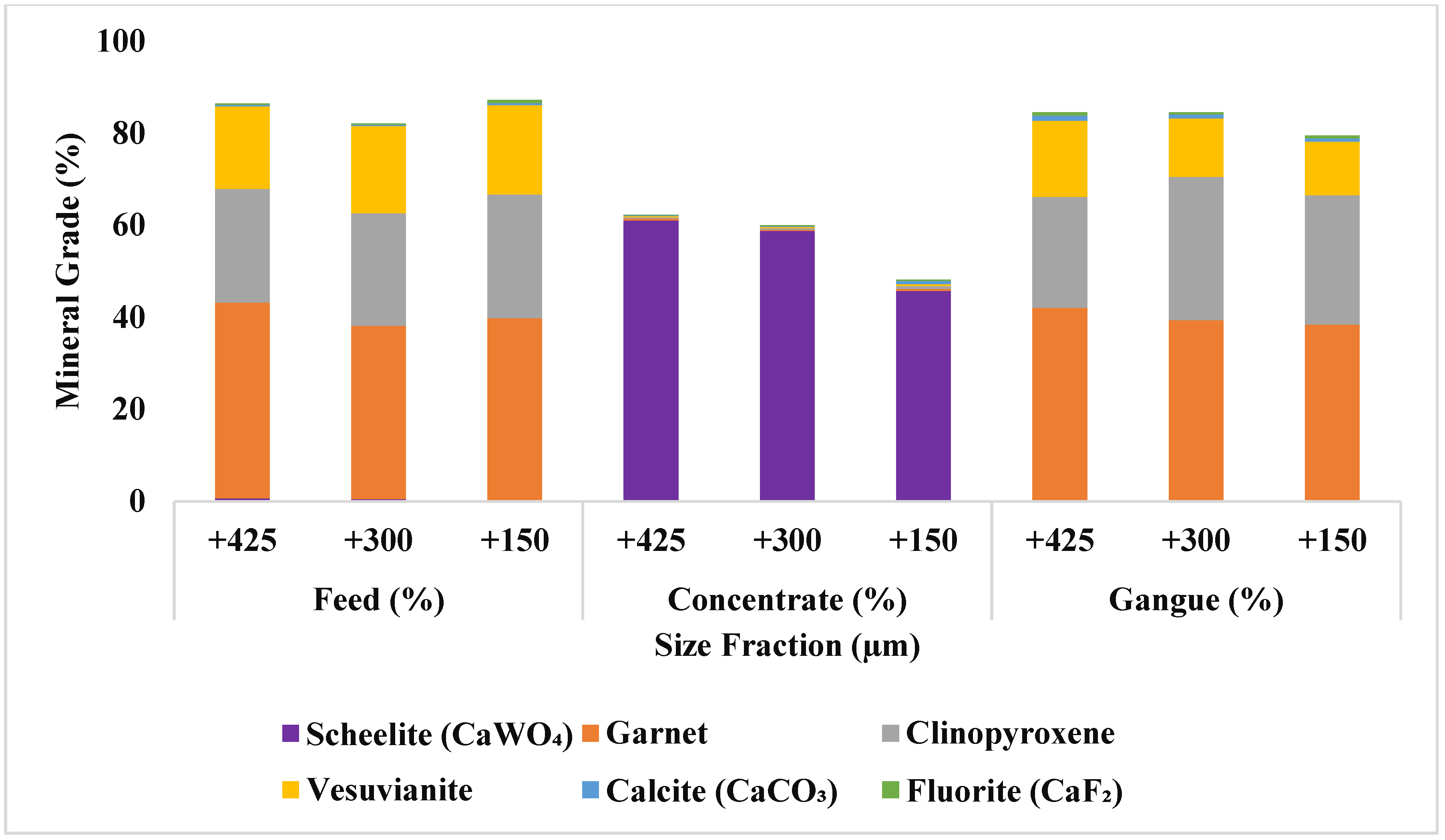
Figure 13 presents the modal mineralogical composition of feed, concentrate, and gangue for +425, +300, and +150 µm fractions, and
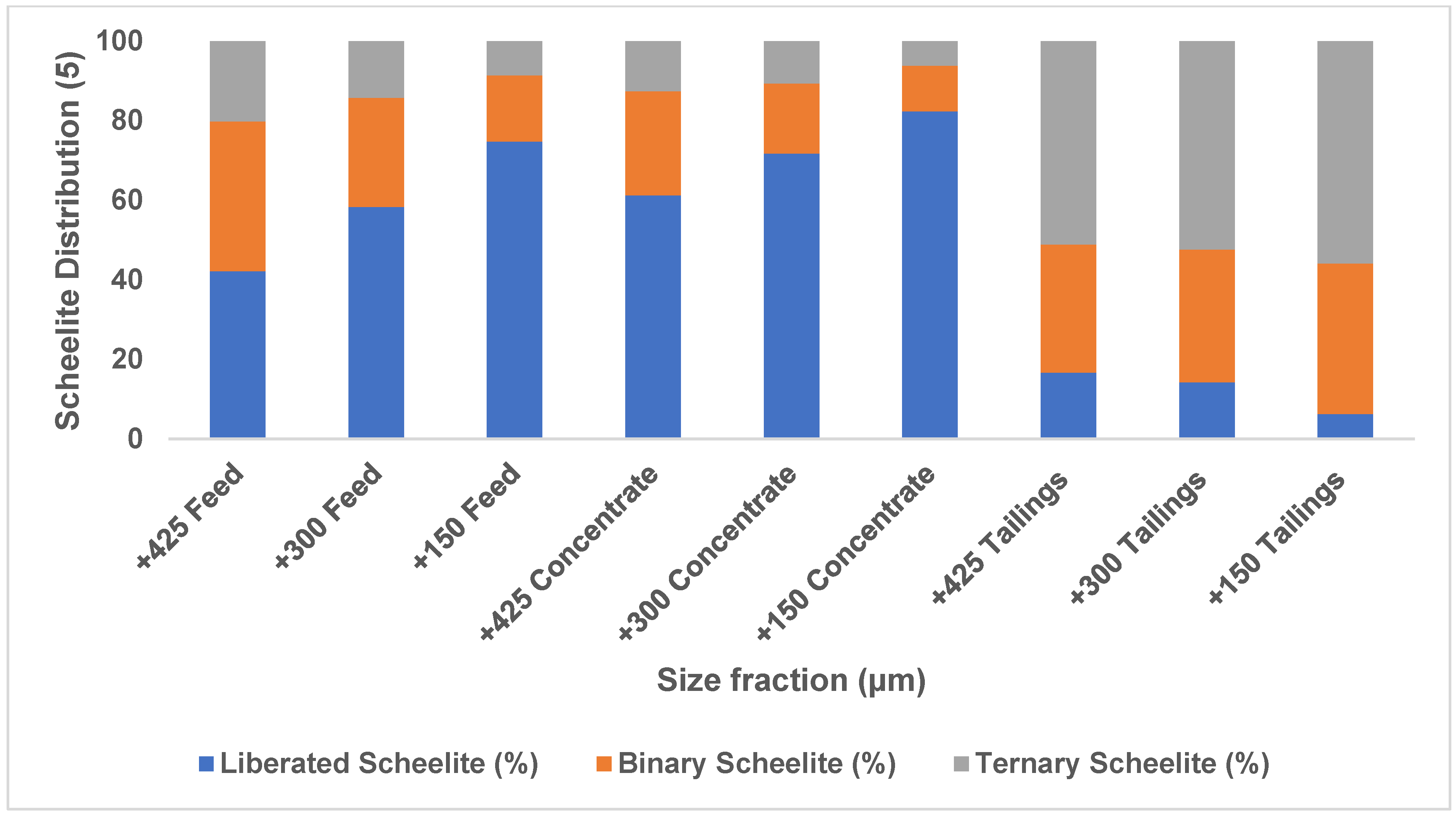
Figure 14 summarises scheelite liberation distribution in feed, concentrate, and tailings for +425, +300, and +150 µm linking liberation to flotation selectivity.
The modal mineralogy represents average values across the analysed samples, showing that scheelite (CaWO
4) in the feed is hosted predominantly within a matrix of calcium (Ca) bearing silicate gangue, primarily grossular garnet (33%), vesuvianite (19%), epidote (6%), and hedenbergite (5%) with minor calcite (CaCO
3) and fluorite (CaF
2). Knowledge about the prevalence of Ca-rich gangue minerals is important as they can present selectivity challenges due to their similarities in surface chemistry to scheelite [
13].
The flotation tests achieved high scheelite recoveries for coarse particle size fractions, with peak performance observed in the +425 µm fraction (91.76%WO
3 recovery,
Table 4). The high recovery in this size class is consistent with the liberation data (
Figure 13), which showed 61.3% liberated, 26.1% binary, and 12.6% ternary scheelite particles, and with the mineralogical maps (
Figure 12B), indicating minimal gangue minerals in the concentrate. However, residual liberated scheelite was found in the tailings (
Figure 12C).
In the +300 µm fraction, scheelite recovery remained high (>85%), supported by a liberation profile dominated by 71.8% liberated, 17.5% binary, and 10.7% ternary scheelite. Nonetheless, tailings analysis (
Figure 12F) revealed both free and partially liberated scheelite, suggesting that recovery losses stem from a combination of hydrodynamic inefficiencies and weaker bubble–particle attachment due to the lower specific surface area compared with finer particles.
For the +150 µm fraction, recoveries were slightly lower (~80%), with 82.3% liberated, 11.1% binary, and 6.2% ternary scheelite still accounting for the majority of the concentrate (
Figure 12H). The increased proportion of binary and ternary scheelite in the feed (
Figure 13) likely reduced the probability of attachment, while entrainment of fine Ca-bearing gangue into the froth may have reduced concentrate grade. The possibility of inadequate collector coverage at this size fraction (as small-sized particles have larger surface area), given the dosage applied, may also have contributed to sub-optimal performance.
Overall, the metallurgical trends align closely with the mineralogical and liberation data, confirming that flotation performance at these coarse particle sizes is governed not only by mineral liberation but also by hydrodynamic and surface chemistry factors, as reported by [
45,
60,
61].
4.8. Depression and Selectivity of Gangue Minerals
The depressant system, consisting of sodium silicate and quebracho, significantly depressed gangue minerals under the optimised flotation conditions (
Figure 12).
Sodium silicate, at pH 9, adsorbs onto mineral surfaces to form hydrated silicate layers, inhibiting collector adsorption and increasing electrostatic repulsion between negatively charged silicate surfaces and anionic collectors such as sodium oleate [
13]. This mechanism is especially effective for calcium–silicate-bearing minerals such as grossular, vesuvianite, epidote, and hedenbergite, which dominate the gangue assemblage in the feed.
Quebracho provided additional selectivity against garnet, vesuvianite, clinopyroxene, and other Ca-bearing minerals by means of strong chemical adsorption onto active surface sites, modifying surface potential and inhibiting collector attachment. This interaction reduces hydrophobicity and flotation recovery of the targeted calcium gangue minerals [
35]. This dual action of sodium silicate and quebracho was reflected in the modal mineralogy results (
Figure 12,
Figure 13 and
Figure 14), which show substantial reductions in the abundance of grossular, vesuvianite, epidote, and hedenbergite in concentrates compared with the feed. Although the depressant scheme proved generally effective, average trace amounts of vesuvianite (0.5%) and hedenbergite (1.3%) were identified across the concentrates. The liberation data (
Figure 14) suggest that these phases were predominantly liberated in the feed, indicating that their recovery was likely due to non-selective bubble–particle attachment resulting from surface heterogeneity, or mechanical carry-over in the froth.
The flotation behaviour of the residual gangue minerals underscores the complexity of surface chemistry in this scheelite flotation system. Ca-bearing silicates can exhibit partial hydrophobicity due to heterogeneous surface compositions and differing cation exchange capacities, which may permit localised collector adsorption even in the presence of depressants [
62]. Combined with the reduced collision and attachment efficiencies typical of coarse particle flotation [
62], these factors account for the limited but measurable gangue minerals observed in the concentrates.
5. Conclusions
This study investigated the flotation behaviour of coarse scheelite particles from a complex skarn ore, using plant-derived samples from Kara mine in Tasmania, Australia, to assess their recoverability in a conventional flotation cell. Key operational parameters were optimised, with maximum WO3 recovery achieved at 900 rpm, pH 9, sodium oleate 5 g/t, and a sodium silicate–quebracho mixture (4 g/t each).
Coarse fractions (+425 and +300 µm) achieved the highest WO3 recoveries (91.76% and 84.15%) and grades (61.03% and 58.73%) due to high liberation and selective flotation of dense scheelite. In contrast, the +150 µm fraction (79.44% recovery, 45.76% grade) exhibited lower performance due to fine gangue entrainment despite >80% liberation. Liberation-grade relationships confirmed that even fully liberated, fine scheelite can suffer grade loss when entrainment of high surface area calcium-bearing silicates is significant.
The sodium silicate and quebracho mixture effectively depressed most silicate (grossular, vesuvianite, hedenbergite, and epidote), carbonate, and fluoride gangue minerals, though minor liberated vesuvianite and hedenbergite persisted due to surface heterogeneity or mechanical carry-over.
The results of this study provide a pathway for integrating coarse scheelite particle flotation into scheelite concentrator flowsheets without sacrificing grade, offering both economic and environmental benefits. By applying the outlined liberation, reagents, and hydrodynamic strategies, processing plants can achieve higher recoveries at lower energy and reagent costs, setting a benchmark for sustainable skarn ore beneficiation.



 ,
,